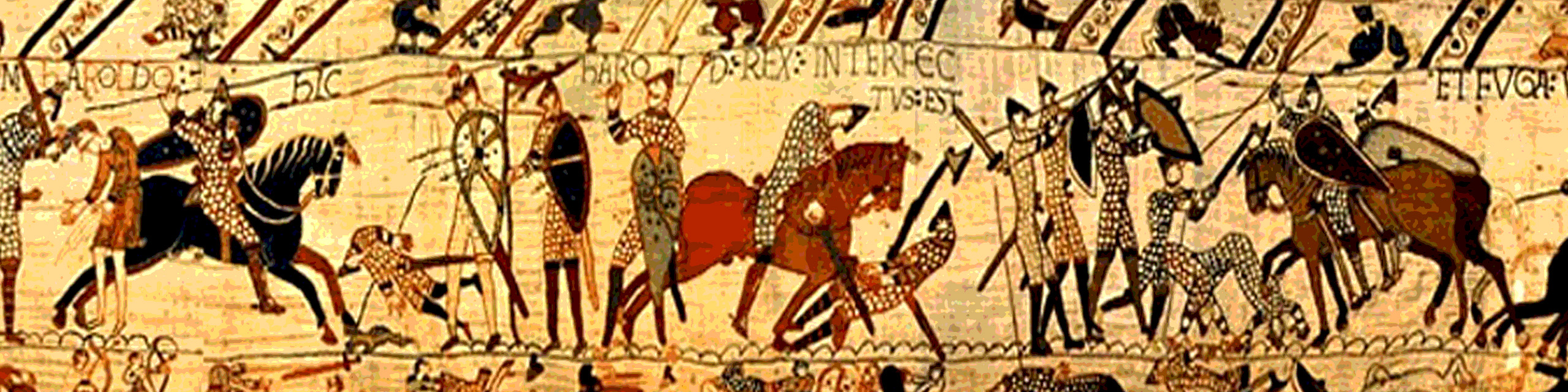
 Bayeux Tapestry, C11
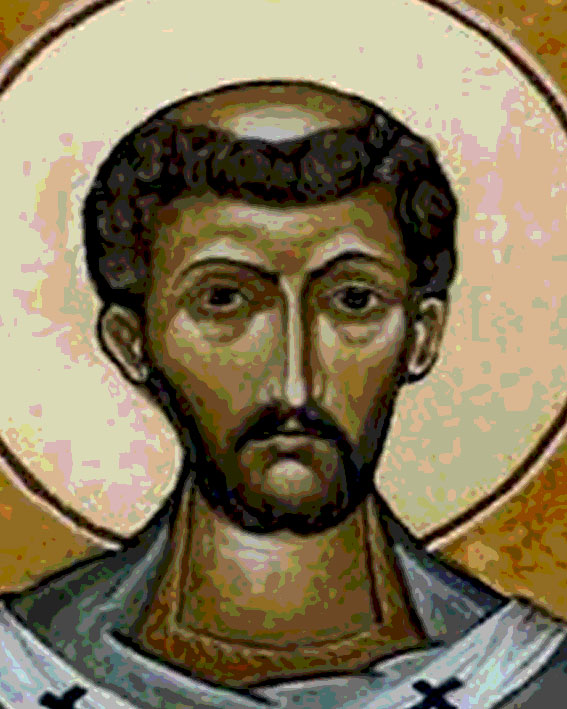 St Augustine of Canterbury (d 604)
Britain had already been a Christian land in late Roman times, but the Anglo-Saxons who flooded in during the C5 and C6 supplanted the old faith with their own belief in such gods as Tiu, Woden, Thor, and Frigg – Germanic deities after whom our weekdays are still named. Late in the C6, Pope Gregory the Great saw an opening to reassert Rome’s control of this far-off island, when the Christian daughter of King Charibert of Paris married the pagan King of Kent. To this end, he sent an obscure Benedictine monk called Augustine as a missionary. The mission was a shot in the dark, and nearly collapsed even before reaching Kent. Yet Augustine proved so adept on arrival that he converted the Kentish king, founded the English Church, built cathedrals at Canterbury and Rochester as well as St Augustine’s Abbey, and became the first Archbishop of Canterbury. Needless to say, this resounding success was rewarded by canonisation.
 St Bertha, Queen of Kent (ca 565-post 600)
The fact that King Aethelbehrt of Kent’s wife Bertha was directly descended from Clovis, first king of all the Franks, goes to show what prestige Kent already enjoyed by the C6. She was a devout Christian, and shared her convictions with her pagan husband. Without her influence, it is doubtful whether Augustine could have met with a positive reception in England; indeed, Pope Gregory the Great even wrote to acknowledge Bertha’s piety. Although her son, the future King Eadbald of Kent, repudiated her beliefs, her daughter Aethelburg married a Northumbrian king and so carried Christianity further north. The oldest church in the English-speaking world, St Martin’s in Canterbury, was built for Bertha’s benefit, and she was made a saint for her role in re-establishing Christianity in England.
 St Theodore of Tarsus (602-690)
By 668, there had been one indigenous Archbishop of Canterbury. The second, Wighard, died before being consecrated, prompting the appointment of the most exotic yet: Theodore of Tarsus in Asia Minor, which was still ethnically Greek and within the Byzantine Empire. Theodore, who remained in the post for 22 years, was particularly assiduous. Having had a strikingly broad education in Constantinople and Rome, he opened a school at Canterbury intended to share such learning – which even included sacred music – with young men who would then proselytise as Benedictine abbots. He additionally undertook extensive reform of the English Church, which included fragmenting the Northumbrian diocese in the face of hostility from the Bishop of York. In 679, he intervened to avert war between Mercia and Northumbria. Having died in Canterbury at a venerable age, he was buried at St Augustine’s Abbey. His name may have spawned the Welsh name Tudor that was to cast a long shadow over English history.
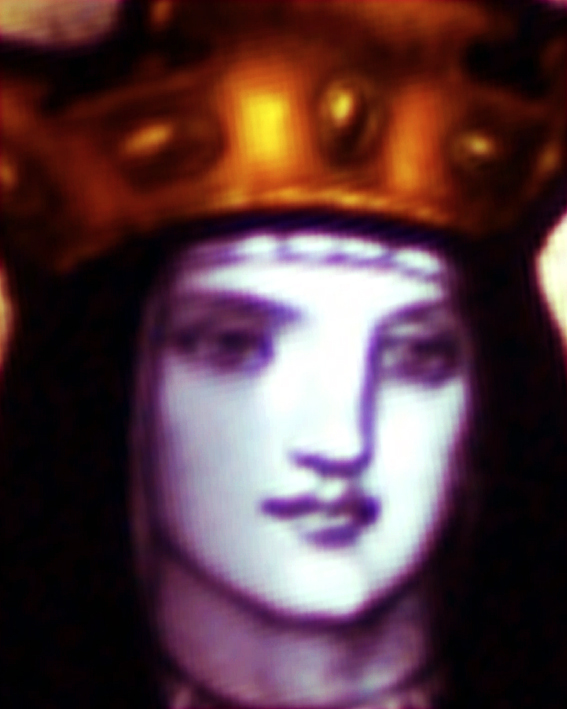 St Sexburga of Ely (~640-~699)
Few people in history can have had as prestigious a family tree as Seaxburh (or Sexburga) of Ely. Her parents were King Onna of East Anglia and his queen Saewara; she married King Eorcenberht of Kent, grandson of the great King Aethelberht I and Queen Bertha of Kent; and she bore four children, of whom her two sons Ecgberht and Hlothhere became successive Kings of Kent, and her two daughters Ercongota and Eormenhild, both nuns, became saints. On her husband‘s death in 664, she temporarily served as regent. King Ecgberht granted her some land in Sheppey where she founded and directed Minster Abbey, having already founded one convent at Milton. After presiding over 74 nuns as Abbess, she succeeded her sister Elthelthreda as Abbess of Ely, Cambridgeshire around 670. According to legend, she had Elthelthreda’s remains disinterred for reburial in a new shrine, and found them uncorrupted. For this miracle, she emulated her four siblings by being canonised.
 Odo, Archbishop of Canterbury (died 958)
A century before Odo of Bayeux demonstrated that bishops are no angels, another Odo, or Oda, set a bad example. Probably born in East Anglia, and the son of a Danish invader, he repudiated his pagan background for a lucrative career in the Church. He was bishop of Ramsbury when, according to legend, he attended the battle of Brunanburh in 937 and miraculously restored Aethelstan’s sword after it was lost. Four years later, he was promoted to archbishop of Canterbury. Apart from annulling King Eadwig’s marriage, probably on dynastic grounds, and driving the queen into exile, he occupied himself codifying laws that among other things asserted the supremacy of the clergy, who were to be immune from taxation; anyone who dared say otherwise could literally go to hell. Although his fellow clerics gave him the epithet Odo the Good, and he was posthumously hailed a saint, poet Michael Drayton branded him Odo the Severe.
 St Dunstan, Archbishop of Canterbury (~909-988)
Dunstan from Wessex was a talented artist and silversmith, but above all a fine administrator. Already running and revitalising Glastonbury Abbey by 945, he was in and out of favour under several kings, including Aethelstan, sometimes effectively operating as prime minister. Having served as bishop successively of Worcester and London, he became archbishop of Canterbury in 959. He enjoyed great popularity, not least owing to folk tales of his repeated outwitting of the devil. He supposedly grabbed Lucifer by the nose with tongs; and he removed a horseshoe he had nailed on the devil’s foot only when the devil promised never again to enter a house sporting a horseshoe over the door – a supposed source of the tradition of the lucky horseshoe. Although (or rather because) such stories were unauthenticated, he was canonised. Monks on the make later claimed to have removed his lucrative remains from Canterbury Cathedral to Glastonbury, a claim Archbishop Warham disproved by opening his tomb in 1508.
 Stigand, Archbishop of Canterbury (died 1072)
Since Stigand and his brother Aethelmaer, born in East Anglia, had Norse and English names respectively, they were presumably of mixed ancestry. Having been Cnut’s adviser and chaplain by 1020, Stigand somehow also became archbishop of Canterbury in 1052 while remaining bishop of Winchester. He was praised by earlier English historians for surviving the Norman Conquest and engineering Kent’s special status. Nevertheless, as a native who had grown rich serving several pre-Norman monarchs, he was doomed. His concurrent tenure of the bishopric and archbishopric had long since antagonised the Vatican, yet William exploited his collaboration to appease the English while power was secured. In 1070, however, papal legates were permitted to intervene. Stripped of his titles and property and incarcerated at Winchester, Stigand died and was buried there. He was propagandistically depicted at Harold II’s ‘illegal’ coronation in the Bayeux Tapestry; and his successor Lanfranc cited his excommunication as a pretext for reimagining the Church on Norman lines.
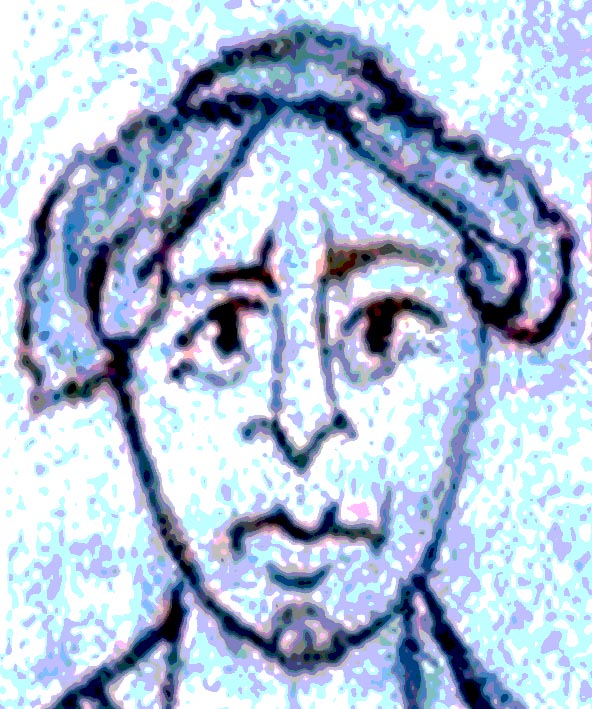 Lanfranc, Archbishop of Canterbury (~1005-89)
Born at Pavia in Lombardy, the capital of Imperial Italy within the Holy Roman Empire, Lanfranc studied law, but then saw a career opportunity in Normandy, where William the Bastard was making a name for himself. After establishing a school, he made the leap to Benedictine prior at Bec Abbey in 1041, and facilitated William’s marriage. Promoted to Abbot of St Stephen’s Abbey in Caen in 1062, he was ideally placed when his boss became William the Conqueror and sought a Norman replacement for Stigand, the Anglian Archbishop of Canterbury. Lanfranc assumed the role in 1070, devoting himself to maintaining the independence of the Anglo-Norman Church, asserting Canterbury’s primacy over York, and replacing Saxon officials with Norman ones. A true power behind the throne, he presented a solid foil to William’s unscrupulous brother Bishop Odo, and secured the succession of William Rufus. Among the Norman invaders, he is probably best considered the least bad of a bad bunch.
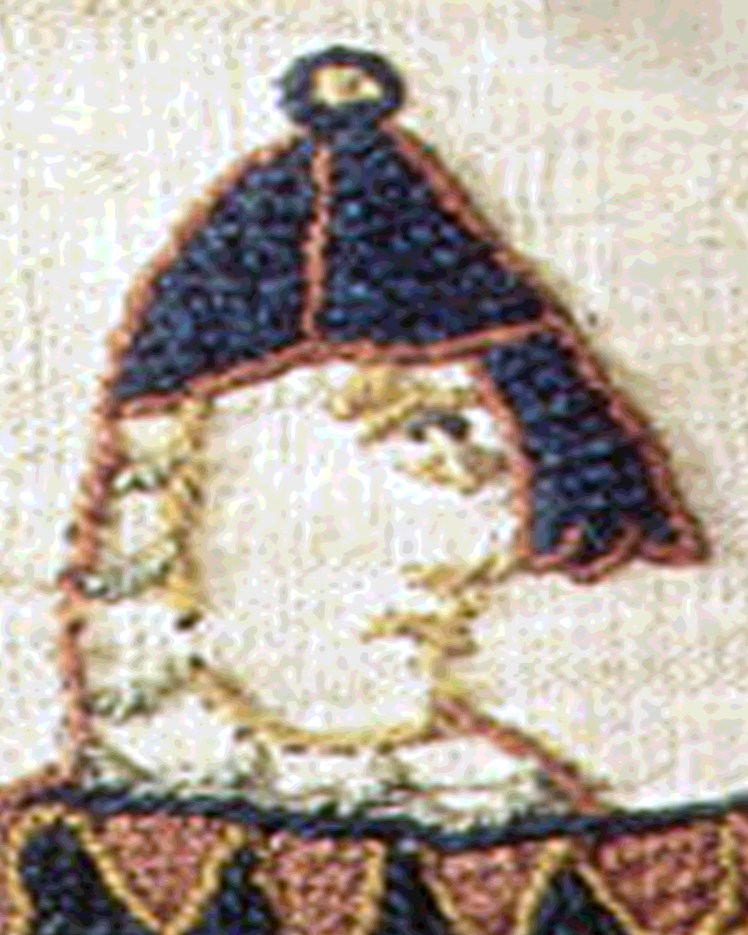 Odo, Bishop of Bayeux (d 1097)
If Odo had an epithet, it would be ‘the Odious’. As Bishop of Bayeux and half-brother to William of Normandy, he participated at the Battle of Hastings; and, after the victorious Normans had purloined almost all English land and wealth, Odo took a share second only to the Conqueror’s. He was made Earl of Kent, settling near Harrietsham. It was probably he who ordered the English to celebrate their own downfall by embroidering the Bayeux Tapestry, which ended up at his home cathedral. For a holy man, he took an unhealthy interest in mammon. At the Penenden Heath Trial in 1076, he was successfully arraigned, despite being William’s right-hand man, for stealing Church property. Undaunted, he illegally planned a military expedition to Italy, possibly with the aim of making himself Pope, for which he was gaoled for five years. He later supported a failed rebellion against William II, and mercifully died in Sicily on the 1st Crusade.
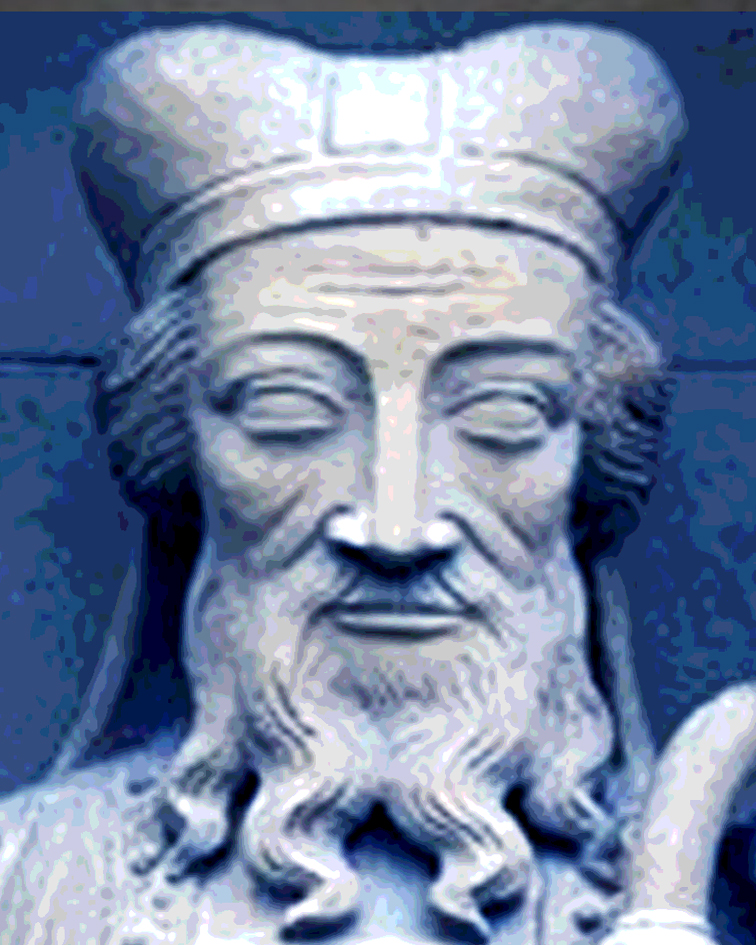 Gundulf of Rochester (~1024-1108)
Gundulf was no wizard, except of architecture; his Tolkien-like Norse name simply reflects the fact that he was born in Normandy. Before the invasion of England, he was a monk at Caen’s St Etienne Abbey. Archbishop Lanfranc of Canterbury brought him to Kent in 1070 to help accelerate the Normanisation of Anglo-Saxon monasteries. Around 1078, King William ordered Gundulf to construct a stone keep to secure London against revolt, the outcome being the White Tower around which the Tower of London evolved. Meanwhile, after Lanfranc secured lands in Rochester previously awarded to William’s half-brother Odo, Gundulf – who himself became Bishop in 1075 – erected the new Cathedral in 1083. He was also responsible for St Bartholomew’s Hospital (1078) and the Castle (ca 1088) in Rochester, and St Leonard’s Tower (1080) and St Mary’s Abbey (ca 1092) in West Malling. It seems a trifle unfair that William of Rochester was canonised for being murdered, while Gundulf of Rochester’s industriousness went unacknowledged.
 St Anselm of Canterbury (ca 1033-1109)
Anselm of Aosta in the far north-west of Italy was Archbishop of Canterbury for the last sixteen years of his life, during which time he was twice exiled for defying the English monarch. He is however better remembered as the Father of Scholasticism. This was a way of thinking critically that came to dominate Europe for half a millennium. Anselm sought to restore the credibility of Roman Catholic doctrine at a time when mysticism was normal. Arguing that faith in God’s existence preceded knowledge, he advocated inferring all facts from faith and depending only on Aristotle for earthly evidence. All contradictions between faith and observable ‘truths’ were to be resolved by arcane disputation among clerics – a practice ridiculed in later centuries as concerning the number of angels that can stand on a pinhead. Though canonised for his ingenuity and dutifully buried in the Cathedral, Anselm is reviled by modernists for having held back the scientific revolution for centuries.
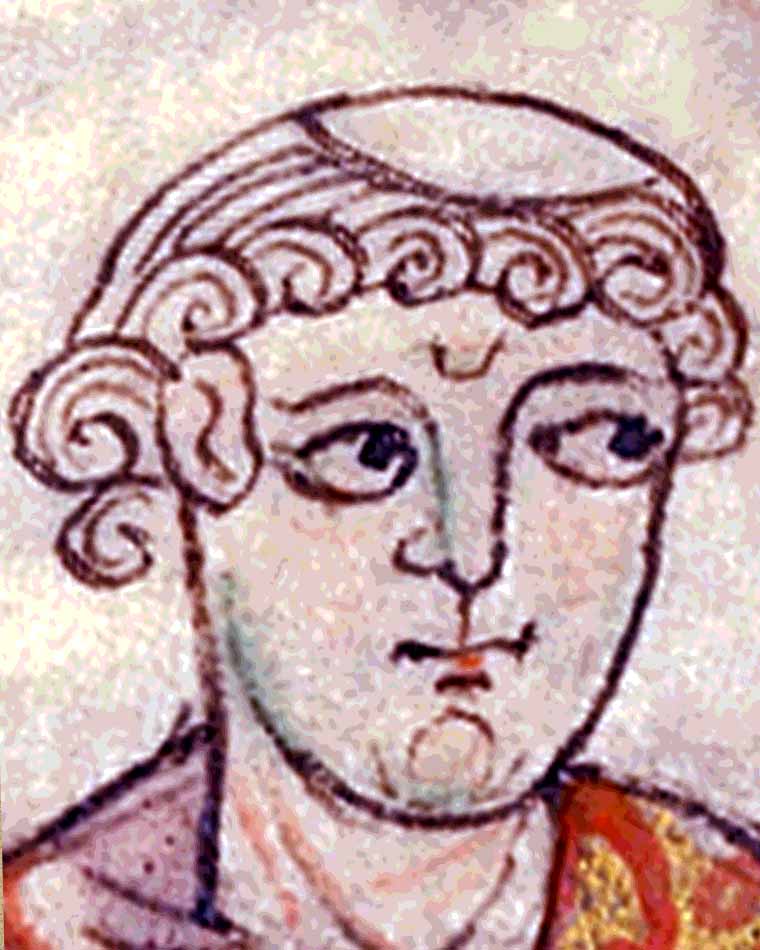 Eadmer (~1060-~1126)
Eadmer was that rarity, an Anglo-Saxon who thrived in the early days of the Norman Conquest. He started adult life at St Augustine’s Abbey in Canterbury. There he encountered the visiting Anselm of Aosta, who was to have such a profound effect on the nature of religious and scientific thought. When Anselm returned as Archbishop in 1093, their friendship became more formal, because the Pope made Eadmer Anselm’s director. He was therefore well placed to write an authoritative biography of the future saint. It was one of several works he penned, the best of which was his ‘Historia Novorum in Anglia’, essentially an account of the first half-century of Norman rule, albeit with an ecclesiastical emphasis. He became particularly associated with the notion of the Immaculate Conception of the Virgin Mary, an idea actually repudiated by Anselm yet nevertheless persistent. Eadmer might himself have become Bishop of St Andrews, had Scotland not refused to recognise Canterbury’s hegemony.
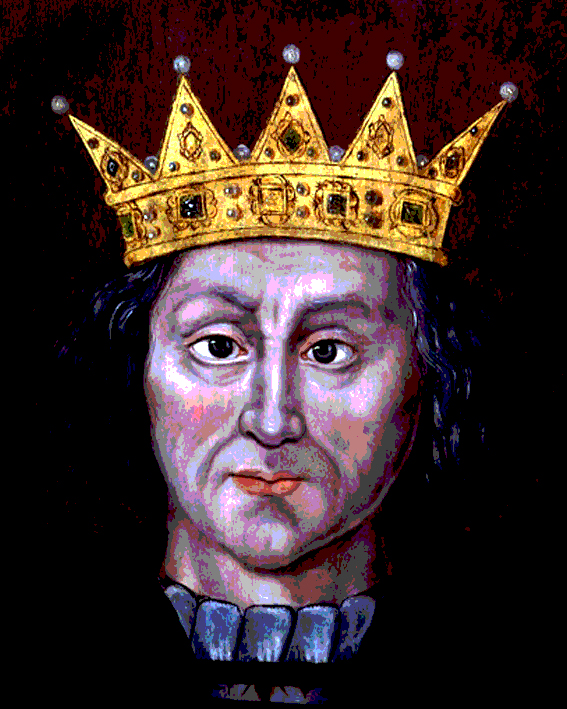 Stephen, King of England (1092/6-1154)
Stephen of Blois was a grandson of William the Conqueror. Already wealthy, he made a profitable marriage that brought in valuable estates in Kent and Boulogne. He had sworn to support his cousin Matilda’s claim to the throne, she being the daughter of King Henry I and soon to be widow of the Holy Roman Emperor. After she married Geoffrey of Anjou, however, the Anglo-Normans and the English Church turned against her, and Stephen usurped the throne on Henry’s death in 1135. He then spent his entire reign fighting off rebellions, not least an invasion by the Empress Matilda that became the centre-piece of the 18-year Anarchy. His desperate plans to secure the succession for his son Eustace failed when the prince died in 1153. Resigned to ceding the throne to the Angevins, he set about patching up the damage, but soon died at Dover, and was buried with his wife and son at Faversham Abbey.
 St Thomas Becket (1120-70)
Becket is revered today for being murdered in the Cathedral by four of King Henry II’s knights. Ironically, until his grisly end, he was deeply unpopular. Though born in Cheapside, Becket was altogether Norman, a scion of the invader overclass that still lorded it over their Saxon vassals. He’d originally been Lord Chancellor, but was appointed by his friend the King to the position of Archbishop of Canterbury so that they could reassert royal authority over the Church. Once in position, however, the cussed Becket refused to play ball. Even after being allowed home from exile, he continued to be a bane, and even excommunicated three bishops for carrying out the King’s wishes. The bloody denouement was the stuff of gangster movies, when four goons wasted the rival gang leader after being sent only to rough him up. At least St Thomas the Martyr has had the last laugh in folk mythology.
 Baldwin of Forde, Archbishop of Canterbury (~1125-90)
Baldwin, a Devonian, was sent to Italy in his twenties, and worked as tutor to Pope Eugene III’s nephew. A specialist in canon law, he became a monk around 1170, and was appointed Abbot of Forde Abbey in Dorset before becoming Bishop of Worcester in 1180. Given Baldwin’s obvious talent, Henry II practically insisted on his selection as Archbishop of Canterbury in 1184. Nevertheless, he got embroiled in a bitter dispute with Christ Church Priory that remained unresolved. In 1189, he crowned Henry’s son Richard I, who despatched him to Tyre on the 3rd Crusade with a vanguard of about 500 men. They arrived in time to assist the escape of the Frankish besiegers of Acre, who were surrounded by Saladin’s army. Though Baldwin participated in the fighting, he was already sick. While preparing to excommunicate Crusader allies with whom he had fallen into dispute concerning the succession to the Kingdom of Jerusalem, he died even before Richard’s arrival.
 Hubert de Burgh, Earl of Kent (~1170-1243)
De Burgh rose from obscure origins in Norfolk to become a major support to King John as an ambassador, in battle against Philip II of France, and in the 1st Barons’ War, including the ratification of Magna Carta. His dedication enabled him to buy the manor of Tunstall, and earned him such posts as Sheriff of Kent and Constable of Dover. When John died in 1216, his successor Henry III was only nine, so de Burgh assumed the role of regent. In 1217, he commanded at the Siege of Dover Castle and the 2nd Battle of Sandwich, emerging triumphant. He became the castellan of Rochester Castle, Earl of Kent, and Chief Justiciar, a Norman post affording unique powers outside the royal household, and married Margaret, sister of Alexander II of Scotland. Naturally his political weight incurred the animosity of rivals, and in 1232 he was imprisoned and stripped of his estates. Shakespeare later wrote him into ‘King John’.
 Walter de Merton (~1205-77)
Walter, from Hampshire, went into holy orders, but built a career as much in politics as religion. He was a skilled negotiator, out of whom Henry III got good use at a time of serious upheaval on account of the baronial revolt. Such was his loyalty that he became Lord Chancellor in 1261, and stood in for Edward I for two years while he was away on the 9th Crusade. He acquired his surname from a house he set up in Surrey to accommodate scholars of Merton Priory. After ten years, that institution moved to Oxford and, thanks to the pains he took to set it on a level footing, became today’s Merton College, with its vaunted Field and Recreation Ground. Relieved of the Lord Chancellorship, he was compensated by Edward by being made bishop of Rochester. Dividing his time between Merton and Rochester, he fell from his horse when fording the Medway, with fatal consequences.
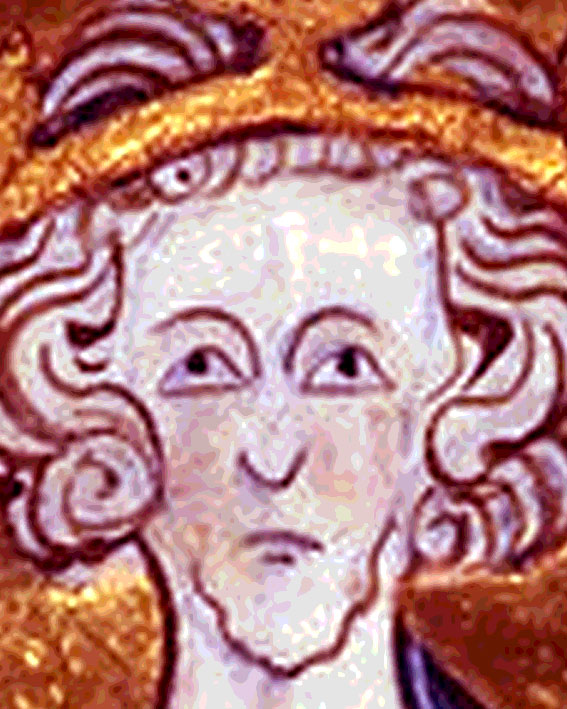 Henry III, King of England (1207-72)
Although one of the less familiar Norman kings, Henry III remained England’s longest-reigning monarch until George III five centuries later. Born at Winchester, he was just nine when his father King John died. At 20, he threw off his advisors’ constraints and embarked on a warlike policy towards France, but his military efforts proved a fiasco. After his staunch supporter Hubert de Burgh fell from grace in 1232, the corruption of Henry’s Savoyard in-laws increasingly excited the hostility of the baronial caste, until in 1263 Simon de Montfort initiated the 2nd Barons’ War. Henry was actually captured at Lewes in 1264, but his talented son Prince Edward escaped and, at the Battle of Evesham a year later, saw de Montfort put to death; the King meanwhile had to be rescued by Roger de Leybourne. By nature an easy-going type, Henry and his wife, Eleanor of Provence, instituted the royal practice of spending Christmas at Eltham Palace.
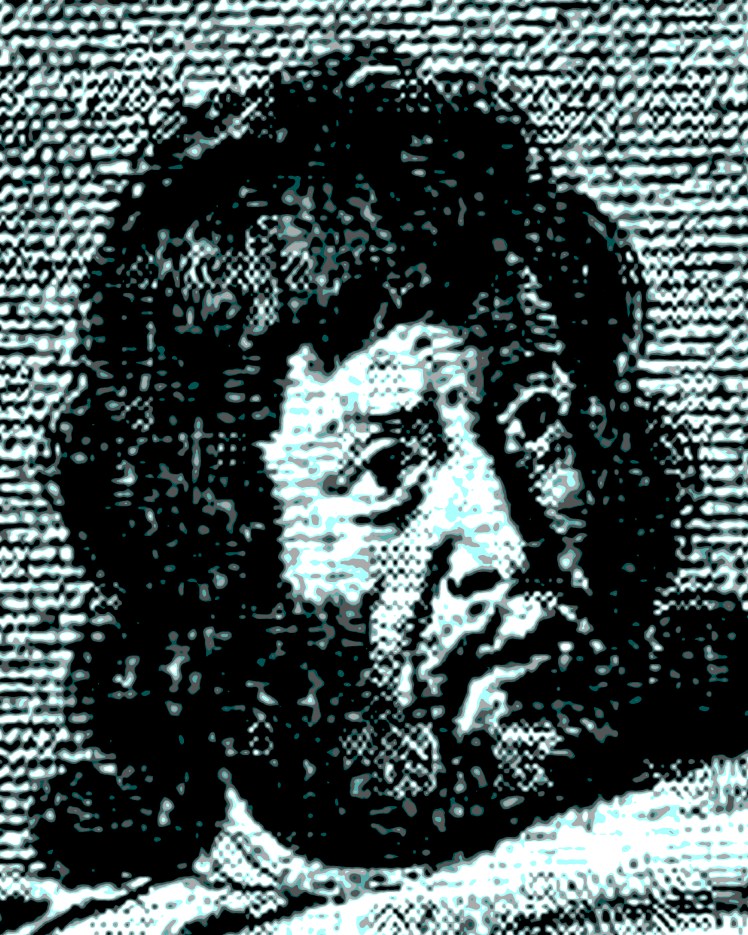 Simon de Montfort (1208-65)
De Montfort came to England from the Paris area at the age of 21, hoping to succeed to the Earldom of Leicester. Though speaking no English, he was welcomed by Henry III, whose court was French-speaking. In 1238 he married Eleanor of England, Henry’s sister and the Earl of Pembroke’s widow, who had inherited Sutton Valence Castle from her first husband. Repeated disputes with the feeble king eventually turned to civil war in 1263, when the populist but anti-Semitic de Montfort led a baronial revolt seeking parliamentary reform and a Jewish pogrom. After a temporary reverse, he spectacularly won the Battle of Lewes (1264), capturing Henry and his son Edward. He then innovated his ‘Great Parliament’, the first to embrace the citizenry. Unluckily for him, the charismatic young Prince Edward escaped and led a superior force of disaffected barons against him at Evesham. De Montfort and his men were cut to ribbons, and democracy would have to wait.
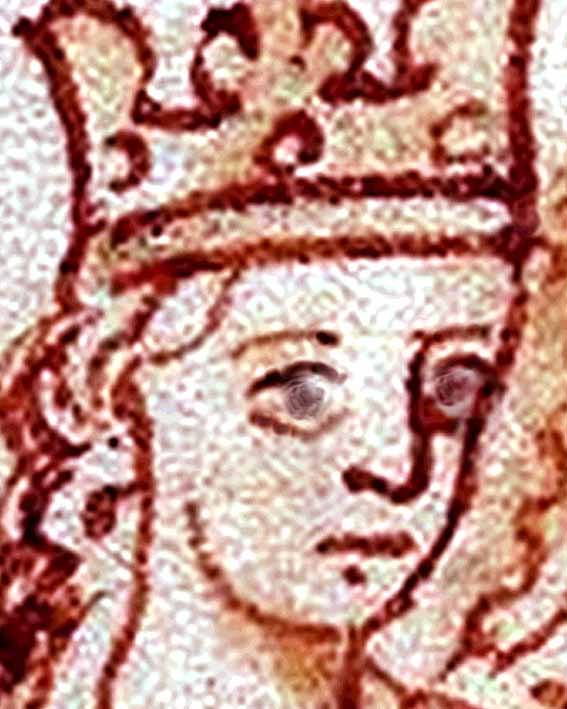 Eleanor of Provence (~1223-91)
Henry III picked an unusual venue for his first date with the Count of Provence’s daughter in 1236: the altar of Canterbury Cathedral. She was 12, he was 28; but uxorial suitability generally ranked a distant second to dynastic politics back then. Norman England’s usually foreign queens seldom courted popularity, but Eleanor was exceptionally contemptuous. She arrived in England with no dowry, but flooded the royal court with her kin, known as the Savoyards. A dedicated follower of fashion, she funded her lifestyle by extorting ‘queen-gold’ and other spurious imposts from London’s populace. The mutual loathing got so bad that, when she went barging on the Thames in 1263, Londoners pelted her with rotten vegetables, mud, and even rocks; she had to be rescued. She perhaps imagined she might earn popularity by expelling all Jews from her estates in 1275. She was buried in Wiltshire in an unmarked grave. Her one good legacy was her eldest son, Edward I.
 Edward I, King of England (1239-1307)
Edward Longshanks, the young prince who turned the tables on the Baron’s Revolt, was to prove a match for more than just Simon de Montfort. The clue is in his epithet, ‘Hammer of the Scots’, earned by his savage treatment of the Auld Enemy after he’d already wreaked havoc in Wales and gone crusading. This made him wildly popular in England, though he was more feared than liked by those about him. His imposing physique and violent temper did at least aid him in restoring order among the barons after the turmoil of his inept father’s reign. His legislative amendments brought temporary stability, although he enshrined anti-Semitism in English law for centuries. He chose to live with his first wife Eleanor of Castile at Leeds Castle, where she bore many of their sixteen or so children. Sadly, his successor would be his son Edward II, the disastrous monarch who would quickly undo all his work.
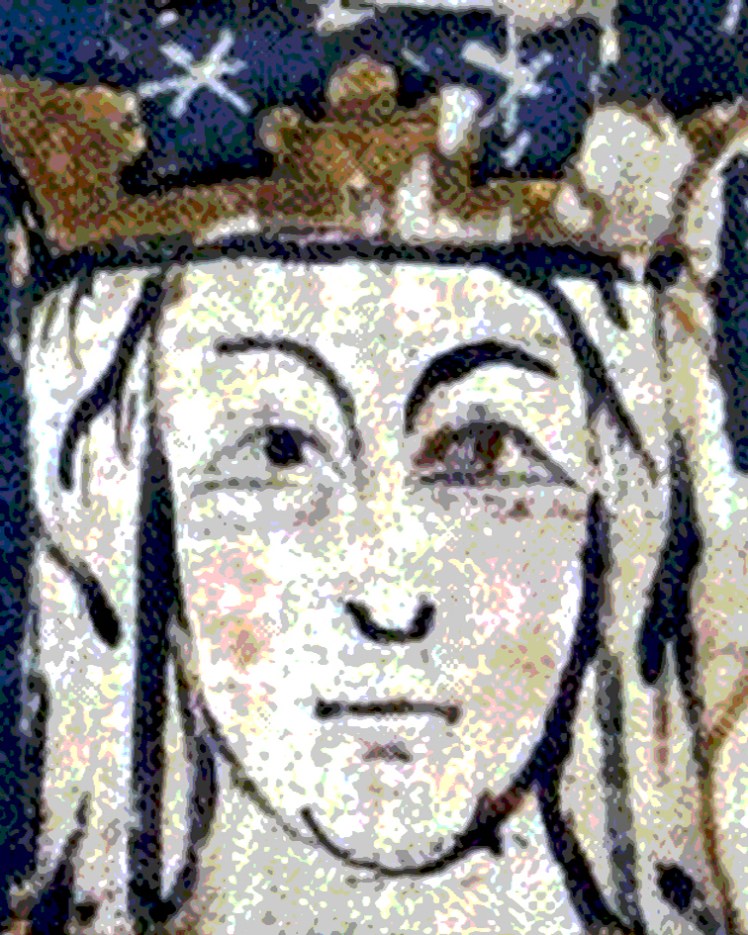 Eleanor of Castile, Queen of England (1241-90)
Like most royal matches, King Edward I’s with Eleanor was political, intended to reinforce English control of Gascony. Nevertheless, it was a strong one. The two would remain devoted for life, even if the story of Eleanor saving the King’s life on the Ninth Crusade by sucking poison from an assassin’s wound is far-fetched. Their compatibility may have owed something to a common temperament, her feistiness being a foil for his own. Yet she by no means shared in his popularity. Barely able to speak English, she spent her time at their home at Leeds Castle trading in properties with recklessly borrowed money. Most of the numerous children she bore died young, and her only son who grew to adulthood was her very last child, the hopeless Edward II. Even so, after she died near Lincoln, the distraught King had memorial crosses erected at each stop on the long walk home with her body, the last of them being at Charing, Middlesex.
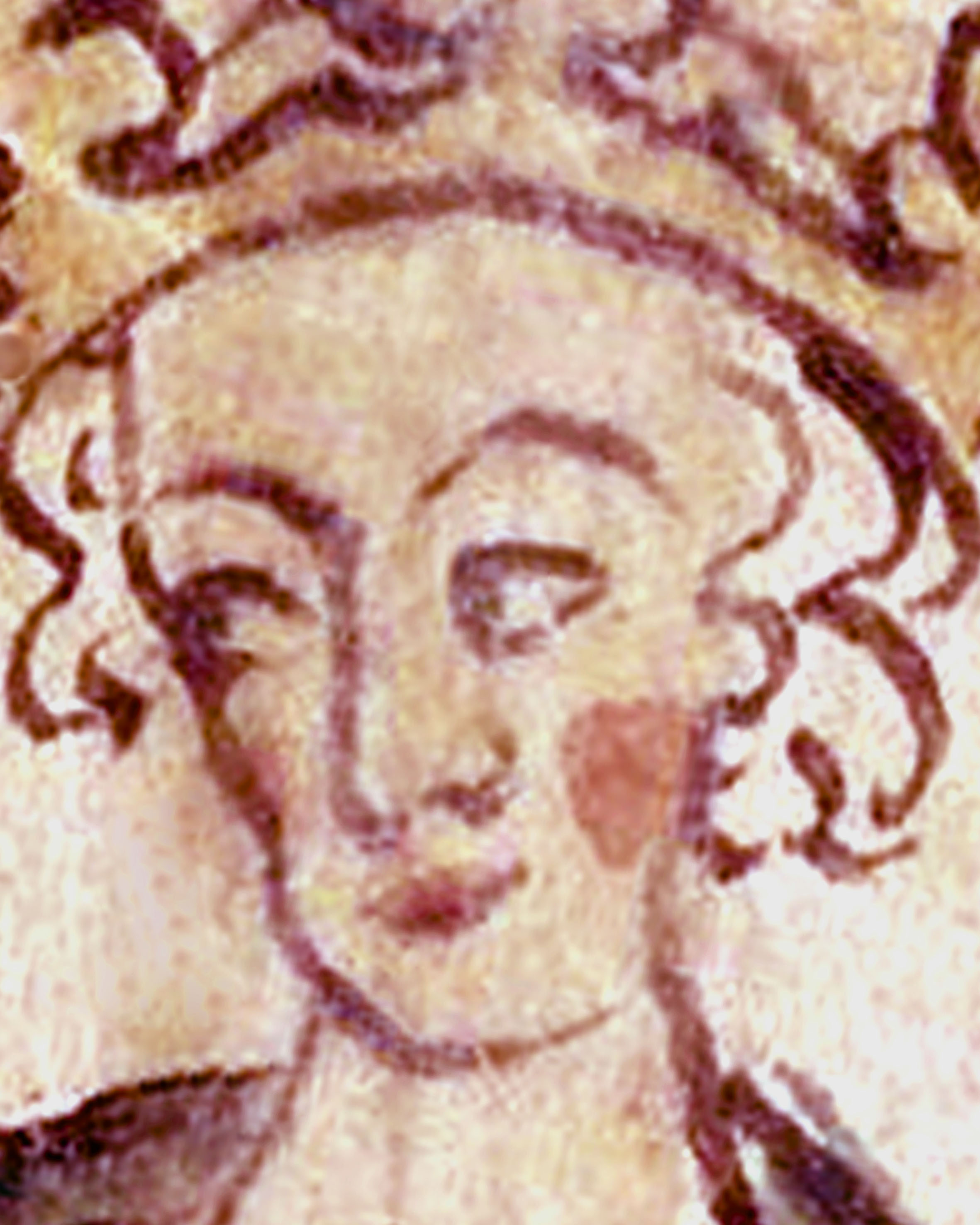 Edward II, King of England (1284-1327)
If it hadn’t been for the early death of Isobel of Castile’s eldest surviving son, England would have had a King Alphonso. Instead, in 1307, it got Edward II, who at 21 had been gifted Eltham Manor by the Bishop of Durham, and spent Christmas at Wye Court while awaiting his coronation. His 20-year reign was economically described in the title of Marlowe‘s bioplay as “troublesome”. It might be argued charitably that Edward was unlucky to be sandwiched between his father Edward I and son Edward III, both of whom were outstanding leaders and national heroes. Contrariwise, he scandalised the Baronial caste with his relationship with Piers Gaveston, whom they eventually executed. Edward’s mismanagement led directly to the calamitous defeat at Bannockburn in 1314, and his relationship with the rapacious Hugh Despenser the Younger even caused his wife, Isabella of France, to rebel against him. He was eventually murdered at Berkeley Castle, legendarily with a painfully inserted red-hot poker.
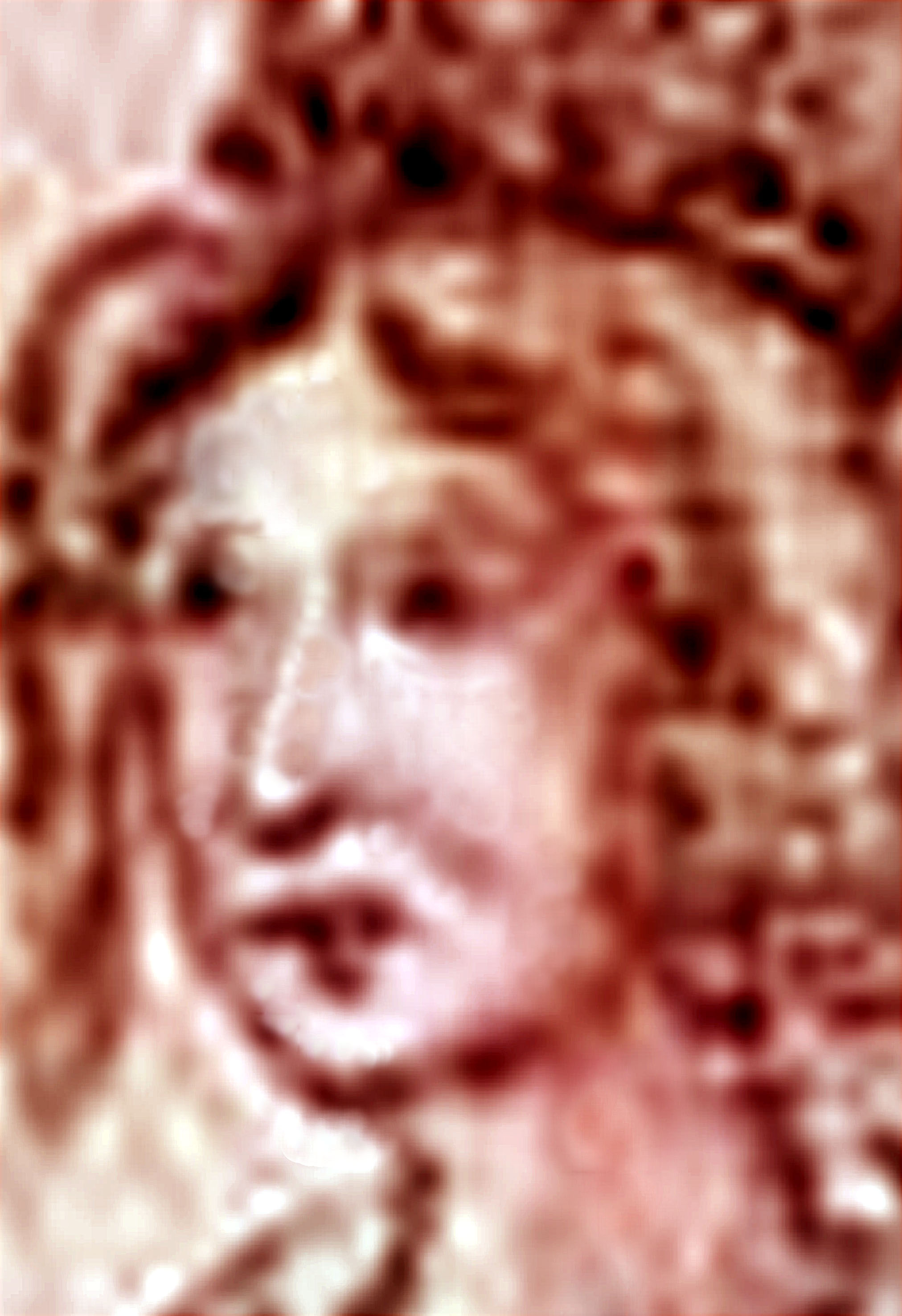 Elizabeth de Brus, Queen of Scotland (~1289-1327)
Elizabeth de Burgh was a product of the era when Anglo-Scottish relations were largely a civil war between Britain’s Norman overlords north and south of the border. Her father was Richard Og de Burgh, an Ulster-based friend of England’s Edward I. She met Robert de Brus, the Scottish Earl of Carrick, at Edward’s court, and they married in Essex in 1302. After they boldly crowned themselves King and Queen of Scotland in 1306, however, she was taken prisoner and held captive in a succession of castles, ending with Rochester. Luckily for her, ‘Robert the Bruce’ had legendarily learned perseverance from a spider, while Edward had been succeeded by his worthless son Edward II. After Bruce triumphed at Bannockburn in 1314, Elizabeth was allowed home in a prisoner exchange. Although she died prematurely after falling off her horse, she had co-reigned for 13 years over an independent Scotland whose future James VI would one day rule England.
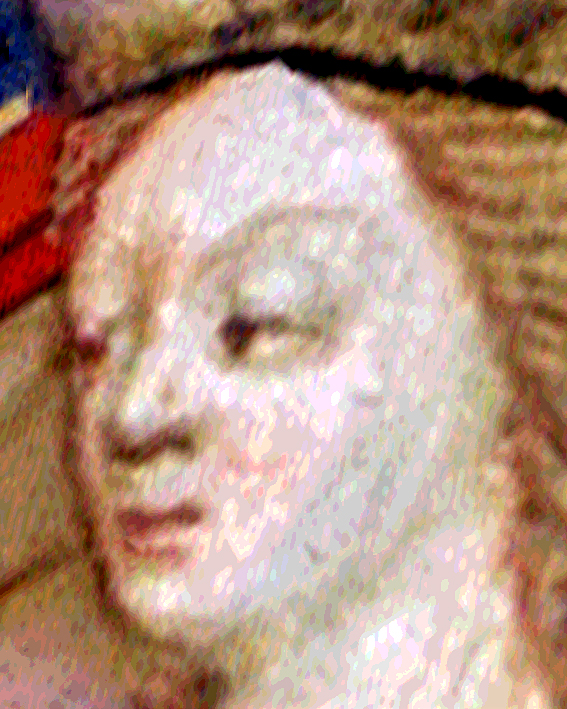 Philippa of Hainault (1310?-69)
Unlike several foreign-born queens of England who earned public disapproval, Philippe de Hainaut (sic) appears to have enjoyed a genuinely collaborative relationship with her husband, Edward III, which endured through 40 years of the Hundred Years’ War. As her name suggests, she was born in the Low Countries, the Count of Hainaut’s daughter. She and Edward, her second cousin, were married in 1328 in consequence of his father Edward II’s eagerness to forge a political alliance in the region. The tenant of Leeds Castle, she appointed Jean Froissart as her secretary, and in addition to bearing 13 children, including Edward the Black Prince, was instrumental in getting Flemish weavers established in England. She stood in as regent in 1346 while Edward was fighting in France, and famously persuaded him to show mercy after the Siege of Calais in 1347. Queen’s College, Oxford was named after her. Strangely, she came fifth in the ‘100 Great Black Britons’ poll in 2003.
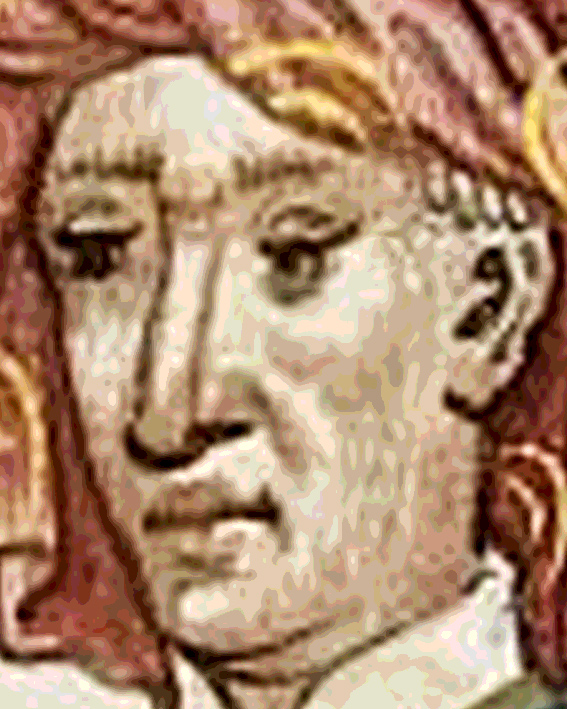 Thomas Beauchamp, 11th Earl of Warwick (1313-69)
In 1319, the Earl of March, regent during Edward III’s minority, married his infant daughter Katherine to Thomas Beauchamp. This wealthy young Lord Warwick cut his teeth with years of military service in Scotland, and so proved himself as both soldier and commander that he became Marshal of England, supervised the young Black Prince in battle, and was appointed the third Knight of the Garter. A major force in Edward’s French campaigns, he played a senior role at the triumphs of Crécy (1346) and Poitiers (1356). Being required repeatedly to sail from Sandwich and Dover, he would base himself at the manors of Rainham and Easole (Nonington) he had inherited from his younger brother Sir John. Such was his reputation that, at his approach in 1369, Philip the Bold of Burgundy fled Calais in the night. After raiding Normandy with John of Gaunt, Beauchamp died at Calais of plague, as his brother had nine years earlier.
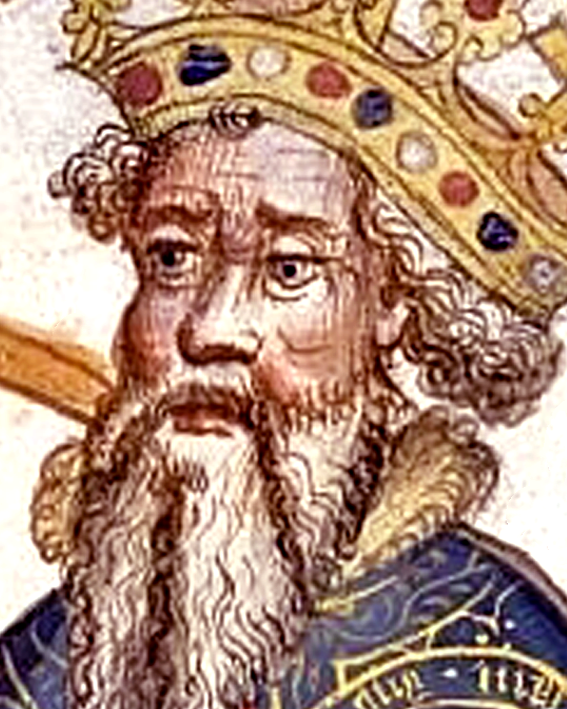 Edward III, King of England (1312-77)
When he was 13, Prince Edward’s mother Queen Isabella deposed his father Edward II and installed herself and her lover as regents. Fortunately, the boy was made of sterner stuff than his clueless father. He assumed the kingship at 17 after banishing her and executing the lover, and embarked on military campaigns to subdue the Scots and to claim the French throne. He enjoyed tremendous successes, his son the Black Prince securing historic victories at Crécy and Poitiers. Edward’s misfortune was that, having acceded so young, he ruled for half a century. Despite enjoying leisure time with his agreeable wife Philippa of Hainault at their country retreat, Leeds Castle, exhaustion took its toll. He later suffered such reverses, both domestically and in foreign affairs, that his ambitions ultimately went unfulfilled. Then the Black Prince predeceased him, and the succession passed to his unstable grandson Richard II. In no time, England was again in turmoil.
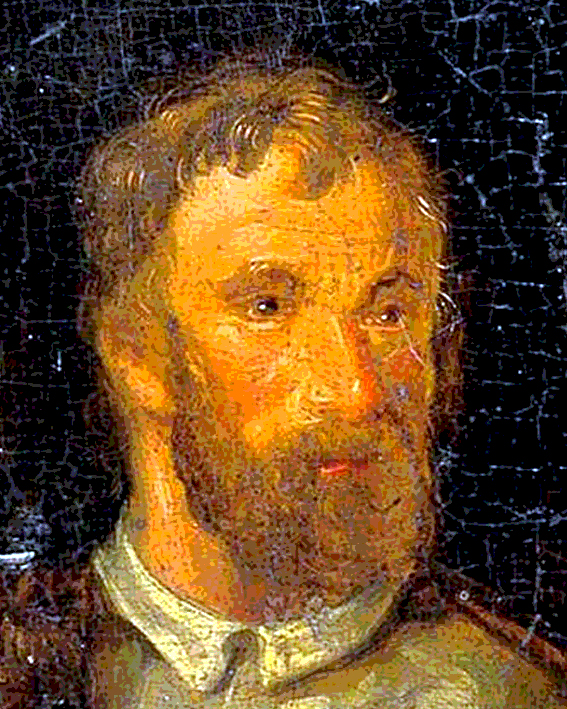 Wat Tyler (d 1381)
Walter Tyler won notoriety as the leader of the Peasant’s Revolt, the direct cause of which was a new fourpenny poll tax. Tyler, who was probably from Kent or Essex, led a pitchfork army from Canterbury to London to demand rights for the peasantry. After crossing London Bridge, his men wreaked havoc, and the young King Richard II felt bound to meet Tyler and offer concessions. In this winning position, however, Tyler’s hubris let him down. At a second meeting at Smithfield, he provoked one of the King’s men into insulting him, whereupon he attacked first the noble and then the Lord Mayor, who cut him down with his sword. His head was displayed on the end of a pole as a warning. And so the Revolt, which had come close to success, failed for want of a modicum of restraint. Tyler nevertheless became a folk hero, and has a road named after him in Kent’s county town.
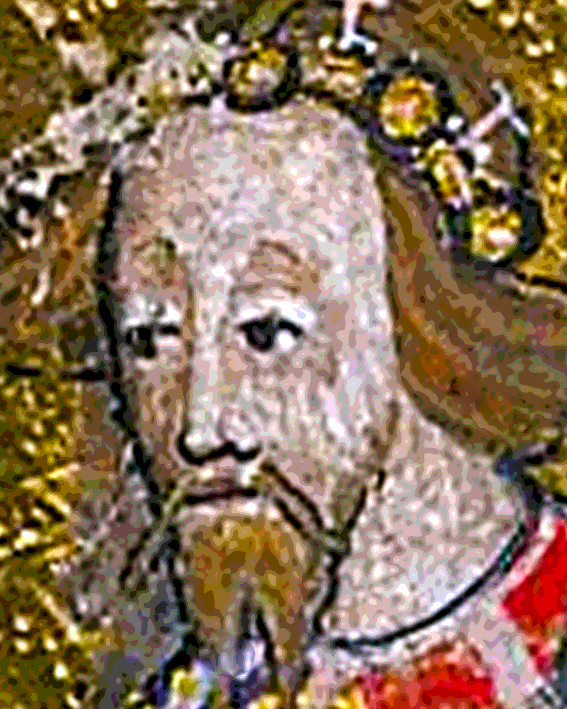 Edward, the Black Prince (1330-76)
To England, Edward of Woodstock was the heroic Prince of Wales who twice made a mockery of overwhelming French superiority: at Crécy in 1346, and Poitiers ten years later. To France, however, he was a brigand who unchivalrously despoiled and looted the French interior, and mercilessly massacred hordes of prisoners. The king of France, John the Good, didn’t seem bothered; he accepted Edward’s invitation to dinner at Dover on his way home from exile in 1360, Edward having a home at Northbourne. Nicknamed the Black Prince after the colour of his armour, rather than his reputation for ruthlessness, Edward would have made a good successor to Edward III in the hard-man mould of Edward I; but he was enfeebled by dysentery, and felled by it at 45. Unluckily for England, his son Edward had also died young, so the throne passed to the boy’s awful brother, Richard II. The Black Prince now lies serenely in Canterbury Cathedral.
 John Ball (~1338-81)
John Ball, a priest originally from Colchester, was evidence of the idea that socialism is a restatement of radical Christian values for a secular age. Having lived through the Black Death, he grew appalled by its consequences, notably the inequality of wealth that persisted among the overworked survivors. For his unorthodox utterances, this ‘Mad Priest of Kent’ was jailed in Maidstone. He was released by insurgents during the Peasants’ Revolt, whereupon he proceeded to the rebel army’s rallying point at Blackheath. There he made a stirring speech beginning, “When Adam delved and Eve span, who was then the gentleman?” and exhorting workmen to “cast off the yoke of bondage” in a distinctly Marxist tone. When the revolt failed, Ball was imprisoned, tried, and sentenced to be hung, drawn and quartered. Even King Richard II himself turned up in St Albans to enjoy the spectacle, and got into the redistributive spirit by sharing Ball’s body-parts around.
 John of Gaunt, Duke of Lancaster (1340-99)
The founder of the House of Lancaster, John of Gaunt is unique in being an ancestor of all subsequent British monarchs. He was born at Ghent in the Low Countries, and got his Anglicised surname from Shakespeare. He was the younger brother of Edward the Black Prince, whose young son Richard II he controlled after Edward III’s death in 1377; he started by appointing himself constable of the important new castle at Queenborough. Nothing like the warrior his brother had been, he enriched himself through political machinations and lucrative marriages. His second, to Constance of Castile, even led him to claim Castile’s throne, but his expedition to claim it in 1387 was an unmitigated failure. Nevertheless, his son Henry of Bolingbroke by his first wife Blanche of Lancaster deposed Richard immediately after John’s death and became Henry IV. Furthermore, John’s mistress Katherine Swynford, whom he married in 1396, bore a son whose great-grandson was Henry Tudor.
 Geoffrey Chaucer (1340s-1400)
The consequence of writing ‘The Canterbury Tales’, the most famous of all medieval works in English, is that Chaucer is generally known for little else, despite his extraordinarily rich life. The son of a London vintner, he was captured as a teenager during an invasion of France and ransomed by King Edward III. Marrying one of the Queen’s attendants brought a family connection with his future patron, John of Gaunt. From 1367 he remained in the King’s service, initially as a diplomat; his visits to Italy crucially introduced him to Petrarch and Boccaccio. He started writing poetry seriously around 1370, commencing his magnum opus in 1387. By then he had moved to Greenwich and become MP for Kent; he was additionally a senior bureaucrat in customs and public works. Remarkably, in his spare time he even wrote a ‘Treatise on the Astrolabe’. He was the first to be buried at Westminster Abbey’s Poets Corner.
 Henry Chichele, Archbishop of Canterbury (~1364-1443)
A native of Northamptonshire, Chichele went to Oxford and acquired a training in ecclesiastical law that soon brought him rewards. It also equipped him for diplomacy. He was born at the time of the Papal Schism, when two popes reigned simultaneously in Pisa and Avignon. He repeatedly undertook missions to Italy to negotiate a reunification, but when he met with failure participated in 1409 in a project to install a new pope in place of both. He also undertook successful missions to France of a secular nature. Chichele became Archbishop of Canterbury for life in 1414, and embarked on vigorously persecuting heretics. In 1438, he founded Oxford’s College of the Souls of All the Faithful Departed, or All Souls, to commemorate the dead of the Hundred Years’ War. He was buried at the Cathedral, his macabre tomb displaying a life-size effigy of him peacefully at prayer above another of his rotting corpse.
 Anne of Bohemia, Queen of England (1366-94)
When he had been on the throne for five years, the young Richard II was supposed to marry the daughter of the Lord of Milan, which would have brought a large dowry. Instead, in 1382, he was wed to his fellow 15-year-old Anne of Bohemia. She was the daughter of Charles IV, the Holy Roman Emperor who ruled about half of Europe, and sister to his successor Sigismond. This political alliance was considered an important means of counterbalancing French support for the Antipope Clement VII during the Papal Schism, and Richard paid over £4 million in today’s money to secure it. Anne was immediately gifted Leeds Castle, having spent Christmas there before their January wedding. Well thought of as a benefactor of the arts and a support to supplicants, she may also have reined in Richard’s wilder impulses. After she died childless, probably of plague, while residing at Sheen Palace, Richard’s behaviour became increasingly unrestrained, and eventually dangerously so.
 Richard II, King of England (1367-1400)
Thanks mainly to Shakespeare’s ‘Richard II’, posterity has a low opinion of the son of Edward the Black Prince and Joan of Kent. Richard succeeded his grandfather Edward III aged ten, his father having died of dysentery. He boded well at first, sharing his wife Anne of Bohemia’s passion for patronising the arts rather than going to war. He held court at Leeds Castle, where he welcomed the likes of Froissart. However, these were martial times, and a clique of ‘Lords Appellant’ took exception to him. Although a reconciliation was effected, Richard grew increasingly vindictive. He made a thoroughgoing enemy of Henry Bolingbroke, who in 1399 forced him to abdicate and took the throne as Henry IV. Richard was imprisoned in Leeds Castle and elsewhere, and is believed to have been starved to death. Shakespeare painted him as the author of his own undoing; his problem may have been a personality disorder.
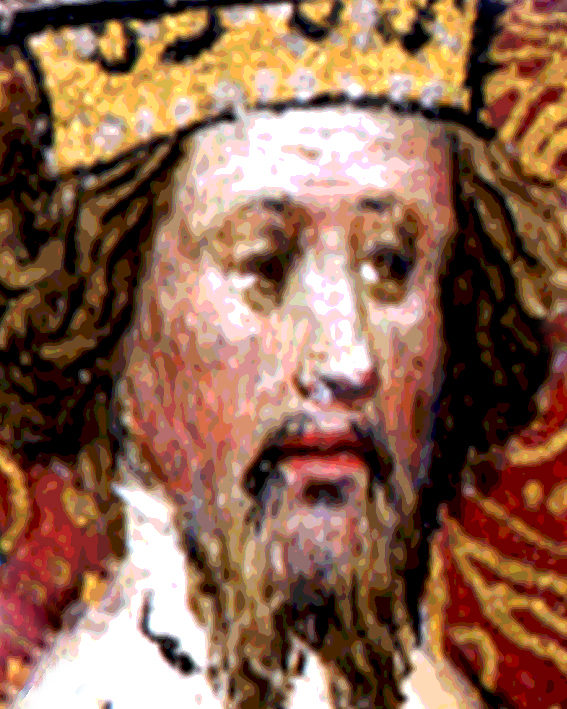 Henry IV, King of England (1367-1413)
As the eldest son of the ambitious John of Gaunt, Henry of Bolingbroke in Lincolnshire probably felt obliged to press his debatable claim to the throne; but he could have been forgiven for wishing he hadn’t. He married 11-year-old heiress Mary de Bohun at 13, which brought him wealth and, eventually, six children. Although he initially supported his cousin Richard II, the King denied him his father’s estates, so Henry usurped the throne in 1399, initiating Lancastrian rule that would sow discord until after 1485. Already during his reign, Henry faced two major threats, from Owen Glendower in Wales and ‘Harry Hotspur’ Percy in Shropshire. With the help of his son Prince Harry, he put down both, but they took a toll. Despite relaxing with his second wife Joan of Navarre at his favoured Eltham Palace for ten of the thirteen Christmases of his rule, he died of chronic illness, and was buried at Canterbury Cathedral.
 Joan of Navarre (~1368-1437)
Joan, the daughter of the King of Navarre in the Basque region, was married to Duke John IV of Brittany for 13 years until he died. She and Henry IV grew attached during his exile in Brittany, and she married him in 1403. So it was that she became the second in a succession of highly unpopular foreign Queens of England. One reason was that, though regal, she was unduly rapacious. The other was her dislike of the English, which led her to favour the company of her Breton courtiers to such an extent that Parliament eventually exiled them. After Henry‘s death in 1413, she got on well with her stepson Henry V at first, but ill feeling developed until he took her property and imprisoned her successively at Pevensey Castle and Leeds Castle. She was released just before his death, residing thereafter at Nottingham Castle. She was buried alongside Henry IV in the Trinity Chapel of Canterbury Cathedral.
 Isabella of Valois (1389-1409)
That Isabeau de Valois was only six when Richard II of England needed a new wife was no obstacle to a fine political match. The daughter of King Charles VI of France, she was deemed a good prospect for the future by 29-year-old Richard after the death of his first wife Anne of Bohemia, even if consummation would have to be delayed until she passed twelve. The marriage reportedly worked: she was pleased to become such an important personage, and he entertained her at Eltham Palace like a kid sister. She was still only nine when he was toppled, and ten when he died. Henry IV wanted her to marry his son Henry of Monmouth, the future Henry V. She refused, and instead married her cousin, the future Duke of Orléans, in 1406, while Henry V married her sister, Catherine of Valois. After so much trouble, Isabella died in childbirth at 19, although her daughter Jeanne did survive.
 Charles, Duke of Orléans (1394-1465)
After the Battle of Agincourt in 1415, Richard Waller (ca 1395-1461) of Groombridge Place discovered the Duke of Orléans still alive under a pile of corpses, and took him prisoner. As the French king’s nephew, Charles was so dangerous politically that Henry V forbade a ransom. He spent much of his 25-year captivity as the guest of Waller, who was knighted. Despite his homesickness, he proved an admirable prisoner. Having gained a huge dowry by marrying Richard II’s short-lived widow Isabella of Valois, he contributed lavishly to public works, including the construction of Speldhurst church, which bore his coat of arms until it burnt down in 1791. Above all, he was a prolific poet. Though he wrote highly complex poetry, he is best known for composing the first Valentine poem, sent to his second wife back home. He was eventually ransomed in 1440 and enjoyed a quarter century with his third wife back in France as a literary celebrity.
 Catherine de Valois, Queen of England (1401-37)
When Catherine entered history in 1420, she was an 18-year-old ingénue who happened to be the daughter of King Charles VI of France. Her appeal to King Henry V of England was not just sexual: by marrying her, he became heir to the French throne. Their marriage lasted only two years before he died of dysentery, bequeathing Leeds Castle to her. By then she’d borne him an heir; it was not her fault that he was Henry VI, whose utter incompetence sparked the Wars of the Roses. Less blamelessly, she then defied a Parliamentary decree to get embroiled with an ambitious Welsh courtier called Owain ap Tudur. Their bastard son would father the Harri Tudur who abused his royal connection to usurp the English throne in 1485. Given her talent for unwitting trouble-making, she is appropriately best known for the scene in Shakespeare’s ‘Henry V’ when she gets to speak the foulest of words; pure ‘Carry On’, but funnier.
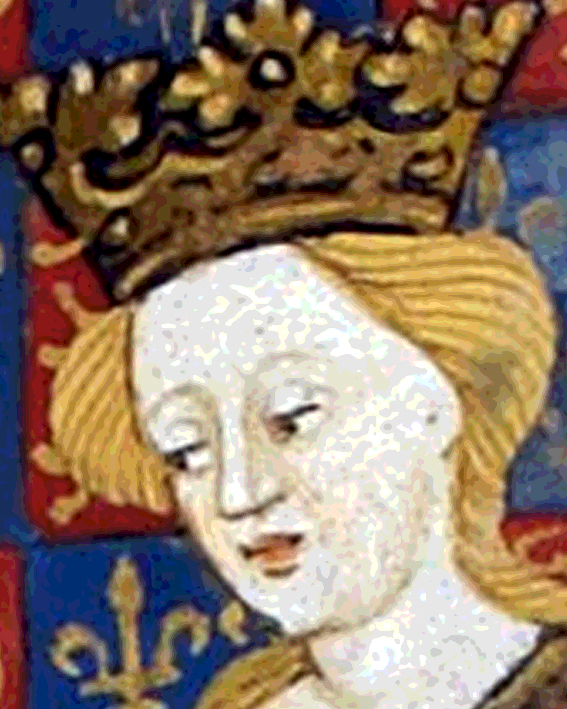 Margaret of Anjou, Queen of England (1430-82)
Amid a succession of unloved foreign Queens of England, Marguerite d’Anjou takes the biscuit. She was the daughter of René, King of Naples, a man described as “all crowns and no kingdoms”. Landing his 15-year-old daughter’s marriage to the King of England must have struck him as an absolute godsend. Even better was the fact that her new husband, Henry VI, was an idiot, so she was free to rule the roost. Having seized Placentia Palace in Greenwich, she pursued the same preoccupations as Nero’s mother, Agrippina: her own wellbeing, and her son’s succession. All else was expendable, not least public safety. It was her crass imperiousness that prompted the Yorkist revolt, and her bloody-mindedness that sustained the conflict beyond endurance. She was hated with a passion, and none shed a tear when, in 1471, she was defeated at Tewkesbury and her young son killed. Shattered, she fled to France, and lived her last decade as a pauper.
 Edward IV, King of England (1442-83)
Among the dubious protagonists of the Wars of the Roses, Edward IV was arguably the most charismatic. Having succeeded his father Richard, Duke of York, who was killed at Wakefield in 1460, he deposed the Lancastrian king Henry VI by defeating him at Towton in 1461. He then secretly married Elizabeth Woodville for largely sexual reasons, which so outraged his ally the Duke of Warwick that Edward too was deposed and banished in 1471. Undaunted, he sought the help of the Burgundians, invaded from France, and crushed the Lancastrian army at Barnet. Warwick was killed, heralding twelve years of stable Yorkist rule. Edward was, however, an incorrigible man of the flesh. One Christmas, he threw a banquet for 2,000 in the great hall he had built at Eltham Palace. Only months later, he fell ill, and died of unknown causes. His brother Richard usurped the throne, bringing dire consequences for some of Elizabeth’s closest kin.
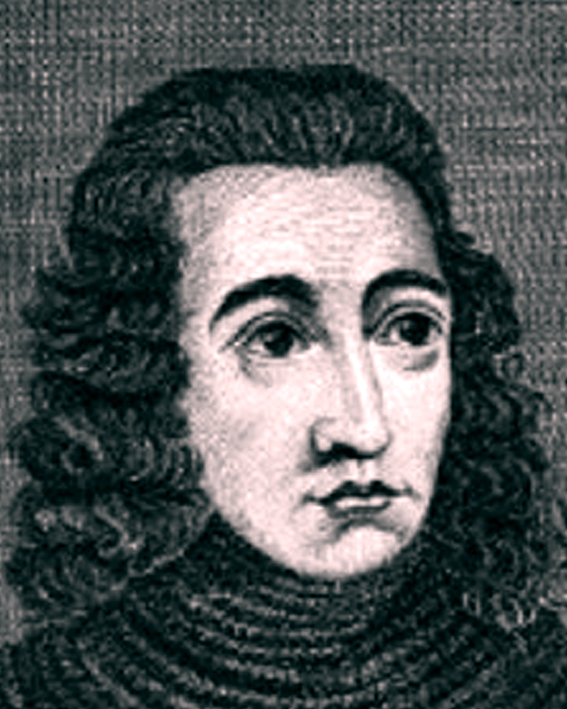 The Duke of Clarence (1449-78)
George Plantagenet was one of those rare individuals better known for his manner of death than anything he did. He grew up in Greenwich, the son of Richard of York and brother of two future Kings of England, Edward IV and Richard III. When Edward took the throne in 1461, George became the 1st Duke of Clarence. Had he been patient, he might himself have succeeded, being older than Richard; but he was inclined to mental instability and questionable decision-taking. When his father-in-law, the Earl of Warwick, turned against the Yorkists in 1469, the foolhardy Clarence backed him in the belief that he would be installed as king in his brother’s place. Disappointed, he returned to the Yorkist cause, but repaid his brother’s forgiveness by again rebelling in 1477. This time, King Edward had him tried for treason and executed. According to tradition, he was imaginatively drowned in a butt of Malmsey wine.
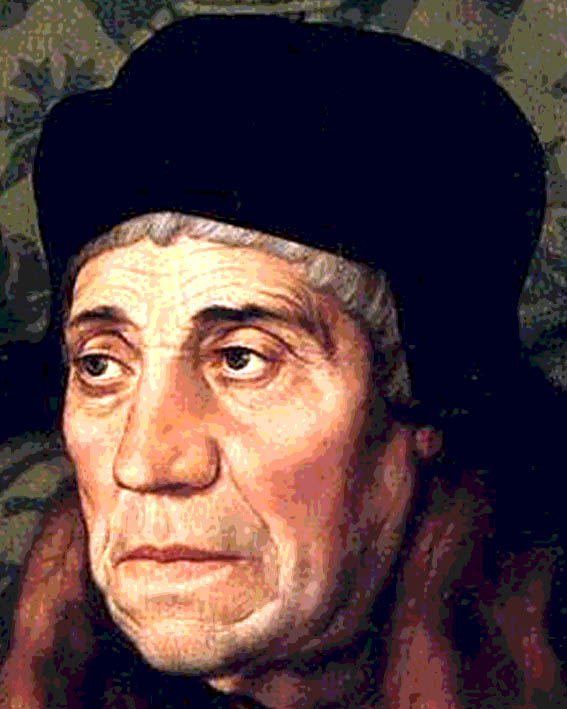 William Warham, Archbishop of Canterbury (~1450-1532)
Having been born a farmer’s son in Hampshire, Warham went to Oxford, took holy orders, and practised law. By 1494, he was Master of the Rolls. He served Henry VII well as a diplomat, helping arrange Prince Henry’s marriage to Catherine of Aragon, and conducting negotiations with the Scots and with the Holy Roman Emperor. He became the Bishop of London in 1501, but in no time progressed to Lord Chancellor and Archbishop of Canterbury, and then Chancellor of Oxford University. He showed evidence of his political instincts in 1515 by resigning as Lord Chancellor in favour of the ill-fated Cardinal Wolsey, presumably suspecting what was ahead. Having accompanied Henry VIII to the Field of the Cloth of Gold, he took the stance that the King’s anger meant death, and so acquiesced as far as his conscience allowed. He died just in time to avoid Henry’s lethal marital upheavals, and has a prominent tomb in Canterbury Cathedral.
 Richard III, King of England (1452-85)
Arch-villain, as per Shakespeare, or just an unlucky pragmatist? It is hard to be sure about Richard. He was raised with elder brother George in a tower at Placentia Palace in Greenwich after their father Richard of York fled the country. He stuck loyally with his eldest brother, Edward IV, throughout the bitter civil war. Come Edward’s death in 1483, however, he took on another hue. He used a legal ruse to argue that Edward’s young sons Edward and Richard were conceived illegitimately, and seized the crown for himself; the two ‘Princes in the Tower’ were never seen again. He might have argued that it was necessary for England’s sake, given the imminent threat from the Tudors. All was lost in any case at Bosworth in 1485, when the usurper Henry VII ended Richard’s life, the Plantagenet dynasty, the Wars of the Roses, and the Middle Ages. Richard’s skeleton was eventually found in 2012, and respectfully reburied at Leicester Cathedral.
 St John Fisher (1469-1535)
The epitome of the dour Yorkshireman, John Fisher studied at Cambridge before becoming Margaret Beaufort’s chaplain. A year after his appointment as a Divinity professor in 1503, he was made chancellor of Cambridge University and Bishop of Rochester, where he remained for the rest of his life. He was known for his extreme spiritual uprightness, and liked to remind others of their mortality by placing a skull on the altar at prayer time, and on the dining-table at supper time. Author of an outspoken critique of Luther in 1523, he unsurprisingly had no truck with the determination of the supposed ‘Defender of the Faith’, Henry VIII, to implement an English Reformation for dynastic and libidinous reasons. By insisting on papal supremacy in Church matters, he effectively signed his own death warrant. He was beheaded on Tower Hill, a fortnight before Sir Thomas More went the same way. Exactly four centuries later, he was canonised as a martyr by Pope Pius XI.
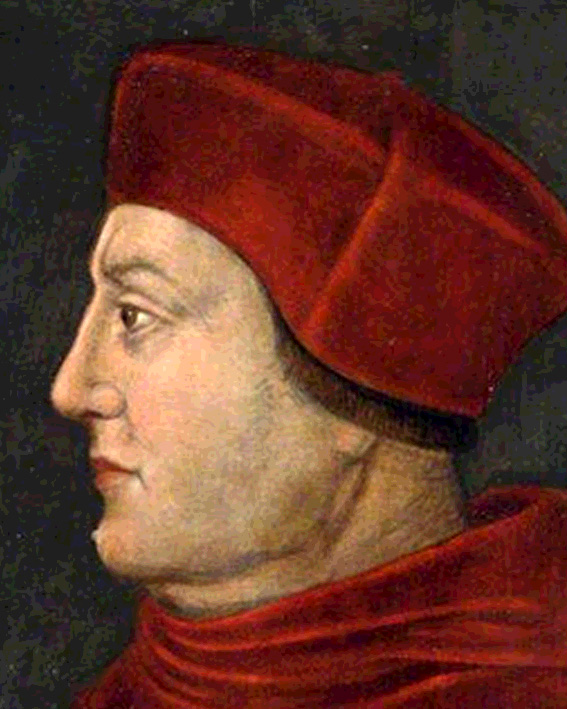 Cardinal Wolsey (1473-1530)
Thomas Wolsey’s life encapsulated the principle that supping with the devil demands a long spoon. From humble origins in Suffolk, he became a priest after studying Theology at Oxford. He was appointed chaplain to the Archbishop of Canterbury and rector of Lydd, although it is debatable whether he preached there. He was royal chaplain under Henry VII, and his rise to fame and riches grew meteoric under Henry VIII. He became Archbishop of York in 1514 and then a cardinal; yet his secular power was no less impressive, culminating in the Lord Chancellorship. It all went pear-shaped when Henry took a fancy to Anne Boleyn. Wolsey was charged with securing Henry’s divorce from Queen Catherine. Seeing the likely consequences, he actively resisted. Henry responded by relieving him of his government titles and Hampton Court Palace, and then summoning him to be tried for treason. Wolsey saved himself a lot of pain by expediently dying en route.
 Sir Thomas More (1478-1535)
It’s unsurprising that Erasmus’s best friend in England was Thomas More. Both were learned, humanistic, and Catholic; but More went further. Born into a wealthy London family, he served as a household page to the Archbishop of Canterbury, who lived at Knole House. After Oxford, he studied law. He actually accompanied Erasmus on that famous visit to Eltham Palace, and later would get to know Prince Henry all too well. An MP at 26, he was knighted in 1521 for services to the King, succeeding Wolsey as Lord Chancellor eight years later. It was an untimely appointment, with Henry’s divorce from Catherine on the cards. Sir Thomas was a devout Catholic, who wore a hair-shirt and might have become a monk. Out of principle and obstinacy, he refused to endorse the King’s ‘great matter’, literally to the death. The martyr was canonised by Pope Pius XI in 1935, ironically after his satire ‘Utopia’ had made him a Bolshevik hero.
 Catherine of Aragon, Queen of England (1485-1536)
Catalina de Aragon was one of the more pitiable figures in history. Her illustrious parents were Ferdinand and Isabella, who’d completed the reconqista of Spain and unified the Spanish nation. At 15, she married Prince Arthur, heir to the English throne, who died after just five months. Seven years later, she wed his brother, King Henry VIII. Living at Leeds Castle, she acquitted herself well, even serving as regent in Henry’s absence. Her one failure lay in the matter of providing a male heir. The nearest she came in six pregnancies was a would-be Henry IX who died after seven weeks; only the future Mary I survived. In 1533 her impatient husband had the marriage annulled, took up with Anne Boleyn, and ejected Catherine from court. She was shunned, moved from place to place, and took to wearing a hair shirt; and still she refused to recognise the divorce. When she died, daughter Mary was even forbidden to attend the funeral.
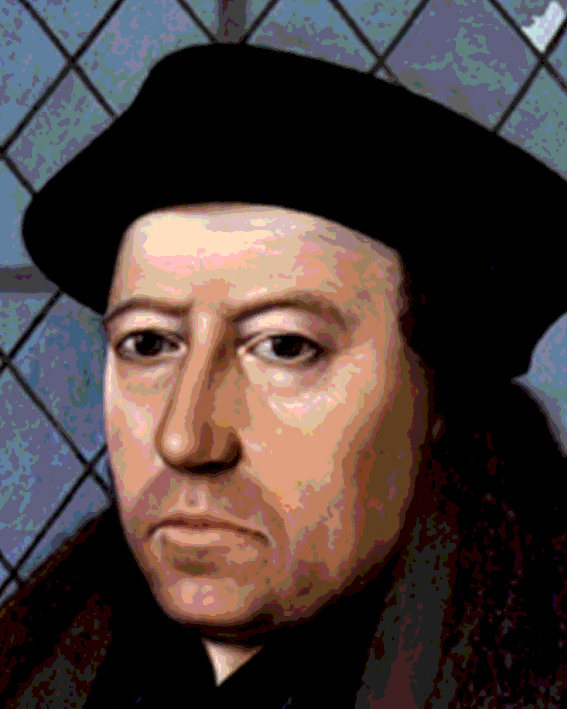 Archbishop Thomas Cranmer (1489-1556)
It fell to Nottinghamshire-born academic Thomas Cranmer to pick up the pieces of King Henry VIII’s repudiation of the Roman Catholic Church. Cardinal Wolsey turned to him at Cambridge for support on the matter of Henry’s divorce. It led Cranmer to tour Europe in search of academic advice, during which his encounters with Protestant activists influenced his theological thinking. In 1532, he was surprisingly summoned to the Canterbury archbishopric. As a theological Mr Fixit by royal appointment, he smoothed the passage of Henry’s matrimonial convulsions, whilst under Edward VI he created the Anglican liturgy, including the Book of Common Prayer. Such achievements came back to bite him, however, for he inevitably fell foul of the Catholic Queen Mary. Tried for treason and heresy, he recanted his beliefs, but to no avail; Mary wanted an example made of him. At the last moment, he dramatically renounced his recantation, cursed the Pope, and died a Protestant martyr’s fiery death at Oxford.
 John Bale (1495-1563)
A Carmelite friar from the age of 12, John Bale from Suffolk converted to Protestantism in 1533, and thereafter castigated the monastic way of life through miracle plays and mysteries. So coarse was his vitriol that he became known as Bilious Bale, and acquired many enemies; but he was protected by Thomas Cromwell, who reaped the benefits. When Cromwell fell, Bale fled. Recalled under Edward VI, he was made a bishop in Ireland, where his propaganda so antagonised Catholics that they attacked his house and killed five servants. Finally, with Elizabeth I on the throne, Bale was made a prebendary at Canterbury, where he died. Among his less polemical works, the most significant is his ‘A Summary of the Famous Writers of Britain’ (1548), which implausibly starts with Adam. He did make a landmark literary contribution with his first drama, ‘Kynge Johan’ (ca 1538), which represents the dramatic crossover from morality play to historical drama that later became standard.
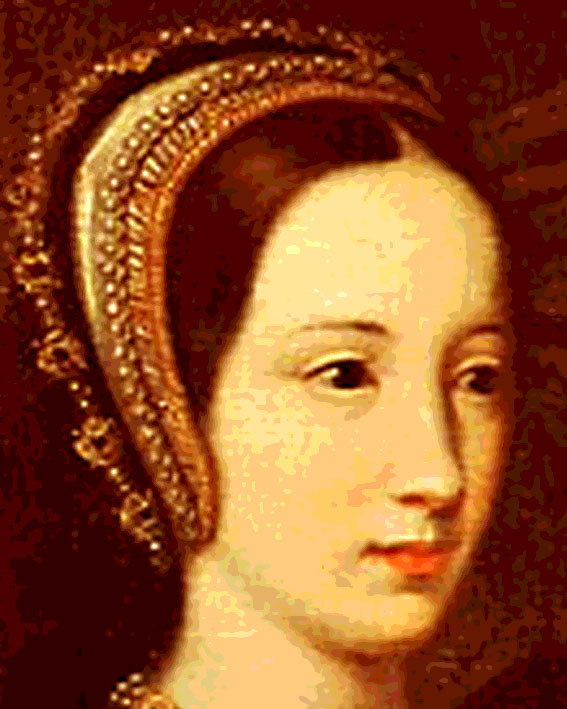 Mary Tudor, Queen of France (1496-1533)
Born at Sheen Palace, the pet sister of Henry VIII, Princess Mary was regarded officially as a political pawn. She was married off at 18 to Louis XII of France, who was desperate for a son before he died but expired within three months. She turned immediately to her true love, Charles Brandon, the Duke of Suffolk, and married him secretly in Paris against Henry’s expressed wishes. This was treason; but Cardinal Wolsey intervened, and the couple merely had a punitive £24,000 fine imposed on them. They were also made to marry again in Henry’s presence at Greenwich Palace, two months after the original ceremony. The fine was later reduced, and in 1530 they were even gifted Sayes Court. Mary – who incidentally detested Anne Boleyn – bore four children, but was frequently sick, and died at 37 from one of several possible maladies. She was the subject of a play written by Borden dramatist Primogene Duvard in 1844.
 Mary Boleyn (~1499-1543)
Like her younger sister Anne, Mary Boleyn was probably born at Blickling Hall in Norfolk, but grew up at Hever Castle. Also like Anne, but even earlier, she was Henry VIII’s mistress, and probably bore him two unacknowledged bastards. Unlike Anne, however, who was less attractive but cannier, she failed to secure a royal marriage. Instead she wed William Carey, one of Henry‘s pet courtiers. Their three children included a son, Henry, who grew up to be the Baron Hunsdon who patronised the Lord Chamberlain’s Men, for whom Shakespeare wrote and performed. When Carey died of the ‘sweating-sickness’ in 1528, the King gave Anne custody of her young nephew, Mary having been left penniless. Six years later, Mary remarried secretly, this time with a humble soldier called William Stafford. Since she was one of the Queen’s companions at court, Anne was outraged, and barred her sister from the royal presence. Mary died in no doubt grateful obscurity.
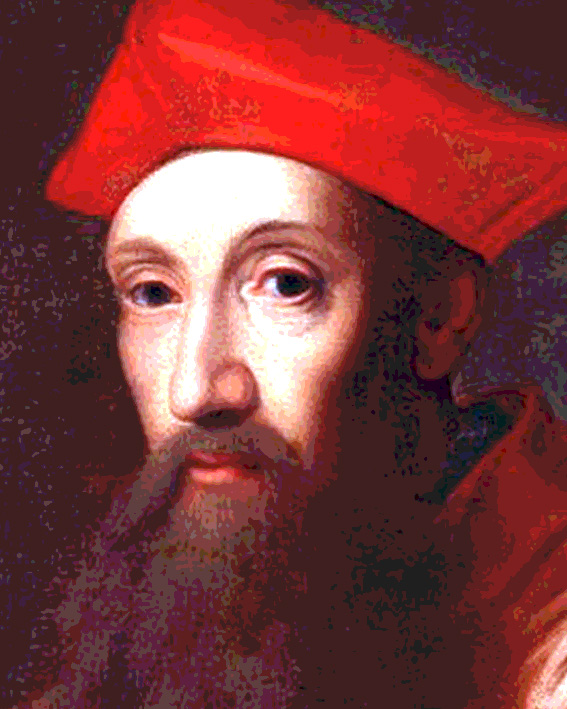 Reginald Pole, Archbishop of Canterbury (1500-58)
Perhaps surprisingly, there was one last Catholic archbishop of Canterbury after the English Reformation. Edward IV’s great-nephew Reginald Pole was born in Worcestershire, studied at Oxford and Padua, and became dean of Exeter in 1527. Henry VIII sought his support on his divorce from Catherine of Aragon, but he felt unable to oblige, and left the country in 1532. When pressed by Thomas Cromwell in 1536, he aggressively repudiated and conspired against Henry, who retaliated by beheading most of Pole’s family. Elevated in Rome to cardinal, he might have become pope, but was brought home when Mary I succeeded Edward VI and required help with persecuting Protestants. She made him Archbishop of Canterbury in 1556, after which the martyrdoms proliferated. Nevertheless, Pole sought to rehabilitate the Church of England with Rome, which prompted Pope Paul IV to refer him to the Inquisition. Though safe under Mary’s protection, he saved himself trouble by dying within hours of her decease.
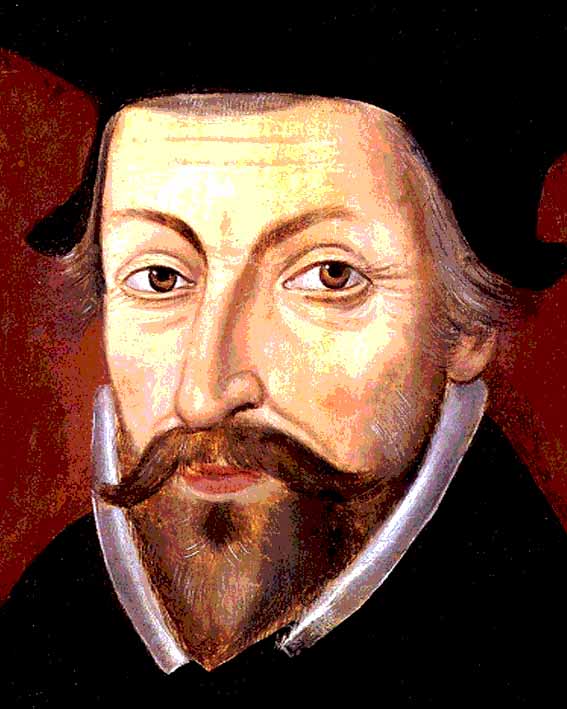 Bishop Nicholas Ridley (~1500-55)
The execution of the ‘Oxford Martyrs’ Nicholas Ridley, Thomas Cranmer, and Hugh Latimer was the nadir of Mary I‘s bloody reign. Ridley, from Northumberland, studied at Cambridge and Paris before progressing up the ecclesiastical ladder, from chaplain at Canterbury (1537) to vicar of Herne (1538) to Bishop of Rochester (1547) and finally Bishop of London (1550). Having renounced transubstantiation, he collaborated with Cranmer, the Archbishop of Canterbury, on the Forty-two Articles expressing the precepts of the new Church of England. A loyal support to Edward VI, he spoke publicly against the legitimacy of both Mary and her sister Elizabeth, and supported the claim of Lady Jane Grey. When Edward died at 15, Mary’s supporters usurped the throne for her, with fatal consequences for Ridley. The new Catholic queen ignored his pointless apology and had him show-tried for heresy. His death at the stake was notoriously horrific, but in Latimer’s words lit a candle that would never be put out.
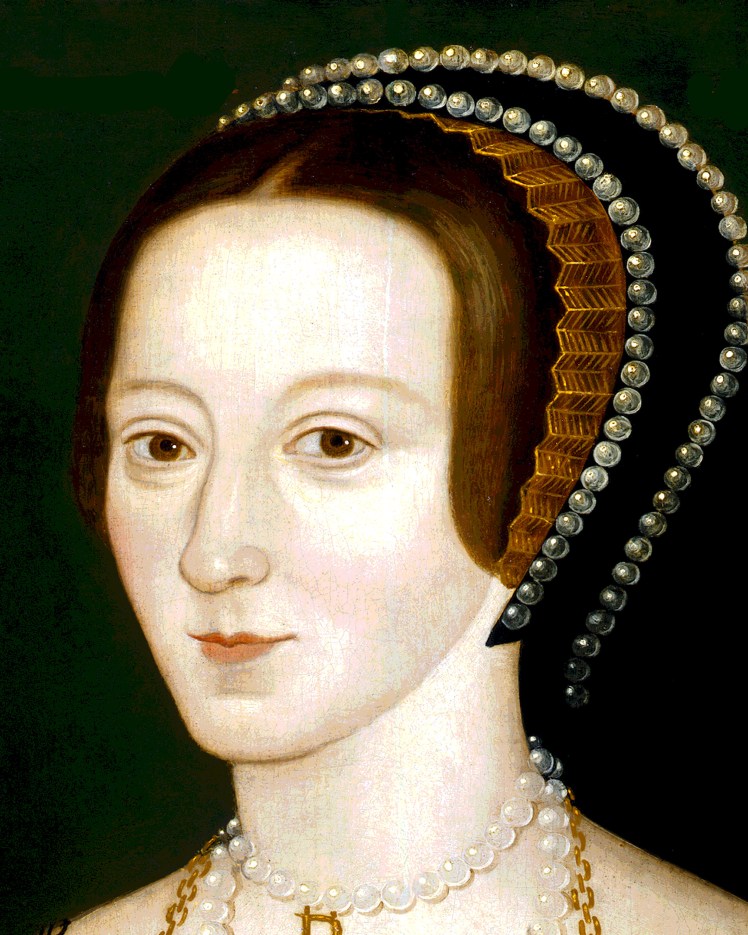 Anne Boleyn, Queen of England (~1501-36)
Nan Bullen was probably born at her family’s second home in Norfolk, but is most associated with Hever Castle. After two proposed marriages had fallen through, in 1526 she drew the attention of the priapic King Henry VIII, who already enjoyed her elder sister Mary as a mistress. Anne refused to sleep with him unless as his Queen. His ardour for her became the primary driver of his campaign to divorce his wife, even though it meant forcing a historic rupture with the Roman Catholic Church. Not until 1533 could they marry, just three months before Anne gave birth to the future Queen Elizabeth I. There followed three miscarriages in three years, however, prompting the King to transfer his interest to Jane Seymour. To this end, he had various trumped-up charges brought against Anne, including adultery, incest, and intended regicide. Being a decent cove, however, he graciously permitted her head to be severed by an expert swordsman.
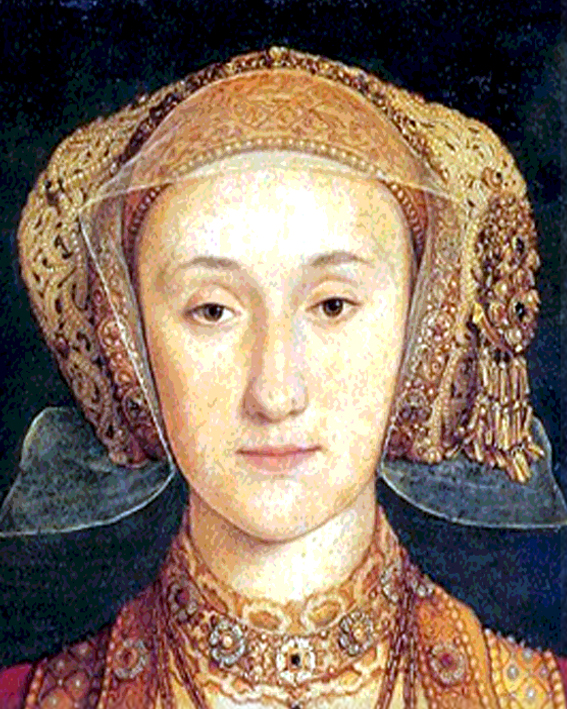 Anne of Cleves, Queen of England (1515-57)
After Jane Seymour’s death, Henry VIII decided to strengthen his alliance with German Protestants by marrying one of the Duke of Jülich-Cleves-Berg’s two daughters. Hans Holbein the Younger was famously sent to paint accurate portraits of both so that Henry could make his choice. When in 1540 the King informally met his bride-to-be Anna von Kleve at Rochester Abbey, however, he was sorely unimpressed. The feeling remained when they were officially introduced at Blackheath; and he proved incapable of consummating their marriage at Greenwich. After six fruitless months, he got her to agree to an annulment. The ever-loyal Thomas Cromwell, who had presided over the fiasco, paid with his life. At least Anne was treated well: Henry called her his “Beloved Sister”, and granted her the use of several houses, including Hever Castle. She resided last at the Manor House in Dartford, where she outlived all Henry’s other wives, and indeed him.
 Katherine Brandon, Duchess of Suffolk (1519-80)
In 1516, Baron Willoughby de Eresby married Maria de Salinas, Catherine of Aragon’s Spanish companion. He died in 1526, whereupon Charles Brandon, Duke of Suffolk, purchased their only child Katherine’s wardship, and contrived to deny her uncle’s claim to Willoughby’s vast Lincolnshire estates, even invoking Cardinal Wolsey. When Brandon’s third wife died in 1533, he married the girl, despite a 35-year age difference, and so acquired the estates himself; but he expired in 1545. Katherine loyally supported the King’s English Reformation, so he designated a chamber at Otford Palace ‘My Lady of Southfolk’s lodging’; his death spared her becoming his seventh wife. When his sixth, Catherine Parr, died in childbirth, Katherine resented being appointed the orphan’s guardian; the baby promptly disappeared. Both her sons by Brandon having died young, she fled overseas with her second husband during Mary I’s reign, their exile being recounted in ‘Foxe’s Book of Martyrs’. She died back in Lincolnshire.
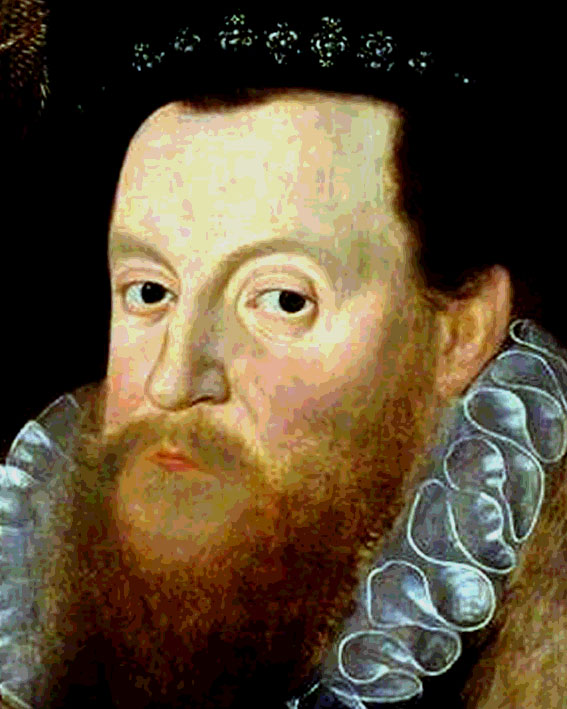 Sir Henry Sidney (1529-86)
Sir William Sidney from Yorkshire was a favourite of Henry VIII and Edward VI, whose services were rewarded with estates that included Penshurst. His son Henry was altogether more controversial. In 1565, he was made Lord Deputy of Ireland. Arriving to find considerable disarray, he managed to secure Elizabeth I’s permission to eliminate the insurgent Shane O’Neill, whom he held responsible. He then travelled south and north bending other chieftains to his control. Although his brutality was nothing unusual for the era, his administrative initiatives included ‘lord presidents’ to exercise military authority over southern Ireland, which provoked the Desmond Rebellions. He left Ireland in 1571, convinced that Elizabeth was insufficiently grateful. He returned in 1575, but his annual levy prompted protests to her from his peers in Ireland. In 1578, he was recalled in disgrace, and whiled away the rest of his life on the Welsh borders. His one lasting accomplishment was siring the great poet Sir Philip Sidney.
 Thomas Sackville, 1st Earl of Dorset (1536-1608)
Thomas Sackville was born at his family’s ancestral home at Buckhurst, Sussex, and ended up owning both Knole House and Groombridge Place among many other properties. His wealth derived from an eventful career in diplomacy, involving missions to Rome (where he was gaoled), France, and the United Provinces. Surprisingly, he has a place in literary history as well. He co-wrote ‘The Tragedie of Gorboduc’ (1561), the bloody tale of what happens when a king divides his patrimony between his two sons, Ferrex and Porrex, whose mutual enmity has dire consequences; suffice it to say (spoiler alert) that everyone dies. Sackville’s co-author Thomas Newton wrote the first three acts and Sackville covered the last two. It was performed before Elizabeth I in 1561, and at Dublin Castle forty years later became the first play to be performed in Ireland. The first ever blank verse drama in English, it was a direct antecedent of ‘King Lear’.
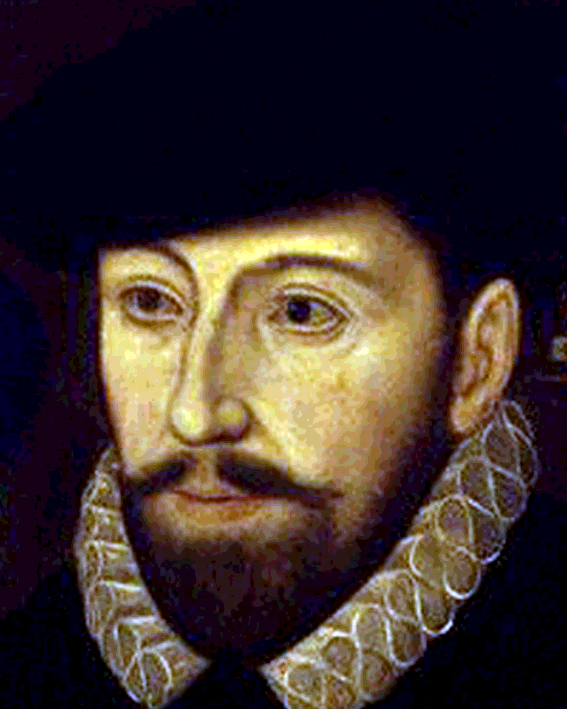 William Lambarde (1536-1601)
Lambarde, a prominent draper’s son, was born in London, though the family home was West Coombe Manor east of Greenwich; he inherited it at 18. After entering Lincoln’s Inn and studying Old English and History, he was encouraged at 32 to write a compendium of Anglo-Saxon laws, called ‘Archaionomia’. Two years later, he completed the manuscript of his most popular work, a weighty tome entitled ‘A Perambulation of Kent: conteining the Description, Hystorie, and Customes of that Shyre’. A model of organisation, it was the first ever such county study. He planned to expand it into a series covering the country before learning that it had already inspired William Camden to commence his own famous ‘Britannia’. A fair-minded JP, Lambarde established a charity, the College of the Poor of Queen Elizabeth, providing almshouses near his home. Late in life, he become Keeper of the Rolls, and won the Queen’s confidence. His three successive wives were all of Kentish stock.
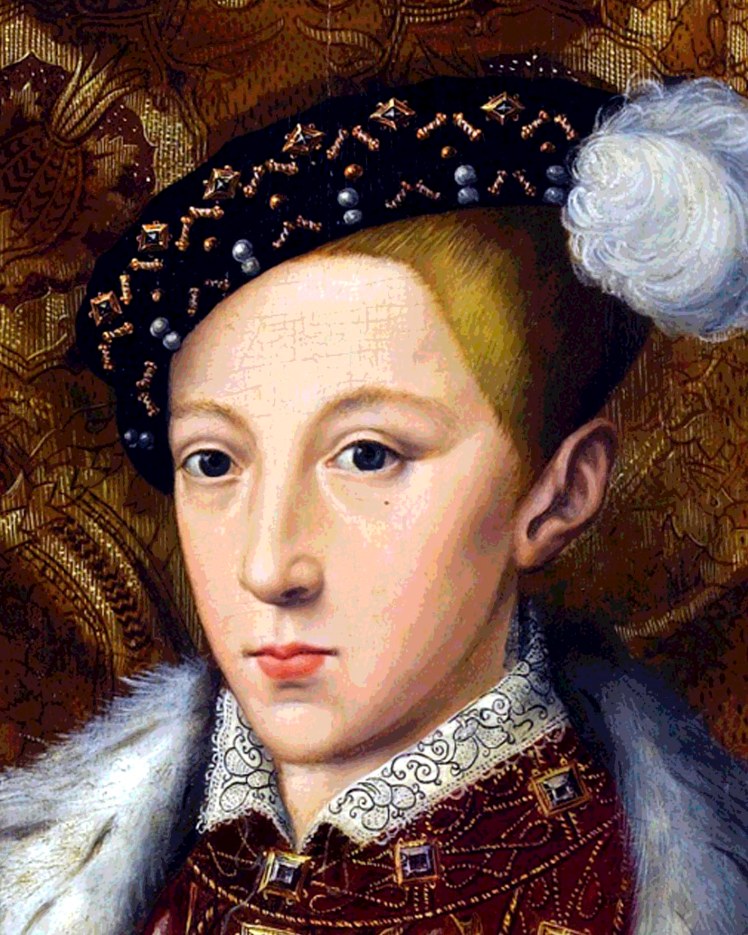 Edward VI, King of England (1537-53)
For one whose birth was greeted with such an outpouring of joy, the life of Edward VI was strangely disappointing. He never got to know his mother, Jane Seymour, because she died suddenly a fortnight after giving birth to him at Hampton Court. He succeeded his father Henry VIII at the age of nine. The Council ruling on his behalf functioned calamitously, ushering in military defeat, economic problems, and revolt. Only in religious reform did his reign see anything coherent. The young Protestant king oversaw a radical advance in the Reformation, as Archbishop Cranmer and Bishops Latimer and Ridley established the Anglican liturgy. Conscious that his half-sister Mary would not stomach the new orthodoxy, Edward worked with the Council to bar her from power, issuing his ‘Devise for the Succession’ in 1553. By that time, however, he had contracted a fatal lung illness, possibly tuberculosis. He resorted to the Placentia Palace in Greenwich, where he died aged 15.
 Jane, Queen of England (1537-54)
Even by Tudor standards, the fate of Lady Jane Grey was dismal. Like Edward VI, she was descended from Henry VII, but through a cadet branch. Living at Halden Place in Rolvenden, she seemed secure from courtly intrigue. In May 1553, she married Guilford Dudley, the Duke of Northumberland’s son, in a triple wedding. The King, however, was fatally ill, and a month later reversed his father’s Third Succession Act that had restored Edward’s two illegitimate sisters to the succession. By July, he was dead, and Lady Grey became Queen Jane. When her father-in-law belatedly rode off to apprehend Edward’s elder sister, Mary Tudor, the Catholic Earl of Arundel staged a putsch. Mary was hailed queen, and Jane’s support evaporated. Since Jane hadn’t wanted the job, Mary showed clemency at first; but when her father joined Wyatt’s Rebellion, the Nine-Days’ Queen was done for. Young Jane was even shown Dudley’s headless body before facing the chop herself.
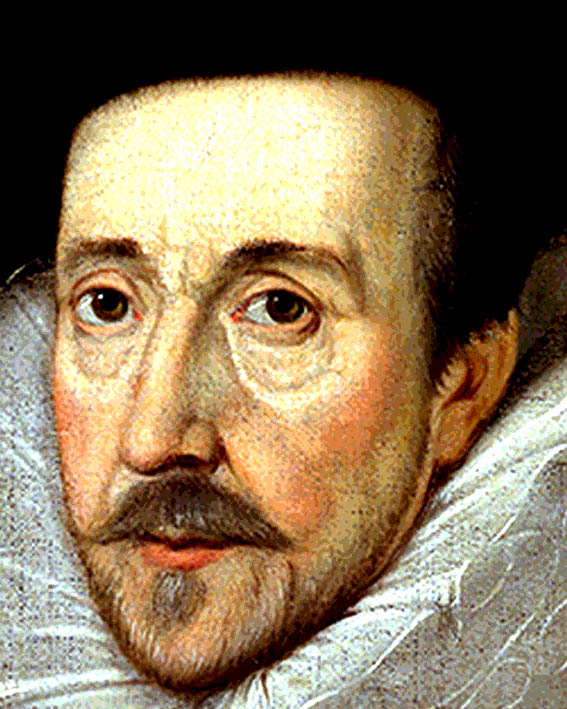 Henry Howard, 1st Earl of Northampton (1540-1614)
When he was just seven, Howard’s father Henry, the Earl of Surrey, provoked Henry VIII by incorporating Edward the Confessor’s arms in his own. Though legally entitled to, he was found guilty of treason, and so became the paranoid king’s last victim; his own father survived because the king died on the very day that his execution was slated. Young Howard was suspected of Catholic sympathies throughout his life, which cost him more than once in terms of preferment; but he compensated with his reputation for learning and numerous shows of philanthropy, including Trinity Hospital at Greenwich. He also built Northumberland House and Audley House, and owned Greenwich Castle, which he modernised and lived in from 1605 after being made Lord Warden of the Cinque Ports and Earl of Northampton the previous year. This showy do-gooder turned out to have a dark side, however, when it was discovered posthumously that he had been an accomplice to a political murder.
 Sir Francis Drake (~1540-96)
Drake’s bravado at sea earned him the ultimate accolade, the contemptuous Spanish nickname ‘El Draque’ – The Drake. The quintessential English national hero, his story used to be known to every schoolchild. In an era of Spanish mastery of the seas, he plundered the Spanish Main, burned King Philip II’s fleet at Cadiz, and enjoyed a game of bowls before seeing off the Armada. Less well known is his Kentish connection. His family had fled a Catholic rebellion in their native Devon when he was nine, settling at Upnor, where his father became vicar. It was their proximity to the Medway that first drew Drake to seafaring. It is often forgotten that Queen Elizabeth knighted Drake at Deptford not for his military exploits but as a navigator. He was in fact the first man ever to captain a ship all the way around the world. For an encore, he even claimed California as an English colony en route.
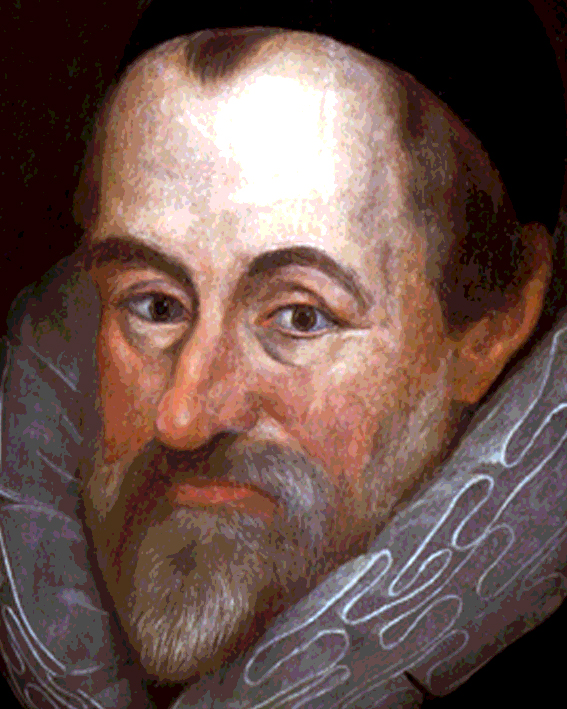 William Camden (1551-1623)
A Londoner by birth, Camden went to Oxford, where he earned no degree but did get to know Philip Sidney, who encouraged his antiquarian interests. At 26, he embarked on his marquee project: ‘Britannia’, a survey of the British Isles written in Latin. It involved travelling all around the country, as well as borrowing from sources like Leland and Lambarde. It took him thirty years to complete, the last edition being much expanded from the first and including the first ever set of county maps. In addition to being appointed headmaster of Westminster School, he created several other useful records, from ‘Annales’ – the first history of the Elizabethan era – to a collection of English proverbs. He moved in 1609 to Chislehurst, where his home was posthumously renamed Camden Place. ‘Britannia’ remains a landmark antiquarian study, and Camden’s name is recalled in the Camden Chair he established at Oxford, the Camden Society, and (indirectly) the London borough.
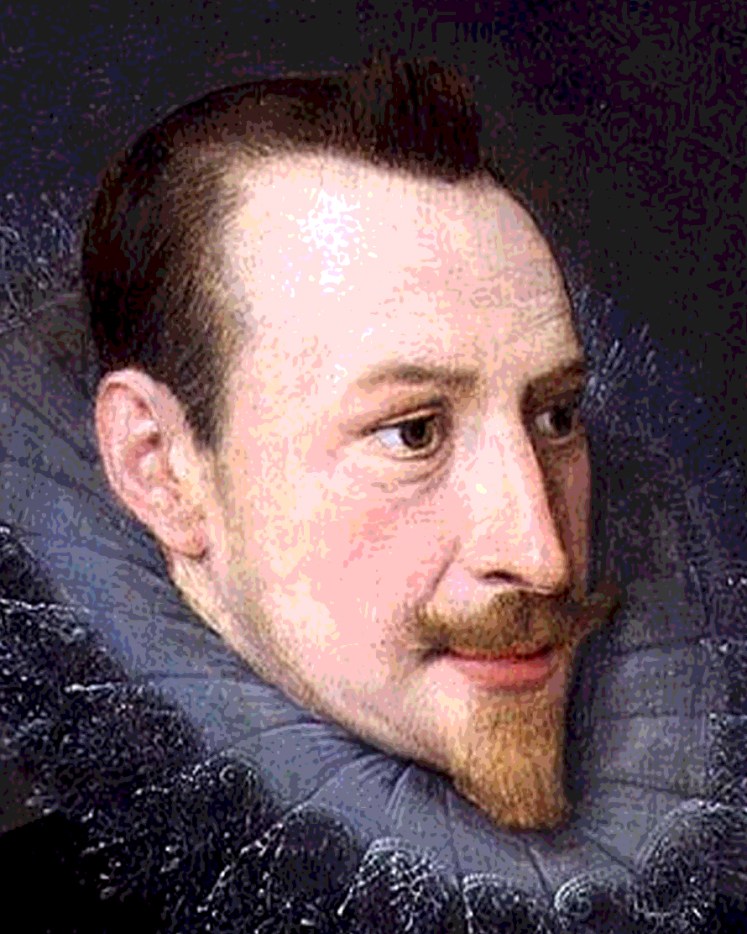 Edmund Spenser (~1552-99)
Spenser must be acknowledged as one of the most talented (not to mention prolific) poets in the English language. On the other hand, he was a world-class toady. Born in London, he made his way via the Merchant Taylors’ School to Pembroke College, Cambridge. The Master there was John Young, who later became Bishop of Rochester. In 1578, Young invited Spenser to join him as secretary. Thereafter, Spenser spent many years in Ireland. He was not popular, possibly because of his view that Ireland would never be subjugated until its language and culture had been obliterated; Irish insurgents eventually burnt his home. While there, however, he wrote the first three volumes of his masterpiece, ‘The Faerie Queene’. It was intended to be a 12-volume apotheosis of Queen Elizabeth I. Although it won him a £50 pension, he managed only six volumes, which probably cost him his knighthood. It is not known whether the Queen read it.
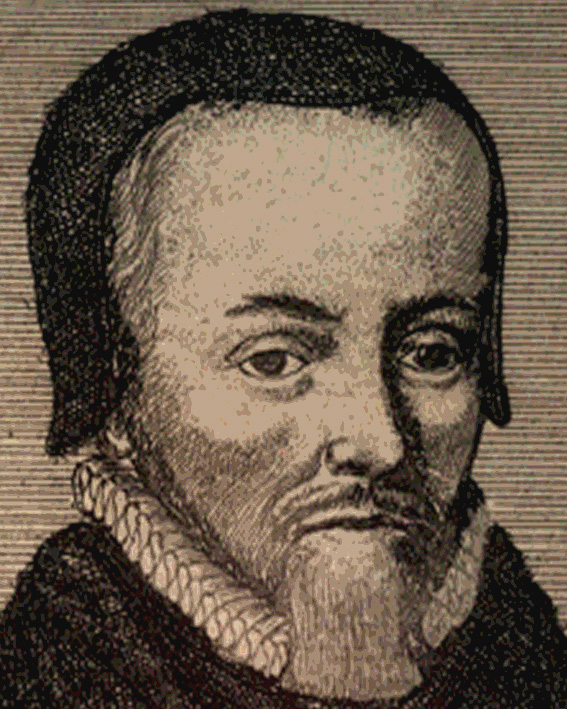 Richard Hooker (1554-1600)
Although not from a wealthy family, Hooker showed such intellectual promise at Exeter Grammar School that the Bishop of Salisbury secured him a place at Oxford. He was ordained in 1579, and proved himself a lucid thinker on theological matters in troubled times. After being drawn into a robust dispute with the Puritan theologian Thomas Cartwright, he was offered the living of Boscombe in Wiltshire, allowing him to devote himself to his eight-volume ‘Of the Lawes of Ecclesiastical Politie’ (published 1594-1662), which constituted the first serious theological treatise in English. Intended as a rational refutation of Puritanism, it provided the basis for future Anglican thought. He spent his last five years as rector of both St John the Baptist in Barham and St Mary the Virgin in Bishopsbourne. He was buried in the chancel of the latter, and bequeathed its current pulpit. The poet William Cowper later dedicated a memorial to him there.
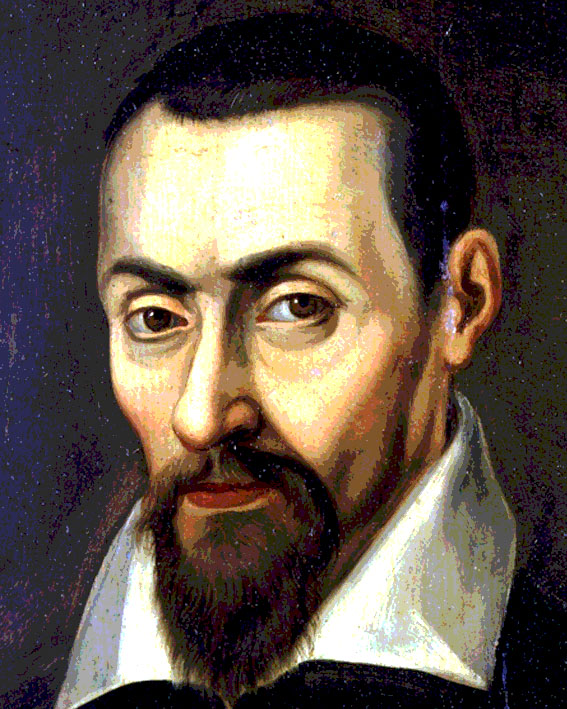 Isaac Casaubon (1559-1614)
The son of a French Huguenot couple, Casaubon spent his first two decades evading Catholic persecution. Having first learned Greek while hiding out in a cave after the St Bartholomew’s Day Massacre (1572), he ended up a professor of Greek in his Calvinist birth-city, Geneva. His scholastic prowess led him to edit and commentate on several Greek writers, his greatest contribution being Athenaeus’s ‘Deipnosophistae’, an important source of knowledge of ancient Greek life. Much sought after as a scholar, he even found employment in a French university, before settling in Paris. When the supportive French king was assassinated by a Catholic radical in 1610, however, Baron Wotton of Marley took Casaubon to England. Instantly welcomed as an Anglican seeking a middle way between Catholicism and Puritanism, he was awarded a prebendal stall at Canterbury. Although on good terms with the likes of Erasmus, he still encountered bigotry from xenophobes and Jesuits, but remained and was buried in Westminster Abbey.
 Sir Edwin Sandys (1561-1629)
The son of the Archbishop of York, politician Edwin Sandys from Worcestershire is remembered as the first to pen the maxim “Honesty is the best Policy”. In reality, however, he appreciated that the best way to advance his rebellious leanings was to suck up to the monarch, James I, while pressing ahead quietly with the development of Virginia on broadly republican principles. Having succeeded Thomas Smythe as treasurer of the Virginia Company in 1619, he promoted ‘indentured servitude’, a means for migrants to work off their transport to America and living costs, and facilitated the grant of land for settlers to farm. He also supported the Pilgrim Fathers in Massachusetts with a generous £300 loan. Meanwhile, he moved to Northbourne near Deal, where he served as MP for Rochester, for Sandwich, and for Kent, and then died and was buried. His second son Edwin, a Parliamentarian enforcer, would prove an altogether less delicate operator in the Civil War.
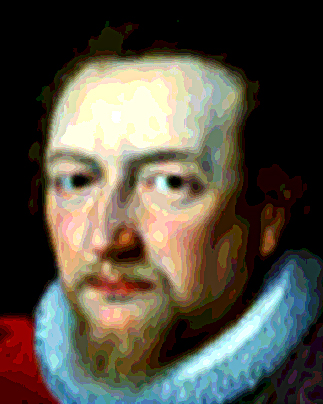 Henry Brooke, 11th Baron Cobham (1564-1618)
Henry Brooke was perfectly happy as the 11th Baron Cobham and Lord Warden of the Cinque Ports when a regime change wrong-footed him. Brooke was the son of the 10th Baron, the man reckoned to have been the basis of Shakespeare’s Falstaff, whom the Bard originally named Oldcastle after Brooke’s ancestor. Henry’s brother Sir George, an altogether sharper character, was involved in a plot to kidnap the new Catholic king, James I, and replace him with Arbella Stuart. This so-called ‘Bye Plot’ was discovered, and Sir George executed. The investigation also revealed a ‘Main Plot’ in which his brother, Henry, was to travel to Spain, collect a vast amount of money, and share it with Sir Walter Raleigh for seditious purposes. Brooke’s understandable motivation was probably to stop the King stealing his estate to give to a Scottish favourite, the Duke of Lennox. Both Brooke and Raleigh spent most of the rest of their lives in the Tower.
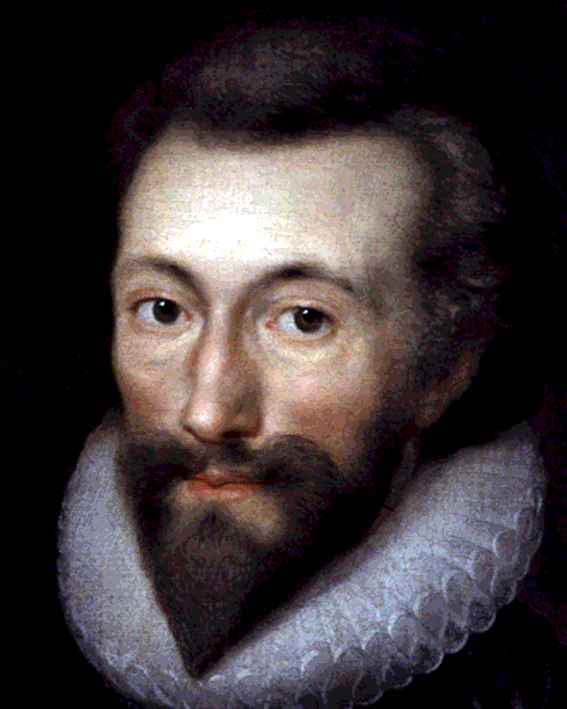 John Donne (1572-1631)
A Londoner, John Donne was born Catholic in a Protestant society. Faced with limited career prospects, he spent his substantial inheritance on women and travel. At length he landed a job as secretary to Sir Thomas Egerton, whose daughter he married secretly, for which he was initially thrown in gaol. Living in poverty with numerous children drove him to despair. He sought respite in politics; but it was poetry that changed his life. He started writing poems for wealthy patrons, including anti-Catholic works. His expedient transformation was completed in 1615, when he became an Anglican priest and took on the rectory of Sevenoaks. It’s uncertain how often he preached there, especially after becoming Dean of St Paul’s, where he eventually was buried. One of the tricksy Metaphysical poets, his erotic and satirical works later gave way to religious reflection. Most famously, his ‘No man is an Iland’ invites us to regard every death as our own, presumably even his.
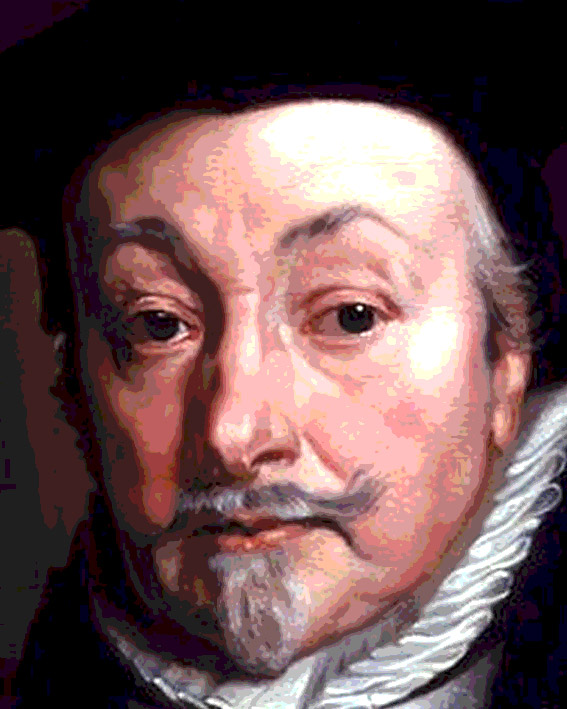 William Laud, Archbishop of Canterbury (1573-1645)
Little remembered today except by historians, William Laud has a place in history as the Archbishop of Canterbury tried and executed by Parliament. The son of a clothier in Berkshire, he went to Oxford, and was ordained at 27. A vehement anti-Protestant of notable learning and industry, he acquired the patronage of such politically unsavoury figures as the Earl of Devonshire and the Duke of Buckingham, in addition to a plethora of lucrative benefices that culminated in the Archbishopric in 1633. He was a godsend to Charles I, for whom he assiduously set about asserting Catholicism within the English Church and rooting out Puritanism. This ultimately provoked the sitting of the Long Parliament that in 1640 impeached him. Having declined to attempt escape from the Tower, he was tried by peers and found guilty of endeavouring to overthrow Protestantism and undermine Parliament. Though this did not constitute treason, he was beheaded on Tower Hill anyway.
 Anne of Denmark, Queen of Scotland & England (1574-1619)
When James VI of Scotland needed a wife, he had few options, and settled for 14-year-old Princess Anna of Denmark. A Protestant, she was advised by Elizabeth I of England to keep her nose clean by shunning Catholicism – advice she appears secretly to have disregarded. In 1603, James inherited the English throne, and overnight became a serious international player. By then, however, the two had grown apart, and not only because of James’s greater attachment to the Duke of Buckingham. Anne was noted as much for her shrewishness as her avarice, which drove the King to distraction. He held her apart from their son Prince Henry, who was kept at Charlton House while she resided nearby at Placentia Palace. Most of her children died young, including two girls she bore at Greenwich, while Princess Elizabeth made a disappointing match; so, when Henry expired at 18, it left only the disastrous Charles. The King was not at Anne’s funeral.
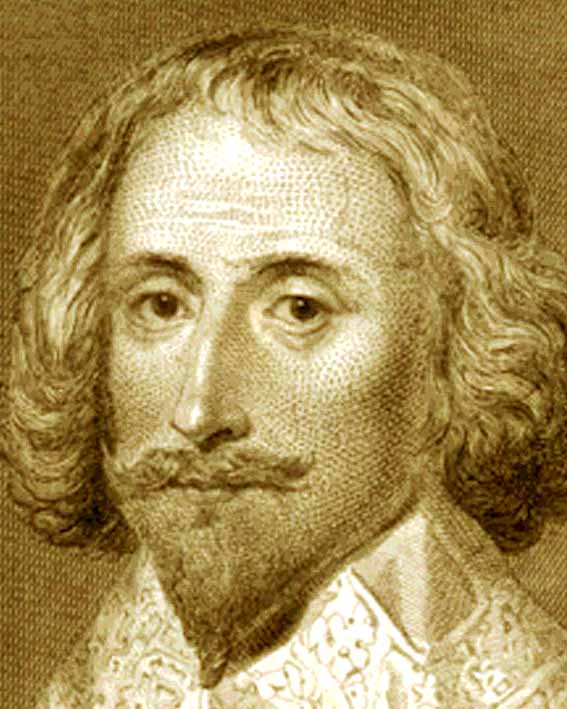 George Sandys (1578-1644)
In 1621, George Sandys, youngest son of the Archbishop of York, sailed away with his niece’s husband, Francis Wyatt of Boxley Manor, to take up positions as respectively the Virginia Company treasurer and the colony’s governor. Sandys remained for about a decade before returning to England. One of his two loves was literature. He had already translated Ovid’s ‘Metamorphoses’ in verse and begun Virgil’s ‘Aeneid’; he also translated or paraphrased several religious works. The other love was travel, which took him on an extensive tour of the eastern Mediterranean. He combined his two passions by writing travelogues that provided valuable insights into Italy, Egypt, the Holy Land, and the Ottoman Empire, which his eldest brother Samuel had also visited. Four volumes of his ‘The Relation of a Journey began A.D. 1610’ were published together in 1673 as ‘Sandys Travels’, containing dozens of images and maps. He died unmarried at Boxley.
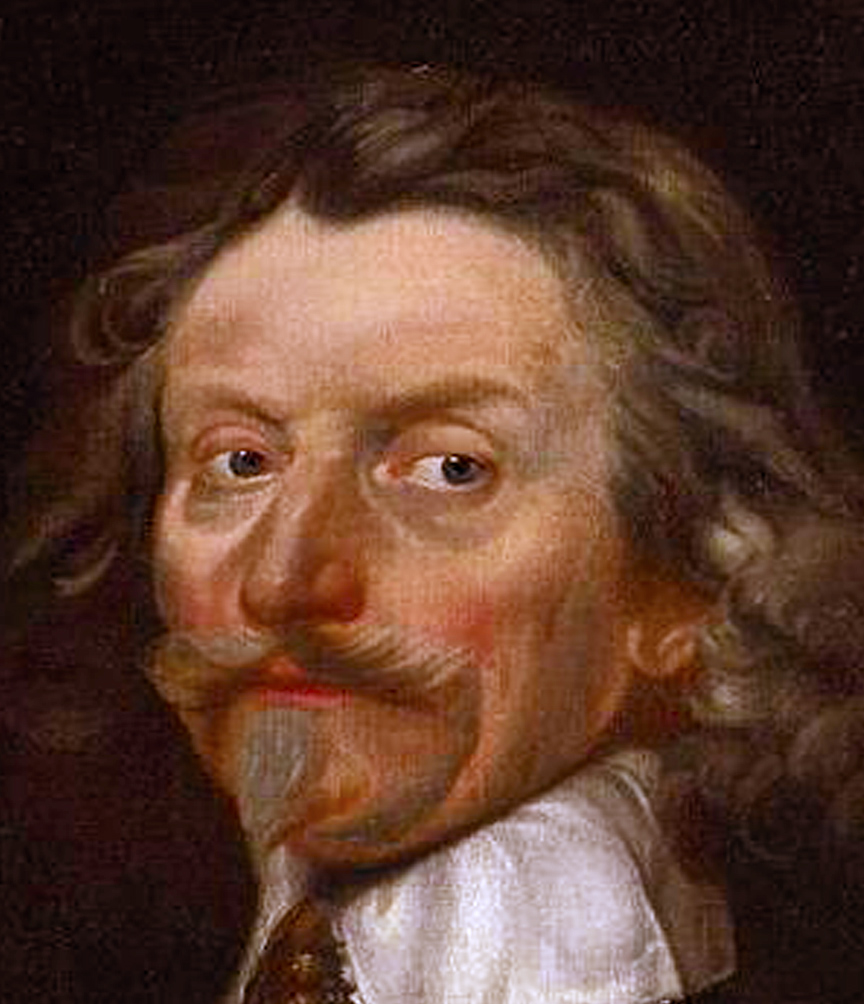 Jacob Astley, 1st Baron Astley of Reading (1579-1652)
Astley, from Norfolk, began his military career at 18 in celebrated company, accompanying Sir Walter Raleigh and the 2nd Earl of Essex on an ill-fated adventure against Spain. Following his more successful participation in the Dutch Revolt, he served Christian IV of Denmark with distinction in the 30 Years’ War. He was then hired by the former King Frederick of Bohemia to act as military tutor to Prince Rupert of the Rhine, by whose uncle, Charles I, Astley was knighted in 1624. He commanded the Royalist infantry alongside Rupert’s cavalry at the battle of Edgehill (1642) that commenced the Civil War in earnest; and, having been rewarded with a barony, he remained in charge until the last pitched battle before the King’s arrest. He was eventually permitted to retire to the Archbishop’s Palace at Maidstone, which he had inherited; but, true to his word, he took no part in the 1648 battle. He is commemorated in All Saints Church.
 Robert Devereux, 3rd Earl of Essex (1591-1646)
The 3rd Earl of Essex must have looked the perfect man to command a revolutionary army, his father the 2nd Earl – Elizabeth I’s former favourite – having been executed for rebelling against her. He had also had a military career that, if mediocre, proved that he knew which end of a pikestaff was the pointy one. Parliament duly made him chief commander when hostilities commenced in 1642. Even though he was fighting for his life, having first antagonised James I and then made his opposition to Charles I plain, he leaned towards the peace faction among Parliamentarians. It showed in his lacklustre performance in battle, in consequence of which the Civil War got off to a poor start for the rebels. Eventually, after recompensing him with Somerhill House, Parliament handed command to Cromwell and Fairfax at the head of the New Model Army. Essex died of a stroke soon afterwards; some have claimed that he expired at Eltham Palace.
 Edward Sackville, 4th Earl of Dorset (1591-1652)
When the 3rd Earl of Dorset, from Knole, died at 35 in 1624, he was succeeded by his younger brother Edward, with whom he had gone to Oxford. By then, this 4th Earl already had a sullied reputation. At 21, he had fought a duel with Lord Kinloss over 12-year-old aristocrat Victoria Stanley, losing a finger and being run through with a sword before killing the Scot with two thrusts in the chest. Though he recovered, he subsequently spent much time overseas, and was nearly assassinated on his return. Ironically, the girl married someone else, and was later alleged to have borne his brother Richard’s children as his “concubine”. Sackville was elected MP for Sussex, and became embroiled in the Virginia Company. He was best known, however, for his loyal support for the King during the Civil War. It cost him: Knole was ransacked by Parliamentarians, he was fined a small fortune, and his younger son was murdered.
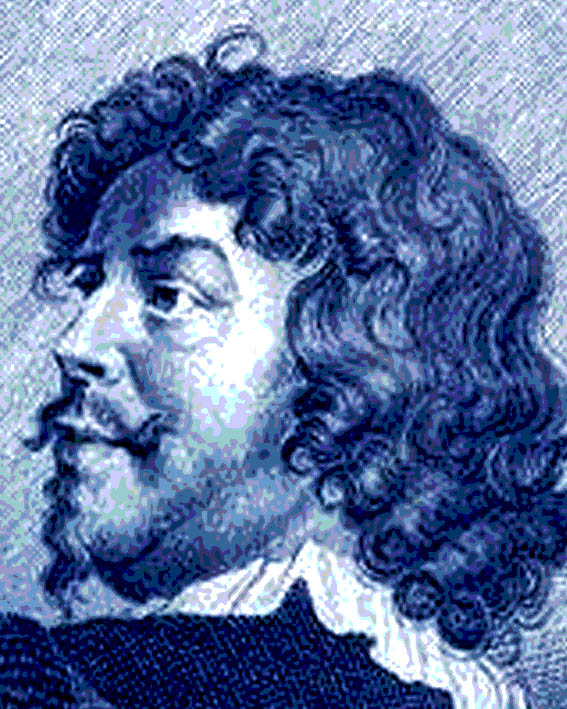 Cornelius Johnson (1593-1661)
Long before photography existed, there was a demand among the upper classes for having one’s portrait painted. It was natural that the artistic talent should flock from where there was a surplus, which then meant the Low Countries, to where the money was, which meant England. One artist who got a head-start was London-born Cornelius Johnson, the son of a refugee from Antwerp. Like van Dyck, he initially set up shop at Blackfriars. Whilst lacking some of van Dyck‘s brilliance, Johnson earned hundreds of commissions, being able to capture a likeness with almost photographic precision. A good early example was his portrait of Susanna Temple (1620), the future wife of Sir Gifford Thornhurst of Old Romney and grandmother of Sarah Jennings, the famous Duchess of Marlborough. Johnson eventually moved to Canterbury, perhaps to be close to the Flemish expatriate community there; but, with the Civil War underway, he quit Kent in 1643 for the Netherlands.
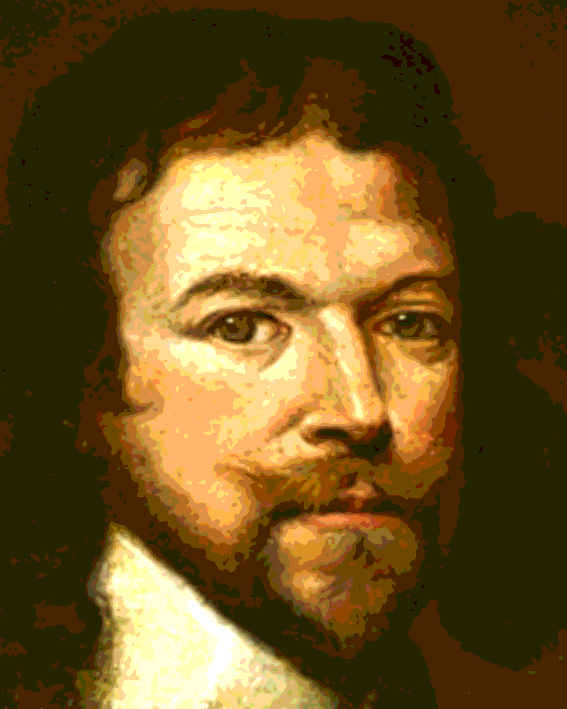 Sir Edward Dering, 1st Baronet (1598-1644)
Though born at the Tower of London, Dering was happiest at Surrenden Dering, the family pile in Pluckley, indulging his passion for the arts and antiquarianism. He purchased the first two recorded copies of Shakespeare’s First Folio, now lost, but in his vast library left behind the oldest known manuscript of a Shakespeare play. His aesthetic idyll was swamped by political upheaval. Though he was MP for Hythe and Kent, his moderation set him at odds with Parliamentary idealism. Having raised a Royalist regiment for the Civil War, he had to escape through a small window when his home was sacked, giving rise to the design of Dering windows. After the Battle of Edgehill, he reportedly sought discharge by applying to be dean at Canterbury, but was refused. Instead he became the first to take up Parliament’s offer of an amnesty, paying £1,000 for it. He soon died, and was buried at Pluckley church.
 Méric Casaubon (1599-1671)
Like his father, the French scholar and philologist Isaac Casaubon, Meric (sic) was a Huguenot born in Geneva. After following his father to England and going to Eton and Oxford, he wrote a defence of his father’s beliefs in 1621 that earned the approbation of James I and was rewarded with a prebendal stall at Canterbury Cathedral for life. In 1634, he produced his most significant work, the first translation of Marcus Aurelius’s ‘Meditations’ into English. Having established his antiquarian credentials, he was offered money to create an ‘objective’ history of the revolutionary era for Oliver Cromwell, but refused. His later works concerned the supernatural, treading a fine line between what he considered the day’s twin evils: outright mysticism, and natural philosophy, later known as science. He died at Canterbury. George Eliot referenced him and his father in ‘Middlemarch’ by naming Dorothea’s scholarly but pedantic husband ‘the Reverend Casaubon’.
 John Colepeper, 1st Baron Colepeper (ca 1600-60)
Originally one of the Sussex branch of Colepepers, John actually lived at Hollingbourne with his two successive wives, the second being his cousin Judith of Hollingbourne Manor, to whose brother Cheney he had sold his estate, Great Wigsell. A fine debater, he enjoyed a distinguished career in politics, becoming MP for Kent, Chancellor of the Exchequer, and Master of the Rolls. He initially took the people’s side in Parliamentary matters, and deplored the King’s hard line; yet his loyalty never wavered, and he participated in Prince Rupert’s charge at the Battle of Edgehill (1642). His estate was confiscated by Parliament, and in 1646 he fled overseas with Prince Charles, for whom he subsequently served as an ambassador. In 1660, he returned with the new king, only to die weeks later. His loyal service had been rewarded with lands in Virginia, however, and his son Thomas later became Crown Governor of the colony. He is commemorated grandly in Hollingbourne church.
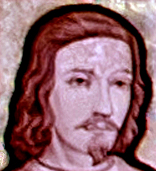 Richard Kilburne (1605-78)
Although born and trained as a lawyer in London, Kilburne inherited the Fowlers estate in Hawkhurst in his mid-twenties and became a magistrate in the area. He appears to have been both well regarded and knowledgeable: he wrote a book describing legal precedents of import to justices of the peace like himself, published two years after his death, that ran to eight editions over 35 years. By then, he had also established a reputation as an antiquarian, known particularly for ‘A Topographie, or Survey of the County of Kent’, which he published in 1657 as a taster for the full work ‘A Brief Survey of the County of Kent’ that duly appeared two years later. Although not much more than a gazetteer of Kent place names, it does contain a detailed account of Hawkhurst itself. He is commemorated alongside no less an eminence that Edward III in a stained-glass window at Hawkhurst church.
 Richard Lovelace (1617-57)
The Cavalier Poets are little remembered nowadays, but produced some graceful verse, and Lovelace’s contributions were among their most memorable. Although his birthplace is unknown, the family estates were at Bishopsbourne. His father Sir William was killed in battle in the Netherlands when young Lovelace was just nine. After attending Oxford and Cambridge, he loyally supported King Charles I as trouble brewed. Handsome and gallant, he espoused ‘Cavalier’ values, which simply signified latter-day chivalry, whatever the Roundheads’ sarcastic redefinition of the term. The Cavalier Poets sought to replace morbid introspection in poetry with more phlegmatic sentiments, such as Lovelace expressed in his ‘To Lucasta, Going to the Warres’ and ‘To Althea, from Prison’. As the titles suggest, however, his political endeavours worked out badly. In 1642, he was imprisoned for presenting the notorious Kent Petition to Parliament, and was again gaoled in 1648. He ruined himself for the King’s losing cause, and ended up in a London slum.
 Vavasour Powell (1617-70)
Welshman Vavasour Powell was a schoolteacher as well as a travelling preacher of a pugnacious Puritan bent, and was repeatedly arrested for his inflammatory utterances. As tensions between King and Parliament rose, he moved to London and, after marrying the suitably named Miss Quarrell at 24, became vicar of Keston around 1643. His time came when Cromwell decided his troops would need religious zeal if they were to prevail, and turned to Puritanism. Having been invited to preach to his men on Dartford Heath, Powell joined the New Model Army at the Siege of Oxford in 1646. A ‘Fifth Monarchist’ who regarded the death of Charles I as the start of a new age of the rule of Christ, he wrote a celebration of the King’s execution, and naturally was persona non grata when Charles II was restored. Suspected of participating in a plot to kill him, Powell spent most of his last ten years in jail.
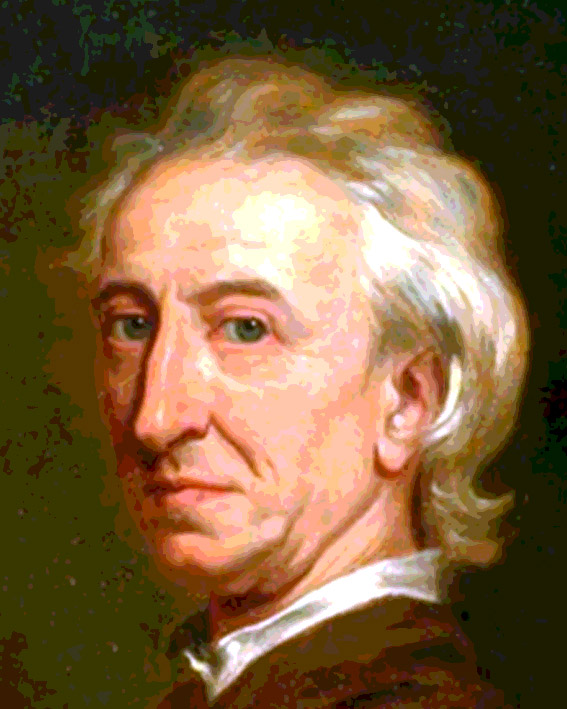 John Evelyn (1620-1706)
Evelyn’s family had got rich manufacturing gunpowder. He grew up with grandparents in Lewes, attending grammar school before going to Oxford. His studies then took him to the Middle Temple in London, just in time for a tumultuous period in British history. Evelyn witnessed the Civil Wars, the execution of King Charles I, the Dutch Wars, Cromwell’s dictatorship, the Restoration, the Great Plague, the Great Fire of London, and the Glorious Revolution. This whole period, from 1640 to his death, he recorded in his diaries. Forty years of it he spent at Sayes Court, Deptford. What makes his memoir particularly interesting is the fact that, being a well-travelled polymath, he covered culture as well as politics. He actually wrote books on numerous topics. A particular interest was trees, but he also penned forward-looking works on pollution, forestation, and conservation. He even co-founded the Royal Society. He is celebrated in the name of the American toiletries company Crabtree & Evelyn.
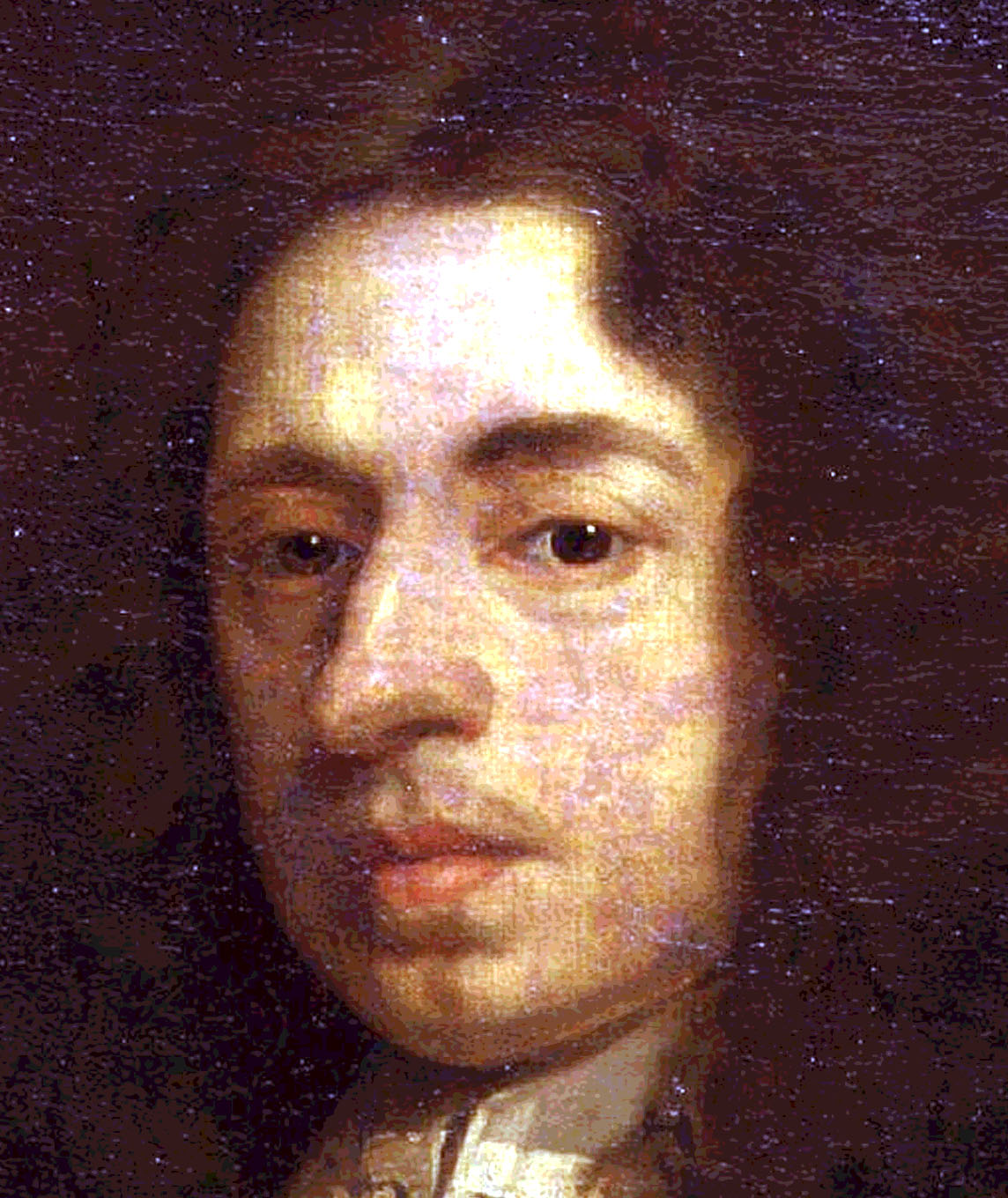 Heneage Finch, 1st Earl of Nottingham (1620-82)
Heneage Finch was the son of the Recorder of London of the same name who owned Eastwell Manor. He attended Westminster School and Oxford before taking up a legal career in 1645. He became MP for Canterbury in 1660, and by 1675 was Lord Chancellor. It was a difficult tenure, since the Popish Plot occurred on his watch, and he was obliged to perform the duties of a modern-day detective. Unlike some about him, he was known for his fair-mindedness, and survived the affair politically intact. Having been made the Earl of Nottingham in 1681, he acquired Sir George Coppin’s 1605 mansion in the village of Kensington, Middlesex, and renamed it Nottingham House. Seven years after his death, William III decided that its semi-rural location on the far side of Hyde Park would suit his asthma, and relieved Finch’s heir Daniel of it for £20,000. It is now much better known as Kensington Palace.
 Algernon Sidney (1623-83)
Unlike his siblings, Algernon Sidney was born not at Penshurst Place but the family’s winter retreat, Baynard’s Castle. He also defied family tradition by becoming a vehement anti-monarchist, and fought as a Parliamentarian colonel in the Civil War. In 1658, he put his antagonistic nature to diplomatic use in the Baltic, when he bullied the Swedish king without compunction. Following the Restoration, he went into exile overseas until 1677. The draft of his explicitly republican tract ‘Discourses Concerning Government’ (published 1698) finally did for him when he was prosecuted as a Rye House Plotter. Lacking a necessary second witness, Heneage Finch of Eastwell, the Solicitor General, decided Sidney’s own incendiary text would suffice. Bloody Judge Jefferies condemned Sidney enthusiastically, and he was executed on Tower Hill. A century later, he was exposed as a hireling of England’s arch-enemy, Louis XIV; but Thomas Jefferson cited Sidney and Locke as the two philosophical fathers of the American Revolution.
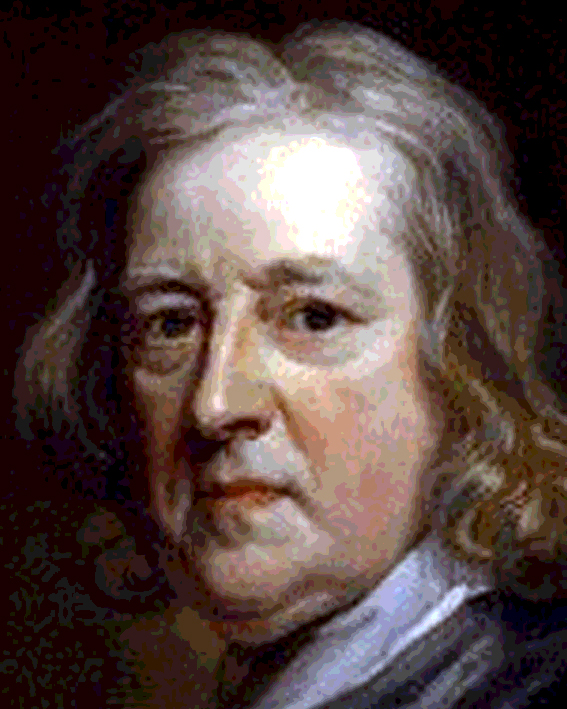 Thomas Papillon (1623-1702)
Of Huguenot descent, Papillon was born in Surrey and became a mercer in the City of London. Having married Jane Brodnax of Godmersham at Canterbury cathedral in 1651, he bought Acrise Place as the new family home in 1666. Being fiercely opposed to authoritarianism and corruption, he was seldom far from trouble under the Stuarts, and at different times suffered both imprisonment and self-exile. Staunchly Protestant, he accepted the Popish Plot allegations as fact, and was instrumental in getting the openly sceptical secretary of state Sir Joseph Williamson briefly jailed in 1678. An ardent free-trader, he had been appointed a director of the East India Company in 1663, and published a treatise in 1680 stating the case for a joint-stock company. He flourished after the Glorious Revolution, going into politics as MP for Dover, and serving as a commissioner of Royal Navy victuals for ten years. He was buried at Acrise.
 Mary, Lady Dering (1629-1704)
Mary Harvey was a niece of the great physician Sir William Harvey, and daughter of a rich London merchant. Born in Croydon, she married a cousin at 16 without her father’s consent; the marriage was annulled. Three years later, he made a much better match for her, marrying her off to Sir Edward Dering, 2nd Baronet. Living at Surrenden Dering in Pluckley, they not only had 17 children together, but also collaborated fruitfully in the arts: he wrote love poetry, and she set it to music. Her music teacher was the composer Henry Lawes, who published three of her short but ornate songs alongside many of his own; they are thought to represent the first music composed by an Englishwoman that survives in print. Lawes appended a glowing tribute to her musical ability, which extended to her singing. She outlived her husband, the MP for Hythe, by 20 years, and her son, the 3rd Baronet, by 15.
 The Venerable Thomas Plume (1630-1704)
Essex man Thomas Plume went to Cambridge and then into the Church. At 28, he was made vicar of East Greenwich, a position he retained for 46 years until his death. In between, he also became archdeacon of Rochester Cathedral in 1679. As was not uncommon with churchmen of the era, he took an interest in astronomy, and eventually founded the Plumian Professorship of Astronomy & Experimental Philosophy at Cambridge. His main hobby, however, was collecting books and pamphlets. He acquired about 8,000 going back to 1487, including such gems as John Speed’s combined world and British atlases (1631). Despite living most of his life in Kent, he left the collection to his hometown Maldon, where he also purpose-built a library to house it. He might have done better to keep them in Kent: when a check was performed in 1989, it transpired that over 700 books had disappeared. Bloom died unmarried, and was buried at Longfield.
 Sir William Langhorne, 1st Baronet (ca 1631-1715)
The East India Company started under Thomas Smythe in 1600 as a vehicle for trade between India and the East Indies. Factories were established in Java and the Spice Islands, followed by two more in India. In 1639, Ayyappa Nayak of Poonamalee offered a lease on land on which to build another, marking the origin of Madras, today’s Chennai. The company’s operations there were run by a so-called ‘agent’, the first of whom was Sir Andrew Coggan from Greenwich. The longest-serving was a barrister, William Langhorne from London, who held the post from 1670 to 1678. He had his work cut out, what with local potentates’ importunate demands for tribute, and conflict with the French and Dutch, both of whom had imperial ambitions and alternated as Britain’s friend and enemy. The expedient Langhorne nevertheless made himself a fortune, not least through privateering, which became the cause of his dismissal; but he retained the wherewithal to buy Charlton House in 1680.
 John Locke (1632-1704)
Locke, a Puritan from Somerset, devoted his life to thinking. He did some work, for example as a physician to MP Caleb Banks near Wye in 1679; but philosophising was his thing. His one good contribution was turning Sir Francis Bacon’s empirical ideas into Empiricism: the theory that knowledge derives from verifiable experience, not rationalisation. From that promising start, however, he rationalised endlessly. Among his suppositions was the belief that the mind is a Blank Slate. Although discredited at book length by American neuroscientist Stephen Pinker, this canard still encourages authoritarians determined to programme children with their own convictions. Since Locke also asserted that rulers who fail to respect the hypothetical ‘Social Contract’ are liable to be replaced, anyone interested to know the source of the philosophical assumptions of the Declaration of Independence needs to look no further than John Locke.
 Sir Joseph Williamson (1633-1701)
Joseph Williamson was born in Cumberland, the son of a country vicar who died young. After Westminster School and Oxford, Williamson went into politics, his long career peaking with a five-year ministership starting in 1674. Though highly efficient, he lacked personal skills, being considered a poor communicator, authoritarian, and arrogant: he managed to anger both Charles II and the future William III. He also made a fortune out of his political connections, which despite the snobbery he faced on account of his lowly origins enabled him to marry the dowager Baroness Clifton and reside at Cobham Hall. There was however another side to Williamson. A keen antiquarian, he was elected president of the Royal Society in 1677, and after being elected MP for Rochester in 1690 left £5,000 in his will for the construction of a new school. It opened in 1708 as the Sir Joseph Williamson’s Rochester Mathematical School, and still thrives on a site nearby.
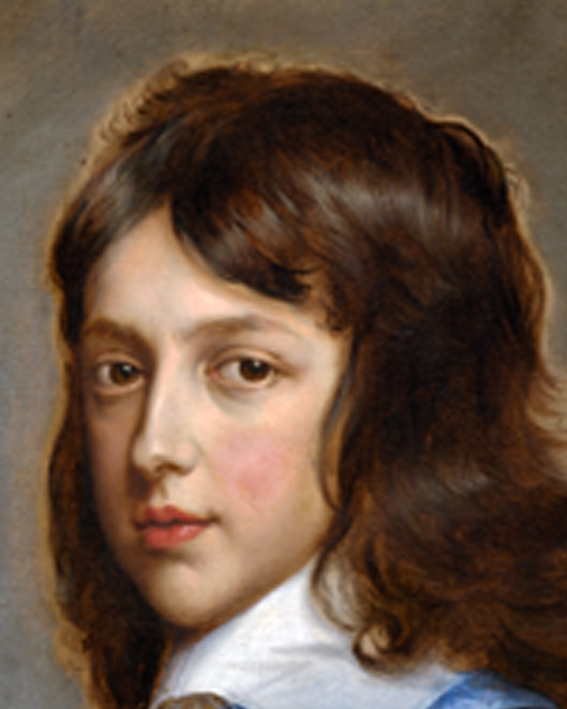 Prince Henry, Duke of Gloucester (1640-60)
In 1649, King Charles I summoned his third and youngest son Henry to share with him the news of his own impending execution, and made him swear never to accept the throne from Parliament while his two older brothers lived. The eight-year-old vowed he would rather die. Stripped of his ducal title, the boy was initially sent to live with the Duke of Leicester at Penshurst, but ended up in exile in France with his implacably Catholic mother. He re-joined his brothers on the Continent and, having had his title restored, accompanied the restored king, Charles II, on his return in 1660. He had only been home a few months, however, when both he and his sister Mary died of smallpox. It was an epoch-making mischance. After Charles died and his successor James II was deposed in the Glorious Revolution, Charles I’s line became extinct. The English crown passed to William and Mary, and thence to the Hanoverians.
 Admiral Sir John Narborough (~1640-88)
Although best remembered for a fiasco, Norfolk-born Sir John Narborough played a significant role in Royal Naval history. Born in Norfolk, he progressed to the rank of captain, and in 1669 was sent on a secret expedition from Deptford to South America. After claiming an area of Patagonia as English territory, he progressed through the Straits of Magellan to Corral Bay, which was already occupied by Spaniards. Naturally suspicious of his motives, they demanded four hostages, whom he left behind after failing to achieve his mysterious goal. Nevertheless, he redeemed himself by fighting with distinction at the Battle of Sole Bay in 1672, then tackling pirates and successfully seeking treasure. Appointed Commissioner of the Navy for life, he bought Knowlton Court near Goodnestone, but died at sea. His widow Elizabeth married his former cabin-boy Sir Cloudesley Shovell, who in 1707 perished with Narborough’s two sons in the Scilly Naval Disaster. Narborough and his sons are commemorated in Knowlton church.
 Henry Sidney, 1st Earl of Romney (1641-1704)
Born in Paris, Sidney grew up at Penshurst Place, home of his father, the Earl of Leicester. After serving in the Holland Regiment, he befriended Charles I’s Protestant grandson, William of Orange, then went into politics. The disputed succession to the English throne climaxed in 1688 when James II, after 15 fruitless years of marriage, produced a male heir, also named James. Determined to prevent a Catholic succession, Sidney and six other commanders formed the ‘Immortal Seven’ conspiracy that denounced the boy as an imposter and invited William to initiate the ‘Glorious Revolution’; Sidney personally penned the letter. Appointed Major-General of the invading army, he helped William depose King James and win the crucial Battle of the Boyne in 1690. He was made Earl of Romney, Lord Lieutenant of Kent, and Constable of Dover Castle, and as Chief Ranger of Greenwich Park even resided at the Queen’s House. Soon after King William’s death, however, he died of smallpox.
 Sir Edward Browne (1644-1708)
Sir Thomas Browne was a London polymath who moved to Norfolk, where his son Edward was born. The boy showed a precocious interest in scientific matters, which he combined with an agreeable manner, and went to Cambridge to study medicine. After graduating in 1663, he travelled around Italy and the Low Countries, but in 1668 based himself in Vienna for more ambitious expeditions around modern-day Austria, Hungary, and the Balkan Peninsula, an exotic experience under Ottoman rule. After returning the following year, he undertook a further expedition with Sir Joseph Williamson before starting his medical career in earnest. He plainly excelled at it, since he built a large practice, became president of the College of Physicians and a fellow of the Royal Society, was Charles II’s physician, and enjoyed a large social circle. His lasting legacy, however, was his ‘Brief Account’ (1673) of that extended gap year. He moved to Northfleet, where he died and was buried.
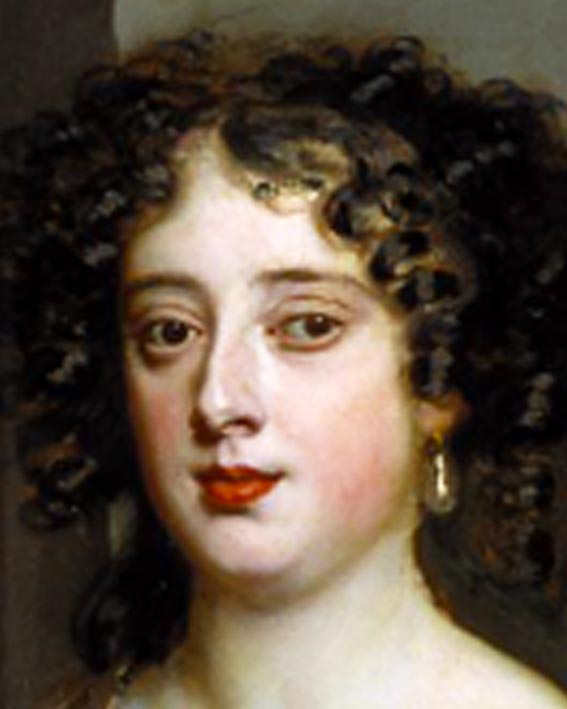 Peg Hughes (~1645-1719)
Margaret ‘Peg’ Hughes is noted for having been the first professional English actress. Before the Restoration, all female roles were played only by men, the profession of actress having become synonymous with prostitution; but, in 1662, the new king Charles II, agitated by homosexuality among actors, ordered that only women were to play female roles. By then Hughes, a youthful beauty, had been cast by farsighted London theatre manager Thomas Killigrew as Desdemona in ‘Othello’ on December 8th, 1660, so passing into theatrical history. Though her birthplace is unknown, she had multiple connections with Kent, from her affair with Sir Charles Sedley from Aylesford to her retirement at Eltham, where she died. In between, she was taken to fashionable Tunbridge Wells in 1668, and there met the former Royalist cavalry general Prince Rupert of the Rhine, whose child Ruperta she bore. In 1911, her life was celebrated in a play, staged by suffragettes, called ‘The First Actress’.
 Grinling Gibbons (1648-1721)
If someone knows the name of a single woodcarver, it will most likely be Grinling Gibbons. Unusually, apart from having a unique first name – a portmanteau of two family surnames – he was an Englishman born and raised in Rotterdam, his father being a merchant. After he came to live in Deptford at 19, his extraordinary talent was quickly spotted by John Evelyn, who referred him to Sir Christopher Wren. The pair took him to meet Charles II, who commissioned his first work. Thanks to the exquisite delicacy of Gibbons’ craftsmanship, he was given work at many of England’s greatest buildings, such as Windsor Castle, St Paul’s Cathedral, Kensington Palace, Hampton Court Palace, and Petworth House, and created the Cosimo Panel now housed in Florence’s Pitti Palace. He also undertook work in stone, and made the marble memorial to Sir Cloudesley Shovell in Westminster Abbey. He is commemorated by the Grinling Gibbins Primary School in Deptford.
 Titus Oates (1649-1705)
Oates from Rutland took a well-trodden path, donning a priest’s robes so as better to deceive others. He became vicar of Bobbing in 1673, following which he falsely accused a Hastings headmaster of sodomy in the hope of getting his job. Charged with perjury, he fled to the Navy, where he himself was found guilty of that very crime, but escaped a death penalty because of his ‘calling’. He then swapped religions from Anglican to Baptist to Catholic and back. Despite his record, he was taken seriously when he alleged a Popish Plot to kill Charles II; so seriously that numerous innocent men were executed. Parliament even awarded him an apartment and an income. Once found out, he was castigated mercilessly, but could not legally be executed. Any psychiatrist would now see in Titus Oates a pathological liar. The fact that the political elite was so readily deceived is a C17 lesson that resonates four centuries later.
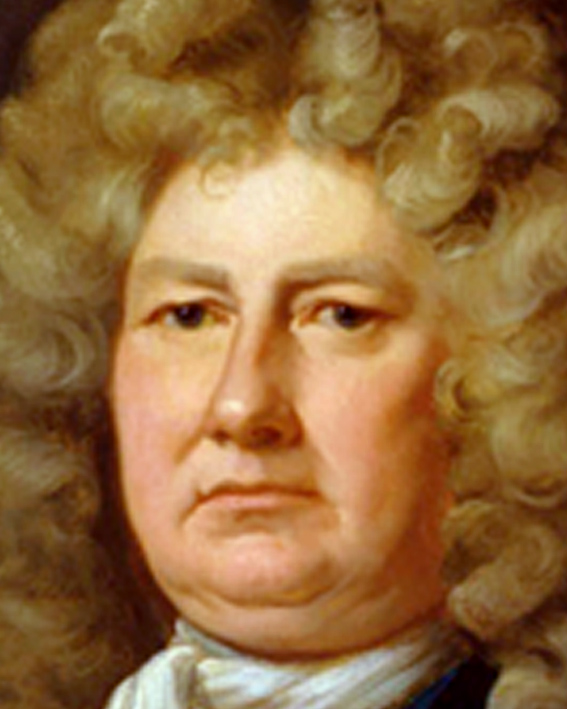 Admiral of the Fleet Sir Cloudesley Shovell (1650-1707)
Cloudesley Shovell from Norfolk progressed steadily up the Royal Navy career ladder, participating in numerous battles including Texel (1673), Barfleur (1692), and the Capture of Gibraltar (1704). In 1691, he married Elizabeth Hill, widow of his former commander Sir John Narborough, and settled at May Place, Crayford. He served twice as MP for Rochester, and in 1705 succeeded Sir George Rooke as Admiral of the Fleet. Two years later, his two stepsons accompanied him on a fruitless mission to Toulon in the south of France. While returning, the fleet of 21 ships ran into severe weather and, unable to ascertain their precise position, sailed onto rocks off the Scilly Isles. Shovell’s flagship HMS Association struck first, sinking in four minutes with all hands, followed shortly by three others. The death toll was variously estimated at 1,400 and over 2,000. Shovell’s body was recovered and buried but, on Queen Anne’s instructions, reburied at Westminster Abbey with a memorial.
 Matthew Aylmer, 1st Baron Aylmer (~1650-1720)
Matthew Aylmer was born in Meath, Ireland, the son of Anglo-Irish landowner Sir Christopher Aylmer. His Royal Navy career took off in 1688, when he joined other captains in pledging support for William of Orange, prompting the Glorious Revolution. After participating in the Battle of Bantry Bay (1689), at which his brother George was killed, he suffered another defeat against the French in the Battle of Beachy Head (1690); but this was resoundingly reversed at the Battle of Barfleur (1692). From 1697, he served repeatedly as Whig MP for Dover, and bought a house at Westcliffe. Appointed Admiral of the Fleet in 1709, he was temporarily demoted by the new Tory administration, but reappointed under George I in 1714. He simultaneously became the Governor of Greenwich Hospital and Ranger of Greenwich Park, in which capacity he founded a school for seamen’s sons. He died at Queen’s House, Greenwich.
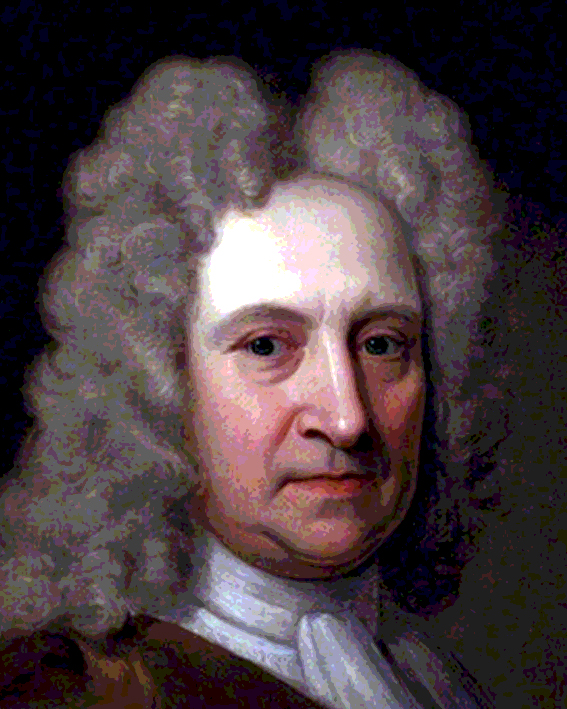 Edmond Halley (1656-1742)
The great mystery about Halley is how to pronounce his name. It rhymed either with Crawley or Valley; we can discount the misconception that led Bill Haley to call his band the Comets. Halley came from a wealthy manufacturing family in Middlesex and studied astronomy at Oxford. He was made a Fellow of the Royal Society at 22 on account of his impressive star maps. Famously, he prompted Newton to write up the earth-shattering ‘Principia’, which Halley himself paid to have published. The achievement that immortalised him, however, occurred in 1705, when he correctly predicted that the comet he had observed in 1682 would return every 76 years. In 1720 he succeeded John Flamsteed as Astronomer Royal, taking up residence in Greenwich. He lived a long life, but not the 102 years necessary to see his Comet again. He died at home, and is buried in Lee Green. As for Halley’s Comet, it will be back in 2061.
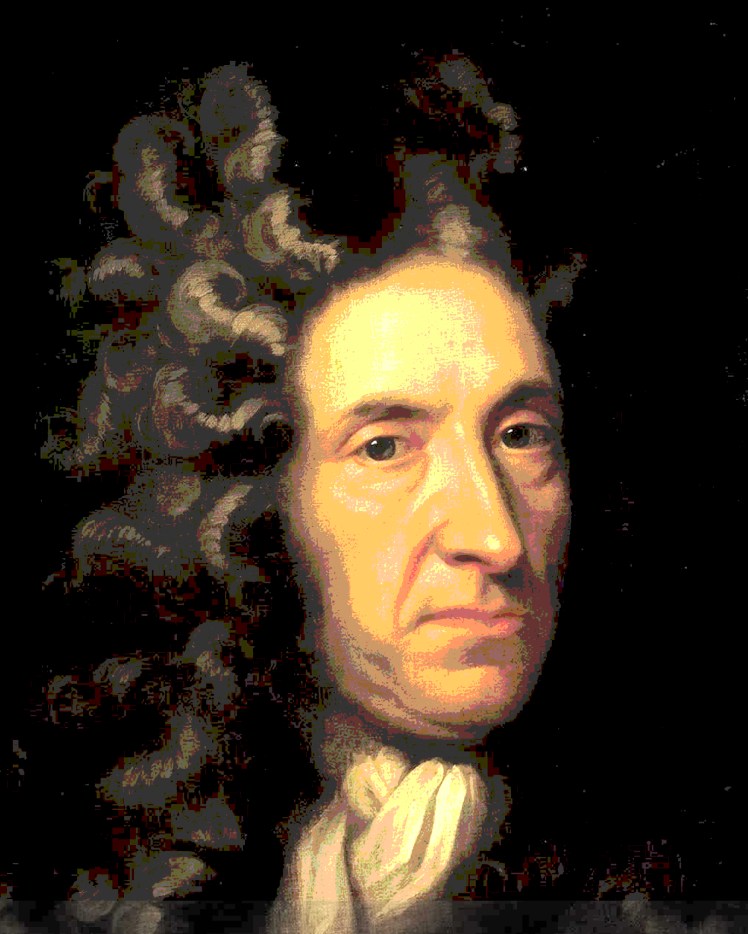 Daniel Defoe (1660-1731)
As the author of ‘Robinson Crusoe’, Daniel Foe takes credit for one of the most popular characters in world literature. Almost all else about him was, however, a mess. Although the son of a wealthy London tallow-chandler and beneficiary of his wife’s rich dowry, he was always in debt or bankrupt, and in and out of debtors’ prison. What’s more, as a Presbyterian, he was ever the outsider. His contrarianism got him into further trouble, especially as he wrote compulsively: he penned hundreds of works under around 200 pseudonyms, including ‘Defoe’. More than once he was literally pilloried. After participating in the failed Monmouth Rebellion, he was lucky to escape the Bloody Assizes. He later offended George I, and went into hiding for months on the outskirts of Cranbrook, where he probably wrote his magnum opus. The shambolic anti-hero of his other great novel, ‘Moll Flanders’, could have been an allegory of himself. He died while hiding from creditors.
 Anne Finch, Countess of Winchilsea (1661-1720)
If the postmodernist narrative is to be believed, Anne Finch, née Kingsmill, from Hampshire was a proto-feminist radical whose poetic achievement was obliterated by the patriarchy. In truth, she was a wealthy knight’s daughter who acquired a noble title by marrying into the social elite. Her difficulty was that she and her husband – Tory MP Heneage Finch, Lord Winchilsea – were ardent Royalists, even though the king they supported was the repugnant James II. They made life difficult for themselves by refusing to swear allegiance to William III after the Glorious Revolution, which by definition made them counter-revolutionaries. As for her poetry, Finch was technically proficient, but suffered the same fate as the other highly formal Augustan poets, male and female: they were all eclipsed by the brilliance of Alexander Pope. She gave full rein to her melancholy in her outcast state, but did have two decades living on the glorious Eastwell Park estate to console her.
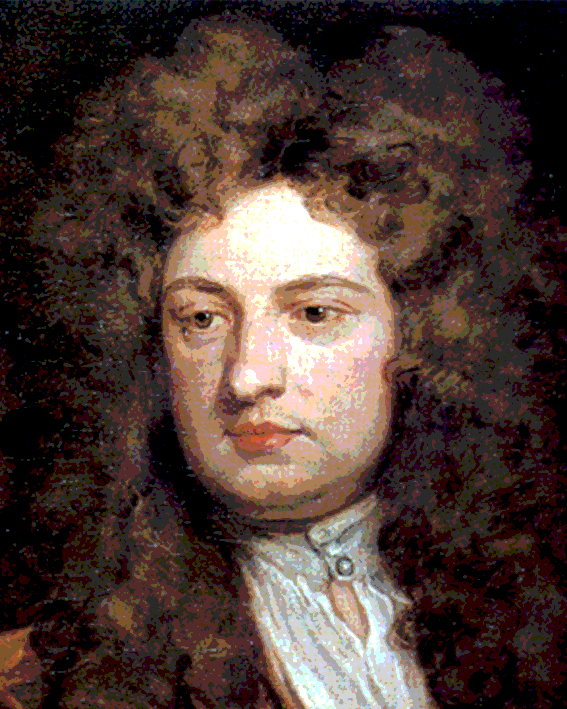 Sir John Vanbrugh (1664-1726)
Vanbrugh was a type very familiar today: a rich and powerful establishment figure who ostentatiously devoted himself to radicalism. Contrary to the homely myth of Leigh Hunt’s biography, he started life with a silver spoon in his mouth, being descended from Flemish cloth-merchants. At 22, he committed himself to William of Orange’s campaign to overthrow James II and was imprisoned in France, including in the Bastille, for nearly five years. Back in London, he failed in theatre management; but there was no doubting his talent, or versatility. He wrote two successful Restoration comedies, the latter of which particularly scandalised Tories with its libertarian outlook. His more enduring achievements, however, came in the world of architecture. He designed the most extravagant of C18 stately homes, including Castle Howard and Blenheim Palace. As befitted a Whiggish man of means, he also built himself a handsome abode, Vanbrugh Castle in Greenwich Park, where he spent the bulk of his married life.
 Mary Evelyn (1665-85)
In 1651, polymath diarist John Evelyn moved into his wife Mary Browne’s family home, Sayes Court in Deptford, and in 1663 secured a lease on it from the Crown, which had assumed ownership at the Restoration. There they raised their one surviving son and three daughters. The eldest girl, Surrey-born Mary or ‘Mall’, inherited her parents’ literary talent, and already in her teens wrote an extended poem called ‘Mundus Muliebris: Or The Ladies Dressing-Room Unlock’d, and Her Toilets Spread’. Satirising the social world of the late Restoration, it was accompanied by a glossary of foppish vocabulary. It was obviously thought rather witty in its day because, after being published anonymously in 1690, it ran to three editions. By then, however, her incipient literary career was over, she having succumbed mortally to smallpox at 19. Her sister Elizabeth, who brought shame on the family by eloping, herself died soon afterwards, also of natural causes.
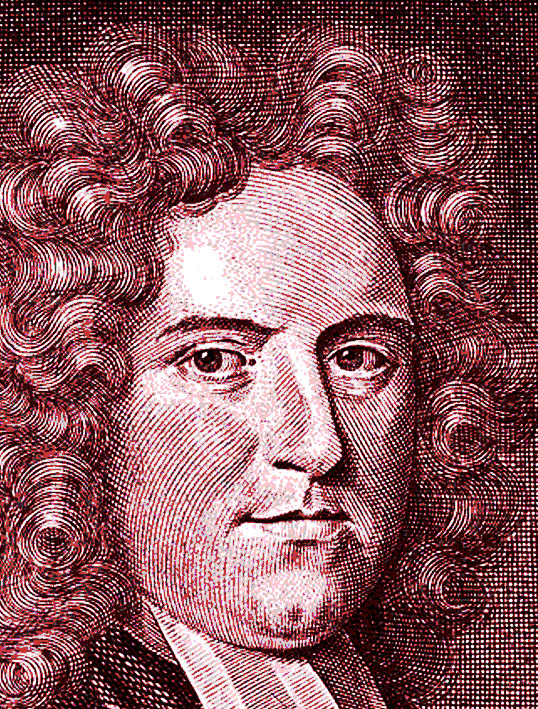 John Harris (~1666-1719)
Another member of the class of holy men with an active interest in science, Shropshire lad John Harris went to Oxford before eventually becoming both a prebend of Rochester Cathedral and vice-president of the Royal Society. He is best known for his ambitious five-volume ‘History of Kent’, of which only the first volume (1719) was published before he died. He had other achievements to his name, however, including ‘Lexicon Technicum: Or, A Universal English Dictionary of Arts and Sciences’ (1704), the first English-language encyclopedia, and his two-volume ‘Complete Collection of Voyages & Travels’ (1705), which contained a vast amount of geographical and cultural information from around the globe, and cited over 600 authors in several languages. He had prudently established his pious credentials in advance with the Church by delivering a series of Boyle Lectures in 1698 that purported to disprove atheism evidentially. Unfortunately, his scholarship was not matched by fiscal prudence, and he died poor.
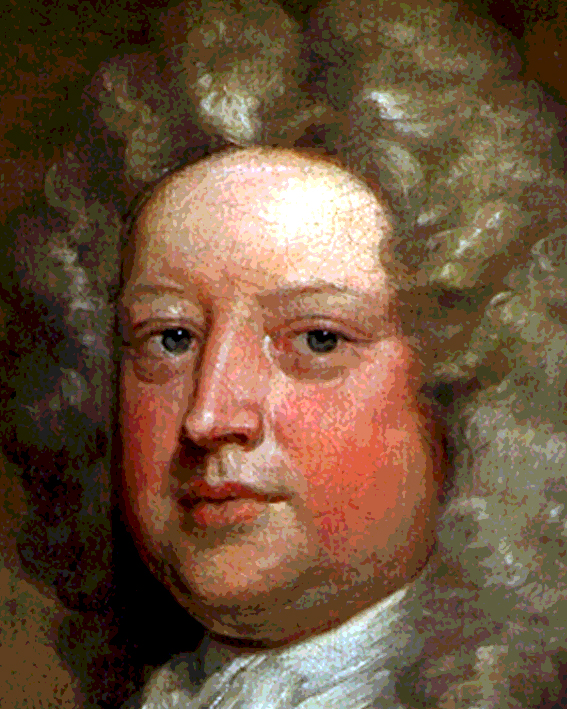 Admiral of the Fleet Sir John Norris (~1670-1749)
Having been born into an unknown Irish family, Norris joined the Royal Navy at the age of about ten. Within a decade, having served under Captain Cloudesley Shovell, he was promoted to commander, and saw action in the Nine Years’ and Williamite Wars before being sent to the North American colonies. Serving under Sir George Rooke in the War of the Spanish Succession, he survived the Scilly naval disaster in which Shovell died. Norris was sent in 1717 to serve as Peter the Great’s second-in-command, at least until Russia’s historic victory against Sweden, when Britain changed sides. Having been appointed Admiral of the Fleet in 1734, he was responsible in 1744 for preventing a French invasion, when the weather ultimately came to his assistance. ‘Foul-weather Jack’ was made captain of Deal Castle in 1745, and died at Hemsted Park – the site of the future Benenden School – which he had purchased in 1718.
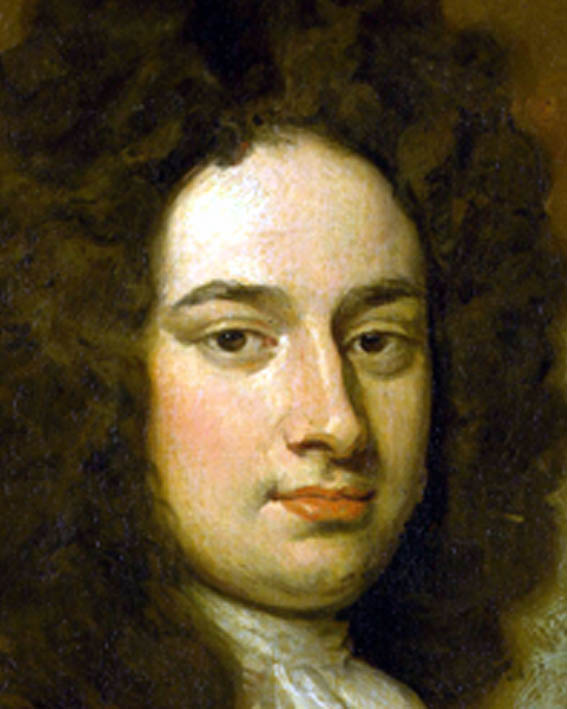 James Stanhope, 1st Earl Stanhope (1673-1721)
Although Robert Walpole is ordinarily adjudged the first prime minister, James Stanhope has a prior claim. He was born in Paris, the son of a diplomat, and grew up with an understanding of international affairs that would benefit him greatly in his career in politics, which he resumed in 1712 after a ten-year hiatus. In between he had acquired a reputation as a commander during the War of the Spanish Succession, capturing Minorca and winning convincingly at Zaragoza in 1710, but suffering defeat and capture during the subsequent withdrawal from Madrid. In 1717, after breaking with fellow Whig grandee Walpole, he became George I’s ‘Chief Minister’, was created Earl Stanhope, and acquired Chevening House, where his descendants would remain for 250 years. He successfully managed the Quadruple Alliance’s defeat of a resurgent Spain and quelled a Scottish rebellion, but died of a stroke during the South Sea Bubble and was buried at Chevening. Walpole succeeded him.
 Beau Nash (1674-1761)
Richard ‘Beau’ Nash was a supreme English dandy. His early life was highly conservative: Oxford, the Army, the Bar. It wasn’t for him. Instead he made himself the unofficial but indispensable Mr Fixit of Bath’s social scene. He would get anyone into the right function with the right people, so long as he was remunerated. He turned the city into the most fashionable in Britain, whilst gambling and womanising furiously. A handsome chap with outrageous fashion sense, he was plainly quite a catch: after he left one distraught mistress, she spent the rest of her life living in a hollow tree. Having turned Bath into his personal kingdom, Nash made Tunbridge Wells a colony, just as soon as his counterpart there – the redoubtable Bell Causey – popped her clogs. From 1735, under this self-appointed ‘Master of Ceremonies’, the town became an essential port of call for high society. When he died, Bath gave him the municipal equivalent of a state funeral.
 Lady Elizabeth Germain (1680-1769)
A daughter of the 2nd Earl of Berkeley, Elizabeth ‘Betty’ Berkeley married Sir John Germain, the supposed bastard half-brother of William III. None of their three children survived, and her husband, 30 years her senior, died in 1718, leaving their grand home Drayton House in Northamptonshire to her. She did not stay there, however, being invited instead to move to Knole House by her friend Elizabeth Colyear, who had married the 1st Duke of Dorset. She was to remain throughout her 50-year widowhood. Drayton was packed with art treasures, including portraits, antique chinaware, and the 14th Earl of Arundel’s large collection of cameos and intaglios that had been bequeathed to Germain by his first wife. When the British Museum decided against paying £10,000 for them, she left them to a great niece who married Lord Charles Spencer. A portrait of Jonathan Swift, who published some of her correspondence with him, still hangs in her rooms at Knole.
 Elijah Fenton (1683-1730)
After leaving his native Staffordshire to work in Flanders, Fenton returned to become headmaster of Sevenoaks grammar school. Having resigned in 1710 when offered an opportunity that fell through, he moved to Berkshire to take up a post as a tutor. A volume of poetry he wrote in 1717, ‘Poems on Several Occasions’, attracted the attention of his neighbour, Alexander Pope, who was embarking on a verse translation of Homer’s ‘Odyssey’. Pope secretly invited Fenton to contribute four of the 24 volumes, in which Fenton succeeded so skilfully that his style was indistinguishable from Pope’s; but the secret came out, to Pope’s detriment. Fenton also penned a tragedy called ‘Marianme’ (1723) concerning Herod the Great’s wife, and a ‘Life of John Milton’ (1725), as well as editing Edmund Waller’s poetry (1729). His grave in Berkshire bears a flattering poetic tribute penned by Pope himself, while Dr Johnson wrote his biography.
 Elizabeth Elstob (1683-1756)
An orphan, Newcastle-born Elizabeth Elstob was raised by an uncle, a prebendary at Canterbury. In her teens, she went to live with her brother William in Oxford and then London. He had studied at Eton and Cambridge before joining the Church, and because such educational opportunity was denied to her, he took her under his wing academically. He found her such a willing and able pupil that he called her his “delightful and tireless companion”. She learned several languages, and particularly took an interest in Anglo-Saxon, or Old English. In 1715, with the help of his contacts, she published ‘Rudiments of Grammar for the English-Saxon Tongue’, the first ever Anglo-Saxon grammar in Modern English; it earned her the sobriquet ‘The Saxon Nymph’. She also made a copy of the ‘Textus Roffensis’, and edited a translation of Orosius’s ‘Historiae adversus paganos’. She later ran a school in Worcestershire under an assumed name before becoming a governess in Buckinghamshire.
 John Montagu, 2nd Duke of Montagu (1690-1749)
Montagu’s father Ralph was a courtier who grew even richer by marrying two wealthy widows in succession, the first – John’s mother – being one of Lely’s ‘Windsor Beauties’. The family home was the grand Boughton House in Northamptonshire, but the 2nd Duke lived at Montagu House in Blackheath with his wife Mary, youngest daughter of England’s greatest general John Churchill, Duke of Marlborough. Though Montagu was appointed governor of St Lucia and St Vincent in 1722, the deputy he sent promptly lost them to the French. A genial type with a ripe sense of humour, he supported both his widow’s butler Ignatius Sancho and Francis Williams, a Jamaican freeman whom he reportedly provided with a rich education. He also sponsored the foundation of the Foundling Hospital, and was a Fellow of the Royal Society and the Royal College of Physicians. His London residence, also Montagu House, became the home of the nascent British Museum ten years after his death.
 James Bradley (1692-1762)
In 1742, James Bradley was appointed to succeed Edmond Halley as Astronomer Royal, a post he retained for 20 years until his death. He had certainly earned it. A vicar originally from Gloucestershire, he made two discoveries that the director of the Paris Observatory described as “the most brilliant and useful of the century”. One was stellar aberration: the strange fact that the position of a light-emitting object such as a star shifts according to the movement of the observer – an observation that not only proved that the Earth is not stationary, but also provided a step on the road to Einsteinian relativity. The other was astronomical nutation, the phenomenon of a body such as a planet wobbling under the gravitational influence of surrounding bodies. A fellow of the Royal Society since 1718, Bradley’s track record empowered him as Astronomer Royal to secure funding for sophisticated instrumentation that gave the Royal Observatory a lasting advantage.
 Sampson Gideon (1699-1762)
Gideon was a Sephardic Jew, born in London, whose family were traders and plantation owners of Portuguese origin with interests from the West Indies to India. He set out young to make his own fortune in the City, initially by speculating, and steadily built himself a vast fortune – no mean achievement when the legal status of Jews had been circumscribed since 1290. Married to a Christian, he let his children be raised in the Church of England. His red-letter day arrived in 1745, when the markets were panicked by Bonnie Prince Charlie’s invasion, which was funded by a cabal of Scottish freemasons in Sweden. By keeping his cool, Gideon steadied the financial ship and generated the backing for the government’s successful military response, simultaneously adding significantly to his own wealth. He bought Belvidere at Erith after the owner Lord Baltimore’s death in 1751, and made major improvements. After dying of dropsy, he was commemorated in the local church.
 Thomas Bayes (1701-61)
Bayes is a name familiar to every scientist, but sadly not to the public. Bayes had two interests: religion, and maths. Like his father, he was a Presbyterian minister, and moved from London to become Minister of Mount Sion chapel in Tunbridge Wells from 1734 to 1752. He was perhaps goaded by David Hume’s attack on belief in miracles to formulate his lasting contribution to maths, Bayes’ Theorem. He never published it in his lifetime, so only won posthumous recognition. His concise mathematical formula demonstrated how, for example, the likelihood of having a disease varies dramatically according to its incidence in a population and the accuracy of the test for it. This gave rise to the concept of Bayesian probability, the idea that likelihoods change as we acquire more information. Anyone in politics and the media who understands this will appreciate that simply applying the average mortality rate of a disease to a whole population is not science.
 Sir Thomas Slade (~1703-71)
North Kent’s status as the heartland of British shipbuilding was never so great as in the C18, when the Royal Navy was also at its zenith. One of its shipbuilding greats was Thomas Slade from Suffolk, whose uncle worked at Woolwich dockyard. Appointed deputy master shipwright there in 1744, Slade replaced his uncle as Plymouth’s master shipwright six years later, but returned in 1752 before working consecutively at Chatham and Deptford. In 1755, he became chief surveyor of the navy, a post he retained until his death. Responsible for designing Royal Navy vessels, he proved supremely gifted. He created the master design for numerous classes of warships, many built in Kent. His greatest single creation was HMS Victory (1765), built at Chatham, which became the greatest warship of its age and famous as Nelson‘s flagship at Trafalgar. One of his apprentices at Woolwich, John Henslow, later emulated him in becoming chief surveyor. Knighted in 1768, Slade died in Somerset.
 Henry Fox, 1st Baron Holland (1705-74)
The son of money-grubbing Whig politician Sir Stephen Fox, Henry was a chip off the old block. He attended Eton before becoming an MP in 1735, caused a scandal by eloping with wealthy young heiress Lady Caroline Lennox in 1744, and was Secretary at War from 1746 to 1755. Though tipped for the prime-ministership, he found his path perennially blocked by William Pitt the Elder, and lacked credibility because of his obvious unscrupulousness; it was Fox, after all, who got Admiral Byng executed in 1757 to save his own neck. He immediately abandoned his political ambitions by becoming Paymaster of the Forces and milking the post for every penny, as his father had; he allegedly pocketed £400,000 in his eight-year tenure, a colossal fortune. He nevertheless left Thanet an architectural legacy: Holland House, the original Kingsgate Castle, and his other extraordinary follies around Kingsgate, all of which passed to his even more colourful son Charles.
 Lavinia Fenton (1708-60)
One of the most remarkable rags-to-riches stories is that of Lavinia Fenton. She was born illegitimately in London and, after working as a child prostitute, became a waitress and then a barmaid. Possessing wit, liveliness, and looks, she got into acting, and soon earned a following among the young men about town. She shot to stardom in 1728 in the role of Polly Peachum in John Gay’s smash hit ‘The Beggars’ Opera’. So great was her fame that she even featured on merchandise, and her salary sky-rocketed. One admirer she attracted was the Duke of Bolton. Though he was married, they ran off and had three children together. When they eventually married in France following his wife’s death in 1751, she joined the aristocracy as Lavinia Paulet, Duchess of Bolton. She lived finally at Westcombe House in East Greenwich, the former home of antiquarian William Lambarde. She was buried in Greenwich, where a Peachum Road now commemorates her performance.
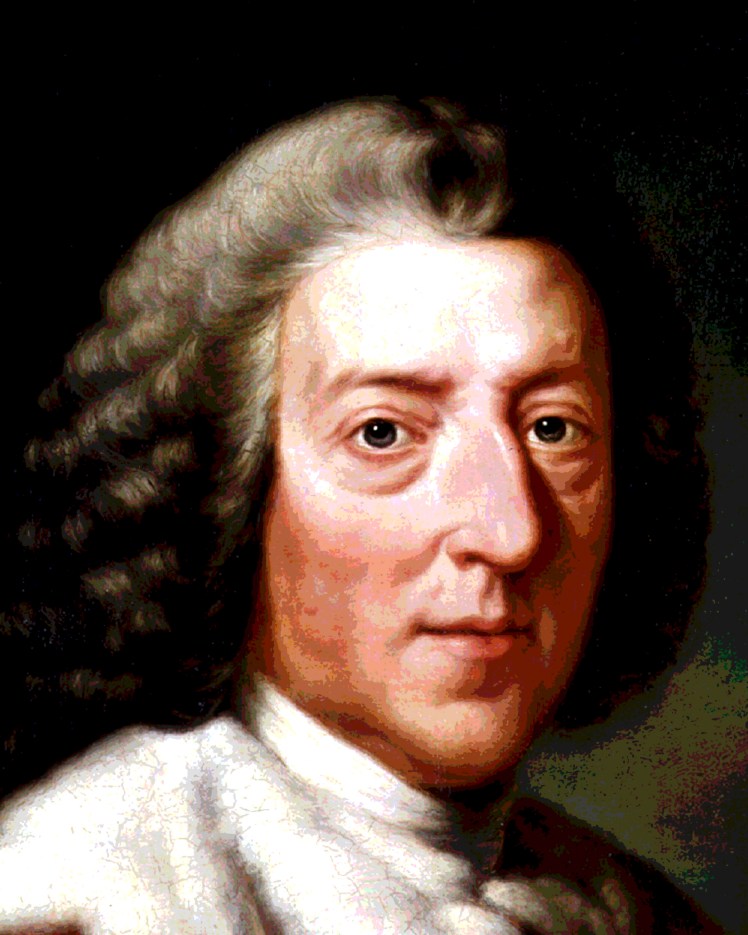 William Pitt the Elder (1708-78)
The 1st Earl of Chatham was actually nicknamed The Great Commoner because of his long refusal to accept a title. It only came about because, in 1766, he felt the need to join the House of Lords in order to comply with the King’s wish that he form a new government. He had already been informal leader of the Cabinet between 1756 and 1761. His family’s long connection with politics went back to his grandfather, who had got rich by finding a massive diamond. Pitt, however, stood out not for aristocratic connections but outstandingly erudite debating skills in Parliament. Though unpopular with the Commons, his energetic foreign policy earned him public adulation; even Pittsburgh was renamed after him on being taken from the French. He was initially buried at Hayes Place, the house near Bromley he had bought in 1754; but politicians of all persuasions joined in requesting that he be reburied with a monument at Westminster Abbey.
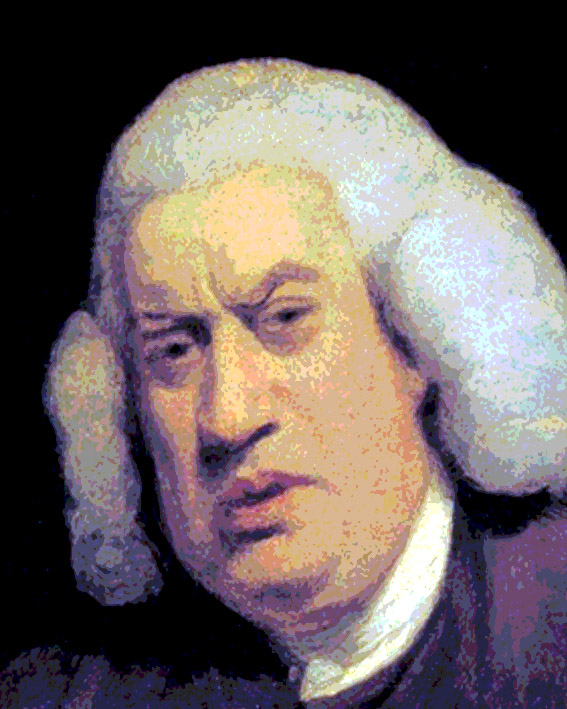 Dr Samuel Johnson (1709-84)
Johnson did not start life well. He never cried as a baby, was sickly, and had a scarred face in consequence of a botched operation for scrofula. He then developed embarrassing tics, now recognised as Tourette’s. At their first encounter, Hogarth assumed he was an idiot, but was then astonished by the man’s conversational brilliance. Johnson was after all a genius. Even as a child he performed prodigious feats of memory. He is most associated now with the ‘Dictionary of the English Language’ (1755) that became his bequest to mankind. Yet his accomplishment as a man of letters went much further. He has been described as the world’s only great critic of English literature, and his aphorisms and witticisms were of the highest order. He also wrote poetry and drama, and moved to Greenwich in 1737 to complete his play ‘Irene’. The world is lucky to have had the assiduous James Boswell to record it all.
 Matthew Robinson, 2nd Baron Rokeby (1713-1800)
For many years, Robinson from Yorkshire was a perfectly respectable member of the community. He went to Cambridge, studied law, and was sufficiently erudite to be made a fellow of the Royal Society. He also became MP for Canterbury in 1747, having inherited his mother‘s estate at Monks Horton the year before. There, however, he slowly morphed into a veritable eccentric. Most visibly, in that clean-shaven age, he grew a beard the size of a small bush, and when he stayed in Lenham was mistaken for a Turk. As well as refusing heating and medical help, he ate little except barely cooked meat. He was also an all-weather saltwater swimmer. Because he sometimes had to be rescued after passing out, he had his own bathing facilities erected at Hythe, and later saltwater baths at his home. All this must have traumatised his social-climbing sister Elizabeth Montagu, whom he outlived by three months. He died at Monks Horton.
 Charles Pratt, 1st Earl Camden (1714-94)
Londoner Charles Pratt was the son of the Chief Justice of the King’s Bench, and followed him into law. His successful legal practice earned him enough to buy Camden House at Chislehurst. His career took on a political hue because of his friendship with Pitt the Elder from their Eton days. He proved a thoroughgoing liberal, consistently taking the side of civil liberties in high-profile trials, such as that of the radical John Wilkes in 1763. Two years later, he was ennobled as Baron Camden, and in 1766 became Lord High Chancellor. Like Pitt, he held the unpopular conviction that Britain should not resist the revolutionary aims of American colonists, and voted against the incendiary 1765 Stamp Act. He was honoured stateside in the naming of several American towns; and, because he sold his Middlesex estate for housing development, he is recalled in the names of the famous London borough, tube station, and market.
 James Waldegrave, 2nd Earl Waldegrave (1715-63)
James Waldegrave, 1st Earl Waldegrave was the owner of Hever Castle until 1718, when he sold it. After Westminster School and Eton, his eldest son James went into politics, and in 1757 arguably made history. He was First Lord of the Treasury when George II relieved William Pitt the Elder of his duties and invited Waldegrave to form a Whig government. Although not titled prime minister, he was de facto the senior figure in government. After five days, he decided not to persist with his efforts for fear of incurring the King’s enmity, and resigned. This made him the shortest-serving ‘prime minister’ in history apart from William Pulteney, 1st Earl of Bath, who had lasted just two days in similar circumstances in 1746. Although his political impact was very limited, Waldegrave’s memoirs make a valuable contribution to understanding of the history of Whig politics. He retired when George III acceded, and died of smallpox.
 John Hawkesworth (~1715-73)
Londoner John Hawkesworth started out as a lawyer’s clerk, but in his twenties took his writing to a new level. A fan and indeed imitator of Samuel Johnson, he succeeded him as parliamentary writer for the ‘Gentleman’s Magazine’ in 1744, also contributing poetry under the name of ‘Greville’. In 1752, the two co-founded ‘The Adventurer’, a magazine of whose 140 issues Hawkesworth penned half. Applauded by the Church for his moralism, he compiled an edition of Jonathan Swift’s works, appending a biography that Johnson admired. Nevertheless, Johnson tired of his junior’s presumption, and in 1756 they fell out. In addition to writing or adapting various dramatic productions, Hawkesworth accepted a commission from the Admiralty to compose an account of James Cook’s first voyage, for which reason he appears in John Hamilton Mortimer’s painting of Cook with Sir Joseph Banks and Lord Sandwich. He and his wife were teachers at a school in Bromley, where he was buried.
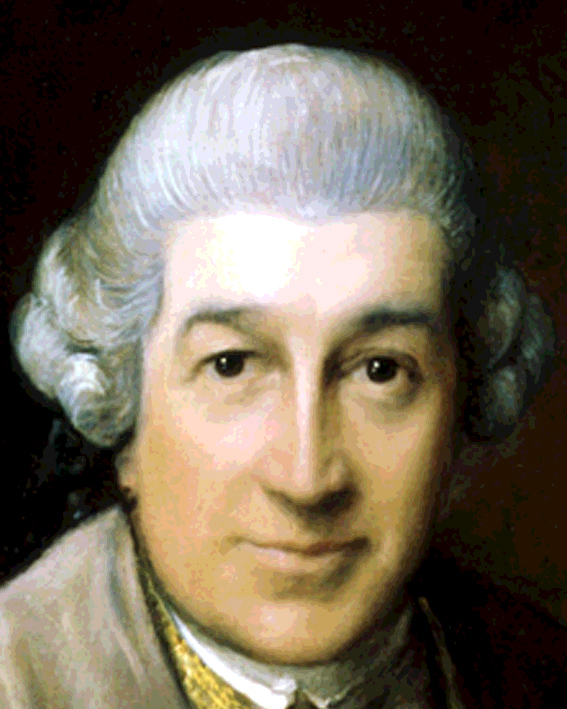 David Garrick (1717-79)
Arguably the most influential figure in British theatrical history, David Garrick was born in Hereford, the son of an army officer of Huguenot stock. He unsuccessfully entered the London wine trade in 1737 while receiving private tuition from the headmaster of Rochester Maths. At 23, he wrote a play that was staged at the Theatre Royal, Drury Lane, and a year later began acting under a pseudonym. He created a sensation almost immediately when, playing Richard III, he repudiated the orthodox declamatory style; even Alexander Pope described him as peerless. After buying shares in Drury Lane, Garrick began a 29-year spell as manager that catapulted it to world stature. He revolutionised the coordination of costume, scenery, and effects, and even reined in the boorish behaviour of audiences; his friend Dr Johnson observed that he had made the theatre respectable. Buried in Poets’ Corner, he is commemorated in the West End by a theatre, a club, and a street.
 Elizabeth Montagu (1718-1800)
Elizabeth Robinson was born into a comfortable family in Yorkshire, but they moved to Mount Morris at Monks Horton, which her mother inherited in 1733. Elizabeth came into a fortune when she married the Earl of Sandwich’s grandson, Edward Montagu, at 22. After their only child died young, she turned increasingly to God. Living in Mayfair, she also wrote, patronised the arts, and became London’s foremost society hostess, welcoming Gilbert West, Samuel Johnson, David Garrick, and Horace Walpole among others. Most famously, she encouraged women to self-educate, so as to mingle with such men on equal terms. After one male invitee was jokingly told to attend in blue stockings, her circle became known as the Blue Stockings Society. Mary Wollstencraft being an associate, they are identified nowadays as proto-feminists who catalysed emancipation, although female-education historian Dorothy Gardiner questioned their influence. Lady Montagu died, immensely wealthy, 25 years after her husband.
 Peter Nouaille (1723-1809)
As his surname suggests, Peter Nouaille had a Huguenot background, his father having immigrated from the Low Countries and joined the Huguenot weaving community in Spitalfields. At 40, he married a fellow Huguenot whose father’s corn-mill at Greatness, Sevenoaks he converted for silk production. Handily situated beyond the compass of the Spitalfields weavers’ monopoly, it formed the basis of a successful business producing silk crêpe, which was then in fashion. Although he went bankrupt in 1778, he restored its fortunes, and by the time of his retirement at 77 was employing 100 people, whom he cared for with education, healthcare, and – for senior employees – accommodation. His home became a magnet to distinguished guests, including fellow Huguenot George Courtauld; the two tried going into business together in 1793, but did not get on. After Nouaille’s death, his son Peter took over the business, which closed in 1828 amid difficult trading conditions.
 Samuel Hood, 1st Viscount Hood (1724-1816)
One of Britain’s most shocking combat disasters of WW2 was the sinking of the world-famous battlecruiser HMS Hood, which exploded in 1941 with the loss of 1,415 men after being shelled by the battleship Bismarck. She was the second HMS Hood to be named after the same man: Samuel Hood, from Somerset, a noteworthy figure in late-C18 naval warfare. He made his reputation in the Seven Years’ War (1754-63), capturing and destroying numerous French vessels. During the American Revolution, he assisted Admiral Rodney at the failed attempt to relieve Yorktown, but also at the defeat and capture of the Comte de Grasse in 1782; and he tutored the young Horatio Nelson. After participating in the French Revolutionary War, he was appointed governor of Greenwich Hospital, which he remained for his last 20 years; he was buried in the hospital cemetery. The family name was somewhat tarnished by his heir Henry, notorious for his affair with Caroline of Brunswick.
 Reverend John Newton (1725-1807)
A ship’s captain’s son from Essex, John Newton had already been to sea several times when his father retired in 1742. He was planning his own maritime career when the Royal Navy press-ganged him. Never happy, he was flogged for attempted desertion, and passed to a slave ship. In 1745, the crew dumped him in Sierra Leone, where Princess Peye of the Sherbro tribe enslaved him; he was treated brutally for nearly three years until another ship’s captain rescued him. While returning to England, he converted to godliness, and though he continued earning a living from slavery, he had set his heart against it. He married his childhood sweetheart at 24 in Rochester, where they briefly resided, and studied religiously. Ordained in 1764, he became a curate in Buckinghamshire, where he collaborated with the like-minded poet William Cowper, and wrote the evergreen ‘Amazing Grace’. Appointed a rector in London in 1779, he devoted himself to abolitionism.
 Clive of India (1725-74)
For 250 years, Robert Clive, 1st Baron Clive, was to Britons what Pitt the Younger described as a “heaven-born general”: an East India Company clerk from Shropshire who miraculously held the French Army at bay in 1753, avenged the Black Hole of Calcutta atrocity in 1755, and at the Battle of Plassey (1757) ended Mughal and French imperial ambitions in Bengal, paving the way for the Raj. In his next two spells in India, he demonstrated expert administrative skills. Even in his lifetime there were question marks over him, however. In Parliament, he was castigated for the severity of his governorship of Bengal and the venality that landed him a peerage in Ireland and a handsome home at Westcombe Park in Greenwich. Although no charges stuck, he committed suicide. Re-imagined recently as an imperialist, he has been cancelled at two posh schools that previously honoured him, although no statues have been toppled, not even the one in Kolkata.
 Commander James Cook (1728-79)
James Cook was the captain who boldly went where no European had gone before. A Yorkshireman, he joined the merchant navy and later the Royal Navy, earning note for charting the St Lawrence River at Wolfe’s Siege of Quebec. It earned him the command of HMS Endeavour on an expedition to Tahiti (1768-71) to observe a Venus transit. He continued in search of Australia, making landfall at the place he famously named Botany Bay. On his return, he landed at Deal. His second voyage (1772-5) was a failed attempt on HMS Resolution to locate Antarctica, though he greatly expanded knowledge of the South Pacific. Cook was awarded honorary retirement as an officer of Greenwich Hospital; but he soon fatefully accepted the challenge of seeking the Northwest Passage, again on Resolution (1776-9). Foiled by ice, he returned to Hawaii, which he had named the Sandwich Islands after his sponsor. Like fellow circumnavigator Magellan, however, he was stabbed to death by natives.
 Ignatius Sancho (~1729-80)
Ignatius Sancho was supposedly born on a slave ship sailing to a Spanish colony in South America, but at two was gifted to three spinsters living in Greenwich whom he served for 18 years. A visitor during that time was Lord Montagu who, impressed by Sancho, helped him learn to read. On Montagu’s death, Sancho quit to work in Blackheath as butler to Montagu’s widow – who left him a bequest two years later – and later their son-in-law. In 1758, he married a black woman, Anne Osborne, with whom he sired seven children. He corresponded with novelist Laurence Sterne, whom he urged to write about slavery. Having also mastered musical composition, Sancho earned the soubriquet ‘The Extraordinary Negro’, and was painted by Gainsborough. In 1774, with his employer’s help, he qualified as the first black man to vote in the UK by opening a grocery store in Mayfair, where he encountered, and doubtless influenced, the abolitionist Charles James Fox.
 Captain William Locker (1731-1800)
Locker was born at Leathersellers’ Hall, London, where his father, a lawyer from Bromley, was currently company clerk. At 15, he joined the navy, serving twice under a Captain James Kirk. His red-letter day was July 8th, 1757, when his ship Envelope intercepted the French privateer Télémaque of Alicante. Despite enjoying far superior numbers, the French failed to board Envelope successfully, and Locker’s counter-attack yielded the capture of the enemy ship, with most of her 460 crew lost, at relatively little cost. After gaining his own command in 1762, he served in the Caribbean. Under his wing was the very young Nelson, who wrote later that Locker had taught him the French were always beatable at close quarters. Locker later commanded The Nore and was lieutenant-governor of Greenwich Hospital, where he argued vigorously for a naval art collection. He owned a farm at Gillingham, but died at Greenwich, and was buried in the family vault at Addington.
 Captain Francis Grose (~1731-91)
Grose was born in London to an English mother and a Swiss immigrant father, a jeweller. He set out to become a soldier, and was posted to Kent, where he married a Canterbury woman; they had ten children together. He quit the army in 1751 to avoid being posted to Scotland, and pursued his interest in antiquarianism. His most outstanding achievement was ‘The Antiquities of England & Wales’ (1772-6), for which he usefully applied his limited artistic talent to creating numerous visual records of old buildings. So successful was it commercially that he immediately embarked on a supplement using other artists’ work. His involvement with the Surrey Militia from 1778 led him to incur chronic debts, prompting him to augment his antiquarian productions. These included two significant dictionaries, one of vernacular English and another of proverbs and superstitions. He died in Dublin while researching a volume of Irish antiquities.
 Paul Sandby (1731-1809)
Alongside his older brother Thomas, who likewise was from Nottingham, the teenage Paul Sandby got a job at the Tower of London as a military draughtsman, which included making maps and visualising military installations. His hobby was watercolours, and while working in Scotland around 1750 he recorded Edinburgh buildings and street scenes. At 20, he left to assist his brother at Windsor Great Park. He sold his drawings of the town to Sir Joseph Banks, and earned high praise from Gainsborough. Sandby having published ‘The Cries of London’ in 1760, George III made the brothers two of the 28 founders of the Royal Academy in 1765. Three years later, Paul Sandby was appointed drawing-master at the Royal Military Academy at Woolwich, remaining there until 1799. During that time, he painted several pleasing Kent scenes. He also toured Wales with Banks, leaving behind an impressive collection of views. He died in London.
 Richard Cumberland (1732-1811)
Not many people can claim to have been born at Cambridge University, but Cumberland was. After returning to study there, he did not become a scholar, nor a cleric like his father, but a government official and a playwright. Apart from fruitlessly negotiating with Spain to keep it out of the American Revolution, he had an undistinguished career in politics. His literary output, however, was substantial, amounting to 54 plays, his memoirs, and sundry other pieces. His dramas were popular in a chocolate-box Dickensian way, the scenarios usually concerning someone fundamentally good but socially marginalised for whom there is a happy ending. He had a big hit in 1771, called ‘The West Indian’, concerning a wealthy plantation-owner who comes to England full of himself, until his inner virtue comes out; it was staged to acclaim in the West Indies and North America. Cumberland lived at Tunbridge Wells, but later moved to London and died there.
 Nevil Maskelyne (1732-1811)
Although he was born in London, Nevil Maskelyne spent well over half his life at Greenwich, following his appointment as Astronomer Royal in 1765. He had attended Westminster School, where an eclipse catalysed his interest in astronomy, before studying at Cambridge and being ordained. The Royal Society engaged him in 1761 to sail to St Helena to observe the transit of Venus, but it was overcast. On the return journey, however, he grappled with the problem of longitude still exercising the maritime world, and came up with the lunar-distance method of calculation. This led to the development of the Nautical Almanac, of longstanding value to sailors. His crowning glory was the Schiehallion experiment in 1774, when he accurately measured a mountain of that name in Scotland, enabling Charles Hutton to calculate the earth’s density. He was awarded the Royal Society’s Copley medal in 1775, and has a crater on the moon named after him.
 Lord Sydney (1733-1800)
Thomas Townshend would be forgotten if it hadn’t been for one historic event on his watch. He had been MP for Whitchurch in Hampshire for nearly three decades when, in 1783, he was ennobled. By that time, his father had died and left Frognal House near Chislehurst to him. He at first intended to call himself Lord Sidney after the stout republican Algernon Sidney, from whom he was descended. Concerned that the Sidneys might make something of it, he opted instead for Sydenham, after the nearby Kent town. Further thought led him to a compromise: Lord Sydney. It happened to be in 1788, during his time as Home Secretary, that the first convict ship reached Australia. Arthur Philip, as first governor of New South Wales, named the new penal colony in Sydney’s honour. But for Townshend’s change of mind, Australia’s biggest city would now be called Sydenham. As for Lord Sydney, he lies buried in Chislehurst church.
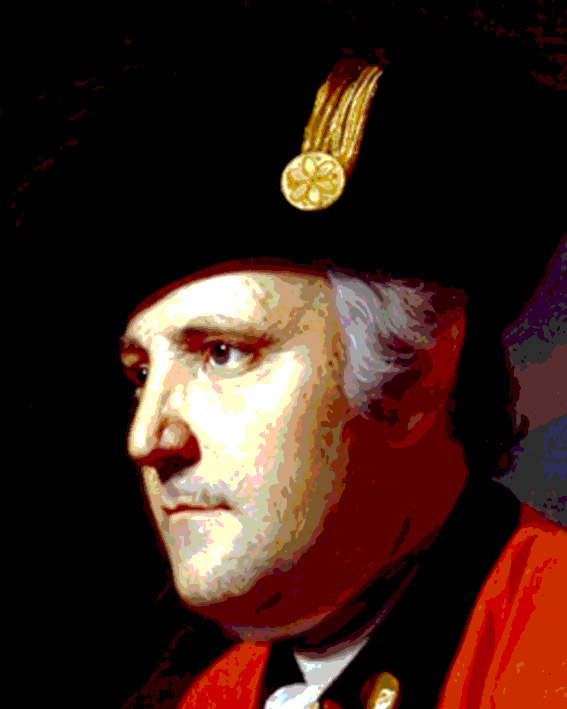 Captain John Montresor (1736-99)
Montresor’s legacy in Kent is Belmont House, which he built in 1783 and occupied for ten years before being charged with embezzlement. By then, he already had a colourful history. He was born in Gibraltar, and trained as a British Army engineer. He served with Braddock in the French & Indian War in America, and then Wolfe at Quebec. His next few years have the flavour of a Boy’s Own frontier adventure. He even acquired an island in New York harbour that he named after himself. He became the Army’s chief engineer, and from 1776 participated in several battles of the Revolutionary War. After three years, he came home and resigned from the Army, but had walked into trouble: he was made to appear before Parliament to account for his expenditure. Certainly he wasn’t hard up, having a property in Portland Place in addition to Belmont. After having his assets confiscated by the state, he eventually died in Maidstone prison.
 Thomas Paine (1737-1809)
Thomas Pain (sic) single-handedly triggered the loss of Britain’s American colonies. A Quaker from Norfolk, he followed his father into stay-making. After a spell as a privateer, he set up a failed business in Sandwich before moving to Margate, where his wife died in childbirth. He then drifted from job to job, an untrustworthy ne’er-do-well. In 1774, he left his second wife and emigrated to Pennsylvania. Now ‘Paine’, he penned ‘Common Sense’, a vengeful work of anti-royalist propaganda that whipped colonial grievance into open sedition. Following the War, Paine returned to Britain, but fled to revolutionary Paris after being arraigned for treason. Ever the turncoat, he sought to help the French king against the revolutionaries and was sentenced to be guillotined; but Robespierre expired just in time. Paine died back in America, barely mourned after lambasting President Washington.
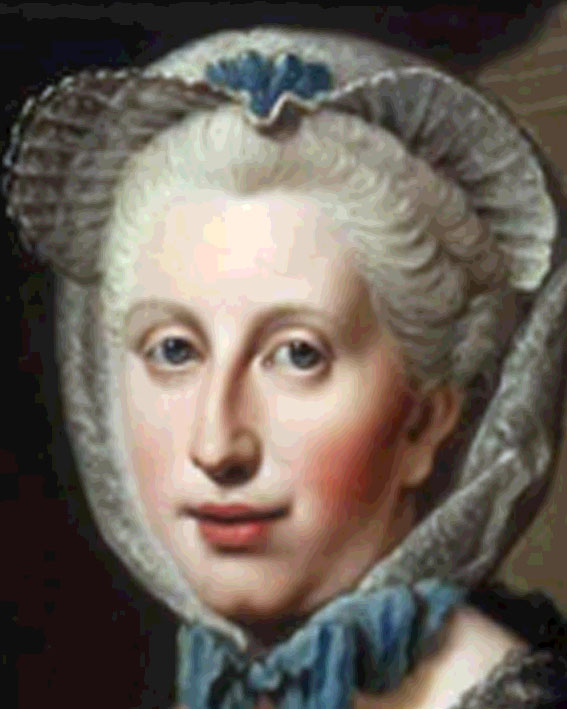 Princess Augusta (1737-1813)
The unlucky Augusta Frederica was the first-born child of Frederick, Prince of Wales, but her younger brother George stood first in line to the throne because she was female. She was married off to Charles William Ferdinand, Prince of Brunswick-Wolfenbüttel, and departed for a land she disliked. Her father succumbed to an embolism before he could become king, and her youngest sister, the Queen Consort of Denmark & Norway, was divorced for adultery before dying of scarlet fever. Three of Augusta’s four sons were either mentally defective or invalids. Her eldest daughter died at 23, and her youngest in infancy. In 1806, her husband was killed in the Napoleonic wars, so Augusta came to live at Blackheath with her remaining daughter, Princess Caroline. They did not get on, however, and she moved into Ranger’s House at Greenwich. Two years after her death, her youngest son Frederick William was shot dead while leading his army, just two days before Waterloo.
 Charles Hutton (1737-1823)
Novocastrian Charles Hutton appears to have worked briefly in a coalmine before becoming headmaster of the local school he had attended. In the evenings, he studied maths, and in 1764 published ‘The Schoolmasters Guide, or a Complete System of Practical Arithmetic’, followed by a book on measurement in 1770. Having been commissioned to perform a survey of Newcastle, he was appointed a maths instructor at the Royal Military Academy in Woolwich in 1773. Most famously, he was asked to do the calculations concerning the density of the Earth based on Astronomer Royal Nevil Maskelyne‘s measurements of a Scottish mountain. He was elected a Fellow of the Royal Society in 1774 but, despite winning its prestigious Copley Medal, resigned nine years later after falling out with Sir Joseph Banks. He continued publishing copiously, co-edited the Royal Society’s 18-volume ‘Philosophical Transactions’, and continued as chief RMA examiner even after retirement. He was buried in a family vault in Charlton.
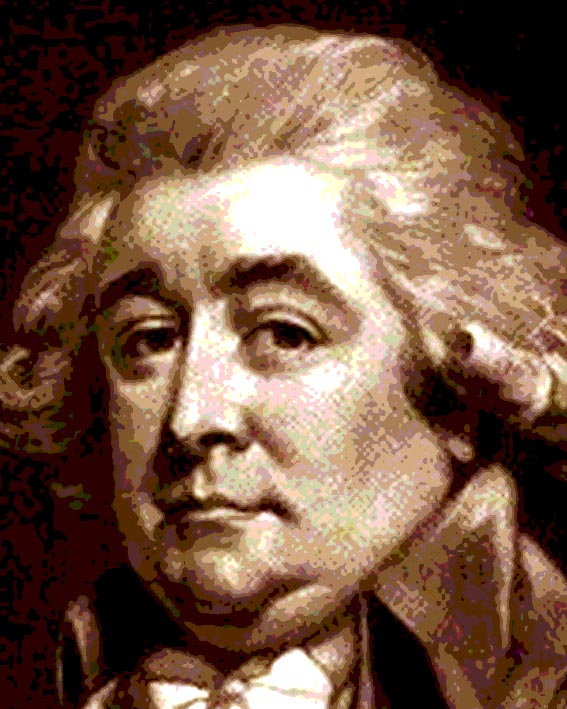 Charles Bannister (1738-1804)
Having been born in Gloucestershire, Bannister came to live in Deptford at seven. He began acting in London in 1762, but it was as a singer that he truly excelled. Remarkably, he never learned to read music, and had to have pieces sung to him; but he could then repeat them note-perfectly. His voice was not only first class, but also extraordinarily wide-ranging: he could sing both bass and falsetto. In fact, he played female roles in travesty (cross-dressing), such as Polly Peachum in ‘The Beggar’s Opera’, getting a laugh by singing in a deep voice while showing a dainty ankle; David Garrick signed him up for Drury Lane on the strength of it. He was also a renowned wit who turned out a string of bons mots. His son John (1760-1836), born in Deptford, followed him into the theatre and became equally famous, albeit specialising in low comedy and then managing Drury Lane.
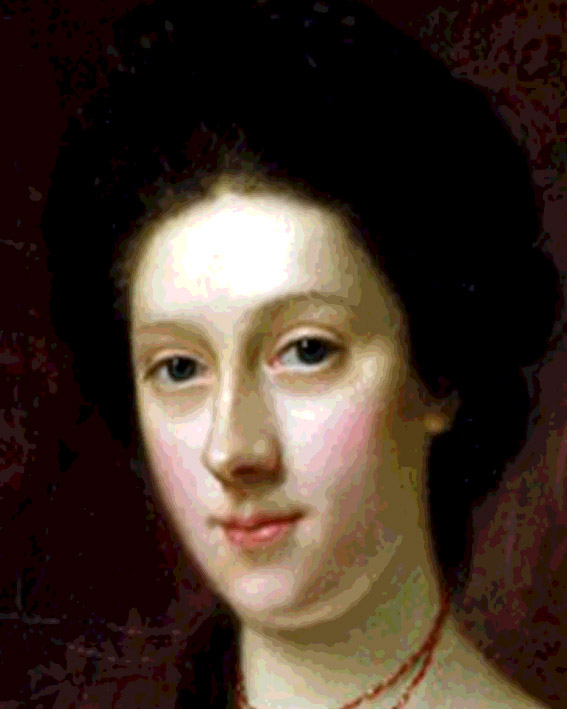 Kitty Fisher (1741-67)
From lowly origins in London, Catherine Fisher had little but her looks and wits to fall back on. She no longer had to depend on royal favours, however: the absolutist and mercantilist Stuart era had given way to the nascent Industrial Revolution, putting money in lots more pockets, and Fisher revelled in the luxury showered on her by rich patrons. An outrageous exhibitionist, she deliberately exposed her private parts to the public in an ‘accidental’ fall from a horse, got Joshua Reynolds to paint her portrait many times in the most flattering manner, and made sure to promote endless gossip. Envious of her old rival Maria Gunning’s marriage to one of her former customers, Lord Coventry, she allowed a doting admirer, MP John Norris, to marry her and house her at his country home, now Benenden School. She died after only four months there, and is buried in the local churchyard. She is mentioned in the nursery rhyme ‘Lucy Locket’.
 Lionel Lukin (1742-1834)
In 1784, Essex man Lionel Lukin, who worked as a coach builder in London, came up with the idea of an unsinkable boat. Having adapted a Norwegian yawl to hold floatable materials and water-tight compartments, he conducted successful trials on the Thames, and patented his design in 1785. A year later, the archdeacon of Northumberland got him to build an example at Bamburgh, which by default became home to the first lifeboat station. A disaster on the Tyne in 1789 dramatically highlighted the pressing need for custom-built lifeboats, however, and a local competition elicited a winning design built by Henry Greathead from South Shields, who consequently is generally reckoned to be the inventor of the lifeboat. That was not the end of Lukin’s creativity, however: his other inventions included a raft for saving people trapped under ice. Having retired to Hythe and died there, he was the subject of a biography in 1925.
 Sir Joseph Banks (1743-1820)
Most people can name more astrophysicists than they can botanists; but there is one with a Kent connection who ought to be a household name. Joseph Banks became famous when he accompanied James Cook on his first voyage. So important was he to the mission that Botany Bay was named in his honour. He discovered 1,400 new plant species, bringing home tens of thousands of specimens, and became a key player in the establishment of Kew Gardens. He was also instrumental in setting up other important maritime missions, for example Vancouver’s exploration of North-West America and Bligh’s expeditions that, despite the mutiny on HMS Bounty, helped establish breadfruit as a major food source in the Caribbean. His outstanding contribution to science was recognised in his presidency of the Royal Society, which he held for 41 years. In 1779, Banks married Dorothea Hugessen of Provender House near Faversham, where some of the trees he planted can still be seen today.
 James Cornwallis, 4th Earl Cornwallis (1743-1824)
London-born James Cornwallis was remarkably well connected. His maternal grandfather was the noted agrarian ‘Turnip’ Townsend, his mother Elizabeth a niece of Sir Robert Walpole, his uncle Frederick the Archbishop of Canterbury, his twin brother Edward the founder of Halifax in Nova Scotia, another brother the renowned admiral ‘Billy Blue’, and his third brother Charles the famous General Cornwallis who decisively surrendered to the American revolutionaries at Yorktown in 1781. After attending Eton and Oxford, James Cornwallis married Catherine Mann at 28, and so took possession of the Manns’ Kentish estates, ultimately including Linton Park in 1814. Cornwallis was rector or vicar of several Kent parishes – Ickham, Adisham-with-Staple, Newington, Wrotham, and Boughton Malherbe – as well as a prebendary of Westminster Abbey for 15 years. In 1781, he was appointed Bishop of Lichfield & Coventry for life, and was variously Dean of Canterbury, Windsor, and Durham. He inherited the title Earl Cornwallis the year before his death.
 Dr Edmund Cartwright (1743-1823)
The Industrial Revolution (~1760-1830) was a Northern English affair, yet one of its titans eventually made his way to Kent. Edmund Cartwright from Nottinghamshire, whose brothers were an explorer and a social reformer, went to Oxford after attending Wakefield Grammar School. Though he became a rector, his passion was inventing. His great claim to fame is the power loom, a means of weaving mechanically that he patented in 1785. Although it initially caused social unrest by making domestic weavers redundant, it was to revolutionise cloth manufacturing, bringing affordable woven goods into the reach of millions. Cartwright made numerous refinements, but did not benefit financially, being unable to find a means of sizing (coating) the cloth without stopping the loom. Despite also inventing a wool-combing machine, he was bankrupted in 1797. Nevertheless, a grateful Parliament munificently awarded him £10,000 in 1809, enabling him to buy Hollanden House farm near Hildenborough. He died at Hastings and was buried at Battle.
 Frances de Brissac (1760-1854)
Spitalfields in London used to be a centre of the silk-weaving industry, a magnet to French Huguenot refugees from Catholic persecution in the C17. De Brissac was born there into a wealthy silk-weaving family that had banking connections in the Netherlands. She met Thomas Dickinson RN, a future Royal Arsenal superintendent whose step-mother was also a Huguenot, married him at 20, and had nine children, including a famous papermaker. A character, Mrs Dickinson was fond of her finery, liking to dress in silks and laces, don a tiara and jewellery, and sport an Indian shawl. Fanny Burney wrote approvingly of her chattiness and maternal skills, while Christopher Greenwood praised her talent for both interior and garden design. By that time, the couple had moved to Bramblebury, a house with its own parkland at Plumstead. She lived to a great age at that time, finally expiring at 93, a quarter-century after her husband. She was buried at Plumstead church.
 William Eden, 1st Baron Auckland (1745-1814)
William Eden was from the same aristocratic County Durham family as the C20 prime minister Anthony Eden. His first noteworthy action was a failed mission to end the American Revolutionary War in 1778. He did however gain a reputation as an expert on commerce, and later became Britain’s spy chief. Eden moved to Eden Farm in Beckenham, where he was neighbour and friend to prime minister William Pitt the Younger. Pitt became very close to Eden‘s daughter Eleanor; he would visit her on his way from London to Walmer, where he occupied the Castle as Lord Warden of the Cinque Ports. As poignantly depicted in Carol Reed’s 1942 biopic, Pitt was so wed to his career that he ultimately spurned her, for which Eden never forgave him. Worse, his eldest son drowned himself in the Thames. The Auckland Islands south of New Zealand were named after him by their discoverer, Abraham Bristow, in 1806.
 Sir Thomas Hyde Page (1746-1821)
Although he was born in Harley Street, engineer’s son Page spent most of his life in Kent. Having studied engineering at the Royal Military Academy in Woolwich and joined the Royal Engineers, he devoted much of his career to engineering projects in Kent. Most notably he improved defences at Chatham, Dover, Gravesend, and Sheerness, built a ferry at Chatham that won him a civil medal, and successfully dug a well at Sheerness after being criticised in Parliament for his initial failed attempt. In between, he took part in the battle of Bunker Hill (1775) against American revolutionaries, but was invalided out after being wounded. He mostly resided at Betteshanger Park, his second wife of three (who had five children with him) being from Ringwould. Having also founded the Dover Volunteers in 1780, he was elected a fellow of the Royal Society in 1783, and knighted six weeks later. He died while in France.
 Charles James Fox (1749-1806)
Once described as the world’s greatest debater, Fox was as controversial for his colourful private life as for his politics. He was born in London, the third son of the notoriously corrupt Whig minister Henry Fox, Lord Holland. Fox the Younger gambled, drank, and wenched to the full and, when in 1770 his father conveyed to him his several properties in Thanet for five shillings, mortgaged them for £20,000; he finally slowed down after living with and secretly marrying one of London’s most celebrated courtesans. Echoing his father’s long antipathy to Pitt the Elder, he excelled as Pitt the Younger’s arch opponent. He fiercely criticised the King’s hard line on American revolutionaries, welcomed the French Revolution, opposed Pitt’s commitment to resisting Napoleonic imperialism, and supported Irish Home Rule. Also like his father, he vehemently opposed the slave trade, and died as he was about to introduce a bill for its abolition. Hunters traditionally call the fox ‘Charlie’ after him.
 Elizabeth Lamb, Viscountess Melbourne (1751-1818)
The daughter of Yorkshire baronet Sir Ralph Milbanke, Elizabeth married Peniston Lamb, Viscount Melbourne, at 18. Within six years she was painted as one of ‘The Three Witches of Macbeth’, having acquired a reputation for scandalous behaviour that complemented vociferous support for the dissolute Whig leader, Charles James Fox. At the Cox Heath army camp south of Maidstone, she and her friends dressed in outrageous skin-tight military uniforms, and after dark engaged in novel means of entertaining the troops. Thus was conceived her second son William, the future prime minister Viscount Melbourne, in 1778. When she had Joshua Reynolds paint three of her children in 1785, her husband refused to pay because only one was his. Indeed, of her six surviving children, five were probably illegitimate. She later befriended Byron while he was having an affair with her daughter-in-law, Lady Caroline Lamb, and ended her life telling her married daughter Emily to remain true… to her lover, Lord Palmerston.
 Huang Ya-Dong (b ~1753)
Sevenoaks School has the distinction of being the alma mater of the first Chinese pupil in England. After the artist Tan Che-Qua visited England in the 1770s, disembarking once at Deal, Huang Ya-Dong heard of the warm reception he’d received, and decided to follow him. Still a teenager, he was brought by an East India Company employee called John Blake, who engineered him a place at the School, and later a visit to the Royal Society and even a conversation about Chinese ceramics with Josiah Wedgwood. Huang found employment at Knole House as page to the 3rd Lord Dorset’s mistress, the ballerina Giovanna Baccelli. Dorset even had him painted by Joshua Reynolds; his portrait now hangs in the Reynolds room at Knole. Tan stayed for about six years before returning home and becoming a trader in Canton. His name is questionable: it has been translated as ‘yellow man from the East’, suggesting that it was his pseudonym.
 Vice-Admiral William Bligh (1754-1817)
Of all Hollywood’s many historical calumnies, that directed at Captain Bligh is among the nastiest. MGM’s 1935 and 1962 movies made the 1789 ‘Mutiny on the Bounty’ a metaphor for the American Revolution: freedom-loving rebel overthrows uniformed British despot. The reality in both cases was altogether different. Captain Bligh, from the same Anglo-Irish family as the Earls of Darnley of Cobham Hall, was a conscientious, humane Westcountryman whose only fault was pomposity. Sir Joseph Banks handpicked him to collect breadfruit samples from Tahiti as a possible food source for the West Indies. After a difficult voyage, Bligh’s first mate (and friend) Fletcher Christian deemed Tahitian hedonism more to his liking, commandeered the ship, and cast his captain and 18 shipmates adrift in a 23-foot boat. Bligh brilliantly navigated the 4,000 miles to Timor, losing only one man en route. Formally acquitted of all blame, he spent his last years at Farningham Manor. Christian was not so lucky.
 The Reverend Mark Noble (1754-1827)
Being a Brummie merchant who also owned a steel factory, William Heatley Noble was able to leave his third son Mark some money. Young Noble joined a solicitor’s practice, but he was always much more interested in antiquity. He won the living of two parishes, which brought him little income, but was able to devote his time to study and writing. In his twenties he wrote books on coins and international VIPs. His ‘Memoirs of the Protectoral House of Cromwell’ (1784) was excoriated by Thomas Carlisle, who even called him an imbecile; but he was valued by the Earl of Sandwich, who recommended him for the rectorate of Barming in 1786. He remained there until his death, producing works of genealogy and a large volume of biographies and antiquarian lists. He also found various imperial coins on the site of a Roman villa near the church. He was buried there, and was remembered by a monument.
 Brigadier-General Sir Samuel Bentham (1757-1831)
The father of utilitarianism Jeremy Bentham had one surviving brother, Samuel. A Tory lawyer’s sons, they got on well, but followed very different career paths. Whereas Jeremy became a world-famous philosopher, Samuel started as an apprentice at Woolwich Dockyard before moving to Chatham Dockyard. At 23, he left to work in Russia with Potemkin (of Potemkin village fame) as a shipbuilder, then engineer, then decorated military commander; he even researched ships in China. Having returned in 1791, he became Inspector General of Naval Works. In 1812, he proposed his ambitious Panopticon design for Sheerness Dockyard, as championed by his brother for prisons, but was overruled in favour of John Rennie the Elder. In fact, his ideas in general were considered too radical by the Navy Board. After being sent back to Russia, he returned to find his position abolished, and moved to a French chateau for twelve years. After returning, he devoted himself to naval affairs.
 Joseph Marryat (1757-1824)
A Londoner descended from Huguenot immigrants, Marryat moved to Grenada in his twenties. There he had an illegitimate child with a slave, whom he later freed; their daughter became a slave-owner. Back in London, now a wealthy merchant, he acquired West Indian plantations operated with slave labour. With Britain about to defy the world by banning slavery, he entered politics to oppose abolition, and became a Sussex MP after winning an appeal against his electoral defeat. Perversely he lived part-time with his American wife in Sydenham in the freedom-loving county of Kent. In 1812, he even took the seat of Sandwich, where no rival candidate was standing, and sat until his death as an independent, presumably because no party would have him. Even after abolition, he defended slave-ownership on economic grounds, while endorsing the suppression of overseas slave-trading as if in mitigation. His son Frederick, contrariwise, became a heroic sailor, humanitarian inventor, and famous writer.
 Reverend Charles Burney (1757-1817)
Charles Burney, author of ‘A General History of Music’ (1776), had a son in Norfolk, also named Charles. Having been expelled from Cambridge for stealing books, Burney Junior – Fanny’s brother – became a teacher in Middlesex at 24, and quickly married the headmaster‘s daughter. When the head died in 1786, Burney took control, and in 1793 moved the school to Greenwich. It proved a great success at educating future army and navy officers, although the strict discipline was less than popular with pupils. Fifty once locked themselves in a classroom and physically attacked Burney when he talked his way in; as the Rector of Cliffe and Deptford, and George III’s chaplain, he felt constrained to grant Christian forgiveness to all but two, who were expelled. Also a Fellow of the Royal Society, a fine Greek scholar, and an avid bibliophile who sold his 13,000 books to the British Museum for a fortune, he died of a haemorrhagic stroke at Deptford.
 John Pratt, 1st Marquess Camden (1759-1840)
When the great lawyer Sir Charles Pratt was the Attorney-General, his only son John was born in London. The lad went to Cambridge University – of which he later became Chancellor – was elected an MP at 21, and landed a job for life as one of four Tellers of the Exchequer. In 1786, when his father was created 1st Earl Camden, he became Viscount Bayham, taking his name from the house at Bayham Old Abbey near Lamberhurst that became his home. His career took a turn for the worse when, after succeeding as the 2nd Earl Camden, he was appointed Lord Lieutenant of Ireland. A fervent Protestant, he could scarcely have been less popular, but dealt zealously with dissension. He put down the revolt that ensued in 1798, and resigned immediately afterwards. He was then appointed Secretary of State for War & the Colonies. Also Lord Lieutenant of Kent for 32 years, he commanded the local militia regiment for Cranbrook.
 Lieutenant-General Sir John Moore (1761-1809)
Unlikely as it may seem, the Spanish town of Corunna boasts the impressive tomb of a British general, originally erected by his French opponent. John Moore, a Glaswegian, served in the American Revolutionary War before helping to suppress the Irish Rebellion of 1798. He assumed command of the Light Infantry at Shorncliffe Army Camp, Folkestone just as Napoleon was planning to invade. It was Moore who pioneered modern drill there and organised the defences between Dover and Dungeness, including the Martello Towers and Royal Military Canal. In 1809, he led the British Army’s evacuation from Galicia under attack by Marshall Soult, an operation not dissimilar to Dunkirk. He managed it magnificently, but at the expense of his own life. Mortally wounded by cannon shot, he died graciously, like Nelson, and is remembered for his last words, asking that he be remembered to Charles Banks Stanhope’s sister Hester from Chevening. He is recalled in Hythe’s Sir John Moore Avenue.
 Spencer Perceval (1762-1812)
Though he was born in Mayfair, Middlesex, Perceval grew up at the family home in Charlton. A diligent scholar, he was at Harrow and Cambridge before becoming a lawyer. He went into politics at 33 and enjoyed a meteoric rise, aligning himself with Pitt the Younger in opposing slavery and various moral ills. He became prime minister in 1809 – the only attorney general to do so. In the thick of it, with the Peninsular War, a slump, and Luddism to contend with, he was making progress when his term ended abruptly. In May 1812, in the House of Commons foyer, he was shot dead by John Bellingham, a merchant denied compensation for his imprisonment in Russia. After pleading that politicians must to be held accountable for neglecting their duty to citizens, Bellingham was convicted and hanged; public sympathies inevitably divided on political lines. Perceval remains the only prime minister so far to have been assassinated.
 William Cobbett (1763-1835)
Cobbett was the original social justice warrior. Though best known for ‘Rural Rides’ – a travelogue that includes two accounts of 1820s Kent – he was predominantly a lifelong scourge of the ruling class. The connection was the Corn Laws, legislation aimed at sustaining landowners’ profits by restricting foreign food imports. Like much of Cobbett’s copious writing, ‘Rural Rides’ was intended to dramatise its impact on ordinary people. Yet he would have had no truck with the anti-nation stance of today’s radicals: Britain belonged to the people, not the rulers, and must be sustained. He signed up to the Army at 20, spending a year at Chatham before serving in America. He returned to marry an American at Woolwich. Though he escaped retribution more than once by fleeing overseas, his loyalty never wavered. Indeed, he cheekily opened a shop in Philadelphia loudly supporting the King. Despite his antislavery stance, he even lambasted the supposedly disloyal William Wilberforce.
 Frederick Winsor (1763-1830)
As an ambitious young man born during the Hanoverian era in Queen Caroline’s hometown Brunswick, Friedrich Winzer unsurprisingly moved in his thirties to England, and anglicised his name. His interest in fuels took him to Paris in 1802, where Philippe Lebon had introduced a patented gas-lighting system three years earlier. In 1807, in Pall Mall, he made the world’s first demonstration of coal-gas street lighting, using lamps fuelled by his own gasworks. He invented and patented different means of gas production, and was sufficiently successful commercially that he could buy a smart house in Shooters Hill, which thus became the original House of Winsor. He applied for a charter but, when it was refused, decided to make a fresh start in France. He never enjoyed the same success, however, but having died there was buried among the celebrities at Père Lachaise cemetery. His original illuminating feat is commemorated with a plaque in Pall Mall.
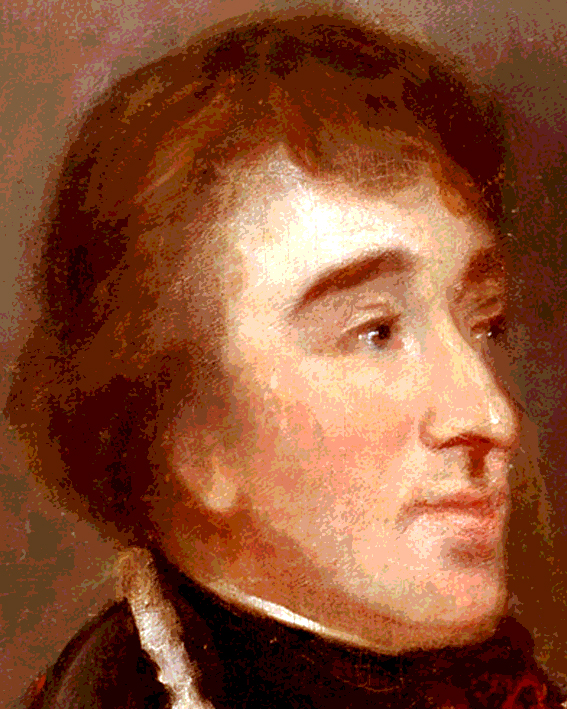 Admiral Sir Sidney Smith (1764-1840)
After Tonbridge School, Smith from Westminster distinguished himself in the Royal Navy during the American Revolution, then assisted Sweden’s navy against Russia so effectively that the Swedish king knighted him. In the French Wars, he helped Admiral Hood burn nearly half the French fleet at Toulon, but was captured while stealing a French ship at Le Havre; he escaped after two years’ imprisonment. In 1798, he went to Istanbul, where his brother John, a future Dover MP, was a diplomat, to rally Turkish support, and became a national hero by helping them terminally blunt Napoleon’s advance at Acre. Before retiring, he became MP for Rochester, a fellow of the Royal Society, and a knight. He built himself a seaman’s villa at Dover with upturned boats for a roof, but ran up such debts in his efforts to combat North African slave-trading that he left for Paris to avoid repercussions. Napoleon labelled Smith the man who denied him his destiny.
 William Hyde Wollaston (1766-1828)
The son of Norfolkian amateur astronomer Francis Wollaston, William was one of the most under-acknowledged greats of the golden age of empirical science. After attending Cambridge, he became a physician, but on failing to land a job at St George’s Hospital in 1800 turned to scientific research. He made important breakthroughs in several areas: he identified the elements palladium and rhodium; he devised a means of turning platinum into ingots; he coined the term ‘bicarbonate’; he correctly hypothesised the presence of glucose in the blood of diabetics; he invented the camera lucida and Wollaston prism; and he discovered electrical induction, ten years before Faraday. The considerable money he made on his innovations bought him a house in Chislehurst, where he died and was buried. Though briefly president of the Royal Society, his reticence denied him recognition until quite recently. He is commemorated by the Wollaston Medal for geologists, several geographical features, and a crater on the moon.
 Lieutenant-General Benjamin Bloomfield, 1st Baron Bloomfield (1768-1846)
An Anglo-Irishman, Bloomfield studied at the Royal Military Academy at Woolwich, and at 13 was admitted to the Royal Artillery as a subaltern. His only action came during the suppression of the Irish Revolt of 1798. An MP from 1812, he was promoted to major-general in 1814, and knighted in 1815. Having entered the royal household, in 1817 he became private secretary to George III, and keeper of the privy purse. It was his misfortune that the prince regent and his mistress Marchioness Conyngham were rogues of the first order, and after the former’s accession as George IV resented his interference when splashing out on such essentials as diamonds for the royal concubine. The king publicly humiliated him, and the marchioness’s cronies in the Whig government hung him out to dry. His consolations were command of the Royal Artillery (1824) and the Woolwich Garrison (1826), a peerage (1825), and his Methodist faith. He was buried back in Ireland.
 Daniel Alexander (1768-1846)
Although he was born in Southwark, Surrey, Daniel Alexander left a particular mark on Kentish architecture. He was educated at St Paul’s School and then the Royal Academy Schools from the age of 16. His first major commission was Rochester Bridge, which he enlarged to allow a greater volume of traffic both across and underneath. Some years later, he returned to plan a programme of repairs to the Cathedral. In the meantime, he designed and built Lord Romney’s neoclassical Mote House at Maidstone, which hosted the 1799 Royal Review. He then significantly expanded Inigo Jones’s Queen’s House at Greenwich, adding the two wings and distinctive linking colonnades. Having already cut his teeth on Dartmoor Prison, he designed Maidstone Prison in 1819, now one of the oldest in the country. As Trinity House’s surveyor, he additionally designed numerous lighthouses, albeit none in Kent. One of his acolytes was John Whichcord, designer of several major public buildings in Maidstone.
 Caroline of Braunschweig-Wolfenbüttel, Queen of the UK & Hanover (1768-1821)
As the daughter of George III’s older sister Augusta, Princess Caroline of Brunswick was considered an ideal match for her first cousin George, Prince of Wales. He, however, had a libertine’s life in mind, and after drunkenly doing his conjugal minimum – resulting in the birth of Princess Charlotte – banished his wife to homes in Charlton and Blackheath. She retaliated there by conducting her own footloose affairs involving numerous male visitors, which in 1806 prompted the ‘Delicate Investigation’ into her conduct. Though legally exonerated, she agreed to go into exile overseas, where her open dalliance with an Italian servant created further scandal. After George’s accession in 1820, the House of Lords passed a bill to dissolve their marriage, but fervent public support for her defiance of the dissolute King ensured it went no further. Nevertheless, when the now Queen turned up for his coronation, he had the doors of Westminster Abbey slammed in her face. Humiliated, she died weeks later.
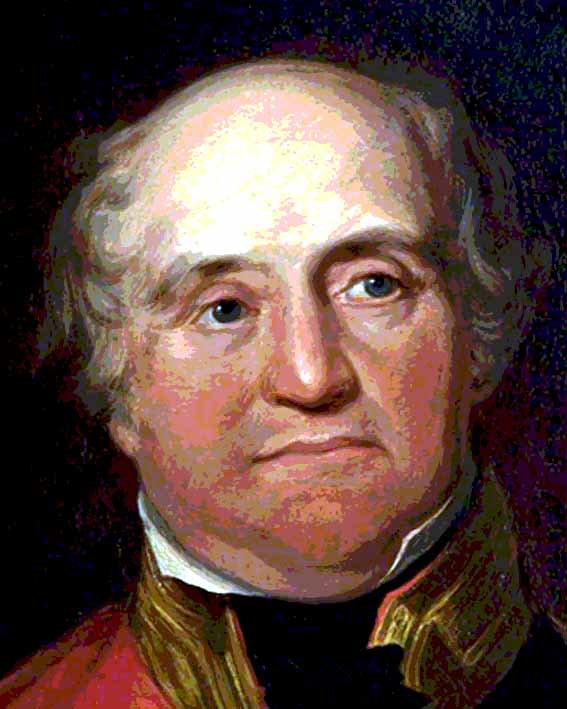 Sir Thomas Hardy (1769-1839)
Hardy, from Dorset, joined the Navy from grammar school, and worked his way up through the ranks. He was a first lieutenant at the time when, in 1796, he got a new senior officer: Commodore Nelson, who made him master and commander of his own corvette. In 1798, the two hunted down the French fleet and smashed it at the Battle of the Nile. Although Hardy disapproved of Nelson’s paramour Lady Hamilton, he was still flag captain at the Battle of Copenhagen in 1801. Two years later, the pair joined up on HMS Victory, blockading the French fleet at Toulon before chasing it across the Atlantic and back. At length, on October 21st, 1805, the tragic finale arrived. At Trafalgar, Nelson ignored Hardy’s advice to retire, and was shot dead. Hardy later became First Sea Lord and Governor of the Greenwich Hospital, where he died and is buried. He will never have forgotten Nelson’s last words: “God bless you, Hardy”.
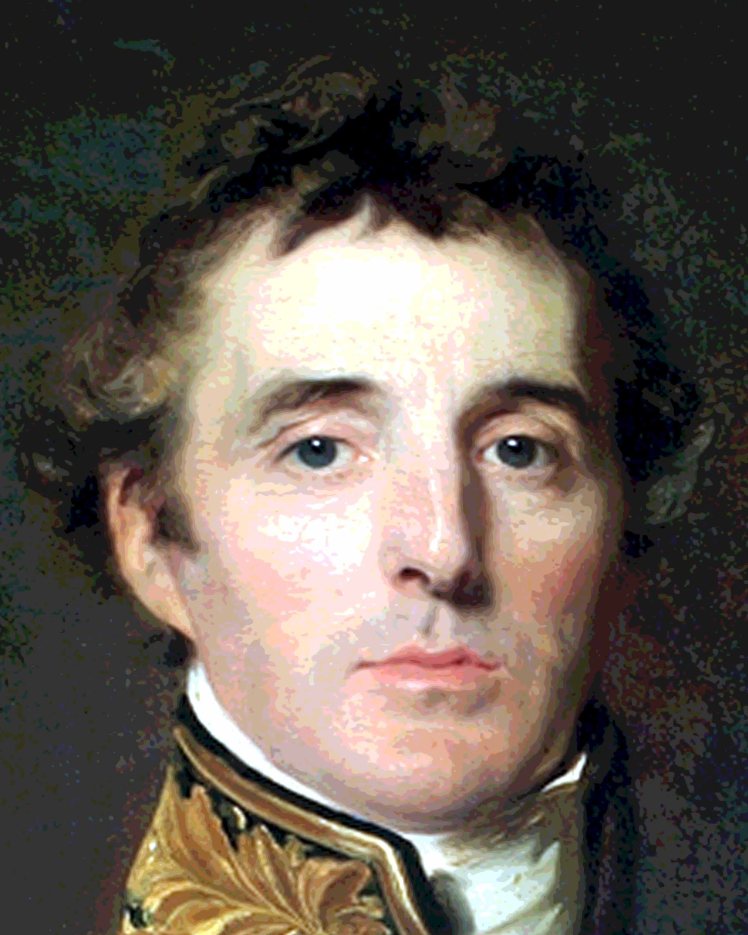 The Duke of Wellington (1769-1852)
Arthur Wellesley came from an aristocratic Anglo-Irish family, but used to point out that being born in a stable did not make a man a horse. He had a stratospheric career in the British Army. Already a general by 1803, he won a decisive victory over the Maratha Confederacy. He then distinguished himself in the Peninsular War, and was made a field marshal in 1813. With the War won, he briefly became ambassador to France, until called upon to take on Napoleon himself at the century’s most momentous battle, Waterloo. As usual, it was his ability to conserve his own forces that won the day. Although he remained Commander-in-Chief of the Army until his death, politics consumed him thereafter. He joined the Tories, and became Prime Minister from 1828 to 1830. Having always fancied residing at Walmer Castle, he made himself Lord Warden of the Cinque Ports from 1829, and so lived and died there.
 Edward Daniel Clarke (1769-1822)
Edward Clarke from Sussex went to Tonbridge School and then Cambridge. In his early twenties, he became tutor to Henry Tufton, the future Lord Lieutenant of Kent, but in 1792 was asked to accompany Lord Berwick on a tour of the ancient sites of Italy. Once he got to Naples, he decided to stay for the best part of three years, time and again guiding visitors to the summit of Vesuvius. That, however, was just a precursor to his grandest tour. In 1799, he took his young tutee John Marten Cripps on a trip to Scandinavia. The visit was supposed to last months, but that turned into some years after they continued to Russia, Greece, and Egypt before making their way back through the Balkans and Central Europe. On the way, he collected manuscripts that earned him a handsome sum, although nothing like as much as he got for his travel memoirs.
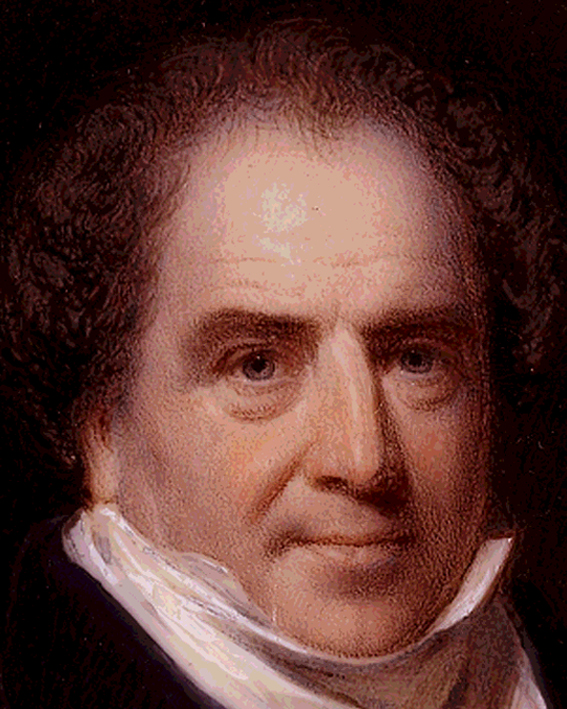 Sir Edward Banks (1770-1835)
A Yorkshireman, Edward Banks spent time at sea before becoming a labourer, working for the eminent Scottish engineer John Rennie. Around 1807, he teamed up with William Joliffe to take on civil engineering projects ranging from prisons to lighthouses. Among Joliffe, Banks & Company’s most celebrated achievements were Waterloo and Southwark Bridges in London, which earned Banks a knighthood in 1822. He developed a special association with Sheerness after being appointed in 1812 to rebuild the Royal Dockyard. Although Banks owned a house in the Strand – and later acquired Oxney Court near Dover – he built himself Sheppey Court in Halfway Road, and designed the Royal Hotel, along with other town-centre improvements. In 1824, he and Joliffe co-founded the General Steam Navigation Company, which among other services ran a steamboat out of Sheerness. One of their last and most famous projects was the new London Bridge of 1831: the one now located at Lake Havasu City in Arizona.
 Admiral of the Blue Sir Henry Digby (1770-1842)
As the nephew of Admiral Robert Digby, Henry Digby from Somerset was born with brine in his veins. He joined the Royal Navy at 14, and in 1795 was commended for rescuing hundreds from a burning ship. He fought in the French Revolutionary and Napoleonic Wars, winning renown for capturing 57 enemy vessels in no time, which brought him a fortune in prize money. His biggest haul followed in 1799, when he helped capture the Spanish frigate Santa Brigida, which was carrying around £30 million in today’s money; he pocketed over 10%. At Trafalgar, he deliberately misinterpreted Nelson‘s orders to get his small ship HMS Africa out of harm’s way, engaging the enemy vanguard single-handed; Admiral Hardy testified later that his bravado had delighted Nelson. Afterwards he married the Earl of Leicester’s daughter Elizabeth, a renowned beauty. Late in life he was made an admiral of the blue and commander-in-chief of The Nore at Sheerness, where he died.
 Elizabeth Conyngham, the Marchioness Conyngham (1770-1861)
Anyone seeking the perfect example of a gold-digger need look no further than Elizabeth Denison. She was born into the family of a wealthy Surrey banker, and at 24 married the Irish Viscount Conyngham, whose family owned Bifrons at Patrixbourne. She was thought vulgar and conniving, and even the Russian ambassadors’s wife dismissed her as an avaricious airhead; but she could wrap wealthy men around her finger. After years of trying, she beguiled the debauched Prince of Wales, then still married to Caroline of Brunswick. He was besotted with her, even gesticulating to her during his coronation, and pining for her when they were kept apart. She shamelessly exploited her position as royal mistress to enrich herself and have titles conferred on her husband. When she even meddled in politics, the prime minister threatened resignation. She left for France as soon as George died in 1830, but returned to live out her long life in Kent.
 Robert Jenkinson, 2nd Earl of Liverpool (1770-1828)
Perhaps surprisingly, the end of the French Revolutionary and Napoleonic Wars was followed by civil unrest in Britain. Spencer Perceval, who was assassinated in 1812, was succeeded as prime minister by Lord Liverpool, a Londoner who had attended Charterhouse and Oxford. He had first been elected a Tory MP at 20, and by 1807 served as both foreign secretary and home secretary. It was during his premiership that Wellington ended Napoleon’s ambitions at the Battle of Waterloo, but a mass demonstration in Manchester in 1819 led to 17 deaths in the so-called Peterloo Massacre. Liverpool’s government responded to it with reactionary rigour, despite his own libertarian impulses, but was aided in the 1820s by economic recovery. In his capacity as Lord Warden of the Cinque Ports, he lived at Walmer Castle for 21 years from 1806, spending enough time there to complete Pitt the Younger’s walled garden. After 15 years in power, he suffered a stroke.
 Richard Trevithick (1771-1833)
When Richard Trevithick was born, steam power was only that. Newcomen had invented his atmospheric engine in 1712, good for pumping water, and half a century later Watt added the separate condenser, tripling its efficiency. Yet locomotion remained a dream. Like Newcomen, Trevithick was set on making mining less onerous; but locomotion was no easy challenge, beset by theoretical and technical difficulties. His solution depended on high-pressure steam power, which could be dangerous. In 1803, four of his men were killed in an explosion at Greenwich, which his older rival Watt exploited mercilessly. Trevithick pressed on regardless. Having demonstrated the world’s first road locomotive, the Puffing Devil, at Camborne in 1801, he triumphantly staged the first-ever railway journey at Merthyr Tydfil on February 21st, 1804. He struggled to exploit his breakthrough commercially, however. After living for over a year at Dartford, he died penniless at the Bull hotel, and was buried in an unmarked grave.
 William Pitt Amherst, 1st Earl Amherst (1773-1857)
Although William Amherst’s great-uncle, the great commander-in-chief Jeffrey Amherst, and his father William, another distinguished general, were both born in Sevenoaks, he himself was born in Somerset and became a diplomat. Sent to Peking in 1816, he refused to kowtow to the Chinese emperor without reciprocation, and was turned away. He was then shipwrecked off Sumatra and had to navigate a lifeboat hundreds of miles to modern-day Jakarta. On the journey home, he stopped at St Helena, where he interviewed the captive Napoleon at length. In 1823, he was appointed governor-general of India, but was manipulated by senior Army officers, and stumbled into an expensive war. Replaced after five years, he was created Viscount Holmesdale in the County of Kent. His first marriage was to the dowager Duchess of Plymouth, who died in 1838; he next married her daughter-in-law, another dowager Duchess of Plymouth. Her father, the 3rd Duke of Dorset, left her Knole House, where Amherst died.
 Thomas Young (1773-1829)
With his almost superhuman intellect, Thomas Young would be nearly as famous as Newton if only he had been better able to communicate with mere humans. After studying at Bart’s, Edinburgh, Göttingen, and Cambridge, he became a West End physician, and was appointed Professor of Natural Philosophy at the Royal Institution at 28. Among his extraordinarily diverse achievements, he posited the wave theory of light – contradicting Newton’s thinking – and the presence of just three types of colour receptor in the human eye, but also coined the term ‘Indo-European’ languages. The feat for which he remains best known, however, was making vital breakthroughs in deciphering the Rosetta Stone that he shared with its eventual translator, Jean-François Champollion. Born at Milverton, Somerset, Young married Eliza Maxwell at St Giles’ Church in Farnborough, Kent, where he subsequently worshipped and now lies buried. The title of a 2007 biography summed him up as ‘The Last Man Who Knew Everything’.
 Admiral of the Fleet Sir Francis Austen (1774-1865)
Francis Austen was another unfortunate whose achievements are overshadowed by an illustrious relative. Born in Hampshire, he attended the Royal Naval Academy, and in his early twenties was ordered to Ramsgate to form the local Sea Fencibles – a naval Home Guard – to help defend against Napoleonic invasion. It landed him a Kentish wife and the command of his own ship, HMS Peterel, in which he proved highly effective at harassing enemy shipping: he captured 40 French ships that the Navy had the option of turning against their former owners. He ended up sailing under Nelson in the fleet that chased the French both ways across the Atlantic. He missed Trafalgar while on duty elsewhere, but later fought in the War of 1812. After a long career that earned him many honours, he was made Admiral of the Fleet at 89. Since his sister Jane’s favourite character Fanny Price adored her seafaring brother, Austen plainly had at least one famous admirer.
 Joey Grimaldi (1778-1837)
In the early C19, the biggest name in entertainment was Joseph Grimaldi. The son of a London-based entertainer of Italian descent, he appeared at Drury Lane before he was two. He later wowed the crowds not only with his good looks, humour, and energy, but also his innovativeness. In particular, he revolutionised the harlequinade, for which he devised whiteface and a number of catchphrases, some of which some survive today; the role of Clown was renamed Joey after him. His relations with theatre managements were sometimes strained, however, and he was obliged in 1801 to tour the provinces, starting at Rochester. His physical recklessness onstage also cost him dearly. Disabilities forced his early retirement, and he sank into alcoholic depression and poverty. He retired to Woolwich with his wife and son, who both died within a couple of years, the latter by suicide; Grimaldi himself died at Islington. He is commemorated annually by clowns at a service in Hackney.
 Percy Smythe, 6th Viscount Strangford (1780-1855)
While fighting in the American Revolutionary War in 1779, the 5th Viscount Strangford met and married an American woman, with whom he returned to his Irish home, still during the war; it is uncertain which side of the Atlantic their son Percy was born on. The boy went to Harrow and then Trinity College, Dublin before entering diplomacy. As British ambassador to Lisbon when Napoleon’s army invaded, he accompanied the Portuguese court to Brazil. Following a posting in Stockholm, he proceeded in 1820 to Istanbul, and helped restore order after the Wallachian revolt of 1821. While there, he collected antiquities, including the ‘Strangford shield’, a Roman marble. Finally, he was sent to St Petersburg, and in 1826 was created Baron Penshurst, though disgrace ensued when he was discovered to have been conducting official business dishonestly. His wife Ellen, who bore five surviving children, died there at 27, and is commemorated with him at the family tomb in Ashford church.
 Captain Sir William Mulcaster (1783-1837)
Son of a major general, half-brother of a lieutenant general, and father of two more generals, William Mulcaster was nevertheless a Royal Navy officer. While his father was serving in the Royal Engineers, William was baptised in Jersey, and joined the Navy at 16 as a lieutenant. Though shipwrecked off Nova Scotia soon after the USA declared war on Britain in 1812, he served with distinction in a series of confrontations on the Great Lakes, the US-Canadian border that became a major theatre of war. In November 1813, he played a key role in the convincing British victory at the Battle of Crysler’s Field. Six months later, he participated in the successful marine assault on Fort Ontario that forced the Americans to flee, but was hit by grapeshot and lost a leg. Forced to retire at 30, he eventually died at Dover of complications from his wounds. He was commemorated at St Mary’s in Bishopsbourne, where his half-brother owned Charlton Park.
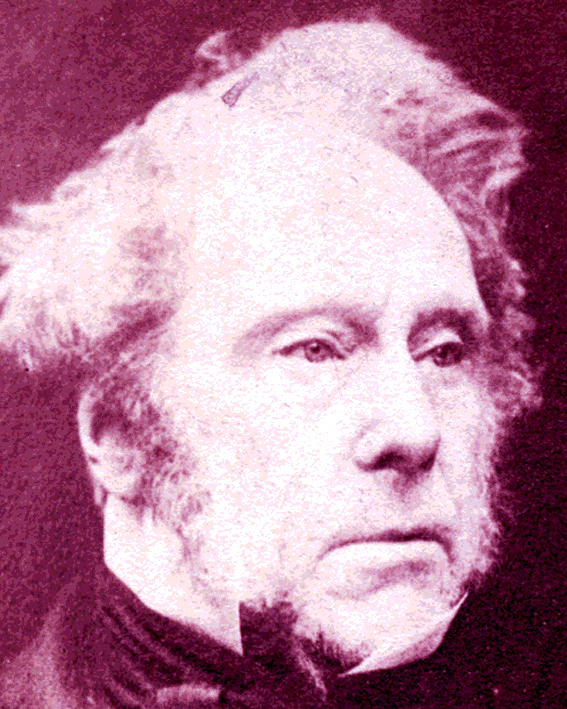 Henry Temple, 3rd Viscount Palmerston (1784-1865)
Descended from an Anglo-Irish branch and born in Westminster, Temple inherited his father’s Irish title at 17. He attended Edinburgh and Cambridge Universities before being elected a Tory MP in 1807. After changing his allegiance over the 1830 Reform Bill crisis, he was appointed Whig foreign secretary. ‘Firebrand’ Palmerston was constantly at odds with Victoria, but remained popular because of his unwavering commitment to robust foreign policy. He engineered unprecedented collaboration with France, facilitated the defeat of Russia in the Crimea, harboured active distrust of the Union side in the US Civil War, and nurtured the conviction that the Raj was good for both Britons and Indians. He spent most of his last decade as prime minister, becoming the first Liberal PM in 1859, and died while still in office. He was also Lord Warden of the Cinque Ports from 1860 until his death, but made little use of Walmer Castle, despite his wife’s enthusiasm for its gardens.
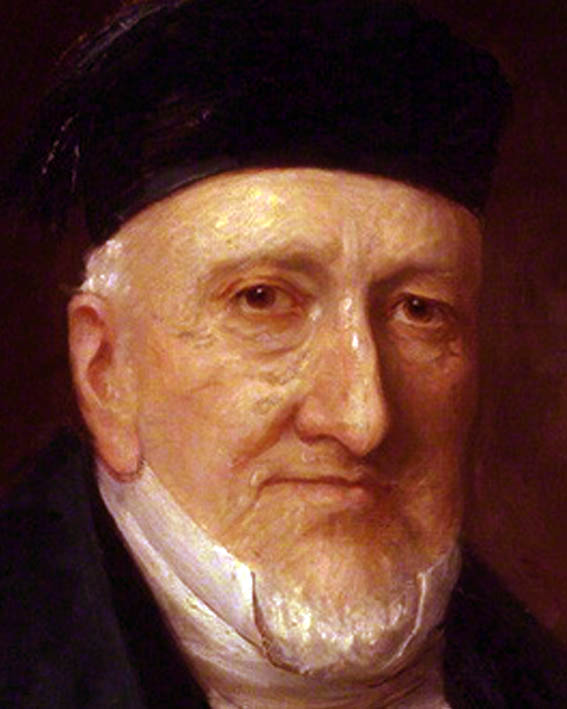 Sir Moses Montefiore (1784-1885)
Moses Montefiore owed his exotic name to being the grandson of a Sephardic Jew who’d immigrated from Livorno, Italy; he was born there while his parents were travelling on business. Living at Kennington, Surrey, he led a nondescript life until 1812, when he married Ashkenazy heiress Judith Cohen. This helped break down the apartheid between Jewish ethnicities, while also making him brother-in-law to banker Nathan Rothschild, as whose business associate he made his fortune. After retiring in 1824 and visiting the Holy Land, he became a strictly observant Jew, and energetically supported Jewish communities overseas. In 1831 he bought a 24-acre estate in Ramsgate, where he remained for more than half his long life, dedicating himself to the philanthropic works that brought him fame. President of the Board of Deputies of British Jews and Sheriff of the City of London, he lent his name to a Ramsgate synagogue and ward, as well as numerous humanitarian institutions around the world.
 A J Kempe (~1784-1846)
Unusually for an antiquarian, Alfred John Kempe, a Londoner, had little education except what he got from a couple of French refugees. His father worked for the Royal Mint, where he too got a job briefly in later life. He moved to Wales when young, but married an Essex girl at 24, and in 1813 moved to Keston. The area turned out to be an archaeological treasure trove that, having been encouraged by his brother-in-law, he studied assiduously with Thomas Croker, opening up numerous ancient graves. He reported his findings in ‘An Investigation of the Antiquities of Holwood Hill’ (1814), and founded the Noviomagus Society, taken from the name of the supposed Roman city on the site of Holwood House. He became a Fellow of the Society of Antiquarians in London in 1828, and contributed other works, notably ‘The Loseley Manuscripts’ (1836). He was the great-grandfather and inspiration of Kent antiquarian Dorothy Gardiner.
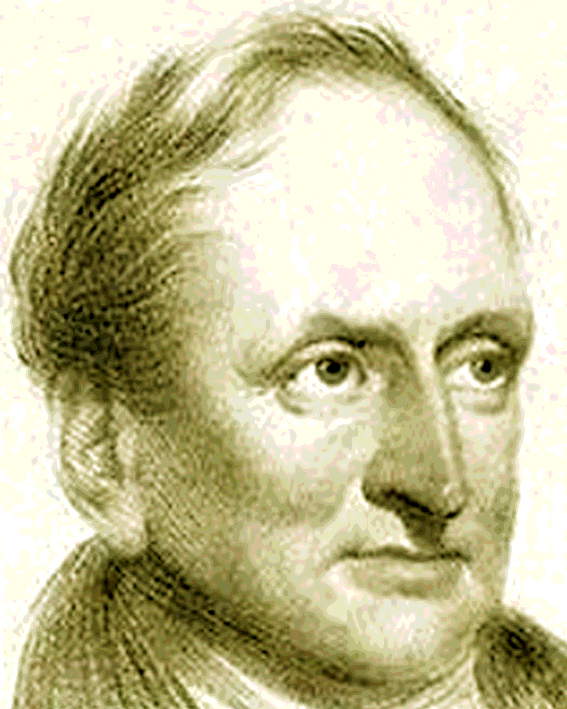 James Burton (1786-1862)
James Burton, originally Haliburton, was the builder who gave much of central London its classical look and fathered Decimus Burton, who continued his work. An older son, James, was a different kettle of fish. After attending Tonbridge School and Cambridge, he became an Egyptologist. For five dramatic years, starting in 1820, he transformed understanding of the pharaonic burial sites, mapping out the Valley of the Kings and becoming the first since ancient times to penetrate KV5, which has turned out to be the largest of the tombs. After discovering and describing the crucial Karnak King List in 1825, however, he disappeared from view, living a life of utter degradation. His father finally forced him to return in 1834, but disowned him when he married a Greek slave girl he had brought home. Despite multiple ailments, he survived for decades and left behind a unique collection of documents that his more dependable brother Decimus gifted to the British Museum.
 Augustus Applegarth (1788-1871)
Born in the village of Stepney near London, Applegarth was the son of a sea captain in the East India Company, but was apprenticed to a stationer. Having developed a talent for printing, he went into business with his brother-in-law, Edward Cowper. Among his inventions were a machine for printing unforgeable bank notes in six colours – for which the Bank of England awarded him £18,000 – and a fast flatbed printer for ‘The Times’. Applegarth went on to open his own works in Crayford, and later Dartford, operating as a silk printer. In 1848, he built the first working version of William Nicholson’s 1790 patent for a revolutionary successor to the flatbed printer, a vertical rotating cylinder with six rollers applying the ink. Capable of up to ten thousand impressions an hour, it was demonstrated at the Great Exhibition of 1851. Unfortunately, Richard Hoe in New York had simultaneously developed a faster horizontal version. Nevertheless, Applegarth remains a print legend.
 Thomas Forster (1789-1860)
Londoner Thomas Ignatius Maria Forster married at 27 and lived at Tunbridge Wells until after the birth of his daughter. Though the son of a botanist, he had no formal education other than a grounding in science from his uncle; but, in 1811, the appearance of the Great Comet catalysed his interest in astronomy, and at 29 he discovered a new comet of his own, and was made a fellow of the Royal Astronomical Society. Thereafter his scientific activities became increasingly wacky, most evidently in his acceptance of Gall’s theory that bumps on the skull correlate to personality types and moods; it was in fact Forster who dignified this pseudoscience in 1815 with the name ‘phrenology’. In addition to converting to Catholicism, he adopted vegetarianism, his belief being partly grounded in concern for animal welfare, but also in a belief in transmigration of the soul. He ended his days in Brussels.
 Rear-Admiral Sir William Parry (1790-1855)
Parry, from Somerset, joined the Navy at 13. By 1810, he was serving as a lieutenant in the Arctic, during which time he made astronomical studies that he later published. He accompanied Captain John Ross on his abortive 1818 expedition to find the North-West Passage, and a year later himself commanded HMS Hecla on a follow-up. He had reached what is now the Parry Channel when, finding his path blocked by pack ice, he had to give up. With the unprecedented help of canned food, he got the crew safely home late in 1820. After undertaking further fraught expeditions in 1821 and 1824, he set out from Spitsbergen in 1827 in a successful attempt to get closer to the North Pole than anyone before. After retirement, he became the governor of Greenwich Hospital until his death. He is remembered in the names of a moon crater and the Parry Arc, a rare celestial phenomenon he identified in 1820.
 Michael Faraday (1791-1867)
When you learn that Albert Einstein kept his picture on his wall, Lord Rutherford described him as one of the greatest scientific discoverers of all time, and Sir Humphrey Davy called him his own greatest discovery, you will know that Michael Faraday was no ordinary scientist. He was a pioneering chemist who made a number of discoveries, including benzene, and from 1829 to 1852 was chemistry professor at the Royal Military Academy in Woolwich. Yet his forte was electromagnetism, in which his discoveries paved the way for practical applications of electricity. It was he, for example, who selected Dungeness to be the first electrically powered lighthouse. He made many of his discoveries actually at the Royal Institution in London, where he innovated the Christmas lectures for children that continue today. Although Faraday was not himself a mathematician, James Clerk Maxwell formalised his discoveries. Faraday is commemorated in the standard name for the unit of capacitance, the farad.
 George Finch-Hatton, 10th Earl of Winchilsea (1791-1858)
Like his father, the 9th Earl of Winchilsea – the Rochester MP who owned and rebuilt Eastwell Manor – Northants-born George Finch-Hatton went into politics after attending Westminster School and Cambridge. Vehemently opposed to Catholic emancipation, he spoke passionately at a huge rally at Penenden Heath in October 1828, and carried over his invective into the House of Lords. There he accused the Prime Minister, the Duke of Wellington, of having “an insidious design for the infringement of our liberties”. A politician today might consider it a compliment, but Wellington challenged Finch-Hatton to a duel on Battersea Fields in March 1829. It was a largely Kentish affair, since Wellington now resided at Walmer Castle, and his second Sir Henry Hardinge at Penshurst. Wellington shot and missed; his adversary fired into the air, then apologised for his language. The diehard Finch-Hatton, who also bitterly opposed the Reform Bill, famously gave derisive cheering the name ‘Kentish fire’.
 Sir John Herschel, 1st Baronet (1792-1871)
A father who discovered infrared radiation, Uranus, and several thousand nebulae was a tough act to follow, but William Herschel’s Slough-born son John pulled it off. A polymath, he mastered maths and chemistry, and with an astronomer’s interest in images invented new photographic techniques, including the blueprint. After arriving in 1834 in South Africa, he witnessed the return of Halley’s Comet, and during his four-year stay catalogued Southern Hemisphere stars, complementing his father’s work. More surprisingly, he took photographs of native plant species that his wife Margaret transformed into 131 highly accurate illustrations. In 1836, Charles Darwin visited him there while on his famous circumnavigation, and took encouragement from Herschel’s opinion that the origin of species was not miraculous but natural; yet Herschel never did accept Darwinian natural selection. He spent his last three decades living at Collingwood House near Hawkhurst, during which time he named several of Saturn’s and Uranus’s moons. He was buried in Westminster Abbey.
 Field Marshal Colin Campbell, 1st Baron Clyde (1792-1863)
Colin Macilver from Glasgow became a professional soldier at 15, but only after changing his surname to that of his uncle and guardian Major John Campbell, who sent him to Dr Burney’s military academy in Hampshire. A natural commander, he was already a captain at 20, and his extraordinary CV included fighting in the Walcheren Campaign (1809), Peninsular War (1809-14), War of 1812 (1814), 1st Opium War (1842), 2nd Sikh War (1848-9), and Crimean War (1854). His most renowned military achievement was at Balaclava, where he saw off the Russian cavalry with only his “Thin Red Line” of 500 Highlanders after their 350 Turkish allies ran away. Appointed Commander-in-Chief, India during the 1857 Mutiny, he recaptured Lucknow and put down both the rebellion and the ‘White Mutiny’ (1858-9) that followed the dissolution of the East India Company. After dying unmarried at Chatham, he was buried at Westminster Abbey and commemorated with statues in London and Glasgow.
 Charlotte, Princess of Wales (1796-1817)
The Hanoverian princess Charlotte Augusta had the misfortune of being the only legitimate child of two royal reprobates: the future George IV and Queen Caroline. He, then the Prince of Wales, kept mother and daughter apart as much as possible, and in 1814 Caroline effectively abandoned her child, with whom she didn’t get on. Following this discomfiture, the nation had high hopes for Charlotte, who had been born at Westminster and gone to school at Shrewsbury House on Shooters Hill. She showed an independent spirit, defying her father’s wish that she marry the much older William of Orange, the future king of the Netherlands, and at 21 happily wed Leopold of Saxe-Coburg-Saalfeld, the future king of Belgium. Disaster struck just a year into their marriage: she died in childbirth, so ending George’s legitimate line. It was a fateful outcome, because the throne passed after William IV’s brief reign to another of George III’s granddaughters, named Victoria.
 Captain Thomas Drummond (1797-1840)
Thomas Drummond, from Edinburgh, attended the Royal Military Academy at Woolwich and became a captain in the Royal Engineers. Having got bored with doing public works in his home city, he was reassigned to surveying in the Highlands, but also got the chance to improve his understanding of science and maths in London. In 1825, having been allocated the task of conducting the Ordnance Survey of Ireland, he attended a lecture at the Royal Institution by Michael Faraday, when he demonstrated Goldsworthy Gurney’s ‘limelight’. This involved burning quicklime with an oxy-hydrogen flame to produce a startlingly bright flare, a phenomenon that inspired Drummond to create an application of limelight that could be used for surveying. Supposedly visible nearly 70 miles away, it came to be known as Drummond Light. The Whig government appointed him Irish Under-Secretary in 1835, and as well as winning a handsome pension, he married the wealthy and well connected heiress Maria Kinnaird.
 Sir David Salomons, 1st Baronet (1797-1873)
Born into a wealthy Ashkenazi Jewish family in London, Salomons followed his father into banking and became a founder of the future NatWest bank. It was, however, as a politician that he made his mark on British history. He was elected MP for Greenwich in 1851, but declined to mention “the true faith of a Christian” when swearing Parliament’s oath of abjuration, and was both ejected by the Sergeant at Arms and fined heavily for voting illegally in the House. His recalcitrance paid off, however, because the law was changed in 1858 to permit freedom of religion. Having served as Lord Mayor of London in 1855, Salomons was again elected to Greenwich in 1859. He took his seat until 1873, when he was succeeded as Liberal MP by prime minister William Gladstone. He lived at Burrswood House on the Broomhill estate near Tunbridge Wells, built by Decimus Burton, where the Salomons Museum was established in 1938.
 Reverend William Rutter Dawes (1799-1868)
Originally a practising physician and then a clergyman, Sussex-born William Dawes was a sufficiently keen amateur astronomer that he built his own observatory in Lancashire in 1829 and made meticulous observations of over 200 double stars. His marriage to Mary Egerton at 43 was life-changing, because her wealth enabled him to devote himself to astronomy. He built a new observatory at Cranbrook in 1844 and, when they moved to Wateringbury in 1850, yet another. Here “Eagle-Eyed” Dawes made his best-known discovery, the barely visible ‘crepe ring’ inside the bright part of Saturn’s rings, albeit that others made the same claim independently. He accurately reported Jupiter’s Great Red Spot in 1857, until when its elliptical shape had not been properly made out, and made accurate drawings of Mars when it was in opposition seven years later. A Fellow of the Royal Society, he won the Royal Astronomy Society’s gold medal, and is commemorated in the name of a lunar crater.
 Sir James Clark Ross (1800-62)
A wealthy Scottish merchant’s son, James Clark Ross was born in London, attended Chislehurst Academy, and joined the Royal Navy at 11. During the Napoleonic Wars, he served under his uncle, Sir John Ross, and in 1818 the two sailed to the Arctic in search of the North West Passage. After joining four expeditions with Sir William Parry, Ross returned to northern Canada with his uncle, and on June 1st, 1831 became the first man to reach the northern magnetic pole, personally planting the British flag there. In 1839, he embarked on an ambitious four-year expedition, seeking the southern magnetic pole. Although it was then out of reach across mountains, he did calculate its position, and mapped the region of Antarctica that would prove crucial to polar exploration. In 1848, he embarked on a failed mission to find Franklin’s doomed expedition. Ross is prominently commemorated in the names of the Ross Sea and Ross Ice Shelf.
 Decimus Burton (1800-81)
Decimus Burton owed his unusual first name to being the family’s tenth child. The son of James Burton, who built much of Regency and Georgian London, he was born in London and raised at Mabledon House near Tonbridge. He attended Tonbridge School and the Royal Academy Schools, and was given tuition in architecture by both his father and John Nash, so acquiring a penchant for neoclassicism. Well connected and precociously gifted, at 23 he created the Colosseum in Regent’s Park, a tourist attraction inspired by the Pantheon in Rome that contained supposedly the largest painting ever; he also designed much of the prestigious housing nearby. Within two years he designed Wellington Arch at Hyde Park Corner and redesigned the Park itself. Subsequent commissions included the Athenaeum Club, Carlton House Terrace, Charing Cross Hospital, London and Dublin Zoos, and Kew Gardens. He undertook significant projects in Folkestone and Tunbridge Wells, where he lived, and left behind a vast library.
 Sir Joseph Paxton (1803-65)
Paxton from Bedfordshire looked special from an early age. Spotted by the Duke of Devonshire at 20, he was made head gardener of Chatsworth. Arriving at 4.30am on his first day, he had explored the gardens, briefed his team, and met his future wife by 9am. He worked marvels in the coming years, culminating in the Great Conservatory and the Lily House. So ingeniously designed were these iron-and-glass structures that they prompted the idea for his chef-d’oeuvre, the Crystal Palace. Being prefabricated, it could be removed from Hyde Park after the 1851 Great Exhibition. Paxton re-erected it at Penge, and moved to the area. His achievements did not stop there. He wrote a ‘Pocket Botanical Dictionary’ in addition to various magazines; he cultivated the Cavendish banana that is now standard in the West; he designed several great houses, including Mentmore Towers; and he even spent 10 years as an MP. He died at his home, Rock Hills, in Sydenham.
 Benjamin Disraeli (1804-81)
Nobody observing the primrose-loving ‘Dizzy’ in 1825 could have believed he’d become a distinguished Conservative prime minister. Of Italian-Jewish ancestry, he was born in Bloomsbury, boarded at school in Blackheath, and at 12 converted to Anglicanism. He looked the Romantic writer and radical he aspired to be, especially when early forays into the law, journalism, and business speculation failed miserably. He was drawn to politics by the 1832 Reform Bill crisis. Supportive of protectionism, he gravitated to the Tories, despite having alienated its old guard with his satirical writings. By 1837 he was elected MP for Maidstone. In 1868, he became Prime Minister, and again from 1874 to 1880. Under Disraeli, the Tory party transformed to today’s ‘One Nation Conservatives’, preaching aristocratic support for workers as a counterweight to the mercantile class. His death was met with grief, especially from the adoring Queen Victoria. Even Gladstone, whom he had often bested in debate, managed to sound magnanimous.
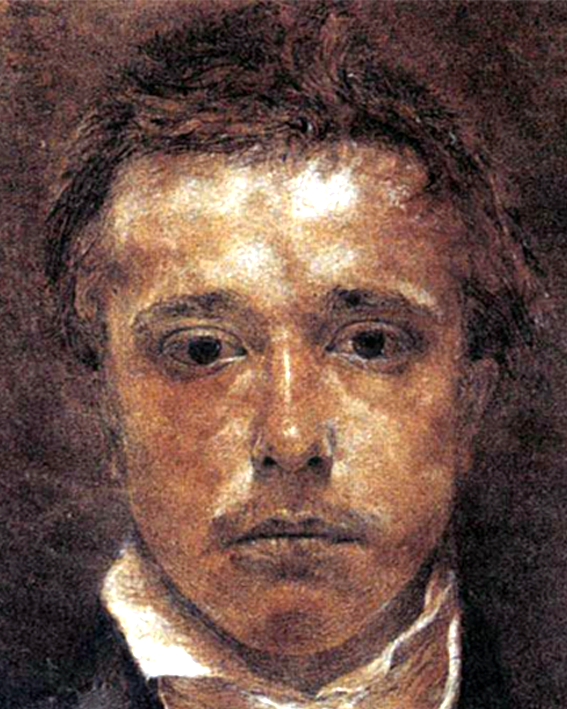 Samuel Palmer (1805-81)
Born off the Old Kent Road in Surrey, Palmer never had much formal education, his father being a bookseller. He proved an artistic prodigy, and exhibited at 14 at the Royal Academy. After an inspirational meeting with William Blake in 1824, he acquired an idyllic retreat at Shoreham, Kent that he nicknamed Rat Alley. There, while painting Kentish landscapes in classic Romantic style, he gathered around him a like-minded group known as The Ancients. He moved to London at 30, and spent two years in Italy with his young wife. Afterwards, he found making a living from art difficult, and resorted to teaching; he eventually died impoverished in Surrey. Although largely forgotten after his death – partly owing to his own reticence, partly because his son recklessly burnt much of his work – he enjoyed a resurgence in interest after WW2, and made headlines in the 1970s in consequence of the Tom Keating art fraud scandal.
 Charles Roach Smith (1807-90)
Having been born a farmer’s son on the Isle of Wight, Smith became a chemist, and around 1828 set up his own business in London. He became interested in finds of ancient artefacts unearthed by works on London’s sewage system and dredging the Thames. He built such a large collection that he established a reputation as the foremost expert on Roman London, especially concerning coins, and in 1859 published the authoritative ‘Illustrations of Roman London’. Never married, he moved in his retirement to Temple Place, Strood, where his sister took care of him. In the process of turning into a keen gardener, he developed an interest in pomology. In 1863, he had ‘On the Scarcity of Home-Grown Fruits in Great Britain’ published, pleading for fruit trees to be planted on scraps of wasteland. He also grew vines, from which he produced a large volume of wine. He and his sister were buried in Frindsbury.
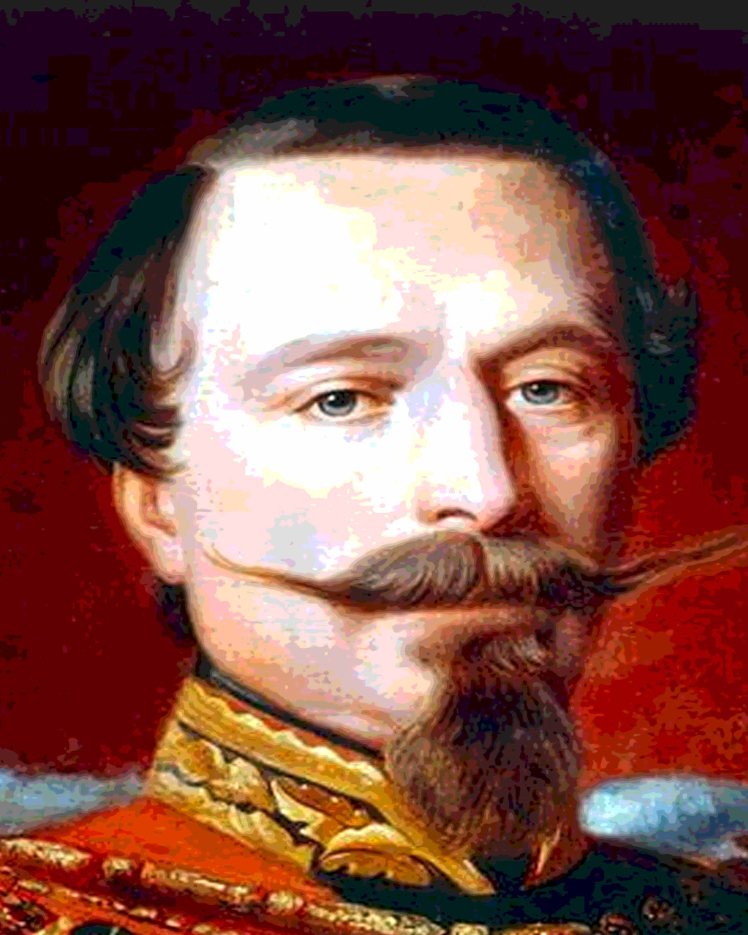 Napoleon III, Emperor of France (1808-73)
As nephew of Emperor Napoleon and grandson of Empress Josephine through an earlier marriage, Louis-Napoleon was a chip off the old block. He had two serious addictions, sex and power, and sought the latter to secure the former. His path was barred by King Louis Philippe I, whom he tried to depose with farcical rebellions. Exiled in London, he kept one mistress at Brasted Place. After the 1848 Revolution, he became President democratically by offering that potent mix, nationalism and socialism, but then ruled autocratically, even banning beards as subversive. When democracy failed him, he declared himself Emperor. His reign saw developments in infrastructure and some minor reforms, but abject failure as both politician and general in the face of Bismarck’s rise in Prussia. Taken prisoner at Sedan in 1870, he was exiled with his family to Camden Place in Chislehurst. At his death, he was suffering from multiple painful maladies. So ended the glorious French monarchy.
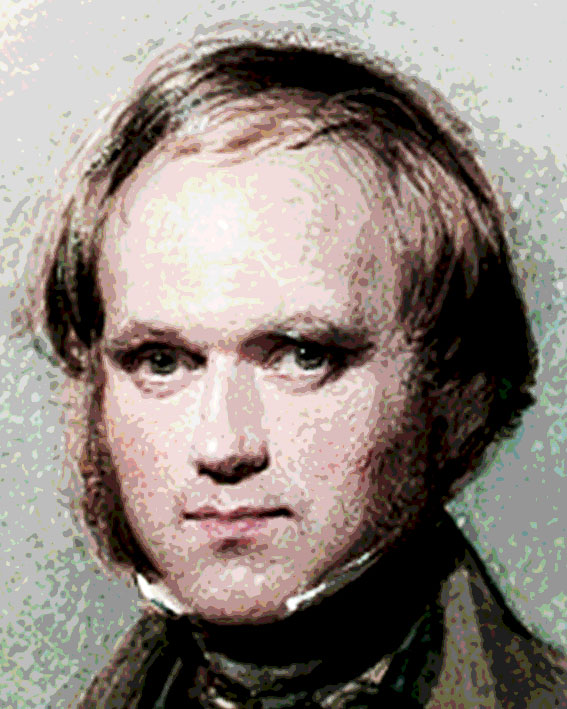 Charles Darwin (1809-82)
It is curious that Darwin, nowadays on most people’s list of the top scientists ever, was told by his father while young that he would never make anything of himself. His response was to join a five-year circumnavigation of the globe as naturalist on HMS Beagle. As he made observations and collected samples, a world-changing idea formed: natural selection. After returning in 1836, he methodically chose to marry his cousin Emma Wedgwood, and settled down for the rest of his life at Downe near Bromley. There, despite a chronic tropical illness, he completed the studies that would inform his ‘Origin of Species’ in 1859. He generously shared the credit with Alfred Wallace, who’d expressed the same idea without the evidence. Ever the gentleman, Darwin was anxious to avoid the religious controversy his book would inevitably spark, but had eminent friends in Lyell, Hooker, and Huxley to put the case. Though internationally revered, he was never honoured by his nation.
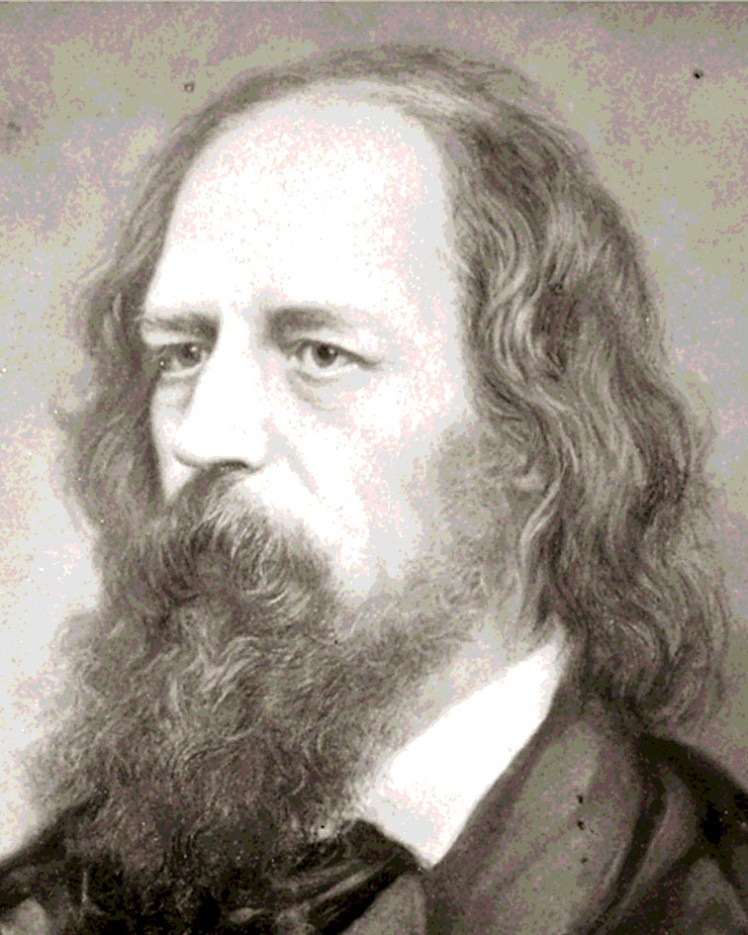 Alfred, Lord Tennyson (1809-92)
Tennyson had two great strengths that have maintained his reputation to the present day. One was his talent for quotable quotes, such as “’Tis better to have loved and lost than never to have loved at all“. The other was his ability to tell stories in verse that painted vivid pictures. His most famous was ‘The Charge of the Light Brigade’ with its ill-fated foray into the “Valley of Death”, which he managed to glorify without mitigating the blunder that prompted it. Though his poetry was unashamedly sentimental and populist, his medieval and mythological themes proved an inspiration to the Pre-Raphaelites. Tennyson was born in Lincolnshire, but his family moved to Tunbridge Wells when he was 30 and, a year later, to Boxley, north of Maidstone. He didn’t marry until he was 40. That same year, he succeeded Wordsworth as Poet Laureate, which he remained for an incredible 42 years until his death – a record.
 Sir Charles Fox (1810-74)
Having trained in his hometown Derby to become a medic, Charles Fox changed his mind at 19 and went into the nascent railway business. He acquired a taste for driving locomotives, taking part in trials on the ground-breaking Liverpool & Manchester Railway opened in 1830. Selected by Robert Stevenson as an engineer on the London & Birmingham Railway, he developed a host of important innovations, including the patent for railway points (1838). He went into business producing equipment from railway tracks to station roofs, earning such a reputation that Joseph Paxton awarded him the tasks of building the Crystal Palace – for which both were knighted in 1851 – and re-assembling it at Sydenham. Having come to specialise in bridges, Fox’s business constructed those at Barnes, Richmond, and Staines, as well as the Medway bridge at Rochester; it also worked on the London, Chatham & Dover and East Kent Railways. Fox died at his home in Blackheath.
 Isaac Johnson (1811-1911)
At 16, Vauxhall-born Isaac Johnson followed his father into the ‘Roman’ cement business at Nine Elms beside the Thames in London. A student of chemistry, he was already managing JB White’s plant at Swanscombe at the age of 22. Aware of the Aspdins’ revolutionary Portland cement, he sought to improve on it, being unable to copy it because of patent protection. After a couple of years, he succeeded, and left to set up his own works to make his better, cheaper product, now reckoned to be the ‘true’ Portland cement. His business, eventually operating at Cliffe, Frindsbury, and Greenhithe, proved so successful that it effectively put William Aspdin out of business, much to the latter’s chagrin. A civic-minded individual, Johnson became Mayor of Gateshead in County Durham after taking over Aspdin’s plant there. Back in Gravesend, he also became a councillor, a magistrate, a preacher, and president of the local Liberal Association and Total Abstinence Society.
 William Makepeace Thackeray (1811-63)
Thackeray was once placed on a par with Dickens. He is remembered today for ‘Vanity Fair’, which still enjoys a glorious reputation as a satire of Victorian society; but the rest of his work goes largely neglected. Thackeray came from Calcutta, where his father worked for the East India Company. After coming to England and failing to graduate from Cambridge, he spent his life as something of a ne’er-do-well, living at times in Tunbridge Wells. Only when he got married and had three children did he start, in his words, to “write for my life”. It was the serialised adventures of Becky Sharp in ‘Vanity Fair’ (1847-8) that made all the difference to his wealth and fame. His happiness was not terribly long-lived, however. After his wife became suicidally insane, he devoted himself to eating and drinking, and died suddenly of a stroke; 7,000 attended his funeral. Paradoxcally, his widow survived him by 31 years.
 Charles Dickens (1812-70)
If the Royal Navy hadn’t temporarily relocated his father to Portsmouth at the time of Dickens’ birth, he’d be a thoroughgoing Man of Kent. When he was four, the family moved to Sheerness, then Chatham. Young Dickens used to admire Gads Hill in Higham on his way to school, and decades later bought it to retire to. He proved a career novelist of the highest order, producing a dozen classics of which most authors might be proud to claim just one. Dickens was highly familiar with and fond of East Kent, and buildings in the Medway towns, Canterbury and Thanet are recognisable in his works. He had a particular association with Broadstairs, notably ‘Bleak House’ where he wrote ‘David Copperfield’. He especially dramatised the misery of indebtedness, sparked by his father’s self-inflicted misfortunes. His talent lay in doing so whilst usually maintaining a wry distance, despite sometimes lapsing into excessive sentimentality. Notwithstanding his marital misdemeanours, he died a national hero.
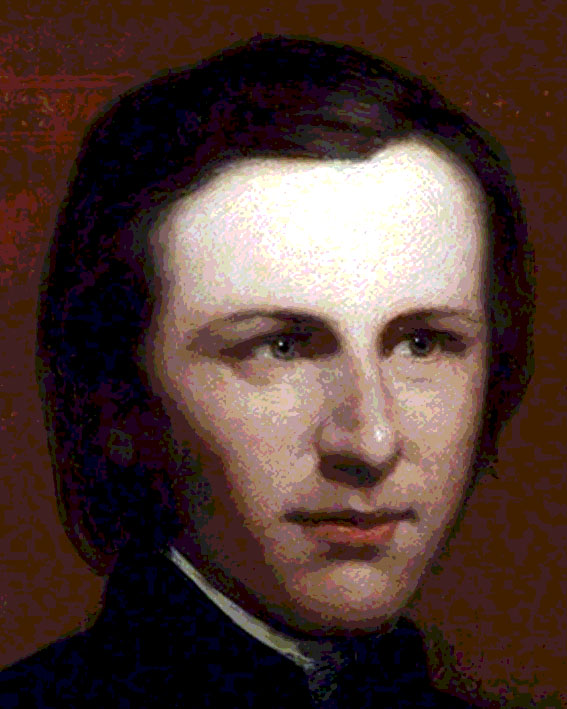 Augustus Pugin (1812-52)
If Pugin had never designed the tower in which Big Ben resides, it is debatable whether he would now be remembered much. The great art critic John Ruskin thought not; but Pugin certainly made a statement with his many neo-Gothic commissions all over the country, especially churches. He was the son of a draughtsman who’d fled the French Revolution. Having been raised a Presbyterian, he suddenly converted to Roman Catholicism at 22. This usefully opened up a lot of new business contacts among Catholics; and Pugin wholeheartedly embraced the sumptuousness of Catholic culture. This was nowhere more evident than at The Grange in Ramsgate, which he designed from scratch as his new home in 1843-4, along with the adjacent St Augustine‘s Church. His end was as macabre as it was premature. On a train journey with his son, he dramatically lost his mental faculties, and never recovered them before his death seven months later.
 Robert Browning (1812-89)
Although Browning was born and raised in the borough of Southwark, his family moved in 1841 to Telegraph Cottage in New Cross, which he described as looking like a goose pie. He remained there for five years until his marriage, in which time he published a work that would become millions of children’s introduction to narrative poetry, ‘The Pied Piper of Hamelin’ (1842). On a trip to Italy in 1845, he penned his most popular poem, ‘Home Thoughts from Abroad’, beginning “Oh, to be in England / Now that April’s there”, the epitome of Romantic nostalgia. One of the most popular poets of his time was Elizabeth Barrett, on whom he developed a crush, despite her somewhat greater age. She eloped with him to Italy in 1846, against her father’s warnings, and was duly disinherited. On returning to London after her death from unknown causes, Browning renamed the canal area near his home ‘Little Venice’.
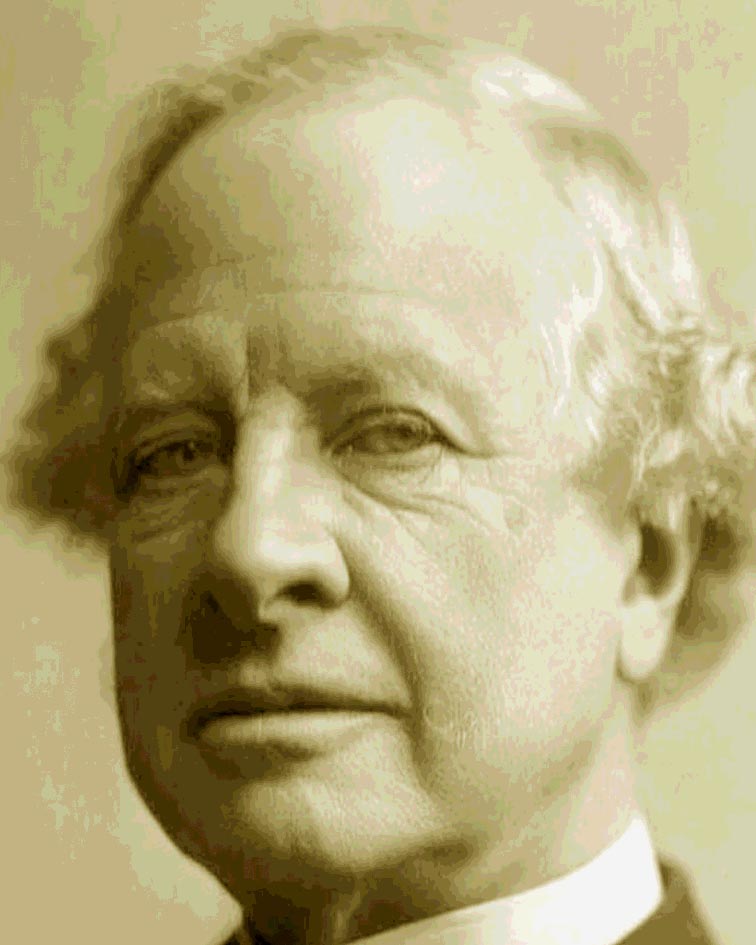 George Leveson-Gower, 2nd Earl Granville (1815-91)
After Palmerston‘s death in 1865, his successor as Lord Warden of the Cinque Ports was Lord Granville. Although never prime minister, Granville had excellent credentials for the post. Of noble birth – he was the grandson of Georgiana Spencer, Duchess of Devonshire – he went to Eton and Oxford, and entered Parliament as a Whig in 1840. Elevated to the peerage in 1846, he was leader of the Lords for most of the period between 1855 and 1886, and twice served as Foreign Secretary under Gladstone; his calming influence ensured that Britain stayed clear of conflict with either the USA or Germany, despite their turbulence. While living at Walmer Castle for his final 26 years, he made better use of it than his predecessor, creating today’s imposing entrance by adding an extra storey for living quarters and greatly improving the gardens and walkways. Granville, who owned coal and iron mines in Staffordshire, is remembered in the name of the Granville Hotel at Ramsgate.
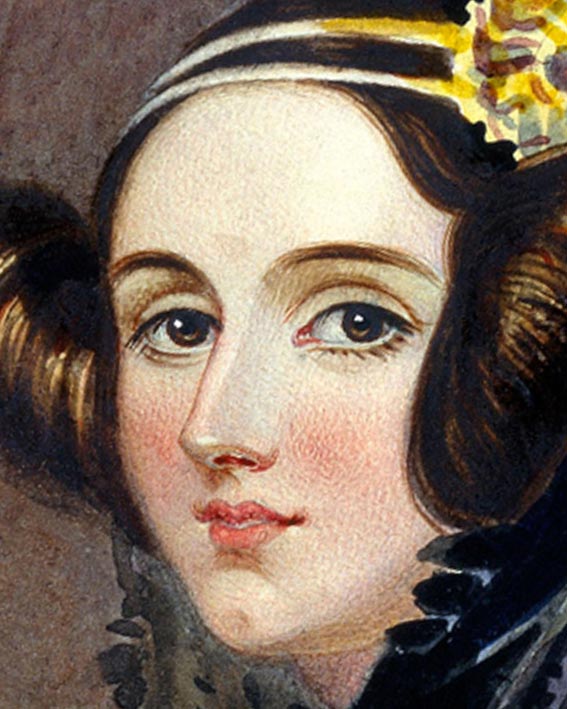 Ada King-Noel, Countess of Lovelace (1815-52)
Of Byron’s many children, only Augusta Ada was legitimate. Disappointed with her sex, he threw mother and baby out. Though they were living together at Bifrons, Patrixbourne in 1828, the sickly girl was often left in her grandmother’s care. Lady Byron encouraged an interest in maths as a counterweight to her father’s instability, introducing her to such luminaries as Charles Babbage, who in 1837 invented the programmable computer and devised the first computer programs. In 1843, Ada translated an Italian piece on Babbage’s ‘analytical engine’, with notes containing Babbage programs; consequently, she is sometimes accredited with writing the first program, and even inventing computers. A self-defined ‘poetical scientist’, she did speculate originally on potential uses of the machine; but she gambled recklessly, and her mathematical model for winning bets ran up disastrous debts. The mother of three children by William King-Noel, the later Earl of Lovelace, she also diced repeatedly with sexual scandal before succumbing to uterine cancer.
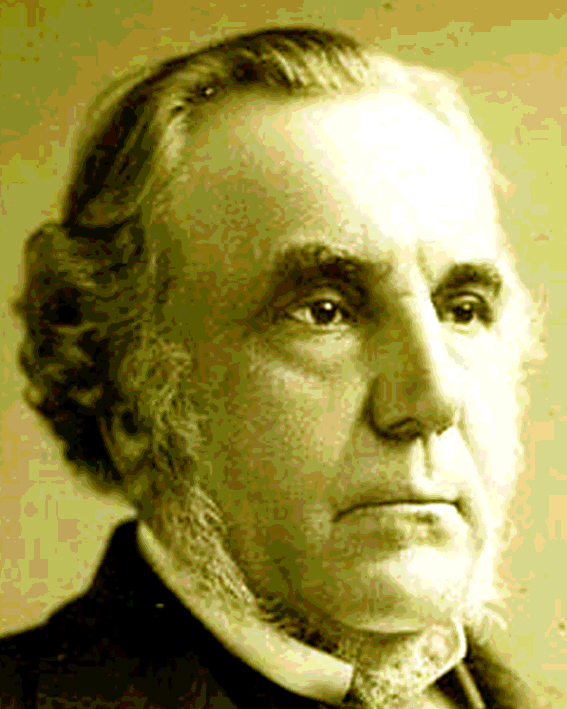 Sir John Pender (1816-96)
Though not himself an inventor or producer, Pender was that resource without which creativity and industry are bootless: a backer. A Scot, he first made an impact in textiles, but had the foresight to recognise the great new opportunity offered by telecommunications. He was attracted by the prospect of connecting up the world with underwater cables, and drawn to Kent by the presence of Glass, Elliot, the pioneering cable-manufacturer charged with producing the first transatlantic cable in 1854. The first telecommunications magnate, he not only provided the wherewithal for the parties involved, but also took a controlling interest in over 30 telecoms-related companies globally that merged in 1928 to form the future Cable & Wireless. He can thus be said to have catalysed the first steps towards the World Wide Web. He also went into politics, and was showered with honours. One of his homes was the splendid Foots Cray Place, where he died.
 Sir John Brown (1816-96)
A perfect example of the self-made Yorkshireman, John Brown was born humbly in Sheffield and started working for a manufacturer of cutlery and files. After borrowing £500 to start his own business, he took to the road selling their merchandise, and by 1844 had established his own steel foundry. His genius extended beyond enterprise into invention. He addressed the pressing challenge of railway buffers, the problem being that helical spring buffers needed to be unfeasibly large to absorb the impact. In 1848, he invented volute spring buffers, conical coils occupying a far smaller space. Having started producing rails by the Bessemer process in 1859, he then devised a means of surfacing ships with rolled steel, which could be made much thicker than the hammered plate armour the French were developing. The Admiralty approved, and within a few years he had plated three-quarters of the fleet. He died a rich man at Shortlands, Bromley.
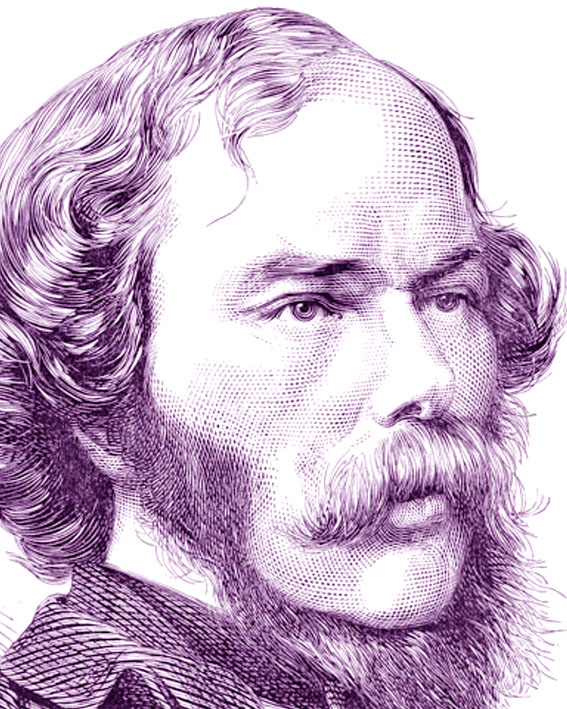 George Lewes (1817-78)
Alongside the grave of George Eliot in Highgate Cemetery lies that of George Henry Lewes, whom she had been living with for a quarter-century. He had a peripatetic childhood after being born in London, and spent time studying at Burney’s Academy in Greenwich. After a long stay in Germany, he married at 23, but persuaded his young wife to agree to an open marriage, an arrangement of which both took advantage. Having attempted to emulate his grandfather as an actor, he devoted himself to writing, initially for periodicals and then also in books. A sparkling intellect, he applied himself in various fields, notably literature, science, psychology, and philosophy. Alongside two novels and several plays, he wrote biographies of Robespierre, Goethe, and Aristotle, and explained the positivist thinking of Auguste Comte. Although he initially advocated positivism – the pursuit of empirically grounded knowledge – he was increasingly given to philosophical speculation in the absence of proof. Eliot’s legacy now far outshines his.
 Charles Gounod (1818-93)
It is hard nowadays to think of Gounod‘s name without coupling it with ‘Faust’. This 1859 work was after all the Parisian composer’s magnum opus, and his only opera, apart from ‘Roméo et Juliette’ (1867), still much performed today. He was born into a well-off musical family and sent to the Paris Conservatoire, where he excelled. In addition to opera, he wrote a sizeable amount of religious music, being himself very devout. His watershed arrived with the Prussian invasion in 1870, when he fled with his family to England and stayed at Charlton. He remained there after his wife’s return to France, having fallen under the malign influence of the singer Georgina Weldon. When he saw through her opportunism, he departed for Paris, but spent years battling her litigiousness. Meanwhile, the French musical scene had moved on without him. He did nevertheless leave a lasting mark on the late-C19 French greats Fauré and Massenet.
 Catherine Hayes (~1818-61)
The daughter of an Anglo-Irish musician who abandoned his family, Catherine Hayes was singing in a garden in the west of Ireland when the Protestant Bishop of Limerick overheard her and recognised her talent. As her mother was poor, he helped raise funds for her to take singing lessons in Dublin. From there she was sent to perfect her crystal-clear soprano voice in Paris, and then Milan. In 1846, in Marseilles, she made her first stage appearance. Tall and graceful, she was quickly in demand at La Scala, where she commenced her renowned association with John Sims Reeves in Donizetti’s ‘Lucia di Lammermoor’. In 1849, she made her debut in London, and from 1851 to 1853 toured the Americas, to great acclaim. She then moved on to Australia, before returning to England after five years on the road. Three years after the sudden death of her husband, she died while staying with a friend at Upper Sydenham.
 The Very Reverend Samuel Hole (1819-1904)
A Nottinghamshire vicar, the Reverend Samuel Hole, was asked one April to judge a local rose competition. Thinking it a hoax, he learned the roses were grown under cover, and marvelled at their beauty. He became an enthusiastic rosarian almost overnight, ending up with 5,000 bushes in his fortunately large garden. In 1858, he proposed the first ever Grand National Rose Show, which drew large crowds and set a precedent for future shows. His ‘A Book About Roses’, published in 1858, was breathtakingly successful, and is widely regarded as the grandfather of rose literature. The Poet Laureate Lord Tennyson dubbed him the ‘Rose King’, and he was the first President of the National Rose Society in 1876. An Oxonian, prebendary at Lincoln, and chaplain to the Archbishop of Canterbury, Hole was appointed dean of Rochester Cathedral in 1887, and imported his rose-growing habit. He was commemorated there with a fine tomb and an engraved bell.
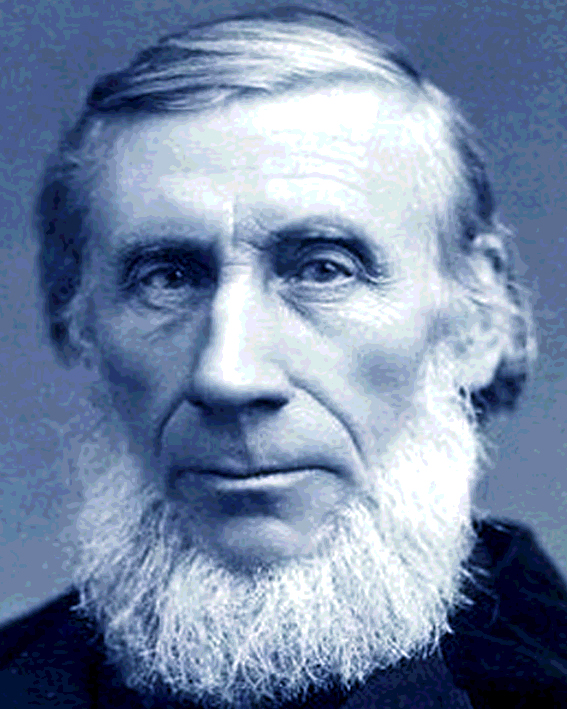 John Tyndall (1820-93)
The son of an Irish policeman who got his English name from immigrant ancestors from Gloucestershire, Tyndall moved to England in 1842 to work for the Ordnance Survey and then the railways. He became a teacher before moving to Germany, where he developed his aptitude for experimental (as opposed to theoretical) physics. Back in England, he made a remarkably diverse range of contributions to science, on such topics as diamagnetism, infrared, and the greenhouse effect, and wrote numerous books popularising experimental science. In 1865, he was appointed successor to Michael Faraday as Trinity House’s science expert. During his 18 years in the post, he conducted extraordinarily punctilious investigations at South Foreland Lighthouse into types of fog signal, electricity generators, and power sources; for the last, he even built three mock lighthouses – gas, oil, and electricity-powered – on the cliffs. He married childlessly late in life, and died after his wife administered an accidental overdose.
 Field Marshal Sir John Lintorn Simmons (1821-1903)
Though born and buried in Somerset, Lintorn Simmons spent much of his army career in Kent, where his father was in the Royal Artillery. He studied at the Royal Military Academy, Woolwich, and joined the Royal Engineers before becoming an RMA instructor. He was appointed Inspector of Railways in 1847, one of his first responsibilities being to investigate the Dee Bridge disaster. While he was holidaying at Constantinople in 1853, Turkey went to war with Russia. The British Embassy engaged him to assess Turkey’s ability to resist a Russian attack, and he spent two years as an attaché to the Turkish army, during which he assisted at several battles, including the Siege of Sevastopol. Thereafter, he became the British Consul in Warsaw, took on senior roles at the Royal Engineers and the RMA, and served as governor of Malta. After retiring, he became a special envoy to the Pope, and was promoted to field marshal.
 Samuel Plimsoll (1824-98)
Having failed to make a living as a coal merchant, Samuel Plimsoll experienced the pain of living in penury. It persuaded him to commit to improving conditions for others. Being a Bristolian by birth, he decided to adopt a maritime cause, namely the issue of ‘coffin ships’: vessels that were overladen and in danger of sinking. After becoming MP for Derby, he campaigned for legislation to set a maximum draught for each merchant ship. He was vehemently opposed, and backed down after going berserk in the House. Nevertheless, public pressure led to his demands being met in 1876. The visible result was the ‘Plimsoll line’ painted around ships’ hulls, above which sea-level must not rise. Plimsoll’s name became known worldwide. He had a second bite of the cherry in 1870, when the plimsoll shoe was named after him on account of the line of the sole running around it. He retired to Folkestone, and was buried at Cheriton.
 Major-General Charles Pasley (1824-90)
Sir Charles Pasley was a Scottish general who championed expanding the British Empire after the loss of the American colonies. Since he was head of the Royal Military Academy at Woolwich, his son, also Charles, was born at the Brompton Barracks, attended The King’s School, Rochester and the Academy, and joined the Royal Engineers. His skill at surveying took him to Canada, Bermuda, and in 1853 to Australia. There he became Chief Engineer to the Victoria colony, taking on such major building projects as Parliament House, as well as political commitments. After he resigned in 1860 to go home, a revolt broke out in New Zealand; he volunteered to help suppress it, but suffered a serious leg-wound. Back in Kent, he was made commanding officer of the Royal Engineers at Gravesend. However, his resignation having been lamented in Melbourne, he was twice appointed agent-general for Victoria. He retired from the Army in 1881, and died in Middlesex.
 Thomas Aveling (1824-82)
In his infancy, Aveling lost his father, and his mother married a vicar at Hoo. This entailed a move from Cambridgeshire to North Kent and – his stepfather being a martinet – an unhappy childhood. From 1850, he raised a family at a 300-acre farm at Ruckinge, establishing himself as a brick- and tile-maker; and, in 1856, he invented a steam plough that so impressed local farmers that they raised 300 guineas to finance him. Two years later, he opened an agricultural engineering business in Rochester. His major breakthrough was a patent for turning portable steam-engines into automotive ‘traction engines’. On attracting a local backer in 1862, he changed his company’s name to Aveling & Porter, which became internationally famous in steam vehicle production. He also invented both the steamroller and the ‘Steam Sapper’ for hauling siege artillery. A keen yachtsman, Aveling contracted pneumonia after sailing, and was buried at Hoo. A secondary school in Rochester is named after him.
 William Spottiswoode (1825-83)
Londoner William Spottiswoode had more than one string to his bow. He was the son of the Andrew Spottiswoode who held a patent as King’s Printer before becoming a partner in the Eyre & Spottiswoode publishing company, whose management William took over in 1846 for the rest of his life. A mathematical genius, he had studied at Eton, Harrow, and Oxford, and in 1847 published ‘Meditationes analyticae’, the first of many such works that in 1851 included a treatise on determinants. Increasingly he turned to physics, undertaking experiments on light and electricity. He married in 1861 at Bexley, which was where he settled with his wife and raised a family. One son, known as Hugh, was a useful cricketer, playing once for Kent as an amateur and regularly for the Band of Brothers. William, who served as President of the Royal Society from 1878, died of typhoid, and was buried in Westminster Abbey.
 WH Smith (1825-91)
The household-name stationers WH Smith were originally HW Smith, the founder in 1792 being London newsagent Henry Walton Smith. His son and grandson, both William Henry, became partners in the business in 1846, and developed such innovations as news outlets at railway stations and bookselling. Having become impressively wealthy, the younger WH fancied dabbling in politics, was elected to Parliament in 1868, and in 1877 became First Lord of the Admiralty, despite having absolutely no naval experience. For a satirist like WS Gilbert, this was an open goal, which he joyfully exploited with his song ‘When I was a lad’ in ‘HMS Pinafore’ (1878): “That junior partnership…was the only ship that I ever had seen”. Appointed Lord Warden of the Cinque Ports in 1891, Smith survived only two months at Walmer Castle, but left a lasting legacy: an indenture that ensured the castle’s art treasures would remain on public display thereafter.
 Dadabhai Naoroji (1825-1917)
Known in sympathetic quarters as the ‘Grand Old Man of Indian Nationalism’, Dadabhai Naoroji from Gujerat was a well-educated trader who first visited Britain in 1855. President of the Indian National Congress for three spells between 1886 and 1907, he was narrowly elected as the Liberal candidate for Finsbury Central in 1892, so becoming the first Indian to serve as a British MP for a full term; his only predecessor had been swiftly expelled for corruption. After losing his seat in 1895, Naoroji moved to Bromley for several years. In 1901, he published ‘Poverty and Un-British Rule in India’, discounting the value to India of investment in infrastructure and arguing that the Raj drained India’s wealth. Increasingly inflammatory over time, in 1906 he pleaded his case before the Sixth Congress of the hard-left Second International. In 2014, the Lib-Dem deputy prime minister Nick Clegg named short-lived awards for promoting Anglo-Indian relations in his honour.
 Dinah Craik (1826-87)
Dinah Mulock from Staffordshire, a preacher’s daughter, moved to London at 20 and took up writing both stories and poetry. Her first three-volume novel, ‘The Ogilvies’, was a big success in 1849, and was followed by a succession of others, of which much the best remembered is ‘John Halifax, Gentleman’ (1856). The tale of a young man who sets out to make his fortune and succeeds, it would scarcely be approved of today, yet was adapted twice for the silver screen, and serialised by BBC TV as recently as 1974. At 39, she married George Craik, a director of the Macmillan publishing company; they lived at Shortlands, Bromley, and adopted a foundling daughter. By all accounts a marvellously homely and welcoming character, Mrs Craik died of a heart attack at Shortlands while making preparations for the daughter’s wedding. Her last recorded words expressed a wish that she could only have lived four weeks longer, but no matter.
 Joseph Lister, 1st Baron Lister (1827-1912)
Essex-born Joseph Lister trained to be a surgeon not long after the Hungarian medic Ignaz Semmelweis had realised the deadly danger of sepsis. Semmelweis was so ostracised by his peers that he had a breakdown, but was later vindicated by Pasteur’s discovery of microbes. In 1867, Lister picked up the thread. Having observed that farmers applied carbolic acid to their fields in order to kill microbes, without any apparent ill effect on livestock, he hypothesised that cleaning wounds with it would save lives. He tested his theory and got dramatic results, which he published. Realising that prevention was better than cure, he urged cleaning hands and surfaces in hospitals. He too was ridiculed by fellow doctors, but persisted. His insistence that surgeons should adopt antisepsis was so manifestly successful that he is now hailed as the Father of Modern Surgery. After practising in Edinburgh, Glasgow and London, Lister opted to enjoy his last years at Walmer.
 Lieutenant-General Augustus Pitt Rivers (1827-1900)
Yorkshireman Augustus Lane-Fox was a career soldier. After fighting in the Crimean War, he did weapons instruction at Woolwich, and later set up the Hythe School of Musketry. During his various postings overseas, he was a fanatical collector of ethnological objects, which he innovatively organised so as to demonstrate their evolution over time. He particularly developed the philosophy that archaeological artefacts must be collected irrespective of their artistic merit, a landmark change from current practice. In 1880 his cousin left him a vast estate in the West Country with the proviso that he adopt the surname Pitt Rivers. When he left his 22,000 ethnological exhibits to Oxford University, they were given that name; and today the Pitt Rivers Museum remains among the most important in the world. On his retirement in 1882, Pitt Rivers became the first Inspector of Ancient Monuments. It was at his behest that the Kit’s Coty monuments near Aylesford were protected with railings.
 James Starley (1830-81)
A Sussex farmer’s son, Starley had early opportunities to show his inventive genius, devising a rat trap and a cat-flap for ducks. He ran away in his teens to Lewisham, where he worked for John Penn’s engineering works alongside his future collaborator William Hillman. Around 1861, he moved to Coventry to go into a business with sewing-machine manufacturer Josiah Turner, but diversified into the commercially more exciting arena of locomotion in 1868 after Turner’s nephew brought a French boneshaker to the office. With Hillman, Starley introduced a metal penny-farthing called the ‘Ariel’, using much lighter wire spokes in the wheels. Late in life, he solved a major steering problem affecting 3- and 4-wheeled cycles by patenting the chain-drive differential, later used by Karl Benz in his cars. Starley’s nephew John became the inventor of the modern safety-bicycle in 1886, using the now standard 26-inch wheels. It bore the name Rover, still a world-famous automotive brand.
 Field-Marshall Garnet Wolseley, 1st Viscount Wolseley (1833-1913)
Descended from a Staffordshire family, major’s son Wolseley was born in Dublin. His highly distinguished British Army career was at first a curate’s egg: he was seriously wounded in the 2nd Burmese War and lost an eye in the Crimea, but he did win the Légion d’Honneur. After enhancing his reputation during serious conflicts in India and China, he met Robert E Lee in Virginia while seeking intelligence during the US Civil War, and in 1870 effortlessly terminated a revolt in Canada. Among his various assignments in Africa, the most famous was ironically a gallant failure: the Nile Campaign of 1884, when he arrived too late to save General Gordon. In 1888, Victoria made him Ranger of Greenwich Park; he moved into Ranger’s House with his family until 1896, by which time he was Commander-in-Chief of the Forces. The author of several books, including accounts of Marlborough and Napoleon, he died in France.
 Charles Davis Lucas (1834-1914)
Lucas, from Ireland, joined the Royal Navy at 13. By 1854, in the Crimean War, he was a mate on HMS Hecla in the Baltic. On June 21st, a live shell with its fuse burning landed on the deck. While everyone dived for cover, Lucas leapt into action: he grabbed the shell and lobbed it overboard. It instantly exploded, but there was no loss of life or serious injury. The captain immediately promoted him to lieutenant, the Royal Humane Society gave him a medal, and he was awarded the very first Victoria Cross. He remained in the Navy for another 19 years, by which time he was a captain. Having married an admiral’s daughter, he lived at Great Culverden Park near Tunbridge Wells, became a JP, and was made a rear-admiral in retirement. He lies buried at Mereworth church. A replica of his VC is displayed at the National Maritime Museum in Greenwich, the original having been lost.
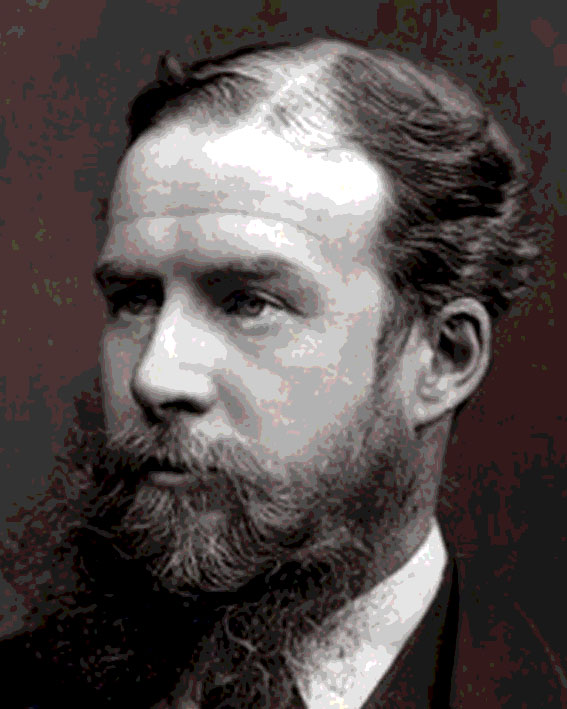 Sir John Lubbock (1834-1913)
John Lubbock was a banker in the family tradition who became the first president of the Institute of Bankers. He was also a politician, serving twice as MP for Maidstone. But his passion was for the past. This was unsurprising, since his childhood neighbour at High Elms in Downe was Charles Darwin. In 1864, his interest in palaeontology earned him membership of the X Club, an elite group of supporters of natural selection led by Thomas Huxley. He had a parallel interest in archaeology, and in 1865 wrote the seminal text-book ‘Pre-Historic Times’, in which he coined the terms ‘palaeolithic’ and ‘neolithic’. For good measure, after his first wife died, he married Augustus Pitt Rivers’ daughter Alice. He saved the Avebury stone-circle from destruction, for which reason he became Baron Avebury in 1900. Although born in Eaton Square, he was a Kent man through and through. He actually rebuilt Kingsgate Castle as his family home, and died there.
 William Morris (1834-96)
William Morris was less a man than a phenomenon. He was such a bowl of contradictions that he defies definition. Having started life as an evangelical Protestant, and courted Anglo-Catholicism at Oxford, he professed himself an atheist. While enjoying a privileged background, he expressed socialist ideals. His lifestyle was ostensibly bohemian, but thoroughly bourgeois. Yet the breadth of his creative power is unsurpassed. In his lifetime, he was best known as a poet, but today is reckoned a designer without equal. He was close to the Pre-Raphaelites, with whom he formed both friendships and profitable business associations. His Kentish connection is the Red House in Bexleyheath, which he co-designed with Philip Webb in 1859. It was a showcase of his Arts & Crafts Movement, with its commendable emphasis on traditional authenticity; Burne-Jones and Rossetti helped decorate it. Though Morris and wife Jane intended it as a home for life, he tired of it after five years.
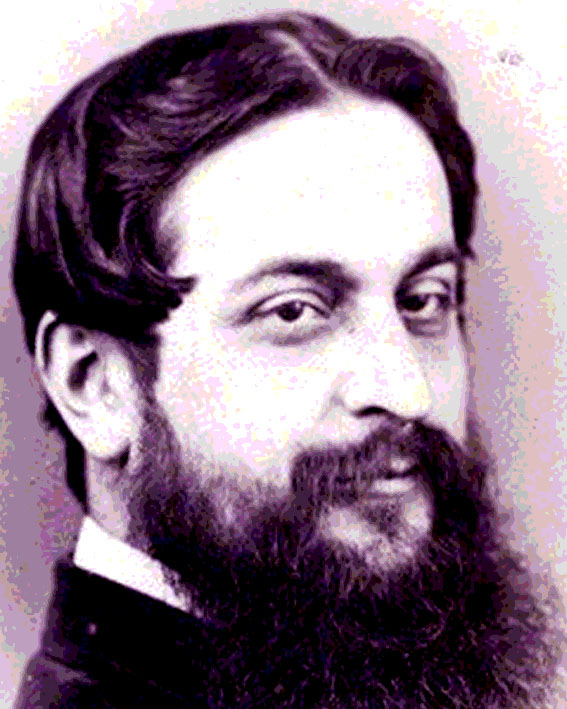 Tom Hood (1835-74)
Essex man Tom Hood proved an able successor to his father, the humourist Thomas Hood, who had died at 45 when his son was just ten. After Oxford, Hood junior also took up writing, but joined the War Office for five years before leaving to write full-time. In addition to numerous works illustrated by himself, including children’s books, he wrote several novels, among them ‘Captain Master’s Children’ (1865). Noted for his easy-going temperament, he was best known as the editor of ‘Fun’ magazine, a popular rival to ‘Punch’ which his father had written for. Published from 1861 to 1901, it most popularly featured WS Gilbert’s typically astringent illustrated verses. He first published his own ‘Tom Hood’s Comic Annual’ in 1867, emulating the ‘Comic Annual’ his father had published for 12 years. Having resided at Sydenham, Hood remarried soon after his wife’s death at 37. Just months later, he too died young.
 Alfred Austin (1835-1913)
Poet laureates of little merit are not a modern invention. After three men of outstanding ability – Southey, Wordsworth, and Tennyson – held the post in succession in the C18, it was the turn of Alfred Austin, the son of a Yorkshire merchant. After graduating from the University of London and practising law, he inherited a fortune. This allowed him to give up working and start writing poetry, of which he churned out more than a dozen volumes. The consensus, however, was that his self-belief was misguided; one critic described him as a ‘Banjo Byron’. When he was made Tennyson’s successor in 1896, it was commonly assumed that, as the title had lain dormant for four years, he must have been awarded it merely in return for supporting the Conservative government. He held the post for 17 years while living at Hothfield, and was succeeded as poet laureate after his death there by Man of Kent Robert Bridges.
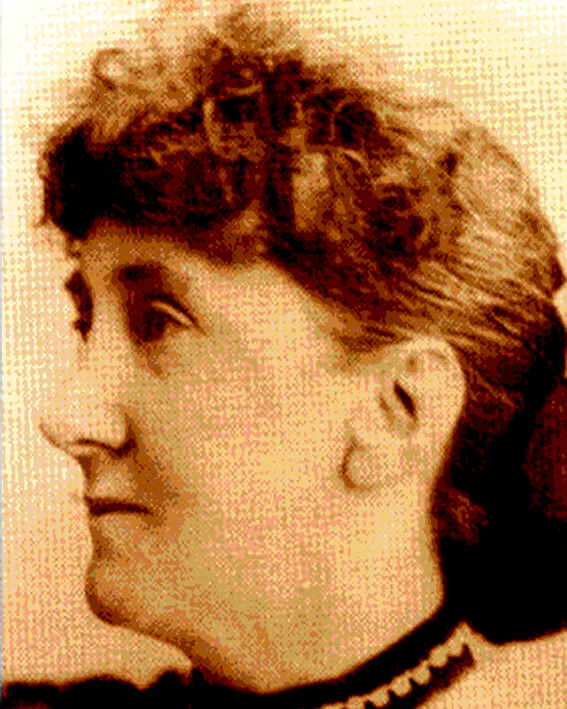 Sarah Thorne (1836-99)
The daughter of actor and impresario Richard Thorne, London-born Sarah followed him into the theatre, as would her two younger brothers. Her first performance on stage was in pantomime at Whitechapel when she was 12. She first became familiar with Margate in 1855 when she performed with her father’s company for the summer. She assumed the management of the Theatre Royal from him in 1867, but moved on after the lease was sold in 1873. She took up a new lease six years later, however, and this time was there to stay. She set up a School of Acting in 1885, now generally reckoned to have been the first in Britain; among its alumni were brother George and the Vanbrugh sisters. In 1894, she additionally took on the Chatham Lecture Hall, which she renamed the Opera House. She died in Chatham, and was buried in Middlesex. A theatre in Broadstairs is named after her.
 Thomas Crapper (1836-1910)
Thomas Crapper‘s vocation was the ultimate example of nominative determinism, on the lines of Lord Brain the neurologist. He was born a Yorkshireman, and the son of a sailor. In 1853, he joined his brother’s plumbing business in Chelsea as an apprentice. After setting up as a sanitary engineer in 1861, he proved a considerable innovator. Contrary to popular belief, he did not invent the water closet, but did patent three improvements to its design, including the now ubiquitous floating ballcock and equally familiar u-bend. He set up the world’s first specialist bathroom showroom in the Kings Road, Chelsea, and by fitting out Sandringham House for Prince Albert earned the first of several Royal Warrants. His name appeared on everything from cisterns to manhole covers, ensuring lasting fame. In 1904, Crapper retired to Penge. He died there, and was interred in Beckenham. His company was sold in 1966, but another was launched to sell reproductions of his wares.
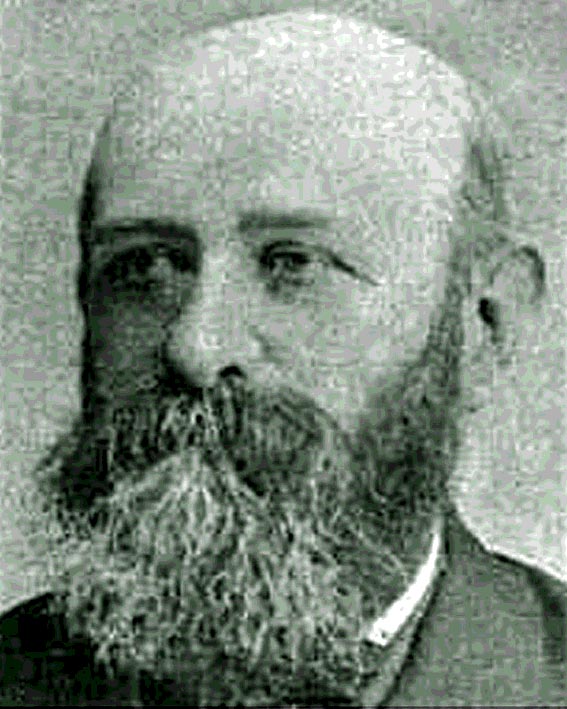 Joseph Gwyer (1837-1911)
England’s answer to William McGonagall, Joe Gwyer was raised by relatives in Wiltshire after his mother died young. He went to London at 17, and remained. A committed Baptist, he campaigned vigorously for temperance, despite having the unfortunate middle name Lush. By trade he was a purveyor of potatoes, but he also fancied himself as a poet, to the extent that he endeavoured to make a living from it. Whenever anything significant happened on the national stage, from the death of Dickens to the Shah of Persia’s state visit, he would leap into action, intent on dramatising it, Tennyson-like, for the people’s edification. Though there was no doubting his enthusiasm, he was the poetic equivalent of tone-deaf, his output often verging on the hilarious. In 1897, the self-styled Penge Poet recorded the ‘Disaster at Margate’, and sold copies of his elegy for a penny. Even at that price, purchasers may have wondered which was the real disaster.
 Sir Henry Hozier (1838-1907)
Born into a wealthy family in Scotland, Hozier went to Rugby School and the Edinburgh Academy before joining the Royal Military Academy at Woolwich. He entered the Royal Artillery as a lieutenant, and after twice changing units served in China, Abyssinia, and the Austro-Prussian and Franco-Prussian Wars, in the latter of which he won the Iron Cross. Having retired, he entered the gunpowder business in 1872, but two years later became secretary of Lloyd’s, which he remained for 32 years. As well as serving as commandant of the Royal Arsenal Artillery Volunteers, he put his military experience to excellent use in building a predecessor of IT: a network of telegraphy posts across the world that speeded valuable financial information to London much faster than hitherto. He was supposedly the father of Winston Churchill’s wife Clementine, although his reputed impotency and his wife’s serial infidelity cast some doubt on this.
 Octavia Hill (1838-1912)
Despite usually being bracketed with Elizabeth Fry as a ‘social reformer’, Octavia Hill was specifically interested in providing alternatives to slum housing. The daughter of a failed merchant in Cambridgeshire, she believed passionately in self-reliance, and regarded the prompt payment of rent as a crucial moral commitment from tenants. In 1865, the art critic John Ruskin, who was offended by the ugliness of slums, provided three cottages in Marylebone that got her started as a landlady. Within a decade, she was running 15 schemes that housed around 3,000 tenants. The other side of Hill’s coin involved the provision of open spaces accessible to the masses, for which reason she co-founded the ‘National Trust for Places of Historic Interest or Natural Beauty’ with Robert Hunter and Hardwicke Rawnsley in 1895. She contributed a viewing terrace at the National Trust site in Toys Hill whilst living in neighbouring Crockham Hill, at whose church she is buried.
 Walter Pater (1839-94)
Richard Pater was a doctor who moved to Stepney in London’s East End so that he could tend for the poor, but died soon after the birth of his son Walter. When Pater’s widow moved to Harbledown in 1853, the boy became a day pupil at the King’s School, Canterbury, where the Cathedral and its rituals made a strong impression on him. Having won prizes in Latin and Ecclesiastical History, he went to Oxford, where he spent most of his professional life teaching, and writing. His magnum opus was ‘Studies in the History of the Renaissance’ (1873), expounding the achievements of Western civilisation. ‘The Renaissance’ made Pater the intellectual mainstay of Aestheticism, the ‘Art for Art’s Sake’ movement – the idea that the arts should delight, rather than sermonise in the manner of Victorian moralists like Dickens. It was deplored by the Church, but an inspiration to Oscar Wilde and the Pre-Raphaelites. The International Walter Pater Society still celebrates his now unfashionably anti-political philosophy.
 Sir Hiram Maxim (1840-1916)
The younger brother of fellow inventor Hudson Maxim, Hiram was born in Maine, USA. As well as patenting a mousetrap, curling tongs, and a fire sprinkler among others, he invented an incandescent electric bulb, but was outfoxed by Thomas Edison in securing the patent. In 1881, he visited England on business. He would remain for the rest of his life. Most famously, he invented the formidable Maxim gun (manufactured by Vickers at Crayford), followed by the pom pom (made in Erith). In 1889, he moved from Crayford to Baldwyns Park in Bexley, where in 1894 he demonstrated to distinguished visitors his world-beating ‘Flying Machine’. Deterred by such challenges as propulsion and steering, he converted the idea to a fairground ride, the Captive Flying Machine, of which the example at Blackpool is the oldest ride still in operation; he also installed several other attractions at the Crystal Palace. He was naturalised in 1900, knighted in 1901, and retired to Sydenham.
 General Sir Charles Warren (1840-1927)
Welshman Charles Warren, a general’s son, joined the Royal Engineers and attended the Royal Military Academy at Woolwich. After surveying Gibraltar in his early twenties, he became an instructor at the School of Military Engineering in Chatham. Having been sent to Africa on various investigative missions, he was appointed London’s Commissioner of Police in 1886 but, castigated for not solving the Ripper murders, he soon resigned. He returned to the Army, and during the 2nd Boer War messed up an attempt to relieve Ladysmith, and was held responsible for the Spion Kop disaster. He never commanded in the field again, and could only fall back on his extraordinary career as an accidental archaeologist. Back in 1867, while tunnelling under Jerusalem, he had discovered an ancient well, now called Warren’s Shaft, and surveyed the site of Jericho; he wrote a series of books about it. He was given a military funeral at Canterbury, and buried with his wife at Westbere.
 Lucy, Lady Frederick Cavendish (1841-1925)
One of the aristocratic Lyttelton clan from Worcestershire, Lucy was a daughter of the 4th Baron Lyttelton, a Conservative junior minister, and a niece of Liberal prime minister William Ewart Gladstone. A Maid of Honour to Queen Victoria, she married Lord Frederick Cavendish at 22. In 1882, her husband was appointed Chief Secretary for Ireland just as Gladstone’s government was making progress towards Home Rule for Ireland. On his very first day in office, he was walking in Phoenix Park, Dublin with Irish civil servant Thomas Burke when the pair were murdered by knife-wielding members of the Irish National Invincibles. Although the outrage set back Irish independence by decades, she remained committed to the cause and showed her forgiveness by sending the gang leader her gold crucifix. She subsequently served on various committees furthering women’s education, and Cambridge University’s first women’s post-graduate college was named after her in 1965. She died childless at her home in The Glebe, Penshurst.
 Sir Alfred Yarrow (1842-1932)
In the golden age of British shipping, one of the most familiar shipbuilding names was Yarrow’s. Alfred Yarrow was born into a poor East End family. An inventive engineer, he began manufacturing steam launches in Poplar at 23. Over time, the business expanded to take on military vessels renowned for their speed and, in 1892, the first two Royal Navy destroyers. By the end of the C19, Yarrow was living splendidly at Woodlands House in Blackheath, where he persuaded a young local engineer, Alexander Duckham, to specialise in lubricants. Because of labour costs, however, he began in 1906 to move the business to the Clyde, where it subsequently constructed around 400 ships. A vigorous philanthropist, Yarrow built, among other projects, the unisex school at Broadstairs that is now the Yarrow Hotel. As for the shipbuilding business, it passed through three generations of Yarrows before being nationalised and re-privatised under successive governments, emerging under the ownership of BAE Systems.
 Sir Everard Hambro (1842-1925)
The name of the famous bank Hambros was not a contraction of Ham Brothers, but simply the creation of Carl Hambro, a Danish banker’s son. He moved to England with his father in 1832, having changed his religion from Judaism to Christianity, and founded the bank in 1839. The youngest of his three sons, Middlesex-born Everard, followed him into the business. The son’s long career was surprisingly uneventful, as befitted a director of the Bank of England for 46 years, although he did help save Barings Bank. Having acquired substantial wealth, in 1880 he bought Hayes Place at Bromley, the former residence of William Pitt the Elder and his son, and invested in major extensions and improvements, including an electricity supply. He also became known for his philanthropic involvement in local affairs, and was buried alongside his first wife in Hayes churchyard. Hambros Bank was sold to a French group in 1998, of which it became a named division.
 Flaxman Spurrell (1842-1915)
The wonderfully named Flaxman Spurrell moved with his family to Bexleyheath shortly after being born in the East End. He attended Epsom College and studied Medicine, but preferred the interest in archaeology he had acquired from his father. He began by making the first systematic investigation of dene holes – vertical shafts leading to multi-chambered underground caverns – of which many exist in Kent. From there he undertook to explore and write up numerous other archaeological sites around the Thames estuary. In his thirties, he encountered Flinders Petrie, the pioneering Charlton-born archaeologist, who got him interested in Egyptology. Although he never visited Egypt, he took charge of cataloguing the finds Petrie sent back. He left some of his own archaeological artefacts to the Natural History Museum, and others to a museum in Norfolk, where he had moved in 1896. At 69, he found time to marry his cousin Katherine. An avenue in Bexley is named after him.
 Pyotr Kropotkin (1842-1921)
Pyotr Alekseyevich Kropotkin started life in Moscow as a blue-blooded prince. After undertaking geographical research for the Russian Army in Manchuria, and then for the Russian Geographical Society in Scandinavia, he dramatically committed himself to revolutionary politics. In 1874, he was jailed, but after two years escaped via Switzerland to France, where he was incarcerated for four more years. In 1886, he found a safe haven in Bromley, the hometown of Henry Seymour, with whom he briefly co-edited ‘The Anarchist’ magazine. For Kropotkin, anarchism was not about creating political chaos but pursuing the final stage of Marx’s dialectical process, when the state would inevitably wither away and the people live in harmony. After four decades in exile, he returned to Russia straight after the February revolution to a warm welcome. He was dismayed to learn, however, that the Communists had no intention of relinquishing power. After his death, all talk of Anarchy in the USSR was banished.
 Sir William Abney (1843-1920)
Edward Abney, a vicar from Derby, was an exponent of the new practice of photography. His associate Richard Keene befriended Abney’s sons William and Charles, who continued their father’s work. In particular, they experimented in new techniques with particular relevance to astronomy. William, a chemist, developed a new dry emulsion that he used to photograph a transit of Venus in Egypt in 1874, and two years later was elected a Fellow of the Royal Society. He had studied at the Royal Military Academy in Woolwich and spent time in India with the Royal Artillery before returning to join the Chatham School of Military Engineering. As well as writing several books on photographic topics, he invented the Abney mount for the concave grating spectrograph, and the Abney Level, a combined spirit level and inclinometer used in surveying. He may have got good use out of it in the hilly terrain around Folkestone, where he died and was buried.
 Prince Alfred, Duke of Saxe-Coburg & Gotha (1844-1900)
At his birth, Prince Alfred was second in line to the throne behind the Prince of Wales, the future King Edward VII. At 14, he entered the Navy as a midshipman. By the age of 23, he was being sent around the world visiting the colonies on Queen Victoria’s behalf. Whilst in Australia, he was shot in the back by an Irish assassin, who was spared lynching but presently hanged. Alfred survived, and back home married Grand Duchess Maria Alexandrovna, sister of Tsar Alexander III, with whom he moved into Eastwell Manor. They had four daughters, one of whom became Queen of Roumania. Their eldest son Alfred killed himself in his twenties. Alfred’s marriage was unhappy, his wife taking a dim view of British royalty. It perhaps was a relief when, in 1893, his uncle died and he succeeded as Duke of Saxe-Coburg & Gotha in Germany. He succumbed just seven years later to throat cancer.
 Dame Ellen Terry (1847-1928)
Alice Ellen Terry had two great interests in life: the stage, and men. She had the theatre in her blood, coming from a family of actors in Coventry, and took up the trade from her earliest years. She joined Henry Irving’s company in 1878, and for the last two decades of the C19 became Britain’s greatest living actress, in both Shakespeare and comedy. Late in life, she even appeared in five silent movies. By then she had demonstrated the phenomenon, well known in sport, of the great player who proves a poor manager, when she took over the Imperial Theatre from Lily Langtry; it went out of business four years later. She also scandalised society with her string of men that included three husbands. The Pre-Raphaelites were particularly fond of her, and John Singer Sargent artfully painted her as Lady Macbeth. She spent her last 28 years living in Small Hythe, where she retired and died.
 George Grossmith (1847-1912)
‘Sic transit gloria mundi’ could have been George Goldsmith’s epitaph. A Londoner, he not only composed prolifically but also sang well, and was a highly amusing performer. In 1877, he was invited to participate in Gilbert & Sullivan’s third opera, ‘The Sorceror’, and subsequently became D’Oyly Carte’s leading male performer, bringing to life such classic songs as ‘I am the monarch of the sea’, ‘I am the very model of a modern Major-General’, and ‘I’ve got a little list’. After appearing in all nine of their Savoy operas, he withdrew in 1889, and concentrated on making himself the foremost entertainer of the late C19. A regular contributor to ‘Punch’, he also collaborated with his brother Weedon on a series of pieces concerning the self-important nowhere man Charles Pooter, which in 1892 were collected and expanded as ‘The Diary of a Nobody’. Folkestone being a favourite resort, he spent his last three years there, and then was quietly forgotten.
 William Waldorf Astor, 1st Viscount Astor (1848-1919)
Willy Astor is chiefly remembered for two things: inheriting a vast amount of money, and giving much of it away. He was the great-grandson of John Jacob Astor, who had made himself the richest man in America through fur-trading. Willy inherited his father’s fortune in 1890. Having got into a rift with his Aunt Lina over who was the senior Mrs Astor in New York, he decamped to England and faked his own death, earning much derision when the truth came out. In 1893 he bought Cliveden, and ten years later Hever Castle, which he renovated as the new family pile; he gifted Cliveden to his son and daughter-in-law Waldorf and Nancy as a wedding present. In 1908, he funded the construction of London’s Waldorf Hotel. He also gave prodigious amounts to charity and the British war effort. It earned him a baronetcy, plus a lot of flak for allegedly buying his way into the aristocracy.
 Frances Hodgson Burnett (1849-1924)
Francis Hodgson managed the feat of writing not one children’s classic, but three. The death of her father when she was two left the family in straitened circumstances, so in 1865 they left Manchester for Tennessee. Aged 19, Hodgson began writing in order to raise money, and three years later married a trainee doctor called Swan Burnett. Her big literary breakthrough was ‘Little Lord Fauntleroy’ in 1885. At 37, she started travelling annually to England, initially for the Queen’s Golden Jubilee. Between 1898 and 1907 she lived at Great Maytham Hall in Rolvenden, where she made the discovery that would later inspire ‘The Secret Garden’. Her marriage had broken up after 26 years whilst she was suffering from depression following the death of a child. She ill-advisedly married a much younger man, Stephen Townsend, who was after her money; she divorced him after two years. Her consolation was the further success she enjoyed in 1905 with ‘The Little Princess’.
 Sir David Salomons, 2nd Baronet (1851-1925)
Sir David Salomons, 1st Baronet, is best remembered as the first Jew ever elected to Parliament; he could not take his seat for Greenwich for some years, however, because he refused to take the Christian oath. His Brighton-born nephew, also David Salomons, inherited his title and estate, Broomhill near High Brooms, in 1873. A barrister, young Salomons became Mayor of Tunbridge Wells and Sheriff of Kent. One of his scientific interests was electricity, which led him to introduce innovative electric lighting on the estate. He also was an accomplished motor-car mechanic. In 1895, he cannily mounted the first-ever motor show at Showfields in Tunbridge Wells, shortly after which the pioneering car-manufacturer Walter Arnold was fined at Tonbridge for speeding – events that prompted the transformative Locomotives on Highways Act 1896. Salomons was also a major collector of Breguet watches, and bequeathed to a Jerusalem museum a unique collection that was notoriously stolen in 1983. Broomhill is now the Salomons Museum.
 Lord Kitchener (1850-1916)
Herbert Kitchener will never be forgotten for the WW1 recruitment poster in which his stern face and pointing finger informed the reader that “Your Country Needs You”. It was typical of his style: tough and uncompromising. He was born in the west of Ireland after his father, an Army officer, bought land there. After being educated in Switzerland, he attended the Royal Military Academy in Woolwich. He joined the Royal Engineers, serving in Palestine, Cyprus, and the Sudan. In 1898, he won the Battle of Omdurman, and was made Baron Kitchener of Khartoum. In the Boer Wars he was associated with a scorched-earth policy and the confinement of Boers in primitive ‘concentration camps’. At length, in 1911, he bought Broome Park near Canterbury, which he started renovating for his retirement. On June 5th, 1916, however, HMS Hampshire, on which he was sailing to meet the Tsar, struck a mine off Orkney. She went down with all 737 men on board.
 Alice Liddell (1852-1934)
The world can thank Alice Liddell for one of the world’s great fictional characters. On July 4th, 1862, on a boating trip with her two sisters in Oxford, she asked Lewis Carroll for a story. Crucially, she then requested that he put it in writing. And so ‘Alice’s Adventures Under Ground’ was born. The fictional Alice was not a depiction of Liddell, but Carroll did pay literary homage to her, spelling out her full name in an acrostic at the end of ‘Through the Looking-Glass’. Furthermore, his allegory of that boating trip, ‘A Caucus-Race and a Long Tale’, is imperfect unless Alice is Alice. The rumour that Carroll hoped to marry Alice is unfounded; a rift between him and the Liddells was probably caused by her sister Lorina’s excessive affection. Liddell would actually marry the Hampshire cricketer Reginald Hargreaves. After his death in 1926, she lived and died at Westerham, appropriately owning a Rolls-Royce with the registration number A1.
 Sir Johnston Forbes-Robertson (1853-1937)
GB Shaw had Professor Henry Higgins say, “Happy is the man who can make a living by his hobby”. By that token, Johnston Forbes-Robertson cannot have been happy. He was born in London into a theatre critic’s family with ten younger siblings, of whom half became actors. He wanted to be an artist, and after Charterhouse studied at the Royal Academy; but he took up acting to make a living. Though he never thought himself suited to it, he had enormous talent. Initially appearing as a foil to Sir Henry Irving, he established himself as a memorable Hamlet. Shaw actually wrote the part of Caesar in ‘Caesar and Cleopatra’ (1898) for him, averring that he was the classic actor of the day. He married the American actress Gertrude Elliot in 1900, moved to Wittersham, and fathered four daughters. During WW1, he undertook two vast farewell tours of America. He died at St Margaret’s Bay.
 Margaret Zborowski (1853-1911)
Margaret Laura Carey might best be described as a career heiress. She was born in Manhattan as a great-granddaughter of America’s richest man, John Jacob Astor, and an only child. In 1875, she married the globe-trotting Dutch diplomat Alphonse, Ridder de Stuers, who handily was also an art collector. After having four children, they sensationally divorced in 1892. Within hours, she married a self-styled American count called Eliot Zborowski, son and heir of Martin Zabriskie who owned much of New York. Zborowski was killed in a motor-racing crash in 1903, leaving all to his widow. Now hyper-rich, she treated herself to Higham Park near Canterbury in 1910, paying £17,500 for its 225 acres and 12 houses. She then effortlessly spent £50,000 on refurbishing it. Unfortunately for her, it was only a year before she died. The beneficiary of this life of resourceful inheriting was her son Louis, who at 16 found himself very rich indeed.
 Vincent van Gogh (1853-90)
It seems hard to believe that van Gogh ever stayed in Kent during his short and turbulent life, but he did. Aged 23, having lost his job with an art dealer in Paris, he applied to teach in England. His only response came from headmaster William Stokes, who offered him a post at his boarding school in Ramsgate. Though van Gogh received only board and lodging, he reported that he enjoyed a rare spell of tranquillity there. It was rotten luck that, after two months, the school moved to Isleworth; he walked there via Canterbury and Chatham. The most tortured of creative geniuses, van Gogh was absurdly underrated in his lifetime. He suffered rejection and derision, and his brother Theo, a lifelong support, unfortunately predeceased him. His misery famously led him to cut off his ear, and then cut short his life. He does at least get the recognition he deserves today, even meriting his own museum in Amsterdam.
 Grand Duchess Maria Alexandrovna of Russia (1853-1920)
In a world where it was customary to marry off royal princesses into foreign courts – whatever the young women concerned thought of it – it was encouraging that the Grand Duchess Maria Alexandrovna of Russia and Prince Alfred of the UK actually loved each other. Indeed, their marriage went ahead despite universal opposition, especially from Queen Victoria. The objectors were nevertheless proved right. Maria was miserable at Eastwell Manor, hating Britain, the Church of England, and the Royal Family. After happily leaving when Alfred was posted to Malta, she changed the course of history by deterring her daughter from marrying the future King George V. In 1893, she did briefly find happiness in Germany, where her husband became the Duke of Saxe-Coburg & Gotha. She supported Germany during WW1, which sparked the Russian Revolution that brought the death of her nephew Nicholas II and destroyed the Romanov dynasty. She lost everything, and died unwanted in Switzerland.
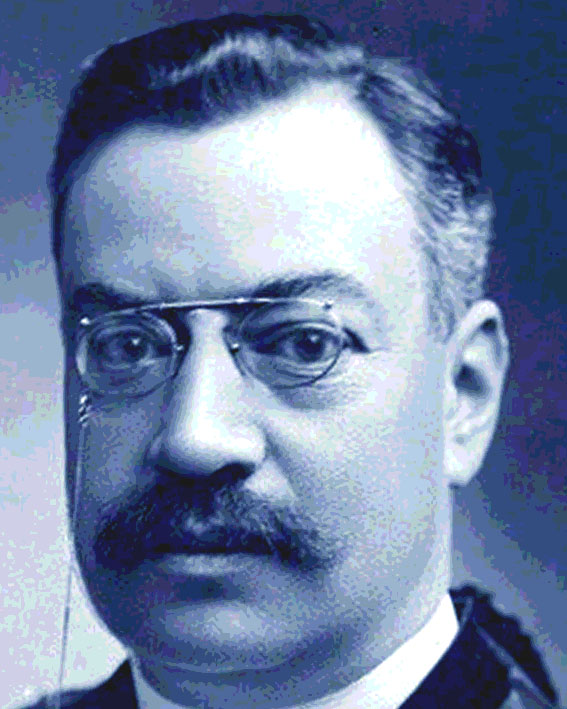 Marcus Samuel, 1st Viscount Bearsted (1853-1927)
An Ashkenazi Jew born in Whitechapel, Middlesex, Marcus Samuel was the son of an importer of Far Eastern goods, most notably seashells. Early in his career, he travelled extensively around Asia with his brother Samuel in pursuit of trading links, and in 1890 latched onto the idea of exporting Russian oil via the Suez Canal to the Far East. So lucrative was it that he was able in 1895 to buy himself The Mote in Maidstone as a country retreat. In 1897, he founded Shell Trading & Transport, all of whose ships were named after seashells, and in 1907 merged with Royal Dutch Petroleum to create Royal Dutch Shell. He also had insurance interests, his business later merging to form the merchant bank Hill Samuel. Having been Sheriff of the City of London and Lord Mayor, he was created 1st Baron Bearsted of Maidstone in the County of Kent in 1921, and 1st Viscount Bearsted in 1925.
 Lieutenant-Colonel Frank Bourne (1854-1945)
Frank Bourne is best remembered for a piece of fiction. In the 1964 film ‘Zulu’, which depicted the Battle of Rorke’s Drift in 1879, Nigel Green played the character named after Bourne who, delivering a sentry’s report, uttered the chilling words, “Zulus to the Southwest. Thousands of them!” The real Frank Bourne was much smaller than Green, and much younger; he had become the British Army’s youngest colour-sergeant at 21, and was still only 24. For his valour, he was awarded the Distinguished Conduct Medal, second only to a VC. Bourne would have a long career in the Army. He later served as Adjutant of the Schools of Musketry in Hythe and Dublin. At the latter, he was responsible for training sharpshooters who later used their skills against the British Army for the IRA. A Sussex man, he retired to Beckenham, and only died there the day after VE day, making him Rorke’s Drift’s last survivor.
 William Benn (1855-1921)
Vicar’s son William Rutherford Benn was born in Poplar, Middlesex, and worked as a shipping clerk. In 1882, he married Florence Nicholson, and suffered a nervous breakdown during the honeymoon. He appeared to have recovered, but a year later bashed his father’s brains out with a chamber pot. After seven years in Broadmoor, he was released into his wife’s care, and changed his name to William Rutherford. The couple had one child, a daughter. He took his family to Madras while working as a trader, but his wife too suffered a breakdown, and hanged herself from a tree. Rutherford was recommitted to Broadmoor, where he remained until he was moved on to the City Lunatic Asylum in Dartford, where he died. The daughter, Margaret Rutherford, also suffered from mental illness, but nevertheless became a famous actress. She was spared the fate of her first cousin once removed, left-wing government minister Anthony Wedgwood Benn, who was satirically branded ‘Loony Benn’.
 George Thorne (1856-1922)
The youngest of a family steeped in the theatrical tradition, Thorne was born in Surrey. He made his debut at two, when he was carried onto the stage at the Theatre Royal, Margate, which was managed by his father. In his early teens, he was back to perform under the auspices of his much older sister Sarah, who by then had taken over the management. A spell in repertoire was followed by a stay in Calcutta, where he supposedly played over a hundred roles in six months. However, it was his singing voice that made him best known. A baritone, Thorne was engaged by D’Oyly Carte in 1881, touring in Britain, on the Continent, and in America. By his reckoning, he sang all 13 surviving Gilbert & Sullivan operas. He tried his hand at writing light comedic efforts, including pantomimes, but also did adaptations of Dickens. In 1907, he appeared in a short silent movie, ‘Tit Willow’.
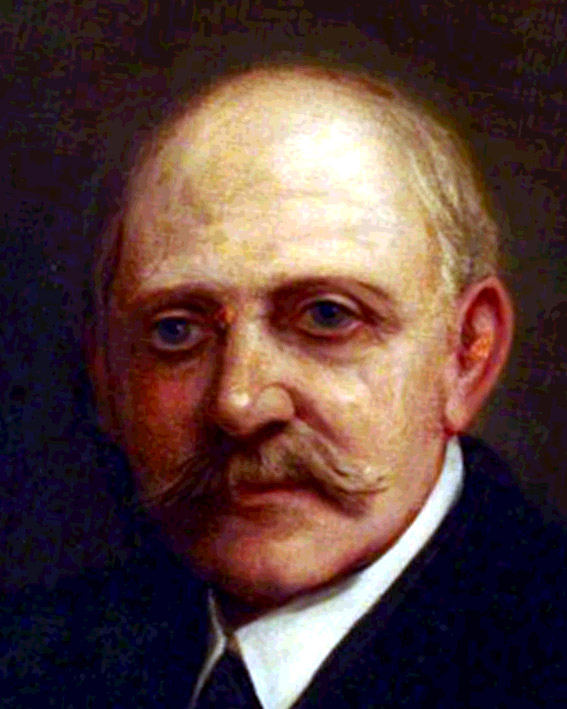 William Willett (1856-1915)
Willett, a builder, is known for just one thing: British Summer Time. Although he came from Farnham, he spent most of his life living in Chislehurst. It was while riding his horse through Petts Wood early one summer morning that he noticed most people were still in bed, and realised it would save a lot of daylight if the clock were moved forward in the spring. He proposed that it be advanced by four weekly 20-minute increments during April that would be reversed in September. He did get some political support for the idea, including from Winston Churchill; but nothing happened until WW1, when an urgent need to preserve coal stocks forced action. The practice of advancing the clock by an hour was introduced in May 1916, a fact commemorated in the Willett memorial sundial at Petts Wood. Perhaps one day someone will complete his work by abolishing the habit of putting the clocks back in October.
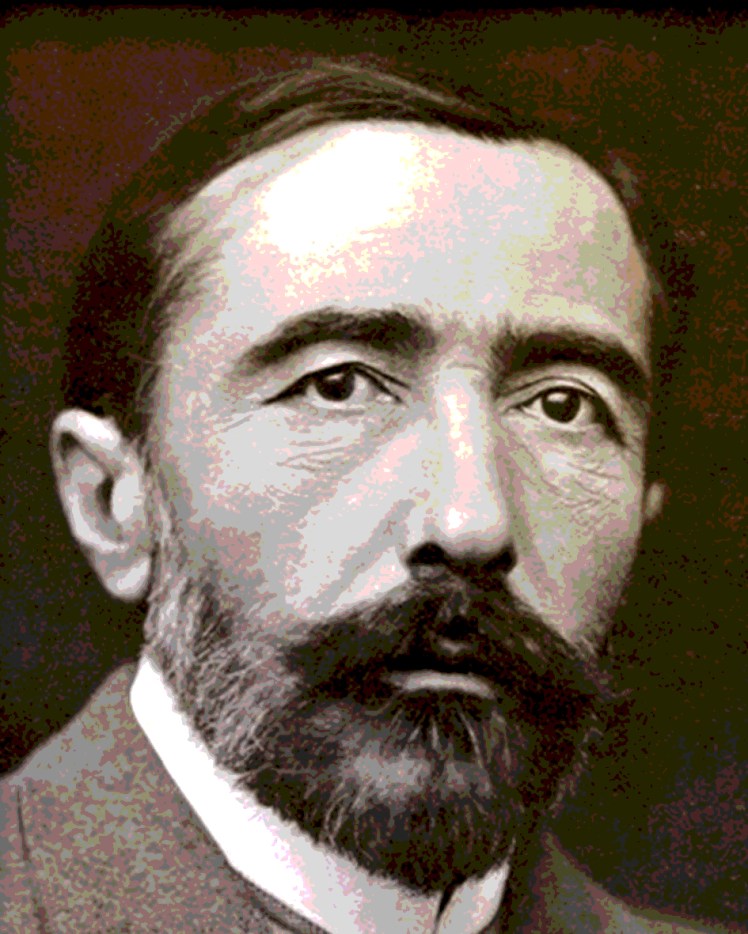 Joseph Conrad (1857-1924)
Conrad’s status as one of the world’s greatest English-language novelists is astonishing, considering that he only learned the language in his twenties. He was born Józef Teodor Konrad Korzeniowski, the son of a Polish noble. He went to sea, and his maritime adventures, including smuggling, formed the basis of his early fiction. In 1878 he began a 16-year career in the British merchant navy, finally as a captain. He became a British subject and settled at Aldington. The novels for which he is now famous mark a lurch away from Victorian realism towards modernism, concerning human drives, dilemmas, and isolation. Politically, however, he is regarded today with ambivalence. His classic extended story ‘Heart of Darkness’ proposes the sameness of different races, but only because all are equally dangerous. This partly explains why the obscure Simone Weil is marked by a major avenue in Ashford, whilst the world-famous Conrad, who died in Bishopsbourne, gets only a new-build side-street.
 E. Nesbit (1858-1924)
Edith Bland, née Nesbit, was born in Kennington, Surrey, but spent years moving around Europe after her father died. She spent three years at Halstead Hall in Kent, on which she modelled the location of ‘The Railway Children’ in 1905. Her relationship with Hubert Bland was not easy. After getting her pregnant before their marriage, he continued doing the same to others, and had one lover move in permanently. Nesbit occupied herself by writing prolifically for a children’s audience, introducing more grown-up plots than was customary in the Victorian era, as well as a high literary standard. She and her husband did share an interest in radical politics: they joined the incipient Fabian Society, and named a child after it. Nesbit later retired to New Romney, where she died of lung cancer induced by her chronic smoking. It emerged in 2011 that she plagiarised her best-known book from Ada Graves’s ‘The House by the Railway’, published nine years earlier.
 Andrew Bonar Law (1858-1923)
Although he grew up in Scotland from the age of 11, Law was born in New Brunswick, Canada, and so was the UK’s first-ever prime minister born overseas. Having made a fortune working in the iron industry, he entered Parliament as MP for Glasgow Blackfriars in 1900. Within two years he was appointed Parliamentary Secretary to the Board of Trade. In 1906, he moved to Anerley on being elected MP for Dulwich; and, five years later, now MP for Bootle, he surprised everyone by succeeding Arthur Balfour as Tory leader, and spent three years thwarting Liberal efforts to pass the third Irish Home Rule bill. After serving as Chancellor in Lloyd George’s coalition war cabinet, he led the Conservatives to victory in the 1922 election. He had served for only seven months when throat cancer forced his resignation, and he died months later. The title of a 1955 biography pithily summed him up: ‘The Unknown Prime Minister’.
 Reginald Koettlitz (1860-1916)
It is a rare achievement to have a geographical feature in the Arctic named after you, but extraordinary to have another in the Antarctic. That distinction belongs to Reginald Koettlitz, a surgeon-cum-geologist who took part in both the misbegotten Jackson-Harmsworth expedition to Franz Josef Land (1894-7) and Scott’s pioneering Discovery Expedition (1901-4); the former led Koettlitz Island to be named in his honour, and the latter the Koettlitz Glacier. Koettlitz was born in Ostend, Belgium to an English mother and Prussian father who soon moved to Hougham and then Dover. He attended Dover College and progressed to Guy’s Hospital before becoming a doctor in the North-East. Polar exploration was a dramatic departure, but he did survive his two missions, eventually succumbing to dysentery at home in South Africa on the same day as his French wife. The stuffed polar bear he brought back from the Arctic is still proudly displayed in Dover Museum.
 David Lloyd-George (1863-1945)
Few prime ministers had such a chequered record as David Lloyd George. Born in Manchester of Welsh parents, he narrowly became MP for Carnarvon Boroughs in 1890. He used his silver tongue effectively in climbing the greasy pole; it also brought him a string of bedroom companions. With WW1 going badly, he finally ousted his boss Herbert Asquith in December 1916, succeeding him as Coalition premier. On the plus side, he is remembered for somehow getting the War won, and in 1918 for expanding the franchise to all adult men, plus some women. On the other hand, he made a hash of the Chanak Crisis in Turkey, allowed the Irish Free State’s secession, and saw the economy crash. His slump in popularity ended Liberal government in Britain, ushering in the Labour Party. His acquaintance with Kent was brief: he lodged with his friend Sir George Markham at Beachborough Park in 1911 while recovering, aptly, from a throat complaint.
 Sir Henry Royce (1863-1933)
Although he was born near Peterborough, it was in Manchester that Frederick Henry Royce set up an manufacturing business in 1884. Eventually deciding that he must expand outside of electric cranes and dynamos, Royce looked to the growing automotive business. In 1904 he produced his first model, which he showed to London showroom owner Charles Rolls. The two united to form a perfect partnership, with the energetic Rolls as front man and the quietly spoken but fiercely determined Royce providing the expertise. The duo lasted only until 1910, however, when Rolls was killed in a plane crash. Royce’s marriage broke up two years later and, plagued by ill-health, he moved south. He took up residence in St Margaret’s Bay with his full-time nurse from 1913 to 1917. In the 1930s, his commitment to aero engines created the world-record breaking ‘R’ engine, whose successor the Rolls Royce Merlin would become the cornerstone of Britain’s aerial defences in 1940.
 Lieutenant-Colonel Sir Francis Younghusband (1863-1942)
Born in Punjab, Younghusband followed his major-general father into the British Army after attending Sandhurst. As the nephew of a well-known explorer, he was assigned to reconnoitre north of the Himalayas in response to Russian expansionism, travelling as far as Manchuria and negotiating the Mustagh Pass. From 1889, he became something akin to a secret agent, experiencing various cloak-and-dagger adventures involving Russians. He led the ‘Expedition to Tibet’ in 1903, a mission to establish trade links that was disavowed by the British government after spiralling into bloody conflict. He redeemed himself by concluding an agreement with the Dalai Lama, and was knighted. During WW1, the now spiritually inclined Younghusband founded the influential ‘Fight for Right’ campaign that spawned the song ‘Jerusalem’, followed by the World Congress of Faiths. As president of the Royal Geographical Society, he chaired the Mount Everest Committee that supervised the historic 1921, 1922, and 1924 expeditions. From 1921 to 1937 he resided at Westerham.
 Frederick Simms (1863-1944)
Though born in Hamburg, Simms was the son of a Warwickshire family. Educated in Berlin and London, he became a prodigious motor-industry pioneer. As early as 1891, he demonstrated his friend Gottlieb Daimler’s engine fitted to a motor launch on the Thames; they participated together in the original London-Brighton run in 1896. Simms Manufacturing produced Simms-Welbeck cars among many other vehicles, including the world’s first armoured car. With Robert Bosch, he patented the Simms-Bosch ignition magneto, and before WW1, he set up Simms Motor Units selling engine parts. In 1897, he founded the Automobile Club of Great Britain, now the RAC, and five years later the Society of Motor Manufacturers and Traders; as its president, he launched the first Motor Show at the Crystal Palace in Kent. He even assisted with Hiram Maxim’s flying machine at Bexley, and is credited with inventing the terms ‘motor car’ and ‘petrol’. A resident of Chislehurst in later life, he died in Buckinghamshire.
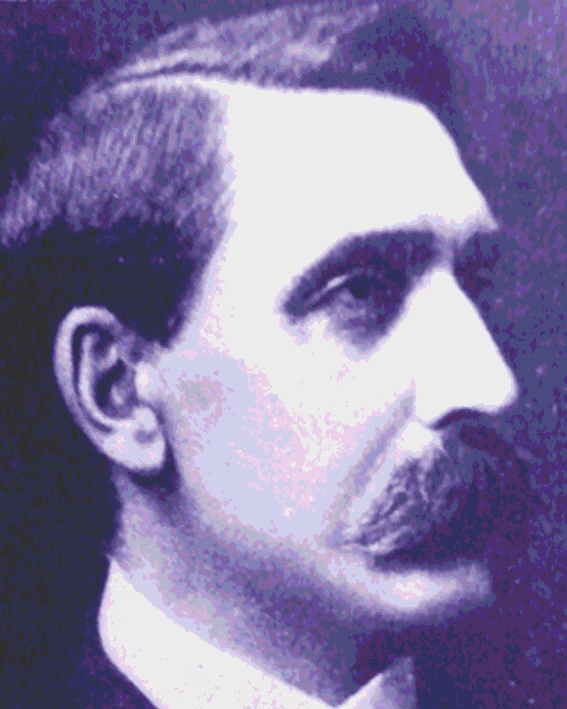 Sebastian Ziani de Ferranti (1864-1930)
Sebastian Pietro Innocenzo Adhemar Ziani de Ferranti was not an Italian count, but a Scouser. The son of a photographer and a concert pianist, he showed a genius for invention from an early age, being particularly interested in electricity. He designed street lighting using arc lights at 13, and three years later built the Ferranti Dynamo, which he patented. He started work at Siemens in Charlton, but already by 1882 had set up his own electrical innovation company. This was the era of the great showdown between Westinghouse’s Alternating Current and Edison’s Direct Current. In the face of Edison’s frankly shameful campaign for DC, Ferranti stood squarely behind the ultimately victorious AC, and consequently was engaged in 1887 to build the world’s first central power-station at Deptford. Ferranti became President of the Institution of Electrical Engineers, and a Fellow of the Royal Society late in life. The London Power Company posthumously named a ship after him.
 Horace Mills (1864-1941)
It may seem a C21 phenomenon, but transvestism was already well established in the earliest days of English theatre, and two cross-dressing archetypes were popular, even with children, by the Victorian age: the principal boy, usually played by a woman, and the pantomime dame, always played by a man. A famous example of the latter was Horace Mills from Hampshire. At 22, he co-wrote ‘Miss Esmerelda’, a successful Gaiety Theatre burlesque concerning the Hunchback of Notre Dame. He made a career around the country playing comedic parts, mostly male but including Widow Twankey in 1900. He then became particularly associated with the Prince’s Theatre in Bristol, performing as the pantomime dame in such standards as ‘Humpty Dumpty’, ‘Jack & the Beanstalk’, and ‘Mother Hubbard’ over the course of two decades. He had moved as a boy to Plumstead, his father being a colonel in the Ordnance Supply Board – which would have amused that keen ‘Monty Python’ cross-dresser, Graham Chapman.
 Claude Johnson (1864-1926)
Berkshire-born Johnson attended St Paul’s School. He was hired by Frederick Simms at 32 after mounting England’s first automobile exhibition, and became the RAC’s first secretary. A year after going into business with Charles Rolls in 1903, he discovered Henry Royce. Describing himself as the hyphen in Rolls-Royce, the ebullient ‘CJ’ kept it going after Rolls was killed and Royce increasingly withdrew. In 1916, Johnson built a bijou seaside home called Vita Villa at Kingsdown, not far from Royce in St Margaret’s Bay and his good friend Lord Northcliffe in Thanet. While cementing Rolls-Royce’s reputation as the world’s automotive non plus ultra as managing director, he pursued his passion for classical music, especially as a sponsor. At Kingsdown, he hosted such musical celebrities as Gustav Holst, Dame Nellie Melba, and the American pianist George Copeland, while his literary circle included Rudyard Kipling, Max Beerbohm, and JM Barrie. He died suddenly of pneumonia.
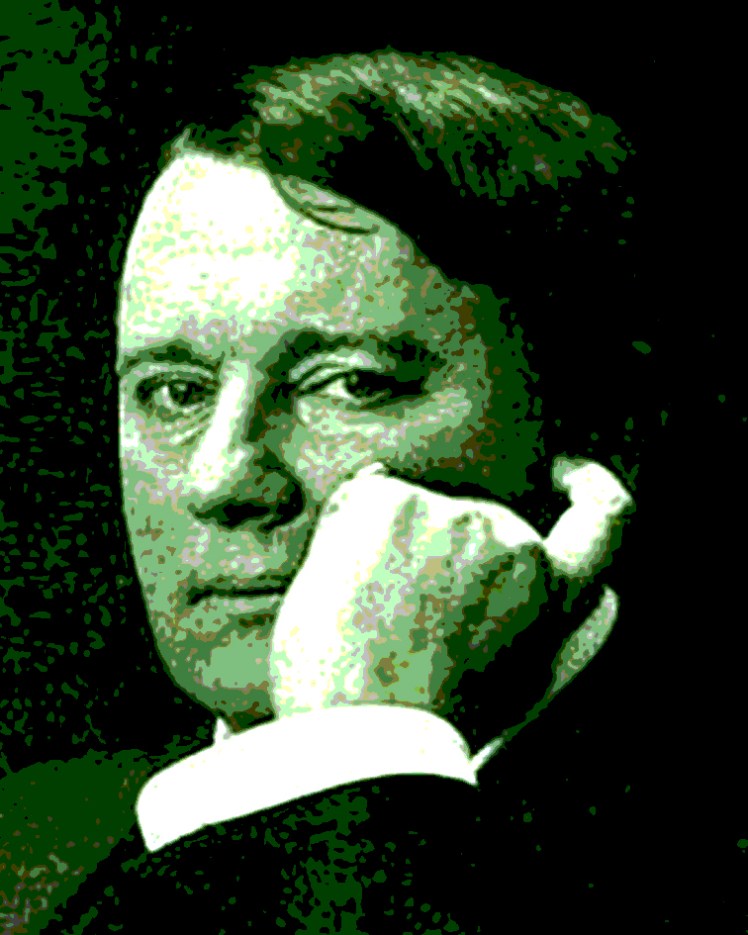 Lord Northcliffe (1865-1922)
Though he was born in Dublin, Alfred Harmsworth was the son of an English lawyer, and moved to England at two. He was not well educated, but knew what he liked: newspapers, and power. His brilliant idea was to open up the national press market by introducing the ‘Daily Mail’ for the middle classes and the ‘Daily Mirror’ for women. His stance was unapologetically populist. He grew circulation dramatically with a competition to win a pound a week for life. With the profits, he bought ‘The Observer’ and ‘The Times’, thereby also gaining control of the highbrow sector. During WW1, he became a kingmaker, siding with Lloyd George in the ‘Shell Crisis’ that brought down Asquith. So influential was he in building public morale that the Germans sent a warship to shell his home, Elmwood in St Peter’s, Broadstairs. Harmsworth was made 1st Viscount Northcliffe of St Peters in 1918 in recognition of his war efforts.
 Emmuska, Baroness Orczy (1865-1947)
Anyone who imagines that all the great swashbuckling heroes of literature were created by Dumas, Scott, or Stevenson needs to think again. ‘The Scarlet Pimpernel’ began life in 1903 as a stage play written by Baroness Orczy and her English husband. It proved such a success that, two years later, she turned it into a novel, which in turn became a series. It introduced the literary concept of an apparently effete noble who uses a secret identity for doing good, an idea that would ultimately give rise to the likes of Zorro and Batman. Sir Percy Blakeney’s mission was to save French aristocrats from the guillotine, leaving behind a pimpernel flower as a calling-card. The idea pointed to Orczy’s background: her noble family had fled Hungary when faced with a peasant uprising. Living in Monkton, then Bearsted, she remained a passionate believer in aristocracy, and the British Empire. During WW1, she even formed a women’s movement to recruit men for the British Army.
 Herbert Cole (1867-1930)
The Mancunian Herbert Cole was the son of a teacher. He went to Manchester Art College, and then designed stained-glass windows. He married Clara Gilbert, who shared his revolutionary views, and they collaborated on her suffragist projects after moving to London; indeed, he became a contributor to Sylvia Pankhurst’s ‘The Workers’ Dreadnought’. The two made themselves unpopular by vocally opposing resistance to Germany in WW1; and Cole then denounced HG Wells’s criticism of the Bolshevik Revolution, albeit that few idealistic artists foresaw what was coming next. His publishing work was highly influenced by the pre-Raphaelite Sir Edward Burne-Jones, with the same rich detail and coloration. So graphic were his illustrations for new editions of ‘Gulliver’s Travels’ (1900), ‘The Ingoldsby Legends’ (1903), and especially ‘A Child’s Book of Warriors’ (1912), that they epitomised the Edwardian fashion. With their paradoxically Wagnerian feel, they also paid sufficiently well for the radical Coles to reside with their maidservant in bucolic Eynsford.
 Edward Garnett (1868-1937)
Although he was born into a literary family in London, his father being a British Museum librarian, Edward Garnett lived mostly at Crockham Hill north of Edenbridge. He had only a basic education, but immersed himself in literature. He worked for three publishing houses, and consequently was acquainted with numerous famous authors. He put Joseph Conrad in touch with Ford Madox Ford, initiating a lasting association, and got to know two other local writers, Edward Thomas and Pyotr Kropotkin. He personally edited and expurgated his friend DH Lawrence’s third novel ‘Sons and Lovers’ for publication (1913), and helped TE Lawrence publish his work. Less judiciously, he turned down James Joyce‘s first effort ‘A Portrait of the Artist as a Young Man’ in 1915. His own play ‘The Breaking Point’, concerning an unmarried mother, was banned from performance, but he managed to publish it in 1907, back in the days when censorship was radicalism’s enemy, not its pet.
 Haldane Stewart (1868-1942)
The son of a barrister, Haldane Stewart was born in London and sang in the Magdalen College choir in Oxford; he would later return to Magdalen to study Classics. He became a music teacher, and spent over twenty years as music director at Tonbridge School. After WW1, he was appointed organist and choirmaster at Magdalen for nearly two decades. He also became a significant composer of religious choral works, one of which was performed on May Morning from Magdalen Tower. He even formed a string quartet with his wife and two children. His son Lorn, better known as Johnnie, became a household name in a different musical sphere: as the producer of BBC’s ‘Top of the Pops’ for its first decade. Stewart Senior was also a decent cricketer, who represented Kent as a batsman between 1892 and 1903. His best scores were 142 for Kent against MCC at Lord’s and a double century for Blackheath Cricket Club.
 Harold Harmsworth, 1st Viscount Rothermere (1868-1940)
Harmsworth was born of English and Irish parentage in London. Like his older brother Alfred, later Lord Northcliffe, he aspired to be a newspaper magnate. Having collaborated in 1888 on a ‘Tit Bits’ rip-off, they created the middle-class ‘Daily Mail’ in 1896. Harold bought Hemsted House in Benenden in 1912, rebuilt it more conservatively, and in 1924 sold off the estate. In 1914, he become Baron Rothermere, of Hemsted in the County of Kent, and purchased Northcliffe’s ‘Daily Mirror’. He grew it aggressively, and would additionally acquire the ‘Daily Mail’ after his brother’s death in 1922. An aviation fan who in 1906 had offered a £1,000 prize for the first cross-Channel flight, he served as Air Minister during WW1. Partly influenced by having lost two sons, he advocated appeasement of Hitler; but his active embrace of national socialism was doubtless inspired by his terror of Bolshevism. He died on holiday in Bermuda, leaving his remaining son Esmond to run the business.
 Frederick Theobald (1868-1930)
In today’s populist media culture, Surrey-born Cantabrigian Theobald would probably be known as Mr Mosquito. Interested in entomology since childhood, he became a lecturer at Wye College at 26, and remained there for the rest of his life, ultimately serving as vice-principal. After it was realised late in the C19 that mosquitoes were central to the transmission of malaria, Theobald took up the challenge of shedding scientific light on the phenomenon. He published his five-volume ‘A Monograph of the Culicidae, or Mosquitoes’ in his thirties and early forties, and wrote scores of papers analysing mosquito anatomy and behaviour. His work, invaluable to public health and economics, brought him international recognition, including awards from France, America, and Egypt. A Fellow of the Royal Entomological Society and the Society of Tropical Medicine & Hygiene, he also described numerous other insect species, and left a large aphid collection to the British Museum. He died and rests at Wye.
 Holman F Stephens (1868-1931)
The Pre-Raphaelite painter and art critic George Stephens was so delighted to have a son that he named him after his friend, William Holman Hunt. He must have been disappointed when the lad grew up not an artist but a railway nerd so enthusiastic that there was room for no other love in his life. After working for the Metropolitan Railway, young Stephens, born in Westminster, developed a passion for designing light railways, of which he was responsible for sixteen. Operating out of his office at Salford Terrace in Tonbridge, he developed the Hawkhurst branch line, the East Kent Railway, the Kent & East Sussex Railway, and the Sheppey Light Railway in Kent alone. He ran the Association of Light Railways, an influential independent counterweight to the major railway companies, and found time to serve for eight years as manager of the famous Festiniog Railway in Wales. His lifetime achievement is celebrated in a museum at Tenterden station.
 Brigadier-General Sir Gordon Guggisberg (1869-1930)
A Canadian, Guggisberg owed his unusual name to Swiss ancestry. He immigrated to England in 1879, and studied at the Royal Military Academy in Woolwich. He joined the Royal Engineers at 20, participating avidly in local football and cricket, and after serving in Singapore became an instructor at Woolwich, writing a history of the RMA in 1900 – the first of five books he authored. He was posted to Gold Coast (Ghana) in 1902 and Nigeria in 1910, with responsibility for surveying. He returned to Europe for the whole of WW1, serving at the Somme and finishing the war as a brigadier-general. Returning to Gold Coast as governor, he put his Christian beliefs to work by building infrastructure while practising humane treatment of Africans, including fair pay for their work. He took a great interest in education, arguing that equal outcomes could be achieved there by using the right tools. He fell sick, however, and died in Sussex.
 Marie Lloyd (1870-1922)
Considering that many C20 superstars are already fading into oblivion, it is remarkable that Marie Lloyd is still recalled nearly a century after her death. She came from Hoxton in London, being born Matilda Wood, and made her solo singing debut there at 15. She lived at New Cross whilst perfecting her craft on the stage between the ages of 17 and 23. After establishing a reputation as a boisterous entertainer, she left to go globetrotting, earning international popularity. Unlike today’s stars, her appeal did not depend on her looks but her irrepressible personality. She sang and danced with bravado, which mattered considering that the lyrics and her interpretation of them were risqué by the standards of the day. Meanwhile, she had a tumultuous private life, going through two divorces. As late as 1919, she enjoyed a hit with her best-remembered number, the singalong ‘My Old Man Said Follow The Van’.
 Admiral of the Fleet Sir Reginald Tyrwhitt (1870-1951)
A vicar’s son from Oxford, Tyrwhitt joined the Royal Navy as a cadet at 13. He ascended through the ranks while serving in the Mediterranean and North America. In WW1, having attained the rank of commodore, he took command of the powerful Harwich Striking Force, participating in the battles of Heligoland Bight and Dogger Bank, as well as the Cuxhaven, Zeebrugge, and Ostend raids. His success brought him international honours, including a knighthood and a Légion d’Honneur. Afterwards, he served back in the Med, in Scotland, and in China during interesting times. In 1930, he was appointed commander-in-chief of the Nore, and admiral of the fleet in 1934, just before his retirement. He was not too self-important to serve in the Home Guard in WW2, however, and eventually died at a nursing home in Sandhurst, Kent. His daughter, Brigadier Dame Mary Tyrwhitt, was the last director of the ATS and first director of the WRAC.
 Ernest Salmon (1871-1959)
Salmon from Surrey was a student of mycology, or fungi. In 1899, he joined Kew Gardens, and in 1906 became a reader, and later professor, at Wye College. By 1911, he was President of the British Mycological Society. His particular interest was crop diseases, especially flowery mildew. He turned his attention to hops, which being subject to various moulds and mildews experienced wide fluctuations in yields, so that overplanting was commonplace. In conjunction with East Malling Research Station, he embarked in 1917 on the world’s first programme of experimentation, crossing high-quality British strains with more resistant North American ones. By his reckoning, he grew over ten thousand varieties that he tested on various criteria. Of the many new strains he developed, the most successful was Brewer’s Gold, the precursor to most high-alpha (bitter) strains. Also a top tennis player who had reached the Wimbledon singles quarter-final, he lived at Wye, and died at a Folkestone nursing home.
 WH Davies (1871-1940)
Having lost his father early, William Henry Davies was raised by his grandparents in Monmouthshire. After quitting his apprenticeship, he became a tramp, several times crossing the Atlantic on cattle ships to exploit the ‘boodle’ system, whereby bums could get a bed in a cell without committing a crime. Then he lost a leg after falling under a train. He took to writing poetry, and in 1905 was discovered by a ‘Daily Mail’ journalist. The future war poet Edward Thomas found him a home near Sevenoaks, and the literati queued up to shake his hand. As DH Lawrence pointed out, his poetry was no more than schoolboy doggerel, yet it ran to several volumes. His magnum opus was his autobiography ‘The Diary of a Supertramp’, for which GB Shaw negotiated him a publishing deal. In his fifties, he married a young pregnant woman, and moved again briefly to Sevenoaks. The rock band Supertramp took their name from him.
 William Lygon, 7th Earl Beauchamp (1872-1938)
During the C19, Walmer Castle’s high security, seaside location, and delightful gardens made it a des. res. for the political elite. Traditionally the abode of the Lord Warden of the Cinque Ports, it was usually granted to a former senior minister. An exception in 1913 was Lord Beauchamp, a relatively minor politician whose main claim to fame was serving briefly as governor of New South Wales. Early in WW1, he hosted clandestine war-council meetings for the likes of Asquith, Kitchener, and Churchill. Twenty years later, the establishment was shocked to learn that he was a homosexual, and in the habit of throwing unspeakable parties there. Such an outing was so outlandish in that innocent age that his wife thought he stood accused of being a bugler. Unabashed, he exiled himself to Paris, where he conducted a lifestyle described by historian AL Rowse as “gay”. His daughters’ friend Evelyn Waugh may have based Lord Marchmain in ‘Brideshead Revisited’ on him.
 Dame Irene Vanbrugh (1872-1949)
Proof of the evanescence of fame is provided by Irene Vanbrugh, née Barnes, whose 50th anniversary on the stage was attended by Sir Noel Coward, Dame Edith Evans, and Queen Elizabeth; yet she’s now forgotten. Born in Devon, the daughter of a vicar, she followed her sister Violet into acting; it was Ellen Terry, a family friend, who recommended they adopt the stage name Vanbrugh. She studied acting at Sarah Thorne’s school at the Theatre Royal, Margate, making her debut there in ‘As You Like It’ in 1888. While touring Australia, she acquired impressive versatility, but particularly specialised in comedy. Tall, elegant, and pretty, she earned great popularity, and was renowned for playing Barrie and Pinero heroines. She appeared in three silent movies, and eleven talkies. She married actor Dion Boucicault, but had no offspring. A grande dame admired by the likes of Sir John Gielgud, she was still performing in her seventies.
 Sir Albert Howard (1873-1947)
A botanist through and through, Howard from Shropshire studied biological sciences at Cambridge, making a special study of plant pathology. He became a lecturer, including in the West Indies, and from 1903 to 1905 taught at Wye College. What changed his life was a government posting in 1905 to India, where he remained for two decades. Taking a particular interest in compost, he was greatly influenced by traditional Indian methods, which he developed into his so-called Indore Method. His ‘The Waste Products of Agriculture’ (1931) was the first of numerous books that helped establish what became known as organic farming. He remained an honest scientist, highly sceptical of the mystical claims of the German occultist Rudolf Steiner who had inspired the movement. He married Gabrielle Matthaei, a fellow botanist and his agricultural collaborator, and after her death in 1930 wed her younger sister, Louise; neither had any children. Knighted in 1934, he died at Greenwich.
 Ford Madox Ford (1873-1939)
Joseph Leopold Ford Hermann Madox Hueffer was born in Surrey, the half-German, half-English grandson of Pre-Raphaelite painter Ford Madox Brown. He attended the Pretorius school in Folkestone and, after marrying Elsie Martindale in 1894, came to live on Romney Marsh. In 1898 he met Joseph Conrad, whom he introduced to Aldington, and collaborated with him on his own novels ‘The Inheritors’ and ‘Romance’. During WW1 he composed propaganda for the Government, but also managed to survive the Somme. His most notable achievements were the novel ‘The Good Soldier’ and his tetralogy ‘Parade’s End’, which particularly studied marriage and adultery. Hueffer was also a significant literary critic. He was friends with James Joyce and Ezra Pound, and is supposed to have discovered DH Lawrence. He changed his name to Ford Madox Ford in 1919 because of anti-German sentiment. Anthony Burgess thought him the best C20 British novelist, although that opinion would not be widely shared today.
 Sir Winston Churchill (1874-1965)
Churchill’s life was sufficiently eventful to fill volumes. Born at Blenheim Palace, he became a cavalry officer at 20, and fought at Omdurman. In 1899, while covering the Boer War as a journalist, he escaped from a PoW camp. He became an MP in 1900, Home Secretary in 1910, and First Lord of the Admiralty in 1911; his career was almost shattered by the disastrous Gallipoli campaign he masterminded. Between the Wars, he remained a voice in the wilderness arguing for rearmament; but, following Chamberlain’s failure, he became the obvious choice for Prime Minister. He proved an inspired and inspirational war leader, far cannier than his reckless opponent. His eloquence made a crucial difference in winning over the Americans. Though surprisingly voted out in 1945, he returned to power five years later. Having written copiously about English-speaking history, he won the Nobel Prize for Literature in 1953. Through nearly half his life, he resided at his beloved Chartwell.
 Sir Ernest Shackleton (1874-1922)
Shackleton’s Anglo-Irish family left for Kent when he was ten and settled at Sydenham. After going to sea, he joined Scott’s 1901 expedition to Antarctica. He was picked to join Scott and Wilson on the march that progressed further south than ever before. However, Scott sent him home sick, possibly out of jealousy. Shackleton responded with his own expedition in 1907, when he got much closer: just 112 miles from the South Pole. He was knighted; but his ambition of reaching the Pole first was dashed by Amundsen in 1912. Two years later, Shackleton undertook the doomed Imperial Trans-Antarctic Expedition. The ‘Endurance’ got iced in, and then sank. He was obliged to sail 800 miles in a lifeboat through stormy seas to South Georgia, then returned to collect the rest of the crew. After WW1, the great hero attempted one more expedition, but died en route; and so ended the Heroic Age of polar exploration.
 W Somerset Maugham (1874-1965)
Maugham’s early life sounds like a Dickens plot. His wealthy father was advisor to the British Embassy in Paris, where Maugham was born. He was eight when his mother died, and his father followed two years later. He went to live with his uncle, the cold, unkind Vicar of Whitstable. He disliked attending the Kings School, Canterbury, and left at 16. Turning to writing, he immediately enjoyed success. His first novel, ‘Liza of Lambeth’, was a best seller in 1897, and numerous other lauded plays and novels followed quickly. His greatest work was ‘Of Human Bondage’ in 1915, an autobiographical novel dealing with the pursuit of freedom from earthly passions. In WW1, he became a special agent in Russia, and might have foiled the Revolution, given more time. Around then, he wed a divorcee he had got pregnant while she was still married. Thereafter his romantic life was mostly connected with other men. Maugham’s ashes were scattered at King’s.
 Aleister Crowley (1875-1947)
Rather incongruously, the character who revelled in being called the world’s most wicked man was a former pupil of Tonbridge School. Crowley, whose real first name was Edward, came from the Midlands, but might have been from outer space. A keen mountaineer, he led a failed expedition up Kangchenjunga in 1905, but refused to sympathise with four men who died. He had already invented a religion called Thelema, a magical cult of which he was the Prophet, having been handed ‘The Book of the Law’ by the unearthly ‘Aiwass’; its central credo was “Do what thou wilt”. What particularly outraged the media was Crowley’s approach to drugs and sex, which amounted to literally anything goes. Adding to the Crowley mystique is the likelihood that he was recruited by MI6. It’s hard to say whether his scriptures, which filled countless volumes, were the product of supernatural insight, a diseased imagination, an epic scam, or a spy’s elaborate cover.
 Charles Hamilton (1876-1961)
Hamilton, from Ealing, holds the distinction of having written more than a million words of fiction whilst remaining largely unknown by name. The reason is that he used many pen names, one of which was Frank Richards, the creator of Billy Bunter. He started contributing to the ‘Gem’ comic in 1907 as Martin Clifford, and from 1908 additionally contributed tales of Greyfriars School to ‘The Magnet’. This he carried on doing until 1940, when publication ceased; but, after the War, he began writing the Billy Bunter books. Although George Orwell acknowledged Bunter as a “first-rate” character, he didn’t like the snobby public-school ethos. Hamilton justly replied that the books’ moral message concerned the importance of honesty and consideration, qualities as rare as ever today; and he did pointedly introduce sympathetic Asian and Jewish characters, albeit not African ones. He moved to Kingsgate in 1926, and remained there with his housekeeper until his death.
 Edward Thomas (1878-1917)
The son of a Welsh couple, Thomas was born in Lambeth, Surrey and attended a local grammar school, St Paul’s School, and Oxford. He turned to writing, his work including literary criticism and a novel. After marrying at 21 and moving to Elses Farm near Sevenoaks in 1905, he befriended the one-legged poet WH Davies, found him accommodation nearby, nurtured his career, and bought him a wooden leg. His legendary indecision while out walking inspired another friend, the American poet Robert Frost, to write ‘The Road Not Taken’, which inadvertently influenced Thomas to sign up in 1916. He had not long been in France when he was shot dead at Arras. His ‘Six Poems’ had only recently appeared under the name Edward Eastaway, but others appeared posthumously. Though classified as a War Poet, he wrote relatively little about WW1, and his name is now less familiar than the rural railway station that inspired his first poem, ‘Adlestrop’ (1914).
 Lord Dunsany, 18th Baron of Dunsany (1878-1957)
Although Edward John Moreton Drax Plunkett was born in London, inherited Dunsany Castle in Ireland, and died in Dublin, he largely grew up at Dunstall Priory in Shoreham, Kent. An Old Etonian officer in the Coldstream Guards, he was wounded in the 1916 Irish uprising, but recovered to fight on the Western Front and inaugurate Shoreham’s Memorial Cross, which he declared a sacred outpost against London’s sprawling advance. The Irish pistol-shooting champion, he also played chess for Sevenoaks and Kent, drew with Capablanca, and invented ‘Dunsany’s chess’, the origin of horde chess. Most notably, however, he was a prolific writer, best known for his fantasy novel ‘The King of Elfland’s Daughter’ (1924) that two Steeleye Span members later turned into a concept album; his polished, imaginative writing influenced the likes of HP Lovecraft, JRR Tolkien, and Arthur C Clarke. Incidentally a good horseman and cricketer, he lived full time in Shoreham after WW2, and lies buried there.
 Katie Johnson (1878-1957)
Bessie ‘Katie’ Johnson was born near Brighton, Sussex, and at 15 became a stage actress of the jobbing variety. After marrying a Geordie called Frank Bayly in 1908 and raising two sons, she eventually broke into British movies in 1932. Although she played several dozen film and TV roles, they tended to be minor and were often uncredited; her part as a maid in ‘Gaslight’ (1940) lasted just seconds. Finally, aged 76, she got a huge break, being cast as Mrs Wilberforce, the quintessential sweet old lady who outsmarts a gang of violent robbers in the classic Ealing comedy ‘The Ladykillers’. Even performing alongside superstars Alec Guinness, Peter Sellers, and Herbert Lom, she acquitted herself outstandingly, and actually won the Best British Actress BAFTA. Sadly, there was time for only one more movie appearance before she died at her home, West Bank in Elham, the former school once attended by Audrey Hepburn.
 Nancy Astor, Viscountess Astor (1879-1964)
Nancy Langhorne was the daughter of a Virginian businessman who had made a second fortune after losing his first. She married at 18, but divorced her husband after just four years. She immigrated to England, which she fell in love with. Still only 27, she married Waldorf Astor, one of the world’s richest men. Already known for her beauty, she soon won popularity for her forward wit, backed by moral fibre. These qualities set her in good stead when she stood for Parliament in 1919 and entered history as the first woman to take her seat in the House of Commons, succeeding her husband as Conservative MP for Plymouth Sutton. She held the seat for 25 years, speaking up for temperance and women’s rights, but was persuaded to stand down in 1945 because of her fascist sympathies. She and her husband built ‘Rest Harrow’, a luxurious second home on the Sandwich seafront, as a getaway from Cliveden.
 Anna Essinger (1879-1960)
As an overseas student in Wisconsin, Essinger encountered Quaker beliefs that changed her outlook. Back in southern Germany, she opened a progressive school for Jewish children from 1926. When Hitler came to power in 1933, they were evidently in danger. She identified a new home for the school, namely Bunce Court at Otterden. Initially just 13 pupils were taken, ostensibly to take exams. She then arranged for the rest to follow in three groups by different routes. All 53 made it. Kentish locals reacted suspiciously at first, but she assimilated children of other faiths, and the advent of WW2 justified the project. She also organised a camp in Essex that received 10,000 Jewish children in 1939. The experience of her school’s Jewish contingent was harrowing on account of chronic homesickness and, later, the mass murder of their loved ones; but they were at least safe, thanks to Essinger. The school broke up in 1948, having housed 900 children.
 EM Forster (1879-1970)
Forster’s life was in some ways an echo of Somerset Maugham’s. He also had a privileged upbringing, but suffered childhood misfortune as an infant when his father died. His Anglo-Irish mother took him from London to Hertfordshire. He was happy until he was sent to Tonbridge School, where he was bullied as a misfit. He turned out to be a homosexual in an age when the censoriousness of the church was considerable: his autobiographical novel ‘Maurice’ was only published posthumously. Like Maugham, he took his revenge on the English middle-class through literature, only more so. His themes seldom varied much from an assault on bourgeois narrow-mindedness, usually expressed as a permutation of the idea that other nations do feelings better. He was true to his own example, losing his virginity at 38 to a soldier in Cairo. Forster was an expert storyteller who produced several fine novels, especially ‘A Passage to India’, although strangely none after 1924.
 Josiah Stamp, 1st Baron Stamp (1880-1941)
A Londoner by birth, Josiah Stamp went to school in Goudhurst. He left at 16 to join the Inland Revenue, and while progressing with his career took a first-class degree in Economics at London University at 30. His thesis ‘British Incomes and Property’ became a standard reference work, and he was considered the leading British authority on taxation. Within a decade, he changed careers in midcourse, entering business with Nobel Industries, and in 1925 additionally became chairman of the London, Midland & Scottish Railway, and lifelong colonel of the Royal Engineers’ Railway & Transport Corps. In 1935, he co-founded the Anglo-German Fellowship, attended the Nazi Party Congress, and met Adolf Hitler. That same year, he and his wife moved to Shortlands, Bromley, where they were residing when WW2 broke out. They opted not to leave on account of the blitz, and were ironically killed by a direct hit by a German bomb. They are buried at Beckenham Cemetery.
 Sir Maurice Bonham-Carter (1880-1960)
Maurice Bonham-Carter followed the classic career path of the quintessential English nob. He was born in Kensington, Middlesex, lived in Bromley as a boy, attended Westminster College and Oxford, studied law, and became a civil servant. Not only that, but he was principal private secretary to Herbert Asquith during the latter’s years as Liberal prime minister, accompanied him during WW1 to Belgium, Italy, and Ireland, and was knighted in 1916. He even went so far as to marry the PM’s daughter Violet. The two were a rare example of a married couple who have both been ennobled separately, and when their son Mark and granddaughter Jane were also awarded titles, the Bonham-Carters became the first family to boast three successive generations of peers created under the Life Peerages Act 1958. Another grandchild is the actress Helena Bonham Carter. ‘Bongie’ acquired numerous business interests, and played a first-class cricket match for Kent, having kept wicket many times for Oxford University.
 William Temple, Archbishop of Canterbury (1881-1944)
As a clergyman, William Temple from Devon enjoyed as appropriate a surname as he did a heritage, his father being the Bishop of Exeter who 15 years later would become the Archbishop of Canterbury. He went to Rugby and Oxford, where he was President of the Oxford Union and obtained a double first in Classics. He then lectured at Oxford before taking the cloth in 1908. Before WW1, he was headmaster of Repton, but became the Bishop of Manchester in 1921, Archbishop of York in 1929, and Archbishop of Canterbury in 1942. He died at his home in Westgate-on-Sea even before WW2 was over; yet, though his tenure had been brief, he had made his mark. Noted for his learning, his ability, and his passionate concern about social problems and for ecumenical tolerance, he received posthumous tributes from the head of the Catholic Church in Britain, the Chief Rabbi, and even President Roosevelt.
 Air Chief Marshall Hugh Dowding, 1st Baron Dowding (1882-1970)
Britain owes much to the fact that Dowding was an archetypical dour Scot. He attended the Royal Military Academy in Woolwich, was a fighter pilot in WW1, and climbed the RAF career ladder. Come 1940, it fell to him to marshal Britain’s defences against superior Luftwaffe might. Dowding’s conservative approach raised hackles, but worked. Germany’s advantage in equipment and men was so overwhelming, he insisted, that the RAF’s few resources must be treasured. During the Dunkirk evacuation, he withheld aerial support for fear that Britain be left defenceless. It remained a highly unpopular decision, but the right one strategically. In the Battle of Britain, he played his few cards so effectively that Hitler was forced to abandon the invasion. When the Blitz took hold and hysteria mounted, however, Dowding was unceremoniously sacked. He never got over his bitterness. He retired for the rest of his life to Tunbridge Wells, where he died.
 Dame Sybil Thorndike (1882-1976)
Although born in Lincolnshire, Thorndike moved to Kent at the age of two, when her father was made a canon at Rochester Cathedral. She attended Rochester Grammar School for Girls, where there is now a health centre named after her. Her brother Russell, who later became better known as a writer, introduced her to acting. She toured America at 21, and excelled at Shakespeare. Her career was given a major boost in 1908 when she was spotted by GB Shaw, who wrote the role of Saint Joan especially for her. That same year she propitiously wed actor-producer Lewis Casson at Aylesford; the two worked together professionally, were separately ennobled, and remained married for 61 years. At 39, she graduated to silent movies, and continued to be filmed for 40 years. The most singular thing about her career, however, is simply its longevity. Aside from Saint Joan, she is barely remembered today for any standout role.
 Richard Middleton (1882-1911)
Having been born in Middlesex, Middleton attended Cranbrook School. He started working in a London insurance office, which frustrated him so much that he became a C19 dropout. He joined the New Bohemians society in London, and helped edit ‘Vanity Fair’. Having confided to colleague Frank Harris that he had poetic aspirations, he managed to get published; but it was for his curious ghost stories that he is most noted, particularly ‘The Ghost Ship’. By the time it was published in 1912 in a collection of his tales, however, he was already dead. His sensitive temperament inclined him to acute depression, for which he was prescribed chloroform. In 1911, he used it to commit suicide in Brussels. By that time, he had already been an influence on the life of Raymond Chandler, who decided after meeting him to put off a writing career on the grounds that Middleton had failed to enjoy commercial success despite possessing greatly superior talent.
 Admiral Sir Bertram Ramsay (1883-1945)
Bertie Ramsay, born at Hampton Court, was a general’s son and a future general’s brother. He entered the Royal Navy at 15, and in WW1 joined the Dover Patrol tasked with interdicting German access to the Channel; he was appointed captain of the destroyer HMS Broke in 1916. He retired in 1938, but Churchill coaxed him back to the Dover Patrol a year later, operating from Dover’s secret tunnels. He not only master-minded the Dunkirk evacuation, but was also naval commander-in-chief for the Normandy invasion. Though the latter’s success is normally attributed to Allied fighting skills, it owed more to the unprecedentedly meticulous preparations by Admiral Ramsay and his army oppo General Morgan. He also diplomatically defused a row between Churchill and George VI over who should accompany the landings, by telling both to stay at home. Ramsay was killed in a plane crash during the conclusive Battle of the Bulge. His statue stands at Dover Castle.
 George Bell, Bishop of Chichester (1883-1958)
A vicar’s son from Hampshire, Bell went to Westminster School and Oxford, then pursued international ecumenical causes before becoming dean at Canterbury Cathedral in 1925. He created the Canterbury Festival in 1928, even commissioning Holst and Masefield’s collaboration ‘The Coming of Christ’ and TS Eliot’s ‘Murder in the Cathedral’. In the 1930s, now Bishop of Chichester for life, he involved himself in trade unionism, becoming known as Brother Bell. He welcomed Gandhi at Canterbury, and with his friend Dietrich Bonhoeffer vociferously espoused anti-Nazism and solidarity with persecuted Jews. During WW2, he made himself unpopular, especially with Churchill, by castigating Allied bombing of German cities, and exhorted Eden to pursue peace with non-Nazis, for which Noel Coward satirically eviscerated him. Despite his energetic cosmopolitanism, the Church uncritically accepted claims of child abuse against him in 2015. Multiple enquiries declared them unsubstantiated, eventually forcing Archbishop Welby into a humiliating climbdown and an (unfulfilled) promise to erect his statue outside the cathedral.
 John Moore-Brabazon, 1st Baron Brabazon of Tara (1884-1964)
In later life, John Moore-Brabazon looked and sounded the typical civil servant, yet was anything but. Born in London, he attended Harrow and Cambridge, working in his vacation for Charles Rolls. His first job was in the French automotive industry. He took up motor racing, and won the Circuit des Ardennes at 23. Progressing to new-fangled aeroplanes, in 1908 he became the first Briton to fly, and in 1909 at Shellness made the first powered flight by a Briton in the UK. Though his wife discouraged his flying after Rolls’ fatal crash, he worked in aerial surveillance during WW1, advancing to Lieutenant-Colonel and winning the Military Cross. He entered politics as MP for Chatham, and during WW2 was Minister of Aircraft Production. He later headed up Britain’s renascent aeronautical industry, noted for the revolutionary Comet airliner. He captained St Andrews Golf Club, and even won a trophy at 71 at the Cresta Run. Appropriately, the largest ever British airliner was named the Brabazon.
 Dudley Aman, 1st Baron Marley (1884-1952)
Aman from Surrey was educated at Marlborough College and the Royal Naval College at Woolwich before joining the Royal Marines Artillery at 17. He served with distinction in WW1 as a major, participating notably in the 2nd battle of Ypres. He then made repeated attempts to enter the House of Commons as a Labour candidate, standing unsuccessfully for Thanet once and Faversham twice. Nevertheless, he was popular with prime minister Ramsay MacDonald, who by elevating him to the peerage got him into government via the House of Lords. He became particularly noted for his involvement with the Jewish Autonomous Oblast in Siberia, and helped flag the plight of European Jews internationally by writing the introduction to the 1933 English-language edition of ‘The Brown Book of the Hitler Terror’, which eccentrically blamed the Reichstag Fire on a cabal of Nazi homosexuals. His widow Octable, a Liberal MP’s daughter, survived him by 17 years.
 Nawab Mohammad Ismail Khan (1884-1958)
During the Raj, it was customary to offer well-to-do Indians an education at British public schools and Oxbridge to equip them for imperial administration. Old Tonbridgian Khan, a wealthy nawab’s son, exemplified the policy’s counter-productive tendency. Back home after Cambridge, he embraced the Khilafat Movement to recruit pan-Islamic support for Turkey’s efforts to evade repercussions for its Axis affiliation in WW1. The movement collapsed when Atatürk imposed his secularist, nationalist agenda, so Khan turned to domestic Islamism, and the pursuit of an independent Islamic state in the Sub-Continent. His time eventually came following Independence in 1947, when the Pakistan Movement successfully exacted Partition, in defiance of the wishes of Hindus, Sikhs, Buddhists, and Britain’s Labour government, not to mention many Muslims. So were born East and West Pakistan, with Khan considered one of the founding fathers, though not to blame for the horrific bloodshed that followed.
 Clementine Churchill, Baroness Spencer-Churchill (1885-1977)
It is no wonder that Clementine Hozier from London was Churchill’s darling. She stood steadfastly behind him, for better or for worse, from the time of their marriage in 1908 to his death in 1965. Her parentage is unknown, her mother having had several lovers, but it wasn’t her officially accredited father Sir Henry Hozier, who was said to be impotent. She met Churchill at 19, and impressed him with both looks and intelligence. Married at Westminster, they had five children, four of whom survived. She made herself useful running canteens in WW1 and organising Red Cross support for Russia in WW2, which won her a Soviet medal. Having lived at Westerham since 1922, she was created Baroness Spencer-Churchill of Chartwell, in the County of Kent after his death in 1965. Having outlived three of her offspring and had to sell some her husband’s paintings to make ends meet, she was buried with Churchill near his birthplace, Blenheim Palace.
 Roland Pertwee (1885-1963)
The best word to describe Roland Pertwee was ‘inveterate’. He was born in Hove, Sussex, and ended his days at Sandhurst, Kent, living in between in London, Paris, and Hollywood. He started writing drama in 1914 and, apart from one year of War service from which he was invalided out, he worked continuously as a playwright and screenplay writer for 40 years. He also appeared as an actor in ten movies in three decades, and directed one. Though prolific and professional, he produced little that is remembered today, but did leave behind a drama dynasty that included his younger son Jon – the third Doctor Who – and grandson Sean. With his elder son Michael, he also co-write the first-ever British TV soap, the BBC’s ‘The Grove Family’ (1954-7); when he asked for a break, the BBC haughtily scrapped it, so he retired. The family name, incidentally, is said to be a corruption of a Huguenot surname, Perthuis.
 Pauline Chase (1885-1962)
Convent-educated Pauline Bliss from Washington DC came to the attention of impresario Charles Frohman as a teenage actress in New York. He sent her to perform in London at 15, and in 1904 cast her in the first stage production of ‘Peter Pan’ at the Duke of York’s Theatre. Two years later, as understudy, she assumed the lead role and made it her own, appearing over 1,400 times before WW1. At 21, she was baptised into the Church of England, adopting the additional names Ellen and Matthew after her godparents Ellen Terry and James Matthew Barrie. A renowned beauty, she was said to be Captain Robert Falcon Scott’s lover, but after his death in 1912 married a banker. She was commonly believed to have modelled for the nude statue in Marlow, Bucks erected in memory of Frohman, who went down with the Lusitania in 1915. Having moved to Tunbridge Wells before WW2, she and her husband both died there.
 Sir Hughe Knatchbull-Hugessen (1886-1971)
As the Chelsea-born grandson of the 9th Baronet of Mersham Hatch and an alumnus of Eton and Oxford, ‘Snatch’ Knatchbull-Hugessen must have anticipated that a career in the Foreign Office would be tip-top. All was fine till 1937, when he was at the centre of a major diplomatic incident while posted to China. His ambassadorial car was strafed by a Japanese fighter plane, and he barely survived his wounds. On recovering, he learned he’d earned the posting from hell: to Istanbul in neutral Turkey, where his German counterpart was none other than Franz von Papen, the Prussian ex-Chancellor whom President Hindenburg had even thought capable of restraining Hitler. Knatchbull-Hugessen was outfoxed, his Albanian valet repeatedly stealing state secrets from his safe to sell to the enemy – a scandal recorded in the 1952 movie ‘5 Fingers’. Fortunately, some were so crucial that German intelligence assumed they’d been planted. ‘Snatch’ must have been overjoyed to retire to his home at Bridge.
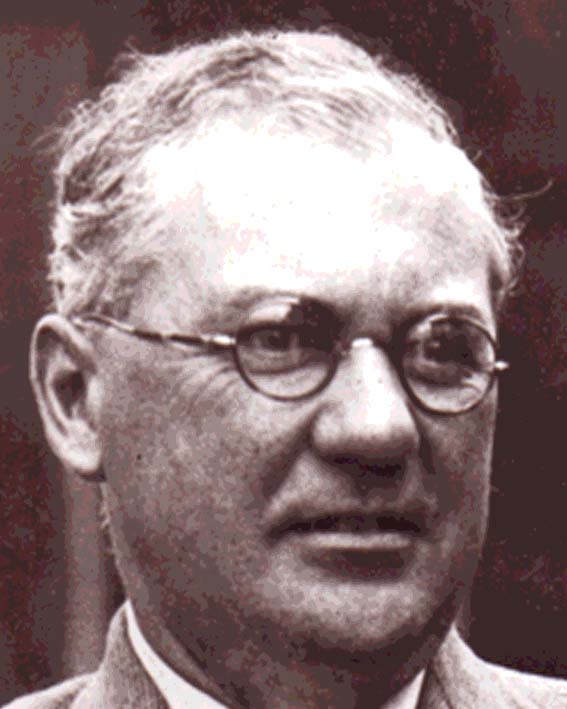 Sir Ronald Hatton (1886-1965)
Having won a meagre fourth-class degree in History at Oxford, Hatton, a barrister’s son from Middlesex, went in 1912 to study Agriculture at Wye College, working also as a farm labourer. He obviously enjoyed it, because he published a book in 1913 called ‘Folk of the Furrow’ under his pen-name Christopher Holdenby. This perhaps helped him land the post of acting director at the new East Malling Research Station in 1914, after the incumbent went to war. He put down roots in the area, marrying an Ashford girl and settling in Benenden. Confirmed in his position in 1918, he remained for three decades, and was able not only to establish EMR’s reputation internationally, but also to complete his work on the ‘Malling Series’ of fruit rootstock classifications, later extended collaboratively into the Malling-Merton apple series. A fellow of the Royal Society, he was knighted in 1949. He died at home and was buried at East Malling.
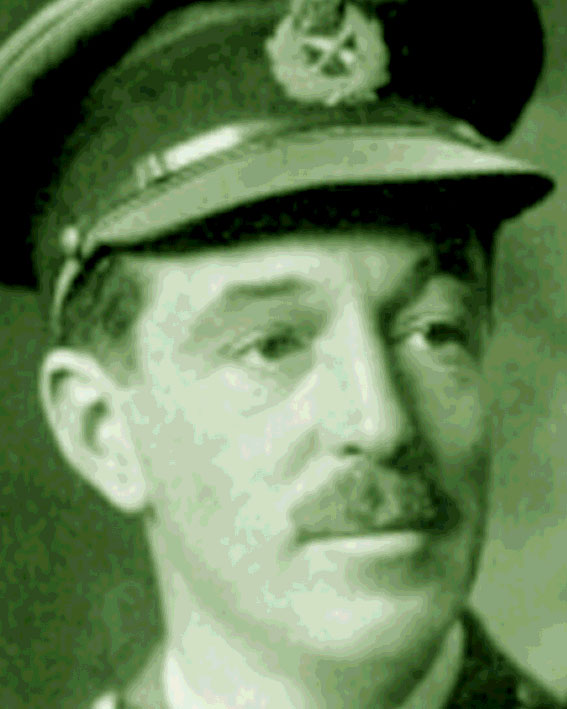 Air Vice-Marshal Amyas Borton (1886-1969)
Although his older brother Arthur won more glory with his Victoria Cross, Amyas ‘Biffy’ Borton probably had a more productive military career overall. Born into an army family in the far North of England, he first joined the Black Watch, but took up flying just in time for WW1. He served as a Royal Flying Corps pilot in France, where he was accredited with coining the slang ‘archie’ for anti-aircraft fire when he recited the music-hall number ‘Archibald, Certainly Not!’ while in combat. After recovering from being shot in the head, he was appointed commander of the Palestine Brigade, which decisively curtailed Ottoman influence in the Middle East in 1918. He subsequently held increasingly senior RAF posts until, having won a number of awards, he retired at 46 with the rank of air vice-marshal. Having once been turned down by Agatha Christie, he lived with his wife Muriel at the ancestral family home at Hunton until his death.
 Peter Russell (1886-1966)
Thomas Russell appears to have cast something of a veil over his background, but it seems that he was born in Norfolk and became a farmhand or possibly horse-rancher in Canada, and a rubber planter in Malaya. Back in London in the 1930s, he resumed a career in fashion he had commenced before WW1. Setting up in a Mayfair store as Peter Russell, and soon progressing to a grander one in Chandos Place, he specialised in the elegant, flowing, figure-hugging gowns beloved of fashionable women in the pre-WW2 era. For a decade or two he was a big name in fashion, and co-founder of the Incorporated Society of London Fashion Designers. That is not to say that he was as urbane as say, Hardy Amies, being not only voluble but also known for a macho manner and brusque temperament that at times cost him customers. In 1953, he sold up to Michael Donellan, and died at Folkestone.
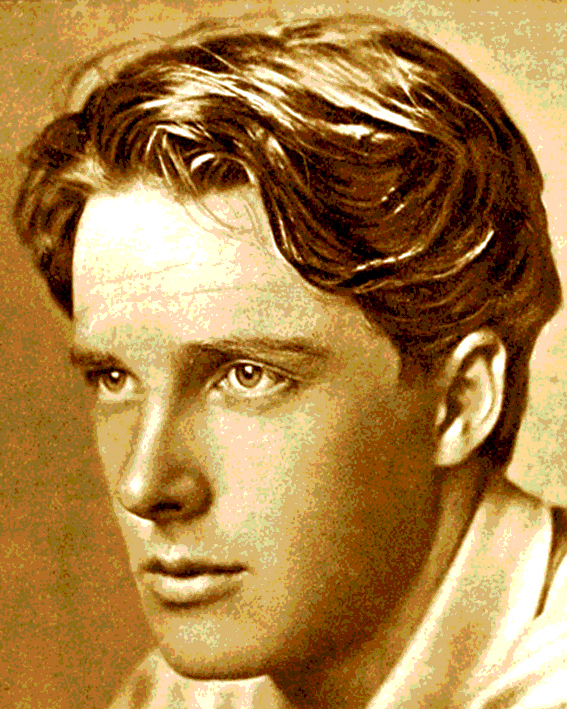 Rupert Brooke (1887-1915)
One of the foremost War Poets, Brooke grew up at Rugby School, the son of a schoolmaster and matron. By the time he was at Cambridge, he had many admirers of both sexes, not only because of his nascent poetic talent, but also his good looks; an early foray into Kent probably produced his first sexual encounter, at Swanley. A keen traveller, he never settled down before WW1 arrived. He stayed at Betteshanger Park in 1914 before embarking for France, and again a few months later. Although he was already producing well-crafted poetry before the war, he is best remembered for ‘The Soldier’ (1914), a uniquely affecting comment on what he was fighting for. In 1915, he was sent to Gallipoli, but fell sick en route, and while recuperating suffered an insect bite that turned septic and killed him. He was hurriedly buried on Skyros, in some corner of a foreign field that is for ever England.
 Sir Barnes Wallis (1887-1979)
In the ‘Dambusters’ movie of 1955, Sir Michael Redgrave depicted Barnes Wallace as the classic British scientist of the era: boyishly enthusiastic, thoroughly resourceful, and effortlessly brilliant. He wasn’t far wrong. Wallis, born in Derbyshire, went to school at Haberdashers’ Aske’s in New Cross, and started work in Blackheath. He got a job at Vickers as an airship designer, creating the R100. He moved onto aeroplanes, notably introducing his ‘geodetic’ structure to the Wellington bomber. In 1942, he devised the idea of a bouncing bomb that would enable the RAF to attack three major dams in Germany. Despite all the technical and operational difficulties, the mission was a success; or so it appeared. The truth is that 53 airmen were killed, to Wallis’s lasting regret, and the damage was soon made good. The political and propaganda benefit was nevertheless enormous. There is now a memorial to Wallis at Herne Bay, not far from the first testing-ground at Reculver.
 Field Marshall Bernard Montgomery, 1st Viscount Montgomery of Alamein (1887-1976)
Bernard Montgomery was born in Surrey, attended the King’s School, Canterbury and Sandhurst, and survived being shot in the chest by a sniper in WW1. He was a senior commander when WW2 started. Taking charge of South-Eastern Command, he was stationed at Stede Court, Harrietsham. In 1942 he was posted to North Africa, leading the 8th Army to victory over Rommel at El Alamein. He next played a major role in the invasion of Sicily and Italy before serving as Commander-in-Chief of ground forces during the Normandy invasion. In 1945, he accepted the surrender of the German forces in the North. A pious vegetarian teetotaller, ‘Monty’ might still be a national hero, but for the fact that he was insufferably vain and divisive. He opined prejudicially on subjects from apartheid and Chairman Mao (pro) to homosexuality and Indian soldiers (con). He continued to offend former colleagues after WW2, even savaging Eisenhower. Churchill accurately branded him “unbeatable but unbearable”.
 Boris Karloff (1887-1969)
William Pratt’s father was an Anglo-Indian civil servant. When both his well-to-do parents died young, the boy was raised by older siblings: first in Surrey, then Forest Hill. He had a private education and went to King’s College London, but unlike his high-flying brothers became a drifter. In America, he undertook years of manual work before turning to Hollywood in 1919, despite a conspicuous lisp. His selling-point, underscored by his exotic stage-name Boris Karloff, was a dark complexion that made him a shoo-in for Middle Eastern and Subcontinental parts. Not until his 82nd role did his massive breakthrough arrive, playing the iconic misunderstood monster in ‘Frankenstein’ (1931). Despite chronic arthritic pain, he racked up another 92 movie parts, including two Frankenstein sequels. His many TV appearances included an award-winning voiceover in ‘How the Grinch Stole Christmas!’ (1966). His six marriages yielded just one child, but two Hollywood sidewalk stars commemorate him, as does Karloff Way at Wainscott.
 Dame Edith Evans (1888-1976)
Of the countless comic performances in movies over the decades, one of the best has to be Edith Evans’s Lady Bracknell in the 1952 production of ‘The Importance of Being Earnest’. There cannot have been a funnier depiction of the sort of woman who would “ring the bell and tell you to put a lump of coal on the fire”, as Evans put it. She even managed to squeeze five syllables out of the word ‘handbag’. Ironically, at the start of her career, she had been faulted by one critic for her diction. She was however the consummate actress throughout her long career, even without good looks. One reason was her honesty: she declined for example to play characters whose malign motives she couldn’t identify with. Hollywood belatedly recognised her genius by nominating her three times for Oscars in her seventies. Evans lived at Washenden Manor in Biddenden and, from 1955, Gatehouse in Kilndown, which was where she died.
 Raymond Chandler (1888-1959)
Chandler was born in Chicago, but his family moved to England when he was seven for the benefit of his education. Initially residing in Upper Norwood and later Forest Hill, he attended Dulwich College, but having failed to make it as a journalist returned to the USA in 1912. He nevertheless served in the Canadian army and RAF during WW1. Fired for misconduct from his job as an oil executive in 1932, he took up fiction-writing; the first of his many stories, ‘Blackmailers Don’t Shoot’, was soon published in a pulp magazine. His massive breakthrough came in 1939 with ‘The Big Sleep’, featuring the quintessential hard-living American sleuth Philip Marlowe, which in 1946 became a classic film noir starring Bogart & Bacall. By then he had already written three more novels out of his eventual total of seven; all but one became movies. A heavy drinker and philanderer, he attempted suicide in 1955 after his wife’s death.
 John Logie Baird (1888-1946)
It is debatable whether John Baird invented television, several others having made contributions along the way; but he was definitely the first to show it in action publicly. Three years after performing a private test from Guildhall Street to Sandgate Road in Folkestone, he made his famous demonstration at 22 Frith Street, Soho on January 26th, 1926. Because his first equipment was too crude to make out faces, he used ventriloquist dummies with more pronounced features; the first talking-head on television was ‘Stooky Bill’. Just two years later, he unveiled the first colour transmission, featuring a child who became one of the first British soap stars, Noele Gordon. Baird added entrepreneurial zeal to his inventive genius, creating a company that continued to develop broadcasting systems and produce television sets until 1960, when Radio Rentals bought it. In 1933, he set up shop at the Crystal Palace and moved his family to Sydenham, where they remained for eleven years.
 Will Hay (1888-1949)
William Hay from County Durham looks today like just another Music Hall funny man, but in real life he was something of a genius. As well as being able to loop the loop in a plane and give a good account of himself in the boxing ring, he could speak several languages, and was an accomplished astronomer who built telescopes, penned a popular book on the subject, and even made a noteworthy discovery. He went into acting at 21 after seeing WC Fields and admiring his ability to portray a likeable misanthrope. Hay’s stock character was a self-important but inept authority figure, which scriptwriter Jimmy Perry later took as his inspiration for Captain Mainwaring of ‘Dad’s Army’. It brought Hay wild success in the 1930s, at which time he brought his wife and children to live in Ramsgate. He remained there until his death, despite having split up the family by having an affair.
 Prince Serge de Bolotoff (~1888-1955)
The nearly man of early aviation, Bulgarian aeronautical engineer de Bolotoff claimed to be the fifth man ever to fly. He was the first to accept the Daily Mail’s £1,000 challenge to fly across the English Channel, but the triplane built for him by the Voisin Brothers proved too heavy for the 110hp engine, and he gave up. He lived grandly with his siblings and Russian mother, Princess Marie Wiazemsky, at Kingswood House, Dulwich, but continual cash problems forced them out, and his plane-building venture at Brooklands failed. Serving as Russia’s air attaché, he moved for a while into Kippington Court, Sevenoaks; and, after marrying Rosalie Selfridge – daughter of the wealthy American store-owner – at the Russian Embassy in 1918, he set about turning his aerodrome on the Combe Bank estate, Sundridge into an aviation capital. He only completed one two-seater De Bolotoff biplane by 1919, however, before the business collapsed. Incredibly the hangars, Britain’s oldest, still stand.
 Paul Nash (1889-1946)
Barrister’s son Paul Nash was born in London and attended St Paul’s School, followed by The Slade. After illustrating books, he turned to painting landscapes, rendered in his distinctively warm oils and watercolours. During WW1, having been injured, he became an official war artist, producing images that were evocative but not sententious, which only added to their poignancy. Thoroughly shaken by his wartime experiences, he moved with his wife to Dungeness, whose bleakness matched his psychological state. There he produced memorably stark paintings of Romney Marsh and Dymchurch. Attracted to Surrealism, in 1933 he founded the Unit One group which, despite lasting only two years, helped established London as a world centre of Modernism; Henry Moore was another member. Kenneth Clark, who persuaded him to resume work as a war artist in WW2, considered his ‘Totes Meer’ (1941) the best wartime propaganda painting to date. A chronic asthmatic, Nash died of heart failure.
 Harold Bride (1890-1956)
A telegraphist born in Southwark and raised in Shortlands, Bromley, Bride was sent to Belfast in 1912 to join the maiden voyage of RMS Titanic. On April 14th, having been woken at 11.40pm, he learned from his senior Jack Phillips that the ship had struck something. The pair repeatedly sent out ‘CDQ’ distress calls, until Pride suggested trying the new-fangled ‘SOS’ because they might never get another chance. After being relieved of their duties with their batteries running out, Bride got into a fight with a stoker who tried to steal Phillips’ lifejacket, and left him for dead in the rising waters; but he never saw Phillips again. On deck, he joined other crewmen trying to launch a lifeboat, but was swept overboard underneath the upturned boat. Nevertheless, he survived on its hull with 15 others until they were picked up by RMS Carpathia. Pride was unable to walk at first, but survived to raise a family.
 John Noel (1890-1989)
A Sandhurst-educated British Army officer from Devon, John Noel was taken prisoner in WW1, but escaped. Afterwards he taught shooting at the Small Arms School at Hythe, and wrote two books on the subject. He also liked shooting films, an interest he combined with mountaineering, which he had learned about while at school in Switzerland. Having sported a disguise to get within 40 miles of Mount Everest back in 1913 – the first non-Tibetan to do so – he was invited to film Sir Francis Younghusband’s 1922 Everest expedition. He returned with the ill-fated 1924 expedition, which he largely funded in return for the rights to shoot his silent film ‘The Epic of Everest’. It was to become a poignant record of Mallory and Irvine’s disappearance following their heroic attempt on the summit, although he also caused a diplomatic incident by hiring Lama dancers to generate publicity. He spent his later years restoring Cloth Hall and Hartnup House in Smarden.
 Ivor Gurney (1890-1937)
Gurney, from Gloucester, is one of the less famous but more highly regarded WW1 poets; yet his greater talent lay in music. He studied at Gloucester Cathedral alongside Ivor Novello, and then at the Royal College of Music. Although his ability was beyond doubt, his erratic behaviour made him a difficult pupil. In 1915, he went to war in the British Army and, unable to play music, took up writing poetry. He adopted neither a jingoistic nor pacifist stance, instead focussing on the minutiae of wartime life that helped him get through. Despite being both shot and gassed, he survived the War, but his mental health took a serious turn for the worse after he broke up with a nurse. In 1922, he was briefly institutionalised in Gloucester, then transferred to the City of London Mental Hospital near Dartford where, seriously delusional, he spent the rest of his years. He recently became the subject of a new biography.
 Richmal Crompton (1890-1969)
On the face of it, Richmal Lamburn’s life was rather sad. A bright girl from Lancashire, she came south to study classics, and took up teaching. She moved to a post at Bromley High School at 27, living with her mother, and started writing in earnest. In 1923, however, she contracted polio, which cost her the use of one leg. Then, in the 1930s, she got breast cancer that demanded a mastectomy. She lived alone for the rest of her life. Despite her misfortunes, she channelled her energies into cheering others up with her stories, especially children. One of her characters secured her lasting popularity: William Brown. Like the slightly older Frank Richards, she had the literary talent to turn a stereotypical unruly schoolboy into a rounded character who provided an endlessly versatile vehicle for entertaining capers. Amazingly, she continued writing ‘Just William’ books from 1922 until her death at Farnborough Hospital.
 Brigadier-General Charles de Gaulle, President of France (1890-1970)
The future President of France started life in a strictly religious family in Lille, his father being a professor of History and Literature. De Gaulle chose to enrol at the St Cyr military academy, and as a company commander was captured at Verdun in 1916. At the time WW2 broke out, he was a tank commander in the French 5th Army. Refusing to accept France’s capitulation to Germany, he escaped to England and took up residence in Petts Wood, until the threat of bombing made him move further north. He became the figurehead of French resistance, and would remain synonymous with France for 24 years after the War. He repaid his debt to the Allies by forming a Franco-German economic pact, building an independent nuclear deterrent, actively supporting Québecois independence, and repeatedly saying ‘Non!’ to Britain. He ultimately alienated many of his own supporters by granting Algerian independence in 1962, and dealing feebly with the disturbances of 1968.
 Robertson Hare (1891-1979)
An accountant’s son and an Islingtonian by birth, John Robertson Hare attended Margate College before studying drama privately. He was the reverse of a matinee idol, being short in stature and shorter on good looks. Perfectly happy to be typecast if it kept the work coming, he set out his stall while playing the lead in Horace Hodges’ ‘Grumpy’ as a tetchy old lawyer. His perfect project was still to follow, however. He was cast in all eleven ‘Aldwych farces’ in the West End (1923-33), most of them written by Ben Travers. As soon as his lugubrious face and ambling gait appeared on the stage, the audience knew what to expect: a fussy old twit who would inevitably end up getting debagged for his pains. Hare appeared in most of the movie versions among numerous other movies, and late in his career became familiar on TV as the Archdeacon in ‘All Gas and Gaiters’ (1966-71).
 Richard Church (1893-1972)
London post-office worker’s son to Kent-loving poet was the unlikely life‘s journey of Richard Church. He started work as a Customs & Excise clerk, but had a volume of poetry published at 24, and contributed verses throughout his life. He gave up his job at 40 to become a literary editor and then festival organiser. He moved to the Oast House near Bethany School at Goudhurst, then to the Old Stable at Scotney Castle, and finally the Priest’s House at Sissinghurst Castle. He wrote extensively about the county’s delights, including the Kent edition of the ‘County Series’ (1948), and in 1964 published ‘The Little Kingdom: A Kentish Collection’. His two-volume autobiography (1955-7) was highly praised and won an award. He related how, as a child, he had acquired mystical leanings on noticing that the sight of a man chopping wood did not coincide with the sound – which proves the value of being taught basic physics.
 Princess Anne-Marie Callimachi of Roumania (1893-1970)
Bucharest to Egerton is not a journey that many have made, but one who did was an actual princess. Anne-Marie Vacaresco was a Roumanian aristocrat whose father spent most of the fortune she had inherited from her grandparents. At 18, she was thrown into the social whirl, a world of glittering balls and banquets. She eventually proposed, as was the custom, to Prince Jean Callimachi, and so acquired her regal title. The Queen of Roumania at the time was Marie of Edinburgh, granddaughter of Queen Victoria, who had been born at Eastwell Manor. It was presumably Marie who recommended Kent as a place of refuge after Communism blew away the gilded cage. Older Egertonians still recall Callimachi in her farmhouse at Pembles Cross, dispossessed but still regal. She recounted her pre-WW1 years in a 1949 autobiography called ‘Yesterday Was Mine’, a depiction of a world almost within living memory that now seems as far off as the Blue Danube.
 Prajadhipok (1893-1941)
Anyone would have got very long odds against Prajadhipok ever becoming King of Siam: he was born the penultimate of King Chulalangkorn’s 77 children, and the last of his 33 sons. Realising that a career in government was unlikely, he decided to become a military man, and went to England to attend Eton and then the Royal Military Academy at Woolwich. After graduating at 19, he served in the Royal Horse Artillery. His father was succeeded in 1910 by Prajadhipok’s brother Vajravudh, who summoned him back to Siam in 1914. Remarkably, Prajadhipok himself succeeded as King Rama VII in 1925. As absolute monarch, he inherited all the bad consequences of his brother’s maladministration, and then the Depression. Despite taking his responsibilities seriously, he was toppled in a People’s Party coup in 1932. He battled on for three years as a constitutional monarch, but then abdicated. Permanently exiled to England, he lived briefly but happily in Biddenden.
 Peter Warlock (1894-1930)
Philip Heseltine started life at London’s Savoy Hotel. After shining at prep school in Broadstairs, he was unhappy at Eton, Oxford, and London University. His mother providently arranged an encounter with his favourite composer, Frederick Delius, when he was 14, inspiring him later to take up music criticism, and then composition. His music, mostly vocal, was in the same lyrical and harmonious idiom as Delius’s, a good example being his Capriol Suite (1926). He lived in Ireland and Wales, studying Celtic culture, edited a trenchant music journal, and wrote a biography of Delius. He also had a dark side, epitomised by his occult-inspired pseudonym, Peter Warlock. He embarked on a life of riotous bohemian depravity, especially while living in bucolic Eynsford (1925-8), which once caused the police to be called. After returning to London, he got depressed, and was found gassed in his locked flat. It emerged decades later that his only child was art critic Brian Sewell.
 Louis Zborowski (1895-1924)
Young Zborowski was born not so much with a silver spoon in his mouth as a silver service. His father had been killed in 1903 in a motor-racing accident. His hyper-wealthy mother died when he was just 16, so he found himself in possession of both Higham Park and a vast fortune. A fraction of it was spent on the steam railway he built in the gardens, which his friend Jack Howey re-created on a much larger scale as the Romney Hythe & Dymchurch Railway. Far more however went into his greatest passion, extremely fast automobiles. He set up a factory on his estate building racing-cars powered by aircraft engines. They acquired the name ‘Chitty Bang Bang’, which inspired Zborowski’s equally adventurous friend Ian Fleming to have a money-spinning publishing and movie idea. Zborowski did also race more conventional racing-cars, and it was while competing in the Italian Grand Prix that he collided fatally with a tree.
 Jack Warner (1895-1981)
Horace John Waters was born a Cockney. He served as a driver in WW1, and later tried motor racing. It wasn’t until he was in his thirties that he became an actor. His sisters Elsie and Doris became famous as ‘Gert and Daisy’ during WW2, but his own big break came in 1947 as the father of the Huggett family in ‘Holiday Camp’, the first of a string of popular comedy movies. Changing direction in 1950, he played a policeman who was shockingly shot dead in ‘The Blue Lamp’. The role was resurrected for the BBC TV series ‘Dixon of Dock Green’, which became an intrinsic part of British popular culture for 21 years. With his physically commanding presence and quietly assertive manner, Dixon’s cosy monologue to camera at the end of every episode established the stereotypical trusty British copper. Warner lived for 35 years in Kingsgate. At his funeral, actual police officers former a guard of honour.
 Zoe Dyke (1896-1975)
Aged four, Millicent Zoe Bond moved with her family from Essex to Dorset, where she first took an interest in silkworms. After attending St Paul’s Girls School and then going to a Parisian college, she married Oliver, son and heir of Sir William Hart-Dyke, the noted politician and sportsman. Her husband inherited Lullingstone Castle in 1931, following which she eventually took over most of its rooms to breed silkworms and create silk with machinery installed by her husband, an engineer. Unique in Britain, the factory created an unforgettable stench. The marriage ended in divorce in 1944, but she remained at the castle, making silk of such quality that it was used in the gowns of George VI and Elizabeth II at their coronations, and Elizabeth and Princess Diana at their weddings. When Hart-Dyke returned to Lullingstone with his second wife in the 1950s, his ex-wife moved to Hertfordshire. She eventually died in a Herne Bay nursing home.
 Captain Thomas Colyer-Fergusson (1896-1917)
Although he was born in London, Colyer-Fergusson lived at Ightham Mote. He attended Harrow and Oxford, but his working life had not begun when he was pitched into WW1 with the Northamptonshire Regiment in Belgium. A captain, he participated in a mission at Pilckem Ridge in the 3rd Battle of Ypres that quickly went awry. Separated from his unit, he found himself alone with just six men, but followed his orders undaunted, somehow managing to take an enemy trench and repel the ensuing counter-attack. He took two machine-gun posts, each time supported by just one comrade, and secured the British position after causing many Germans to be killed, wounded, or taken prisoner. This “amazing record of dash, gallantry and skill”, as one reporter described it, proved his swansong, however, for he was cut down by a sniper. Posthumously awarded the Victoria Cross, he was commemorated at Ivy Hatch on a memorial plaque still visible at Kent Life.
 Ralph Bagnold (1896-1990)
Although his sister Enid, the writer, was born in Rochester, Ralph Bagnold was born in Devon, the son of a peripatetic army officer. He joined the Royal Military Academy at Woolwich after leaving school and served with the Royal Engineers in the trenches during WW1. Afterwards he briefly studied Engineering at Cambridge before joining the Royal Corps of Signals. Posted to Egypt and India, he developed an interest in deserts, embarking in 1929 on an expedition to seek the legendary city of Zerzura. He studied the Libyan Desert intensively, culminating in his seminal work ‘Libyan Sands: Travel in a Dead World’ (1935). In WW2, General Wavell used him for special missions in North Africa. He mastered the physics of sand dunes and other desert phenomena, being responsible for the Bagnold Formula and Bagnold Number. NASA honoured him by naming the Bagnold Dunes on Mars after him. He spent his last years in Edenbridge, and died at Hither Green.
 Edmund Blunden (1896-1974)
The renowned War Poet Edmund Blunden was born in London but grew up in Yalding, where his parents were teachers at the local school. He survived both the Somme and Ypres in WW1, despite being gassed, and even won the Military Cross; yet the horrors of war left a slow-healing wound that he dressed with poetry. His subject-matter eventually ranged well beyond warfare, and ran into literally dozens of tomes, his theory being that posterity could decide what was worth keeping. He and his good friend Siegfried Sassoon from Matfield shared a passion for both poetry and cricket – a sport that Blunden played badly, but adored. Although he never completed a degree, impecuniousness obliged him to take up university teaching, which he did as far afield as Tokyo and Hong Kong; he was also elected Oxford’s Professor of Poetry, in preference to Robert Lowell. Though nominated six times for the Nobel Prize in Literature, he never won it.
 Sir William Stephenson (1897-1989)
A Canadian by birth, William Stanger was half-Orcadian and half-Icelandic, but adopted his foster parents’ surname. During WW1, he was posted to East Sandling and Shorncliffe Barracks before becoming an ace fighter-pilot in the RFC. Highly decorated, he made twelve kills before being shot down behind enemy lines and spending the last months of the war as a PoW. When buying steel in Germany in the 1930s, he warned Churchill after learning of Hitler’s military build-up, and steered MI6 towards acquiring the Germans’ Enigma code machine. In WW2, now the spymaster known as Intrepid, he headed British Security Co-ordination in New York and personally delivered secrets between Roosevelt and Churchill. He befriended the young Commander (Ian) Fleming, a special operations expert, who visited him in Bermuda and would later welcome him to Goldeneye in Jamaica. Fleming, who described him as “the real thing”, probably based M on him. Knighted in 1945, Stephenson died in Bermuda.
 Aneurin Bevan (1897-1960)
Nye Bevan divides opinion not so much on left-versus-right lines as old-left-versus-new. He was the archetypical utopian socialist, with a firm belief in the power of central government to remodel society. His time came when Labour won the 1945 general election. His two biggest ideas concerned health and housing, specifically the introduction of the NHS despite vehement opposition from the British Medical Association, and the conversion of vast areas of English countryside to housing estates. It was all designed to realise his own vision of a socialist post-War Britain. It made him a hero in his native Wales; yet many Labour supporters still disagree, arguing that Bevan’s bête noire, Foreign Secretary Ernest Bevin, offered a more realistic way forward. It is telling that, whilst formulating his plans for the working class, the champagne socialist Bevan and his wife Jennie Lee were enjoying the view from Burnt House Barn on Pilgrims Way in Charing.
 Enid Blyton (1897-1968)
Blyton’s family moved from her birthplace Dulwich to rural Beckenham when she was a baby. She worshipped her father, a salesman, who taught her about nature and much else. When he left his querulous wife, Blyton was distraught. She became head girl, and went into teaching at Bickley, where she learnt how to communicate with children, especially by keeping things simple. After winning her tenacious battle to get published, she became an inexhaustible writing machine. Living in Chessington, Surrey, she was already prolific by the time the ‘Famous Five’ appeared in 1942, followed by ‘Malory Towers’ – based on Benenden School – in 1946, and both ‘Noddy’ and the ‘Secret Seven’ in 1949. Each property encompassed numerous titles that, with her many other works, have sold over 600 million copies. The traditional British values she embraced repeatedly offend new sensibilities arriving from America, but repeated efforts to gag her are regarded by readers as a jolly bad show.
 Dame Ninette de Valois (1898-2001)
Edris Stannus was a British Army officer’s daughter from County Wicklow who moved to her grandmother’s in Kent at seven and took up ballet. After attending Lila Field’s child academy and changing her name, she studied under Nikolai Legat, and danced solo for Diaghilev’s Ballets Russes. After leaving for health reasons in 1927, she set up dance schools in London and Dublin, the former eventually becoming the Royal Ballet School. Impresario Lilian Baylis engaged her in 1931 at the Old Vic and Sadler’s Wells theatres, where she set up the Vic-Wells Ballet and, in collaboration with Old Dovorian choreographer Frederick Ashton, developed a distinctly British style of ballet. In 1956 she won a Royal Charter; her renamed Royal Ballet company is now Britain’s foremost. Known universally as Madam, she was showered with honours, including the Order of Merit. She survived ill health and pain long enough to become that great rarity, one whose life spans three centuries.
 Henry Moore (1898-1986)
Born humbly in Castleford, Private Moore was gassed at the Battle of Cambrai in 1917, but recovered. After WW1, he studied and then taught at the Royal College of Art, enjoying a friendly rivalry with fellow West Yorkshire sculptor Barbara Hepworth. Inspired by African and Mexican primitive art, he developed a monumental style, suggesting both rock formations and the human body, which lent itself well to display in public spaces. Having made the acquaintance of surrealists Arp, Giacometti, and Picasso, he joined Paul Nash’s modernist Unit One movement. Throughout the 1930s he lived and worked in deepest Kent, first at Barfreston, then Kingston. He moved to Hampstead in 1939, and was recruited by Kenneth Clark as a war artist; but his home was bomb-damaged, so he moved permanently to Much Hadham, Herts, where an outdoor display of his work survives. Though the vast wealth he earned from worldwide commissions offended leftist critics, he remains uniquely famous among British sculptors.
 Eileen Agar (1899-1991)
The daughter of a wealthy Scottish trader and his American wife, Eileen Agar was born in Buenos Aires, but soon moved to England. She was educated from the age of 14 at Tudor House, an arts-oriented school that had moved from Forest Hill to Chislehurst, where she was introduced to the early work of Paul Nash. After studying art alongside Rex Whistler at the Slade, she expediently married a fellow student at 25, but soon embarked on a 49-year relationship with Hungarian writer Joseph Bard. In 1930, she painted her breakthrough work, ‘The Flying Pillar’. Although it was obviously Surrealist, she was surprised to be invited to exhibit at the 1936 London International Surrealist Exhibition. She mounted numerous solo exhibitions thereafter, featuring work of various schools and media. She had affairs with both Nash and Éluard, and befriended the likes of Dalí and Picasso. After dying in London, she was buried in Paris.
 Sir Noel Coward (1899-1973)
Coward was born in Teddington, Middlesex shortly before Oscar Wilde‘s death, and his life might almost have been a continuation of the Irishman’s. From an early age he showed an aptitude for theatre, and went on to be a popular playwright, as well as screenplay writer. Equally he shared both Wilde’s flamboyance and his sublime wit. There were differences: Coward could also act, he had rare musical talent – writing and performing such classics as ‘Mad Dogs and Englishmen’ – and, by his time, his overt homosexuality seem to matter not a jot. One reason for his popularity was his patriotism. He worked tirelessly throughout WW2 to raise the public’s spirits, notably with ‘In Which We Serve’ (1942), which won him a special Academy Award. It is no wonder that he was on the Nazis’ special hit list. He lived for 30 years at Goldenhurst Farm in Aldington, apart from a spell at St Margaret’s Bay during the war.
 Elizabeth Bowes-Lyon, Queen of England (1900-2002)
‘Spitting Image’ used to depict Elizabeth II’s mother as the sort of comic character typically played by actress Beryl Reed; and it’s true that, had she not been the daughter of Claude Bowes-Lyon and Cecilia Cavendish-Bentick, married to George VI, and a top racehorse owner, she could have made an excellent seaside landlady. After all, she was endlessly good natured, enjoyed a laugh, and liked a tipple or two. She was also surprisingly broadminded towards minority ethnicities and sexual preferences. She became a national treasure during WW2, when her unfailing optimism counteracted her husband’s stiff formality; Helena Bonham Carter skilfully captured her devotion to duty in ‘The King’s Speech’ (2010), a characteristic she passed onto her elder daughter. In 1978, she became the first and only female Lord Warden of the Cinque Ports, a post she retained until her death. She took an annual holiday at Walmer Castle, where the walled garden is now the Queen Mother’s Garden.
 Edward Ardizzone (1900-79)
Auguste Ardizzone, who owed his name to Italian ancestry and French citizenship, worked in telegraphy in French-Indo-China, where his son Edward was born. The boy’s English mother took him in 1905 to live in Suffolk, where he was raised by his grandmother and later naturalised. He gave up his job as a clerk to become an artist, doing commercial work for the likes of Johnnie Walker and ‘Punch’. In 1940 he was signed as a war artist, commencing a remarkable WW2 career that recorded the British Expeditionary Force’s retreat, the Blitz, the North Africa campaign, Sicily, Normandy, Italy, and finally Germany. Afterwards ‘DIZ’ painted scenes of London life and illustrated scores of books, including many by famous authors. Already by 1936 he had published the first of his own ‘Tim’ books, of which ‘Tim All Alone’ (1956) won the first Kate Greenaway medal in 1959. Thereafter, he made Rodmersham Green his lifelong resort.
 Stevie Smith (1902-71)
As a writer, Florence ‘Stevie’ Smith from Hull was not everyone’s cup of tea. Considered too minor to be included in Benét’s definitive ‘Reader’s Encyclopedia’, she was almost more interesting for her life, which in 1978 became the subject of a biopic. While she was small, her father left home, and she was sent to Broadstairs for three years because of tuberculosis. She ended up being raised in London by an aunt with conservative views who drummed into her the need for self-sufficiency, which mattered when her mother died when she was 16. She remained a loner, suffered from depression all her life, and was conspicuously preoccupied with death. The publisher who rejected her poetry suggested novels, so she wrote three between 1936 and 1949. Meanwhile she persisted with her poetry, which can be eccentrically amusing. The names of two collections are now part of the language: ‘A Good Time Was Had By All’ and ‘Not Waving But Drowning’.
 Kenneth Clark, Baron Clark (1903-83)
Clark was another from that mould of rich people who know what is best for the working class. Having grown up surrounded by art treasures, he believed that everyone should be exposed to great art, whether they wanted to or not. After running the National Gallery, he went into broadcasting, and in 1969 won renown for the BBC2 series ‘Civilisation’. He got paid to spend three years touring the world’s great museums and galleries and explaining their delights from a Whiggish perspective. Originally David Attenborough’s idea, the 13-part series ran horrendously over budget. It turned out a lavish record of the West’s cultural achievement, although largely preaching to the converted on a Sunday evening while the great unwashed watched the BBC1 movie. True to his ethos, Clark bought Saltwood Castle near Hythe and lived there for 26 years with his wife Jane, who like him was serially unfaithful. Their elder son was the equally lecherous MP Alan Clark.
 C. Day-Lewis (1904-72)
It is curious that, only 50 years ago, Cecil Day Lewis was Poet Laureate, and yet is now remembered best as the father of a famous actor. He was born in Ireland into an Anglo-Irish family, one of his grandparents hailing from Canterbury. The family moved to London after his mother died when he was two. After Oxford, he became a teacher and, when his first marriage ended in divorce, he married actress Jill Balcon, who would be Daniel’s mother. Early on he was a Communist sympathiser under the influence of WH Auden, and used his writing to instruct the masses. At 35, however, he lost faith in Marxism, and his work thereafter became more introspective, though more popular. Under the name ‘Nicholas Blake’, he wrote detective stories featuring Nigel Strangeways, a gentleman investigator. In the early 1950s he was Professor of Poetry at Oxford, and in 1957 came to live out his life in Greenwich.
 Lieutenant-Colonel Augustus Newman (1904-72)
Newman was born at Buckhurst, Essex and trained to be a civil engineer, which he remained professionally until retirement in 1958. He joined the Territorial Army in 1925, and was a major by 1939. During WW2, he had already been mentioned twice in dispatches when, as a lieutenant-colonel in the Essex Regiment, he was appointed in 1942 to lead Operation Chariot, the famous commando raid on Saint Nazaire, France – a critical port for maintenance of the German Navy. He did not just command the daring mission but, with no regard for his own safety, kept the enemy at bay for five hours until the demolition work was completed. He then audaciously led his men into open country to make their escape until eventually, out of ammunition, they were captured by the Germans. For his exceptional gallantry, Newman won the Victoria Cross. After the War, he lived at Sandwich, and is commemorated by a plaque at St Peter’s church.
 Arthur Brough (1905-78)
‘Arthur Brough’ was the stage name of Frederick Baker from Petersfield, Hampshire. After attending RADA, he joined a Shakespearean troupe where he met actress Elizabeth Addyman, On marrying in 1929, they decided to rent the Leas Pavilion in Folkestone and set up the ‘Pioneer Players’, the first of numerous repertory companies they established around England. During WW2, Brough joined the Royal Navy and participated in the Dunkirk evacuation, but returned afterwards to the renamed ‘Arthur Brough Players’ in Folkestone. In the 1960s, he decided unsentimentally that repertory had had its day, and started seeking new roles in film and TV. These were all minor parts, until he landed the one for which he is remembered: the bumbling departmental head Mr Grainger in the first five series of the hugely successful ‘Are You Being Served?’ (1972-85). The Folkestone Rep had kept going until 1969, when Elizabeth fell ill. Brough died just two months after her.
 Leslie Paul (1905-85)
Although little remembered nowadays, Leslie Paul proved surprisingly influential, and in retrospect looks a prototype of the C20 British leftist. Born into a large family in Dublin, he grew up in Honor Oak, his youthful hobby being performance poetry. Though his background was Christian, he was influenced early on by the works of Harold Laski, the Zionist revolutionary. He became a journalist, briefly embracing magazine editing, and was also active in education, social work, unionism, and London County Council. He joined efforts to counter the soldierly Boy Scout movement with a pacifist alternative called Kibbo Kift, but left in 1925 to set up Woodcraft Folk, which still exists with an explicit social justice agenda. He assisted refugees from the Continent before WW2, and in 1943 paid for Simone Weil’s burial plot in Ashford. Most significantly, his 1951 autobiography ‘Angry Young Man’ lent its catchy name to a generation of kindred anti-patriots expressing their disgust through the theatre.
 HE Bates (1905-74)
Herbert Ernest Bates certainly enjoyed the countryside. Originally from Northamptonshire, he worked as a reporter and a clerk, and started writing seriously at 20. He became a master of the short story, especially in a pastoral context. He made his name with books like ‘My Uncle Silas’ (1939), ‘Fair Stood the Wind for France’ (1944), and ‘Love for Lydia’ (1952), but it was his ‘The Darling Buds of May’ (1958) that made his lasting fame. It was inspired by an experience Bates had while on holiday in Kent, when he watched a jocund farmer splashing out on goodies for his family. So was born Pop Larkin, whose fictional family would form the basis of one of the country’s best loved TV shows for two years from 1991. The adaptation was shot all around the Pluckley area, including Little Chart, which Bates and wife Madge moved to after marrying in 1931. They remained there, inveterate gardeners, until he died at Canterbury Hospital.
 Mantovani (1905-80)
Not many young people today will know that, 50-odd years ago, Annunzio Mantovani was so big that he sold more LPs than anyone before the Beatles. Listening to his work, they might well wonder why. He came from an impeccable musical background, having been born in Venice as the son of the concert master at La Scala in Milan. The family emigrated in 1912 to London. After studying music, Mantovani formed an orchestra that became a popular dance band. He developed an association with composer Ronnie Binge, whose contribution to popular music was the ‘cascading strings’ effect that the Italian made his trademark. Mantovani’s fortunes were greatly assisted by the popularisation of the stereogram, his music being used ubiquitously in stores to demonstrate its capabilities to a public who had only ever listened in mono. Mantovani came to live in Tunbridge Wells in the 1950s, and died there in a care home.
 Anthony Powell (1905-2000)
In many ways, Anthony Powell’s life was a pastiche of the mid-C20 upper class. Descended from an ancient line of Welsh aristocrats, he was born in Westminster, the son of a lieutenant-colonel, and studied at New Beacon School in Sevenoaks before Eton and Oxford. During WW2, he did not fight, but played an administrative role organising exiled foreign troops. He befriended Evelyn Waugh, and through him encountered numerous literati. In 1934, he married an aristocrat, Lady Violet Pakenham, and moved to Somerset. The highpoint of his literary career was ‘A Dance to the Music of Time’, a 12-novel series that took a quarter-century to complete, and constitutes one of the longest fictional works in English. Reaction to it has been mixed, but it undeniably gave Powell a unique place in literary history. Paradoxically, despite being a firm Tory, he was friends with the guru of C20 democratic socialism, George Orwell, their common factor being a distrust of authoritarianism.
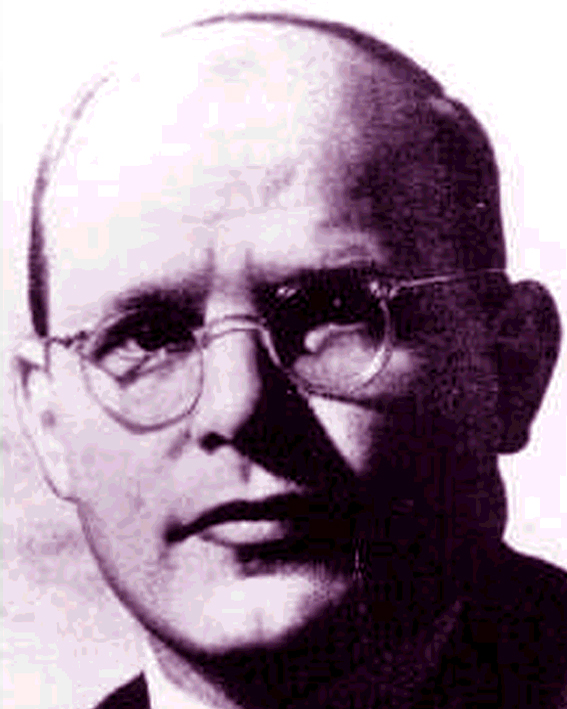 Dietrich Bonhoeffer (1906-45)
A psychiatrist’s son, Bonhoeffer was born in Silesia – then Germany, now Poland – and opted to study theology. On a trip to New York at 24, he embraced Liberal Christianity, the African-American church, ecumenism, and pacifism. In 1933, when the National Socialists came to power, he naturally took a dim view of the nazified German Evangelical Church, and left Germany for Sydenham to drum up support for the rival ‘Confessing Church’ he had co-founded. Accused by colleague Karl Barth of dereliction, however, he returned in 1935, and remained an outspoken opponent of the regime while writing extensively on Christianity in the secular age. Not until 1943 was he arrested by the Gestapo and incarcerated in Berlin. Following von Stauffenberg’s failed attempt to assassinate Hitler in 1944, he was sent to Flossenbürg concentration camp. WW2 was all but over when Hitler vindictively had him hanged; his church in Sydenham had already been destroyed by a German bomb.
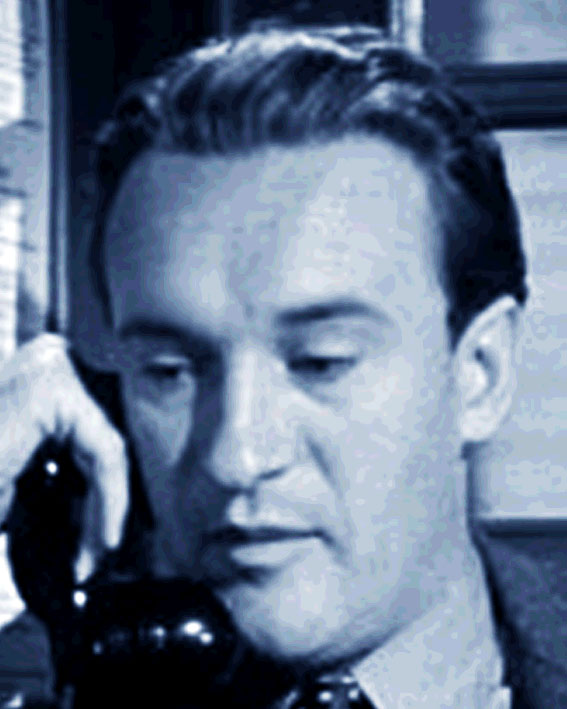 George Sanders (1906-72)
As the title of his memoirs admitted, George Sanders was a professional cad. He was born in St Petersburg, but his family fled the 1917 Revolution. After running a South American tobacco plantation, he joined a London advertising agency, where Greer Garson advised him to take up acting. After six British movies, he was cast in Hollywood as an English villain, and subsequently specialised in the urbane rogue. It won him a Best Supporting Actor Oscar for ‘All About Eve’ in 1950, and the part of Shere Khan in ‘The Jungle Book’. His private life was equally glamorous. After his first divorce, he married Zsa Zsa Gabor for five years, before moving to Egerton in 1959 and startling locals with his gold Rolls Royce and Cadillac. After his Kent-born wife Benita Hume died of cancer, he was wed to Magda Gabor for just 32 days, and lost millions on ‘Cadco’, a sausage-manufacturing scam. Depressed, he killed himself in Spain.
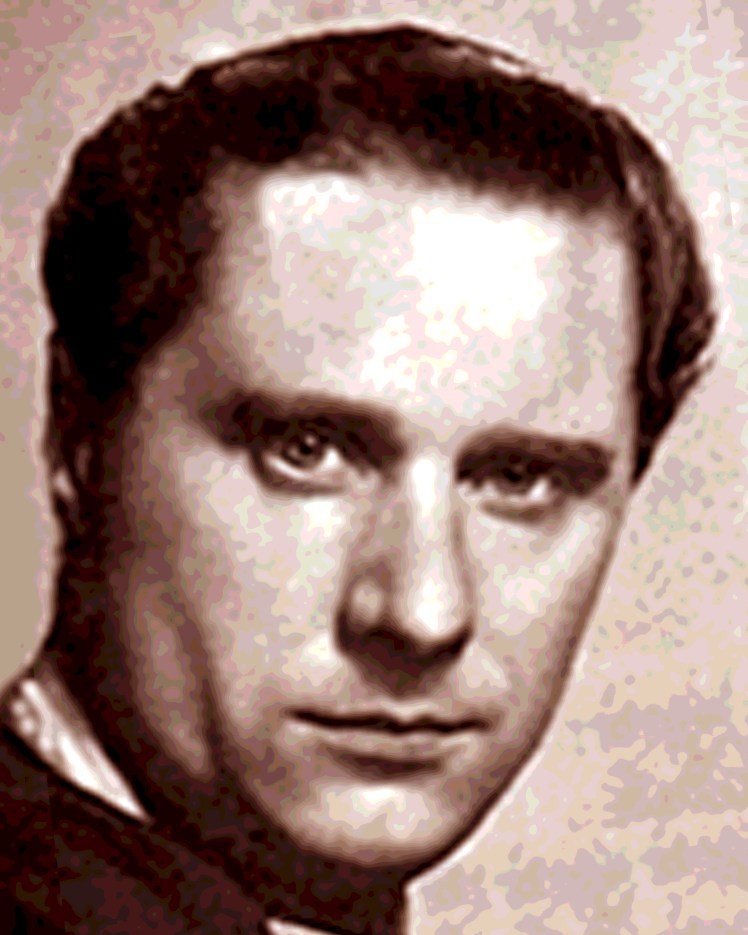 Sir Carol Reed (1906-76)
An illegitimate son of theatre impresario Sir Herbert Beerbohm Tree, Reed studied at the King’s School, Canterbury. After taking up acting while in his teens, he moved into production and worked his way up the ranks to direction, initially of quota quickies. During the WW2 years he established himself as an accomplished maker of gritty dramas, and in 1947 had his first major success with ‘Odd Man Out’, an IRA-based film noir that won a BAFTA for Best British Film. Much his greatest success, however, was his dramatisation of Graham Greene’s ‘The Third Man’ in 1949, which assured his reputation as a directorial great. Having already worked with Greene on ‘The Fallen Idol’, he did so for a third time on ‘Our Man in Havana’ in 1959. Ironically, he finally won an Oscar for Best Director in 1968 with Lionel Bart’s colourful musical ‘Oliver!’ Knighted in 1952, he was married twice, and counted Oliver Reed as a nephew.
 Dame Daphne du Maurier, Lady Browning (1907-89)
In the middle of the C20, Daphne du Maurier’s fecund but dark imagination became a favourite source of material for Hollywood movies. Her novels ‘Jamaica Inn’ (1936), ‘Rebecca’ (1938), and ‘My Cousin Rachel’ (1951) were all box-office successes, and two of the best horror movies ever made were derived from her short stories ‘The Birds’ and ‘Don’t Look Now’. Consequently, it is disappointing to know that, like E. Nesbit, she was a plagiarist. ‘Rebecca’ was plainly based on a Brazilian novel published four years earlier, and ‘The Birds’ was actually the name of a novel by Frank Baker, for whose publisher du Maurier was a reader. It is perhaps one reason why, despite her family’s high-profile artistic connections and her husband Sir Frederick Browning’s military renown, she became increasingly aloof and reclusive. Having lived in Hythe during WW2, she spent most of her life in Cornwall, where for some reason she became a Cornish nationalist.
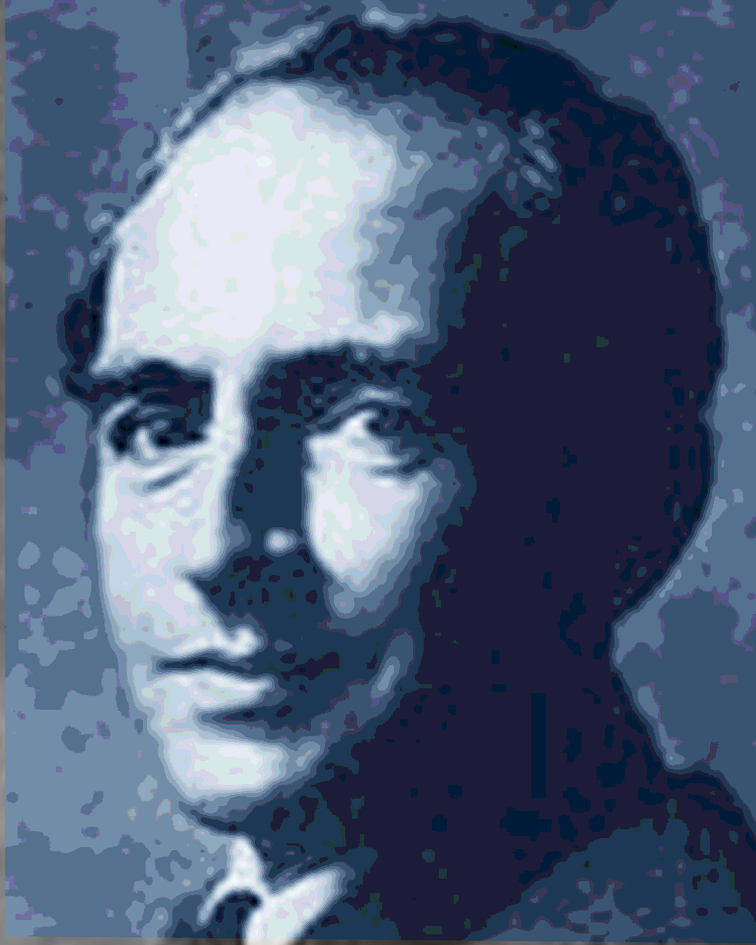 Christopher Fry (1907-2005)
Early in life, Arthur Harris from Bristol adopted his Quaker mother’s maiden name and a less starchy forename. He became a teacher in Surrey, but in 1932 quit to co-found the Tunbridge Wells Repertory Players, which he directed until 1936. He wrote several plays before WW2, which he sat out as a conscientious objector. His greatest success arrived in 1948 when, after penning a piece for the Canterbury Festival, he wrote ‘The Lady’s Not For Burning’, a comedy set around 1400 concerning a witch who wishes to live and a soldier who wants to die. Showcasing his verbal dexterity, it was performed by some of the best actors of the day. Though he looked an able successor to Coward and Rattigan, Fry’s goose was cooked when the Tories’ electoral triumph of 1955 sparked a theatrical revolution in the shape of the Angry Young Men. Ironically, Margaret Thatcher renewed Fry’s saliency in 1980 with her catchphrase, “The lady’s not for turning”.
 William Hartnell (1908-75)
Bill Hartnell was already 55 when he got the break that made him. He was born on the mean streets of North London, the son of a young Devonian mother and unknown father. He grew up tough, even becoming a juvenile delinquent, and was luckily taken in hand by an actor who got him into the Italia Conti Academy. He went on to appear in over 75 British films, first in comic roles but later typically as a hard man like an army sergeant or career criminal. In 1963, after he had been dependably typecast for decades, BBC TV’s Verity Lambert offered him the lead role in a new science fiction series called ‘Doctor Who’. He played it with his usual earnestness, but adding a touch of humanity that was emphasised by an uncharacteristically hirsute wig. He stayed in the role for three years, establishing one of the greatest TV properties. He spent his last years living in Marden.
 Bernard Lee (1908-81)
John ‘Bernard’ Lee played those dependable authority figures that you wish could always be in charge. He was born in Brentford, Middlesex, and went straight into acting via RADA. He had a prolific acting career on both stage and screen, the latter amounting to over 100 movies. By far his most famous assignment was as 007’s departmental boss M in 11 of Eon’s James Bond movies, starting with the very first, ‘Dr No’. He moved with his wife to Oare, being friends with Kingsgate resident Jack Warner, with whom he had co-starred in ‘The Blue Lamp’ in 1949. Disaster struck in 1972, when fire broke out at night; he escaped through the bedroom window and returned with a ladder, but too late to save his wife. He became depressed, fell into debt, and was only rescued by a generous gift from Richard Burton. After remarrying, he died during the filming of ‘For Your Eyes Only’.
 Richard Hearne (1908-79)
Born into a theatrical family from Norwich, Richard Hearne was an acrobat before specialising in comedy. The first of his 17 movie appearances came in 1934, playing a drunk. The character for which he became famous, Mr Pastry, was born two years later in the stage show ‘Big Boy’. Dressed like an English butler, with bowler hat and twirly moustache, this well-meaning twerp was ideal for slapstick. The character prompted a long-running BBC series, making Hearne the first British TV star, and earned him popularity in America. In his thirties, Hearne had moved to Platt, where he ran a market garden, and then via Tovil to Bearsted. He was a familiar figure at local events, including Maidstone Zoo’s annual opening, and advised on the World Custard Pie Championship at Coxheath. In 1974, he almost succeeded his former sidekick Jon Pertwee as Doctor Who, but lost out to Tom Baker. He died in Bearsted, and is buried at Platt.
 Robert Morley (1908-92)
Actor Robert Morley was born in Wiltshire. His father was an Army major, but his mother was German; so his second name, but fortunately not his first, was Adolph. He went to prep school in Folkestone, where he loved the Leas Lift, and then to Winchester School, which he hated. It did however give him the pukka accent that benefitted him richly throughout his career. He went straight into acting, making his stage debut at Margate in 1928. Already by the age of 30, he had the look and sound of a well-fed aristocrat. It was an asset he exploited unselfconsciously during a career of around 100 movies, making himself a shorthand for pomposity. In real life, however, he was a witty storyteller and writer. In the 1970s, he became the face of British Airways for its patriotic “We’ll take more care of you” campaign.
 Ian Fleming (1908-64)
The son of a rich banker, Fleming was born in Mayfair and attended Eton and Sandhurst. Owing to his rebellious attitude, he enjoyed success only in sport. Forays into journalism, banking, and stockbroking were likewise blighted, and his love-life was tangled. In WW2, however, while serving in Naval Intelligence, he successfully organised covert operations, including one called ‘Goldeneye’. Although his first James Bond novel ‘Casino Royale’ (1953) was a success, critics lambasted his writing, and he encountered legal issues with collaborators. Nevertheless, ‘Dr No’ launched the famous movie series in 1962, securing his reputation. When not at Goldeneye in Jamaica, Fleming occupied Noel Coward‘s old house in St Margaret’s Bay, and frequented the Duck Inn at Pett Bottom, where Bond fictionally grew up. He depicted a drive from Maidstone to Dover in ‘Moonraker’, and Royal St George’s Golf Club in ‘Goldfinger’. His last work, ‘Chitty-Chitty-Bang-Bang’, celebrated his admiration for Louis Zborowski of Higham Park. He expired in Canterbury.
 Fanny Cradock (1909-94)
The first British TV celebrity chef, Fanny Cradock was more entertainer than gastronome. Born Phyllis Pechey in Essex, she grew up partly in Herne Bay. After marrying at 17, she was widowed, remarried, and separated quickly. Destitute for a decade, she bigamously married a racing driver at 30, but left him after two months for married Royal Artillery major Johnnie Cradock, whose name she adopted by deed poll. After WW2, they started a theatre act in which she introduced the audience to affordable French cooking, while he played the henpecked husband. In 1955, it won them a show on BBC TV. Her blunt manner, ball-gowns, and countless cook-books earned a huge following, and a large house in Blackheath. Though they survived Johnnie’s hilarious exhortation to strive for doughnuts that looked like Fanny’s, the BBC never hired her again after she patronisingly showered a TV contestant with ill-informed advice in 1976. She married Cradock a year later, again bigamously.
 Simone Weil (1909-43)
After studying Mathematics, Simone Weil pursued a favoured path of Parisian Jewish intellectuals, embracing Communism and going into teaching. To evidence her solidarity with the proletariat, she opted to work occasionally as a manual labourer. Not one for half measures, she even engaged in debate with Trotsky, and assisted the Anarchists in the Spanish Civil War. Her writings were hard to fathom, however, because she increasingly repudiated Bolshevism in favour of Catholicism and mysticism. Weil might have been forgotten but for her macabre end. After the Nazi invasion of France, she fled with her parents to America, then moved on to London. There she declined to take food, ostensibly in sympathy with her supposedly starving compatriots; it may actually have been because she had TB and could not stomach food. She was sent to a sanatorium at Ashford, where she died. Inappropriately, the major avenue now named after her is home to a capitalist food hall.
 Sonia Dresdel (1909-76)
If anyone was ever born to play Lady Macbeth, but never did, it was Lois Obee. A Yorkshire lass, she was educated in Scotland before attending RADA. Her career took off in 1942 with her superlative performance as Hedda Gabler, which had her ranked for a decade among England’s finest actresses. After WW2, with her hatchet face, steely voice, and terrifying stage presence, she became the epitomical harridan of the movies. Three of her most striking performances were as a domineering and obsessive sister in ‘While I Live’ (1947), a bullying wife in Carol Reed’s ‘The Fallen Idol’, and a pathological narcissist in ‘This Was A Woman’ (both 1948). After 1960, her movie career rather fizzled out, and she ended up playing relatively tepid roles in TV dramas. Her declining years were spent mostly in her picturesque cottage garden at Mersham. She died of lung cancer at the Kent & Canterbury Hospital.
 William Sidney, 1st Viscount De L’Isle (1909-91)
The son of the 5th Baron De L’Isle of Penshurst Place, William Sidney was born in Chelsea and went to Eton and Cambridge before becoming a chartered accountant. In WW2, having served in the Battle of France, he won the Victoria Cross at Anzio for heroics that included repulsing the enemy with a tommy gun and fighting on despite heavy loss of blood. Later that year, he was elected MP for Chelsea, but moved to the Lords on succeeding his father in 1945. From 1951 to 1955, he was Secretary of State for Air, after which he was created Viscount de L’Isle, of Penshurst in the County of Kent. He had made such an impression that Australian prime minister Robert Menzies requested in 1961 that he be appointed governor-general. Although his four-year tenure was trouble-free, he proved the last Briton to hold the position. He subsequently co-founded the National Association for Freedom in 1975, and was buried at Penshurst.
 Norman Heatley (1911-2004)
Heatley came from Suffolk, but went to school in Folkestone and Tonbridge before studying natural sciences at Cambridge and researching at Oxford, where he specialised in microbiology. Alexander Fleming had accidentally discovered the antibiotic attributes of penicillin, but had no idea how to exploit the knowledge. Though the junior member of his university team, Heatley was uniquely inventive, and worked out the back-extraction technique of purifying and concentrating penicillin in usable doses. He also ascertained that the right vessel for production was a modified bedpan, which he got manufactured in the Potteries. He conducted a test that kept a dying man alive until the tiny amounts available ran out; but tests on mice proved conclusive. He then helped develop a means of mass-production in Illinois, but was conned by his American colleague, who planned to exploit the discovery himself. Only decades later did Heatley get his deserved recognition. As Australian professor Sir Henry Harris declared, “Without Heatley, no penicillin”.
 Mervyn Peake (1911-68)
Like athlete Eric Liddell, Mervyn Peake was born the son of Christian missionaries in China but came home to attend Eltham College. He always planned to be an artist. He studied at art college, became a painter, and had his work exhibited more than once during the ‘thirties. He later designed the Pan publishing logo; unfortunately his friend Graham Greene persuaded him to take a fee in lieu of royalties because paperbacks had no future. In WW2, he was discharged from the Royal Engineers for psychiatric reasons and permitted to become a war artist, which he had wanted to be all along. During the War, however, he commenced the literary work for which he is remembered, his fantasy ‘Gormenghast’ trilogy: ‘Titus Groan’ (1946), ‘Gormenghast’ (1950), and ‘Titus Alone’ (1959). This was intended to become an epic cycle, but the fourth volume was never completed, as he succumbed to early-onset dementia. He died and was buried in Burpham, Sussex.
 Sir William Golding (1911-93)
After being born in Cornwall, Golding grew up in Marlborough, Wiltshire, where his father taught science at the Grammar School. At Oxford, he studied Natural Sciences and then English before becoming a teacher. He initially taught English, music and philosophy at Maidstone Grammar School from 1938 to 1940. After WW2, he resumed his career in Salisbury, learning at first hand that boys are not made of sugar and spice and all things nice. The sentiment was powerfully dramatised in his first novel, ‘The Lord of the Flies’, in 1954. While that book argued that civilisation is a thin veneer, his next novel, ‘The Inheritors’ (1955) demonstrated the susceptibility of a peaceable civilisation to destruction at the hands of an aggressive and deceitful invader. His later works generally took a similarly caustic view of human nature. Though not necessarily popular with idealistic social scientists, Golding communicated big ideas sufficiently cogently to win him a Nobel Prize in Literature in 1983.
 Christopher Hassall (1912-63)
The Andrew Lloyd-Webber/Tim Rice musical partnership of the 1930s was Ivor Novello and Christopher Hassall. Although none of their musicals has much currency today, they enjoyed several huge West End successes, a couple becoming movies. Hassall, from London, was a singularly skilled librettist, having both an Oxford education and musical expertise. With his hard-earned wealth, he purchased Tonford Manor, south-west of Canterbury. He had two children, his daughter Imogen being his pride and joy. From an early age, he groomed her for a stage career. On his way to see her, aged eight, performing with the Royal Ballet School at Covent Garden, he ran to catch a train, and died of a heart attack at Rochester; he was buried in Canterbury. Imogen too had a tragically early end: with two failed marriages behind her, and her career as a glamorous actress on the rocks, she committed suicide at 38. A road off Tonford Lane bears their name.
 James Callaghan, Baron Callaghan of Cardiff (1912-2005)
Leonard ‘Jim’ Callaghan was arguably one of the more human of C20 prime ministers. His background was certainly more colourful. He was born in Portsmouth to a half-Irish Catholic, half-Jewish sailor and his Baptist wife. His father died when he was nine, leaving the family in penury and dependent on handouts. At 17, Callaghan joined the Inland Revenue at Maidstone, where he remained for five years. There he met his wife Audrey Moulton, a local Grammar School girl. He became a union official and eventually ran the AOT union across Kent. In 1945 he was elected Labour MP for Cardiff South, and during the 1960s and 1970s became the only man ever to fill all four great offices of state. He succeeded Harold Wilson as Prime Minister at a time of crisis in 1976. Despite being the quintessential union man, he was undone by relentless TUC pressure, paving the way for Margaret Thatcher to succeed him in 1979.
 John Le Mesurier (1912-83)
John Elton Le Mesurier Halliley from Bedford was the original nowhere man. He started life miserably at Grenham House prep school in Birchington, which he hated on account of its insensitivity. He became a bit-part actor, regarding his work little differently from working in an office. Because he played establishment figures dependably, he landed over 120 movie parts, but never the lead. He was married three times. He and his first wife parted after she became an alcoholic. His second wife Hattie Jacques had her lover come to replace him in the marital bed, and then divorced him. His third wife had an affair with Tony Hancock until the latter’s suicide. Le Mesurier grinned and bore it. Finally, at 56, he had some luck. He reluctantly took the role of Sergeant Wilson in ‘Dad’s Army’, which he was told to play however he saw fit. He played it as himself, and his diffident but honest character captured the nation’s heart.
 Peter Cushing (1913-94)
Though always associated nowadays with Whitstable, Peter Cushing was born into a well-off Surrey family. His father was a quantity surveyor who wanted to make a draughtsman of him. Cushing however insisted on following his grandfather into acting, so his father bought him a ticket to Hollywood in 1939. Cushing immediately won a part in ‘The Man in the Iron Mask’. He struggled after WW2 to get work, but eventually made his name with Hammer House of Horror, portraying both Baron Frankenstein and Dracula’s nemesis Dr van Helsing numerous times. Not only that, but he starred as Doctor Who in both 1960s movie adaptations of the BBC franchise. In 1977, he appeared in the original ‘Star Wars’ movie, playing the evil Grand Moff Tarkin because he was unavailable to take the nicer but bigger role of Obi-Wan Kenobi. He lived for 35 years in Kent before developing prostate cancer and dying at Canterbury Hospice.
 Elizabeth David (1913-92)
If any one individual can be thanked for creating modern English cuisine, it’s Elizabeth David, née Gwynne, the daughter of a Conservative MP from East Sussex. She attended St Clare’s School in Tunbridge Wells, and at 16 went to Paris, where she acquired a passion for French food that contrasted dramatically with the meat and two veg that prevailed back home. After studying Art at the Sorbonne, she worked as an actress; but a romantic entanglement and then the Third Reich forced an odyssey on her as she fled successively to Italy, Greece, and Egypt. It was not until 1950 that she shared her culinary passions back home, her ‘A Book of Mediterranean Food’ being followed by further works dedicated to French and Italian cuisine in which she introduced her compatriots to cooking with olive oil, garlic, and aubergines. Enormously influential, David was a key reason why no Edwardian would recognise the cooking methods that are now everyday.
 Hans Meyer (1913-2009)
Being the son of a Jewish couple from the Rhineland, Meyer found his career prospects as a teacher curtailed by National Socialism. In 1934, he immigrated to Kent to join Anna Essinger’s Bunce Court School at Otterden, where he earned a reputation for his sympathetic treatment of displaced Jewish children. In 1940, however, amid panic over the threat of imminent German invasion, thousands of German and Austrian refugees were deported as security risks. Meyer chose to accompany some to Australia on the Dunera, which survived being torpedoed. After returning to Britain the following year, he remained at Bunce Court until its closure in 1948, by which time his mother had been murdered in a German concentration camp. He later took up a position at the new Shepway School in Maidstone until his retirement in 1978. A reunion of Bunce Court alumni he organised in 2003 was followed by the publication of ‘Reflections: Bunce Court’.
 Ted Willis, Baron Willis (1914-92)
A dyed-in-the-wool leftist, Edward Willis from Tottenham became General Secretary of the Young Communist League in his twenties, and spent much of WW2 agitating for a second front to save the Soviet Union. Incongruously, he went on to become a prolific TV screenwriter whose most popular creation was a genial policeman. Having settled in Chislehurst and befriended a local bobby who shared his views, he devised ‘Dixon of Dock Green’ to dramatise the friend’s anecdotes. Launched in 1955 and starring Jack Warner, it ran for 21 years. Willis penned around 2,250,000 words for it, earning himself a lifetime peerage when Labour came to power in 1964. Alongside 34 plays and 39 movies, he eventually racked up 41 TV series, comprising around 20 million words, making him officially the world’s most prolific TV writer. Ironically, his second most famous series was the equally anodyne ‘The Adventures of Black Beauty’ (1972-4). Willis was still residing in Chislehurst when he died.
 Michael Goodliffe (1914-76)
Although he was born in the Wirral, Laurence Michael Andrew Goodliffe attended St Edmund’s School in Canterbury and then Oxford, emerging with a posh Southern accent that equipped him well for the roles as officers and professionals he would specialise in as an actor. He had barely started his stage career when WW2 broke out, and he was enlisted. He was wounded and captured at Dunkirk and spent the War in a POW camp, where he produced, acted in, and occasionally wrote a large number of entertainments to keep up his fellow prisoners’ morale. After the War, he resumed his career on the stage, on TV, and in movies. He was a natural for ‘The Wooden Horse’ in 1950, but his most prominent role was as the Titanic’s designer in ‘A Night to Remember’ (1958). While suffering from depression, however, he was admitted to a psychiatric unit in Wimbledon, where he jumped to his death.
 Sarah Spencer-Churchill, Baroness Audley (1914-82)
Named after her formidable ancestor the Duchess of Marlborough, Sarah Churchill was raised in London before living at Chartwell and boarding at North Foreland Lodge near Broadstairs. She then studied ballet, but took up acting. She appeared in movies from 1937 to 1959, and danced in her best film, ‘Royal Wedding’ (1951). Her problem was that, like her father Sir Winston, she liked a drink, but unlike him could not hold it. Her alcoholism brought her into many public scrapes, and she was once jailed in Holloway Prison. Her private life was equivalently fraught. Her parents disapproved of her clandestine marriage at 22 to an Austrian Jewish entertainer who in 1945 divorced her for adultery. Her American lover killed himself, as did her second husband, a society photographer. Though her third husband, Baron Audley, passed muster, he died at 49. She then took up with the black American jazz singer Lobo Nocho, after which her father himself expired.
 Charles Hawtrey (1914-88)
George Hartree was born into an impoverished family in Hounslow, Middlesex. A talented boy soprano, he went into acting after his voice broke. He assumed the stage-name ‘Charles Hawtrey’ in the hope of being mistaken for the son of the famous Victorian actor Sir Charles. Since homosexuality was illegal, he camped up the roles he played as though mocking effeminacy. It brought him plenty of work, notably as underling to Will Hay, though he would be best remembered for the 23 ‘Carry On’ movies he appeared in from 1958. Nevertheless, the misanthropic Hartree demonstrated the principle that funny people are not always nice. He was above all an alcoholic, which affected both his work and his temper. In 1968, he moved to Deal, supposedly to get access to sailors. After winding up in a Walmer nursing home on account of his heavy smoking, he threw a vase at a nurse who requested his autograph. Hardly anyone attended his funeral.
 First Officer Lettice Curtis (1915-2014)
Barrister’s daughter Eleanor Lettice Curtis had one love in her life, and that was flying. A Devonian, she attended Benenden before going to Oxford, where she studied maths and excelled at sports, especially fencing and tennis. She acquired her wings at 1937, and during WW2 became one of Pauline Gower’s ‘Attagirls’ who eventually constituted 12% of the Air Transport Auxiliary pilots. Taking just two days off every fortnight, Curtis shirked no challenge. She became the first woman to deliver a four-engine Lancaster bomber, one of about ninety different aircraft she mastered. WW2 was only a start for her career, however, and she eventually became known for the extraordinary longevity of her flying career as much as its diversity. She carried on as test observer, engineer, and air racer, took up helicopters in 1992, and was 80 before she decided it was time to quit; yet still she still enjoyed nearly two decades of retirement in Berkshire.
 Sir Norman Wisdom (1915-2010)
Norman Wisdom‘s mother left their impoverished London home when he was small. His violent father, a chauffeur, largely abandoned him until, at nine, he found a caring home in Deal. Anxious to improve himself after starting out as an errand boy, he learned boxing, riding, and several musical instruments. He stumbled into show business during a WW2 NAAFI concert when Army officers found his buffoonery hilarious, and Rex Harrison suggested he turn professional. In the theatre, he developed a shtick called the “Successful Failure”. It inspired a singing career, headlined by his No. 3 hit ‘Don’t Laugh at Me (’Cause I’m a Fool)’ (1954). It also spawned a string of comedy movies starring his stock character Norman Pitkin. Though not to everyone’s taste, they went down a storm in Albania, where Enver Hoxha declared Pitkin a proletarian hero. Nevertheless, Wisdom was later accused by Michael Caine and Fenella Fielding of being absolutely no gentleman.
 Sir Patrick Leigh Fermor (1915-2011)
Paddy Fermor was one in many millions: a man tough enough to be a wartime commando, but a scholar so well versed in literature that he was perhaps the greatest travel writer of his age. He was well born in London and sent to the King’s School in Canterbury, where his mix of insight and impetuosity was noted. He was expelled for making up to a local girl, and in 1933 set off on a hike across Nazi Germany to Constantinople. It became the subject of a trilogy of travelogues of which the first part, ‘A Time of Gifts’, is considered a masterpiece. During WW2, he fought in Crete and Greece. In 1944, he incredibly led a mission to kidnap a German general, whom he safely brought to custody in Egypt; the escapade became the subject of a book and a movie, ‘Ill Met by Moonlight’. Fermor married an aristocrat, and despite smoking heavily lived a long life.
 Denton Welch (1915-48)
A rubber merchant’s son, Denton Welch was born in Shanghai but attended Repton and then Goldsmiths, intent on becoming an artist. He was involved in a road accident on his bicycle at 18, however, incurring such severe injuries that he died 15 years later. While recuperating at Broadstairs and then Tonbridge, he took up writing. He wrote much about Kent, as well as painting Hadlow Tower and the nearby Coffin House. Sadly his ill health, which precluded normal sexual relations, wrought bitterness that he expressed in his novels as misanthropy, directed both at others and himself. Matters were not helped by his feckless live-in lover at Borough Green, Eric Oliver, although his correspondence, published in 2017, exposed true affection amid his existential pain. For all Welch’s complexity, William S Burroughs declared him his greatest influence, and other admirers included WH Auden, Alan Bennett, Edith Sitwell, Vita Sackville West, and even Beryl Bainbridge.
 Michael Denison (1915-98)
Michael Denison and Dulcie Grey were both born in November 1915, but a very long way apart: in Yorkshire and Malaya respectively. Having attended Wellesley House in Broadstairs, Harrow, and Oxford, he met her at drama school in 1938; they married a year later. She carried on acting during WW2 while he, having a degree in French & German, served in Intelligence. By the time he returned to
acting, she was well ahead in her career, but he soon established himself in the theatre and movies, his what-ho personality and cut-glass accent being ideal for the upper-middle class settings of many contemporary dramas. They co-starred in ‘Angels One Five’ (1952), but did so only once more before sliding out of film fashion during the more demotic 1950s and 1960s. Nevertheless, they racked up 28 West End plays together, amid scores of others. Though childless, their lifelong marriage became a national institution, and both were awarded a CBE in 1983.
 Squadron Leader Roald Dahl (1916-90)
Born in Wales, Dahl was the son of wealthy Norwegians who named him after the explorer Amundsen. His father died when he was three, and in 1927 the family moved to Bexley. He attended Repton School in Derbyshire, where he suffered badly from homesickness and the harsh disciplinary regime. He then joined Shell, and during WW2 became a fighter pilot in the Mediterranean. Despite fracturing his skull in a crash, he became an ace before being sent to the British embassy in Washington on a mission to counter American neutrality. There he was persuaded by CS Forrester to write tales of his war experiences. He went on to publish over 50 short stories that made him the master of macabre wit. Nevertheless, it was heart-warming children’s classics like ‘James and the Giant Peach’, ‘Charlie and the Chocolate Factory’, and ‘Fantastic Mr Fox’ that brought him world fame. An unusually tall man, he married twice and had five children.
 Margaret Lockwood (1916-90)
The life of Margaret Lockwood says something about the ephemeral nature of fame. She was born in Karachi, where her father was a railway administrator, but moved to Upper Norwood as a child, attending Sydenham High School for Girls. She was always destined for the stage, making her debut at 12. She attended the Italia Conti Academy and later RADA, and in 1935 made her film debut. She had two qualities that appealed to directors like Alfred Hitchcock and Carol Reed: she was beautiful, and she could act. Two successive films in 1938 made her, namely Reed’s ‘Bank Holiday’ and Hitchcock’s ‘The Lady Vanishes’. A further success in 1945 with ‘The Wicked Lady’ brought her stardom. From then on, as her beauty waned, she found good parts increasingly difficult to come by. After her death, she did not even earn a mention in the Cambridge Biographical Encyclopedia. She is now all but unknown to young movie fans.
 Michael Gough (1916-2011)
‘Mick’ Gough was one of those actors whose face was highly familiar, but his name not so much. He was born Francis Michael Gough in Malaya, where his father was a rubber planter, but came to England to go to school in Tunbridge Wells and attend Wye College; he moved onto the Old Vic. As a conscientious objector, he was made to serve in WW2 as a non-combatant. He resumed his acting career afterwards, on TV but especially in movies, of which he appeared in over 150. He co-starred with Peter Cushing in the Hammer movie ‘Dracula’ (1958), the first of several horror movies for which his craggy face equipped him admirably. He became especially well-known across the Atlantic by playing the ever loyal English butler Alfred in five ‘Batman’ movies (1989-97), and performed in three more Tim Burton movies in his eighties. He was married four times, including to Doctor Who assistant Anneke Wills.
 Robert Lowell (1917-77)
American poet Robert Lowell was the epitome of the New England social elite, a so-called ‘Boston Brahmin’ whose family traced its roots to the Mayflower; so it may surprise to learn that he lived for much of his last five years near Maidstone, Kent. At school, he displayed a supercilious persona, being nicknamed ‘Cal’ – short for ‘Caliban’ – on account of his violent bullying. After leaving Harvard following a chance meeting with Ford Madox Ford, he was jailed in WW2 as a draft dodger, and in the 1960s spoke repeatedly against the Vietnam War. He went through two acrimonious marriages before wedding Lady Caroline Blackwood, the Guinness heiress and collector of famous husbands, with whom he resided at Milgate House in Bearsted. His copious volumes of poetry won him two Pulitzer Prizes, while ‘Life Studies’ (1959), concerning mental illness, won the National Book Award and greatly influenced Sylvia Plath. A smoker, Lowell died of a heart attack in New York.
 Frankie Howerd (1917-92)
Although he was born in Yorkshire, Francis Howard (sic) grew up in Eltham and attended Shooters Hill Grammar School after his soldier father was posted to Woolwich. Shy and suffering with a stammer, he failed a RADA test, but was determined to make it as a comedian anyway. After WW2, in which he participated peripherally in the D-Day landings, he got into radio, securing material from top writers like Eric Sykes and Galton & Simpson, and co-starred in a movie with Margaret Rutherford. Progressing to TV, he made the comedic monologue his own, turning his natural hesitancy to his advantage. In particular, he delivered sexual innuendo with expertly weighted false naivety, salted with catchphrases – a talent he shared with fellow closet-gay Kenneth Williams, but delivered more earthily. The recipe worked particularly well in the ribald BBC TV series ‘Up Pompeii’ (1969-75), in which he received top billing as Lurcio. He died one day before Benny Hill.
 Wing Commander James Nicolson (1917-45)
Old Tonbridgian James Brindley Nicolson from London joined the RAF in 1936 and became a WW2 fighter pilot. On August 16th, 1940, his Hurricane’s petrol-tank caught fire in a dogfight with a Messerschmidt Bf 109. He was about to parachute to the ground when, having spotted another enemy aircraft nearby, he climbed back into his seat, shot it down, and only then bailed out of his doomed aircraft. As he descended, Home Guard personnel fired at him, believing him to be a German pilot. He survived the ordeal, and won the Victoria Cross – the only Battle of Britain pilot ever to do so. After recovering from serious burns, he was sent to India and Burma, where he won the DFC while flying Bristol Beaufighters. The war was nearly over when, on May 2nd, 1945, the B-24 Liberator on which he was observing caught fire and crashed into the Bay of Bengal. His body was never found.
 David Tomlinson (1917-2000)
A thoroughly middle-class solicitor’s son, David Tomlinson was born in Henley but attended Tonbridge School. He became a Grenadier Guard briefly, and then a clerk in the oil industry. He did not have a good war. He married a widow in New York who, after just three months, killed herself and her two small children by jumping from a hotel window. Then, having joined the RAF, he crashed on his first solo flight. The latter experience did at least equip him for his first major film role after graduating from theatre: he starred as one of three airmen who escape from a PoW camp in ‘The Wooden Horse’ (1950). His biggest role, however, came 14 years later, when Walt Disney cast him as Mr Banks in ‘Mary Poppins’, and personally coached him. His professionalism won him further work in ‘The Love Bug’ (1968) and ‘Bedknobs and Broomsticks’ (1971). He was posthumously made a Disney Legend.
 Herbert Lom (1917-2012)
Since fitting Herbert Kuchačevič ze Schluderpacheru on a movie poster would have been impractical, the Prague-born actor of that name wisely resorted to a snappier stage-name, Herbert Lom. Though descended from an aristocratic Czech family, his mother was Jewish, so he emigrated to England in 1939 during the Nazi occupation. He went into acting, usually playing a more urbane version of Peter Lorre’s stock-in-trade, the sinister foreigner. He established his credentials in comedy alongside Alec Guinness and Peter Sellers in the outstanding ‘The Ladykillers’ (1955), following which he purchased Longberry Farm in Bethersden. He remained there for 25 years, regularly welcoming the Goon Show gang and operating a Christmas tree business. In 1963-4, he starred in his own ITV drama series, ‘The Human Jungle’, playing a cutting-edge psychoanalyst. That however was just a precursor to his most famous role: Commissioner Dreyfus, the long-suffering antagonist of Inspector Clouseau in the ‘Pink Panther’ movies (1964-83). Lom died in London.
 Ronald Howard (1918-96)
Leslie Howard and his son Ronald provide an object lesson in the meaning of star quality. They were born just miles apart in Forest Hill and South Norwood, looked remarkably alike, and were both career actors, the differences being that Ronald had a famous father and an education at Tonbridge School and Cambridge. Whereas Leslie was a movie star, however, Ronald merely had a long career, consisting of dozens of passable TV and film performances. As Michael Denison‘s screen brother in ‘My Brother Jonathan’ (1948), for example, he was outshone in a role his father would have aced; and even his standout performance, as Sherlock Holmes in the 1954 TV series, paled against the classic Basil Rathbone version. Perhaps his most valuable achievement was a 1984 book dissecting his father’s death at the hands of the Luftwaffe, which he learned of while serving on a destroyer in the Indian Ocean. His conclusion – that Goebbels ordered it – is now doubted.
 Spike Milligan (1918-2002)
The comic genius Terry ‘Spike’ Milligan was born in India, his Irish father being a captain in the Royal Artillery. He moved to Brockley while young and attended two schools in Lewisham. Highly musical, he took up the trumpet, adopting his nickname from wacky bandleader Spike Jones. In WW2, he joined the RA, serving in southern England, North Africa, and Italy; he recounted his experiences in a hilarious 7-volume autobiography. He got to know Harry Secombe, and later Peter Sellers, who together earned world fame as the Goons. Ironically, they were first called the Crazy People, Milligan being an intermittent sufferer from serious mental-health problems all his life. His manic 1960s ‘Q’ series on TV became a big influence on ‘Monty Python’. Although his mother was English, he refused to swear an oath of allegiance, and instead took an Irish passport. He married three times, and his epitaph reads in Gaelic, “I told you I was ill”.
 Wing Commander Guy Gibson (1918-44)
Richard Todd’s depiction of Guy Gibson in the 1955 movie ‘The Dam Busters’ typified the British ideal of the era: resourceful, determined, imperturbable. The real Guy Gibson was not quite so saintly, being known for his arrogance; but he did have something to be arrogant about. He was born in India, but came to live in England after his parents’ separation, attending prep school in Folkestone. He joined the RAF in 1937, training as a bomber pilot. Early in WW2, he was posted for a while to West Malling, flying night-fighters. He gained a reputation for fearlessness, and detested inactivity. This attitude brought him the command of Operation Chastise, the ‘bouncing bomb’ mission, in 1943. It won him a Victoria Cross on top of his many other decorations, making him the most honoured British serviceman. He was killed in a crash in Holland, following an air-raid plagued with difficulties, while still only 26.
 Squadron Leader Mohinder Singh Pujji (1918-2010)
The son of a government official, Pujji was born in Simla, and was working for Burmah-Shell when war broke out. Having qualified to fly at 18, he volunteered for the Royal Indian Air Force, and arrived in England after the Battle of Britain. Wearing a Sikh turban, he mostly flew Hurricanes supporting bomber raids, and was shot down several times, once near Dover. In 1941 he was transferred to North Africa, where he was brought down in the desert, and then to South-East Asia. His exploits in tactical operations over the occupied Burmese jungle won him the Distinguished Flying Cross. In 1946 he was discharged after suffering from TB, but continued flying and racing cars in India. Having felt exceptionally welcome in Britain, he emigrated in 1974 to become an air traffic controller at Heathrow; he retired to Gravesend in 1998. After protesting about the meagre acknowledgment accorded to Indian pilots, he was commemorated by a statue in Elizabeth Gardens.
 Eric Morley (1918-2000)
Morley was born in London, but attended Whitstable Boys’ School. When he lost both parents to tuberculosis at 11, he was sent for training on HMS Exmouth on the Thames. He spent the war as a Royal Army Service Corps captain, in part organising entertainments. After WW2, he joined Mecca, initially in publicity. To advertise its ballrooms, he convinced the BBC to broadcast his ‘Come Dancing’ concept, which incredibly lasted 49 years. Alongside mass leisure activities like Mecca bingo, bowling, and ice-skating, he also introduced beauty contests, which equipped him to stage the global ‘Miss Festival of Britain’ extravaganza in 1951. This morphed by 1959 into the televised ‘Miss World’ contest, which was viewed by around 20 million Britons annually and raised a fortune for charity. Though it was driven underground in Britain by militant feminists, it achieved a spectacular worldwide audience of 2.5 billion in 1997. Morley’s wife Julia took over the contest’s chairmanship after his death.
 Doris Stokes (1920-87)
Whereas most spiritualists adopt an aura of mystic inscrutability, the self-styled medium Doris Stokes (née Sutton) from Lincolnshire radiated homely trustworthiness. After working as a psychiatric nurse, she laid claim to longstanding psychic powers, and made a living demonstrating her paranormal abilities for the benefit of paying audiences. This being long before Penn & Teller exposed the magic tricks used by showmen, millions of women were impressed by her knowledge of the unknowable and apparent access to the dead, although clerics attacked her for dabbling in the supernatural, which obviously was their job. Cracks showed when it turned out that she regularly booked the front rows at the Palladium and filled them with stooges. Analysis of her performances then demonstrated that she used fraudulent techniques like cold reading and question planting. She wrote numerous books with ‘voices’ in the title, voices that doubtless reminded her there’s one born every minute. She lived, died, and still lives in Lewisham.
 Clive Dunn (1920-2012)
Despite his cloth-cap comedy persona, Dunn was born into a South London thespian family and sent to the independent Sevenoaks School before attending the Italia Conti Academy. He started acting at 15, appearing in movies with Will Hay. In WW2, he was captured while serving in Greece, and spent four years in an Austrian prisoner-of-war camp. He resumed his career in repertory and then on TV, working repeatedly with Tony Hancock. In 1968, he got a huge break when he was cast as the superannuated Lance-Corporal Jones in BBC TV’s ‘Dad’s Army’, despite still being only 48. Ironically, with his cosmopolitan political views, he didn’t get on at all with the conservative Arthur Lowe who played Captain Mainwaring. Nevertheless, he remained in the cast until the series terminated in 1977, his catchphrase “Don’t panic!” still enjoying currency today. In 1971, he had a surprise No. 1 hit with his novelty record ‘Grandad’. He died in the Algarve.
 Anthony Steel (1920-2001)
The son of a British Army officer based in India, Anthony Steel was born in Chelsea and went to prep school in Broadstairs, where he presumably learned the stiff upper lip that typified his acting. He had only been at Cambridge one year when WW2 started. As a Coldstream Guard, he survived the Dunkirk evacuation, and ended the War as a parachutist. He was signed up afterwards by J Arthur Rank and given a gentle induction until 1950, when he starred in ‘The Wooden Horse’. His military record and public school manner served him well in that and other movies set in wartime and the colonies. However, success turned his head. While already married, he made Patricia Roc pregnant during an onset romance. After his divorce, he married busty Swedish star Anita Ekberg, their tempestuous relationship being exacerbated by his drunken violence and drink-driving. Director Michael Powell labelled him a “shit”, never the best reference. He died in obscurity.
 Flying Officer Jean Maridor (1920-44)
An apprentice barber from Le Havre, Maridor qualified as a pilot at 18 and joined the French Air Force months before WW2. When France fell in 1940, he found his way to Biarritz near the Spanish border, whence he escaped to Britain on a fishing-boat. He immediately joined the RAF as a fighter pilot, and was stationed at Manston and Hawkinge among other bases. He officially recorded a handful of kills, although the exact number is uncertain, and was awarded the DFC. After progressing from Hurricanes to Spitfires, he was assigned in 1944 to Project Diver, with orders to intercept V-1 flying-bombs as they crossed the Kent coast. Having disposed of ten, he intercepted another he saw heading for the military hospital at Benenden School on August 3rd. Though he destroyed it, the explosion killed him, a week before his planned wedding. This remarkable example of heroism and altruism is memorialised at Benenden church and the school.
 Ken Bulmer (1921-2005)
Despite being the birthplace of the ground-breaking Kentish author HG Wells, the UK suffered a dearth of great science-fiction writing in the mid-C20 compared with the USA. A rare exception was Kenneth Bulmer, a Londoner who lived at Tunbridge Wells. Although he was truly prolific in his novel- and story-writing, his name is little known nowadays because he worked mostly under pseudonyms, that presumably being the best way of selling his work as fresh and original to the incestuous sci-fi ‘fandom’ community. He even went so far as creating fake biographies for his different authorial identities. Known for the quality of his writing, he created such epic properties as Dray Prescot (by ‘Alan Burt Akers’), which ran to 52 volumes, and co-wrote two novels with Sidcup-based Vin¢ (Vincent) Clark. His writing was not restricted to sci-fi: he also wrote many historical novels. Curiously, some of his works were only ever published in German.
 Mary Soames, Baroness Soames (1922-2014)
Sir Winston Churchill’s middle daughter Sarah Spencer-Churchill may have been an embarrassment to him, but his youngest, Mary, turned out quite the reverse. She was born in London just as he was completing the purchase of Chartwell, and so grew up there. During WW2, she proved a sterling support to her father and her country, serving in both the Red Cross and the Auxiliary Territorial Service, including in Germany. In 1945, she attended the historic Potsdam conference with Stalin and Truman as Churchill’s assistant. She then married the politician and diplomat Christopher Soames, whom she accompanied on postings to France and Rhodesia. Her work during the latter appointment earned her a damehood, although she was already Lady Soames by virtue of his separate ennoblement. In 1979, she published a biography of her mother, Clementine, and in 2002 represented her late father at a gathering of former prime ministers to celebrate the Golden Jubilee with Elizabeth II.
 Baroness Trumpington (1922-2018)
Jean Barker, née Campbell-Harris, was a career politician better known as ‘Trumpers’. Her parents, a well-connected soldier and an American heiress, lived affluently in London until the 1929 Depression necessitated serious downscaling. The family spent time in India before returning to live at Goodnestone near Sandwich, and then Wye. During WW2, her knowledge of German got her into the Bletchley Park codebreaking operation. Afterwards, she lived a socialite’s life in Paris and New York, where she met her husband, Eton schoolmaster William Barker; their son Adam attended the King’s School, Canterbury. She entered politics in 1963 as a Tory councillor for Trumpington, Cambridge, was ennobled in 1980 as ‘Baroness Trumpington, of Sandwich in the County of Kent’, and remained in politics until 2017. At 90, she put in a feisty performance on BBC’s ‘Have I Got News For You’, shortly after sticking up two fingers to a House of Lords speaker who’d mentioned her advanced years.
 Sir Donald Sinden (1923-2014)
It is a pity that, after a long and distinguished thespian career, Donald Sinden is often remembered for a long-running ‘Spitting Image’ caricature that lampooned his supposedly ham acting and his craving for a knighthood. True, he never won a major award; but he was good looking, had an unmistakable screen presence, and possessed such a plummy voice that it could have been served on a plate with custard. He began his career in WW2 performing comedy for the Armed Forces. From 1946, he was a dependable Shakespearean actor, and later became well known through two ‘Doctor’ films and the ‘Two’s Company’ and ‘Never the Twain’ TV series. A Devonian, he moved in 1951 to Ebony near Appledore for the rest of his life. The Homewood School in Tenterden opened its Sinden Theatre, of which he was a patron, in 2004. He died of prostate cancer, and was buried in Wittersham, fortunately after receiving his knighthood in 1997.
 Benny Hill (1924-92)
Alf Hill from Southampton, the son of a clown, worked as a milkman before joining Combined Services Entertainment during WW2. Having renamed his act after comedian Jack Benny, he supported Reg Varney in ‘Gaytime’, a show at Cliftonville Lido that ran for three seasons from 1947. It got him into radio and then TV comedy. In 1955, he won his own BBC series, ‘The Benny Hill Show’, an amalgam of slapstick, mimicry, and innuendo; its speeded-up chase sequences, accompanied by ‘Yakety Sax’, became iconic. Hill’s career peaked in 1971, when the series attained an audience of 21 million, and he had a Christmas No. 1 hit with ‘Ernie (the Fastest Milkman in the West)’. In 1989, however, after Ben Elton accused the show of inciting sexual violence, it was cancelled, despite its continuing popularity. Hill also appeared in several movies, including ‘Chitty Chitty Bang Bang’ and ‘The Italian Job’, and counted Michael Jackson among his many American celebrity fans.
 Margaret Thatcher, Baroness Thatcher (1925-2013)
As the daughter of a Grantham shopkeeper who made herself the UK’s first female premier, Margaret Roberts might be a feminist icon. One reason she is not was her partiality for Friedrich Hayek, whose classical liberal thinking is anathema to left-liberals. Thatcher was that rarity in politics, an Oxford graduate with a science degree. She stood unsuccessfully for Parliament in Dartford, and was turned down for the Tory candidacy in Beckenham and Maidstone before becoming MP for Finchley in 1959. She and Lewisham-born husband Denis Thatcher nevertheless rented a flat at Scotney Castle from 1975 to 1987. She displaced Heath as party leader in 1975, and Callaghan as prime minister in 1979. The 1982 Falklands War and an economic boom gave her a popularity boost that saw her through two further elections, despite the polarising Miners’ Strike, and she forged a strong relationship with President Reagan. The ‘Iron Lady’ remains an accurate litmus test of political opinion.
 Daphne Oram (1925-2003)
Despite being educated in keyboards and composition early in life, Oram from Wiltshire declined to attend the Royal College of Music, and instead joined the BBC at 16. There she gained such a grounding in electronically generated sound effects and music that, in 1958, she was invited to co-found the BBC Radiophonic Workshop, later famous for realising Ron Grainer’s ‘Doctor Who’. She left after a year to set up her own studio in an oast at Wrotham, where she explored Oramics – a novel form of composition whereby a computer converted drawn shapes into sounds. Even with generous funding, she struggled with the difficulty of making avant-garde music listenable, and resorted to playing up Oramics’ mystical dimension. Nevertheless, her ‘Still Point’ (1948) was revived at the 2018 Proms, and Canterbury Christ Church University named a building after her, presumably convinced that electronic music before Brian Eno was better than it sounded. Oram died unmarried at Maidstone.
 Sir George Martin (1926-2016)
If Sir Paul McCartney says that George Martin was the real fifth Beatle, you have to believe it. Born in North London, he was evacuated to Bromley Grammar School in WW2. From 1947, he attended the Guildhall School of Music, which would later prove invaluable. He started his music career producing novelty records at Parlophone, an ailing EMI label. It got him acquainted with Spike Milligan, for whom he was best man. He met the Beatles after Decca rejected them. He did not rate their music, but they made him laugh. He applied his maturity to shaping up their act, which included sacking Pete Best. He subsequently produced all their superlative output, in addition to several other top Merseyside artistes. In particular, from ‘Eleanor Rigby’ onwards, he exploited his knowledge of orchestral techniques to lend the Beatles a unique sound in pop and rock. Whatever the jealous John Lennon had to say about him, Martin remained the perfect gentleman.
 Peter Wyngarde (~1927-2018)
Despite starring in both film and TV, Peter Wyngarde was famous for just one role: Jason King, the debonair detective spun out from ITV’s ‘Department S’ (1969-70) into an eponymous series (1971-2). The character supposedly inspired Austin Powers, and Wyngarde was himself an international man of mystery. He claimed to have been born in Marseilles to a French mother, whereas he was actually Cyril Goldbert, son of a Russian refugee who adopted British citizenship in Singapore. After being incarcerated by the Japanese in Shanghai during WW2, he arrived in Britain in 1945, claiming to be rather younger than he was. Although married for four years, he was probably gay, as evidenced by his nickname ‘Petunia Winegum’. In the 1950s he lived in Kilndown, but later resided exclusively in Kensington. His career was scuppered in 1975, when he was convicted of gross obscenity with a crane driver in a bus station toilet, and afterwards lived the life of an alcoholic.
 June Brown (1927-2022)
EastEnders had barely got into its stride in 1985 when an unforgettable new character was introduced: Dot Cotton, with her smoking, religiosity, gossip, and hypochondria. She would go on to be one of the standout figures of TV soaps. The real person behind the character, June Brown, was actually born in Suffolk, but like many real East Enders had mixed ancestry, including Scottish, Irish, Dutch, Italian, and Algerian Sephardic Jewish. She served in the Wrens during WW2. Her first husband committed suicide, but she had six children with her second. She attended the Old Vic drama school in South London, and made her TV debut in 1970. Remarkably, she was already 58 when she landed the role that she would continue to play for the next 35 years, with one four-year break. In 2008, she filled an entire episode single-handedly. A resident of Folkestone, she finally retired in February 2020 at 93.
 Danny La Rue (1927-2009)
Daniel Carroll was the man who, in the 1960s, had TV audiences asking, “He can’t be, can he?” The reason for the incredulity was that, as Danny La Rue, he mimicked Marlene Dietrich, Zsa Zsa Gabor, and Elizabeth Taylor in the most camp way imaginable. He was born in Cork, but moved to London at six before the blitz forced his family to relocate to Devon. He served for a while in the Royal Navy before becoming what he called a ‘comic in a frock’. It eventually brought him international stardom and a career in TV and film that lasted into the C21. Though funny and kind, he proved too trusting, and was bankrupted by conmen. In retirement, he went to live in Tunbridge Wells at the home of a dress designer friend, where he died. His lasting achievement was perhaps that, by the end of his career, people were answering, “Of course he is. Why do you ask?”
 Sir Roger Moore (1927-2017)
Roger Moore from Stockwell must have had one of the best-managed acting careers in history. He luckily missed the fighting in WW2, but at 18 was conscripted and spent two years in Germany. During the 1950s, he had multiple connections with Kent. During the second of his three marriages, to singer Dorothy Squires, he lived at Bexley, and is thought also to have resided at Shorne and Tunbridge Wells. In 1958, he made his TV acting breakthrough in ‘Ivanhoe’, followed by ‘Maverick’ in 1960. That in turn landed the role of Simon Templar in ‘The Saint’ for seven years, bringing international popularity. He took another popular TV role opposite Tony Curtis in ‘The Persuaders’ in 1969. It was only a preamble to his greatest triumph, succeeding Sean Connery as James Bond in seven 007 movies between 1973 and 1985. Famed for his ability to speak volumes by raising an eyebrow, Moore retired to Switzerland as a tax exile.
 Alan Clark (1928-99)
The London-born, Oxford-educated son of art historian Lord Clark, Alan Clark distinguished himself in several ways. His book ‘The Donkeys’ (1961) entrenched the public image of Britain’s WW1 generals as blithering idiots, a picture subsequently called into question by historians. Though an animal rights campaigner, he was an ardent Thatcherite and three times a Conservative minister, who insisted he would rather live in a socialist Britain than in the Common Market. He was not averse to being creative with the truth: when challenged over dodgy arms dealings with Iraq, he famously admitted to having been “economical with the actualité”. He was a goat, who married a 16-year-old when he was 30, and in his fifties had an affair with not only a married woman but also her two daughters. And his exceedingly frank diaries give a highly entertaining picture of his life in the colourful 1980s. Clark lived at Saltwood Castle after his father’s death, and died there.
 Audrey Hepburn (1929-93)
Audrey Ruston always looked and sounded the cosmopolitan aristocrat she was. Her British father was an ex-diplomat, and her Dutch mother a baroness. She was born in Brussels, but her parents brought her to Elham as a child to get an English education. Both were fascists, and her father – who assumed the name Hepburn because of a fabricated royal connection – had already left home to dedicate himself to the cause. When WW2 broke out, her mother took her to Holland, where she lived under the name Edda van Heemstra. Afterwards she took up ballet, modelling, and acting. She was first noticed when Colette proposed her for the Broadway production of ‘Gigi’ in 1951. An Oscar for the 1953 romcom ‘Roman Holiday’ brought other major roles, including Holly Golightly in ‘Breakfast at Tiffany’s’ and Eliza Doolittle in ‘My Fair Lady’. In 1956, Hepburn played a less light-hearted role opposite her husband Mel Ferrer in ‘War and Peace’.
 Ronnie Corbett (1930-2016)
The enormous success of comedy duo The Two Ronnies in the 1970s/80s owed something to defying convention by having no straight man. Ronnie Corbett could not match his partner Ronnie Barker’s brilliant wordplay, but was an excellent raconteur, specialising in the shaggy-dog story. His diminutive stature, etched-in grin, and innocent charm perfectly complemented Barker’s more robust persona. Corbett, a keen golfer, bought a house in Broadstairs, and it was on a visit there that Barker encountered the ironmonger’s store that inspired his famous ‘Fork Handles’ sketch (1976). Corbett had been born in Edinburgh to an English mother and Scottish father. After doing national service in the RAF, he turned to acting in London. He first worked with Barker in ‘The Frost Report’ (1966), delivering the punchline in their outstanding ‘Class System’ sketch with John Cleese: “I know my place”. He later appeared independently in numerous film and TV productions, including ‘Sorry!’ (1981-8), and won a CBE.
 Frank Auerbach (1931-2024)
Auerbach had the misfortune to be born in Berlin in 1931. His Jewish parents, who later died at Auschwitz, got him out of the country in 1939. He joined Anna Essinger’s Bunce Court School at Otterden, where he showed a talent for drama, and nearly became an actor. However, art was his metier. After seven years of study, he taught at various art schools, including Bromley and Sidcup. His work was of a piece with that of Francis Bacon and Lucian Freud, but weirder. Although figurative, meaning that they depicted real objects and places, his paintings resembled an explosion in a dye factory. Indeed, he laid on paint so heavily that some pictures were difficult to hang, and there were reports of the paint dropping off. Although he had a knack of making all his subjects look like the Elephant Man, there is no doubt that art dealers can see through the artifice to the $-signs beneath.
 Andrew Gardner (1932-99)
Gardner was a dentist’s son, born in Buckinghamshire, who did his national service with the RAF. He went to seek his fortune in Rhodesia at 21 but, lacking opportunities, ended up writing children’s stories. It was a flu epidemic that handed him his chance, when the local broadcasting service ran short of journalists. He became a reporter in 1957, and covered the bloody internecine struggle in the Congo in 1960. He returned to England when Rhodesian independence loomed, briefly joining the BBC before moving to Independent Television News as a newscaster in 1961. A very tall man, he became a familiar face and voice nationally alongside Reginald Bosanquet, and was entrusted with the launch of ‘News at Ten’ alongside Alastair Burnet in 1967. He presented the 6 o’clock news on Thames TV from 1977 until his retirement at 60. Having spent his later years living at Benenden, he died of a heart attack on a flight to Madeira.
 Julian Bream (1933-2020)
It was unfortunate for Julian Bream that, when he was 19, an 11-year-old Australian called John Williams immigrated to his home city, London. Bream’s father was a jazz pianist who passed on his passion, including a love of Django Reinhardt. Young Bream went to the Royal College of Music to study piano, there being no guitar department, but quit when told to leave his guitar behind. After spending six months with the Royal Artillery band at Woolwich, he established himself as a classical guitarist, recording and touring extensively. He worked with numerous famous composers, several of whom wrote specially for him. He might now enjoy an unparalleled reputation in Britain but for Williams’s comparable brilliance. The two played together on ‘Together’ (1973), for which they won a Grammy. Also a lutenist, Bream co-presented with Peggy Ashcroft an Elizabethan concert screened on BBC Two in 1987 to celebrate her 80th birthday.
 Reggie Kray (1933-2000)
Reginald Kray spent eight years in Maidstone for the worst possible reason: he was imprisoned as part of his life sentence for murder. He even married there, three years before he died. How his life might have panned out had he not been the twin of the mercurial Ronnie is a moot point. They were born in the East End, and at 18 were jailed in Canterbury’s Howe Barracks for going AWOL on national service. Both were talented boxers, but Reggie had much the better self-control. The same was true of their business skills. Though equally hard, Reggie might have continued indefinitely as a celebrity club owner if relations in their criminal gang ‘The Firm’ had not boiled over. Things went seriously awry in 1966, when Ronnie murdered George Cornell, and 18 months later goaded Reggie into killing Jack ‘the Hat’ McVitie. The twins were brought to justice in 1969. They have subsequently been commemorated in two noteworthy biopics.
 Tom Baker (born 1934)
Actor Tom Baker’s unmistakable voice exposes no trace of his origin. He was born in Liverpool, half Jewish and half Catholic. He intended to become a monk, but lost his faith after starting training. Instead, he followed his father for a while into seamanship. He attended drama school in Sidcup, and spent some years on the stage before making his name in 1971 as a memorable Rasputin in ‘Nicholas and Alexandra’. Three years later, he landed the role for which he remained famous: the fourth Doctor Who. He kept the job for a record seven years, leaving an indelible impression with his trademark hat and scarf. It assured him a lifetime of TV work that continues today, and has included narration of the ‘Little Britain’ series. He lived for some years with his third wife at Boughton Malherbe, where his carved gravestone leans against the local church porch, with only the date of death missing.
 Julie Andrews (born 1935)
Julia Wells’ mother married two men called Ted, neither of whom was her father. The second, however, was an entertainer called Andrews; and, though this second stepfather was alcoholic and abusive, his name stuck when Julie took up singing and acting. After she had debuted in the West End at 12, her prettiness, pertness, and tunefulness landed her the role of Mary Poppins in the 1964 Disney movie, for which she won the Best Actress Oscar. She arguably put in an even better singing performance for ‘The Sound of Music’ nine months later, but had to settle for another Golden Globe. Her second marriage in 1969 was to director Blake Edwards, with whom she did much work. She enjoyed less success, however, perhaps encumbered by her squeaky-clean image. It is nevertheless remarkable that a woman who suffered such a difficult upbringing before moving from the East End to Beckenham should have grown up as nice as raindrops on roses.
 Albert Roux (1935-2021)
Chef Albert Roux arrived from his native France in 1954, at a time when English cooking was in no sense world-class. His godfather, Wallis Simpson’s chef, got him a job working for Nancy, Lady Astor. He would become the original celebrity chef, in the sense of cooking for celebrities: he also worked for Sir Charles Clore before joining Peter Cazalet at Fairlawne in Shipbourne for eight years. He and his brother Michel set up Le Gavroche in 1967 and The Waterside Inn in Bray in 1972. They became famous as the first restaurateurs to win three Michelin stars in the UK, first at the ‘Gav’, and at the ‘Waterside’ as an encore. After a difference of opinion, the two decided to split their responsibilities, Albert taking control of ‘Le Gavroche’. One of his greatest achievements was grooming a string of top chefs, including Gordon Ramsay, Marco Pierre White, and Pierre Koffmann, so nurturing a transformation in British gastronomy.
 James Burke (born 1936)
After being born in Derry, James Burke grew up in a big family on the Mangravet Estate in Maidstone. He attended Maidstone Grammar School and then Oxford, where he studied Middle English. He was on course to become an English teacher when he saw an advert for a broadcasting job, and decided he would apply if the bus stopped at the next corner. It did, and he got the job. He somehow gravitated towards science broadcasting, and became a regular presenter on BBC’s ‘Tomorrow’s World’ in the late 1960s. This in turn put him in line for the highlight of his career, presenting live coverage of the first lunar landing in 1969. With his knowledgeability, articulacy, and polished locution, not to mention his suitably earnest appearance, he became something of a public figurehead of British science. He wrote and presented two series concerning scientific history and philosophy, ‘Connections’ (1978) and ‘The Day the Universe Changed’ (1985).
 Ralph Steadman (born 1936)
Designer Ralph Steadman was born in Cheshire and grew up in Wales before moving to London, where he attended two technical colleges. He supplied work to a number of journals, including ‘Private Eye’ and ‘Punch’. He developed a highly esoteric style that was visually appealing even if sometimes suggestive of an explosion in an ink factory. He became particularly well known for his partnership with Hunter S Thompson, whom he helped establish the ‘gonzo’ style of journalism. He illustrated several of Thompson’s works, including ‘Fear and Loathing in Las Vegas’ in 1971, and counts Johnny Depp, who starred in the 1998 movie, among his friends. He became known for never selling the original of any of his artworks after being parted from his ‘Fear and Loathing’ work for just $75. He also designed a number of album covers, including The Who’s ‘Happy Jack’. He has lived at Old Loose Court, south of Maidstone, for decades.
 David Hockney (born 1937)
The son of a conscientious objector from Yorkshire, Hockney attended Bradford Grammar School, Bradford College of Art, and the Royal College of Art before teaching at Maidstone College of Art. He next taught in California, where he has remained for much of his life. Having exhibited with Peter Blake at the RCA, he was forever regarded as central to the Pop Art movement, despite numerous changes of direction. For every fan who rated his vibrant colours and oddball compositions, three were left asking what it was all about. In 2018, however, his ‘Portrait of an Artist’ (1972) sold at auction for $90million, a record for a living artist. So was revealed the true nature of Hockney’s genius: the ability to conjure up what the Communist art critic John Berger called “bogus religiosity” capable of turning a few pounds’ worth of canvas and paint into life-changing money. Since that realisation dawned, Hockney has been a national treasure.
 Sir John Hurt (1940-2017)
It is ironic that John Hurt’s best remembered performance was one in which he didn’t make it into the second half of the movie. After being born in Derbyshire, he was sent to prep school in Otford. It was a formative experience, in that he acquired a passion for drama, despite a sexually abusive schoolmaster. He grew up with weathered looks and a gravelly voice that made for a highly distinctive screen presence. He racked up a number of memorable performances, starting with Richard Rich in ‘A Man For All Seasons’ (1966). In his prime he was lauded for his portrayal of Max, a heroin addict, in ‘Midnight Express’ (1978), and the poignant ‘Elephant Man’ in 1980. In between, he himself became the stage for one of Hollywood’s most unforgettable debuts, featuring the baby Xenomorph that horrifically burst out of his chest in Ridley Scott’s classic ‘Alien’. Hurt won four BAFTAs, but never more than Academy Award nominations.
 Jeffrey Archer (born 1940)
Jeffrey Archer was born in London and studied at Dover College. A man with a fertile imagination, he has been accused of several fabrications: confusing his alma mater Wellington School with the more prestigious Wellington College; conflating his wife’s Oxford degree with an imaginary one of his own; depicting his father, a bigamist and fraudster, as a war hero. Ringo Starr supposedly thought him the kind who would “bottle your piss and sell it”. He started writing in 1974 to raise money. His novels, including ‘Kane and Abel’ and ‘First Among Equals’, were best-sellers, and better than many critics made out; much of the enmity towards him was the result of his appointment as Tory deputy chairman in 1985. Two years later, he was accused of using a prostitute, and won £500,000 damages in court. It transpired in 2000, however, that he had perjured himself. He spent two years in prison.
 Adam Faith (1940-2003)
Terry Nelhams, from a council estate in Acton, Middlesex, owed much to John Barry. It was the bandleader’s faith in him that got him past a rocky start to his career. As Adam Faith, he shot to stardom with his first No. 1 hit ‘What Do You Want?’ in 1959. He registered a second a year later with ‘Poor Me’, which shamelessly plagiarised Buddy Holly. The long string of chart successes that followed added precisely nothing to the pop music canon, but owed much to Faith’s sex appeal to teenage girls. To his credit, he opened up a second career, acting. He had already been in the 1960 movie ‘Beat Girl’, and won himself a high-profile assignment on ITV playing the eponymous ‘Budgie’ in 1971-2. He also put in a realistic performance as a manipulative music manager in ‘Stardust’ in 1974. Before retiring to Tudeley, he reinvented himself as a financial adviser, but bankrupted himself.
 Sandra Paul, Baroness Howard of Lympne (born 1940)
The younger daughter of an RAF doctor, Paul was born in wartime Malta and spent much of her childhood moving around, living as far afield as Singapore. Developing into a classic English Rose, she trained at the Lucie Clayton modelling agency before commencing a transatlantic career as a model. She was photographed by such top talent as David Bailey, Terence Donovan, and Norman Parkinson, uniquely appeared twice in succession on the front cover of American ‘Vogue’, and became well acquainted with the rich and famous. She was married at 18 to a jazz pianist, then twice more to a publicist and an adman before settling down in 1975 with Michael Howard, a Cantabrigian Law graduate who would become MP for Folkestone & Hythe, Home Secretary, Leader of the Conservative Party, and Baron Howard of Lympne. Remarkably, she embarked in her sixties on a successful career as a writer. She has published six novels, starting with ‘Glass Houses’ in 2006.
 Sir Michael Gambon (1940-2023)
The very English-sounding Michael Gambon was actually a Dubliner, whose parents brought him to live in London at six. They then moved to Crayford, where he attended the local secondary school; he later lived with his wife of 40 years at Gravesend. He left school without qualifications to join Vickers-Armstrong but, after blagging his way into acting, was invited by Sir Laurence Olivier to join the National Theatre. So began a prolific career, ranging from Shakespeare through Brecht’s ‘Life of Galileo’ to Alan Ayckbourn. He became famous in the lead role in ‘The Singing Detective’ (1986), which won him the first of four BAFTAs. Ironically, his impressive track record was somewhat overshadowed by a role he took for the money in 2004: Albus Dumbledore in the Harry Potter movies. A very dry wit, he collected guns and fast cars, and had a test-track corner named after him by ‘Top Gear’ after taking it on two wheels.
 Graham Chapman (1941-89)
Leicester-born Chapman was training to be a doctor at Bart’s when he decided that laughter is the best medicine. He had been a member of the Cambridge Footlights alongside John Cleese, and in 1966 joined the scriptwriting team for ‘The Frost Report’. Its successor ‘At Last The 1948 Show’ (1967) gave him his performance debut alongside Cleese and guest artiste Eric Idle. The three were joined in 1969 by Oxford pair Terry Jones and Michael Palin to form the core Monty Python team. Chapman was not a prolific joke-writer, but had an instinct for what would work. He was also the best actor, especially satirising uniformed characters – his father ironically being a policeman – and played the lead role in both the ‘Life of Brian’ and ‘Holy Grail’ movies. After becoming a tax exile in America, he returned in the mid-1980s to live in Maidstone with his partner David Sherlock and adopted son. He died of tonsillar cancer at Maidstone Hospital.
 Desmond Dekker (1941-2006)
Desmond Dacres was an enigma. He grew up in Kingston, Jamaica in a religious environment, and remained a devout Christian all his life. His songs carried moral messages concerning the challenges faced by young Jamaicans, much of it addressed to the violent ‘Rude Boy’ culture, to which he paradoxically became an icon. In 1968, he made the reggae classic ‘The Israelites’, a No. 1 hit in the British singles charts. He moved permanently to England the following year, living in Lee and Forest Hill, and in 1970 reached No. 2 with Jimmy Cliff’s ‘You Can Get It If You Really Want’. He brought reggae to a white working-class audience that mimicked ‘rudy’ culture, including its most unsavoury aspects. The skinheads who worshipped him, however, reserved their aggression for other whites and South Asians. Perhaps Dekker’s most valuable legacy was the fact that, early in his career, he introduced his producer to a 17-year-old fellow welder called Bob Marley.
 Celia Hammond (born 1941)
Of the world-class models produced by the Lucie Clayton agency in the 1960s, arguably the cutest was Celia Hammond. Her father being a tea-planter, she was raised in Indonesia, then Australia. At 18, she was discovered by Norman Parkinson and became the face of ‘Queen’, the style magazine of the Chelsea Set. It brought her a string of high-profile suitors, including Dudley Moore, Terence Donovan, and Terence Stamp. In 1968 she met guitarist Jeff Beck, fresh from his success with ‘Hi Ho Silver Lining’, which ironically sounded like a send-up of the fashion-model persona. They stayed together for 24 years while she was living in Egerton. Having modelled furs, she campaigned against animal exploitation – Donovan wrote a song, ‘Celia of the Seals’, paying tribute to her – and in her forties morphed into Kent’s answer to Brigitte Bardot. She initiated a cat-neutering programme and a home for cats in Lewisham, from which grew today’s Celia Hammond Animal Trust (CHAT).
 Michael Crawford (born 1942)
Born in Wiltshire, Michael Smith was raised in Sheerness and went to school in Bexleyheath. He got his surname from his unmarried mother’s late husband, who was killed in WW2. When she married again, he became known as Michael Ingram, and moved to a school in Dulwich. Since he could sing and act, he went early into show business, finally changing his name to Crawford in order to avoid confusion with another actor. His popularity in ‘No Sex Please, We’re British’ prompted a major success in 1973 with the BBC’s ‘Some Mothers Do ‘Ave ‘Em’, in which he starred opposite Michelle Dotrice as the lovable but hopeless Frank Spencer. His hilarious capers, sometimes overtly dangerous but performed by himself, became required viewing. He had various less conspicuous roles in movies and musicals before, in 1986, he won the lead role in ‘The Phantom of the Opera’, a huge international hit. He last starred in it in 2011.
 Michael York (born 1942)
It is unsurprising that Michael York, with his upmarket accent, upright stance, and gentlemanly demeanour, was the son of a British army officer. Though born in Buckinghamshire, he attended Bromley Grammar School before going to Oxford. His first acting was at the Bromley Little Theatre, of which he is now president. He went into repertory before joining the National Theatre, and made his movie debut in Zeffirelli’s ‘The Taming of the Shrew’ in 1967. So began a career embracing over 70 movies. Two of his best parts were as the bisexual Brian Roberts in ‘Cabaret’ (1972) and the title role in ‘Logan’s Run’ (1976) opposite the similarly Kent-linked Jenny Agutter. He had another meaty role in ‘The Island of Dr. Moreau’ in 1977, and appeared in the three ‘Austin Powers’ movies from 1997 to 2002. York has additionally done a vast amount of TV work. He has been married to photographer Patricia McCallum for more than half a century.
 Ian Dury (1942-2000)
Though raised as a quintessential Essex boy, Ian Dury was actually born in Hendon, Middlesex, the son of a Kentish bus-driver. At seven, he was stricken with polio and left debilitated and deformed; not that it held him back. He studied art under Peter Blake before taking up teaching at the Maidstone and Canterbury Colleges of Art. In 1971, he formed Kilburn & the High Roads, two of whose members were his Canterbury students. Their biggest success, ‘New Boots and Panties!!’ (1977), was released under his name alone, although ‘& the Blockheads’ was soon added. The album stood out in the punk/new wave era as unusually tuneful, insightful, and witty. Ironically, their only No. 1 single, ‘Hit Me With Your Rhythm Stick’ (1978), was far from his cleverest song. The indefatigable Dury had appeared in numerous TV and movie roles when he succumbed to colorectal cancer. He even suffered the indignity of having Bob Geldof announce his death prematurely.
 John Gustafson (1942-2014)
A talented singer and fine bass player born in Liverpool just two months after Paul McCartney, Johnny Gustafson unsurprisingly frequented the Cavern Club, and even played with the Beatles. His mate John Lennon convinced Brian Epstein to sign up his band, The Big Three, who in 1962 followed in the Fab Four’s footsteps to Hamburg; but there the similarity ended. Gustafson quit and joined the Merseybeats in 1964, but registered only a couple of minor hits. He earned a second chance of stardom in 1970 with his organ-led prog rock trio Quatermass, but its eponymous first album unluckily coincided with the launch of megastars Emerson, Lake, & Palmer. Described by Bryan Ferry as “a wonderful player”, Gustafson performed on four Roxy Music albums, excelling on ‘Love is the Drug’. His numerous other musical contributions included extensive work with Ian Gillan. In 1991, he relocated to Whitstable with his family. He died of cancer, and was cremated at Barham.
 Christine McVie (1943-2022)
Although Fleetwood Mac’s Christine McVie is one of the better recognised names of the golden era of rock music, relatively few fans know that, before joining the band, she was already a renowned blues singer under her maiden name, Christine Perfect. Born into a musical family in the Lake District, she started performing while studying pottery in Birmingham, and joined Chicken Shack in 1967. A year later, she married bassist John McVie, who in 1970 inducted her into Fleetwood Mac following the departure of guitarist/vocalist Peter Green. In 1977, they enjoyed monumental success with their album ‘Rumours’, which sold 40 million copies worldwide; she wrote and sang four of its eleven songs solo, and co-wrote ‘The Chain’. She performed with the band intermittently for decades after the couple were divorced in 1976, and remarried while developing her solo career. In 1990, she bought and restored a spacious country retreat at Wickhambreaux, where she remained for a quarter-century.
 Sir Michael Morpurgo (born 1943)
Michael Bridge was born in Hertfordshire, the son of two actors. While his father was away at war, his mother – who had mental health problems, and later became an alcoholic – began an affair with academic Jack Morpurgo, and divorced her husband. After attending a strict boarding school in Sussex, the renamed young Morpurgo found solace at the King’s School, Canterbury. He took up teaching in a mobile classroom at a primary school in Wickhambreaux, and began writing. From 1974, he wrote copiously for children, always imaginatively and often with a nature theme. By 2003, he had become Children’s Laureate, a post he had created himself with Ted Hughes. His greatest success was ‘War Horse’ in 1982, which later became an acclaimed National Theatre production and Steven Spielberg movie, and in 2017 came home to the Marlowe Theatre. Morpurgo is now an outspoken liberal-leftist, opposing Brexit and expressing hostility towards grammar schools.
 Len Goodman (1944-2023)
An Eastender, Len Goodman moved at six to Blackfen near Bexleyheath. He started work as an apprentice welder at a Woolwich shipyard, but after injuring a toe was advised to take up ballroom dancing. He turned professional, and within a decade had been crowned British dance champion at Blackpool and founded the Goodman Dance Academy in Dartford. In 2004, he was appointed head judge of a highly popular new BBC TV series, ‘Strictly Come Dancing’, and held the post until 2016, when he was replaced by someone younger and less male. Nevertheless, he continued as head judge of ‘Dancing with the Stars’, the show’s American counterpart, until his retirement in 2022. He won a dance version of ‘The Weakest Link’ in 2006, and was the subject of an episode of ‘Who Do You Think You Are?’ five years later. His first wife was his dancing partner, and his second a dance teacher. He died of prostate cancer at Tunbridge Wells.
 Jeff Beck (1944-2023)
Surrey-born Geoffrey Beck belonged to that elite group of rock musicians, the Yardbirds’ lead guitarists. He was the second in a succession that also included Eric Clapton and Jimmy Page. Beck was practically on a par with them, all three ranking among ‘Rolling Stone’ magazine’s best five guitarists ever. Among the general public, however, he is now only recalled for one Mickie Most pop song, ‘Hi Ho Silver Lining’ (1967). It was not for want of trying: he made 17 albums, and collaborated with dozens of famous rock stars, but without coming close to emulating Clapton. This perhaps had something to do with his quick temper, or else his meticulousness. In 1975, he played on and produced Upp’s debut album in Egerton, where he had been living for some years with his girlfriend, top model Celia Hammond. He was lucky to be there. In 1969, he suffered a fractured skull in a road accident in Maidstone.
 Dr David Starkey (born 1945)
Historian David Starkey came from a Quaker family in Westmorland. After going to Cambridge, he became a lecturer at LSE, specialising in the Tudor period. From 1977, he started appearing on TV, eventually emerging as a Channel 4 counterweight to Simon Sharma. He impressed with his lucid analysis and precise expression, not to mention his immaculate diction. Meanwhile, he bought a Georgian house in Barham with his long-time partner, publisher James Brown. A frequent guest on TV and radio discussion programmes, he sometimes shocked with his frankness, the ‘Daily Mail’ calling him “the rudest man in Britain”. What grated more was that, having once been a Labour supporter, he came to espouse views now considered in political circles to be on the wrong side of history. He got away with one supposedly career-ending crisis in 2011, after he criticised black rioters; but he evidently self-destructed in June 2020 by prefacing the word ‘blacks’ with ‘damned’ in a podcast.
 Bob Calvert (1945-88)
After immigrating to Margate from South Africa, Robert Calvert dreamed of becoming a fighter pilot at nearby Manston airport. He failed the medical, however, and instead merged his passion for sci-fi with the arts. His first medium was poetry of a distinctly psychedelic bent. In 1971, he joined forces with new ‘space rock’ band Hawkwind, initially as a lyricist but increasingly a vocalist, a distinctive stage presence in his outlandish headgear. He co-wrote their biggest hit ‘Silver Machine’, which reached No. 3 in the singles charts in 1972; he sang the original version, but was overdubbed on the single by Lemmy. In his interrupted eight-year career with the band, he turned performance into a multimedia art form, even using work by his friend Michael Moorcock. Though he subsequently collaborated with several respected rock personalities, his bipolar disorder often strained relations; he was even sectioned once. He died at home in Ramsgate, and was buried at Minster-in-Thanet.
 Martin Lambie-Nairn (1945-2020)
Lambie-Nairn, from Croydon, studied design at Canterbury College of Art before becoming a graphic designer for the BBC and various independent TV companies; he worked on graphics for ITV’s coverage of the Apollo space missions, and the cutting-edge intro sequence for ITV’s ‘News at Ten’. In 1976, he co-formed a business called Robinson Lambie-Nairn, which eventually became plain Lambie-Nairn, specialising in TV corporate identity. Fast to master new graphic technologies, he devised the ground-breaking ‘Blocks’ logo that launched Channel 4 in 1982. Alan Yentob commissioned him in 1991 to produce the highly creative live-action sequences that transformed BBC 2’s staid image. Having established a unique reputation in station idents, he undertook the corporate re-design of numerous other BBC and commercial channels. He also devised one of the Thatcher era’s landmark comedy series, ‘Spitting Image’ (1984-96), which mercilessly lampooned the establishment figures of the day. Needless to say, he was showered with industry awards.
 Kevin Godley (born 1945)
Godley was what might be called a thinking man’s rock musician. He came from a Jewish family in Lancashire, and went to art college in Manchester, where he met Lol Creme. After joining up with song-writing team Eric Stewart and Graham Gouldman, they had a hit as Hotlegs with ‘Neanderthal Man’ in 1970. They went on to form one of the 1970s’ most successful bands, 10cc, combining clever lyrics with innovation in song structure and arrangement. After making a dozen singles and four albums on drums and vocals, the bearded Godley quit in 1976 to go duo with Creme. They were never as successful musically, but did diversify into video direction, at which they excelled, making a string of award winners. Godley has continued as a video director under his own steam until the present day. Part of the proceeds of his successful career went towards buying Heronden Hall in Tenterden, where he lived for several years.
 Joanna Lumley (born 1946)
Major James Lumley was born in Lahore and served as an officer of the Gurkhas during WW2. His daughter Joanna was born in India shortly before independence. They relocated to Malaya, and she went to England. Aged eight, she boarded at a school in Rolvenden, where she loved art but couldn’t do the math. At 11, she left for a school in Hastings. After being rejected by RADA, she joined the Lucie Clayton Finishing School. She became a photographic model before getting into TV acting, her breakout being as the glamorous Purdey in ‘The New Avengers’ (1976-7). She made a couple of ‘Pink Panther’ movies before starring as Patsy Stone in the highly popular TV comedy ‘Absolutely Fabulous’ (1992-2012), for which she won two BAFTAs. In 2008, she led a campaign to grant UK residency to former Gurkhas, ultimately prevailing over Government resistance. Over 60,000 Nepalese now reside in England, with large communities in Kent towns.
 Sandy Denny (1947-78)
Alexandra Denny was born in Merton Park, London, but as a small child lived in Broadstairs, just a field away from a deserted beach that inspired many of her later songs concerning the sea. After leaving school, she briefly became a nurse before going to art college and joining the folk club. Her haunting voice and exquisite interpretation quickly got her noticed. She was briefly signed up by the Strawbs in 1967 before joining Fairport Convention. Although she remained for only 18 months, she helped transform the band into a seminal force in British folk music, whilst establishing a reputation as perhaps the greatest female singer in Britain. After departing in 1969 to form Fotheringay with her future husband, she launched a solo career notable for her prolific song-writing. Sadly, a dangerous mix of bipolar disorder, alcoholism, and drug abuse sparked a catastrophic decline. She self-harmed by repeatedly throwing herself downstairs, a habit that eventually cost her life.
 David Bowie (1947-2016)
Davy Jones was born in Brixton but moved to Bickley at six. He attended Bromley Technical School, where he befriended Pete Frampton, and later Beckenham Art College. He was bent on musical stardom from an early age. At 15, he joined the Maidstone band Manish Boys, his third, performing at the Royal Star Hotel. After three more bands came and went, a solo career beckoned. In 1969, as David Bowie, he astonished the pop world with ‘Space Oddity’, coinciding with the first lunar landing. It was the first of countless pop classics, always performed with his trademark showmanship. What particularly impressed over time was his musical agility. He effortlessly made the transition from glam rock to New Romantic: his Berlin era marked one intelligent shift of emphasis – ‘Heroes’ (1977) even proving a catalyst to the fall of the Berlin Wall – and ‘Scary Monsters’ (1981) another. Despite his occasional excesses, Bowie remained the nice kid from Bromley till the end.
 Ann Widdecombe (born 1947)
When New Labour embraced the Bill Clinton approach of striving to win elections by charm and sex appeal, the Tory government’s response was epitomised by Ann Widdecombe, a pious Somerset-born Anglican turned Catholic. She had studied at Birmingham before taking a PPE degree at Oxford. In 1987 she became MP for Maidstone, living at Sutton Valence. Despite having supported partial decriminalisation of homosexuality in 1967, she consistently opposed further liberalisation as an MP. It was typical of her approach to all political issues: automatic resort to the traditional religious position. She was not helped by her stern looks and Victorian matron’s tone. Ironically, she left politics when Labour finally lost power in 2010, and concentrated on celebrity TV appearances, producers favouring her as an Aunt Sally for liberal-left hosts and guests. She did however make friends with her spirited efforts on ‘Strictly Come Dancing’ in 2010, and has subsequently appeared regularly in panto.
 Millie (1947-2020)
For the generation of Baby Boomers who grew up after WW2, Millie Small was the first British black popstar; or so they thought. She was in fact born in Jamaica, and discovered by the founder of Island Records, Chris Blackwell, who literally imported her into England and found her a home at Forest Hill. The record that made her famous in 1964 was ‘My Boy Lollipop’ – a jaunty ska cover of an American R&B song – which reached No.2 in the charts both in Britain and America. Half of its success was down to Small herself, whose pretty face, unfailing smile, and effervescent personality perfectly complemented her high-pitched delivery. After that flying start, however, she never was given such good material to work with again, and her career faded in contrast with the earthier reggae tones that were soon crossing the Atlantic. Nevertheless, she was a pioneer, and remains her homeland’s most famous female artiste.
 Elizabeth Manningham-Buller, Baroness Manningham-Buller (born 1948)
Although her father was Lord Chancellor, it was probably her mother, who trained carrier-pigeons for espionage purposes during WW2, who most influenced Manningham-Buller’s career choice. Having attended Benenden and Oxford, she taught for three years in London, but was recruited by MI5 at a cocktail party. Her area of expertise was counter-terrorism, with such diverse challenges as the KGB, IRA, Libya, Iraq, and Al-Qaeda to face. In 2002, she was made director-general. It was on her watch that the 2005 London bombings occurred and, despite criticism of MI5, Tony Blair rejected demands for a public inquiry. Manningham-Buller resigned in 2007, became a public speaker, and in 2008 was made Baroness Manningham-Buller, of Northampton in the County of Northamptonshire. It has emerged over time that she was a hardliner who believed that lethal treachery in the UK warranted illiberal measures. Whether deserved or not, she has the distinction of possessing probably the funniest nickname of any civil servant: Eliza Bullying-Manner.
 Sir Jonathon Porritt, 2nd Baronet (b 1950)
A former pupil of Wellesley House School, Broadstairs, Jonathon Porritt became the godfather of green politics in Great Britain. In between, he travelled the well-trodden path from establishment background in London via Eton and Oxford to activism. He was first noted for his involvement in the Ecology Party, known since 1985 as the Green Party, and from 1984 directed Friends of the Earth for six years. Although on the political fringe, he was a media darling in the era before environmentalism became bound up with revolutionary politics. He decided long before Angela Merkel that nuclear power had to go, putting him at odds with Energy Secretary Tony Benn. Although the tide is turning against that way of thinking in today’s new geo-political landscape, more credence is now given to Porritt’s other shibboleth: population control. Though his thinking was once decried as authoritarian, the global population explosion is increasingly regarded as the true culprit for climate change.
 Anne, Princess Royal of the United Kingdom (born 1950)
It cannot have been easy for Princess Anne, being born the second child of the British monarch but knowing that she was never likely to be queen. It showed in her early years, when she looked the epitome of the spoiled rich kid. She attended Benenden School for five years, and then became associated with horse-riding. Even when she won the 1971 European eventing championship, and competed in the 1976 Olympics, it just looked like the money talking. It was not helped when she got in the news for supposedly shouting “Naff orf!” at photographers, and married the “thick and wet” Captain Mark ‘Fog’ Phillips. She did however win friends for pluckily replying “Not bloody likely!” when ordered out of her car by an armed kidnapper. Since then, she has become a mainstay of the royal family, proving a tireless worker and articulate patron of innumerable bodies and causes, as well as finding contentment in her second marriage.
 Bob Geldof (born 1951)
Bob Geldof, a Dubliner, described himself as “a quarter Catholic, a quarter Jewish, a quarter Protestant, a quarter nothing”. A natural rebel, he joined the sub-punk band the Boomtown Rats in 1975. Their No. 1 hit ‘I Don’t Like Mondays’, piggybacking a mass murder in America, brought international fame in 1979. For years Geldof looked another passé New Wave singer until news coverage of an Ethiopian drought in 1984 gave him an idea: Band Aid. He cajoled numerous popstars into singing on a high-profile charitable Christmas single; and, at Live Aid the next summer, he infamously exhorted TV viewers to “Give us your f***ing money!” Their enormous success qualified him to spend years lecturing the world’s political leaders on global problems. While living for decades at Davington Priory in Faversham, he had his own problems. His ill-starred wife Paula Yates left him for Michael Hutchence, and his daughter Peaches died of a heroin overdose at Wrotham.
 Antony Worrall Thompson (born 1951)
Henry Anthony Cardew Worrall Thompson was one of the vanguard of 1990s TV celebrity chefs who were not just cookery-book writers but successful restaurateurs. He was born in Warwickshire, both of his parents being actors, and attended the King’s School in Canterbury. He studied hotel management, and initially got involved in gastronomy through Brinkley’s in Fulham. In 1981, he opened his first restaurant, Ménage à Trois, in Knightsbridge; other launches included Wiz and Woz in West London. His TV career began with ‘Ready Steady Cook’ in 1994, and was followed by ‘Saturday Kitchen’ from 2003 to 2006. These and other appearances made him a familiar name and face with the British public, his considered manner contrasting with certain more ebullient contemporaries. Nevertheless, the AWT Restaurants group went bust in 2009. Worrall Thompson resurfaced in 2012 in a bizarre news story, when he was cautioned for stealing groceries from Tesco. He explained that he had done it for the excitement while depressed.
 Jenny Agutter (born 1952)
Although born in Somerset, Jennifer Agutter grew up in Singapore, Cyprus, and Malaya, being the daughter of a British Army officer. In her teens, the family returned from one tour of duty to live at Bearsted. By then, she had already started her career in movies, having been spotted at ballet school. She was perfectly cast in 1968 in BBC TV’s ‘The Railway Children’, in which she played a character much like herself: kind, thoughtful, and thoroughly middle-class. Her good looks assured her plenty of work as what was then known as posh totty, drawing prurient interest when Nicolas Roeg had her appear fully naked in ‘Walkabout’ at 16. She moved to America in 1974, starring opposite Michael York in ‘Logan’s Run’ in 1976, and won a Best Supporting Actress BAFTA for ‘Equus’ in 1977. She spoke up publicly for Bearsted when it was threatened by the planned Kent International Gateway railway development in 2009.
 Vikram Seth (born 1952)
Novelist and poet Vikram Seth was born in Calcutta, his parents being a corporate executive and a judge. He came to England to attend Tonbridge School before moving on to Oxford and Stanford universities. He acquired a deep appreciation of western culture that he merged in masterly fashion with an eastern perspective. His first novel, ‘The Golden Gate’, was a tale of San Francisco yuppies extraordinarily written as 590 stanzas of formal verse. Seth’s particular distinction however is his authorship of one of the longest novels in English – ‘A Suitable Boy’ in 1993 – which extended to nearly 1,500 pages, colourfully critiquing Indian society in 1951-2. There is however a completely different side to his literary persona: he is also a master of the more concise discipline of poetry, of which he has had eight volumes published. Much honoured in his native India, Seth is a true man of the world, having even lived in China.
 Charles Thomson (born 1953)
After failing the painting degree at Maidstone College of Art, Charles Thompson from Essex started work at the Kent Ophthalmic Hospital. In 1979, he joined the Medway Poets, which unintentionally became the forum for a long-running feud between him and Billy Childish. In 1999, the two briefly patched up their differences to found the Stuckist movement, campaigning against commercially driven conceptual art. Thomson got off to a sticky start. A day after marrying artist Stella Vine in 2001, she walked out, blaming his alleged control-freakery and maintaining that he had made marriage a condition of paying off her £20,000 of debts; they were divorced in 2003. Nevertheless, Thomson pressed ahead. He mounted demonstrations against the Turner Prize, reported Charles Saatchi to the Office of Fair Trading, and exposed the Tate Gallery’s dubious purchase of a work by existing trustee Chris Ofili, prompting a Charity Commission censure. Though small achievements, they delighted many who dislike Art for Money’s Sake.
 Sir Kazuo Ishiguro (born 1954)
Nine years after an atom bomb was dropped there, Kazuo Ishiguro was born at Nagasaki. His family moved to Surrey when he was five so that his father could research at the National Institute of Oceanography. Ishiguro studied English & philosophy at the University of Kent in Canterbury before attending a creative-writing course. In 1982, a year before becoming a British subject, he got his first novel ‘A Pale View of Hills’ published. His second was likewise set in an imagined Japan. In 1989, however, while living at Sydenham, he won the Booker-McConnell Prize for Fiction for ‘The Remains of the Day’, a historical novel set in Oxfordshire whose 1993 Merchant Ivory movie adaptation was nominated for eight Oscars. Ishiguro won the Nobel Prize in Literature in 2017; the citation mentioned that he had “uncovered the abyss beneath our illusory sense of connection with the world”, which one hopes he reported to the authorities. He was knighted in 2019.
 Paul Greengrass (born 1955)
Greengrass’s parents were a merchant seaman and a teacher. He was born in Surrey, but grew up in Gravesend, attending the local Grammar School before moving to Sevenoaks School and then Cambridge. He started work as a director of non-fiction drama, initially making films for ITV‘s current-affairs series ‘World in Action’. He became noted for his edgy directorial style, embracing urgent hand-held camera work and dramatic editing. He developed into a minor British equivalent of Michael Moore, creating independent documentaries with a leftist slant, most notably the award-winning ‘Bloody Sunday’ in 2002. It opened doors for him in 2004, when the director of the original ‘Jason Bourne’ movie was dropped, and Greengrass’s journalistic direction recommended him for the sequel, ‘The Bourne Supremacy’. He pulled it off sufficiently expertly that he was hired to direct Matt Damon in two further sequels. Though they made his name, he has reverted to non-fiction; his most recent film concerns terrorist Anders Breivik.
 Billy Idol (born 1955)
William Broad was born in Middlesex into a church-going Anglican family. They emigrated to America when he was a toddler, but returned four years later. When he was 16, they moved to Bromley, where Broad attended Ravensbourne School. He started a degree at Sussex University, but never completed it. Instead he took up with the ‘Bromley Contingent’ of Sex Pistols fans alongside Siouxsie Sioux. He went into music himself, adopting the name Billy Idol after having been called “idle” by a teacher. He enjoyed some success as lead singer of Generation X, distinguishing himself with his good looks and brashness that were a throwback to rock ‘n’ roll stars of the 1950s. In 1981, he left for America and a solo career, quickly becoming a sub-punk legend with such hits as ‘White Wedding’ and ‘Rebel Yell’. As recently as 2018, he combined with the Sex Pistols’ rhythm section for a gig in Hollywood under the name Generation Sex.
 John Nunn (born 1955)
Londoner John Nunn was born with a freakish intelligence. He went to study Mathematics at Oxford at 15, when most of his peers were doing their O-Levels; he was the youngest undergraduate there since Cardinal Wolsey. By that time, he had already distinguished himself as the London under-18 chess champion at the age of just 14. He won a doctorate in Finite H-spaces, a topic so complex that most humans cannot even begin to understand it. He was maths master for a while at Maidstone Grammar School in the 1970s, and lectured at Oxford before becoming a professional chess player in 1981. He never reached the very top because, as current world champion Magnus Carlsen commented, there was too much else going on in his huge brain. Although he missed playing in the England team that won the 1997 European Championship, he became the world chess problem-solving champion three times, and has written several authoritative chess books.
 Paul O’Grady (1955-2023)
O’Grady was born on Merseyside into a family of Irish Catholics. His father, Paddy Grady, had acquired the initial ‘O’ as the result of a clerical error when he joined the RAF, and decided to retain it. Paul O’Grady moved to London and worked for Camden Council before he started up his drag-queen stage act in 1978 under the name Lily Savage. Aside from earning him fame, it gave him a platform to campaign for gay rights and against the Royal Family. He eventually ditched the character so that he could take on a wider gamut of roles on both BBC and independent television, as well as radio. Most notable among these was ‘The Paul O’Grady Show’ which started on ITV in 2004. He moved to Aldington in 1999, where he also found Julian Clary a home, and built a dance studio there with his partner, a ballet dancer.
 Dr Piers Sellers (1955-2016)
It was only by chance that Piers Sellers was born in East Sussex, his father being a peripatetic British Army man. Like his brothers, he was sent to a boarding-school, in his case Cranbrook School. His father imparted an enduring passion for astronomy when he used an orange to demonstrate the principle of Gagarin’s pioneering orbit of the Earth in 1957. Sellers took a degree in Ecological Science at Edinburgh and a doctorate in Biometeorology at Leeds. He went to live in America, but was unable to progress as an astronaut until he became entitled to assume US citizenship. He was finally accepted by NASA in 1996. He undertook three Space Shuttle missions between 2002 and 2010, all involved in the construction of the International Space Station. In total, he racked up 41 hours of spacewalks. Exposure to cosmic rays may have cost him: he died, suspiciously young, of pancreatic cancer.
 Peter Fincham (born 1956)
After attending Tonbridge School, Fincham from Greater London went to Cambridge, where he performed in the Footlights alongside Griff Rhys Jones, among other future stars. He got his first real career opportunity in 1985, when he was taken on by Rhys Jones and Mel Smith’s Talkback Productions. As its MD, he was involved with numerous top TV comedy personalities of the 1980s and ’90s, including Allan Partridge and Ali G. The sale of Talkback in 2001 netted him a fortune, and he headed a new enterprise, Talkback Thames. He left in 2005 to become controller of BBC One, with responsibility for a vast budget. His two years in the post are remembered for a number of successes but also a controversy concerning misleadingly edited footage of Elizabeth II, which forced his resignation. ITV nevertheless took him on as director of television, a job he held uneventfully for eight years. He now runs Expectation, a private production company.
 Kevin Loader (born 1956)
Although he was born in Hampshire, Kevin Loader grew up in Kent. The son of an art dealer and restaurateur, he attended Maidstone Grammar School and became head boy. He went on to study English at Cambridge and then Connecticut. He returned to Britain to become a trainee at the BBC. After several years there, he devised ‘The Late Show’, an arts programme. He eventually specialised in drama production, working among other things on ‘The Buddha of Suburbia’. In 1996 he left to run The Bridge, a Sony and Canal Plus joint venture, for three years. He co-produced ‘Captain Corelli’s Mandolin’ for Working Title in 2000, and has produced several movies under the aegis of the independent production company he co-founded in 1995, Free Range Films. Collaborations with his friend Armando Iannucci include ‘In the Loop’ (2009) and ‘The Death of Stalin’ (2017); they most recently co-produced a multi-ethnic Dickens movie, ‘The Personal History of David Copperfield’.
 Dr Michael Foale (born 1957)
Colin Michael Foale’s father, an RAF fighter pilot, was stationed in Lincolnshire when the future astronaut’s American mother gave birth to him. He grew up in Cambridge, and returned there to study Natural Sciences and then Astrophysics. In between he attended the King’s School, Canterbury, and joined the Air Training Corps. After his studies, he moved straight to Houston, Texas to work for McDonnell Douglas on the Space Shuttle programme. He was accepted for astronaut training after the Challenger disaster in 1986. Though not the first British astronaut, he became the nation’s most prolific. He undertook three Space Shuttle missions between 1992 and 1995, the last involving the first spacewalk by a Briton, lasting four hours. He then spent months on Mir in a dangerous 1997 mission that won him the Gagarin Gold Medal. In 1999, he performed an eight-hour spacewalk correcting defects in the Hubble Space Telescope, before commanding an International Space Station expedition in 2003-4.
 Timothy Spall (born 1957)
It is no wonder that many fans imagine Timothy Spall to be from the Midlands. He was actually born in London, but after excelling at RADA began his career in repertory in Birmingham. It helped equip him in 1983 for his first major TV role, in ITV’s ‘Auf Wiedersehen, Pet’, co-starring as Brummie electrician ‘boring’ Barry Taylor. He made the character so memorable in the course of the original two series that he did well not to get typecast. He went on to have a lengthy career in moviemaking that took him to such thoroughly different characters as Maurice Purley in ‘Secrets and Lies’ (1996), Winston Churchill in ‘The King’s Speech’ (2010), and JMW Turner, the Margate-loving artist, in ‘Mr. Turner’ (2014). Despite having become one of the éminences grises of the British film industry, Spall has never won a major award. He has lived for two decades in Forest Hill with his wife Shane.
 Sir Daniel Day-Lewis (born 1957)
The son of Anglo-Irish poet laureate C. Day-Lewis and Jewish actress Jill Balcon, Daniel Day-Lewis was born in London but moved at two to Greenwich. A juvenile delinquent, he was sent away to Sevenoaks School, but hated it and left after two years. His acting career progressed conventionally, from the stage to an appearance in ‘Gandhi’ in 1982. Just three years later, he shone in both ‘My Beautiful Laundrette’ and ‘A Room with a View’, and in 1989 earned stardom as Christy Brown in ‘My Left Foot’, for which he won a Best Actor Oscar and BAFTA. That same year, he had a breakdown while playing Hamlet, and never appeared on the stage again. In the C21, his movie performances grew vanishingly rare. His gripping performance in ‘There Will Be Blood’ (2007) won him a Best Actor Oscar, BAFTA, and Golden Globe, a feat he repeated with ‘Lincoln’ (2012). He is the only winner of three Best Actor Oscars.
 Siouxsie Sioux (born 1957)
Susan Ballion was born at Guy’s Hospital, the daughter of an alcoholic Belgian snake-milker who met her mother in the Belgian Congo. She grew up in leafy Chislehurst, and the family took its holidays in balmy Broadstairs. Her moment in pop music history came on December 1st, 1976. Having co-formed the ‘Bromley Contingent’ fan club, she turned up with the little-known Sex Pistols on Thames TV’s ‘Today’ programme. Their interview with host Bill Grundy was progressing awkwardly when she said for some reason, “I’ve always wanted to meet you, Bill”. Grundy replied sarcastically, prompting guitarist Steve Jones to utter unprecedented obscenities that made the band an overnight sensation. Renamed Siouxsie Sioux, she began performing with a band called The Banshees. Although she was highly distinctive in Gothic garb and make-up, her copious sub-punk output seldom threatened to top the charts. Ironically, her biggest hit was a cover of John Lennon’s gentle ‘Dear Prudence’.
 Jo Brand (born 1957)
Josephine Brand is one of those comedians that people either love or hate, but find hard to ignore. She was born in South London, her father being an engineer and her mother a social worker. He was a depressive, and the family broke up when Brand was in her teens. By that time, they had moved to Kent, first living at Platt and then Benenden. She attended schools in both villages before going to Tunbridge Wells Girls’ Grammar School, and ended up in Hastings. She worked as a psychiatric nurse for a decade, which provided a colourful backdrop to the comedy act that she embarked on in the 1980s. She created an unmistakable persona for herself, with her big physique, unruly hair, and a deadpan voice that gave Jack Dee a run for his money. Since making her TV debut in 1993, she has been practically ubiquitous on TV gameshows and other humorous productions.
 Reeves & Mortimer (born 1959)
Jim Moir was born in Yorkshire and went to the North London and Middlesex Polytechnics. He took up comedy under different guises, finally settling on Vic Reeves, a character somewhat reminiscent of Eric Morecambe. He established a show called ‘Vic Reeves Big Night Out’ at Goldsmith’s Tavern, New Cross. There he was watched from the audience by solicitor Bob Mortimer, a Geordie who liked him so much that he joined his act. The two started writing together at Greenwich in 1989 and performed at Deptford’s Albany Theatre. Their act was the epitome of zaniness, the two taking turns to execute their wacky, often highly visual gags. It won them a huge amount of TV work, including the panel game ‘Shooting Stars’ (1993-2011) that co-starred Ulrika Jonsson and got the career of Matt Lucas started. Both have lived in Kent for many years: Reeves at Charing and Deal, and Mortimer at Charing and Tunbridge Wells.
 Julian Clary (born 1959)
Since he made his name as an outrageously camp comedian when homosexuality was still constrained by law, it is amusing to learn that Surrey-born Julian Clary’s parents were a policeman and a probation officer. His first comedy routine was called Gillian Pieface, but it was as the Joan Collins Fan Club that his career took off, complete with glamour make-up and leather garb, plus a whippet companion called Fanny the Wonder Dog. His style was in the Kenneth Williams mould but, coming a generation later, altogether smuttier. He actually went too far by the standards of the day in 1993 when he joked publicly that he had been fisting the very staid Chancellor of the Exchequer, Norman Lamont. His career recovered to the extent that he became an ever-present on TV and in panto, and in 2012 won Celebrity Big Brother. He has lived for a decade or more at Goldenhurst Manor, Noel Coward’s former home in Aldington.
 Simon Cowell (born 1959)
If members of the public can name one Dover College old boy, it will be Simon Cowell, who attended in the 1970s. Born in South London, he was no great shakes academically, but it never mattered. His Jewish father was an EMI executive, so Cowell was able to walk straight into the entertainment business, his first breakthrough being Robson & Jerome’s ‘Unchained Melody’ in 1995. A fan of C20 TV talent shows ‘Opportunity Knocks’ and ‘New Faeces’, he devised a simple idea that has served him perfectly: the same concept presented with Berlusconi brashness. His ‘Pop Idol’ (2001-3), ‘The X Factor‘ (2004-19), and ‘Britain’s Got Talent’ (2007>) handed him weekly primetime appearances playing the offensively blunt judge à la Alan Sugar, plus the chance to sign up performers to his company Syco. Having secured the likes of Westlife, One Direction, and Olly Murs, he is now hugely wealthy, although unlikely ever to win a knighthood for services to music.
 Gary Rhodes (1960-2019)
Early in life, Gary Rhodes moved from Camberwell to Gillingham, went to school in Rainham, and studied catering at Thanet College. He worked in Europe and around England before starting at the Castle Hotel, Taunton, whose Michelin star he retained. In 1990, he joined ‘The Greenhouse’ in Mayfair, indulging his passion for British food with a traditional menu that in 1996 won a Michelin star. He left to set up ‘City Rhodes’, his first restaurant of several; two would win their own Michelin stars. Having made his TV debut in ‘Hot Chefs’ in 1988, he got his first own series, ‘Rhodes Around Britain’, in 1994, impressing with his spiky hair and breezy manner. He launched his own range of cookware, published a book called ‘Gary Rhodes’ New British Classics’, and appeared on ‘Strictly Come Dancing’. In 2011, he went to live in Dubai, where he died suddenly of a blood clot on the brain.
 Ian Hislop (born 1960)
The son of a Scottish engineer whose work took him around the world, Ian Hislop was born in Wales, but also lived in Africa, the Middle East, and the Far East. He went to school in Sussex and then studied English at Oxford, where he relaunched the satirical magazine ‘Passing Wind’. It immediately got him a job at ‘Private Eye’, and he was appointed editor when Richard Ingrams retired in 1986. An Anglican, he was equally hard on hypocrisy from any part of the political spectrum, and his fearless satire got him sued several times – sometimes unjustifiably – including by Sir Robert Maxwell. In the 1980s, he wrote for ITV’s ‘Spitting Image’, and has starred since 1990 on ‘Have I Got News For You’ with Paul Merton. Now a BBC celebrity, he has increasingly toed the establishment line, even in ‘Private Eye’. For decades he has lived in Sissinghurst with his Bromley-born wife, author Victoria Hislop.
 Diana, Princess of Wales (1961-97)
Lady Diana Spencer sprang from aristocratic stock at Sandringham, Norfolk. She attended West Heath School in Sevenoaks, leaving at 16 with no qualifications. Around that time, she first met Prince Charles, who was dating her sister. By 1981, she was Princess Di, and within three years gave birth to Princes William and Harry. Tall, blonde, pretty, and a magnet for photographers, she had attained world celebrity. In 1992, the newly amalgamated Princess of Wales’s Royal Regiment was named in her honour; she repeatedly visited the 3rd Battalion at Canterbury as its Colonel-in-Chief. She also regularly visited Kent in connection with charity work. Her marriage, however, was unhappy. Stories of multiple extramarital liaisons ill befitted a future queen; yet, because her husband had also committed adultery, the breakup of their marriage caused her to be painted as a victim. Her death alongside boyfriend Dodi Al-Fayed in a road accident in Paris gave rise to an explosion of populist grief.
 James Marsh (born 1963)
A Cornishman by birth, James Marsh came at a young age to live in an avowedly grotty flat in Woolwich. He studied English at Oxford, and began his career directing documentaries for BBC TV. His work was solid but unremarkable until 2008, when he directed ‘Man on Wire’, recounting Philippe Petit’s extraordinary 1974 tightrope walk between the Twin Towers. It won Marsh an Oscar for Best Documentary Feature, as well as a BAFTA for Outstanding British Film. His next documentary movie ‘Project Nim’, featuring the linguistically interesting chimpanzee Nim Chimpsky, was also acclaimed. Possibly his most high-profile assignment was ‘The Theory of Everything’ (2014), a biopic of legendary Cambridge astronomer Stephen Hawking. It was not without its critics, who felt it painted a starrier portrait of the man than he deserved; his first wife, on whose memoirs it was loosely based, might well agree. Marsh now lives with his own wife in Denmark.
 Tracey Emin (born 1963)
Half Turkish and half Romany, Emin was born in South London but raised in Margate. She studied at Maidstone Art College, where she met her inspiration and future bête noire Billy Childish, before attending Medway Technical College. She was little known until 1997, when she appeared drunk on a TV discussion programme, swore like a trooper, and walked off. Her first noted artwork was a tent in which she recorded ‘Everyone I Have Slept With 1963-1995’. When it was destroyed in a fire, along with a Whitstable beach-hut she had artified, she fumed about the ensuing schadenfreude. She had the last laugh, however, with ‘My Bed’ (1998), an artwork consisting of her unmade bed and various bodily secretions. Although Craig Brown satirised it as ‘My Turd’, Charles Saatchi bought it for £150,000, it resold in 2014 for £2.5 million, and Emin has been appointed a Royal Academician, awarded a CBE, and granted an honorary doctorate by Kent University.
 Harry Hill (born 1964)
Despite being a master of the fart joke, Matthew ‘Harry Hill’ Hall is a clever man. Born in Surrey, he was raised in Staplehurst and attended schools both there and in Cranbrook before going to Cranbrook School. He then went into medical studies, eventually taking Neurosurgery at London University. He dropped out, however, to go into comedy. With his bald head, spectacles, and outsize collar, he won an award at the 1992 Edinburgh Fringe, which landed him the ‘Harry Hill’s Fruit Corner’ series on BBC Radio 4. From there he progressed into television with the first of a number of further ‘Harry Hill’ series, the most enduring being ‘Harry Hill’s TV Burp’ – a review of recent TV clips – which ran from 2001 to 2012. He has also hosted ‘You’ve Been Framed’ since 2004. In 2013, he made ‘The Harry Hill Movie’, which made money despite poor reviews. He lives with his wife at Whitstable, and has three daughters.
 Gregg Wallace (b 1964)
Having started life in urban Peckham, celebrity chef Gregg Wallace is now a well-known resident of rural Biddenden. Rather usefully, given his career path, he started work in 1980 at New Covent Garden in nearby Nine Elms. After running his own veg stall, he set up a greengrocery business in 1989. This led in 2002 to his co-presenting BBC Radio 4’s ‘Veg Talk’ for seven years, and briefly presenting BBC One’s ‘Saturday Kitchen’. In 2010, he co-founded the Wallace & Co restaurant in Putney, followed by Gregg’s Bar & Grill in Bermondsey, but by 2014 was reported to be seriously in the red. Fortunately, his bald pate, loud South London voice, and ebullient manner had kept him in demand in the media. Having been signed up to ‘MasterChef’ in 2005, he has remained a co-presenter and judge ever since. After three divorces, he was married for a fourth time at Hever Castle in 2016.
 James Mayhew (born 1964)
An RAF pilot’s son, Mayhew was born in Lincolnshire and raised in Suffolk. In the summer of 1982, he worked as a pavement artist immediately before attending Lowestoft School of Art for two years. From there, he progressed to Maidstone College of Art, where his pavement-art experience bore real fruit. He invented the Katie character, based on his sister Katharine, who explores art by physically entering it. The idea, launched with ‘Katie’s Picture Show’ (1989), exploded into a 14-book series. That was just the beginning of Mayhew’s catalogue of creation, which now extends to over 50 books – several of them award-winning, some adapted for TV – that have been published across the world. Yet he also has another entirely different string to his bow. He arranges musical projects involving orchestral performances in which he provides a narrative and paints in live time for the benefit of children; venues have included the Royal Albert Hall.
 Paul Hollywood (born 1966)
Paul Hollywood has baking in the blood, his father being the proprietor of a chain of bakeries. Born on Merseyside, he started studying sculpture before taking up the family trade. Moving south, he became head baker at such prestigious venues as The Dorchester and Cliveden. After guesting on various TV shows, in 2008 he developed a sourdough bread with almond and Roquefort said to be Britain’s most expensive. Hollywood was made a judge on the first ‘The Great British Bake Off’ series in 2010, and has remained one ever since. There is a racy side to his personality: he has done a significant amount of competitive autosport, and his personal life is eventful. His marriage to scuba instructor Alexandra, with whom he lived in Wingham’s Old Canonry for 12 years, ended in 2017 after an affair with American co-host Marcela Valladolid. Having moved to Smarden, he married Chequers barmaid Melissa Spalding in 2023.
 Catherine Zeta-Jones (born 1969)
Born in Swansea, South Wales, Catherine Zeta Jones got her forenames from her two grandmothers, the latter being of Greek extraction. She was no great shakes at school, but a huge bingo win paid for dance and singing lessons. She took up acting at 15, and landed her first film role at 20. In 1991, she shot to fame as Mariette in the ITV series ‘The Darling Buds of May’, which was shot at Buss Farm in Bethersden and other locations in East Kent. Numerous movie parts followed in which she played the voluptuous beauty, typecasting that ultimately proved literally depressing. In 2002, however, her training stood her in excellent stead as Velma Kelly in ‘Chicago’ the movie, which won her an Oscar and a BAFTA for Best Supporting Actress. Although her career waned from that peak, she continued to enjoy celebrity as the wife of Michael Douglas, and in 2010 was awarded a CBE.
 Rachel Weisz (born 1970)
Although once described as an English Rose, Weisz was born in North London with a distinctly central European surname that she owed to her Austrian and Hungarian Jewish parents. She went to Benenden, St Paul’s School, and Cambridge, reading English. After cutting her teeth on TV, she made a string of movies, among which ‘The Mummy’ (1999) and its 2001 sequel first brought her to prominence. She played the leading lady who becomes a murder victim in ‘The Constant Gardener’ (2005), winning an Oscar for best supporting actress. She added a best supporting actress BAFTA for her performance as the Duchess of Marlborough in ‘The Favourite’ (2018), despite this esteemed historical personage being reimagined with gleeful disregard for fact. After having a child by an American director out of wedlock in 2006, she married James Bond actor Daniel Craig in 2011 and had another. She is now a naturalised American citizen.
 Louis Theroux (born 1970)
One of the high-achieving Theroux clan, Louis is the son of great American novelist and travel-writer Paul; both his uncles are writers, and his brothers Justin and Marcel are respectively the Hollywood actor-director and another novelist. Though born in exotic Singapore, Louis lived as a boy in Catford. He attended Westminster School and then Oxford, where he won a First in History. He first made a name for himself in America presenting oddball features on Michael Moore’s ‘TV Nation’. Next, playing the faux naif in his own BBC TV series ‘Louis Theroux’s Weird Weekends’ (1998-2000), he lured interviewees into revealing rather more about themselves than they intended. As these included both black and white supremacists who could have turned nasty, it made for edgy and often hilarious viewing. There followed another award-winning series, ‘When Louis Met…’ (2000-02), that unsurprisingly ran out of willing subjects. In 2022, Theroux created an internet stir with his rap track ‘Jiggle Jiggle’.
 Ben Saunders (born 1977)
Like Sir Francis Drake, Ben Saunders was born in Devon but moved as a boy to Kent. He lived at Selling for nearly a decade, attending Geoffrey Chaucer School and building his stamina by running in Perry Wood, before later moving briefly to Canterbury. After studying at Sandhurst, he joined Ridgway Adventure on the north coast of Scotland as an instructor. It was however as a polar explorer in the heroic tradition that he earned world renown. In 2014, with Tarka L’Herpiniere, he walked 1,795 miles to the South Pole from the Ross Ice Shelf along the same route that both Shackleton and Scott had attempted a century previously. This was the longest polar trek ever undertaken on foot. Saunders will have been glad of the company, having previously undertaken solo expeditions to the North Pole, with varying degrees of fortune. A fellow of the Royal Geographical Society, he now shares his unique experiences as a keynote speaker.
 Pete Doherty (born 1979)
Peter Doherty was born in Northumberland and, with one Irish grandfather and one Jewish one, raised a Catholic. His early life seemed conventionally promising. Both parents were in the Army, his father a major and his mother a nurse. He did well at school, and came south to study English Literature at Queen Mary, London. However, he soon dropped out, and cohabited with his old friend Carl Barât. In 1997, they started a band, the Libertines, who eventually achieved success with their first album, ‘Up the Bracket’ (2002). Doherty, who was already a drug addict, was imprisoned for burgling Barât’s flat, but reunited with the band in a gig at Chatham. They disbanded in 2004, but reformed after Doherty had played with both Babyshambles and the Puta Madres, and for two years dated supermodel Kate Moss. A resident of Margate since 2017, Doherty is as notorious for his repeated court appearances as he is revered by his fans.
 Hari Budha Magar (b 1979)
Born at around 8,000 feet in a remote Nepalese village, Magar used to walk miles to school in bare feet, had only chalk to write with, and married at 11. Being accustomed to the bloody Nepalese Civil War that exacerbated these medieval conditions, he had the right stuff to cope with what followed. After joining the British Army’s Royal Gurkha Rifles at 19, he lost both legs below the knee when he trod on a mine in Afghanistan 12 years later. He emigrated to Britain and, equipped with state-of-the-art prostheses, took up various challenging activities, including skydiving, skiing, and mountaineering. At first the Nepalese government refused him permission to climb in his homeland, but he insisted on human rights grounds, and got his wish. He climbed Mont Blanc, Kilimanjaro, and Mera Peak as preparation for his main goal: Everest. In 2023, he became the first person with such a disability to climb it. He now lives at Canterbury.
 Dan Stevens (b 1982)
Adopted by two teachers as a baby, Dan Stevens was raised in Wales before going to Tonbridge School. He studied English at Cambridge, where he appeared in both Footlights and Marlowe Society productions. After performing opposite Rebecca Hall, he was cast by her father, Sir Peter, in ‘As You Like It’, earning plaudits and TV work. He got a plum role in 2010 in ‘Downton Abbey’ playing Matthew Crawley, whose relationship with Michelle Dockery’s Lady Mary Crawley was a major factor in the series’ early success. After three years, he abruptly decided to quit, much to the annoyance of fans. In retrospect, it was possibly not such a smart move, as his subsequent movie career has not made him the household name that his looks and talent might have foretold. Nevertheless, he made a convincing psychotic US veteran in ‘The Guest’ (2014), and impressed with his linguistic skills in the German-language film ‘Ich bin dein Mensch’ (2021).
 PinkPantheress (born 2001)
Proof of how much the pop-music industry has changed since the days of 33s, 45s, and 78s is provided by PinkPantheress. Behind the stage name stands Victoria Walker, the daughter of an English professor of statistics and a Kenyan civil servant, who moved from her native Somerset to Canterbury when she was five. She went to grammar school in Canterbury before commencing an uncompleted art degree; but it was music that made her. Having started composing electronically in her bedroom while in her teens, she began producing her own songs and publishing them online. Her catchy material and poppy voice earned her a huge following on TikTok, notably with ‘Break It Off’ in 2021. This was followed by a single, ‘Boy’s a Liar’, that reached No. 2 in the charts in 2022 and was later remixed with rapper Ice Spice. She has now embarked on a more traditional musical career, recording albums and performing on tour.
CREDITS ON THIS PAGE
All text: © Old Bunyard 2020-4. Unauthorised reproduction prohibited.
Images:
Queen Bertha: © Old Bunyard 2020.
Thomas Becket: ‘Westlake Window, St Peter’s Berkhamsted 15 17 04 162000‘ by Cnbrb, licensed under CC BY-SA 4.0. (Cropped).
Saint Anselm of Canterbury: ‘Anselmstatuecanterburycathedraloutside‘ by Ealdgyth, licensed under CC BY-SA 3.0. (Cropped).
Sir David Salomons: ‘David Salomons‘ by Unknown author, National Library of Israel, Schwadron collection, licensed under CC BY 3.0. (Cropped).
Sir Ronald Hatton: By courtesy of East Malling Trust,
Dame Edith Evans: ‘Dame Edith Evans 4‘ by Allan warren, licensed under CC BY-SA 3.0. (Cropped).
Mantovani: ‘Annunzio Paolo Mantovani (1970)‘ by Bert Verhoeff / Anefo, licensed under CC BY-SA 3.0. (Cropped).
William Golding: ‘William Golding 1983‘ by Unknown, licensed under CC BY-SA 3.0. (Cropped).
Jim Callaghan: ‘James Callaghan (1975)‘ by Christian Lambiotte, © European Communities 1975, licensed under CC BY 4.0. (Cropped).
Robert Morley: ‘Robert Morley Allan Warren‘ by Allan warren, licensed under CC BY-SA 3.0 NL. (Cropped).
Robert Lowell: ‘Robert-lowell-by-elsa-dorfman‘ by Elsa Dorfman, licensed under CC BY-SA 3.0. (Cropped).
Frankie Howerd: ‘Frankie Howerd Allan Warren‘ by Allan warren, licensed under CC BY-SA 3.0. (Cropped).
Anthony Steel: ‘Anthony Steel, 30th Academy Awards (cropped)‘ by Los Angeles Times, licensed under CC BY 4.0. (Cropped).
Sir George Martin: ‘George Martin – backstage at LOVE‘ by Adamsharp, licensed under CC BY-SA 3.0. (Cropped).
June Brown: ‘June Brown (2009)‘ by Joe Freeman, licensed under CC BY 2.0. (Cropped).
Alan Clark: ‘Alan Clark appearing on Opinions 21 February 1993‘ by Open Media Ltd, licensed under CC BY-SA 4.0. (Cropped).
Frank Auerbach: ‘Frank Auerbach‘ by Luke McKernan, licensed under CC BY-SA 2.0. (Cropped).
Tom Baker: ‘Tombaker1991london‘ by Simon Harries, licensed under CC BY 3.0. (Cropped).
Albert Roux: ‘ChefAlbertRouxbyRichard Vines‘ by Richard Vines (BLOOMBERG/ NEWSROOM:), licensed under CC BY 4.0. (Cropped).
James Burke: ‘James Burke (science historian)‘ by Andrea Mann from London, United Kingdom, licensed under CC BY 2.0. (Cropped).
Ralph Steadman: ‘Me and Ralph Steadman‘ by Dave, licensed under CC BY-SA 2.0. (Cropped).
Sir John Hurt: ‘John Hurt at the 2009 Tribeca Film Festival‘ by David Shankbone (1974–)  , licensed under CC BY 3.0. (Cropped).
Jeffrey Archer: ‘Jeffrey Archer @ Oslo bokfestival 2012 4‘ by Bjørn Erik Pedersen, licensed under CC BY 3.0. (Cropped).
Sandra Paul: © Baroness Howard of Lympne 2021.
Sir Michael Gambon: ‘On stage Q&A‘ by IamIrishwikiuser, licensed under CC BY-SA 3.0. (Cropped).
Desmond Dekker: ‘Desmond Dekker in 2005‘ by sean mason from Austin, Texas, USA, licensed under CC BY 2.0. (Cropped).
Michael Crawford: ‘Michael Crawford‘ by Eva Rinaldi, licensed under CC BY-SA 2.0. (Cropped).
Michael York: ‘Michael York Allan Warren‘ by Allan warren, licensed under CC BY-SA 3.0. (Cropped).
Len Goodman: ‘Len Goodman 1‘ by alotofmillion, licensed under CC BY-SA 3.0. (Cropped).
Jeff Beck: ‘Early Jeff Beck‘ by Jean-Luc Ourlin, licensed under CC BY-SA 2.0. (Cropped).
Martin Lambie-Nairn: ‘Martin 1n‘ by Heavenly UK at English Wikipedia, licensed under CC BY-SA 3.0. (Cropped).
Kevin Godley: ‘Kevin Godley‘ by Klaus Hiltscher, licensed under CC BY-SA 2.0. (Cropped).
Joanne Lumley: ‘Joanna Lumley 2014‘ by See Li from London, UK, licensed under CC BY-SA 2.0. (Cropped).
David Bowie: ‘David-Bowie Chicago 2002-08-08 photoby Adam-Bielawski-cropped‘ by Photobra|Adam Bielawski, licensed under CC BY-SA 3.0. (Cropped).
Ann Widdecombe: ‘Annewidde‘ by Brian Minkoff- London Pixels, licensed under CC BY 3.0. (Cropped).
Millie Small: ‘Millie Small (1964)‘ by Harry Pot (1929–1996), licensed under CC BY-SA 3.0 NL. (Cropped).
Bob Geldof: ‘Bob Geldof‘ by Barbara Mürdter, licensed under CC BY-SA 3.0. (Cropped).
Antony Worrall Thompson: ‘Antony Worrall Thompson crop‘ by hobbs_luton, licensed under CC BY-SA 2.0. (Cropped).
Jenny Agutter: ‘Logan’s Run in Dallas‘ by That Hartford Guy, licensed under CC BY-SA 2.0. (Cropped).
Vikram Seth: ‘Vikram Seth, in Oxfordshire‘ by Amrhelweh, licensed under CC BY-SA 4.0. (Cropped).
Sir Kazuo Ishiguro: ‘Kazuo Ishiguro in Stockholm 2017 02‘ by Frankie Fouganthin, licensed under CC BY-SA 4.0. (Cropped).
Paul Greengrass: ‘Bourne 3 Premiere Greengrass‘ by PS2pcGAMER, licensed under CC BY-SA 2.5. (Cropped).
Billy Idol: ‘Billy-idol-cradle-of-love-tour‘ by Carlos Aguilar, licensed under CC BY-SA 3.0. (Cropped).
Paul O’Grady: ‘Paul O’Grady, April 2009 cropped‘ by Flickr user Steve Punter, licensed under CC BY-SA 2.0. (Cropped).
Christine McVie: ‘Rock band Fleetwood Mac performing at the Werchter Boutique festival in Werchter, Belgium, on June 8, 2019‘ by Raph_PH, licensed under CC BY 2.0. (Cropped).
Sir Michael Morpurgo: ‘Michael Morpurgo 20090315 Salon du livre‘ by Georges Seguin (Okki), licensed under CC BY-SA 1.0. (Cropped).
Charles Thomson: ‘Photograph of Charles Thomson‘ by stuckism.com, licensed under CC BY-SA 3.0. (Cropped).
Timothy Spall: ‘Timothy Spall World Premiere The Party Berlinale 2017 02‘ by Maximilian Bühn, licensed under CC BY-SA 4.0. (Cropped).
Sir Daniel Day-Lewis: ‘Daniel Day-Lewis crop‘ by Jaguar MENA, licensed under CC BY 2.0. (Cropped).
Jo Brand: ‘Jo Brand 1994‘ by Mark Granier, licensed under CC BY-SA 2.0. (Cropped).
Vic Reeves: ‘Vic Reeves (49232863842) (cropped)’ by Martin SoulStealer from London, England, licensed under CC BY 2.0. (Cropped).
Bob Mortimer: ‘Bob mortimer Middlesbrough‘ by University of Salford Press Office, licensed under CC BY 2.0. (Cropped).
Simon Cowell: ‘Simon Cowell in December 2011‘ by Alison Martin of SimonCowellOnline.com, licensed under CC BY-SA 2.0. (Cropped).
Gary Rhodes: ‘Gary (crop)‘ by Mecca Ibrahim from Richmond, UK, licensed under CC BY 2.0. (Cropped).
Ian Hislop: ‘Ian Hislop – 2009‘ by ian_fromblighty, licensed under CC BY 1.0. (Cropped).
Diana, Princess of Wales: ‘Diana, Princess of Wales 1997 (2)‘ by John Mathew Smith & www.celebrity-photos.com from Laurel Maryland, USA, licensed under CC BY-SA 2.0. (Cropped).
James Marsh: ‘James Marsh seminar (3890686677)‘ by MichaelB from Lafayette, USA, licensed under CC BY 2.0. (Cropped).
Tracey Emin: ‘Tracey Emin 1-cropped‘ by Piers Allardyce, licensed under CC BY 2.0. (Cropped).
Harry Hill: ‘Harry Hill at the Action Duchenne international research conference, November 2016 (cropped)‘ by Moviemaker33, licensed under CC BY-SA 4.0. (Cropped).
Gregg Wallace: ‘Judge Gregg Wallace at Masterchef Live 2010 in London‘ Richard Gillin from St Albans, UK, licensed under CC BY 2.0. (Cropped).
Paul Hollywood: ‘Paul Hollywood‘ by Tim Fields, licensed under CC BY 2.0. (Cropped).
Catherine Zeta-Jones: ‘Catherine Zeta-Jones VF 2012 Shankbone 2.jpg‘ by David Shankbone, licensed under CC BY 3.0. (Cropped).
Rachel Weisz: ‘Rachel Weisz Cannes 2015‘ by Georges Biard, licensed under CC BY-SA 3.0. (Cropped).
Ben Saunders: © Kelvin Trautman 2023. (Cropped).
Pete Doherty: ‘Petedoherty‘ by Taken by kk+, licensed under CC BY 2.0. (Cropped).
Hari Budha Magar: ‘Hari Budha Magar‘ by Andy Bate, licensed under CC BY-SA 4.0 International. (Cropped).
Dan Stevens: ‘Dan Stevens at Premiere of Beauty and the Beast (cropped)‘ by https://www.flickr.com/photos/minglemediatv/, licensed under CC BY-SA 2.0. (Cropped).
PinkPantheress: ‘PinkPantheress, 2022, standing‘ by Ben, licensed under CC BY-SA 2.0. (Cropped).
All other images on this page are believed to be public domain, fair use/dealing, or royalty-free. Please do not reproduce any image without first establishing that you are free to do so.
 Old Bunyard’s Kent