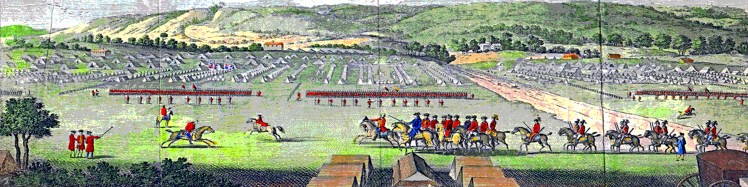
Coxheath, 1778
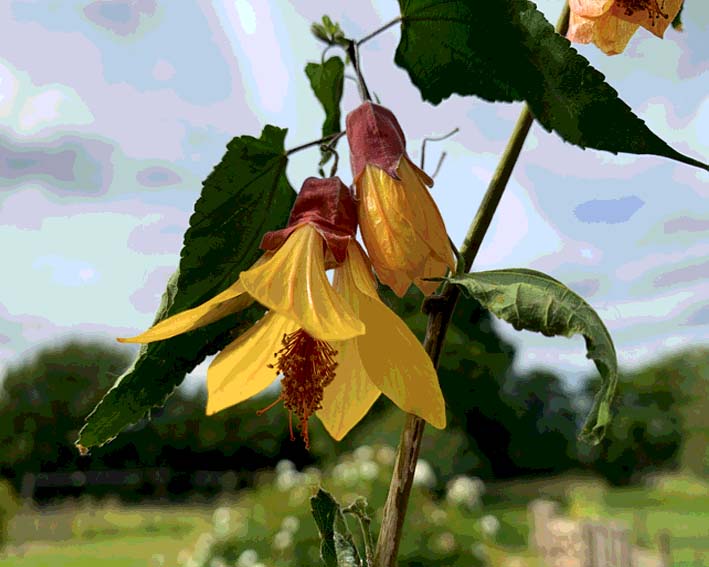 Abutilon Kentish Belle
It was the C11 Persian scholar Avicenna who named the Abutilon genus. It meant literally ‘Indian mallow’, which is also the vernacular English name. The fact that its origins are so exotic is a clue to its provenance. Abutilon proliferates across the tropics and subtropics. Some of its 200 or so species, however, were cultivated considerably closer to home. One was the handiwork of Albert V Pike, head gardener of Hever Castle in the 1950s. Because it had attractive bell-shaped flowers and was from Kent, he called it ‘Kentish Belle’. (Geddit?) What makes the species so distinctive is the calyx, the part holding the petals together, which unusually is not green but red, and creates a pleasing contrast with the soft-orange petals. It can grow to the size of a substantial bush in either acid or alkaline soil. There are not many better ways of brightening a garden for months.
 Acol
Acol
Most contract bridge players know that Britain’s distinctive Acol system of bidding was named after the road in Kilburn, North London, where it was invented. Few however can say why it shares its name with a little-known hamlet in Thanet. The answer is that Colonel Henry Perry Cotton, a Victorian owner of Quex House near Birchington, also possessed a 60-acre estate in Middlesex called Kilburn Woods, which he inherited from his uncle. Around 1880, he developed it and named one of its streets after Acol, formerly known as Acholt, which lies just south of Quex; other streets nearby also bear Kentish names, such as Kingsgate Road, Birchington Road and, not surprisingly, Quex Road. In 1894, both estates would be inherited by his grandson Major Percy Powell Cotton, the famous conservationist after whom the troubled museum is named. By chance, Acol in Kent happens to lie just 11 miles as the crow flies from the village of Bridge.
 The Admiral Benbow
The first six chapters of Robert Louis Stevenson’s ‘Treasure Island’ (1881-2) are set in the Hawkins’ inn, the ‘Admiral Benbow’, named after an extant pub in Cornwall that he evidently visited in 1880. That real pub commemorates John Benbow (1653-1702) from Shropshire, who joined the Royal Navy at 25 and won promotion for his actions against Barbary pirates. After seven years as a merchant seaman, he was appointed superintendent of Chatham Dockyard and then Deptford Dockyard, when he lived at Sayes Court. Meanwhile, he participated repeatedly in the Nine Years’ War with France. Promoted to vice-admiral, he led a squadron in 1702 against a superior French force in the West Indies. When most of his captains refused to fight, he continued the one-sided battle almost unaided until he was crippled by chain shot. His wounds proved fatal, and two of the captains were shot for cowardice; but his cussed determination made him a national hero.
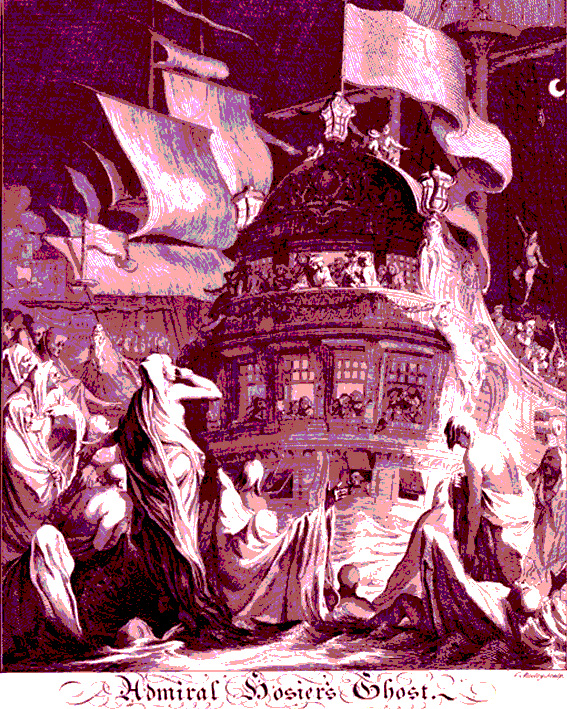 Admiral Hosier’s Ghost
In the 1720s, Britain was not at war with Spain, but knew the Spanish were running gold from Central America to Europe to fund their warlike intentions. In 1726, Admiral Francis Hosier, who came from Deptford and lived at Ranger’s House in Greenwich, was sent with 15 ships to blockade the key port of Puerto Belo in Panama, but was strictly ordered not to capture it, despite his eagerness to do so. The fleet lingered so long at sea that, the following year, nearly all its 5,000 men died of yellow fever. One was Hosier, whom the Admiralty posthumously branded a coward. Twelve years later, with Britain and Spain at war, Admiral Vernon took the port with just six ships, a triumph that led indirectly to the naming of Portobello Road. Poet Richard Glover saw fit to compose a ballad featuring Admiral Hosier’s ghost, who begs Vernon’s men to castigate Robert Walpole’s pusillanimous government for passing the buck.
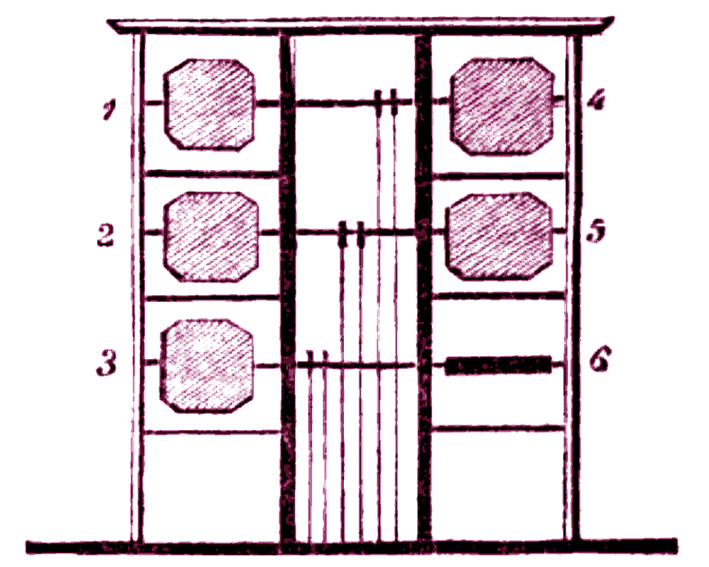 The Admiralty Shutter Telegraphs
One thing as important in wartime as information is speed of information. At the end of the C19, the swiftest way to send messages was by carrier pigeon. Alarm was caused during the Napoleonic Wars when the French had the idea of sending semaphore messages over long distances via a chain of stations in sight of each other. Each had two mechanical arms on top that, in any particular configuration, indicated a particular letter. The crew of a station noted any message sent to it and recoded it for the benefit of the next. In a great hurry, the British devised their own slicker system, using six shutters. The very first chain, built in 1796, ran from Deal Naval Yard to London via ten intermediate stations, with a branch from Beacon Hill to Sheerness; the Deal station was on the site of the future Timeball Tower. The system worked, but became defunct after Napoleon’s initial defeat in 1814.
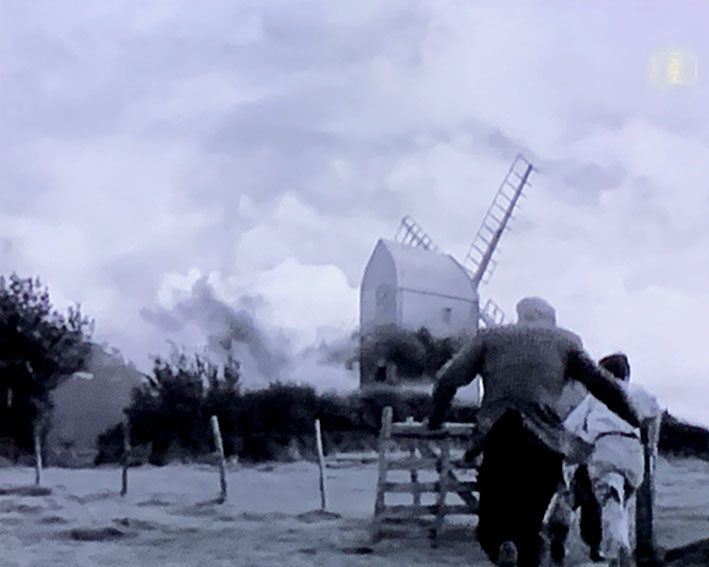 ‘Adventure in the Hopfields’
The 60-minute flick ‘Adventure in the Hopfields’ (1954) was a classic post-WW2 children’s adventure, with goodies, baddies, and a happy ending. Set during the annual migration of inner-city Londoners to the Wealden hop-gardens, it is based on the Quin family, and specifically their resourceful and incongruously well-spoken young daughter. It must have surprised Kentish folk of the day to see notoriously unruly hop-pickers depicted as the salt of the earth, while the troublemakers are two local ragamuffins called Reilly. Although Goudhurst features prominently in the narrative, the location of the action is the fictional Barden, a portmanteau of Barming and Marden. The dramatic last scene, which (spoiler alert) takes place in a burning windmill, was actually shot in Sussex, as if Kent hadn’t enough attractive mills of its own. It was nevertheless good practice for the young director John Guillermin, who twenty years later struck gold with the star-studded Hollywood epic ‘The Towering Inferno’.
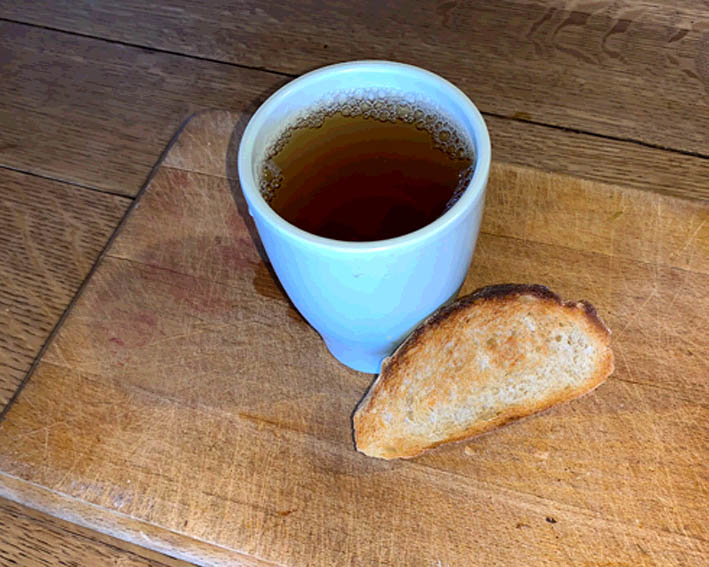 Ale sop
As both the oldest county and a peninsula, it was inevitable that Kent would develop its own unique customs. One such was ‘ale sop’. This was a snack consisting of hot ale served with toast, or sometimes a biscuit, to be dunked in it. The combination sounds strange to modern ears, but there’s a logic to it. In the days before water purification, when the risk of typhoid was ever present, beer was the usual way to consume fluids. In fact, manual workers would generally have many pints a day, albeit less strong stuff than today. Similarly, bread was the most readily available source of nutrition. Warming up the beer and toasting the bread at an open fire was a quick and cheap way of making these staples slightly special. In fact, ale sop may have been considered something of a treat, since it was served to the staff of big Kentish houses on Christmas Day.
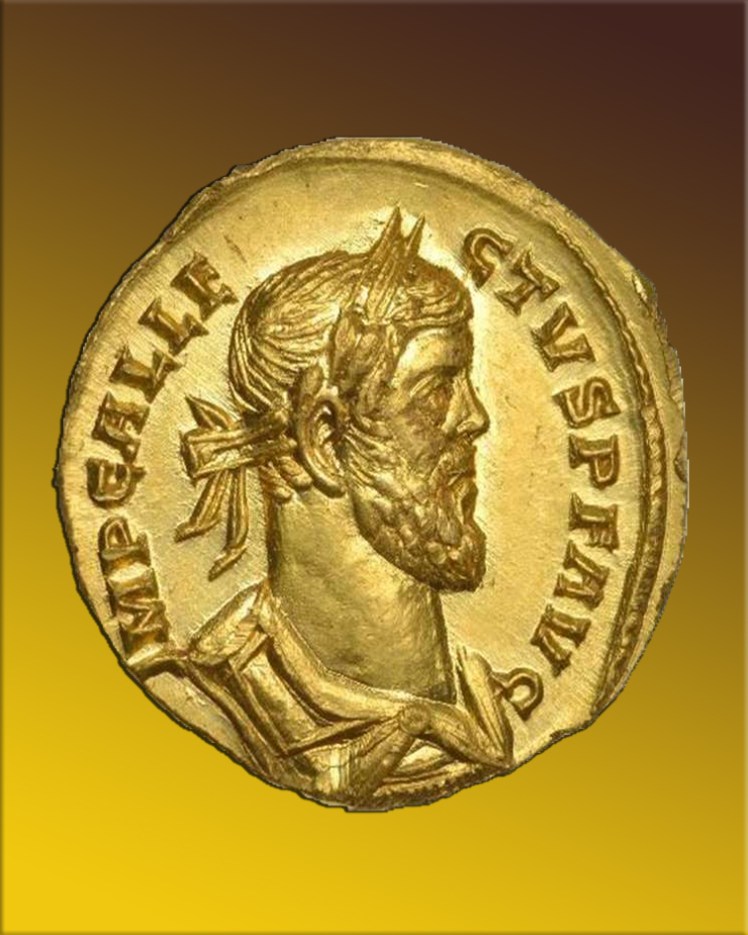 The Allectus coin
The anonymous detectorist who unearthed a gold coin at Dover in 2019 was in for a surprise: it sold at auction for half a million pounds, a record for a Roman coin minted in Britain. Curiously, it bore the profile not of an emperor but a short-lived imposter. In the turmoil of the C3, a military commander called Carausius mutinied and declared himself emperor of Britain and North Gaul. When the Empire struck back, his own treasurer Allectus murdered him and took over. Unluckily for the usurper’s usurper, by 296 he found himself up against the formidable Constantius I, father of Constantine the Great. The western Caesar kept the rebel army pinned down in Kent while a second invasion force landed near Southampton. Allectus, racing west to meet the threat, was overwhelmed and slain on the road from Londinium. Ironically, though his reputation was forever tarnished, the coin bearing his name was still in mint condition 1,723 years later.
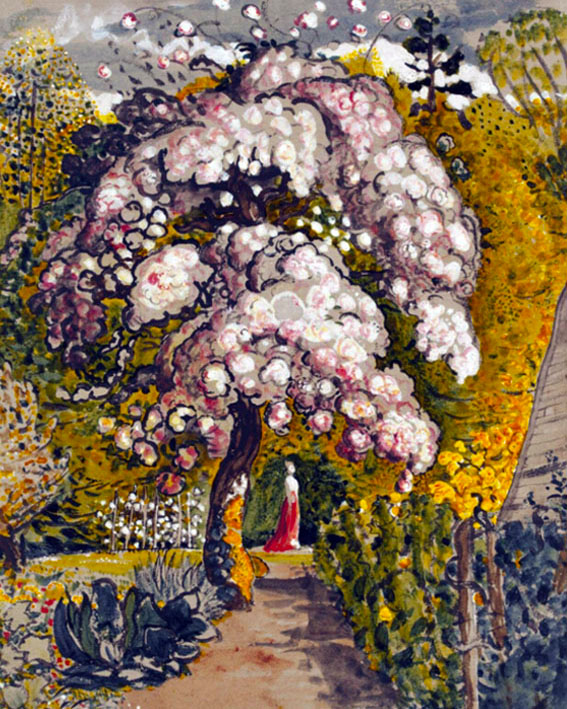 The Ancients
The C19 idea of a ‘brotherhood’ of artists came from the ‘Nazarenes’ of Vienna in 1809. Fifteen years later, the first English brotherhood was formed in Kent. These were the ‘Ancients’, admirers of the great William Blake. All students at the Royal Academy, they were Romantics to a man and seekers after refuge from the age’s commercial spirit. Nevertheless, they were High Tories, which tended to make them a little conventional in their pursuit of spiritual emancipation. Lacking an abandoned monastery to retreat to as the Nazarenes had done, they went to stay for brief periods at Shoreham near Sevenoaks, where Samuel Palmer had a country retreat. The highlight was doubtless the day when the ageing Blake paid them a visit. Though none of the half-dozen or so achieved much while in the brotherhood, some went on to greater things; and they certainly gave the pre-Raphaelites something to shoot at a quarter-century later.
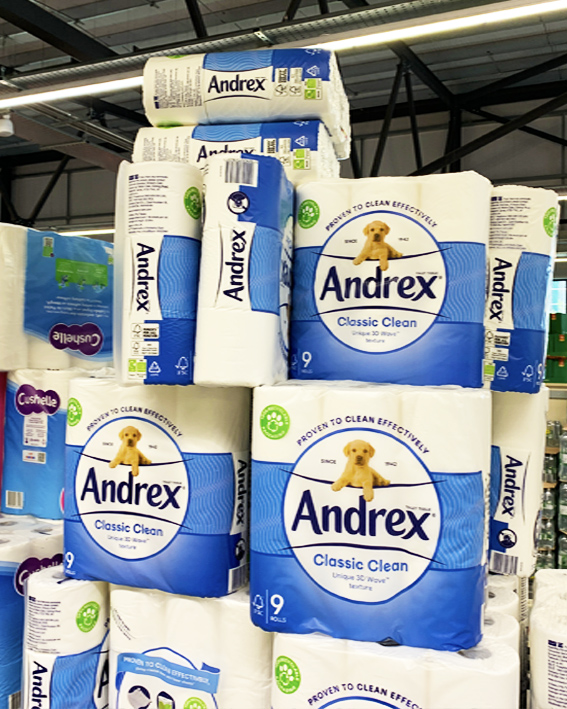 The Andrex Puppies
In 1942, the St Andrew papermill in Essex started producing the world’s first two-ply hankie, called Andrex, available exclusively through Harrods. In 1955 Bowater, which had been making paper at Northfleet since 1925, bought the brand, and a year later formed a joint venture with the American paper-manufacturer Scott to manufacture tissue. Intent on expanding Andrex’s appeal as an alternative to harsh medicated toilet-papers like Izal, Bowater-Scott’s ad agency devised the idea of a small girl running through her home unravelling a roll of Andrex. The Advertising Standards Authority objected to such wastefulness, so the company substituted a golden Labrador puppy. Over time, this developed into the famous advertising property known in the UK as the Andrex Puppies. The property survives today, albeit under new ownership. Scott bought out Bowater’s interest in 1986, and was itself acquired in 1995 by another American firm, Kimberley-Clark, whose UK headquarters was at Larkfield and then, until recently, at West Malling.
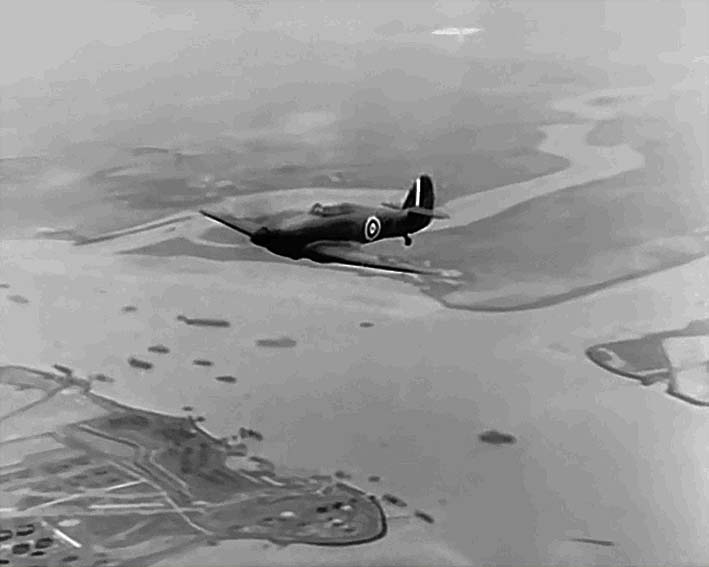 ‘Angels One Five’
“Angels One Five” was RAF parlance indicating a flying altitude of 15,000 feet. It was also the name of a 1952 movie set in 1940 at RAF Neethley, a thinly disguised Biggin Hill. It concerns a young Scottish pilot called Baird, played by John Gregson, who at first is a cold fish but eventually has the chance to prove his mettle. Although only passably entertaining, it is a typically understated testament to the fortitude of the RAF pilots. It also bears witness to Kent’s resilience in the thick of the Battle of Britain. Most of it was shot for convenience in Surrey and Hertforshire, but the action starts with striking footage of Baird’s Hurricane flying across the Medway to the Isle of Grain. The names of operational hot-spots also have a familiar ring: Ashford, Dover, Ramsgate. In a rare moment of sentiment, the diffident Baird summons the courage to invite his would-be girlfriend out to dinner, in cosmopolitan Maidstone.
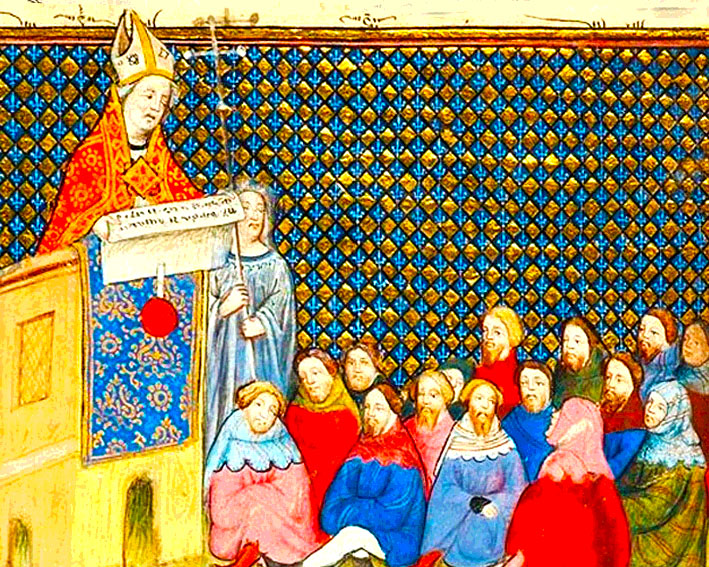 The archbishop of Canterbury
Whatever Pope Gregory I may have intended, his legate Augustine was so swayed by the Kingdom of Kent’s pre-eminence in post-Roman Britain that it was Canterbury, not London or York, that in 597 became the headquarters of the English Church, and its archbishop the eventual leader of the worldwide Anglican Communion. The post has always had uniquely strong Kentish connections. Despite having relinquished his former residences at Charing, Maidstone, Otford, and Sevenoaks, the archbishop still occupies the Old Palace at Canterbury. The bishop of Rochester is his traditional cross-bearer. His four suffragan bishops are those of Dover, Ebbsfleet, Maidstone, and Richborough. As well as chancellor of Canterbury Christchurch University, he is visitor to the University of Kent, the King’s School, Canterbury, and Benenden, Cranbrook, and Sutton Valence Schools. Despite presiding over plummeting congregations, the last four archbishops have retained their political influence, increasingly using it to promote leftist causes. The current incumbent, whose father was Jewish, advocates a multi-faith society.
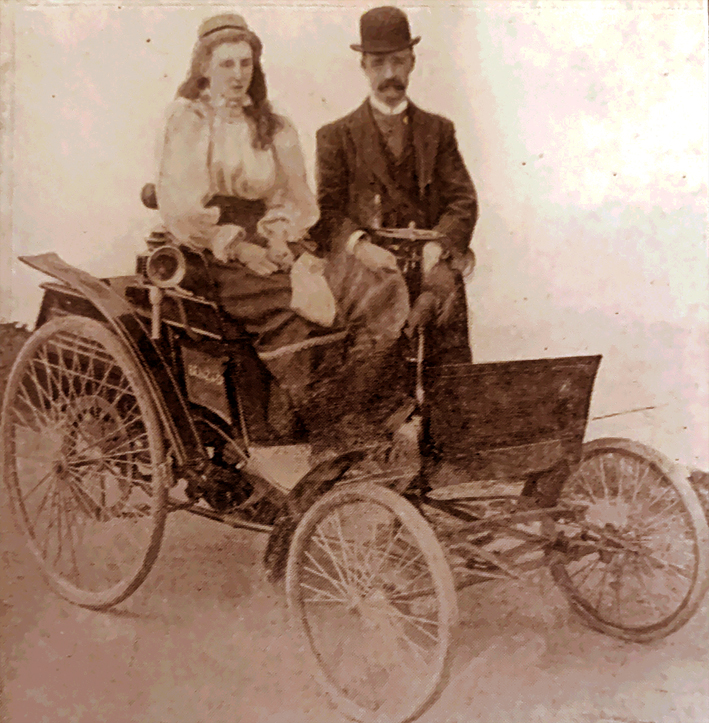 Arnold-Benz
In 1895, William Arnold & Sons was a long-established engineering business in East Peckham, operating also in mills and barges. In 1895, Walter Arnold formed a partnership with Henry Hewetson, who had imported Britain’s first Benz car in 1894. Their Arnold Motor Carriage Company manufactured Benzes under licence using their own motors; they produced a dozen by 1898, as well as some vans. Arnold and Hewetson each travelled in one as a passenger on the 1896 Emancipation Run to celebrate the raising of the general speed limit to 12 mph, although it is doubtful that they drove the whole course from London to Brighton. Ironically, Walter Arnold had been apprehended early that year driving a gasoline-powered locomotive in Brenchley and exceeding the 2 mph limit in Paddock Wood, thereby incurring the world’s first speeding prosecution. An Arnold-Benz, registration number MT 906, was later restored, and survives in the possession of the Arnold family.
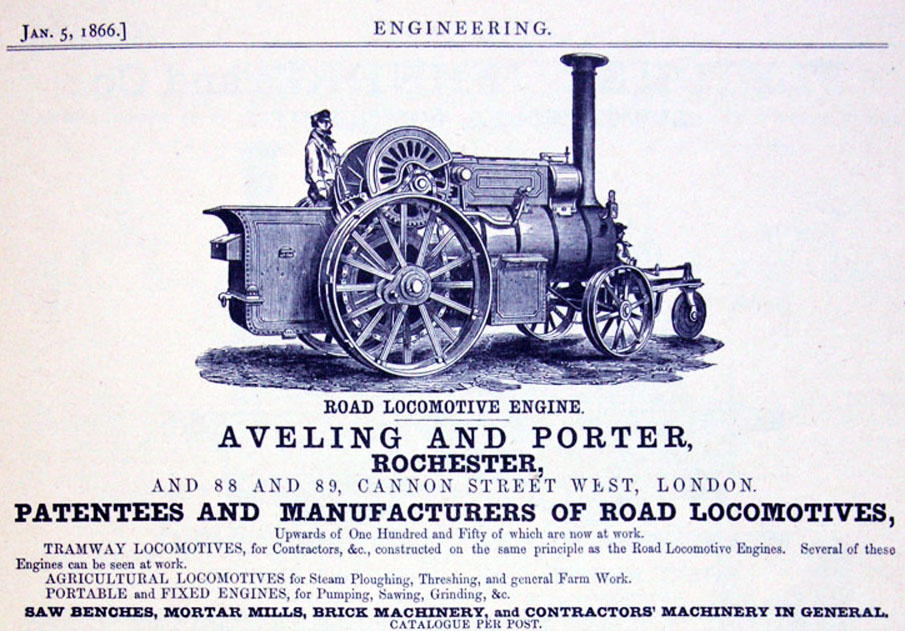 Aveling & Porter
In the 1860s, Kent hosted a revolution in steam locomotion. Steam-engines were then either static or mounted on wheeled frames on rails; agricultural engines had to be drawn on carts by shire-horses. Thomas Aveling, a Rochester engineer, had the idea of connecting the crankshaft to the rear axle, then adding steering. So was born the first self-propelled vehicle needing no tracks. With financier Richard Porter, he developed a company, Aveling & Porter, that led the world in automotion from the Invicta Works beside the Medway at Strood. In 1865, they demonstrated the world’s first steamroller on Military Road in Chatham, Star Hill in Rochester, and Hyde Park, greatly impressing onlookers. Unfortunately, their vehicles’ startling performance provoked the notorious ‘Red Flag’ Act, with its 4mph maximum speed limit. The company eventually constructed over 12,000 engines sporting the Invicta badge. But for internal combustion, Kent might have remained an automotive powerhouse. The Invicta Works was finally demolished in 2010.
 Aylesford Paper Mill
Albert Edwin Reed (1846-1920) was a Devonian who made a handsome living from papermaking. His first wholly owned facility in Kent was the fire-damaged Upper Tovil Mill, which he bought in 1894 and revitalised. He specialised in paper for half-tone printing, ideal for newspapers displaying monochrome pictures. This perfectly suited the ambitious Harmsworth Brothers, Lord Northcliffe and Lord Rothermere, proprietors of the ‘Daily Mail’ and the ‘Daily Mirror’ respectively, especially when the latter became the world’s best-selling newspaper. To undercut the competition further, Reed’s sons centralised their several mills at Aylesford in 1922. Within a decade, APM was producing 850,000 miles of paper five feet wide annually, and boasted Europe’s biggest kraft-paper machine. In 1970, however, profitability concerns prompted a takeover of the huge publishing group IPC, heralding a transformation to today’s vast publishing conglomerate, Reed International. Aylesford Newsprint, a Swedish concern, continued papermaking at APM from 1993 to 2015, but the site is now under redevelopment as warehousing.
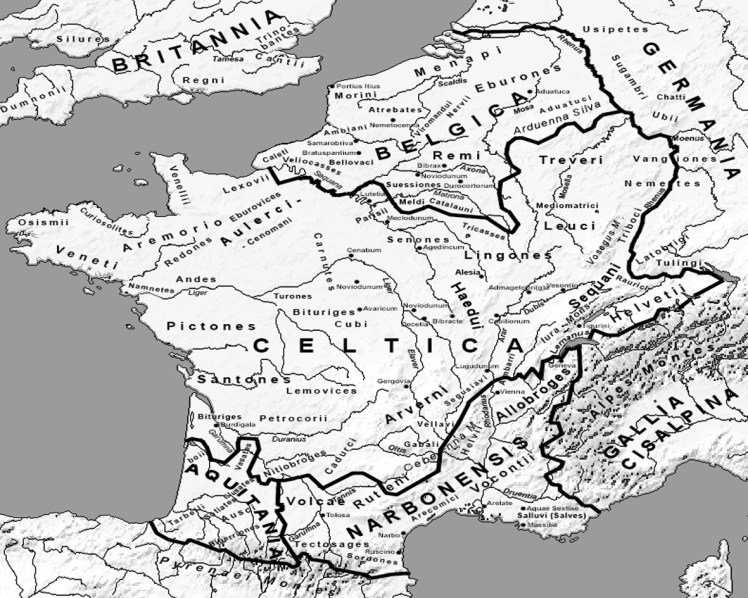 Aylesford-Swarling culture
Two places in Kent, one west of Maidstone and the other south of Canterbury, are united in being the site of ancient cemeteries of special interest to archaeologists. They both contained grave goods particular to the La Tène culture that dominated Europe in the late Iron Age, immediately preceding the Roman Empire. Believed to have been introduced to Britain by the Belgae, a Gallic tribe, they most notably included coinage and wheel-thrown pottery. The design of the latter was distinctly suggestive of Mediterranean influence. There were also bronzes in the Italic style, and even wine amphorae. The Aylesford-Swarling pottery style had spread north of the Thames by the time of the Roman invasion. It goes to show that, with its proximity to the continent of Europe, Kent was a major conduit for cultural diffusion. The Aylesford site, incidentally, was excavated by Sir Arthur Evans, whose next discovery would be the extraordinary Palace of Knossos in Crete.
 Bank holidays
Weather permitting, everyone loves bank holidays; but where did they come from? The answer is Lord Avebury, the Lubbock from High Elms who excelled less at sport than science and politics. A banker by trade, he had the idea of creating public holidays when the banks would be closed by law, all transactions being deferred until the following day, and as MP for Maidstone proposed the Bank Holiday Bill. It was enacted in 1871, and the four English bank holidays he’d selected – Easter Monday, Whit Monday, the first Monday in August, and Boxing Day – became part of the culture. Though enthusiasts initially called them ‘St Lubbock’s Days’, some wags claimed that the spring/summer dates coincided with Mondays when his local cricket team was playing. They lasted a century until the Banking & Financial Dealings Act 1971 shifted the May and August holidays to the end of their respective months; the current ‘May Day’ holiday was added by Royal Proclamation in 1978.
 Bathing machines
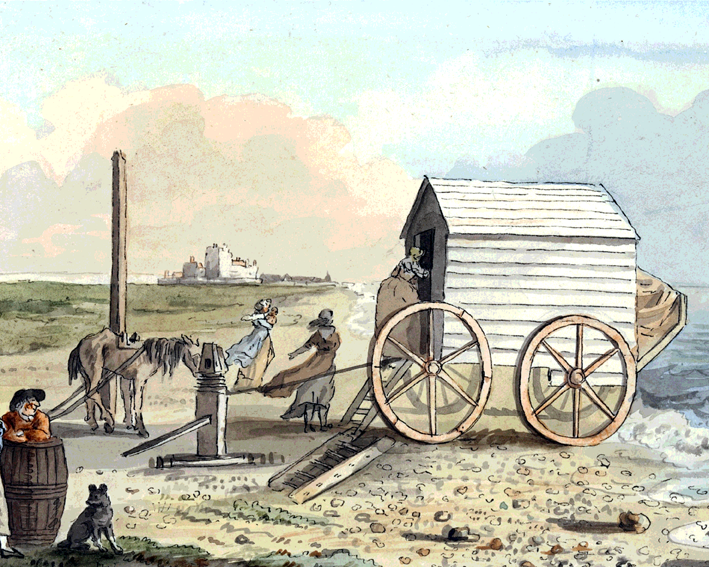
Benjamin Beale from Margate is normally said to have invented the bathing machine in 1750, although there is evidence of such a device 15 years earlier. This was simply a means of getting bathers from the beach into the sea without being seen out of their day clothes. It was essentially a box on wheels that would be dragged into the waves by men, or a horse, or even steam power. Bathers would change inside, leaving their clothes on a shelf, and hop into the water on the far side from the beach. The particular innovation by Beale, a propriety-minded Quaker, was the “modesty hood” that could be lowered on the sea side, shielding bathers from the prying eyes of other bathers. Margate, which was then a premier resort, became bathing-machine city. Indeed, when Beale’s booming business was destroyed by a storm in 1767, he was offered the financial support to get it up and running again.
 Battenberg Cake
A resident of Brockley, Frederick T Vine was London’s foremost baker at the turn of the C20. Using the ritzy pseudonym Compton Dene, he edited ‘The British Baker & Confectioner’ and wrote numerous illustrated books for the trade, including ‘Biscuits for Bakers’ (1899) and ‘Savoury Pastry’ (1900). Around 1890, Vine described his own ‘Battenburg Cake’ (sic) – a fruit cake. According to legend, the Battenberg Cake familiar today had already been created in 1884 to celebrate the marriage of Queen Victoria’s granddaughter Victoria to Prince Louis of Battenburg, the four panels representing him and his three brothers. Yet nothing resembling it was published before Vine’s 1898 book ‘Saleable Shop Goods’, albeit that his new Battenburg Cake had a nine-square format in alternating red and white. Could it be that Vine simply transferred the name of one of his recipes to another? Curiously, the modern four-panel, pink-and-yellow format was first published elsewhere around the same time, but as a ‘Neapolitaine Roll’.
 The Beast of Tunbridge Wells
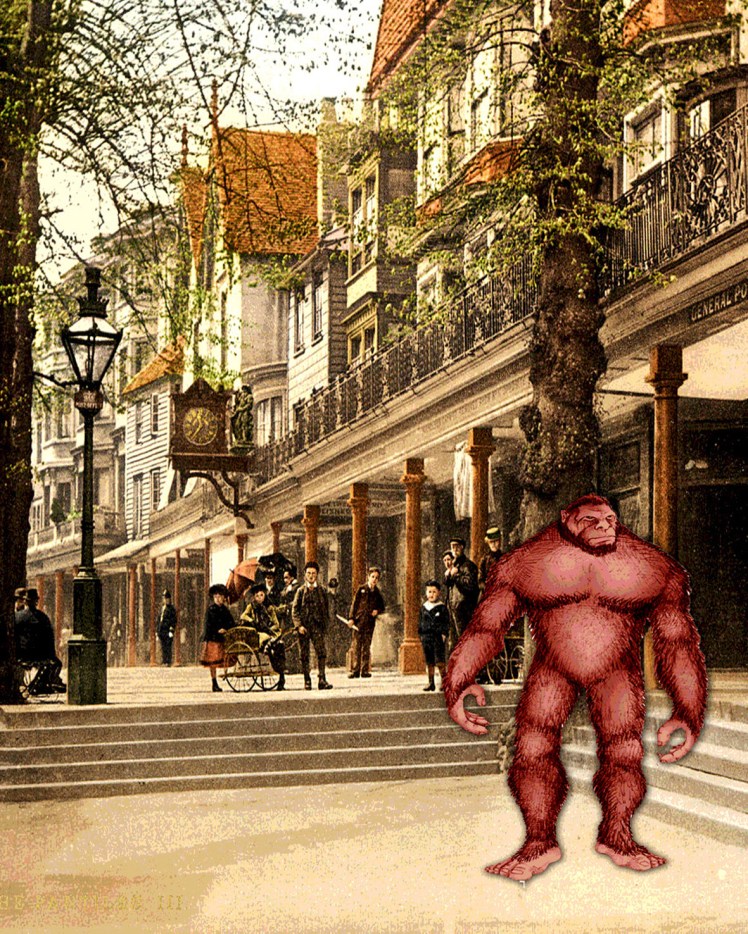
When WW2 was going badly in 1942, minds were distracted by the story of a gigantic apeman in Tunbridge Wells. It supposedly terrified an elderly couple by approaching them from behind as they sat on a bench. Since its coat was bright red, it sounded like a version of the USA’s Sasquatch, or Bigfoot. It might have been forgotten, had not another clutch of sightings been reported seventy years later. ‘The Sun’ carried a story of a walker being confronted in the woods by an 8-foot tall beast with long arms and “demonic” eyes; it roared at him, and he ran off. The stories prompted scorn from local residents, presumably signing themselves ‘Disgusted of Tunbridge Wells’; they put them down to a hoaxster in an outfit. Since a beast like this is unknown to zoology, the best explanation might be that the town is a magnet to tourists, and such tales always add local colour.
 Beauty of Kent
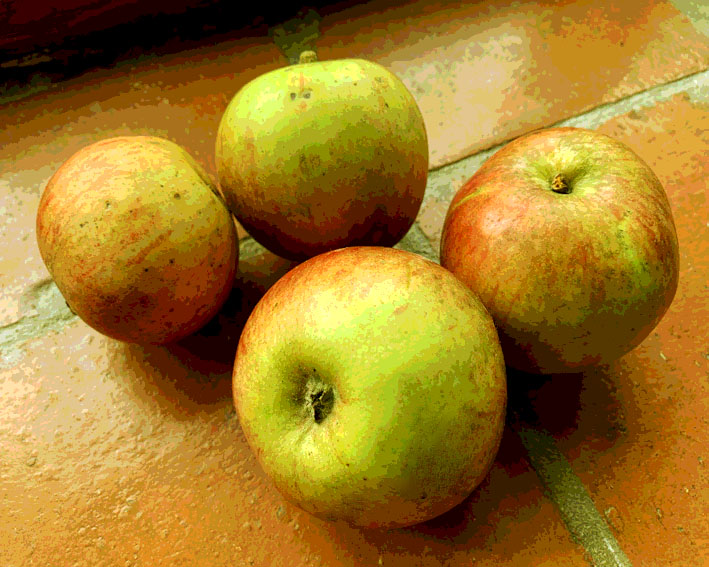
In Georgian times, a strain of cooking apple was cultivated that for a century and more went down a storm in England. There were multiple reasons: it was large, it was sweet, it smelt nice, its texture was good, it had a pleasing lemon complexion when cooked, and it was handy for Christmas. As late as 1901, it won a Royal Horticultural Society award. As more science went into breeding apples with looks as well as taste, however, there was trouble. Why? Because this old favourite was not the best looker. While mostly yellow, it had reddish streaks and patches, and was freckly. Recognising the problem, someone – an advertiser, perhaps, or a politician – had the idea of calling it ‘Beauty of Kent’, presumably in the hope that people would be persuaded to disbelieve their own eyes. A name like ‘Deptford Delicious’ might have set less misleading expectations. Although the cultivar fell from favour, Brogdale does still keep a couple of specimens.
 The Beauty Show
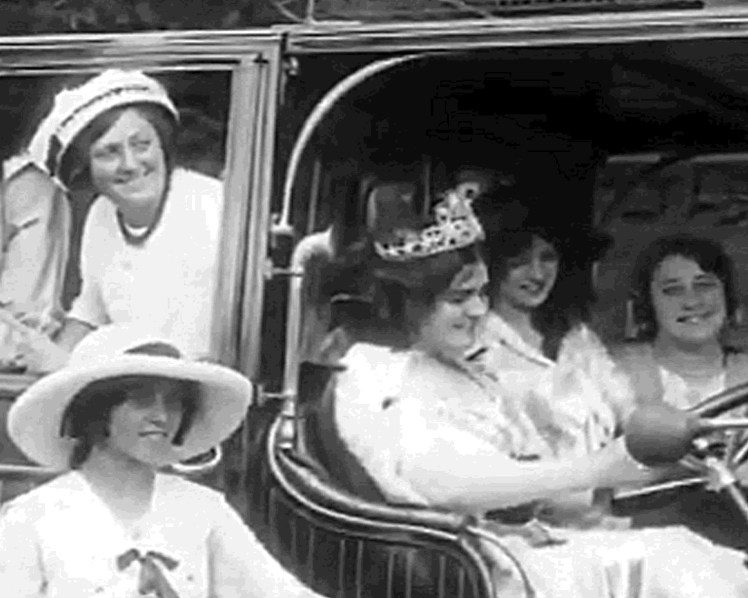
In 1888, an 800-foot pier was built at Folkestone, accommodating an 800-seater pavilion. Saddled with a construction overspend and high running costs, it was a financial failure. That changed in 1907 when a new management team, the Forsyths, took the venue downmarket. In place of highbrow shows, in came all manner of populist entertainments that went down a storm. Most successful of all at the renamed Pier Hippodrome was the innovative ‘Beauty Show’, won by the demure Miss Vogel. So popular was it, especially with women, that a gentlemen’s beauty show was introduced the next month. The event was made an annual international fixture, and the civic ‘beauty contest’ became an institution all over the country. Only after the Women’s Lib protest at the 1970 Miss World contest, one month after Germaine Greer’s ‘The Female Eunuch’ came out, was it regarded as much other than a platform for girls who just wanna have fun.
 Bedlam
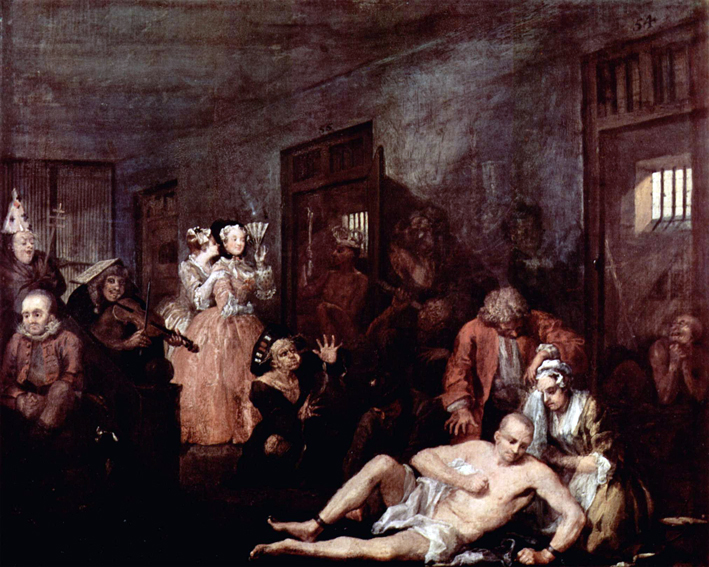
It’s common knowledge that the word ‘bedlam’ derives from the name of London’s famous lunatic asylum, but few know that the institution now resides in historical Kent. Founded in 1247 near Bishopsgate as the priory of a military order called Our Lady of Bethlehem, its role evolved from alms-collecting to alms-giving, and it was already housing the insane by the late C14. After two of England’s first theatres were built nearby, ‘Bedlam’ was mentioned in numerous dramas, which sealed its reputation for pandemonium. Following its relocation to Moorfields in 1634, it became a lucrative tourist attraction, the more colourful inmates providing a freak-show for a public that regarded mental illness as somehow morally reprehensible. The asylum spent the C19 at Southwark, but was moved again in 1930, this time to Beckenham; the ‘Bethlem Royal Hospital’ is now a well-equipped psychiatric unit. Hollywood’s 1946 horror movie ‘Bedlam’ starred Boris Karloff and Anna Lee, respectively from Dulwich and Ightham.
 The Bell Inn revenue inspectors
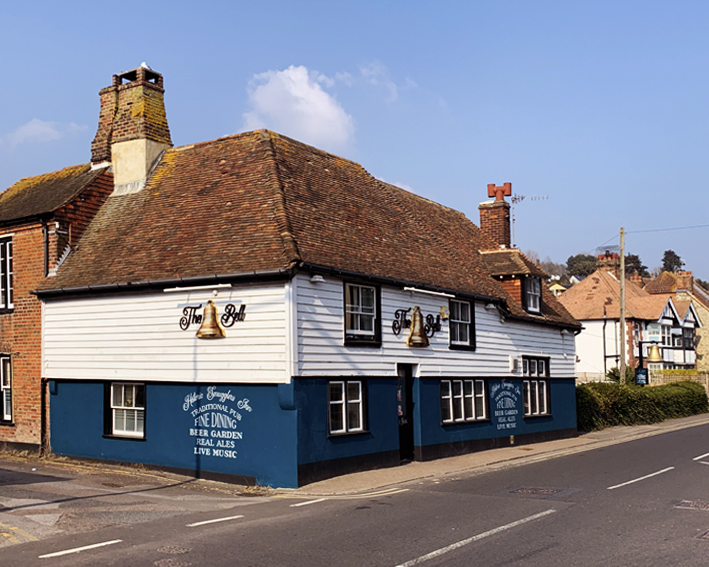
When smuggling was conducted around Kent’s shores on a scale that would have stretched the Mafia during the Prohibition, it was inevitable that anyone who got in the way of business operations was at serious risk. In the days before motorway bridges, disposal of criminally dead bodies was no easy matter; but plainly there was a deal of resourcefulness. Taverns were always popular resorts for smugglers, one such being the C15 Bell Inn, close to the sea-front at Hythe. When the large inglenook fireplace there was renovated in 1963, the builders uncovered the corpses of two C18 Revenue Officers bricked up behind a wall. They were fully dressed, and their uniforms and boots were in surprisingly good shape. Nothing more is known about them, although customers enjoying a drink or three have reported seeing their ghosts sitting by the fireplace. Presumably the two are ushered out at closing time by the Grey Lady, the ghost of a former owner.
 Belmarsh
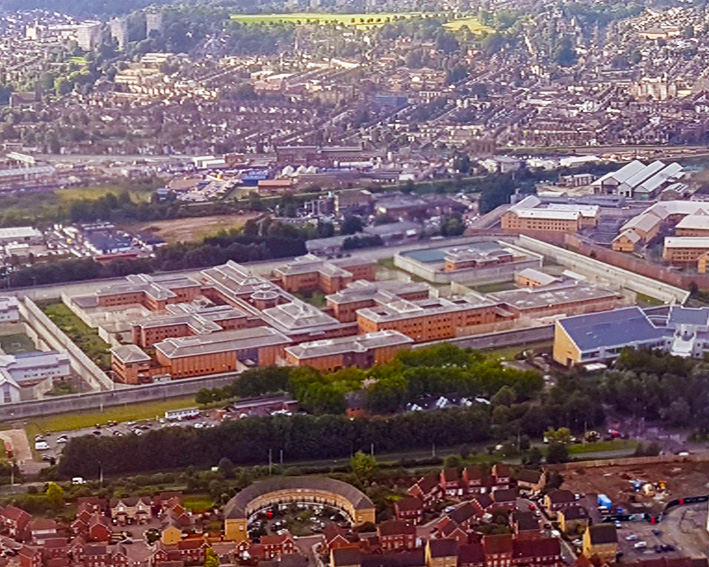
Alongside Woolwich Crown Court on Western Way in Thamesmead, on the historic site of the eastern portion of the Royal Arsenal, stands Britain’s highest-security prison, HMP Belmarsh. Opened in 1991, and now housing around 700 A-category prisoners, it has gained a particular reputation for the harshness of its regime. Indeed, it has been described as Britain’s Guantanamo Bay on account of its use as a centre for detaining terrorists indefinitely without charge. Its recent inmates include Julian Assange, detained for five years until 2024 while contesting US extradition proceedings. Other alumni include such celebrated criminals as Ronnie Biggs and Charles Bronson alongside numerous other high-profile offenders including multiple murderers, serial rapists, and cabinet ministers: Jonathan Aitken, Jeffrey Archer, and Denis MacShane all served time there, the first two for perjury, the last for fraud. Repeatedly criticised for its harsh regime, it was nicknamed Hellmarsh by Archer. In 2009, workmen discovered two wooden trackways there, dating back six millennia.
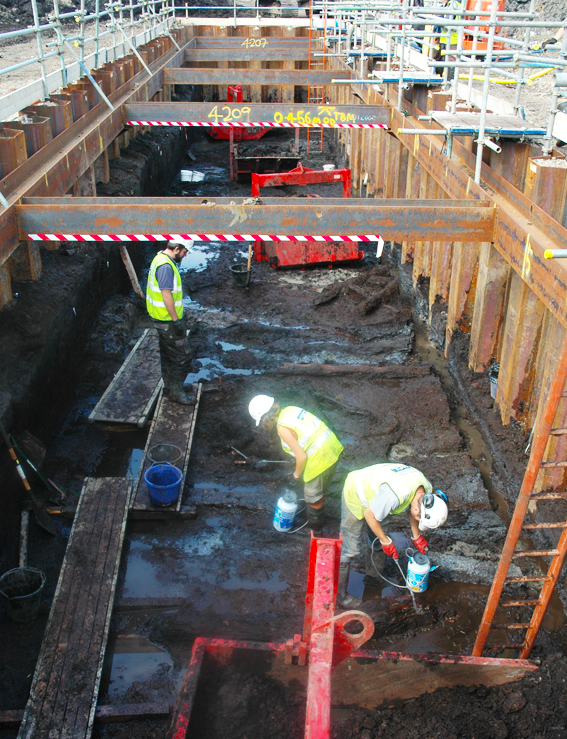 The Belmarsh Trackways
The marshes on the south bank of the Thames in north-west Kent evidently made an appealing habitat for Stone Age tribes, attracted no doubt by local flora and fauna as food sources. However, getting around became more difficult when the water level started to rise. Two timber trackways excavated in the Somerset Levels during the C20, known as the Post Track and Sweet Track, show they dealt with it in the C39 BC the way we use boardwalks today. In 2009, during construction work beside HMP Belmarsh in Thamesmead, workmen discovered a pair of comparable structures at a depth of 15 feet. Carbon-dated by specialists from Archaeology South-East, they proved to be about as ancient as the Somerset ones, and 700 years older than another, close to North Woolwich, that hitherto had been thought the oldest in the London Basin. To give a better idea of their antiquity: they were constructed more than a millennium before Egypt’s oldest paved road.
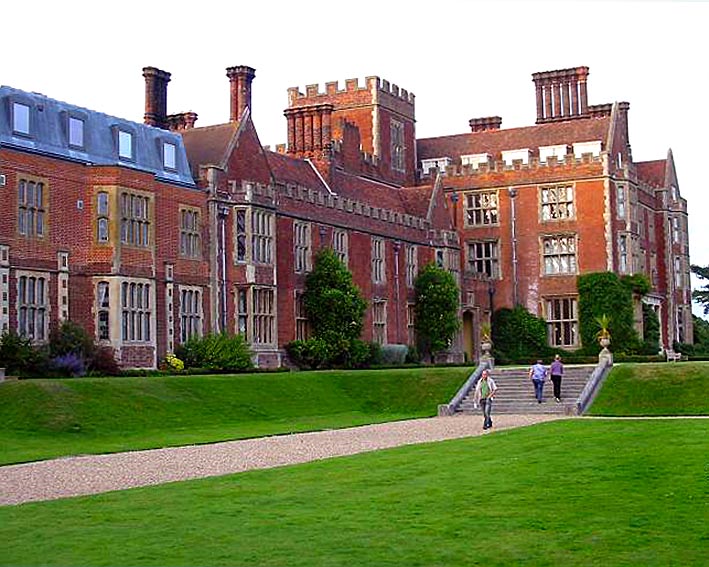 Benenden School
After the Norman Conquest, the area where Benenden School now stands was owned by Bishop Odo. In 1216, John Hemsted built a house there that Elizabeth I later visited. In 1718, Hemsted Park was purchased by Admiral Sir John Norris, whose grandson lived there with his wife, the notorious courtesan Kitty Fisher. Lord Cranbrook replaced the old house in 1860 with a dynamic new building that Lord Rothermere rendered less ostentatious in 1912. Eleven years later, three Wycombe Abbey teachers – Christine Sheldon, Anne Hindle, and Kathleen Bird – left to start a new boarding-school for upper-class girls there. ‘Benenden’ rapidly built and maintained a reputation as one of Britain’s most prestigious girls’ schools, and unlike its traditional rival Roedean has not sacrificed its quintessentially English character. Its most high-profile alumna is Princess Anne, who was friends there with Jordanian princess Alia bint Hussein; but its most influential is probably the former spymaster, Lady Manningham-Buller.
 Bethersden marble
Geologically, Bethersden marble shouldn’t be called ‘marble’ – because it’s not metamorphic – and it doesn’t necessarily come from Bethersden: lesser deposits were also found in Sussex. Yet the material itself is as distinctive as its name. It was formed from bands of freshwater limestone left behind in the Weald when the waters receded. Its distinctive appearance is derived from the calcified remains of freshwater snails, giving it one of its more colourful alternative names: winklestone. As it can polish up to an attractive shiny appearance, it is has been used in architecture and building since medieval times in the same way as actual marble, with such diverse applications as the pavement outside the Red Lion in Lenham, the exterior of the Dering Arms in Pluckley, and the Archbishop’s chair at Canterbury Cathedral. Although Bethersden marble is scarcely mined now, relics of quarrying remain in the form of ponds, some now used as fisheries, dotted around the Weald.
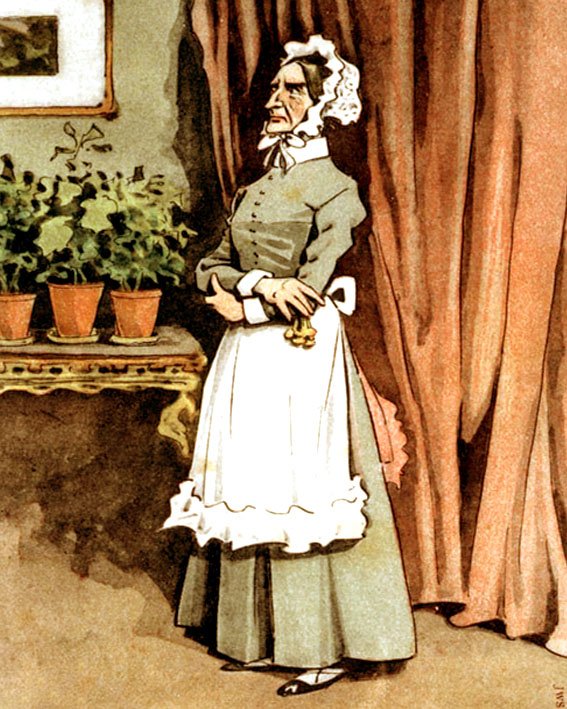 Betsey Trotwood
A formative influence on David Copperfield in Dickens’ eponymous novel is Betsey Trotwood, his resolutely misandrist great-aunt who paradoxically takes him under her wing and procures him a good education in Canterbury. So sharply delineated is her personality that she has been played in movie adaptations by such stars as Edith Evans, Maggie Smith, and Tilda Swinton. One good reason why she seems so human – apart from Dickens’ enormous talent for characterisation – is the fact that she was based on an actual woman of his acquaintance. That woman was Mary Pearson Strong, and she lived in the cottage in Victoria Parade, Broadstairs that is now home to the Dickens House Museum. Curiously, when an American businessman was applying for a post office franchise in Ohio in 1866, he was just reading ‘David Copperfield’, and successfully applied for the name ‘Trotwood’ – the only municipality in the world bearing that name. Closer to home, a traditional Victorian pub in Clerkenwell commemorates her.
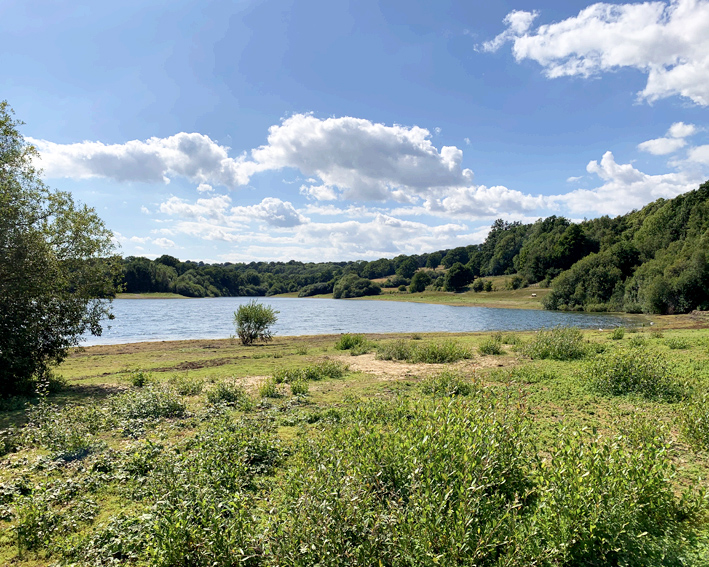 Bewl Water
Only half a century ago, Bewl Water was a valley occupied by the River Bewl. By 1975 it had been converted to a reservoir containing 7 billion gallons of water, making it the biggest lake in the South-East. The intention was to provide a dependable water source, diverting water from the River Medway whenever volumes reached a set level. Although its purpose was purely functional, its construction has had the unintended consequence of providing a useful artificial addition to nature. As well as looking quite scenic in places, it has become home to a plethora of animal species, especially birds. Like most large bodies of water, it is also a magnet to humans, providing not only angling but also numerous water sports and other leisure activities. Proposals to increase the offtake from the Medway in view of Kent’s now steepling population have however met with opposition because of the risk of environmental degradation.
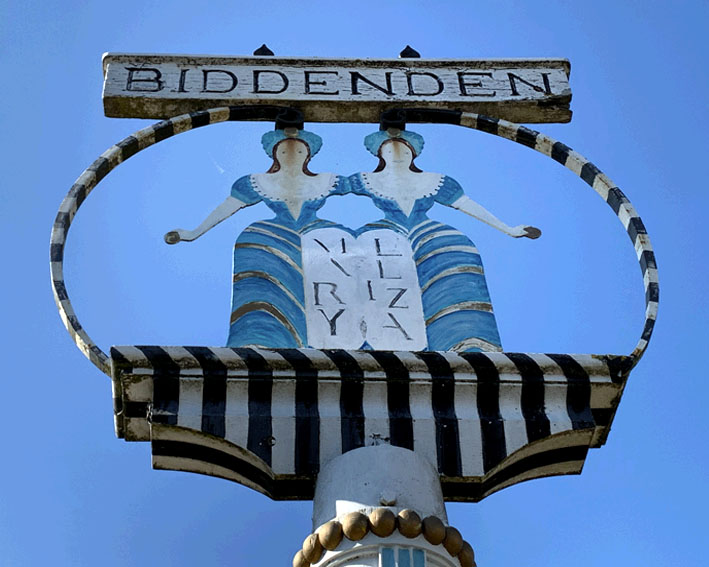 The Biddenden Maids
As Lady Godiva is to Coventry, so the Maids are to Biddenden. According to the legend, they were C11 Siamese twins who bequeathed to the village the ‘Bread & Cheese Lands’ whose revenue funded a ‘dole’ of victuals to the needy each Easter. The tradition continues today, lavishly funded by the sale of the Lands for housing. The Maids appear on both the village crest and the Biddenden ‘cakes’ handed out or sold to visitors. These biscuits are barely edible, being baked in batches every few years to a hardness that makes them durable souvenirs of the Maids’ generosity. The two were given suspiciously modern names and a back-story in Victorian times; but it’s hard to escape the conclusion that even the Siamese twins yarn was an invention. Most likely it was a traditional image of two loving sisters baked into the biscuit – like the cow on a malted milk – which gave some joker the idea.
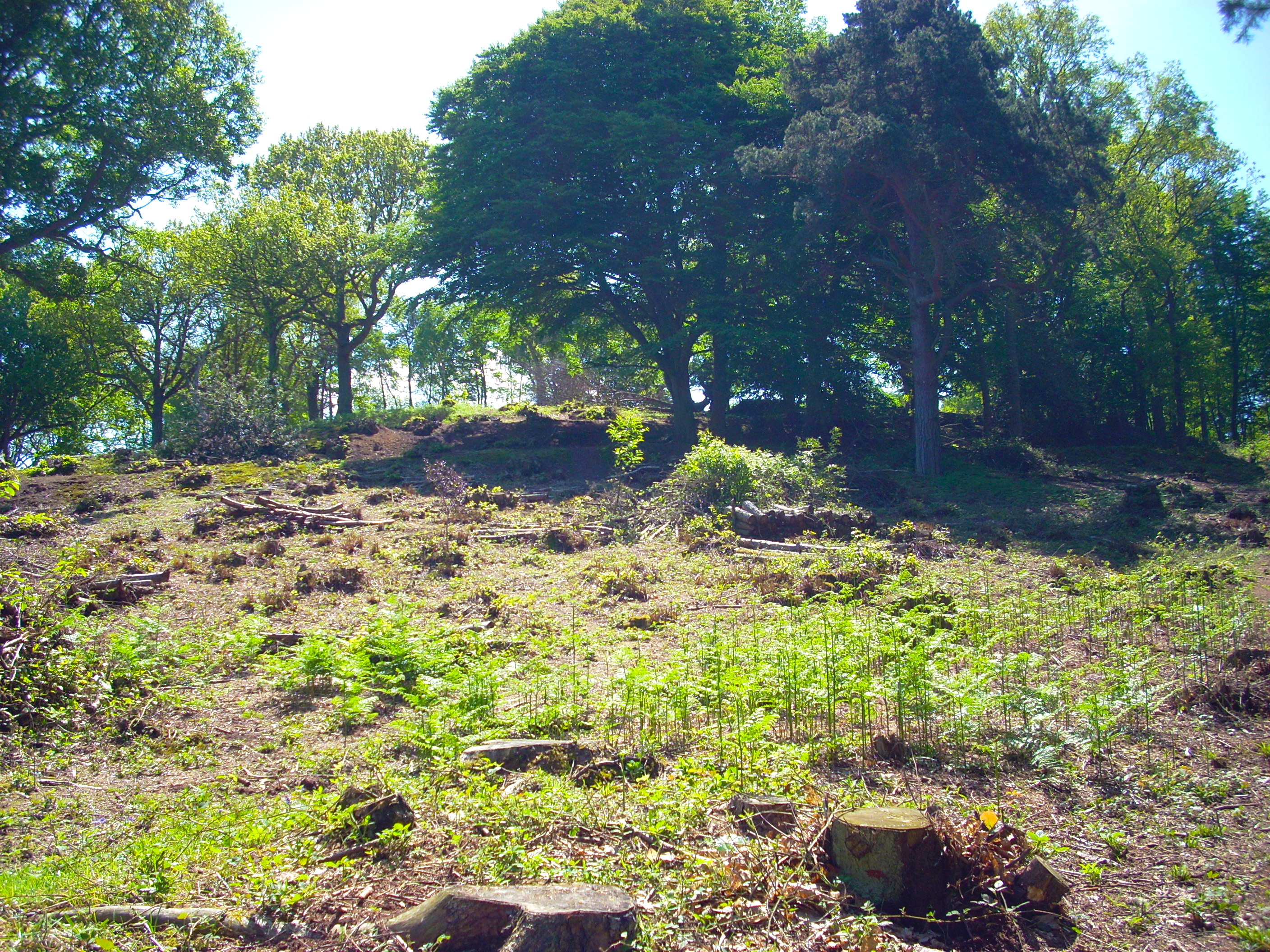 Bigbury Camp
In Howfield Wood, east of Chartham Hatch, is an Iron-Age fort that, dating to the middle of the C4 BC, is uniquely old in East Kent. Bigbury Camp, formerly known as Bigberry, covers 26 acres and, as is typical of a so-called univallate hillfort, is surrounded by defences following the natural contours of the terrain. This Celtic camp had two entrances, to the east and west, and a secondary area at its northern end that was perhaps an enclosure for livestock. Archaeological finds include a large hearth, a Celtic slave-chain, and Aylesford-Swarling pottery. Bigbury was quite possibly attacked by the 7th Legion during Julius Caesar’s invasion of 54 BC. It is even conceivable that, having been expelled, the Celts withdrew to the east and built a new stronghold that eventually became Canterbury. The site, which is crossed by the North Downs Way and Pilgrims’ Way, is now under the management of Kent Wildlife Trust.
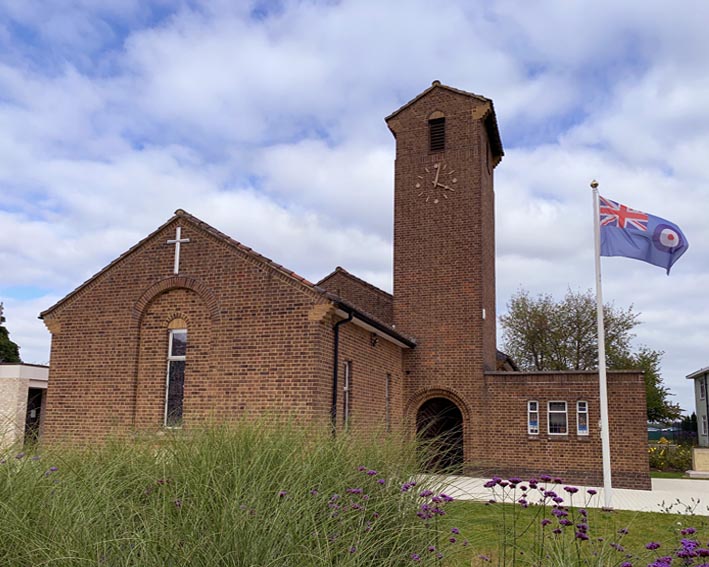 Biggin Hill
Biggin Hill is one of the most romantic names in aviation history. It was used as a wireless-testing site in WW1 until, in 1917, the Royal Flying Corps moved its headquarters there from Dartford. The airfield was a prominent RAF base in the Battle of Britain, its fighters claiming 1,400 enemy aircraft at the cost of 453 personnel. A priority target for the Luftwaffe, it underwent 12 raids in five months. After WW2, it became a joint military and civilian airport. RAF operations stopped in 1958, although one section is still military. Despite lying well outside the urban sprawl, it was sold to the London Borough of Bromley in 1974. The council, as freeholder, secured a court ruling in 2001 barring flights with paying passengers. The famous Biggin Hill International Air Fair took place from 1963 to 2009, but relaunched in 2014 as a smaller Festival. The museum and chapel can still be visited.
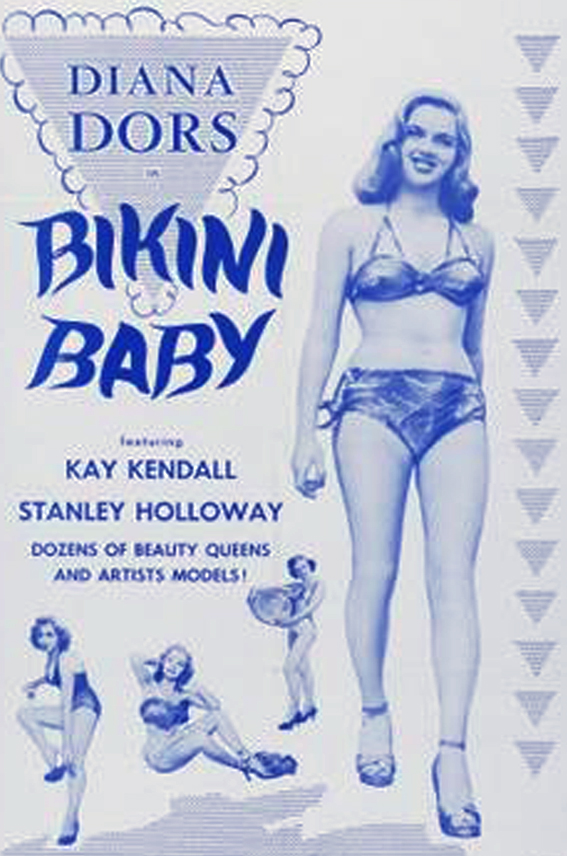 ‘Bikini Baby’
Inspired by a Miss Kent beauty contest at Folkestone’s Lea’s Cliff Hall, where he was a judge, director Frank Launder devised a movie under the provisional name ‘Beauty Queen’. It looked promising, with talent like Dennis Price, Stanley Holloway, Dora Bryan, George Cole, and Trevor Howard on board. The lead role was awarded to Pauline Stroud from Tunbridge Wells, who was cast ahead of future superstar Audrey Hepburn. A bevy of beauties came to Folkestone for the shoot in 1951, including a young Joan Collins. Possibly sensing a turkey, however, the producers sexed up the title to ‘Lady Godiva Rides Again’; and, after the movie arrived in the USA, it was re-released under the name ‘Bikini Baby’, with the buxom Diana Dors given star billing, even though she only appeared in half the film. The movie was soon forgotten, at least until 1955, when one of the extras, Ruth Ellis, became the last woman to be hanged in Britain.
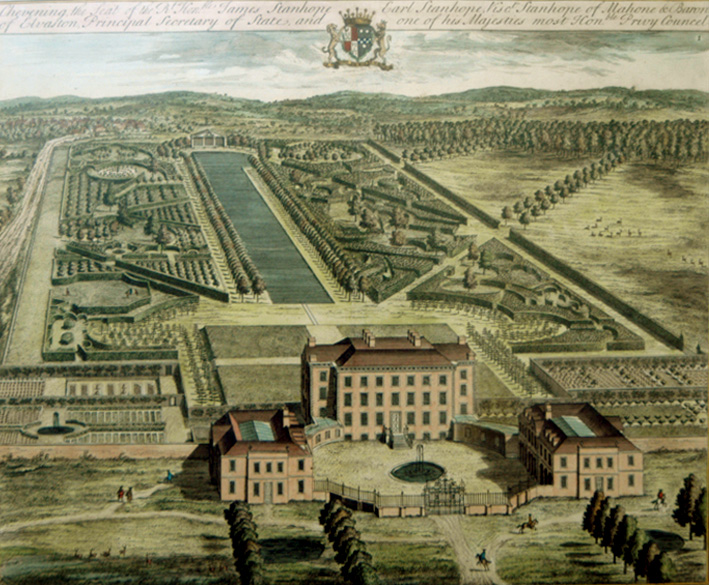 Bird’s-eye views
In the early C18, a pair of Dutchmen, artist Leonard Knijff and engraver Jan Kip, had a brainwave. They would sell English stately-homeowners the idea of mapping out their estate in painstaking detail, and then producing an intricately detailed image of the house and its surrounds as if seen from 200 feet up a quarter-mile away, long before hot-air balloons. They created 79 of these ‘bird’s-eye views’ that appeared in the first volume of ‘Britannia Illustrata’ in 1708, the Kent subjects being Knole, Fairlawne, and Doddington. Kip single-handedly created 17 more for Dr John Harris’s incomplete ‘History of Kent’ (1719), of which some were re-used in ‘Britannia Illustrata’ volume 2 (1724). Academic study has shown they were not entirely accurate, but they do include some interesting details of everyday country life, and provide a valuable record of the layout of formal gardens in the era before Capability Brown came along with his new broom.
 Black-eyed Susan
In 1720, John Gay of ‘The Beggars’ Opera’ fame wrote a ballad called ‘Black-Eyed Susan’ that became a lasting hit. The eponymous young woman Susan goes to find her “sweet William” on his warship in the Downs, just as he is about to set off around the world. He seeks to assure her of his undying love, culminating in the affirmation that yes, he will have a girl in every port, but she will always be Susan: the diamonds of India will be her eyes, the winds of Africa her breath, and its ivory her skin. So touching was it that the song was still very popular more than a century later, and a version has been recorded even this century. As familiar in America as it was in Britain, the song’s name was adopted as the appellation of Rudbeckia hirta, a flower native to America whose dark centre suggested its now more familiar name.
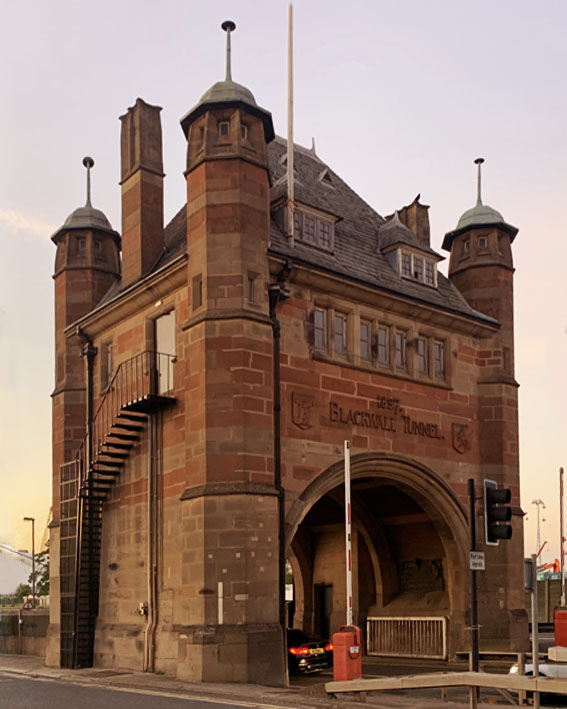 Blackwall Tunnel
Even before Whitehall annexed north-west Kent, a London MP had suggested the economic value of a cross-Thames road link between the East End and the Greenwich peninsula. One of London County Council’s first big infrastructure projects was a two-lane tunnel connecting Poplar with today’s A102. It got its name not from its internal appearance but the hamlet of Blackwall at its northern end, itself named after a stretch of river wall. Designed by Sir Alexander Binnie and completed in 1897, the tunnel had several bends, a ceiling that was in parts too low, and limited capacity that caused a chronic bottleneck. This problem was partially addressed by 1967, when a new, second tunnel doubled the number of lanes in each direction. Nevertheless, the problem of congestion remained, a fact the IRA sought to exploit in 1979 when it blew up an adjacent gas holder. Relief may finally be provided by a new tunnel running from North Greenwich to Silvertown.
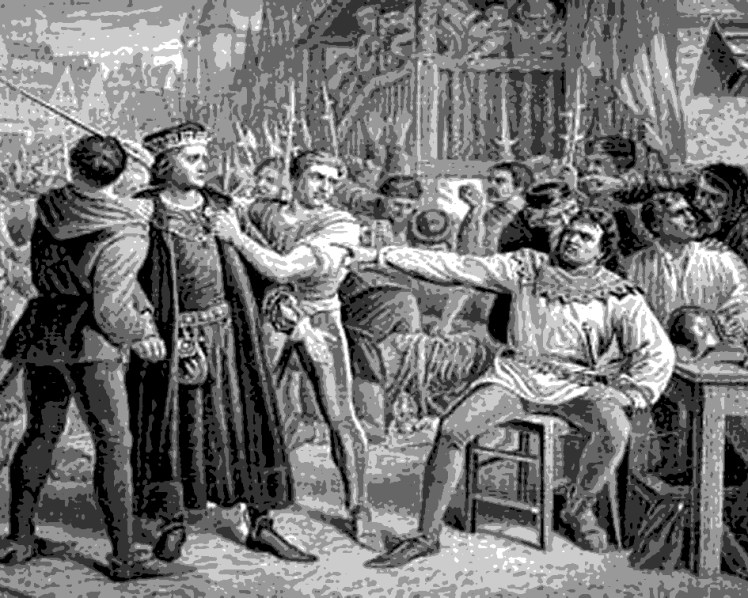 Bluebeard the Hermit
Contrary to expectation, Bluebeard the Hermit was not a savage pirate who hung up his cutlass to go into social isolation. In truth, we know little about him, but he is a footnote in Kent history because of his role in Jack Cade’s rebellion in 1450. The known facts are that he was a fuller by the name of Thomas Cheyny, he became a ringleader of the rebels in Canterbury, and he may even have initiated the revolt. His nickname simply followed the practice among rebels of giving themselves counterfeit names as they went about fomenting rebellion; the hermit was a favourite disguise. After the collapse of the revolt, ‘Bluebeard’ was summarily executed. It caused such public unrest that the Sheriffs of London, ordered to take the head back to Canterbury for display on the Westgate, were in fear of their lives, and demanded recompense. The head did make it home; but Bluebeard’s quarters adorned four other towns.
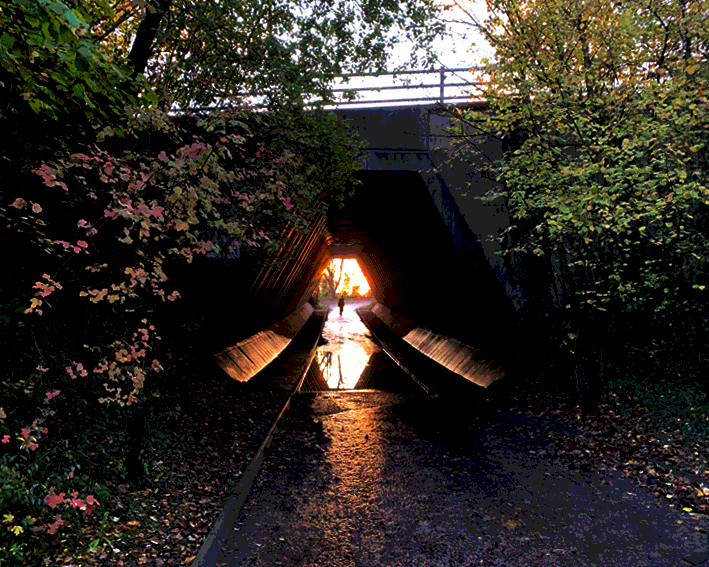 The Blue Bell Hill ghost
Tales of a ghost on Blue Bell Hill between Maidstone and Chatham are thought to derive from a tragic accident in 1965. While returning from her hen night on the eve of her wedding, 22-year-old Susan Browne was killed with two friends after losing control of her Ford Cortina. Few locals didn’t hear the story, and most paid close attention when different drivers, always male, started reporting supernatural encounters with a female road user. It might be an eerie pedestrian who’d get mowed down but leave no trace, or else a hitchhiker who’d disappear from the back seat. Soon everyone using that road was looking out for paranormal activity. In retrospect, it’s easy to attribute those reports to either over-fertile imaginations or simple hoaxes; and the A229 is too slick a road nowadays to lend credence to ghost stories. Try walking at dusk along the single-track Old Chatham Road that passes underneath, however, and it’s a different story.
 Bomb Alley
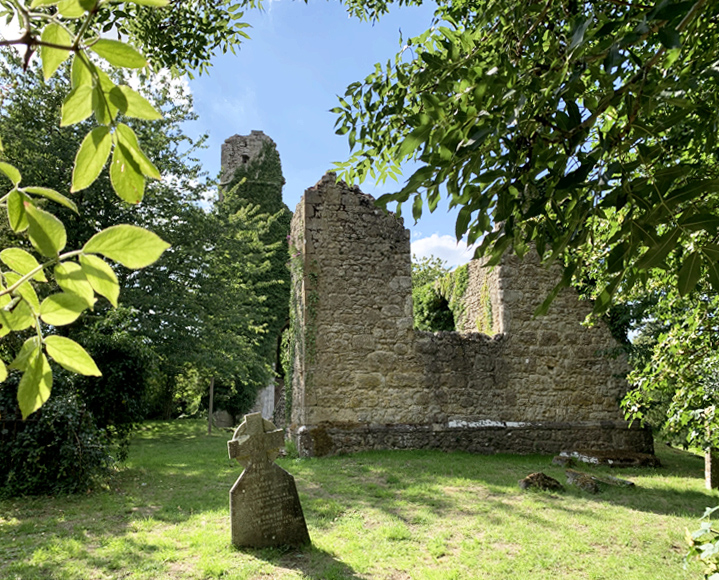
With WW2 effectively lost and no hope of beating the Allies to the atomic bomb, Hitler put his faith on so-called ‘retribution weapons’. Three came to fruition: the V-1 flying bomb or ‘doodlebug’; the V-2 rocket with its 2,200-pound warhead; and the V-3 supergun, firing shells 100 miles. Thanks to RAF bombers, the V-3 never became operational, but 9,521 V-1s and 1,358 V-2s were fired across Kent. The V-2s either reached London or landed in less inhabited areas, but many V-1s fell short, including the first (at Swanscombe on June 13th, 1944) and the last (at Orpington on March 27th, 1945). Kentish people grew to dread the familiar overhead rumble, which would fall silent seconds before the 1,875-pound warhead struck. The RAF did its best to shoot them down or tip them off course; but 1,444 V-1s still came down in Kent, costing 200 lives. They continued to be a worry until all launch sites were bombed or captured.
 ‘Boom, Oo, Yatta-ta-ta’
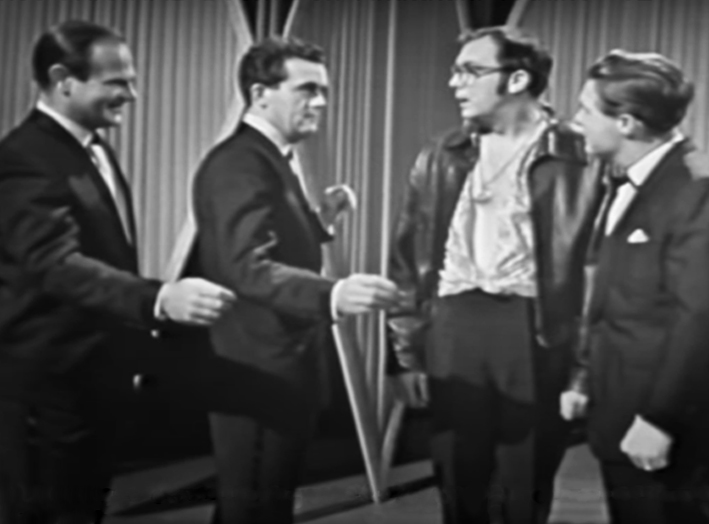
Richard Hills (1926-96) and Sidney Green (1928-99) were both school captains of Haberdashers’ Askes in New Cross, two years apart. Hills played rugby for Kent and became a Cambridge-educated teacher, while Green tried various jobs before they teamed up in Forest Hill to write comedy. Their success with radio and TV comic Dave King opened doors with the likes of Anthony Newley and Frankie Howerd; but their apogee was Morecambe & Wise’s ATV series ‘Two of a Kind’ (1961-8), in which they adeptly enhanced the pair’s spontaneous and often visual humour. They first appeared onscreen as ‘Sid & Dick’ to back Eric & Ernie’s hapless crooning with their deadpan “boom, oo, yatta-ta-ta”, later released as a single. The partnership did not survive Morecambe’s first heart attack in 1968: whilst he recovered to enjoy huge popularity on BBC TV, Hills’ & Green‘s careers languished in America. They ended up writing for Cannon & Ball in the 1980s.
 Borstal
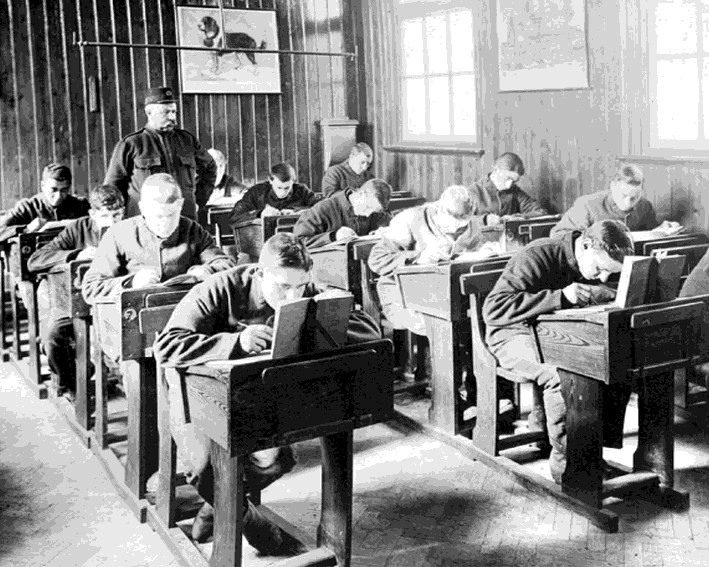
The borstal project was a triumph of idealism over realism. Its intentions were honourable: it sought to keep young males out of adult prisons so that they would not be groomed for a life of crime. The location chosen for the first institution in 1902 was the village of Borstal, near Rochester, which had once been a beauty spot. The emphasis was on reforming boys through education and discipline, rather than punishment; caning, for example, was forbidden, and birching rare. It worked well enough to be rolled out across the country, retaining the borstal name. Brendan Behan wrote a rose-tinted account of his time in one in the 1940s, when befriending Protestant boys moderated his Irish Republican sympathies. In 1979, however, the movie ‘Scum’ gave a stomach-churning picture of what borstals had become: a playground for psychopaths. In 1982, they were replaced by youth custody centres; yet the Kentish village’s name still lives on in India’s surviving borstal schools.
 Botany Bay, sha la la
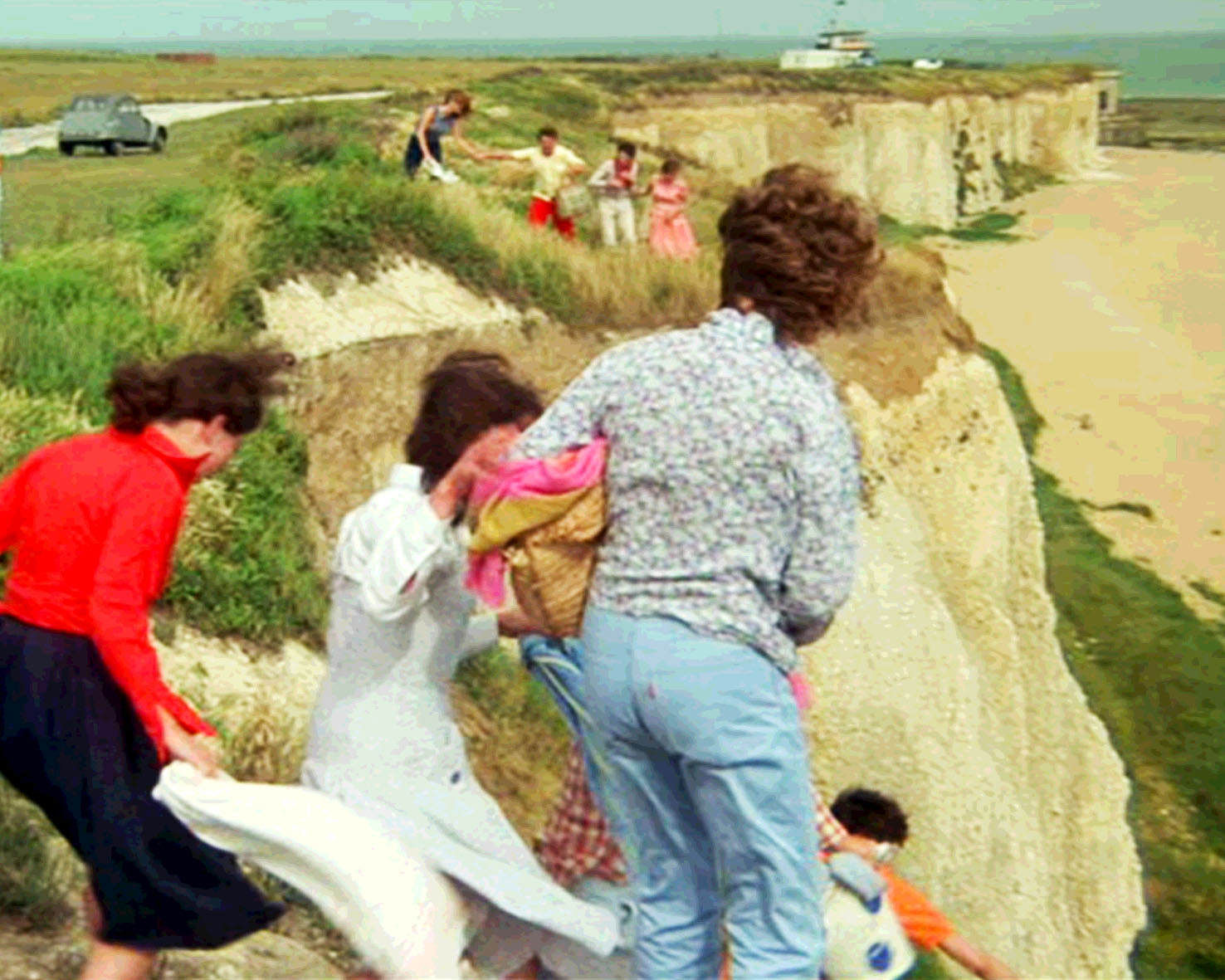
Everyone who was in France in the spring of 1976 will recall the big teen-flick hit of the year, ‘A Nous Les Petites Anglaises’ (‘The Little English Girls Are Ours’). This was a light-hearted romp involving two adolescent French schoolboys who, having failed their English exams, are urged to go on a summer vacation in England to improve their language skills. They like the idea because they have heard that English girls are easy. It turns out that they are able to have more fun with French ones, partying and dancing le Rock. What makes the movie an interesting historical document is that it was filmed primarily at Ramsgate, with additional beach scenes just north of Broadstairs at Kingsgate Bay and Botany Bay. The American soundtrack composer, Mort Shuman, even wrote a rock ‘n’ roll number with the unlikely title ‘Ramsgate Rock’, not to mention the film’s catchy theme tune, ‘Botany Bay’.
 The Bouncing Bomb
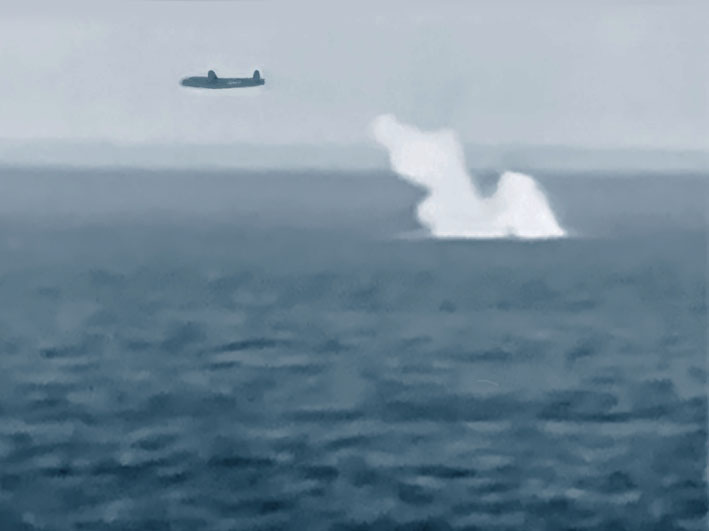
Although the Bouncing Bomb counts among the most celebrated of innovations in weaponry, its Kentish connections are less well known. Its inventor Barnes Wallace went to school in New Cross, began work at Blackheath, and during the War worked extensively at Fort Halstead, a weapons research facility near Sevenoaks. Although the concept of bouncing a heavy object across the surface of a body of water was initially tested at Chesil Beach in Dorset, the first trial using a wood-encased bomb was undertaken off Reculver on April 13th, 1943; and, one month later, a live bomb was exploded five miles off Broadstairs by a Lancaster bomber from RAF Manston. On May 16th, under the full moon, Operation Chastise was successfully carried out on the Rhine, albeit at great loss of life to both sides. So spectacular was the destruction of the Möhne dam in particular that Roosevelt and Stalin were finally convinced of Britain’s determination to win the European war.
 The Boxley Abbey miracle
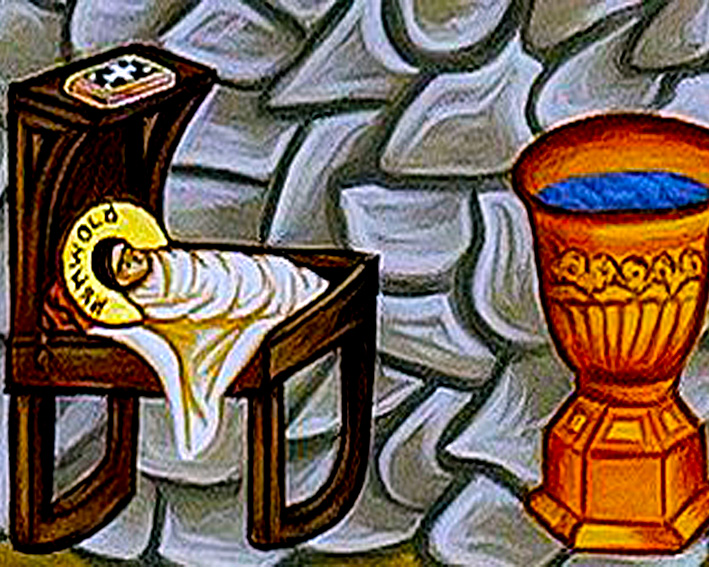
Boxley Abbey, north of Maidstone, was home to a celebrated picture of Rumwald, who must hold the record for being the youngest ever saint. He died in Buckingham in 662 at the age of just three days, having already distinguished himself by speaking from birth (in Latin), pronouncing himself a Christian, and even delivering a sermon before expiring. Just to prove his sanctity, Boxley Abbey displayed a holy portrait that was so light that even a child could lift it, but at times became too heavy to move. This faith-enhancing miracle had to be well worth a pilgrimage to witness. After the Dissolution of the Monasteries, however, the secret was revealed: the portrait was held in place with a bolt wielded by a monk hiding behind the partition. It just goes to show how even supposedly pious humans will employ any deceit to make converts, but do not look good when they are found out.
 Bradley the Seal
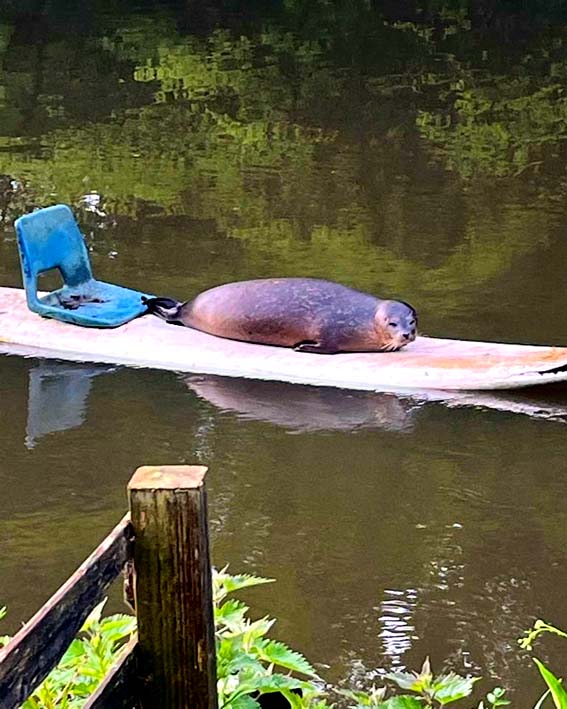
The Pegwell Bay area is well known for its seal population; Maidstone not so much. There was consternation when one turned up in the county town in 2021 and seemed not to know where to go next, what with Allington Lock apparently blocking the way downstream. Hundreds of well-wishers (and one or two mischief-makers) turned up to take a look, and several to lend a hand; but Bradley, as the seal was soon named, was not eager to be helped. Most onlookers assumed that, like a beached whale, this common seal had ventured beyond its safe limits, and no good would come of it. Yet Bradley, who turned out to be a female, knew what she wanted. When she was ready, she left for the sea. Not only that: having decided that she liked the place and the locals, she has been coming back annually, as if for her summer holidays.
 Brickearth
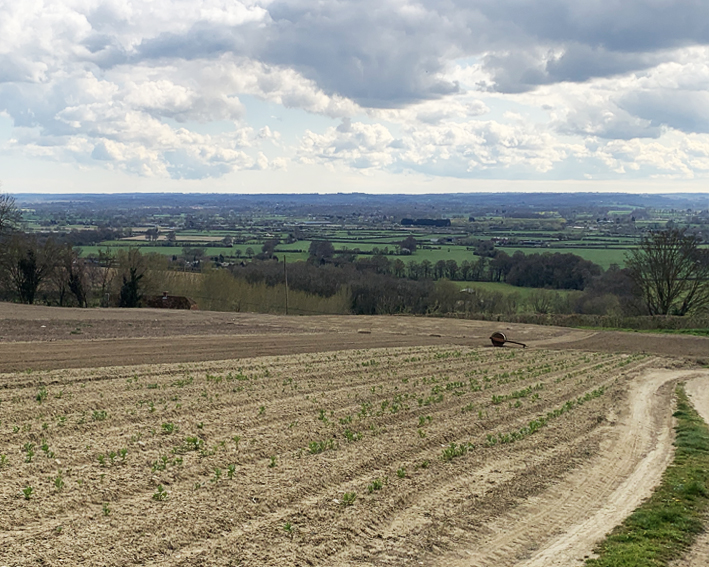
Ask most Kent people what brickearth is and they won’t have a clue. It’s a pity, because brickearth is a major reason why Kent became the Garden of England, as well as home to several brickworks. It is in fact so-called ‘loess’ sediment, which in Kent can run to three or four yards deep. To understand where it came from, you have to delve only into the relatively recent geological past. When glaciers thawed out elsewhere, they left behind rich deposits. Because these were powdery, they were whipped up by prevailing winds and dumped in receptive places like river valleys. The Medway and the Stour were particularly endowed. Apart from having an ideal structure for making house bricks, brickearth on top of clay or chalk both drains well and makes it easy for plants to absorb nutrients. If anyone asks why the National Fruit Collection and National Hop Collection are minutes apart, there is the answer.
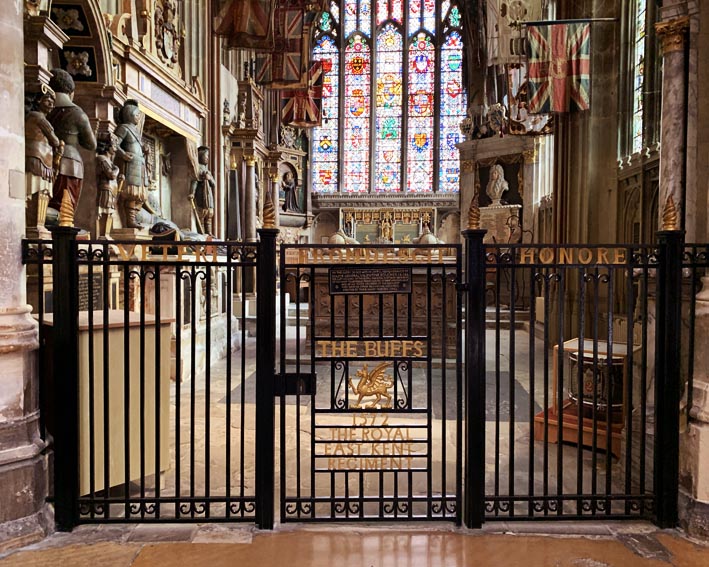 The Buffs
The 3rd Regiment of Foot was the third to be formally established in the English Army. It was however the very first to be raised, having started life in Holland in 1572 as a unit designed to assist the Dutch against Spain. It took its nickname from the dull yellow facings on the men’s red tunics. It saw action at several famous battles, including Blenheim, Culloden, and Sevastopol. When stationed in Malta in 1858, Lieutenant John Cotter coined the phrase “Steady, the Buffs!” which Rudyard Kipling made part of the language. In 1881, the Regiment became the Buffs (East Kent Regiment), based at the Howe Barracks in Canterbury, a ‘Royal’ tag being added in 1935. It merged with the West Kent Regiment in 1961 to form the Queens Own Buffs, but was eventually subsumed into the Princess of Wales’s Royal Regiment, named in honour of Prince Charles’s first wife. Only the 3rd Battalion (of four) is still based in Kent.
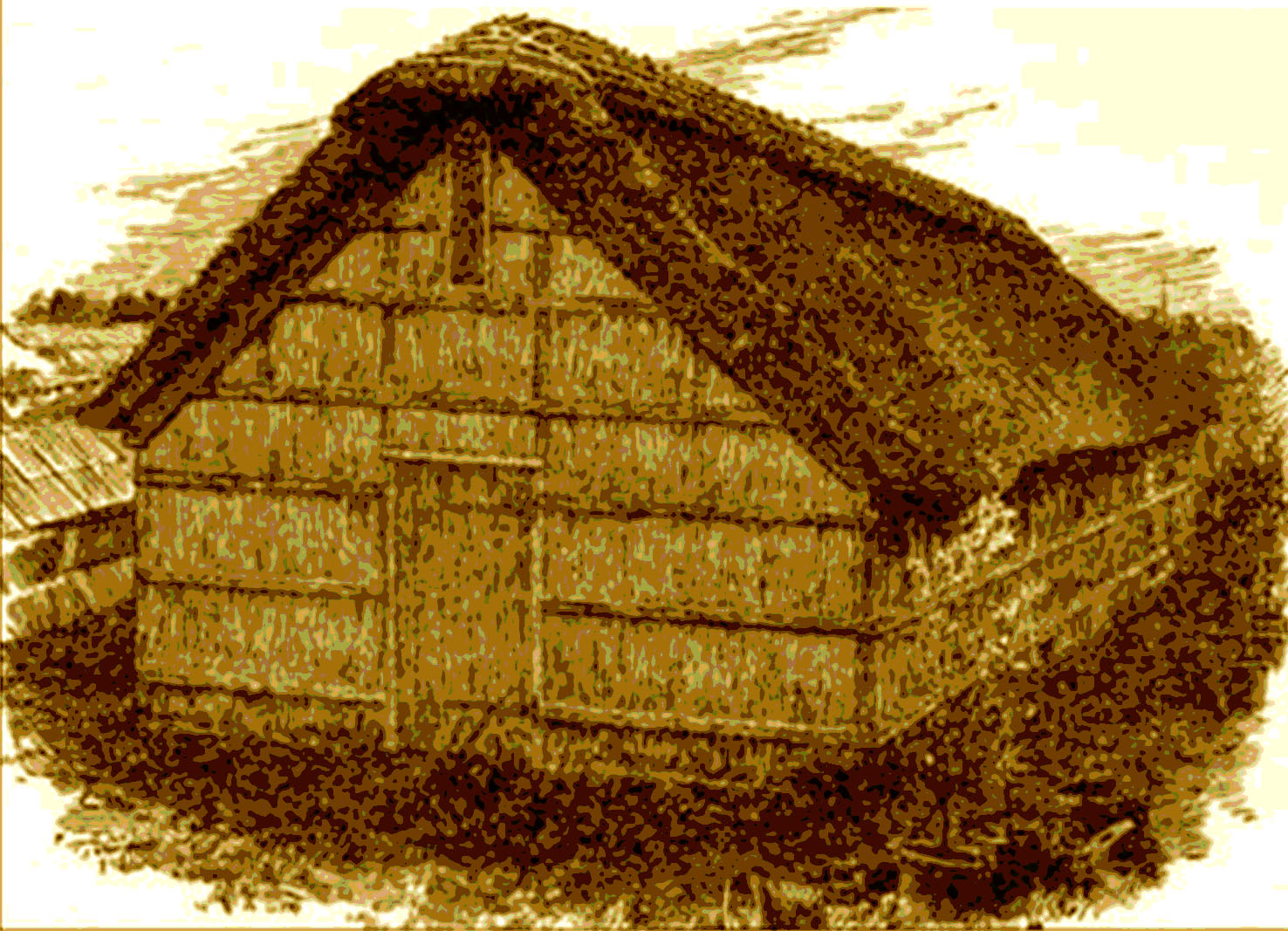 Bunyard’s Fruit-room
In his capacity as an expert pomologist, George Bunyard from Maidstone was interested not only in cultivating more productive and tastier strains of apple, but also in ensuring the quality of the harvested product. It was customary in his time to use oasts to store fruit for the winter after they had finished doing their job as hop kilns. The trouble was that any apple piled loosely is liable to bruise and become the rotten one that spoils the barrel. Bunyard’s elegant solution was his ‘Fruit-room’. This was a large rectangular shed constructed out of matchboard over a concrete floor, its top and sides covered with Medway reeds. Inside, tens of thousands of apples were laid out individually on shelves and maintained at a steady temperature in the high 40s Fahrenheit. Apart from being cheap to make (~£30), it was surprisingly durable (>20 years). The idea can still be found in use today, fundamentally unchanged.
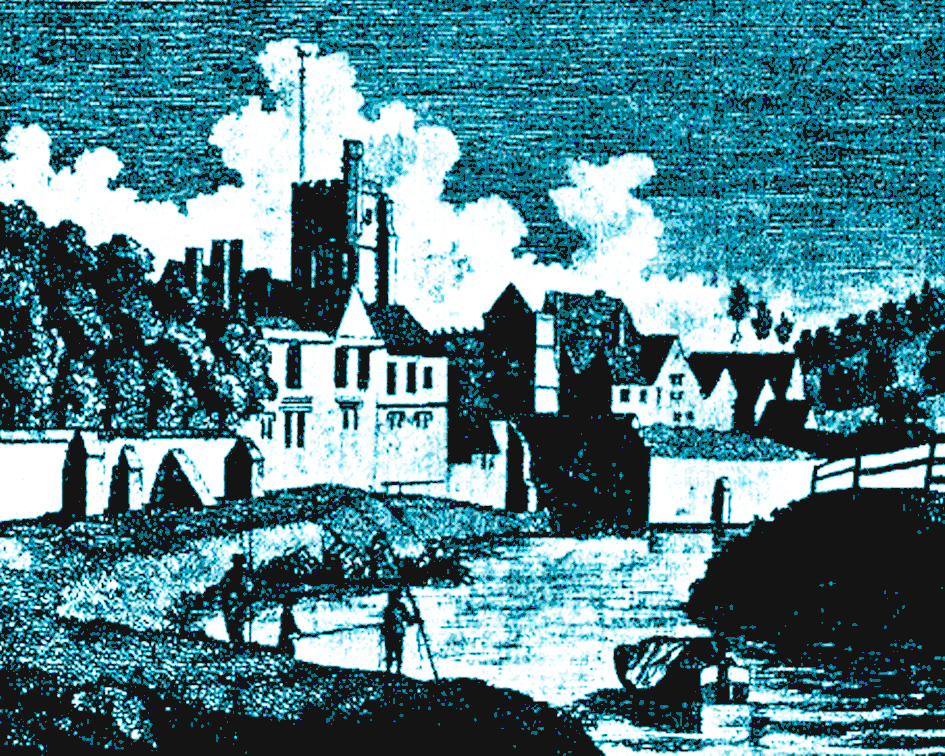 Byng’s ‘Tour into Kent’
The 5th Viscount Torrington, John Byng from Bedfordshire, was the grandson of Admiral of the Fleet Sir George Byng. Between 1781 and 1794, now a retired army officer, he made and diarised fifteen tours of English regions. In September 1790, it was the turn of Kent: a journey of special significance, as it took him to his grandfather’s ancestral home at Wrotham. His ten-day trip on horseback more or less followed the route of the modern-day A20 to Dover, returning to London on the A2 via Canterbury. Writing in a lively, down-to-earth style, he describes the improvement in roads since his childhood, but misses the old shaded lanes. He also bemoans the poor quality of food, drink, accommodation, and stabling he encounters, and has harsh words for the disrepair of Leeds Castle and Eastwell Manor. Nonetheless, he is proud of England’s heritage, chastising travellers abroad “who drive by Canterbury Cathedral, without deigning a look, and return boasting of rialtos”.
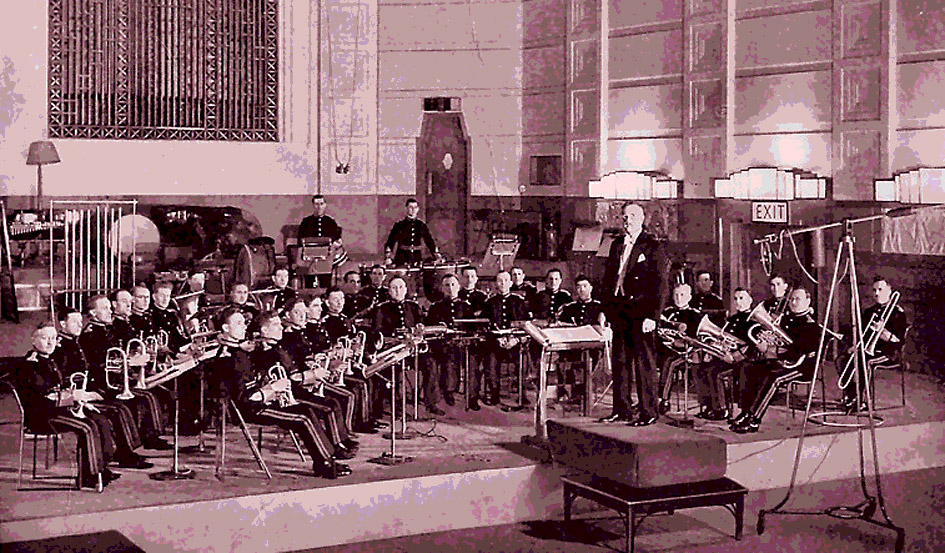 The Callender’s Cableworks Band
William Callender set up a business at Belvedere in 1870 refining bitumen. The company diversified into cable production so successfully that, in the 1930s, it played a key role in connecting Belvedere Power Station with the National Grid across the Thames. In the 1890s, a Salvation Army brass band nearby, seeking a broader repertoire, converted to a temperance band. This left it short of uniforms, so Callender’s stepped up as a sponsor in 1898. So many Callender’s employees joined that they eventually boasted four bands of varying ability. The senior band itself became sufficiently proficient to be considered the best brass band outside of the Northern colliery towns that were brass bands’ heartland. It featured regularly on BBC Radio before WW2, and won 25 competitions; it also opened the new art-deco frontage of Herne Bay bandstand in 1932. With a new musical tidal wave approaching, the band disbanded in 1961.
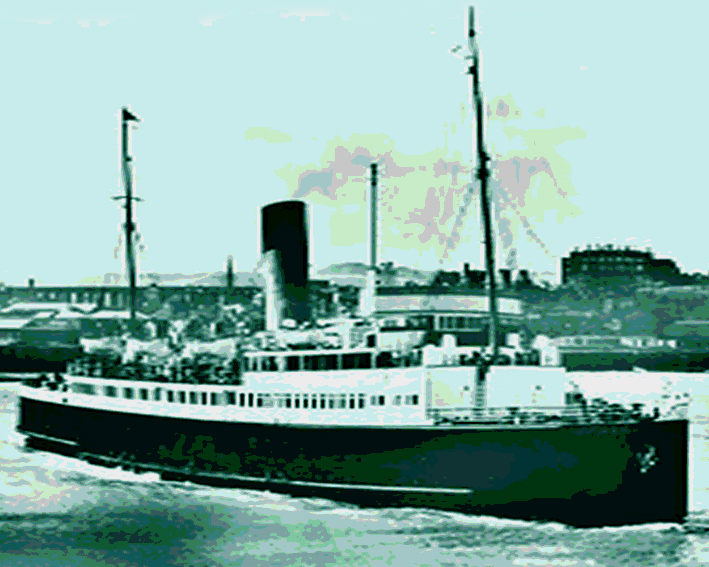 TSS Canterbury
Southern Railway’s ferry ‘Canterbury’ was the Black Beauty of shipping. She was a twin-screw steamer built at Dumbarton in 1928 to provide the Dover to Calais connection between the new Golden Arrow and Flèche d’Or rail services linking London and Paris. Originally intended to be 1st-class only, she was converted also to take 3rd-class after just two years. In 1940, commandeered by the Royal Navy as HMS Canterbury, she took part in the Dunkirk evacuation, narrowly surviving a bomb blast but completing five runs. Sent to the River Dart, she was used by the Fleet Air Arm for target practice, but was then converted for use in the Normandy landings. Having survived all that, she returned to her old duties at Dover, but was replaced by the new ‘Invicta’ in 1946. She finished her life operating a service between Calais and Boulogne, made a cameo appearance in ‘The Lavender Hill Mob’ (1951), and was broken up in 1965.
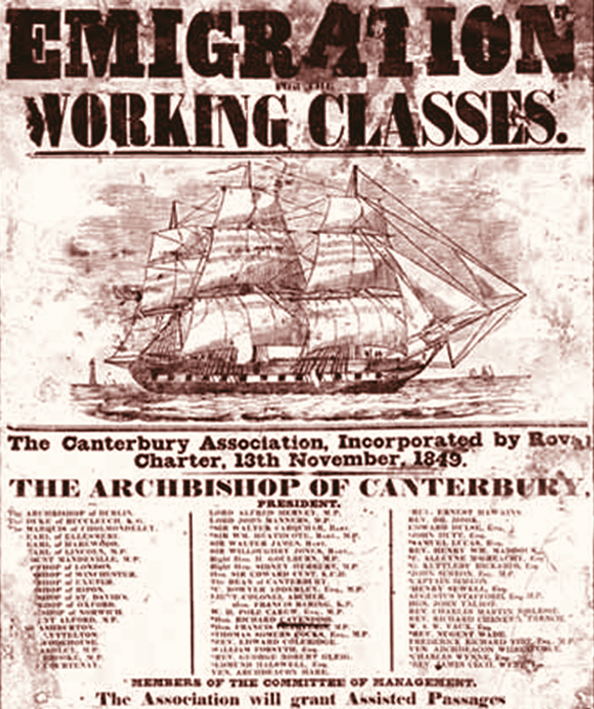 The Canterbury Association
In 1848, a Londoner and a Dubliner, Edward Wakefield and John Godley, had the idea of building a self-sustaining community sponsored by the Church of England on New Zealand’s South Island. The body they founded to plan it, containing numerous clergymen and politicians, was incorporated by Royal Charter in 1849. Its management committee was presided over by the Archbishop of Canterbury, for which reason it was called the Canterbury Association. Having decided that the new colony should also be called Canterbury, they recruited settlers from diverse backgrounds to ensure complementary skills, and set about building houses and roads in advance. To get settlers to the destination, they acquired the so-called First Four Ships, three of which set off in September 1850 from Gravesend and rendezvoused with the fourth at Plymouth before setting sail. These ‘Canterbury Pilgrims’ ended their three-month voyage near modern-day Christchurch, which itself was named after Canterbury Cathedral.
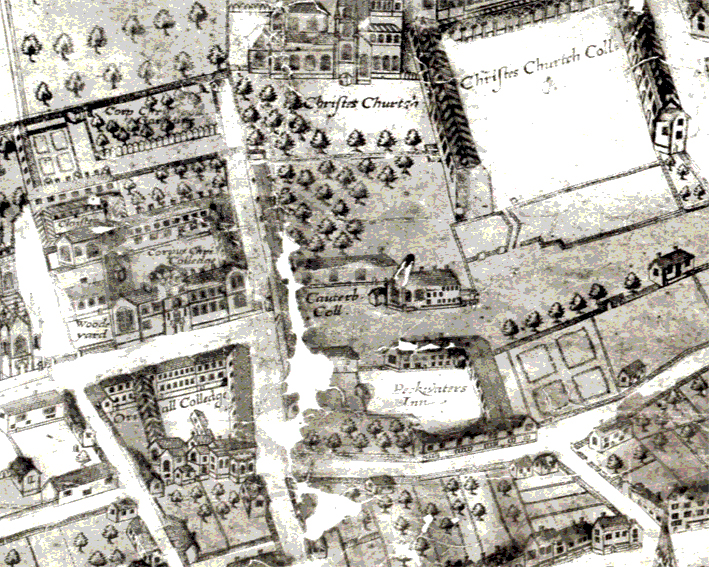 Canterbury College, Oxford
‘University Challenge’ fans are familiar with Balliol, Keble, and St John’s; but Canterbury College, Oxford? There once was such a thing, and it was a Kentish creation. In 1311, four monks from Christ Church priory in Canterbury were sent to study at Oxford in a hall close to the eastern city wall. A half century later, the project was expanded to a full college, situated just south-west of Oriel College. It came to an abrupt halt in 1540, when Henry VIII’s lucrative Dissolution of the Monasteries was expanded to include anything with monks in it. The college was closed down and the property redistributed to the erstwhile Cardinal College, named after Wolsey, which was briefly renamed Henry VIII’s College following the Lord Chancellor’s demise. Presumably in deference to Canterbury, the King renamed both the college and its chapel, Oxford Cathedral, as Christ Church. Its hall is now familiar to Harry Potter fans as Hogwarts’ Great Hall.
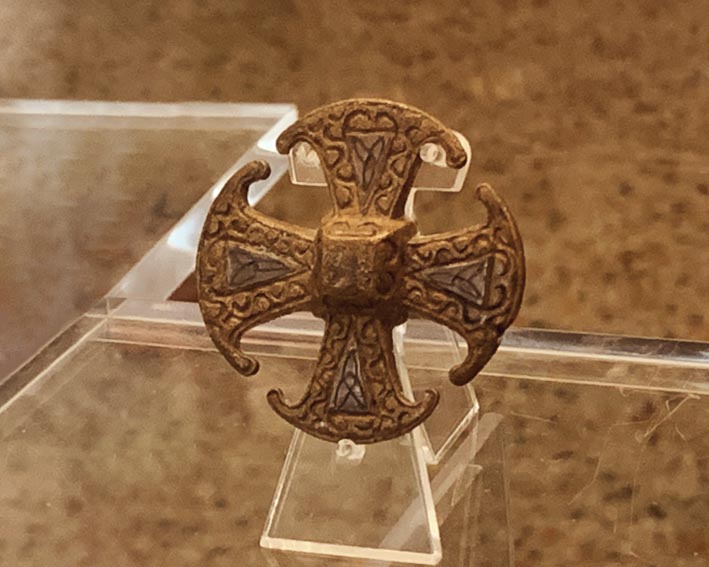 The Canterbury Cross
The original Canterbury Cross was unearthed in 1867 during excavations in St George’s Street, Canterbury. It turned out to be a Germanic brooch dating to around 850. So artfully conceived was it that it gave rise to a standard design also known as the Canterbury Cross. What makes it special is the ingenious way in which the Christian cross’s angular look is softened to a more rounded affair that gives an impression of eternity, whilst it also incorporates ‘triquetra’ shapes suggesting the Holy Trinity. So elegantly does the design combine these concepts that it might in the modern age have won an award as a corporate logo, as evidenced by the Church of England‘s decision in 1937 to send a stone replica to each of 91 Anglican cathedrals around the world; another is mounted in Canterbury Cathedral. The bronze original, inlaid with silver and niello, is meanwhile displayed in Canterbury’s Beaney House of Art & Knowledge.
 Canterbury Pace
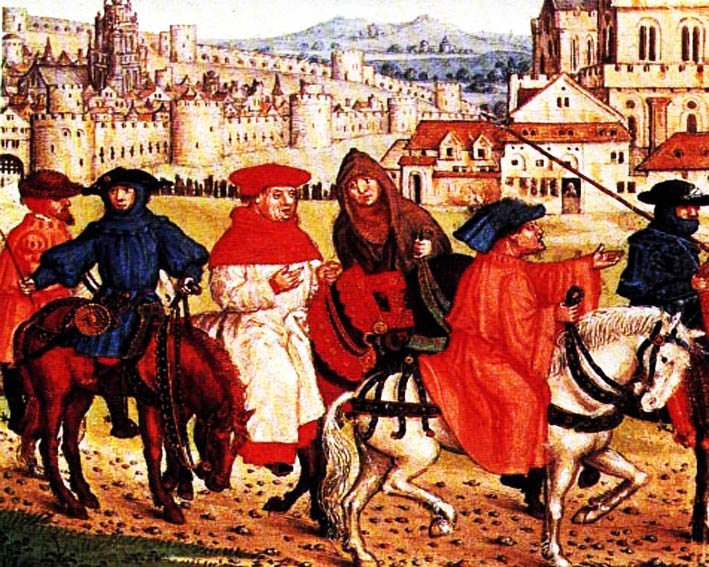
Anyone wanting to make a medieval pilgrimage from Winchester to Canterbury faced the prospect of a sore bottom. Proceeding on horseback at a walk might demand a travel time of 30 hours. Even at a trot, the trip necessitated something like 15 hours’ riding, with the same to follow on the way back; so it mattered to achieve a good but sustainable pace. It seems that pilgrims did find an optimal speed that their horses could tolerate, which came to be known as ‘Canterbury Pace’. According to etymologists, this may have been abbreviated to the modern equestrian term, a ‘canter’. It seems unlikely, however, that it would have matched a modern canter, which typically exceeds 12 mph – a challenging tempo for the small horses of the day on rugged by-ways. What can be said for sure is that Trottiscliffe did not lend its name to the trot, even if it is on the Pilgrims’ Way.
 The Canterbury Scene
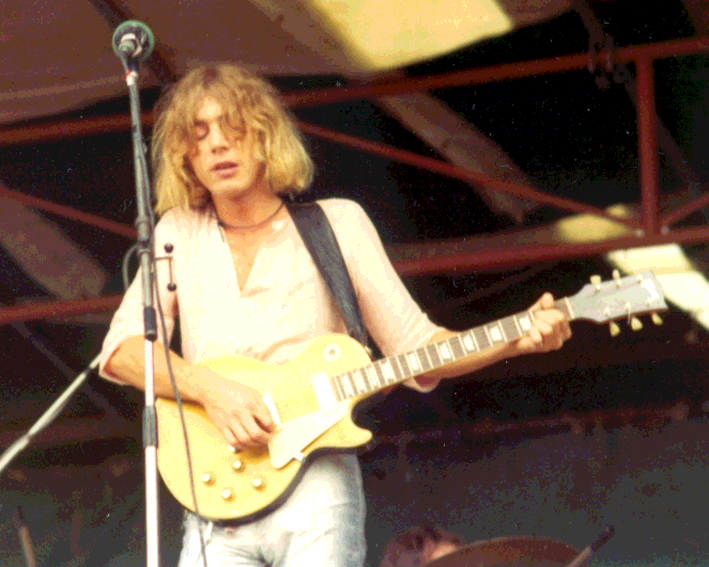
What’s strange about the Canterbury Scene is that there never was much of a Canterbury scene. The term refers to a group of North Kent musicians who shared an interest in psychedelic jazz seguing into progressive rock. Two men at the heart of it were singer-guitarist Kevin Ayers from Herne Bay and singer-drummer Robert Wyatt, who lived at Lydden. After leaving Simon Langton Grammar School in Canterbury, the two formed the Wilde Flowers, playing psychedelic rock, in 1964. The two left after five years to form Soft Machine, which early on rivalled Pink Floyd; the two bands twice appeared together at Canterbury Technical College, though their fortunes diverged dramatically thereafter. Ayers went on to work with several top names in the music industry, while Wyatt was paralysed after falling out of a window at a party. Meanwhile, their former Wilde Flowers bandmates back in Whitstable became Caravan, a prog rock band still active today.
 A Canterbury Tale
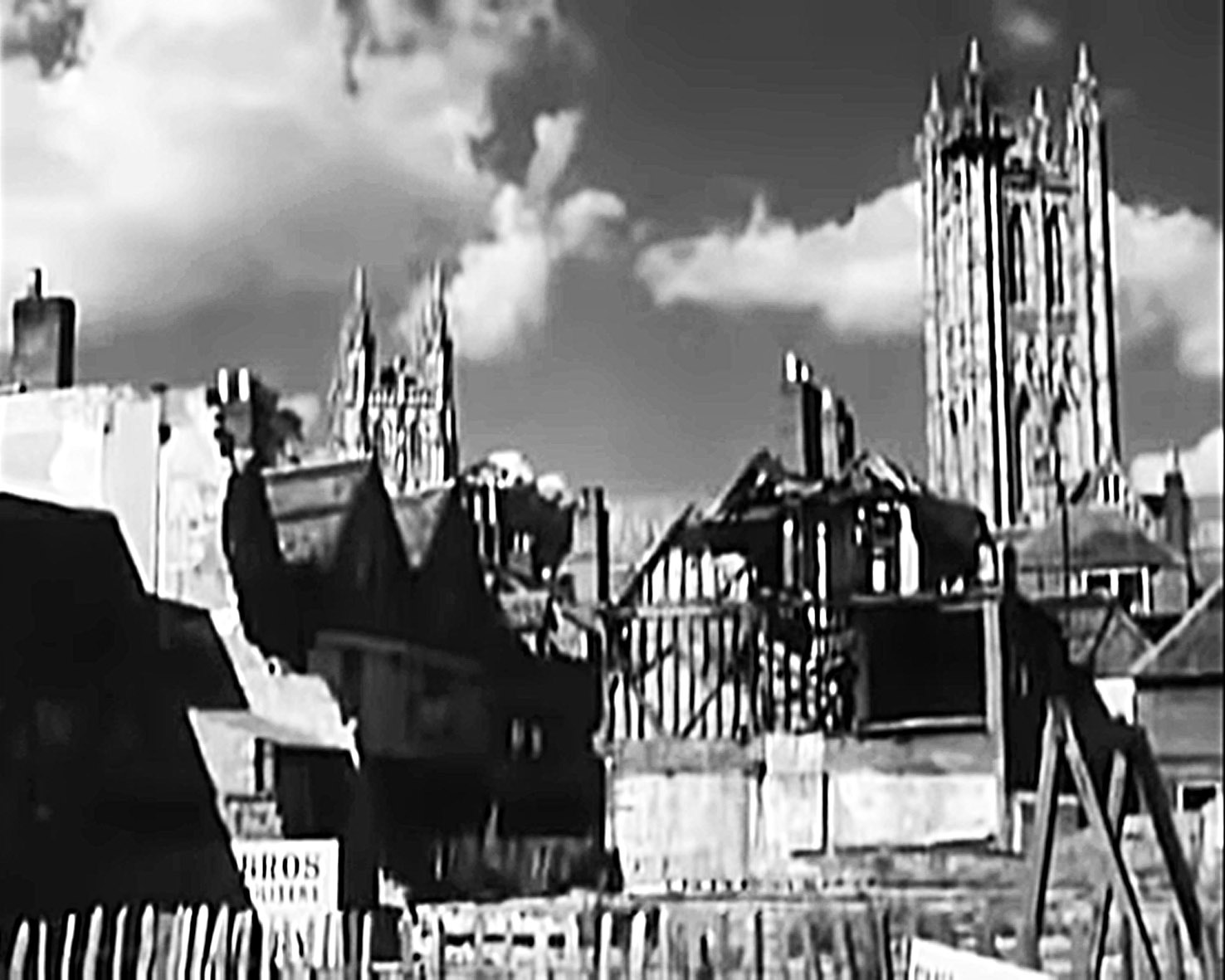
Canterbury-born film director Michael Powell made ‘A Canterbury Tale’ in 1944 under the aegis of The Archers, his outstanding collaboration with Emeric Pressburger. Starring Eric Portman, Dennis Price, and Sheila Sim, it was a gentle wartime propaganda piece intended both to consolidate Anglo-American camaraderie and to remind the English what they were fighting for. The movie depicts a latter-day pilgrimage of sorts: a journey to Canterbury that provided Powell with an opportunity to show off Kentish rural life at its best. It starts in the imaginary village of Chillingbourne, featuring scenes shot in Chilham, Fordwich, Wickhambreaux, and elsewhere. After a rail journey to Canterbury, it culminates in a spine-tingling performance of Bach’s ‘Toccata and Fugue in D Minor’ by Price’s character on the Cathedral organ, followed by Sim’s heart-wrenching perambulation through the city centre recently devastated by the Luftwaffe. Though not much of a story, it is a remarkable document of Kent’s wartime experience, before the doodlebugs arrived.
 The Canterbury Tales
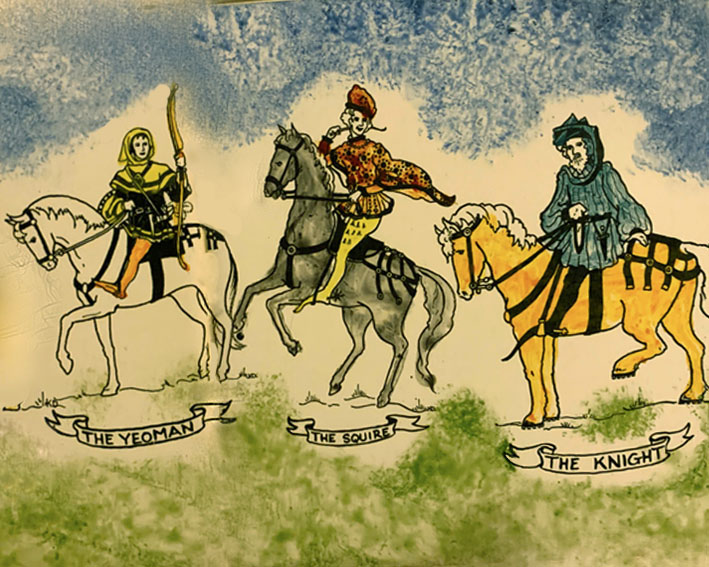
Geoffrey Chaucer’s ‘The Canterbury Tales’ (1400) was the first text in English to become world-famous. It is a collection of 24 stories supposedly told on a pilgrimage from Southwark to Canterbury. The thirty or so pilgrims depart from the Tabard Inn, each charged with telling tales en route; the teller of the best will win a free dinner. The idea was not original – Boccaccio’s ‘Decameron’ preceded it – but Chaucer’s tales are consistently entertaining and varied. ‘The Canterbury Tales’ was written in Middle English, a double-edged sword insofar as the language is delightfully earthy, but a deterrent to the casual reader. For that reason, TV dramatisations have proved popular, bringing a colourful mix of satire and bawdiness. Each pilgrim was supposed to tell four tales, but Chaucer ran out of life before finishing, even after spending 13 years on them. Nevertheless, it’s debatable whether more Americans and Australians have heard of Canterbury through the Cathedral, or the Tales.
 Canterbury Tart
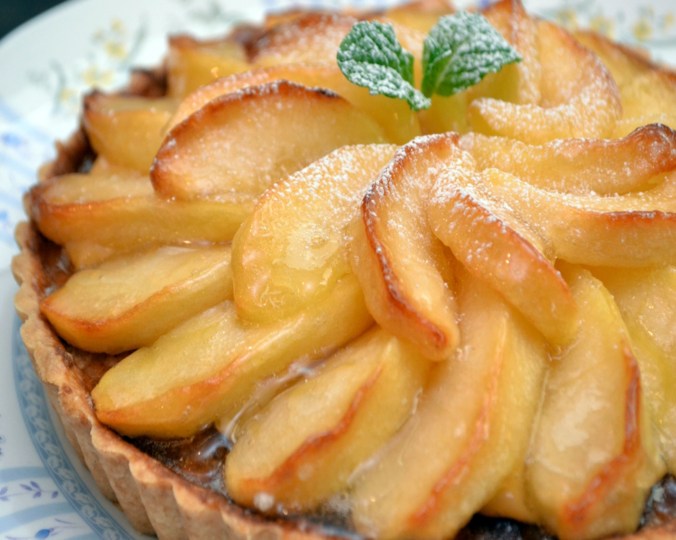
The English are not renowned for making world-class desserts. One of our best, however, is apple tart; and it is no wonder that one of our best apple tarts bears a name associated with the nation’s leading apple-growing county. The Canterbury Tart has a dessert-apple and lemon base covered by overlapping sliced apples, baked for 45 minutes and delicious served with a little cream or ice-cream. Numerous variants have been published, all of them simple to prepare and certain to bring satisfaction to several. The dish gets its name, extraordinarily, from none other than Geoffrey Chaucer of ‘Canterbury Tales’ fame. He provided the first written recipe for apple tart, specifying good apples, good spices, figs, raisins and pears, all cut up and coloured with saffron. That recipe is traditionally dated to 1381. Although the date is not easily corroborated, it may be worth bearing in mind that its 650th anniversary comes up in about a decade.
 The Canterbury Theatre of Varieties
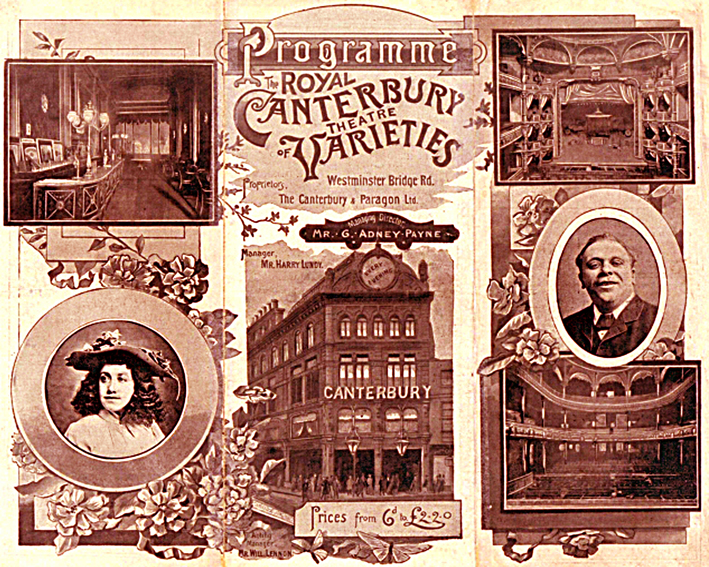
By a string of chances, one of London’s most fashionable pleasure palaces got its name from Kent’s holiest spot. Around 1200, the Archbishop of Canterbury acquired Lambeth Manor on the south bank of the Thames as his residence in the capital, and Lambeth Palace evolved on the site over the centuries. In the C18, a pub just the other side of what is now Archbishop’s Park was renamed the Canterbury Arms Tavern in His Grace’s honour. Like other such hostelries, it offered entertainment, specifically by way of a skittles alley next door. Pioneering impresario Charles Morton replaced it in 1852 with the Canterbury Hall, a music hall that proved an immediate success. By the end of the century it had been expanded, embellished, and renamed repeatedly, and a night at the ‘Canterbury’ was a much imitated institution, with such celebrities as Little Tich and Charlie Chaplin performing there. The Luftwaffe demolished it with a direct hit in 1942.
 The Canterbury Treasure
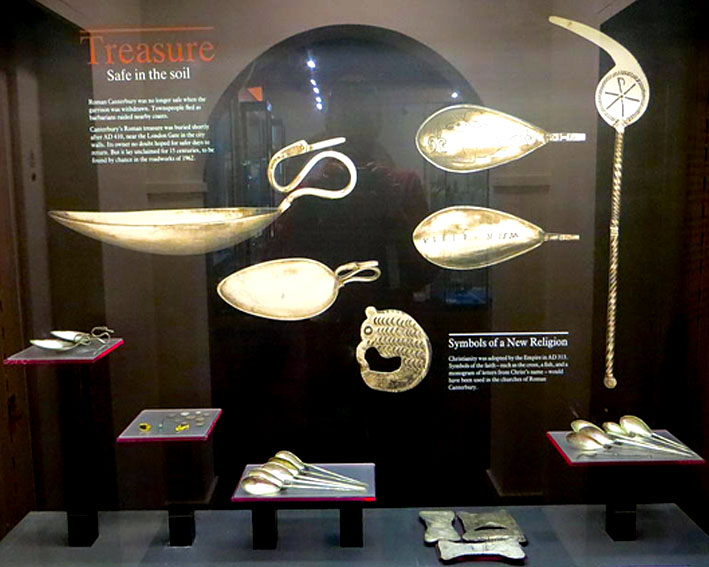
Having been populated since time immemorial, Kent naturally has its fair share of hoards. These range from such Late Bronze Age finds as a collection of 17 gold bracelets unearthed in 1906 at Bexley to a collection of 352 bronze objects found in 2011 at Boughton Malherbe including tools, weapons, ornaments, and even moulds from which they were made, suggesting a workshop. The biggest Roman hoard was 3,600 C4 bronze coins at Snodland (2006); but the most poignant has to be the collection of engraved silver spoons and other high-status artefacts unearthed by workmen close to Westgate in Canterbury in 1962. A coin found with them dates them to after 402 AD, 410 being the year in which Rome effectively abandoned Britannia. One can well imagine the owner burying them in the belief that he or she would soon be back; but the withdrawal was to prove permanent. The collection is displayed at the Roman Museum in Butchery Lane.
 The Cantii
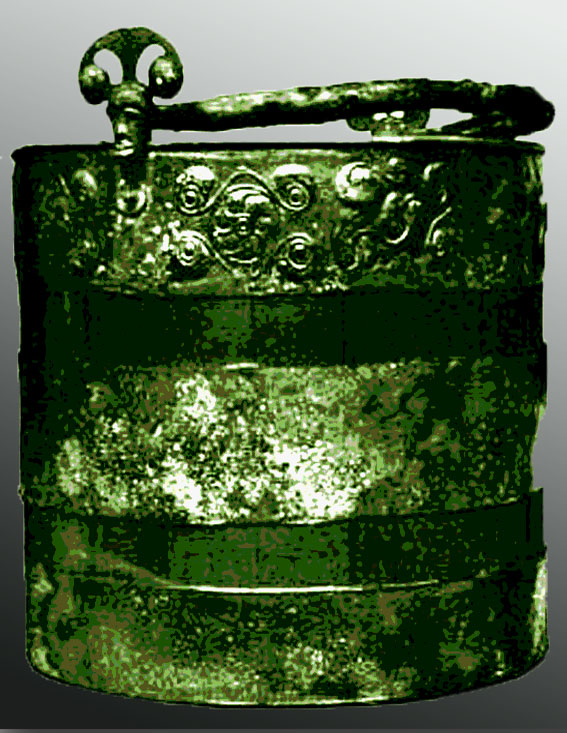
Kent got its name from the Cantii, or Cantiaci, a Bronze Age tribe that emigrated across the Channel from Northern Europe, or possibly the Baltic, probably in the C2 BC. Their favourable location, close to mainland Europe, gave them such a cultural and economic lead that Julius Caesar described them as the most civilised people in Britannia. They did not have a single polity: Caesar recorded four contemporaneous kinglings, namely Segovax, Carvilius, Cingetorix, and Taximagulus. Their territory was even larger than the historical Kent that endured until 1889, additionally embracing parts of Sussex (including Hastings), Surrey, Middlesex, and Essex. Among Cantium’s Roman-era settlements, the C2 Greco-Roman geographer Claudius Ptolemy listed their capital Durovernum Cantiacorum (Canterbury), Durobrivae (Rochester), Rutupiae (Richborough), and a port on the north bank of the Thames called Londinium. In 1886, archaeologist Sir John Evans, father of the famous Sir Arthur, excavated the Cantiian ‘Aylesford Bucket’ (C1 BC) now held at the British Museum.
 ‘Carrington VC’
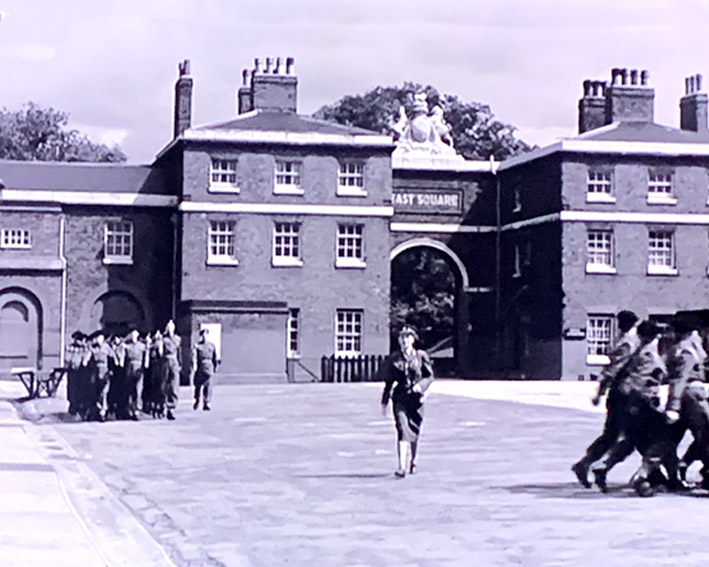
This 1954 black & white movie is the kind at which Anthony Asquith, the son of a former prime minister, used to excel: a taut drama, economically told and expertly acted. Starring David Niven as a Royal Artillery major, it revolves around a military trial (whence its American title, ’Court Martial’) engineered by a superior officer who is jealous of the eponymous character’s wartime heroics. Although the interior action was shot at Shepperton, what lent the action particular authenticity was the outdoor scenes, filmed over a period of two weeks at the Woolwich Barracks thermselves. Featuring footage of actual RA soldiers on parade, the movie represents a vivid antiquarian record of this once hugely important British Army unit shortly after WW2, when it was commencing its long, slow depletion. Just two years later, it was decided that, though the regimental headquarters would remain there, much of the historic barracks would be demolished and replaced.
 Chain Home (CH)
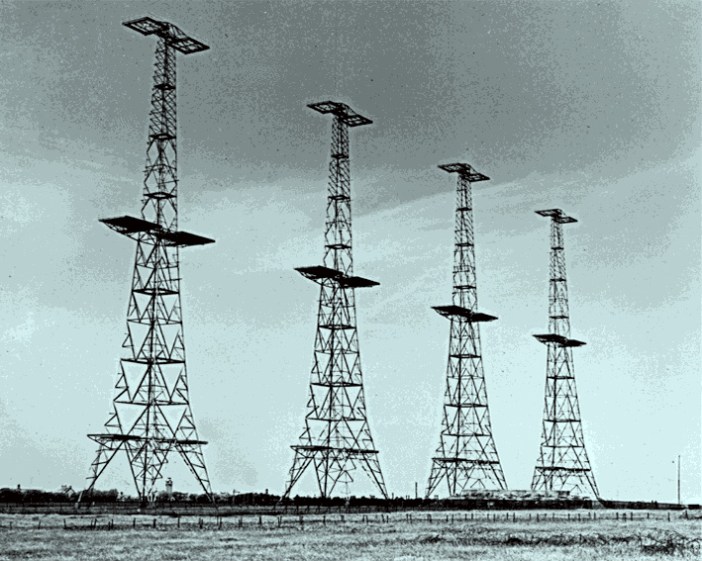
The CH early-warning system was a product of an age when Britain still valued genial geniuses over noisy know-alls. It was prompted by an assertion of Prime Minster Stanley Baldwin in 1932 that “the bomber will always get through”. One English boffin, Arnold ‘Skip’ Wilkins, sat down to ponder whether that had to remain the case. He worked out how to detect incoming bombers by the canny use of radio waves. By 1937, with the Nazi menace growing, five experimental stations were built under the codename ‘Chain Home’. There were two in Essex and one in Suffolk, but the forward-most were on opposite sides of Kent, at Dunkirk and Swingate. Recognisable by their multiple radar aerials, they were subjected to repeated bombing once WW2 started, but kept going. By the end of the War, there were more than forty nationwide. It’s been estimated that CH tripled the RAF’s fighter capability, beating off Germany’s far superior force by pitching brains against Braun.
 Chapel Down
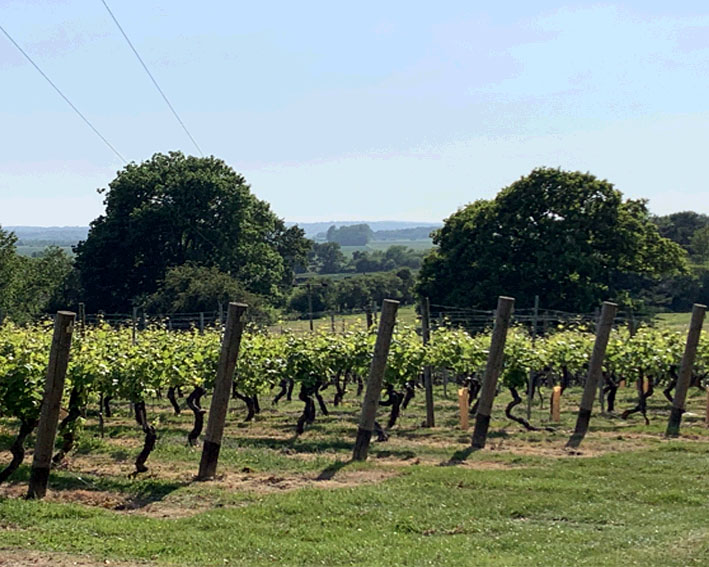
The Romans introduced wine-making to Britain, and there were over a hundred vineyards in England in the Tudor period; but the weather militated against both scale and quality. After heavy duties were imposed on French wine in 1703, the British developed a preference for fortified wines like port and sherry. It is global warming that has created a sea-change in recent decades, with a proliferation of brands emerging. Kent’s southerly latitude and limestone soil give it an advantage that has been richly harvested by Chapel Down. The business is named after a vineyard on the Isle of Wight that in 1995 acquired Rock Lodge of Tenterden, where its new headquarters was set up. Five years later, Chapel Down merged with Lamberhurst. The company is now the biggest wine-producer in the UK, and has established a national reputation for quality produce that includes, unprecedentedly, English sparkling wines that do not disappoint. The visitor centre plays host to 50,000 annually.
 Chaplin’s
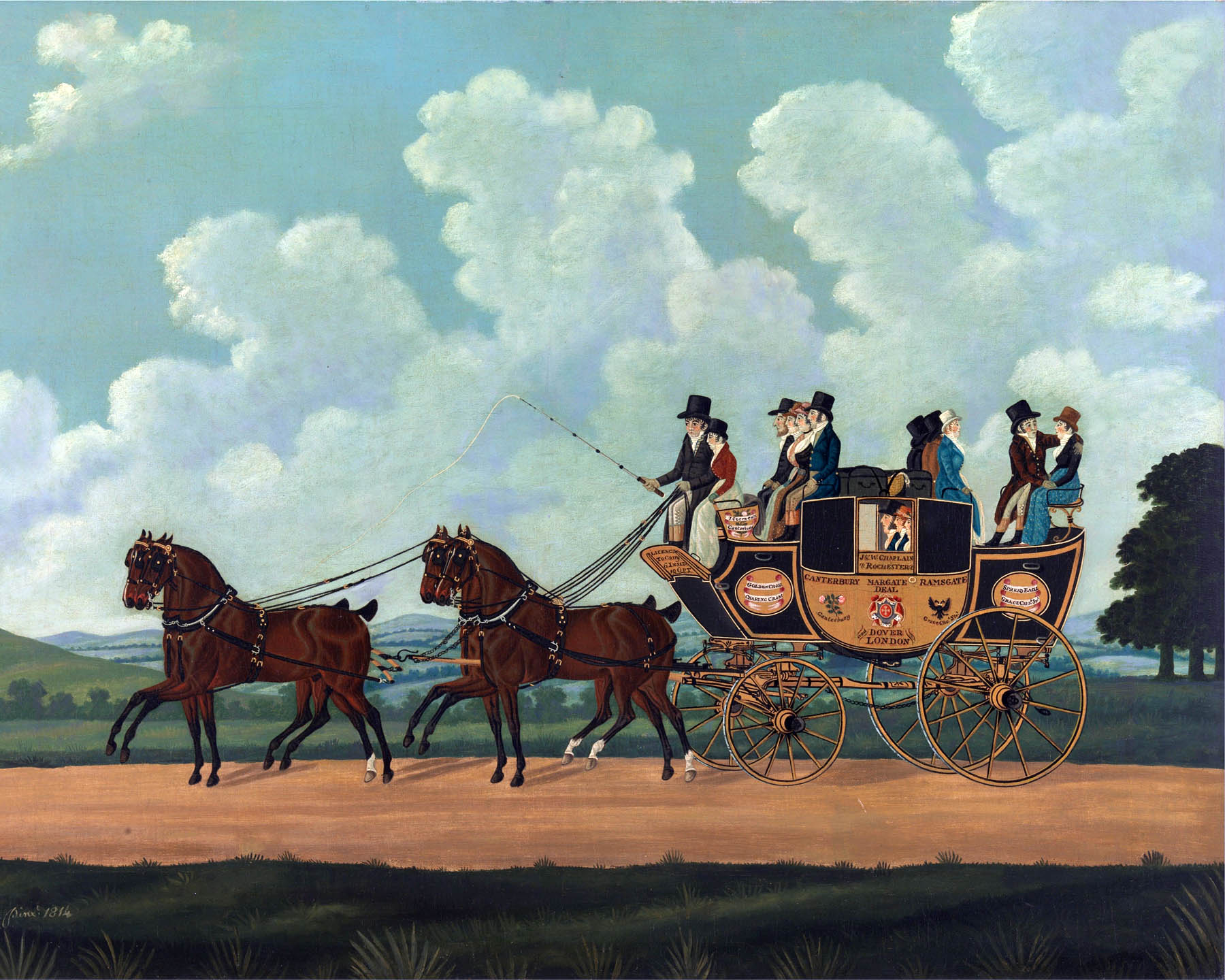
In the Georgian era, the name Chaplin was not universally associated with a bowler hat and funny walk, but horse-drawn coaches. William Chaplain or Chaplin (1787–1859) was a coachman of humble origins in Rochester who exhibited an outstanding entrepreneurial streak. He built a network of coaching services that eventually extended around the country, and by 1835, with up to 1,500 horses, 68 carriages, and several depots at its disposal, was a household name. Much the biggest business in the field, it was reckoned to be making around half a million pounds a year. But Chaplin was not complacent. When the railways started to impinge, he responded proactively, becoming deputy chairman of the London & Southampton Railway, later famous as the London & South Western Railway. He went into partnership to form a road-and-rail haulage business, Chaplin & Horne, that was eventually taken over by Pickfords. In later life, Chaplin became Sheriff of London and an MP.
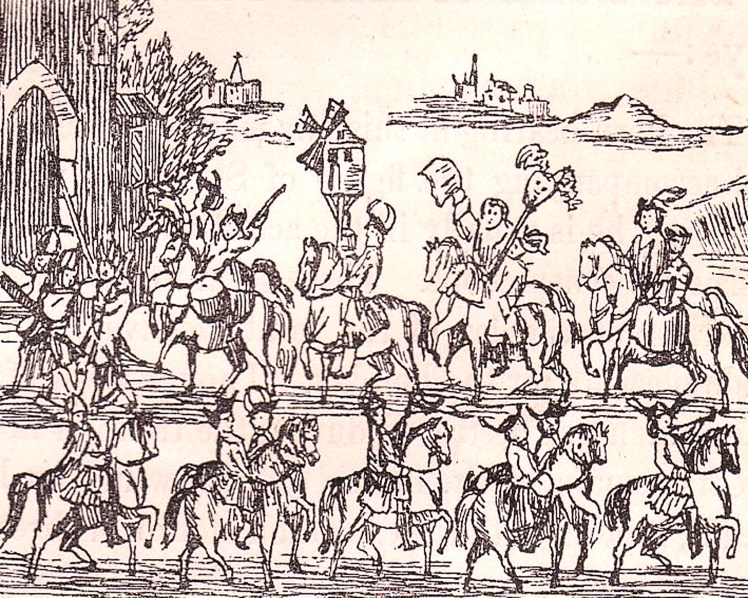 Charlton Horn Fair
The Charleton Horn Fair was one of the most riotous occasions of this or any county. One legend has it that King John, caught in flagrante with a miller’s wife, assuaged him with cash that paid for a fair every St Luke’s Day, and a patch of land that became known as Cuckold’s Point – the traditional symbol of the cuckold being horns. More prosaically, it may just be that Charlton Church was St Luke’s, and the saint was always depicted alongside a horned ox. Whatever the case, the custom arose of wearing horns at the annual fair. But behaviour grew more outrageous than wearing fancy dress. It became such a pretext for lascivious and drunken behaviour that Daniel Defoe complained bitterly about the “yearly collected rabble of mad-people”. Unsurprisingly, it was too much for Victorian propriety, and was banned in 1874. The Horn Fair was revived in 2009, although no doubt with a more sophisticated ethos.
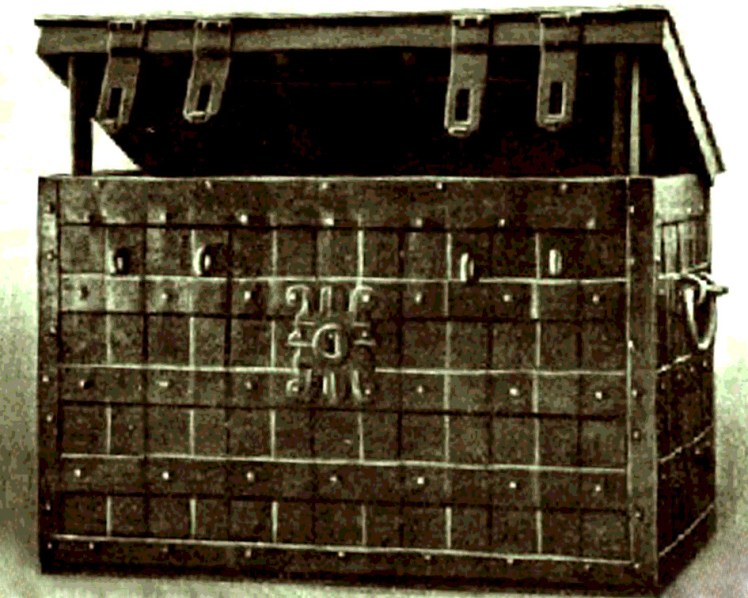 The Chatham Chest
The war between England and Spain in the late C16, culminating in the defeat of both Spanish and English armadas, brought a toll in disabled sailors. Agitation for financial help induced the Lord High Admiral to press their case with Elizabeth I. The outcome was a pension fund that came to be known as the Chatham Chest. For 155 years from 1594, one thirtieth of every seaman’s pay – typically sixpence a month – was deducted for the fund. Payments were made to sailors according to the extent of their loss: an armless man, for example, earned £15 a year. The funds were kept in a literal chest, a strong box guarded by the Royal Marines at Chatham Dockyard. It had five locks, whose keys were held by five separate functionaries. It didn’t stop large-scale theft by officials; and Charles I exercised his Divine Right to steal the whole lot. It was eventually merged into the Greenwich Hospital fund.
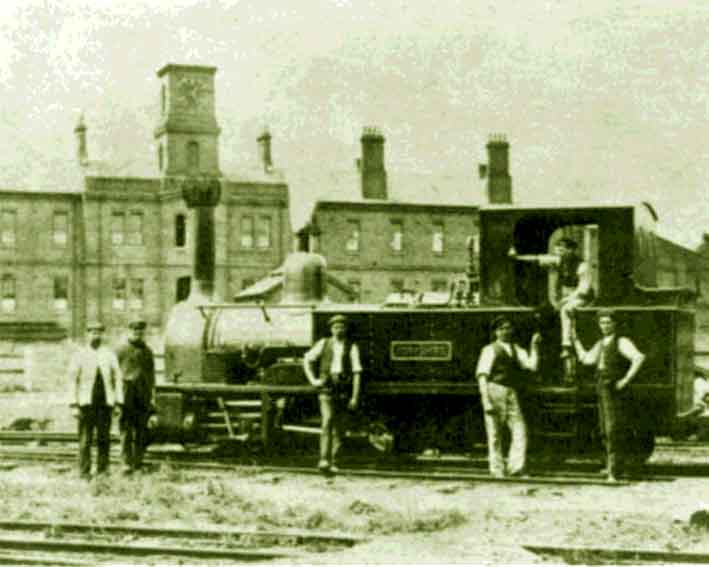 Chattenden Camp
Following the Dutch Raid on the Medway, the armed forces began to store gunpowder at Upnor Castle. As demand grew during the C19, large new magazines were created piecemeal nearby. In 1875, however, a tidier solution was sought, and five magazines were built behind a natural blast wall at Chattenden, nearly three miles north of Chatham over on the Hoo Peninsula. Designed to store at least 40,000 gunpowder barrels, they were defended by the Chattenden barracks built three years earlier, and served by the Chattenden & Upnor Railway. Originally shared between the Army and Navy, they were placed in sole possession of the former from 1891, but assumed by the latter in 1903. Although the magazines ceased to be used in 1961, they still stand, having subsequently been used for general storage. The barracks and training areas survived into the C21, and eerie relics can still be seen behind barbed wire along Lodge Hill Lane.
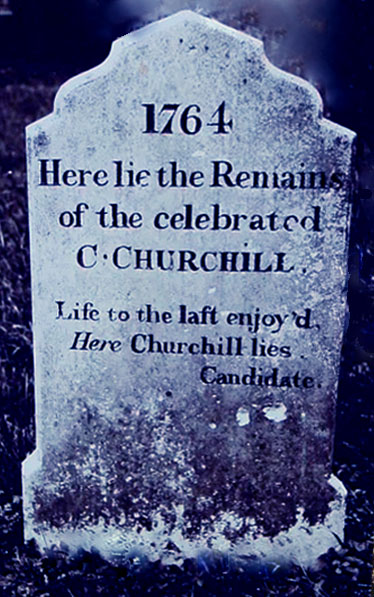 ‘Churchill’s Grave’
In Charlton cemetery at Dover lies the grave of Charles Churchill (1732-64), a London-born, Cambridge-educated poet whose funeral there was embellished by a monument in St Mary’s church. Churchill was a classic C18 libertine, a member of the notorious Hellfire Club. He wrote satirical pieces lampooning William Hogarth, Dr Johnson, and Lord Sandwich among others, but was most popular for his ‘Rosciad’ (1761), which ridiculed London actors and actresses. He died of a fever at 32 in Boulogne, where he had gone to meet his friend, the outlawed radical John Wilkes; another Hellfire member returned his body for burial in Kent. Half a century later, Lord Byron came to pay his respects, and was struck by Churchill’s anonymity in this graveyard full of forgotten souls. He recorded his dismay in a poem called ‘Churchill’s Grave’, beginning “I stood beside the grave of him who blazed/The comet of a season, and I saw/The humblest of all sepulchres…”.
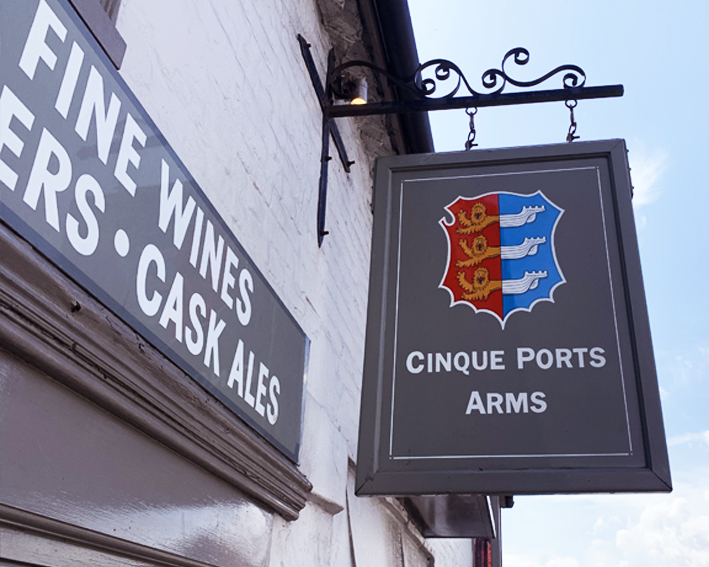 The Cinque Ports
The Confederation of Cinque Ports came about in response to the King of England’s need to have ships at his disposal. Since the kings of the day were Normans, the agreement struck with (mostly) Kentish coastal towns still has a French name. It was formalised by royal charter in 1155. In return for providing 57 ships for 15 days a year, the participating towns could enjoy privileges including certain tax, justice and salvage rights. The initial Kent participants were Sandwich, Dover, Hythe, and New Romney, with Hastings making up the five. They changed from time to time, for example when New Romney harbour silted up and was replaced by Rye. There were also associated ‘limbs’ like Folkestone and Ramsgate, as well as numerous ‘connected’ towns and villages. The practical arrangement died out by the C15, but the honorific post of Lord Warden of the Cinque Ports still entitles the holder to reside at Walmer Castle.
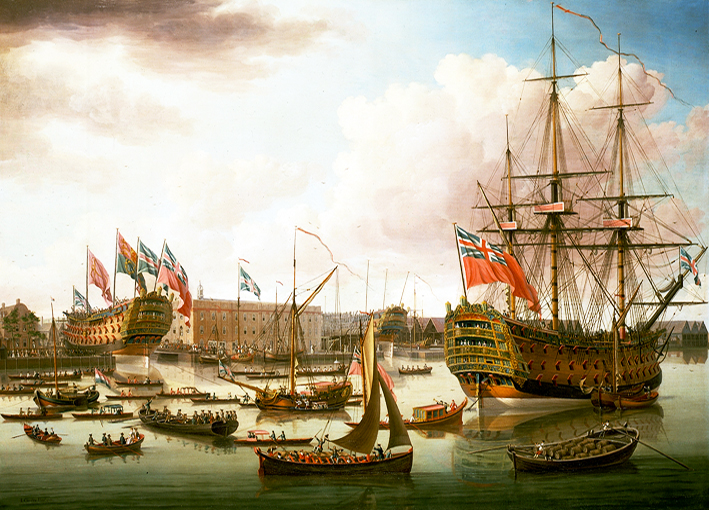 The Cleveleys
John Cleveley senior (1712-77) was born in Surrey and, in accordance with his father’s wishes, became a navy carpenter at Deptford dockyard, later serving on HMS Victory. His passion, however, was for art. Guided by his technical knowledge, he produced many accurate depictions of navy ships as well as Kent dockyards. One of his sons, James, was also a carpenter, and travelled with Cook on his 3rd expedition; but his others, Deptford-born twins John junior and Robert, were artists. Like him, they both worked in dockyards, and probably both got tuition from Paul Sandby of the Royal Military Academy. More liberal in style and diverse in subject matter, they exploited public interest in naval matters commercially, with dramatic paintings of dockyards, ships, combat, and South Sea scenes. John junior (1747-86), who accompanied Joseph Banks on one journey, died young, probably at Deptford, while Robert (1747-1809) fell off a cliff at Dover.
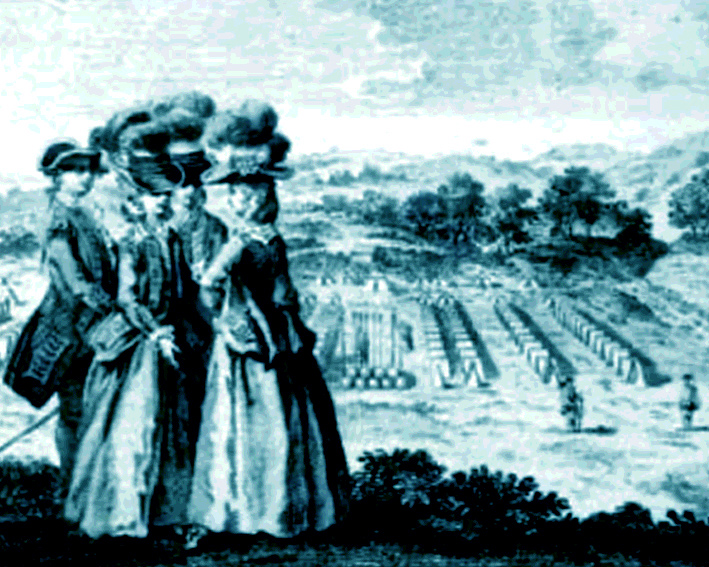 Cocks Heath
The housing estate that now constitutes Coxheath occupies an area that was once a nationally infamous military camp. Initially occupied in 1756, it was so large – three miles by one – that it was able to accommodate 15,000 troops and their wives during the American Revolution. This made it a significant town in its own right, and traders poured in from London and Maidstone to cater for them. So too did prostitutes, and the nefarious goings on suggested the nickname ‘Cocks Heath’. Light relief from weapons training was provided by the Duke of Devonshire’s celebrity wife, whose cavorting with fashionable friends became a source of national chatter. The great playwright RB Sheridan even co-wrote a popular musical entertainment about it, called ‘The Camp’. It was of course of no avail, because the intervention of the French swung the Revolution decisively in favour of the rebels. After Waterloo, France and England made up for good, and the heath reverted to farmland.
 The Coffin Stone
The Coffin Stone – alternatively known as the Table Stone – is something of a misnomer. It refers to a 14-foot by 9-foot block of sandstone lying flat close to the Pilgrims’ Way about a quarter-mile from Kit’s Coty, north of Maidstone. For one thing, any resemblance to either a coffin or table has been somewhat obscured ever since three smaller stones were placed with it. For another, it probably used to stand upright, but fell over. It was long thought to have been part of a long barrow, a communal grave typical of the Neolithic era, and human remains were indeed found underneath when it was lifted in 1836. The absence of matching megaliths nearby gives the lie to this theory, however, although it might have been moved there about five centuries ago from one of the other Medway neolithic sites. Being alongside a public footpath, it can easily be inspected at close quarters.
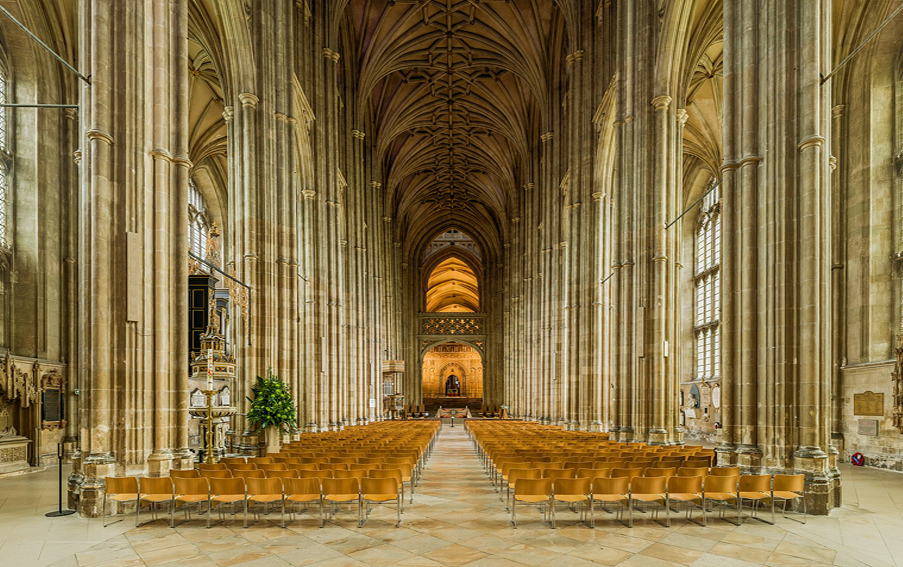 ‘The Coming of Christ’
In 1927, the dean of Canterbury Cathedral, George Bell, persuaded John Masefield (1878-1967) of ‘Sea Fever’ fame to write a nativity, ‘The Coming of Christ’, and Gustav Holst to set it to music. Bell secured permission to perform it in the cathedral nave during his 1928 Canterbury Festival, making it probably the first new mystery play since the Middle Ages. Holst took the challenge seriously, importing choristers of his own from St Paul’s Girls’ School to reinforce the local musical talent. Although his pleasingly simple choral music was crowned by a grand finale in which the audience joined in whilst the bells tolled above, the piece was not entirely successful. The music was punctuated by verbose prose passages that stifled its momentum, and concluded with a frustratingly short trumpet voluntary. Although Masefield became a long-standing poet laureate two years later, the work disappeared in England for eight decades. It was finally revived in 2010, with Masefield’s contribution considerably redacted.
 Coronation Chicken
After attending Le Cordon Bleu cookery school at Paris, Rosemary Hume (1907-84) from Sevenoaks opened a cookery school in London in 1931 with fellow alumna Dione Lucas, followed by L’École du Petit Cordon Bleu in Sloane Street. So striking was her culinary expertise that the much older flower-arranger Constance Spry offered to write a book showcasing her best dishes. Having no literary skills, Hume agreed, and the ‘Constance Spry Cookery Book’, credited to Constance Spry & Rosemary Hume, became a familiar feature on the kitchen bookshelf. In 1953, possibly suggested by the Jubilee Chicken created for George V in 1935, Hume designed a dish specially for Queen Elizabeth‘s coronation that she initially called Poulet Reine Elizabeth. Unusually for the period, it was made with curry powder, possibly because her father, a British Army colonel, had been stationed in India. A simple way to use up leftover chicken deliciously, the dish caught on under its now traditional name, Coronation Chicken.
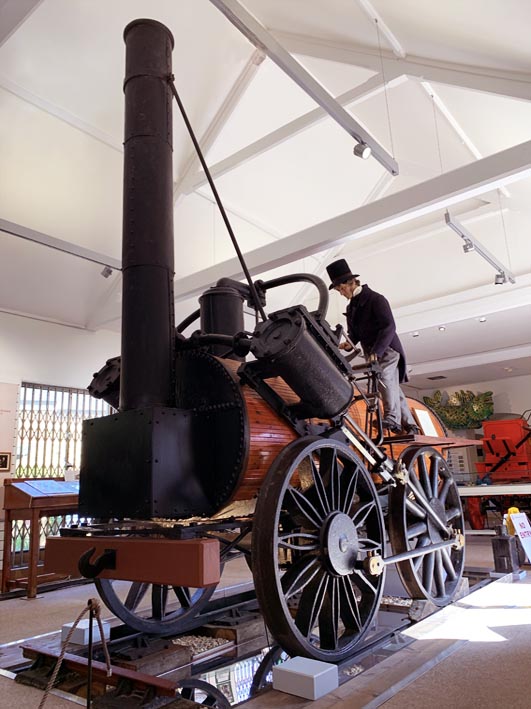 The Crab & Winkle line
In the early 1820s, railway pioneer William James lobbied for a line to run the six miles from Canterbury to Whitstable. Its benefit, he claimed, would be to relieve traffic problems in the city centre. Work started in 1825 under the auspices of two engineering legends, George Stephenson and, later, his son Robert of ‘Rocket’ fame. The gauge was set at 4ft 8½in, which subsequently became the International Gauge. Opening in 1830, the Canterbury & Whitstable was not the first railway line in Britain, but certainly the first in the South-East. It catered not only for freight, but also passengers travelling in open wagons to the coast; whence its nickname, the ‘Crab & Winkle’. Anxious to secure regular use, the operators set a world first by selling the first-ever railway season-ticket. Nevertheless, the primitive engine, Invicta, was not up to the mechanical challenges, travel was slow, and the line lost money. The South Eastern Railway took it over in 1844.
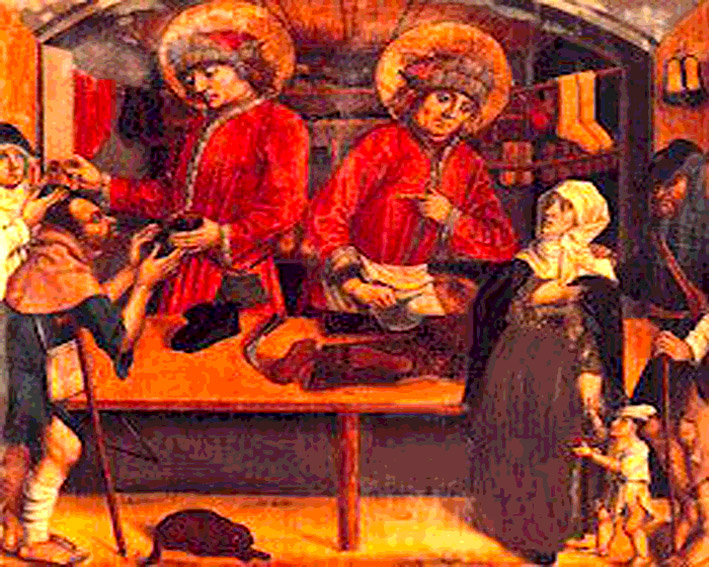 Crispin & Crispinian (d ca 286)
During Emperor Diocletian’s persecution of Christians in the late C3, two brothers from a noble Roman family, Crispin and Crispinian, fled to Soissons in northern France, where they made shoes and preached to the indigenous Gauls. Arrested by the Roman governor, they were weighted down and thrown into a river. Having escaped but been recaptured and beheaded, they were canonised as martyrs, and celebrated as the patron saints of shoemakers and any number of associated occupations. An alternative version maintains that they escaped to Kent and established themselves as cobblers in a house at the end of Preston Street, Faversham, that eventually became the Swan Inn. An altar was later dedicated to them in the local church. Like St George, they came to be adopted as a particularly English phenomenon, which partly explains Shakespeare’s excitement that the Battle of Agincourt happened on October 25th, St Crispin’s Day. A pub named after them in Strood was frequented by Dickens.
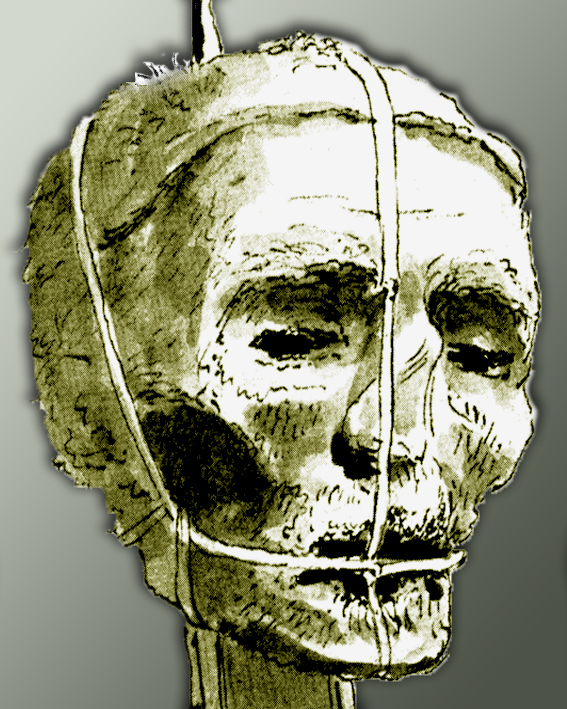 Cromwell’s head
Huntingdon-born Oliver Cromwell suffered seriously from mission creep. Originally just another MP who resented Charles I’s imperiousness, he became in turn a talented military commander, a regicide, and finally a hereditary dictator at odds with his own faction, Parliament. Given also his zealous promotion of Puritanism, particularly at the expense of Presbyterianism, he inevitably made countless enemies. No sooner had the monarchy been restored than he was disinterred and given a good hanging at Tyburn. His head, displayed for two decades on Westminster Hall, eventually broke off, and was removed by a sentry. After sundry travels, it was purchased in 1815 by Josiah Wilkinson, a Sandgate surgeon, whose family kept it in Kent. In 1960, his descendent Horace Wilkinson of Sevenoaks, deciding it deserved a dignified resting-place, gifted it in to Cromwell’s alma mater, Sidney Sussex, Cambridge, where it remains. Although no longer in the news, it still has the potential to become a political football.
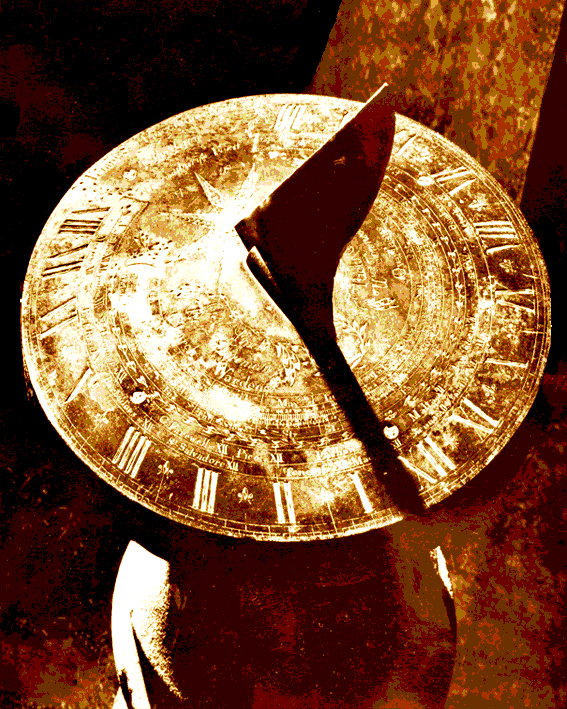 Crow’s Sundial
In the National Maritime Museum at Greenwich, there is an engraved brass sundial created by Thomas Crow (1772-1821) from Wateringbury that commemorates six Royal Navy victories in the French Revolutionary Wars prior to Trafalgar. Even more special, however, was the sundial he invented that could tell the time around the world, a century before such a thing was hailed as a technological breakthrough. Around the gnomon (pointer) were four circles showing the hours, 22 world locations, the months, and the local difference from GMT. Beneath was a Latin inscription meaning “Time leads truth to the light”. For over a century it rested on a pedestal outside Wateringbury church, until in 1981 some scoundrel pinched it. This historic artefact was never seen again, but a Larkfield man did replace it with a memorial sundial in 2001. Oddly, an inscription on the Crow family tomb there declares Crow’s brother William (1779-1834) the “inventor of the seaman’s octant”, a century too late.
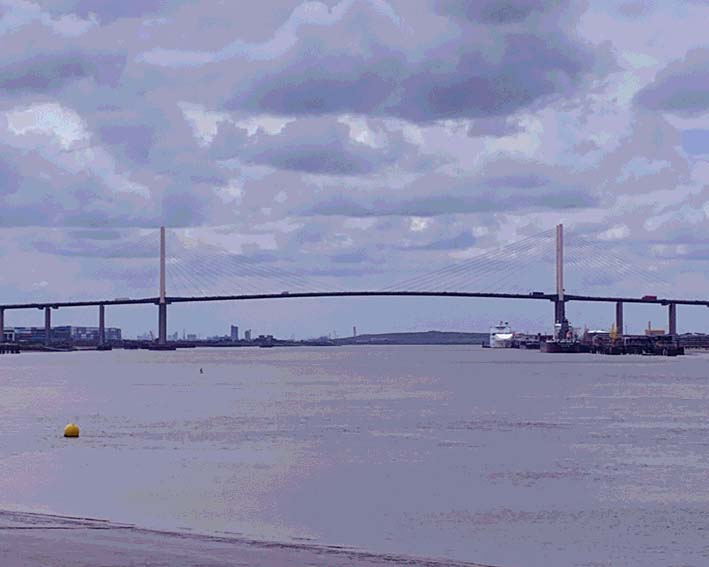 The Dartford Crossing
Even before WW2, a Thames crossing was demanded between Kent and Essex, the Blackwall Tunnel now being well into London. Work started on a tunnel between Dartford and Thurrock in the 1930s, but was not completed until 1963, when it opened as the two-lane Dartford Tunnel. It soon suffered from congestion, and 17 years later a second two-lane bore was added. When the completed M25 added further to overuse in 1986, a radical new solution was proposed: a four-lane bridge to take all the southbound traffic. Rising 200 feet above the Thames and supported by 450-feet towers, it opened in 1991 under the neutral name ‘Queen Elizabeth II Bridge’, Essex residents having objected to the more logical ‘Dartford Bridge’. Although tolls were supposed to be abolished once the £120 million link was paid for, they continue today, despite which the crossing caters for 50 million vehicles annually. Yet another tunnel, between Gravesend and Tilbury, is under active consideration.
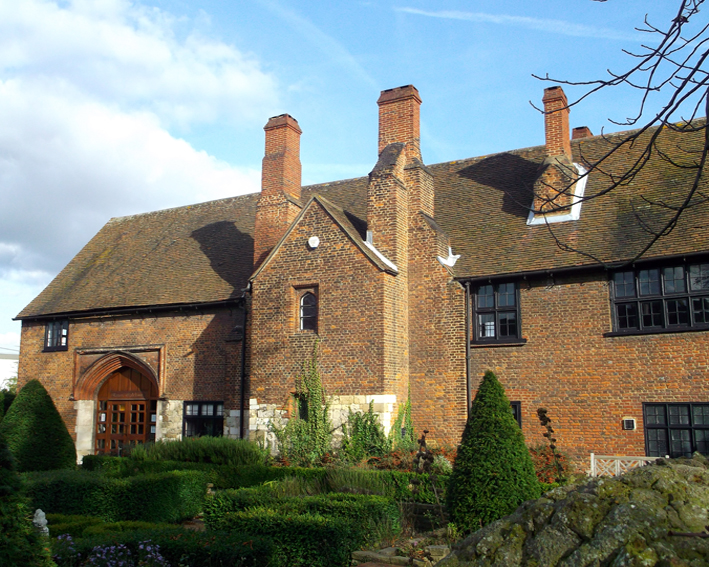 Dartford Priory
After Edward II tried but failed to have a Dominican nunnery established in England, his son Edward III picked up the challenge. He was plainly keen on Dartford, having organised more than one tournament there, which perhaps facilitated its selection as home to the priory that opened there in 1356, with an initial contingent of four French nuns headed by their prioress Matilda. Princess Bridget was sent there around 1489, an event imagined in paint by James Northcote in 1822. The priory terminated abruptly with the Dissolution of Monasteries, when Henry VIII dispersed its many properties. He built a bijou manor house there, completed in 1544, and gifted it to Anne of Cleves as part of their divorce settlement; she spent four years there from 1553. His daughter, Elizabeth I, retained ownership, but seldom used it. All that remains now is the substantial gatehouse, which is marketed as a venue for ceremonies.
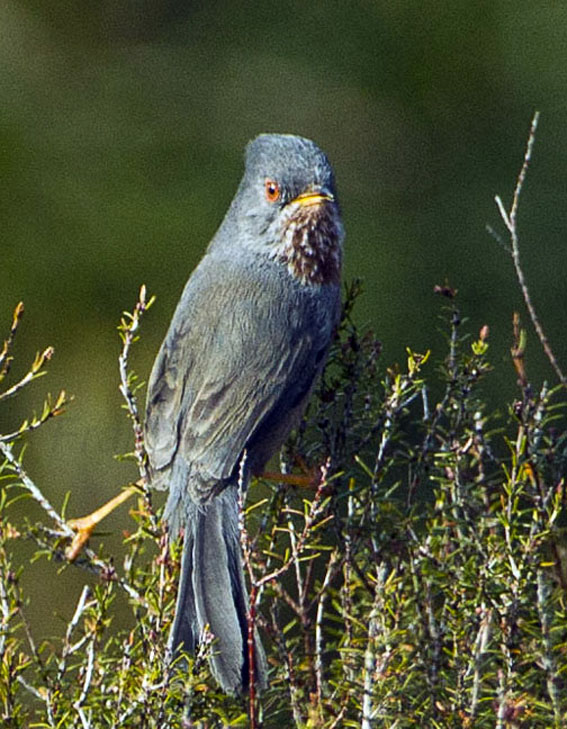 The Dartford warbler
Formally named Curruca undata, this passerine bird is one of the ‘typical warblers’, a group of small songbirds extending across Europe, Western & Central Asia, and Africa. Only 5 inches long even including its long tail, it has a greyish back, brownish chest, and short, pointed beak that may give the appearance of a washed-out robin. Its relative inconspicuousness is no doubt beneficial as it nests low down in gorse or heather on heathlands, its song fast and furious. Welsh ornithologist Thomas Pennant named it after Dartford on the strength of two specimens sent to him by his Kentish counterpart John Latham, who actually got them from Bexley Heath. The bird’s range is quite extensive, reaching from southern England to Spain, where it is most numerous. It nearly became extinct in England after the harsh winter of 1962-3, but its numbers have benefitted handsomely from global warming: there are now reckoned to be some thousands of breeding pairs here.
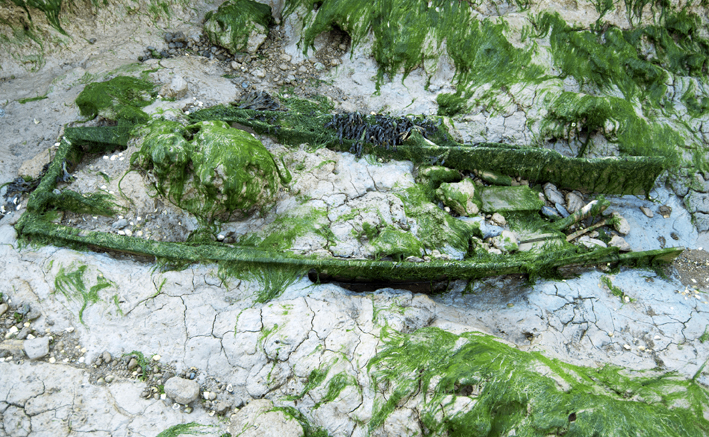 Deadman’s Island
It’s no surprise to learn there’s a Deadman’s Island in the Gulf of Mexico; but few Kent people know there’s another on their own doorstep. Not that they’ll ever be able to set foot there: the island is off-limits to the public. It lies where the Medway meets the Swale, on the other side of Shepherd’s Creek and facing the Isle of Grain. Its name derives from its use over two centuries ago as a burial ground for prisoners who had died of contagious diseases on the local prison hulks. For a long time the corpses remained safely underground, but erosion and rising seas have led to many becoming disinterred. A BBC crew permitted to visit in 2017 reported the macabre sight of half-buried coffins and human bones strewn about. Naturally the locals in nearby Queenborough have got in on the act, sharing tales of ghostly apparitions and eerie noises in the dark.
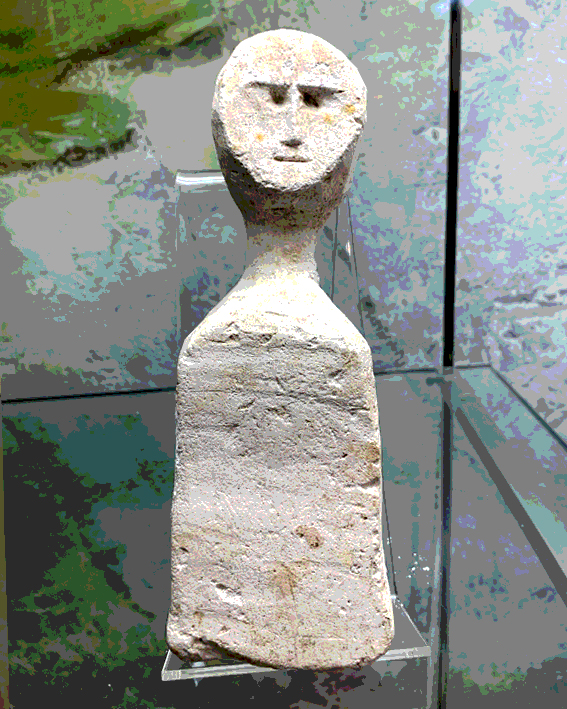 The Deal Man
In 1987, members of Dover Archaeological Group exploring in the Mill Hill area south-west of Deal discovered an extraordinary 7-inch high figurine. It was made of chalk, and had a human face carved upon it. The figurine’s facial expression was a masterpiece of economy, suggesting somewhat the look of a schoolmaster invigilating an exam. It was in a 9-feet deep ‘ritual shaft’, a feature of ancient burial sites that created a connection to the underworld; objects useful after death, especially animal carcases, were placed into one. The figurine probably fell from an alcove higher up the shaft, and was perhaps an effigy of a divinity, or a deceased’s loved one. Surrounding shards related to the early Roman occupation of Britain in the C1, so the figurine has been speculatively dated to 80 AD. It does not look at all Roman, however, being more akin to Iron Age Celtic art. The so-called Deal Man now resides securely in Dover Museum.
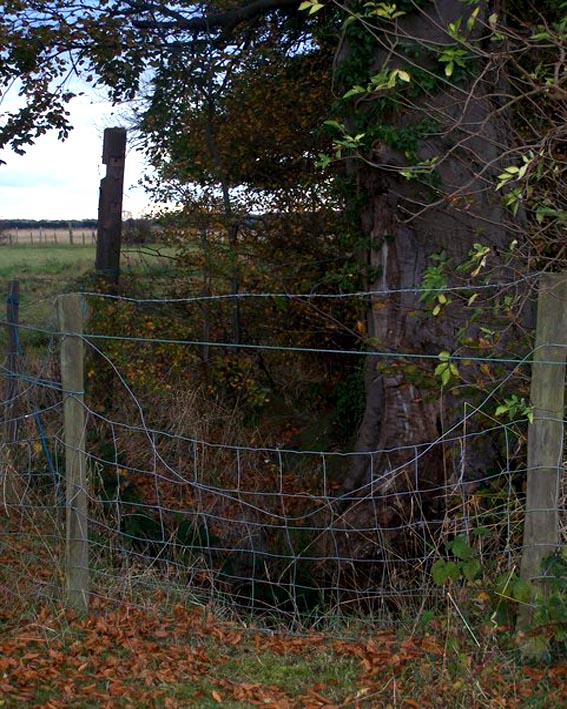 Dene holes
Dene holes are vertical shafts, about sixty feet deep and three feet wide, with rough steps cut into their walls and three or four chambers dug into the chalk at the bottom. Although not unique to Kent, they are largely limited to the far South-East, and in Kent range from Bexley to Challock; the Kentish archaeologist Flaxman Spurrell made a special study of them. Folklore has it that they were refuges for Danish invaders, but it’s likelier that the ‘dene’ part of the word comes not from ‘Dane’ but the Anglo-Saxon for ‘hole’. Since they evidently go back to pre-Roman times, they were probably a source of uncontaminated chalk sprinkled on agricultural land to raise the alkalinity of the soil, and perhaps were later adapted for storage or as hideouts, or indeed both in the case of smugglers. In the 1850s, an outlier at Margate was branded ‘Vortigern’s Cave’ and marketed as a visitor attraction.
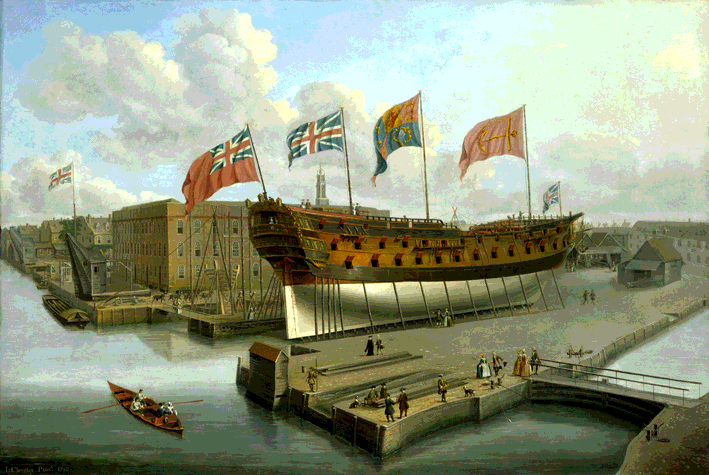 Deptford Dockyard
Ships were already being built at Deptford in the early C15 under Henry V, but it was the Tudors who made all the difference. Although Henry VII had designated Portsmouth as the nation’s main dockyard, he also rented a storehouse at Deptford. His son Henry VIII showed his marked preference for North Kent over Hampshire by building a dockyard at Woolwich in 1512, followed by Deptford in 1513 and Erith in 1514. Deptford would remain a vital shipbuilding centre for 350 years. It was where Drake was knighted in 1581, and Raleigh legendarily laid down his cloak for Elizabeth I. Several historic ships were built at Deptford, including those used by Cook, Vancouver, and Bligh on their landmark voyages of discovery. Its importance waned in the C19 because Chatham and Sheerness offered better access to deep waters for the era’s bigger ships. It closed in 1869, and is now largely residential.
 The Dering Manuscript
A document chanced upon by Reverend Lambert Larkin in the library at Surrenden Dering in Pluckley in 1844 proved unique, constituting the oldest extant manuscript of a Shakespeare play. Subsequently dated to around 1623, it was the work of Sir Edward Dering, 1st Baronet (1598-1644), a noted aesthete who staged plays in the hall there. It transpired that he had made the first known purchase of Shakespeare’s historic First Folio and used it as the source for one of his own productions, in which he merged Parts 1 and 2 of ‘Henry IV’. He edited the text substantially to reduce it to performance length, cutting out most of Part 2, removing several characters, and butchering the popular part of Sir John Falstaff, despite adding about 50 lines of his own. The final production comes across somewhat like a statement of the grievances of rival aristocrats. Sadly, the manuscript is now in the clutches of a Washington DC library.
 The Dering Roll
An armorial, or roll of arms, is a collection of coats of arms illustrated in rows. One roll completed in Dover in the C13 consisted of 324 devices, mostly from Kent and Sussex, laid out in 54 rows of six. It was presumably ordered by Stephen de Pencester whilst Constable of Dover Castle. Sir Edward Dering, 1st Baronet (1598-1644) of Surrenden Dering in Pluckley, apparently removed it whilst lieutenant of the Castle and doctored it to include a mythical ancestor called Richard Fitz Dering, presumably to add weight to his pretence to noble ancestry. Although not the oldest roll – Glover’s Roll (1586) is a copy of a lost roll from the reign of Henry III – it is the oldest original. Notwithstanding the defacement, the document is considered of such national importance that, when it was auctioned to an overseas buyer in 2007, funds were raised to acquire it for the British Library, where it is now displayed.
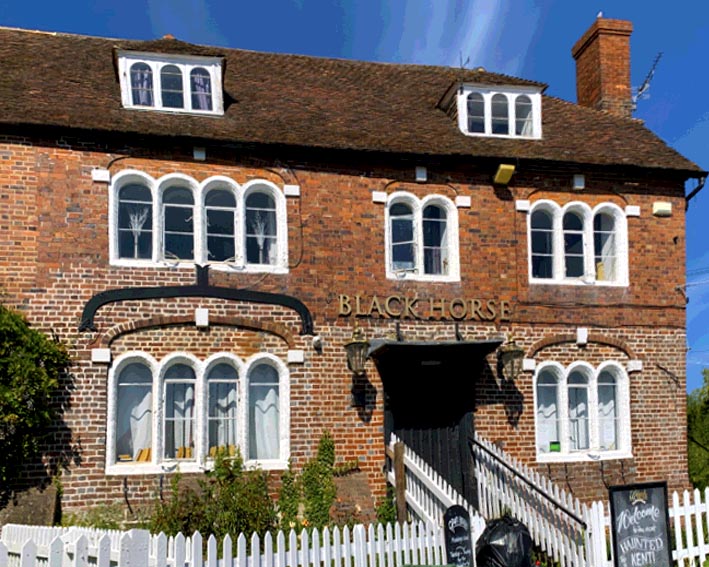 Dering windows
The style of windows distinctive to Pluckley is unmistakable, once you know what they look like. They are simply narrow rectangular windows, twice as high as they are wide, with an additional semi-circular pane at the top. They may also be grouped in twos, threes and fours. The story is that, during the Civil War, the first baronet Sir Edward Dering climbed through the round top portion of a window to escape from Roundheads who suspected him of raising an army for the King. Two centuries later, his descendant Sir Edward Cholmeley Dering decided that this happy story shouldn’t be forgotten, and had similar windows installed at the family pile, Surrenden Manor. From there, the practice was extended to properties throughout the family estate. They can now be seen on buildings all around Pluckley, as well as neighbouring Little Chart. Presumably Hermann Goering wasn’t keen on them: the Luftwaffe expended much energy on shattering them during WW2.
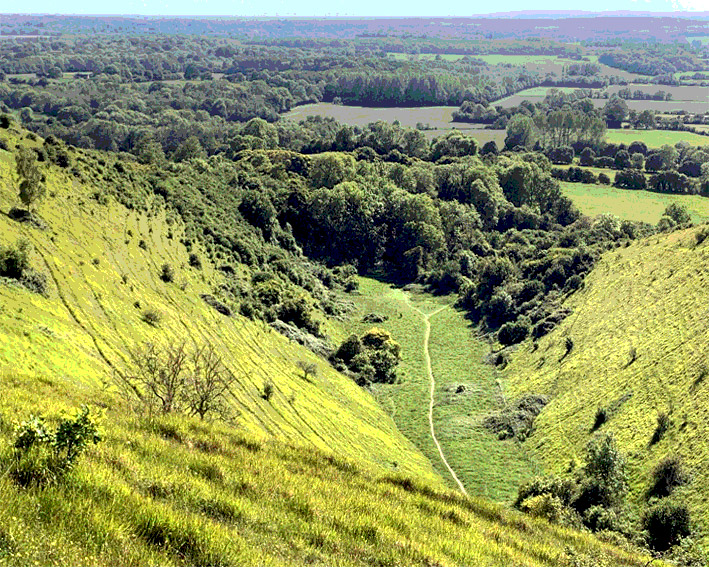 The Devil’s Kneading Trough
If there’s one thing the Kentish countryside lacks, it’s the glorious hilly panoramas of the West Country. Just north-east of Ashford, however, the Wye Downs do give a flavour of them. This nature reserve of national standing is the outcome of glacial action on the chalk North Downs, resulting in a series of coombes: downhill depressions that look like dried-up river beds. The most spectacular is the one known as the Devil’s Kneading Trough. It’s not necessary to wonder whether there was an ancient myth about Lucifer coming here to make pastry. There was nothing original about naming a dramatic natural feature after a familiar object it resembled and attributing ownership to the Bad One: think Devil’s Dyke, Devil’s Punch Bowl, or numerous Devil’s Elbows. What can be said is that, as well as an extraordinary array of orchids, the area offers a Romantic escape from town living, and a devil of a view.
 The Dial-A-Ride Experiment
The Dial-a-Ride concept, a hybrid bus-and-taxi service, was developed in America in the 1960s to provide more flexible transport for remote communities. It was brought to Europe by Ford in the hope of selling fleets of Transit minibuses. The first proper test was planned for Maidstone in 1972, providing a 20p service from the town centre to Loose and Coxheath. Against opposition from the Maidstone Taxi Proprietors Association and the Corporation and Maidstone & District bus companies, local operator Dennis Freeman argued successfully that it was too basic to appeal to typical taxi-users, and would not cannibalise bus services because its small vehicles would go where larger ones did not. Though the 12-month Maidstone experiment was rolled out to a bigger trial at Harlow, the idea ultimately failed because it could not be done economically. Nevertheless, it survives in such services as Kent Karrier and Wealden Wheels, which cater for the aged, disabled, and geographically remote.
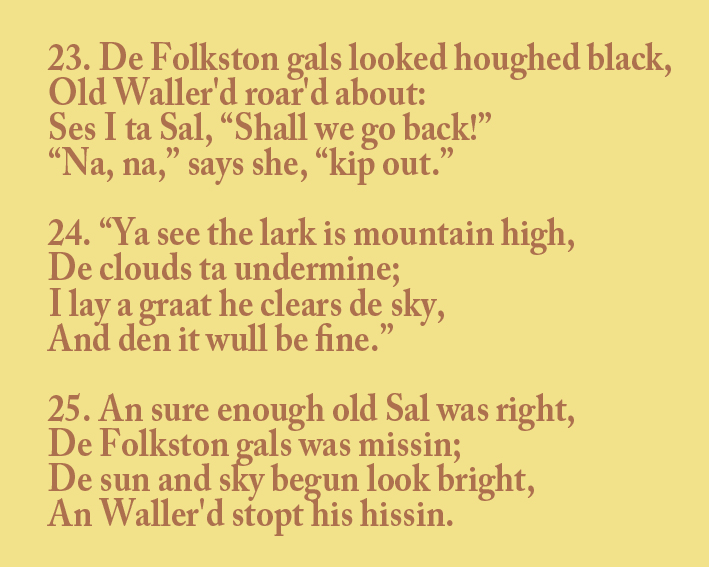 ‘Dick and Sal at Canterbury Fair’
A plaque in Court Street, Faversham announces the former residence of John White Masters, a force in the importation of Assam tea in the Georgian age. All that tea has long since been drunk; but what does remain of him is the other achievement mentioned: ‘Dick and Sal at Canterbury Fair’. This is a yarn, told in rather execrable doggerel, amounting to a hundred four-line verses. Written over 200 years ago, it’s interesting for two reasons. First, it’s ostensibly written in the Kentish ‘dialect’ of the day, which in practice means that the spelling captures the rustic accent, with a few unfamiliar terms thrown in. Second, it’s the colourful story of a couple’s outing from Sheldwich to Canterbury, eight miles away. While they’re having a good look around the city, Dick gets into a brawl when old Simon Cole bizarrely sucks Sal’s jowl. Notwithstanding that misfortune, the pair manage to enjoy the fun of the fair afterwards.
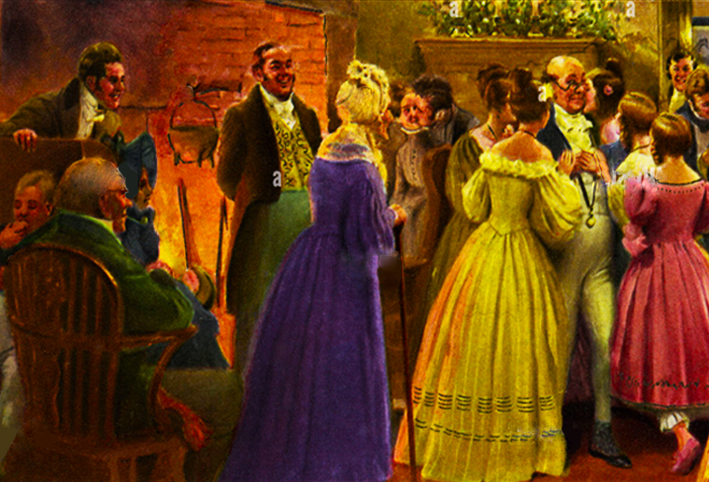 Dingley Dell
In his first novel ‘The Pickwick Papers’, serialised in 1836-7, Charles Dickens created Manor Farm at Dingley Dell. Not for the only time in his oeuvre, it was inspired by a real place in Kent. Whilst skating near Maidstone, Dickens fell into the icy water, and went looking for help at Cobtree Manor. He so appreciated the kindness he was offered there by the owner, William Spong, that he took the first opportunity to pay his compliments in print. Although the Pickwick Club is based in London, its exuberant members are fond of expeditions, and their very first is to Kent, initially to the Bull Inn, Rochester. They then get a warm welcome at Manor Farm, which all the members agree is in a “delightful situation”. When Mr Tupman asks if Rochester has any fine women, Mr Jingle emphasises the point: “Everybody knows Kent – apples, cherries, hops, and women”. Today, the house is just 200 yards from the M20.
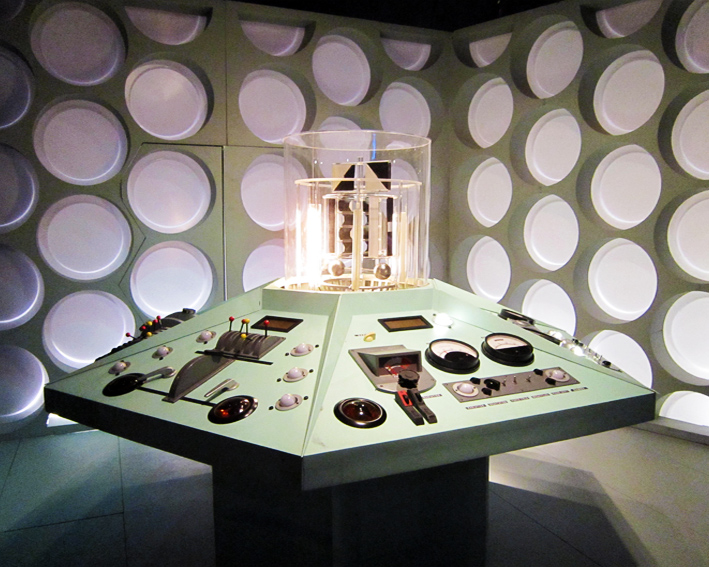 Doctor Who
In 1963, while developing ideas for a new prime-time TV series for tweenies, BBC executives came up with ‘Doctor Who’. The scriptwriting task was handed to staff writer Anthony Coburn (1927-77), an Australian resident of Herne Bay. After agreeing the fundamentals of the new property with the story editor, he delivered six four-part serials. The first to be produced, ‘An Unearthly Child’, saw the Doctor’s TARDIS travelling to the Stone Age, where the eponymous patriarch fatefully revealed the secret of fire to tribesmen. Its first airing drew just 4.4 million viewers, but word got around, and episode three reached 6.9 million. Nevertheless, it was upstaged by Terry Nation’s ‘The Daleks’ in serial two, and none of Coburn’s other ideas ever got made. He continued scriptwriting for the BBC until 1973, and died at Canterbury. ‘Doctor Who’ went on to become the world’s longest-running sci-fi series.
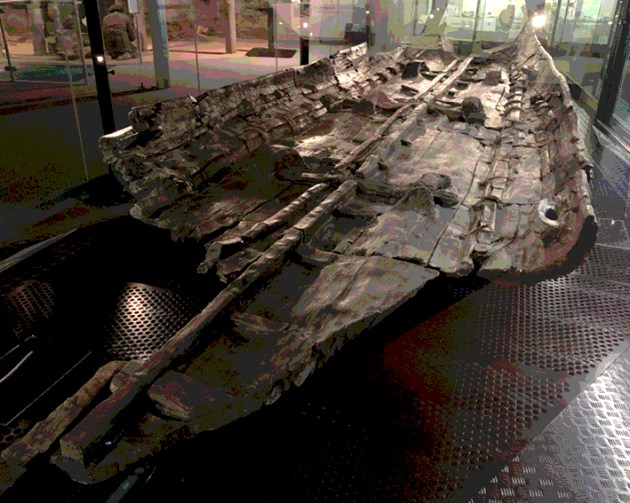 Dover’s Bronze Age boat
In 1992, the remains of a boat were unearthed during construction of a new underpass in Dover. Having been identified as something extraordinary, it was painstakingly removed by archaeologists. Sadly, because of its position close to buildings, a portion of unknown size had to be left in the ground. Once cleaned up and studied, the remains turned out to be more than 3,500 years old. Although older ships have been found in Egypt, the remains of boats tend to be fragmentary. The Dover boat is therefore quite likely the oldest largely intact boat in the world. This 30-foot-long cargo boat, built with oak timbers, would have required perhaps 18 men to paddle it. In its suitably subdued gallery at Dover Museum, it is fascinating to imagine it at sea even before the Ancient Greek seafaring tradition got underway, yet simultaneously frustrating to know that the rest of the craft is still lying underground only yards away.
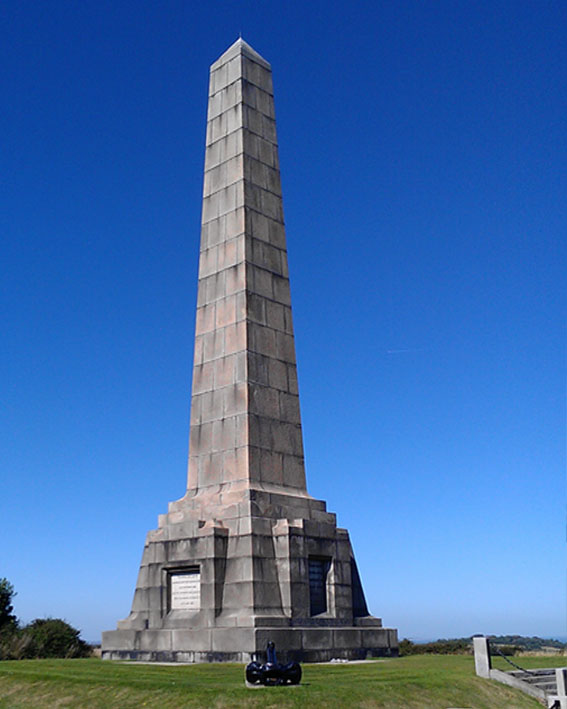 Dover Patrol
With WW1 about to break out, a new unit was established within the Royal Navy: Dover Patrol. It was specifically intended to deny German vessels the use of the English Channel, forcing them to detour all the way around Scotland – a strategically important consideration once Germany occupied the Belgian ports. To begin with, it was a motley collection of craft, many from the C19, that were complemented by 12 F-class destroyers in July 1914. Over time, Dover Patrol expanded to take on a multitude of tasks, including not only submarine deterrence and mine clearance but even air attacks on German shore installations. It was sufficiently effective that, as late as February 1918, it was subjected to a devastating attack by a powerful German naval force, but still played a prominent role at Zeebrugge two months later. It is commemorated with obelisks at Dover and in France and America; and a naval board-game called ‘Dover Patrol’ was published in 1919.
 Dover Priory
Not long after Augustine re-introduced Christianity to England, King Eadbald of Kent established a secular community of canons at Dover Castle. Having moved to the town centre, it survived Bishop Odo’s ownership; but the Archbishop of Canterbury, seeking to extend his influence, re-formed it by 1143 as a new priory under his control, which caused lasting friction between the canons and Canterbury. Over time, operating under Benedictine rules, it gained in wealth and stature, boasting a singularly large church. After the Dissolution of the Monasteries, however, much of the stone was plundered for construction, albeit that many outbuildings survived until the C19, when the site was redeveloped. The new railway line ran through the western part, the adjacent station being called Dover Priory, while the eastern side was built upon. In between, Dover College school was built by public subscription out of the ruins, of which the gatehouse and the Strangers’ Refectory were the most strikingly restored.
 Dover sole
As Whitstable has its oysters, so Dover has its sole. Contrary to a common misconception, Dover sole is not peculiar to the Dover area. It is a flatfish species technically named Solea solea that also goes by the names of common sole and black sole. It is actually native to a region ranging from Norway to the western coast of North Africa, but particularly abundant in the North Sea, English Channel, and Irish Sea. The Dover connection derives from the fact that the town’s fishermen cornered the market for supplying Victorian London. This is however a particularly good fish to attach a town’s name to. Brownish, mottled and rough to the touch, it is renowned for its tender yet firm flesh, not to mention its seriously good flavour. Certainly they agree it is a good brand in the United States. Just as they call maize ‘corn’, the Americans have their own Dover sole, which is actually a flounder.
 The Downs
A roadstead is not what it sounds like, but a nautical term denoting a sheltered sea area where ships can seek refuge in adverse conditions or await a change of wind direction. Perhaps the most famous Engish example is Spithead in the Solent, but Kent boasts two of the three next most important: the Nore, and the Downs. The latter, off Deal, for centuries has been the place to go during bad weather in the Dover Strait or Thames estuary: as many as 800 vessels are known to have sheltered there at once. Being a magnet to shipping, it has naturally been the site not only of a major battle but also several shipping disasters, when vessels trapped by storms have been blown against each other, the shore, or the neighbouring Goodwin Sands. Apart from affording Deal residents a fascinating seascape, the Downs historically brought the town both commerce and its own Timeball Tower, a valuable navigational aid.
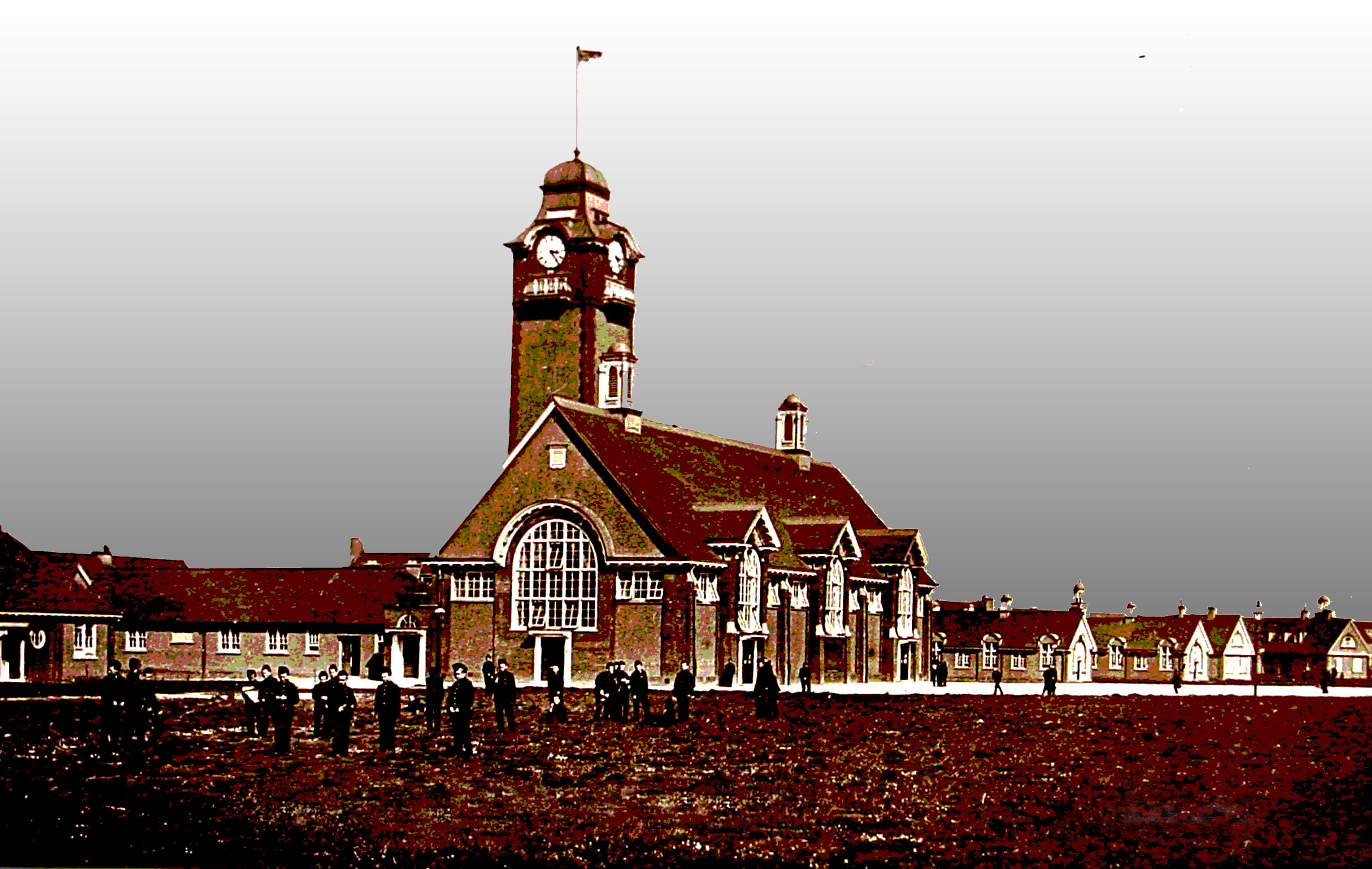 The Duke of York’s Royal Military School
The Royal Military Asylum was not a refuge for victims of shellshock, but a co-educational school opened in 1803 as a refuge for the children of servicemen who had fallen victim to Napoleon’s megalomania. It was given its present name in 1892, the Duke of York’s Headquarters being the building in Chelsea where it was originally housed. It moved in 1909 to Guston near Dover, where it remains even after being temporarily vacated during both World Wars. Among its teachers was William Siborne, the man who exposed the true story of the Battle of Waterloo, while alumni include such successful soldiers as Vice Chief of the Imperial General Staff Sir Archibald Nye and VC winner Corporal John Shaul. Though now an academy and state boarding school, open to applicants of all backgrounds, it still observes military traditions like parades and uniforms, and its twelve houses are all named after famous British commanders, including Clive, Kitchener, Nelson, Wellington, and Wolfe.
 The dumb borsholder of Chart
At Wateringbury is an artefact that requires some explanation. This bizarre instrument, colourfully termed a ‘dumb borsholder’, is a long stick with a sharp point at one end. A bors-holder was an elected official responsible for collecting local tithes (taxes), and his dumb companion was carried by him as an insignia of office, like a mace. Also like a mace, it had practical value in extremis. It was described in old reports as a log with a sharp point driven into one end and a hook on the other. The borsholder dangled the device by the hook when he wanted people’s attention and, if he found a door locked against him, used the point to force access – or perhaps worse. There were once four hooks down the side, although their purpose is not recorded. Chart’s dumb borsholder, in Wateringbury church, appears to be a later, better manufactured, simplified version, and may now be unique.
 Dungeness Power Station
The location of the new Magnox nuclear power station at Dungeness in 1965 was not just a matter of safety. From nearby Link House, a cross-Channel cable connected it to Boulogne, so that it could also supply France in the event of outages. Capable of generating 428 megawatts, Dungeness was hailed as proof of Britain’s unassailable lead in nuclear technology. At the same time, work began on Dungeness B, two Advanced Gas-Cooled Reactors that were eventually commissioned in 1983 – the first in a series around the nation. Britain’s nuclear prowess made it a strategic target for its Cold War enemy the Soviet Union, however, and despite the enthusiastic support of left-wing energy minister Tony Benn, Britain’s nuclear industry was undermined by political activism. Dungeness A was closed in 2006, and Dungeness B followed seven years earlier than scheduled in 2021. Ironically, with little nuclear technology of its own, Britain is beholden in the C21 geopolitical landscape to Electricité de France.
 Durolevum
Not to be confused with Durovernum (the Roman name for Canterbury), Durolevum is interesting for one thing: no one can say for sure where it was. There is just one tantalising contemporary reference to it, in a C3 gazetteer called the ‘Itinerarium Antonini’. It is mentioned as a fort on Watling Street. What’s puzzling is that its location is specifically given as 16 miles from Rochester and 12 from Canterbury. Follow those directions, however, and you arrive somewhere with nothing going for it. It’s not hard to imagine a Roman scribe 900 miles away, lacking that information but fearing the boss’s wrath, hazarding a guess in the hope that it was near enough. So where was it? We don’t know; but the best candidate is Judd Hill, just west of Ospringe. It does seem to offer the right sort of archaeological evidence, and makes sense given the village’s later significance as a stopover.
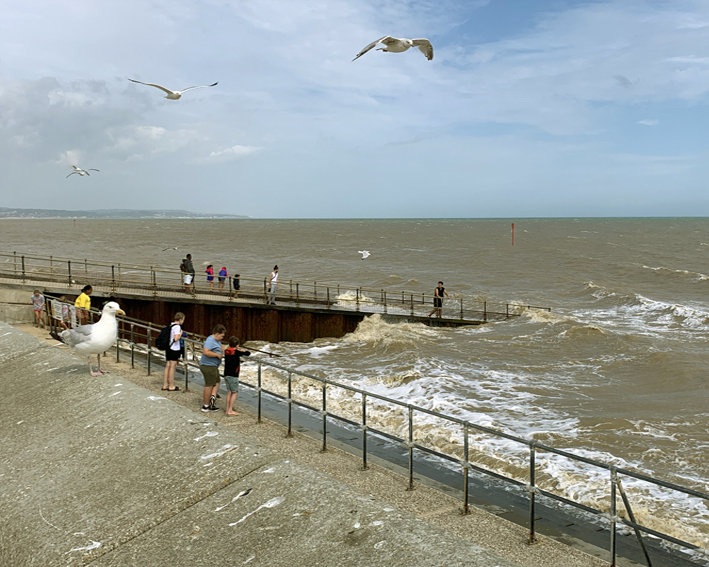 Dymchurch Wall
Of all the low-lying parts of Kent susceptible to flooding, whether by rivers or the sea, the most at-risk is the agriculturally valuable Romney Marsh, being practically at sea level and below it at high tide. The Romans were the first to mitigate flood risk: they built a house-high rampart maybe four miles long to protect the strategically important Portus Lemanis (Lympne). The risk of more general flooding was not considered serious until the C18, and even then solutions tended to be piecemeal. Over time, defences built to fill breaks in the natural shingle wall were connected up, and the sea defences were expensively upgraded during the Napoleonic Wars. In 2011, a new sea-wall costing £60 million was completed to protect Dymchurch itself. Although it is unsightly and blocks the view of the sea from the town, that is a small price to pay. Sea defences now extend continuously from Sandy Bay to Littlestone, or about six miles.
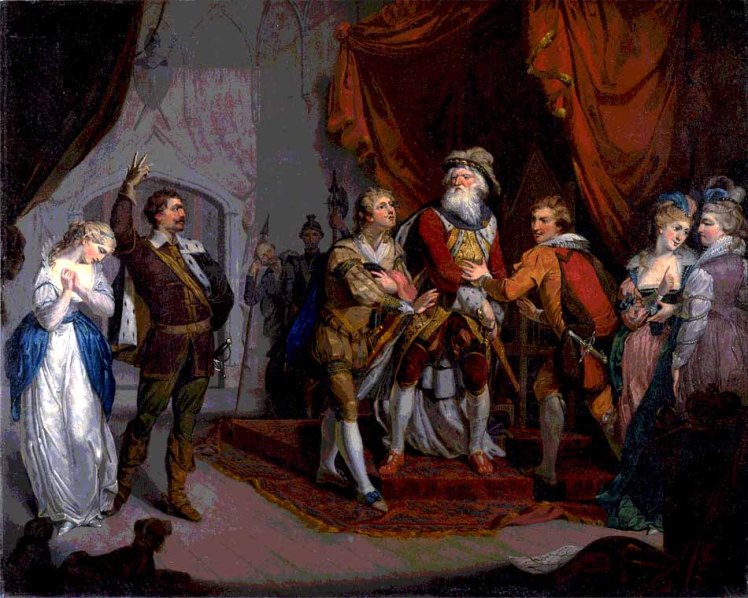 The Earl of Kent
To appreciate the significance of today’s title ‘Duke of Kent’, it’s worth considering how few other royal dukedoms there are in the UK. Aside from the Duke of Lancaster (a.k.a. King Charles III), there are just five. Kent’s claim to such elevated status goes back to Saxon times. Because Kent was an independent kingdom until Wessex took over, it was customary for the King’s eldest son to be the Earl of Kent. That title was held by King Harold’s brother, Leofwine, when both were killed in 1066; yet William I continued the tradition by conferring the title on his half-brother, Odo. It is noteworthy that the only Earl of Kent who appears in Shakespeare is in ‘King Lear’. In this play packed with doubtful or downright evil characters, the one unambiguously noble individual, Cordelia aside, is Kent. It is inconceivable that the Bard would have awarded the role to the Earl of Essex.
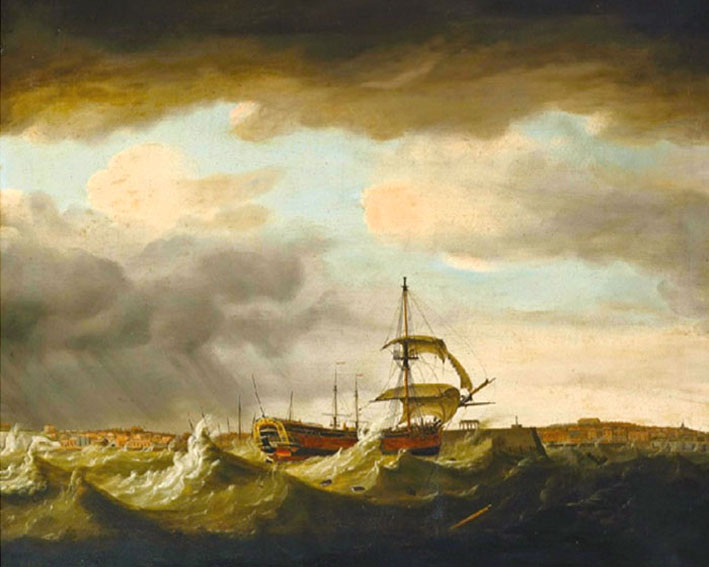 ‘The East Indiaman York in difficulties off Margate‘
Designed for long-distance travel carrying valuable cargo, East Indiamen were the container ships of their age; but their commercial significance made them matters of public interest, given their fragility and the vagaries of sea and weather. York was a teak vessel built by Bowater at Woolwich in 1773. She completed two trips, to Sumatra and India, in her first five years. After returning to the Downs from the latter, however, she fell foul of a tempest on New Year’s Day, 1779. She dragged anchor across Margate sands, two of her masts came down, and she was blown against Margate pier. At this point, the outcome looked grim and costly, and was so suspenseful for onlookers as to be recorded in paint by Ramsgate artist Francis Holman (1729-84). Nevertheless, she weathered the storm, and after repairs was back in action weeks later, heading for China. She racked up her fifth and final voyage by 1787, and was then turned into an ordinary transport.
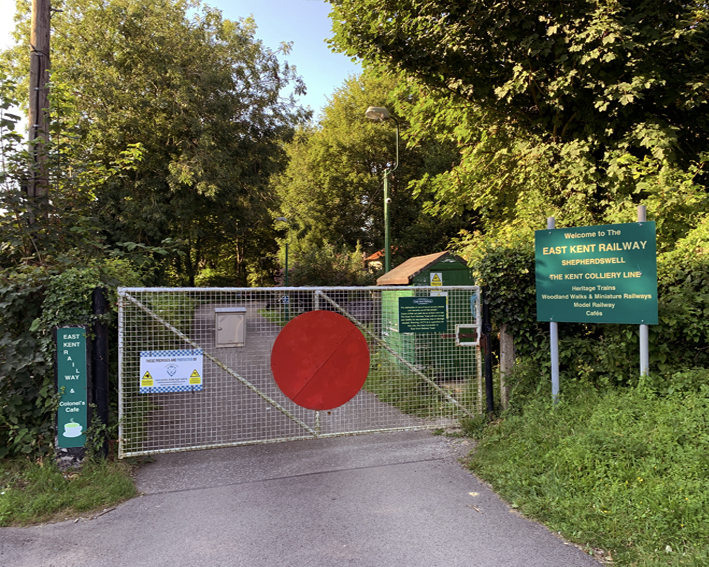 East Kent Railway
Shepherdswell near Dover has a claim to fame: as the terminus of the old East Kent Railway line. The track ran about ten miles to Richboro (sic) Port, although that station was never opened. The EKR was instituted in 1911 to connect up the region’s coalfields; and, though they were mostly unprofitable, it continued to operate for 77 years. The impetus for it was provided by Colonel HF Stephens, son of a member of the Pre-Raphaelite Brotherhood, who was the railway buff’s railway buff. He took a real hands-on approach, right down to designing the single-track Golgotha Tunnel. Today, 2.4 miles of the EKR are painstakingly preserved as a heritage railway, and Shepherdswell – which used to provide a connection to the London-Chatham-Dover line – is a magnet to railway fans, also offering a museum, a model railway, and rides on two miniature railways. The next stop up the line, Eythorne, occasionally plays host to special events.
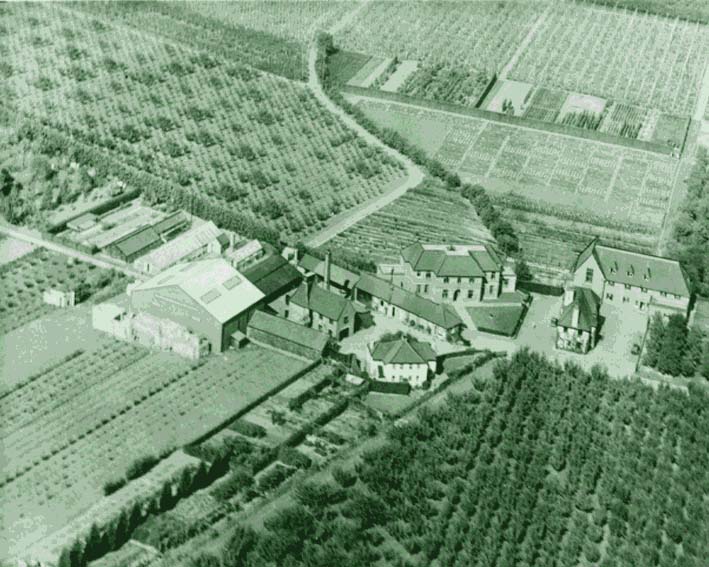 East Malling Research Station
In recognition of the fact that agriculture and horticulture are matters of science as much as skill, the idea of a research centre in the Garden of England was mooted in the early C20. Kent County Council purchased 22 acres for the purpose at East Malling, not coincidentally just a couple of miles from RHS bigwig George Bunyard‘s nursery at Barming. The East Malling Research Station that opened in 1913 was initially the Fruit Experimental Station of the South-Eastern Agricultural College at Wye, but broke away in 1921. Ronald Hatton, an agriculture student at Wye, became its acting director at the outbreak of WW1, was confirmed in the post in 1918, and remained there until his retirement in 1949. His major achievement was a standard classification of fruit-tree rootstocks known as the Malling Series. ‘EMR’ acquired an international reputation in such fields as fruit breeding and pest control, and in 2016 became part of the National Institute of Agricultural Botany.
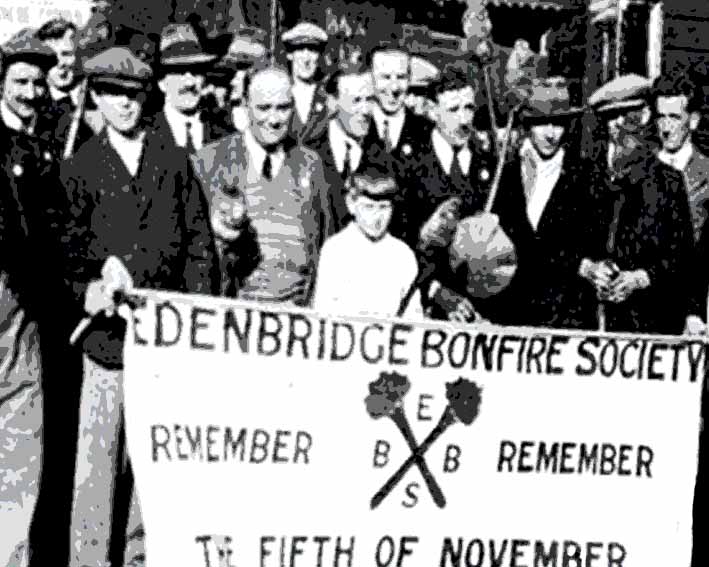 Edenbridge Bonfire Night
It is odd that the people of Kent, so long the bugbear of central authority, have traditionally burned an effigy of Guy Fawkes every year. This was after all a man bent on blowing up both King and Parliament. Certainly it occurred to Edenbridge Bonfire Society over 20 years ago that there are better candidates for virtual burning. Their ‘Celebrity Guy’ alongside Guy Fawkes changes every year. Their choices used to be unpopular celebrities, but have recently been mostly political figures. The organisers duck accusations of bias by mixing it up; so, when Donald Trump was incinerated in 2016, he had Hilary Clinton’s head in his grasp. Similarly, Boris Johnson in 2018 was balanced up by John Bercow the next year. The event is a huge affair for Edenbridge, with a torchlight procession followed by fairground rides, a DJ, and the firework display. The town has a fair claim to hosting the most enthusiastic public burnings in Britain.
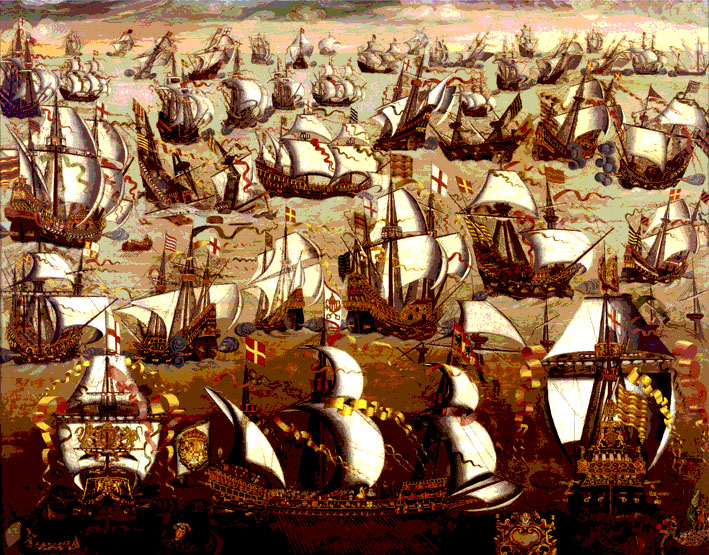 Elizabeth Jonas
The great Kentish shipbuilder Peter Pett constructed Elizabeth Jonas at Woolwich in 1559. A 42-gun replacement for Henri Grace à Dieu, which had burned in 1553, she was England’s first true galleon, and the most powerful ship in the English fleet. Elizabeth I is said to have named her Elizabeth Jonas to signal her own Jonah-like indomitability. Her finest and grimmest hours came in 1588, when she participated in the defeat of the Armada, but all but one of her crew died of disease and starvation after landing at Margate, which disaster prompted the Chatham Chest. In 1598, she was rebuilt as a razee (cut-down) galleon, in which form she was the venue in 1606 for a celebration at Upnor Castle involving Christian IV of Denmark, James I, his wife Queen Anne of Denmark, and their son Prince Henry. When she was examined in 1618 after an extended layoff, she was judged to be unserviceable, and broken up.
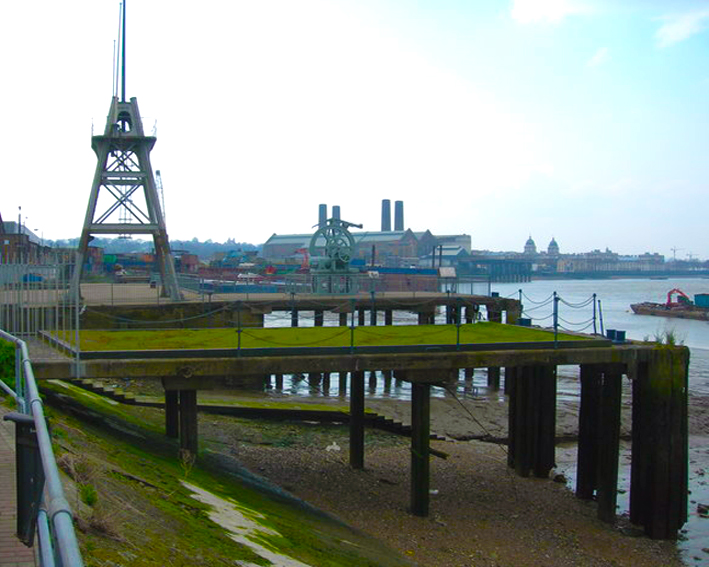 Enderby’s Wharf
Situated on the Thames in Greenwich opposite the Isle of Dogs, the 16-acre Enderby’s Wharf runs nearly 200 yards along the bank. It was originally used by Samuel Enderby (1717-97) for whaling and exploration, but his descendants converted it for industrial use, producing rope. In 1857, the site was acquired by cable manufacturer Glass, Elliot, which produced the first telegraph cable running between Europe and America, specifically from Ireland to Newfoundland. Although the connection failed after just three weeks, the company merged to form the Telegraph Construction & Maintenance Company and manufactured a second that was laid by Brunel’s SS Great Britain. Numerous others followed, along with cables to India and Australasia, so connecting up the continents long before satellites. Taken over by Submarine Cables in 1935, the site contributed to the Pluto pipeline in WW2, but ceased production in 1975. The Enderbys’ headquarters, the Enderby Building erected in the 1830s, still survives as a spacious pub-restaurant.
 English
Languages aren’t manufactured; they evolve. If two parts of any tribe are parted geographically, their languages eventually grow mutually unintelligible. Two such mutually unintelligible languages are English and German. Go back 75 generations, however, and the ancestors of today’s English and German native speakers were one and the same people. English is formally a West Germanic language, alongside German, Dutch, and Frisian, that started life as the dialect spoken by invaders who brought it with them. It began evolving into Anglo-Saxon, or Old English, as soon as they arrived on this island. They landed first near Sandwich, and established their first major polity across Kent. Their language later underwent collisions with Viking Danish and Norman French, affecting syntax and vocabulary respectively; but it survived and spread nationally – unlike the Franks’ language in France, which died out because they adopted the local Latin dialect. English, now the world’s lingua franca spoken by 1.3 billion people, was born in Kent.
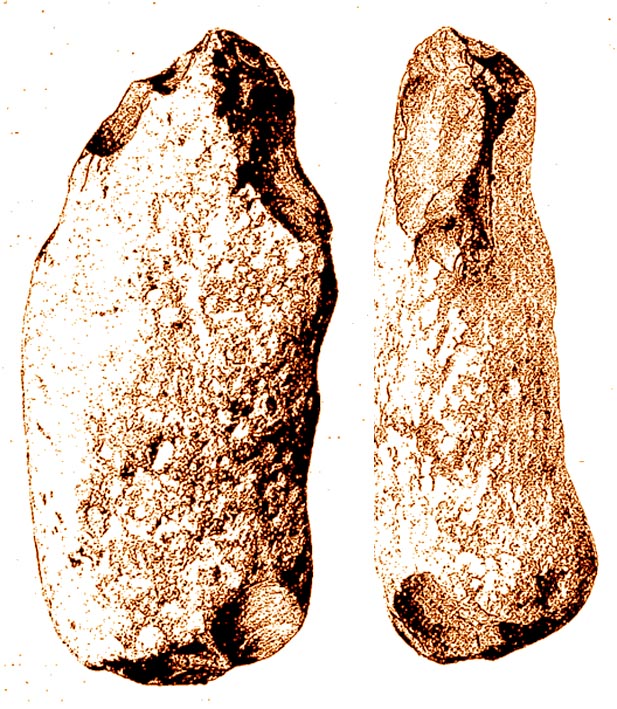 Eoliths
Benjamin Harrison (1837-1921), an Ightham grocer, made what to his mind was a remarkable discovery: a primitive stone tool that seemed to pre-date the Palaeolithic era, or Stone Age. On finding more, he devoted himself to building a collection. Given their great antiquity, they were given the name ‘eoliths’, meaning stones from the dawn of civilisation. He earned great credit for his discovery, and gave over his shop to the collection, so that he had to depend late in life on pensions. A few decades later, however, others with a knowledge of geology pointed out that the shapes might occur naturally in consequence of erosion, volcanic activity, and so on. That didn’t mean they were never used as extemporised tools; they just weren’t artefacts. It was a textbook example of what happens when enthusiasts don’t seek to disprove their hypotheses scientifically, but gather ‘evidence’ to support them. Several Kent museums hold collections of Harrison’s Kentish eoliths.
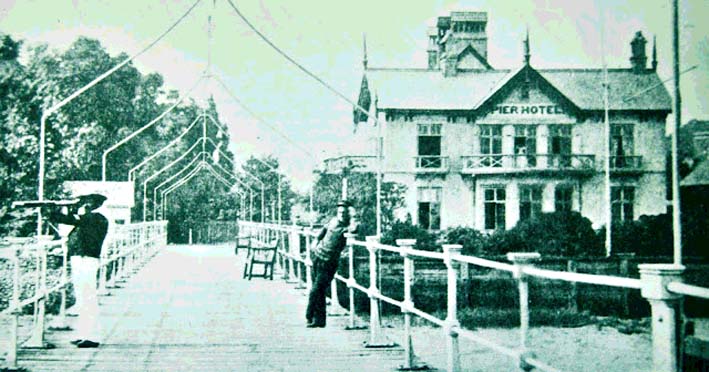 Erith Arboretum
Despite being adjacent to romantic-sounding Belvedere, Erith is not renowned for its touristic appeal. It was not ever thus. In the early Victorian era, ferrying Londoners along the Thames for a day out in North Kent was big business. Rosherville Gardens at Northfleet was the Disneyland of its day, and Erith’s failure to develop as a shipbuilding centre left it anxious to compete. In 1842-4, in addition to a pier and a hotel to provide sustenance, the community invested in an arboretum and gardens. They must have had some merit, since they were praised to the skies in a seven-stanza poem. Rosherville was a tough act to follow, however, and Erith’s offering failed to attract the necessary numbers. The kiss of death was the opening of the Crossness pumping station in 1865, discharging 70,000,000 gallons of sewage twice daily just upstream. The land was auctioned off exactly a century before Erith became another stepping-stone in London’s ongoing expansionism.
 Everest
Not many are aware that the world’s highest peak was named after a Kentishman. It is not certain that George Everest (1790-1866) was born in Kent, because his Kentish father also owned an estate in Wales; but he was descended from a Greenwich family of long standing, and was certainly baptised there. He joined the East India Company, worked as a surveyor, and in 1830 was appointed Surveyor General of India, which he remained for 13 years. Ironically, he never saw the eponymous Himalayan mountain, but did hire two men – Major Andrew Scott Waugh and Radhanath Sikdar – who respectively surveyed and measured it. In 1856, having ascertained that this ‘Peak XV’ was the tallest in the world, the former proposed ‘Everest’ as its name. George Everest would have preferred a native label, but his own stuck. If the world-famous landmark’s name were pronounced the same way as his family’s, it would be called “Mount Eve-wrist”.
 Falstaff
Originally from Herefordshire, Sir John Oldcastle (d 1417) was a boon companion to the young Prince Hal. His third marriage, in 1408, was to Joan of Cobham, a widow whose ownership of Cobham Manor and Cooling Castle greatly advanced his fortunes. When Oldcastle, a Lollard, was convicted of heresy in 1413, Hal – now Henry V – secured his old friend 40 days’ grace. Oldcastle expediently escaped from the Tower and organised a Lollard revolt, intended to make him regent at Henry’s expense and dissolve the monasteries. The coup failed, and he was brutally executed after four years on the run. Shakespeare made ‘John Oldcastle’ a key character in both parts of ‘Henry IV’; but, after complaints from Oldcastle’s descendent the 10th Baron Cobham, he changed the character’s name to Sir John Falstaff and denied any similarity. According to Orson Welles, the star of ‘Falstaff, Chimes of Midnight’ (1966), the bumptious, portly bon viveur was Shakespeare’s greatest creation.
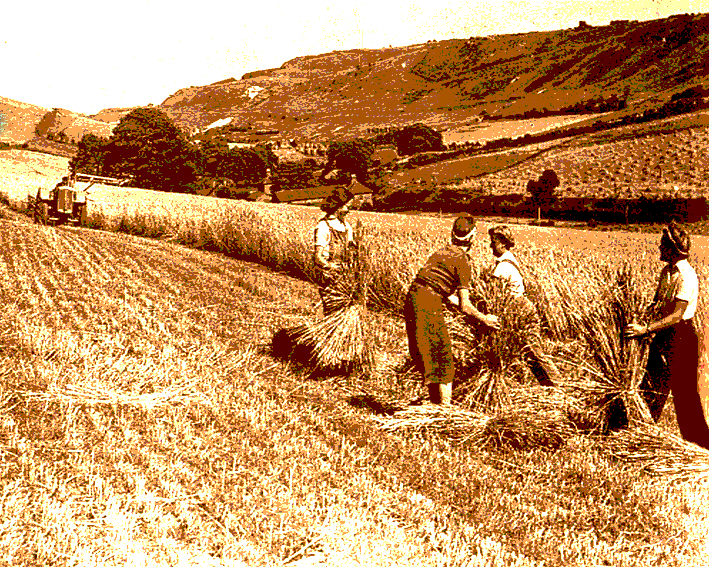 The Lady of Farthingloe
Farthingloe is a narrow valley west of Dover that makes an appearance in Arthurian legend: in the tale of the Lady of Farthingloe. This was an exceptionally beautiful young woman, supposedly living in the C5 or C6, who caught the eye of the lusty Sir Gawain when he was on one of his quests. Captivated, he swore to be true while on his knightly adventures; but, by the time he returned seven years later, she had succumbed to smallpox and been left permanently scarred. Nevertheless, he chivalrously kept his word, and remained with her in the valley. After his death in battle, his spirit told her to go to Camelot to warn King Arthur of Mordred’s treachery, but she was turned away at the door because no one believed Gawain would have entertained anyone so unsightly. Arthur and Mordred died fighting each other, and the Lady of Farthingloe joined Queen Guinevere in a convent.
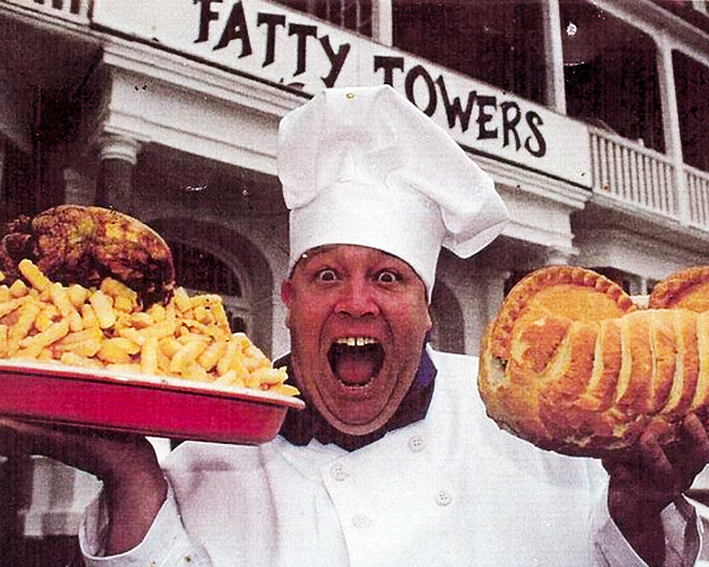 Fatty Towers
Of the larger-than-life characters on the music scene in the post-punk era, literally the largest was Doug Trendle, aka Buster Bloodvessel, the energetic lead singer of Bad Manners. The North London ska band’s 1980 singles ‘Lip Up Fatty’ and ‘Special Brew’ kicked off two years of chart success. After releasing a compilation EP called ‘Fatty’s Back In Town’ in 1995, however, Trendle opted to go into the hotel business, and opened Fatty Towers overlooking Walpole Bay at Cliftonville. Intended for big eaters like himself, it boasted outsized beds and baths, offered 48-ounce burgers in the restaurant, and ran a Belly of the Year competition. Trendle became a sponsor and supporter of Margate FC for a season, but the relationship ended acrimoniously when the hotel folded after two years; Trendle blamed the borough council for its demise. Morbidly obese, he was obliged in 2004 to lose 18 stones after facing life-threatening health issues. He still performs live.
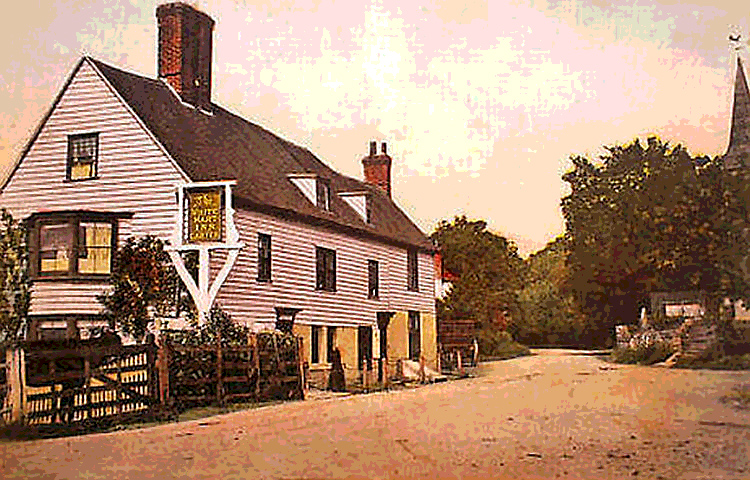 The first Country Pub of the Year
Newenden looks a good place for a drink, being in an area of natural beauty close to Northiam station on the Kent & East Sussex Railway and Bodiam boating station on the Rother, and the last chance to get a nice Kentish pint before entering East Sussex. The local pub, the weather-boarded White Hart, is not particularly Wealden in appearance, and feels distinctly contemporary on the inside. Yet, in 1967, it was the winner of the first ‘Evening Standard’ Country Pub of the Year award, before the competition became the preserve of London. A documentary film made at the time praised it for representing the quintessential values of an English country pub, from the friendly landlord, blazing fire, and traditional games to quality beers that still earn it a high rating with CAMRA. Despite its modern makeover, it evidently offers what today’s pub-goers want: it is the only one of Newenden’s 16 pubs still in business.
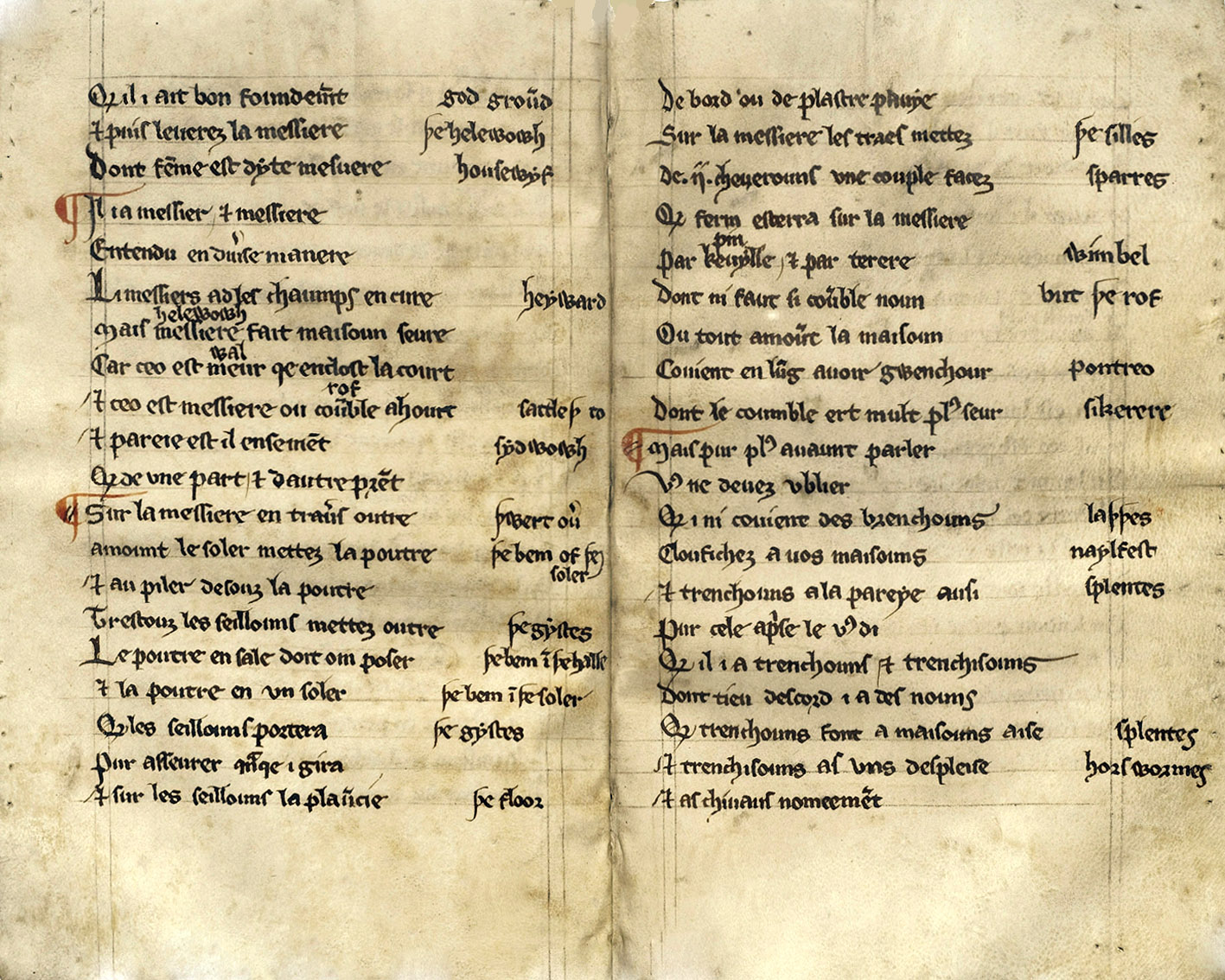 The first French primer
Like Boughton Malherbe, Boughton Monchelsea has a name of Norman origin. It is a corruption of Mountechensi, which had nothing to do with München or Munchausen, but was the family name of the owners of the manor there. In 1234, the lord of Swanscombe, Warin de Munchensi, married Dionisie de Anesty, who bore a son, William, to add to her step-children John and Joan. Since the ruling caste was still speaking French at this time, but her children were growing up among English-speakers, she commissioned a French primer for them from Walter of Bibbesworth. Named ‘Le Tretiz’ (‘The Treatise’), it is a poem with explanatory notes alongside the text. It obviously did not hurt, because William became a politician, and Joan married Henry III’s half-brother. The book remained popular for two centuries. Mildly amusingly, Dionisie’s exotic forename mutated over time to our more familiar Denise and its male equivalent, Denis.
 Flower of Kent
Despite its lovely name, the Flower of Kent tree is now the poor relation of the apple world. It is a cultivar, originally bred in Kent for its cooking apples. Unfortunately, being an old strain, it has been superseded in quality and yield by today’s choice from around the world. Most of the few examples still living are descended from a single ancestor in East Malling. One has been preserved in the Brogdale Collection. Another resides, perhaps surprisingly, at the Massachusetts Institute of Technology; it is said to have produced just a single apple. Nevertheless, the Flower of Kent has a claim to fame denied all other types of apple tree. It is the one under which Sir Isaac Newton sat pondering gravity at his home, Woolsthorpe Manor near Grantham, when it obligingly dropped a sample of its wares for his edification. What other fruit can claim such an influence on the history of science?
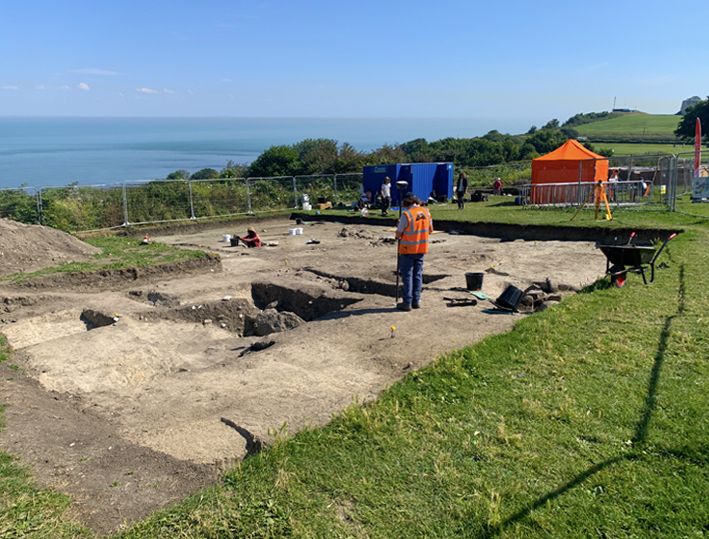 Folkestone Roman villa
During the reign of Vespasian, roughly 30 years after the Roman conquest, a villa was built about a quarter-mile from the sea in East Wear Bay, Folkestone. Its siting was no doubt determined partly by its fine views across the sea to Gaul, whose white cliffs are clearly visible on a bright day. There had been nomadic inhabitants there as long ago as the Mesolithic era, from about 9,000 to 4,500 BC, and a substantial Iron Age site has been found. Apparently constructed there ca 75, the villa was rebuilt as a high-status affair during the following century, complete with baths and mosaics, before being temporarily abandoned in the C3 and again occupied for a while in the C4. Its ruins have been repeatedly studied by archaeologists eager to learn all they can while they still have the chance. With the fragile cliff-face having receded at around 15 yards a century, the site will inevitably disappear one day.
 Foolscap
Johann Spielmann (~1555-1626) came to England from the German island of Lindau in Lake Constance. He ingratiated himself with Queen Elizabeth I by supplying her with the jewels she craved for her elaborately regal dress. Royal patronage put him in a strong position when he turned his hand next to papermaking at Dartford. Having imported skilled German papermakers, he secured a monopoly in manufacturing white paper. He produced paper slightly more narrow than today’s A4 but more than an inch higher, and adopted the German practice, first recorded in 1479, of embossing such paper with a jester’s hat. English customers wanting to specify that size took to asking for the one with the “fool’s cap”, giving rise to the term that became standard for this size of paper, which ironically was well suited to legal documents. Now named John Spilman, the gem dealer cum papermaker was knighted by Elizabeth’s successor James I in 1605, and granted the manor of Bexley.
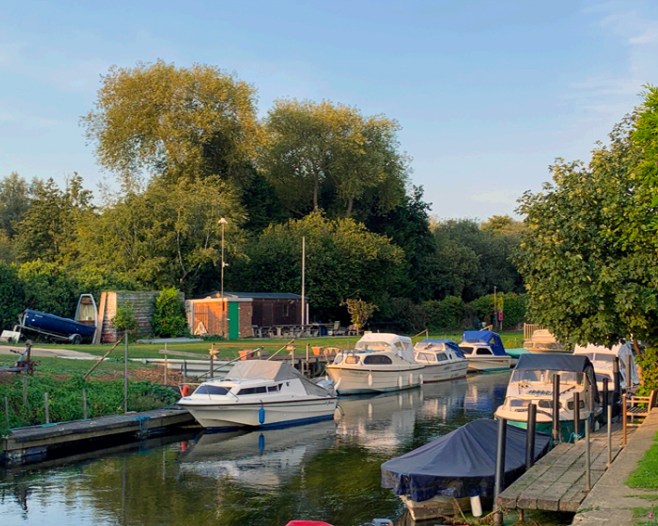 Fordwich
Fordwich is a tiny community of fewer than 400 people just to the north-east of Canterbury. It was once rather important, when it was an inland port on the Wantsum Channel where the ships bringing stone from Caen for rebuilding works in Canterbury used to dock; it actually became a limb of the Cinque Ports. It faded from history when the channel silted up and Thanet ceased to be an island. Remarkably, however, it still has two claims to fame. The first is that it is the smallest borough by population in the country. It did cease to be a town in 1880, but was re-instated in 1972. Its quaint town hall, rebuilt in 1555, is also said to be England’s smallest. The second has to do with the Great Stour, which flows through the town. In his ‘The Compleat Angler’, Izaak Walton made famous the ‘Fordidge trout’, as large as a salmon but, sadly, exceedingly hard to catch.
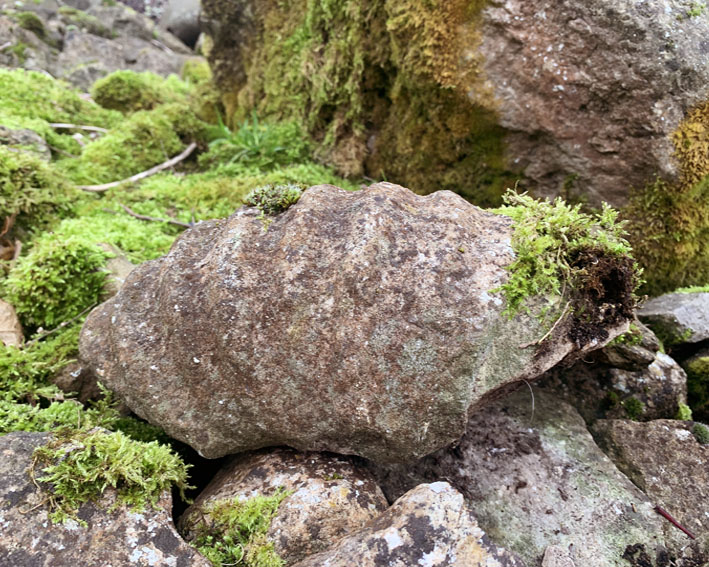 Fossils
The best places to unearth fossils are where the ground is regularly disturbed, such as a quarry; which is precisely where Mantell’s famous ‘iguanodon’ was discovered at Maidstone in 1834. The most publicly accessible sites, however, are at the coast, where continuous wave erosion creates such fossil treasure-houses as Dorset’s and Devon’s ‘Jurassic Coast’. With its very extensive coastline, and chalk and clay geology, Kent likewise offers one of Britain’s richest hunting-grounds for fossil collectors. From Allhallows on the Hoo Peninsula all the way round to Folkestone, there are sites where prehistoric fish, shellfish, urchins, brachiopods, bivalves, sponges, plants, ammonites, and even sharks’ teeth can be found lying amid the shingle. The undoubted capital of Kent fossil fields, however, is Warden Point on the north coast of the Isle of Sheppey. It is not only easily reached but also, with its London clay substrate, provides such a fertile source of diverse fossils that it enjoys national renown.
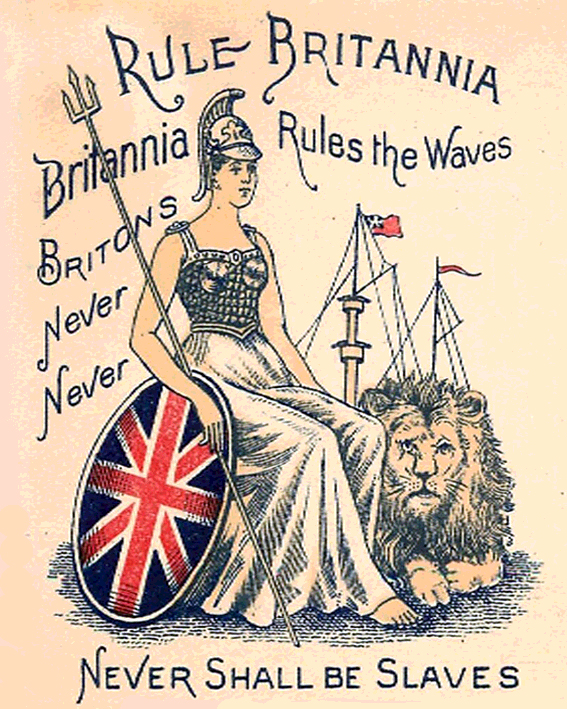 Freedom
It used to be an axiom that freedom was an Englishman’s birthright. Even William Penn boasted of it; and it was such a cornerstone of the Founding Fathers’ values that it became the last word in the American anthem. The point was worth making because freedom is exceptional. The normal human proclivity is for autocracy or oligarchy, to which tyranny comes easily. So what made England – cradle of habeas corpus, Magna Carta, and Mother of Parliaments – so different? One answer is the Jutes. Well before they settled in Kent, they were renowned for their espousal of freedom, and brought it with them. Nor did it die out. Drayton, the C17 Warwickshire poet, wrote of Kent, “Of all the English shires, be thou surnamed the free, and foremost ever placed, when they shall reckoned be”. It is fitting that, when in 1787 two men sat down to plot the destruction of one human universal, slavery, they did it on Kentish soil.
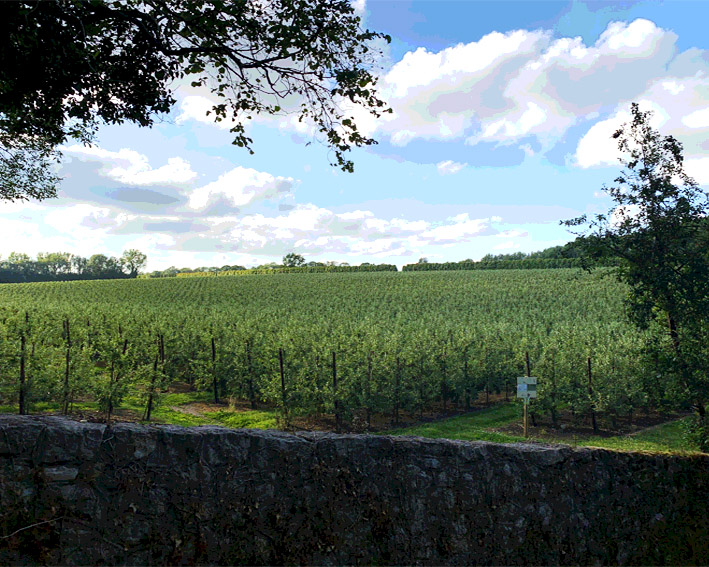 The Garden of England
When Dickens wrote in ‘The Pickwick Papers’, “Kent, sir. Everybody knows Kent – apples, cherries, hops, and women”, he was alluding to a notion dating back to Tudor times. The Garden of England was all about agricultural productivity. Kent had everything: diverse soils, Southern English sunshine, North Sea rain, hard-working Protestants, and markets at hand both in the capital and on the continent. What started the rot was that bug-eyed monster, development. Nye Bevan, from his bijou cottage in Charing, introduced the eponymous mass-housing projects that obliterated large areas of the Kent countryside after WW2. Just 60 years later, Kent received only one sixth as many votes as North Yorkshire in a national poll to identify the modern-day Garden of England. Bevan’s handiwork is now being revived by today’s authorities, whose hearty embrace of ribbon development is turning Kent into Greater Bexley before our very eyes. Future generations will presumably know Kent as the Patio of London.
 Gavelkind
Gavelkind is little heard of since the 1925 Administration of Estates Act abolished it; yet it was once a hallmark of Kent’s unique legal status. The name comes from the old Germanic words meaning ‘gift’ and ‘kin’. The custom in Kent before 1066 was to divide an estate equally between sons or, if any were deceased, his male or female heirs. The Normans however imposed their system of primogeniture, whereby all went to the oldest son. The persistence of gavelkind almost exclusively in Kent – comparable customs existing only in parts of Wales and Ireland – testifies to the concessions exacted from William I in return for the county’s acquiescence. Gavelkind had a number of other distinctive features, notably the principle that convicted felons did not automatically cede all their property to the Crown. It was a merciful exemption from the dreaded ‘attainder’ that medieval monarchs used liberally to punish enemies and enrich themselves; not that it ever deterred Henry VIII.
 The General Steam Navigation Company
Thomas Brocklebank owned a shipyard at Deptford where, in 1821, he launched ‘Eagle’, a paddle-steamer operating between London and Ramsgate. On selling her to the Danish Navy three years later, he and ship-owner William Hall formed the General Steam Navigation Company, whose backers included Edward Banks. It was the first shipping enterprise ever to start up with steamships. By 1825, Brocklebank had constructed 15 vessels at Deptford providing freight services, mostly importing livestock from the Continent, though some sailed as far afield as Africa and the Americas. GSNC also provided ferry services and pleasure cruises, and in 1936 swallowed up the rival New Medway Steam Packet Company, creating a monopoly of around 45 vessels; these accounted for a tenth of the troops evacuated from Dunkirk. Fatally damaged by the introduction of container ships, GSNC was subsumed in 1972 into P&O – its owners since 1920 – having been London’s largest coastal-shipping business for a century and a half.
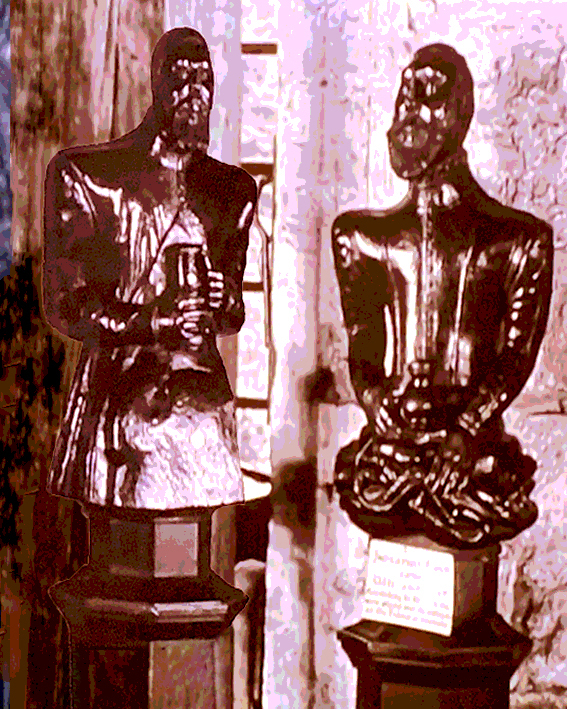 Gin & Beer
Any visitor to the Tower of London’s White Tower cannot have missed a strange pair of shiny wood carvings depicting two literally legless men holding drinking vessels. Known as “Gin” and “Beer”, they supposedly came from either the great hall or buttery of the demolished Placentia Palace at Greenwich, although it is unclear why they would have been considered suitable in a royal abode. It seems likelier that an older theory had it right: that they used to stand outside an inn at Woolwich. This would make sense, insofar as they would have made eye-catching advertisements for the innkeeper’s wares, like the famous Golden Boot above the shoe-shop of that name in Maidstone’s Gabriel’s Hill. Gin and beer were the twin staples of English drinking culture in the early C17, when these were carved, although the former – ‘mother’s ruin’ – went out of fashion after Hogarth’s ‘Beer Street’ and ‘Gin Lane’ (1751) extolled the first and lambasted the second.
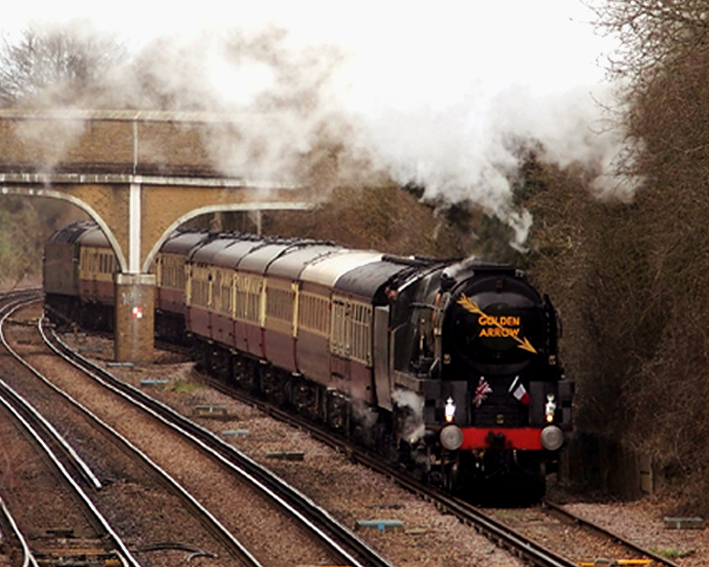 The Golden Arrow
In 1929, the Southern Railway introduced the Golden Arrow service running daily between London Victoria and Dover. The train, a Pullman service for first-class only until third-class was added two years later, was hauled by a Lord Nelson class steam locomotive bearing the familiar Golden Arrow logo. After setting off in mid-morning and arriving at Dover 98 minutes later – the same as the fastest schedule today – passengers transferred to the ferry Canterbury for the crossing to Calais, whence they would be taken to Paris on the Flèche d’Or service launched three years earlier; the complete journey took about six hours. Electrification took away some of the romance in 1961, but did accelerate the journey time to about 80 minutes. With demand for rail travel across Kent falling in consequence of increasing road use, however, the service was discontinued in 1972. A replica Golden Arrow train still runs on the Bluebell Railway in Sussex.
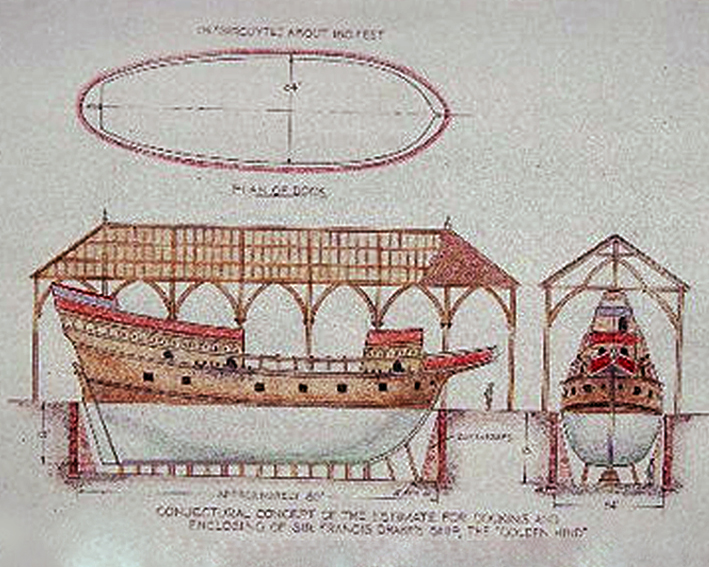 The Golden Hind
Many Britons know that the Golden Hind, renamed from Pelican, was the ship on which Francis Drake became the first captain to complete a circumnavigation of the globe, and some that a replica can now be visited on the south bank of the Thames at Southwark. What few know is what became of the original vessel. It was in fact put on permanent display inside a dry dock at Deptford. Made of wood and exposed to the elements, it inevitably decayed, and within a century grew so rotten that it collapsed. The creek that contained it was filled with earth in the C19 and its location marked with a cairn, but this was removed in 1977 after a royal visit, and the exact location was forgotten. Historians have subsequently urged efforts to rediscover and unearth the keel of this iconic ship. It was after all on the Golden Hind at Deptford that, in 1581, Drake was knighted for his achievement.
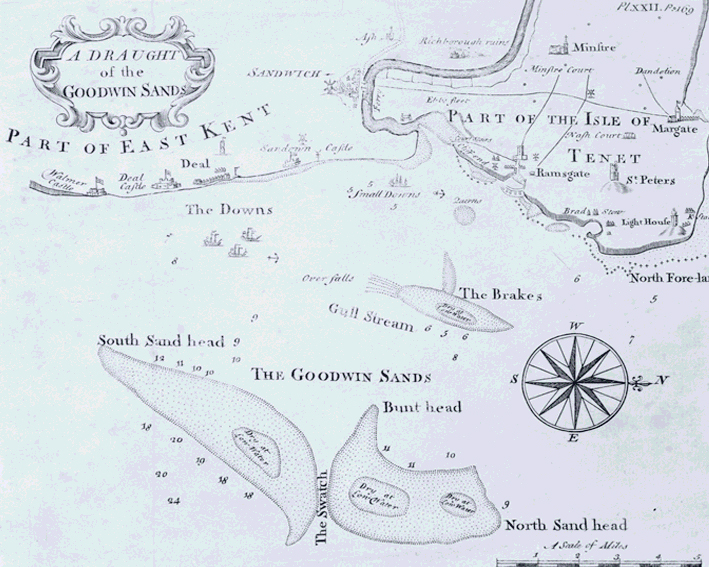 The Goodwin Sands
They may sound attractive, but the Goodwin Sands are a ships’ graveyard. They are a 10-mile ridge of chalk off Deal – an underwater extension of the White Cliffs – covered by about 80 feet of sand. At low tide, the waters above them may be as shallow as 2 feet. They lie adjacent to extremely busy shipping lanes, from Thames to Low Countries and North Sea to English Channel; and, between the sands and the shore, there is additionally the area known as the Downs, a favourite anchorage. When a gale blows up, there is always a risk of ships going aground, which in the days before iron vessels presented a high risk of a wreck. Even with the benefit of three lighthouses at one time, and later a lightship, the Goodwin Sands accounted for over 2,000 vessels before more sophisticated navigational aids became standard. Because of its strategic location, the region has also hosted a number of sea battles.
 Graenwich
In 1637, Bohemian engraver Wenceslaus Hollar (1607-77) was persuaded by the Earl of Arundel to migrate to England. One of his first works here was a 35-inch panorama of Greenwich. Plainly inspired by his recent panorama of his native Prague, it provided a vivid contemporary record of the view northwards from the top of Greenwich Park. On the left stands Greenwich Castle, subsequently replaced by the Royal Observatory, and in the centre the Queen’s House with Greenwich Palace beyond. (The contentious Queen’s name was originally displayed in a cartouche, but this was later excised). Hollar’s stay was eventful: he was caught up in the protracted siege of Basing House during the Civil War, during which he produced numerous works, and in 1669 was aboard the frigate Mary Rose (originally Battle of Maidstone) when she repelled a concerted attack by seven Algerian pirate ships off Cadiz; he recorded the battle in another engraving.
 Granada Theatres
Sidney Bernstein was determined to make cinemas as luxurious as theatres. Following the success of his first Granada Theatre at Dover in 1930, he commissioned a design template for a ‘Standard’ chain of cinemas. His interior designer was an exotic choice: Theodore Komisarjevsky, a former impresario in Moscow who’d fled Russia in 1919 when Lenin abolished theatres. Now a London director, he’d become such a notorious philanderer that Dame Edith Evans nicknamed him ‘Come-and-seduce-me’. His prototype Granada cinema opened in 1934 at the foot of Gabriel’s Hill in Maidstone. Seating 1,600, it was a masterpiece of Italian Renaissance: all friezes, gilt, and drapes. Obviously Bernstein loved it, because it became the model for a dozen cinemas, and misled Maidstone’s baby-boomers into thinking all cinemas must emulate tsarist palaces. Disastrously, it never recovered its grandeur after a flood in 1968. It stopped showing movies in 1999, and is now used only for bingo on the ground floor.
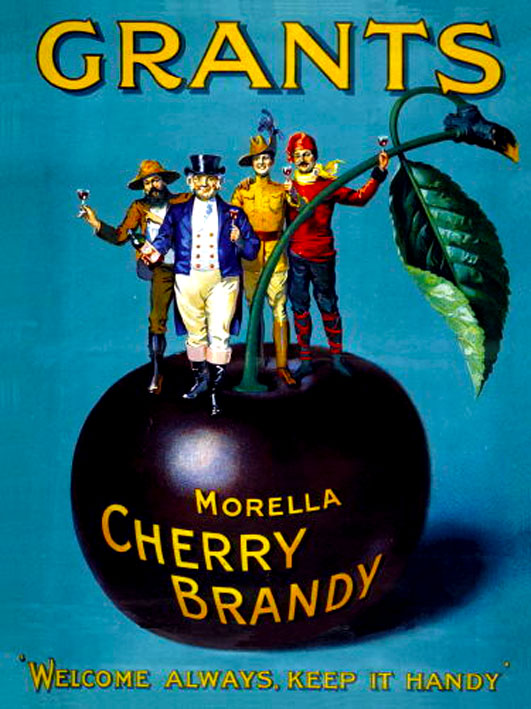 Grant’s Morella Cherry Brandy
‘Morello’ is an Italian word meaning ‘dark’. It certainly fits the cherry of that name, which is distinctly darker than the standard cherry. It is also bitterer, making it good for flavouring food and drink. Coleman & Potter of Dover started producing a proprietary cherry brandy in 1774, blending morello cherries with brandy according to a secret recipe. When a cliff-fall badly damaged the distillery in 1853, their successor James Grant from Sutton Valence built a large new one where Lenham Storage now stands, and another just up the new railway line in Maidstone. Grant’s Morella (sic) Cherry Brandy was marketed nationally in two variants, sweet and dry. Even Queen Victoria was said to be a fan. Though it was long advertised nationally with the slogan “Welcome Always – Keep it Handy”, the Grant family firm ceased trading in 1960. Nevertheless, the brand is still sold by Shepherd Neame as ‘The National Liqueur of England’.
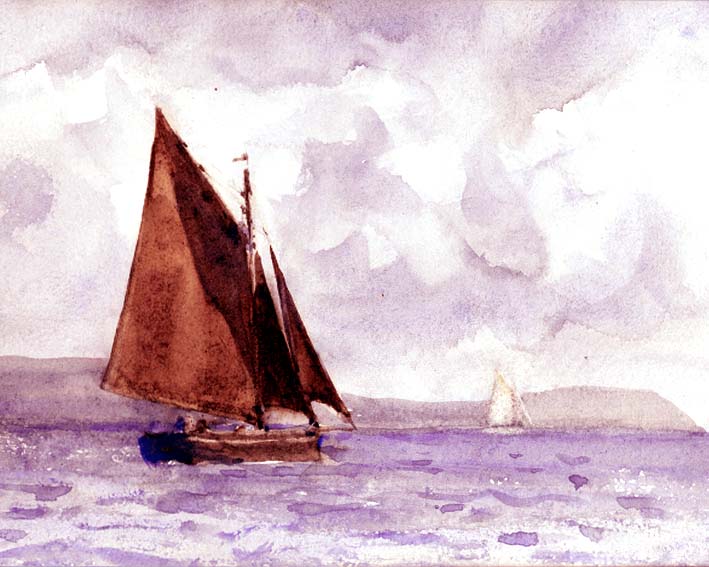 Gravesend shrimp
The brown or common shrimp is particularly prized for its flavour. Since it particularly prefers to hide in muddy sediments in estuaries, it is no surprise that an inland port like Gravesend developed a thriving shrimping industry in the C19, when the ‘Daily Telegraph’ described the town as “the head-quarters of the shrimp”. Shrimpers used to go out in small cutter rigs called bawley boats, whose name is thought to derive from the dialectal pronunciation of ‘boil’. Their point of difference was a boiler amidships in which the shrimps were cooked immediately they were caught, ready to be sold as fresh as possible on the quayside. In fact, the area at the centre of the town where Light Vessel 21 (the big red ship) is now displayed is still known as Bawley Bay. Serving Gravesend shrimp in a Kentish butter sauce on top of Dover sole ought to make a winning cross-county recipe.
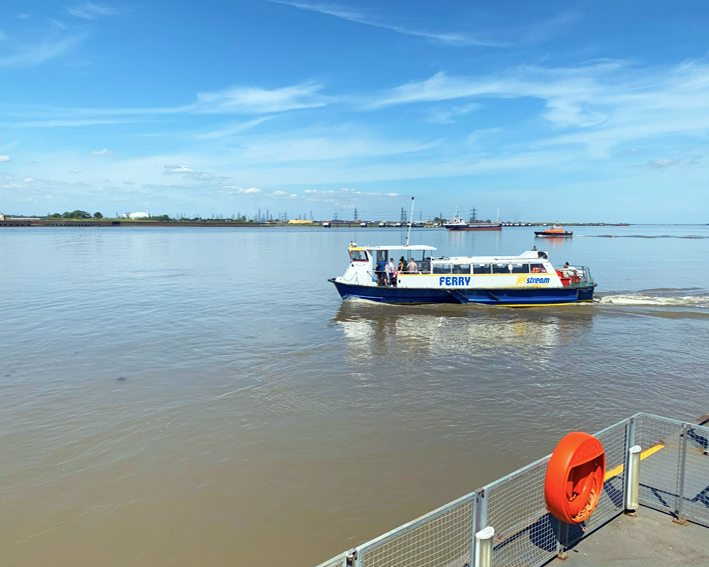 The Gravesend-Tilbury Ferry
A Thames crossing between Cliffe and Essex was recorded even in Roman times, being probably a ford in days when the river was lower. In the C16, there were ferries operating both there and between Gravesend and Tilbury. The latter appears to have mattered to local commerce, as witnessed by the use of hoys; in 1684, the town council actually purchased the ferry. In 1862, the London, Tilbury & Southend Railway, which already operated its own ferry from Tilbury, acquired the Gravesend ferry too, and ran it until 1984. By that time, car ferries had come and gone, having been abolished by act of parliament in 1964 to restrict competition with the new Dartford Tunnel. Jetstream started running the ferry in 2017, albeit from the Town Pier rather than the traditional West Street terminal. The service was terminated abruptly in March 2024, leaving some Kentish holidaymakers with an unexpectedly long detour to Tilbury Cruise Terminal.
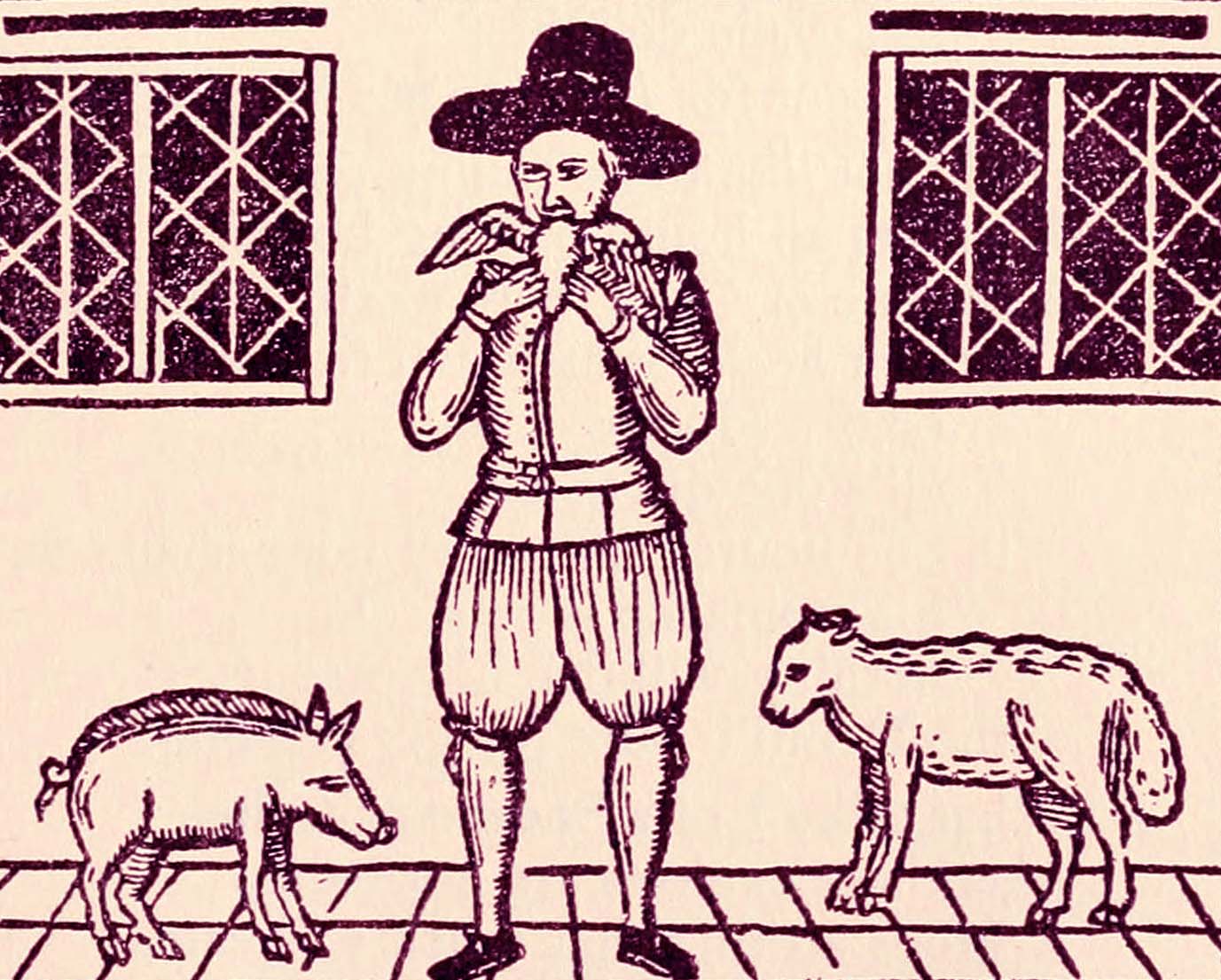 The Great Eater of Kent
If the phrase ‘Where does he put it all?’ could apply to one man, it was Nicholas Wood. Born in the 1580s in Hollingbourne, he became a farmer in Harrietsham, as well as a prolific scoffer; so much so that poet John Taylor engaged him to perform extraordinary feats publicly, centuries before competitive eating. Although Wood was not particularly large – fat around the stomach making abdominal expansion harder – Taylor branded him ‘The Kentish Tenterbelly’, and made extraordinary claims for him, including eating 84 rabbits (although he doesn’t say how fast) among numerous other gargantuan feats. Wood came unstuck when one John Dale of Lenham wagered that he could satisfy his appetite for two shillings, and sent the great gourmand to sleep by feeding him a dozen loaves soaked in Mighty Ale. Wood scuppered his own career by accepting a challenge to eat a shoulder of mutton, including bones, and lost nearly all his teeth. He died poor in 1630.
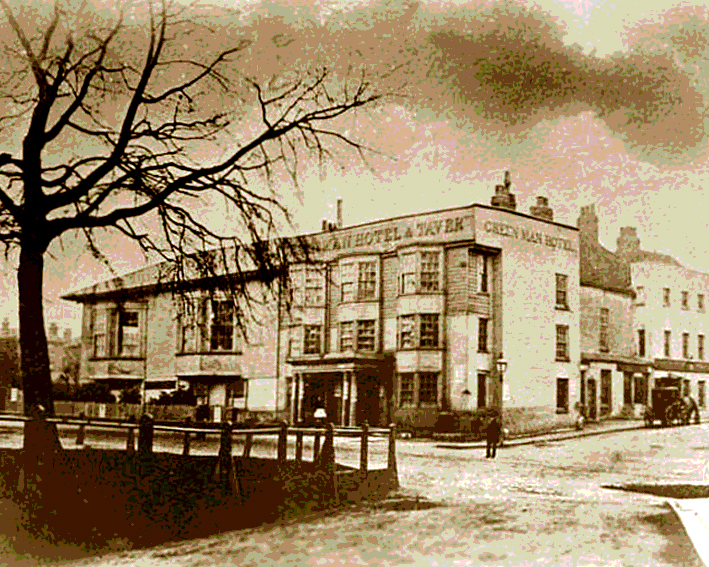 The Green Man
It is strange to think that, within living memory, the legendary Green Man tavern on Blackheath Hill was still a major landmark. Already in business by the early C17, it served as a clubhouse for the world’s oldest golf club, the Royal Blackheath, but more importantly was a major staging-post on the journey along Watling Street between London and Dover. It was said to have been built over a cavern in which the mythical Herne the Hunter was worshipped, whence its name. So well frequented was it that it became a noted entertainment venue in the Victorian era, especially featuring light music, and was rebuilt in 1868 as a much grander affair. In the 1960s, it was home to the Jazzhouse Club, featuring the likes of Ronnie Scott, Manfred Mann, and even Paul Simon. Under the auspices of the new Greater London Council, however, it was unsentimentally demolished in 1970 to make space for a block of flats.
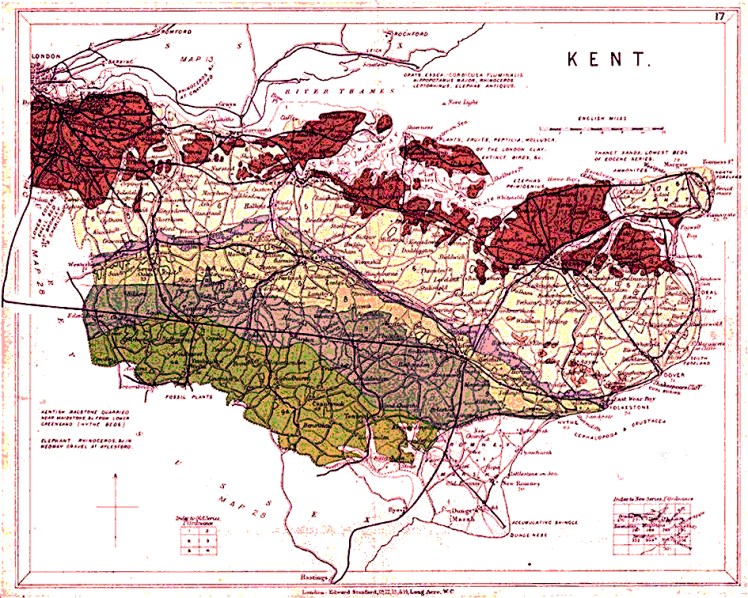 The Greensand Way
Ramblers are familiar with the Greensand Way that wends its way from Haslemere in Surrey to Hamstreet near Ashford. Not all know how the ridge it follows got there. Kent’s geology looks complex, but is easily understood. Imagine successive layers of sediment, each miles deep, laid down on top of each other over many millions of years. Then imagine a giant seismic fist punching them upwards from the centre. Finally, imagine the weather eroding it all flat again, the more resilient layers remaining the highest. The result is the horseshoe-shaped topography we see today – half of it in Sussex – with the soft clay Weald at its low centre, the chalky South and North Downs at its high outer edges, and the sandstone Greensand Ridge in between. The Greensand Way public footpath simply follows the northern ridge. If not for unsympathetic development in places, it would offer an uninterruptedly pleasant panorama of both Downs and Weald.
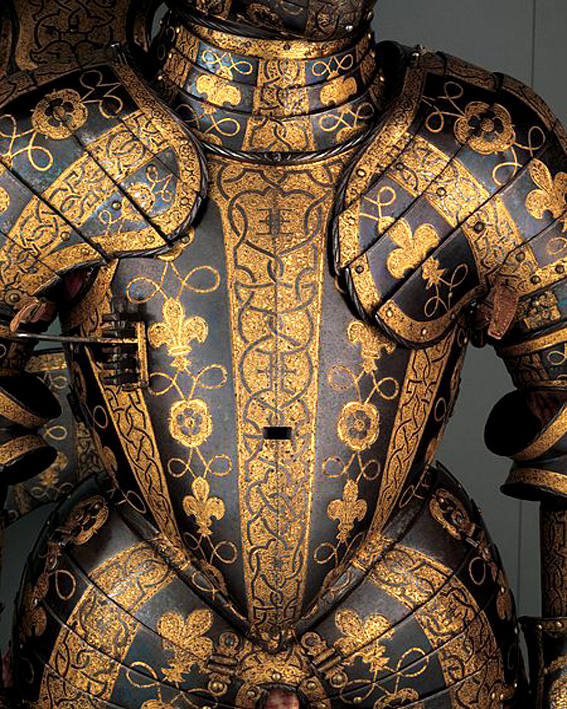 Greenwich Armour
By the C16, with firearms and cannon replacing bows and arrows, the shiny suits of armour of the Middle Ages were becoming redundant for combat. Nevertheless, jousting remained a popular sport for the nobility, and armour evolved to be suitably showy, often imitating fashionable dress. Having his own tiltyard at Placentia Palace in Greenwich, Henry VIII established a school of skilled armourers there in 1511. Drawn from across Europe, they included Germans who gave rise to its name, the Royal Almain Armoury. Their work was so distinctively elaborate that it became known generically as Greenwich Armour. For 31 years their master was the Bavarian Jacob Halder, whose collection of 29 exclusive designs became known as the Jacob Album, now in the V&A; among the most flamboyantly attired models was the Queen’s champion, Sir Henry Lee from Kent. By the time of the Civil War, however, cavalrymen were eschewing heavy armour in favour of speed.
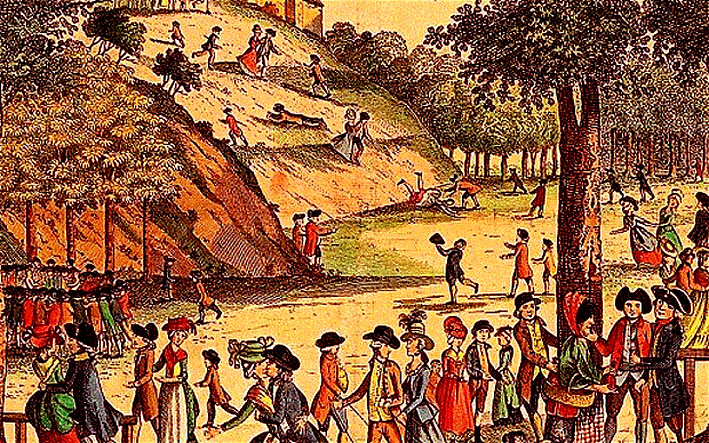 Greenwich Fair
The three-day Greenwich Fair at Easter and Whitsun started modestly in the C18, with stalls selling gingerbread men to holidaymakers. When it spilled across the Park, some customs of a mildly fruity nature developed, the most notable being ‘tumbling’. This involved a young man taking his belle to the top of one of its steep slopes before running her down it, occasioning some boisterous grappling, an amusing spectacle, and the occasional head injury or broken limb. The character of the fair was transformed by the transport revolution of the early C19, when up to 100,000 Londoners started turning up by train and steamboat. Attractions from rides to shows appeared on the route from the pier to the park and along Creek Road, as described vividly in Dickens’ ‘Sketches by Boz’ (1835). This genteel Kentish town was transformed for the duration into a hotbed of boozing, fornication, and crime, to such an extent that, in 1857, it was banned.
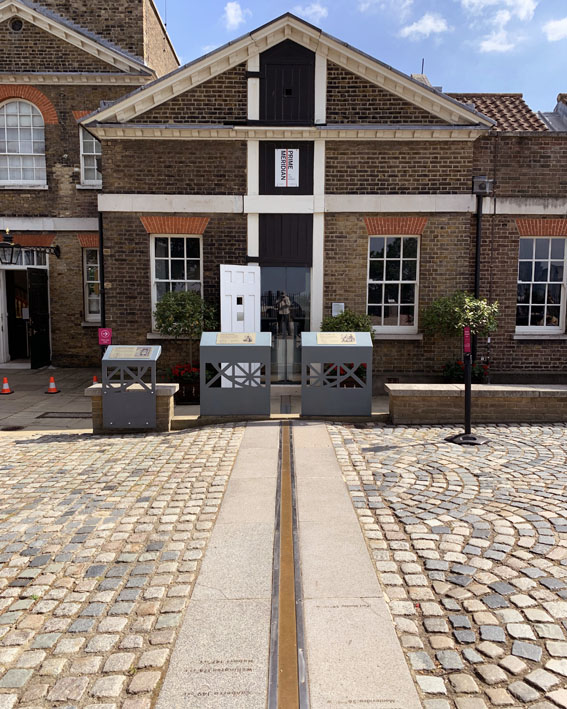 The Greenwich Meridian
Like Sandwich, Greenwich is a Kent town known literally around the world. Its fame is owed to the Greenwich Meridian, plus the Greenwich Mean Time derived from it. Before coordinates became available, plotting a ship’s course was risky and often dangerous. Longitude could at least be reckoned by arbitrarily drawing a line from pole to pole and calculating one’s distance from it by the height of the sun. There were various candidates for where an international standard ‘prime meridian’ should be. In 1851, Astronomer Royal Sir George Airy proposed one at the Royal Observatory in Greenwich. Its world status was established when, in 1884, US President Arthur called a conference at Washington DC to get global agreement. Greenwich was the winner. (France demurred, and continued to use Paris for some decades). Americans now refer to Greenwich Mean Time – from which all other time zones are inferred – as ‘Co-ordinated Universal Time’, presumably fearing confusion with Greenwich Village, NY.
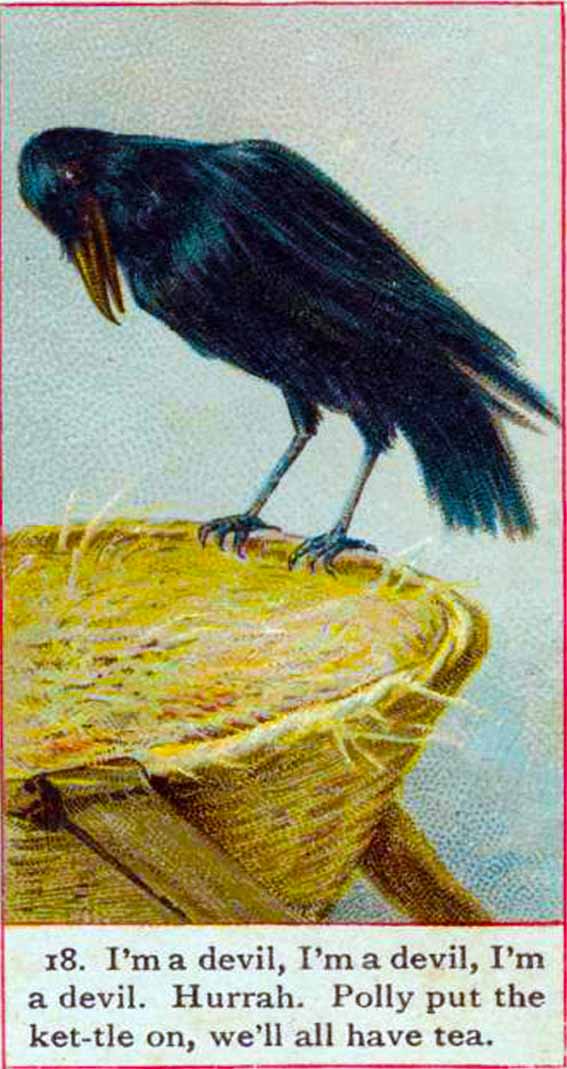 Grip
Grip
Where most people have a cat or dog, Charles Dickens was different: at his townhouse in London, he kept an 18-inch-long talking raven known as Grip. She was a character, her favourite expression being “Hallo, old girl”. Dickens liked her so much that he made her Barnaby Rudge’s cleverer corvine companion. When she died in 1841, aged about two, after eating paint containing lead, Dickens had her stuffed and mounted with branches from the garden at Gads Hill Place, Higham, where she remained. A year later, on a trip to Philadelphia, he befriended Edgar Allan Poe, who was delighted to learn that Grip had been real. In 1845, she inspired his greatest poetic creation, ‘The Raven’. After Dickens’ death, she was auctioned for 120 guineas. Now restored, this “Most Famous Bird in the World” is displayed at the Free Library of Philadelphia, and will see Kent nevermore.
 Guildhall Street
Canterbury’s Guildhall Street is a mundane affair today: a pedestrianised shopping-street linking one end of Palace Street with High Street. It wasn’t always so. For six decades, it must have felt like a provincial version of Exhibition Road, with no fewer than three prestigious institutions packed in. The oldest, on the corner of High Street, was the Guildhall itself, the main venue for civic events that probably hosted a recital by Mozart himself in 1765. Then there was the Philosophical and Literary Institution, opened in 1825, incorporating a lecture theatre plus a museum and library that were later removed to the Beaney House. Supported by local artist Thomas Sidney Cooper, the Theatre Royal opened next door in 1861 with Charles Dickens reading onstage from ‘David Copperfield’. The last two were sold in the 1920s to William Lefevre’s expanding department store, later rebranded Debenhams, while the council demolished the historic Guildhall with unseemly haste in 1950.
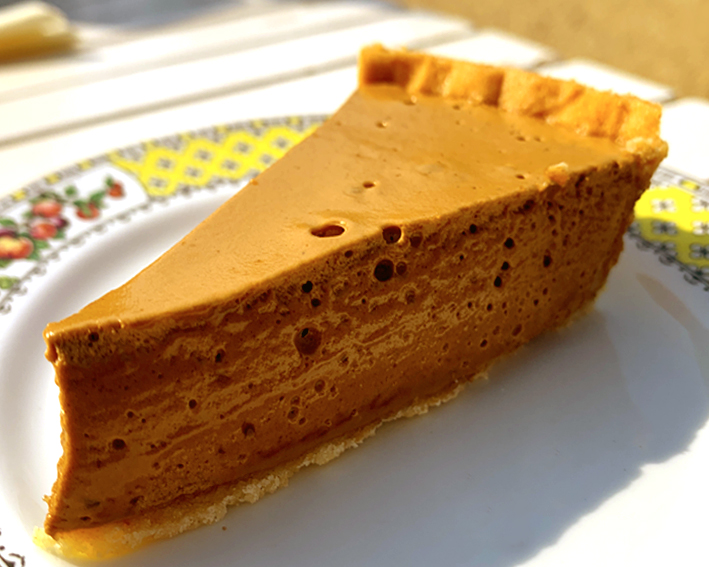 Gypsy Tart
Gypsy tart is the Marmite of the dessert world. This uniquely Kentish dish was served at least once a week to schoolchildren from the 1960s to the 1980s, and conjures memories of delight or disgust; Rolling Stone Keith Richards still recalls getting no satisfaction from it at his Dartford school. What’s for sure is that gypsy tart is a highly efficient way of injecting copious sugar, fats, and calories into young stomachs. It’s easy and cheap to make, requiring simply flour, butter, egg, evaporated milk, and brown sugar, baked for 40 minutes. The origin of the name is uncertain, but the fact that until recently most Kentish housewives would have had no contact with real gypsies except through hop-picking suggests that the recipe was learned from Londoners on their summer vacation. It is now possible to buy gypsy tart not as the familiar rectangular slice from school but as individual tarts, even in London.
 The hanging gardens of Northbourne
Sir Edwin Sandys built the first Northbourne Court in the early C17 on the site of an Augustinian establishment north-west of Great Mongeham. Burnt down around 1750, it was replaced by a more modest yet attractive farmhouse and outbuildings that still survive. There also survived a splendid Tudor wall running along Northbourne Road, incorporating a conspicuous archway with an iron gate. Although fifty acres of the estate remained farmland, the 4th Lord Northbourne (1896-1982), a noted agriculturalist who was instrumental in getting organic farming started, assiduously created an ornamental seven-acre garden, running south-east down the valley towards Walmer, to which the public formerly had access. It consisted of a number of walled areas in which were planted impressive floral and botanical displays, including three terraces with a lily pond beneath them. The land is still crossed by public footpaths, but many trees were lost in the 1987 storm, and the gardens have now fallen into disuse.
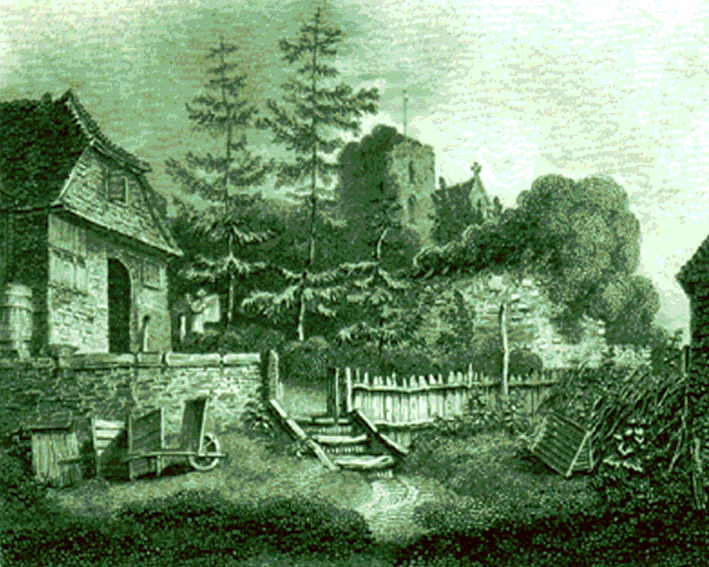 Harbledown Leper Hospital
The horrendous wasting disease leprosy was once endemic in Europe. Around 1085, archbishop Lanfranc had a refuge built for lepers at Harbledown, a mile outside Canterbury, beside a chapel. This erstwhile Hospital of the Forest of Blean was funded by various benefactors, including Henry II, who visited in 1174 while repenting the murder of archbishop Becket. Chaucer was probably making a jocular reference to the place when he wrote that the pilgrims in ‘The Canterbury Tales’ were at “Bobbe-up-and-doun… in Canterbury Weye”. By 1400, with leprosy on the wane and plague a greater concern, the hospital was converted to almshouses for the poor and disabled. The brethren running it struggled to make ends meet: Erasmus reported that one of them would bring out part of Becket’s supposed slipper, encased in copper and crystal, to impress affluent passers-by. Rebuilt in both 1685 and 1840, the almshouses survived until 1900, since when they have provided accommodation for the elderly.
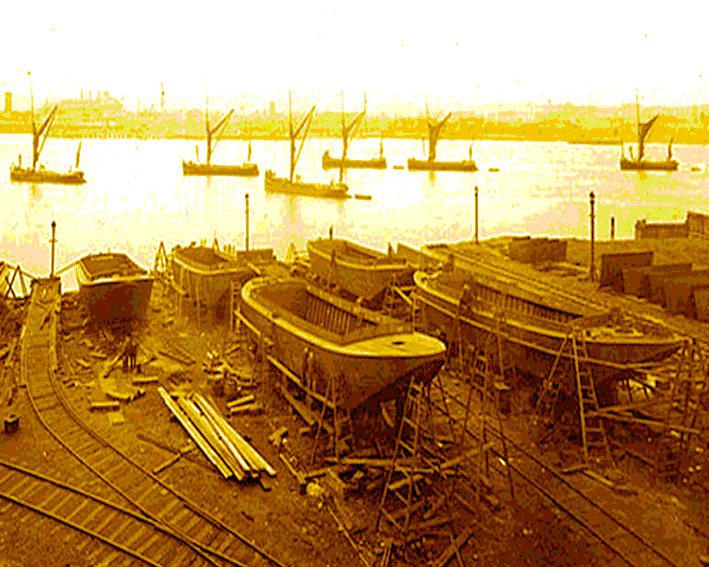 Harland & Wolff
One of the greatest names in British shipbuilding, Harland & Wolff started life in 1858 when Yorkshireman Edward Harland set up shop at Queen’s Island, Belfast; he later took on his German assistant Gustav Wolff as his partner. Thanks to Harland’s innovations, the business was so successful that it employed 10,000 men by 1895, when he died. Wolff lived to see the company build the world’s three largest liners for White Star Line: Olympic (1911) and her ill-fated sister-ships Titanic (1912) and Britannic (1914). The unstable political environment in 1911 prompted the acquisition of Beardmore’s Glasgow shipyards, while other yards followed in Liverpool and Southampton. Needing a presence on the east coast, the company also occupied six London yards, the largest being the new King George V dock that opened in North Greenwich in 1921 and survived until 1972. Now headquartered in London, the company still operates in shipbuilding and repairs as well as offshore projects.
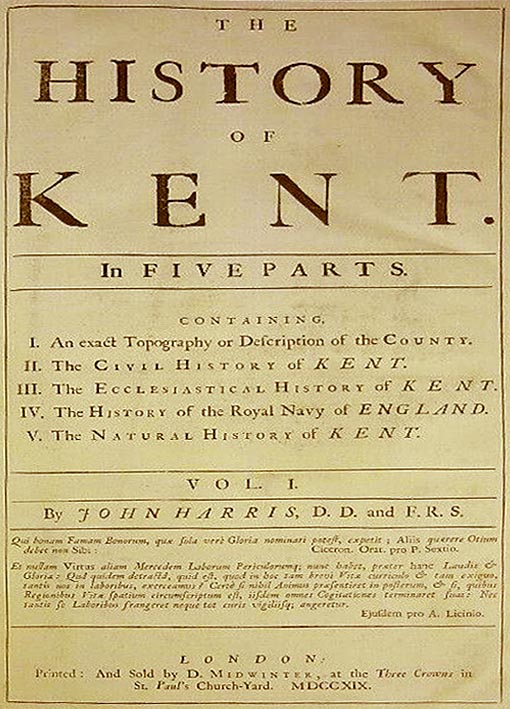 Harris’s ‘History of Kent’
The ‘History of Kent in Five Parts’ by Dr John Harris (ca 1667-1719) should have been a monumental contribution to Kentish antiquarianism. The first volume, ‘An exact description or topography of the county’, was well researched, contained 43 sumptuous engravings and maps, and had a long list of subscribers. It was prefaced by a florid address to the reigning monarch, George I, whom the author praised for having emulated Hengist and Horsa by setting foot in England first in Kent. The next four volumes were to cover Kent’s civil history, its ecclesiastical history, the history of the Royal Navy (still centred in North Kent), and Kent’s natural history. None of it came to fruition, however. The reason was not indolence, but simply the fact that, when Volume 1 was published in 1719, Harris had just died. Had he started a few years earlier, the world might never have heard of Hasted.
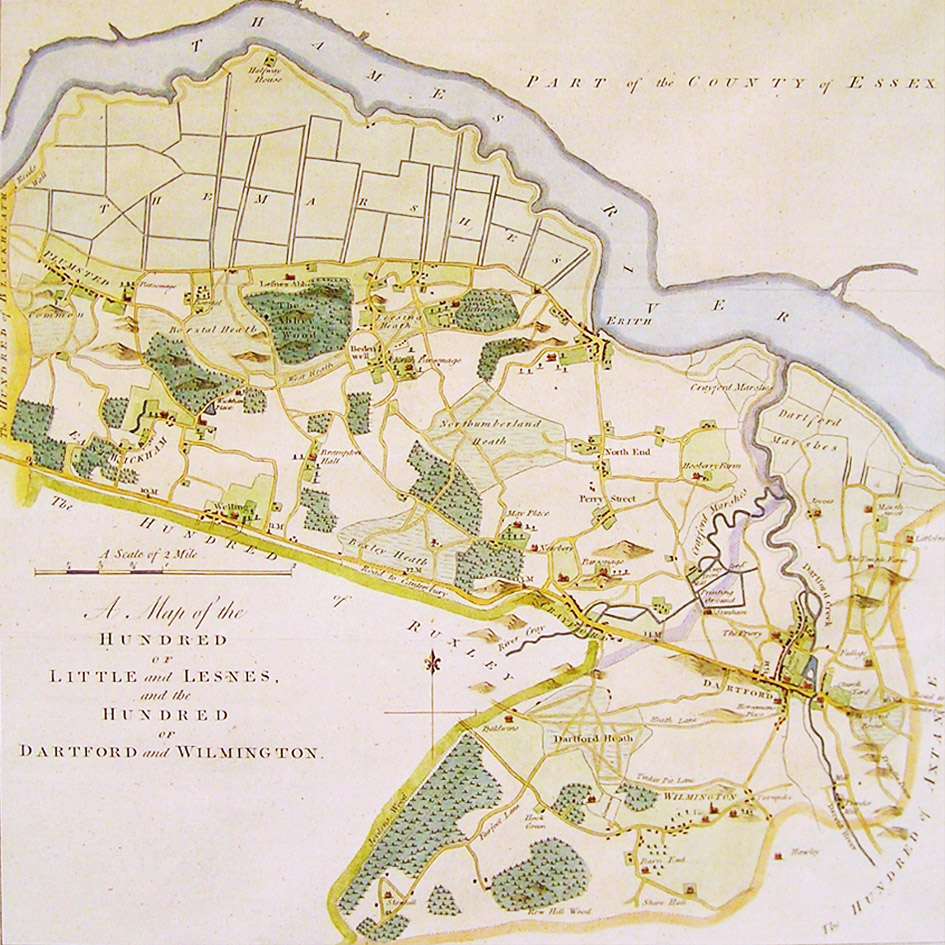 Hasted
What Edward Gibbon was to the Roman Empire, his contemporary Edward Hasted (1732-1812) was to Kent. Like many a wealthy Kent person, Hasted was born in London, but he grew up at the family home in Sutton-at-Hone, and was educated at the King’s School, Rochester. Although his life was beset by growing money troubles, he devoted over two decades to his magnum opus, ‘The History and Topographical Survey of the County of Kent’, an extraordinary record of the county as it stood at the end of the C18. It was originally published in four folio volumes from 1778 to 1799, but soon revised and republished in 12 octavo volumes. Colloquially referred to as ‘Hasted’, it contains a history of Kent, a survey of its institutions, and most notably a parish-by-parish gazetteer, starting with Deptford and ending at Canterbury. Written clearly and authoritatively, this conscientiously researched work remains a magnificent bequest to the county.
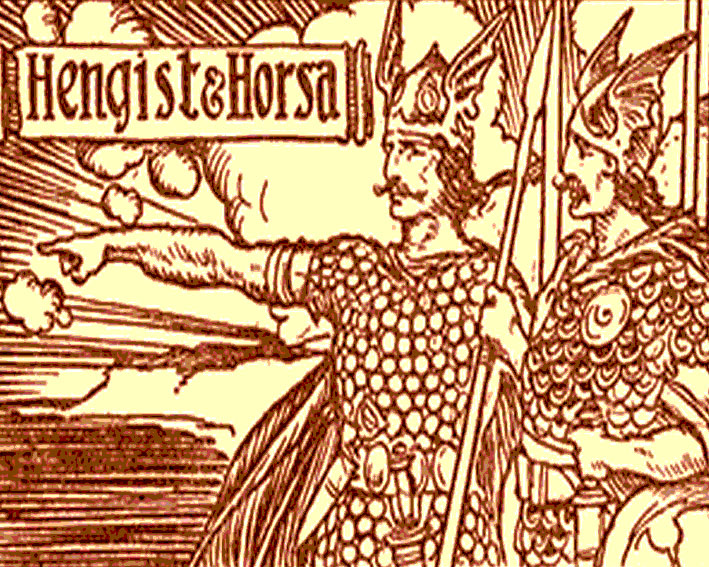 Hengist and Horsa
Although both the Venerable Bede and the Anglo-Saxon Chronicle attest to the existence of Hengist and Horsa – meaning ‘Stallion’ and ‘Horse’ – there is reason to doubt them. The idea of two brothers founding a nation, as these two legendarily founded Kent, is a foundation myth cliché: think Romulus and Remus. Their names also give reason for suspicion, the rearing horse being a potent tribal symbol in their northern Germanic world. So they and their names were perhaps more symbolic than real. However, as with Arthur, it’s practically certain that Hengist was based on a real personage, since an invading Germanic chieftain did evidently defeat Vortigern and establish the Kentish throne in 455. We may question Bede’s assertion that he was the great-great-grandson of Woden; but it’s quite possible he was the great-grandfather of King Aethelberht I. Whether he really had a brother who died in the decisive battle against the Celts, we may never know.
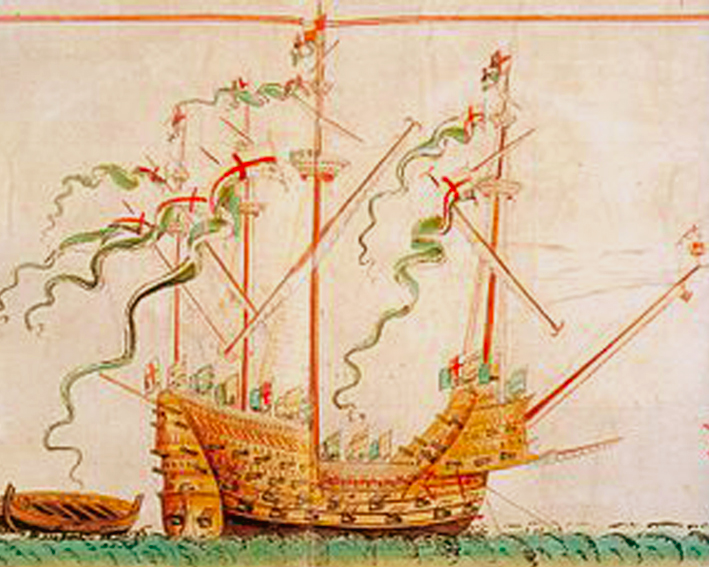 Henri Grace à Dieu
In 1512, the royal flagship Regent, which had started life at Chatham as Grace Dieu, was destroyed when the French flagship exploded alongside. Two years later, still during the War of the Holy League, Henry VIII replaced her with Henri Grace à Dieu, built at Woolwich. A direct counter to the launch of the Auld Enemy’s powerful Great Michael, she was the largest European warship to date. One of the first with gun-ports, she proved unstable, however, and saw no action. Around 1536, she was rebuilt more compactly at Erith, and her weight reduced by a third. Ironically, she attended the Battle of the Solent in 1545, when the much smaller Mary Rose famously capsized. Her role turned out mostly ceremonial: for example, she transported Henry to the Field of the Cloth of Gold. After his death, she was renamed Edward after his successor, and was destroyed by fire at Woolwich a month after his daughter Mary’s accession.
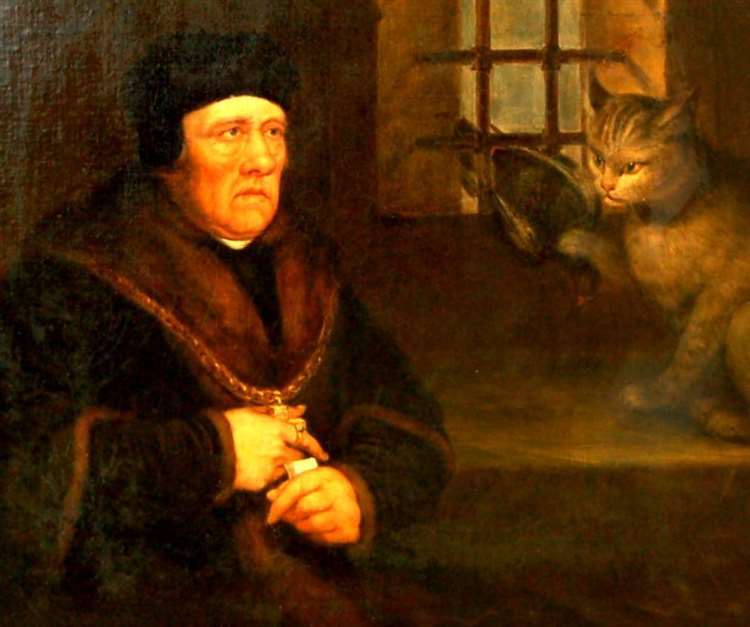 Henry Wyatt’s cat
Sir Henry Wyatt (1460-1536) from Yorkshire was so devoted to the early Tudors that he fought in battles for Henry VII and Henry VIII, in Nottinghamshire and France respectively, all of 26 years apart. They rewarded him handsomely, and his new home in 1492, Allington Castle, would house his famous son and infamous grandson. By then, while spying in Scotland, he had been captured and held prisoner for two years. His tormenters’ intention was apparently to starve him; but, according to tradition, he was saved by a cat. She got into his dungeon and, after he fussed her, brought him an occasional diet of pigeon that he persuaded the gaoler to cook for him. The story gained such credence that he was generally depicted with a cat thereafter. A 1702 inscription in Boxley church claims that Wyatt was actually incarcerated in the Tower by the misbegotten Richard III, an invention evidently intended to ingratiate the Wyatts with the monarchy.
 Henslow’s sparrow
What’s in a name? The American robin is not at all what we would call a robin, being a type of thrush, whereas Europe’s robin red-breast is a flycatcher. Similarly, Henslow’s sparrow, whose range is limited to the eastern United States and southern Canada, over here would be known as a bunting. In fact, when it was first described in the C19 by John James Audubon, it really was called a bunting, but it has now been reclassified as one of the ‘American sparrows’ that form the genus Centronyx. One of just two American sparrows alongside Baird’s sparrow, it was named by Audubon in honour of his Rochester-born correspondent John Stevens Henslow, Darwin’s tutor. It is a secretive little bird, about 4 to 5 inches long, that hides away in grasslands and takes only fleetingly to the air. It was previously considered near-endangered, but recent conservation measures have eased its status to least concern.
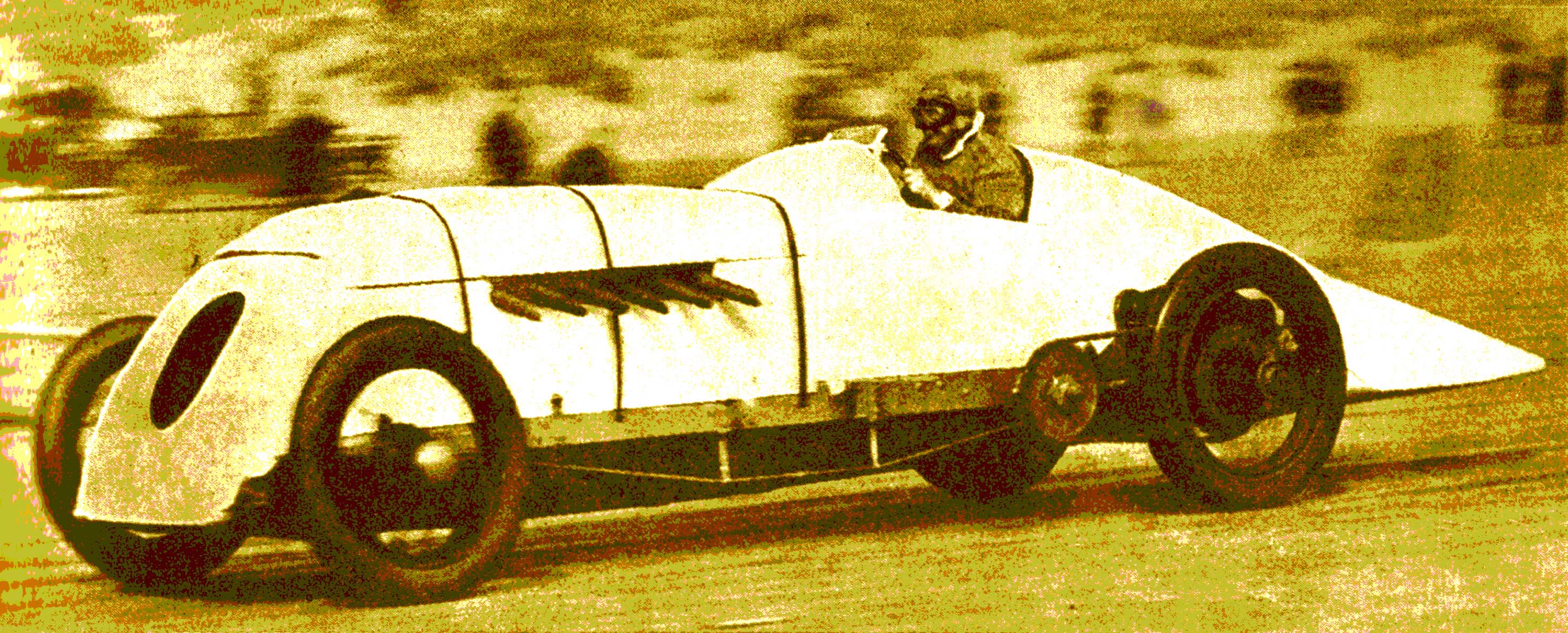 The Higham Flyer
Speed freak Louis Zborowski of Higham Park, Bridge famously spent his vast wealth on building the world’s most extravagantly powerful cars, all known as Chitty Bang Bang. It was the fourth in the series that became the most historic. Nicknamed the Higham Flyer, it contained a 27-litre Liberty L-12 aeroplane engine. While it was in production, however, Zborowski was killed in the 1924 Italian Grand Prix, and the Flyer was sold to Welsh enthusiast John Parry-Thomas. Renaming it Babs, he installed new carburettors and pistons, and in 1926 set a world land-speed record of 171 mph on Pendine Sands in South Wales. During a further attempt the following year, however, the car suffered a catastrophic failure, and Parry-Thomas was killed. The wreck of the car was buried at Pendine until 1967, when fellow Welshman Owen Wyn Owen undertook to excavate and restore it. Kent’s fastest car is now displayed by the National Museum of Wales.
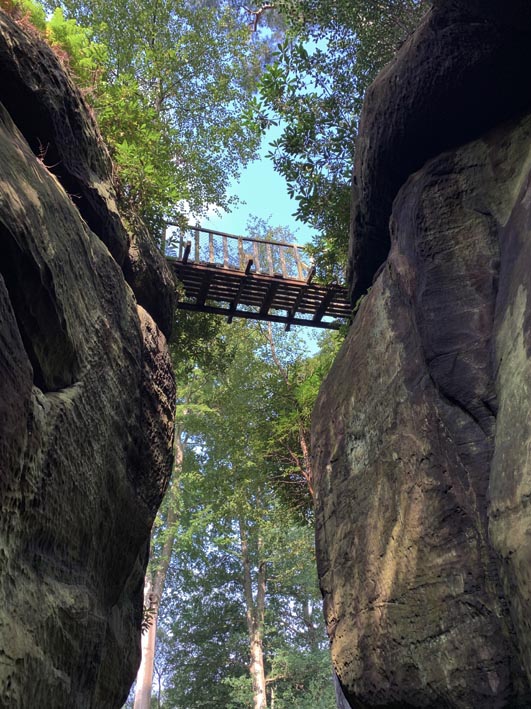 High Rocks
At the time when the iguanodon inhabited Kent, the Weald was covered by a shallow lake that over a period of millions of years laid down a stratum of silt. This eventually hardened into a layer of sandstone that, during the ice ages, became partially exposed, notably west of Tunbridge Wells at the place now known as High Rocks. Erosion caused nearly eight acres of dramatic rock formations to emerge: towering crags that would look less out of time and place in the American West. After Tunbridge Wells evolved into a royal resort in the C17, High Rocks was developed as something akin to a modern-day theme park, with walkways linking the tops of the rocks. It was later connected up with Tunbridge Wells and Eridge by the Spa Valley line, which survives as a heritage railway. Although there is an admission charge, High Rocks is worth visiting just for its sheer incongruousness so near the undulating Weald.
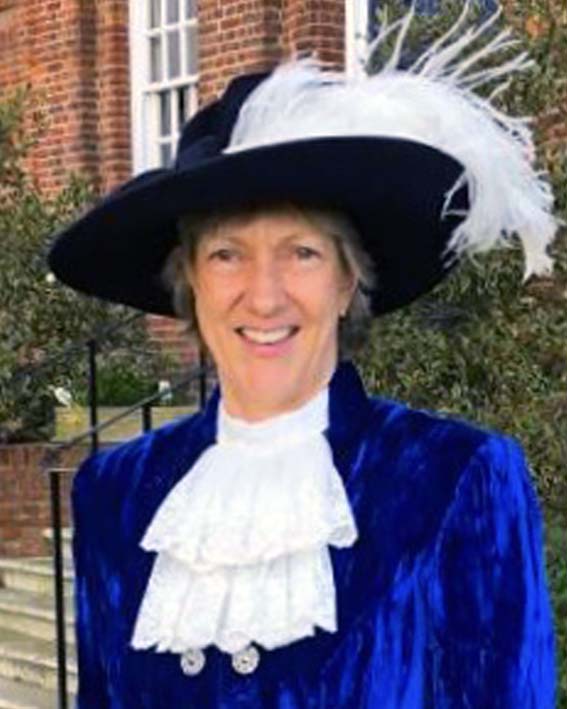 High Sheriff of Kent
The title ‘Sheriff’ conjures up the image of a Wild West lawman armed with a .44 revolver; and law enforcement is indeed the connection with the original Saxon sense. It is a contraction of ‘Shire Reeve’, an important Royal official who was primarily responsible in the Middle Ages for maintaining the law, collecting taxes, and supervising elections. Although the Sheriff has continued to enable the legal process, most of those responsibilities were centralised in the C14, and the role became largely ceremonial. Nowadays, in addition to accompanying royal visits and supporting voluntary work, the Sheriff’s unpaid role includes tending to the needs of travelling High Court judges, for which reason the title changed in 1974 to High Sheriff. The post, which goes back a millennium, sees a new incumbent appointed every March. A recent High Sheriff of Kent, Remony Millwater of Sandwich, took over the role during lockdown and so was uniquely obliged to make her Declaration on Zoom.
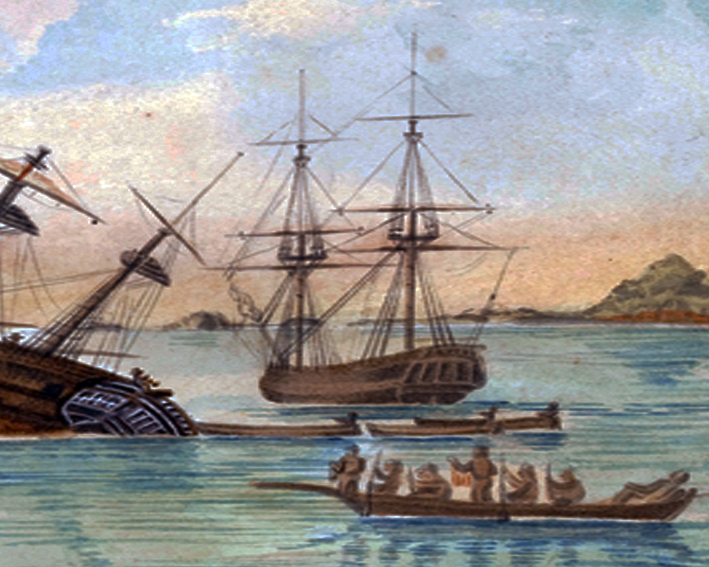 HMS Chatham
In 1791, George Vancouver of the Royal Navy set off on a voyage of exploration of the South Seas and the western seaboard of North America, with an eye to future trading possibilities. Owing to recent troubles with the Spanish Empire, HMS Chatham was sent to provide armed support to Vancouver’s ship Discovery. Despite her name, Chatham had been built at Dover and purchased new by the Navy in 1788. A four-gun brig, she undertook some exploration independently of Discovery, and in 1791 discovered the Chatham Islands off New Zealand, named not after her but the current First Lord of the Admiralty, the Earl of Chatham. She also sailed nearly a hundred miles up the Columbia River. Despite lasting about twice as long as originally intended, the expedition was surprisingly light on casualties by the day’s standards: just six of the 153 men involved. Chatham was eventually sold in Jamaica in 1830.
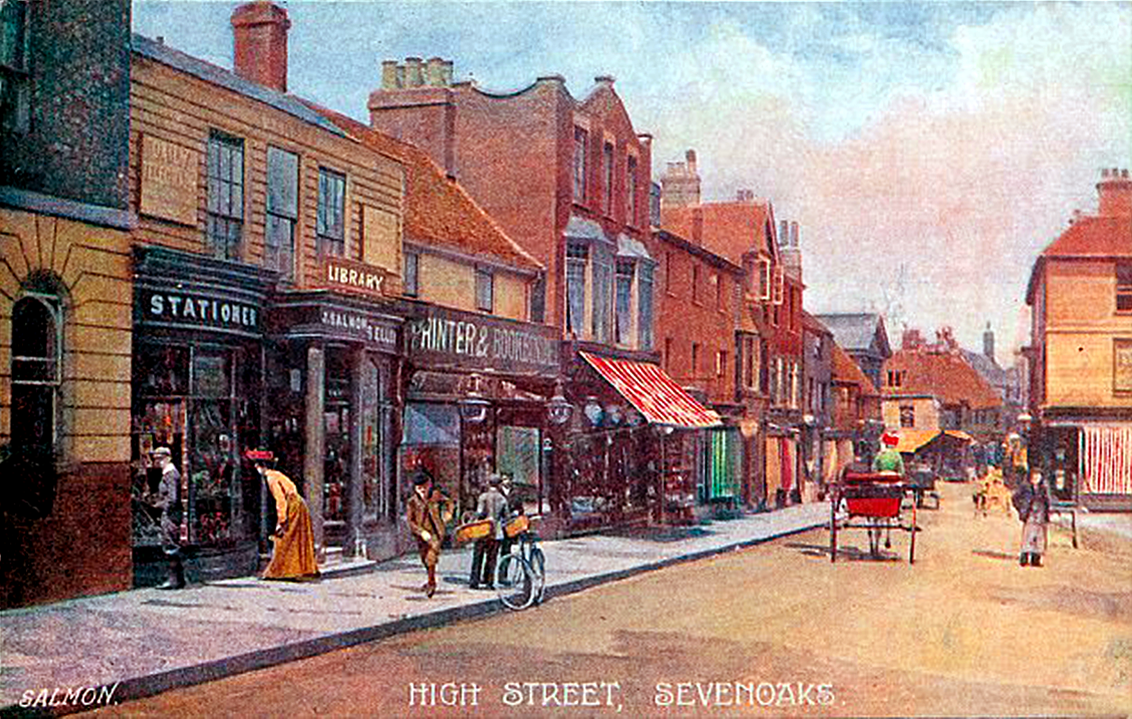 Holiday postcards
In 1880, London bookseller Joseph Salmon acquired a stationer’s in Sevenoaks High Street. A decade later, he initiated a new line of business producing postcards, followed by calendars. The initiative really took off in 1912, when his son engaged artist AR Quinton to create seaside scenes especially for the postcards. Because the national custom for decades was to send a postcard to all and sundry as soon as one went on holiday – even just to say “Wish you were here” – the business became hugely successful, and Quinton created 2,300 designs before retiring in 1934. J Salmon Ltd thrived for a century, but then faced a dramatic downturn. Although shorter holidays were a factor (because senders started getting home before their postcards were delivered), the arrival of social media was the main reason for sales declining by 75% in 25 years. When the company folded in 2017, it was the oldest postcard business in existence.
 Holly-Boy and Ivy-Girl
The children’s game of Holly-Boy and Ivy-Girl was an old East Kentish tradition, and a strange one. The boys and girls divided into separate teams. Each built a human effigy. The boys made a female figure out of ivy, while the girls made a male one out of holly. Once this task was completed, each team had to steal the other’s effigy and burn it. The game was particularly played around Christmas time. It’s anyone’s guess what was the point of it. It’s likely that the two figures represented cynical views of the opposite sex, the holly symbolising masculine belligerence and the ivy feminine parasitism. What’s less clear is what the stealing and burning ritual represented, beyond a bit of fun. An optimistic interpretation might be that it was a cathartic act: the two sexes debunking the other’s negative stereotype of them, and so being free to find more agreeable ways of interacting at Yuletide.
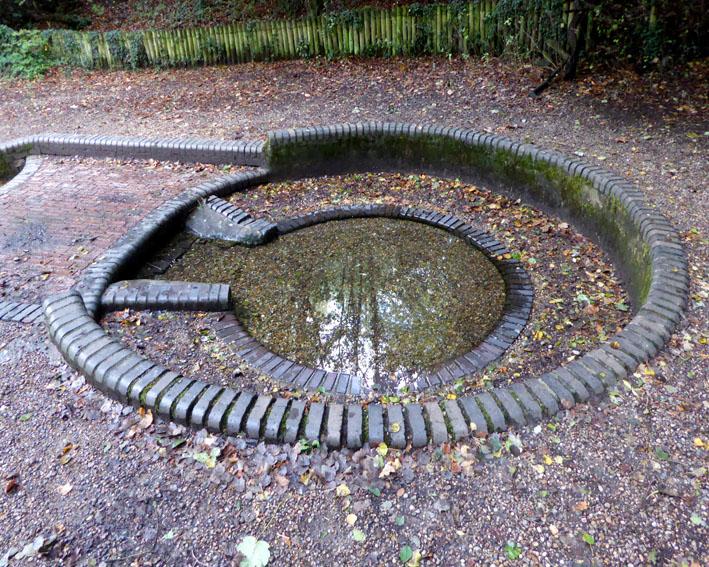 Holwood hillfort
There is a tradition of attributing archaeological features of unknown origin to Julius Caesar, irrespective of their actual age. Two are at Holwood Park, Keston. According to legend, Roman legionaries seeking water spotted a raven returning to a certain spot near their camp, and found a good spring there; the two are respectively known as Caesar’s Camp and Caesar’s Well. The tale also suggested the origin of ‘Ravensbourne’, the name of the river that rises there and meets the Thames at Deptford, marking the western boundary (bourn) of ancient Kentish territory. Though not as big as Oldbury Camp near Ightham, 15 miles away – being about a third of the size – it too is an irregularly shaped stronghold following natural contours or protected by bank and ditch that in places double up. The site is actually believed to have been constructed by Celts around 200 BC, a century before Oldbury and well before Caesar’s arrival.
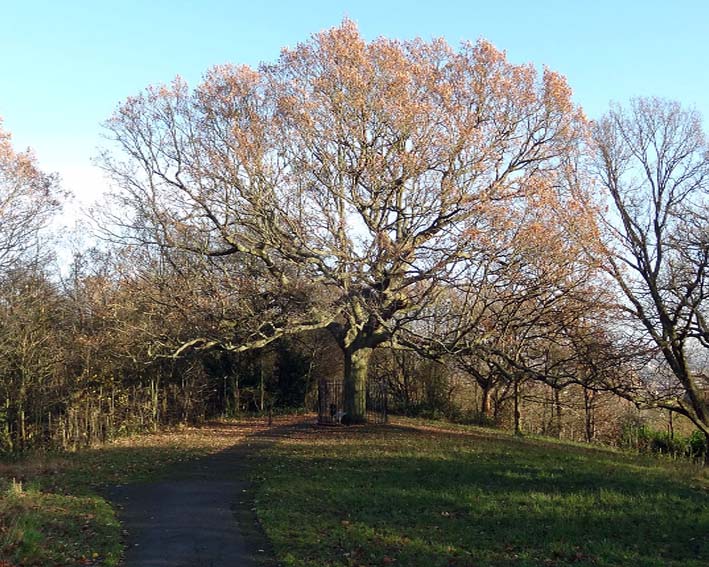 Honor Oak
Right on the ancient border between Kent and Surrey, east of modern Dulwich, stands One Tree Hill, an outstanding geographical landmark. It was here that, according to unlikely legends, Boudicca was killed, and Dick Turpin kept a lookout. On May Day, 1602, Sir Richard Bulkeley took Kentish Maid Queen Elizabeth I there for a picnic when she visited him in Lewisham, Kent. The tree they sat under while admiring the superlative view from the top of the hill was subsequently named the ‘Oak of Honor’; it was spelt that way not as an Americanism but because that was the correct Latin spelling, as in ‘honorific’. The current oak, the third on the site, is already over 100 years old. Now that the area is formally under London’s control, the hill is administered by Southwark, previously in Surrey. However, the leafy suburb immediately to the east, north of Forest Hill, is still named Honor Oak, and was long part of Kent.
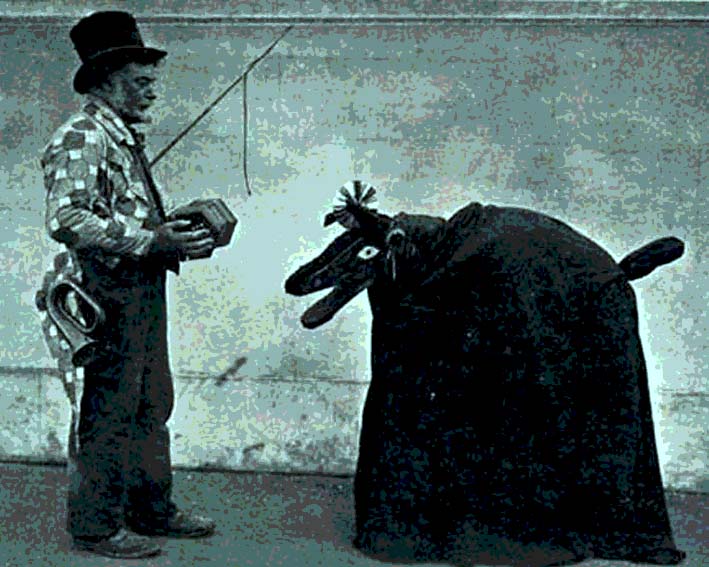 Hoodening
Hoodening is another decidedly odd East Kent custom. It was traditionally carried out around Christmastide by a group of farm labourers accompanied by musicians, with three men at the heart of it: one bearing a spoof horse’s head on a pole and covered with a blanket, another leading him with a rope or whip, and a third dressed as ‘Mollie’, who spent his time chasing girls. The horse’s head contained clacking wooden teeth, operated by the horse man, that were used to annoy grown-ups and terrify children. Typically the group went from door to door, performing for the residents in much the same way as carol singers, and expecting some financial or other reward. Numerous attempts have been made to explain the name ‘hoodening’, but most are characterised by enthusiastic amateurism. If the explanation is not simply that the custom involves donning a horse-like hood, then the true origin is probably lost in the mists of time.
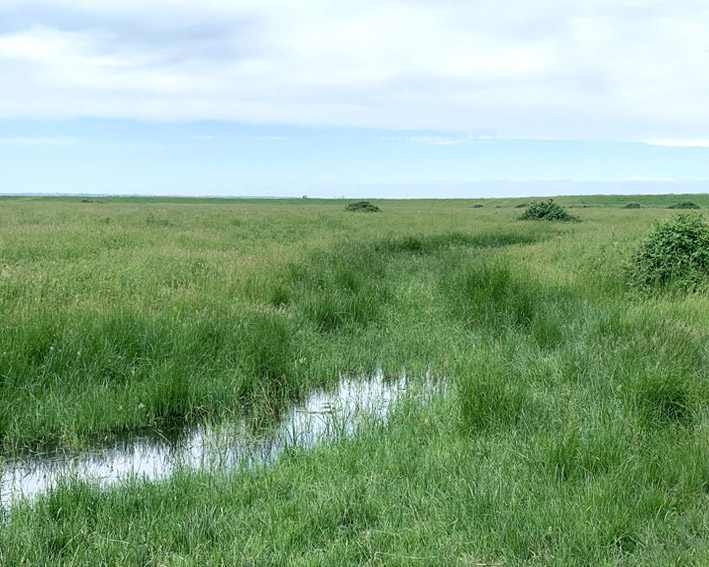 The Hoo Peninsula
Shaped by the sprawling mouth of the Medway, the Hoo Peninsula is the low-lying Kentish shore of the Thames estuary facing Canvey Island. Its limited accessibility has been a blessing to the extraordinarily diverse wildlife that thrives on its isolated marshes. It was also an advantage to humans in ancient times, as witnessed by the copious archaeological finds there; the name ‘Hoo’ may derive from a Saxon description of its heel-like shape. Efforts were made in the C19 to develop it as a tourist destination and transport hub, for which reason a now defunct railway was built; but it is better known for the disused Thames-Medway Canal that marks its southern border. Its inaccessibility has paradoxically been a great draw for unsightly industrial development, from cement to explosives. Its four oil refineries, three oil-storage facilities, two gas plants, and five power-stations now provide the most distinctive features on its otherwise featureless skyline.
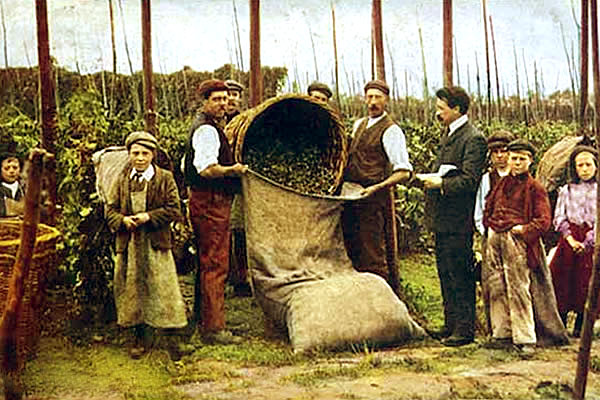 Hop-picking
Because Kent used to be the hop capital of England, the county required an annual surge of labour to harvest the crop. The solution was to import 50,000 pickers, mostly London slum-dwellers but also travellers from further afield. They came not just for the money, but also the merrymaking, for this was their annual holiday. For several weeks every summer, the Kent countryside was a sight to be seen. The hop gardens were filled with cloth-capped men, skirted women, and street urchins beavering away, and the adjacent areas with colourful caravans or shanty towns. It was no fun for residents, however. This was a time for a wave of crime, petty and not so petty. Pubs erected signs saying “No hop-pickers”, and even erected barricades to keep drunken troublemakers out. When it was all over, the farmers would spend weeks cleaning up tons of detritus from the fields; and then it was back to work on the next crop.
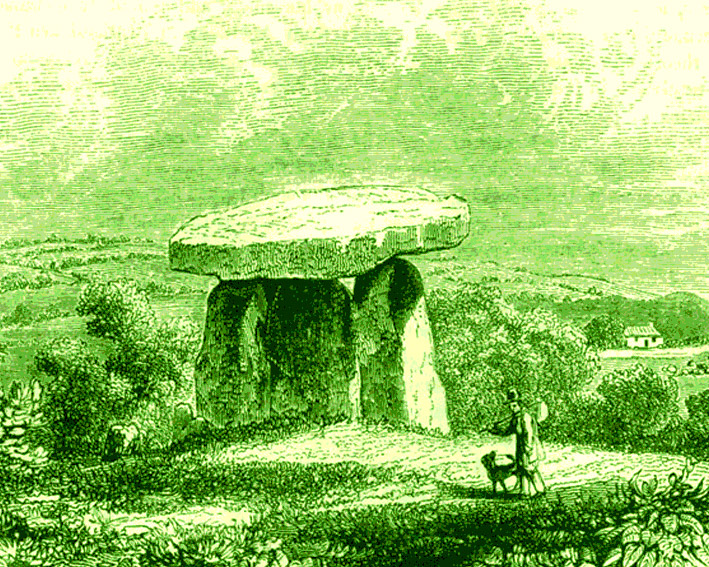 Horsa’s grave
In 455, a battle took place at Aeglesthrep (probably Aylesford) between Hengist & Horsa’s large army of Germanic invaders and Vortigern’s even larger force of Britons. The outcome was inconclusive, but one detail survives: a man-to-man battle between Horsa and Vortigern’s son Catigern that resulted in both their deaths. It is unknown whether Horsa was really Hengist’s brother; but much speculation has ensued about the whereabouts of his grave. It was claimed long ago that he was buried at Horsted, north of Aylesford, beneath a heap of stones. Alternatively, Kit’s Coty has been said to mark his grave, although that claim has also been applied to Catigern by others who associate Horsa with the White Horse Stone nearby. It is now known that these megaliths were put in position much earlier, though this does not preclude the possibility of a later warlord being buried nearby by his men. It remains a mystery.
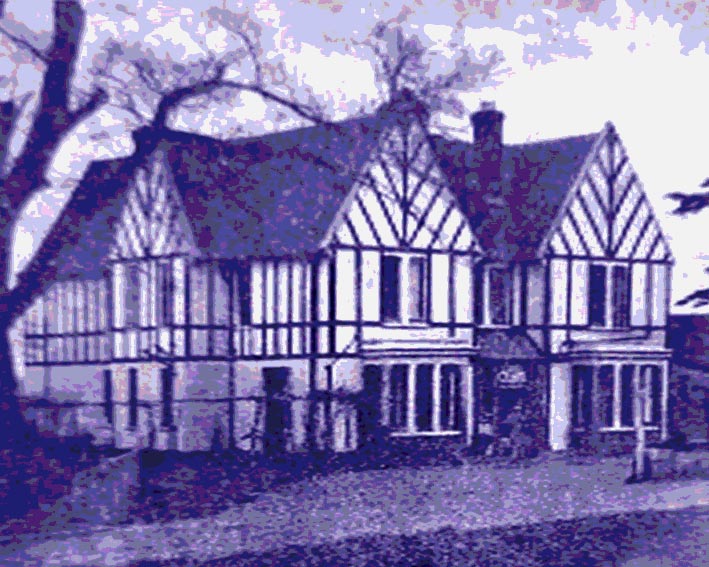 Hotel Celeste
The sedate village of Molash on the Charing-Canterbury road was once the venue of an entertainment hotspot. The natty monocle-wearing JH Squire, credited with introducing jazz to Britain, started a band called the Celeste Octet in 1913. It lent its name in 1932 to a country hotel and nightclub, billed as “the smartest roadhouse in England’s countryside”, that became a big draw to ragtime fans; the ill-fated Edward VIII is said to have been a visitor. After WW2, a transport café frequented by Coulling Bros lorry-drivers flourished alongside it, and James Bond star Roger Moore was rather incongruously rumoured to have stayed there with Dorothy Squires. The hotel and café closed down in 1982 and were replaced by the Northdown residential home, which was expanded later in the decade but closed in 2011. Having lain derelict for many years and been subject to considerable vandalism, it and its 7½ acres are now subject to residential redevelopment.
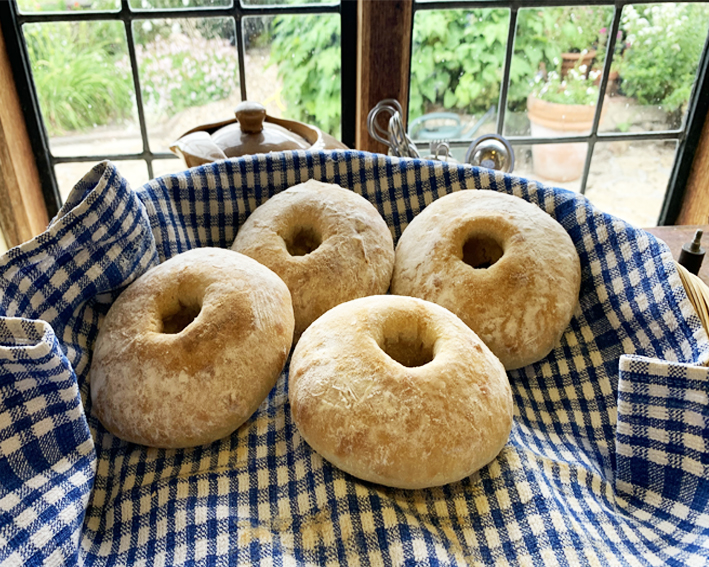 Huffkins
The huffkin is a Kentish invention that deserves greater recognition. It comes from a time when each region innovated its own speciality bread, before centralised production kicked in. It was traditional to serve huffkins to hop-pickers at the end-of-season supper, when they were known as ‘hopkins’. Huffkins are very simple – 4-inch wide, 1-inch deep bread rolls – but of a singular lightness, both within and without. They are simple to make, consisting of flour, water, yeast, and a little salt and lard. The trick lies in baking them nice and slowly, and then wrapping them before allowing them to cool so as to retain a soft crust. What makes huffkins entirely individual however is the distinctive baker’s thumbprint in the middle, which literally gives each one its maker’s imprimatur. A Kentish cherry was traditionally placed in the thumbprint, but huffkins found nowadays on pub menus most often contain a savoury filling.
 Igglesden’s Saunters
A resident of Ashford, Charles Igglesden (1861-1949) was a newspaperman through and through, but left an enduring legacy that marks him out as a lover of Kent second only to Hasted. Grandson of William Igglesden, founder of the ‘Kentish Express’, he was himself its editor for 61 years. He had the idea of writing accounts of perambulations he’d made of Kent towns and villages. From 1900, the newspaper started publishing them in hardback form under the title ‘A Saunter through Kent with Pen and Pencil’, illustrated by Xavier Willis. By 1944, the assiduous Igglesden had completed a series running to 34 volumes, containing highlights of 242 localities he had visited. Only the 35th and final volume was never published, covering nine villages around East Kent; but it finally appeared in 2018 along with a biography by Malcolm Horton. Sadly, collecting a set of Igglesdens nowadays is hard work, and rather expensive.
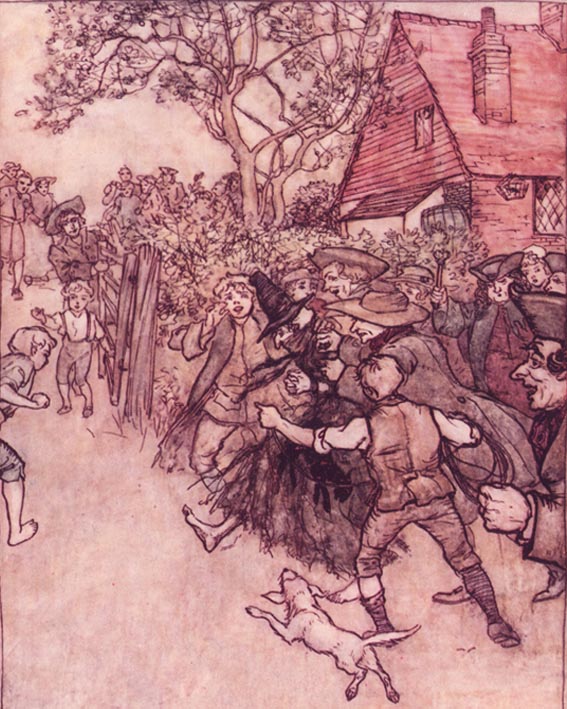 ‘The Ingoldsby Legends’
Canterbury-born cleric Reverend Richard Barham (1788-1845) is practically forgotten today, but was famous in the C19 under his pseudonym Thomas Ingoldsby. He had inherited his late father’s manor, Tappington Wood at Denton, at seven, and suffered a mangled hand in a stagecoach crash when twelve – experiences that presumably helped shape his eccentric imagination. Although he attained the post of cardinal at St Paul’s Cathedral, his passion was for writing, and the many stories and poems he wrote for ‘Bentley’s Miscellany’ were eventually collected in three volumes of ‘Mirth & Marvels’ (1840-7). His Kentish background was a running theme, reflected in such titles as ‘Mrs. Botherby’s Story – The Leech of Folkestone’ and ‘Misadventures at Margate’. The books were also sufficiently prestigious to be illustrated by the likes of John Tenniel and Arthur Rackham. In 1853, ‘The Illustrated London News’ even averred that they would live as long as the English language, which speaks volumes of today’s very different literary tastes.
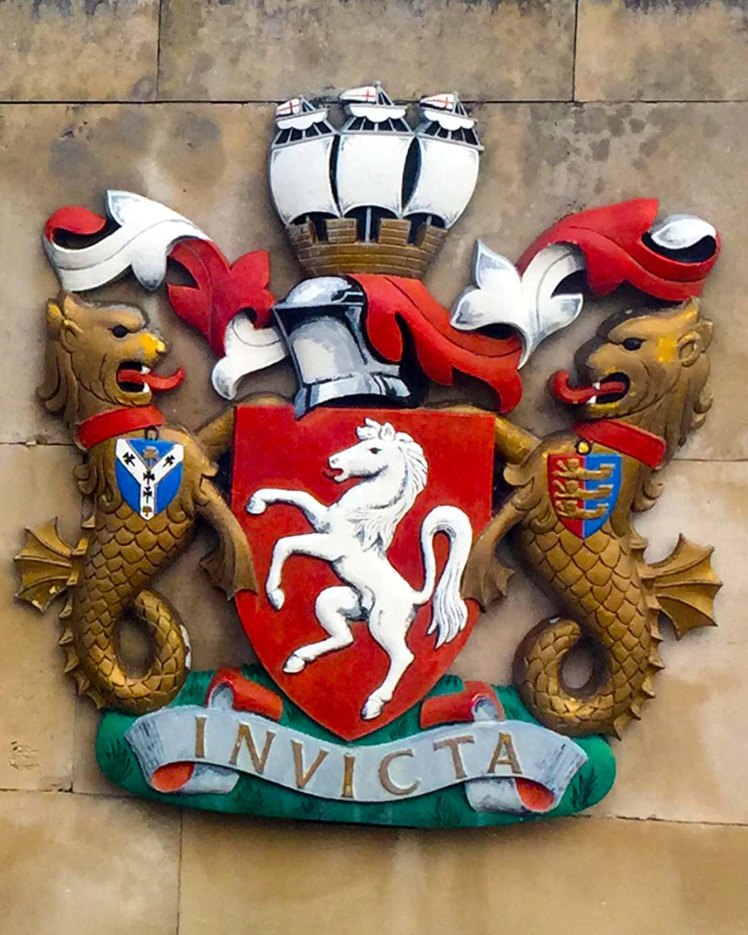 Invicta
The Invicta motto, usually combined today with Kent’s white horse rampant, is almost ubiquitous in the county, and for a century or more has been a default name for any new Kentish club, building, or project. Young people tend to suppose, if they actually think about it, that it is something to do with being unbeaten in the Battle of Britain. In truth, the motto’s origins are more than ten times older. They lie in the Norman conquest of England, when Kent uniquely stood up to William the Conqueror and obliged him to grant the county special palatine status. ‘Invicta’ means quite literally ‘Unconquered’. It was two fingers up to the Normans, saying implicitly, “So you conquered the English? Not us, you didn’t”. Over the centuries, it was a constant reminder to Kent of its role as bulwark against authoritarianism – a role the county still used to perform within living memory.
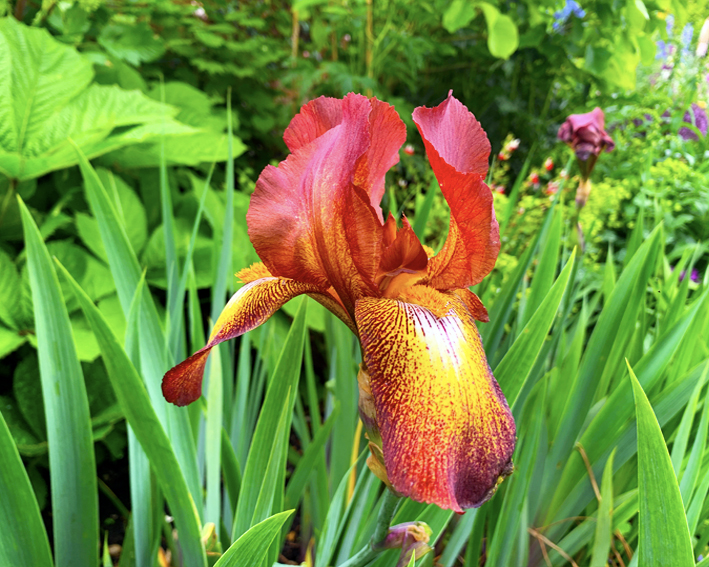 Iris germanica ‘Kent Pride’
The Iris genus got its name from the Latin for ‘rainbow’, an appropriate choice given its tremendous diversity of vivid colours. There are nearly 300 species of iris, including the ‘bearded’ irises, formally known as Iris germanica, that sport a distinctive hairy protuberance. They are noted for their hardiness: it’s been said that in America they survive in temperatures ranging from -20° to +110° Fahrenheit. One variant is the delightfully named ‘Kent Pride’, which was first cultivated in Wrotham in the 1950s. It is noted for its rich colours, a combination of chestnut, cream, and yellow. It generally flowers in May and early June but, if the rhizome is properly tended to and given plenty of sun, it can bloom three or four times in a season. Kent Pride may grow to a height of up to 3 feet, and looks particularly good in clumps, when it presents a wall of colour.
 The Isle of Grain
Most Kent people guess that the Isle of Grain is an area once covered in cornfields, or else an agricultural depot. In truth, ‘grain’ used to mean anything resembling corn, including sand. This gives a clue to its nature, tucked away on the end of the Hoo Peninsula. Being mostly marshland, it would make a beautifully secluded nature reserve if not for the power station, natural gas facility, and container port that surround its isolated village. Grain did use to be an island, albeit one dwarfed by Sheppey and Thanet. Yantlet Creek, the backwater separating it from Hoo, was once part of a waterway from the Thames to Sandwich. Barges from London passed through the Yantlet, the Swale, and the Wantsum, cutting miles off their journey and largely avoiding the open sea. Locals were happier to have it silt up, however, and saw the City of London in court when it tried re-opening the Yantlet in 1822.
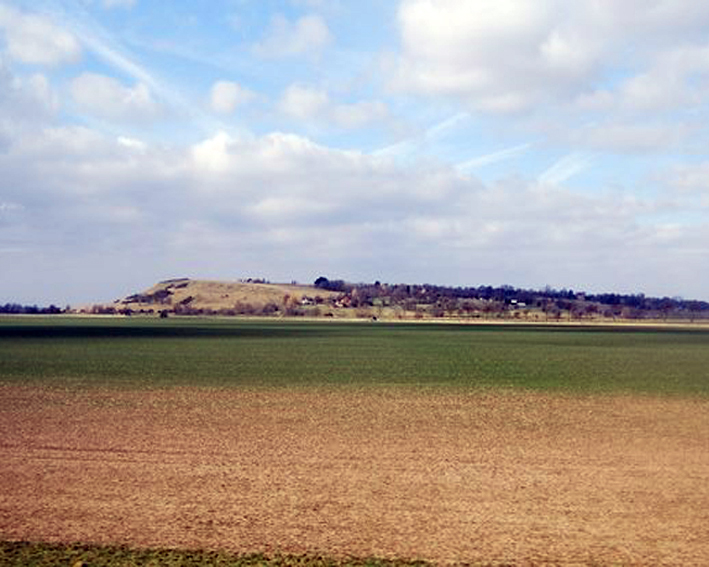 The Isle of Oxney
Romney Marsh’s Isle of Oxney looks even less like an island than the Isle of Thanet, being entirely landlocked and resembling nothing but a strangely elongated hill on a plain. It was in fact a fully fledged island, much the biggest in the once expansive mouth of the River Rother that extended on its Kent shore from Tenterden to Romney. The 1287 flood dramatically changed the local terrain, substantially replacing the river mouth with today’s Marsh. Silting eventually diverted the river to its present course to the west and south, debouching modestly at Rye, and the draining effect of the nearby Royal Military Canal from 1805 finally left Oxney high and dry. Its name means Ox Island, making it a tidy southern complement to the Isle of Sheppey, which means Sheep Island. Ironically, Oxney is home not only to Wittersham but also Stone, where the export of Romney Sheep to Australia originated in 1853.
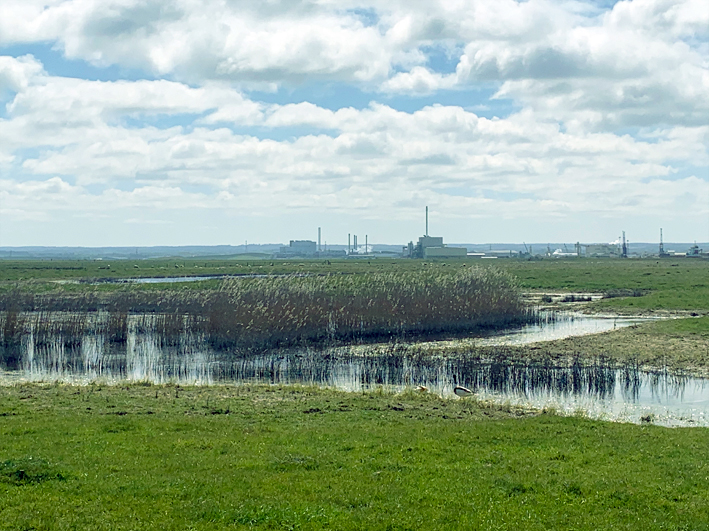 The Isle of Sheppey
Sheppey is the middle of Kent’s three large ‘isles’ on the north coast, but the only one still surrounded by water. There were once three islands, but Elmley and Harty merged with Sheppey in the C19. It is surprisingly big, about the same size as the better known Thanet. Although its name simply means Sheep Island, it does have some history. In its remote North Sea location, it was a favourite landing place for Vikings, who repeatedly plundered its monasteries. Nearly a millennium later, in 1667, Sheppey briefly became one of the few parts of post-Norman Britain to be occupied by a foreign power, after the Dutch captured the Sheerness fort. Samuel Pepys at the Navy Board thought it capitulated all too readily; but then, Sheppey always regarded itself as something apart. ‘The Times’ reported in 1838 that the island had become occupied by “pikey-men” (probably turnpike travellers), and mainland Kent was long referred to there as ‘England’.
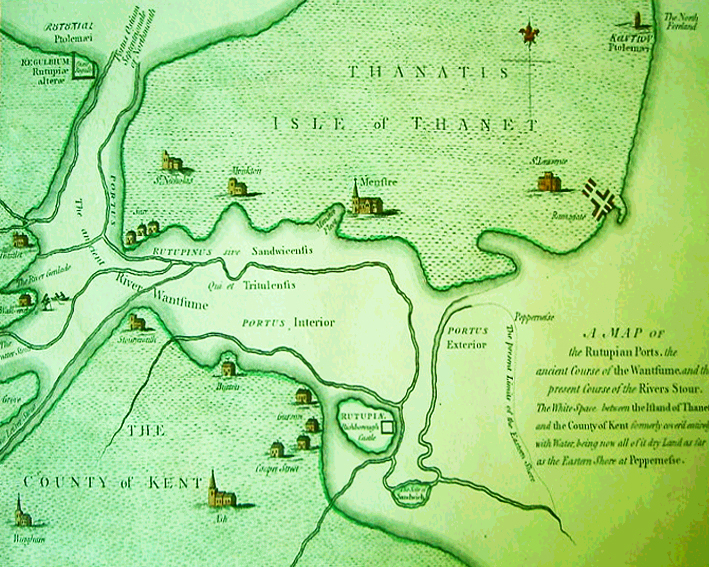 The Isle of Thanet
The so-called Isle of Thanet is so obviously not an island that its name seems fanciful. In reality, Thanet was once literally insular, separated from the rest of Kent by the substantial Wantsum Channel until it silted up in the C17. Geologically, Thanet is composed of a distinctively soft, white Upper Chalk, rich in flints, which has prompted the name of the Thanetian geological age. Like Sheppey, it became an island ca 5,000 BC, when rising sea-levels inundated much Kent land that now lies underwater. It was already inhabited in the Stone Age, and evidence of Iron Age settlements has been found; a hoard of objects from the Bronze Age was unearthed at Minster-in-Thanet. The island’s name, incidentally, is probably Celtic in origin, suggesting the former presence of a lighthouse. More colourful is a C7 Archbishop’s theory that it was derived from the Greek thanatos (meaning ‘death’), and that a handful of Thanet soil could eliminate snakes.
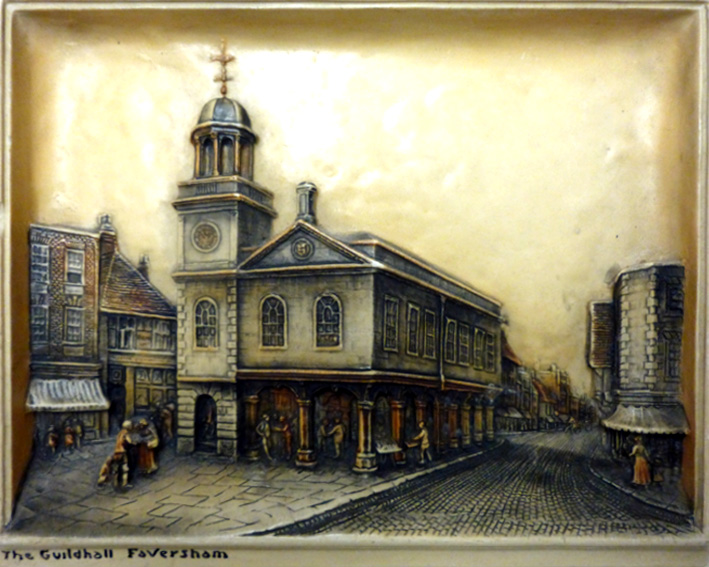 Ivorex
In 1898, Arthur Osborne from Ospringe returned after working in North America. The following year he set up shop in Abbey Street, Faversham making Osborne’s Ivorex plaques, an ingenious new way of bringing wall ornaments to a wide audience. The production process involved creating a design featuring familiar people, buildings, or scenes in clay, then creating a gelatine mould from which a plaster of paris copy was taken. This would then be painted in watercolours and finished in buffed paraffin wax to give the appearance of ivory. The idea was so successful that the company ultimately produced around 800 designs bearing the AO trademark, at its peak selling around 45,000 pieces a year around the world, and survived until 1965. Even then Ivorex wasn’t finished, because Ray Bossons from Cheshire acquired the company’s assets and, in 1980, Bossons Ivorex pictures went into production. Original Osborne’s Ivorex plaques can still be acquired on eBay.
 Ivor the Engine
He may seem quintessentially Welsh, but Ivor the Engine was actually forged in the depths of the Kent countryside. He was the creation of Broadstairs resident Oliver Postgate, who claimed to have got the idea from a railwayman who’d opined that engines have their own personalities; Reverend Awdry’s ‘Thomas the Tank Engine’ might appear a more obvious inspiration. He set up a production company called Smallfilms with artist Peter Firmin, based at the latter’s home in Blean. The pair originally created 26 ten-minute black-and-white films concerning the charmingly wilful engine and his sympathetic driver Jones the Steam, screened on ITV from 1959 to 1963. Ivor, an aspirant singer blessed with several human and animal friends, got a second lease of life in 1975, when the BBC commissioned 40 five-minute films in colour. Although the character’s popularity has endured, for Smallfilms it was a case of cutting their teeth for their most successful creation: ‘Clangers’.
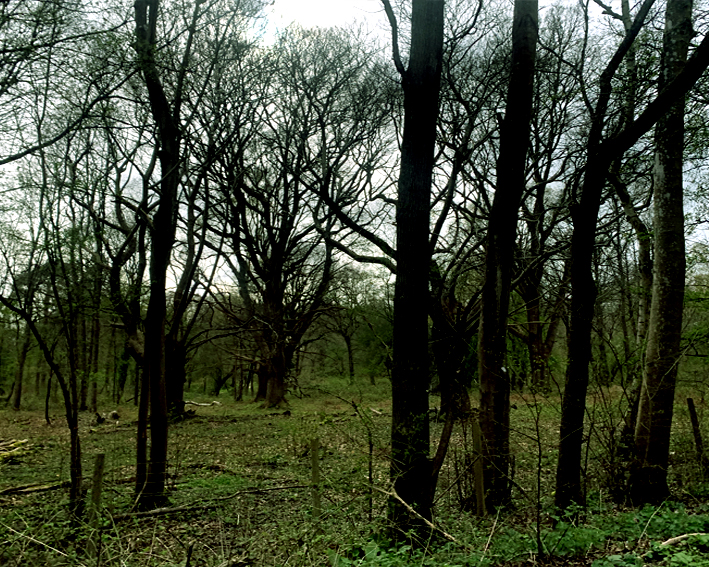 Jack Cade’s Field
At Heathfield, Sussex is a large monument commemorating the killing of Jack Cade there by Alexander Iden, the Sheriff of Kent, after the failed rebellion in 1450. This begs a couple of questions. What was the Sheriff of Kent doing in Sussex? And what was Cade doing there, when much the best plan would have been to make for Dover, hire a boat, and escape overseas? As it happens, there is a rival location in Kent: a place between Maidstone and Ashford formerly known as Jack Cade’s Field, close to where Hothfield Place used to stand. This would surely make more sense, since it was adjacent to the main London to Dover road between Maidstone and Ashford, and Iden (who actually wasn’t made Sheriff until 1456) owned land there. Although the location of the original field has been forgotten, there is still a lane running through Hothfield Common called Cades Road. Kent’s superior claim is now increasingly acknowledged by historians.
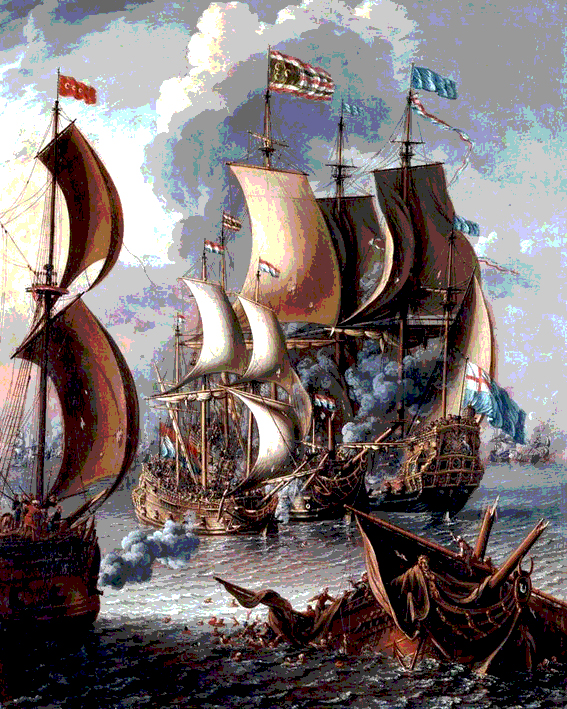 Jack Sparrow
Anyone looking for the real-world inspiration for Jack Sparrow could do worse than consider Jack ‘Birdy’ Ward (1553-1622), a fisherman from Faversham. His story is almost too outlandish to be believed. He began his piratical career by preying on Spanish shipping at Elizabeth I’s behest. When James I made peace with Spain, Ward stole a small barque in Portsmouth that he used to capture a bigger vessel; an even better one followed. Progressing to the Mediterranean, he captured a 32-gun Dutch ship that brought him several large hauls. Finally, with extraordinary bravado, he took the mighty Reniera e Soderina, which he fitted out as a Man-o-War. The amount of booty he took in eight years was staggering, equating to hundreds of millions of pounds today. He retired in 1612 and, having been refused a royal pardon, went into exile in Tunis, where he became Yusuf Rais. A heavy drinker and a bigamist, ‘Birdy’ may eventually have died of plague.
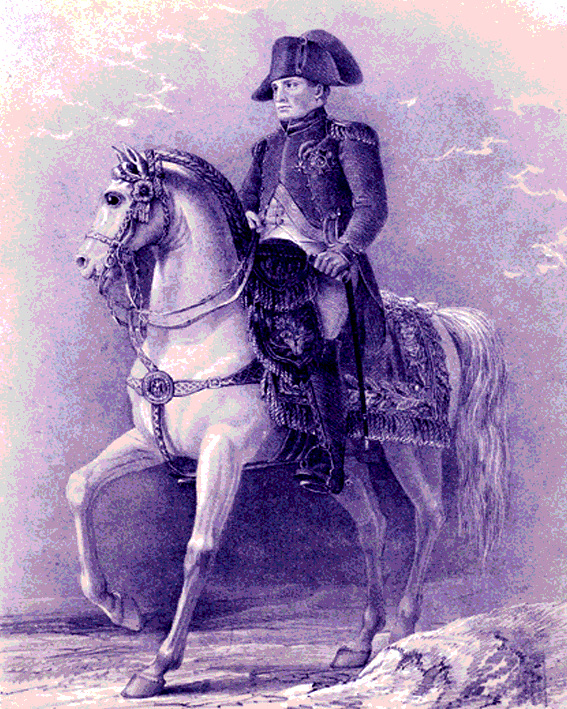 Jaffa’s grave
Napoleon Bonaparte was famously painted by Jacques-Louis David crossing the Alps on a rampant steed. This inevitably enhanced his martial reputation, except among those who knew that, on the occasion in question, he had been riding a mule. By the time of Waterloo in 1815, the Emperor had acquired a more fitting mount, or several. The most famous, Marengo, is usually assumed to have been the one he rode on the day. Another of his favourites, however, was Jaffa, named after his victory at Tel Aviv in 1799. When Waterloo was lost, Jaffa was bought at auction by a Mr Green, who took him back to Glassenbury Park, the estate he was renting west of Sissinghurst. Jaffa had survived to the age of 38 when he was finally put down in 1829. He was buried on the estate with a stone pillar that still stands today, although his bones and a jar of coins buried with them have disappeared.
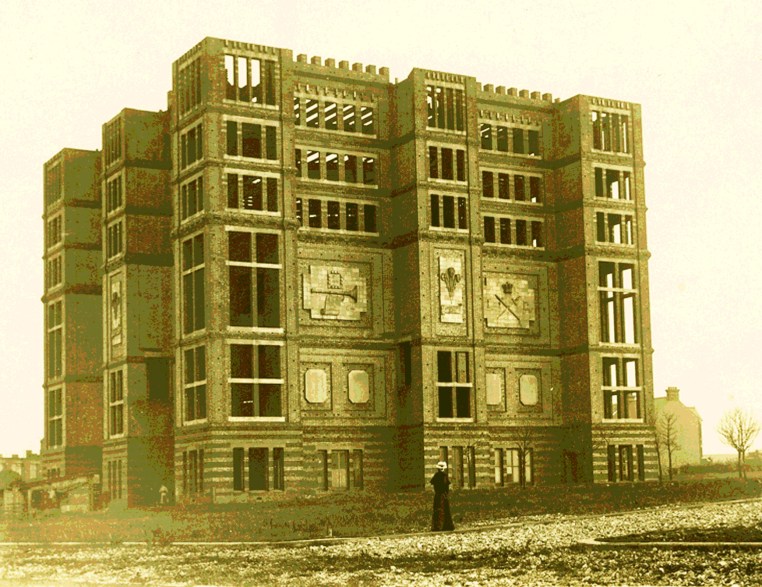 Jezreel’s Tower
Jezreel’s Tower was the vast folly that scarred Gillingham’s skyline for 75 years. It was the brainchild of the eccentric James White, alias Jezreel, who was born in 1840. After serving as a private at Chatham, he became an acolyte of Joanna Southcott, a religious fraudster who had made the usual predictions of the impending Second Coming. Jezreel – a showman with a Buffalo Bill appearance – took over her sect’s Chatham branch in 1881, attracting 1,400 followers. His Tower was to be the great temple where all financial contributors could live and worship. Initially intended as a 144-feet cube, it ended up on the squat side. Jezreel, who forbade drinking but was often drunk, went before in 1885. The scam was perpetuated by his youthful widow, Clarissa, who drove a fashionable carriage while feeding her Jezreelites only potatoes and bread. She died in 1888 with the building still uncompleted. It survived as a factory, but was knocked down in 1961.
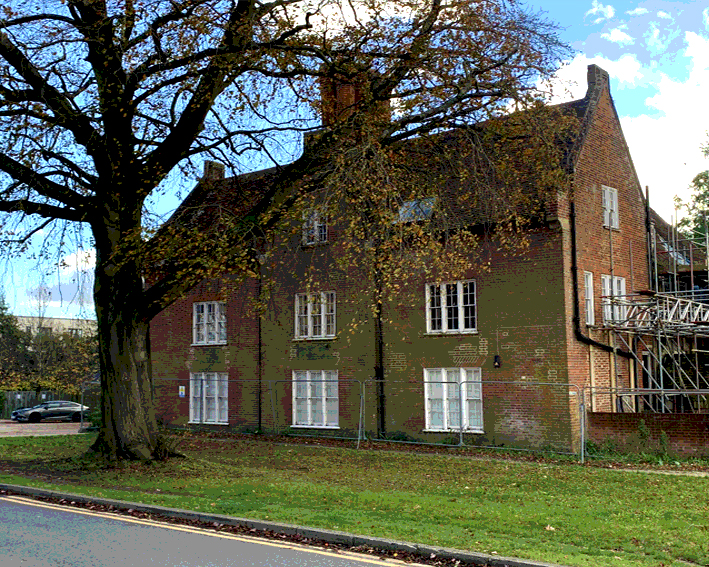 The Joint Services School of Intelligence
Repton Park, a dense housing development off the A20 north-west of Ashford, gets its name from a forlorn-looking listed building in its midst. Repton Manor had roots in the Domesday Book, and was owned in the C15 by Sir John Fogge. It was taken over in WW2 by the British Army, and the Templer Barracks was set up thereabouts. Around 1969, this became home to the School of Service Intelligence, a joint-services operation that was later renamed the Defence Intelligence & Security School. Its educational offering was comprehensive, including intelligence, counter-intelligence, and security. It even had a facility for locking up trainees in advance of mock interrogation by hostile captors. The DISS was removed to Bedfordshire in 1997 in order to accommodate Ashford’s envisaged population boom. Apart from the name of the housing estate itself, the house and base are recalled in the names of Templer Way, Manor Way, Repton Manor Road, and Sir John Fogge Avenue.
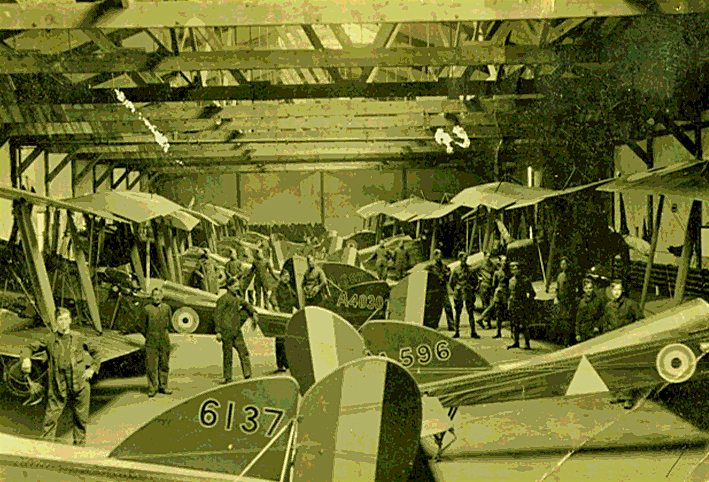 Joyce Green
Best remembered as the predecessor of Biggin Hill, the Joyce Green airfield at Long Reach near Dartford was established on farmland in 1911, two years after the historic Shellness airfield near Leysdown. It was originally created as a testing ground for aircraft developed at Vickers’ nearby plants, which in 1917 came to include the legendary Vickers Vimy. After WW1 broke out, it became one of the Royal Flying Corps’ first bases and its Wireless Testing Park. It played a key role in the defence of London, boasting Major James McCudden VC among its instructors. Nevertheless, it had a propensity to flood, and also experienced numerous fatal crashes – not least because of its proximity to the Thames – which earned it a reputation as excessively dangerous. Biggin Hill was identified as a superior alternative, and the RFC moved out in 1917. Shortly afterwards, Vickers settled on Brooklands in Surrey as its own new base, and Joyce Green closed in 1919.
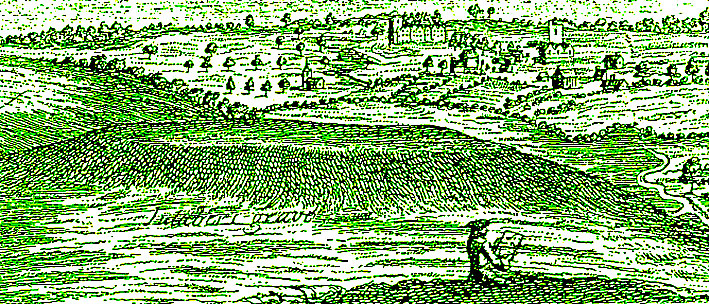 Jullieberrie’s Grave
Alongside a public footpath half a mile south-east of Chilham lies a scheduled monument that has encouraged much speculation. Essentially a mound 50 yards long, 15 yards wide, and above head height, its sheer size suggested one traditional name: Giant’s Grave. Antiquarian William Camden formed a more scholarly opinion, arguing that another ancient name, Jullieberries’ Grave, indicated the resting-place of Quintus Liberius Durus, a tribune killed during Julius Caesar’s invasion of 54 BC. This linguistically far-fetched theory is disproved by modern archaeology, which confirms that it is a long-barrow dating from roughly six millennia ago in the Neolithic age, not dissimilar to the Shrub’s Wood and Jacket’s Field barrows also in East Kent. It appears not to have had human remains placed inside, although a broken axe-head may have been buried there for ritual purposes. Its Jullieberries name is most likely to be of Anglo-Saxon origin, suggesting the grave of the same personage after whom Chilham was named.
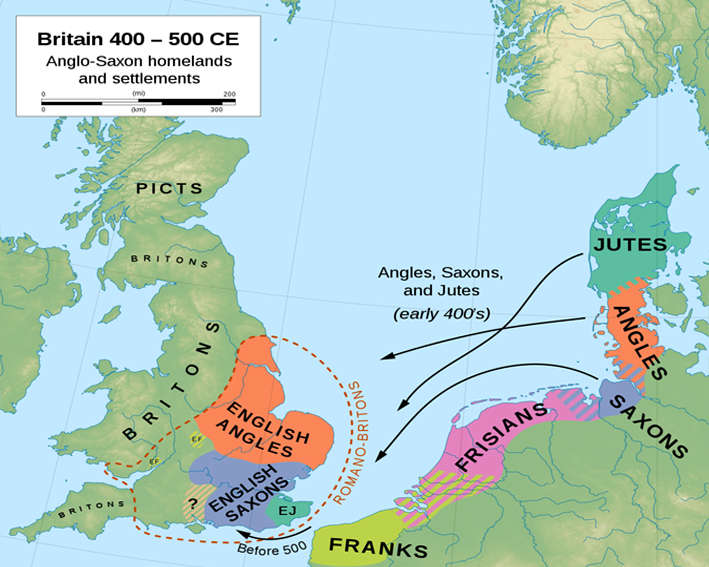 The Jutes
Although the Saxons and later the Angles came to occupy a much larger area of English territory, it was the Jutes who first settled a significant region and established themselves as a polity. This they did in both Kent and the Isle of Wight from the C5 onwards. Because the Germanic culture was largely oral, there are only sketchy records of where precisely they came from; but their homeland is believed to have been the northern part of what is now Jutland in Denmark, immediately to the north of the Angles. Although their name gives clues to their earlier provenance, there is more than one possibility. It could be that they were a branch of the Goths, the most dynamic Germanic tribe, who swept through most of Europe and even North Africa. The Jutes appear to have brought with them their own legal concepts, which included the distinctively Kentish ‘gavelkind’.
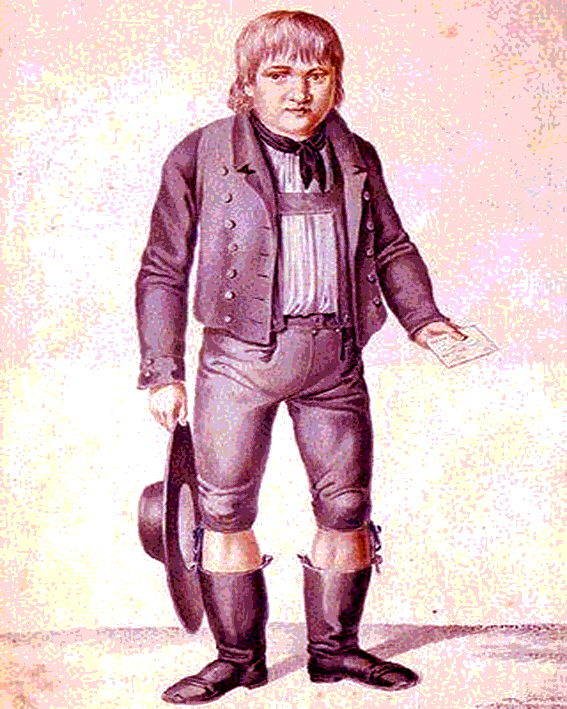 Kaspar Hauser
One of the most curious of movies is Werner Herzog‘s ‘The Enigma of Kaspar Hauser’ (1974), telling the true story of a 17-year-old found abandoned in 1828 on a Nuremberg street and carrying a mysterious letter. Despite initially appearing mentally defective, he learns to speak, and claims to have been raised in isolation in a dark cellar with a toy horse for company. After being unaccountably attacked with a knife, he is taken under the wing of an English lord who believes him to be of aristocratic descent. That lord was in reality Philip Stanhope, the 4th Earl Stanhope from Chevening. When investigations into Hauser’s claimed Hungarian ancestry came to naught, Stanhope repudiated him as a fraud and renounced a promise to bring him to Kent, though he continued to support him financially. At 21, Hauser was again stabbed, this time fatally. It was never established where he came from and who his unknown assailant was, if not himself.
 Keane
Keane
The rock band Keane was formed in 1995 by three lads who had known each other at Tonbridge School. Their unusual line-up was guitarist Dom Scott, keyboards player Tim Rice-Oxley, and drummer Richard Hughes, the last being from Gravesend. Tom Chaplin joined as lead vocalist in 1997, and Scott left in 2001. It was not until 2007 that they recruited a roadie, Jesse Quin, to be their dedicated bassist. At first, their music was criticised as overly anodyne; yet Coldplay was already demonstrating the demand for easy-going rock with sensitive lyrics, and Chaplin’s cuddly persona underscored Keane’s fundamental niceness. All of their first four albums – ‘Hopes and Fears’ (2004), ‘Under the Iron Sea’ (2006), ‘Perfect Symmetry’ (2008), and ‘Strangeland’ (2012) – hit No. 1 in the album charts. In 2014, they called a halt to recording and touring, but returned in 2019 with ‘Cause and Effect’, which peaked at No. 2.
 The Kent Coalfield
In the mid-C19, it was surmised that East Kent might contain valuable coal deposits. It was not until 1890 that Kentish coal was first discovered, specifically on the site of an abandoned effort to dig a Channel tunnel beside Dover’s Shakespeare Cliff. Since coal was such an essential source of heat and power, it seemed like a windfall. Test drillings were carried out around East Kent, and even as far afield as Cobham. Although the uneconomical Shakespeare Colliery closed as early as 1915, several others proved more durable, reaching peak capacity in 1936. Only four survived WW2, however: Betteshanger, Tilmanstone, Snowdown, and Chislet. Despite the pits’ perennial unprofitability, Kent miners were among the most militant in the NUM strike of 1984-5, but to no avail: by 1989, every pit had closed. Only sparse remnants survive, the industry’s most visible relic being a section of the East Kent Railway from Shepherdswell to Richborough that survives as a heritage railway.
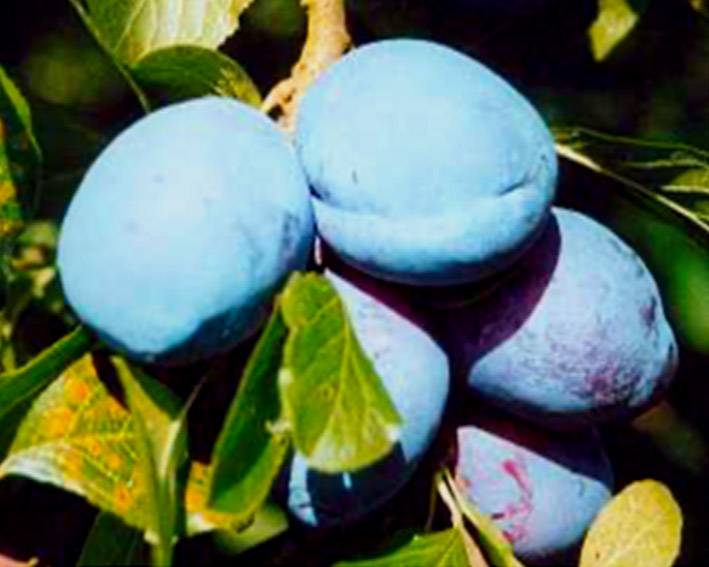 Kent Diamond plum
In the early C19, a farm labourer called Diamond discovered a wild-growing strain of plum that he didn’t recognise, tucked away in a hedgerow in Brenchley. A local nurseryman by the name of Hooker propagated it, and started making it available in 1830. Half a century later, the strain was given a particularly good write-up in George Bunyard’s ‘Fruit Farming for Profit’, in which he described this ‘Kent Diamond plum’ as “grand”. He explained that it needed to be pruned vigorously because of its proliferation of shoots, but diligence would be rewarded with a large upright tree bearing a heavy load of fruit in late August. One of Bunyard’s nurseries was at Barming, and Kent Diamond plum-trees can still be obtained at nearby East Farleigh, in addition to being kept in the National Fruit Collection. Their fruit are blue-black, the size and shape of chicken eggs and, with their sour damsonesque flavour, recommended for cooking and bottling.
 Kent House
Many commuters travelling to London Victoria via Bromley will have wondered about the railway station, just beyond Beckenham Junction, that’s intriguingly named Kent House; after all, it lies comfortably outside Kent, being part of the London Borough of Bromley. Yet it wasn’t always so. The station was named in 1884 after a nearby farmhouse that in olden times was the first building encountered after crossing the border into Kent from Surrey. The house stood there as long ago as 1240, making it probably the oldest house in Kent of which there is a firm record. Its history was by no means uneventful, including an alleged murder and a visit by William Makepeace Thackeray. Its status as a border marker was lost in 1900, when Penge Urban District immediately to its west was transferred from the County of London to Kent. Somewhat symbolically, the historic Kent House Farm was demolished in 1957, and its green acres disappeared under suburban housing.
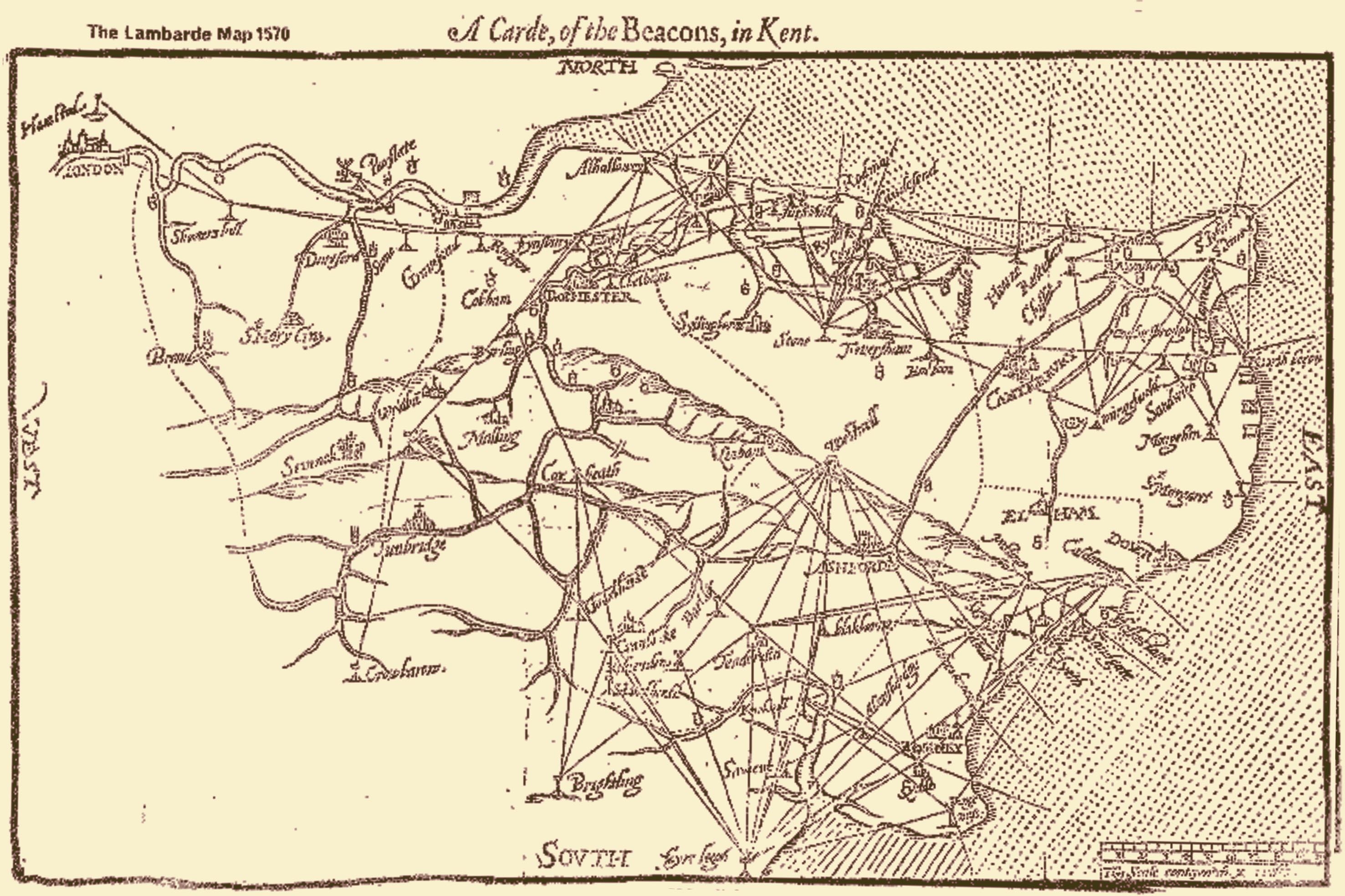 The Kentish Beacons
In the centuries before telegraphy, the only way of communicating instantly over long distances was by means of a loud instrument like a horn or drum, or else by smoke or flame. The latter were effective over longer distances, but inefficient insofar as they needed the recipient to be looking in the right direction at the right time. Being at the greatest risk of invasion from the Continent, Kent was equipped in the C16 with a complex network of 52 beacons. With his ground-breaking county history ‘A Perambulation of Kent’ (1570), antiquarian William Lambarde from Greenwich usefully provided a detailed map (or ‘Carde’) of the network, so that all concerned could know exactly where to look when danger was expected. Unfortunately for Lambarde, he was accused of creating the map for Spain’s benefit, and was lucky to be exonerated, the penalty for treason naturally being draconian. The beacon system remained in force until the English Civil War.
 Kentish cherry batter pudding
It was Henry VIII who got the English cherry industry started, with 105 acres at Teynham. Kent dominated the market, boasting 12,500 acres of cherry orchards by 1900. Women on tapered 12-foot ladders dropping cherries into baskets used to be a familiar sight. Since not all of the crop was sold elsewhere, it is unsurprising that Kentish cooks came up with good ways to dispose of the remainder. One of the best is Kentish cherry batter pudding, a variant of clafoutis. It’s nice and simple: add a drop of cherry liqueur and cream to your batter mix, pop in some Kentish cherries, bake for 40 minutes, and serve with a dusting of icing sugar and a splash of cream. It might not sound much, but it has an uncanny knack of disappearing instantly from the plate. After the Kentish cherry industry’s 90% contraction in a century, it is pleasing to report that cherry orchards have been making a comeback.
 Kentish cobnuts
Cobnuts are simply a larger variety of hazelnuts, grown especially for eating fresh; but Kentish cobnuts are more than just cobnuts from Kent. They are a type that was bred in 1830 by a farmer from Goudhurst called Mr Lambert. They might be considered the Victoria plum of the cobnut world, being particularly tasty. Victorians used to enjoy them as a treat to go with the port, sometimes adding a little salt. For that reason, by the end of the C19 they had planted 7,000 acres of cobnut orchards, or ‘plats’, mostly in Kent. That number has now shrunk to barely 250 in Kent, making cobnuts a local commodity that is due a comeback. After all, they are natural, nutritious, and versatile, whether raw, roasted, or finely chopped or grated and incorporated in a cake. The last of these constitutes Kentish cobnut cake, which is particularly delicious when a little stem ginger is added to the recipe.
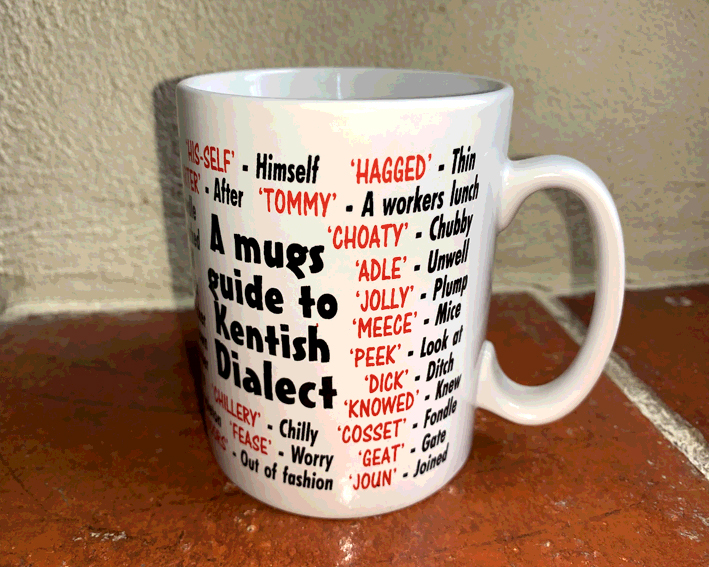 Kentish dialect
The term ‘dialect’ is colloquially used to mean a regional accent with some odd words thrown in. A tighter definition is a halfway stage in the development of a new language. Scots, previously known as Inglis, is a classic example. It is easily understood when written down, but its exotic pronunciation and esoteric vocabulary make it hard for other English speakers to follow conversationally. The whole of England has nothing comparable, except perhaps Geordie. Though people speak of a Kentish “dialect”, there has been nothing to match that definition since Kent was conquered by Mercia and then Wessex, and the Jutish dialect was swamped by Anglo-Saxon. Not only do Kentish people today speak identically to most other South-Easterners, but the rural Kent brogue was easily understandable across England even before the C20 influx from London. Kent has nevertheless coined a huge number of curious local words, now mostly defunct; they can be inspected online in Kent Archaeological Society’s lexicon.
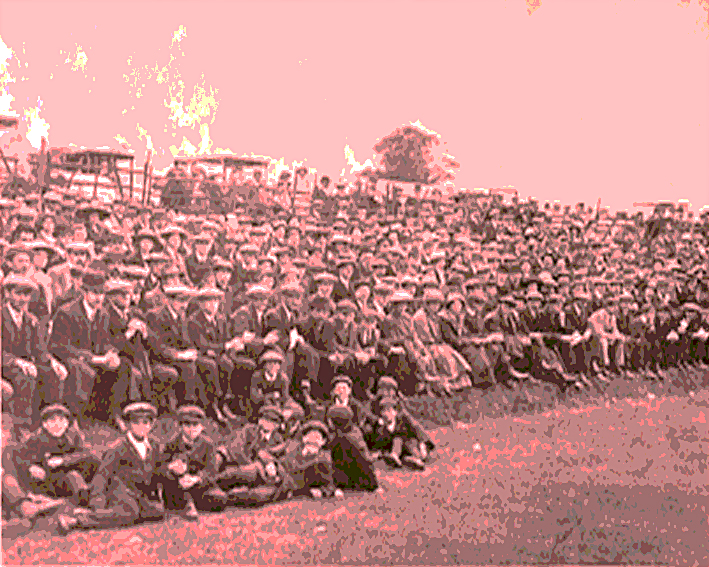 Kentish Fire
Kentish Fire encapsulates the uniquely Kentish spirit of defiance. It made its original appearance at meetings to dispute the Roman Catholic Relief Bill of 1829, which the Government wished to pass in order to defuse a threatened Irish rebellion. Kentish people would express their collective mass disapproval by cheering ironically at great length and volume. It became a cunning way of making popular sentiment known even though it conflicted with the politically correct view favoured by the establishment. Confusingly, ‘Kentish Fire’ also came to mean something very different: a way of expressing approval by clapping in a particular manner, consisting of three groups of three claps and then one more; the effect was not unlike that of the 2-3-4-2 pattern popularised in 1966 by England football fans. Since the ironic cheering and synchronised clapping phenomena arose around the same time, it seems possible that they were linked: the one reserved for pro-Catholic speakers, the other for their Protestant critics.
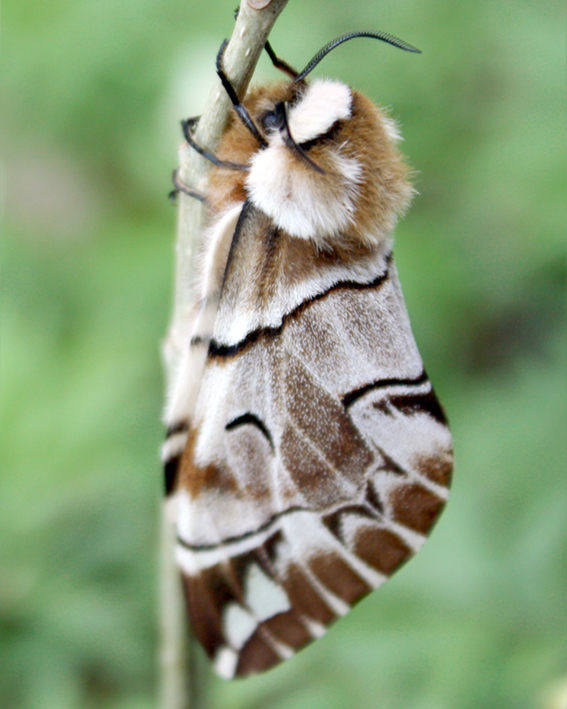 Kentish glory
Moths are unwelcome visitors to both lampshades and wardrobes. If one has to be named after your county, however, you could do worse than Endomis versicolora, a true beauty among insects. This ‘Kentish glory’ was once common in Kent and some other counties as far afield as Herefordshire. Although global warming has made the English climate much more agreeable, it has grown too hot for the Kentish glory. It is now found within the British Isles only in the Scottish Highlands, and is officially rated as scarce. It’s one of the bigger domestic moths, with a wingspan of 2 to 3 inches. The female, which is larger but also less colourful, is purely nocturnal, and flies about releasing pheromones with which to attract mates. The male is said to be able to detect them from more than a mile away. Fortunately, he also circulates by day, which is why Scots can still appreciate his good looks.
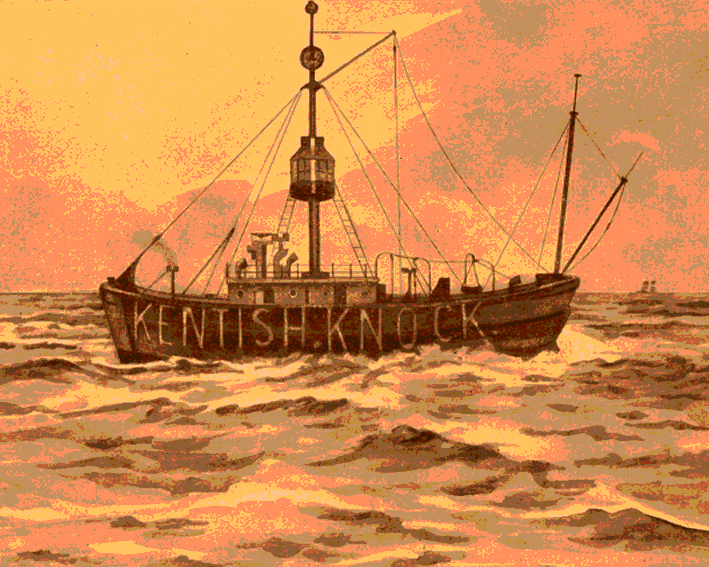 The Kentish Knock
The Kentish Knock barely qualifies as Kentish, actually being slightly closer to Clacton than it is to Margate. It is a shoal, in other words a sandbank lying just below the surface of the sea. Being so far out in the North Sea, 22 miles from the North Foreland, it is particularly perilous for sea captains who don’t know their exact position. For that reason, it has since 1840 enjoyed the services of a lightship, prominently marked ‘Kentish Knock’, which replaced an earlier buoy. Even that has not provided complete safety. The famous wreck of the SS Deutschland in 1875 was just one example of the shoal’s Siren-like quality. It has also acted several times as a magnet for trouble of a military nature, and even had an important sea battle in 1652 named after it. Nowadays, it is fortunately better known as an ideal habitat for various marine species, including hermit crabs, catsharks, and rays.
 Kentish plover
Strangely, the Kentish Plover is known in coastal regions from the West of Africa to Japan, yet very little in the county after which it is named. This pretty little wader was first classified in 1758 by the great taxonomist Carl Linnaeus as Charadrius alexandrinus, acknowledging the fact that it was found on Egyptian shores. The species was fully written up by the eminent ornithologist John Latham in 1801. The two specimens he examined happened to be from Sandwich, this being the time when the bird still came to Kent to breed in numbers, before egg collectors and property developers drove it away. As a Kentishman from Eltham, Latham understandably gave it a more local name, Charadrius cantianus. Despite no longer being a visitor to these shores, it is still called the Kentish plover in English-speaking countries from India to America. It is thriving around the world, now classified as “Least Concern”.
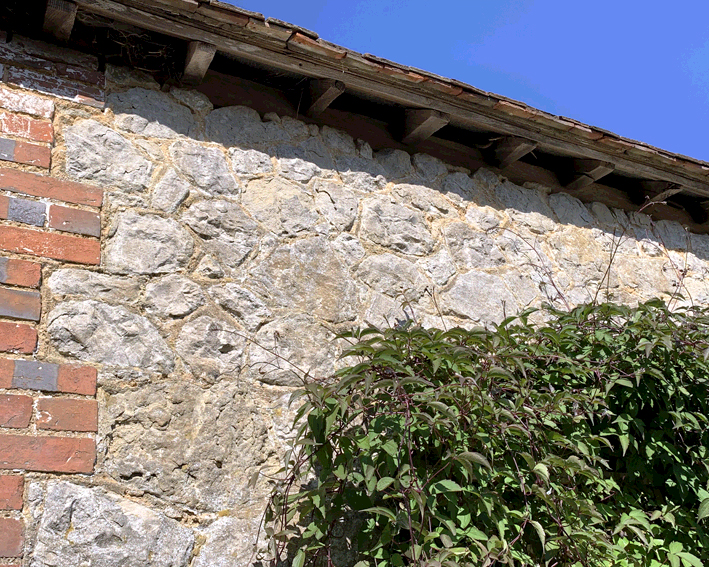 Kentish rag
Kentish rag is not a Scott Joplin classic, but the stuff that made London. Since South-East England consists mostly of chalk and clay, it was just as well that a layer of grey limestone was laid down in the Cretaceous era, and then pushed to the surface by the Weald-Artois anticline to form a narrow ragstone ridge from Hythe to Sevenoaks. Not only was it hard, but its colour softened pleasingly when exposed. The Romans saw its potential, and ordered excavation of tons of Kentish rag at Tovil, beside the Medway, for building London’s walls. If anyone wonders how Kent’s county town got started, the answer is that it made stone. Over the centuries, numerous other quarries were dug there. The countless walls and buildings constructed with Kentish rag include a veritable ‘What’s What’ of architecture: the Tower of London, Westminster Abbey, the castles of Dover, Leeds, and Rochester, not to mention Maidstone’s own Archbishop’s Palace and Prison.
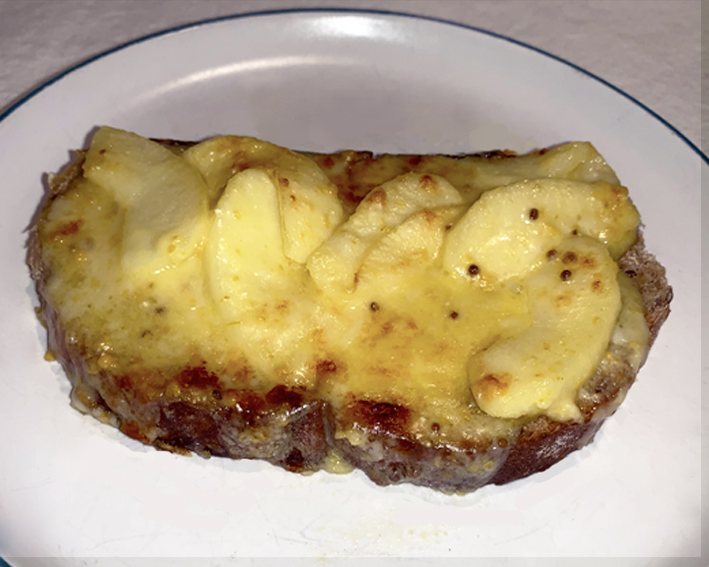 Kentish rarebit
It is uncertain where we got the name ‘Welsh rabbit’ to describe flavoured cheese on toast. It was possibly analogous to ‘Folkestone beef’, a term disparagingly used by Kentish folk to describe fish. The name is first recorded in 1725, and English, Scottish, and Irish rabbits soon followed. It was quickly changed to ‘rarebit’, presumably to ease confusion. ‘Kentish rarebit’ inevitably combined cheese not with Worcestershire sauce or beer but Kentish apples. It is simply made, by cutting up an eating-apple very finely, stirring it into melting cheese, pouring the mixture onto toast, and grilling it. The combination might sound odd to some, but its lasting appeal is down to that extraordinarily good partnership of cheese and apple that anyone who’s had a packed lunch will know about. It’s not just a matter of sweet balancing savoury, but also complementary textures. Anyone who doesn’t find it scrummier than Welsh rabbit must be called Jones.
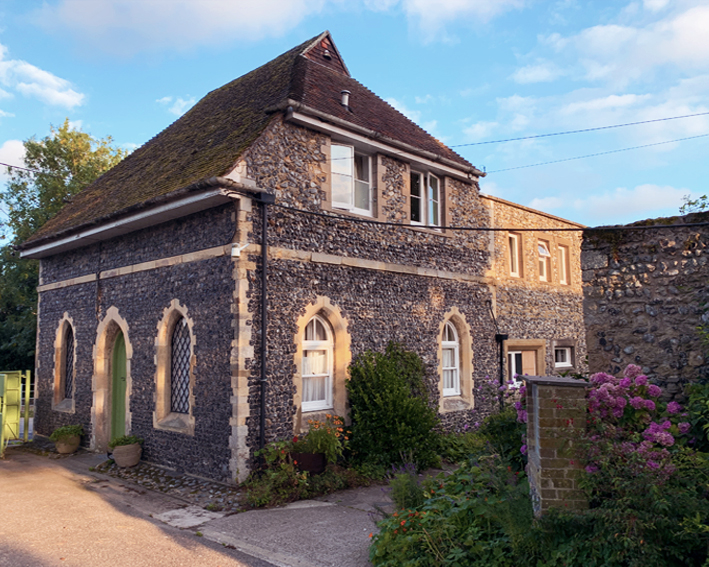 The Kentish Royal Legend
Although its name suggests something akin to an Arthurian romance, the Kentish Royal Legend is actually a collection of medieval manuscripts that provide a surprisingly dependable source of historical information about the Dark Ages in Kent. They cover three main topics: a royal genealogy of Kent from King Aethelberht I to his great-great-granddaughter St Mildrith; a detailed account of the foundation of Minster-in-Thanet Abbey by Mildrith’s mother Domne Eafe, including Mildrith’s life story; and a record of other saints with Kentish connections. The most dramatic section relates how Domne Eafe’s two brothers were murdered and buried at Eastry by a cousin who’d taken them under his wing following their father’s death; he redeemed himself by granting enough land to build the Abbey, its extent being determined by a deer’s day-long wanderings. The manuscripts – substantially written at Ramsey Abbey, Huntingdonshire, where the two princes were buried – now rest in locations from the British Library to the Bodleian Library in Oxford.
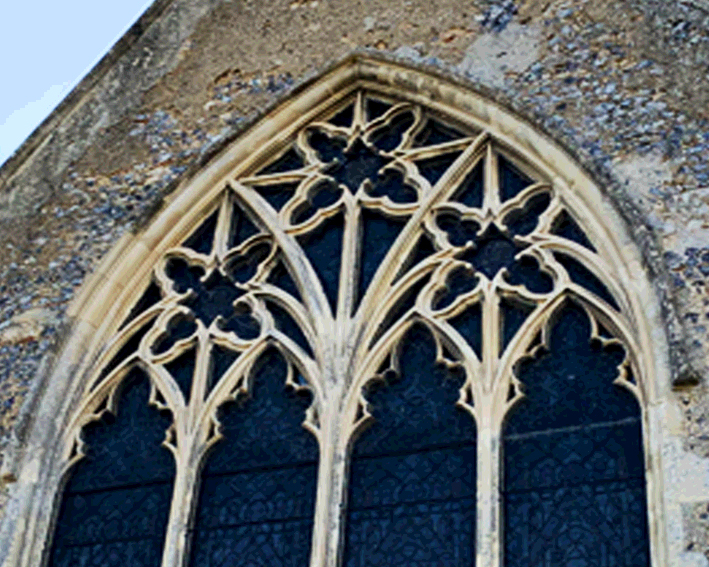 Kentish tracery
Almost everyone will have seen tracery without knowing what it’s called. As for the particular style called ‘Kentish tracery’, only hard-core aficionados of architecture will have a clue about it. Tracery is in fact the ornamental stonework that runs across the face of a vaulted window in a medieval church. It tends to follow set patterns, often emanating from a central floral design. The style of tracery emerging from Kent introduced the idea of ‘split cusps’. Where two curving lines met, a line dividing their cusp connected to the mullion or arch. It’s easy to spot because of the distinctive chevrons it created. It was actually innovated at Chartham church in the late C13, and the style was copied elsewhere in Kent, including at Bobbing, Cliffe, and Ulcombe. It may seem abstruse today, but it obviously made a good impression on the devout church-goers of the era, being copied as far afield as Yorkshire.
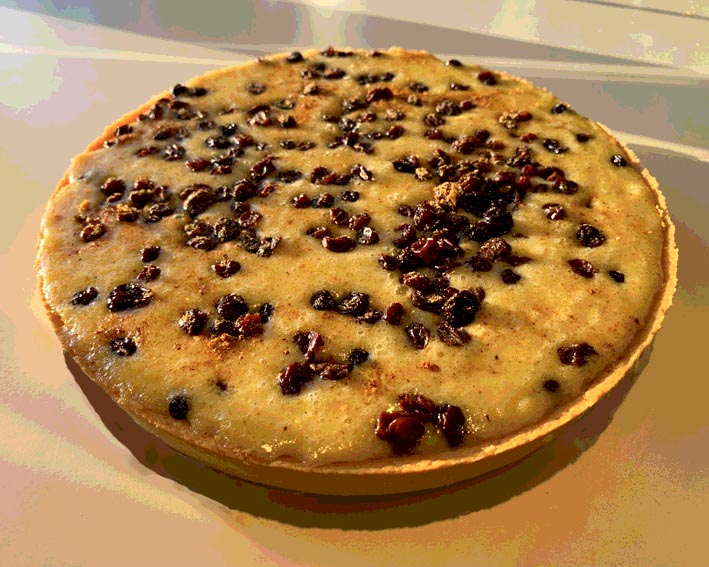 Kent Lent pie
Anyone who thinks Kentish cherry batter pudding the most moreish thing they have tasted has not yet tried Kent Lent pie. Otherwise known as Kentish pudding pie, it is said to have been particularly popular down Folkestone way. It can be thought of as baked cheesecake with currants added. It is straight forward to make, by filling a pastry base with a mixture of milk, cream, rice, margarine, castor sugar, eggs, and lemon, peppering it with currants, and leaving it in the oven for 30 minutes. It got its name from the fact that it was an easy way for cooks to lighten the tedium of abstinence at Lent. In theory, it should work very well as an accompaniment to afternoon tea. Unfortunately, it is so addictive for anyone with a sweet tooth that it is impossible to resist revisiting the larder repeatedly through the evening. This, to be honest, probably makes it inappropriately sinful.
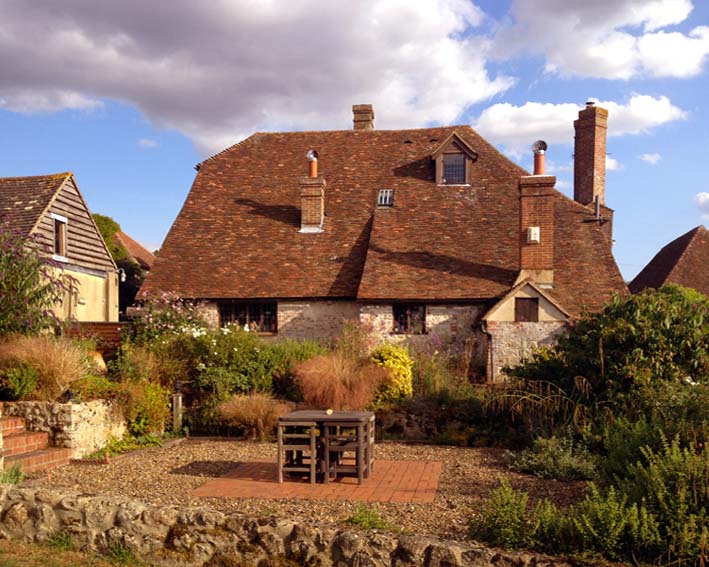 Kent peg tiles
Until the current explosion of expedient housebuilding, Kent’s rural housing ranked among Britain’s most attractive. The reason concerned the rich variety of clays available locally to builders. There are three clay bands running west to east across Kent: the Tertiary in the north, the Wealden in the south, and the Gault in between. Kent’s brickmaking prowess provided the basis for highly attractive coloration; but Kent’s chef d’oeuvre, dating back to Roman times, was its tiles. Old Kentish houses typically boast magnificently expansive tiled roofs, sometimes extended by a catslide almost to ground level; but tiles were also hung on external walls as protection against the elements. The attractive ‘Kent peg tiles’ used were for some reason slightly smaller than in Surrey and Sussex. They were literally pegged into a batten or the mortar, occasionally on end walls, often on the upper storey only. Their combinations of browns lend traditional Wealden villages in particular their gloriously warm appearance.
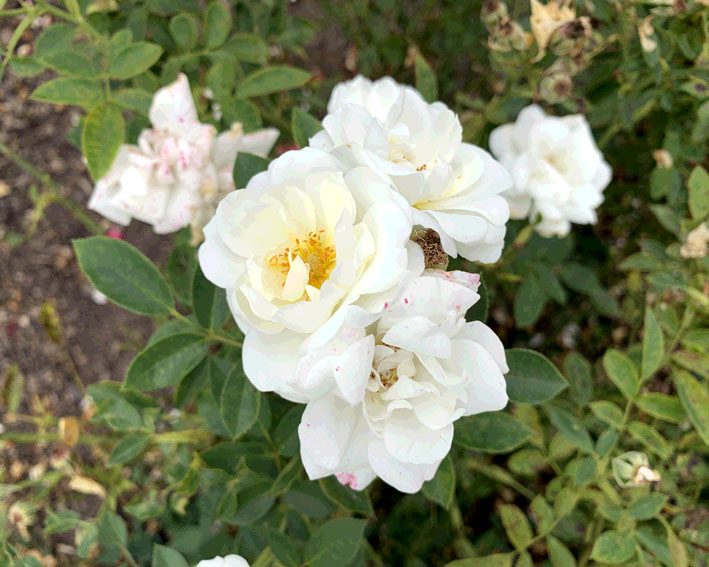 Kent Rose
The Kent Rose is familiar in large gardens, being a useful groundcover – in other words, a plant good for keeping down weeds. It is distinguishable by its flowers’ relatively simple structure, with white petals and unusual yellow centres. The question is: why is it named after Kent? It turns out that it was created in 1988 by Poulsen Roser, the major Danish rose breeders. It was just one of a wide range of roses called ‘Towne & Country’ for providing dense, low cover, so the choice of name was probably arbitrary. It is curious, however, that the heraldic White Rose of York also happens to have a yellow centre. This is an interesting coincidence when one considers that, after the Yorkists’ fortunes reached their nadir in 1460, they launched their comeback from Kent. Poulsen Roser, incidentally, is based very close to Elsinore, the castle in ‘Hamlet’ where Ophelia habitually handed out flowers with symbolic meanings.
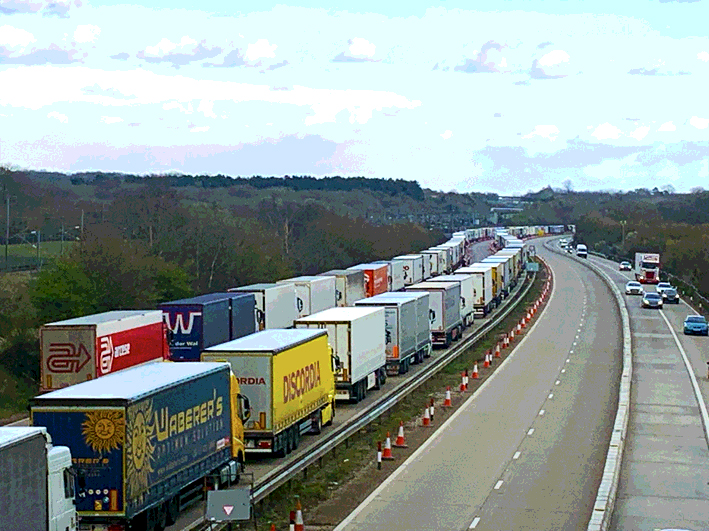 Kent’s motorways
Uniquely placed between capital and continent, Kent is the only shire boasting four motorways. In 1961, three years after Britain’s first motorway, the Maidstone bypass was completed, forming Junctions 5 to 8 of the future M20. Two decades passed before the finished 50-mile motorway connected Maidstone with Swanley, Ashford, and Folkestone. Meanwhile, the 26-mile M2 emerged between 1963 and 1965, bypassing the Medway Towns, Sittingbourne, and Faversham. Both were dwarfed by the M25, constructed around London from 1975 to 1986. All of 117 miles long, it was originally Europe’s biggest ring-road, and has carried over 250,000 vehicles in a day. It proceeds clockwise from the Dartford Crossing, with its first five junctions in Kent. In 1980, the 10-mile M26 joined it to the M20 near Wrotham, slashing journey times to Gatwick Airport. Despite inevitable problems in this overcrowded corridor, those who complain about Kent’s motorways plainly never experienced the incessant snarl-ups and perils of the old A2, A20, and A25.
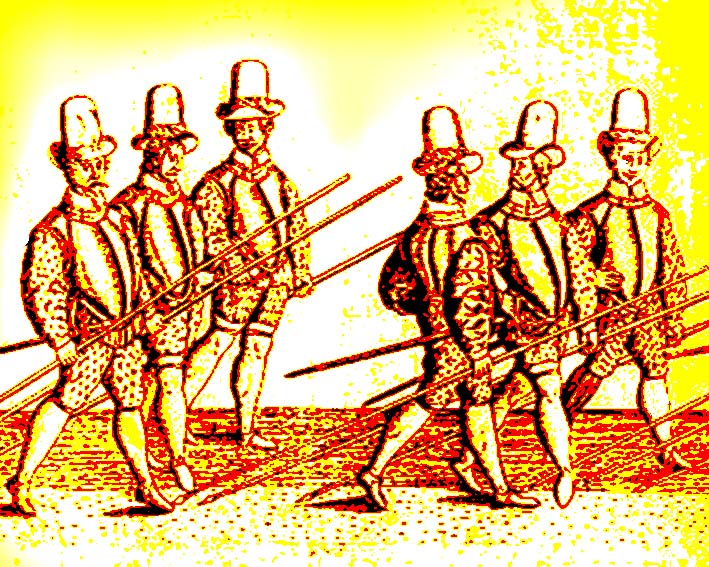 Kent Trained Bands
Long before the British Army became a recognisable entity, it was necessary to organise men into military units to counter the invasion threats faced by England. In Norman times, trained bands were raised with a nominal headcount of 1,000 per shire, although Kent, being on the front line, generally bore a heavier burden. Under the Tudors, Lord Lieutenants were introduced to organise musters; and, from 1572, a proportion were obliged to turn up for training on a fixed number of days per year. When an invasion by Philip II of Spain was anticipated in 1588, Kent boasted nearly 3,000 such trained men – 27% of the total – at Maidstone and Canterbury. During the Civil War, recruitment was again a high priority, and Kent’s trained bands were sucked into the conflict on the Parliamentarian side. After the creation of the New Model Army, however, the term ‘trained bands’ was phased out, and in 1661 they were formally replaced by militias.
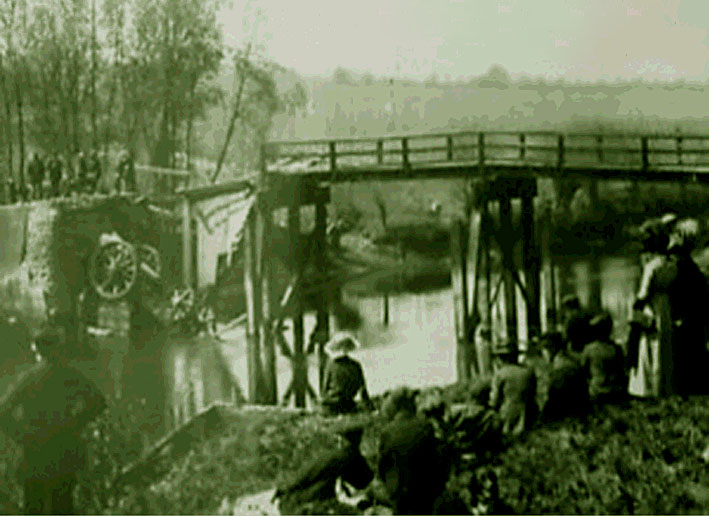 Kettle Bridge
South Street, the narrow lane running south from the Tonbridge Road beside the Bull pub at Barming, used to lead to a ford over the Medway before continuing to East Farleigh’s Kettle Corner. The crossing was eventually replaced by a wooden bridge known as either St Helen’s Bridge or Kettle Bridge, the latter no doubt a literal rendering of the Kentish pronunciation of ‘cattle’. It once had a role in Kentish folklore, being where Morris dancers known as the Kettle Bridge Clogs would go on May Day evening to inaugurate a new season’s dancing. The wooden bridge was swept away in a flood in 1795, and in 1914 a 10-ton traction engine fell through its successor. This was ‘temporarily’ replaced in 1996 by the unsightly Bailey bridge that remains there. The lane either side of the ‘new’ bridge is now closed to traffic; but, aside from train noise, the locality remains an idyllic spot for fishing.
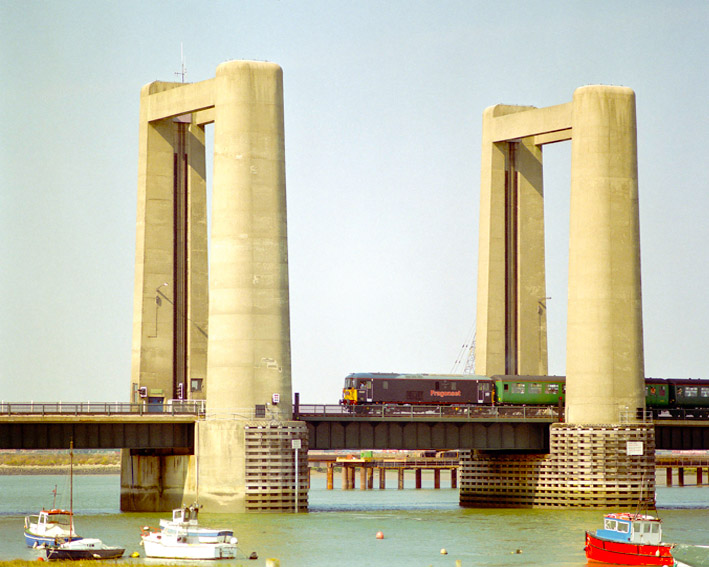 Kingsferry Bridge
In 1860, a bridge was built across the Swale to take the London, Chatham & Dover Railway line to Sheerness. This was a so-called bascule bridge that opened in the middle to admit shipping, like Tower Bridge. It survived until the 1950s, despite being hit by a Norwegian ship in 1922, but was replaced in 1960 by the current lift bridge – an ingenious arrangement whereby the entire innermost span of the bridge is raised or lowered vertically between concrete towers. This new bridge became the main road access to Sheppey until 2006, when the Sheppey Crossing was built alongside it in order to stop road traffic being held up by shipping. It continued to take rail traffic, however, Swale Station being at its southern end. As well as a single-track railway line and a two-lane road, it accommodates a six-foot wide pedestrian lane, for which reason the railway track is not electrified along the length of the bridge.
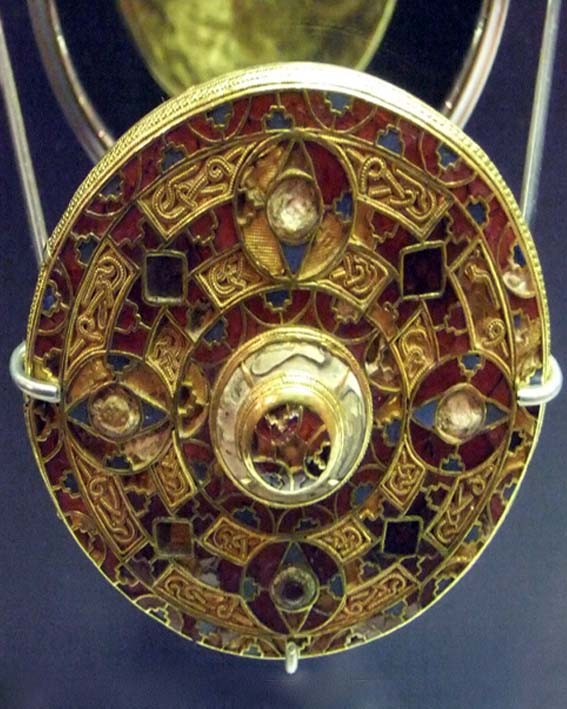 The Kingston Brooch
Kingston is a village on the North Downs near Canterbury. It was the site of a C7 Jutish cemetery that in 1771 yielded a remarkable Saxon-era discovery: the beautiful Kingston Brooch. It’s a surprisingly large affair – over 3 inches wide – and superbly made of gold with inlays of pearl, white shell, blue glass, and garnet in excellent condition. It was unearthed by one of those amateur grave-robbers who are the bane of modern archaeology. His name was Reverend Bryan Faussett, and he was the local rector. He set about digging up the whole cemetery in his spare time, compiling a large collection of artefacts. His great-grandson offered them for sale to the British Museum, which inexplicably declined. The brooch therefore ended up in the hands of another private collector. For some reason, it is now displayed in a Liverpool museum. This prompts the mischievous thought that Kent should open negotiations concerning the repatriation of its cultural heritage.
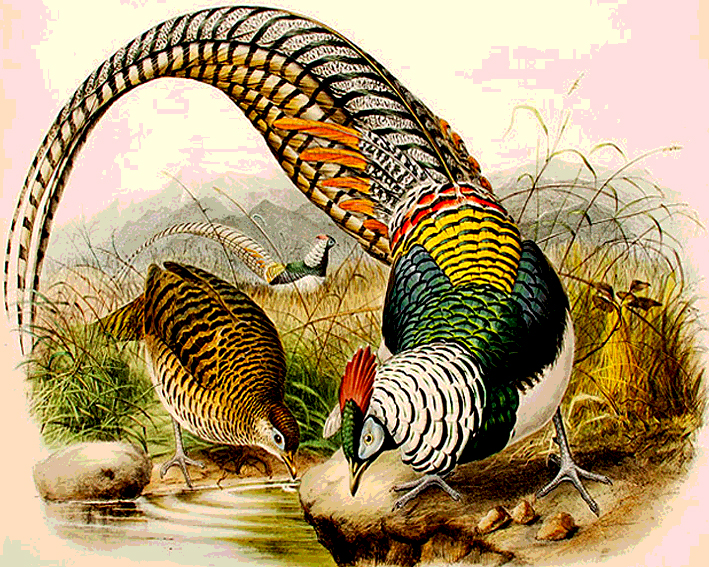 Lady Amherst’s Pheasant
One of the more flamboyant exotic birds, the male Lady Amherst’s pheasant (Chrysolophus amherstiae) is easily recognised by its mottled black-and-white neck and red crown; the female is another matter, being a dull brown. They got their name in curious circumstances. Sarah Archer married the rather younger William Amherst of Knole after the death of her husband, the 5th Earl of Plymouth. Amherst was appointed Governor of India from 1823 to 1828, and during that time oversaw the First Burma War (1824-6). As part of peace negotiations, he was gifted a pair of the birds, which are indigenous only to south-west China and northern Myanmar. She took them home in 1828 to be bred for shooting purposes. The bird was reckoned extinct in Britain until specimens were spotted recently as far afield as Somerset and Scotland. The species is rated globally as Least Concern on the Red List of Threatened Species.
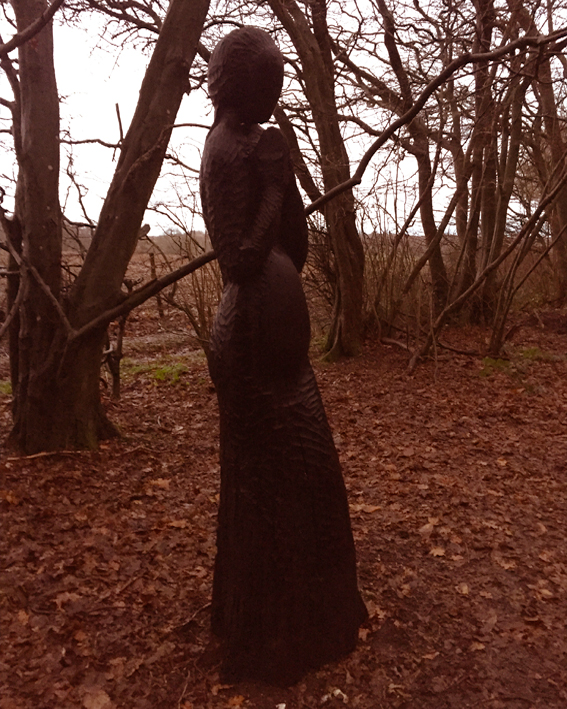 The Lady in the Woods
In Tile Hill Wood, halfway between Stalisfield Green and Warren Street, a surprise awaits the unsuspecting hiker. Just off a public footpath stands a poignant 9-foot carving of a woman who, being obviously pregnant and holding her hands together as if in prayer, presumably represents the Virgin Mary. The figure is said to have been carved by an enterprising art student in the 1970s, although a legend has also arisen that it was the creation of a Polish soldier billeted during WW2 with a tank regiment at nearby Otterden Place. The clouded origins and mysterious purpose of this ‘Lady in the Woods’ have inevitably given rise to mystic and even pagan associations. It is regularly decked with ornaments, Christian or otherwise, by persons unknown. What is more, there is a geocache nearby containing a selection of curiosities; visitors are permitted to take one, provided that they replace it with something equally curious.
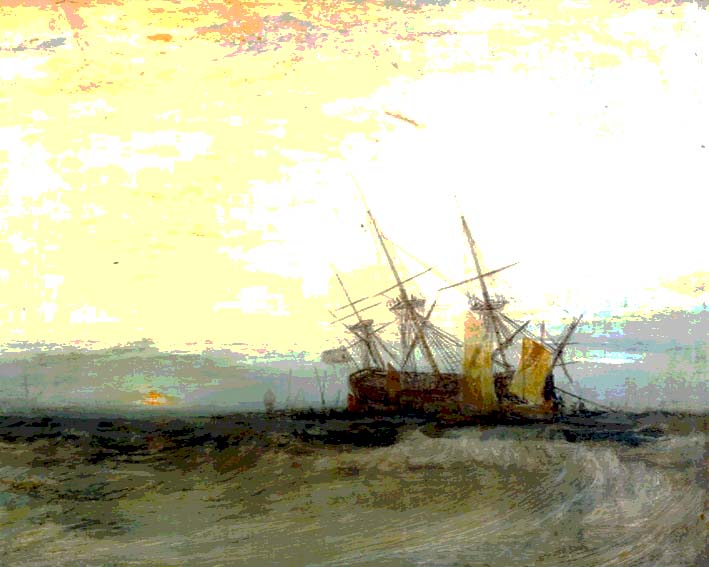 The Lady Lovibond
The myth of the Lady Lovibond will enthral people who, according to one’s perspective, are either romantic or gullible. The story goes that, in the C18, Captain Simon Reed ignored the old taboo against inviting women on board ship and took his new bride Annetta on a voyage to Portugal. Unfortunately, his first mate John Rivers was insanely jealous, and exacted revenge by killing the helmsman and driving the ship onto the Goodwin Sands, where all perished. The ship is said to have revealed herself in full sail every 50th anniversary thereafter, as credulous witnesses dutifully testify. Research has revealed however that, although the incident supposedly happened in 1748, there was no record of it before a ‘Daily Chronicle’ report in 1924. Could it be that a journalist made it up for a piece on Valentine’s Day? We won’t know until 2048. If only Instagram had existed in 1998, an eye-witness might have posted a snapshot.
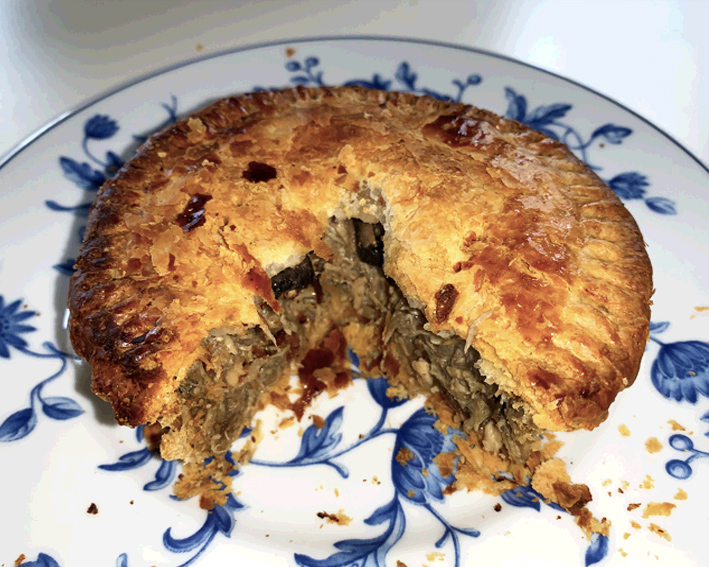 Lamb’s tail pie
Although not uniquely associated with Kent, lamb’s tail pie was obviously easy to make in a county with a large population of sheep, and so was long a favourite hereabouts. Lambs used to have their tails cut off only after they’d had a chance to grow plump and juicy. In the C18, it became customary to make good use of them, not by turning them into soup as per oxtails but taking a couple of dozen and mixing them with root vegetables in a pie. Certainly the recipe, which may have originated on Romney Marsh, remained popular for centuries. The dish went out of fashion when farming practice changed and lambs began to have their tails tightly bound with a rubber band; sadly, the lack of a blood supply causes them to drop off before they are of much use to a chef. Even so, a version of it can sometimes be found in Kent pubs.
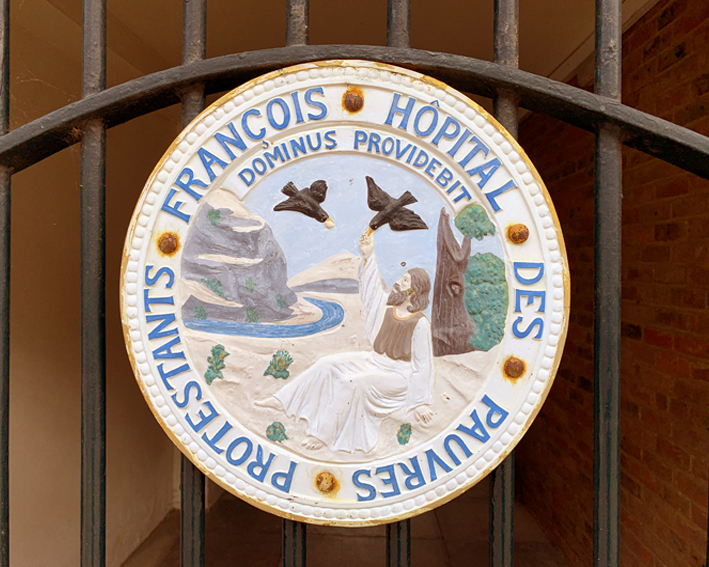 La Providence
In 1708, Jacques de Castigny, a Huguenot refugee and William III’s former master of the hounds, left £1,000 for the renovation of a plague house in London. His executor, however, successfully appealed for additional funds that made possible a grander project: the French Hospital, opened in 1718 outside the City walls to care for impoverished French Protestants. Britain’s first voluntary hospital, its motto in Latin read, ‘The Lord shall provide’, suggesting its common appellation among the Francophone inmates, ‘La Providence’. A well-equipped affair by the standards of the day, it lasted until 1865 when, now dilapidated, it was replaced by a new purpose-built building in Middlesex. During WW2, it was evacuated, and in 1947 relocated to expansive premises in Sussex. The plan was financially misconceived, however, and already by 1959 almshouses were being rented in Rochester, where La Providence now fills a Georgian cul-de-sac off High Street. In 2015, a Huguenot museum was opened nearby.
 ‘Last Orders’
When you dramatise Graham Swift’s Booker Prize-winning novel and add a cast including Michael Caine, Tom Courtenay, David Hemmings, Bob Hoskins, Helen Mirren, and Ray Winstone, you expect fireworks. The critical response to Fred Schepisi’s 2001 movie ‘Last Orders’ was less than ecstatic, but the film did provide a memorable millennial record of North Kent. The plot concerns four men’s journey from Peckham to Margate to scatter the ashes of their late friend, Michael Caine’s Jack. We get a close-up look at Rochester’s Blue Boar Lane car park and the Royal Victoria & Bull Hotel in the High Street; Chatham Naval Memorial; the Mount at Old Wives Lees; some of Canterbury Cathedral’s highlights; and finally Margate ‘Pier’ which, having been wrecked in 1978, had to be represented in a 1960s flashback by Eastbourne Pier. The friends actually complete their mission on the Harbour Arm, finally spilling Jack’s ashes round the back of the Lighthouse.
 Lathes
Nowadays, a lathe is a device for shaping wood; but, for 1,400 years, it meant something else to every Kent person. It was in fact one of the administrative districts, rather larger than a modern borough, that divided up the county. The shapes of those lathes did not match today’s boundaries, however, and it’s believed that they must have corresponded to Jutish royal settlements. At the time of the Norman Conquest, there were seven: Borough, Eastry, Lympne, and Wye in East Kent, and Aylesford, Milton, and Sutton in West Kent. There were mergers in the C13, specifically Borough with Eastry and Milton with Wye. Among other things, the lathes raised funds for the Militia and convened legal sessions, supervised by the Sheriff. Incredibly, the system has survived in law up to the present day, although it ceased to have any practical purpose a century ago. The old Lympne lathe was nevertheless essentially reborn as Shepway District in 1974.
 The Legat School of Ballet
Born in Moscow in the Czarist era and a ballet master’s son, Nikolai Gustavovich Legat was well-placed to become premier danseur at the Imperial Ballet Theatre (now the Mariinsky) in St Petersburg, partnering the likes of Anna Pavlova. In his thirties, he became an outstanding teacher, counting the great Nijinsky among his pupils. After the Russian Revolution, he and his third wife, ballerina Nadezhda Nicolaeva Briger (known as Nadine) emigrated and established the Russian Ballet School at Hammersmith; one distinguished pupil was Ninette de Valois, another Margot Fonteyn. When Nikolai died in 1937, Nadine founded the first ballet boarding-school, the Legat School of Ballet, which after spells in Essex and Buckinghamshire moved in 1945 to Warberry House, Tunbridge Wells, in 1960 to Finchcocks, Goudhurst, and in 1970 to East Sussex. Legat’s distinctive method is still taught at Southborough School of Dance. The couple’s ashes are buried at the Kent & Sussex Cemetery in Tunbridge Wells.
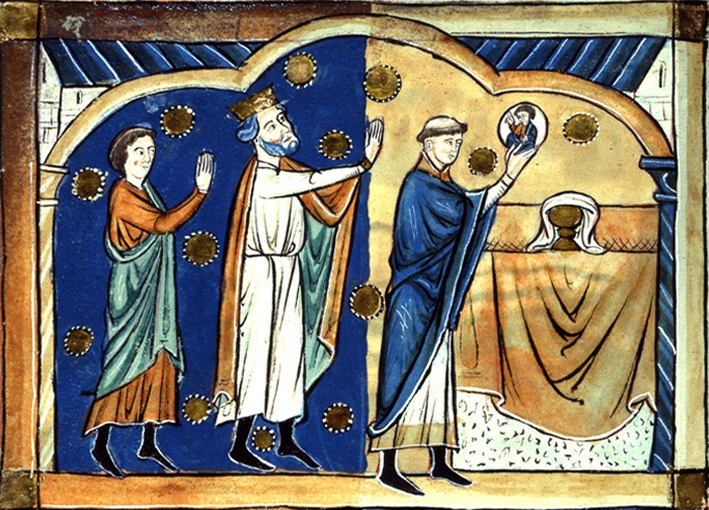 Leofric’s vision
Among King Cnut’s subjects, Leofric the Earl of Mercia (d 1057) was second in rank only to Godwin, Earl of Wessex. He is the subject of ‘Visio Leofrici’, a medieval literary work recounting four supernatural visions he experienced. The last took place at St Clement’s church, Sandwich. A crucifix there was largely concealed behind a curtain, yet Leofric realised during a service that he could see it all, and noticed its hands miraculously moving as if to bless him – a ‘miracle’ that was later attached to Edward the Confessor. He is far better remembered as the husband of Godgifu, or Lady Godiva, who legendarily rode naked on horseback to protest against her curmudgeonly husband’s harsh taxation regime. In reality, he was remarkably generous, especially to religious establishments: he even founded two monasteries. It has been speculated that, possibly as a spousal bet, she actually rode through Coventry in a shift to get him to remove a tax on horses.
 Libbet and daddy
In the days before the working class could afford to buy toys, Kent kids were never at a loss all the time that they had access to a branch and a knife. They would cut the branch to a length of around 18 inches and trim the branchlets to form a three-legged figure called the ‘daddy’. He would be stood on a firm surface such as a pavement, and a small piece of wood called the ‘libbet’ placed between his legs. One of the kids – mostly boys, one suspects – would take a stone and, from a short distance, attempt to knock the daddy over. If he was successful, the others would scramble to be first to grab hold of the libbet, which would entitle the winner to throw the stone next. No doubt this became a pretext for a robust free-for-all. The risk of twisted wrists and grazed knees is unlikely to commend the game today.
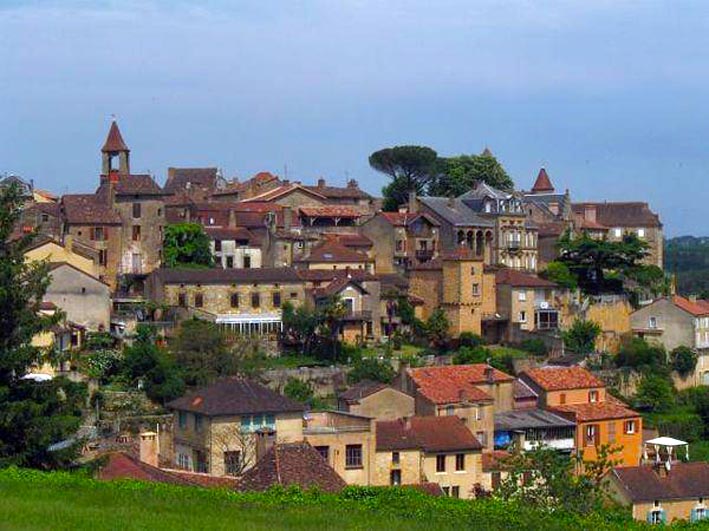 Libourne
It seems improbable, but one of France’s primary wine-growing regions got its name from a Kent castle. The marriage of Eleanor of Aquitania to Henry II in 1152 added her territory to that of the Anglo-Norman Plantagenets, making their joint Angevin Empire considerably bigger than France itself further east. In 1270, Roger de Leybourne of Leybourne Castle, a loyal servant of Henry III, travelled to the province, probably to raise troops for the 8th Crusade, and while there founded a fortified town called Leybornia on the north bank of the Dordogne. Its name, which became Gallicised as Libourne, was ultimately extended to the surrounding region. This being prime land for growing Cabernet Sauvignon, Cabernet Franc, and Merlot grapes that go into claret, it is now unsurprisingly home to some world-famous appellations, including Fronsac, Pomerol, and St Emilion. The last of these communes is now rated a UNESCO World Heritage Site.
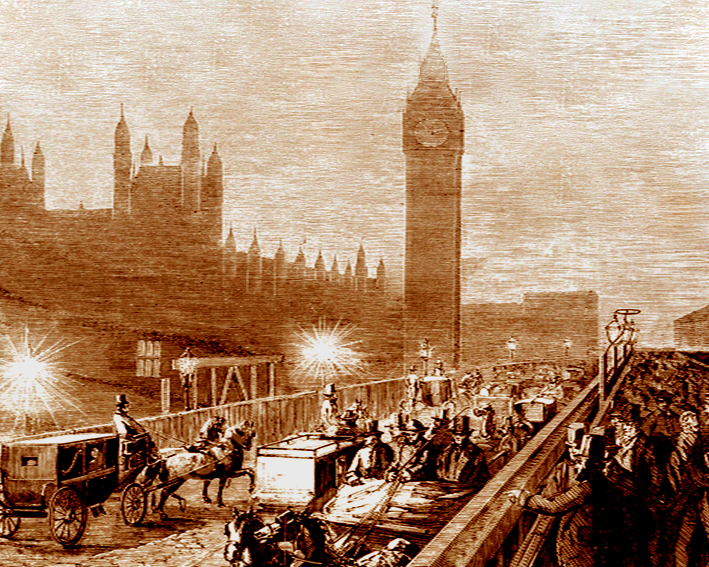 Limelight
Most English speakers know the expression ‘in the limelight’, but have no clue where it came from. Limelight was actually the first form of artificial lighting to emerge after gas lighting, being the illumination thrown off by quicklime superheated in an oxygen-hydrogen flame. The idea, which originally occurred to Cornish gentleman scientist Goldsworthy Gurney, was turned into a practical application in 1826 by Captain Thomas Drummond, and consequently had the alternative name Drummond Light. It was first used publicly on Herne Bay Pier in October 1836 to illuminate a juggling display by ‘Ching Lau Lauro’ during celebrations to mark the start of work on the Clock Tower. The following year, it lit a Covent Garden theatre production, another world first; and Union gunners used it to target Confederate rebels by night during the American Civil War. It was superseded in the 1870s by the arc light, which Humphrey Davy had first demonstrated way back in 1806.
 ‘The Lincoln Lawyer’
One of the less trite C21 Hollywood movies, ‘The Lincoln Lawyer’ (2011) is nevertheless thoroughly Californian: set in Los Angeles, with an all-American cast, and starring Matthew McConaughey as a classic left-field lawman who himself comes under suspicion in a case he is handling. A surprise is in store when the police, led by Bryan Cranston’s Detective Lankford, search his typically West Coast apartment. As McConaughey gets up, some incongruously Kentish place names appear behind him on the wall: Park Wood, Sutton Road, Banky Meadow, Tonbridge Road, Senacre Wood. All will be familiar to post-WW2 users of Maidstone trolley-buses. They were printed on a reel, known as a blind, that the driver and conductor used to rotate by handle in order to display the current destination in the panels at the front and back of the bus. Such blinds are now collectors’ items, and can often be found on eBay, where the set-designer presumably spotted this example.
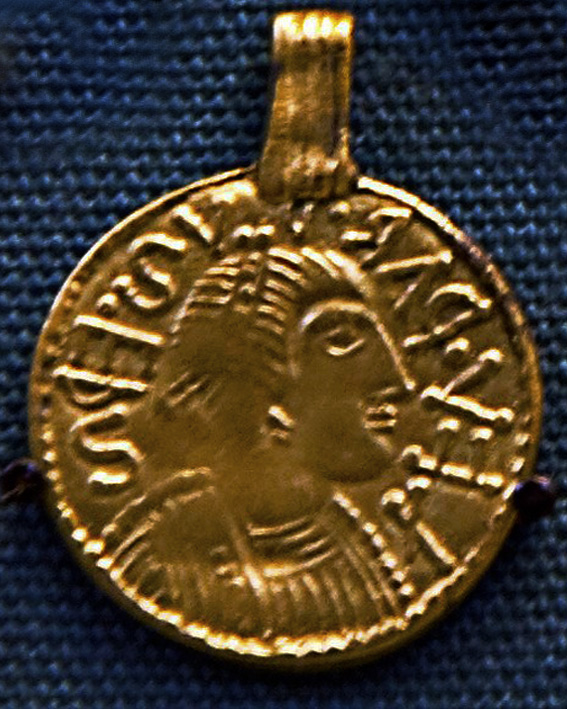 The Liudhard medalet
The so-called Liudhard ‘medalet’ – meaning simply a small medal – came to light in the 1840s. It was a C6 Anglo-Saxon coin that was adapted to be worn as jewellery, probably alongside others like it in a necklace. Its name is derived from its inscription ‘Leudardus’, signifying the Bishop Liudhard who chaperoned Princess Bertha on her journey from France to marry King Aethelberht in 580. It was found in a burial near St Martin’s Church, next to St Augustine’s Abbey in Canterbury, which started life as Bertha’s private chapel. The medalet would typically have been worn to celebrate the wearer’s conversion to Christianity. On the ‘tails’ side is a double-barred cross, the first ever found on a northern European coin. The medalet found its way into the hands of Joseph Mayer, the private collector who also acquired the Anglo-Saxon Kingston brooch discovered seven miles away. Like the brooch, it now resides in Liverpool’s World Museum.
 Lodge Hill
After the Chattenden ordnance depot was designated for Army use only in 1891, the Royal Navy was obliged to consider its options, Upnor Castle being inadequate to its needs. As Chattenden was already connected by rail with Upnor, it was decided to build another store for munitions at Lodge Hill, immediately to the north. In the context of mounting Prussian aggression, it was realised before WW1 that the magazines were vulnerable to air attack by Zeppelins, so anti-aircraft defences were mounted in Lodge Hill Wood prior to WW1 – probably the first in the world. Munitions storage there ceased in 1961, though the military facilities continued to be used, and the Joint Service Bomb Disposal School moved to Lodge Hill from 1966 to 2013. The Ministry of Defence put the site up for sale in 2016. Plans for housing development met resistance from ornithologists on the basis that this was an important site for migrating nightingales.
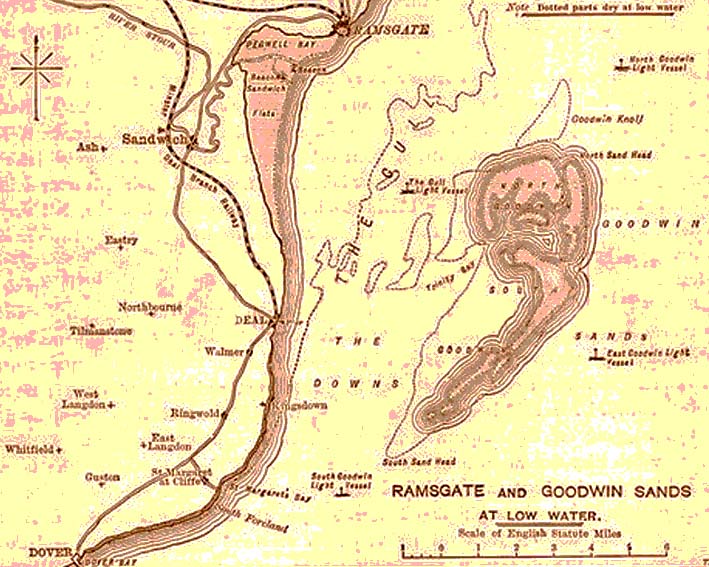 Lomea
Lomea
Lomea was a legendary island off the coast of Kent. But did it ever exist? The eminent geologist Charles Lyell believed it did, precisely where the Goodwin Sands now lurk. The Romans had reported three islands to the east of Kent, namely Thanet, Rutupiae, and Insula Infera (‘low island’) to their south-east. The Kent coastline has always been susceptible to dramatic changes on account of sea action, even within a single day. Clay and chalk, of which the island would have been made, do not provide the most resilient bedrock. If, as it’s said, an Archbishop removed Lomea’s sea defences for building with, it was doomed to disappear beneath the waves. A further theory says the Sands got their name from the Godwines, from whom King Harold Godwinson sprang. Could they have owned Lomea, and left to seek new realms in England when it submerged? It’s a romantic notion; but, disappointingly, it gets no support from modern geologists.
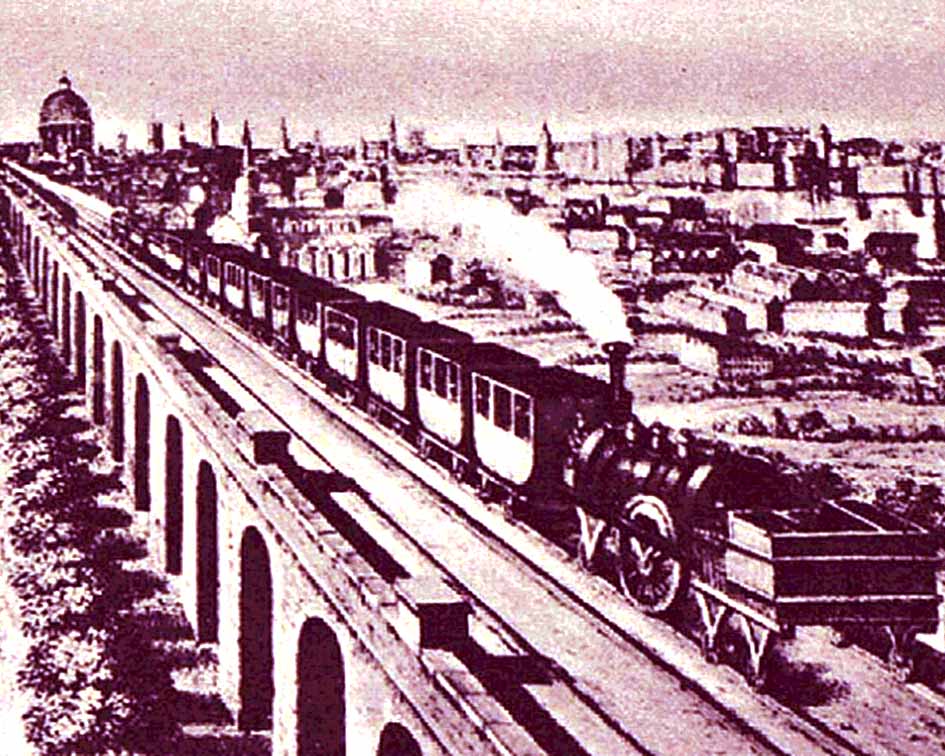 The London & Greenwich Railway
The brainchild of Woolwich-born former Royal Engineer Colonel George Landmann, the London & Greenwich line was nearly four miles long, running from the site of today’s London Bridge station to Deptford, which became the first station on the line to open in February 1836, and then on to Greenwich, a stretch completed two years later. Three of its four engines were built by William Marshall at Gravesend. It was originally envisaged as the first stage of a line running all the way to Dover, but a bill to extend it to Gravesend was rejected by Parliament in 1836. Nevertheless, it was a record breaker. The line was elevated along its length, making it the first such railway in the world. It was also the first suburban railway in the world, and London’s first steam railway. Despite carrying 1.25 million passengers a year, it never paid back its construction cost, and was swallowed up by the South Eastern Railway.
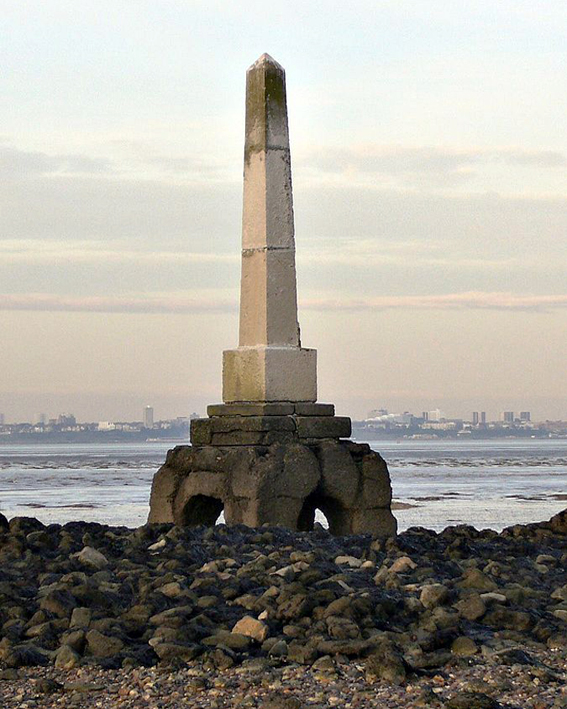 The London Stone
Probably Kent’s least accessible sight is a 25-foot stone column on the shore of the Thames near Grain. Standing opposite the Crow Stone, its counterpart at Southend in Essex, it has a curious history. In 1197, Richard I, the francophone King of England who spent most of his life abroad, was short of money. He sold the City of London the fishing rights for the river from Staines in Middlesex to the mouth of Yantlet Creek. The deal’s legality was spurious, not least because all English domains had been purloined by his Norman ancestors, so the City was arguably receiving stolen goods. Although its ill-gotten jurisdiction over the river extended over 30 miles into Kent, the City demonstratively asserted its rights by erecting the Stone, and last restored it as late as the C19. Two more stones stand at Upnor, one reading “God preserve the City of London”. Come the next Kentish revolt, all look candidates for toppling.
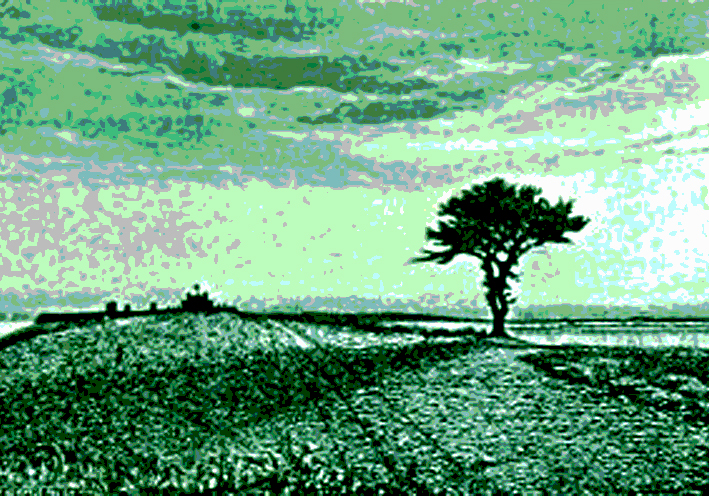 The Lone Tree
In 1784, a Scottish soldier in his forties called Donald MacDonald was billeted temporarily at Dover Castle. He developed a passion for a local girl, and supposedly flew into a rage when he saw her out with one of his comrades. Armed with a stocky branch, he battered the rival mercilessly, and buried the bloody weapon on open ground at Guston. When he returned to the area years later, he visited the scene to ascertain whether it had been discovered; but, where he had planted it, he found only a lone tree growing. Back in Scotland, he was racked by guilt, and turned to his local minister, who made enquiries. It transpired that the victim had survived, and was serving in the merchant navy. MacDonald evaded punishment, and eventually died at 94. The 170-acre plot on which the tree stood was purchased to house the Royal Military School in 1904. The tree still survives behind railings.
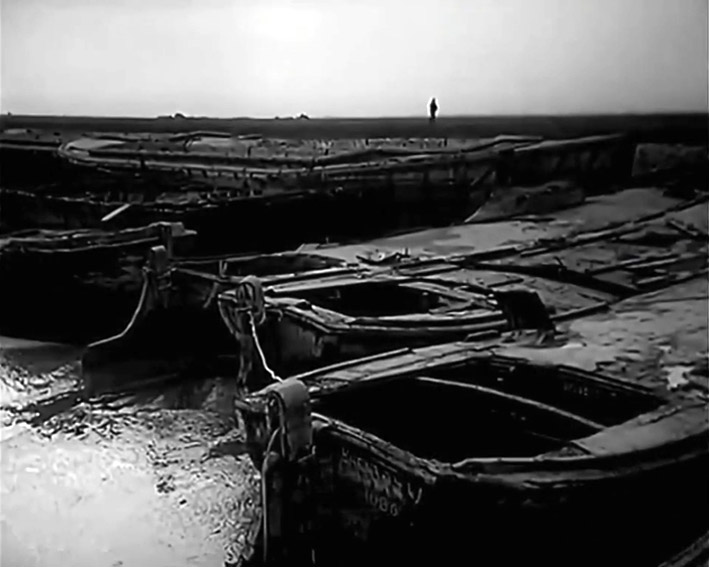 ‘The Long Memory’
One curious feature of the River Medway is its sailing barge graveyards, scattered around in unlikely corners, that still persist long after sailing barges went out of currency. Part of their longevity is due to a predominance of so-called ‘concrete barges’, made of reinforced concrete – an easily available and cheaper solution than wood or metal, albeit more work-intensive, bulkier, and disinclined to rot away after use. Since the barge graveyards make a poignant sight, the Rank Organisation, makers of the 1953 thriller ‘The Long Memory’ set in North Kent, selected one near Iwade as a key location where John Mills, as ex-convict Phillip Davidson, seeks solitude after his release. Shot in black-and-white, the setting is singularly evocative, and contributes substantially towards the movie’s reputation as one of the better British films noirs. Even at low tide, the graveyard’s location is hard to find, being so remote; but it can easily be made out on Google Earth.
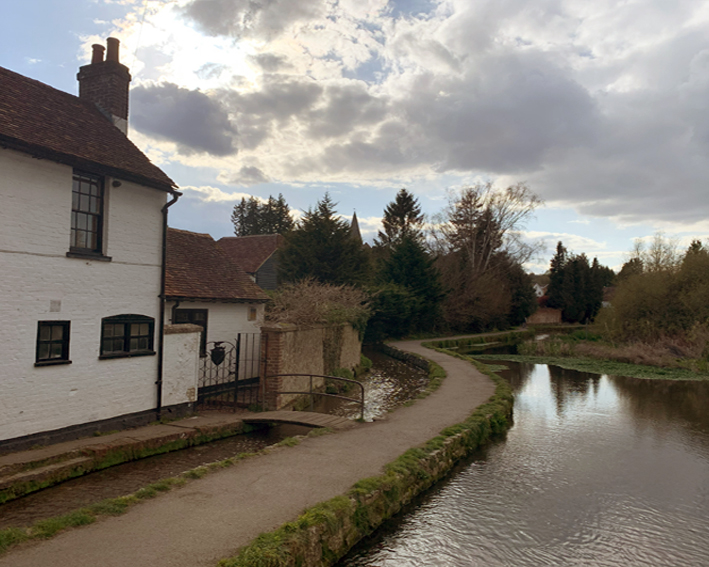 Loose Stream
Ever since the Anglo-Saxon era, the Medway’s tributaries have been a power source, to the extent that over 200 former industrial sites have been identified. Loose Stream, which rises in Langley and flows into the Medway at Tovil, was a fertile example. So pure that it lent itself perfectly to fulling – the process of cleaning lanolin and other impurities out of wool with the help of fuller’s earth – it became home to no fewer than 13 watermills along its length over the course of centuries. The stream was typically dammed beside any mill to create a millpond, a reservoir in case of low water throughput; Loose itself still boasts a picturesque example beside the Chequers pub. As the Kentish cloth industry declined during the C17, some mills proved their versatility by being adapted for papermaking and even grinding. Owing to electricity, however, nearly all Kent’s watermills have now been converted or destroyed.
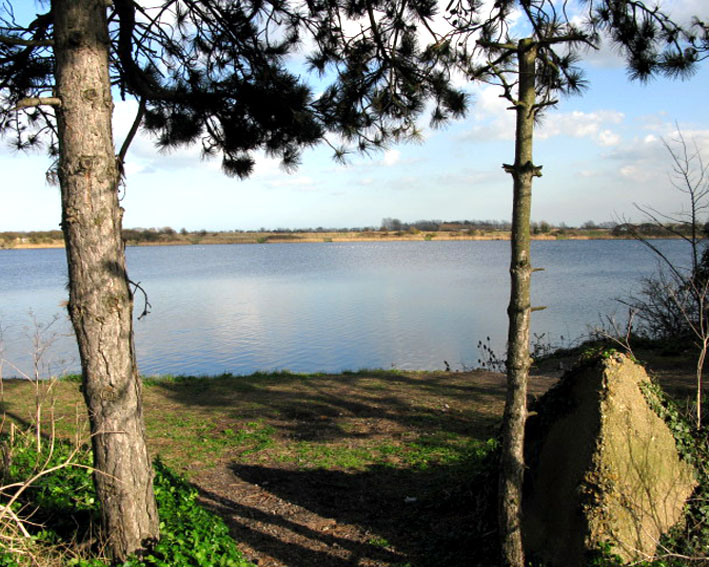 The lost town of Stonar
Of the Kent localities that have disappeared off the map, probably the most significant was Stonar. It was arguably where, at the south-eastern end of the Wantsum Channel, Vortigern once defeated Hengist, and the Viking invader Thorkell the Tall landed in 1009. Originally known as Eastanore, to discriminate it from O(a)re to the west, it was recorded as a port in 1090. It thrived in the first two centuries of the Norman occupation, establishing itself as such a rival to Sandwich immediately to the south-west that they had trading disputes. Around 1365, however, it was inundated by the sea, and twenty years later, during the 100 Years’ War, burned down by a French army. Archaeological investigation of the site just south of Stonar Lake exposed extensive remains, now buried under housing and a quarry. Owing to falling sea-levels, it is separated from the coast by the Stour and the Prince’s Golf Club.
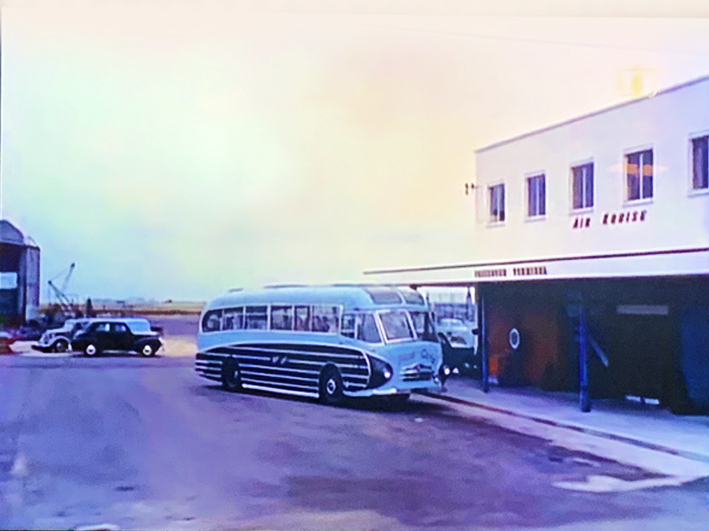 Lydd Airport
In 1954, with the limitations of the historic Lympne Airport’s grass airstrip growing increasingly obvious, an all-weather alternative was built for Silver City Airways on nearby Romney Marsh. Lydd Airport initially performed well as a ‘Ferryfield’ transporting cars across the Channel: by 1960, a quarter of a million passengers were passing through annually, making it one of the country’s busiest airports. However, it was already struggling commercially in the face of growing competition from modernised sea travel, and by the 1970s had become largely dedicated to airfreight. In the 1980s, a package-holidays operator, Hards Travel, purchased it for ferrying passengers to the continental coast for onward transportation by coach, but by the early C21 it was familiar only for Lydd Air’s scheduled hops to Le Touquet, which were discontinued in 2018. Although licensed for Airbus A319s and Boeing 737s, Lydd now offers only charter flights. Its relatively inaccessible location and proximity to an RSPB centre militate against a renaissance.
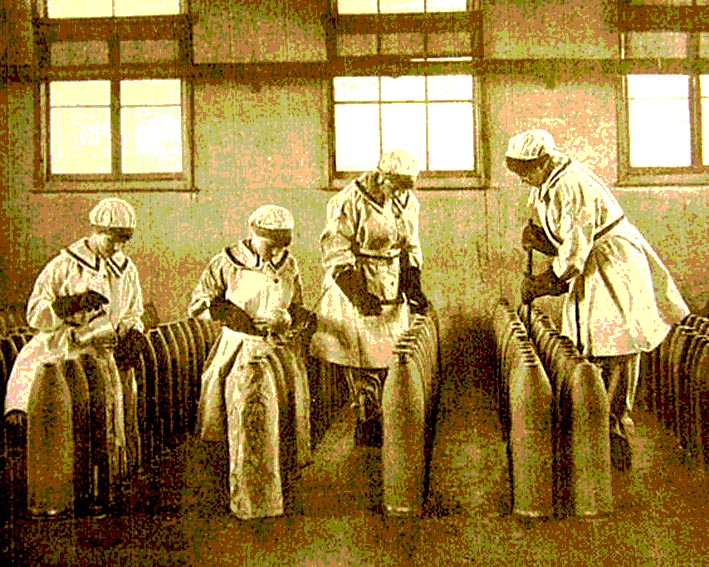 Lyddite
Picric acid was probably discovered by a C17 German alchemist, but until 1830 was only used as a dye or medicine. Then its explosive qualities were realised, and in 1871 the German-British chemist Hermann Sprengel demonstrated how to detonate it. In 1888, after the French had developed a high-explosive shell, the British tried out their own at Lydd, naming the explosive ‘Lyddite’. It was first deployed in anger at the Battle of Omdurman (1898), then in the 2nd Boer War, and finally in WW1. By then it was already being superseded by TNT, whose advantage had been identified by Germans back in 1902. TNT was actually less volatile, and consequently exploded after the shell penetrated a wall or ship’s hull instead of on impact, as lyddite shells did. This must have been a relief to British munitions factory workers, whose hair and faces turned yellow from contact with lyddite, giving rise to the nickname ‘canary girls’.
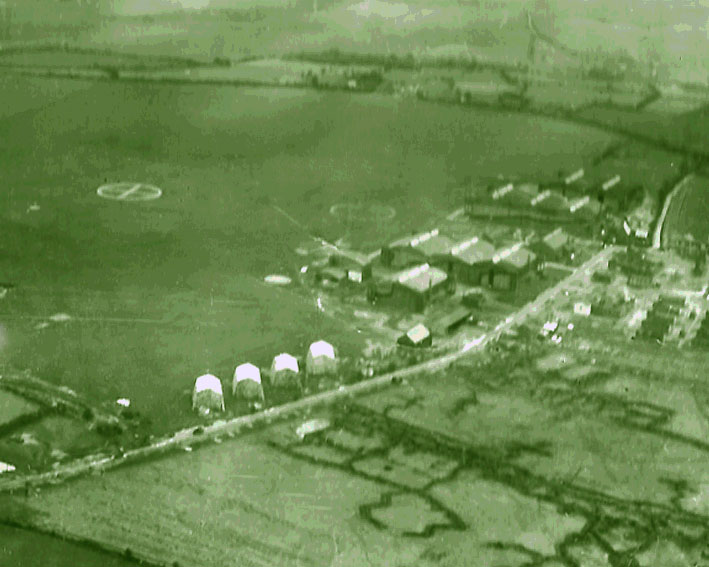 Lympne Airport
Though practically forgotten, its buildings now razed to make way for an industrial estate, Lympne Airport was for nearly 70 years a significant Kentish aviation centre and place of historic aeronautical importance. The site’s value was obvious, away from population centres but next to the sea. It was first developed as a WW1 airfield, attracting its first bombing raid in 1917. Turned to civilian use after the War, it had three uses: a venue for competitive trials of new aircraft; a start-point for long-distance flight records, including one by Amy Johnson; and a terminus for air-travel to France. During WW2, it was heavily bombed and reserved for tactical and emergency use. Starting in 1948, Silver City ran air ferries there, but moved to Lydd Airport in 1954. Skyways then ran coach-plus-aeroplane services between London and Paris until 1974. Though renamed Ashford Airport in 1968, it was increasingly superseded by Lydd, and closed in 1984.
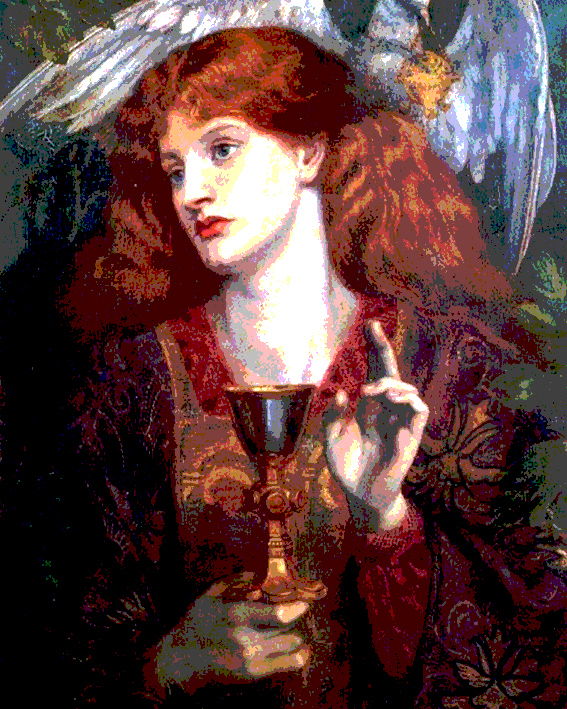 MacGuffin
The Holy Grail is an example of a MacGuffin – a fictional plot device consisting of an extrinsic item that serves only to justify the action. It is a commonplace resort for movie scriptwriters, with famous examples ranging from the Maltese Falcon to the One Ring. Surprisingly, it was not named by anyone in Hollywood, but a screenplay writer from Lewisham. Angus McPhail (1903-62), the red-headed son of a Scot, went to Westminster School and Cambridge and lived in Blackheath before taking up movie-writing in his mid-twenties; his most famous script was Alfred Hitchcock’s ‘Spellbound’ (1945), which he co-wrote with Ben Hecht. Hitchcock, a fan of such devices, adopted McPhail’s nickname for them, and popularised it. Originally an obscure Scottish surname, it was perhaps a humorous portmanteau of McPhail’s own name and the word ‘guff’, meaning nonsense. It comfortably preceded McDonald’s McMuffin, launched in 1972, which cries out to be made into an oddball movie MacGuffin.
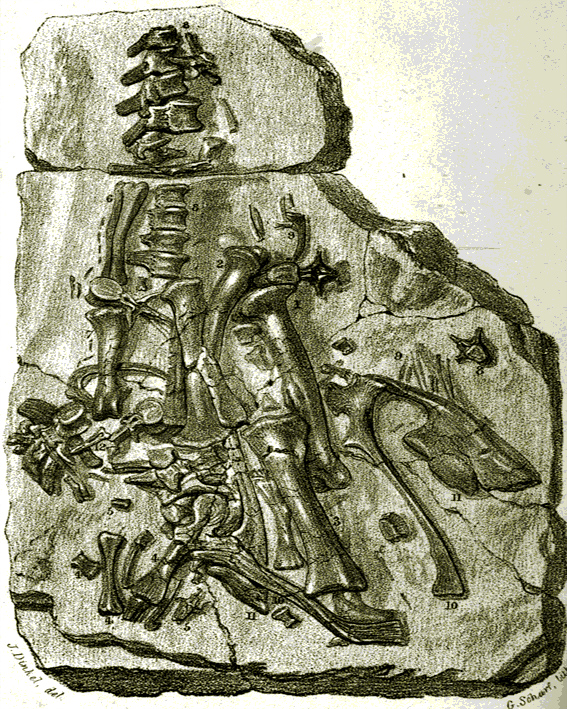 The Maidstone ‘iguanadon’
Around 1820, the geologist Gideon Mantell dug up the teeth of a huge, unrecognisable reptile. Because of their resemblance to iguana teeth, he named it an ‘iguanadon’. In 1834, a more substantial discovery was made in a Maidstone quarry. Mantell adjudged it a more complete skeleton of the same species, an early example of what would soon be known as dinosaurs. Unfortunately, Mantell wasn’t always accurate in his suppositions. For instance, when a replica of his ‘iguanadon’ was built at the Crystal Palace in Penge, it had on its nose a horn that later turned out to be a thumb-spike. We now know that the Maidstone specimen is not actually an iguanadon but a species called Mantellisaurus atherfieldensis that belongs to a separate clade. This does not diminish its status in the county town, which proudly incorporates its famous former resident in the coat of arms. However, the Maidstone United mascot Iggy ought really to be renamed Manny.
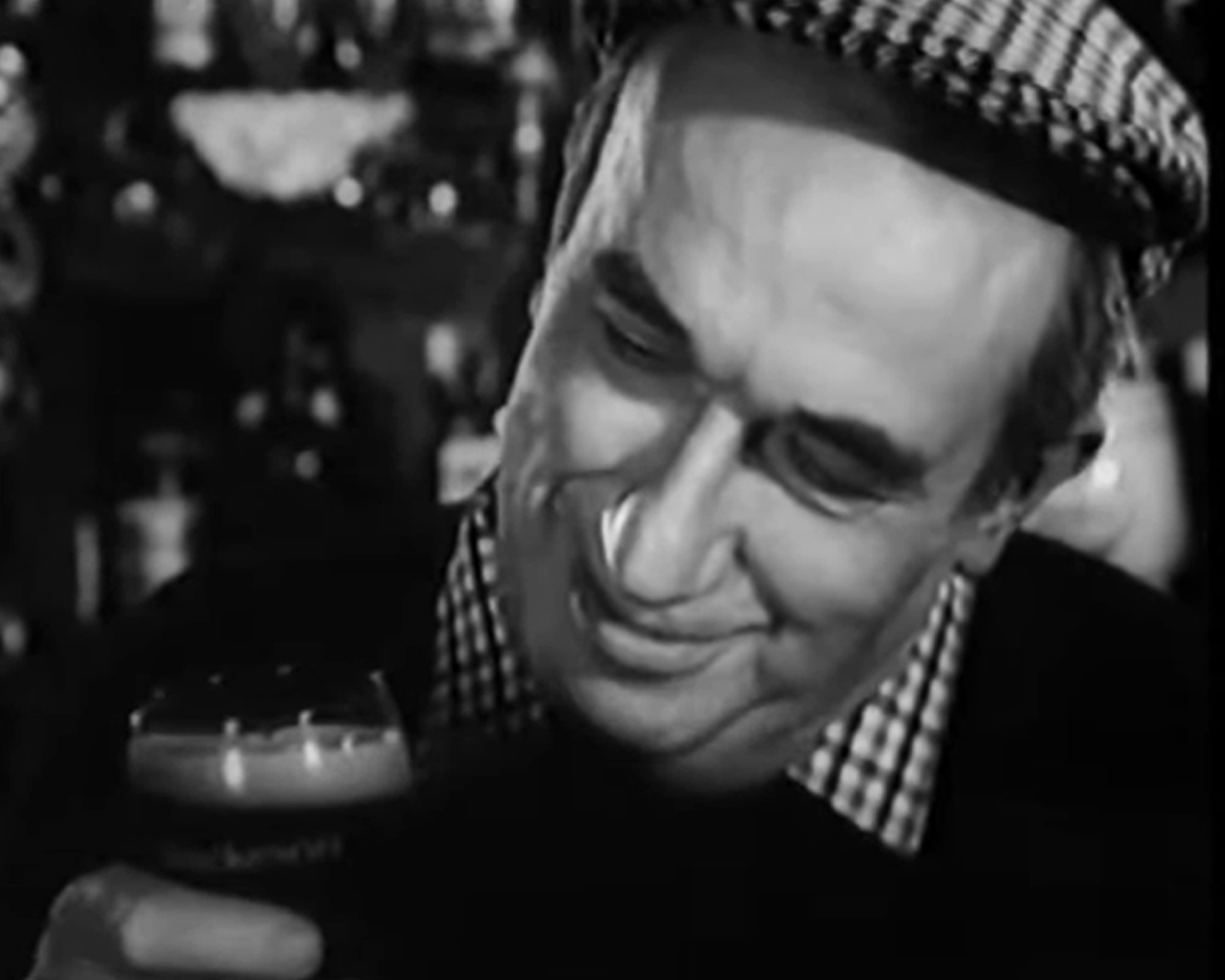 Mackeson’s
In the 1960s, when adverts still featured performers selected to represent the kind of person who might buy the product, the venerable actor Bernard Miles was the perfect man for Mackeson Stout. He would appear alone on the TV screen eulogising the beer with the memorable slogan “Looks good, tastes good, and by golly it does you good”. Although he adopted a West Country accent, the beer was in fact created in Hythe by the Mackeson family, who had acquired James Pashley’s century-old brewery there in 1801. Known as a ‘milk stout’ because it contains lactose for added sweetness and body, it was first brewed commercially in 1909 and distributed nationally before eventually being acquired by Whitbread (now Anheuser-Busch) in 1929. As late as the 1950s it accounted for half the company’s sales volume. It continued to be brewed in Hythe until 1968, and is still produced elsewhere today, albeit no longer advertised.
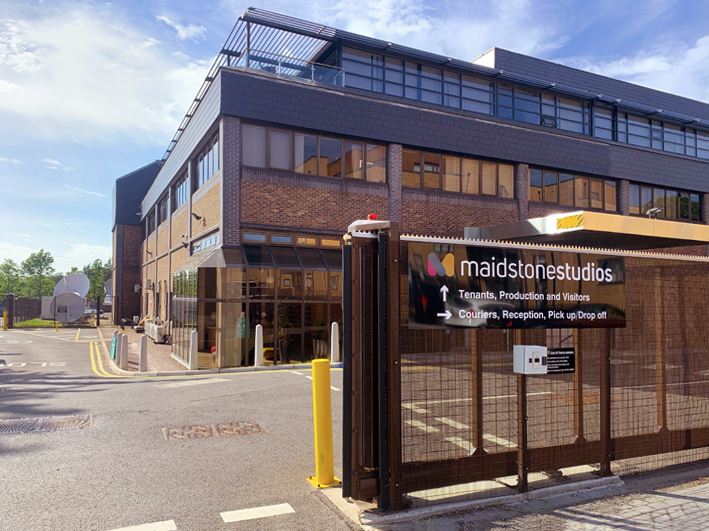 The Maidstone Studios
Maidstone Studios came into being in 1982 as a contractual obligation. Having won ITV’s new South/South-East regional franchise, TVS was required to open a production facility for the South-East. Maidstone, just an hour from London, had already been identified as the location, so the Studios were built on the site of Vinters Park west of New Cut Road. After TVS lost the franchise to Meridian in 1991, they were sold to an international group; but, in 2002, they were acquired by a local consortium led by former BBC producer Geoff Miles. The business offers a host of facilities around its two main studios, although some of the site is now disappearing under housing. Among the Studios’ many productions are ‘No. 73’, in which Sandi Toksvig made her debut, as well as ‘Art Attack’ and ‘Mister Maker’. As Jools Holland records his ‘Later…’ shows there, Maidstone becomes the nation’s focal point every New Year’s Eve for his ‘Annual Hootenanny’.
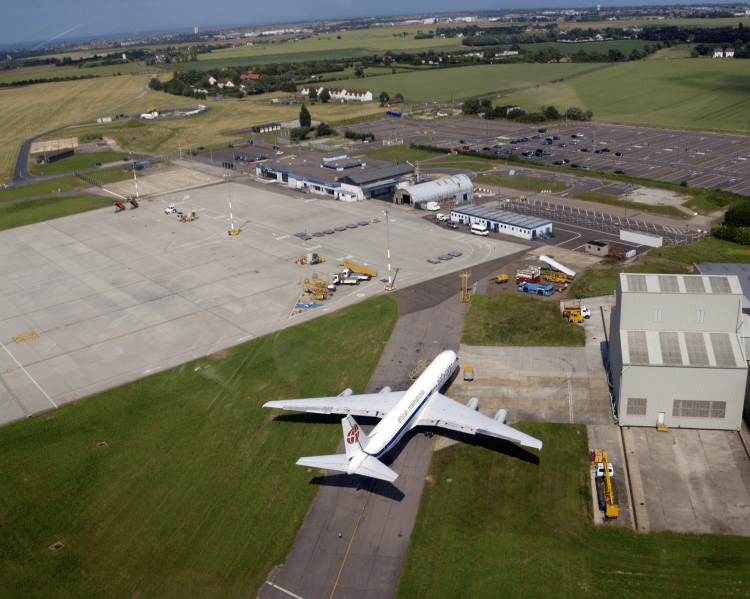 Manston Airport
Royal Flying Corps pilots started resorting to the farmland west of Manston in 1915 because planes attempting to land at their clifftop base at Westgate were apt to end up in the briny. Developed with men and equipment from Detling, it played an important role in combating Gotha bomber raids in 1917-8. In WW2, as an RAF fighter aerodrome, it was very heavily bombed, but after the Battle of Britain became the base for testing the bouncing bomb for ‘Operation Chastise’. On a generally fog-free hilltop only a mile from the Kent coast, it provided a dependable emergency landing site. In 1944, it housed the first squadron of Gloster Meteor jets, which in 1945 set a world speed record nearby. The USAF used it as an airbase during the Cold War, but in 1960 it was converted to a civilian airport. Operations ceased in 2014 owing to commercial losses. The fate of the site still lies in the balance.
 Matchless
Young Henry Collier (1859-1926), a Lancastrian, moved to Plumstead and started making ‘Matchless’ bicycles in 1878. When rivals started adding motors to their bikes, he and his two oldest sons Charlie and Harry experimented with their own configurations before settling on the classic engine position inside the frame. The name ‘Matchless’ turned out a good fit in 1907, when Charlie won the first ever Isle of Man TT race on one. Two years later, Harry emulated the feat, before Charlie made it three out of four in 1910. A year later, they began making their own engines. The business went from strength to strength, and in 1938 the brothers created Associated Motor Cycles, under which banner they also owned AJS and later Norton, among other brands. During WW2, Matchless was commissioned to build 80,000 G3s and G3Ls for the armed services. Production continued at Plumstead until 1966, when the ailing Matchless business was subsumed into a phoenix company, Norton-Villiers.
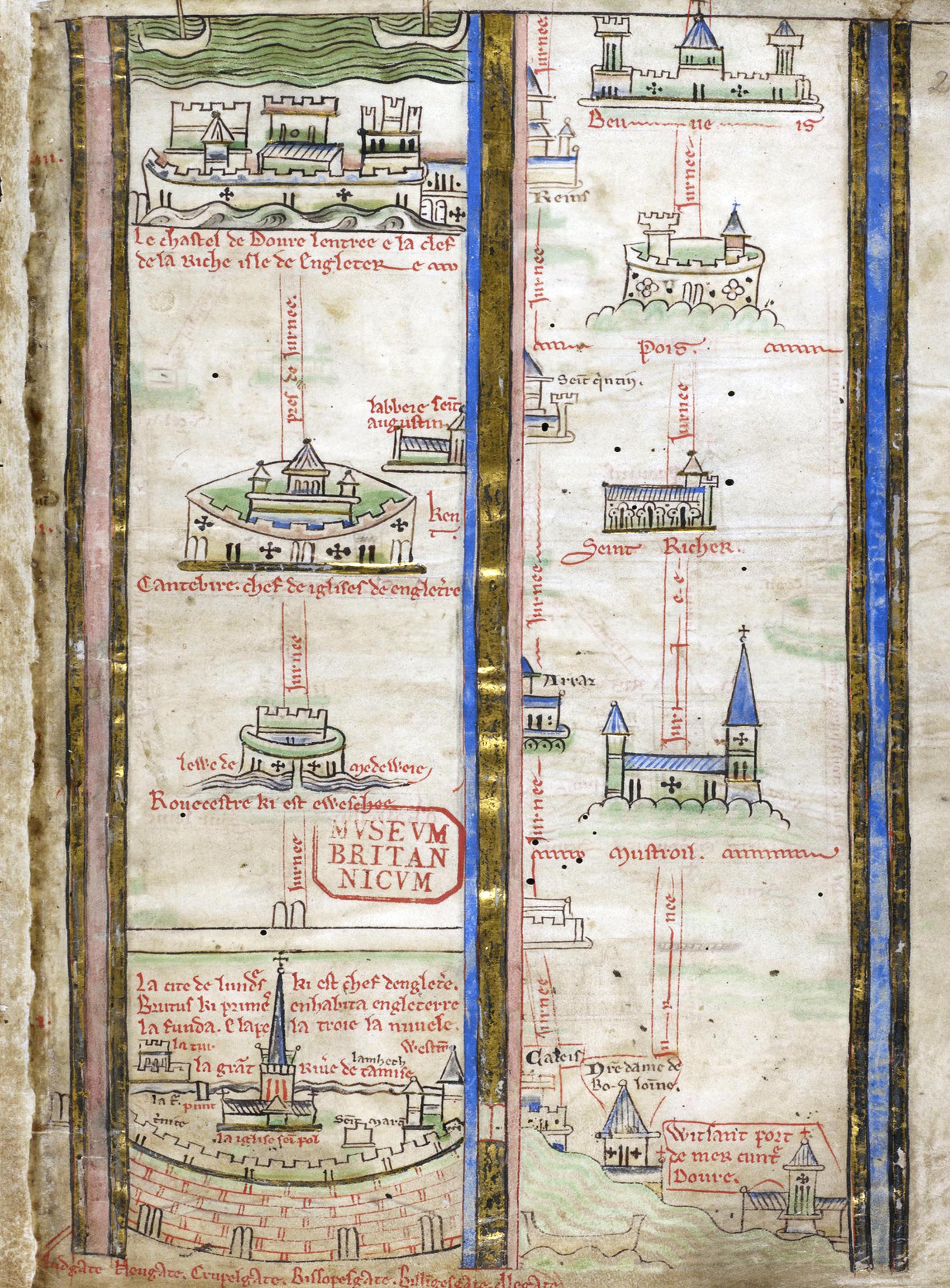 Matthew Paris’s Map
In the 1250s, a monk from St Albans called Matthew Paris wrote a ‘History of the English’ that included an illustrated map depicting alternative routes from London to Jerusalem. It took the format of a vertical strip that could be followed something like a satnav route display. Its relevance to Kent lies in the fact that, after crossing the Thames from London, it was necessary for Holy Land pilgrims to travel the length of the county to the port of Dover. Consequently, the first three stopovers encountered are Rochester with its castle, Canterbury with its cathedral and abbey, and Dover which, with its mighty castle, is described in Norman French as “the entrance and key to the rich island of England”. The medieval stature of Dover is underscored by its particularly detailed illustration. Indeed, it is striking that, in the Italian late-C13 map ‘Carta Pisana’, the only two English towns named are Dover and London.
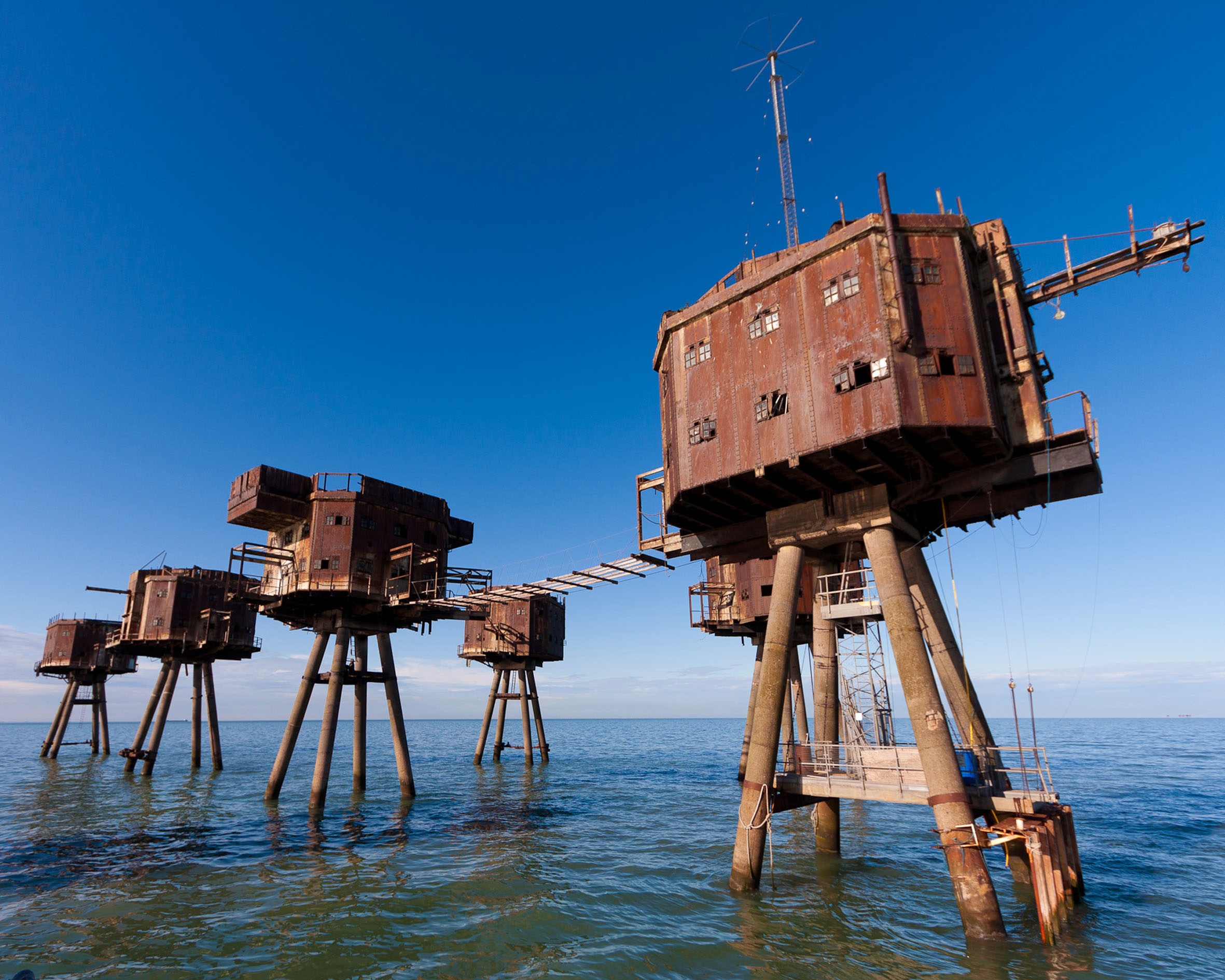 Maunsell Forts
One of the problems facing London’s defenders in WW2 was the sheer size of the sea approach to the Thames Estuary, which allowed enemy planes and u-boats the opportunity to intrude unmolested. Kashmir-born engineer Guy Maunsell addressed the problem with his eponymously named Forts, which were constructed on land, towed out to sea, and anchored in the seabed. There were two types. Of the four “Naval” forts, one, known as Tongue Sands, was off Margate. It collapsed in 1996; but two of the three “Army” forts built at Gravesend – Red Sands off Sheppey and Shivering Sands off Herne Bay – are still in situ. These alien-looking structures consist of seven turrets on stilts, originally linked together and equipped with anti-aircraft guns, a searchlight, and living quarters. They proved their worth by accounting for 22 enemy aircraft and around 30 V-1s. From 1964, however, they had an unexpected new lease of life as the homes of pirate radio stations.
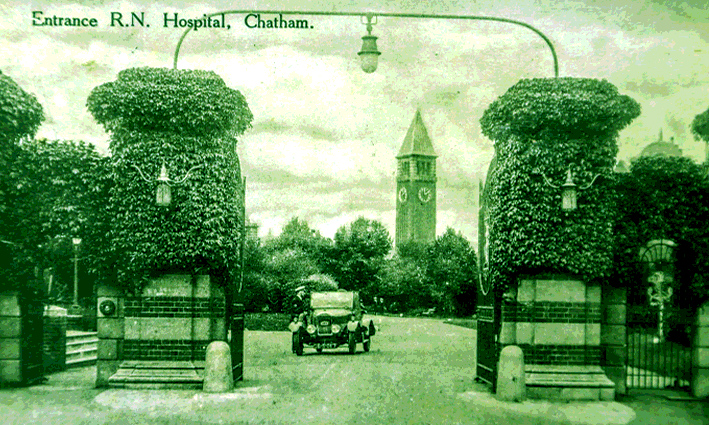 The Medway Maritime Hospital
The Royal Naval Hospital on Chatham Hill beside the Great Lines was built to replace the Royal Marine Infirmary, popularly known as the ‘Melville’. Completed in 1905, it was constructed according to modern principles developed after the Crimean War, with wards housed in long pavilions either side of continuous corridors. It accommodated 600 patients, extendable to nearly a thousand in wartime. In the event, it handled 86,000 during WW2, more than any other British naval hospital. In 1960, with the abolition of the Nore Command imminent, the hospital was transferred to the NHS, and a year later became the Medway Hospital under the Medway Health Authority. Its ageing architecture was replaced over time by a succession of redbrick structures, albeit that some pavilions and the landmark clocktower were retained. Renamed in 1999 following considerable modernisation and expansion, the Medway Maritime Hospital is now bigger, and handles more patients, than any other in Kent.
 The Medway Poets
In 1975, Bill Lewis and Rob Earl held their first poetry-reading session at the Lamb Inn in Maidstone, billing the performance as ‘Outcrowd’. Four years later, with punk still in vogue, a lecturer at Medway College, Alan Denman, merged the pair with a group of like-minded students, whom Lewis named collectively the Medway Poets. Foremost among these was Billy Childish, for whom poetry was yet another medium for expressing his boundless creativity; his girlfriend Tracey Emin was peripherally involved. They first performed at the York Tavern in Chatham, then various pubs and colleges around Kent. The standard was not exactly up to the Lake Poets, but it was sometimes funny, sometimes thoughtful, often raucous, and always an excuse for an evening out. Egos clashed, however, and there was an ongoing struggle for ascendancy between Childish and his fellow Stuckist Charles Thomson. The Medway Poets fizzled out after a couple of decades, leaving behind a 1988 album.
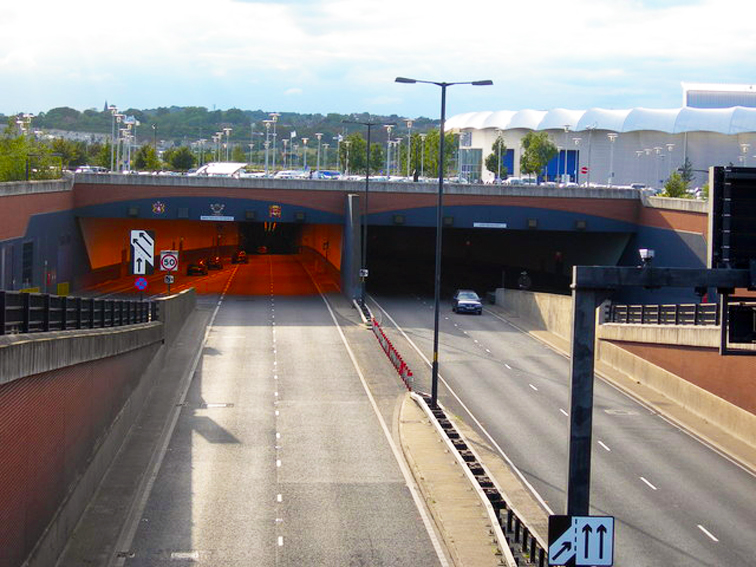 The Medway Tunnel
Even after a second road bridge was added alongside in 1970 to relieve congestion, Rochester Bridge remained as bad a bottleneck as Maidstone Bridge. The decision was taken to relieve it with another crossing further downstream, which would therefore become the northernmost Medway crossing ever. It was not to be a bridge, however, but a tunnel connecting Pier Road in Chatham with the new Vanguard Way, Upnor. The construction itself was interesting, being not a tunnel under the river but an immersed tube tunnel laid across the riverbed and joined at either end with a conventional road tunnel. Relatively cheap and quick to construct, such tunnels were invented in America in the C19, but this was the first in England. The £80 million project was authorised by a 1990 Act of Parliament that granted ownership to the Rochester Bridge Trust. Opened in 1996, it has proved its worth, coping with 40,000 vehicles a day.
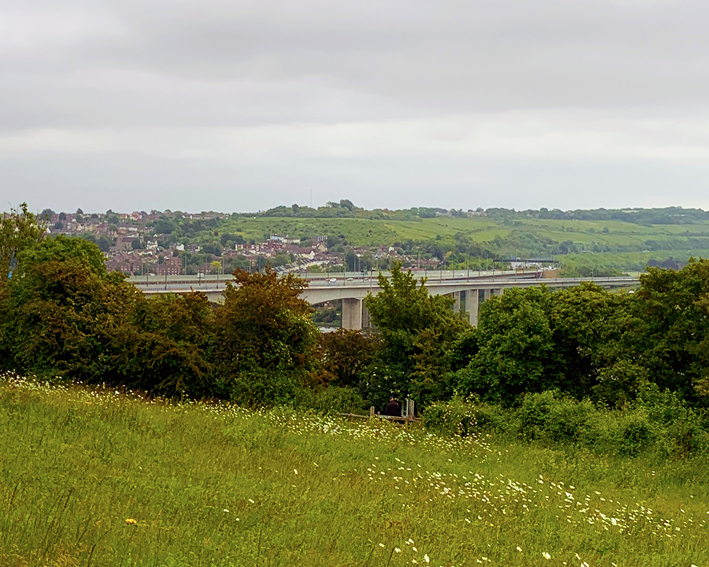 The Medway Viaducts
The Medway presented a far bigger challenge to the constructors of the M2, whose first stretch opened in 1963, than was ever faced by the builders of Rochester Bridge. Needing to span about 300 yards of river with two lanes of motorway plus hard-shoulders in each direction, the engineers designed a bridge with a remarkable 500-foot central span. Opened to great fanfare in 1963, it provided a solution for four decades. Then, with additional capacity necessitated by the growing volume of traffic, a second bridge was built alongside to carry all the westbound traffic. Its erection demanded engineering of such extraordinary inventiveness that it won awards. But that was not all. A railway bridge was also required to take the new High Speed 1 track to Ashford International. In 2003, this third viaduct became part of the line on which a Eurostar train set a British rail speed record that still stands today.
 Men of Kent and Kentish Men
Because the population of Kent has become so diluted by incomers from other regions in recent decades, the Man of Kent/Kentishman divide has been reduced to little more than a curious piece of folklore. Originally, however, it had a more formal and possibly antagonistic connotation. No one knows for sure, but it is quite possible that Kent east of the Medway was populated primarily by Jutes, and the west by Saxons. This tribal division would have been underscored by differences in legal systems – gavelkind versus primogeniture – and Jutish cultural sophistication in contrast to Saxon boorishness. Certainly Kent was uniquely divided into two dioceses, Canterbury and Rochester. Even within current lifetimes, it has been customary to exercise a friendly apartheid, and for Kentishmen and maids to acknowledge the same kinship between them as exists between Men and Maids of Kent. As long as they argue about nothing more than where precisely the dividing line falls, it’s just a bit of fun.
 Metellus’s Tunbridge Wells
In 1693, a book appeared under the title ‘Dialogues Containing a Relation of a Journey to Tunbridge-Wells, Also a Description of the Wells and Place’. This sounds nothing unusual until one notices the author’s name: Metellus. This was not Quintus Caecilius Metellus Pius, the Roman consul, but a pseudonym for Oxford graduate John Lewkenor. It is a verse account of a visit to Tunbridge Wells with four friends called Acer, Curio, Laelius, and Aesculape – respectively a witty but misogynistic clergyman, an eloquent civilian, a young gentleman with unorthodox religious views, and a hedonistic doctor. Aside from exposing the difficulty of finding decent food and accommodation back then, it highlights two good reasons for trying: spring-water so wholesome that “They flourish all who did so lately fade”, and the cosmopolitan melting-pot described by Elizabeth Montagu as the ‘parliament of the world’: “Here Friend meets his old Friend; the am’rous Lad, / Fond lover, finds his Mistress, and is glad.”
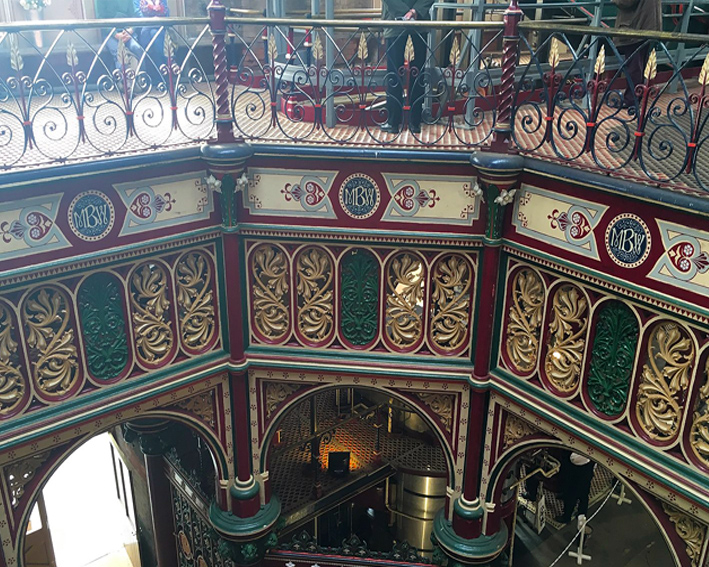 Metropolitan Board of Works
Before taking its first slice out of Kent, Westminster paved the way with a Trojan horse. In 1855, it introduced the Metropolitan Board of Works, an innocuous-sounding organisation intended to coordinate essential services such as sewage, road building, and fire fighting in areas contiguous with London. This apparent efficiency measure was hard to argue with. Later on, however, it turned into a copper-bottomed way for dodgy bureaucrats to get their hands in the till. Their corruption became so endemic that, even when they had come to be known as the ‘Metropolitan Board of Perks’, they ripped ratepayers off without scruple. Westminster responded to public outrage by deciding that the MBW’s activities must be democratised. In 1889, London County Council was born, and a prestigious slice of Kent was torn away in the small print. LCC differed from the MBW in one respect: old corrupt officials could periodically be replaced at the ballot box with new ones.
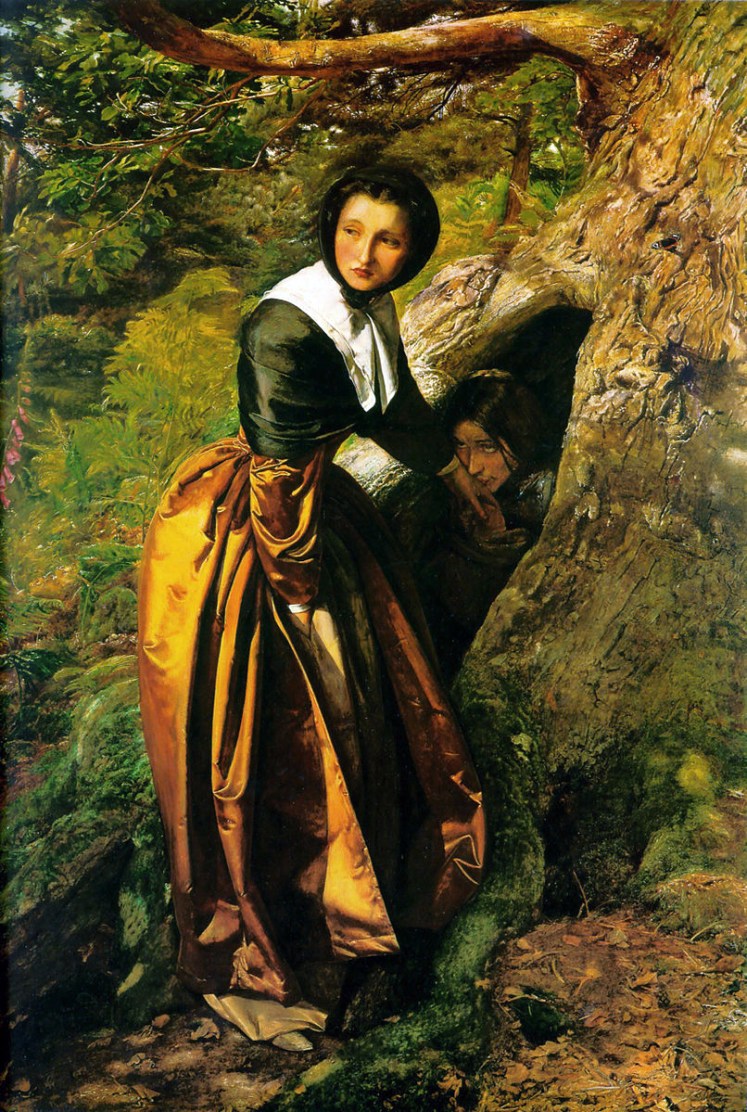 The Millais Oak
One of Sir John Everett Millais’s most striking paintings is ‘The Proscribed Royalist, 1651’, which he actually painted in 1852-3. It portrays a Puritan woman anxiously concealing a young man in a hollow tree. As the title makes clear, the lad was a refugee from the decisive Battle of Worcester that temporarily denied Charles II his throne. The scene was an obvious reference to the famous incident when Charles actually had to hide in an oak tree in Boscobel, Shropshire while making good his escape. Millais’s two models were Anne Ryan, whose portrait he also painted, and his fellow Pre-Raphaelite painter Arthur Hughes, aged just 20. The painting is now owned by Andrew Lloyd-Webber. And its connection with Kent? Millais painted it at Hayes, near Bromley, where there was a hollow tree that provided the hiding-place. It became known as the Millais Oak, and is still standing just south of Croydon Road.
 Miller’s Antiques
An insurance salesman’s son from Sussex, Martin Miller (1946-2013) was a wheeler-dealer who loved the good life. He started out as a wedding photographer before publishing a successful antiques guide in 1970. He married Scottish Lowlander Judith Cairns in 1978, and a year later they launched their hugely popular ‘Miller’s Antiques Price Guide’. In 1984, they bought Chilston Park near Lenham, which they ran as a boutique hotel. Although they divorced in 1992, Judith continued writing the Guide and presenting on TV until her death in 2023. He meanwhile launched Martin Miller’s Gin with two London associates in 1999 to take on vodka. In 2008, he added Great Brampton House in the Welsh Borders to his collection of antiques-packed hotels from London to Devon. Launched as ‘Miller’s Hideaway’, it also housed a contemporary art museum containing his own sculptures alongside the work of invited artists. The endlessly fertile Millers left behind five privately educated daughters.
 Mission Control, Lympne
The 1964 movie ‘First Men in the Moon’ was memorable only for Ray Harryhausen’s remarkable talent for bringing alien creatures to life with stop-frame animation. The rather better book on which the movie was based had remarkably been written 63 years previously. The author was of course H. G. Wells who, having been born in Bromley and moved to Sandgate, was not averse to setting his books locally. It therefore should not be such a surprise that, when inventor Mr. Cavor takes off on his journey to the Moon, he departs not from Cape Canaveral but Lympne in Kent. Just as quirky is the fact that, on returning from his 500,000-mile round trip, he lands in the sea off Littlestone. The scriptwriters for the movie – who included the usually dependable Nigel Kneale – rather more realistically had him come down off Zanzibar. However, they placed Cavor’s home not in Lympne but, for some curious reason, Dymchurch.
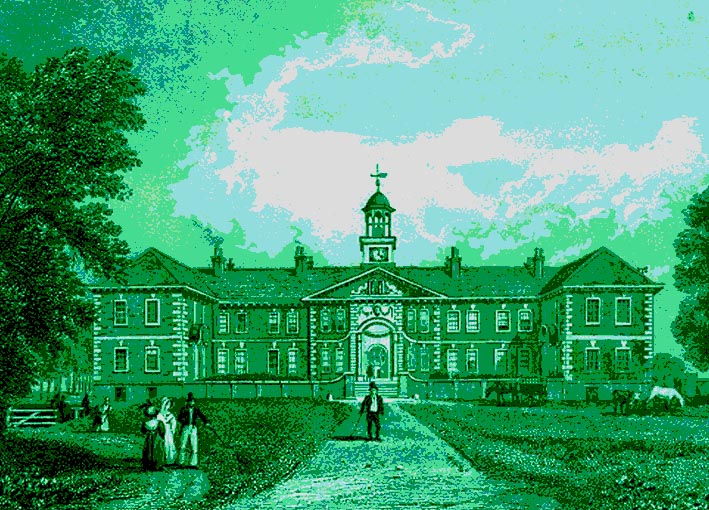 Morden College
Sir John Morden (1623-1708) was a paragon of philanthropy in the era when wealth creators were esteemed rather than pilloried. A merchant, his outlook was changed by an experience he is said to have had after returning from India, when he invested all he owned in three cargoes that would bring him a handsome profit while providing the public with much-wanted goods. When all three failed to arrive, he was in despair, and must have experienced real hardship, to judge by his reaction when they unexpectedly turned up after surviving difficult voyages. He vowed to provide for other such risk-takers who had been less fortunate, and in 1695 built a home for forty at Blackheath called Morden College, where they were provided with the same creature comforts as they would have enjoyed but for bad luck. A charity, the College still survives as a rest home, and manages eight other homes in Blackheath and Beckenham.
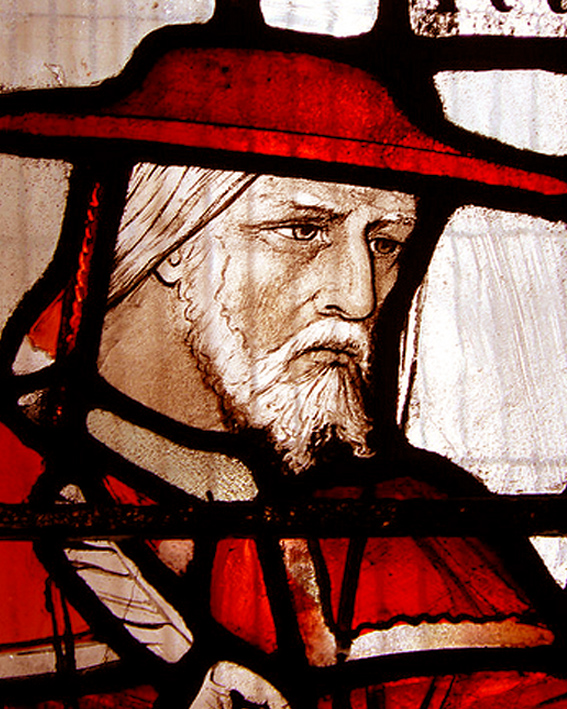 Morton’s Fork
John Morton (ca 1420-1500) was a prelate from Dorset who somehow survived the Wars of the Roses while serving under both Lancastrian and Yorkist kings, had a close shave with Richard III, became Archbishop of Canterbury at Henry VII’s behest, and died peacefully at Knole. He is known for a sleight of hand called Morton’s Fork, amounting to the assertion that everyone could afford to pay taxes because all who spent lavishly obviously had money to spend, and those who didn’t must have plenty put away – a case of “damned if you do, damned if you don’t”. This false logic was restated as Joseph Heller’s ‘Catch 22’ (1961), which held that no one could be sent home from WW2 on mental-health grounds because it was perfectly sane to want to go home. The name is also lent to a coup in the game of bridge, in which a defender is given a choice of two equally risky alternatives.
 ‘Murder in the Cathedral’
Notwithstanding his reputation as one the C20’s greatest poets, TS Eliot also racked up seven plays. The third was prompted by the dean of Canterbury Cathedral, George Bell, who wanted a modern mystery play for performance in the cathedral during the Canterbury Festival. Eliot devised a verse drama in whose first act the personifications of four temptations – security, success, strength, and glory – present themselves to archbishop Thomas Becket, all in vain. After an interlude in which Becket’s Christmas Day sermon days earlier is recited, the second act is a re-creation of his murder based on the eye-witness account of Edward Grim, a Cambridge monk who happened to be visiting that day. Finally the perpetrators, Henry II’s four knights, explain themselves. First performed in 1935 in the Chapter House, the play has endured better than any other of Eliot’s plays. There was a bonus: one section the producer wanted edited out became the popular poem ‘Burnt Norton’.
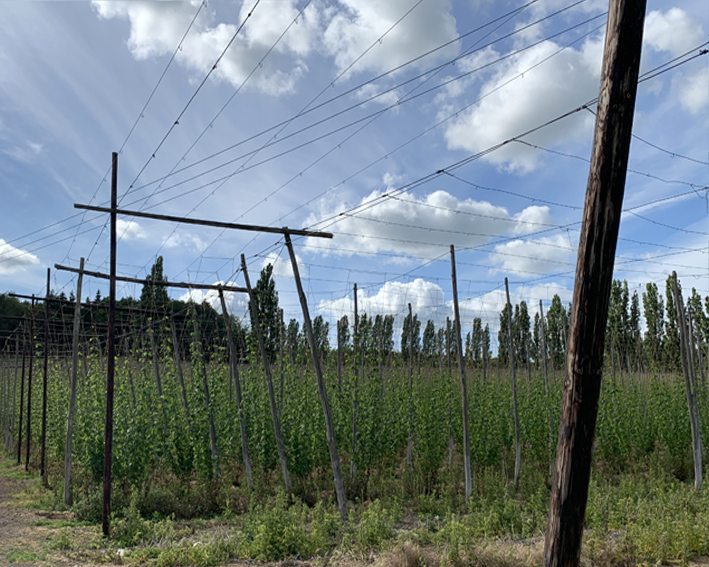 National Hop Collection
Kent, Surrey, and Sussex share the honour of having pioneered the English hop industry. Starting in the early C16, it later spread to the South Midlands, and the two regions now share the hop market between them. Sadly, the industry is only an eighth of the size it was in the 1960s, but Kent retains its leading status. As Brogdale acts as a store of fruit-tree species and Bedgebury of pines, so China Farm at Harbledown keeps Britain’s collection of historic hops, with back-up from Queens Court Farm at Ospringe. Not all are used currently in brewing, but their genomes store facets of hoppiness that may prove useful. After Wye Agricultural College closed in 2007, the respective repositories were set up by Tony Redsell, chairman of the National Hop Association, and Faversham-based Shepherd Neame, one of Britain’s oldest brewers. It is worth reflecting that, without the expertise that goes into hop science, England’s national drink might be dull as ditch-water.
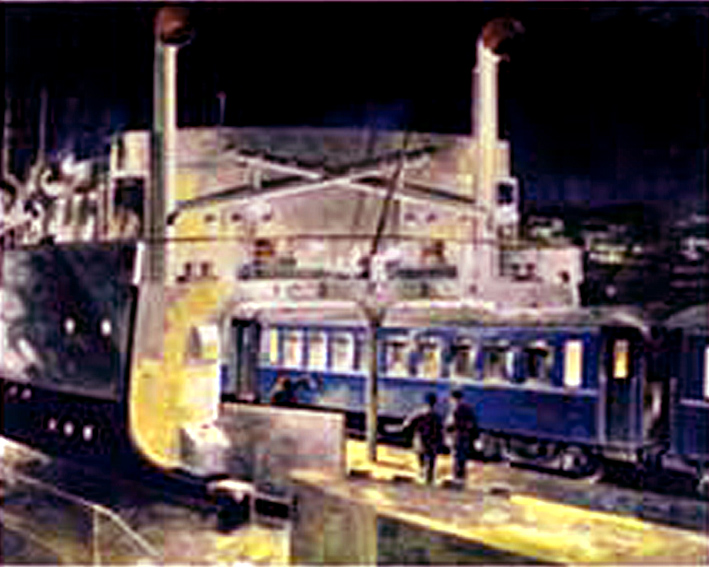 The Night Ferry
Although the Compagnie Internationale des Wagon-lits also owned the Orient Express, it rated the Night Ferry foremost among its prestigious trains. Launched in 1936, it would leave London Victoria in mid-evening, be loaded at Dover Marine onto a ship that conducted it to Dunkirk, and complete the journey to Paris Gare du Nord after around 11 hours. A second train would simultaneously make the same journey in the opposite direction, passing in mid-Channel. It was the only such through-train before Eurostar in 1994. Like other CIWL trains, the Night Ferry was a luxury Pullman affair, complete with dining car, although while travelling through Kent it did have second-class carriages attached, whose passengers had to walk onto the ferry. The clanking and jolting must have made sleep impossible during embarkation, yet passengers apparently relished the excitement. The service was suspended during WW2, but resumed in 1947 until air competition caused its demise in 1980.
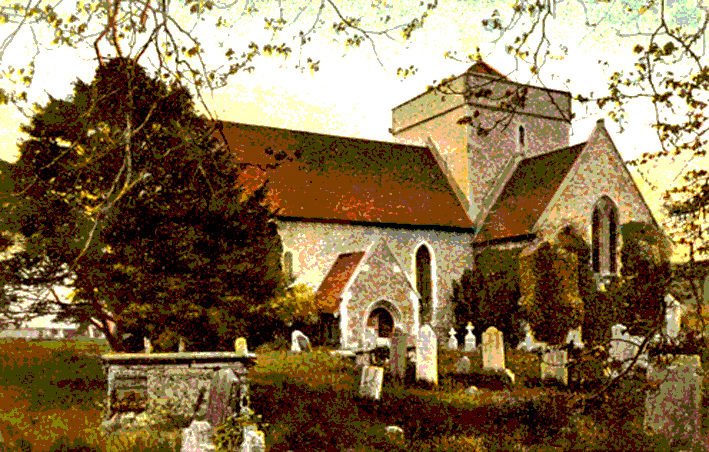 Norborne Grange
A ‘grange’ – the Norman-French for ‘barn’ – became a medieval institution in England, a farmhouse with outbuildings used by monks to extract tithes from the workers. One operated at ‘Norborne’ (Northbourne) on a manor granted by King Eadbald of Kent to St Augustine’s Abbey, Canterbury in 618. Long before the Dissolution of the Monasteries, however, the site’s appeal, so close to the ports of Sandwich, Deal, and Dover, was apparent to personages with very different motives. In 1346, Queen Philippa stayed en route to the Hundred Years’ War in France; and the Black Prince commandeered it in 1359, as did John of Gaunt 14 years later, accompanied by his mistress Katherine Swynford. Having suffered multiple fires, it gave way around 1612 to a grand house that itself burnt down in the mid-C18, and was replaced by another farmhouse with outbuildings. The only living remembrance of the grange is in the name of the village church, St Augustine’s.
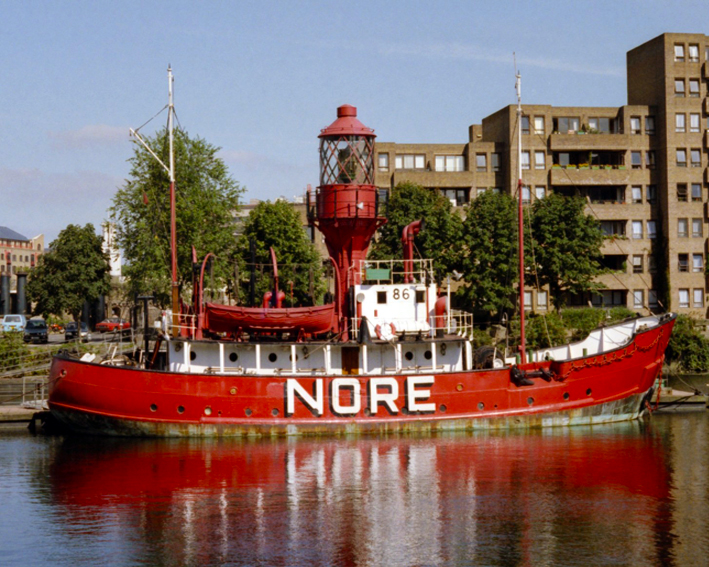 The Nore
Like the Goodwin Sands, the Nore is a sandbank that, because of the danger it poses to shipping, became disproportionately influential during the Age of Sail. So costly was it that, in 1732, Robert Hamblin patented the world’s first lightship for deployment at its eastern end off Warden Point. Already significant for both signifying the point where the Thames becomes the North Sea and, until 1964, marking the end of the Port of London Authority’s zone of control, it became an important naval anchorage. During the French Revolutionary War, it was synonymous with a notorious mutiny over pay and conditions, possibly engineered by the French, that was considered a national emergency and was followed by several executions for treason. From 1899 to 1955, the Nore had its own Royal Navy commander-in-chief, charged with ensuring the safe transit of shipping, and additionally presiding over North Sea naval operations during WW2. The westernmost Maunsell Fort was erected there.
 North Downs
Here’s a handy mnemonic for drawing a map of Kent. Imagine a dog’s head, with the Medway estuary as an eye, Thanet the nose, and Romney Marsh the dewlap; the Downs are the upper and lower lips, and the White Cliffs of Dover the teeth. The odd name ‘Downs’ is simply derived from the Anglo-Saxon word for hill. The North Downs add substantially to the visual appeal of Kent, relieving the flatness that might otherwise render it as featureless as Norfolk. Their chalk was laid down by the sea that covered Kent in the late Cretaceous period, the 35 million years preceding the extinction of the dinosaurs. Subsequently forced up by the Weald-Artois anticline and then eroded, their south-facing side is steeper than the northern. Apart from the Rivers Darent, Medway, and Stour that slice through them, they provide the Kentish Weald with an uninterrupted wall. On the Surrey border, they contain Betsom’s Hill, Kent’s highest point at 823 feet.
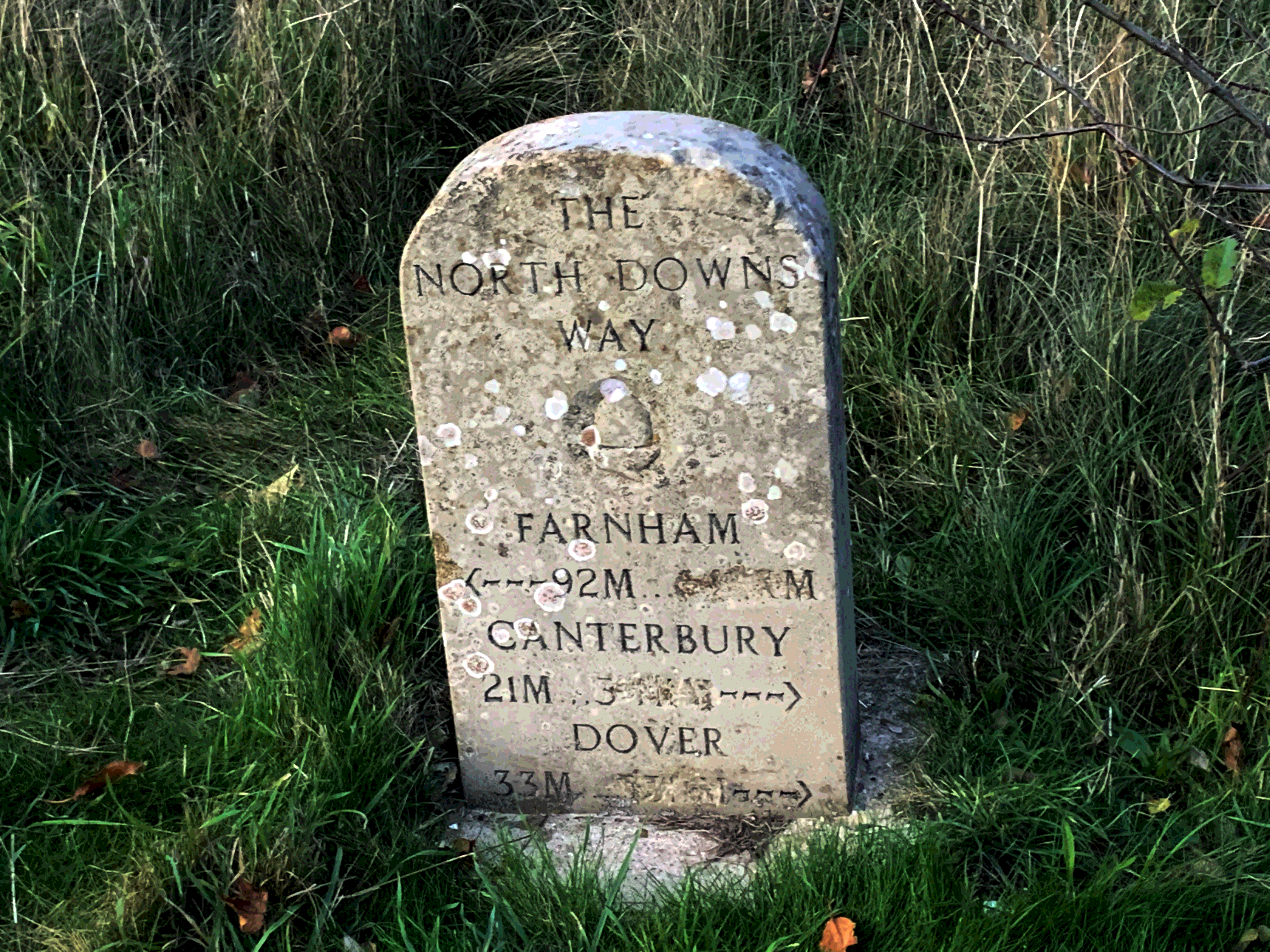 The North Downs Way
Just after WW2, someone had the good idea of creating a new long-distance walk across Kent as an alternative to the Pilgrims’ Way, much of which had lost its original character by being paved. Unfortunately, this ‘North Downs Way’ took twenty years to get started, and another ten to be completed. The idea finally agreed was that it should run from Farnham in the west of Surrey to the south-east Kent coast. By following the line of the North Downs, its whole length would run through unspoilt areas of outstanding natural beauty and provide fine views south across the Weald. The route actually divides east of Boughton Aluph, with one branch running through Canterbury and the other through Wye before they reunite at Dover. The Way’s total length therefore depends on which route one takes; but it provides at least 125 miles of genuine countryside hiking either way.
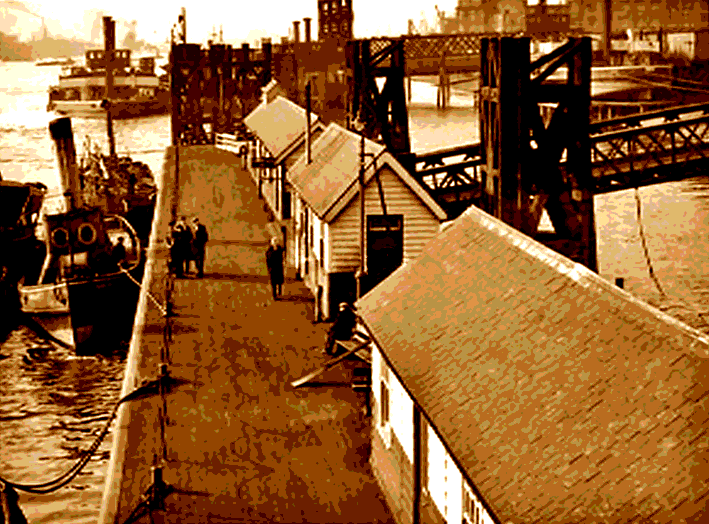 North Woolwich
Not many people know that historic Kent possesses a patch of land across the water in historic Essex. Its unusual parentage was the consequence of the wholesale theft of English land by the Norman conquerors in the C11. William I placed it in the hands of his steward Hamo, Sheriff of Kent, who presumably solicited two strips along the northern bank of the Thames so that he could control river crossings there. It stretched from Silvertown in the west to the River Roding in the east, being bordered to the north by the area now occupied by the London City Airport. Though its extent was once precisely defined, however, the name North Woolwich has been more injudiciously applied to adjacent land at different times. Most notably, it became known after WW1 for shipbuilding and repairs after Harland & Wolff built a centre there. From 1847 to 2006, North Woolwich had its own railway station.
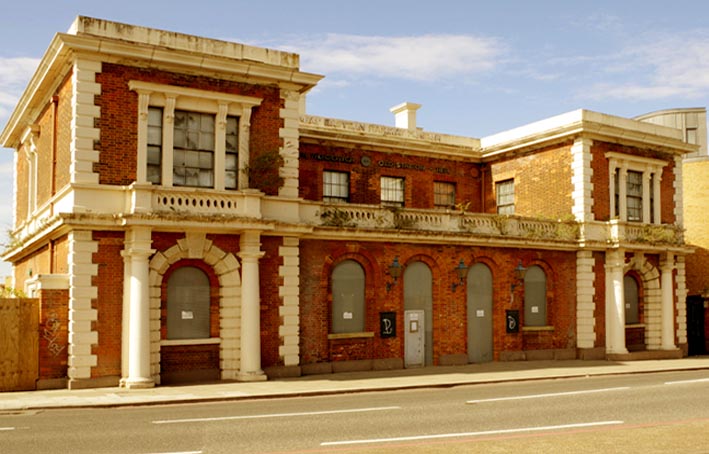 North Woolwich Old Station
On the bend of Pier Road in North Woolwich, close to the entrance of the Woolwich Ferry, stands an attractive but derelict building bearing the legend “North Woolwich Old Station 1854”. It actually started life in 1847 as a railway terminus on the Eastern Counties & Thames Junction Railway, and continued to function until 2006. The station building was superseded as a ticket office by a new building in 1979. Five years later, it was turned into a railway museum celebrating the history of the Great Eastern Railway, which had been formed in 1862 out of an amalgamation of the Eastern Counties Railway and some minor lines. Among its larger exhibits were a locomotive and signals. The museum was forced to close during the crash of 2008, and no further use has been found for the building, even on prime land so close to the river, docks, and airport. A mysterious Sunday-night fire seems inevitable.
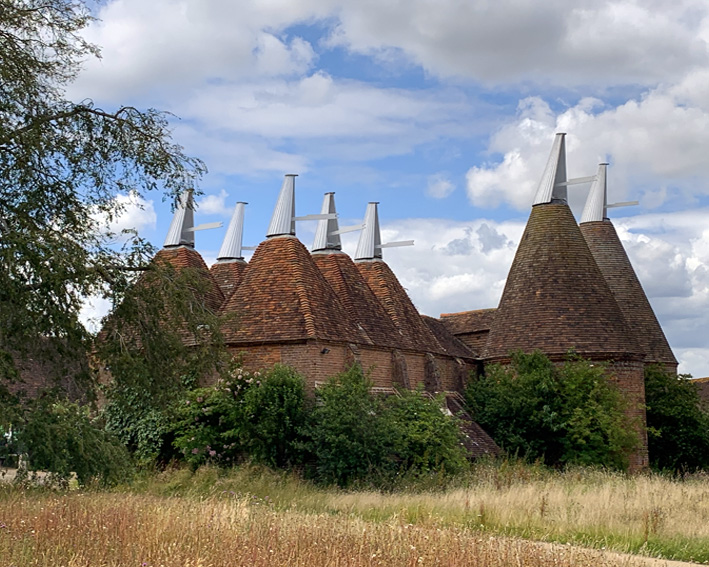 Oast houses
So familiar are oast houses in Kent that we tend not to appreciate the impression they make on visitors, which is not unlike that given by Majorca’s distinctive windmills. Sadly, few locals have more to say about their original purpose beyond “they were something to do with hops”. They were in fact ovens, the word ‘oast’ being derived from the Germanic word for kiln. They contained an internal platform onto which newly picked hops were heaped. A wood or charcoal fire was lit beneath, and the rising heat dried them out. The peculiar design of the roof consisted of a white cowl to let out the heat along with a white sail that made it rotate with the wind to stop downdraughts. Originally rectangular, oasts were increasingly made circular in the belief that these were more efficient. Of the 5,000 built nationally, three-fifths were in Kent, but the vast majority have now been converted to residences.
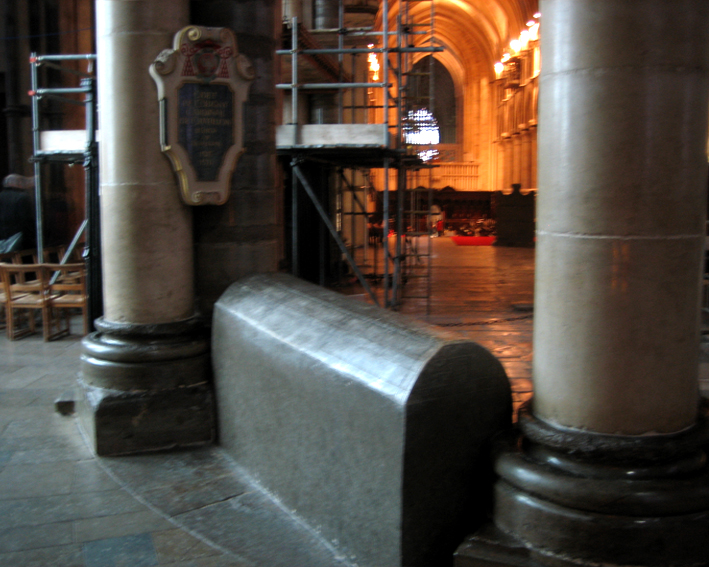 Odet de Coligny’s temporary tomb
In Canterbury Cathedral‘s Trinity Chapel lies a strange dark shape that on closer inspection turns out to be the tomb of Odet de Coligny (1517-71). Born south of Paris, he had a lucrative career in the French Church, acquiring an array of positions up to the rank of cardinal. His progress shuddered to a halt in 1563, when he converted to Protestantism. Excommunicated, he was stripped of all titles and property. He married his mistress the following year, and in 1568, having fought in the the futile battle of Saint-Denis, fled to England. Three years later, thinking it safe to travel to France, he stayed en route at Meister Omer’s house next to the cathedral. Probably poisoned there, he died three weeks later. Unsure where to put him, the authorities encased him in a makeshift tomb pending collection. The French saw no reason to take him back, and his tomb remains an eyesore five centuries later.
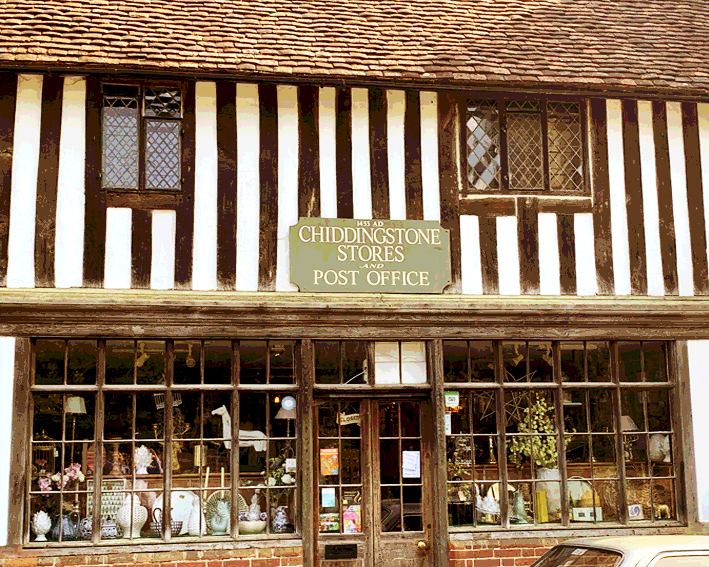 The oldest shop in Britain
Definitions make it hard to say for sure which is the oldest extant shop in the world, although a thousand-year-old sweet-shop in Japan has a strong claim. As for Britain, the likeliest candidate is the general store at Chiddingstone, opposite St Mary’s Church. Its sign reading “Burghesh Court AD 1453” dates it to the termination of the Wars of the Roses, Robert de Burghersh (sic) having been the C12 lord warden of the Cinque Ports who founded Chiddingstone Burghersh manor. The evidence for the shop’s mid-C15 existence is a deed mentioning the owner William Hunt, a participant in Jack Cade’s Rebellion. A more famous owner, however, was Thomas Boleyn of Hever Castle, the father of Anne. Irrespective of its long history, today’s charming gift-shop and adjacent tea-shop, now trading as the Tulip Tree, are worth a detour, not least because the timber-framed building that houses them largely accounts for the street’s reputation as arguably Kent’s most photogenic.
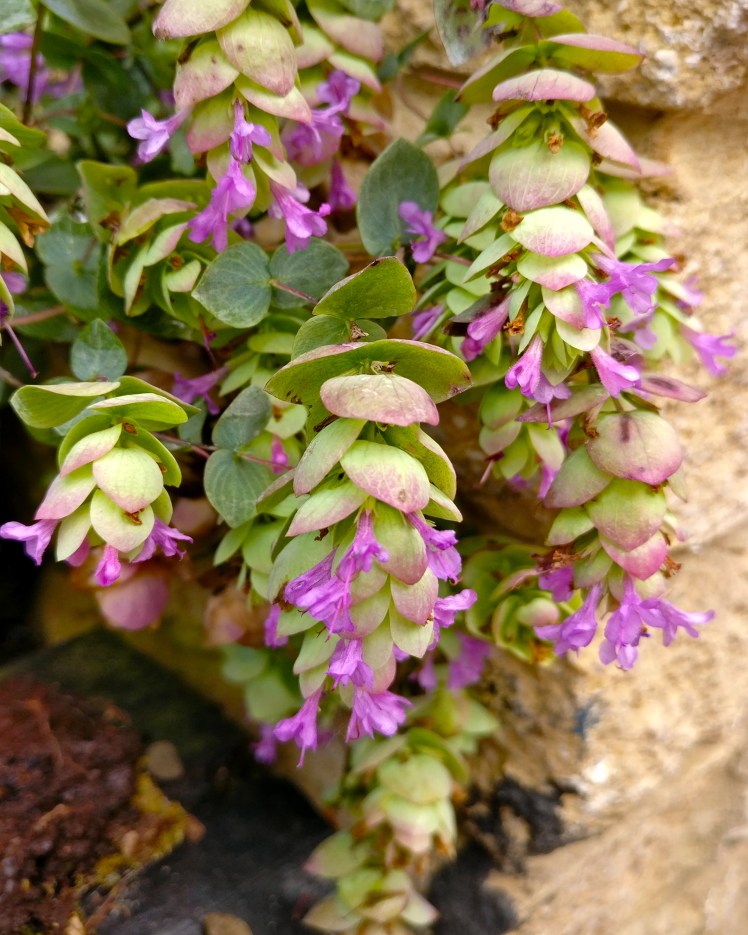 Origanum Kent Beauty
Origanum is a genus of herbs in the mint family that originates in Mediterranean areas. Two of its species are oregano (Origanum vulgare) and marjoram (Origanum majorana). Another species, Origanum Kent Beauty – confusingly known also as ‘marjoram Kent Beauty’ – is not actually edible but enjoys popularity for another reason, namely its visual appeal. Being what is called a ‘subshrub’, it is ideal for planting in rockeries, borders, or pots. It has pretty pink flowers, but also conspicuous bracts – small leaves that encircle the flower, like a ruff – that turn a lovely dark pink. These are complemented by unusually pale-green leaves. When the flowers bloom together, they give a strong impression of coloured hops, which may of course be what inspired the Kentish name the plant has taken with it around the world. It benefits from plenty of sun and well-drained, slightly alkaline soil, and comes back in the spring after dying back in winter.
 ‘The Orphan’
In 1680, the dramatist Thomas Otway from Sussex published a tragedy called ‘The Orphan, or The Unhappy Marriage’ that proved such a masterpiece, it was still performed two centuries later. It was believed to have been inspired by a true-life event that had taken place 46 years earlier at Willesborough. The occasion was the wedding of William Master, aged 28. Present at the reception was his brother Robert, who harboured a passion for his new sister-in-law that knew no bounds. So envious was he of the groom that he killed him there and then, and fled. He was never seen again, except perhaps when a stranger was disturbed in the dead of night while attempting to erase the inscription on William’s gravestone that recorded the grisly event. Whether Robert or not, the shadowy figure escaped. There was to be no happy ending: though Otway wrote another fine tragedy two years later, he died in penury at 33.
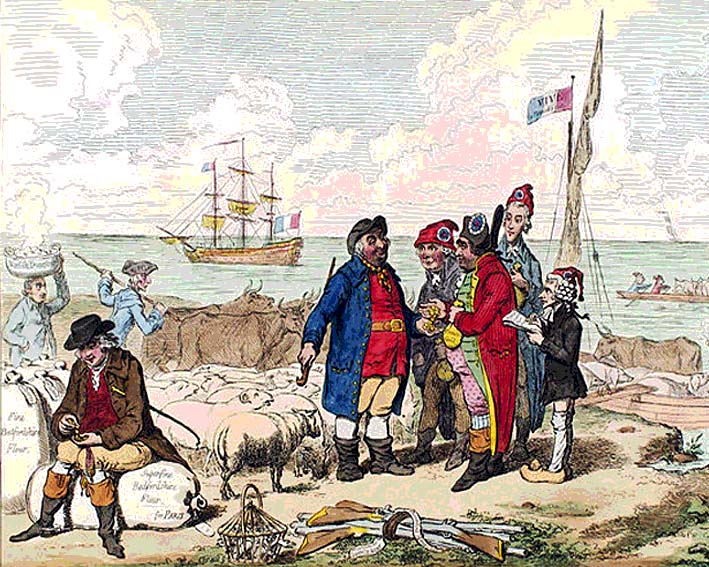 Owling
There was a time when every Kent person would have known what an ‘owler’ was. For two centuries, owling was the standard codename for smuggling, it being usual to pretend that gangs of men out after dark were bent on catching birds. From the Middle Ages onwards, England was highly dependent on its wool trade, and competition with France led to swingeing import duties being imposed. Big money was to be made from smuggling wool and sheep in through Kent. The particular hotspot was Romney Marsh, but coastal communities all around Kent joined in, with many publicans providing sanctuary and even vicars lending the use of their churches. It was standard to advise locals simply to look the other way, as in Kipling’s ‘A Smuggler’s Song’. After all, the perpetrators were no angels. Notorious gangs like those from Groombridge and Hawkhurst were as murderous as the mafia, until the Royal Navy finally reined them in after 1815.
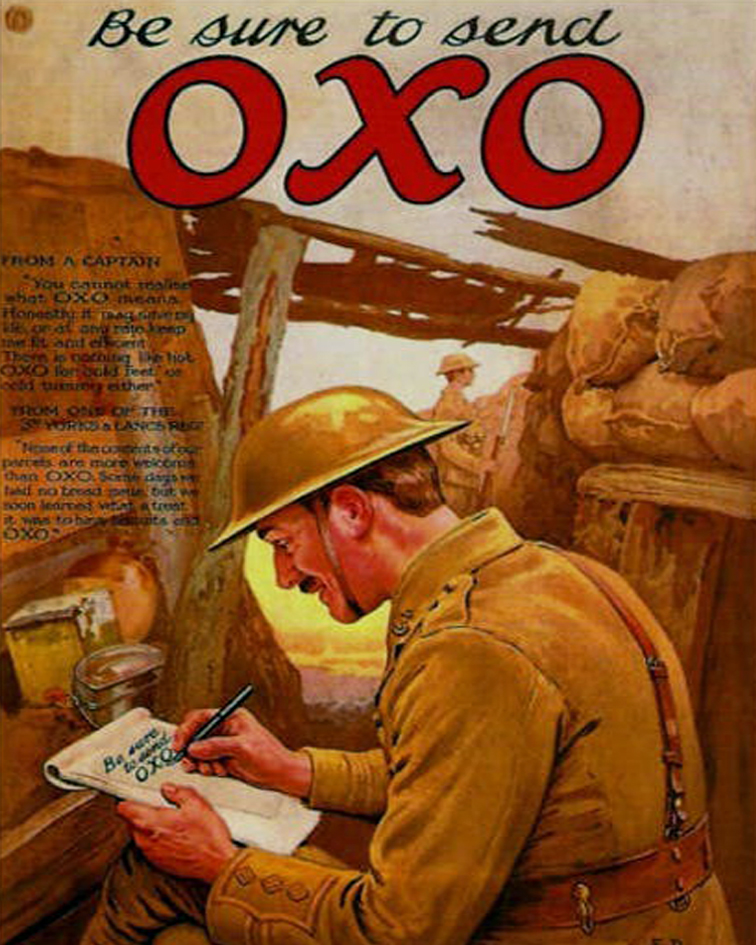 Oxo cube
It seems like the most quintessential of British brands, yet Oxo, the beef extract, was created in 1840 by German chemist Baron von Liebig. What is truly British (and indeed Kentish), however, is the shape with which it is now synonymous. The Oxo stock cube was actually the invention of Charles Gunther (1863-1931) of Hawkhurst. Having become chairman of the Liebig business by the age of 32, he was determined to repackage the hitherto liquid product in a format that would make it both convenient and cheap. He converted part of his home, Tongswood House, to a laboratory, where a chemist succeeded in 1910 in formulating the Oxo penny cube. So immediately successful was it that it was packed into British infantrymen’s kitbags when they marched to war against Germany in WW1. Although Gunther was later knighted, he suffered personal misery, losing his wife in 1910 and two sons during the War. His home now houses St Ronan’s School.
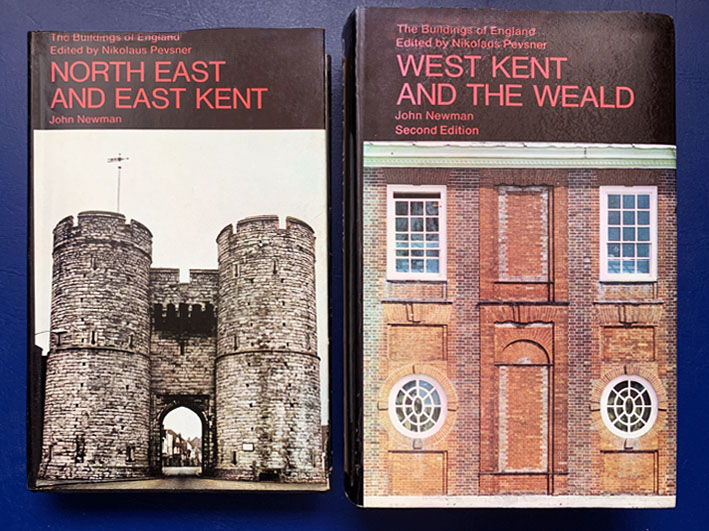 Pevsner’s Kent
Nikolaus Pevsner was born in Leipzig. Although he had converted early from Judaism to Lutheranism, he felt it prudent to flee Germany when Hitler came to power, yet still was interned briefly in Britain when WW2 broke out. He made his name with ‘The Buildings of England’ (1951-74), an encyclopedia of English architecture, each of whose 46 volumes was dedicated to a particular county; he added Scotland and Wales later. There were two substantial Kent volumes, both written on Pevsner’s behalf by John Newman, a classics teacher at Tonbridge School and resident of Kent for most of his life. Newman did such a good job that Pevsner declared his efforts the best of the whole series. The ‘Pevsner Architectural Guides’, which each contain numerous photographs, are now recognised as a seminal reference work, and the Kent volumes are an obvious next port of call for fans of the popular Ideal Homes section of Old Bunyard’s Kent Pride.
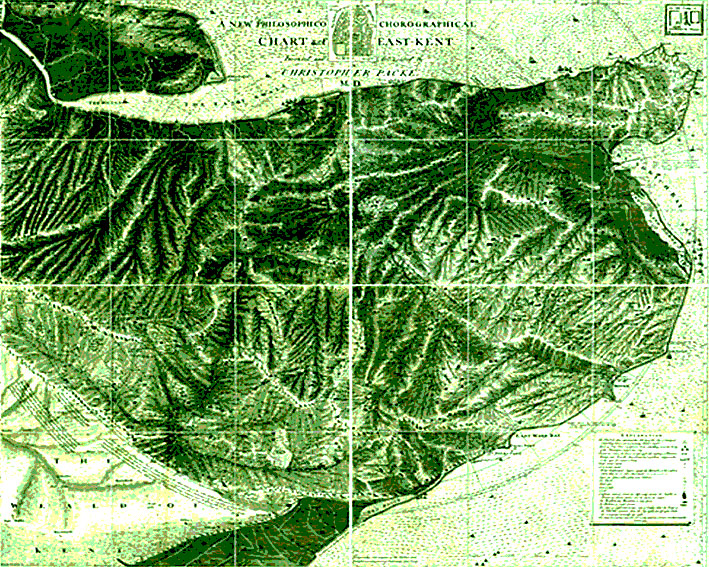 The Philosophico-Chorographical Chart of East Kent (1743)
Christopher Packe from Hertfordshire (1686-1749) was the son of another Christopher Packe from London who made a living as a quack. Young Packe himself qualified as an MD at Cambridge in 1717, and joined the Royal College of Physicians six years later. Aged around 40, he moved to Canterbury, where he practised medicine for the rest of his life. On his rounds, he formed such an interest in the topography that he decided to map it; the first fruit of his labour was an essay read to the Royal Society in 1737, accompanied by a crude specimen. Dissatisfied with the quality, he used a theodolite to plot the terrain accurately within a 15-mile radius of the cathedral’s Bell Harry Tower, measured elevations across the whole area with a barometer, and added such details as woods and waterways. In 1743 his grandly titled ‘Ankographia, sive Convallium Descriptio’ explained what is reckoned to be the world’s first geomorphological map.
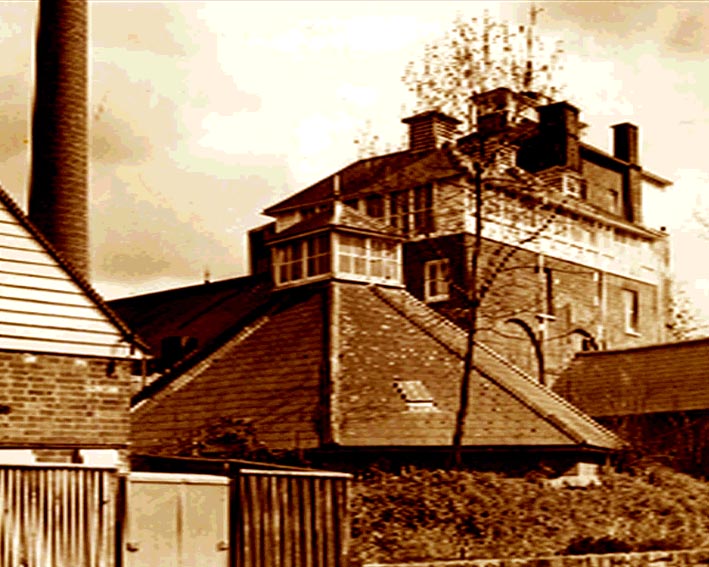 The Phoenix Brewery
When wigmaker John Moore died in 1778, his executor – one of the local Crow family – bought his land in Wateringbury. Another Crow later built the Wardens Hill brewery there, and commissioned the installation of Pontifex steam power. He ran into money troubles, however, and it was not until 1836 that the Pontifexes reimbursed themselves by taking possession of the brewery. They leased it to Charles Leney, who in 1861 bought the freehold and started a new brewery called the Phoenix, which may suggest that Crow’s brewery had burned down. The Phoenix remained in operation for over a century, helping make Wateringbury a centre of Kentish brewing. In 1927, the business was acquired by Whitbread, which continued using the Leneys name until 1961. Alongside producing the likes of Mackeson and Whitbread Gold Label, the business sold Export Pale Ale to Belgium, which was akin to taking coals to Newcastle. It was closed in 1984, prior to being demolished.
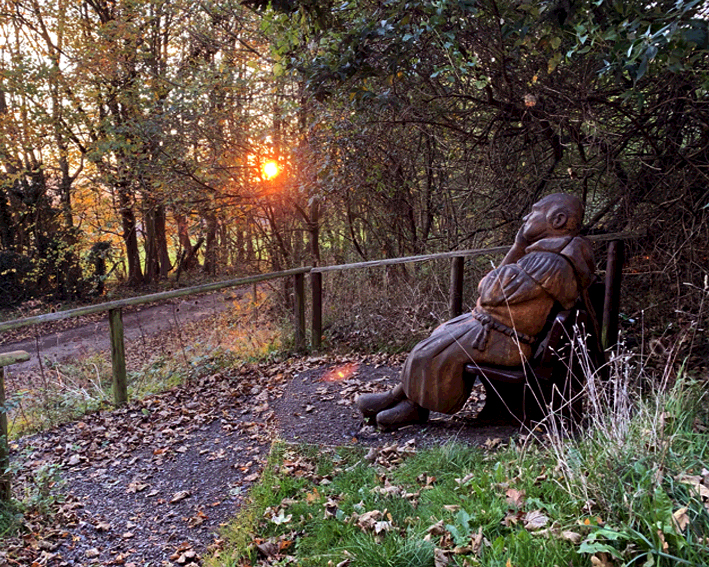 The Pilgrims’ Way
‘Pilgrims’ Way’ is an outstanding piece of branding. This is after all just a country walk, much of it metalled; but it is hard to stroll along it without getting a sense of re-treading ancient footsteps. The name specifically designates the path from Winchester, the Anglo-Saxon world’s political capital, to Canterbury, its ecclesiastical hub. It is only a section of the longer and more ancient Harrow Way from Devon to Dover, and the last stretch from Chilham to Canterbury is a spur off that three-millennia-old route. The course followed by the Pilgrims’ Way has a practical logic to it, exploiting the solid terrain above the Wealden clay with no need to ascend the North Downs. It has been claimed that the name goes back only to the Victorian era, but there are in fact much older references. Ironically, England’s most famous group of pilgrims, Chaucer’s fictional group, actually made their way to Canterbury down Watling Street.
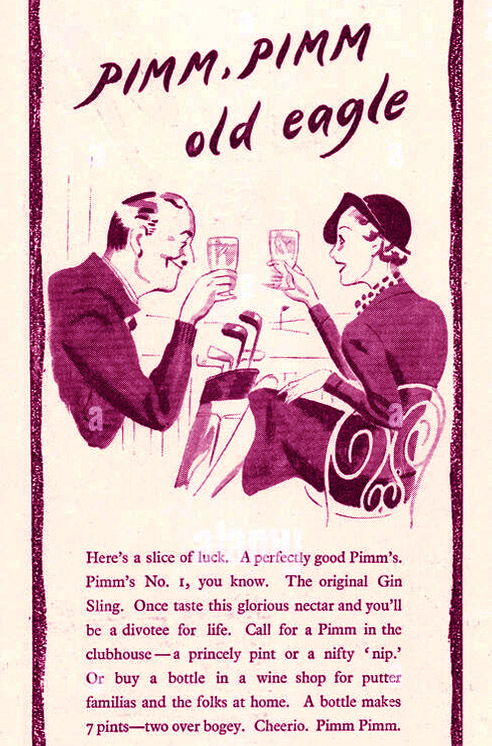 Pimm’s
A farmer’s son from Newnham, James Pimm (1798-1866) studied in Scotland before setting up an oyster bar in the City. So successful was he that he eventually owned a string of restaurants, including ones catering for the gentry. Having decided that he ought to offer a drink to help his shellfish go down better, he designed a fruit cup: an alcohol-based cordial that could be added to a long soft-drink to inject some pep. His 1823 recipe, which remains a secret but is based on gin, spices, and quinine, became famous as Pimm’s. Nowadays 25% alcohol by volume, it is most commonly mixed with lemonade, sliced fruit, mint, and ice to make an unusually refreshing drink that has become ubiquitous at upmarket garden-parties in the English summer. Diageo-owned Pimm’s is also practically synonymous with the Wimbledon tennis championships, where 300,000 glasses of it are served every year. Pimm himself lies buried in East Peckham.
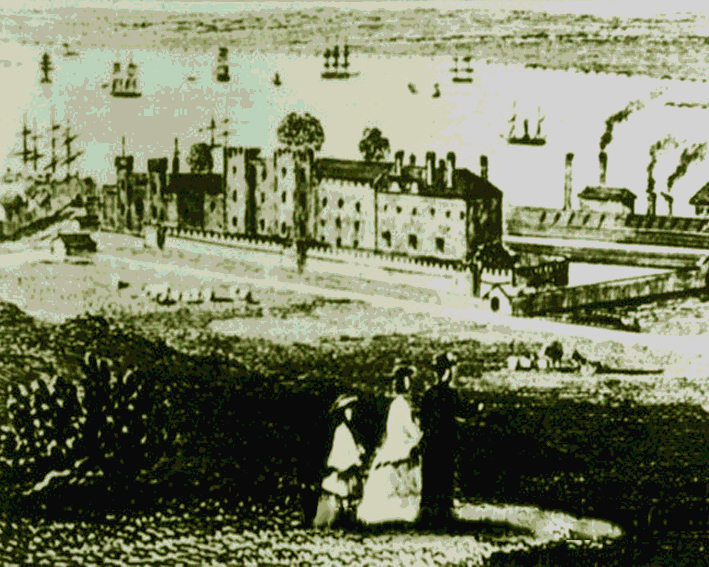 Pitchers shipyards
Eight years after William Cleverley’s shipbuilding yard opened at Gravesend in 1780, Thomas Pitcher (1745-1837) followed suit at Northfleet, aiming to satisfy demand for ships that exceeded the capacity of the Royal Dockyards. Along with its maintenance docks at Blackwell, the business was to become one of the largest on the Thames, eventually employing 2,000 men. Pitcher’s first launch, in 1789, was a 1,238-ton vessel, the first of 160 warships and East Indiamen. Royal Charlotte, launched in 1789, effectively served as both when, on one of her two trading voyages to the Far East, she was diverted to India to assist in the capture of Pondicherry during the French Revolutionary Wars. Pitcher’s sons, Henry and William, took over the business in 1816. Their first steamship, Cleopatra, was launched in 1839, and during the Crimean war (1851-5) they enjoyed an Indian summer producing 54 gunboats for the Royal Navy. After running into financial straits, the yard closed in 1860.
 Place names
In which corner of the world can you find Ashford, Canterbury, Chatham, Dover, Greenwich, Maidstone, Rochester, Sandwich, and Tunbridge? There is in fact an alternative answer to the obvious one: New England. Settlers have always been inclined to give their new homes comfortingly familiar names, so it is unsurprising that the innumerable seafarers who embarked in Kent across the centuries left their mark on the atlas. The several dozen American townships with Kent names include 19 Rochesters, and Ontario even boasts a municipality called Chatham-Kent. Perhaps the most famous overseas locality bearing a Kentish name is Greenwich Village in New York; the Canterbury region of New Zealand’s South Island was named after the Archbishop, and the Sandwich Islands (now Hawaii) after the Earl. There are also numerous places called Kent, including six US counties and four islands around the globe. Though some are named after individuals called Kent, most of these men also derived their surname from England’s oldest county.
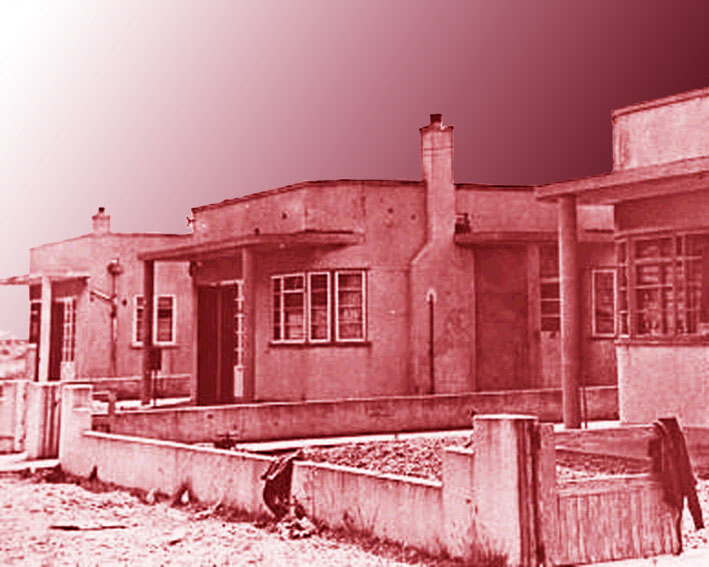 PLUTO bungalows
One of the major challenges facing commanders of the Allied invasion of France in 1944 was providing fuel to keep their armies moving. It was easy for the Germans to hinder the progress of oil tankers across the Channel with mines, or simply to bomb them. Lord Mountbatten had the ingenious idea of laying pipelines, an idea that led to Operation PLUTO (Pipe Lines Under The Ocean). The operation broke into two parts with equally Disneyesque names: Bambi, running from Sandown, Isle of Wight to Cherbourg, and Dumbo from Dungeness and Greatstone to Boulogne. The first, though more important, delivered disappointingly little fuel. Dumbo, however, was a roaring success. The main pipeline ran down through Marden and Appledore to the coast, where the pumping stations were disguised as bungalows that still survive as residences. Machines called Conundrums laid 17 trans-Channel pipelines that eventually delivered nearly 180,000,000 gallons of petrol to the forces invading Germany, so accelerating the end of national socialism.
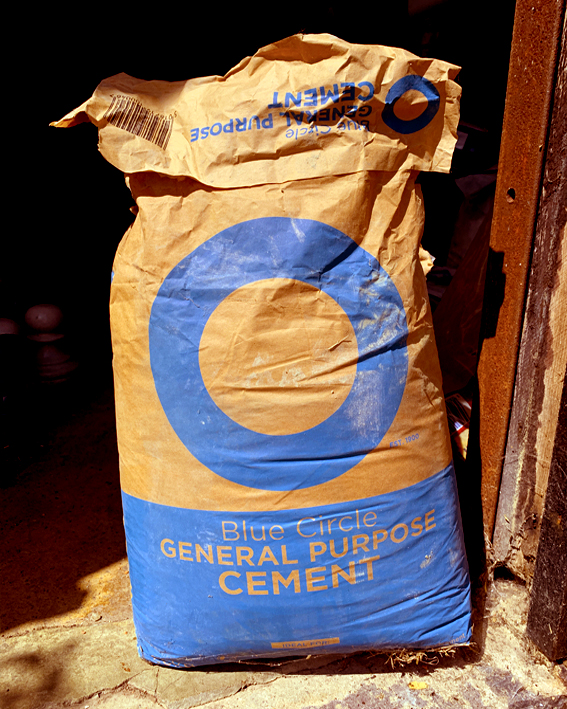 Portland cement
The overwhelming majority of cement used for construction globally is called ‘Portland’, owing to its supposed resemblance to the stone of that name. It was patented by Yorkshireman Joseph Aspdin in 1824, but improved by his son William, who came south in 1843 to manufacture it on the Thames. Three years later, the business moved to the site at Northfleet Creek established by Reverend James Parker in the 1790s to manufacture his patented ‘Roman cement’, using chalk and clay from Sheppey. Aspdin soon faced competition from an even better form of Portland cement, produced on the former site of James Frost’s Roman cement works at Swanscombe; its inventor, Isaac Johnson of JB White’s, subsequently set up his own works in three Kentish locations. In 1900 the industry was brought together as Associated Portland Cement Manufacturers Ltd, which by 1911 accounted for four-fifths of British production. It was renamed Blue Circle Industries in 1978, and acquired by French-owned Lafarge in 2001.
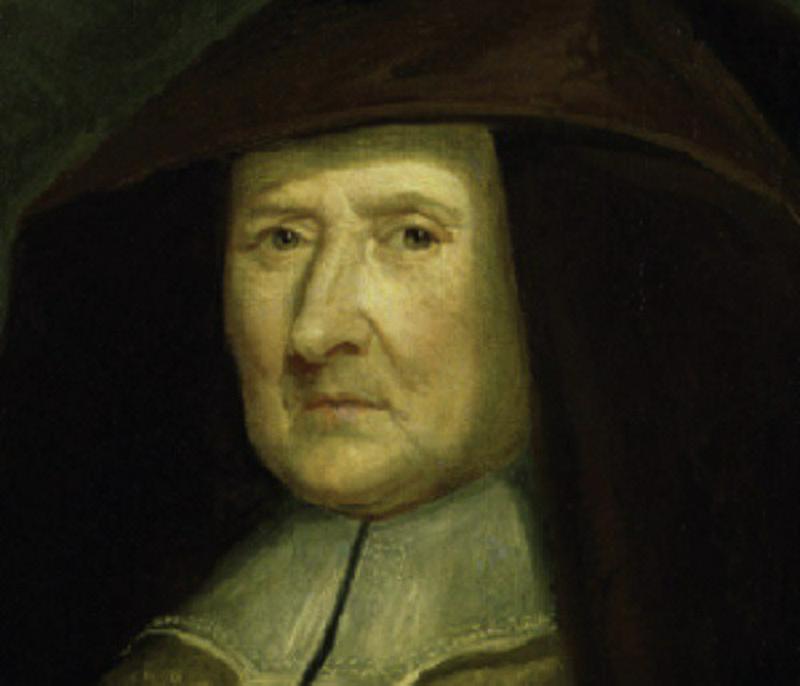 The portrait of Katherine Fitzgerald
Of all the original paintings in Kent, perhaps the most curious is the one discussed by Vita Sackville-West in ‘Knole and the Sackvilles’ (1922). This portrait, displayed in the Leicester Gallery at Knole House, was purportedly of the Irish dowager Katherine Fitzgerald, Countess of Desmond. Its interest derived from the Countess’s extreme longevity: it was once claimed that she lived for 162 years. As she probably died during reign of James I, this would mean she was born in Henry VI‘s lifetime, and outlived ten monarchs. The likely explanation is the commonplace genealogical problem with teasing apart people with identical names. Nevertheless, she was certainly old for her time: it is generally accepted that she was at least 90 when she died, supposedly after falling out of a cherry tree. Sackville-West describes evocatively the spooky feeling her face elicits by candlelight, adding that any visitor might be better off walking past in the dark.
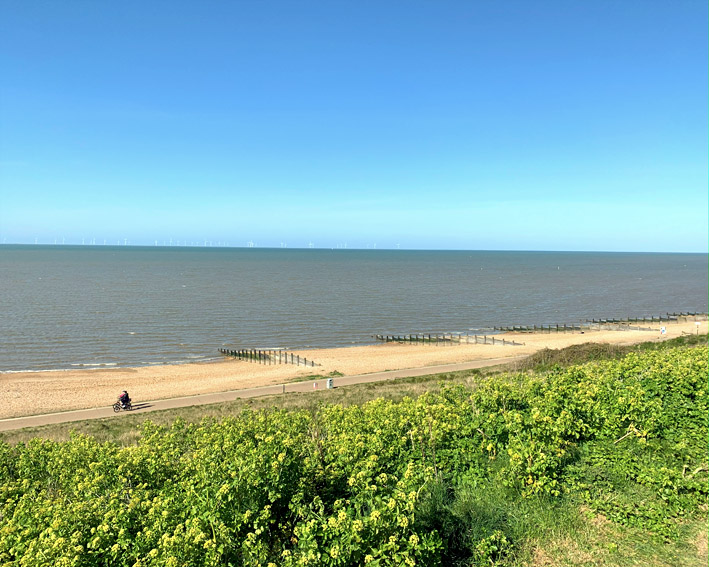 The Pudding Pan
One of the benefits of living in Whitstable is that, for beachcombers at least, crockery occasionally comes free on the tide. For several centuries, people have been finding Roman tableware washed up on the shore, sometimes still usable. It was once suspected that a Roman pottery had been located nearby, but it is now believed that a ship was wrecked there in ancient times while carrying a large cargo of Samian ware. This is a generic term for good-quality crockery with a reddish colour and often a signature design, for which reason Romans called it ‘terra sigillata’, or ‘stamped earthenware’. The English name comes from the Greek island of Samos off the Turkish coast, the first Samian ware having been produced at nearby Pergamum in the C2 BC, although by Roman times the usual source was Gaul. Some of the finds yielded by North Kent’s ‘Pudding Pan’ are exhibited in the Beaney Museum.
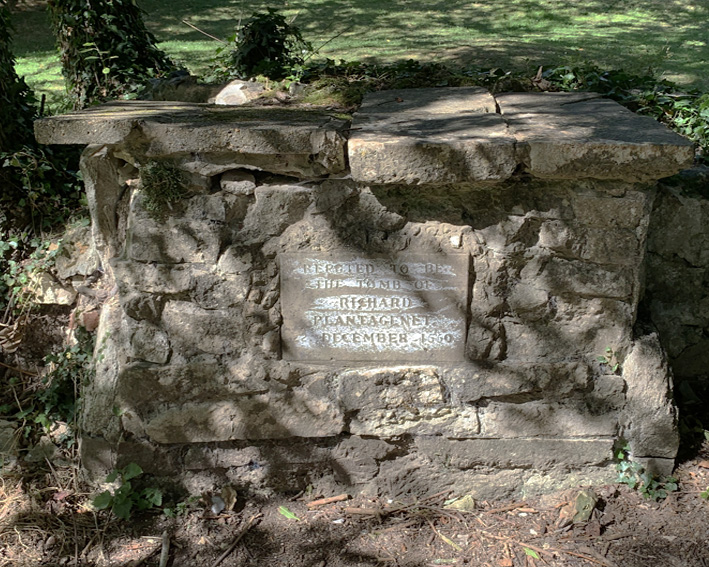 Richard of Eastwell
The story of Richard Plantagenet (ca 1469-1550) is the stuff of fairy tales. He was raised by a schoolmaster without knowing his parents’ identity. In 1485, a noble arrived unexpectedly to take him to Leicestershire. There he met no less a personage than King Richard III, who was about to fight Henry Tudor at Bosworth Field. The King revealed that he was the boy’s father. If the battle went well, young Richard would be acknowledged as his son. As history records, however, the King was slain. The boy fled, and became a bricklayer. In 1546, he was working at Eastwell Manor, Sir Thomas Moyle’s home. Hearing the story, Moyle offered him a stewardship; but Richard wished only to live in seclusion. He was permitted to build a hut on the site of what is now Plantagenet Cottage. His death was recorded in Eastwell church’s parish register, but his burial place, and the veracity of the legend, remain uncertain.
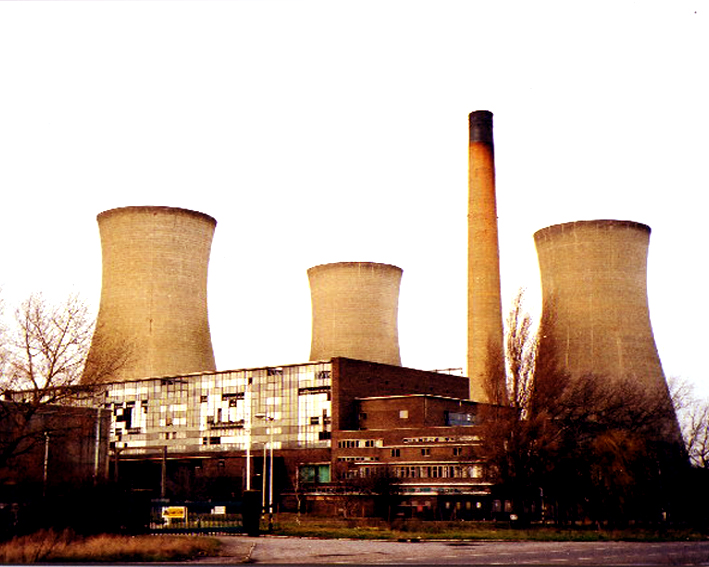 Richborough Power Station
For half a century, the romance of a visit to the Roman castle at Richborough always had the edge taken off it by the prominent cooling-towers of Richborough Power Station, visible for many miles around. Opened by CEGB in 1962, it was powered by coal, partly from the uneconomical Kent pits, and generated a useful 336 megawatts. In 1971, the reactors were converted to oil, and in 1989 to a proprietary Venezuelan emulsion. The latter prompted legal challenges that presaged the station’s closure in 1996. Plans to demolish the cooling-towers were challenged by locals who, ironically, had grown fond of them. Despite further appeals by seamen who used them as navigational aids when seeking the nearby mouth of the Stour, they were demolished in 2012. A 1-megawatt wind turbine erected there in 1989, once Britain’s biggest, is already defunct. Plans for a futuristic ‘Richborough Energy Park’ thus far encompass only 200 unsightly battery storage units.
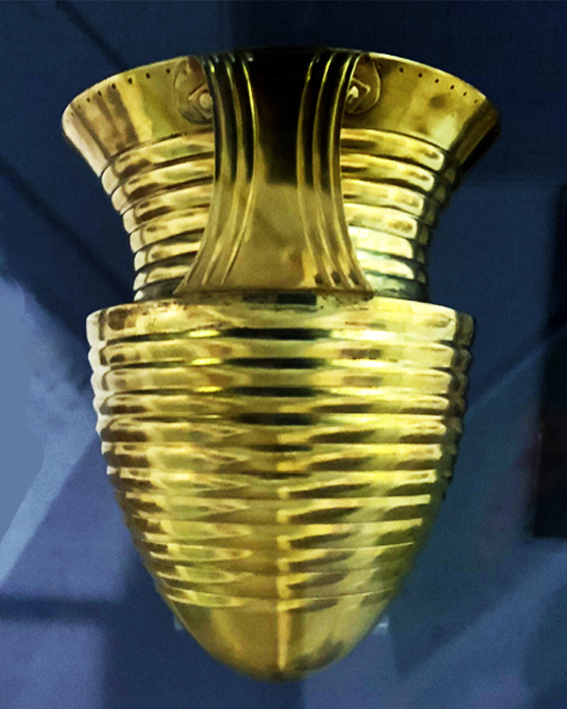 The Ringlemere cup
When detectorist Cliff Bradshaw unearthed the Ringlemere cup near Sandwich in 2001, he exposed more than just a fascinating artefact. Archaeologists realised that it was probably not an Anglo-Saxon grave good but more likely an ancient votive offering. It was buried in a barrow over 15 feet high, 40 yards wide, and at least 3,500 years old, that may have been preceded by a henge. Unfortunately, centuries of ploughing had flattened most of it, and the cup itself had been crushed in the recent past. It was nevertheless possible to make out a goblet nearly 6 inches high, made from a single piece of gold with a separate handle riveted on. It was round-bottomed and therefore not stable, suggesting a ritual purpose. It was exhibited for a while at Dover Museum, but now resides permanently at the British Museum. Bradshaw was paid £135,000 for his share of the treasure trove, and the same amount went to the landowner.
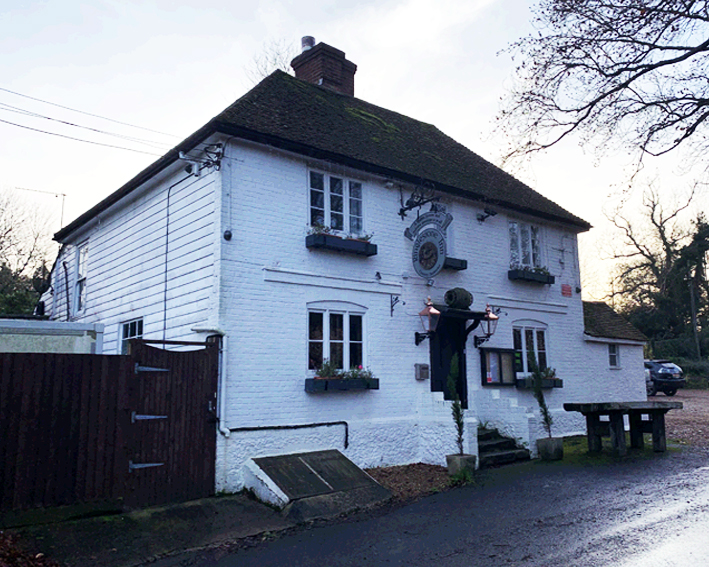 Ringlestone Inn
All landlords are familiar with the problem of getting guests to drink up and leave at closing time, but they do not normally have such an issue with keeping people out. The inn at Ringlestone, north of Harrietsham, was built in 1533, and has the usual tales of highwaymen, smugglers, and ghosts attached to it. Much more interesting, however, is the tale of the two women who ran it from 1958. Florence ‘Ma’ Gasking and her daughter Dora were notoriously picky about who they let in, supposedly after a huge gang of motorcyclists once turned up. They devised a system of secret knocks at the door so that only welcome guests could enter. Unwelcome visitors could expect to be threatened by a block of concrete balanced above the door. For getting rid of anyone who turned unruly, there was even a shotgun behind the bar. Stories that they actually used it are probably exaggerated.
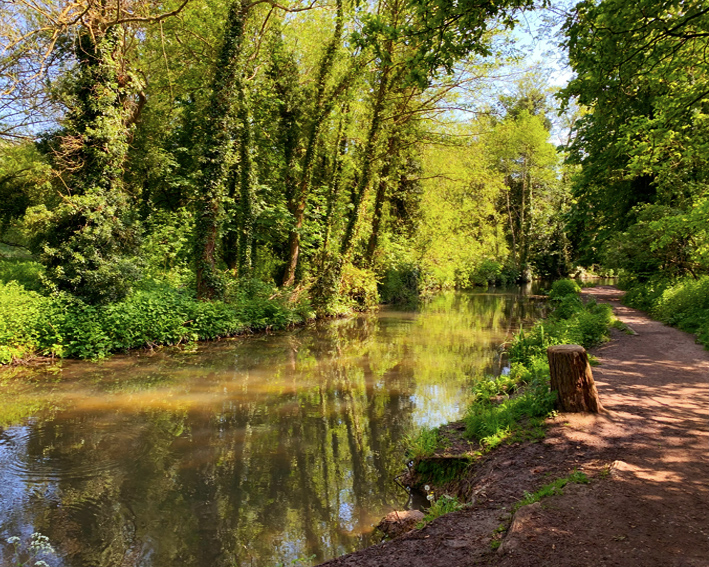 River Darent
The furthest west of the three Kent rivers that cut through the North Downs on their way to the sea, the Darent rises from springs on the Greensand Ridge at Westerham. Although shorter than the Medway and Stour at 21 miles, it was once richer in history, for a particular reason: fords. Invading forces from the continent usually had to cross it on their way to the Thames, which meant that the major crossing-places at Dartford, Eynsford, and Otford became natural bottlenecks that defenders needed to stop; Otford was actually the site of not one but two major battles, in 776 and 1016. The Darent, whose name possibly derives from the Brythonic for ‘oak’, is currently the south-eastern boundary of the metropolis’s expansion. Its most practical problem in the recent past has been water starvation by the Medway, which grew so bad that special measures were introduced in 1989.
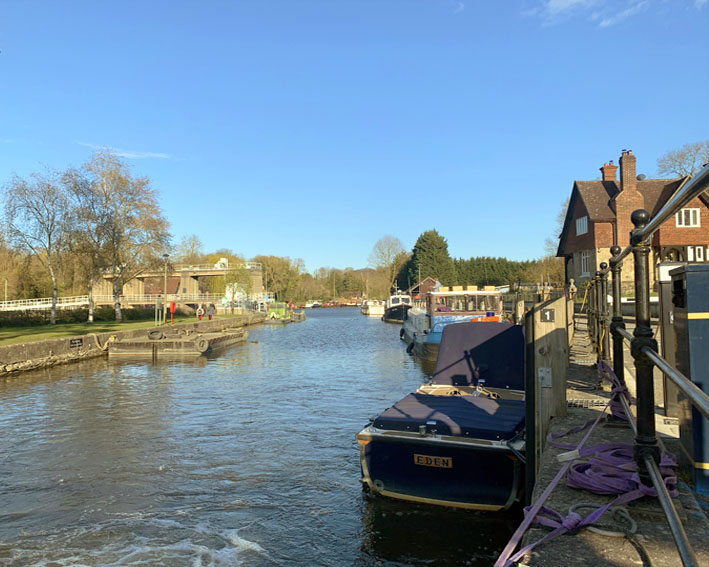 River Medway
This quintessentially Kentish river actually rises at Turners Hill in West Sussex, flowing for nearly a fifth of its length before entering Kent near Groombridge. Being adjacent to the Downs, it has a larger water catchment than any southern river bar the Thames, which it joins at Sheerness; Edmund Spenser described their mythical marriage in his ‘The Faerie Queen’ (1596). Settled since prehistoric times, the Medway was for millennia Kent’s major north-south artery. It also provided a crucial barrier: the first documented battle in Britain was the Battle of the Medway near Aylesford in 43, and – as its name implies – the river became the traditional border between Jutish Men of Kent and Saxon Kentishmen. The longstanding home of the Royal Navy, its place in history was cemented by the devastating Dutch ‘Raid on the Medway’ in 1667. The river has also had significant influence in the commercial sphere, and is celebrated annually in the Maidstone River Festival.
 River Stour
The Medway has a larger catchment and richer history, but the Stour offers the better geography. It may be memorised as a stick-man doing the splits, toppling to the right, one arm up and one down, head tilted backwards. One leg starts in Lenham, close to the source of a major Medway tributary, the Len. At Ashford, this Upper Great Stour meets the other leg, the East Stour, risen at Postling. Merged, they continue as the Great Stour through Canterbury. Some miles beyond, near Plucks Gutter, the river is joined by one arm, the Wantsum, arriving from Reculver; then a second, distended one from Lyminge (strangely close to Postling) named the Nailbourne initially, then the Little Stour. The head next makes a semi-circular detour before debouching at Pegwell Bay. Otherwise, the river’s main talking-point is whether ‘Stour’ be pronounced ‘Stoor’ or ‘Stower’ – upon which even locals disagree.
 River Thames
Around the world, the Thames is to London what the Seine is to Paris; yet these great rivers’ length lies mostly outside their respective capitals. Over 200 miles long, the Thames rises in Gloucestershire. Its Kent shore used to run fully 45 miles from the estuary’s mouth at Warden Point, Sheppey to Deptford, whereas boats could sail past London upstream in relatively little time – at least until Westminster annexed swathes of the surrounding counties in 1889. During the Last Ice Age, this mighty waterway was a mere tributary of the Rhine, which debouched into the North Sea off East Anglia; yet it became so important to national trade in the Middle Ages that North Kent was for centuries the centre of English shipbuilding, seamanship, and the Royal Navy. Nowadays, the Thames is no longer used as the capital’s sewer, but still threatens London with devastation if ever its flood defences should fail.
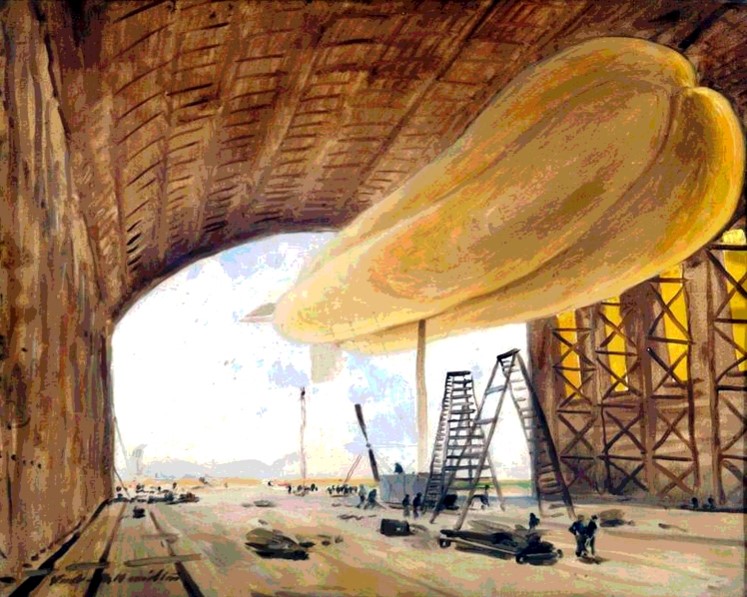 RNAS Kingsnorth
With British military and civil aviation having both originated in North Kent, it was natural that the Admiralty should turn there first in developing its air arm. In 1910, it accepted the Royal Aero Club’s offer of the use of its airfield, instructors, and two aeroplanes at Eastchurch. By the time the Royal Naval Air Service was inaugurated in 1914, the potential of airships had also been recognised. An airship station opened in July 1914 on the Hoo peninsula. It was named RNAS Kingsnorth, not to be confused with RAF Kingsnorth near Ashford, an advanced landing ground in WW2. The emphasis at RNAS Kingsnorth was on airship experimentation, later developing into construction. It increasingly served as a training centre as WW1 elevated its significance, and provided a Royal Navy meteorological service as well as a base for anti-submarine patrols. In 1918, the RNAS merged with the Royal Flying Corps to form the RAF. RNAS Kingsnorth was decommissioned in 1921.
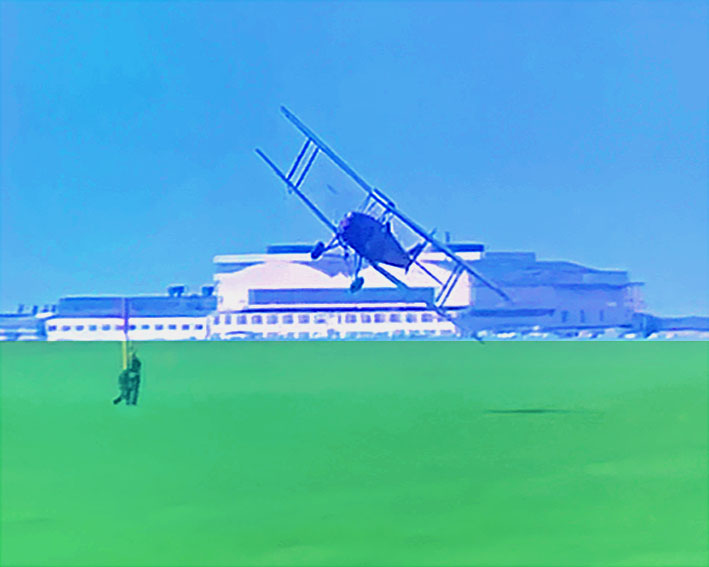 Rochester Airport
In 1933, with the growing aviation business in mind, Rochester City Council acquired a patch of land a mile and a half south of the town. It soon attracted a tenant, namely the long-established Short Brothers of Eastchurch fame. They set up a production facility there, which by the time of WW2 was turning out the Short Stirling, the RAF’s first four-engined bomber. Another arrival was Pobjoy Airmotors, which Shorts later acquired. In 1938, the airfield additionally attracted the RAF itself, which used it for training purposes. Shorts vacated the site after the war, after which it served primarily as an airfield, hosting flights to the continent by Channel Airways until new regulations obliged them to move. Part of the site was handed over to light industry in 1979, but further attempts to develop it for industry in the C21 have thus far been thwarted by preservationists. Renovation of the airfield is still work in progress.
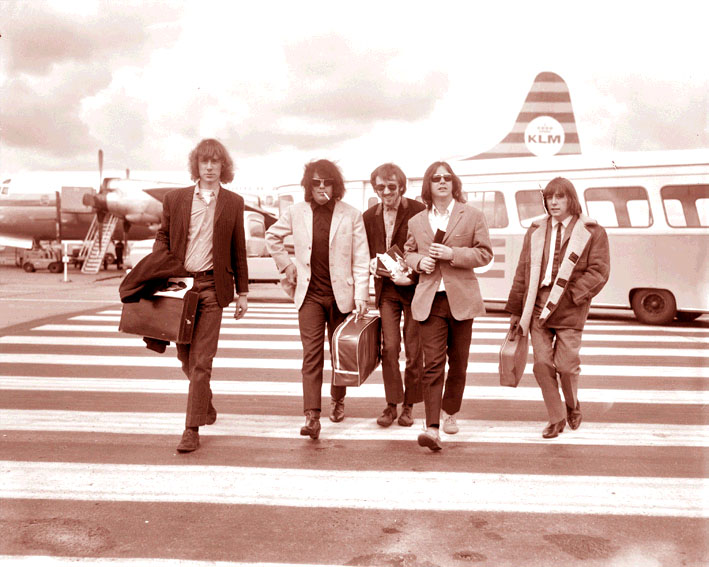 Rock opera
In 1963, at Sidcup Art College, Phil May from Dartford founded The Pretty Things, the band whose front man he became for life. Though named after a 1955 Bo Diddley song, they were distinctly Kentish: guitarists Brian Pendleton and Dick Taylor had attended Dartford Grammar School, while bassist John Stax was from Crayford. Their launch coincided with the Mersey explosion, yet their persona to begin with was less Beatles than Rolling Stones, with whom they had close connections. Though their second single, ‘Don’t Bring Me Down’, reached the Top 10, chart success would prove elusive considering their sizeable output over the next half-century. In 1968, however, they made one notable contribution to rock music history with ‘S. F. Sorrow’, the first rock opera. Its tone, shaped by psychedelia, was reminiscent of ‘Sergeant Pepper’ and The Kinks, but also early Pink Floyd and Genesis. Not unnaturally, the band became markedly prog-rock thereafter. It effectively died with May in 2020.
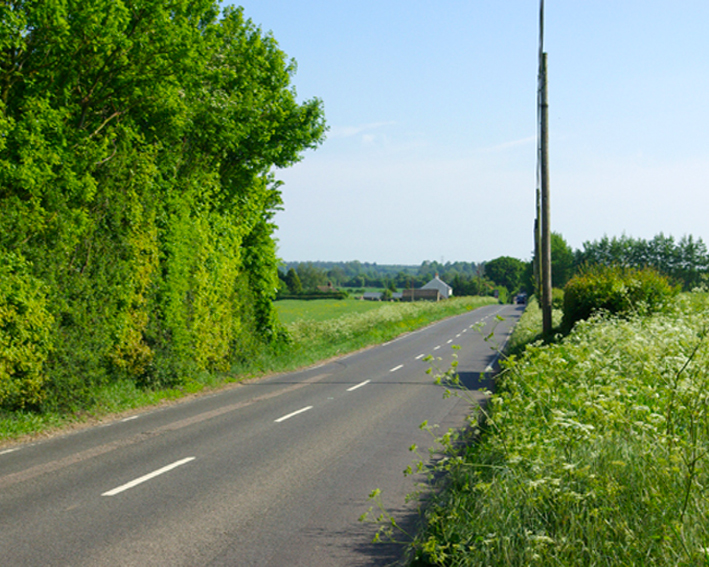 Roman roads
The most important documentary evidence for Roman roads in Kent was provided by the ‘Antonine Itinerary’, a (probably) C3 route map for Roman legionnaries. It traces the main Roman road running from the Kent coast to Londinium, which was initially known to the Anglo-Saxons as Casincg Straet – a name that survives as Key Street on the A2 – but eventually was regarded as part of Watling Street, which carried on to Shropshire. At Durovernum (Canterbury), four roads converged: those from Regulbium (Reculver), Rutupiae (Richborough), Portus Dubris (Dover), and Portus Lemanis (Lympne), all of which were embarkation points for the continent. The road from Lympne, following the route of today’s B2068, had no Roman name, but since the Dark Ages has been known as Stone Street. An arterial Kent road not in the ‘Itinerary’ ran south from Rochester through Maidstone, connecting with two others that ran in parallel north-west from Lympne and the Folkestone area, the latter then continuing westwards.
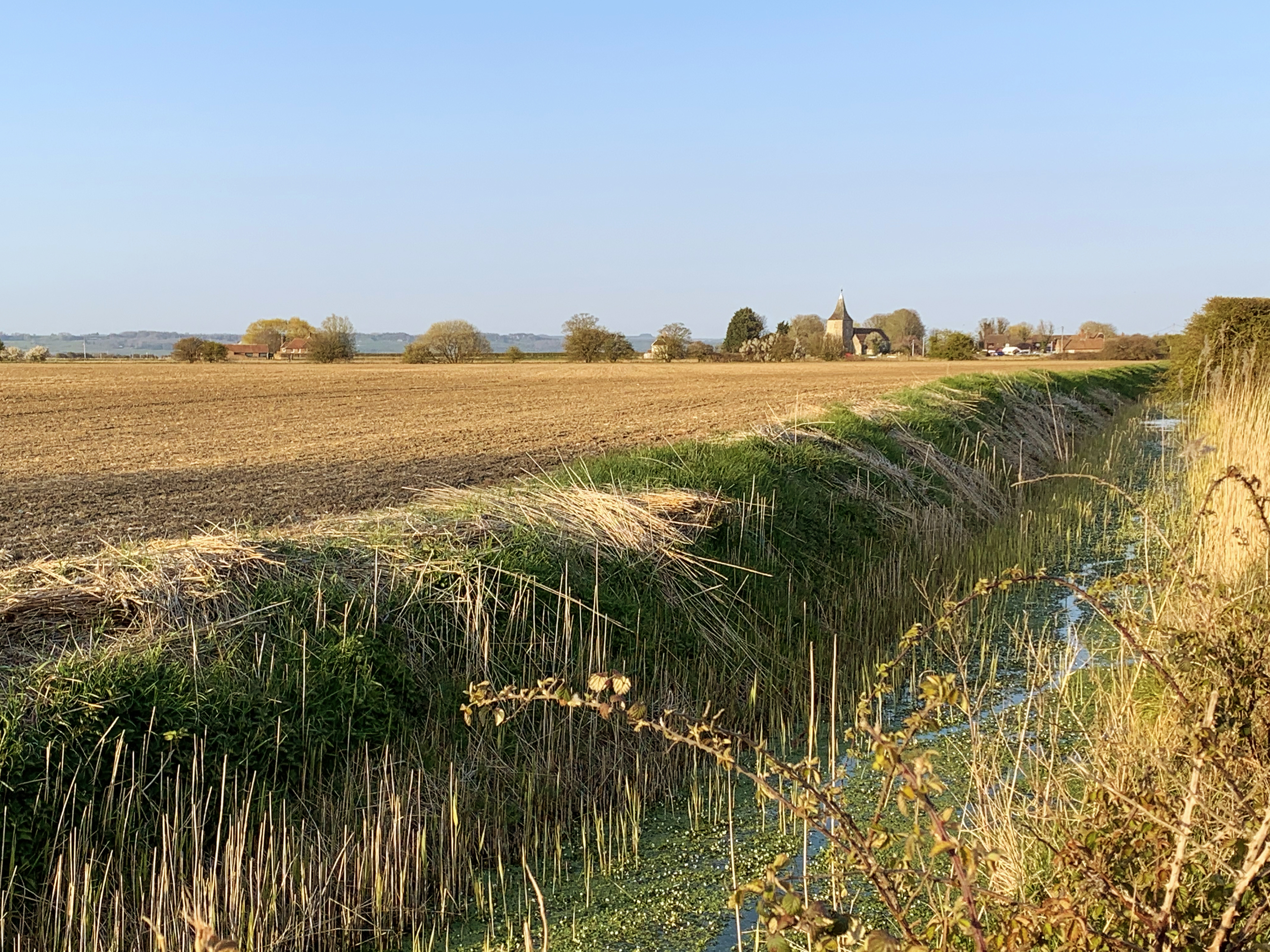 Romney Marsh
A C19 writer described Romney Marsh as the Fifth Continent. Making allowances for geographical ignorance and local bias, you get his point. After Kent’s undulating terrain, the unending flatness and overarching sky of this 100-square-mile region give an impression of being transported far away. The area is well defined on a map, ever since the Royal Military Canal was built around it as a defensive moat. Much is below sea level and at high risk of flooding. Its most famous occupants, the sheep bearing its name, are no longer so numerous, but there is a wealth of interesting wildlife if you know where to look, particularly by way of birds. It was not always so appealing: for centuries while the area was being reclaimed from the sea, conditions were harsh and malaria rife. Its remoteness also made it a draw to smugglers and would-be invaders; but the defences built over the centuries lend piquancy to long walks.
 The Romney Passion Play
Before the dawn of printing, news spread largely by word of mouth. As today, however, the powers that be needed propaganda channels to urge approved behaviour, and the Church’s particular priority was imparting Christian values. One of the cheapest and therefore most popular methods was an artwork or set of figures that could be transported from place to place with an accompanying explanation. This might be dramatised with a tableau vivant or puppet show, while some cathedral cities like Chester and Coventry even staged plays on a rolling basis. Romney fell into this category, albeit less frequently. From the C15, it had a well-organised and mostly well-funded programme of pageants and ‘passion plays’, using performers provided by local fraternities. Eventually, paid troupes came from towns all over southern Kent. The plays made money for writers: in 1468, one Agnes Ford was paid £6s 8d, which must rank among the oldest payments to a female dramatist.
 Romney sheep
The Romney, formerly called the Romney Marsh but known locally as the Kent, is the world’s sheep. Its biggest advantage is immediately obvious: a heavy but even fleece. Having evolved from a longwool medieval strain that was crossed in the C18 with the English Leicester breed, this relatively large sheep delivers not only excellent yields of wool but also tasty meat. Breeders say that it is hardy, adaptable, and good at foraging, though not as fertile as other breeds. Its fame spread when, in 1853, the first flock was exported from Stone to New Zealand, where it displaced the established Merino flocks. By 1965, around three-quarters of the New Zealand sheep population was Romney. The New Zealand lamb industry essentially began on February 15th, 1892 with the export of 4,900 carcasses to Britain – a date still celebrated there. Nowadays, because of health regulations, most Romney exports around the world come from New Zealand and Australia.
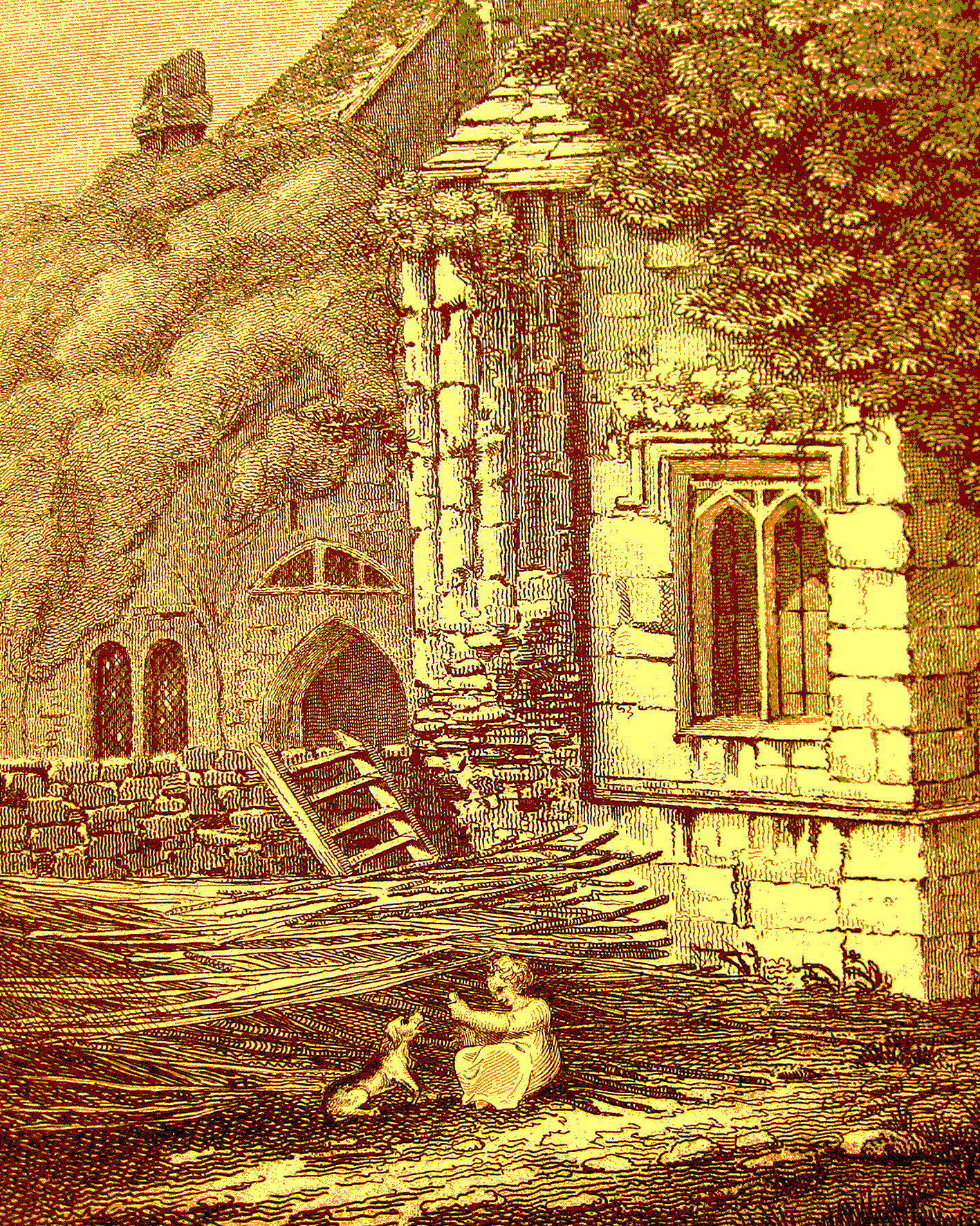 The Rood of Grace
One reason why Protestantism caught on in England was the shocking venality of the medieval Catholic Church. One of its worst culprits in Kent was Boxley Abbey, whose St Rumwald scam was revealed with the Dissolution of the Monasteries. Another attraction exposed at the same time was the so-called Rood of Grace, a crucifix whose representation of Christ reportedly moved and/or cried; even Henry VII was drawn to pay homage in pre-Reformation days. The figure was supposed to have turned up at the Abbey on a stray horse, which was considered grounds enough for it to be declared a miracle. After the Abbey was ransacked, the Rood turned out to be an early example of an automaton. It was exposed to public ridicule, smashed by the Bishop of Rochester, and burnt in London. Catholic apologists have countered that no confidence trick was intended, because everybody knew it was not real.
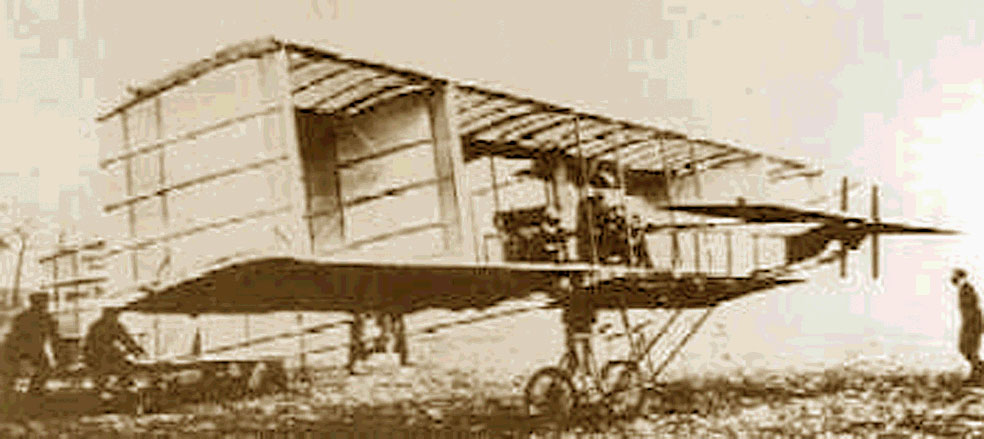 The Royal Aero Club
Frank Hedges Butler (1855-1928), a scion of the Hedges & Butler wine merchants, had a passion for motor-cars. He acquired a Benz as early as 1897, and co-founded the Automobile Club of Great Britain (later renamed the RAC) the same year. One of his collaborators was Charles Rolls, who introduced him to ballooning. On September 24th, 1901, they took off from the Crystal Palace, by then in Kent, with Butler’s daughter Vera. As they passed over Sidcup, she suggested an aeronautical version of the ACGB, which duly became the Aero Club of Great Britain. At first a club for gentleman enthusiasts, it morphed into air sport’s regulatory body, known from 1910 as the Royal Aero Club. Its early influence was enormous. Its original headquarters at Mussell Manor, Shellness hosted the first British flight by a Briton, the landmark meeting of the Wright and Short brothers, and the training of the first four Royal Navy pilots – the forefathers of the RAF.
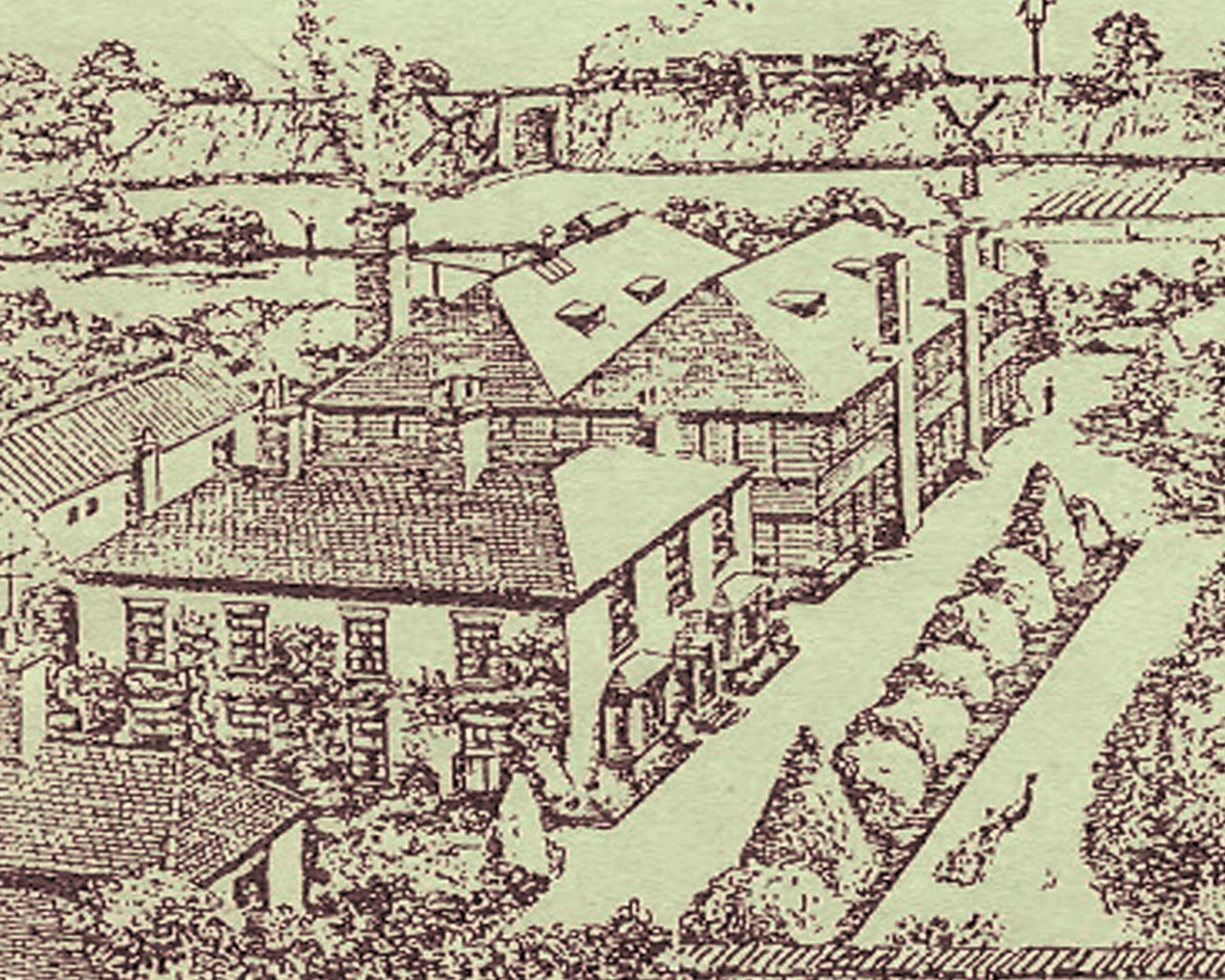 The Royal Armoury Mills
Already by 1371, there was a watermill producing armour on the Ravensbourne at Lewisham. On taking over the Manor of Lewisham, King Henry VIII repurposed it in 1530 to produce high-quality armour for his tiltyard at Placentia Palace in Greenwich. It reverted for over a century to private production, but underwent major expansion in 1807 during the Napoleonic Wars, when the Board of Ordnance ordered a Royal Engineers officer from Faversham’s Royal Powder Mills to upgrade it to a Royal Manufactory of Small Arms, capable of producing up to 50,000 muskets a year for the British Army. Following Waterloo, it was rapidly decommissioned, its functions having been transferred to the new Royal Small Arms Factory at Enfield in Middlesex, which subsequently lent its name to the standard-issue British rifle. The Lewisham site became the Silk Yard, initially producing brocade for officers’ uniforms, and later more general textiles. After falling derelict, it was destroyed by the Luftwaffe in WW2.
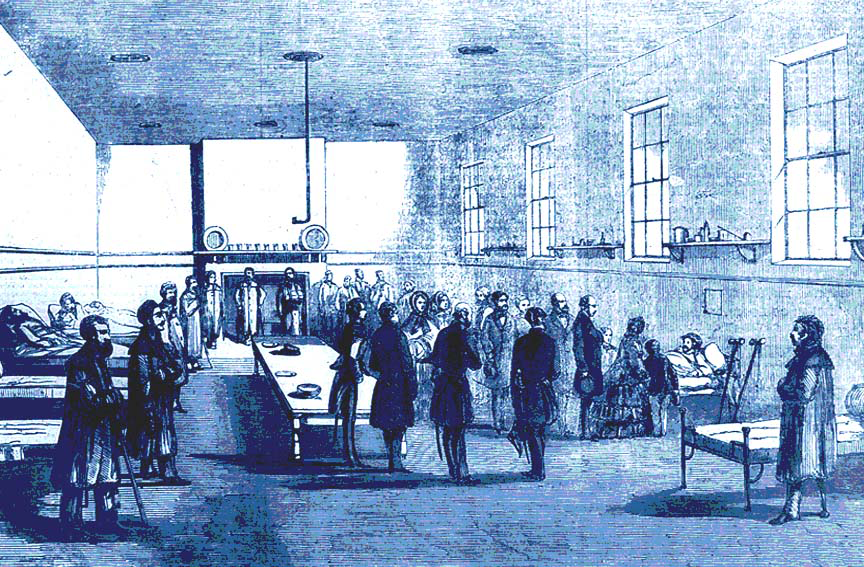 The Royal Army Medical Corps
Before the C17, medical matters in the armed forces were dealt with locally. Then, with the establishment of a standing army after the 1660 Restoration, the first centralised supervision was introduced. The Army Medical Board formed in 1793, with the French Revolutionary Wars underway, created five military hospitals, two of them at Chatham and Deal. The Army Medical Department founded in 1810 was effectively based at Chatham’s Fort Pitt, which after the Napoleonic Wars became England’s only general military hospital. This solution lasted until the Crimean War, when inadequate provision led to over a third of 28,000 British troops dying, mostly of typhoid and cholera: a disaster that prompted the foundation of the Herbert Hospital at Shooters Hill. The ensuing re-organisation led to a dispersal of RAMC facilities around the country, although an Army Medical School remained at Fort Pitt until 1863. Together with the veterinary, dental, and nursing corps, the RAMC now forms the Army Medical Services.
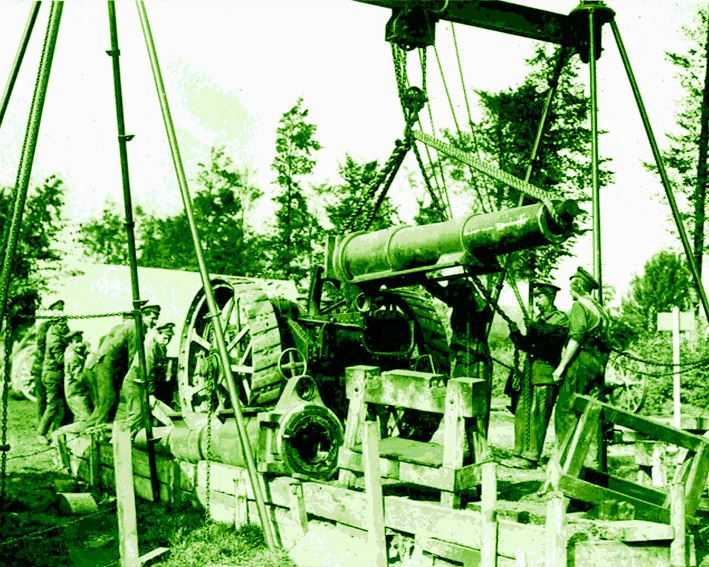 The Royal Army Ordnance Corps
An army may march on its stomach, but can only fight with something lethal in its hands. In 1414, with gunpowder becoming a weapon of war, the Office of Ordnance began the state takeover of the traditional handiwork of fletchers, bowyers, and smiths. Renamed the Board of Ordnance in 1683, it sourced, stored, and distributed weaponry for both the Royal Navy and British Army from its base at the Tower. It became so big that its budget was second only to that of the Treasury, and spawned both the Royal Engineers and Royal Artillery, yet was abolished during the Crimean War. It was replaced by what eventually became the (Royal) Army Ordnance Corps, unsurprisingly based not in the Tower but Woolwich, home to the Royal Arsenal. In 1942, the RAOC passed its repair duties to the new Royal Electrical & Mechanical Engineers, while taking on RASC’s vehicle operations. It finally merged in 1993 into the new Royal Logistics Corps.
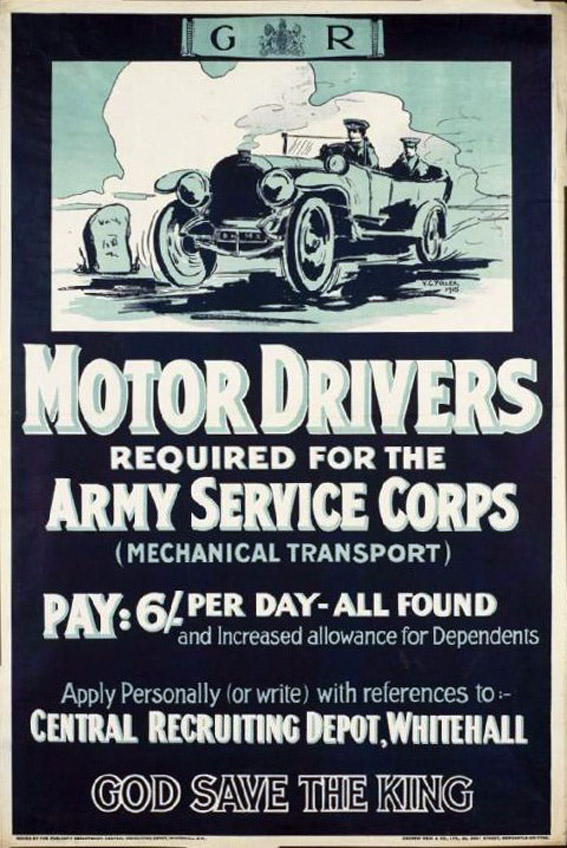 The Royal Army Service Corps
In the C19, efforts were made to remove the provision of transport and stores from the private sector to the government. Successive efforts to establish a royal waggon train foundered, until finally in 1855 a Land Transport Corps was founded at Bristol that four years later moved to Woolwich. This only engendered an endless succession of reforms and re-organisations involving the supply of transport and provision of food and fuel. One such, in 1875, split responsibilities between the Ordnance Store Department and the Commissariat & Transport Department, of which the latter was replaced a year after being the subject of a joke in the Gilbert & Sullivan song ‘I am the very model of a modern major-general’ (1879). Finally, in 1888, all the Army support services were consolidated in the Army Service Corps, which from 1895 was headquartered at Aldershot. The corps was renamed the Royal Army Service Corps in 1918 in acknowledgement of its WW1 record.
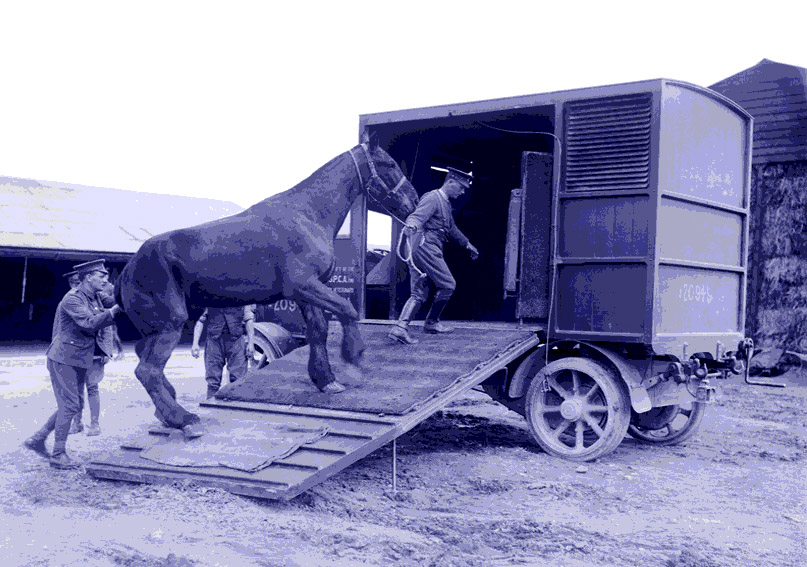 The Royal Army Veterinary Corps
Until WW1, horses played a vital role in British Army life, both for carrying individuals into battle and transporting weapons and supplies, such that they became an enemy target in their own right. During the French Revolutionary Wars, public unrest about equine welfare prompted an experiment with the appointment of a regimental vet to assume the animal care responsibilities formerly assumed by the quartermaster. Its successful outcome led in 1796 to the appointment of Professor Edward Coleman as chief vet to both the cavalry and the Board of Ordnance, based at Woolwich. From these beginnings arose a veritable army of animal welfare personnel, amounting to several tens of thousands in WW1, following which the Army Veterinary Corps acquired the Royal designation. Mechanisation changed everything, and in 1946 the much diminished corps was moved to Leicestershire. Nowadays, the most active animals in the British Army are dogs trained to seek drugs and explosives.
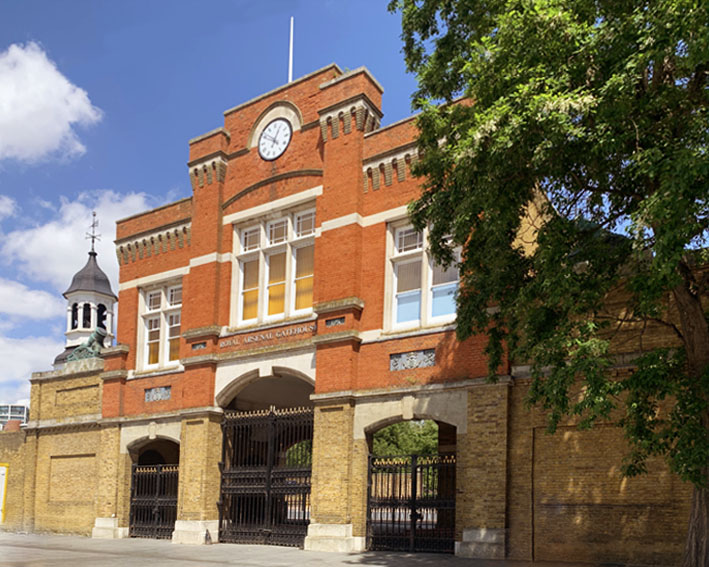 The Royal Arsenal
The fact that Great Britain’s Royal Arsenal was in Kent owes everything to Greenwich-born King Henry VIII. He shifted the nation’s naval centre from East to North Kent in 1515 by getting his flagship Henri Grace à Dieu built at Woolwich. As shipbuilding became increasingly significant there, it made sense to have the munitions required for warships stored at the neighbouring Gun Wharf. This was superseded in 1651 by the Royal Arsenal. Situated at a nearby private estate called Tower Place, on land previously devoted to producing rabbit meat, it was initially known as The Warren. The Board of Ordnance bought the 31-acre estate outright in 1671, after which the Royal Arsenal escalated dramatically in scope, developing massive munitions research and manufacturing capabilities. It eventually covered nearly 1,300 acres and employed around 80,000. Its importance diminished after WW1, and it closed in 1967. The name lives on as that of a football club founded by some of its workers.
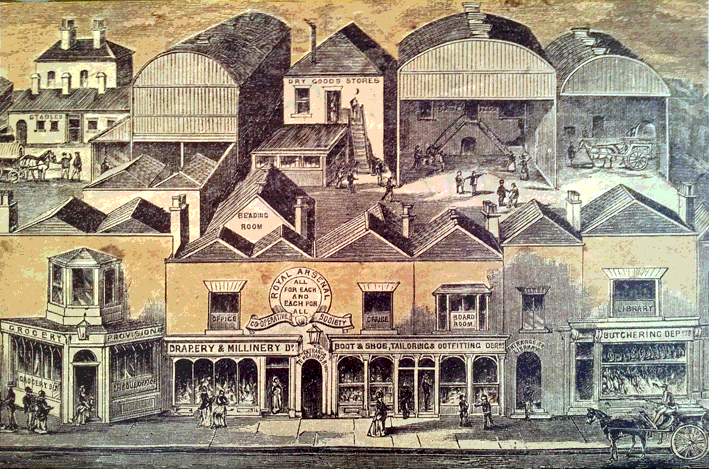 The Royal Arsenal Co-operative Society
The first consumer cooperative was established in Scotland in 1769 in reaction against the Industrial Revolution’s feared effects on incomes. During the C19, it became a formally expressed mission to build a socialist society independently of the nation. One natural place for a Co-operative Society was Woolwich, home to thousands of Royal Arsenal workers. Established in 1868, it was run by Alexander McLeod, a Scot, selling dependable groceries to members who received a dividend reflecting how much they had spent. It was so successful that membership reached nearly 7,000 by 1889. The society expanded into funeral services and housebuilding around the home counties, in addition to education and Labour Party politics. Under the motto “Each for all and all for each”, RACS had an extraordinary half-million members at its peak, but declined fast in the 1970s, unable to compete with the high quality and low prices of capitalist supermarkets. Its activities were transferred into the Co-operative Wholesale Society.
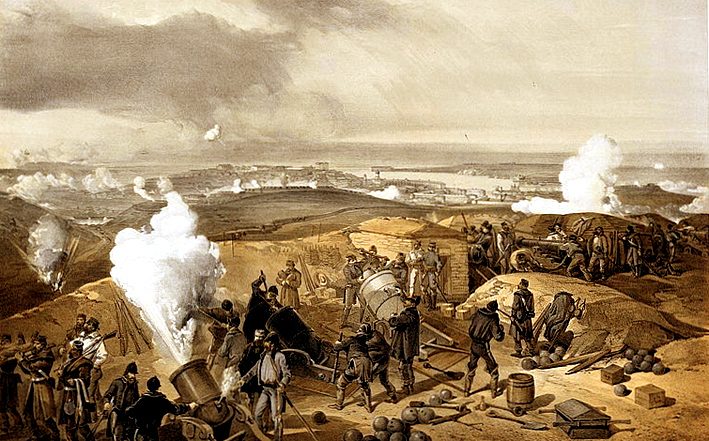 The Royal Artillery
In 1714, Britain’s greatest general, the ageing Duke of Marlborough, returned to the post of Master-General of the Board of Ordnance. Also a master of administration, he decided to separate the functions of artillery and engineering; and so, in 1716, two permanent artillery companies totalling 200 men were formed. Known as the Royal Regiment of Artillery, or ‘The Gunners’, they were initially based at the Royal Arsenal in Woolwich, but moved by 1776 to a new barracks on Woolwich Common. The RA, bearing the motto ‘Ubique’ (‘Everywhere’), has taken part in almost every British Army campaign since its inception. In 1945, it embraced a thousand artillery regiments, but is now down to just 13. The RA’s headquarters moved in 2007 to Larkhill on Salisbury Plain, leaving only the King’s Troop Royal Horse Artillery and National Reserve Headquarters still at Woolwich. Its museum, opened in 1820, was one of the oldest military museums in the world when it closed in 2016.
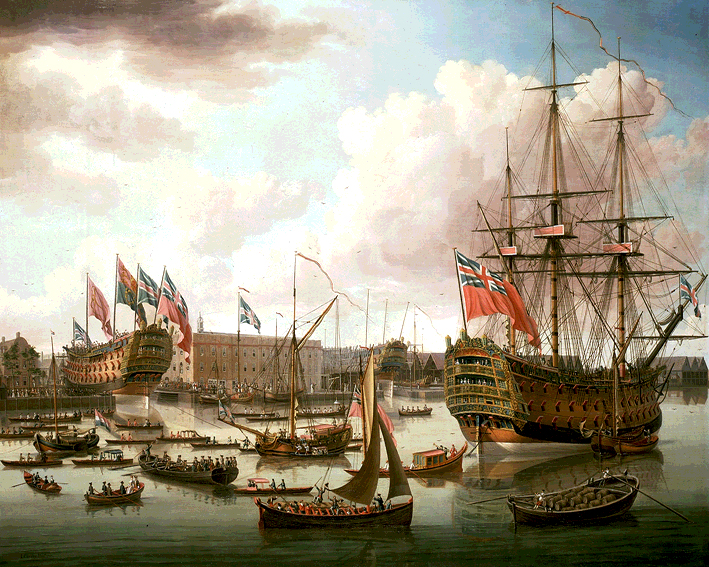 The Royal Dockyards
Although Portsmouth was the site of England’s first naval dockyard in the C15, it went into abeyance as Kentish towns along the Thames came to the fore in the Tudor era. Woolwich, Deptford, and Erith became the focus of naval construction, although the last of these was abandoned because of susceptibility to flooding. Their advantages went beyond their proximity to the Placentia Palace at Greenwich. They were handily placed for the Tower of London’s munitions store, and got the benefit of London’s many artisans and craftsmen. They were originally known as King’s or Queen’s ‘Yards’, in other words, places where ships were manufactured on slipways; but they increasingly were depended on for dry docks, where repairs and maintenance took place. By the time Chatham and then Sheerness were added, they were taking on the nature of naval bases, with recruitment and training to the fore. Not until the C18 did Britain’s naval focus shift back to the south coast.
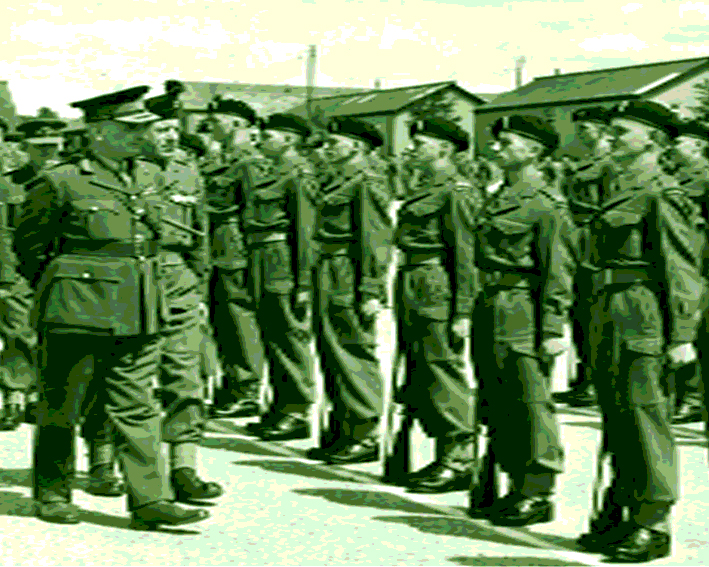 The Royal Electrical & Mechanical Engineers
Until WW2, Britain’s military units generally maintained their own equipment. The increased scale and complexity of the task led to William Beveridge’s recommendation that a separate body be created to provide the necessary support. The new corps, the Royal Electrical & Mechanical Engineers, was established at Woolwich in 1942. Although REME’s wartime duties were necessarily limited, in 1951-2 its remit was greatly expanded. It garnered many nicknames, from ‘Royal Engineers Minus Ego’ to ‘Ruins Everything Mechanical Eventually’. After the war, a unit led by Major Ivan Hirst that had taken over the abandoned Volkswagen factory in Wolfsburg used it to manufacture much-needed vehicles for the occupying force, so resurrecting the VW Beetle. In 2024, REME was granted the freedom of the parish of Lenham in recognition of the 1944 flying bomb disaster at Charing Heath.
 The Royal Engineers
The Corps of Royal Engineers, colloquially the ‘Sappers’, was formed by the Board of Ordnance in 1716, but traces its ancestry back to the first royal engineer, Bishop Gundulf of Rochester. It was initially based at the Royal Arsenal, Woolwich, but in 1856 moved to its present headquarters at Chatham, where the Royal Engineer Establishment – now the Royal School of Military Engineering – had been established in 1812. Since 1855, the Corps has been under the command of the Commander-in-Chief of the Forces, the first of whom was Jeffrey Amherst of Sevenoaks. Although as an auxiliary service it has never won any battle honours, it has participated in every major war fought by the British Army. As in Gundulf’s day, Royal Engineers have constructed not only major military installations like Chatham Dockyard and Dover’s Western Heights, but also civil projects, including much of the canal and irrigation infrastructure in India. They even boast a historic football club.
 Royal Faversham
It is hard to imagine that Faversham, now known for little but the Shepherd Neame brewery, was a royal town centuries before Windsor. Aethelberht I, the first King of Kent, resided there for decades until his death in 616. It made an obvious choice of headquarters for Kentish kings, being close to Watling Street, the Roman camp at Durolevum, Canterbury Cathedral, and the sea. In 811, the Mercian king Coenwulf issued a charter describing “Febresham” as the “King’s little town”. It had a resurgence of royal approval in the C12, when King Stephen and his wife Matilda chose it as the site for a major new abbey where they and their son were later buried. With such a location and heritage, it is no surprise that there were 21 royal visits between 1201 and 1821. Just to clinch the point, Faversham is the only English town that may sport the royal three lions as its coat of arms.
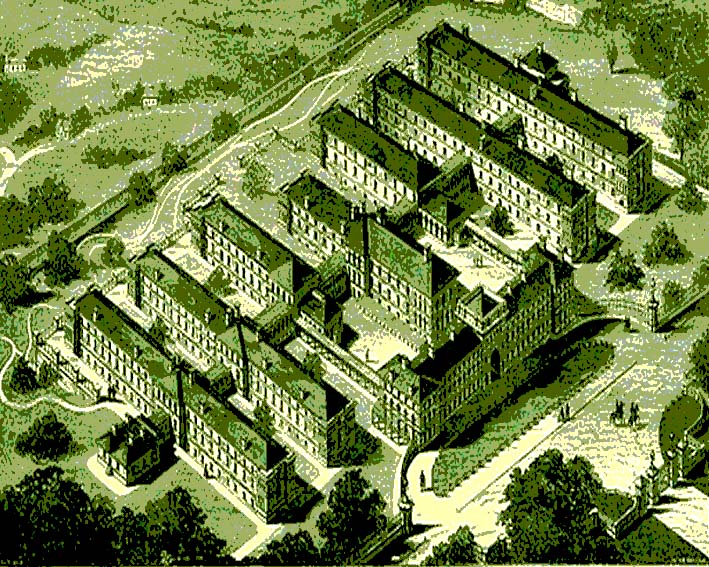 The Royal Herbert Hospital
Sidney Herbert was the Liberal Conservative war minister who sent his friend Florence Nightingale to make waves during the Crimean War. Endowed with the intelligence to identify flaws in current military nursing practice, she experimented successfully with new methods, and reported back faithfully. A direct fruit of their efforts was the Herbert Hospital, opened in 1865 on Shooters Hill Road opposite Woolwich Common. Following Nightingale’s belief that good nursing began with good architecture, it embodied such modern principles as long corridors to which all wards had access, with ample light and air. Highly praised, it was granted ‘Royal’ status after Victoria visited in 1900. Enid Bagnold, who nursed there during WW1, was sacked for criticising the management in ‘A Diary Without Dates’ (1917). Despite becoming a major Army medical and training centre offering 650 beds, the hospital closed in 1977. After featuring in Kate Bush’s music video ‘Experiment IV’ in 1986, it was converted in 1990 into luxury apartments.
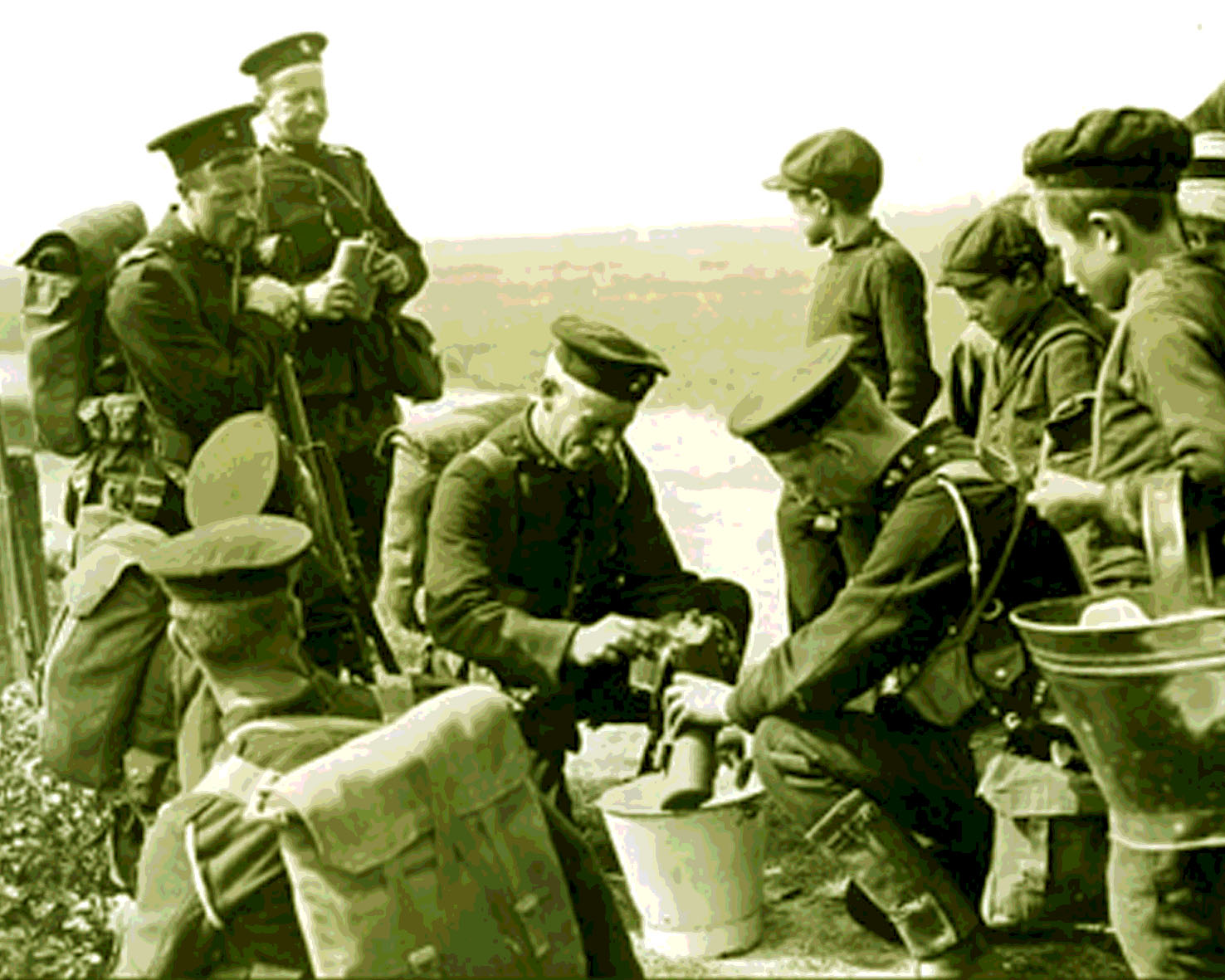 The Royal Marines
Once described by Winston Churchill as the greatest corps in the world, the Royal Marines started life in 1664 as the Duke of York & Albany’s Maritime Regiment of Foot. By 1755, it had expanded into three divisions, with headquarters at Chatham, Portsmouth, and Plymouth, forming a formidable amphibious fighting force during the Napoleonic Wars. During WW1, however, it was most notably involved in three calamities: Antwerp (1914), Gallipolli (1915), and Zeebrugge (1918). The first Royal Marine Commando was formed at Churchill’s behest at Deal in 1942 as a means of inflicting tactical damage on German-held coastal positions. Only 3 Commando Brigade continued after the War, counteracting anti-democratic insurgencies around the world until the USA took over as the world’s policeman. On the regiment’s 300th anniversary, Deal Borough Council commemorated the Royal Marines’ valour at Zeebrugge with a memorial plaque. Although depleted nowadays, it maintains close links with commando corps in other NATO nations, all of which it inspired.
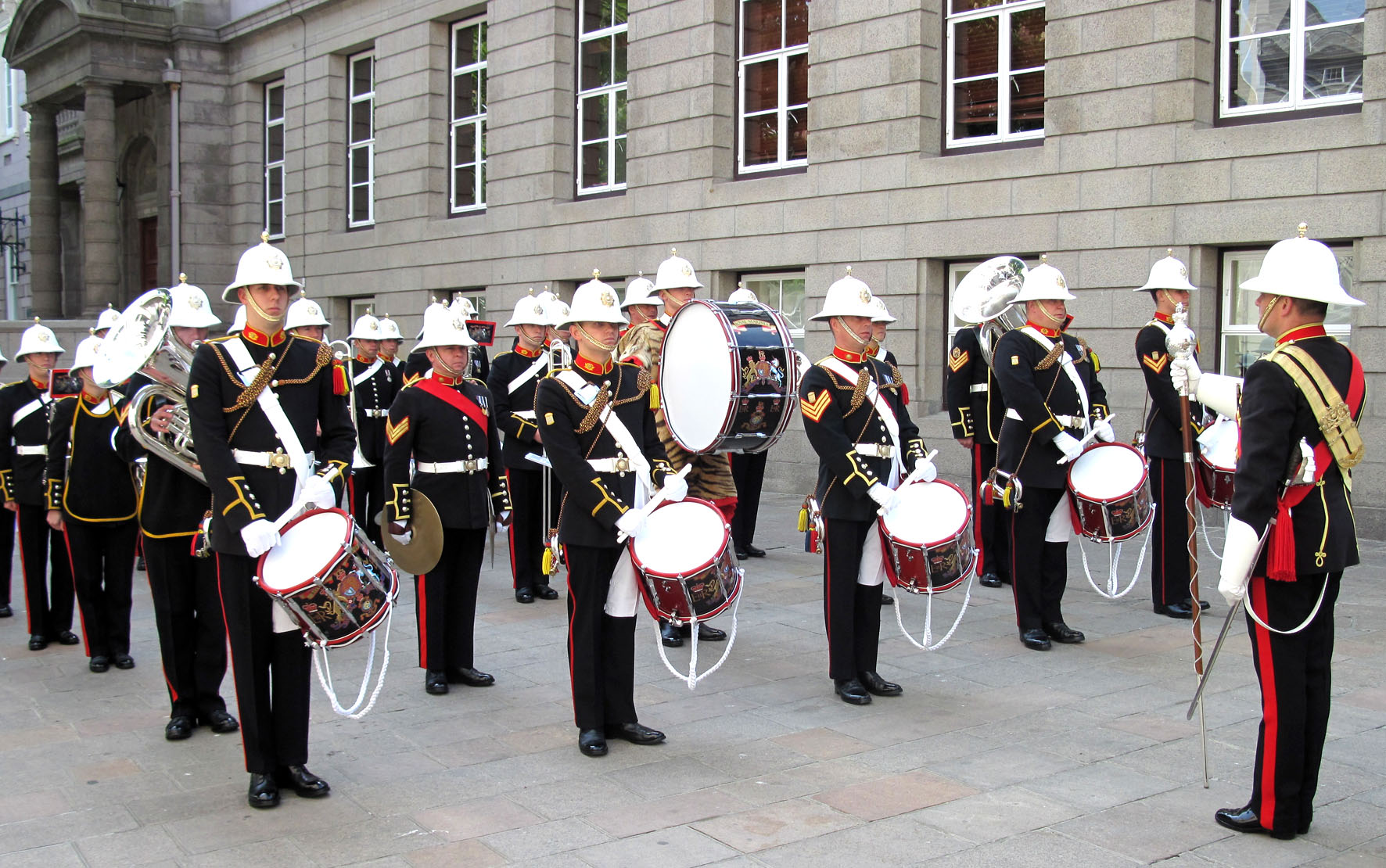 The Royal Marines Band Service
Being a Royal Navy musician may seem a cushy job, yet Royal Marines bandsmen suffered the highest attrition rate of any sea- or land-based unit in WW2. Music has long been an instrument of war, serving a functional role in communicating orders and messages, especially by drums, as well as stirring the men and intimidating the enemy. Naval musicians started to be organised divisionally in 1767, when bands were formed at four locations, including Chatham and Deal. A Royal Naval School of Music established at Portsmouth in 1903 moved to Deal’s Royal Marine depot from 1930 to 1940, returning from 1950 to 1996. Best known for brass-band military music, the five Royal Marines bands play to a high standard internationally in multiple genres; one was memorably filmed performing the theme music for ‘Thunderbirds Are Go’ at Deal in 1966. As if to prove that musicians remain a tempting target, however, the IRA lethally bombed the school in 1989.
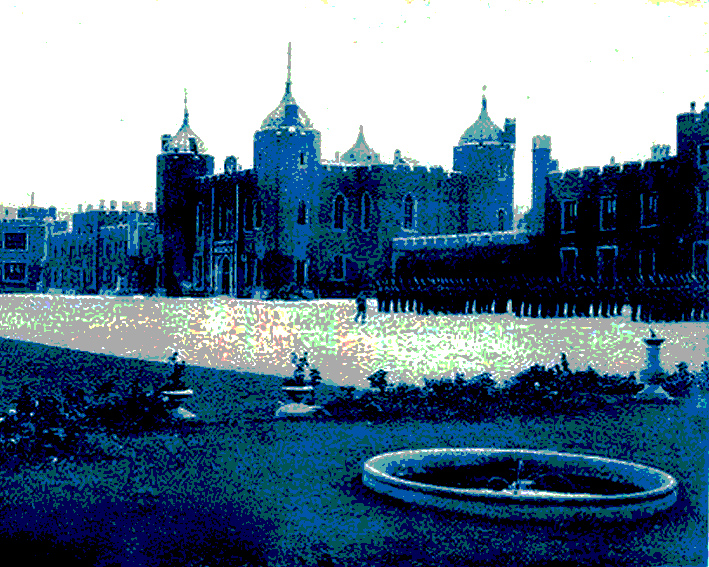 The Royal Military Academy, Woolwich
For many British soldiers, Army life consisted of weapons training, physical fitness, drill, spit-and-polish, and fatigues; yet certain aspects of combat demanded a sophisticated level of maths and physics that had to be specially taught. Because the two most technically oriented units, the Royal Artillery and Royal Engineers, were both based in North Kent, the Royal Military Academy was established in 1741 at Woolwich. It was originally housed at the Royal Arsenal in a former workshop that provided its nickname, ‘The Shop’, but in 1806 moved to Woolwich Common, where a splendid new building and lodgings were provided. The calibre of the teaching staff was extraordinary, chemistry for example being taught for 23 years by no less an authority than Michael Faraday. Both Kitchener and Dowding were trained there. The RMA Woolwich was closed in 1939, its duties passing to RMA Sandhurst in Berkshire. The Woolwich buildings have been converted to apartments.
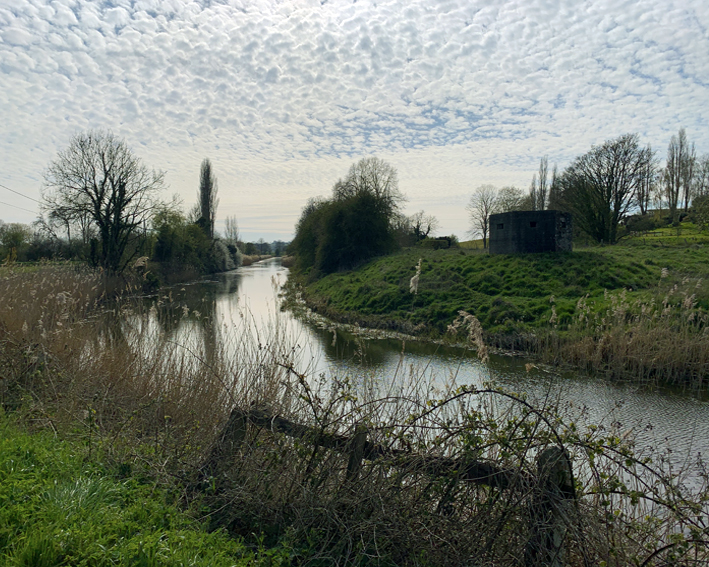 The Royal Military Canal
If you think about it, building a 28-mile canal in an arc from Folkestone to Appledore and down to Hastings is pretty pointless, given that the route is no shorter than by sea. The truth is that the Royal Military Canal was not intended to carry goods-laden barges. It was in fact a military device suggested by Lieutenant-Colonel John Brown in 1804, during the Napoleonic Wars. It was suspected that the French would choose to invade through Romney Marsh, and there had been an implausible plan to flood it in that event. Brown ingeniously proposed the Royal Military Canal instead as an elaborate defensive moat. Encircling the Marsh, it would not only slow the French army down when they reached it, but also be heavily armed, and so exact a great cost. Fortunately, it was never needed. It now provides a picturesque location for several leisure activities, as well as for wildlife.
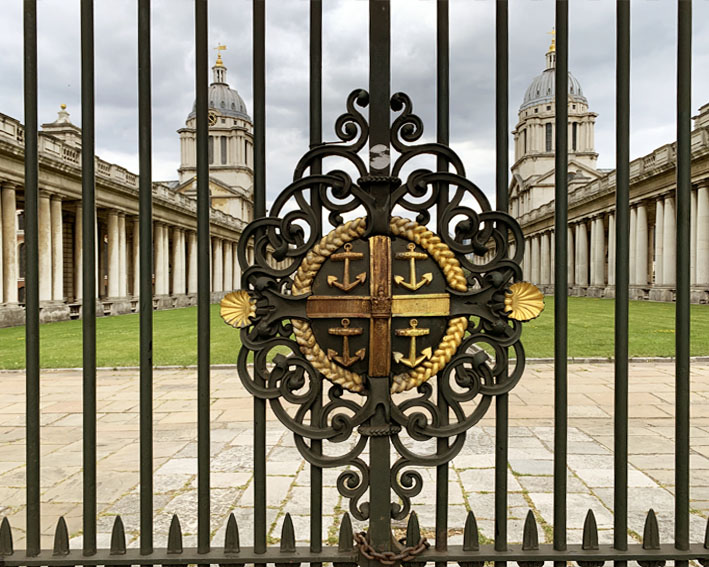 The Royal Naval College
By the C19, the focus of navigation in Great Britain had shifted to the west, but the continuing presence of the Royal Dockyards and Royal Arsenal in North Kent made it a natural choice for the venue of a new Royal Naval College in 1873. The Greenwich Hospital had recently been vacated, and the building beside the Thames, with its rich ornamentation within and without, was a prestigious location for an academy in which to train the Royal Navy’s officer class. So was born the Senior Service’s counterpart to the British Army’s Staff College, Camberley, which would be matched in 1945 by the RAF Staff College, Bracknell. The RNC, which counted Earl Mountbatten of Burma among its graduates, began training Women’s Royal Naval Service officers in WW2. By 1992, with the Royal Navy being wound down, the College moved to Dartmouth in Devon. The buildings, now a cultural centre, are still known as the Old Royal Naval College.
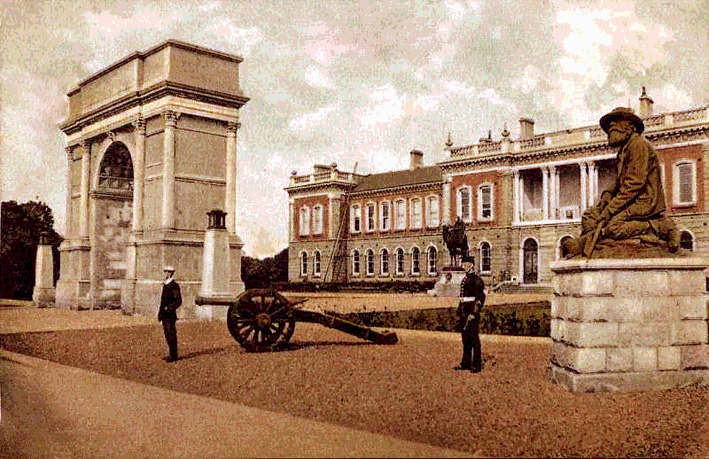 The Royal School of Military Engineering
During the Napoleonic wars, the complexity of military challenges was so great, and the stakes so high, that new thinking was necessitated. This proved to be particularly true for the Royal Engineers, whose officers had found themselves having to train men in mid-battle. In 1812, Captain Charles Pasley was sent to Woolwich to set up the Royal Engineers Establishment, where soldiers could learn new sapping and mining techniques under less duress. Because Chatham boasted The Lines, defences that were perfect for practising siege warfare, the Establishment moved there in 1850, and in 1869 was renamed the School of Military Engineering. During WW2, German efforts to destroy Chatham dockyard led to a devastating direct hit on a barrack basement, causing the SME to be moved to Yorkshire. By 1950, it had fully returned, and in 1962, its 150th anniversary, the Duke of Edinburgh came to Chatham to announce that the SME was to become the RSME.
 Rumball Whitings
This strange term was the name of a most heart-warming custom in Folkestone. A whiting is of course a fish. More specifically, it is the small and tasty member of the cod family that was featured in Lewis Carroll’s ‘The Mock Turtle’s Tale’, in which a whiting tries to persuade a snail to stray too close to escargot-loving France. Every December, fishermen in the town would take eight choice whitings from each boat’s catch. The whole lot would then be sold off as far afield as Canterbury, and the money raised used to pay for a Christmas Eve celebration. The skipper of each boat was entitled to host his own ‘entertainment’, presumably meaning that he could invite both crew and other guests. As for ‘Rumball’, it was a corruption of St Rumbold/Rumwald/Romwold, the infant saint whose protection they sought. The custom died out by 1800, but fishermen continued to call their Christmas get-together ‘Rumball Night’.
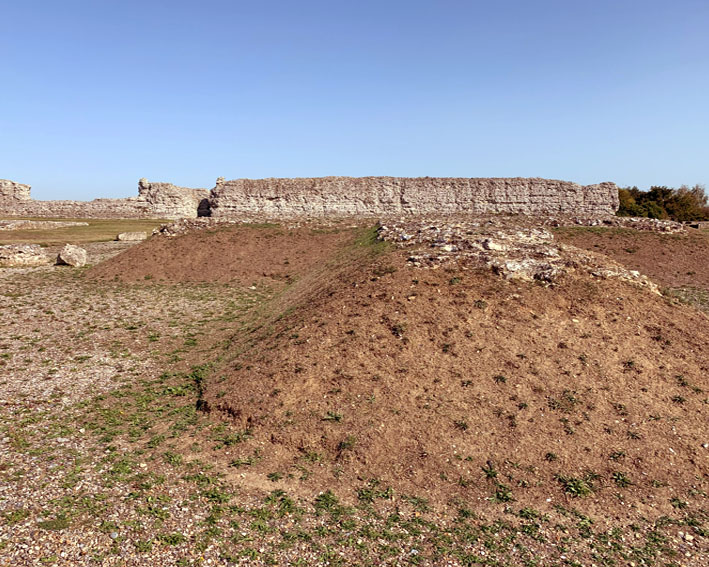 The Rutupian Shore
‘Rutupiae’ was the Romans’ name for their fortress at the south-eastern end of the Wantsum Channel, now known as Richborough. The name’s source is unknown, though it may derive from the Celtic word for either ‘mud’ or ‘ford’. It was a highly significant place, containing the arch through which all entrants into Britannia had to pass. Consequently, Rutupiae became practically synonymous in Rome with Britannia, in the same way that ‘Rome’ means ‘the Roman Empire’ to us – examples of the figure of speech known as synecdoche. The adjective ‘rutupinum’ occurs in several major Roman writers, especially in connection with ‘litus’, or ‘shore’, so that ‘the Rutupian Shore’ became the flowery way of saying ‘Britain’. Perhaps the most quoted use, however, is the great satirist Juvenal’s reference to Rutupian oysters, which he compared to the best Italy had to offer; yet the ones he was referring to would have come not from Richborough but Whitstable, or even Essex.
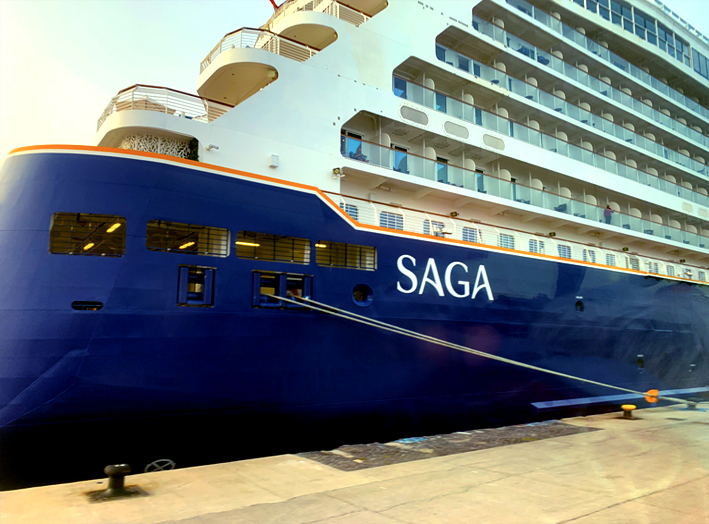 Saga
Saga
Sidney De Haan (1919-2002) was an Eastender with a strong entrepreneurial bent, and an even better idea: products and services specifically designed for Britain’s ageing population. Having purchased the Rhodesia Hotel in Folkestone in 1951, he began organising packaged coach holidays to retired people under the Saga name. So successful was the concept that the group diversified into a range of financial products, alarms, and ‘Saga’ magazine. It acquired its first cruise liner, renamed Saga Rose, in 1997, and earned a national reputation for its policy of barring customers under 50 and offering eye-catching features like free transportation from home to port. The Saga Group, still based in Folkestone, went public in 2014. Despite money troubles either side of Covid, Saga Cruises has recently launched two custom-built vessels constructed to its own specifications: Spirit of Adventure, and Spirit of Discovery, both displaying scenes of Kent and serving Kentish drinks.
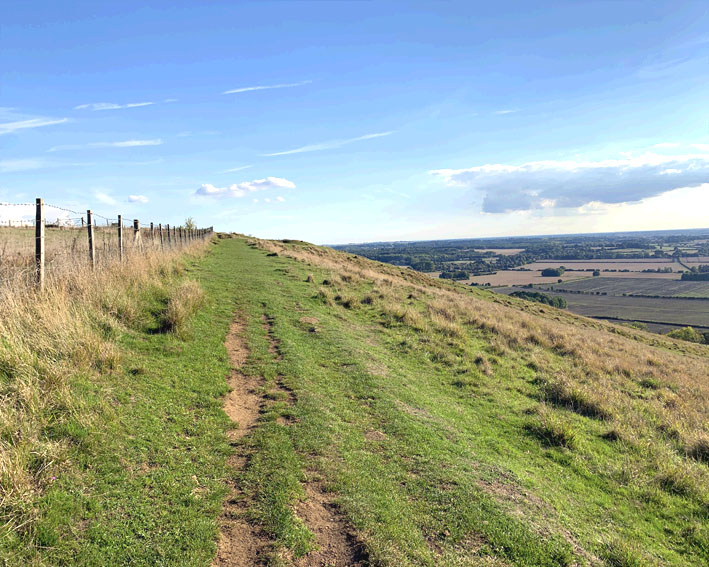 St Bridget’s Bower
In ‘The Shepheardes Calender’ (1579), Edmund Spenser wrote that Mount St Michael in Cornwall had a counterpart in Kent called St Bridget’s Bower. What exactly he meant was never determined, there being no noteworthy hill in Kent of that name. Since the word ‘mount’ originally could signify a range, however, it seems likely that he was referring to the whole of the North Downs. It is still a mystery, however, why he named it after St Bridget. This was a C14 Swedish woman who claimed to have had visions of the Nativity, featuring a suspiciously blonde Mary, among other revelations. As miracles go, they were sufficient to convince Pope Boniface IX to canonise her in 1391. Strindberg proclaimed her a fraud who had been angling for sainthood, while Luther named her ‘Mad Bridget’. Knowing the sycophantic Spenser, he was probably hoping simply to flatter his monarch Elizabeth I, who had a Kentish great-aunt, Bridget of York.
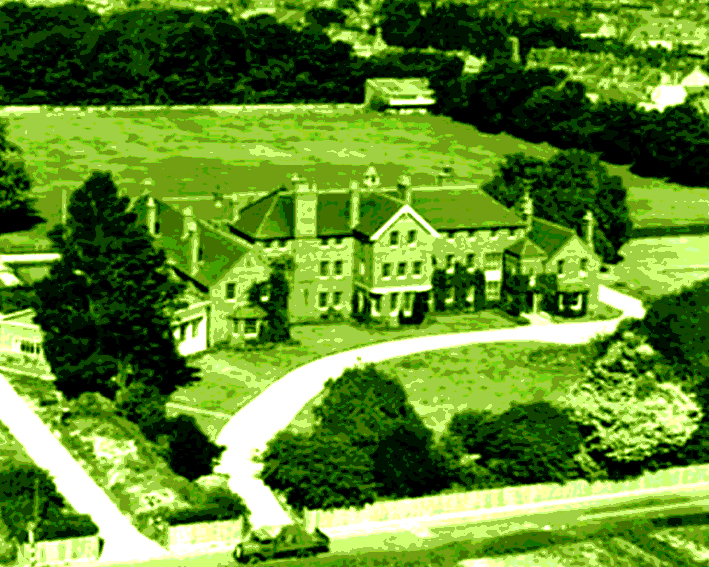 St Peter’s Court
Founded near Broadstairs in the C19, St Peter’s Court was propelled to national fame early in the C20, when it was chosen as the prep school for George V and Queen Mary’s younger sons Prince Henry and Prince George. It subsequently became known as a go-to prep school for aspirant Etonians and Harrovians, including Robin Leigh-Pemberton, Lord Montagu of Beaulieu, and Sir Peter de la Billiere. During WW2, the school was removed to Devon, but burned down in 1945, with two fatalities. Though it returned after the War, it merged in 1969 with Wellesley House School and was demolished to make space for housing. Wellesley House, founded in 1866, also boasted royal clientele, and advertised its aspirational ethos with a Latin motto translating as “From Broad Stairs We Will Eventually Reach the Stars”. It was sold in 2021 to educational entrepreneur Ali Kahn, whose plans for expansion have already involved merging it with a neighbouring school.
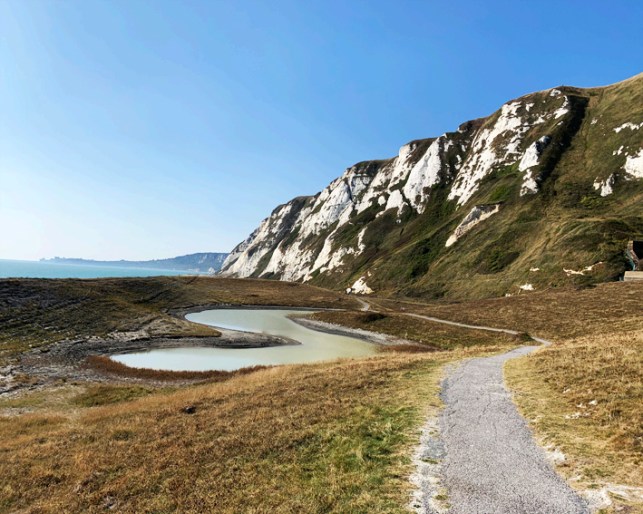 Samphire Hoe
From space, Samphire Hoe resembles a vast aircraft-carrier parked against the White Cliffs just west of Dover harbour. In reality it is a narrow strip of land taken from the sea. It was actually the answer to a tricky question: what was to be done with all the marl excavated during the construction of the Channel Tunnel? Being the site of an earlier attempt to build a tunnel in 1880, as well as a completely useless coalmine dug in 1895, it seemed as good a place as any to dump five million tons of chalk. The resultant 75-acre expanse of new land at the foot of Shakespeare Cliff was formally opened in 1997. Its name was the winning entry in a competition, ‘Samphire’ being a cliff-dwelling plant referred to in ‘King Lear’, and ‘Hoe’ borrowed from ‘Plymouth Hoe’. It is now a nature reserve offering day-long leisure use between sea and cliff, incorporating a pleasing circular walk.
 The sandwich
Most people are familiar with the story that, while playing cards in the mid-C18, the 4th Earl of Sandwich ordered a plate of meat stored between two slices of bread, and so invented the now ubiquitous dish that bears his name. Less well-known is the fact that he lived in Huntingdonshire, and had little to do with Kent. His baronetcy was named after Sandwich only because the fleet commanded by the 1st Earl happened to be off Sandwich at the time of the Restoration. Although meat served in bread was not an original idea, the Earl can at least be credited with making Sandwich the best known Kent town on Earth, it now being the standard word for a sandwich not only across the English-speaking world but also in France, Germany, and Scandinavia, to name but some. The word has even turned into a verb, so that, for example, two football defenders can ‘sandwich’ an attacker, albeit illegally.
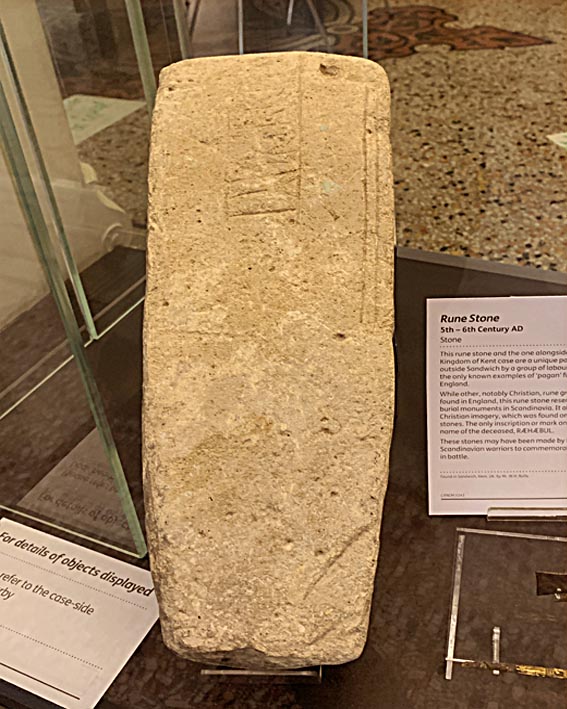 The Sandwich runes
In Canterbury’s Royal Museum, now the Beaney House, is a pair of strange stone objects, 16 and 17 inches long and 5 or 6 inches in diameter, whose purpose is not immediately obvious. Their tapered shape suggests they were in fact grave markers. They were found around 1830 by labourers in the area of Sandwich and Richborough. What catches the eye is the markings on them. On one, these are indecipherable; but the others are clearly runic. Contrary to popular belief, runes have no magical significance, being merely a simplified form of the Latin alphabet that could be scored onto a hard surface. The more legible stone bears a name at first interpreted as “RÆHÆBUL”; however, the evidence is ambiguous, and the belief has been challenged academically. What is indisputably interesting is this proof of written culture in Kent dating back at least 1,200 years, an evocative record possibly left behind by Danish invaders.
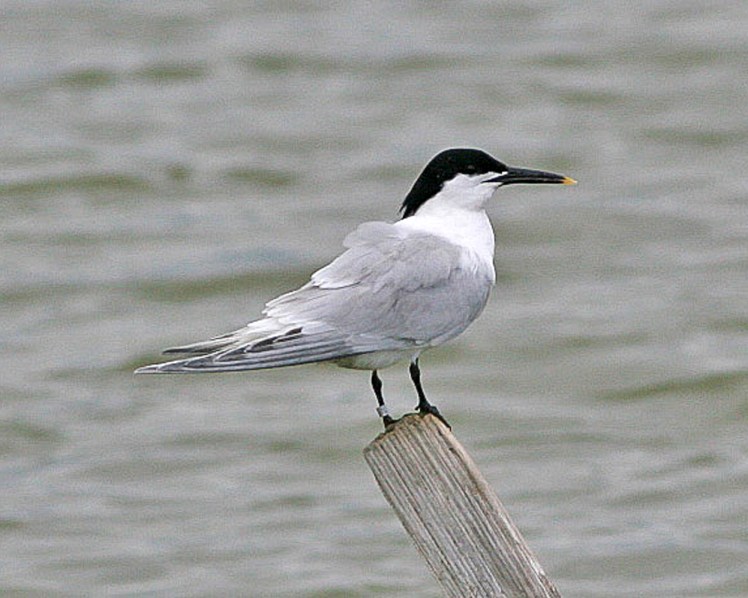 Sandwich tern
Like the Kentish Plover, the Sandwich Tern frequents a large area of the planet’s surface, yet has a local name. The reason is the same: it was formally classified by the great Kentish ornithologist John Latham, whose type locality – in other words, the place his specimens came from – was Sandwich. It is very easily recognised, with its modest size, black cap, yellow-tipped beak, and swallow tail. It breeds in dense colonies often close to the larger and more aggressive Arctic terns, which flock together to fend off predators. The males have an endearing habit of courting their mates with a fish supper. Unfortunately, however, they are not only noisy but also have a particularly grating call that sounds to us like a rusty lock being turned. Though the species has borne the name of a fine Kent town around the world, Americans can be forgiven for thinking the bird’s monicker suggests a predilection for picnics.
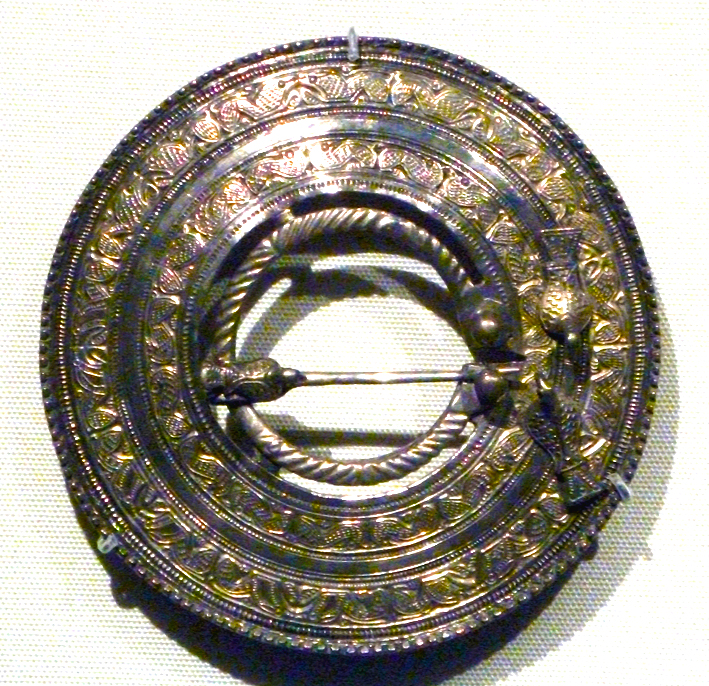 The Sarre Brooch
The circular brooches typical of the Germanic culture that migrated into England in the C5 vaguely resemble the rings used in a game of quoits, and so are known as ‘quoit brooches’. The foremost example, purchased by the British Museum in 1893, was found at Sarre in 1863. Over 3 inches in diameter, it is closed by a hinged pin shaped at one end like a dove. It is designed as a succession of concentric rings, of which the two widest are elaborately gilded with animal motifs, while two more doves sit proud of the surface. A fragment of a very similar brooch was discovered at Howletts, and comparable pieces have been dug up on the IoW, suggesting a Jutish connection. Despite other such brooches having been unearthed in northern France, the number of finds is small; they were perhaps a short-lived fashion among the social elite of the day.
 Sarre Wall
When the Wantsum Channel still separated the Isle of Thanet from the rest of Kent, there was a crossing-point east of Canterbury that at first was served by a ferry and later, when it had narrowed sufficiently, a bridge. As the channel continued to silt up, drainage ditches were dug to reclaim the low-lying area on either side. Eventually, the waterway could only be navigated at high tide, but conversely could be crossed on foot at low tide on a causeway. In 1485, an act enabled the use of this causeway as a road. It became known as the Sarre Wall – a curious name, analogous to that of another Kent causeway, the Rhee Wall on Romney Marsh. About 45 feet wide and three feet in elevation, it survives today, running for about a mile between Sarre and Wall End and forming a section of the Island Road, which is itself a stretch of the A28 from Hastings to Margate.
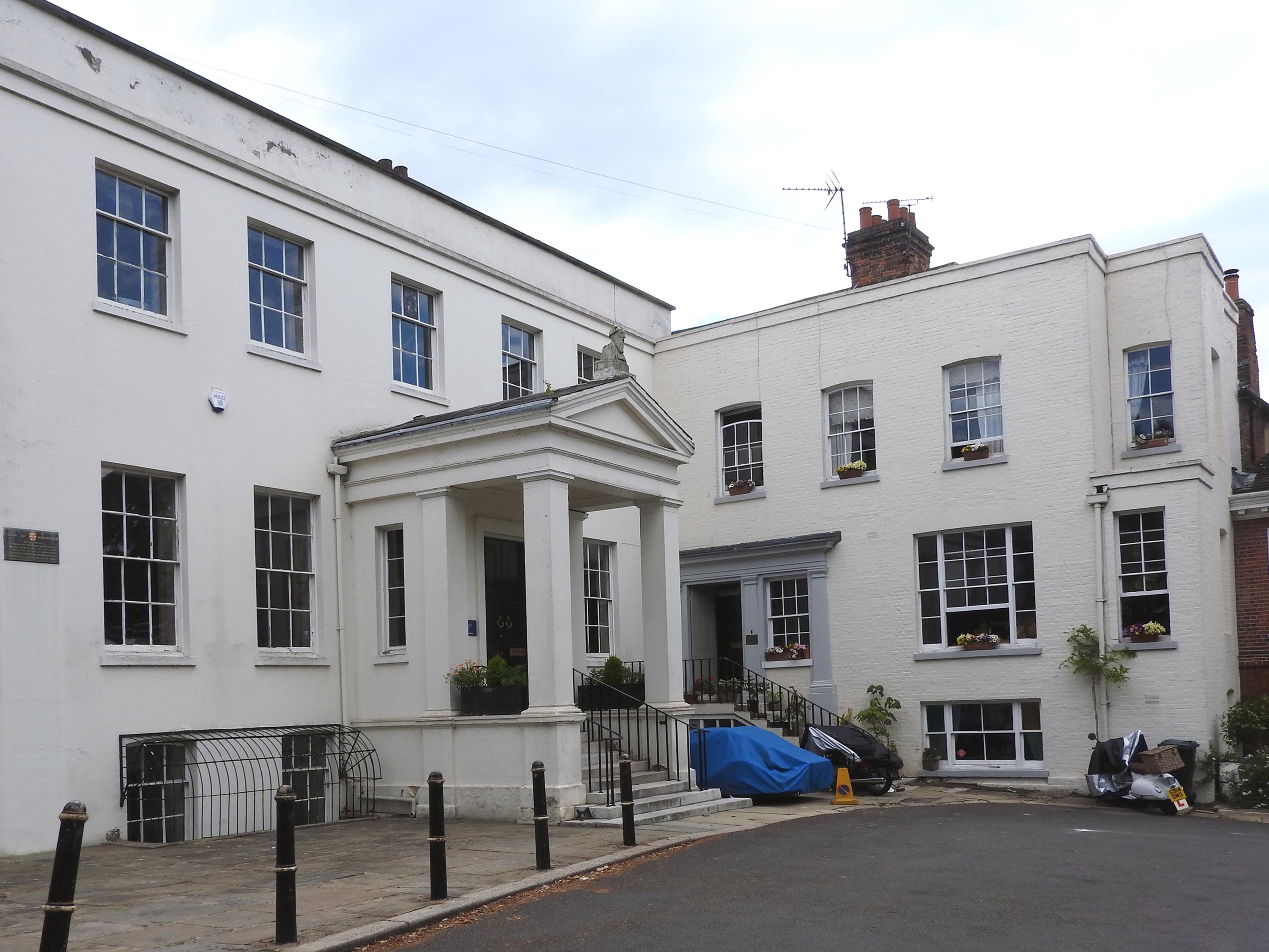 Satis House
‘Satis House’ is a famous name in literature, being the ruined mansion of the eccentric Miss Havisham in ‘Great Expectations’. Strangely enough, the real-life Satis House in Rochester has no connection with it, apart from having perhaps suggested the name to Dickens; his actual inspiration was Restoration House, a quarter-mile away. The real Satis house is an unassuming L-shaped building with a white facade and large portico tucked away off Boley Hill, directly opposite Rochester Castle. It got its name from an unfortunate occurrence during the reign of Elizabeth I, when the owner Richard Watts played host to her in the house that previously occupied the site. When asked her opinion of her stay, she damned it with faint praise by describing it as “satis” – not unlike the guest in ‘Fawlty Towers’ who adjudges his casserole “adequate”. Fortunately, Satis House no longer serves as a residence, but is a library and administration block within the King’s School, Rochester.
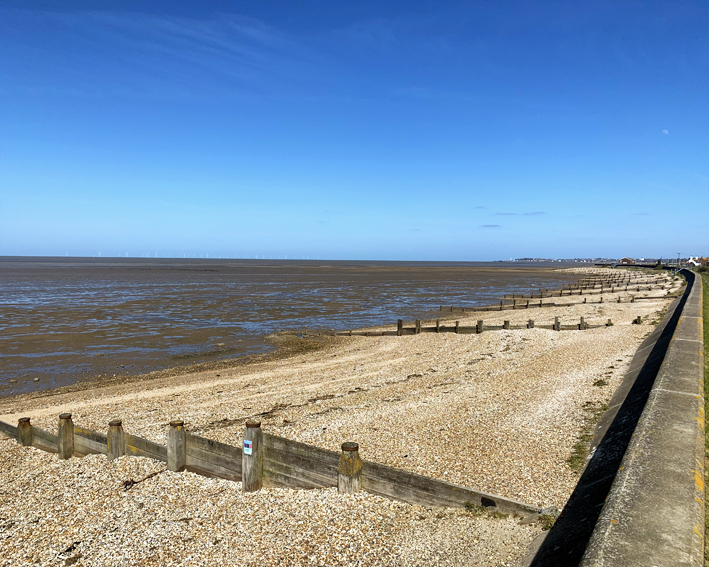 Saxon Shore Way
The Saxon Shore was a system of forts running all around the eastern and southern coasts of England, as well as the northern coast of France. The meaning of the term, a direct translation of the Latin litus saxonicum, is disputed. The forts may have been built by the Romans to keep Saxon invaders out, or they may have been occupied by Saxons, serving as Roman auxiliaries, hired to deal with raiding pirates in the lawless C3; the latter seems linguistically more plausible. The less wide-ranging ‘Saxon Shore Way’ was first created in 1980. It follows the Kent coast all the way from Gravesend to Hastings as it was in Saxon times, in other words before the sea receded in the south of the county. Running for 163 miles, it is not only scenic but also exposes hikers to the diversity of the Kent coast, from riverbanks and pebbly beaches to white cliffs and sandy dunes.
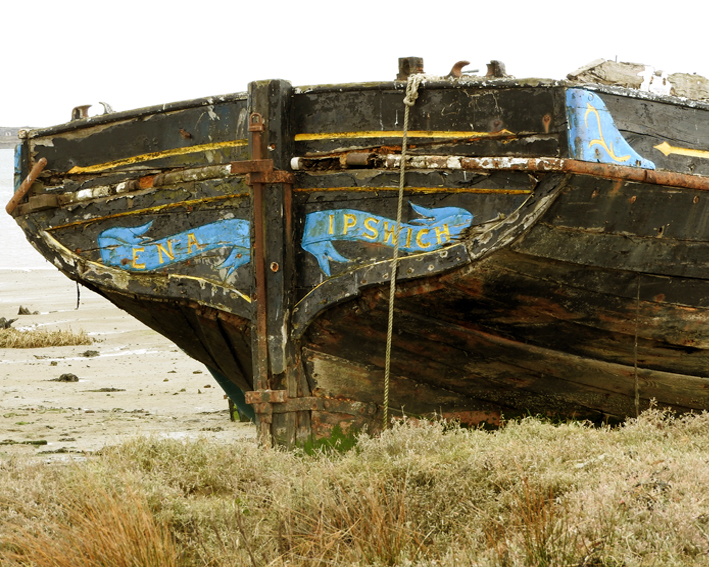 SB Ena
Ena is one of a class of shipping known as sailing barges: sail-powered commercial vessels that used to ply their trade up and down the Thames and Medway. Constructed in Essex in 1906, Ena was requisitioned during WW1 to ferry supplies to the war effort in France. In 1940, she took on a new military role as one of the Little Ships that helped transport the stranded British Expeditionary Force back to Kent. On arriving at Dunkirk, she was abandoned on the beach; but Lt Col WG McKay, a Royal Artillery officer, stepped in. Although none of his men were sailors, he ordered them to return her to the sea and sail her home in one piece. By saving around 100 British soldiers, Ena earned something like heroic status, and was featured in the TV series ‘Salvage Squad’ in 2002. She now rests in the Hoo Sailing Barge Graveyard on the Medway.
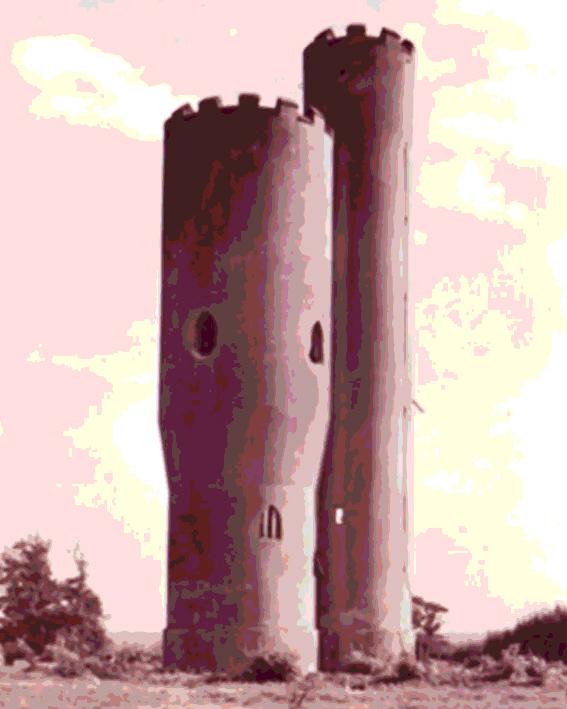 Scott’s Towers
The originator of the historical novel, Sir Walter Scott (1771-1832), was born in Edinburgh but, coming from a Tory background, had strong social links with London, and kin connections with the wealthy Burton family of architects who settled near Tonbridge. Though also a poet, playwright, and non-fiction writer, what made him world-famous was his 23 historical novels, starting with ‘Waverley’ (1814), of which ‘The Bride of Lammermoor’ (1819) provided the basis of Donizetti’s 1835 opera ‘Lucia di Lammermoor’, while ‘Ivanhoe’ (1820) inspired several movies and a Roger Moore TV series. The rector of Horsmonden, the Reverend William Smith-Marriott, was such a fan that, in 1858, he completed a linked pair of memorial towers in his garden: one containing a Scott shrine, the other a stairwell, with viewing platforms on top. Over time, they fell into disrepair, attracting criticism from afar – criticism that was silenced after WW2, when the owners had them demolished by the Royal Engineers.
 The Screaming Woods
The Woodland Trust does not like ghost-hunters one jot. The source of its chagrin is the so-called ‘Screaming Woods’, otherwise known as Dering Wood near the world’s self-styled most haunted village, Pluckley. The Wood, which was once part of the Dering family estate, was for years a wonderfully peaceful resort for walkers, marred only by the extreme muddiness of some paths in winter. Since being ‘discovered’ by credulous teenagers, however, it has become a draw to handfuls of overnight intruders desperate for stories to impress their friends with. The attendant vandalism and littering understandably anger the Trust, which expressed its pique by closing the car park to the general public; it only reopened after public protests. Though warning signs attribute nocturnal ‘screaming’ in the woods to rutting foxes, there may be another explanation. Coppicing in the Wood creates slender trunks that rub against each other in the wind, producing unearthly but perfectly explicable noises.
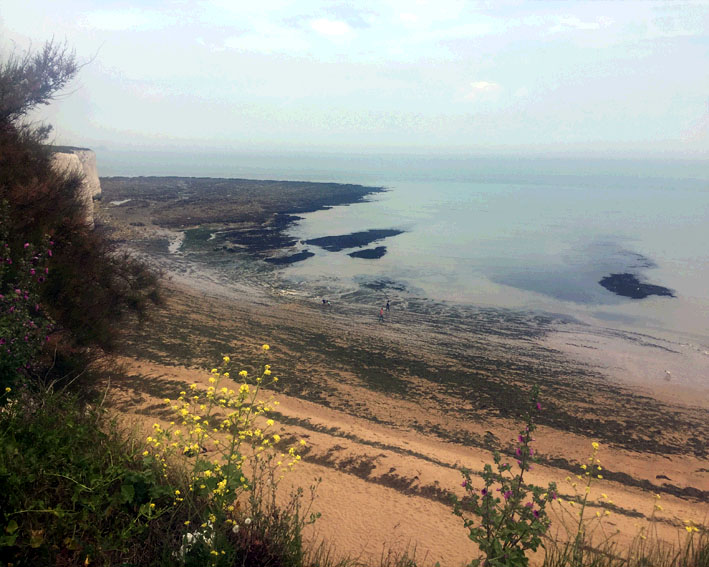 The seaside
Kent is loosely speaking a large triangle whose two long sides are sea coasts. Consequently, its coastline is unusually extensive, even remotest West Kent lying no further than 27 miles from a seashore. With 350 miles of coastline, Kent may even have the longest of any county, but this depends on whether the banks of river estuaries are counted as coastal. Suffice it to say that Kent is spoilt for richly diverse seaside. Apart from natural beauty, it boasts several attractive seaside resorts enjoying national fame. During the Victorian era, East Thanet was the Riviera of the day, attracting the rich and famous. Overseas travel led to neglect, which only recently has been addressed. So effectively has the decay been reversed, however, that three of Britain’s top 10 resorts in a recent nationwide study – Deal, Margate, and Ramsgate – were in Kent; and Deal was the nation’s No. 1. With Kentish summers growing increasingly clement, things look set fair again.
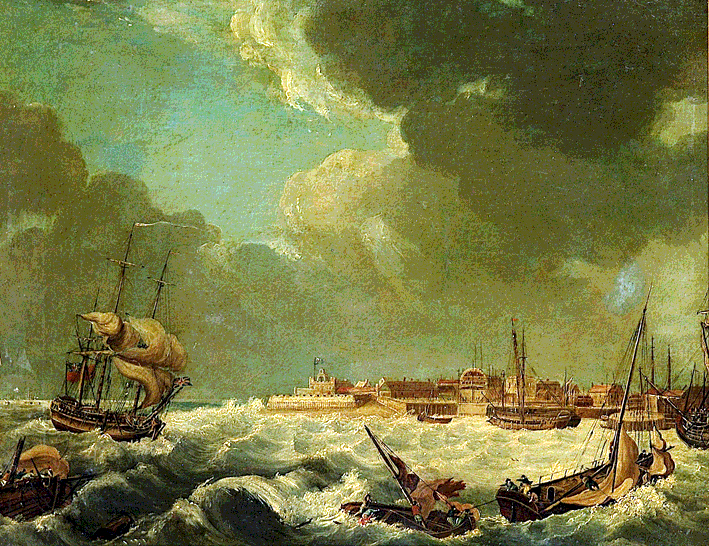 Sheerness Dockyard
In the mid-C17, ships requiring maintenance at Chatham Dockyard experienced long delays owing to wind and tide. Shipbuilder Peter Pett, supported by Samuel Pepys at the Navy Board, recommended building an overspill facility on the Sheerness headland. Its fortifications were only part-completed in 1667 when the Dutch seized it as a base for their Raid on the Medway, then destroyed it. After urgent reconstruction, it grew into a major Royal Navy facility, and increasingly so as the other Kent dockyards became silted up. It was fundamentally redesigned in 1813 by John Rennie the Elder, with decent accommodation to replace the hulks that previously housed workers. As well as home to the Nore Command, it became a shipbuilding centre, including steamships from 1854, but from 1906 was devoted to torpedo warfare. It was closed in 1960, and is now the focus of efforts to save its few listed buildings that have not been demolished.
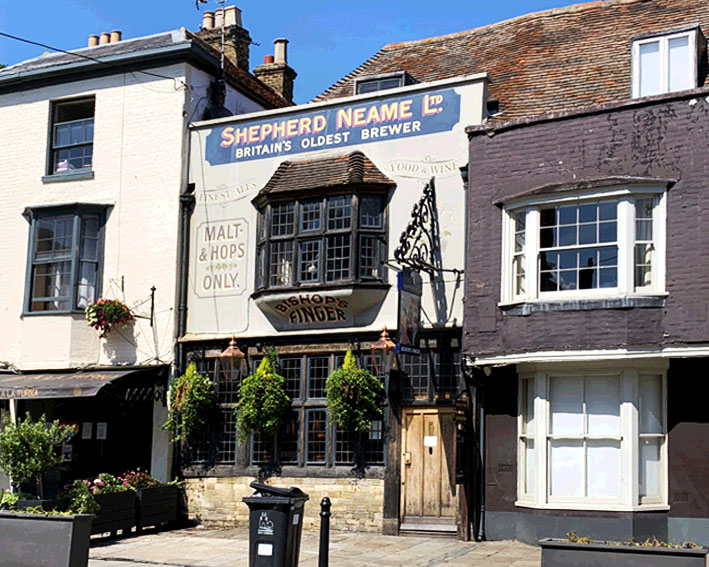 Shepherd Neame
Although Shepherd Neame claims to be the nation’s oldest brewery, founded in 1698, the Three Tuns brewery in Shropshire is in reality 56 years older; the Faversham-based brewer’s claim hinges on evidence that brewing took place on the same site by 1573. Nevertheless, it is appropriate that the county that constitutes the nation’s hop-growing heartland should boast such a longstanding brewing heritage. The brewery’s name is a marriage of those of Samuel Shepherd, who bought the brewery from the founder’s daughter in 1741, and Percy Neame, who joined the company in 1864 and whose descendants continue to own and run it. Shepherd Neame is not just old, but successful. It produces over 200,000 barrels a year, including a wide range of beers such as its signature brand Master Brew, the well-branded Spitfire, and the cheeky Bishop’s Finger, and exports to three dozen different nations. It also owns more than 300 pubs and hotels.
 The Sheppey Crossing
For nearly half a century, the Kingsferry lift bridge built in 1959 was the standard way to cross the Swale to the Isle of Sheppey. It became a notorious bottleneck, however, both because it carried only one lane in each direction, and because it created queues of traffic whenever a ship was passing through. As part of a project to improve links between the port of Sheerness and the M2 motorway, plans were made for a new elevated highway to run alongside it, which with two lanes in both directions would be capable of handling 26,000 vehicles daily without foreseeable hold-ups. The Council for the Preservation of Rural England understandably lobbied for a tunnel instead, but the suggestion was rejected, ironically on environmental grounds. The bridge was completed in 2006 at cost of £30 million. It made the headlines in 2013, when a 130-vehicle pile-up in fog blocked it entirely for nine hours.
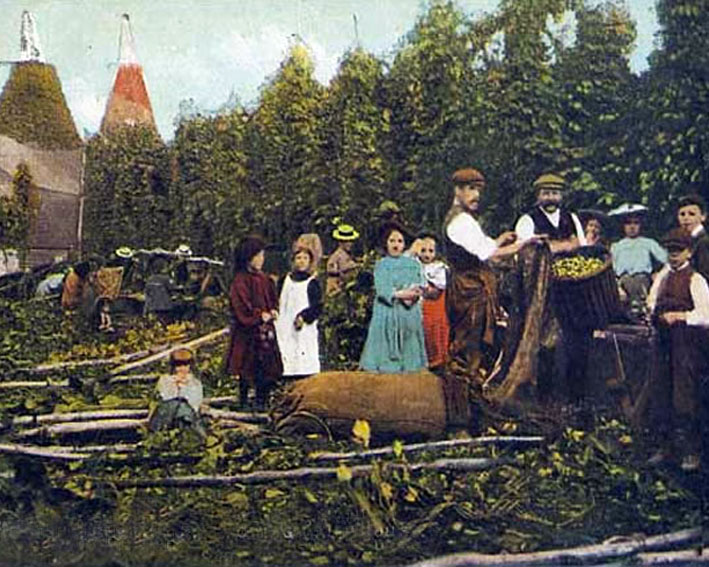 Shoe money
Although it sounds like a quaint country custom, ‘shoe money’ was a means whereby canny Londoners down in Kent to pick hops extorted cash from unsuspecting locals. The idea was that, if anybody crossed a hop-field while it was being harvested, they would be told that they needed to ‘pay their footing’ by handing over an amount of ‘shoe money’. This led to a short ritual whereby the walker would have his or her shoes brushed with a sprig of hops before being allowed to continue on their way. Anyone who refused to pay up was liable to be tipped into a hop basket. The money raised nominally went into a fund that paid for bread, cheese, and beer to be enjoyed by pickers at the end of the season. The practice migrated to cherry orchards around Faversham and Sittingbourne. It was actually a C19 predecessor of the practice of bandit windscreen-washing now familiar at outer-London traffic lights.
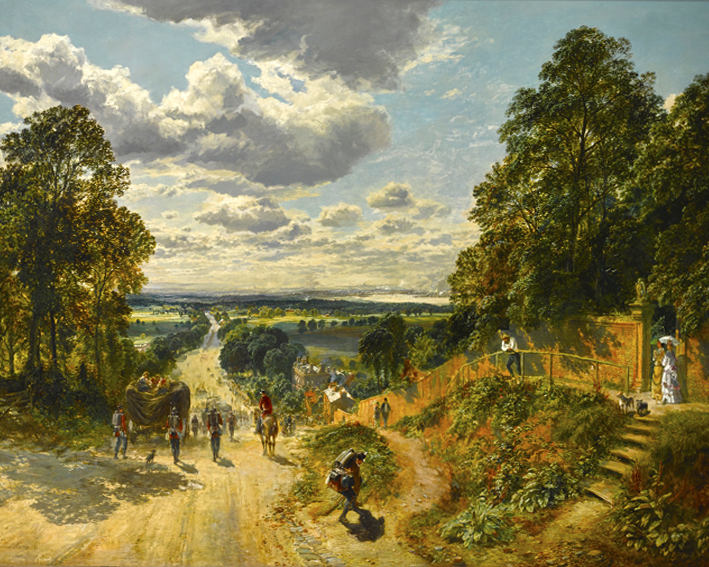 Shooters Hill
Located close to the Thames near Woolwich, and several miles away from the North Downs, Shooters Hill is an incongruously high patch of land, with nothing comparable so close to the centre of London. Where its name came from is unknown, and consequently has encouraged speculation about earlier connections with predatory highwaymen and practising archers. Certainly it had a long reputation for lawlessness, underscored by uniquely boasting two police stations; and as to its suitability for munitions, it was an important gunnery site during WW2. What lends it extra saliency is the fact that the Romans constructed Watling Street straight across it. When Samuel Brown wanted to demonstrate his new-fangled internal-combustion vehicle publicly in 1826, it made an eye-catching venue. As home to Oxleas Woods, it was also long known for its natural beauty, and has been referred to in literature by the likes of Byron, Dickens, and HG Wells.
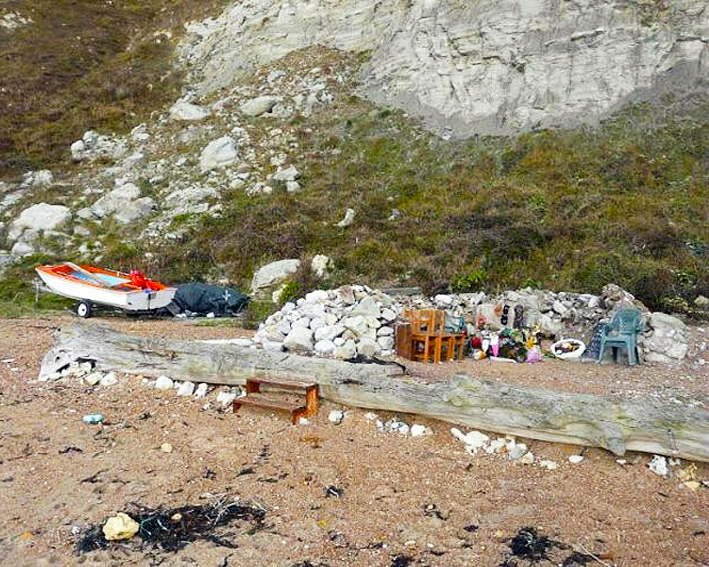 The shrine of Mungo Francis
Jerry ‘Mungo’ Francis (1954-2011) was an eco-warrior whose commitment went beyond reading ‘The Guardian’ and posting virtuous comments on Facebook. While sailing his motor-cruiser off Abbot’s Cliff near Folkestone in 2008, he was obliged to beach the vessel because of steering problems. He decided to remain there, like a latter-day Robinson Crusoe, recycling all sorts of bric-a-brac to build himself a shanty. Notwithstanding a legal battle with Network Rail, which tried to evict him, he managed to get by with some chickens, an improvised water supply, a wood-burner, an illegal generator, a mini-tractor, a laptop, a mobile, and a mutt called Briony, plus his benefits. After three years, while out on his bike, he fell eight feet off the seawall onto concrete, with fatal consequences. After the funeral, his acolytes ceremonially burned his boat in imitation of a Viking burial. In 2014, a beautifully shot 53-minute film called ‘Life’s a Beach’ showcased his anti-establishment opinions.
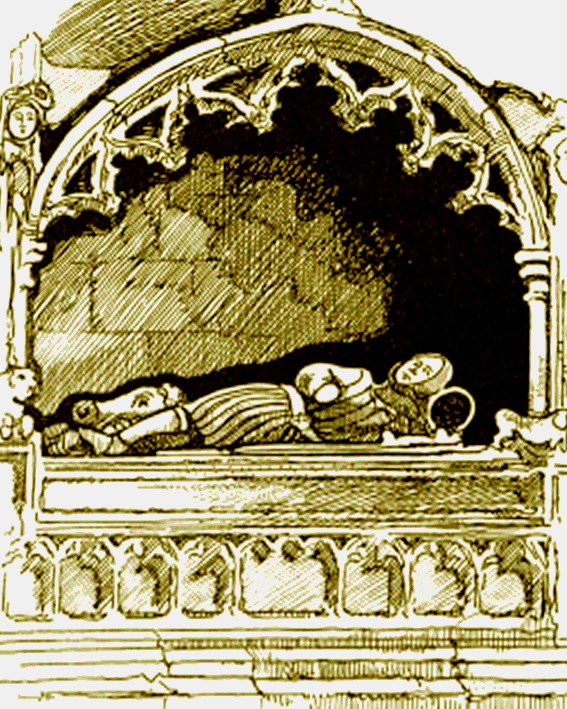 The Shurland Horse
According to legend, Sir Robert de Shurland of Shurland Hall, Eastchurch, having peevishly buried alive an irritating priest, rode out to obtain a pardon from Edward I, who was on a barge at sea. When warned that his horse must be diabolical if it could gallop over water, Sir Robert cut its head off. While riding a year later, he fell and struck his head on the diabolical horse’s skull, which happened to be lying there, and was fatally injured. This bizarre tale was probably a folk invention to explain the carved horse’s head that lay alongside his marble effigy on his tomb in Minster Abbey church. A more prosaic explanation has been offered: it perhaps advertised the fact that he had been awarded the ‘wreck of the sea’, entitling him to any salvage up to a distance reachable by the tip of a horseman’s lance at low tide. Curiously, the horse’s head has now disappeared.
 The Sidney Oak
Local tradition has it that a huge oak at Penshurst Place was planted around 1554 to mark the birth or the baptism of the great poet Sir Philip Sidney, for which reason it became known as the Sidney Oak. The story was plainly untrue, because the tree’s girth indicated a specimen that was already over a thousand years old when it finally died in 2017; in fact, it was already three or four centuries old when Penshurst Place was built. That was not the end of the story, however. A sapling had taken root next to it, having been either artificially or naturally propagated, according to different sources. This fact is now celebrated by a plaque containing a ditty from Penshurst’s own Lady Mary Wroth, placed there by the Tree Council (which is a thing) to celebrate this symbol of “nature’s cycle of life” – a sentiment worthy of Neil the Boring Hippy of ‘The Young Ones’ fame.
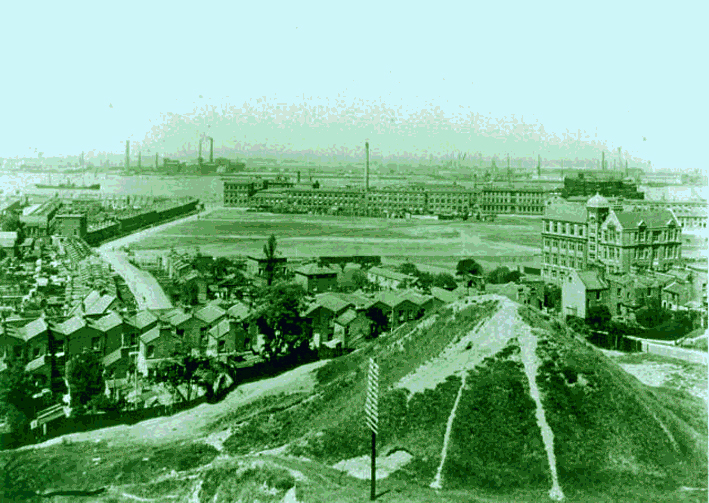 Siemens Brothers
Karl Wilhelm von Siemens (1823-83) was the younger brother of Ernst Werner von Siemens, co-founder of the pioneering Hanoverian telegraphy business Siemens & Halske. In 1843, he immigrated to sell an electro-gilding process they had designed. He soon patented his differential governor, the first of several inventions that included a globally successful regenerative furnace. In 1863, Siemens Brothers Telegraph Works opened at Woolwich. Assisted by younger brother Friedrich, William (sic) turned the business into a major concern, making telegraph cables and laying them at sea; he even designed the cable-laying steamship Faraday (1874). After his death, the company diversified into dynamos, and then power cables and other electrical equipment. It was seized as an enemy interest in WW1, and sold off. It remained a major employer, situated in a complex around Charlton. Though bombed heavily in WW2, it led production of the PLUTO pipeline. It was sold in 1955 to Associated Electrical Industries, and closed in 1968.
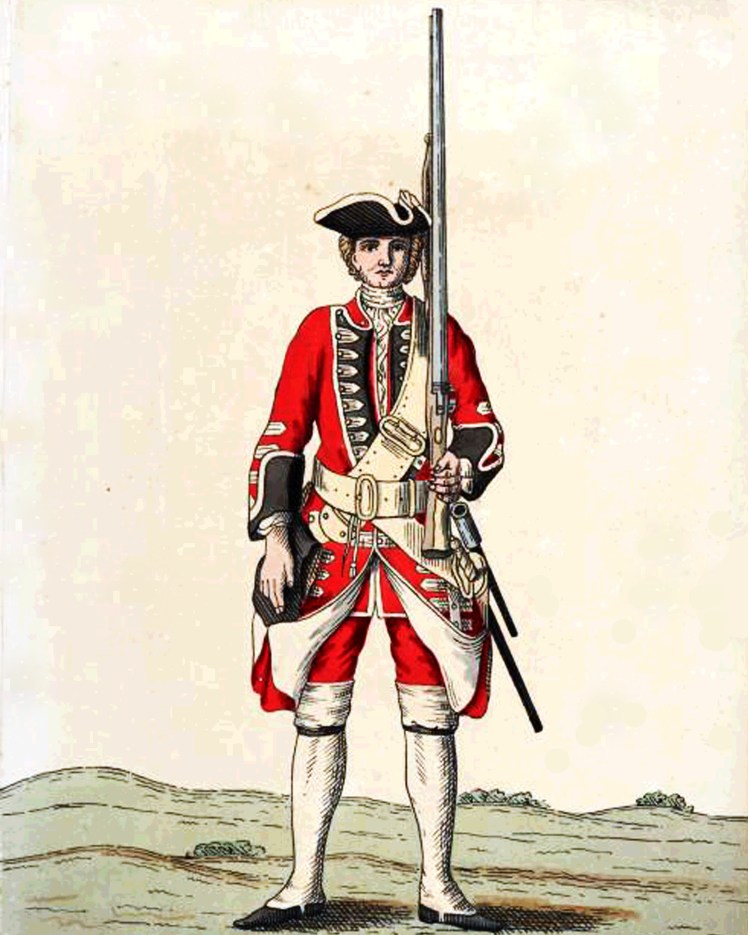 Sir Edward Dering’s Regiment of Foot
In the early days of the Army, regiments were raised by landed gentlemen who commanded them as colonels. Sir Edward Dering of Pluckley established a notably enduring one in 1689. It triumphed at Blenheim in 1704, but surrendered at Saratoga in the American Revolution, and in 1782 was re-designated the 24th Regiment of Foot. It subsequently took part in the Napoleonic, Boer, and World Wars. Its most inglorious and glorious moments came on consecutive days in 1879, during the Zulu War. On January 22nd, it was all but annihilated in a surprise dawn attack at Isandlwana. The next day, a detachment of just 141 Army regulars with 11 colonial troops miraculously defended Rorke’s Drift against several thousand warriors. The 24th won seven of the eleven Victoria Crosses awarded, the most ever awarded to one regiment in a day. Later renamed the ‘South Wales Borderers’, the regiment was merged with another in 1969 to create the Royal Regiment of Wales.
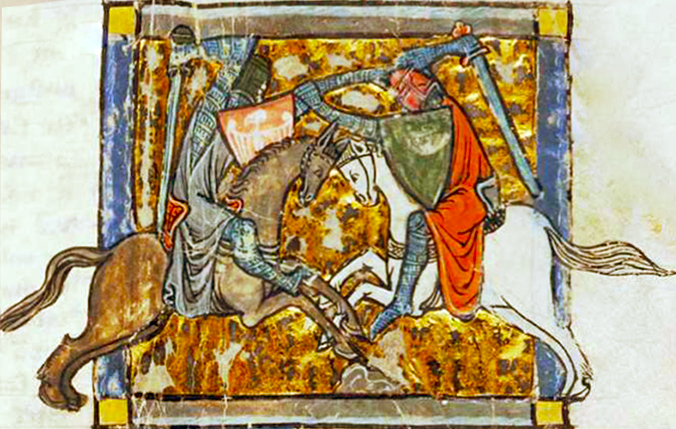 Sir Gawain’s head
Euhemerists, who try to interpret mythological and biblical stories historically, have struggled to explain Arthurian legend, which historians now mostly dismiss as Dark Age fiction. A key medieval encapsulation of the legends was Sir Thomas Malory‘s ‘Le morte Darthur’ (1470). William Caxton’s 1485 edition tells Arthur’s life story in 21 books, incorporating tales of those who served and opposed him. Most of the action takes place in the West Country, but the final book shifts the focus to Kent. The episode centres on Sir Gawain, who after suffering a serious headwound in combat with Sir Lancelot in France returns with Arthur to Dover, where Mordred’s army ambushes them. He dies from another headwound, and is interred at Dover Castle. The next day, Arthur defeats Mordred in battle on Barham Down. Caxton wrote in his preface that Gawain’s head was still displayed at the castle, a century after a French writer had reported it; but its whereabouts are long forgotten.
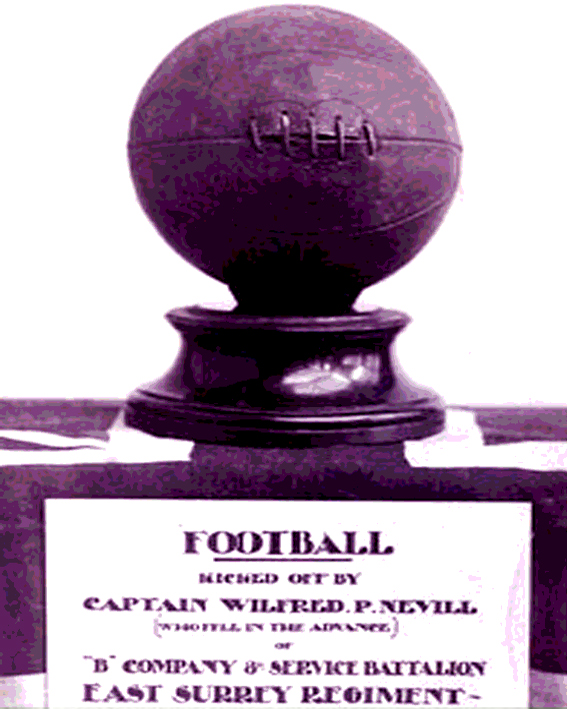 The Somme Football
By 1916, British troops had grown wise to the ramifications of “going over the top”, and were understandably reluctant to throw their lives away. Officers had the idea of appealing to their men’s native sporting instinct, and opted to start the Somme Offensive on July 1st by hoofing two footballs into no man’s land. One of the two was kicked by 22-year-old Twickenham resident Wilfred Nevill, a Dover College old boy and a captain of the East Surrey Regiment. The ruse worked a treat: 19,240 British Army soldiers amenably staggered to their deaths – the highest ever one-day total – among them Billie Nevill himself. Strategically, however, the slaughter achieved little more than leaving German machine-gunners with RSI in their trigger fingers. Both footballs were recovered afterwards. One was lost in a fire in 2015, but Nevill’s ball remains on display at Dover Castle. It is for each visitor to judge whether it is an emblem of courage, or folly, or both.
 Son of My Father
February 1972 saw a surprise three-week No. 1 for chart debutants Chicory Tip, four lads from Gillingham, Maidstone, and Lewisham. Appearing midway through the lean spell for pop between the Beatles and ABBA, it was noteworthy on several counts. First, it was the band’s only top-ten hit in their long career. Second, it was written by the future ‘Father of Disco’, Giorgio Moroder, who had released his own unsuccessful version. Third, the wordy English lyrics concerning adolescent rebellion bore absolutely no resemblance to the German original ‘Nachts scheint die Sonne’, a love song. Fourth, the production is notable for a full 16-bar solo on a Moog synthesiser, an instrument previously known only to prog rock. Fifth, the song’s other notable feature, its catchy refrain, became a familiar anthem on football terraces for two or three decades. In all honesty, however, the song was eclipsed musically by its successor at No. 1, Nilsson’s ‘Without You’.
 Sounds Inc
Alongside the Rolling Stones and Pretty Things, Sounds Incorporated made Dartford the cool place for music in Kent in the 1960s. Consisting initially of two saxophones, two guitars, and a rhythm section, they were creating the same stage persona as Madness when Suggs was still in his crib, lacking only the ska sound, Mike Barson’s witty lyrics, and 16 Top 10 hits. The trouble was that ‘Sounds Inc’ was largely instrumental, just when Merseybeat was setting the bar high in terms of vocal melody and harmony. When they did introduce voice, it was basically shouting. Nevertheless, like Madness, they were adept musicians. They backed the likes of Gene Vincent, Little Richard, and Sam Cooke; and, having been signed by Brian Epstein, they accompanied Cilla Black, and provided the sax parts on ‘Good Morning, Good Morning’. Following personnel changes, the band moved to Australia and grew increasingly conventional before being swept away in 1971 by the advent of rock music.
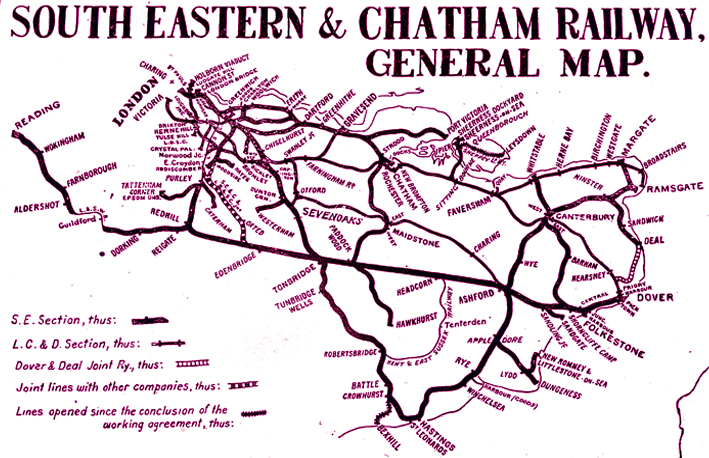 The South Eastern & Chatham Railway
As early as 1825, a railway connecting London and Dover was mooted for transporting military personnel faster from Woolwich to the coast. Plans were thwarted by nimbyism and the engineering challenge of supporting a line across the Medway, until in 1836 Parliament passed the South Eastern Railway Act mandating the creation of such a line. Completed in 1844 by engineer William Cubitt, it ran via Redhill, Tonbridge, and Ashford to Dover station on Shakespeare Beach. Competiton among railway companies being feverish, the South Eastern Railway was frequently at loggerheads with its rivals. It absorbed the pre-existing Canterbury & Whitstable Line in 1844 and London & Greenwich Railway in 1845, but competed bitterly with the London, Chatham & Dover Railway, opened further north in 1859 and reputed for superior safety in addition to unpunctuality and shabbiness. Having eventually opted to collaborate as the South Eastern & Chatham Railway in 1899, both were swallowed up by the Southern Railway in 1923.
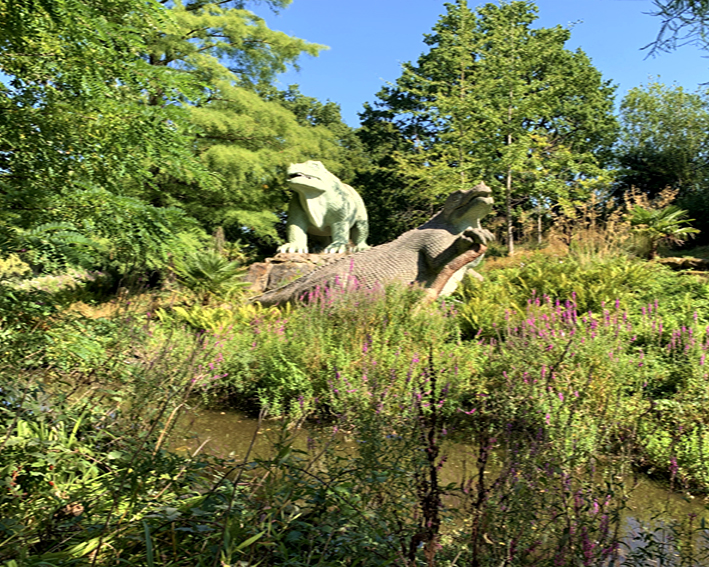 The South East London Green Chain
A new walk introduced in 1977 was made long and serpentine enough to take in all four of the London boroughs (Greenwich, Lewisham, Bexley, and Bromley) annexed from Kent since 1889. Designed to run from the Thames at Erith to Crystal Palace, it passed through numerous ancient Kentish commons, parks, and woods, including Lesnes Abbey Woods, Charlton Park, Eltham Palace, and Chislehurst Common. There was a perfect opportunity to call it something respectfully non-appropriative, like the ‘Old Kent Trail’, especially considering that there is nothing like geographical and historical colour for drawing tourism. The metropolitan powers that be, however, ever anxious to trumpet their demesne’s bounds as they are set wider still and wider, pointedly labelled it the ‘South East London Green Chain’. Matters have not improved. Today the walk is marketed as a London resource for Londoners, who can feel agreeably at home while inspecting the metropolis’s latest south-eastern borderlands.
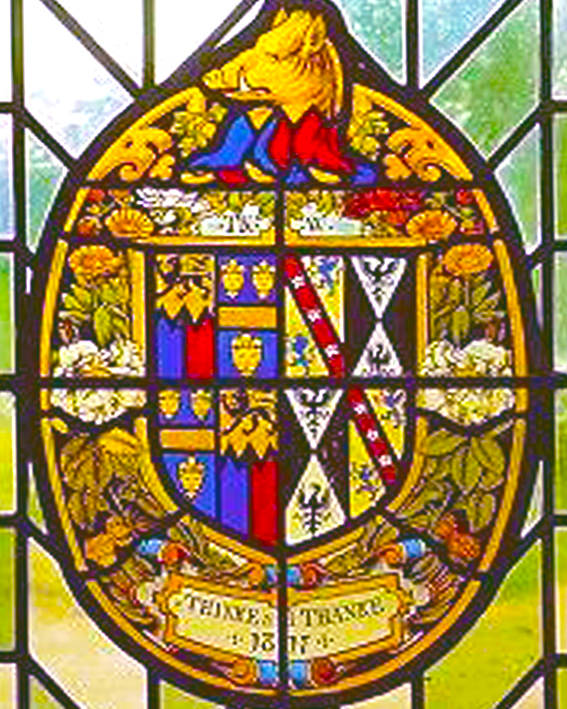 The Stained Glass Revival
After three centuries during which stained-glass windows had gone into abeyance, they were given a new lease of life in the C19 by the Gothic Revival spawned by Augustus Pugin‘s religious fervour. He employed window-maker William Warrington (1796-1869) from New Romney, who produced some classic work for him between 1837 and 1841 and wrote ‘The History of Stained Glass’, complete with colour plates, in 1848. Although Warrington’s work was so authentic that he also did work for Norwich and Ely Cathedrals, Pugin fell out with him, and turned to Warrington‘s former tutor, Thomas Willement (1786–1871). Though arguably less talented, Willement from London was known as the Father of Victorian Stained Glass; yet Pugin, a full-blooded perfectionist, took issue with him too. Their collaborations did none of them any harm. Indeed, Willement was able to buy Davington Priory near Faversham, where his ‘Thynke and Thank’ window survives today under the ownership of Bob Geldof.
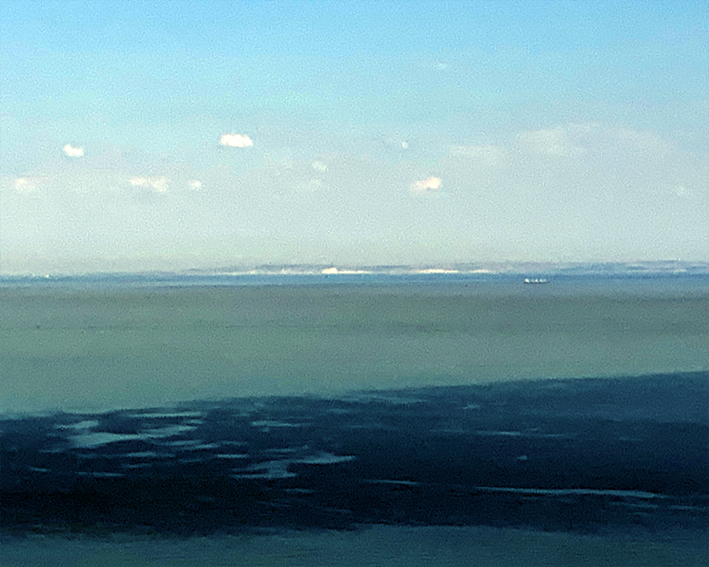 The Strait of Dover
The Pas de Calais, or Strait of Dover as we prefer it, is effectively an 18-mile-wide canal. After all, it spares most North Sea and Baltic shipping the long, uncomfortable journey around Scotland to reach the Atlantic, thanks to an international convention that permits universal passage through these Anglo-French waters. Generally reckoned the busiest shipping-lane in the world, it sees around 20 vessels pass through every hour, which makes for a heady navigational brew when you throw in ferries crossing at right angles. With the additional risk of running aground on the Varne Bank, negotiating the strait was a seriously risky business before lanes were introduced in the 1960s, even with the benefit of multiple lighthouses. The strait nevertheless is a serene sight from the White Cliffs on a fine day, when France looks almost within hailing distance – a reminder that Shakespeare’s “moat defensive” used to prove considerably less porous than the Belgian border.
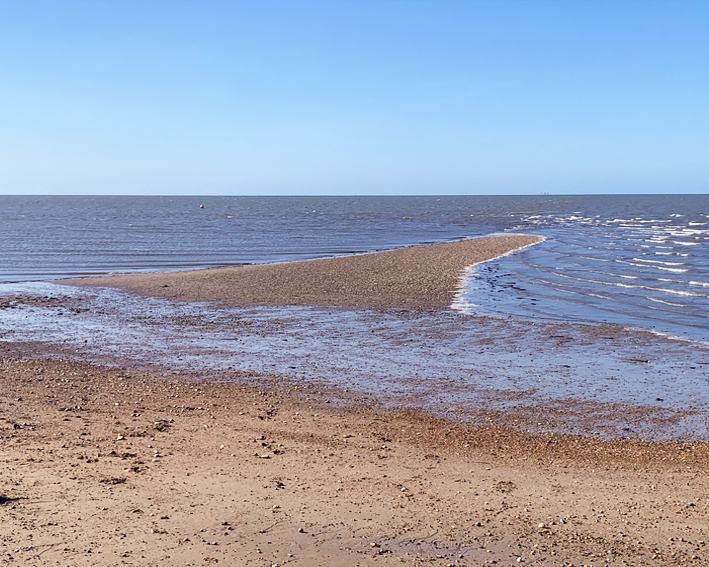 The Street
Several Kent villages possess a road called The Street, but Tankerton’s is like no other. It’s not a thoroughfare but a spit – a strip of shingle stretching half a mile out to sea that’s fully exposed just twice a day. It was a bank of the River Swale before sea-level rose enough almost to obliterate it. At low tide, visitors can walk from the beach to the very end, where they get a splendid view in both directions along the coast and, with some imagination, a sense of walking on water. Despite the apparent risk, only the most incautious pedestrian is likely to get more than wet feet when the tide turns, but it’s said that swimming on either side can be risky owing to the irregular currents. The Street is one of Kent’s most memorable seaside experiences to be had gratis, albeit that longer spits do exist elsewhere. Ironically, America’s longest, near Seattle, is named after Dungeness.
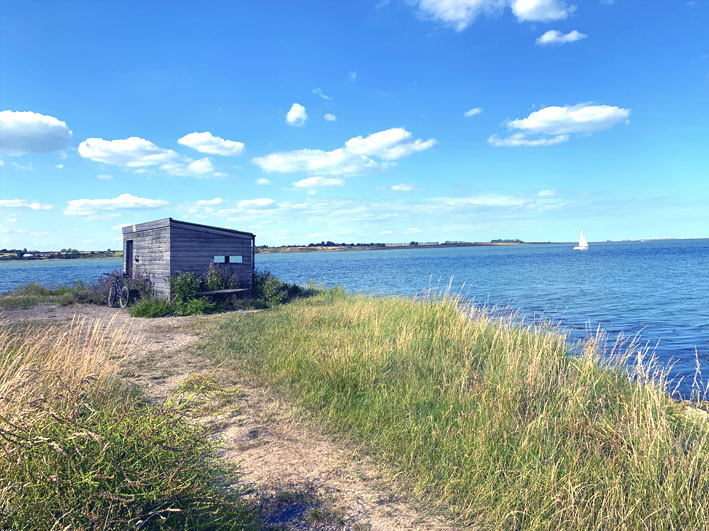 The Swale
Less than ten millennia ago, when the sea level was lower and Kent’s coast extended much further out, the Swale was just an east-west valley separating today’s Isle of Sheppey from the rest of North Kent. As glaciation receded, the valley gradually filled with water; its name is an Anglo-Saxon word for a low-lying marshy area. From the C17 onwards, ferries connected the Isle of Harty with Oare and the Isle of Elmley with Murston, although the need for such crossings was largely eliminated by the provision of the Kingsferry lift bridge in 1960. The Swale today, apart from giving its name to a borough council, is best known as a site of special scientific interest. Its shores have something to offer entomologists, but it is particularly noteworthy as the habitat of numerous species of seabirds, waders, and birds of prey. For nature lovers generally, it provides a surprisingly peaceful retreat for observation and contemplation.
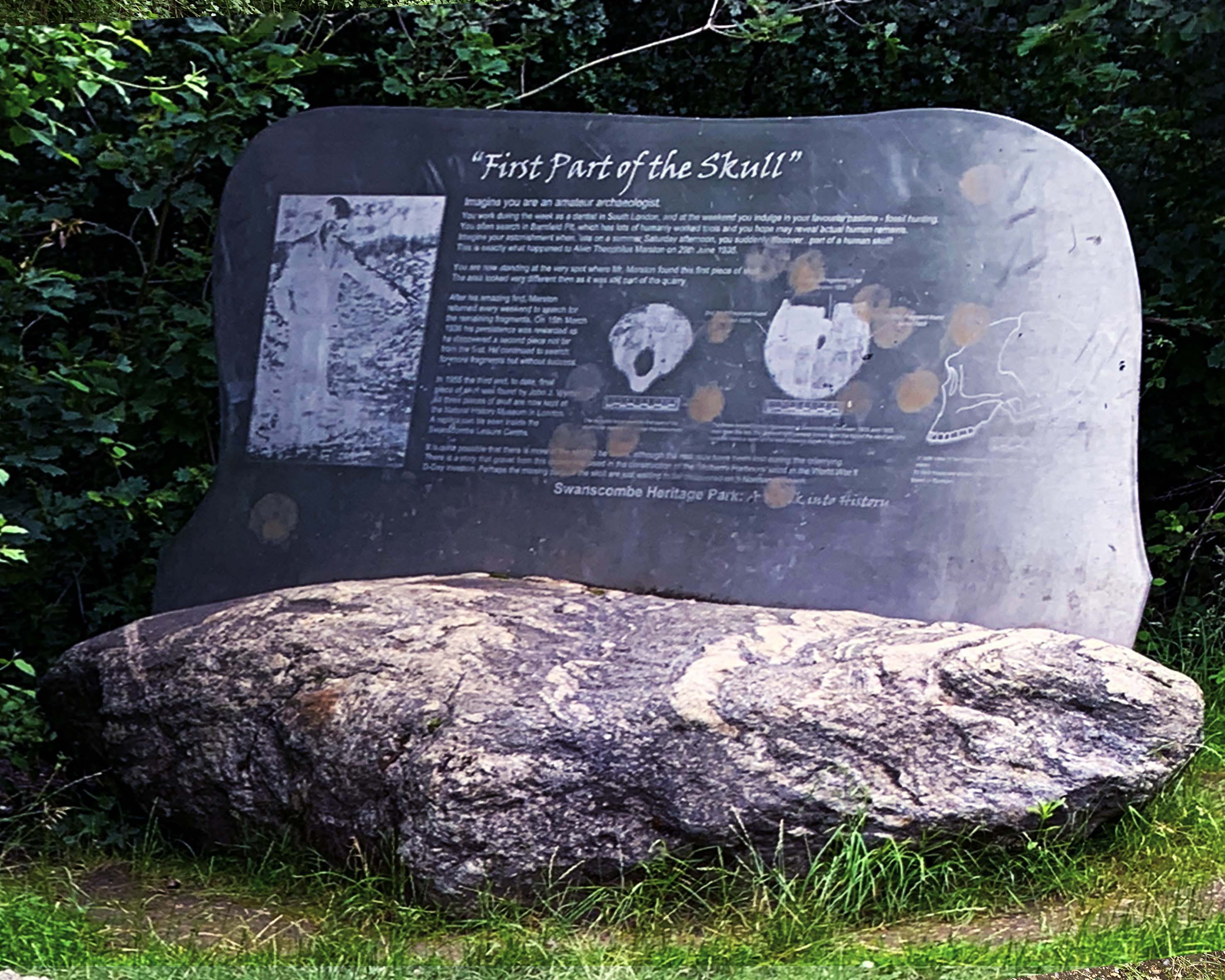 Swanscombe Man
In 1935, a fossil hunter called Alvan Marston unearthed an ancient piece of skull in a gravel quarry at Swanscombe. He informed the British Museum, but raised no interest. He kept looking, and nine months later found another piece that fitted together with it. Not until 1955 was a third piece found that also fitted. Although it was named ‘Swanscombe Man’, the skull was probably that of a Homo heidelbergensis female dating from around 400,000 years ago. Only the back and sides of the skull remained, but nothing like it had been discovered in Britain before, and few comparable examples were known around Europe. Numerous artefacts including hand tools had already been discovered at the site, and their makers obviously knew how to hunt, there being evidence of butchered deer, horses, and rhinoceros. A 10-acre area around the site is now designated the Swanscombe Heritage Park. The skull itself resides at the Natural History Museum.
 Sydenham Wells
Some time in the middle of the C17, a natural source was discovered at Sydenham. The locals ascribed medicinal qualities to it, no doubt encouraged by the commercial success enjoyed by Tunbridge Wells ever since Queen Henrietta Maria convalesced there for six weeks after childbirth in 1629. Although less familiar than its royal rival further south, Sydenham (or ‘Dulwich’) Wells did attract large numbers of visitors, including George III himself a century later. Indeed, the wells were sufficiently well exploited that Sydenham Hill turned into a desirable residential location, no doubt a factor in the relocation of the Crystal Palace there from Hyde Park in 1854. Although its springs are still active today, the area was designated by the new Metropolitan Borough of Lewisham as a public park in 1901. Still known as Sydenham Wells Park, it has lost its former charm, but usefully contains a lake, gardens, some woodland, sports facilities, and two children’s play areas.
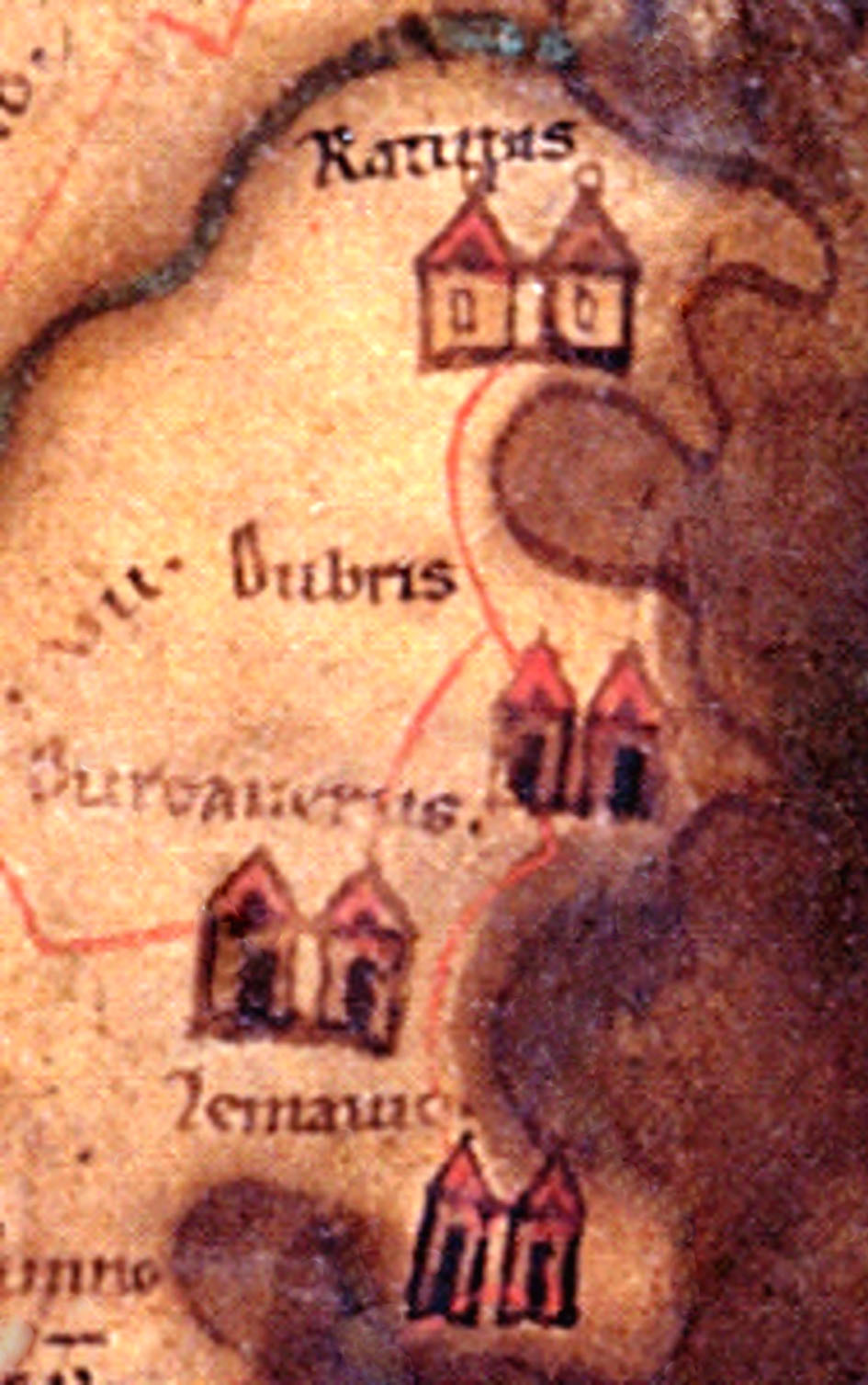 Tabula Peuteringeriana
In the Austrian National Library in Vienna is an ancient map called the Tabula Peuteringeriana, which gets its name from a C16 German antiquarian. It is believed to be a medieval copy of a Roman map of the world as they knew it in the C5 – based on one originally commissioned by Augustus’s sidekick Marcus Agrippa – covering the road network from India in the east to Britannia and Iberia in the west. The twelfth, westernmost section is missing, but the eleventh does contain the south-eastern corner of Britannia, including Kent. Four local Roman cities are represented: Portus Lemanis (Lympne), Durovernum (Canterbury), Dubris (Dover), and Rutupiae (Richborough). Like a transport map, it depicts road connections graphically rather than geographically, so that Canterbury appears roughly where Folkestone lies. The 22-feet-long, foot-high map, now very fragile, can no longer be displayed, but in its heyday must have given an intimidating impression of the extent of Roman influence.
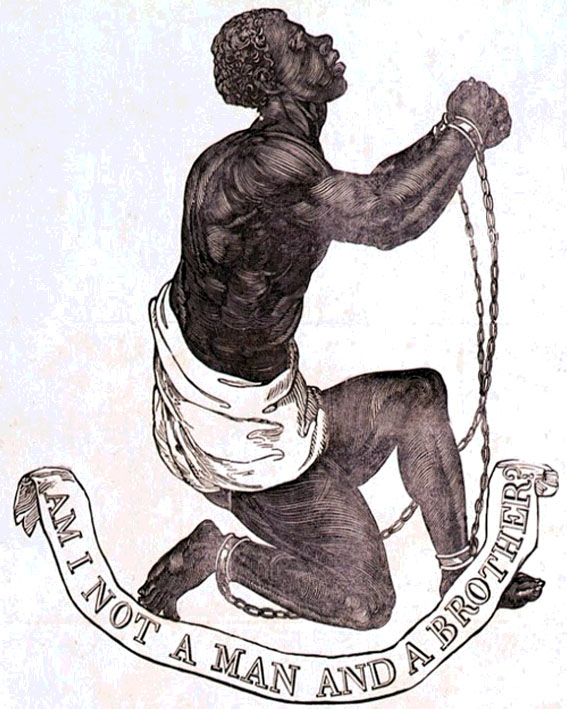 The Testonites
The American Revolution removed Britain’s main political justification for tolerating slavery, which was to placate slave-owning colonists. In 1780, former ship’s surgeon James Ramsay returned to Britain after witnessing at first hand the brutality meted out to slaves and campaigning vigorously against traders and owners. After becoming vicar of Teston and Nettlestead, his views attracted the support of local gentry, notably Admiral Charles Middleton of Barham Court. They and others formed a pressure group, known as the Testonites, bent on getting slavery abolished. In 1786, they invited William Wilberforce to lead their movement; he informed William Pitt the Younger of his mission at Hayes, Bromley a year later. Within 20 years, Britain had uniquely outlawed the slave trade. The Royal Navy’s massive West Africa Squadron, formed in 1808 at great cost to combat slave trading, rescued 150,000 slaves, but lacked powers to halt African enslavement and interdict alien ships. Slavery remains rife across much of the globe.
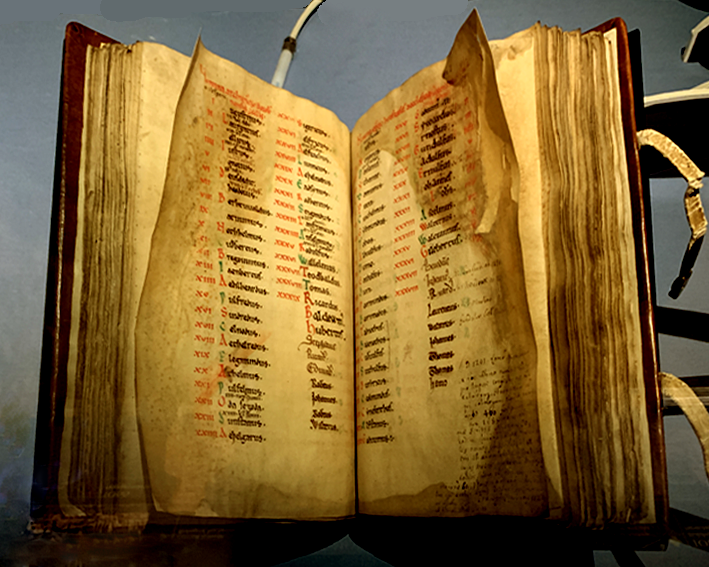 ‘Textus Roffensis’
Named in full the ‘Textus de Ecclesia Roffensi per Ernulphum episcopum’, or ‘The Book of Rochester Church until Ernulf’s Bishopric’, Rochester Cathedral’s pride and joy is generally known by the snappier title ‘Textus Roffensis’. It is two different medieval tomes, embracing 154 documents on 235 vellum leaves, created in 1122 and 1124 and bound together around 1300. The first was a unique collection of the laws of King Aethelberht of Kent and several successors, plus lists of kings and divines. The second is a cartulary, a compendium of documents relating to the Cathedral’s legal status, like a management pack. Both appear to have been copied by the same hand. The Textus suffered a near calamity in the early C18 when it was dropped for some hours into a river; it shows signs of water damage. Today it is safely stored in an airtight cabinet in the Crypt, and has enjoyed renewed celebrity following its octocentenary.
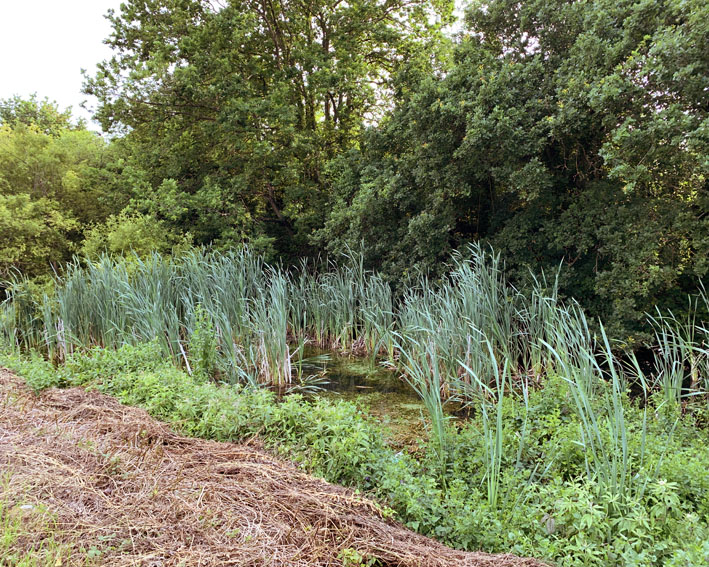 Thames & Medway Canal
When the Yantlet Creek silted up, shipping headed for Woolwich and Deptford from Chatham Dockyard had to sail over forty miles around the Hoo Peninsula. In the late C18, a 7-mile canal from Strood to Gravesend was mooted in order to shorten the journey. Over time, its value came to be seen not as military but commercial. Construction delays mounted and costs escalated, however, especially when a two-mile tunnel from Strood to Higham was added. The Canal did not open until 1824, having cost over £250,000. It was an operational failure, as delays could entail an even longer voyage than by sea. Inserting a passing place inside the tunnel provided no definitive solution. Eventually, in 1846, the tunnel was purchased for the new North Kent railway line, leaving only the section of canal from Higham to Gravesend. This stretch did remain in use until 1934, and is now the subject of efforts to preserve it as a recreational facility.
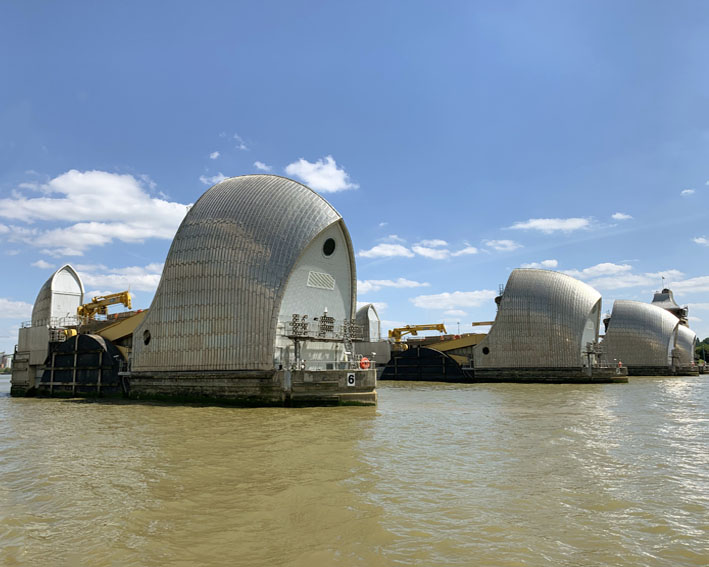 The Thames Barrier
The devastating flooding of England’s eastern seaboard in January 1953 sparked consternation about the vast economic damage that might be wrought on London by a worse occurrence in the future. It was decided in 1966 that a movable barrier should be built near Woolwich to stop the Thames breaking its banks further upstream. In 1969, London engineer Charles Draper devised the idea of gates that normally lie flat on the riverbed – permitting the river’s seaward flow and allowing ships to pass – but can be rotated upright to shut out the waves in the event of an impending inundation. The final design embraced a series of such gates driven by motors on piers spaced across the 570-yard breadth of the river between New Charlton and Silvertown. Construction began in 1974, took eight years, and cost over half a billion pounds. Since its opening in 1984, the Barrier has been put to use on about 200 occasions.
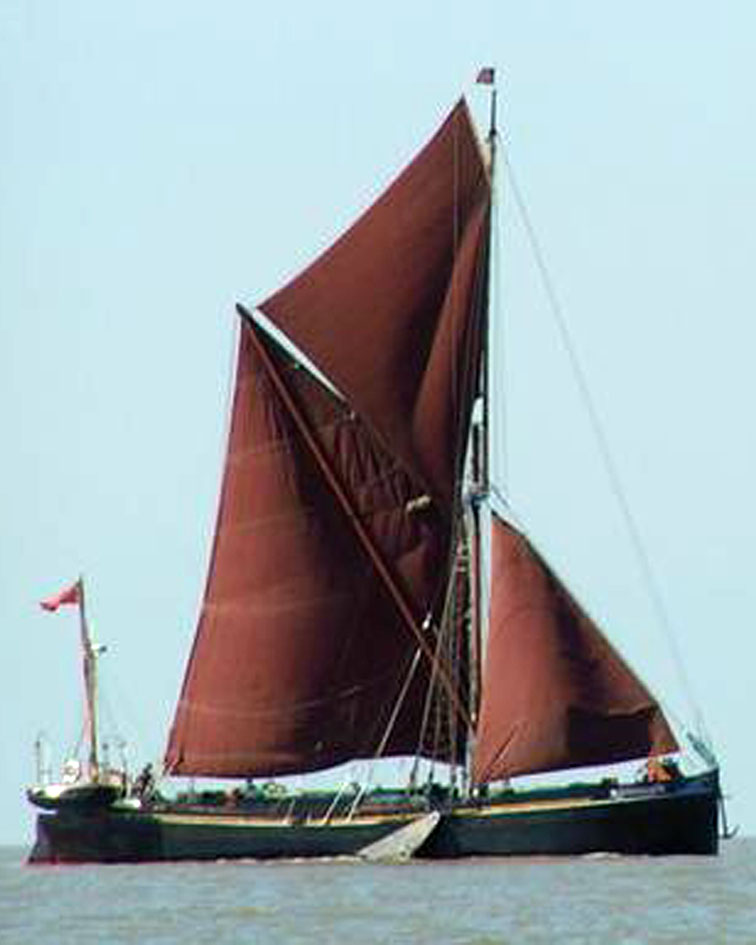 Thames sailing barges
For centuries before a diesel engine was ever fitted to a working barge to provide independent propulsion, Thames barges were bedecked with copious sails, much like any other mercantile vessel. Flat-bottomed Thames sailing barges were ideal for ferrying goods along the Thames and Medway, because their shallow draft meant they could easily navigate shallow stretches of river. After all, they did not have a conventional keel, but a leeboard on either side. They were a significant force in commerce in the C19, the larger ones shipping bricks, cement, and corn among other goods up the Medway to London or out to sea. Many were actually constructed in Kent, the last wooden one, SB Cabby, being launched at Frindsbury in 1928. Thirty of them took part in the Dunkirk evacuation, when a dozen of them were sunk. Easily distinguished by their six claret-coloured sails, they are kept alive today in the time-honoured sport of Thames sailing barge racing.
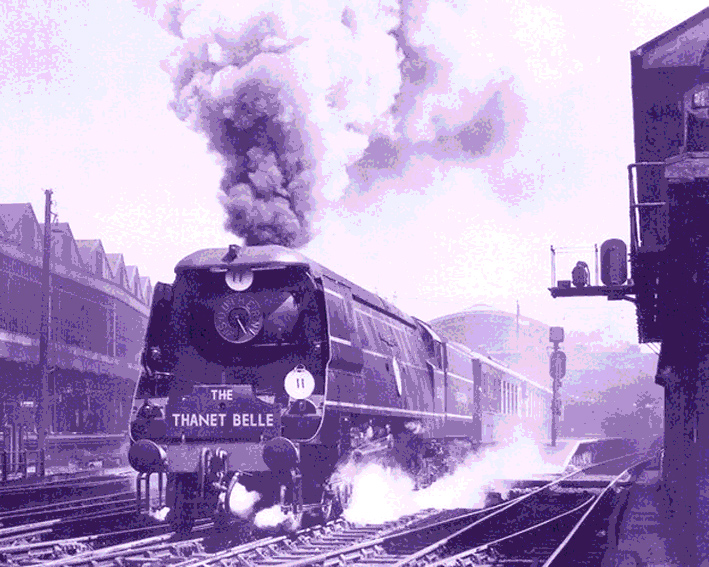 The Thanet Belle
In the 1920s, the South Eastern & Chatham Railway ran a service called the Thanet Pullman that was terminated in 1928. After WW2, it was resurrected with a train called the Thanet Belle, one of the British Railways’ four Belles serving southern holiday resorts; the Brighton Belle, Bournemouth Belle, and Devon Belle were the others. Consisting of Pullman carriages hauled by a West Country or Battle of Britain class locomotive, it connected London Victoria with Margate, Broadstairs, and Ramsgate. From 1951, three coaches were detached at Faversham to go to Canterbury East under the name Kentish Belle, and although that service was discontinued after a year, the name was retained. The train was retired in 1958 after only a decade because of the introduction of electrification. The name was sufficiently familiar that Hornby released a Thanet Belle set consisting of engine, tender, and three carriages nearly half a century later.
 The Thanetian Age
The Thanetian Age was not as substantial as the Devonian Epoch – it was less than one tenth as long – but it does ensure that one part of Kent is known to all the world’s geologists and palaeontologists. Unlike the Devonian, the Thanetian was named by a foreigner, the Swiss geologist Eugène Renevier, in 1873. He applied it to the last part of the Paleocene Epoch, specifically from 59.2 to 56 million years ago. The reason for the name was that this was when the ‘Thanet Formation’ was laid down: a geological stratum representing the easternmost rim of the London Basin, stretching from Herne Bay to Pegwell Bay. It is made up of sandy deposits from the bottom of a relatively shallow sea that existed when the planet was restocking with new species after the mass extinction of 65 million years ago. Analysis suggests that the Kent climate was then subtropical, which cannot have been all bad.
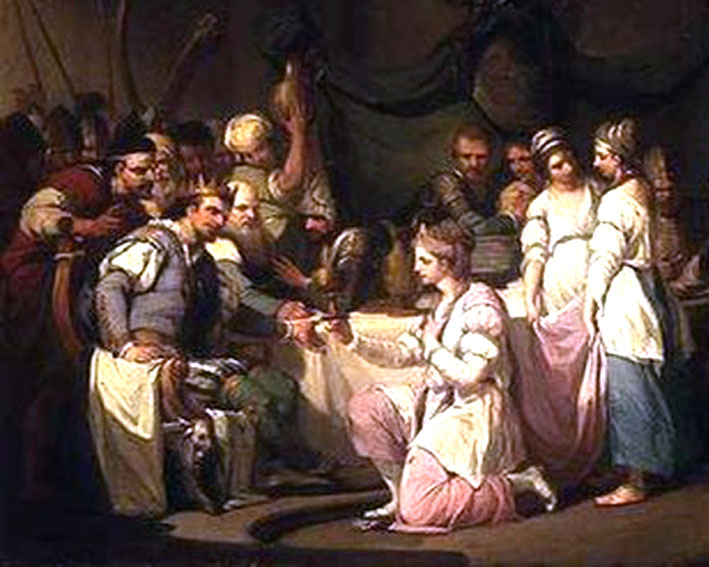 Thong Castle
According to legend, the British king Vortigern responded to the Anglo-Saxon mercenary Hengist’s demand for land by granting him as much as he could cover with an ox’s hide. His crafty guest cut the hide into one extremely long thong, with which he was able to encircle enough land to build a castle, and cheekily named it Thwang Ceastre – Thong Castle. Legend has it that, in 450, Vortigern was beguiled there by Hengist’s daughter Rowena, and married her. Eleven years later, a notorious outrage took place there, when the mercenaries massacred Vortigern’s men at a banquet; only the king himself was spared. Another legend holds that Rowena got her lustful husband drunk and persuaded him to grant the whole kingdom of Kent to her father. Situated south-east of Sittingbourne, Thwang eventually became Tong, and then Tonge. The remains of an ancient castle survive, though these are now thought to be Norman.
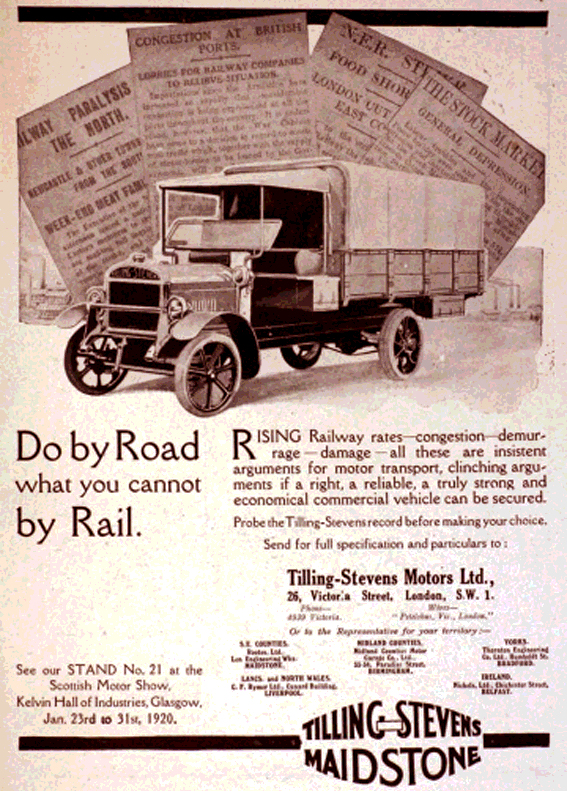 Tilling-Stevens
As early as 1897, William Arthur Stevens established an engineering business in Maidstone. He developed Percy Frost-Smith’s pioneering automotive design, building his first ‘petrol-electric’ vehicle by 1906. This was not what it sounds like, but employed a gearless transmission that was much easier to use in the days before synchromesh. Vehicles he constructed with chassis supplied by J & E Hall of Dartford under the name Hallford were known as Hallford-Stevens. On the same model, when Stevens merged in 1915 with London’s oldest bus manufacturer, Thomas Tilling Ltd, the business was named Tilling-Stevens. It initially was based at the Victoria Works in St Peter’s Street, but the modern ‘daylight’ factory opposite was added in 1917. Following WW1, the business converted to conventional gear-boxes, producing a great variety of commercial vehicles for a worldwide market. The company was bought in 1950 by Rootes, also of Maidstone, and closed in 1975 after being acquired by Chrysler.
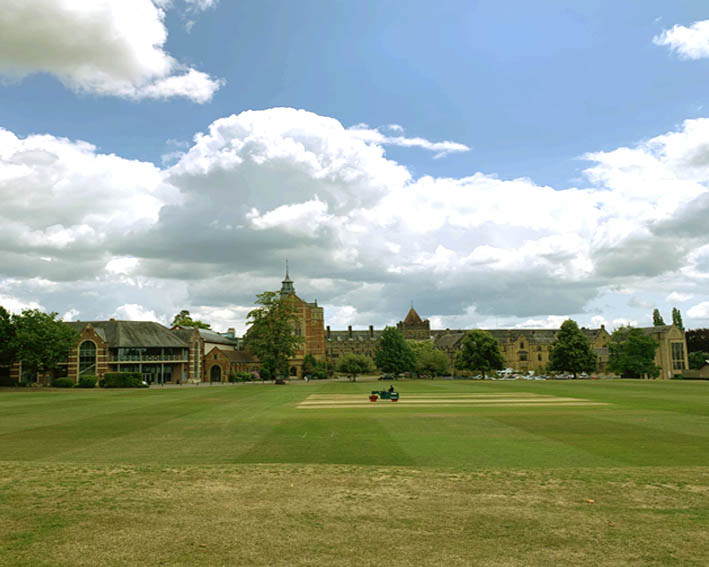 Tonbridge School
Older than even Charterhouse, Harrow, and Rugby, Tonbridge School was built in 1553 with funding from Tonbridge-born Lord Mayor Sir Andrew Judde. Adopted after his death by the Skinners’ Company, it was later generously endowed by Judde’s grandson Sir Thomas Smythe. Now one of the Eton Group of public schools, it remains a boys-only affair, with a long tradition of turning out future leaders in the military, science, politics, arts, and especially sport. Apart from its magnificent chapel, it is most remarkable from the outside for its playing fields, especially its glorious cricket pitch. Unsurprisingly, it has produced a crop of top cricketers, including the Cowdreys. Also notable is its contribution to rugby union. The Old Tonbridgians club Gipsies was a founder member of the Rugby Football Union in 1871, supplying two of England’s first international team; and, 152 years later, one of the Rugby World Cup’s outstanding performers was Old Tonbridgian Ben Earl.
 The Town of Ramsgate
One of London’s more historic pubs is the Town of Ramsgate, next to Wapping Old Stairs on the Thames. The current pub was built in 1545 to replace a C15 predecessor known as The Hostel and then The Red Cow. It was in the spotlight in 1688, when Bloody Judge Jeffreys, the man responsible for sending hundreds to their death after Monmouth’s Rebellion, was captured there while attempting to flee to Germany dressed as a sailor during the Glorious Revolution; ironically, he was spotted by a former defendant he had neglected to condemn. In the C18, fishermen from Ramsgate, who would incur river taxes by landing their catch closer to Billingsgate up the Thames, took to doing so at Wapping instead. Since they naturally became regulars at the pub, it was renamed Ramsgate Old Town in 1766, and given its present name in 1811. Despite numerous pub closures locally, the Town of Ramsgate is still a lively family-owned concern.
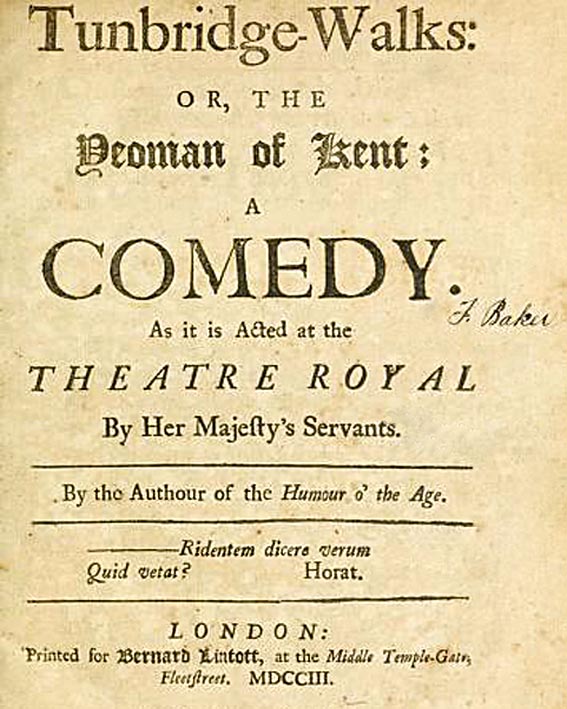 ‘Tunbridge-Walks’
By the late C17, the London theatre had become the mainstay of the entertainment world, where wealth and fame were to be had, not to mention much more of a less salubrious nature. Many a young person about town was keen to have their 15 minutes of fame, and in 1703 it was the turn of Thomas Baker, who had a big hit with his comedy ‘Tunbridge-Walks: or the Yeoman of Kent’. It was a good choice of subject matter, spa towns being a popular choice of setting, and not least Tunbridge Wells, which was particularly vogueish and frequented by countless slebs. The production, which was staged at Drury Lane, starred William Pinkethman (ca 1660-1725), commonly known as ‘Pinky’, in the role of Squib. He plainly did well out of it, since in 1710 he set up his own theatre at Greenwich, albeit without lasting success. The play itself lasted rather better, being revived four times by 1782.
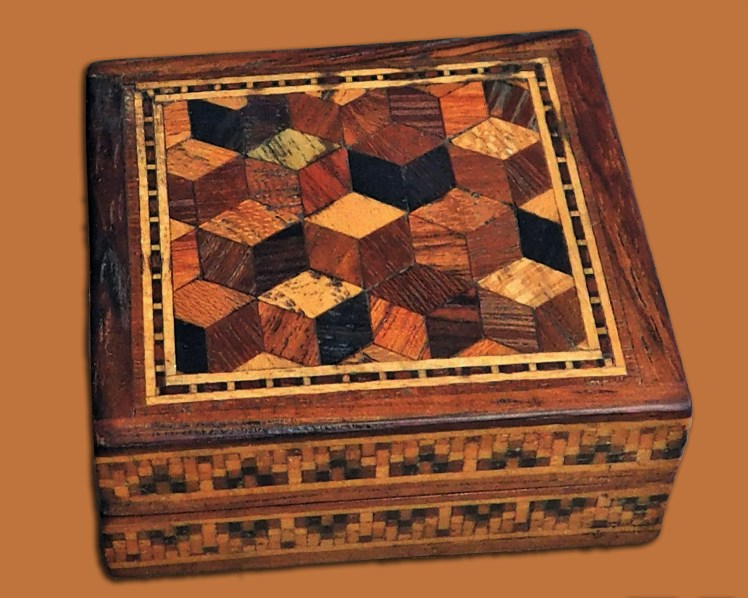 Tunbridge Ware
Marquetry is the craft of decorating cabinets and the like by attaching differently coloured pieces of wood in intricate patterns. Tunbridge Ware was a particular style, developed in the C17, that flourished in the C19. One innovative exponent was James Burrows of Tunbridge Wells, who around 1830 started creating novel visual effects with half-square and tessellated wood mosaics. Only natural wood colours were used. His apprentice Henry Hollamby created his own manufactory with about 40 employees. They were no doubt motivated by the explosion of fashionable visitors to the Chalybeate Spring at Tunbridge Wells who, like most tourists, were anxious to show off souvenirs of their travels once they got home. Around ten cottage enterprises were producing Tunbridge Ware at one time, creating distinctive designs for objects from tea caddies to snuffboxes. Their trade finally petered out around 1890 when fashions changed, although their workmanship still impresses. Tunbridge Wells Museum has a display of their handiwork.
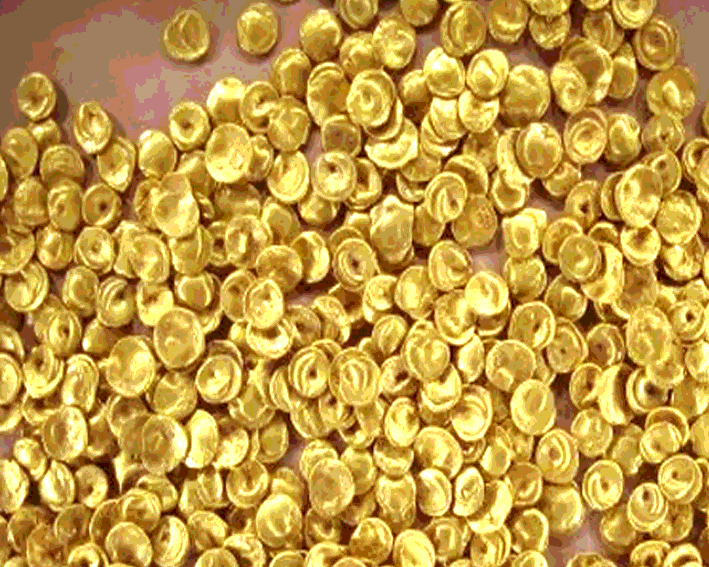 The Tunstall Hoard
In 1738, while exploring near Ruins Barn Road in Tunstall, Sittingbourne, a boy discovered a hoard of hundreds of pieces of gold in a wood then known as Gascoyne’s Walk. The Crown demanded that 624 of them be handed over to it as treasure trove. As lord of the manor, Sir John Hales made his own claim to it, asserting that his ancestor Sir Edward had buried the hoard there in 1648 following the Royalists’ defeat at the Battle of Maidstone. His claim was supported by the elderly mother-in-law of the vicar of neighbouring Bredgar, who recollected the tale. The claim was royally denied, however, perhaps in part because the Haleses had been vigorous supporters of the preceding Stuart dynasty. Intriguingly, Hales had buried the gold along with the family jewels. Despite strenuous efforts having been made to locate them, what happened to the rest of the Hales’ buried treasure is a mystery.
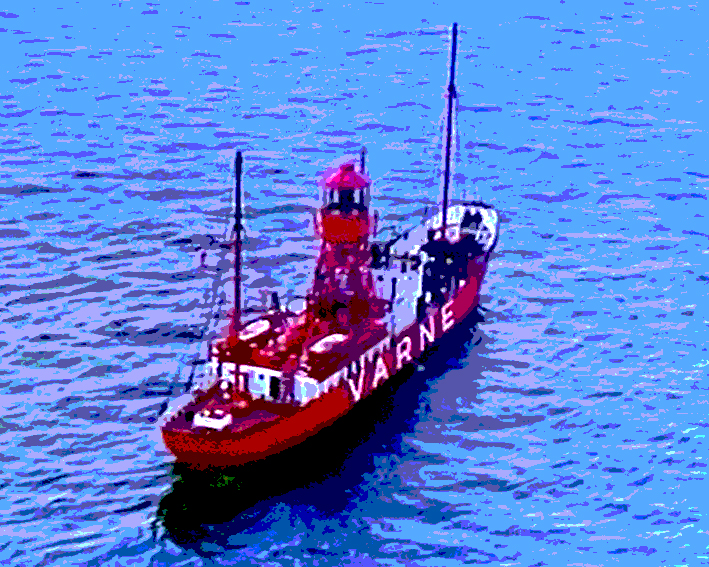 The Varne Bank
The Varne Bank is not a safe-as-houses Nordic financial institution, but a hazardous sandbank in the Strait of Dover, the world’s busiest and historically most dangerous waterway. At times only six feet below the surface, it is nearly six miles long and sits in the middle of the shipping lane passing south and west past the south Kent coast. Known for the particularly choppy waters above, it used to create havoc in the days before lanes were introduced in 1967, and still requires vigilance today. There have been plans in the past to remove it by dredging, but charts and navigational technology generally suffice nowadays, albeit that the Varne lightvessel is permanently on duty to warn seafarers of its presence. More imaginative plans have included making it the base of a central pillar of a cross-Channel bridge, while Napoleon considered it as a staging-point for an invasion. On the bright side, it’s a good source of scallops.
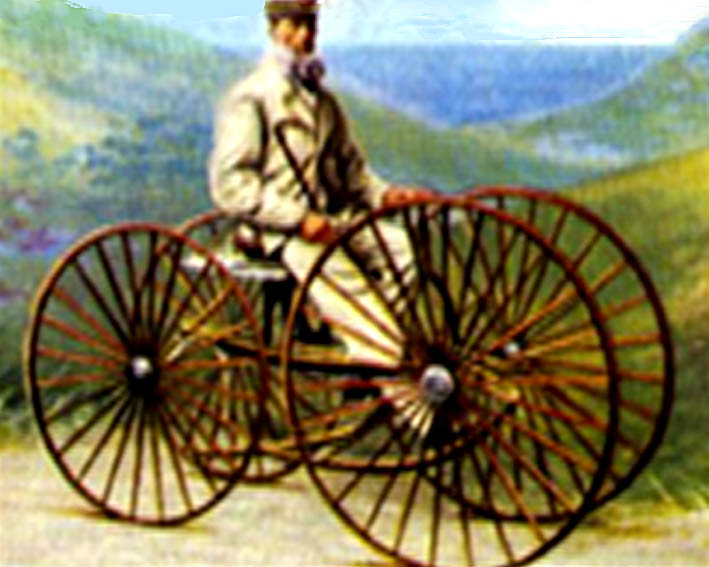 The Velocipede
The first bicycle was unveiled in 1817 by the German Baron von Drais. It had no pedals, chain, or gears, but was propelled by the rider’s feet. It became known in Germany as a Laufmaschine (running-machine), in France as a vélocipède, and in Britain as a hobby horse. Many impracticable designs followed, with varying configurations of wheels. The first seriously commercialised anywhere in the world was the brainchild of Romney-born carpenter Willard Sawyer (1808-92). In the 1840s, he began manufacturing his ‘Velocipede’ at Dover, with its four wooden wheels, metal frame, and a treadle for propulsion. All the rage after the Great Exhibition of 1851, it enjoyed international success: even the Russian Czar bought one. In the 1860s, however, under pressure from the new two-wheeled, pedalled ‘boneshaker’, Sawyer downsized, making wooden Velocipedes in Deal. He persisted until 1887, when modern safety-bicycles like Hillman’s Kangaroo were coming in. Modern ‘velocipedes’ are still hired out in tourist resorts around Europe.
 The Vickers Vimy
Vickers’ chief designer Rex Pierson came up with the Vickers Vimy biplane as a response to the Germans’ development of the Gotha heavy bomber during WW1. The first was constructed at Crayford and flew at Joyce Green, Dartford in November 1917. Several more were built there before production shifted to Weybridge, Surrey, where the factory stood next to Brooklands airfield. The Vimy’s arrival came too late to make a difference before the War ended, but it became the mainstay of the RAF bomber force until 1933. Taking its name from the successful Canadian mission at Vimy Ridge in the Pas de Calais in March 1917, it was also adapted for civilian use, and was sold as far afield as China and the Soviet Union. Among the several long-distance flight records it set, the greatest occurred in June 1919, when John Allcock and Arthur Brown made the first ever uninterrupted flight across the Atlantic, in under 17 hours.
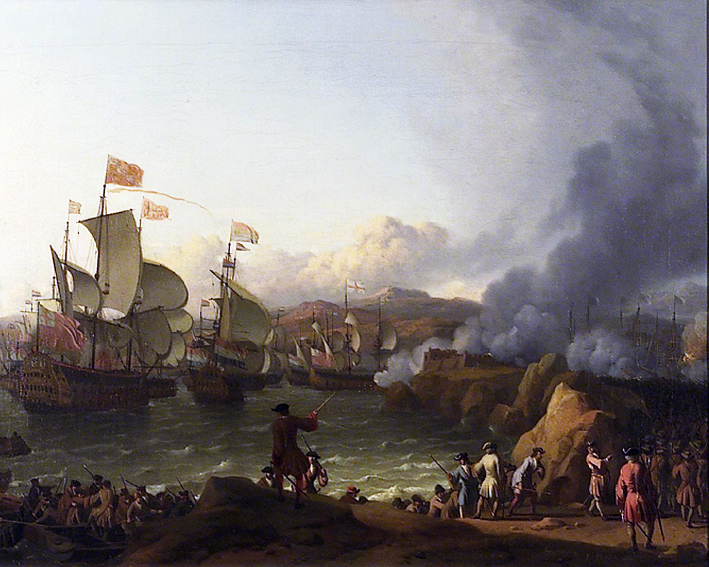 Vigo
Vigo
In a county replete with Anglo-Saxon place names leavened by a few Celtic ones, it is surprising to find a village near Trottiscliffe with the exotic Spanish name of Vigo. The reason for it is that in 1702, during the War of the Spanish Succession, the Canterbury-born admiral Sir George Rooke was at a loose end after failing to capture Cadiz harbour, and sailed up the coast to Vigo Bay in Galicia, where a Spanish fleet laden with South American gold and silver had landed. Rooke managed to capture or destroy all the Spanish ships, along with 15 French warships assigned to their defence. Although most of the treasure had already been removed, the rout was a massive boost to English morale. It was commemorated back in Kent by the renaming of a C15 pub, now the Vigo Inn, which lent its name to the C20 village. It is not pronounced the Spanish way, however, but rhymes with ‘Sligo’.
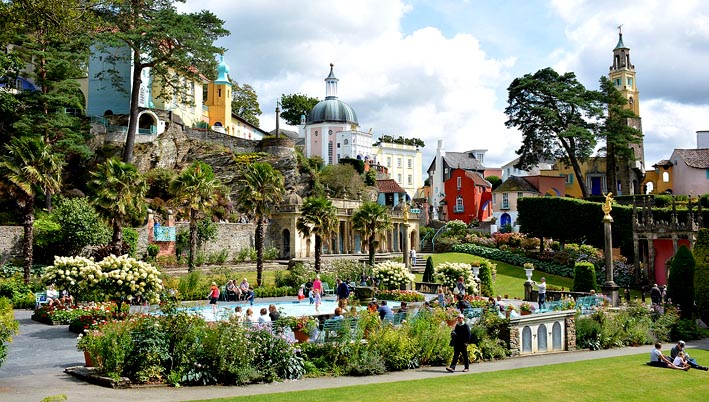 The Village
Most fans of ITV’s ‘The Prisoner’ (1967-8) assume that the fictional seaside Village was located at Portmeirion in North Wales, where most of the series was shot. The evidence actually points to Kent. One of the most memorable episodes, ‘The Girl Who Was Death’, begins with two village cricket matches intercut with establishing shots from Meopham and Bearsted, the Girl herself being played by Bromley-born Justine Lord. That episode, however, was a story within a story. The definitive clue is given by the final episode, ‘Fall Out’, in which Patrick McGoohan’s Number Six finally escapes. He and three associates are seen driving through the countryside and up the A20 towards London. Since the terrain around the Village contains hills but no white cliffs, it can only have been on the coast west of Folkestone. This suggests that Number Six’s captors were British after all – unless of course Sandgate was harbouring a secret Soviet enclave.
 Wallinger’s white elephant
When the Ebbsfleet rail interchange was opened at Northfleet in 2007, someone had the idea of advertising its presence for miles around with a vast statue to outdo the Angel of the North. Of the five oddball designs submitted, the winner was Mark Wallinger’s gigantic concrete white horse. Given the historic significance of Kent’s Invicta horse, it sounded sensible; but then the visual got about. Wallinger, a Turner Prize winner and Essex man, was evidently having a laugh at Kent’s expense. He had reduced the county’s defiantly rampant stallion to a bridled gelding that looked less Gormley than gormless. When the planning application was passed unanimously by Gravesham Council, Kent County Council objected and submitted a more appropriate design. It was summarily rejected by the arty judges. Fortunately, the project ran massively over budget and was shelved, so the Kentish pitchfork army could stand down. Pace Orwell, this is one case where two legs are better than four.
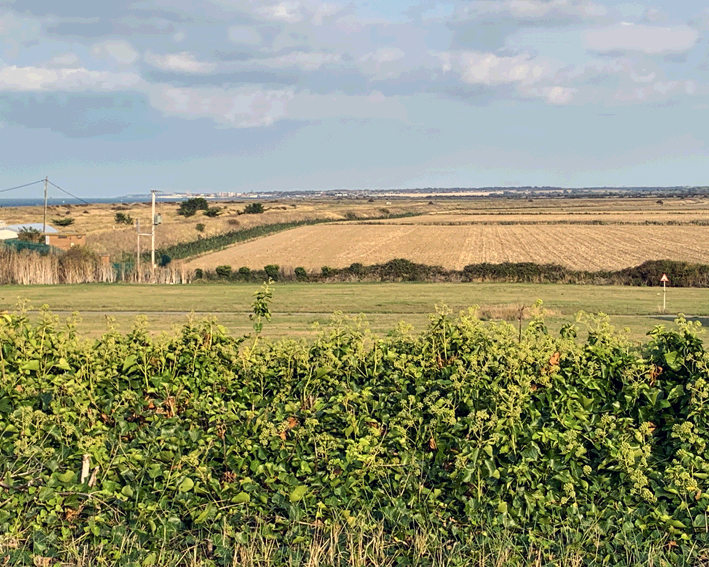 Wantsum Channel
Now practically unknown to most Kent people, the Wantsum Channel was for centuries one of the county’s major waterways. Its name came from the Anglo-Saxon word for ‘winding’, but it was also called the Genlade, which may be connected with our modern word ‘inlet’. As long ago as the Roman era, it was an important route for ships travelling from the English Channel to the Thames estuary. For that reason, the Romans built a fort to defend each end, one at Richborough, the other at Reculver. Originally a strait two miles wide, the Wantsum steadily got silted up until, by the C8, its breadth was down to around 660 yards. Medieval monks accelerated the process with land reclamation. Although it long demanded a ferry for crossing to the Isle of Thanet, the last ship navigated it in 1672. Today’s River Wantsum is no more than a rivulet feeding into the Stour, and the village of Stourmouth is miles inland.
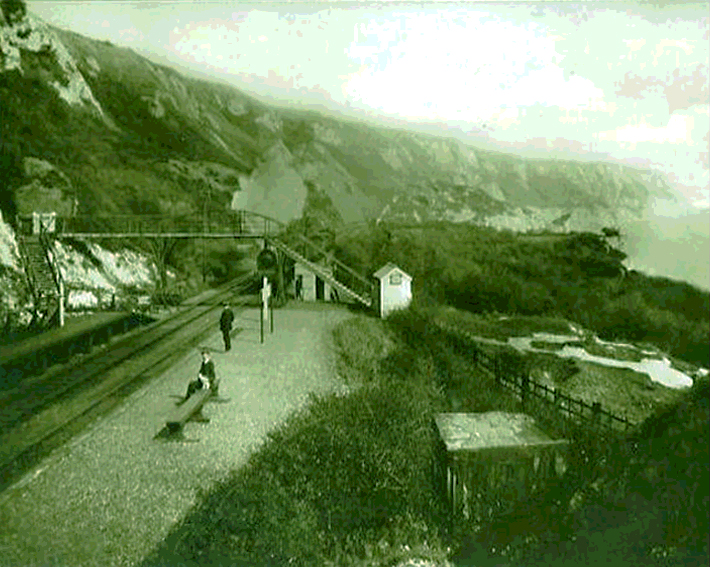 Warren Halt
Because the Warren at Folkestone was such a popular leisure venue in the Victorian era, a railway station called Warren Halt was opened in 1886 by the South Eastern Railway. Well served by a bridge and a zigzag pathway that allowed Victorian ladies to get to the splendid Little Switzerland tea-house without ruffling their finery, it was soon closed because of a land dispute. It reopened in 1908, however, and did good business until 1915, when it was all but obliterated: not by German bombing, but a landslide from the white cliffs above. Understandably, it was not restored until 1923, but then continued operating passenger services until another landslide in 1939. After reopening for railway staff only, it slowly faded into redundancy. Trains still pass through its former location on their way from Folkestone to Dover Priory, but Warren Halt itself is just a memory of more refined times on the Kent coast.
 Watling Street
The thoroughfare from the Kent coast to the Thames crossing near Westminster was the first and foremost Roman road. It followed an ancient track that the Romans metalled to enable rapid movement of troops. It had four coastal start-points, namely Regulbium (Reculver), Rutupiae (Richborough), Dubris (Dover), and Portus Lemanis (Lympne), that converged at Canterbury before proceeding westwards. The road eventually extended via Verulamium (St Albans) into the heart of modern-day England, terminating at Viroconium (Wroxeter) in Shropshire. Its modern appellation derives from the Waecla, a tribe that lent Verulamium its early Anglo-Saxon name, Waetlingacaester. Watling Street’s Kentish stretch eventually became known as the Great Dover Road, almost all of which now corresponds to the A2. The section running from Kent’s historical border with Surrey up to the Bricklayers Arms roundabout – which itself commemorates a Southwark inn whose name honoured Kent’s brickmaking industry – is called the Old Kent Road, nationally famous as the first square on a Monopoly board.
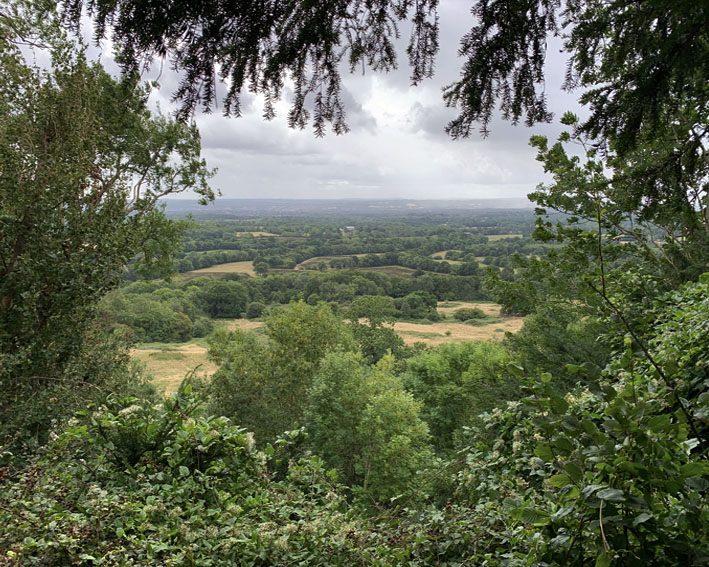 The Weald
One way to picture the Weald is as a garden. The Greensand Ridge is a high stone wall enclosing a sunken flowerbed, the Low Weald, which in turn surrounds a raised tree-covered lawn, the High Weald. It is a semi-detached affair, the Kent-Sussex border running through the middle. It should be added that its westernmost parts extend into Surrey and even Hampshire. The garden is not particularly fertile, the Low Weald having clay soils and the High Weald rather thin soil over sandstone, so they are best suited to fruit farming and pasture. Nevertheless, the rolling Low Weald is scenic, and the High Weald densely wooded. Previously named Andredes Weald, meaning Pevensey Wood, after the Roman fort Anderitum, it still is highly forested compared with most of England. Apart from outstanding natural beauty, its unique geology has also provided valuable material bonuses in the form of iron, ragstone, clay, and timber.
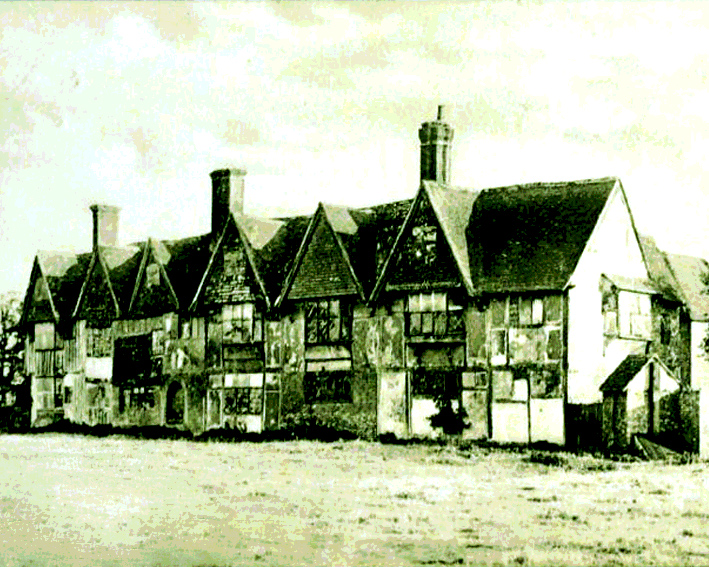 The Wealden Cloth Industry
In the Middle Ages, Kent had the necessary for cloth-making: Wealden sheep to provide wool, and deposits of fuller’s earth in the area north of Maidstone with which to remove grease – a commodity so valuable that, by law, it could not be exported to foreign competitors. Crucially, from the C14 onwards, there were also plenty of weavers, known as ‘strangers’, fleeing religious persecution in the Lowlands. Although carding (removing knots) and spinning could be done in workers’ own homes, the job of weaving had to be done with looms housed in halls from Smarden to Cranbrook, producing Kentish broadcloth by tradition 58 inches wide instead of the usual 63. Though the Weald became a centre of cloth production, it wasn’t all peachy: in a pre-echo of the industrial North, the area took on a radical hue, and groups of migrant workers with dissenting beliefs flexed their collective muscle.
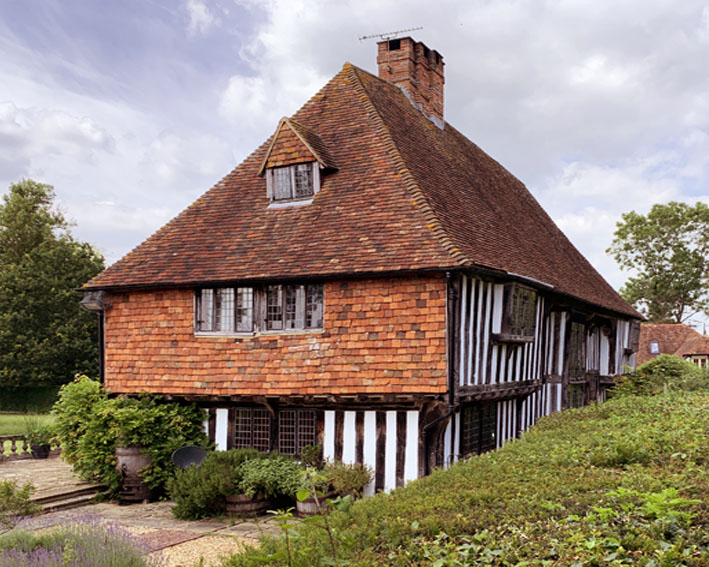 Wealden hall house
Hall houses are not uniquely Kentish, but have survived in Kent much better than elsewhere. They accommodated late-medieval families of some standing, part way between a stately home and a cottage. Timber-framed and rectangular, they originally had wattle-and-daub walls and thatched roofs. The interior followed a standard pattern, with a pantry and a buttery at one end and a full-width parlour at the other. Above these were bedrooms. In between was a full-height hall with an open fire in the centre, its smoke escaping through a hole in the roof; this was later generally replaced with a chimney stack. Front and back doors faced each other through the hall. A full second storey was usually added later, with the bedrooms organised in a circuit rather than off a corridor. Most hall-houses have undergone much modification over time, but a fascinating reconstruction can be visited at the Weald & Downland Museum near Chichester, Sussex.
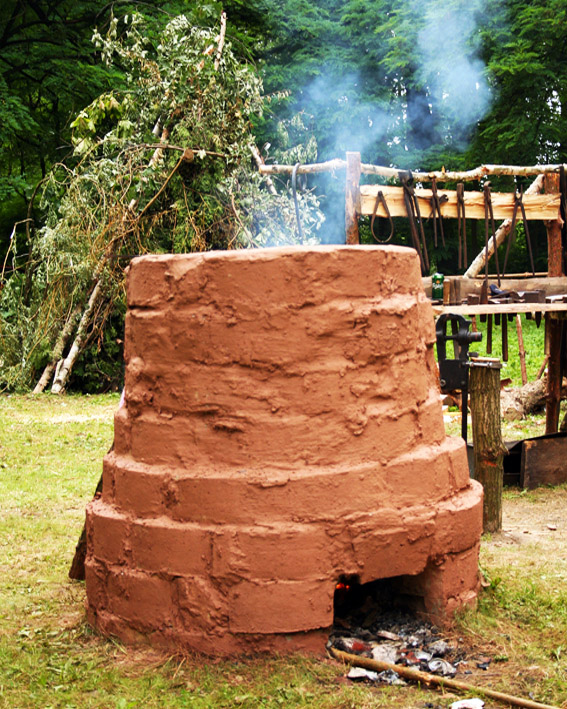 The Wealden iron industry
Believe it or not, the Weald was a centre of iron production centuries before Sheffield. The reason was the ready availability of both ironstone in the local clay beds and timber that was convertible to charcoal for smelting. There is evidence of a significant iron industry by the time the Romans arrived. Later furnaces or ‘bloomeries’ have been discovered from Smarden to East Sussex, which helps explain the proliferation of high-value medieval estates in West Kent. After all, this was big business. One foundry in Brenchley, for example, employed 200 men in the C16. Until the early C17, Kent was a key supplier of bar iron to London; Lamberhurst Foundry even cast the gates and railings for the new St Paul’s Cathedral. The later focus was on providing cannon for the Army and Navy. The growing use of coke during the Industrial Revolution eventually rendered charcoal-based production too expensive, and the balance of industrial power irrevocably shifted north.
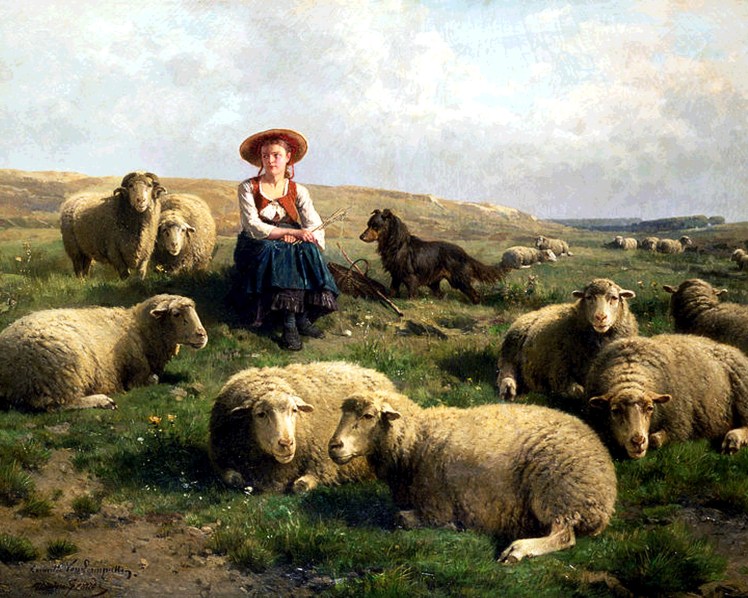 Whispering the death
One painful aspect of a death in the family is the requirement to share the news with affected parties. Once upon a time, the affected parties included the livestock. It was a custom in Kent as late as the C19 that, if a family member at a stately home died, one of the staff was required to go to each of the cows and sheep and whisper the news in their ear. It was plainly a widespread practice in the county, there being records not only from Dartford but also from the other end of the county, in Eastry. In the latter case, it was bees kept at the house that needed to be informed. When another swarm left a farm in Bromley where they had nested for years, their departure was blamed on their not having been informed of the tenant’s death. It says something about the close connectedness between humans and domesticated animals in centuries past.
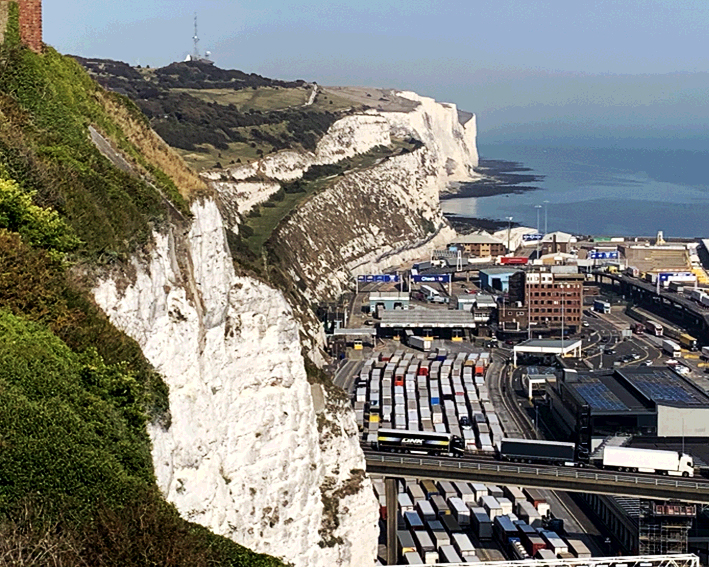 The White Cliffs of Dover
Although they resemble the ultimate megalith, 350 feet tall and ten miles wide, the White Cliffs of Dover are more fragile than they appear. The problem is the manner in which they were laid down 70 million years ago. The calcium-rich remains of single-celled coccoliths fell in zillions to the seabed, and were compacted by later sedimentation. The chalk cliffs emerged when a North Sea lake burst through to create the English Channel, and erosion sharpened their profile. That erosion continues today, and now faster than ever: in 2001, a section the size of a football pitch fell into the sea. It is a poignant development, considering the White Cliffs’ longstanding status as a symbol of English defiance. When Nat Burton, a Jewish-American writer, wanted to urge Britain to continue resisting national socialism, he pictured a tomorrow when bluebirds would fly over the White Cliffs. He was apparently unaware that the bluebird is not a native species.
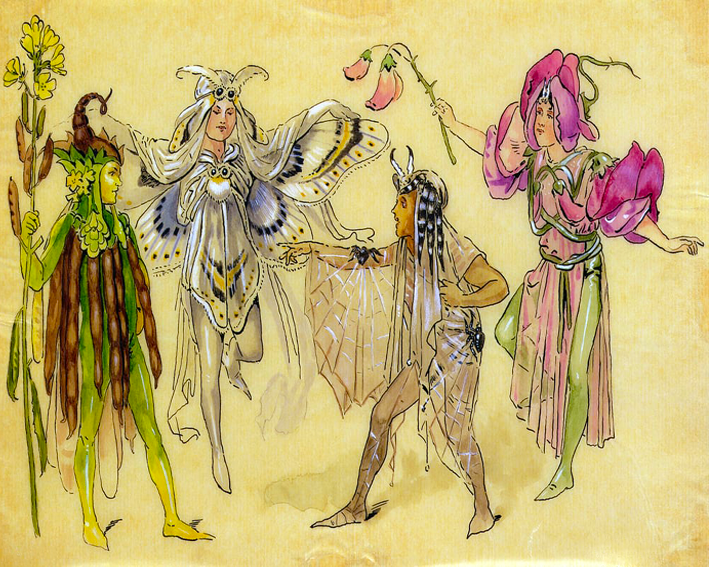 Wilhelm
It may seem an odd career choice for a man descended from a dynasty of shipbuilders in Northfleet, but the more artistically inclined William Pitcher (1858-1925) was intent on a career in costume design in the theatre. Very shrewdly, he adopted a memorable pseudonym for his work: plain Wilhelm. He started at the top with a commission for the Theatre Royal, Drury Lane, and never looked down. Both an imaginative visualiser and a talented illustrator, he conjured up vivid designs for thousands of characters, often fantastical. His commissions included Shakespeare, music hall, numerous pantomimes for the great Augustus Harris, and several original Gilbert & Sullivan productions at the Savoy Theatre, including ‘Iolanthe’, ‘The Mikado’, and ‘Ruddigore’. His most famous work, however, was for numerous ballets at the Empire Theatre between 1887 and WW1, for which he also designed complementary scenery. Much of Wilhelm’s considerable oeuvre is now held at London’s Victoria & Albert Museum.
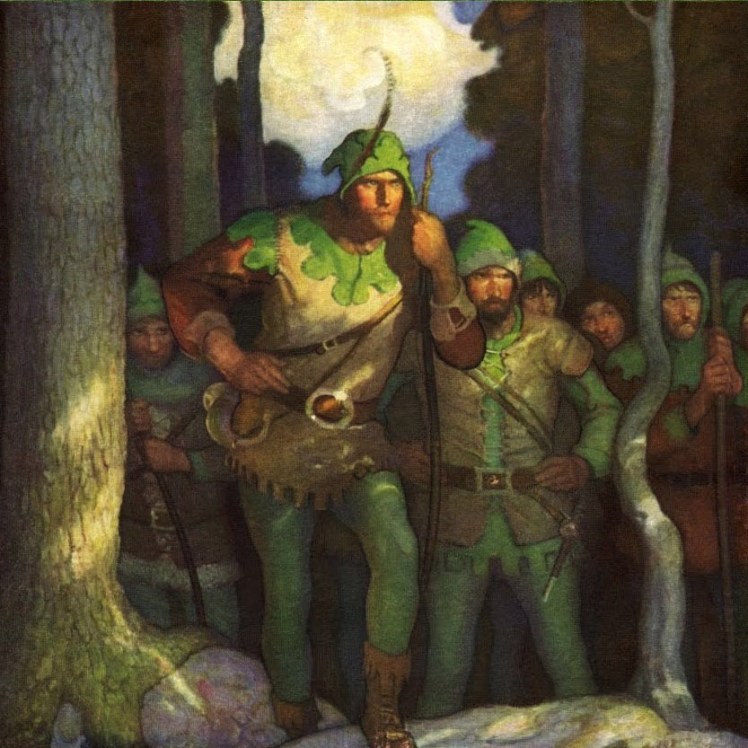 Willikin of the Weald
Wherever there is a legendary figure, a historical personage will be advanced as the original on whom the legend was based. One such was William of Cassingham (now Kensham) near the Sussex border. In 1216, during the 1st Barons’ War, Prince Louis of France invaded England at the behest of the barons who had rebelled against King John. Willikin, as a loyalist, formed a guerrilla band of longbowmen in the Kent and Sussex Weald that despatched thousands of French. They eventually ambushed the retreating invaders at Lewes, and Louis effected his army’s escape via Winchelsea to France only by the skin of his teeth. Returning with reinforcements to besiege Dover Castle, he arrived to find Willikin already burning the existing French camp, and diverted to Sandwich. With Willikin’s continuing help, the siege was finally broken, and Louis retired for good. The new King Henry III duly rewarded Willikin, who is now understandably proposed as the original Robin Hood.
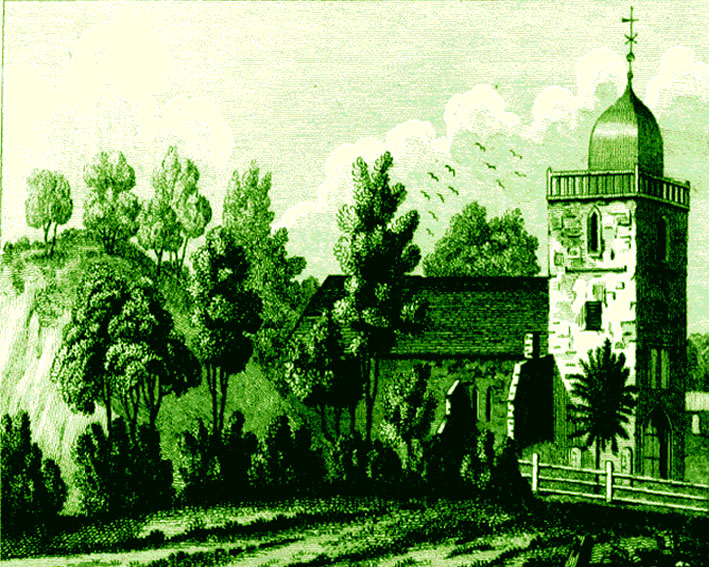 Woodnesborough Mount
Situated on an east-facing slope south-west of Sandwich, Woodnesborough may have got its name from Woden, the chief Germanic deity after whom Wednesday is named. Hasted describes a conical hill there, evidently man-made of sand, that might have been a place of pagan worship; and archaeological investigations from the C16 onwards unearthed numerous Anglo-Saxon finds, suggesting a significant seaside settlement before the coast receded. One old story has it that Vortimer, the son of Vortigern who most fiercely opposed Hengist, asked to be interred there as a superstitious warning to the invaders to stay away – the structure being conspicuous from the favoured Saxon landing-point at Richborough – but was fatefully ignored. Another maintains that it was a burial site following a battle in 715 between the kings of Wessex and Mercia, Ine and Ceoldred. Whatever the truth, any ancient purposes have been largely obliterated by the neighbouring St Mary’s Church, constructed in the C13.
 The Woolwich
In the 1970s, “We’re with the Woolwich” was the TV advertising slogan of a nationally famous building-society. It was founded in 1847 at the Woolwich home of a draper, Benjamin Wates, who with his two brothers would dominate its management for half a century. Named the ‘Woolwich Equitable Benefit Building & Investment Society’, and later the ‘Woolwich Equitable Building Society’, it was badly impacted by the closure of Woolwich Dockyard in 1869, and remained local for decades. Then, in 1917, it opened an office in Chatham, triggering its growth into a national concern before WW2. Its heyday coincided with the homeownership boom in the Thatcher era, when it aggressively acquired other businesses. In 1989, it moved its headquarters from Erith Road to Bexleyheath, and in 1997 became a bank, Woolwich PLC. It was bought in 2000 by Barclays Bank, which closed its offices and turned it into a mortgage broker. The brand name was finally axed in 2015.
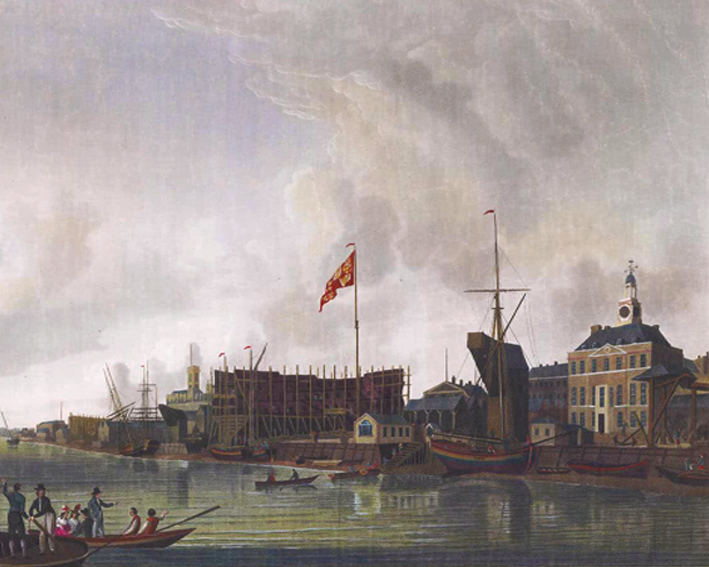 Woolwich Dockyard
When Henry VIII ordered the construction of the mighty flagship Henri Grace à Dieu in 1512, a new dock was called for. He decided on Old Woolwich, close to his birthplace Placentia Palace and handily placed for getting to sea. Like the Erith dockyard nearby, it proved liable to flooding within a decade, and so was moved slightly uphill to a site further west purchased by the Crown in 1546. Operating in tandem with another new dockyard at Deptford, it produced several important warships in the era when Britain’s naval might was waxing. Once described as “The Mother Dock of all England”, it also accrued crucial support facilities like the Royal Arsenal in addition to the Royal Military Academy, Royal Engineers, and Royal Artillery. In the 1830s, a special steamship construction facility was established. It outgrew its 56-acre site, however, and was closed in 1869, albeit that the Royal Electrical & Mechanical Engineers stayed put until 1966.
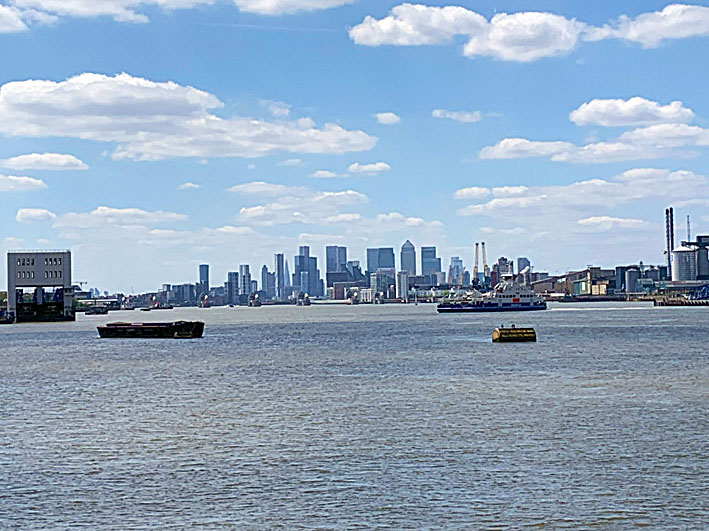 The Woolwich Ferry
There was a ferry at Woolwich nearly a thousand years ago, from the time that one of William the Conqueror’s henchmen, Hamo, saw an opportunity to make a profit and claimed North Woolwich across the Thames as part of Kent. Because Woolwich was a vital centre of military production until the C20, the Woolwich ferry remained a strategically important crossing until recent times, the nearest fixed crossing being London Bridge, several miles upstream; Tower Bridge was not completed until 1894, and the first Blackwall Tunnel three years later, while the adjacent Woolwich foot tunnel has provided a pedestrian alternative only since 1912. Three diesel-powered vessels that replaced the old paddle-steamers in 1963 – coincidentally the year when the Dartford Tunnel started taking away much of the north-south road traffic – lasted until 2018. The ferry service, which has been free since 1889, still carries around a million vehicles and a quarter-million pedestrians annually, despite chronic operational problems.
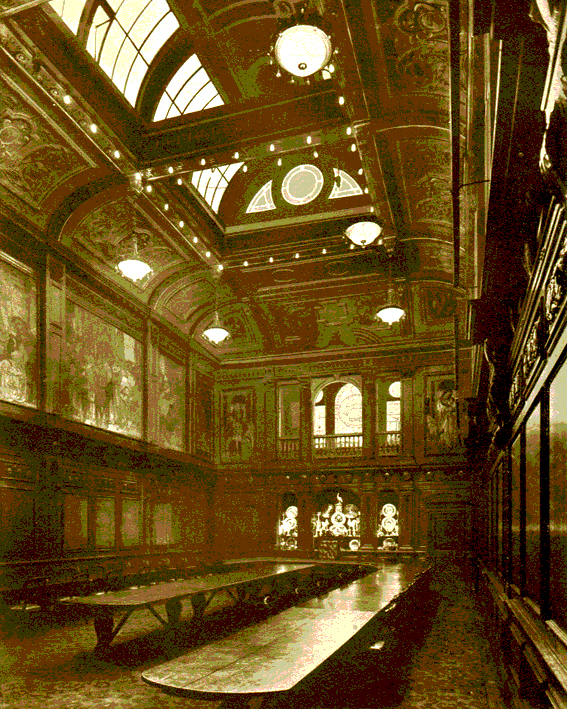 The Worshipful Company of Skinners
The Worshipful Company of Skinners is a City of London livery company set up as an association of traders in skins and furs. It won its Royal Charter in 1327, the same year as the Merchant Taylors. This coincidence created a rivalry that became outright conflict at the Lord Mayor’s 1484 river procession, when the two competed mortally for precedence; it was decreed afterwards that the two must alternate sixth and seventh positions in the procession thereafter. The Skinners’ Company’s connection with Kent goes back to wealthy Tonbridge-born fur trader Sir Andrew Judde, four-time master of the company, who founded Tonbridge School in 1553. After his death, the School passed to the Company. In 1887, they responded to growing educational needs by setting up the Skinners’ School at Tunbridge Wells. Tonbridge residents where disgruntled about its location, so the Skinners built another in Tonbridge called the Judd school – a remarkable gift to Kent.
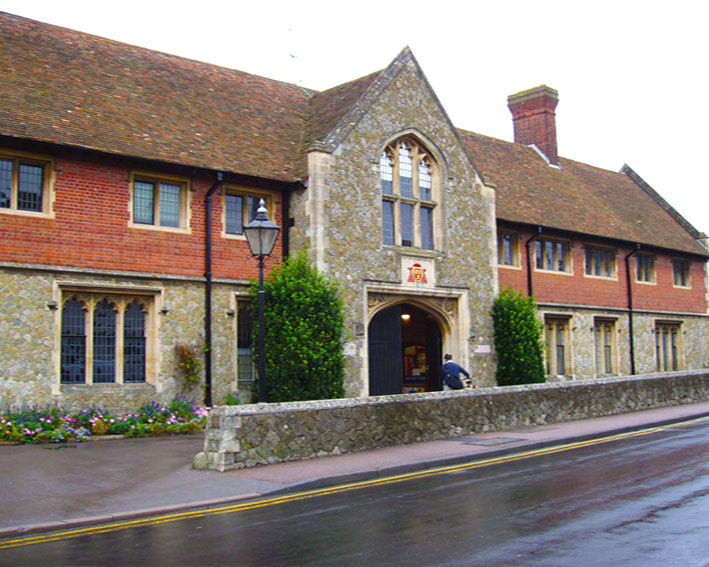 Wye College
In the C15, the Weald was a hotbed of religious dissent. The traditional methods for dealing with it were excommunication and incineration, but the Church was happy to try indoctrination. In 1447, Cardinal John Kemp from Olantigh near Wye founded a chantry that doubled as the College of St Gregory & St Martin, a means of educating young men in both Latin and right ways of thinking. Following the Abolition of Chantries Act of 1545, the building housed schools of various descriptions, until in 1892 Kent and Surrey County Councils joined forces to relaunch it as the South Eastern Agricultural College, confederated with London University. It flourished, and after WW2 merged with Swanley Horticultural College. In 2000, however, it was subsumed into Imperial College, London, which hoped to enrich itself by building 4,000 houses on the farmland. The plan was defeated by locals, and Wye College closed down in 2009. Its buildings have mostly been redeveloped for residential use.
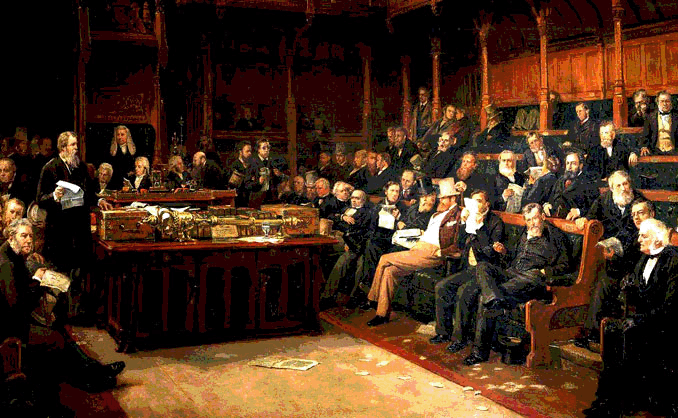 Wyllie’s parliamentary snapshots
A gentlemen’s son, William Morrison Wyllie (1820-95) was born in the south of France. He became an artist, primarily painting French and English maritime and seaside scenes, with a particular emphasis on ordinary people going about their business. In 1878 and 1883 respectively, he painted scenes of the House of Commons and the House of Lords at work, preserving a reportedly accurate impression of the rather less heterogeneous environment in which parliamentary affairs were conducted not so long ago; both survive in the Parliamentary Art Collection. Although not of the top rank of C19 painters, Wyllie married Lord Strangford’s common-law widow in 1851, and with her nurtured a veritable dynasty of artists. Both their sons were painters, including William Lionel Wyllie, who became one of the great maritime artists of his day, while Wyllie’s stepson Lionel Smythe was a significant landscape artist, as was Smythe’s daughter Minnie. Later in life, Wyllie senior lived and died at Hoo.
 ‘The Zeal of thy House’
Best known as the advertising copywriter who in her spare time created detective Lord Peter Wimsey, Dorothy L Sayers (1893-1957), born and educated at Oxford, was a devout Christian, her father being a headmaster and college chaplain and later a rector in Cambridgeshire. Having established a reputation on a par with Agatha Christie’s, she was persuaded to write a successor to TS Eliot’s ‘Murder in the Cathedral’ (1935) for the Canterbury Festival. Performed in the cathedral in 1937, her blank-verse drama ‘The Zeal of thy House’ features William of Sens, the French architect who rebuilt the cathedral after the 1174 fire. Subject to hubris, he eventually bows to God’s greater glory. Its success prompted a further production, ‘The Devil to Pay’, two years later. A series of other religious works followed, including a major BBC radio work ‘The Man Born to be King’ (1941-2), and an ambitious unfinished translation of Dante’s ‘Divine Comedy’.
CREDITS ON THIS PAGE
All text: © Old Bunyard 2020-4. Unauthorised reproduction prohibited.
Images:
Abutilon Kentish Belle: © Old Bunyard, 2020.
Ale Sop: © Old Bunyard, 2020.
Allectus coin: © Dix Noonan Webb, 2019.
Andrex Puppies: © Old Bunyard, 2024.
Aylesford-Swarling pottery: ‘Map Gallia Tribes Towns‘ by Feitscherg, licensed under CC BY-SA 3.0. (Cropped).
Bank holidays: © Old Bunyard, 2022.
Beauty of Kent: © Old Bunyard, 2020.
Bell Inn revenue inspectors: © Old Bunyard, 2021.
Belmarsh: ‘2017 Thamesmead aerial view 02b‘ by Kleon3, licensed under CC BY-SA 4.0 International. (Cropped).
Belmarsh Trackways: © Michael Bamforth 2024.
Benenden School: ‘The main building at Benenden School – geograph.org.uk – 500073‘ by Nick Smith, licensed under CC BY-SA 2.0. (Cropped).
Bethersden Marble: © Old Bunyard, 2020.
Bewl Water: © Old Bunyard, 2020.
Biddenden Maids: © Old Bunyard, 2020.
Biggin Hill: © Old Bunyard, 2021.
Black-eyed Susan: ‘Rudbeckia hirtakzo3‘ by Krzysztof Ziarnek, Kenraiz, licensed under CC BY-SA 4.0 International. (Cropped).
Blackwall Tunnel: © Old Bunyard, 2021.
Blue Bell Hill Ghost: © Old Bunyard 2020.
Bomb Alley: © Old Bunyard, 2020.
Bradley the Seal: © Lin Craddock, 2023.
Brickearth: © Old Bunyard, 2021.
Buffs, The: © Old Bunyard, 2021.
Canterbury Cross: © Old Bunyard, 2021.
Canterbury Scene: ‘KevinAyers1974‘ by TimDuncan, licensed under CC BY 3.0. (Cropped).
Canterbury Tales: © Old Bunyard, 2020.
Canterbury Treasure: ‘Canterbury Treasure in Roman Museum, Canterbury‘ by Jononmac46, licensed under CC BY-SA 3.0. (Cropped).
Chapel Down: © Old Bunyard, 2020.
Cinque Ports: © Old Bunyard, 2021.
Coffin Stone: ‘Coffin Stone, Blue Bell Hill, Kent 05‘ by Simon Burchell, licensed under CC BY-SA 4.0 International.
‘Coming of Christ, The’: ‘Canterbury Cathedral Nave 2, Kent, UK – Diliff‘ by Diliff, licensed under CC BY-SA 3.0. (Cropped).
Crab & Winkle Line: © Old Bunyard, 2021.
Dartford Crossing: © Old Bunyard, 2021.
Dartford Priory: ‘Dartford Manor Gatehouse – geogrph.org.uk – 3204571′ by David Anstiss, licensed under CC BY-SA 2.0. (Cropped).
Dartford warbler: ‘Dartford Warbler – Ligura – Italy‘ by Francesco Veronesi from Italy, licensed under CC BY-SA 2.0.
Deadman’s Island: © Adam Chodzko, 2010.
Deal Man: © Old Bunyard, 2020.
Dene holes: ‘The Dene Hole in Capstone Park‘ by David Anstiss, licensed under CC BY-SA 2.0 DEED.
Dering Manuscript: ‘The Dering Manuscript‘ by Folger Shakespeare Library Digital Image Collection http://luna.folger.edu/luna/servlet/s/484mvg, licensed under CC BY-SA 4.0. (Cropped).
Dering windows: © Old Bunyard, 2020.
Devil’s Kneading Trough: © Old Bunyard, 2020.
Doctor Who: ‘Doctor Who Experience (13080761155)‘ by François Léger, licensed under CC BY-SA 2.0. (Cropped).
Dover’s Bronze Age Boat: © Old Bunyard, 2020.
Dover Patrol: ‘Monument to the Dover Patrol‘ by Ethan Doyle White, licensed under CC BY-SA 3.0.
Dover sole: © Old Bunyard, 2021.
Durolevum: © Old Bunyard, 2022.
Dymchurch Wall: © Old Bunyard, 2024.
East Kent Railway: © Old Bunyard, 2021.
East Malling Research Station: By courtesy of East Malling Trust.
Enderby’s Wharf: ‘Alcatel Jetty – geograph.org.uk – 377562‘ by Danny Robinson, licensed under CC BY-SA 2.0. (Cropped).
Fatty Towers: © Suzannah Foad, Margate Local & Family History.
Folkestone Roman villa: © Old Bunyard, 2024.
Fordwich: © Old Bunyard, 2020.
Fossils: © Old Bunyard, 2022.
Garden of England: © Old Bunyard, 2020.
Golden Arrow: © Keith Rylands, 2023.
Gravesend-Tilbury Ferry: © Old Bunyard, 2024.
Greenwich Meridian: © Old Bunyard, 2021.
Gypsy tart: © Old Bunyard, 2022.
High Rocks: © Old Bunyard, 2021.
High Sheriff of Kent: © High Sheriff of Kent’s office, 2020.
Holly Boy and Ivy Girl: © Old Bunyard, 2020.
Holwood hillfort: ‘Caesar’s Well in Keston‘ by Ethan Doyle White, licensed under CC BY-SA 4.0 International.
Honor Oak: ‘The Oak of Honor‘ by Dudley Miles, licensed under CC BY-SA 3.0. (Cropped).
Hoo Peninsula: © Old Bunyard, 2024.
Huffkins: © Old Bunyard, 2020.
Invicta: © Old Bunyard, 2020.
Iris germanica ‘Kent Pride’: © Old Bunyard, 2022.
Isle of Grain: © Old Bunyard, 2021.
Isle of Oxney: ‘Looking towards the Isle of Oxney – geograph.org.uk – 1641660‘ by Nigel Chadwick, licensed under CC BY-SA 2.0. (Cropped).
Isle of Sheppey: © Old Bunyard, 2021.
Ivorex: © Cherryl Hunt, 2023.
Jack Cade’s Field: © Old Bunyard, 2024.
Jezreel’s Tower: ‘Jeztow2‘ by Cunningham, licensed under CC BY-SA 3.0. (Cropped).
Joint Services School of Intelligence: © Old Bunyard, 2023.
Jutes: ‘Anglo-Saxon Homelands and Settlements‘ by mbartelsm, licensed under CC BY-SA 3.0. (Cropped).
Keane: ‘Keane standing side-by-side onstage‘ by CalumMew28, licensed under CC BY-SA 4.0 International. (Cropped).
Kent Diamond plum: By courtesy of Keepers Nursery.
Kent House: © Old Bunyard, 2022.
Kentish cherry batter pudding: © Old Bunyard, 2020.
Kentish dialect: © Old Bunyard, 2020.
Kentish glory: ‘Endromis versicolora – Skackspinnäre‘ by MikaelMilden, licensed under CC BY-SA 4.0. (Cropped).
Kentish plover: ‘Kentish plover (Charadrius alexandrinus)‘ by Shantanu Kuveskar, licensed under CC BY-SA 4.0. (Cropped).
Kentish rag: © Old Bunyard, 2020.
Kentish rarebit: © Old Bunyard, 2020.
Kentish Royal Legend: © Old Bunyard, 2021.
Kentish tracery: © Old Bunyard 2020.
Kent Lent pie: © Old Bunyard, 2020.
Kent peg tiles: © Old Bunyard, 2021.
Kent Rose: © Old Bunyard, 2020.
Kent’s motorways: © Old Bunyard, 2024.
Kingsferry Bridge: ‘73107 on Kingsferry Bridge‘ by “Stuart” 74009, licensed under CC BY-SA 2.0. (Cropped).
Kingston Brooch: ‘The Kingston Brooch, World Museum Liverpool‘ by Reptonix free Creative Commons licensed photos, licensed under CC BY 3.0. (Cropped).
Lady in the Woods: © Old Bunyard, 2021.
Lamb’s tail pie: © Old Bunyard, 2020.
La Providence: © Old Bunyard, 2024.
Lathes: ‘Kent Administrative Map 1832‘ by XrysD, licensed under CC BY-SA 3.0. (Cropped).
Libbet and Daddy: © Old Bunyard, 2020.
Libourne: By courtesy of Wikimapia.org, licensed under CC BY-SA 3.0 DEED.
Liudhard medalet: ‘Liudhardmedaletreplica‘ by Ealdgyth (Own work), licensed under CC BY-SA 3.0. (Cropped).
London Stone: ‘London Stone, Yantlet Creek‘ by Roger W Haworth, licensed under CC BY-SA 2.0. (Cropped).
Loose Stream: © Old Bunyard, 2024.
Lost town of Stonar: ‘View across Stonar Lake – geograph.org.uk – 1197186‘ by Nick Smith, licensed under CC BY-SA 2.0. (Cropped).
Maidstone Studios: © Old Bunyard, 2021.
Manston Airport: ‘Manston Airport aerial view‘ by James Stewart from England, licensed under CC BY 2.0. (Cropped).
Matchless: ‘Matchless Silver Hawk‘ by http://www.wtp-garage.de, licensed under CC BY-SA 3.0. (Cropped).
Maunsell Forts: ‘Red Sands, 2013‘ by Russss, licensed under CC BY-SA 3.0. (Cropped).
Medway Poets: ‘MedwayPoets’ by Eugene Doyen, licensed under CC BY-SA 3.0. (Cropped).
Medway Tunnel: ‘Medway Tunnel – Chatham side – geograph.org.uk 546544‘ by Danny Robinson, licensed under CC BY-SA 2.0. (Cropped).
Medway Viaducts: © Old Bunyard, 2024.
Metropolitan Board of Works: ‘MBW = Metropolitan Board of Works‘ by secretlondon123 from London, England, licensed under CC BY-SA 2.0. (Cropped).
National Hop Collection: © Old Bunyard, 2020.
The Nore: ‘Lv-Nore‘ by Copyright ©1988-2009 K.Krallis SV1XV, licensed under CC BY-SA 3.0. (Cropped).
North Downs: © Old Bunyard 2020.
North Downs Way: © Old Bunyard 2020.
North Woolwich Old Station: ‘North Woolwich Station (geograph 5348372)‘ by Stephen McKay, licensed under CC BY-SA 2.0. (Cropped).
Oast houses: © Old Bunyard, 2020.
Odet de Coligny’s temporary tomb: ‘Canterbury 20-2-07 041‘ by Neddyseagoon, licensed under CC BY-SA 3.0. (Cropped).
Oldest shop in Britain: © Old Bunyard, 2024.
Pevsner’s Kent: © Old Bunyard, 2021.
Phoenix Brewery: By courtesy of John Gilham, Wateringbury Remembered
Pilgrims Way: © Old Bunyard, 2020.
Place names: ‘Entering Chatham-Kent, Ontario (21774470075)‘ by Ken Lund from Reno, Nevada, USA, licensed under CC BY-SA 2.0. (Cropped).
Portland cement: © Old Bunyard, 2022.
Richard of Eastwell: © Old Bunyard, 2020.
Richborough Power Station: ‘Richborough Power station – geograph.org.uk – 46026‘ by Chris Bell, licensed under CC BY-SA 2.0. (Cropped).
Ringlemere cup: © Old Bunyard, 2020.
Ringlestone Inn: © Old Bunyard, 2020.
River Darent: © Old Bunyard, 2024.
River Medway: © Old Bunyard, 2022.
River Thames: © Old Bunyard, 2024.
River Stour: © Old Bunyard, 2024.
Romney Marsh: © Old Bunyard, 2021.
Romney sheep: © Old Bunyard, 2021.
Royal Army Medical Corps: ‘Fort Pitt Hospital Chatham 1855 Wellcome L0010204‘ by Illustrated London News, licensed under CC BY 4.0 International. (Cropped).
Royal Arsenal: © Old Bunyard, 2021.
Royal Faversham: © Old Bunyard, 2020.
Royal Military Canal: © Old Bunyard, 2021.
Royal Naval College: © Old Bunyard, 2021.
Rutupian Shore: © Old Bunyard, 2024.
Samphire Hoe: © Old Bunyard, 2020.
The sandwich: © Old Bunyard, 2023.
Sandwich runes: © Old Bunyard, 2021.
Sandwich tern: ‘Thalassus sandvicensis Rye Harbour 1‘ by Ron Knight from Seaford, East Sussex, United Kingdom, licensed under CC BY 2.0. (Cropped).
Sarre Brooch: ‘Sarre BroochDSCF9233‘ by Johnbod, licensed under CC BY-SA 4.0 International. (Cropped).
Sarre Wall: ‘A28, Sarre Wall‘ by © Copyright N Chadwick, licensed under CC BY-SA 2.0. (Cropped).
Satis House: ‘Rochester Bakers Walk Satis House 5495‘ by Clem Rutter, licensed under CC BY-SA 4.0 International. (Cropped, retouched).
Saxon Shore Way: © Old Bunyard, 2021.
Screaming Woods: © Old Bunyard, 2020.
Seaside: © Old Bunyard, 2020.
Shepherd Neame: © Old Bunyard, 2020.
Sheppey Crossing: © Old Bunyard, 2024.
Shrine of Mungo Francis: ‘Shrine to Jeremy Francis, west of Abbot’s Cliff‘ by John Baker, licensed under CC BY-SA 2.0. (Cropped).
South East London Green Chain: © Old Bunyard, 2024.
Strait of Dover: © Old Bunyard, 2024.
Street, The: © Old Bunyard, 2021.
Swale, The: © Old Bunyard, 2024.
Swanscombe Man: © Old Bunyard, 2021.
‘Textus Roffensis’: © Old Bunyard, 2023.
Thames & Medway Canal: © Old Bunyard, 2021.
Thames Barrier: © Old Bunyard, 2021.
Thames sailing-barges: ‘Thames Barges-Canthusus‘ by James Gray, licensed under CC BY-SA 3.0 Unported. (Cropped).
Thanetian Age: ‘The eroding cliffs of Reculver Country Park – geograph.org.uk – 6930‘ by David Rayner, licensed under CC BY 2.0. (Cropped).
Tonbridge School: © Old Bunyard, 2024.
The Village: ‘Portmeirion, Wales 48559387366‘ by Mike McBey, licensed under CC BY 2.0.
Wantsum Channel: © Old Bunyard, 2020.
Watling Street: © Old Bunyard, 2021.
Weald: © Old Bunyard, 2020.
Wealden hall house: © Old Bunyard, 2021.
Wealden iron industry: ‘Święto Śląska piec p‘ by Przykuta, licensed under CC BY-SA 3.0. (Cropped).
White Cliffs of Dover: © Old Bunyard, 2020.
Woolwich Ferry: © Old Bunyard, 2024.
Wye College: ‘This is a photo of listed building number 1275610‘ by User:Redlentil, licensed under CC BY-SA 3.0. (Cropped).
All other images on this page are believed to be public domain, fair use/dealing, or royalty-free. Please do not reproduce any image without first establishing that you are free to do so.
 Old Bunyard’s Kent