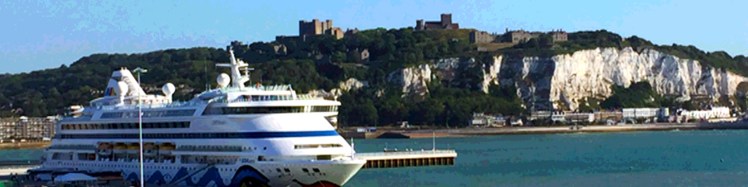
Dover Castle from the Western Docks
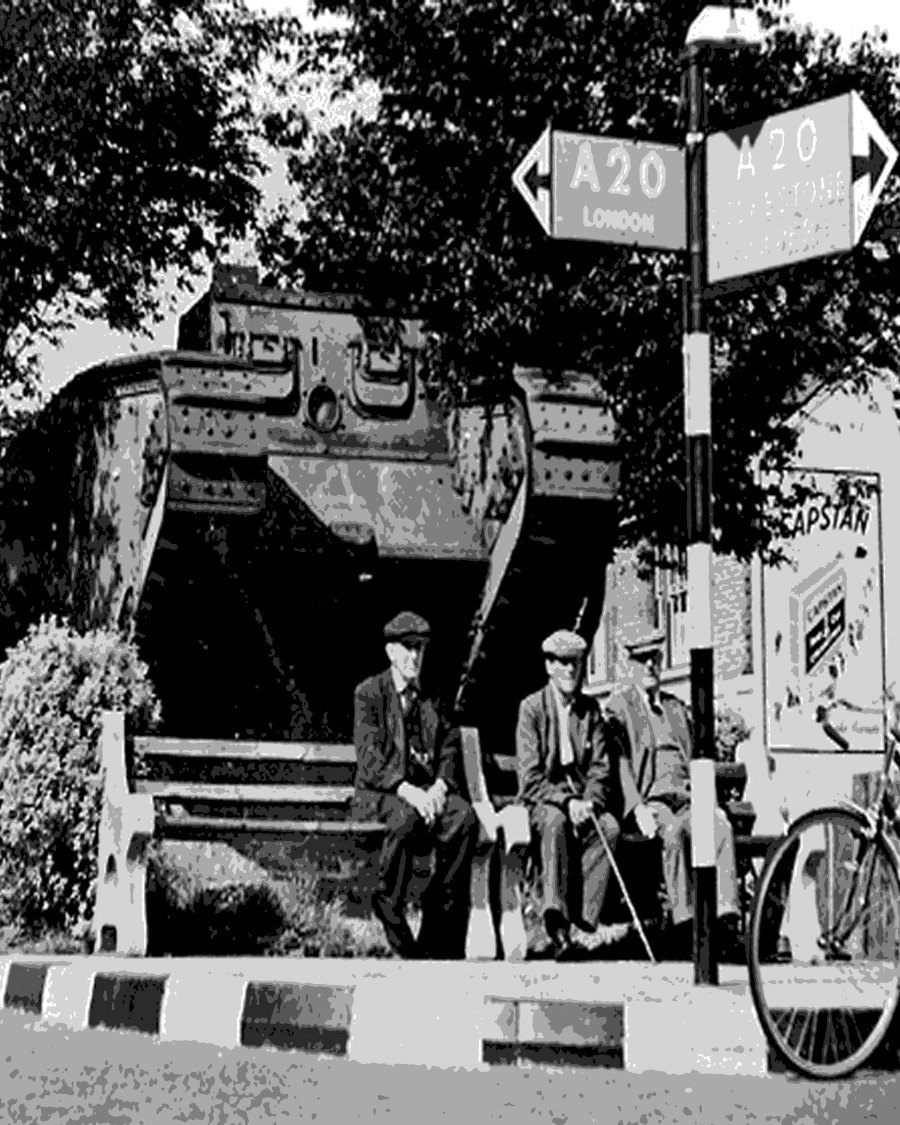 The Ashford tank
Tanks were such an integral part of C20 warfare that it’s easy to forget their humble origins. During the Great War, Churchill encouraged the development of a new wonder-weapon that might breach the Germans’ trench defences. To confuse enemy spies, the new contraptions were disguised as water tanks, whence their name. Their appearance no doubt stunned the Germans, but they were never used to best tactical advantage. After the war, the Government decided to thank towns that had donated generously to the war effort by gifting them each an unused ‘female’ Mark IV tank – one lacking a barrel. Ashford, less than a hundred miles from the front line, was a grateful recipient. All but one of these tanks were melted down during WW2, but Ashford’s had been converted to an electricity sub-station, and survived. Co-inventor Sir William Tritton no doubt approved: his father had been born in Hythe, and married his mother at Blean.
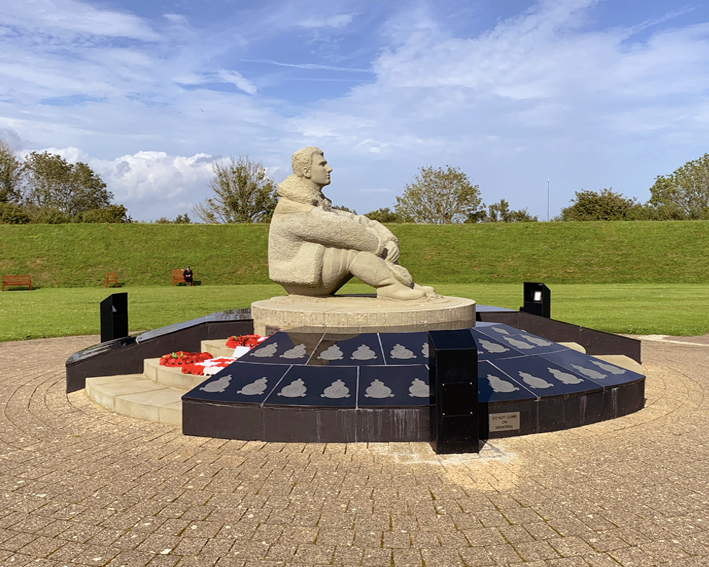 Battle of Britain Memorial
What strikes most about the Memorial in Capel-le-Ferne is its poignant simplicity. Two aircraft catch the eye first: a replica Spitfire and Hurricane, the two workhorses that saw off the Luftwaffe. Their smallness is surprising, until you remember they needed only to bear a man and a few machine-guns aloft, albeit very quickly. Then there’s the Memorial Wall bearing the names of the 3,000 men involved, a number even smaller than the English army that failed to repel the Normans at Hastings. And finally there’s the Memorial itself, the statue of an airman looking out to sea, set in the middle of a propeller design. Following his gaze takes one’s eye to the French coast, a reminder of how close we came to a repeat of 1066. Even without the ‘Scramble Experience’ indoors for those who need their technological fix, it’s an evocative spot, perhaps best visited when stormy skies capture the mood of 1940.
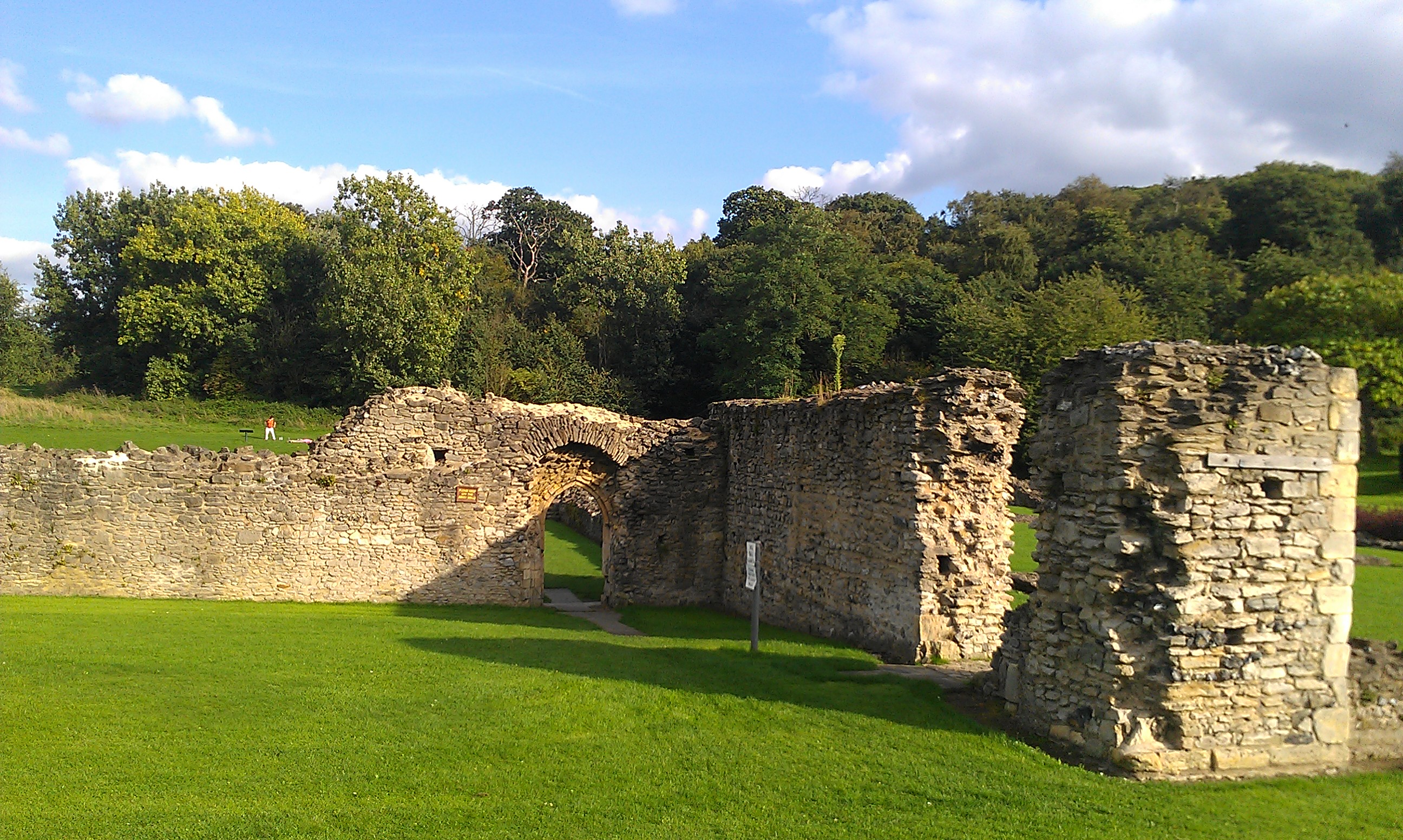
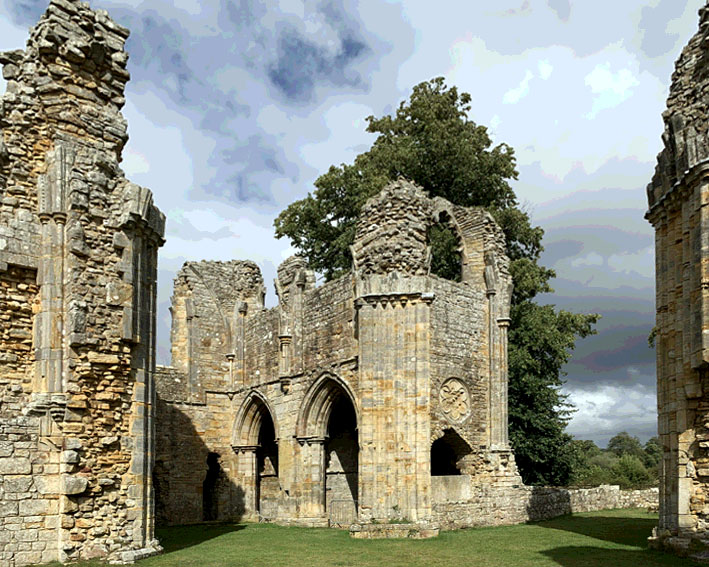 Bayham Old Abbey
Even someone who particularly enjoys visiting old ruins will find Bayham Old Abbey rather special. Substantial and ornate enough to merit detailed inspection, it stands as testimony to the fate of all monasteries destroyed by Henry VIII as if to prove there were no limits to his passion for Anne Boleyn. What makes Bayham Old Abbey even more worth a visit is its remote location, at the end of a long track. Lying in the Teise valley west of Lamberhurst, in an area of unspoilt countryside, it is in fact literally on the county border: the front gate opened into Kent, and the back one (which has disappeared) into Sussex. The Abbey was founded around 1207, and housed monks of the Premonstratensian order that originated in the north of France. For the last sixty years, the ruins have been owned by English Heritage, and are free to visit. They lie close to Bayham Hall, an impressive private residence.
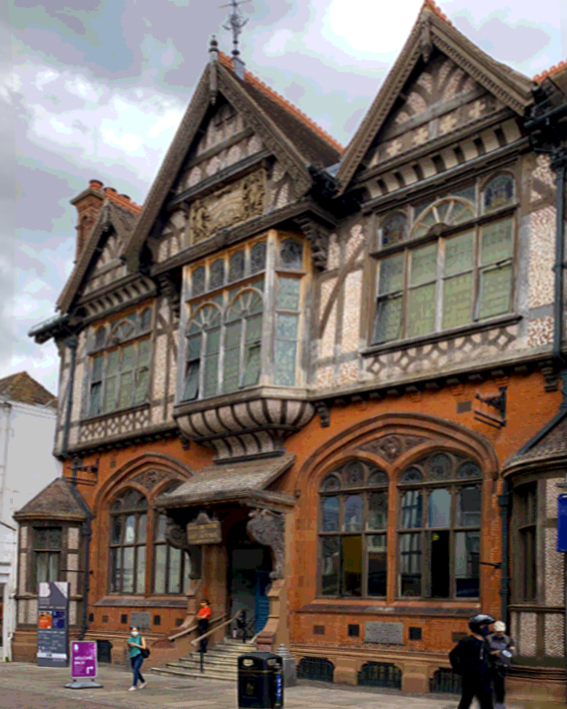 Beaney House of Art & Knowledge
The Beaney Institute in Canterbury High Street was set up in 1899 in a new mock-Tudor building to house the city’s museum and library. It was named after Canterbury-born surgeon and philanthropist James Beaney, whose bequest paid for most of it. The Institute was subjected to an extravagant makeover in 2009, designed by various stakeholders to create a more “vibrant” offering. In practice, this meant the modern vogue in civic museums for directing the tone and content towards parties of schoolchildren and their teachers. As critics complained when it re-opened as the “Beaney House of Art & Knowledge”, it missed an opportunity to provide residents and tourists with a comprehensive history of this unique world city. Nevertheless, it is worth seeing for both the eccentric architecture and the fascinating paintings and exhibits that can still be found serendipitously by inquisitive visitors.
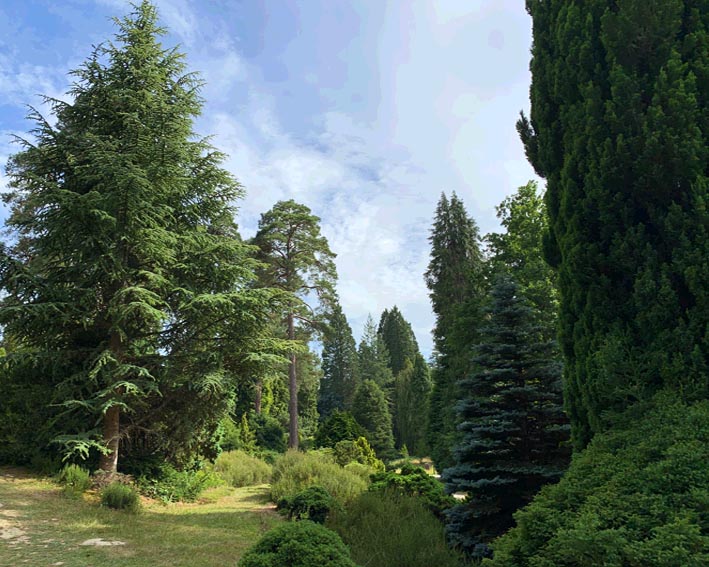 Bedgebury National Pinetum
In the High Weald, south of Goudhurst and east of Bewl Water, the expansive Bedgebury Forest is a stunningly beautiful area that offers endless opportunities for hiking, cycling, and the like. In its north-west corner lies the Bedgebury National Pinetum, a 320-acre arboretum of world importance. The original tree collection was started in the 1850s by Viscount Beresford. In 1924, Kew Gardens and the Forestry Commission developed it as the National Conifer Collection, specialising in cedars, firs, pines, and spruces but with an admixture of deciduous trees; many specimens were actually grown at Kew. It now contains ten thousand plants that include 7,000 tree species. Its purpose is in part conservation, over fifty of the species being considered at risk. Most visitors, however, go for recreation in a setting that, like an arboreal version of a botanical garden, is surprisingly colourful and varied, and especially beautiful when the summer sun lights up its four lakes.
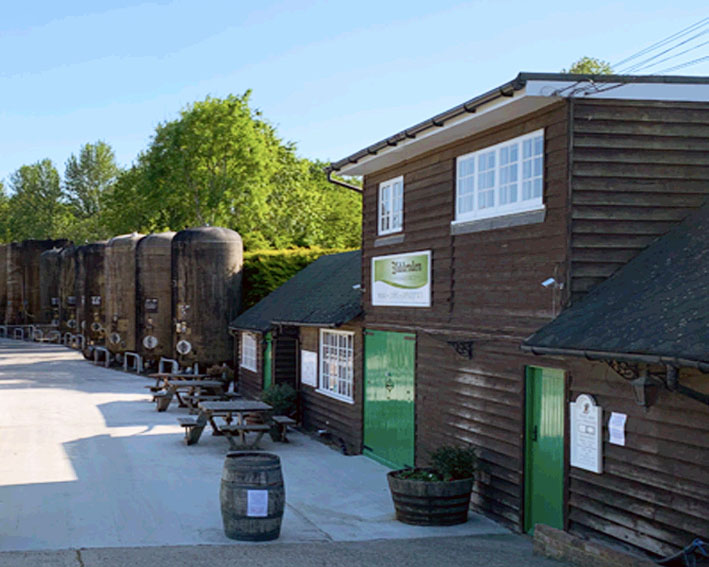 Biddenden Vineyards
English wine is so often thought of as a recent innovation that it’s hard to believe that wine has been made at Biddenden for over fifty years. The Barnes family who founded the business had a 40-acre apple farm in the Weald, and decided to diversify on account of falling fruit prices. From an original half-acre vineyard, the estate has grown to cover 23 acres. The loamy soil and sheltered valley lend themselves to German and French grapes. Eleven varieties of grape are grown, most particularly the Ortega commonly used in German white wines. Production now amounts to roughly 80,000 bottles a year. Biddenden Vineyards also produces the strong Kentish cider very familiar in the Weald, as well as apple and pear juices. Tastings are available on Saturday open tours or arranged private guided tours, although it is normally possible to stroll through the vineyards and visit the shop on any day of the week.
 Big Cat Sanctuary
Until 2018, any unsuspecting traveler passing along the road to Headcorn from the Smarden Bell might have wondered what a big cat sanctuary was doing there. Since 2018, they’d be more likely to exclaim, “Hey – it’s the Big Cat Sanctuary!” The difference was made by the appearance of director Giles Clark on BBC’s ‘Big Cats About The House’. The 32-acre site had been used as early as the 1990s by the Born Free Foundation as a bucolic refuge for exotic felines. It was acquired in 2000 by zoo-owner Peter Sampson, who retains ownership today. In 2016 he hired the high-profile Clark to take over management, the latter having worked with Steve Irwin at the Australia Zoo. Although he has raised the Sanctuary’s media profile, Clark still prioritises tranquillity for the 50-odd species of cat. The few Open Days it holds each year to raise funds for its conservation efforts are quickly sold out.
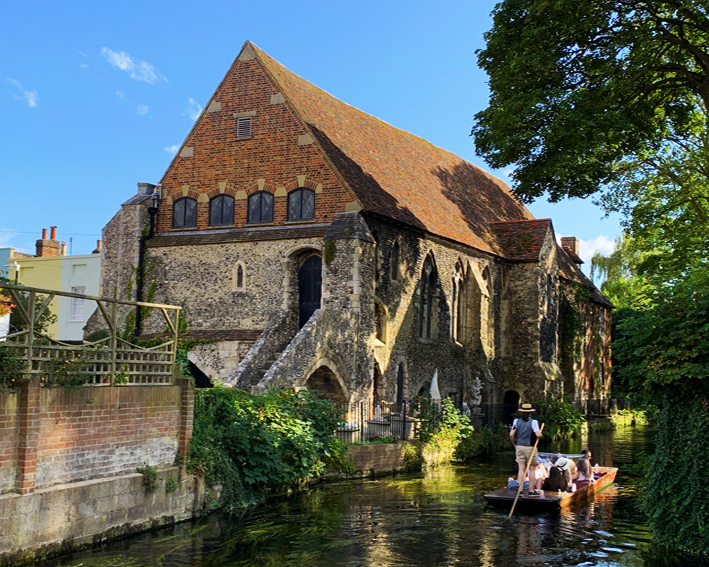 Blackfriars
The Black Friars who gave the former Dominican order in Canterbury its name were so called for no more curious a reason than the colour of their capes. Their friary was founded in 1237 with a grant from the pious King Henry III, probably using money he had extorted from English Jews. It covered a sizeable area beside the River Stour, opposite where the Marlowe Theatre now stands. Most of its buildings disappeared after the friary was dissolved in 1538 on King Henry VIII’s instructions; but the two that survive are attractive and even functional. The guest house was originally on an island connected to the rest of the friary by two wooden bridges, all of which have long since disappeared. It was privately restored within the last half century from a state of ruin, and is now the Beerling concert hall. The refectory meanwhile serves as a quaint art gallery for the King’s School.
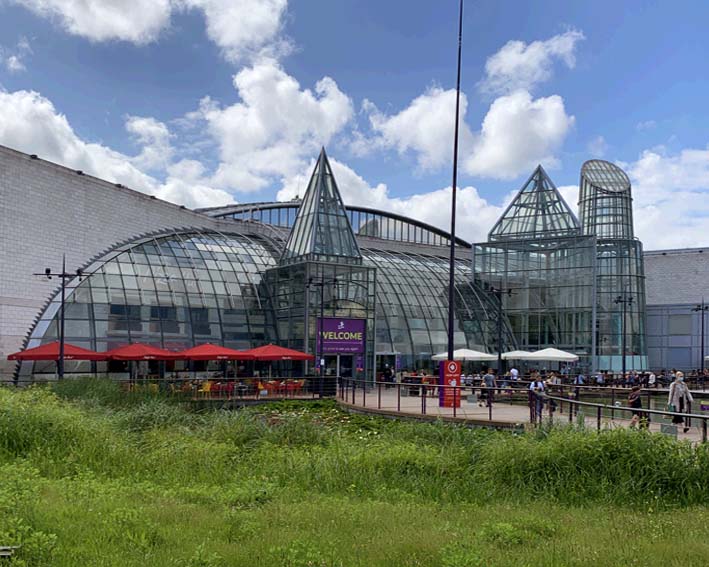 Bluewater
Five miles as the crow flies from a major shopping centre is not the obvious place to build another major shopping centre; so the presence of Bluewater at Stone near Greenhithe, facing Essex’s Lakeside across the Thames, looks like a case of “anything you can do, we can do better”. The idea was proposed by Blue Circle in 1994, four years after Lakeside’s formal opening, but developed by Lend Lease and funded by a consortium whose biggest partner is the Prudential. Constructed in a chalk quarry, it eventually opened in 1999, with John Lewis, House of Fraser, and Marks & Spencer providing the anchors for its two-storey triangular configuration. Whether you like it or not will depend on how much you enjoy retail, but it’s certainly a powerful magnet to shopaholics. Offering 13,000 parking spaces, 330 outlets, 40 eateries and cafes, and an events venue, it is significantly larger than Lakeside, and the seventh largest shopping centre in Europe.
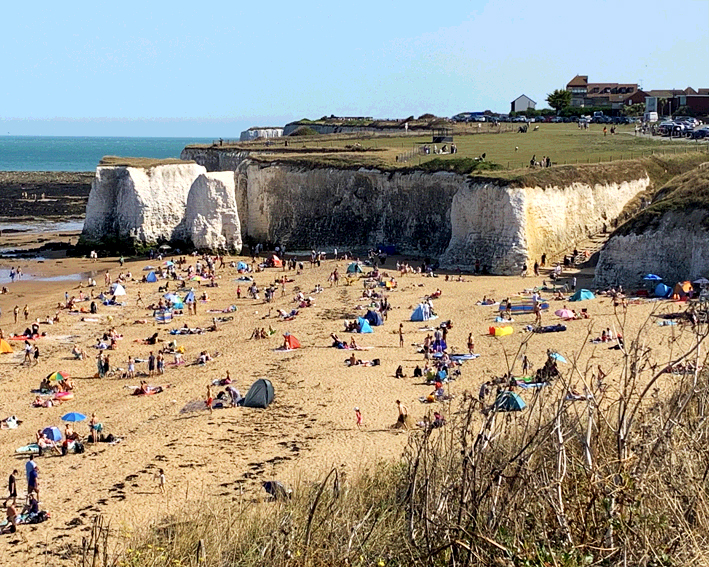 Botany Bay
The North Foreland, Kent’s most easterly promontory, contains a succession of attractive sandy bays sheltered by towering white cliffs. Probably the most attractive is Botany Bay, just north of Kingsgate. Apart from offering the usual facility for swimming, sunbathing or beachcombing, it boasts extensive rock-pools that provide an opportunity for fascinating investigations by young and old alike. It is the cliffs, however, that make Botany Bay so distinctive. First, there is the sea stack at its southern end that stands as the Bay’s trademark. And then there are the prominent caves, which include the remnants of smugglers’ tunnels. It was in fact the appeal of this secluded beach to smugglers that probably provided its name: if they weren’t first shot by excisemen, offenders could expect to spend an extended holiday in the penal colony of that name in Sydney, Australia. The fact that a bloody battle once took place at that most pleasant spot now seems hard to contemplate.
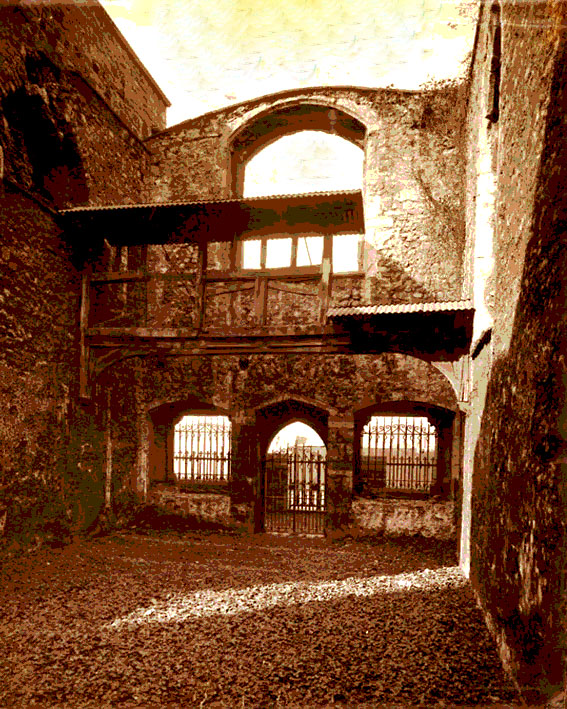 The Bridge Chapel
In the Middle Ages, when God’s omnipresence was taken for granted, it was conventional to build a chapel alongside a major bridge. The thinking was the same as siting McDonald’s branches in railway stations: bridges attracted travellers, and a facility catering for their spiritual needs at a time when the fear of never arriving was quite normal presented an opportunity to gather donations from the faithful. Although barely half a dozen survive, one does at Rochester, under the auspices of the Rochester Bridge Trust. It was built in 1392 by Sir John de Cobham as part of his and Sir Robert Knolly’s creation of a dependable river-crossing. After the Reformation, it served variously as a store, a house, a pub, and a shop, but deteriorated into a shell. In 1937, however, it was handsomely restored. It is worth experiencing just to put oneself in the shoes of medieval travellers who never knew if they would be coming back.
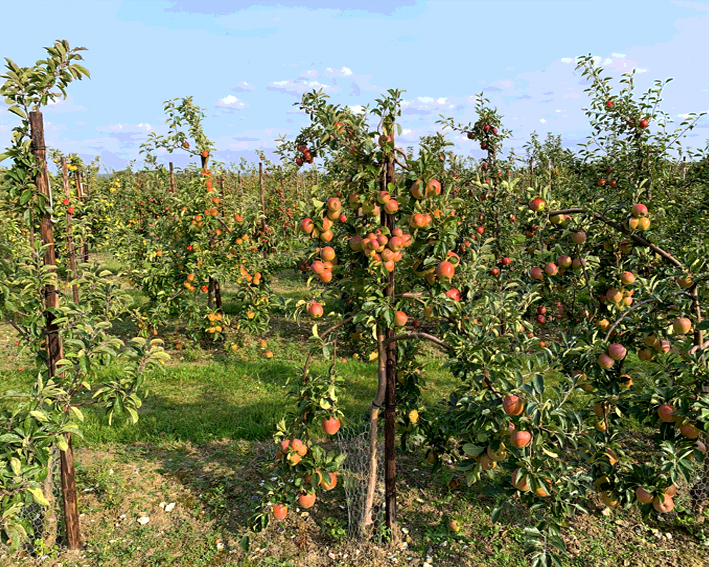 Brogdale Farm
It is only appropriate that the Garden of England should be host to the National Fruit Collection. This is a Noah’s Ark of fruit species: two of each strain growing in 150 acres of orchards. One of the largest such collections in the world, it contains around two thousand varieties of apple, along with lesser numbers of pears, plums, cherries, and others. The Collection, owned by DEFRA, moved to Brogdale Farm near Faversham in 1952. The Farm itself has been owned by Brogdale Collections since 1999, when it was bought from the Duchy of Cornwall. The public has the opportunity to visit, and hear talks about the produce, at Festivals that take place from July to October; they include Cherry, Cider, and Apple fairs. Brogdale also provides specialist advice to fruit growers, selling cuttings from particular trees in the Collection for grafting, so that classic but unfashionable varieties may continue to bear fruit.
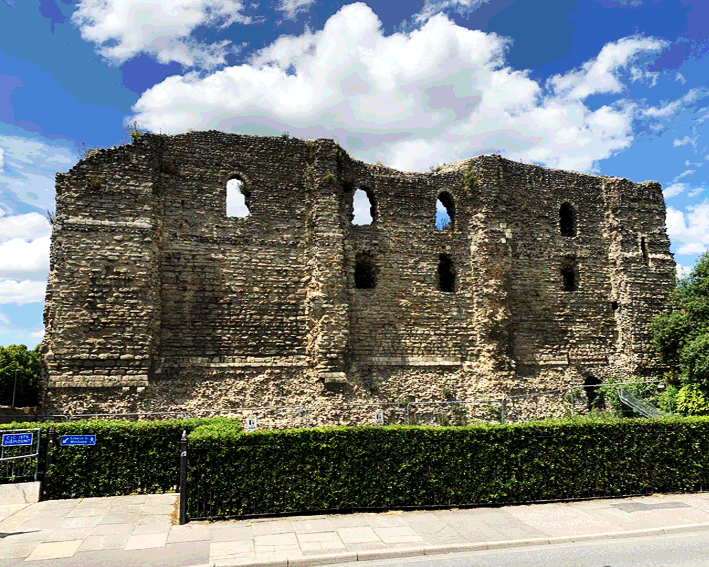 Canterbury Castle
The success of the Norman Invasion owed much to the wholesale slaughter of Saxon nobility at Hastings, which left behind few to organise or pay for resistance. Once he had taken London, William’s main need was to maintain control of the crucial port of Dover and his key connection with it, Watling Street, both in hostile Kentish territory. To this end, he immediately constructed motte-and-bailey castles at Dover, Canterbury, and Rochester, plus of course the Tower of London. Canterbury’s was not the biggest, but still must have overawed the natives. William’s son Henry I added the huge stone keep, which at around thirty yards square, and nearly as tall, was positively intimidating. By the C13 it had outlived its purpose; its subsequent uses ranged from a county gaol to a gas storage facility. The local council took over the ruin in 1928, and it is now a grand though mournful sight for visitors entering Canterbury from Wincheap.
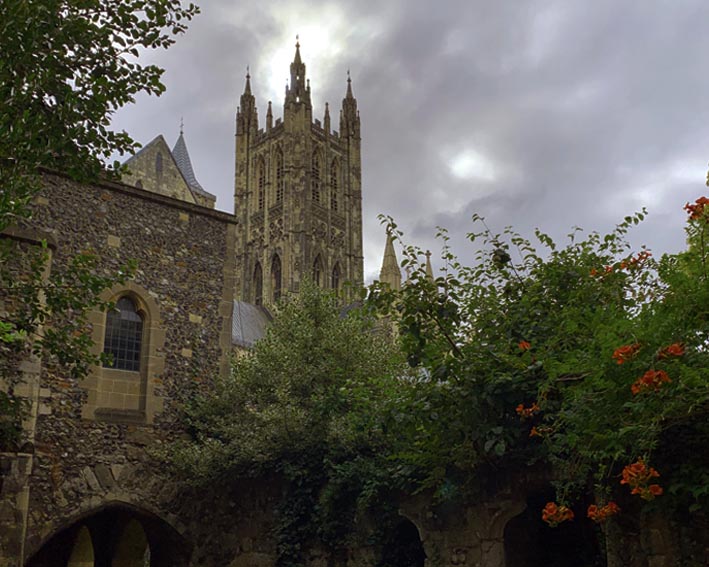 Canterbury Cathedral
The barbaric Murder in the Cathedral 850 years ago added much to the allure of Canterbury Cathedral, much as the fictional Quasimodo enlivens Notre Dame. Becket’s shrine started drawing pilgrimage from as far afield as Winchester in 1220. It is no unalloyed blessing that visitors are drawn ineluctably to the murder scene, and so risk missing the essence of the place. The cathedral built by St Augustine in 597 was destroyed in the first year of the Norman Conquest, and replaced with a structure modelled on Caen’s impressive Abbaie aux Hommes. Though significantly altered after a further fire, it retains from the Christchurch and Postern Gates the serene air of a great ship. The labyrinth attached to its north side, however, feels like the engine room. It is the walk from Queningate to the Cloisters, especially at dusk, that evokes the true importance of this edifice: as the foundry of the Anglican Church, and so the English nation.
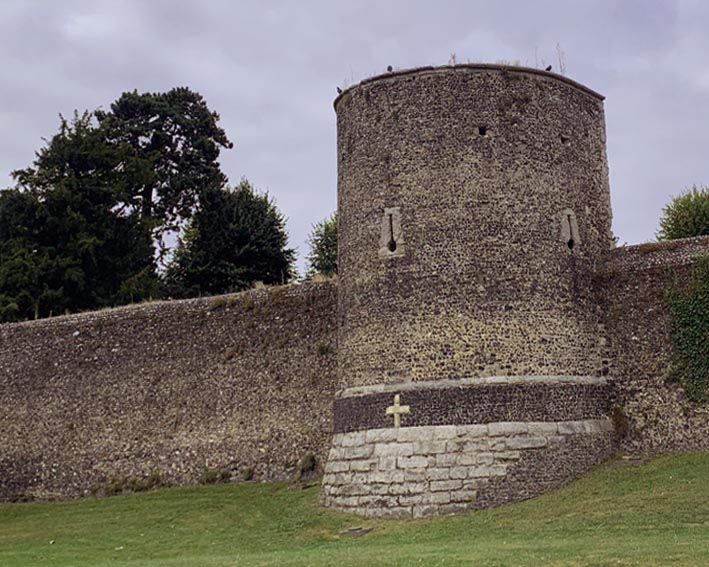 Canterbury City Walls
Although nothing like as complete as the ancient walls of Chester, Canterbury’s still make an impressive statement to newcomers. It was of course those inveterate city-wall builders the Romans who first erected them, placing them atop a rampart with an adjacent ditch around AD 280. There were at least five gates, corresponding to the arterial roads in and out. Although they decayed after the Romans left, the walls provided enough defence to commend Canterbury as the site for the nation’s pre-eminent cathedral. Surprisingly, they were restored not by the Normans but during a lull in the Hundred Years’ War, following a spate of French naval raids on English ports. By 1400, gaps were filled, the gatehouses restored, and 24 towers built. Thereafter, it was mostly downhill again. Two centuries of urban growth saw all the gates bar Westgate demolished, bookended by Roundhead and Luftwaffe assaults on the walls. Nevertheless, more than half the Roman circuit somehow doggedly survives.
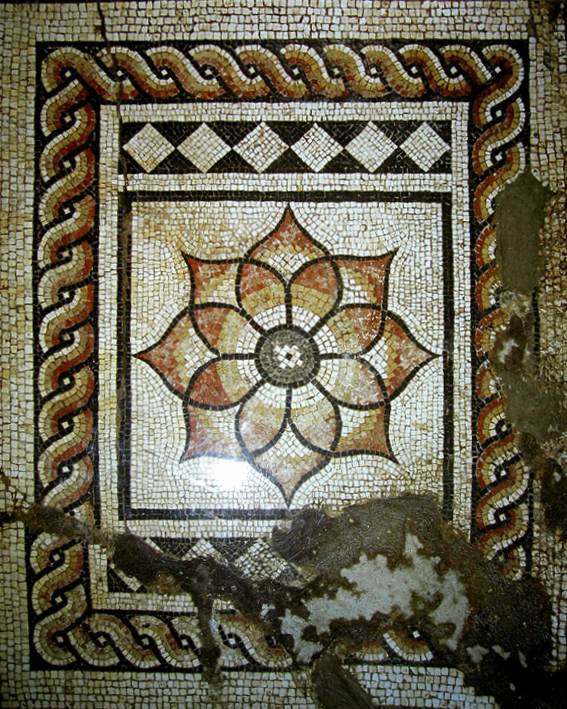 Canterbury’s Roman Museum
After much of Canterbury was flattened in WW2, reconstruction workers made an extraordinary discovery in Longmarket. Several feet below the present street level, they found a mosaic pavement – not a sidewalk, but a ‘pavimentum’ or solid floor – that turned out to have been part of an elaborate Roman domus, or townhouse, dating to around 300. Further excavation in the late 1950s revealed more remains that, instead of being covered over and built on, became the centrepiece of the Canterbury Roman Museum, which opened in 1961 and is still open today in Butchery Lane. In addition to the floors and hypocaust, it displays artefacts, some in replica settings, alongside a history of Canterbury in the days when it was an important Roman centre, covering 130 acres surrounded by a defensive wall with seven gates, and boasted a forum, baths, temple, and theatre. One highlight is the extraordinary Canterbury Treasure, a hoard unearthed in 1962.
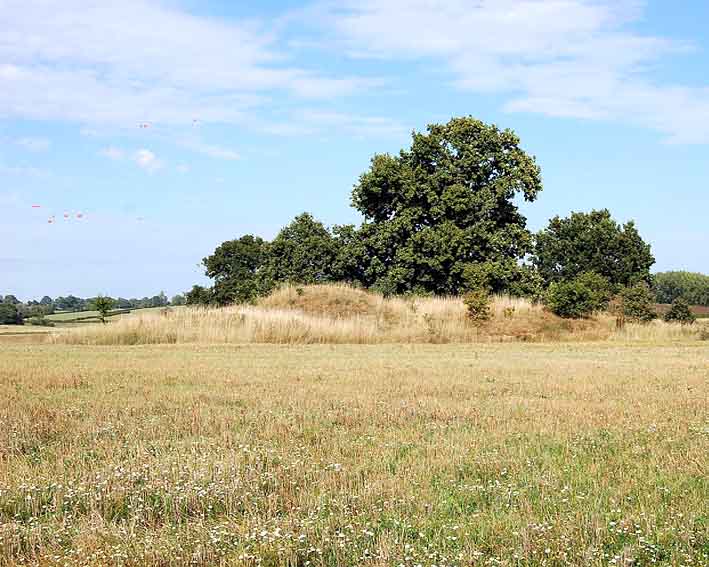 Castle Toll
The area north-east of Newenden on the Sussex border is now ordinary agricultural land. In the dark and middle ages, however, when the coastline was miles further north than today, it contained a peninsula of strategic significance. Given the threat of French incursions up the Rother, a fortification called Castle Toll was built there in the early C13, whose residual earthworks suggest a Norman motte-and-bailey construction. More interestingly, this lies within a much bigger, older fortification. In the C9, Alfred the Great introduced fortified towns known as ‘burhs’ (later ‘boroughs’) to protect his people against Viking marauders. One, Eorpeburnan, somewhere north-east of Hastings, was still not finished when it was overrun by Danes in 892, and disappeared from the record. Intriguingly, Castle Toll’s older site, covering 20 acres, had a bank and ditch at the exposed end that remained incomplete. Unfortunately, intensive ploughing in the C20 has left its outline hard to discern from the public footpath.
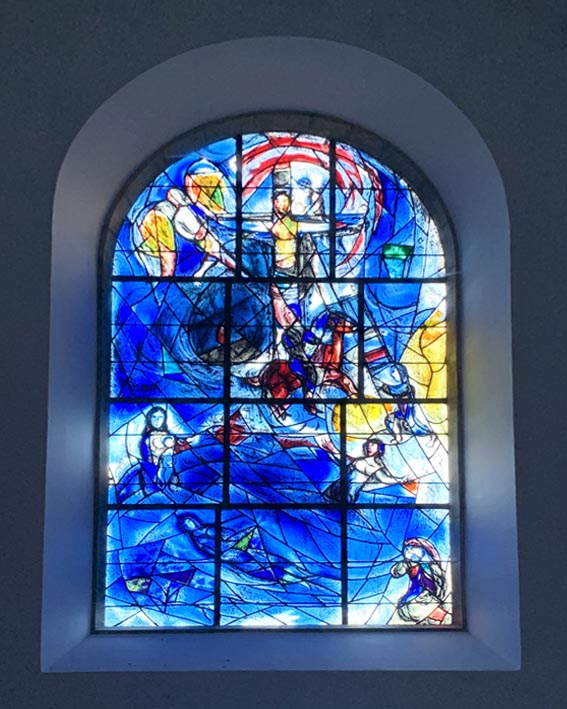 The Chagall Windows
Tudeley, between Tonbridge and Paddock Wood, is one of those places you miss if you blink while driving through. It has a church, but only one that looks like a horse designed by a committee. Go inside All Saints, however, and you’ll see something unique in the whole world. In 1963, Sarah D’Avigdor-Goldsmid was killed in a boating accident. Her parents asked the Franco-Russian artist Marc Chagall, whom she had admired, to design a commemorative stained-glass window for the church. When it was installed, he was so impressed that he undertook to redo all the others too. It took nearly 20 years. None is quite as impressive as the first, which casts a marvellous blue light in the chancel. Nonetheless, it is hard not to contemplate the wonder of this moving Christian symbol, magnanimously created by a Jew born in a shtetl under Tsar Alexander III, here today in the Kentish countryside: an outstanding example of human sympathy.
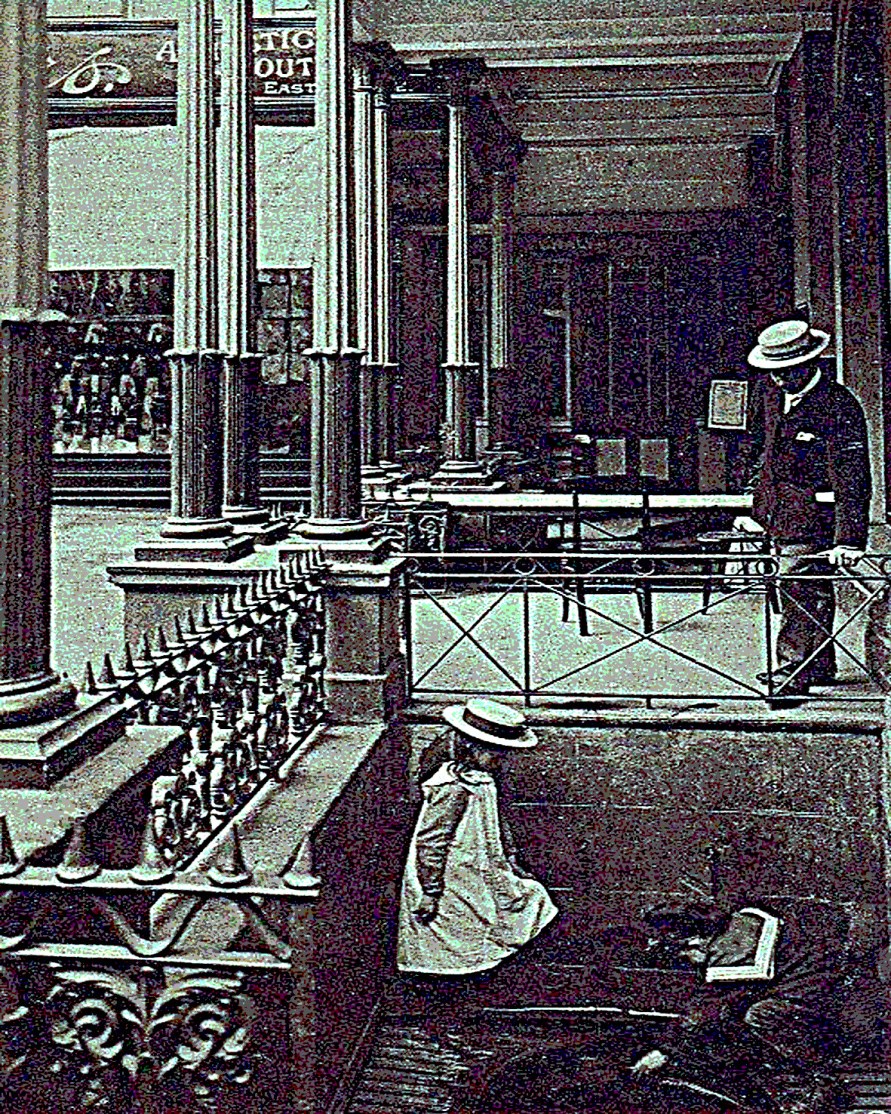 The Chalybeate Spring
Iron-rich water generally looks, tastes, and even smells bad. Call it Chalybeate, however – from the Greek for steel – and you may have a winner. Certainly Baron North thought so when he discovered such a spring near Eridge in 1606. A friendly doctor claimed that it remedied various mood disorders, weight loss or gain, worms, and an over-moist brain. Before long, even Stuart queens were coming to try the waters. The locality became a fashionable spa resort for the wealthy, with the Pantiles providing a suitably elegant promenade to the Chalybeate Spring itself. Visitors swore by its waters, and no doubt benefitted from the placebo effect, though that is unsurprising in a world where electricity, magnetism, and even radioactivity have been sold as therapeutic. By 1909, this rustic spot had acquired not one name but three: Royal Tunbridge Wells. Conman or not, we’ve North to thank for one of England’s loveliest towns, right here in Kent.
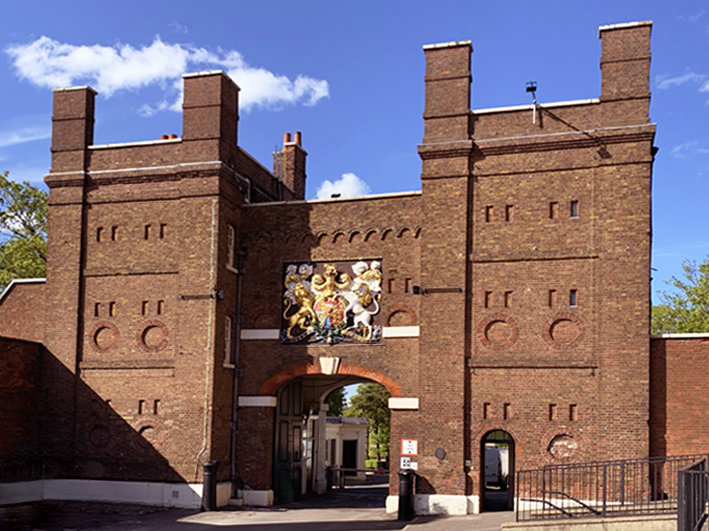 Chatham Historic Dockyard
In the C18, the new nation of Great Britain switched its attention from east to west, looking out for trouble from France and opportunity in North America. Portsmouth and then Plymouth consequently came to the fore as Britain’s naval hubs. It is easily forgotten that, until that time, Chatham was all-important. Near the mouth of the Medway, close to both Greenwich and the North Sea, it became England’s capital of ship construction and docking in Tudor times. So essential was it to this nascent sea-power that the dockyard expanded to take over most of Gillingham. When in 1667 the Dutch Republic sought to administer a knockout blow in the Second Dutch War, its fleet headed not for London but the Medway. Today’s ‘Chatham Historic Dockyard’ lacks the blockbuster exhibits of Portsmouth – where, unaccountably, HMS Victory is dry-docked, rather than at its Kentish home port – but Chatham’s organisers have laid on enough activities to provide a memorable day of nautical instruction.
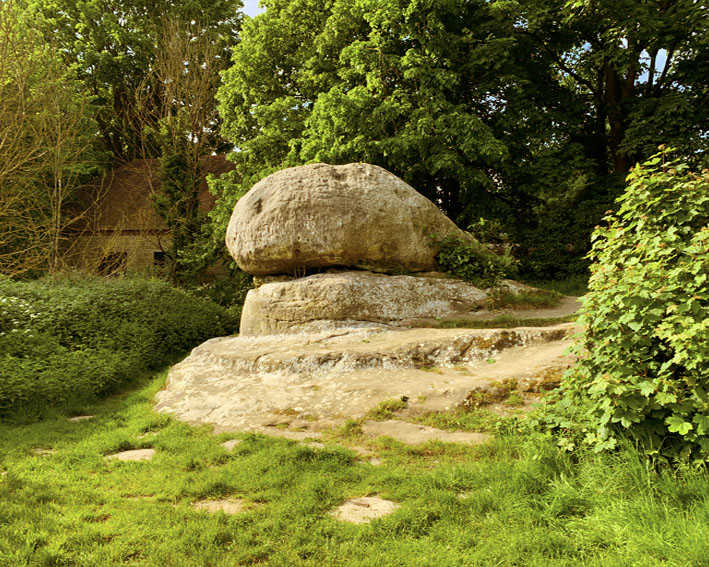 The Chiding Stone
Folk etymology is the process whereby untrained people imagine the origins of words or names, usually incorrectly. One example is the notion that ‘Maidstone’ describes a rock where maidens met, despite there being no conspicuous stone in the county town. Another example is ‘Chiddingstone’, said to have derived from the ‘Chiding Stone’, a boulder to which people were unaccountably summoned to be told off. In Chiddingstone‘s case, however, there really is a boulder in the village to support the explanation. About 15 feet high, and somewhat reminiscent of a cottage loaf, it is a sandstone rock from the end of the Jurassic period, akin to the boulders further south near Tunbridge Wells. There is no documentary evidence for the scolding myth, however, and linguists will point out that the first vowel is plainly short, as compelled by the following double ‘d’. The stone is worth seeing nevertheless, despite graffitists having selected it for their folk art.
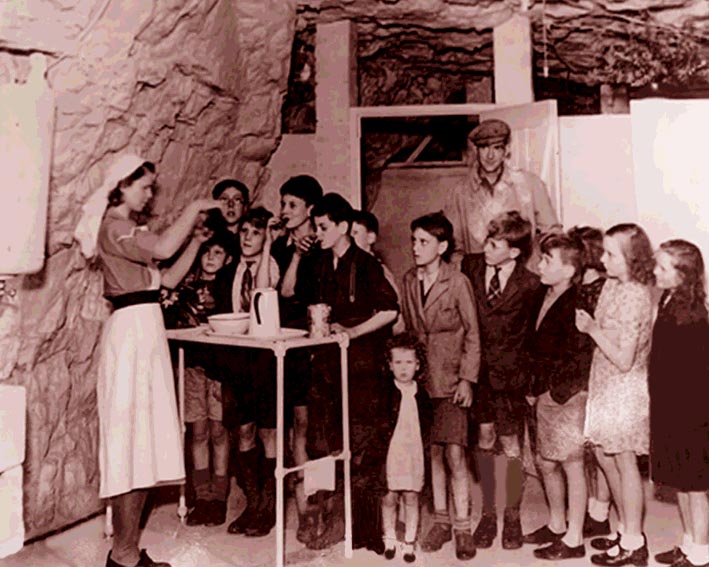 Chislehurst Caves
Chislehurst’s famous Caves are not really caves at all, but tunnels dug over a period of a millennium for the extraction of chalk, which was burned in kilns above to create lime. Incredibly, they cover 15 acres and have a total length of 22 miles. After mining ceased in the 1830s, they were used for storing ammunition and cultivating mushrooms. Their heyday, however, came in 1940, when they were used as an air-raid shelter that morphed into a well-equipped subterranean city for 15,000, each paying a penny to enter. Later, as well as providing an atmospheric location for TV production, they became the O2 of the 1960s, featuring such top musical acts as Jimi Hendrix, Pink Floyd, the Yardbirds, the Animals, and local boy David Bowie, who appeared four times. Nowadays public access is limited to guided tours and special events, although the Labyrinthe role-playing club also enjoys a singularly evocative world there.
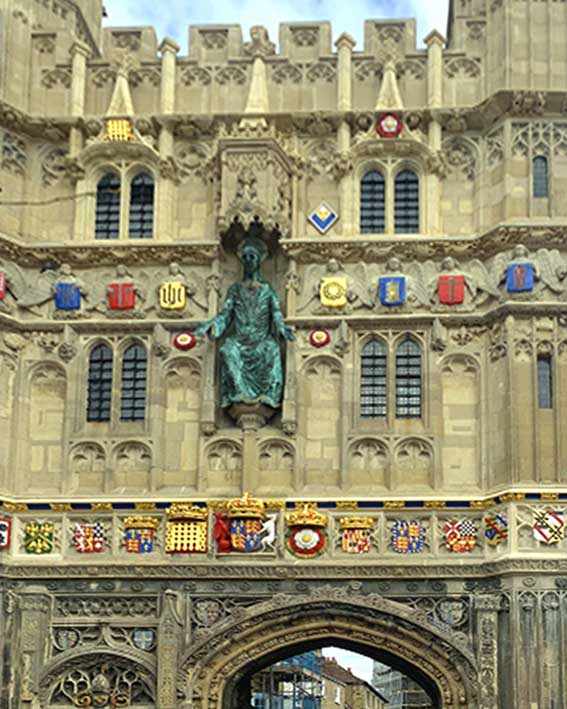 Christchurch Gateway
The main entrance to the Precincts of Canterbury Cathedral is worth a visit in its own right. Its location in Buttermarket is itself atmospheric: an unexpected patch of open space with a distinctly Central European feel among a warren of narrow medieval streets. As for the wonderfully ornate Gate, it could easily be from Prague, but for the obviously British crests. It was built in honour of Prince Arthur, the heir to the throne who died soon after marrying Catherine of Aragon. A Puritan iconoclast destroyed the original effigy of Christ in the centre, and the towers were removed by order of an alderman who wanted to be able to see the Cathedral clock from his office; all were fortunately replaced. Buttermarket is an ideal meeting-place, because the party arriving first can while away the time studying the Gate’s intricate and often curious details. It is free to view from the front, and from the rear too in late-afternoon.
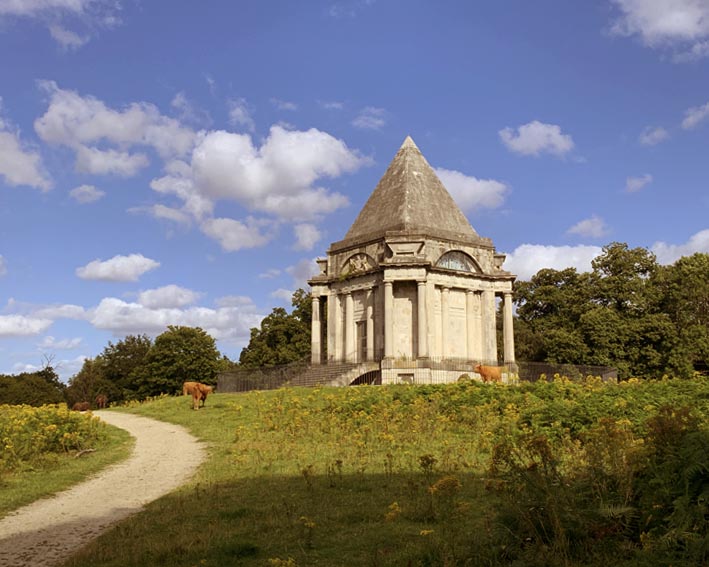 Cobham Mausoleum
The Darnley family of Cobham Manor found themselves in a difficult position in 1781, when their family tomb at Westminster Abbey was full to overflowing. The 4th Earl of Darnley decided to provide for future generations by having a mausoleum built in the garden. It came out a very grand affair in neo-classical style. The odd thing about it was that, where one might have expected a dome on top, it actually had a pyramid, supposedly because he’d admired such a device in a painting by Poussin. This was undeniably an eye-catching feature of the landscape, and it was a pity that nobody ever got buried in it. It was abandoned to the elements and, at length, vandals, who set fire to it and generally used it for nefarious purposes. Eventually it was bought by Gravesham Council and restored. Now administered by the National Trust, it can be visited by the public, along with the surrounding woods.
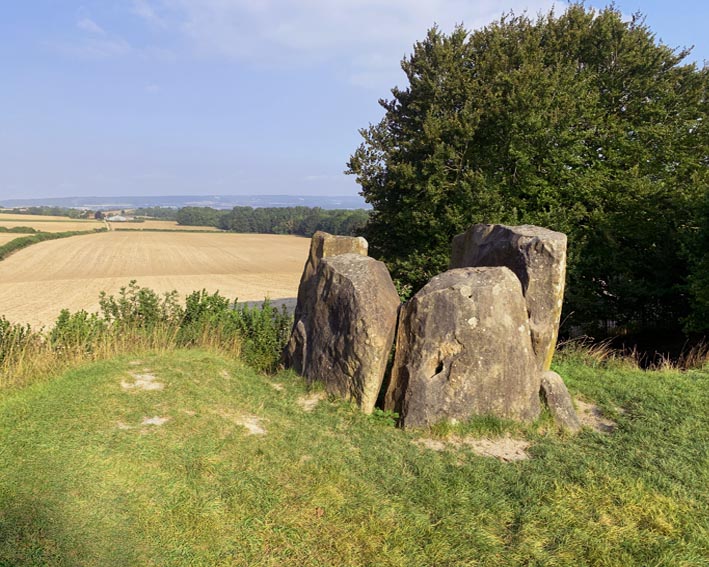 Coldrum Long Barrow
The Medway Megaliths are not a Chatham basketball team but a collection of early Neolithic monuments on either side of the river north-east of Maidstone. Although the most famous is Kit’s Coty, the most spectacular is Coldrum Long Barrow, east of Trottiscliffe, which took its name from a now demolished farm. It owes its visual appeal not only to the size, quantity, and disposition of the mostly fallen sarsens that comprised it, but also to the spectacular view to the east. It dates back to the early 4th millennium BC, when it was constructed by nomadic shepherds as a burial chamber whose entrance remains partially intact. It was probably reduced to its current ruinous state by medieval Christian vandals. Like many such sites, Coldrum has taken on a mystical significance for New-Age types, hosting occasional ceremonies and boasting a wishing-tree. The site was donated to the National Trust in 1926.
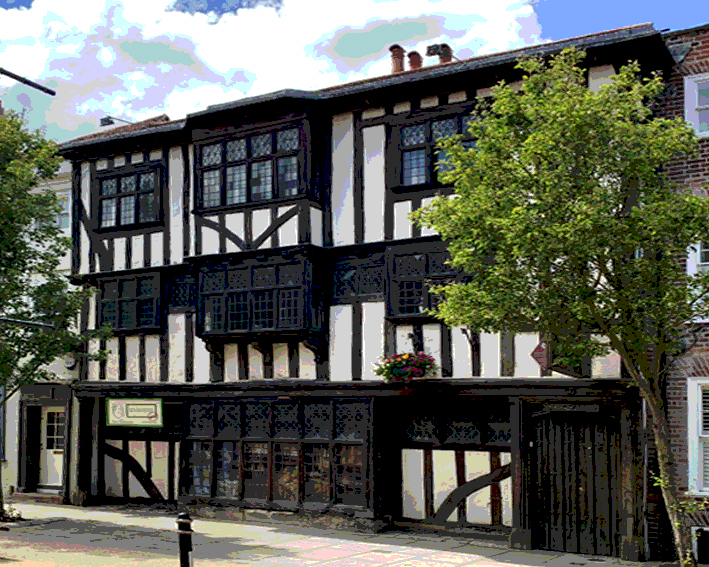 Conquest House
In Canterbury’s Palace Street is one of those sights that every tourist needs to tick off their list, even though there’s little to see. Conquest House looks at first glance like another lovely timber-framed building such as Canterbury specialises in. Unfortunately, it’s fake. The whole frontage was replaced in the C19, which accounts for the thoroughly different appearance of adjacent buildings. It’s not as though viewing the interior will compensate, as it’s closed to the public. A shop is located there, selling health foods, so that one can walk away with something tangible; but it’s slightly grasping at straws. The one genuine reason for paying a visit is this: to be able to say you’ve seen the actual building where, back in 1170, Henry II’s four knights met to plan the assassination of Thomas Becket. The fact of his chapel being only 100 yards behind you does bring it home that the infamous act was more real than tour-guide trivia.
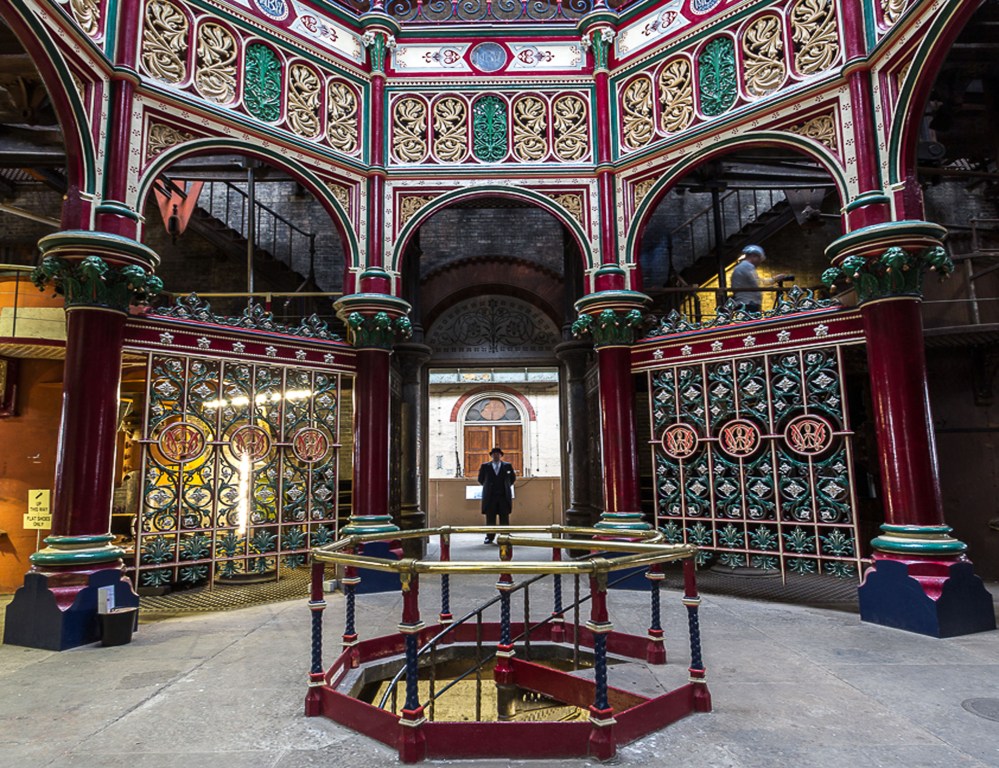 Crossness Pumping Station
A visit to a redundant and previously vandalised Victorian pumping station on the Thames beside Erith Marshes may not appeal greatly, even when one learns that one of the four steam engines, the Prince Consort, has been restored and is occasionally fired up for visitors. There is one reason, however, why Crossness is a ‘Must See’: its extraordinarily ornate cast ironwork. The Station was designed by Sir Joseph Bazalgette as part of his revolutionary sewer system that constituted the Metropolitan Board of Works’ response to the capital’s ‘Great Stink’ of 1858. The four engines pumped waste from London sewers 30-odd feet up into a reservoir that was later emptied into the ebb tide. Why this highly functional Southern Outfall Works turned out so decorative was probably to do with two facts: its inauguration in 1865 was attended by both princes and archbishops; and the MBW, whose logo appears repeatedly in the ironwork, was notoriously venal.
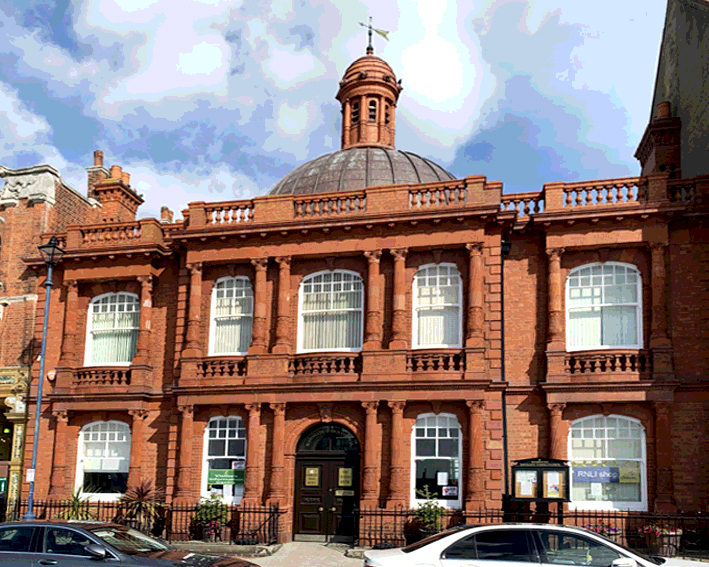 The Custom House, Ramsgate
Completed in 1894, the Custom House in Harbour Parade is a natural first port of call for any visit to Ramsgate. It’s a pleasingly simple edifice: a solid two-storey red-brick affair, as befits its original purpose, but with enough civic pride to be sporting a copper dome, topped by a columned drum and weather vane like the feather in a bonnet. At the top of both storeys, a smart stone balustrade completes the look. But this is still a functional building, housing not only the tourist information office but also a handy café, a shop, and even a restaurant. What’s equally pleasing is the broad vista that greets the departing visitor: the Royal Victoria Pavilion and the Obelisk over to the left, the Ramsgate Maritime Museum straight ahead, and to the right the Marina, with Royal Parade beyond. With seagulls complaining bitterly overhead, it’s a scene that lives on in the memory as the essence of Ramsgate.
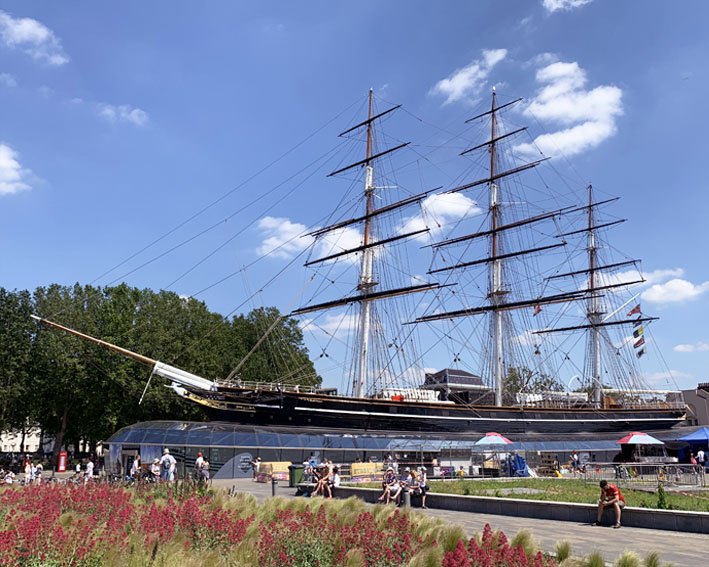 Cutty Sark
Moored at Greenwich since 1954, Cutty Sark has been preserved as an example of the tea clipper, a vessel that shone brightly but was quickly eclipsed by invention. She was built in 1869 to carry cargo to China and bring back the British elixir of life, chai. Speed was of the essence, since the journey was long and traders competed to get the new crop to Britain’s salons first. She had a narrow beam to cut through the water and three masts packed with wind power, so she travelled at a good clip. Cutty Sark’s best tea run was 107 days from Shanghai to North Foreland. Unluckily, the Suez Canal opened in 1869, greatly favouring steamers. Within a decade, the game was up. She spent three decades in Lisbon and three as a training vessel in Greenhithe before retirement. Despite two recent fires, her sleek lines still give a stirring impression quite unlike the usual old sailing ship.
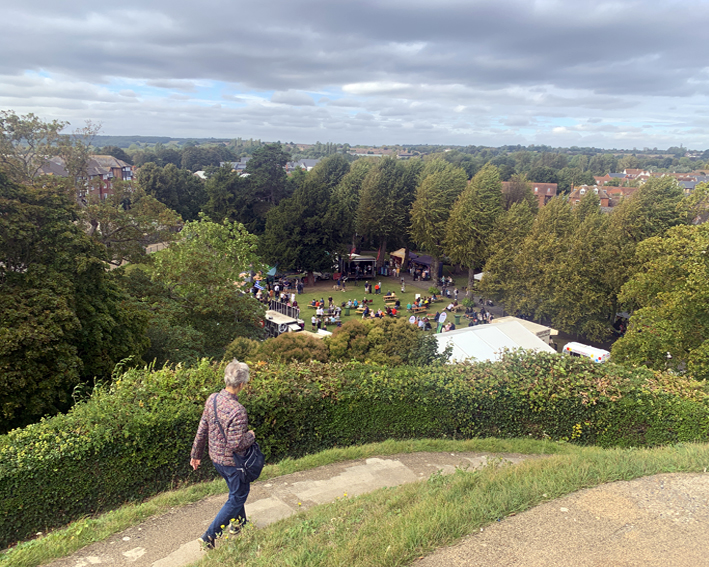 Dane John Mound
The Norman-French for a castle keep was ‘donjon’, a word that in English evolved over time to ‘dungeon’, meaning solely the basement of such a building where prisoners were held. It was applied in its original sense to a wooden motte-&-bailey castle that William the Conqueror hurriedly erected during the Norman invasion in 1066, on the site of an ancient Roman burial mound just inside Canterbury’s city walls. After a new stone castle was built to the north-west early in the C12, the mound’s purpose was slowly forgotten; but its name survived and mutated into ‘Dane John’, with bogus Viking explanations attached to it. As the mound offers splendid views across the city, its environs were unsurprisingly re-modelled as a leisure facility around the turn of the C19. It is now crowned by a monument to James Simmons, who built the adjacent Dane John Gardens.
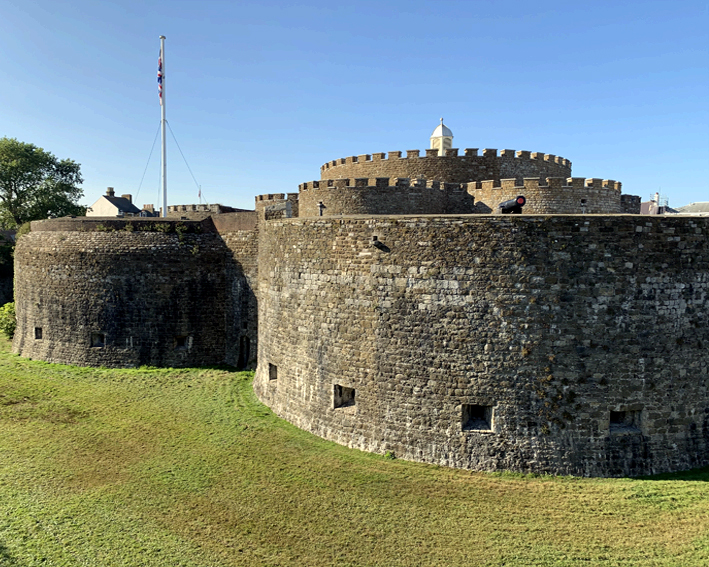 Deal Castle
One of the unintended consequences of King Henry VIII’s divorce from Catherine of Aragon was the threat of invasion by her enraged nephew, the Holy Roman Emperor, with the urging of the Pope and supported by the French. Because the Downs – the sea area west of the Goodwin Sands – provided an excellent anchorage, Henry had three forts built urgently in 1539-40 at Sandown, Deal, and Walmer. These were a far cry from the rectangular Norman castles so familiar across Kent. The keep and bastions were designed as overlapping circles that protected better against cannon fire whilst affording flexible offensive capabilities. The invasion never happened; but Deal Castle did see action during the Civil War, when the Roundheads took it back after a six-week siege. It later served also as a deterrent to Napoleon’s invasion plans. After long providing an exotic private residence for the castle captain, it was turned into an evocative tourist attraction, now operated by English Heritage.
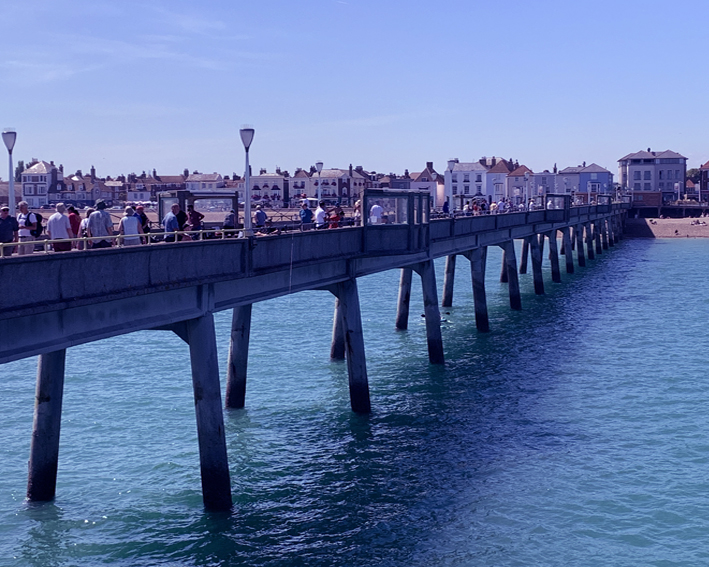 Deal Pier
Today, Kent’s only complete leisure pier is the one at Deal. The town’s first pier, a wooden structure built by Sir John Rennie in 1838, was one of the first in the country. For budgetary reasons, it never attained its intended length, and in any case was destroyed in a storm within 20 years. A sturdier successor was opened in 1864, and endured until a stricken Dutch ship accidentally demolished it in 1940. Some 17 years later, the current bridge, 1,026-feet long, was built under the auspices of Dover District Council. A simple affair, with none of the razzmatazz of Victorian piers, it is solidly built of steel clad in concrete, and has repeatedly been restored and renovated. Its three virtues converge at its extremity: fine views of the seafront, a handy opportunity for sea-fishing, and the Deal Pier Kitchen, opened in 2008, which caters to a high standard for residents and tourists alike.
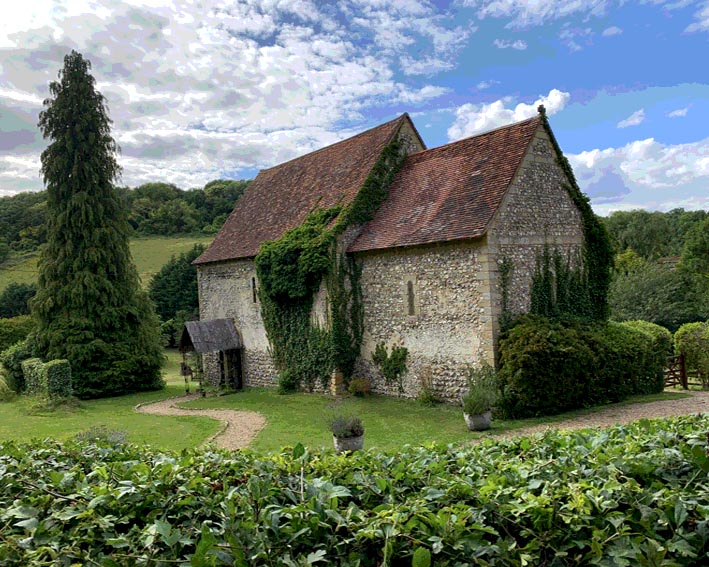 Dode Church
Nobody would ever stumble across Dode. It is hidden away somewhere between Snodland and Meopham down the sort of single-track lane that makes drivers pray no one comes the other way. The reason why Dode is literally off the map is that the village was wiped out in 1349 by the Black Death. All that remains is its church. Last used for worship in 1367, it was deconsecrated by the Bishop of Rochester, and fell into ruin. It was restored a century ago by a mayor of Gravesend, and again after 1990 by a Maidstone surveyor who now rents it out as a slightly macabre venue for weddings. You’ll hear the usual talk about the ghost of the Dodechild – supposedly the last to die – but there’s little to see. In this day and age, however, it’s instructive in that remote spot to contemplate what happens when humans encounter a microbe that is contagious, incurable, and truly lethal.
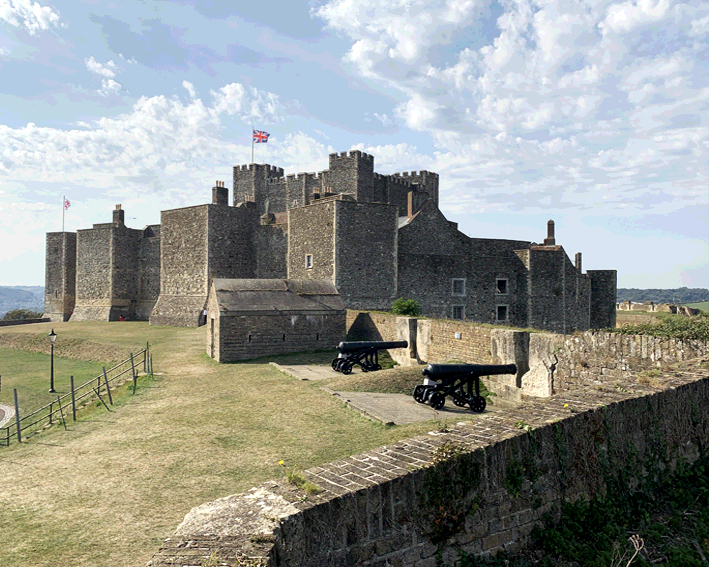 Dover Castle
There’s a case to be made for the notion that, after Canterbury Cathedral, Dover Castle was the most significant edifice in early English history. If, as Shakespeare says, the sea was England’s “moat defensive to a house”, then Dover Castle was its barbican. It was actually built by the invading Normans as an instrument of oppression, and took on a singularly invincible aspect at the top of the white cliffs once the Great Tower and curtain walls were added in the C12. It played its most significant role in history when, in 1216-7, it decisively held out twice against sieges by the invading Prince Louis of France. Although gunpowder rendered it ineffective as a fortification, it continued to have a military function right up until WW2, when the tunnels beneath provided a secure base for organising the 1940 evacuation from Dunkirk. Today the huge site is worth a visit even for the impressive views alone.
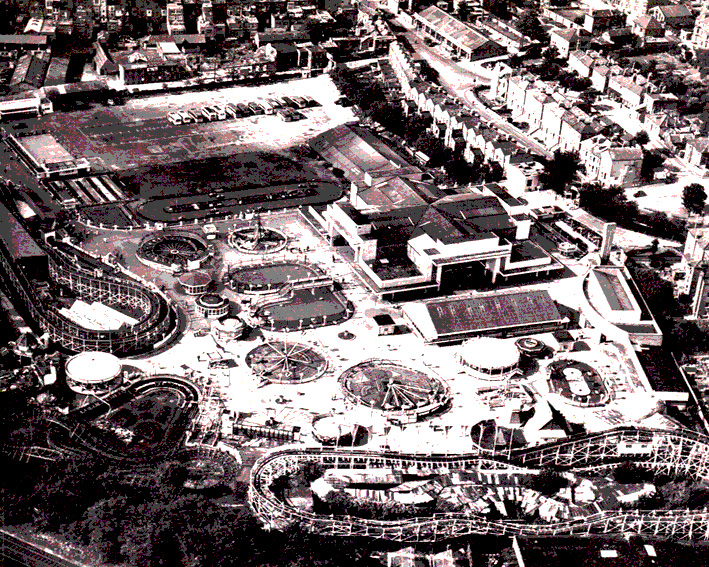 Dreamland
When Dreamland opened on Margate’s sea-front in 1920, it must have got the same enthralled reaction as Disneyland in 1955. There was a pleasure garden on the site in the 1870s, including a lake, statues, menagerie, and ‘ruined abbey’. In 1880, the first ride appeared: a ‘Sea on Land’ machine that moved passengers up and down. A permanent amusement park was the brainchild of John Iles who, after visiting Coney Island, had built such parks around the world. His iconic wooden Scenic Railway, plus other smaller rides, made for the big success called Dreamland. The Iles family sold up in 1968, since when the park has had as many ups and downs as a roller-coaster. Its long-term failure was sealed by Margate’s decline as a holiday destination and competition from true theme parks like Chessington. Dreamland folded in 2003, and a public campaign led to a disastrous relaunch. Restarted in 2017, it now operates partly as a concert venue.
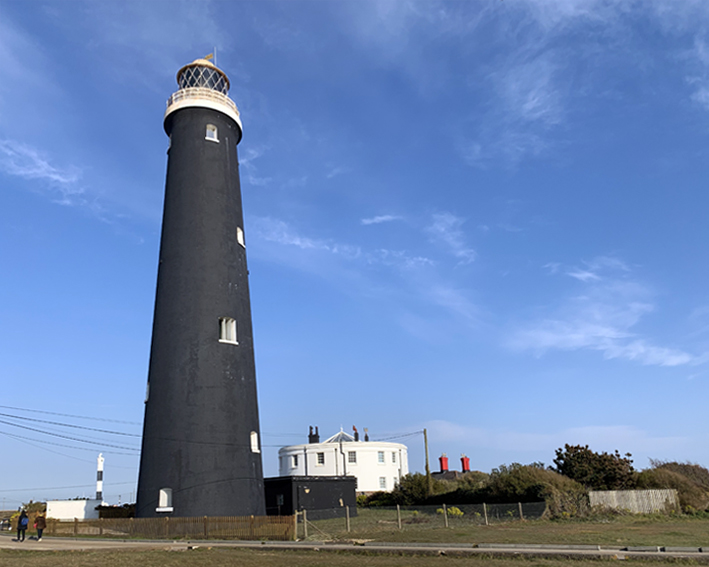 Dungeness Old Lighthouse
Since the British (2016) and American (2019) movies called ‘The Lighthouse’, it’s been hard to see any such structure as simply a device for showing ships the way. Dungeness, as Kent’s southernmost point, was always the obvious place for an entrance light to the Dover Strait, the world’s busiest shipping channel. The problem for lighthouse-builders, however, has always been the same: the coastline will not sit still. The current lighthouse, operational since 1961, is the fifth. It succeeded the ‘Old Lighthouse’, opened in 1904, which now serves as a tourist attraction. Aside from providing fabulous views of the sea, the nature reserve, the power station, and of course the ‘New Lighthouse’ 300 yards away, a visit gives rein to the imagination. What would it be like to be shut up in one of these for months, with just one other person for company? Sadly, many more people now know the answer than before Covid-19 struck.
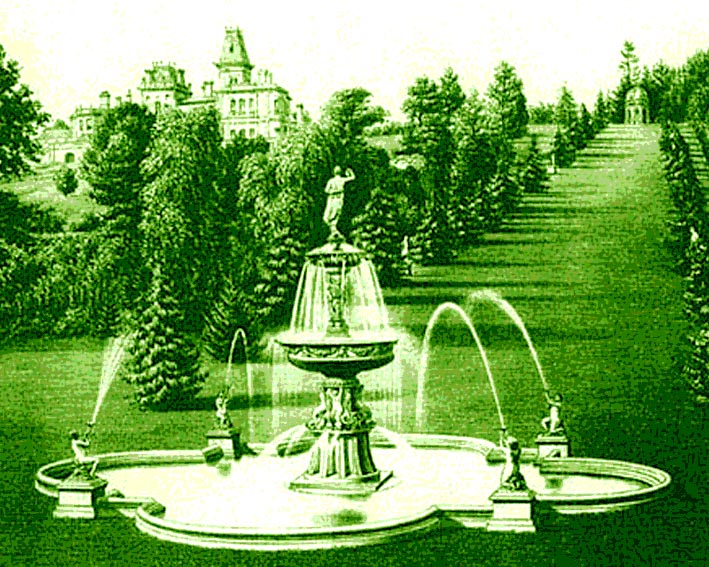 The Dunorlan Fountain
Pulhamite was the ingenious invention of James Pulham (1820-98) from Suffolk: an artificial rock substitute used to mould rock effects where few or none currently existed, but much more realistically than the artificial rock-faces, tunnels, and grottoes found in today’s theme parks. Made to a secret recipe that Pulham took with him to the grave, it found dozens of applications in public and private projects around Britain between the 1840s and 1870s, including the Bromley Palace rockery, Folkestone’s Zigzag Path, and Ramsgate’s Madeira Walk waterfall. One of the finest was the Hebe Fountain displayed at the International Exhibition at South Kensington in 1862, so called because it was surmounted by a sculpture of the Greek goddess of religion. It was moved afterwards to Tunbridge Wells, becoming the centrepiece of adornments to Dunorlan Park. Now known as the Dunorlan Fountain, it was restored in 2005, albeit without the surrounding Triton figures wrecked by WW2 servicemen using them for target practice.
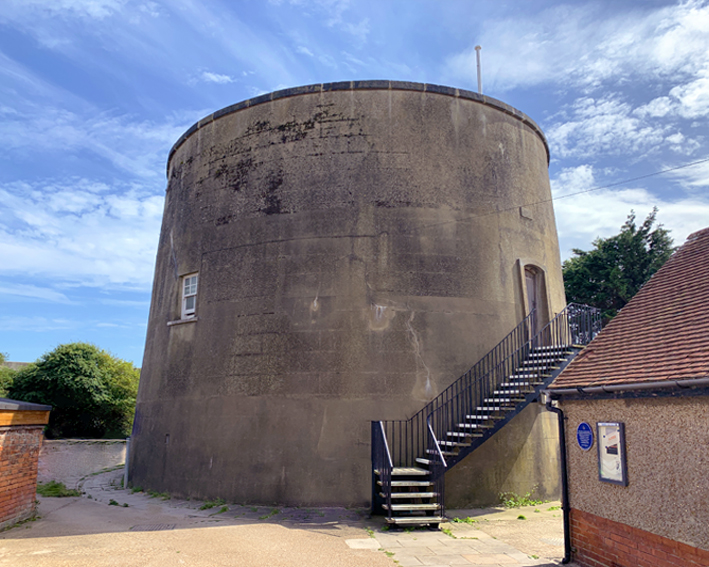 Dymchurch Martello Tower No. 24
It’s easy to look at a Martello tower and wonder what possible use it had. It was in fact a cunningly designed structure, around 30 feet high, that accommodated a cannon on the roof, soldiers’ quarters on the first floor, an armoury at ground level, and storage in the basement, all encased in brick walls up to thirteen feet thick. 75 of them were built along the coast of Kent and East Sussex in the early C19, when the threat of a Napoleonic invasion was serious. Fortunately, the towers never had to be put to practical use. Number 24, at Dymchurch, was neither demolished nor sold off as a private residence, but conserved for public inspection at weekends. Visiting the circular interior, still essentially in its pristine state, feels rather like entering a converted oast-house. The name, incidentally, did not come from their designer, but was a misnomer for the original such tower, near Punta Mortella in Corsica.
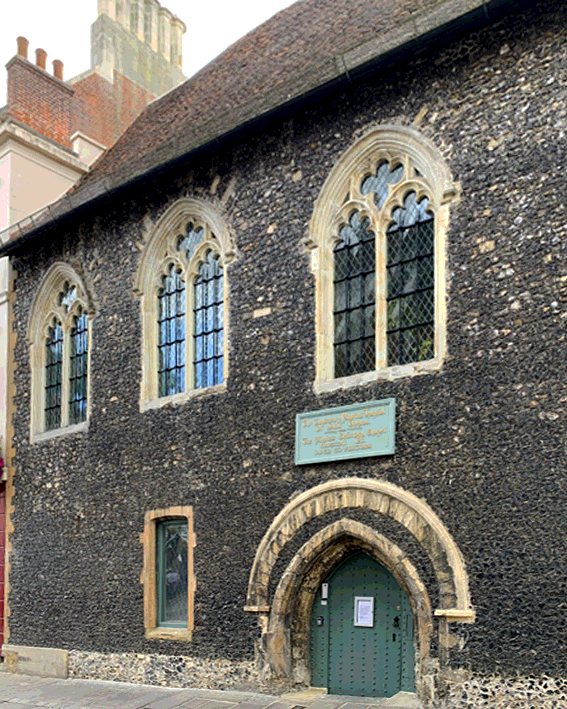 Eastbridge Hospital of St Thomas the Martyr
The familiar C12 knapped-flint building in Canterbury High Street was not designed as a hospital, but a hostel for impoverished pilgrims visiting the shrine of St Thomas Becket. It was only after two centuries that Archbishop de Stratford had the idea of commercialising the operation, charging fourpence to every able-bodied guest. He made an exception for sick pilgrims, however, allowing them a bed for free and even providing female nurses, who were necessarily aged over forty. When pilgrimages fell out of fashion, it remained a hostel for the poor but also housed in the chapel a school that endured until 1879. The site is now occupied by the Society of Saint Francis, an order of Anglican Franciscan friars. Behind the austere exterior, the site is an oasis of calm, embracing the Greyfriars Chapel and Franciscan Gardens in addition to the Hospital itself. Wikipedia helpfully informs us that the Hospital offers no Accident & Emergency facility.
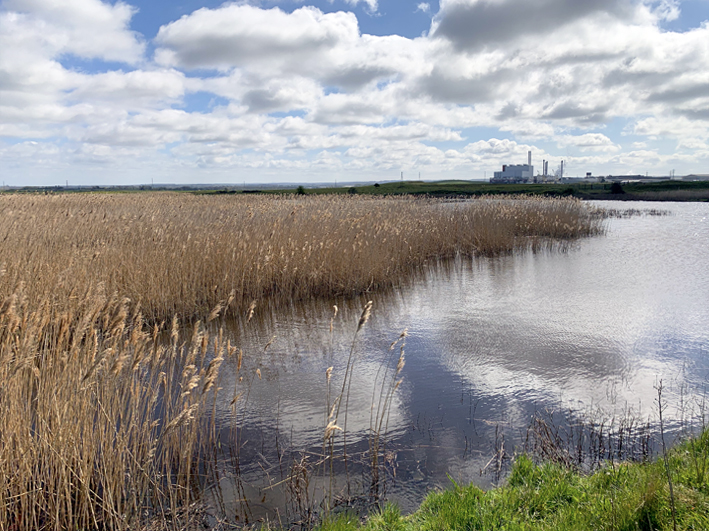 Elmley National Nature Reserve
Just as Romney Marsh in the far south of Kent offers an area of remote solitude of particular appeal to birds, so too does the Isle of Sheppey in its far north. Elmley was one of the three islands that merged to form Sheppey as we know it today. Separated from the rest of Kent on two sides by the Swale, and its north-eastern perimeter still largely delineated by a residual waterway, Elmley is a privately owned estate that serves as a nature reserve. Its owners, the Fultons, have taken pains to make it commercially viable without impinging unnecessarily on the indigenous wildlife. Visitors use their own cars as hides for birdwatching, but can also hike along two scenic routes or even hire a traditional shepherd’s hut for an overnight stay. A few hours spent at Elmley feel like an escape to another age, while close encounters with wildlife are like manna to jaded urban appetites.
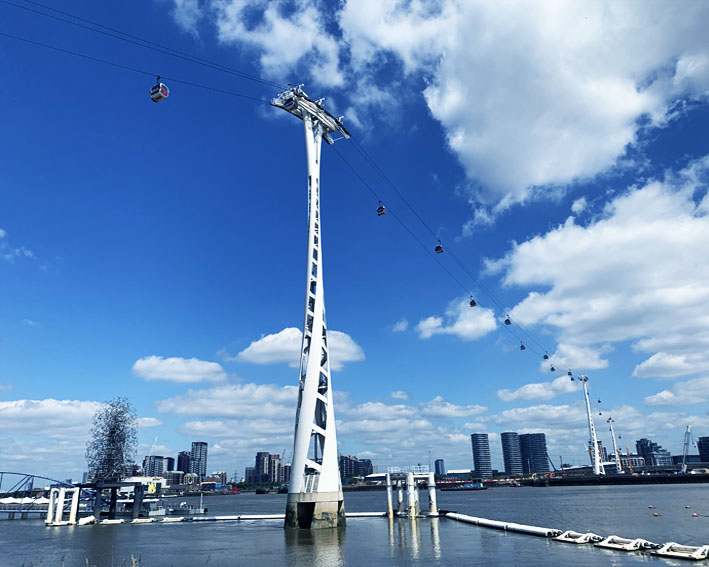 Emirates Air Line
One abortive suggestion for adding colour to the Millennium celebrations was a cable car crossing the Thames. Transport for London revived the idea, and by 2012 had constructed a link between the 02 Arena and Royal Victoria Dock half a mile away. As Emirates Airlines met most of the £60 million construction cost, it is still known as the Emirates Air Line. It offers a journey to nowhere terribly useful, so the pleasure lies more in the travelling than the arriving. The operators charitably run it at half speed in the evenings, thus doubling the length of a scenic round-trip to twenty minutes. The view from 300 feet up over the river is extensive, stretching from Wembley Stadium in the west to the Queen Elizabeth Bridge in the east, plus (for the eagle eyed) the Alexandra and Crystal Palace aerials to north and south. It delivers 1.25 million journeys annually, about one third of the London Eye’s tally.
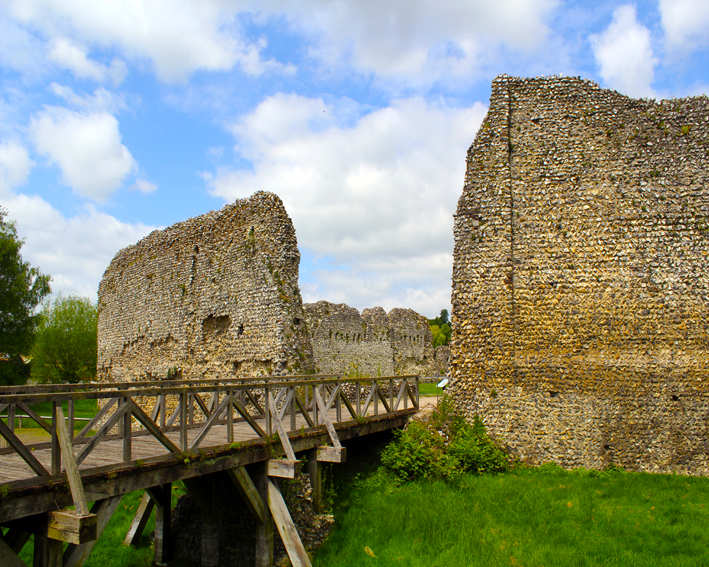 Eynsford Castle
In Anglo-Saxon times, there was fortified house at Eynsford, a crucial crossing-point on the Darent. Come the Norman Conquest, the surrounding area was occupied by William’s untrustworthy brother Odo. Suspicious of Odo’s motives, Archbishop Lanfranc reacquired the manor around 1082, and had a castle constructed there by William de Eynsford. This consisted of an inner bailey joined to an outer bailey, with an impressive curtain wall running around the perimeter. Improved in 1130, it remained in the possession of the Eynsford family until 1261, after which it was divided into two separately owned properties. The owner of one half, Nicholas de Criol, fell into dispute with William Inge, the new owner of the other, and ravaged the site in 1312. It never recovered, but was used to house animals. In the C20, however, it was extensively restored, and now makes an impressive place to visit under the administration of English Heritage.
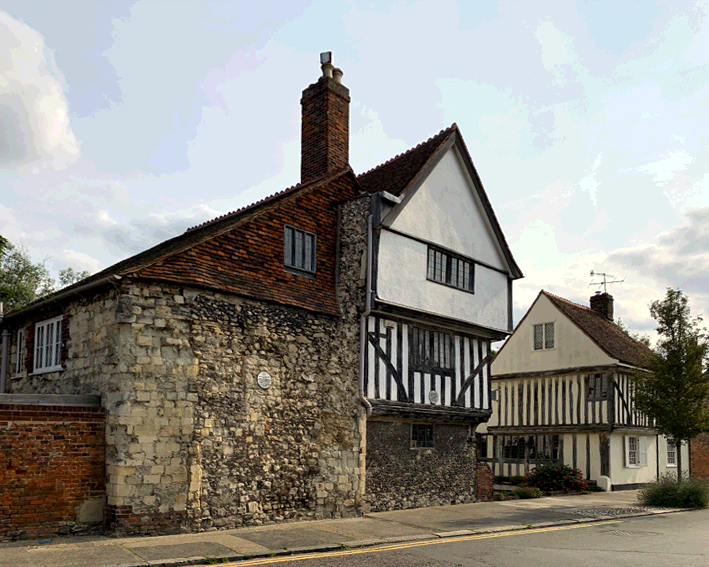 Faversham Abbey
Considering how unfamiliar Faversham Abbey is among Kentish people, it may come as a surprise that it was in its prime an imposing edifice, even longer than Rochester Cathedral. It was founded in 1148 by King Stephen, at a time of great instability when he and his wife Matilda seemed set on establishing Faversham as the new royal capital. Certainly its proximity to Dover and Canterbury was beneficial, given the imminent threat of invasion from France. When they and their eldest son died in quick succession, all three were buried at the Abbey. It didn’t survive Henry VIII, being dissolved in 1538; and, when it was demolished, their bones were irreverently tossed into Faversham Creek. The site now lies in the playing fields of Queen Elizabeth’s Grammar School. Little is left apart from two barns, now at Abbey Farm, and the guest house which in 1551 became the murder scene of ‘Arden of Faversham’.
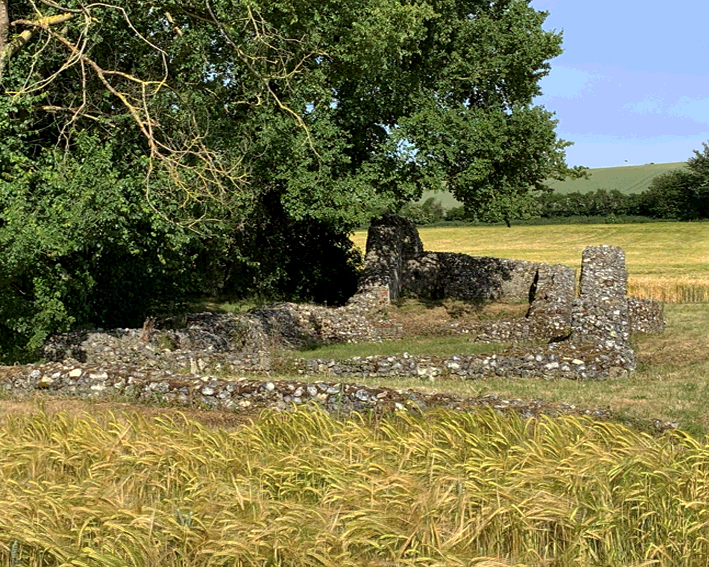 Faversham Stone Chapel
There isn’t much to see of Faversham Stone Chapel. It’s a short walk along a footpath from where the Doddington road joins the A2. Parking is difficult, and when you get to the site it’s a small patch of ruins that takes minutes to exhaust. The open fields are nice, but speeding cars interrupt the peace. This is one of those ‘been there, done that’ experiences. But that’s not to deny the site’s specialness. The scant remains of the medieval chapel known as Our Lady of Elwarton rest on top of a mausoleum from the Roman period. It’s believed to have been a mausoleum, anyway, because it had no windows and a stone for a door. The builders of the flint church commandeered it as a chancel and added a nave; but it was abandoned to the elements in the C16. The site is now cited as evidence that Faversham was the site of Durolevum.
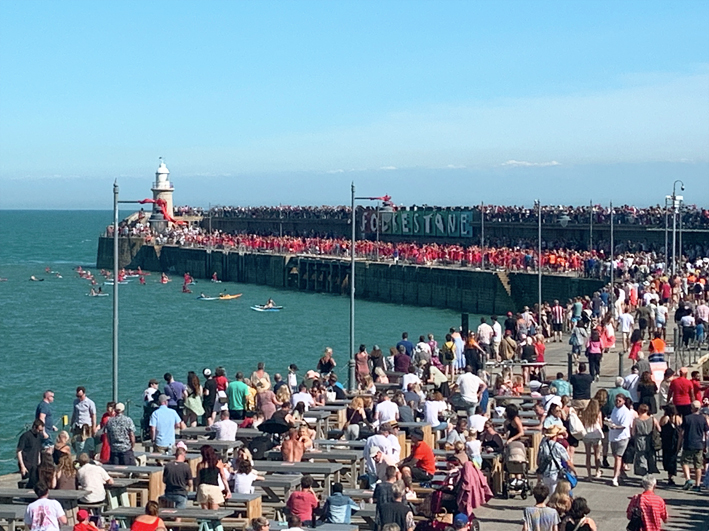 Folkestone Harbour Arm
Ever the Port of Dover’s poor relation, Folkestone was best known as a fishing village. It was always susceptible to storms and shingle, and three jetties built expensively in the early C18 were soon swept away. Finally, by an 1807 act of parliament, Thomas Telford built it a stone pier and harbour; but problems with silting went unresolved, and in 1842, already derelict, it was sold to the South Eastern Railway. So began Folkestone’s golden era, as the town became a hub of trade and tourism, as well as a vital military embarkation point in both world wars. Folkestone Harbour railway station, built in 1849, hosted cross-channel ferry services so handy that, by 1972, 1.3 million passengers and nearly a million vehicles passed through. Competition put it out of business, however, and the area rapidly declined into disuse. Eventually, in 2010, the platforms were restored, the gateway to a vibrant tourist attraction boasting excellent seafood eateries.
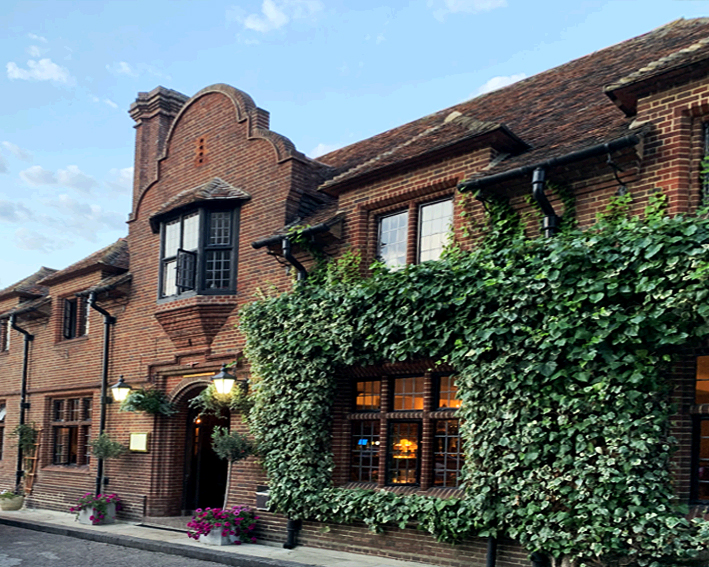 The Fordwich Arms
The local pub in Fordwich, Britain’s smallest town, was gutted by fire in the 1930s and rebuilt. By 2017, it had faded into a tired country boozer. It was acquired by chefs Dan and Natasha Smith with sommelier Guy Palmer-Brown, who ambitiously refurbished it as a gastropub. Incredibly, the restaurant acquired a Michelin star – Kent’s third – within a year. With its ingenious tasting-menu, enhanced by entertainingly knowledgeable staff and a beautiful Stour-side location, it is now something to be proud of. Although it aspires, like the Sportsman at Seasalter, to showcase local produce, it does use ingredients from far-flung corners, like Orkneys scallops and Cornish lamb. That, however, is a minor quibble, considering its top quality and value for money. As for the pub: it retains a bar serving traditional ales and, despite initial hostility from some locals, won GQ Magazine’s UK pub of the year award in 2019. The reborn Fordwich Arms has put new heart in this lovely old village town.
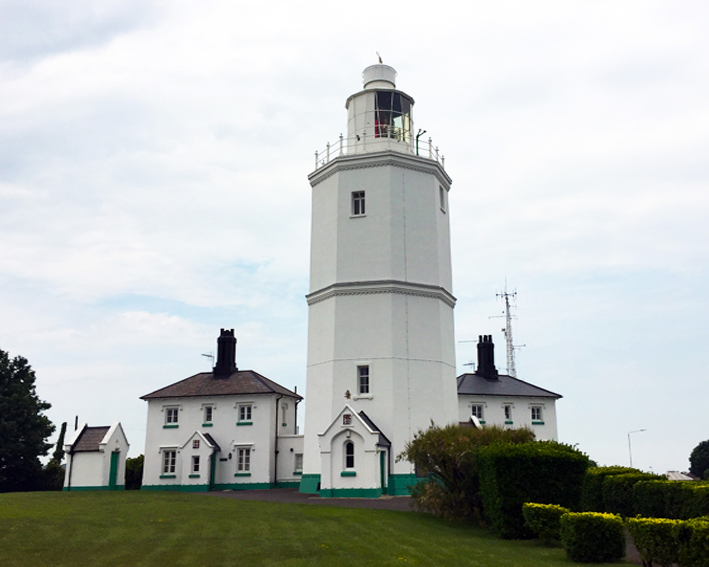 The Foreland Lighthouses
If negotiating the Dover Strait at night was hazardous, the Goodwin Sands presented even greater perils. As early as 1499, a light was erected on Thanet‘s North Foreland to warn shipping from the Thames estuary of their proximity. The bigger wooden affair that replaced it in 1636 soon burned down, but its sturdier 1691 replacement still operates. When it was automated in 1998, the Duke of Edinburgh attended a ceremony formally ending four centuries of British lighthousemen. Conversely, two South Foreland lighthouses were built at St Margaret’s Bay in 1635. One was higher up than the other, so that approaching skippers could line them up to avoid trouble. The Lower Lighthouse, decommissioned in 1904, is now privately owned. The Upper Lighthouse, however, replaced in 1843, became a historic testing-ground for pioneering experiments in electricity, telegraphy, fog-signals, and radio, and in 1922 was the first to use incandescent lighting. Having continued operating until 1988, it is now a tourist attraction.
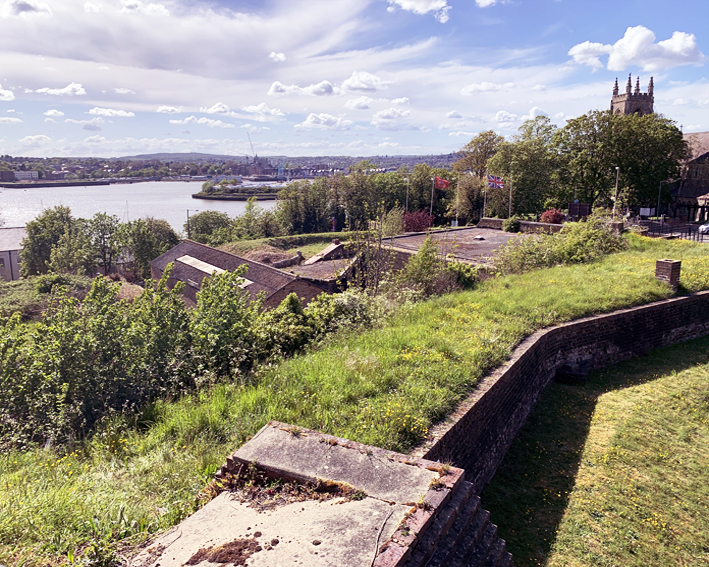 Fort Amherst
The devastating Dutch Raid on the Medway in 1667 had people saying “Never again!” Marine defences were improved; but the threat to the dockyards did not come only from that direction. If Kent were invaded and Chatham occupied, England’s own naval might could be turned against it. In 1755, a huge fortification was built along the dockyard’s exposed eastern edge. It consisted of six bastions, each named after a royal. Together with a set of ditches, they became known as the Chatham Lines. A large fort was added at either end, Fort Amherst being the southern one. Named after the prominent C18 general, it was equipped with fourteen 42-pounder guns and twenty smaller ones. The defences were never tested, even by Napoleon; yet, though formidable, they were rendered obsolete by 1820. The fort is now a free-admission tourist attraction. It offers paid-for events targeted at schoolchildren. A tunnel tour is interesting, and the view from the top is neat.
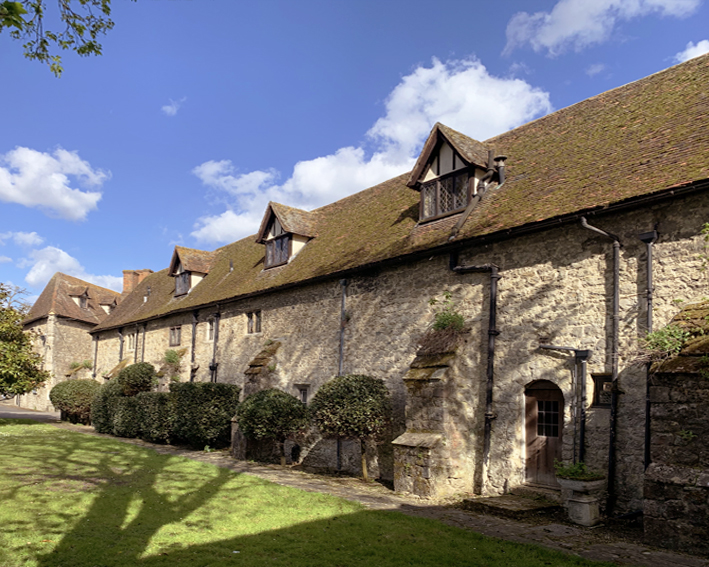
The Friars
Aylesford Priory, familiarly known as The Friars, is a rare example of a monastic establishment that survived the Dissolution of the Monasteries. Its site by the River Medway was originally occupied by the manor house of crusader Richard de Grey, who in 1242 gifted land there for the first Carmelite monastery in England. It was sequestrated by Henry VIII in 1538, but instead of being destroyed was recycled as among other things a fine private residence. Much of it was restored after a fire in 1930; and, when it came up for sale in 1949, the Carmelite order bought it back. The site is remarkably attractive, extensive, and well maintained, as well as free to visit. Since a central tenet of the Carmelites is contemplation, The Friars appropriately offers both a ‘Peace Garden’ and a ‘Rosary Way’ in which the Stations of the Cross have been sympathetically rendered in ceramics by Polish artist Adam Kossowski.
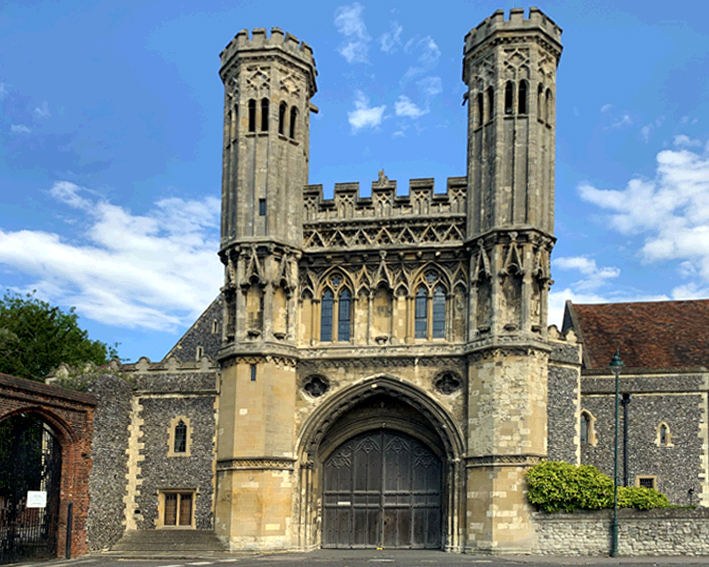 Fyndon Gate
The scale of the ruins alone gives an idea of what a mighty edifice St Augustine’s Abbey must have been. For its splendour, however, we have to take our guide from one slender relic: its ornate former main entrance, now usually called the Fyndon Gate. Named after the Abbot who built it around 1300, this battlemented stone gate just off Broad Street is now part of the King’s School. A visit entails passing through Lady Wotton’s Green, home to one of Canterbury’s loveliest draws: a spot in the garden where one can see a statue of Queen Bertha against the backdrop of the Gate and, in the opposite direction, King Aethelberht with the Cathedral tower over his shoulder. Many who are familiar with Fyndon Gate are unaware that, along Monastery Street, it has a companion called the Cemetery Gate. Just walking the short distance between them gives an impression of the sheer size of the Abbey site.
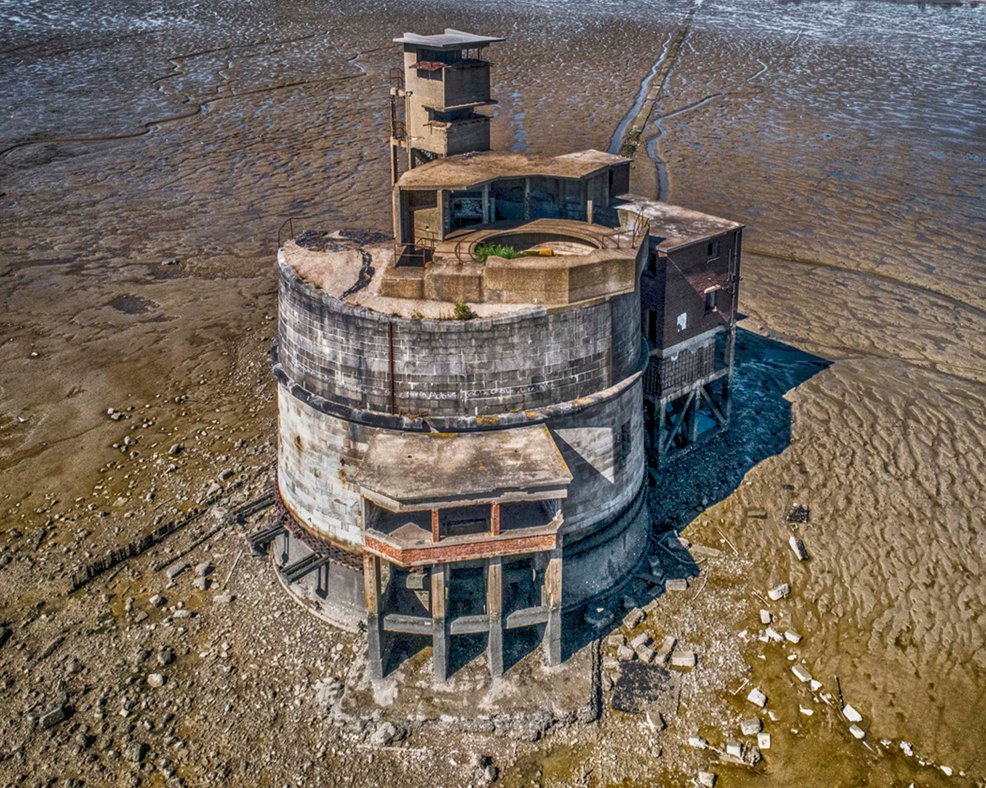 Grain Tower
At the end of a causeway a quarter-mile off Isle of Grain beach stands another memento of the ‘once bitten, twice shy’ philosophy that governed British military thinking after the devastating Dutch Raid on the Medway of 1667. In 1848, 33 years after the defeat of Napoleon, France was again in the throes of the sort of revolutionary fervour that is liable to spill overseas. To defend the Kentish dockyards, the Tower was erected opposite the Garrison Point battery at Sheerness, providing crossfire at the point where Medway meets Thames. It was designed on the same lines as a Martello tower, incorporating living quarters. In the event it was not needed and, despite its high cost, was soon superseded by an onshore battery, albeit that it was later upgraded for use in both world wars. Since then it has been left to deteriorate badly, and now looks quite forlorn. It was bought privately in 2014 for around £400,000.
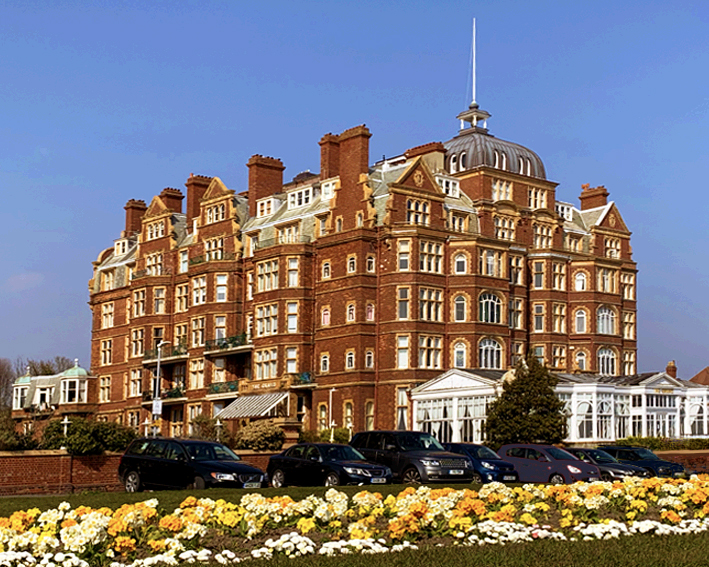 The Grand Hotel
When the Metropole Hotel was opened in 1897 in a secluded position overlooking the sea, at the Sandgate end of the Leas in Folkestone, its owners must have been overjoyed. They reckoned however without Daniel Baker, the builder who’d been snubbed for the construction work. He threw himself into a project to erect an even smarter edifice right next door. His pioneering techniques included cavity wall insulation and suspended ceilings. While the Metropole got embroiled in disputes with the community, the Grand Mansions emerged as the desirable residential block for gentlemen. After converting to hotel status in 1903, it became the fashionable haunt of King Edward VII and his mistress. Later, Agatha Christie wrote ‘Murder on the Orient Express’ there. The hotel was badly damaged by German shelling in WW2, and in 1975 came close to being demolished by foreign owners who wanted to build flats. It was saved by a local man, but closed in 2021.
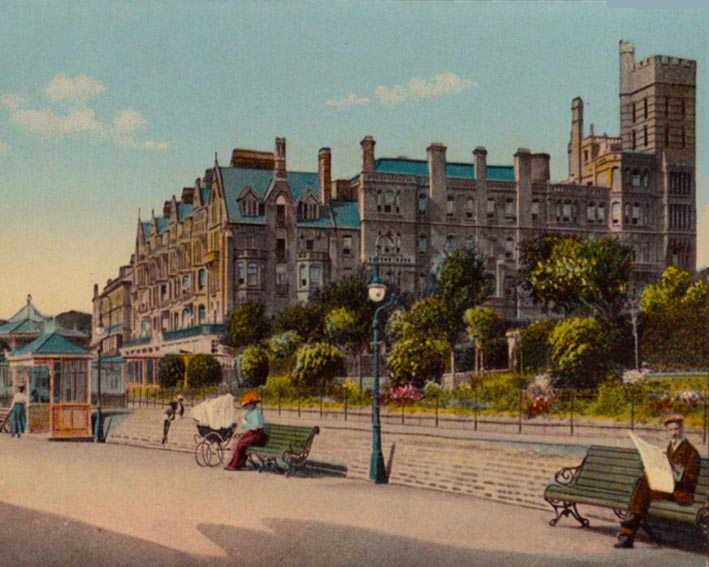 The Granville
In the 1860s, when Thanet was a highly desirable holiday destination, a partnership had the idea of building a row of eight high-class residences along the seafront just north-east of Ramsgate harbour. Though the architect, Augustus Pugin’s son Edward, delivered a suitably striking five-storey façade, the original concept soon yielded to a new plan to merge them into a spa hotel, which they named ‘The Granville’ after the then Lord Warden of the Cinque Ports. Despite its 25 types of bath, ornate interiors, magnificent view over the sea, and special rail services, there was a perennial problem with occupancy, and so profitability. Having served as a hospital in WW1, the hotel was bombed in WW2, and in 1947 rediscovered its original purpose when it was divided into apartments. Today, ‘Granville House’ still gives a striking impression of Victorian grandeur, filling an entire block on Victoria Parade between Victoria Road and D’Este Road.
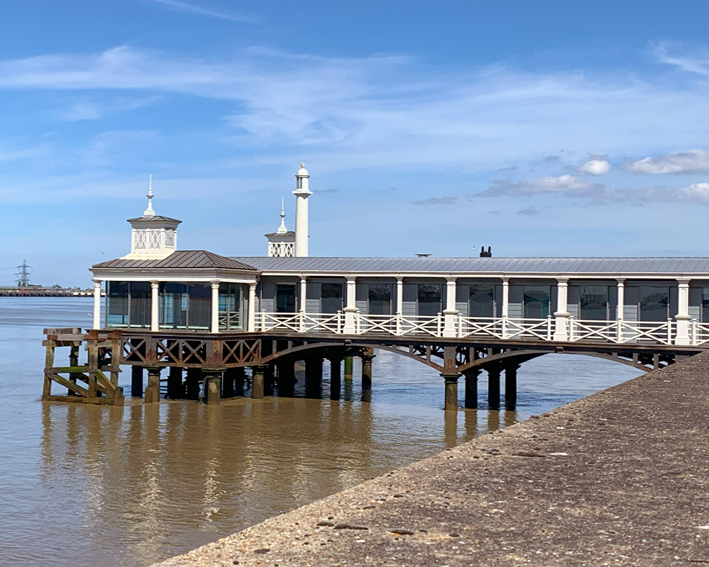 Gravesend Town Pier
Before the railways got into their stride in the second half of the C19, Gravesend was a hive of activity for boatsmen and seamen, whether fishing for shrimp or other seafood, ferrying passengers across the Thames to Essex, or running steam-packets to London. The quay was replaced in 1834 by a major upgrade, a new cast-iron affair built by a local man, William Wood, that is now the oldest in existence. In its first few years, it handled the best part of half a million passengers annually, but was already disused by the C20, such was the impact of the SER’s North Kent Line. Gravesham Borough Council used outside investment to revive it in 2000, but the bar-restaurant set up there struggled, and the Gravesend-Tilbury ferry operated from it by Jetstream closed in 2024. The pier, which is listed, was acquired in 2022 by Thames Clippers, which now runs occasional trips to Greenwich peninsula.
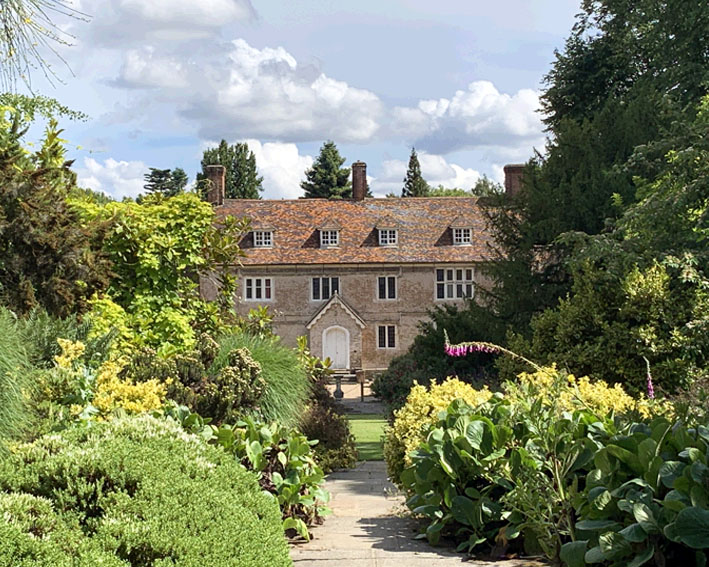 Great Comp Garden
In a county so richly endowed with splendid gardens, it is surprising to find so few in the Maidstone area. An oasis is provided by Great Comp Garden near Wrotham. The C17 manor house is named after the local hamlet, Comp, which in turn derives from the Latin for ‘field’. The gardens were installed from 1957 by owners Roderick and Joyce Cameron, who expanded and developed them for three decades. They have nothing of the size and grandeur of Hever or Sissinghurst, and feel more like an amateur affair. This is both a weakness and a strength. Some of Great Comp’s features, like the imitation ruins, are frankly tacky; but others, such as the Italianate garden, do enhance the colourful displays of blooms. It’s a matter of expectations. If one goes there as if visiting old friends, rather than inspecting a National Trust property, one is liable to come away thinking what a good job they’ve done.
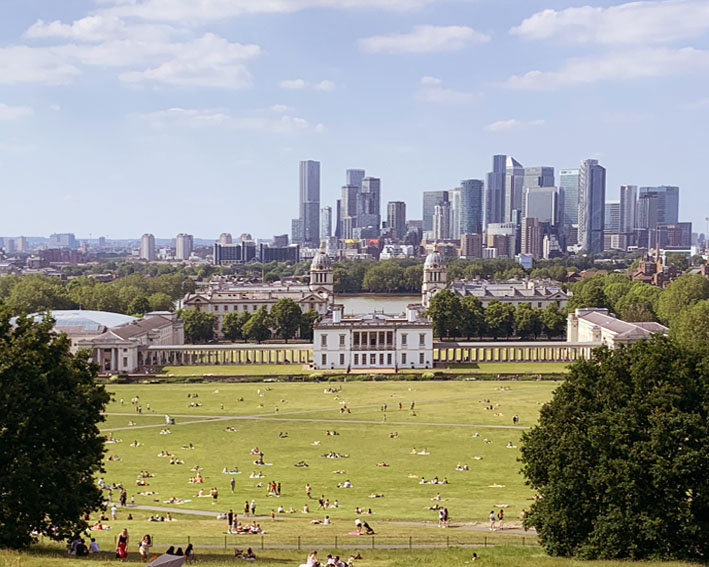 Greenwich Park
Of all that Kent lost to London in 1889, the bitterest pill was Greenwich. Steeped in history, the town had at its core the 200-acre Greenwich Park, which still today is one of the finest recreational areas in the South-East. It started as the property of the Abbey of St Peter in Ghent, but passed to Henry VI as a vast hunting estate. After his move south, King James I had the park enclosed in a wall 12 feet high that still delineates much of it today. It wasn’t until the C18 that it first became open to the public. Now a Royal Park, it provides superb views across to Canary Wharf. The one great building within it is the Royal Observatory, but it is also flanked by the National Maritime Museum and Queen’s House to the north, Vanbrugh Castle to the east, and Blackheath to the south. Unsurprisingly, the area is a World Heritage Site.
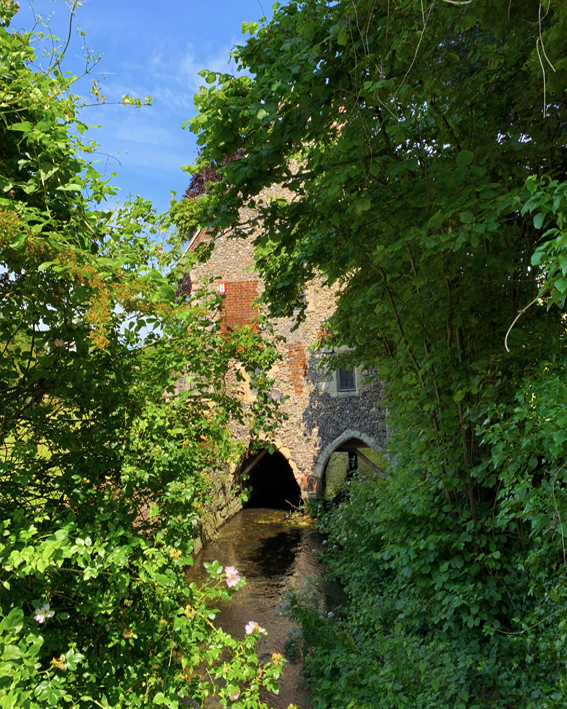 Greyfriars Chapel & Gardens
The tranquillity of Greyfriars is so cunningly concealed in the heart of Canterbury, just steps away from High Street, that few visitors realise it is there. Reached by a bridge over the Stour, it is an oasis of rustic calm. Part of the site is Binnewith Island, of which half is privately owned; but the rest is taken up by meadows and lawns that can be visited any day of the week. There one has a remote view of the Cathedral, whose throngs of visitors seem a world away in the silence. The area was once occupied by the large Greyfriars Priory, which survived around 250 years until the monasteries were dissolved. All that remains, sitting astride a stream, is the Greyfriars Chapel, whose stark interior is suggestive of quiet piety stripped of ornament. Though the Chapel’s visiting hours are limited to afternoons, excluding Sundays, it’s a pity not to drop in for some quiet contemplation.
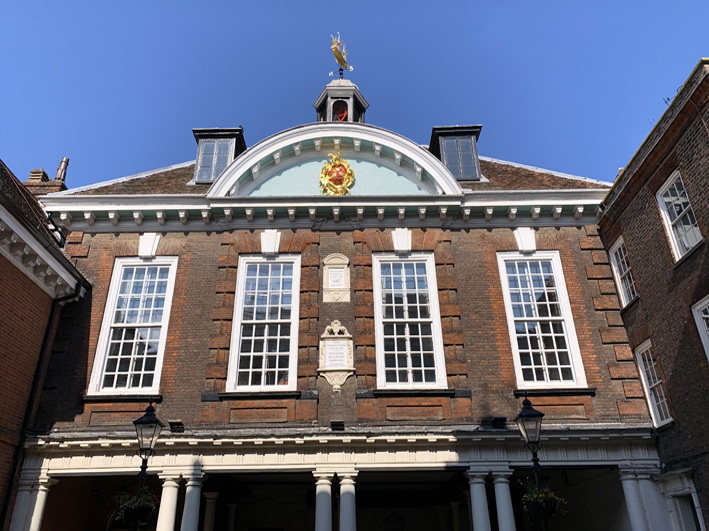 Guildhall Museum
Rochester’s Guildhall Museum fails every test of a modern municipal museum. It is housed in a Grade 1 listed building that no one has troubled to improve with a C20 makeover. Its interior still displays original murals and frescoes unobscured by vibrant posters, banners, and audio-visual presentations. Its displays altogether fail to provide the enhanced accessibility afforded by pitching everything to the minds of 10-year-olds. And the messaging does not concern itself with global issues but with the history and culture of the Medway region. In short, this Museum will appeal to no one but local residents, county history enthusiasts, visitors from the rest of Britain, and international tourists wanting to entertain themselves by learning about the rich nitty-gritty history of Rochester. The perpetrators will be no doubt be dealt with in due course. Meanwhile, those wanting to witness this spectacle for themselves are advised to pay a visit as soon as possible.
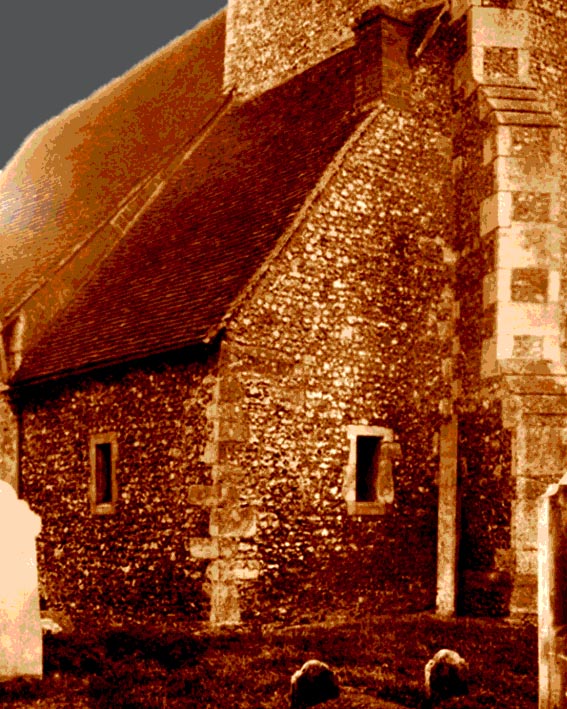 The Hartlip anchorhold
A medieval ‘anchorhold’ is etymologically unconnected with an ‘anchor’, the latter being derived from the Greek for ‘hook’, and the former from ‘withdraw’. It was in fact the residence of an anchorite, or much more likely anchoress, who by her own volition was sealed in a chamber sometimes as small as 8 feet square. Offering no hope of release, this extreme hermitism was purportedly a spur to spiritual enlightenment. Although anchorholds can be found scattered all around the country, Hartlip boasted an especially bijou one, attached to St Michael & All Angels. Anchorholds usually had three small openings, for shedding light, receiving food, and dispensing wisdom. The occupant needed a servant to provide comestibles and remove waste products, but otherwise could be entirely self-absorbed. With no need to acquire useful skills, no obligations to fellow citizens, and only a requirement for rigid piety, the anchorite lifestyle would have been perfect for the C21. Anchorholds are surely due a comeback.
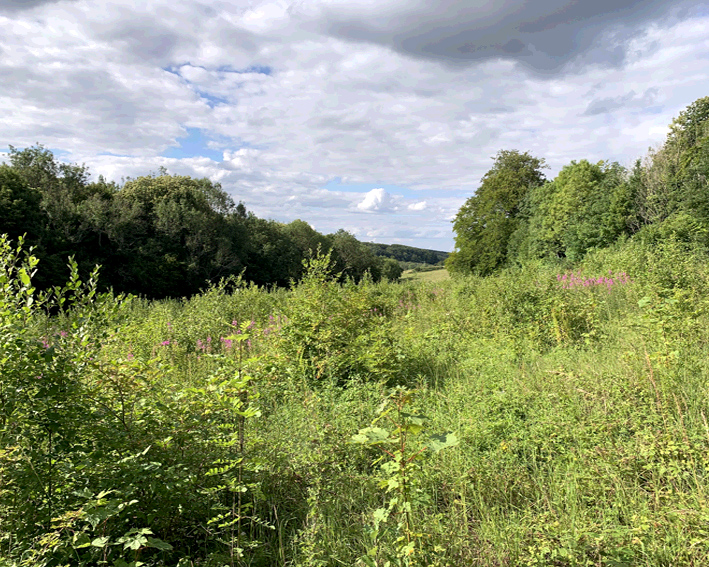 Holly Hill Wood
The area east of Harvel feels as remote as can be imagined in the centre of Kent. A wonderful place to explore by foot is the area surrounding Holly Hill. It contains a sight that, once seen, is never forgotten. It can be taken in easily by driving to the car park on Holly Hill road and climbing a short distance up the steps. However, a more dramatic experience is to be had by delaying gratification. Try walking north-east past Holly Hill House and through Hanginghill Wood, turning north-west to Great Buckland, heading back south down Wrangling Lane past Dode Church, and finally climbing up through Holly Hill Wood. After an hour taking in peaceful lanes, scenic meadows, winding tracks, and sumptuous woods, hikers emerge at the trig point at the top of Holly Hill to see something extraordinary – something that deserves to remain a surprise. Suffice it to say that you can see for miles, and miles, and miles.
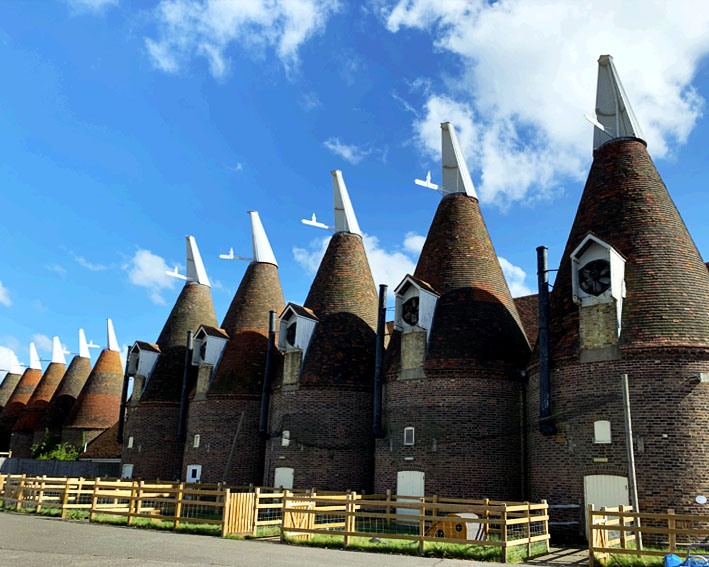 The Hop Farm
How do you solve a problem like the Hop Farm? It was once the high temple of the hop industry, its 30-odd kilns dominating the skyline like a picturesque Kentish riposte to the Drax power-station. All was fine until it stopped operating in the 1980s. It subsequently offered visits to exhibits concerning hop-drying, shire horses, and the like, alongside occasional family events. In the 1990s, however, owners Whitbread decided to pull out of brewing. Soon, having seldom changed hands in its 450 years, the Hop Farm became a hot potato. Successive owners struggled to find a winning formula, and the offering varied bewilderingly. Annual events like ‘War & Peace’ still draw big crowds, but tend to come and go; the Music Festival looked a winner for five years, but one poor season scuppered it. The Farm is now marketed as a Family Park whose £3 admission draws weekenders in, though in truth without satisfying everyone that it’s worth it.
 Hornby
Airfix, Corgi, Humbrol, Meccano, and Scalextric are names to stir men of a certain age. What unites them is another famous old name, Margate-based Hornby, which now owns them all. The story starts in 1901, when Frank Hornby of Liverpool invented the Meccano kit that got millions of boys dreaming of becoming engineers. In 1920, he launched the Hornby clockwork train, followed in 1938 by the famous Hornby Dublo (OO-scale) model railway. The company’s headquarters moved in 1954 to Thanet; but, ten years later, the business was purchased by Lines Bros, which merged Hornby with its rival, Tri-ang, before going bankrupt in 1971. New owner Dunbee-Combex-Marx relaunched it as Hornby Railways, and in the 2000’s added other strategic acquisitions in the ‘heritage’ toy market. The company left Margate for Sandwich in 2014, but was brought back in 2019 by another new owner, PAM. Its site off Ramsgate Road boasts a Visitor Centre, where happy memories come flooding back.
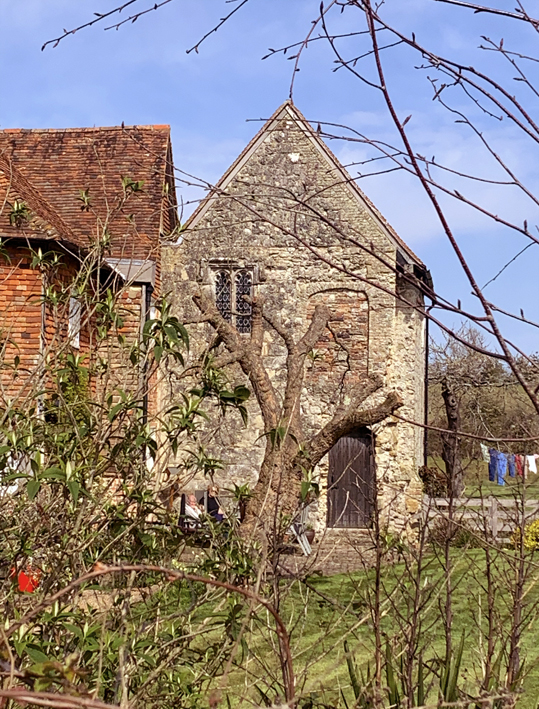 Horne’s Place Chapel
To be honest, a trip to Horne’s Place north of Appledore doesn’t yield a lot to do. The house itself, a private residence, is unavailable to visit. Built in the C13, it was granted to Ralph de Horne in 1276 by Edward I. The de Hornes remained a prominent family for 200 years, providing two Sheriffs of Kent, but returned to Kenardington in the C15. Their house is worth seeing for its interesting construction; but more significant is its adjacent chapel. This was built as a private affair to save the de Hornes having to travel to Appledore church. That they were allowed to do so says much about the family’s status; the Archbishop of Canterbury himself licensed it for worship in 1366. By the C19, however, it ended up being used as a barn. Small but perfectly formed, the chapel is now fully restored and available to visit free of charge as an English Heritage property.
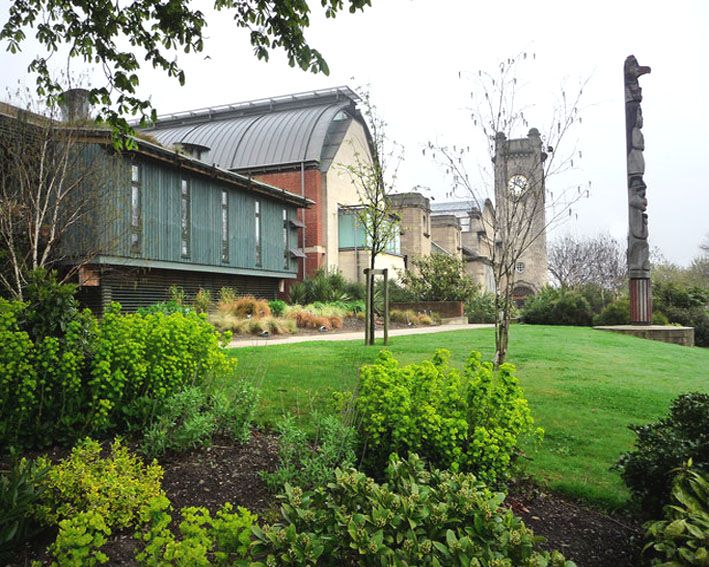 The Horniman Collection
The Horniman’s Tea business built by the Quaker John Horniman in the Isle of Wight was said in the late C19 to be the world’s largest. His son Frederick (1835-1906) devoted himself to building a vast collection of objects from around the world, to be preserved and used for educational purposes. They came from as far afield as Canada and China, and embraced everything from musical instruments to stuffed animals. So much demand did they make on space in the family home that his wife eventually obliged him to make other arrangements. The family moved to Forest Hill, where in 1890 the collection was made available for public viewing as the Surrey House Museum. In 1901, it was moved to a purpose-built building nearby, which Liberal MP Horniman left to the new London County Council, of which he was a member. This ‘Horniman Museum’ now houses over a third of a million items, and includes gardens and an aquarium.
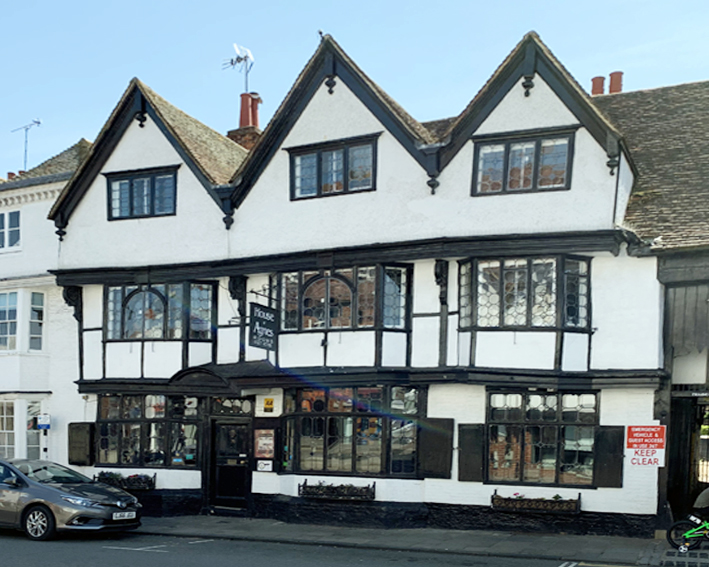 The House of Agnes
The House of Agnes in Canterbury got its name from a Dickensian character: Agnes Wickfield, second wife of David Copperfield, who supposedly lived there. The House, thought to date from the C15, stands just outside Westgate. It’s on the site of a former Roman kiln in St Dunstans Street, down which Chaucer’s fictional pilgrims would have proceeded, and is worth a look and a photograph for its authentic olde-world charm. Despite modernisation, its interior retains much of its medieval flavour, with dark timbers and brickwork that make one wonder what the builders were drinking. That is not to say that it is unsightly. The current owner, a former hotel inspector, has done it out as a series of nattily themed rooms, each named after a world city – Mumbai, Tokyo, Marrakesh, etc – and styled appropriately. Members of the public can get to see one close up by booking bed and breakfast.
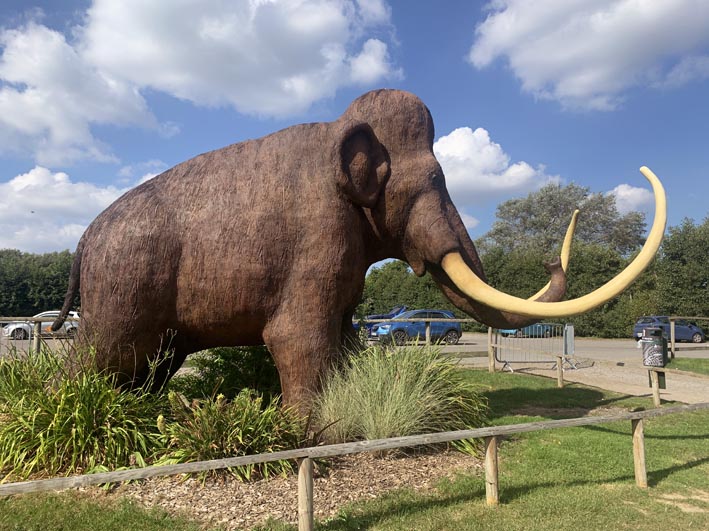 Howletts Wildlife Park
John Aspinall had two passions: gambling, and wild animals. He indulged the first with his own casino in Mayfair, and the second with the private zoo he started at Howletts House, Bekesbourne, in 1957. The latter was largely funded by the former; but, after the Lord Lucan affair, ‘Aspers’ opened it up to the public. It was never a conventional zoo, insofar as staff were encouraged to form close bonds with the animals. This had some negative consequences, particularly when no fewer than three keepers were killed by Siberian tigers. Aspinall took his respect for the animals as far as providing habitats so authentic that visitors occasionally had to work to see anything, as if in the wild. Then, when activists decided that zoos were unacceptable, Aspinall did not slaughter or dispose of the animals. Instead he morphed the zoo into ‘Howletts Wild Animal Park’, with an emphasis on conservation and reintroduction that satisfied nearly everybody.
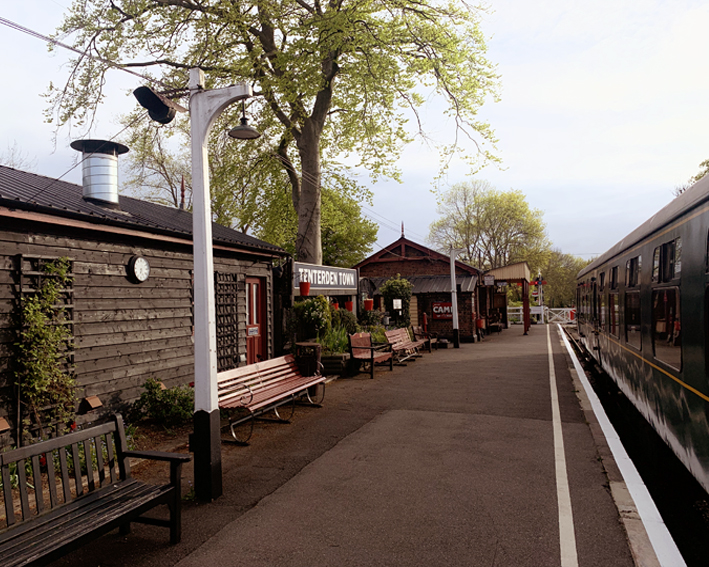 Kent & East Sussex Railway
The original Kent & East Sussex Railway was a commercial line opened in 1900 for both passengers and freight, running about 22 miles from Headcorn to Robertsbridge. It came about after a number of failed attempts to connect Tenterden with the Tonbridge-Ashford and Ashford-Hastings lines that bypassed it. A local action group pushed through the Robertsbridge line under the 1896 Light Railways Act, and it was constructed under the direction of the legendary Colonel HF Stephens. It stopped taking passengers in 1954, and closed altogether in 1961. A few years later, a section was reopened as a heritage railway. Accounting for nearly half the original length (10 miles), it runs from its headquarters at Tenterden across the border to Bodiam, reviving the nostalgic sight of steam trains sending up a plume of smoke over the Weald. Much of its appeal is to the ‘Thomas the Tank Engine’ age group, but it does still offer events interesting to grown-ups.
 Kent Battle of Britain Museum
Hawkinge was a spiffing choice of site for the Kent Battle of Britain Museum. Not only was RAF Hawkinge Britain’s most forward base in the Battle of Britain, but the Museum is also handily placed for combining a visit with the Battle of Britain Memorial at Capel-le-Ferne. Whereas the Memorial is a moving experience, the Museum is a feast for anyone wanting to get an in-depth knowledge of what it was all about. Outdoors you can get close up with four RAF aircraft, resplendent in their camouflage; but it’s inside that, rain or shine, a tremendous collection of exhibits is spread about, from photographs to machine-gun shell casings. There are also numerous other planes, including several Luftwaffe ones. The one slight disappointment is that, unusually for museums, photography is not allowed, ostensibly for security reasons. However, a visit does bring back to life Britain’s “finest hour”, already 80-odd years into the past.
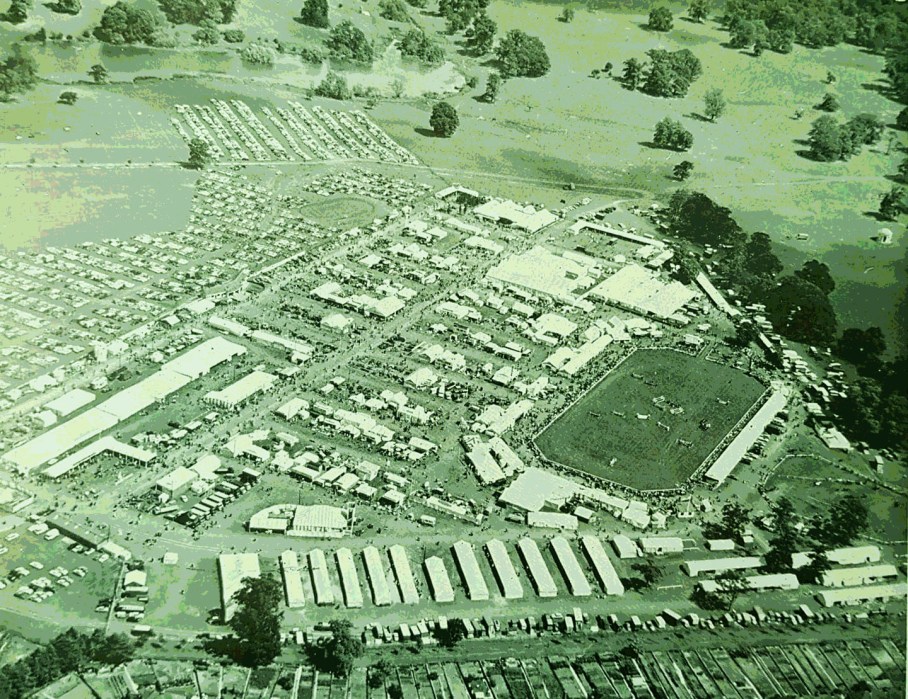 Kent County Show
The Kent County Show’s origins lie in the 1923 merger of the East and Mid Kent Agricultural Societies. The new combined society held its first Kent County Agricultural Show at Gravesend. It was primarily a competition for prize livestock – cows, pigs, sheep, horses – with some musical and sporting entertainment thrown in. It lost money; and so began an odyssey that took in Ashford, Sevenoaks, and Canterbury. After WW2, it returned for 16 years to Mote Park in Maidstone, until eventually in 1964 a permanent home was acquired at Detling. Whilst retaining a strong agricultural component, including horticulture, the event has increasingly become a big day out for families, embracing all kinds of events such as military displays that give it the flavour of a fair. Though not cheap, it’s an attractive enough package to draw around 100,000 every July. The show has been attended by several royal personages, including the Queen, and counts Winston Churchill among former prize-winners.
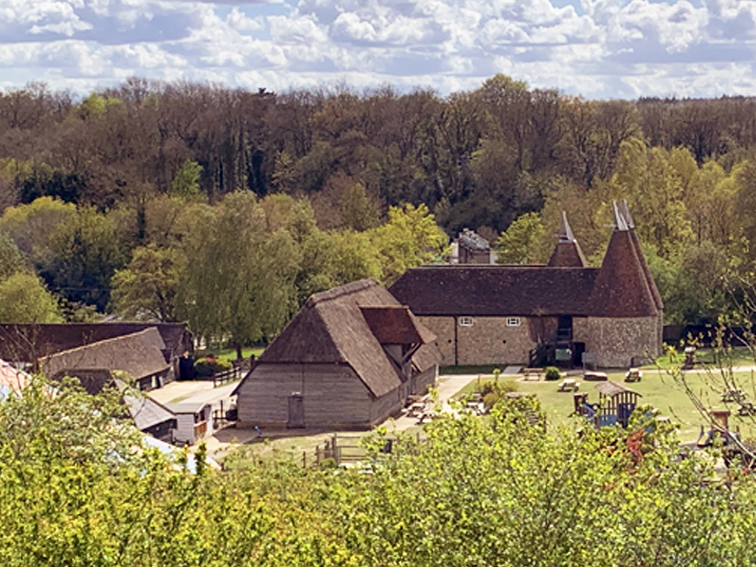 Kent Life
In 1934, the 12-times Mayor of Maidstone, Sir Garrard Tyrwhitt-Drake, began allowing the public in to see his collection of wild animals at Cobtree Manor estate, north of Maidstone. He closed ‘Maidstone Zoo’ in 1959, but some years later left the whole estate to the Borough Council. It was decided in 1984 that part of it, Sandling Farm, would be designated the ‘Museum of Kent Life’, preserving an extraordinary collection of its agricultural buildings in addition to others imported from around Kent. Despite being adjacent to Cobtree Manor Park with its large children’s playground, the park is now rebranded the Kent Life Heritage Farm Park with the lucrative family audience in mind, and marketed primarily as a child attraction. Nevertheless, its several traditional buildings, which include a Burham farmhouse, Lenham cottages, Cuxton’s chapel, and Ulcombe’s village hall, can still be explored inside and out, upstairs and down, providing an evocative souvenir of old Kent.
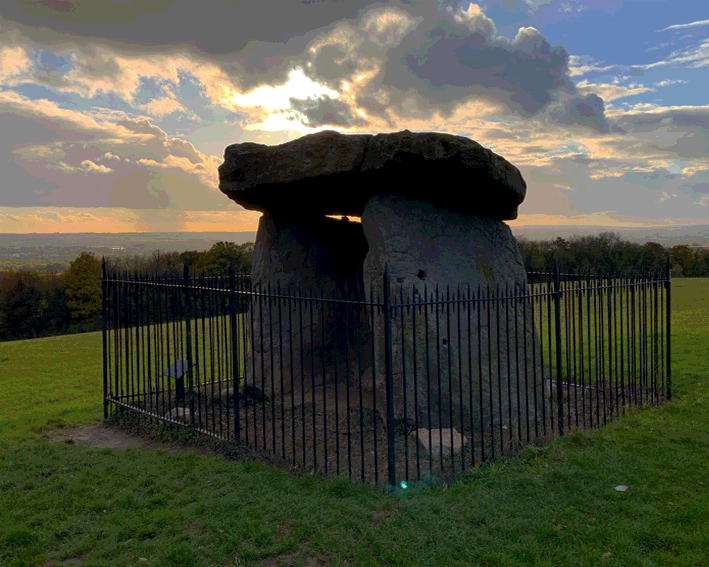 Kit’s Coty House
One can only wonder how many people have turned up at Kit’s Coty House expecting to see a Kentish counterpart to Anne Hathaway‘s Cottage, but found themselves in a remote field with only some megaliths for company. Kit’s Coty House is the remains of a long barrow – a mass grave – said to be over 5,000 years old. Such dolmens are commonplace in the West Country, but so rare in the East that you might think it’s a folly. However, other neolithic sites also north-east of Aylesford testify to its authenticity. Various suggestions have been made to account for its name, though none seems better than guesswork. It’s free to visit both Kit’s Coty and its companion nearby, Little Kit’s Coty House, but not as affecting as it would be if the stones weren’t surrounded by unsightly railings. There’s no harm in visiting when the weather is bad and the elements lend the experience some stone-age atmosphere.
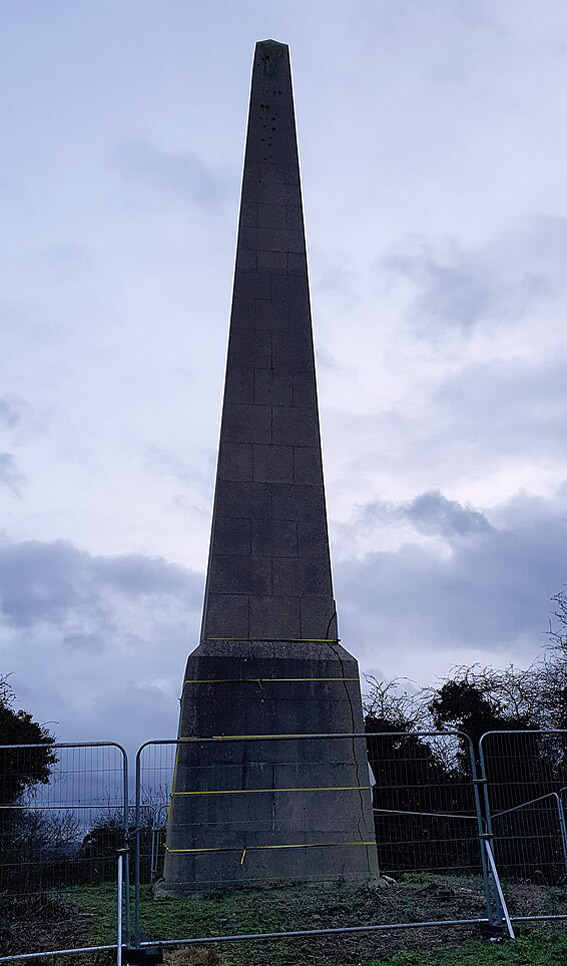 The Larkin Monument
After the French Revolution achieved nothing but millions of deaths, the British upheaval that followed it was much more progressive, even though (or because) it was written in ink, not blood. The Reform Bill 1832 proposed seismic Whiggish changes, including the ending of rotten boroughs and creation of borough constituencies previously represented only by county MPs. It also extended the vote to all owners of property above a certain basic value, a step towards universal suffrage. In the face of fierce Tory resistance, it was carried in Parliament, thanks in part to the strenuous efforts of Rochester auctioneer Charles Larkin (1775-1833), who died soon afterwards. Highly regarded locally, he was given a huge funeral before being buried at Gillingham, and subscriptions were raised for a memorial at Higham. It was made of cheap concrete, however, and more than once has crumbled away and needed to be rebuilt – a gift to satirists.
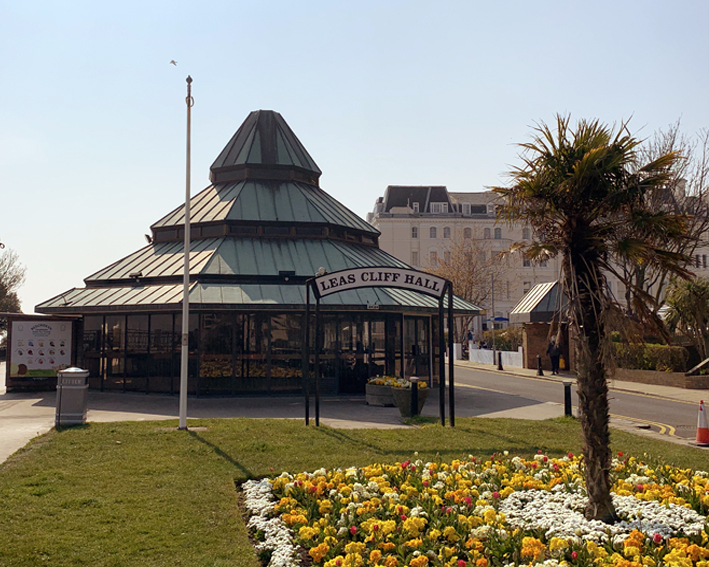 Leas Cliff Hall
Folkestone’s Leas Cliff Hall claims to be the No. 1 concert venue in Kent, despite Margate’s Winter Gardens enjoying seniority in both age and capacity. Nevertheless, it has some advantages, not least its location just off the M20. Built in 1927, it sits on the clifftop near the centre of town. It is a plain rectangular box that would be inconspicuous but for the unmistakable pagoda-shaped box office, added in 1980, that can easily be spotted from some distance away along the Leas. The auditorium, down a grand staircase, is rather broader than it is deep, which can restrict the view of the stage. The Hall did in fact serve as a dance-hall throughout WW2, and still today the seating can be removed. Its idiosyncrasies have been no bar to the variety of entertainment it provides; nor the quality, not least in pop music. Previous performers it has hosted include the Rolling Stones, T. Rex, and Stereophonics.
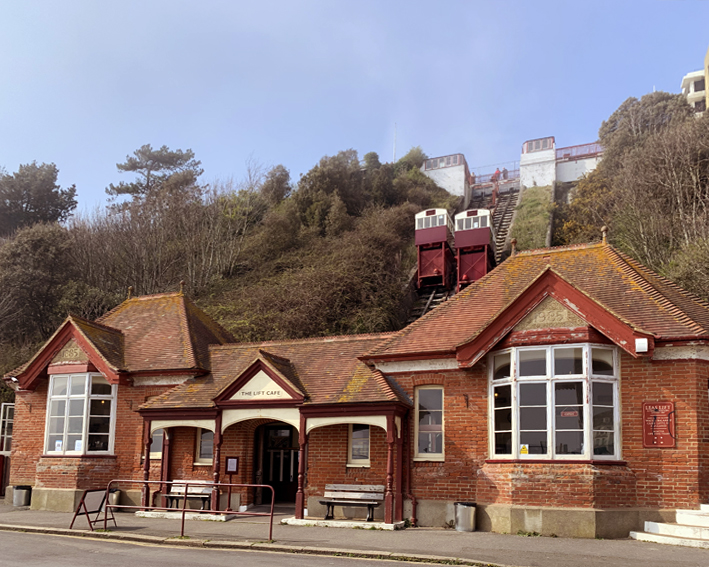 Leas Lift
To be honest, the Leas Lift will not be on anyone’s bucket list. It’s a simple funicular railway devised for getting the public down from the Leas to the beach. The view is nothing special, and the journey too short to be worth mentioning. Nevertheless, it’s a must-do experience on the same basis that, if you go to Blackpool without seeing the Tower, you haven’t really been there. The lift was built in 1885 at a time when the Folkestone seafront was becoming a major draw for holidaymakers. It has subsequently carried over 36 million passengers. For a decade it has been beset by problems, as issues with restoration and maintenance have mounted, and with them the attendant costs. While efforts continue to raise the funds, the two carriages remain symbolically parked next to each other halfway up the cliff. It might be a good idea to take a look while you still can.
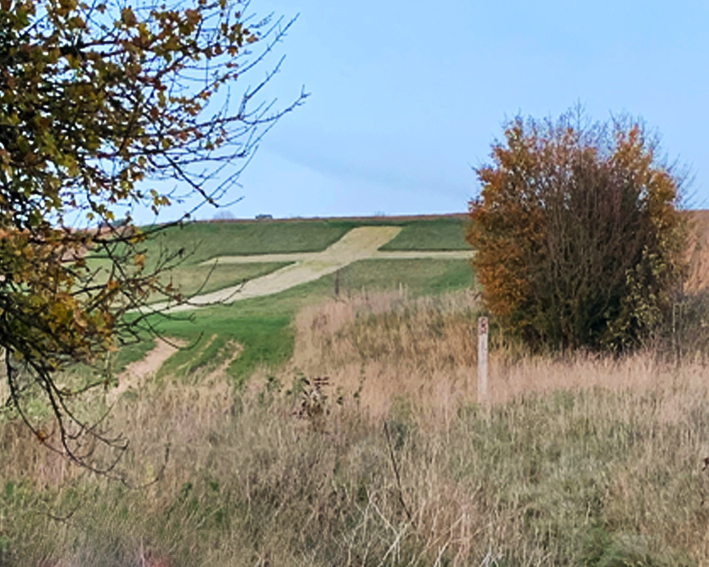 Lenham Cross
There are multiple misconceptions about the conspicuous white chalk cross on the North Downs above the A20 at Lenham. Some imagine that it was meant to warn WW2 German bombers of the proximity of a hospital. Others believe it is associated with the military cemetery just north of the village. Yet others assume it commemorates the flying-bomb disaster at an army camp on Charing Heath in 1944. Its origin was in fact much simpler, and older. It was designed by headmaster CH Groom and cut by villagers in 1922 as a tribute to the village’s WW1 war dead. There was originally also a memorial at the site, but this was removed to Lenham church so that visitors would be able to inspect it more easily. The Cross itself was covered with earth during WW2 so that it wouldn’t serve as a navigational aid to the Luftwaffe. It was promptly uncovered in May 1945, and remains highly visible today.
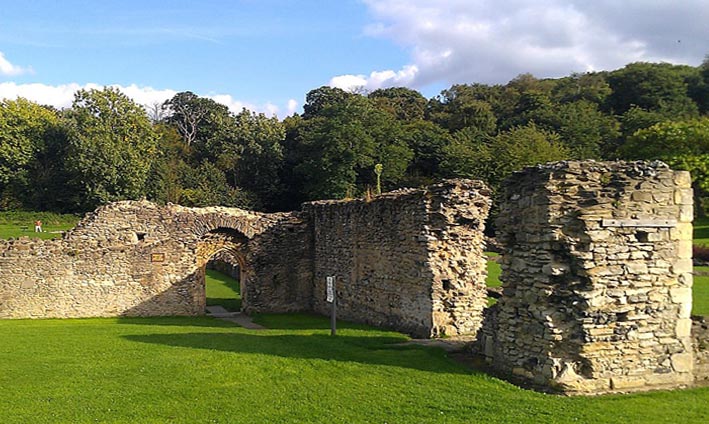 Lesnes Abbey
The town of Abbey Wood got its name from Lesnes Abbey, whose ruins lie alongside the eponymous wood. The land, like much in Kent, was owned after the Norman Conquest by Bishop Odo, and is listed in the Domesday Book as Loisnes. The Abbey was built in 1178 by Richard de Lucy, who as one of Henry II’s chief lawmakers had twice been excommunicated by Thomas Becket, a key factor in the latter’s murder; the presumably penitent Lucy died and was buried there shortly afterwards. Financially responsible for draining a nearby marsh, Lesnes Abbey was chronically impoverished, and Cardinal Wolsey closed it in 1524 because of its dearth of occupants. Among the first monasteries to be dissolved by Henry VIII in 1534, it was subsequently plundered for building materials, some of which were supposedly used for Bexley’s Hall Place. The protected site is nevertheless well worth visiting, the extensive ruins being well complemented by the adjacent nature reserve.
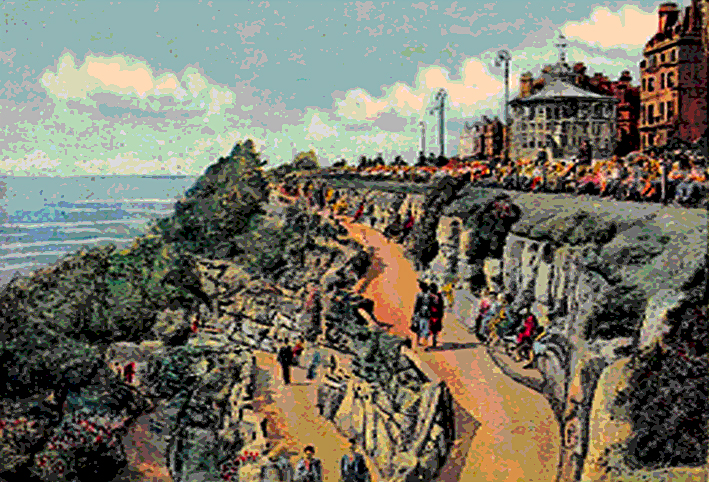 Lower Leas Coastal Park
While the Warren offers a slice of raw nature by the coast just east of Folkestone, the Lower Leas Coastal Park to its west is a more manicured but no less interesting counterpart. A toll road was built from Folkestone to Sandgate in 1828 on land made available by a huge landslip 44 years earlier. The land on either side was cultivated, and paths added in 1877. The Leas Lift provided easy access from above in 1885. This was complemented from 1921 by the famous Zig Zag path, constructed from Pulhamite, which today enables the least strenuous descent of Folkestone’s cliffs, now that the Leas Lift is out of action. A major renovation in the early C21 brought with it the designation Coastal Park. It offers three zones: a relatively untamed natural area on its western flank, formal gardens to its east, and an entertainment zone between, crowned by the “amphitheatre” – actually a Greek-style theatre.
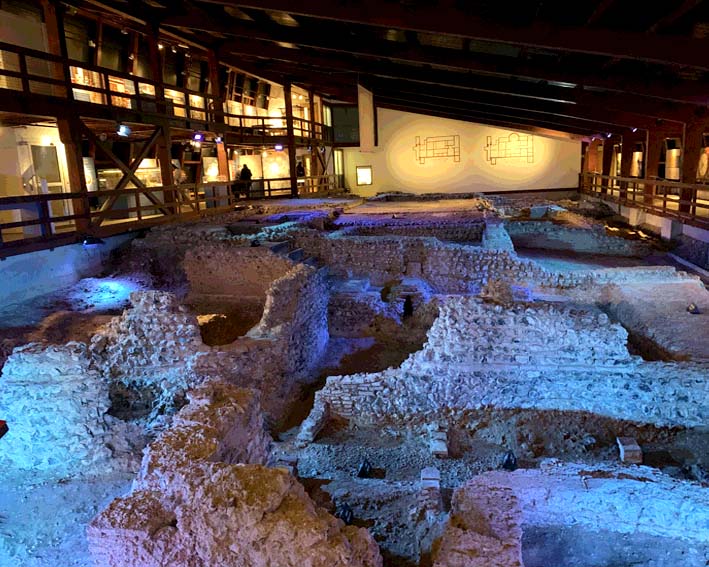 Lullingstone Roman Villa
Visiting almost any Roman site in Britain is like seeing a dog walk on its hind legs: it’s not that great, but you’re surprised to see it at all. The Roman villa at Lullingstone, built in the C1, is pitiful alongside, say, the Villa Romana del Casale in Sicily, particularly when you consider that the major upgrade it underwent around AD 150 was probably for the benefit of the Governor of Britannia. Even so, it’s up there amongst the best of Roman British archaeology, with a couple of decent mosaics, an extensive bath block, and the first Christian painting found in Britain. Two marble busts were also found in the basement; one of them perhaps portrays the future Emperor Pertinax, who very likely stayed and may have lived there. The Villa burnt down in the C5, when the Roman Empire was imploding. It is open to the public as an English Heritage site.
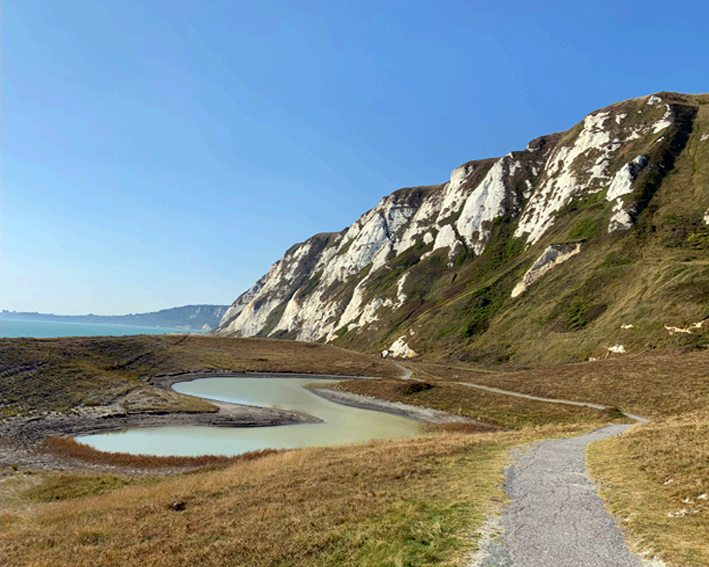 Lydden Spouts
Just west of Dover are the remains of the Lydden Spout gun battery, built in 1941 to fire upon German shipping in the Dover Strait. Although much of the installation has disappeared, interesting remnants survive beside a public footpath, including a mound over the subterranean plotting room, tunnels, and two derelict buildings: one a cookhouse, the other a sergeants’ mess. It got its curious name from three water outfalls on the beach below, which in turn were named in the belief that the water came from the Drelingore stream, vaguely in the direction of Lydden. Situated at the end of Samphire Hoe, it is an interesting place to explore, if only with binoculars. A serpentine pathway ascends from the beach to the top of the clifftop, which no doubt came in handy for the smugglers who once frequented the area and made use of the nearby ‘Coining House’, two caves where they stashed their contraband.
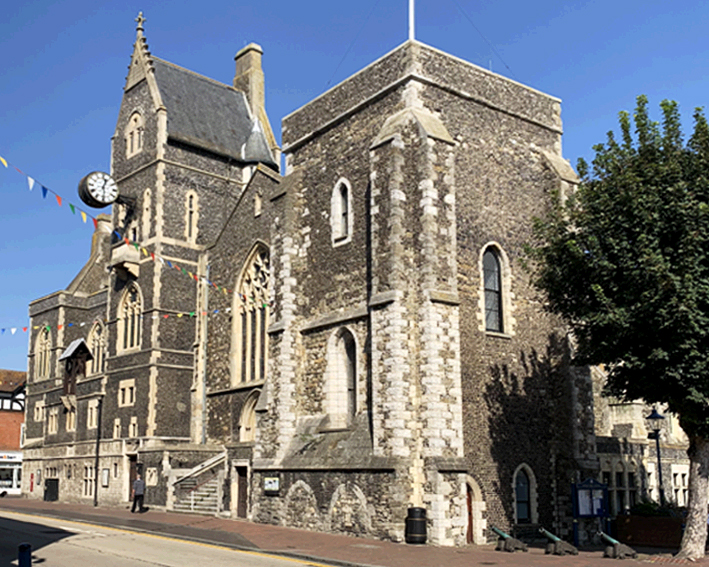 Maison Dieu, Dover
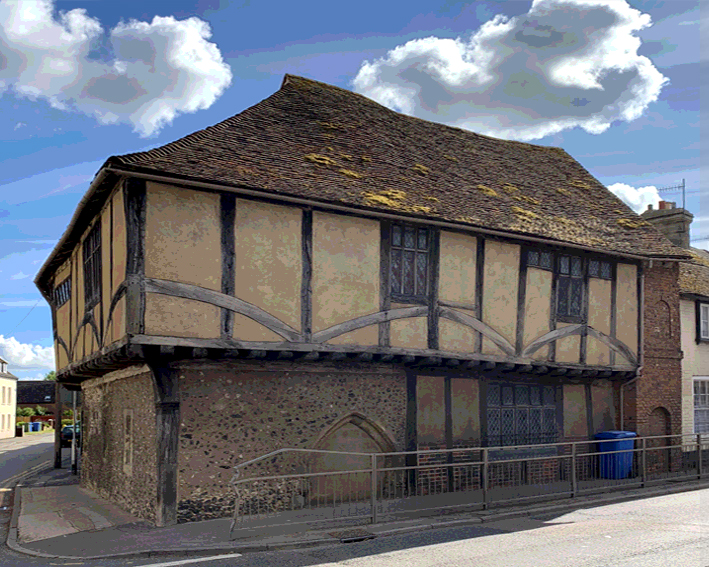
In 1203, the Maison Dieu – ‘House of God’ – was built in Dover. It was a hostel catering for pilgrims from overseas who’d crossed the Channel on their way to Canterbury, but also accommodating permanent residents in need of shelter. Incorporating a hall, a kitchen, and living quarters, it was administered by monks who later added out-buildings. In 1227, Henry III came to open a new chapel, which is presumably when he got the idea for his own Maison Dieu at Ospringe. The institution operated charitably for over 300 years until Henry VIII ejected the monks and requisitioned the building as a military store. It wasn’t until 1834 that the Corporation of Dover bought it for use as a town hall, and later converted its chapel to a courtroom, with a gaol underneath. The building is still actively used today, whether for concerts, conferences, or weddings. Special tours are conducted by the Dover Society and Dover Greeters.
 Maison Dieu, Ospringe
In the days when even kings couldn’t often muster more than one horse-power for travel, the journey from the coast to London was a slow affair. Consequently, it became necessary to create resting-places along the way. King Henry III found it most convenient to build one at Ospringe: the Maison Dieu, erected in 1234. He had his own King’s Chamber there, where he could lodge on his way from Dover or Canterbury to London, or vice versa. But it did not serve only as a royal motel. The handful of brethren who staffed it were obliged to provide hospitality to needy visitors, particularly pilgrims travelling to and from Canterbury. Like Eastbridge Hospital in Canterbury, it served as a hostel, a hospital, and a place of worship. The house is highly visible on Watling Street (now the A2) at the corner of Water Lane, and as an English Heritage site can be visited by the public at weekends.
 The Majesty Oak
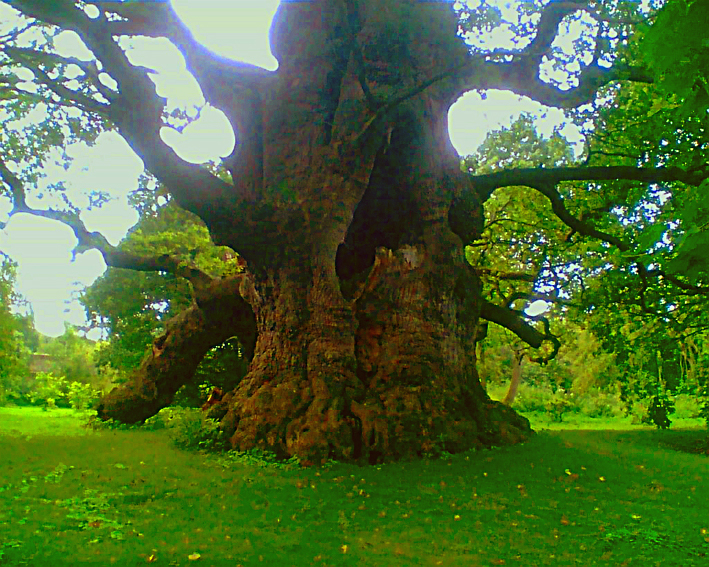
On private land at Fredville, Nonington stands arguably England’s most magnificent tree, the Majesty Oak. With its 40-feet girth, 62-feet height, and 40-ton weight, it is certainly a beast, particularly considering that it is virgin, i.e. unpollarded; according to the Guinness Book of Records, it is the largest virgin tree in Britain, and none larger is known in Europe. It is a pedunculate oak, meaning that its acorns, unlike the sessile oak’s, are on stalks. Its age is disputed, but has been estimated from 500 to 800 years, and its Tolkienesque gnarled look gives every impression of venerability. A century ago, it lost one of its major boughs about ten feet off the ground, which left a large hole exposing its vast hollowness; and a second major limb over 25 feet up tore off in 2009. Nevertheless, it continues to leaf well, boasting an expansive crown. Her Majesty may be inspected by arrangement with the landowners.
 Malling Abbey
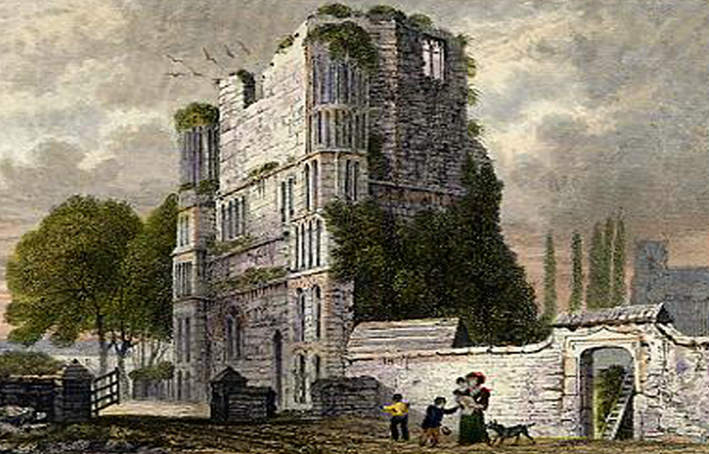
Edmund I granted a manor at Malling in the C10. The land passed into and out of the hands of the Church before, around 1090, Gundulf established a Benedictine nunnery there – one of the first of the Norman era. It certainly had an eventful history. It burnt down in 1190, taking much of the town with it. In 1349, it was not spared the Black Death, being reduced to just eight nuns and novices. And then Henry VIII did away with it in the Dissolution of the Monasteries. Fallen into private hands, it deteriorated for two centuries until a new mansion was built in the C18. In 1892, it returned to religious use when the Benedictine community of Ss Mary and Scholastica moved in. This was replaced in 1916 by another community of nuns that remains until the present day. Although many of St Mary’s original buildings have been demolished, much of the original architecture remains.
 Maritime Museum
The story of the seas around Britain is a complex topic by any measure, so there can’t be many bigger tasks than relating the maritime history of the east coast of Kent. That however is the remit of Ramsgate’s Maritime Museum. It’s not a slick affair – on the contrary, it’s all a bit higgledy-piggledy – but that’s unlikely to deter the sort of visitor who’ll enjoy the nitty-gritty of the subject matter. It divides into four sections, covering fishing, navigation, shipwrecks, and Ramsgate harbour. Each is populated by a wealth of more or less interesting exhibits. As much as anything, the location makes it special, right down by the Royal Harbour, where you really get the smell of the sea in your nostrils. The Museum is actually situated in the clock-tower that used to be the reference point of the old Ramsgate Meridian, which was the same as the Greenwich Meridian except nearly six minutes fast.
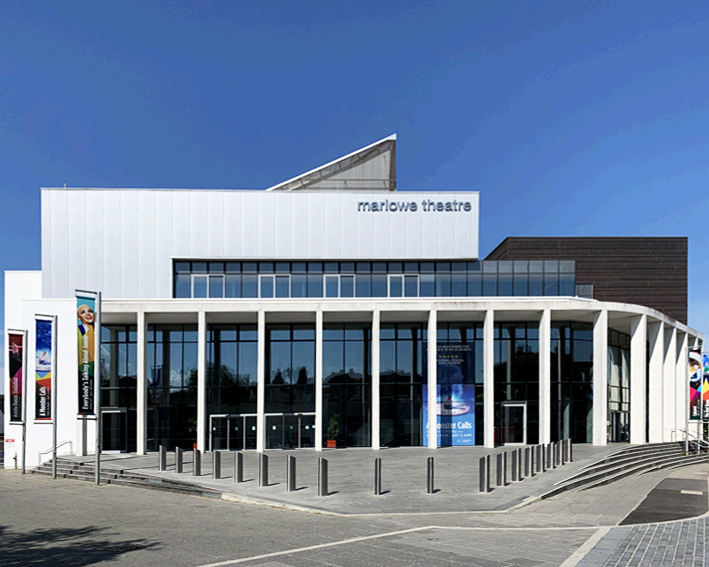 Marlowe Theatre
The origins of Canterbury’s Marlowe Theatre, named of course after its most famous son, go back to the pre-WW1 period. A small theatre was opened in St Margaret’s Street that before long was converted to a cinema; but, having failed to compete, it reverted to amateur dramatics. In 1949, the Council bought the property and established the first Marlowe Theatre there. The building was demolished in 1982, and a new Marlowe Theatre established in The Friars on the site of a former cinema, opened in 1984. This lasted 25 years until, getting a bit jaded, it was in turn closed in 2009 and demolished. A new £26 million purpose-built theatre was built on the site, and opened in 2011 to great acclaim. It now offers a broad spectrum of entertainment to audiences of up to 1,200, presenting anything from tribute bands and stand-up comedians to National Theatre on Tour drama and world-class opera straight from the Glyndebourne summer season.
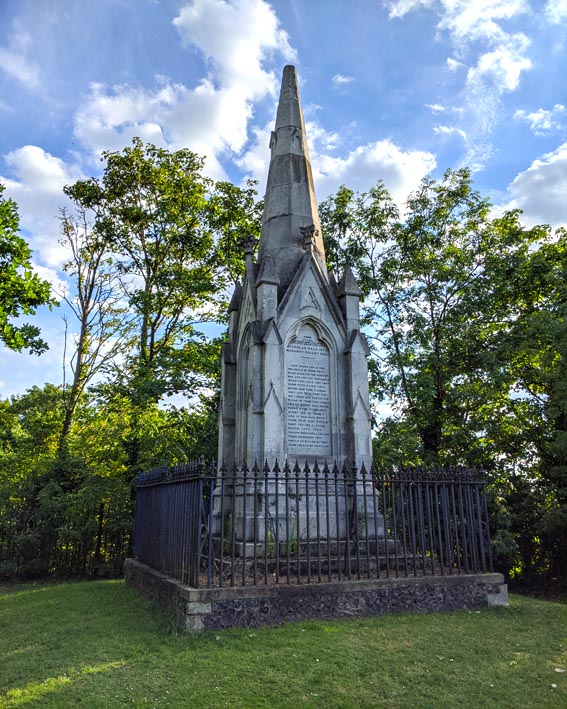 The Martyrs’ Memorial
In St Edmund’s Pleasance Park in Dartford stands a monument whose poignant significance is understood by few passers-by. When Edward VI died suddenly and was succeeded by his Catholic sister Mary and her fiercely anti-Protestant husband Philip II of Spain, ramifications were inevitable. In July 1555, Dartford linen-weaver Christopher Waid, a Protestant preacher, was arrested, tried by Maurice Griffiths, the vindictive Bishop of Rochester, and condemned to burn on Dartford Brent. Left to die alone when two fellow defendants were despatched to their doom at Rochester and Tonbridge, he awaited the flames impassively. Dressed in a pure white shift, he recited the words ‘Show some token upon me for good, that they who hate me may see it and be ashamed, because Thou Lord hast helped me and comforted’, a quotation repeated on the 1851 memorial to the three. When the Bishop died three years later, the Church mourned with an opulent funeral and fabulous dinner.
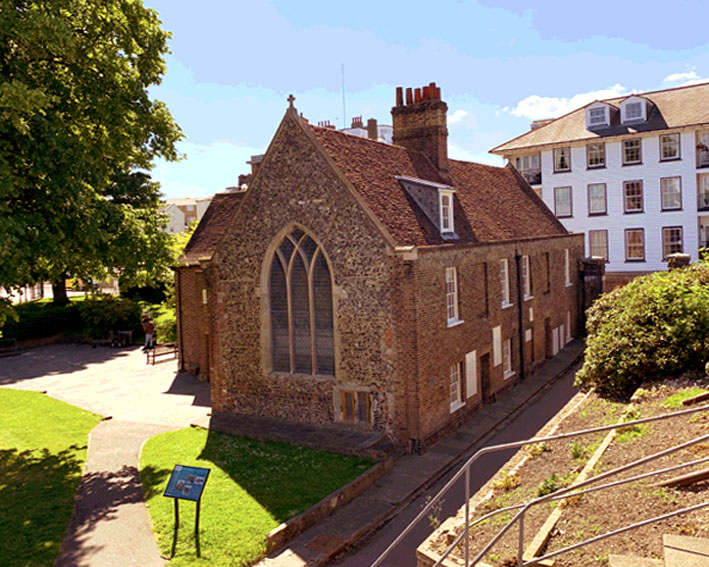 Milton Chantry
To modern ears, a chantry sounds a batty idea. It was expensively erected to house choristers paid to sing for their sponsor’s soul. As usual, however, there was method in the madness: it was a conspicuous way for the rich to announce their piety. The chantry at Milton, Gravesend is a fine example. It was founded in 1322 by Aymer de Valence, a powerful individual close to the throne. For good measure, it was attached to a leper hospital. Since its heyday, however, Milton Chantry has drifted from job to job. In the C15 it housed priests, but after the Dissolution of the Monasteries in the C16 it became a domestic dwelling. In the C17 it was a tavern. From 1780 to WW1, it formed part of the New Tavern Fort’s barracks. Between the Wars, it was converted to a public leisure area, and after WW2 became the Chantry Heritage Centre, where a few local-history exhibits are displayed today.
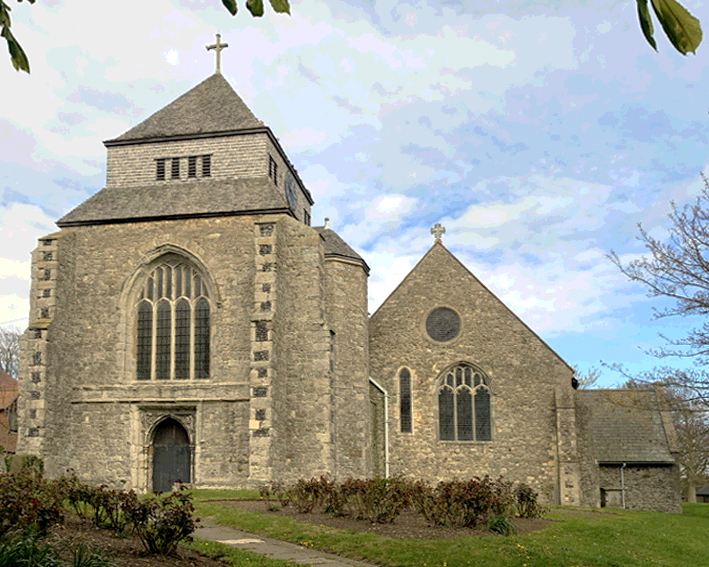 Minster Abbey
No abbess can have a more unlikely name than the founder of Minster Abbey in Sheppey: Saint Sexburgha. She had it erected on land granted to her after the death of her husband King Eorcenberht of Kent in 664, using stone quarried at Boughton Monchelsea. It was badly damaged by the Danes, who habitually landed on Sheppey in the C9. Not until the C12 was it seriously improved, when Archbishop de Corbeil rebuilt it in something like its current form. In particular, he constructed the distinctive churches – one for the Abbey, one for the local community – that, having a shared wall, were semi-detached. This helped save the Abbey Church from destruction during the Dissolution of the Monasteries, along with the Gatehouse, a private residence. It was fortunate, because the Church contains some interesting features, notably the de Northwode brasses and several stone monuments that provide an interesting catalogue of medieval armour.
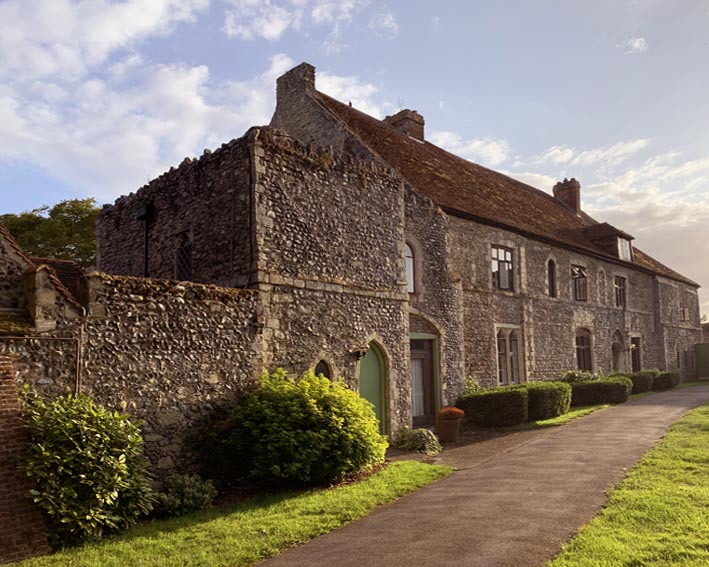 Minster-in-Thanet Priory
The priory west of Sandwich is a story of Mercians, Danes, Normans, and, would you believe, Bavarians. According to legend, it was founded by Ermenburga of Mercia, who came to demand restitution for the murder of her two brothers. She was allowed to let her pet deer wander, and the territory it covered in a day was granted to her for a nunnery. This thrived until ca 850, when the Danes turned up and killed everyone. In 1027, however, King Cnut allowed some Canterbury monks to rebuild the formerly wooden abbey in stone. Things again went pear-shaped when the invading Normans laid waste to Thanet so that it could provide no succour to raiding Danes. It gradually recovered, but the kiss of death was the Dissolution of the Monasteries. A large part of the abbey survived nevertheless, and in 1937 was occupied by a Bavarian chapter of Benedictine nuns. They still permit short but interesting guided visits today.
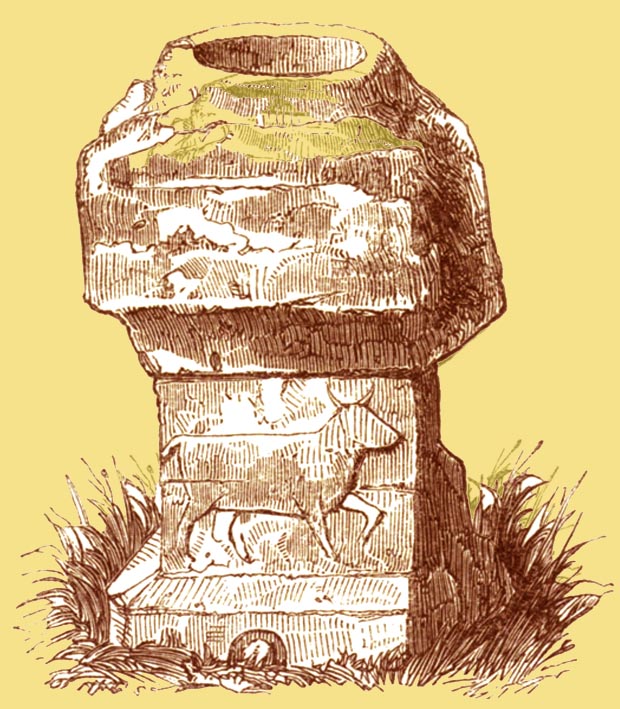 The Mithraic Altar
The oldest record of a church at Stone-in-Oxney dates from 1265, its first known vicar being Thomas de Maydenston in 1287. Largely destroyed by fire in 1464, it was rebuilt as today’s St Mary the Virgin. Far older than either edifice, however, is the mysterious stone altar resting within it. A square block of Kentish ragstone 40 inches high, it is believed to have been quarried near Hythe and transported up the old Lympne (Rother) estuary. It was moved into the church from the vicarage garden, having previously been a horse-mounting block at the Ferry Inn on Appledore Road. On its side is a clue to its purpose: a distinct carving of a bull. This suggests a connection with the Persian cult of Mithras, which was popular with the Roman military during their occupation of Britain. Mithraism was a so-called ‘mystery’, meaning that only initiates could worship. Where the altar was originally housed is itself a mystery.
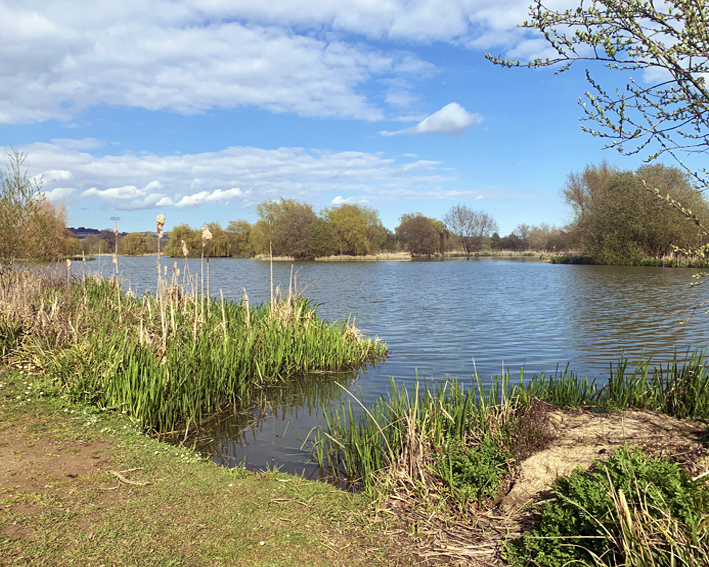 Monk Lakes
The Monk Lakes site is not what it appears. From a distance, it resembles a reservoir. It’s officially in Marden, but lies east of the Staplehurst Road south of Linton. Its entrance is unobtrusive. Yet, just out of sight, there lies a coarse fisherman’s paradise. The 120-acre site was originally farmland producing hops and strawberries, which temporarily became a construction site and carpark while a gas main was laid. It was converted two decades ago into a first-rate fishery incorporating four match, one specimen, and two pleasure lakes, totalling 45 acres of still waters; two others were added subsequently. For anglers preferring flowing waters, the adjacent River Beult provides 2,000 yards of banks. Said to be the largest such fishery in Britain and second largest in Europe, Monk Lakes is nevertheless both picturesque and peaceful. Evidently the fish like it there, judging by the generous size of many of the specimens caught, which include carp, catfish, and pike.
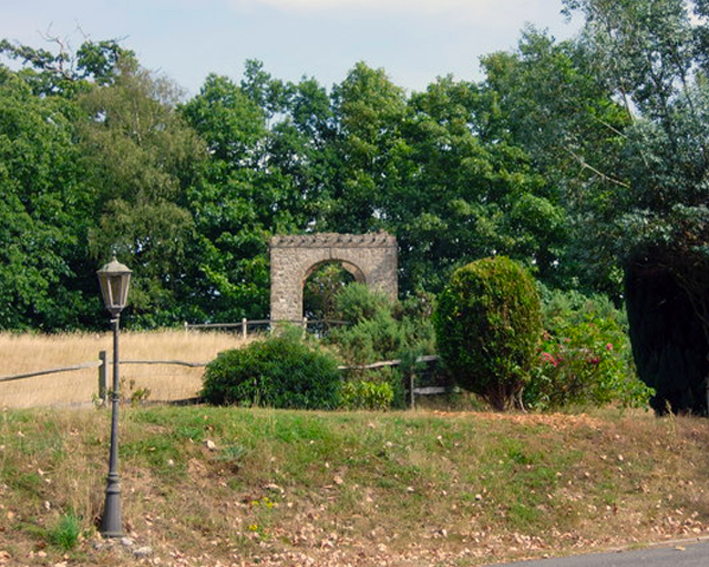 Montreal Park Monument
The defeat of France in the Seven Years’ War (1756-63), ending French control of Quebec, was one of the great milestones in British military history. Field Marshal Jeffery Amherst, who masterminded the North American campaign, returned to his hometown Sevenoaks in 1764, when he was reunited with his two other high-achieving brothers, Admiral John and Lieutenant-General William Amherst. Wishing to commemorate his wartime experience, he bought an estate near Sevenoaks, where he built a tidy Palladian house that he named Montreal after the scene of his conclusive triumph; George III and Queen Charlotte visited him there in 1778. He adorned the estate with various features, some of which have survived the demolition of the house in 1936 and its replacement by 224 houses. The two lakes are now a fishery, and there stand a ragstone obelisk recording details of his campaign, and a run-down summer-house (pictured) that offers passers-by a forlorn reminder of former glories.
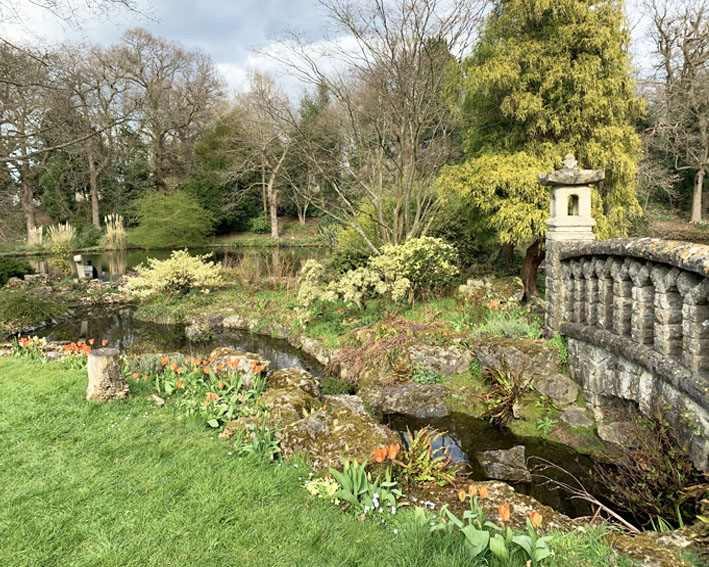 Mount Ephraim Gardens
The biblical Mount Ephraim in Israel was noted for its shady trees, which makes it a suitable name for a hilly and wooded 800-acre estate at Hernhill, east of Faversham. The original house there was built for the Dawes family in 1695, but it was superseded by the current larger construction in the 1880s. It has remained in the possession of the Daweses ever since. Although the house is tidy rather than spectacular, it is surrounded by ten acres of gardens, including a lake, a maze, an arboretum, and splendid flower beds that were first laid out over a century ago. The estate was badly damaged by British Army occupation during WW2, but the family has worked hard to restore it and to maximise its commercial potential. It is most popular for weddings, but also offers a programme of events, and since 2016 has even hosted the A New Day Festival, an annual prog rock extravaganza.
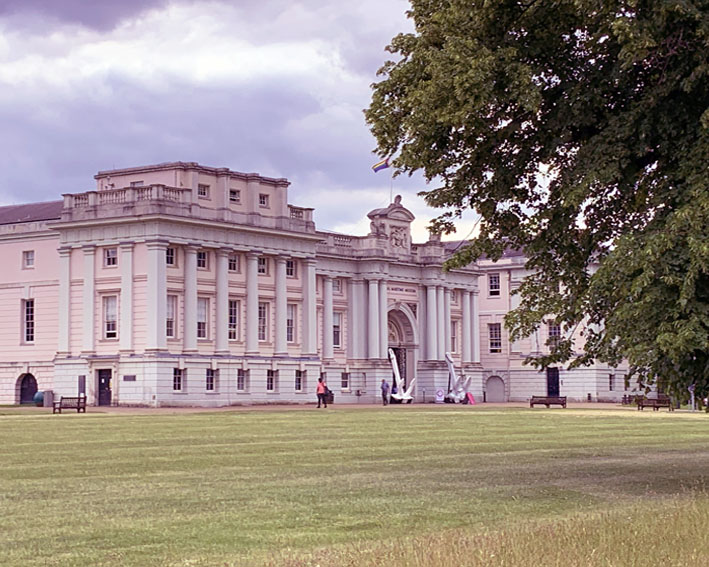 National Maritime Museum
The National Maritime Museum is arguably the jewel in Greenwich’s crown. Surprisingly, it was not established until 1934, when it took over the building that had been occupied by the Royal Hospital School, next door to the Queen’s House. What makes it so special is of course that Britain dominated the world’s seas for about two centuries, making its maritime history uniquely interesting to anyone from around the world. Greenwich, a naval centre since Roman times, was an obvious location for it. The Museum displays a rich selection of the two million or so artefacts it holds. The highlights include exhibitions on polar exploration and the Battle of Jutland, as well as set pieces like Nelson’s bullet-holed coat from Trafalgar; but many hours can also be whiled away inspecting its many paintings, maps, manuscripts, and instruments. Being free to enter, it naturally draws large crowds, typically amounting to nearly 2.5 million a year.
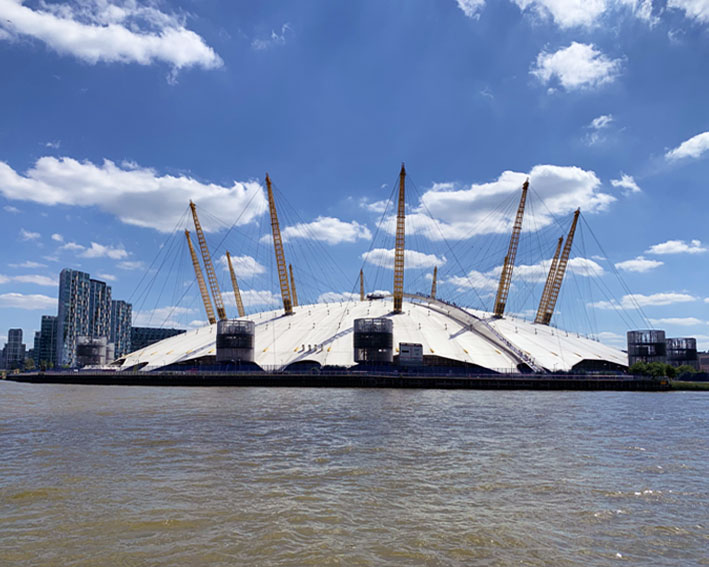 The O2
The O2 is the phoenix that rose from a fiasco. The original modest plans for a commemoration of the Millennium were inflated by Tony Blair’s administration into a celebration of ‘Cool Britannia’ intended to wow the world. However, Peter Mandelson’s big idea, the Millennium Dome, was beset by endless problems, and attracted barely half the planned number of visitors. Although the ‘Millennium Experience’ exhibition there ceased at the end of 2000, the Dome was not demolished. Indeed, in 2007 it was reborn as the home of an entertainments space, the O2 Arena, which within a year became the world’s best attended music venue. The circular space around the Arena morphed into a smart shopping mall, replete with restaurants. Furthermore, a lasting benefit of the project was that, because the Dome’s construction necessarily entailed detoxifying the Greenwich Peninsula, a large area of wasteland has been reclaimed for residential and leisure use, and in a most agreeable riverside location.
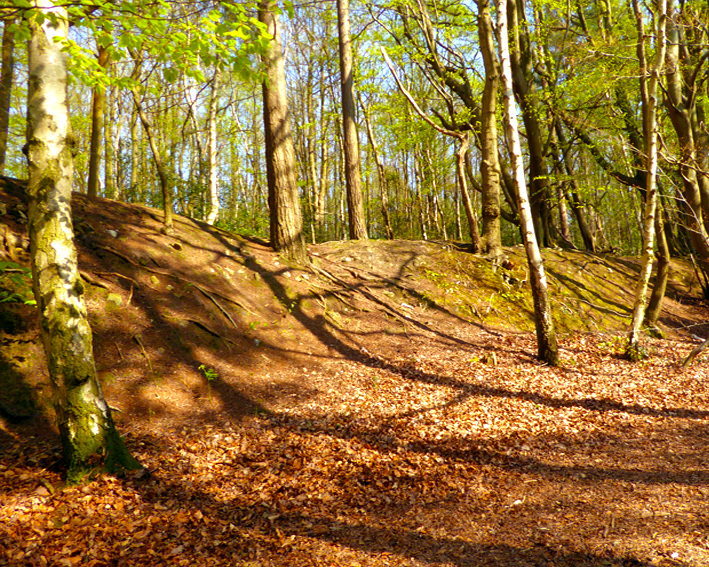 Oldbury Camp
South-west of Ightham lies the remnant of Oldbury Camp, a hillfort over 2,000 years old. Sitting atop a hill on the Greensand Ridge, it commands a good view along the Weald. It is demarcated by an irregularly shaped bank and ditch that in places is doubled up, embracing around 120 acres. It appears to have been built in a hurry around 100 BC, presumably by indigenous Celts who wished to protect their livestock from invading Belgae. The site appears to have been abandoned around 50 BC, which coincides more or less with Julius Caesar’s invasions. The northernmost of its two gates was burnt, though it is unclear whether this was enemy action or deliberate slighting by occupants in the process of abandoning the camp. The southern part of the site, occupied by Oldbury Wood, is now administered by the National Trust and open to public access, while the northern end is protected farmland.
 Old Royal Naval College
The Royal Hospital for Seamen at Greenwich was finally closed down in 1869. The four wings of its building were taken over four years later by the Royal Naval College, which remained there for 125 years. With the Government actively winding down the Royal Navy, the decision was taken to close that too in 1998, meaning that this magnificent group of buildings became redundant. They were taken over by a charitable foundation tasked with finding uses for them. The most visible beneficiaries have been TV and film production companies, which make lavish use of the dramatic site. It also stages metropolitan entertainments intended to satisfy diverse tastes. The best reason for visiting, however, is to admire the buildings themselves, both without and especially within. Their interiors were decorated palatially, and the Painted Hall is a masterpiece. It is instructive to contemplate the efforts made back then to give Britain’s indomitable sailors the comfortable retirement they deserved.
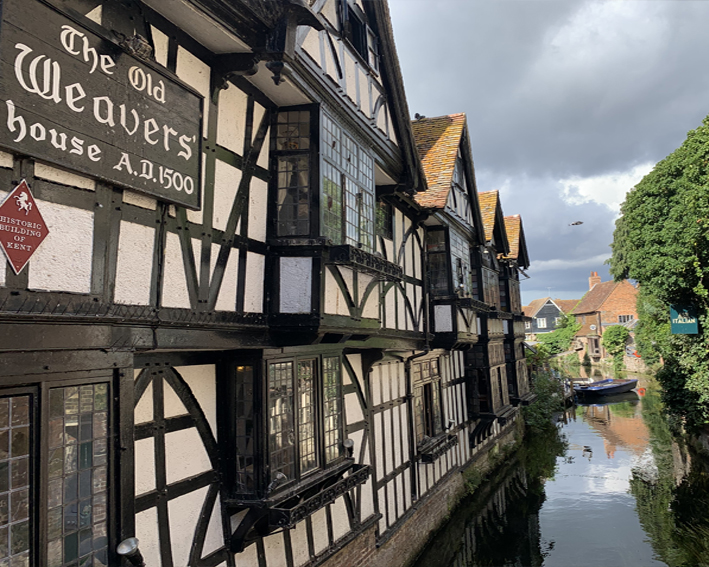 Old Weavers House
The great pity about the Old Weavers House is that it is not sitting beside the Stour a few miles out of town, surrounded only by fields, so that its delightful architecture might be admired from all angles. That is not to say that its actual location, next to King’s Bridge on Canterbury High Street, is without interest. The Stour flows against its walls, and there is a ducking-stool behind to remind us that human stupidity is never far from becoming lethal. The House nowadays is misleadingly labelled as having been founded in 1500; it is in fact at least a hundred years older. It gained its name as the headquarters of Flemish weavers who first set up shop in the C16, and brought the city considerable prosperity. Nowadays it is possible to eat there, inside and out, or have a drink with the crowds swarming past; and the location is handy for booking a river tour.
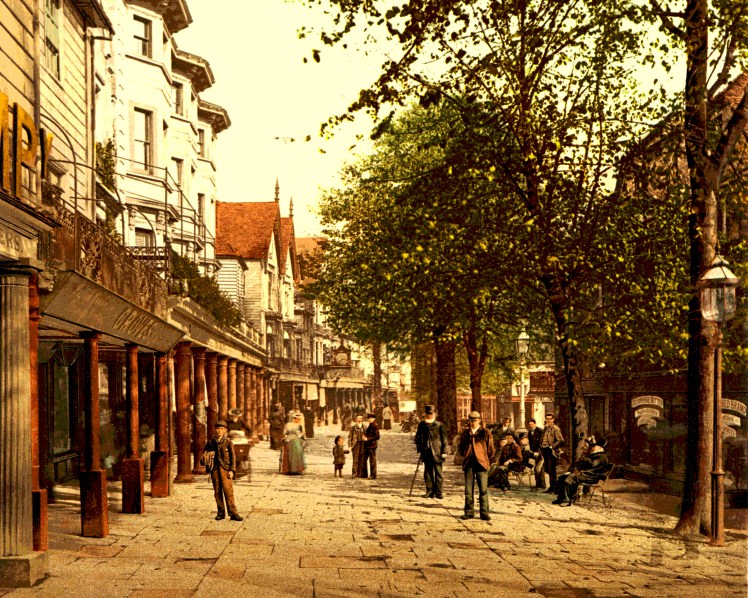 The Pantiles
It may or may not be Kent’s best-known thoroughfare, but The Pantiles in Royal Tunbridge Wells is probably the one with the most cachet. It emerged out of the walks constructed in 1638 to provide access to the iron-rich waters of the Chalybeate Spring. The high social standing of visitors seeking a spa cure, including royalty, attracted an array of high-class trades to cater for them, especially after Beau Nash turned the town into a highly fashionable destination. The street did not get its name from the familiar roof covering, but from the square clay tiles that formed its surface. These were upgraded in 1793 with conventional paving, whereupon the name changed not to The Flagstones but The Royal Parade; it reverted to its traditional form in 1887. The thoroughfare is most famous for its extensive colonnade, replete with bijoux shops, galleries, and eateries. The town takes full advantage of its historic stature with cultural events and live entertainment.
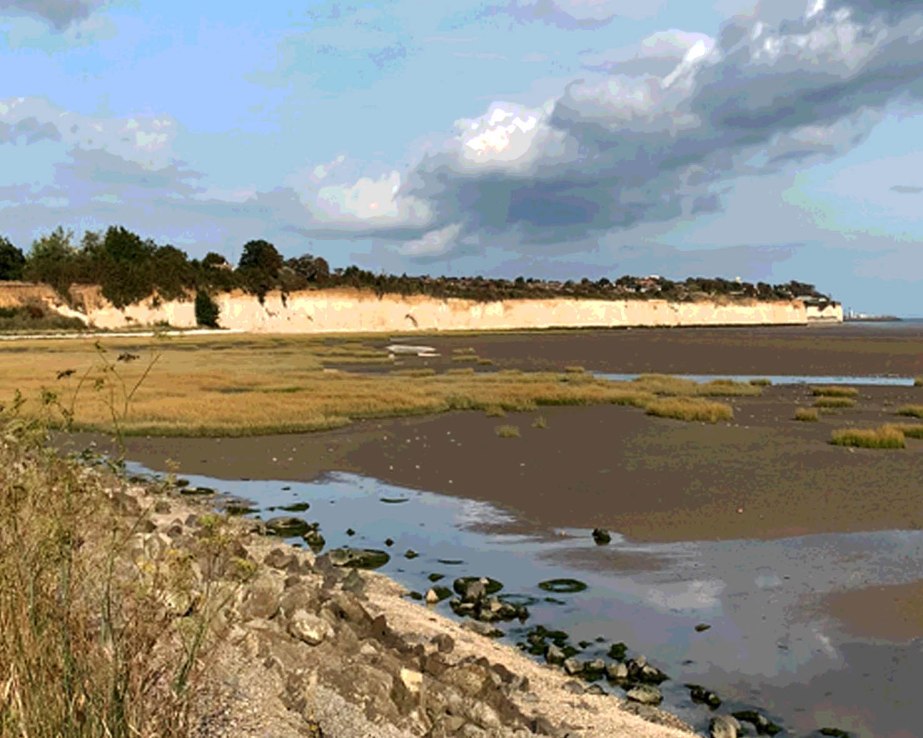 Pegwell Bay
The most touristy reason for visiting Pegwell Bay, south-west of Ramsgate, is to see the marvellous replica Viking longship, the Hugin. She was gifted to the British nation by the Danish government in 1949 to celebrate the 1,500th anniversary of Hengist and Horsa’s arrival. She initially landed at Viking Bay in Broadstairs, and had to be moved to this unique site that used to be the preferred landing-place for invaders from the Romans onwards. There are two equally good reasons, however, more easily overlooked by strangers. Pegwell Bay contains another of those chalk-framed sandy beaches, ideal for beachcombing, that dot the Thanet coast right around to Cliftonville; and it abuts Pegwell Bay Country Park, home to both wildfowl and waders. There was once a further reason for coming, when Pegwell was the site of a hoverport. The service to Calais that commenced in 1968 went out of business in 2000, leaving behind only a crumbling staircase, apron, and carpark.
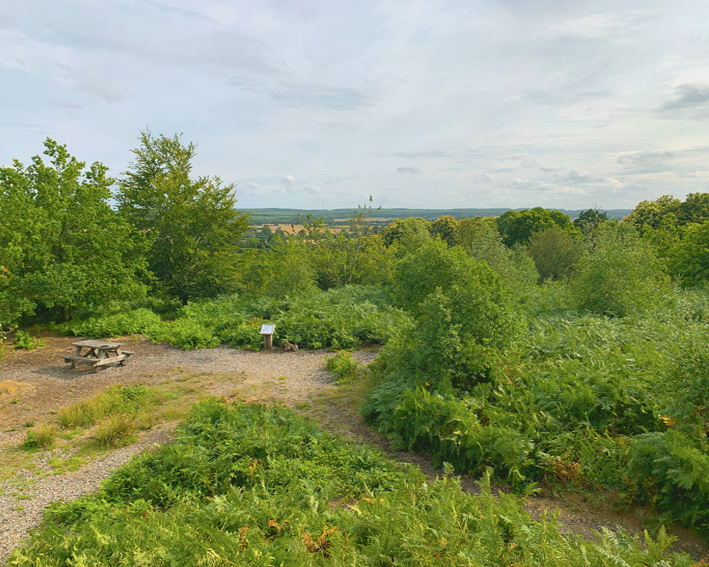 Perry Wood
With attractive mixed woodland covering hilltops that offer extensive panoramas from Sandwich to Sheppey, Perry Wood between Selling and Chilham is superficially a scenic affair. Closer investigation reveals it to be a Local Wildlife Site, embracing a diversity of species from deer to dormouse. What takes longer to sink in is the chronological dimension. Perry Wood was plainly an ancient site for human habitation, evidenced by flints from the mesolithic period over 6,500 years ago, neolithic pottery, and mediaeval coins and pottery. The rectangular ‘Earthwork’ suggests an iron-age settlement preceding a possible Roman encampment; a C16 post windmill there, Shottenden Mill, was a draw for charabanc outings until its demolition in 1920. More recently there was a Royal Navy telegraph tower built during the Napoleonic wars as part of the communication chain emanating from Deal’s Timeball tower. For many, however, the highlight will be The Pulpit, a C19 viewing tower that crowns any visit with a memorable view.
 Pimm’s
A farmer’s son from Newnham, James Pimm (1798-1866) studied in Scotland before setting up an oyster bar in the City. So successful was he that he eventually owned a string of restaurants, including ones catering for the gentry. Having decided that he ought to offer a drink to help his shellfish go down better, he designed a fruit cup: an alcohol-based cordial that could be added to a long soft-drink to inject some pep. His 1823 recipe, which remains a secret but is based on gin, spices, and quinine, became famous as Pimm’s. Nowadays 25% alcohol by volume, it is most commonly mixed with lemonade, sliced fruit, mint, and ice to make an unusually refreshing drink that has become ubiquitous at upmarket garden-parties in the English summer. Diageo-owned Pimm’s is also practically synonymous with the Wimbledon tennis championships, where 300,000 glasses of it are served every year. Pimm himself lies buried in East Peckham.
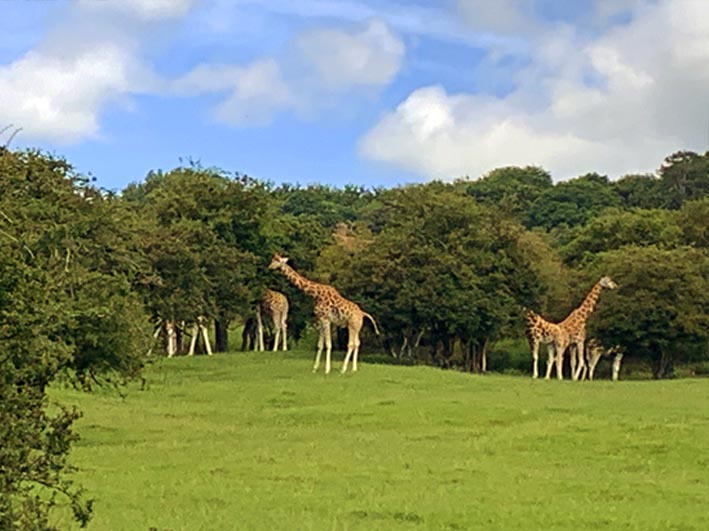 Port Lympne Safari Park
Port Lympne Safari Park, opened in 1976, is really Howletts, Part Two. It was in fact specifically opened because of a lack of space at John Aspinall’s first zoo at Bekesbourne. The 600-acre site, formerly the estate of Sir Philip Sassoon’s Port Lympne Mansion, has since developed very much its own personality. It has the feel of a zoological theme park, offering jeep safaris to zones that include African, Asian, and South American collections. Additionally there are carnivore and primate territories, and a Dinosaur Forest displaying numerous life-sized models. The Park is home to 700 animals, including impressive collections of African elephants and gorillas that are the largest in the UK and the world respectively. Upholding the Aspinall commitment to conservation, Port Lympne occasionally releases zoo-bred animals into the wild. The Park contains various eateries, and offers several adventurous accommodation options that range from glamping to the exotically decorated Mansion itself.
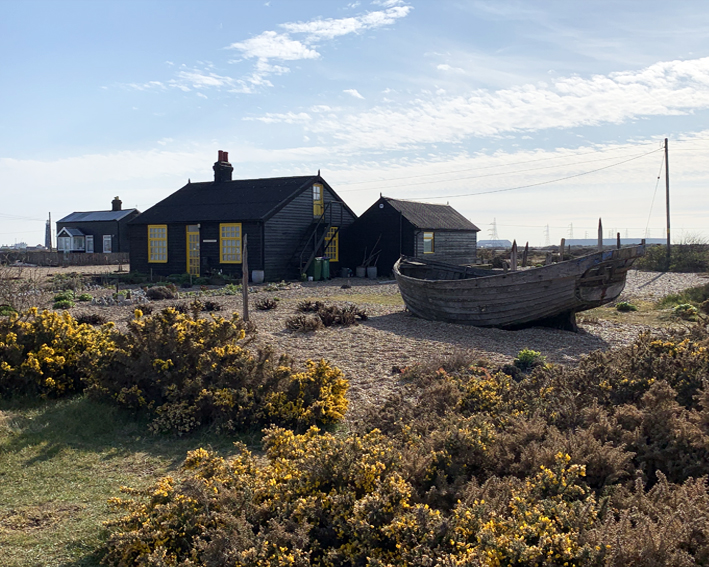 Prospect Cottage
Once a ramshackle C19 fisherman’s cottage on Romney Marsh, Prospect Cottage now has the aura of a shrine. Derek Jarman was a London-born set-designer, first noted for Ken Russell’s outrageous ‘The Devils’ (1971), who soon progressed to direction. His movie output was better known for challenging filmic convention than entertaining, however, and he became more familiar as a gay polemicist. In 1986, after testing HIV-positive, he discovered a new creative focus. He bought the cottage on the shore within sight of Dungeness nuclear-power station, and spent his last eight years there. He applied the design skills honed at the Slade School of Fine Art to creating a remarkable garden out of detritus gathered from the seashore, and celebrated it in his 1994 movie ‘The Garden’. Two years later, he died at 52, and was buried at Old Romney. In 2020, an art charity campaign launched by Tilda Swinton raised £3.5 million to preserve it as an artwork.
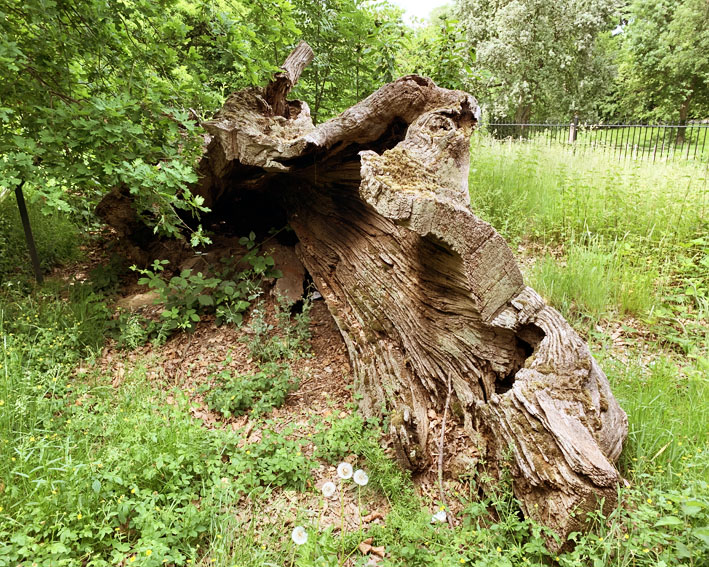 The Queen Elizabeth Oak
The Queen Elizabeth Oak at the site of the Placentia Palace in Greenwich is not the only tree with that name, but it does have the best claim to a royal connection. It was believed to have been planted in the C12, so it was already 400 years old when Henry VIII danced around it with Anne Boleyn. Their daughter Princess Elizabeth, from whom it takes its name, supposedly had picnics beneath its boughs. It would survive for another 400 years, and after becoming a huge hollow tree late in life is said to have served as a lock-up for people breaching regulations in Greenwich Park. It eventually succumbed to old age in the C19, but remained standing with the help of a dense coat of ivy. A storm in 1991 finally felled it. The Duke of Edinburgh, who was also Baron Greenwich, planted a replacement in 1992, the 40th anniversary of Queen Elizabeth II’s accession.
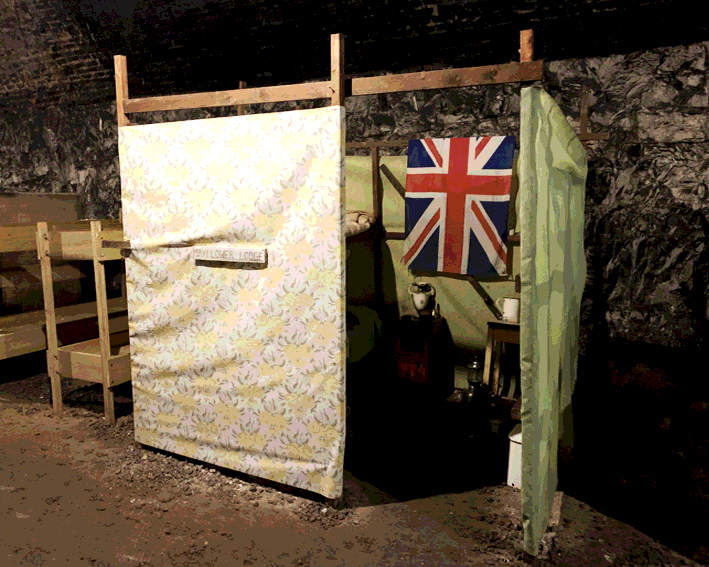 Ramsgate Tunnels
In 1863, a railway tunnel was dug to connect Ramsgate Royal Harbour with the main line. It became defunct in 1926 when the new town railway station was built, but was later recycled for a narrow gauge railway running to the seafront. The tunnels again came in handy during WW2, when Ramsgate was directly in the Luftwaffe’s firing line. In August 1940, 500 bombs were dropped on the town within five minutes, but the population sheltering underground was largely saved. There was nevertheless serious damage to housing, and 300 families took to living in an improvised troglodyte town incorporating shops, canteens, and a hospital. The 2½ miles of tunnels are now being redeveloped as a visitor attraction. Well-regarded 90-minute tours are conducted daily, and underground exhibitions are staged. The Tunnels maintain a steady 11 degrees, and so can be handy for warming up on a cold day or cooling off in the summer.
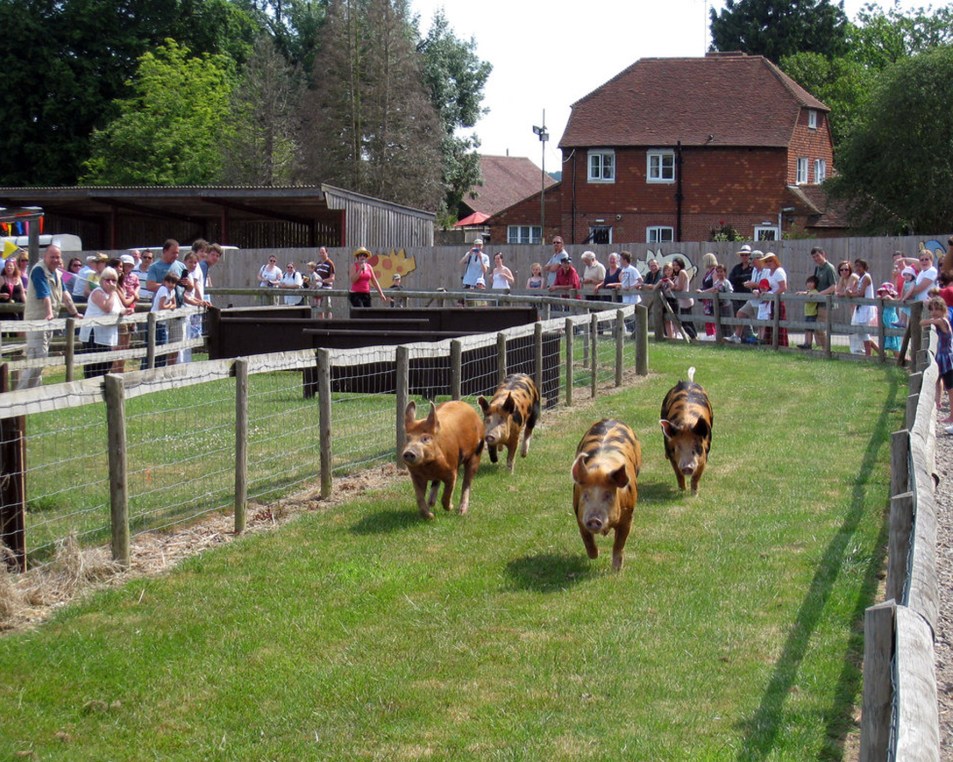 Rare Breeds Centre
Most zoos started as places of entertainment that acquired conservation credentials when activists turned the screw on animal cruelty. The Rare Breeds Centre at Highlands Farm in Woodchurch went in the opposite direction. Approved by the Rare Breeds Survival Trust, it serves a serious role in breeding endangered or vulnerable breeds of sheep and goat, cow and pig. As a commercial concern, however, it looks largely to the leisure market, and is positioned single-mindedly as a great day out for the family. Although everyone can find something of interest, it is without doubt a case of ‘the younger, the better’, the Children’s Barn being a particular draw for toddlers. Nevertheless, plenty of effort has been invested in providing a spread of activities, including all manner of animal displays and, most notably, the riotous pig-racing. Run by the Canterbury Oast Trust, it commendably offers employment opportunities to people with learning difficulties. Its appeal to visitors remains undiminished after three decades.
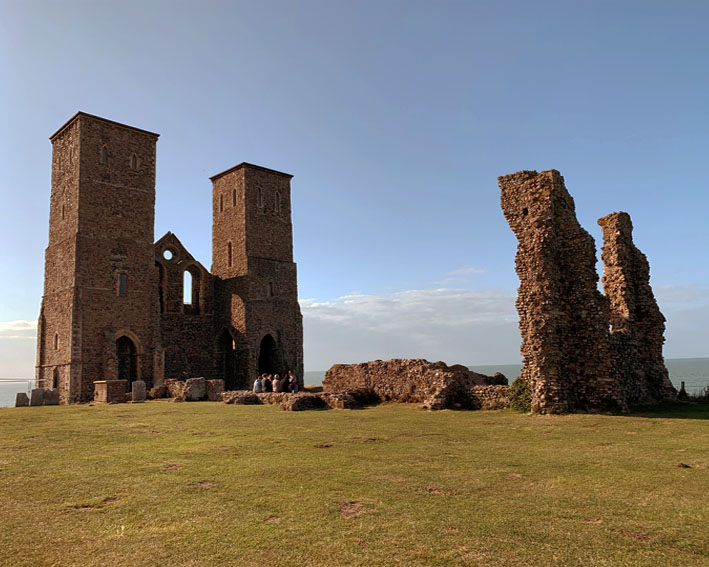 Reculver Towers
The sea-side spot immediately east of Reculver’s landmark Towers feels so remote that a visit seems like time travel. The place was once immensely important as the site of Regulbium, the fort built by the Romans at the mouth of the Wantsum Channel. Remnants survive and can still be inspected; but its ruination is symbolic of Reculver’s lost purpose since the Wantsum silted up. The site was always subject to coastal erosion, and much of its once wealthy village has disappeared into the sea. In the C7, long after the Romans left, the monastic church of St Mary’s was built. The Towers were added to it five centuries later. They survive only with the help of solid sea defences. Still in excellent condition, they are echoed at the otherwise ruined church’s eastern end by two ragged uprights, which in the right light create a Daliesque impression. The Twin Sisters still provide a warning to distant sailors to stay clear.
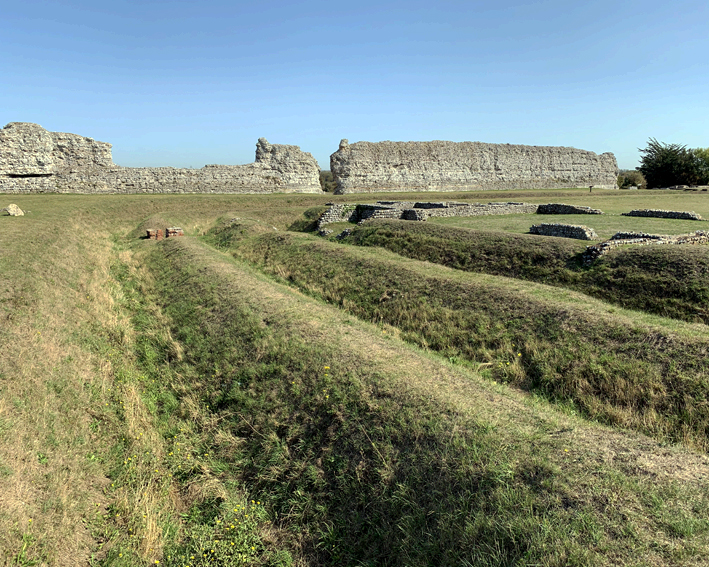 Richborough Castle
An hour spent inspecting the remains of the fort at Richborough, known to the Romans as Rutupiae, leaves a lasting impression. For one thing, they are large in terms of both their extent and the height of the walls and ramparts. For another, it is impossible to walk under the wide seaside skies without projecting oneself two millennia into the past. This was after all the Romans’ front door to Britannia. It is still possible to stand on the site of the four-way Triumphal Arch through which all visitors to the island had to pass. Conjuring up the famous personages who must have passed through – not to mention the countless legionaries charged with impressing rule from Rome on the British – is alone worth going for. The Castle evolved into a substantial town in peacetime, but this reverted to a Saxon Shore fort in 277, a time of anarchy. English Heritage now maintains the site.
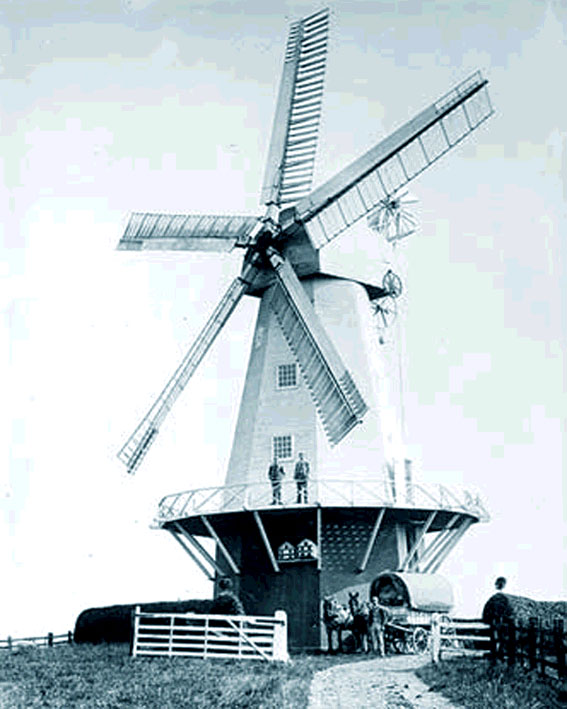 Ringle Crouch Green Mill
The windmill at Sandhurst close to the East Sussex border is unmistakable, having not the usual four sails, but five. An earlier post mill operated there until 1842, when it blew down. It was replaced two years later by a smock mill, built by millwright William Warren of Hawkhurst, that was operated by three generations of Collinses until 1911. It ceased operating a year later, after which it was used to house water tanks. Having grown increasingly dilapidated, the smock was pulled down in 1945, and its base was put to use as a scout hut. In 1997, a replica, minus the original fantail, was built on the surviving base, containing both a residence and an electricity-generating turbine. Incidentally, the unusual five-sail configuration was designed in the C18 by the great Yorkshire engineer John Smeaton, who calculated that it was more efficient – which begs the question why there are not more of them.
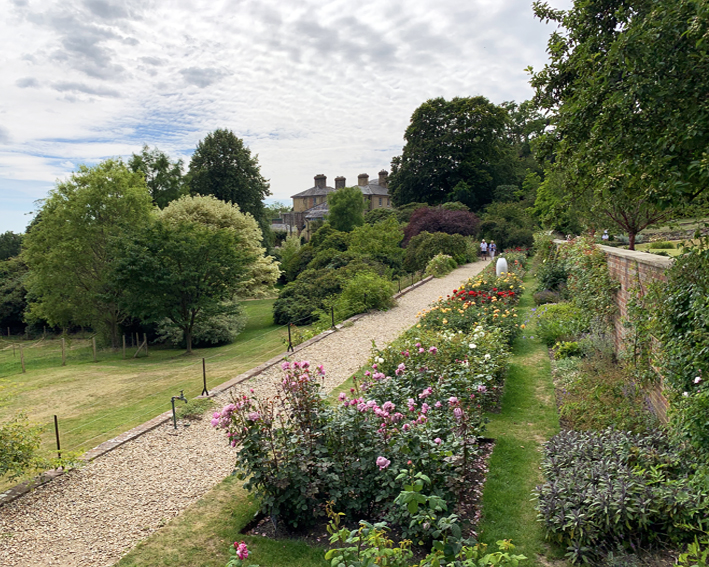 Riverhill Himalayan Gardens
The Himalayan Gardens at Riverhill House near Sevenoaks might be thought of as the botanical counterpart to Port Lympne Safari Park. Their origin lies back in 1842, when the owner of the 12-acre area, John Rogers, planted numerous specimens that he had brought back from the Far East. The gardens are still owned and run by a direct descendent and his wife. The appropriately hilly gardens are now zoned, and include a Walled Garden, Jungle, Rose Walk, Wood Garden, and Edwardian Rock Garden. Even for dedicated visitors of botanical gardens, they bring a new dimension. The exotic shrubs and trees have been arranged to create a spectacular display of colours and shapes on a much grander scale than flower beds, although there is naturally a wealth of those too. No visit is complete without climbing to the top of Mini Everest and taking in the spectacular view across the Weald towards the Ashdown Forest.
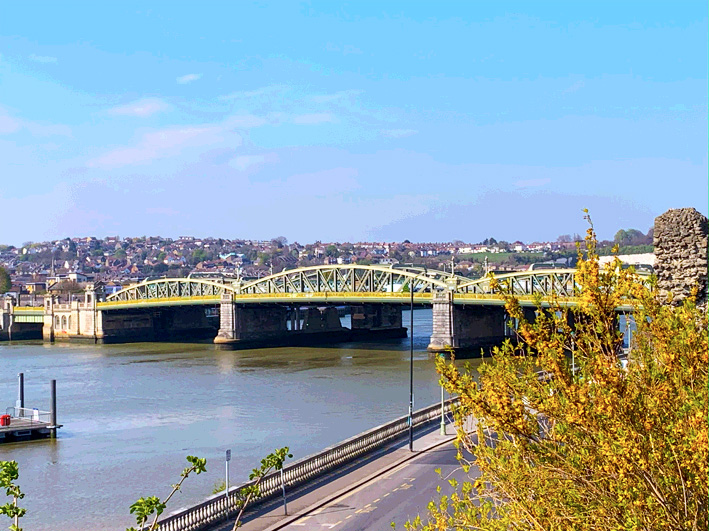 Rochester Bridge
Following the Roman invasion in 43, the emperor’s first strategic challenge was to connect Richborough with Londinium. The construction of Watling Street necessitated a large bridge over the Medway at what became Durobrivae, or Rochester. Like most things Roman, it was built to last: its stone foundations still supported a wooden bridge in the Middle Ages. Simon de Montfort destroyed it in 1264 during the 2nd Barons’s War, however, and its C14 replacements were prone to collapse. Crossing the Medway remained hit-and-miss until 1382, when Sir John de Cobham and Sir Robert Knollys devised a lasting solution, embracing a new stone bridge and two wardens entrusted with maintaining it – the predecessors of the Rochester Bridge Trust. In 1856, William Cubitt created a new cast-iron bridge, ostensibly providing more headroom for shipping. An adjacent railway bridge opened in 1858 was eventually supplanted by a rival one built in 1891; and a second road bridge to ease congestion followed in 1970.
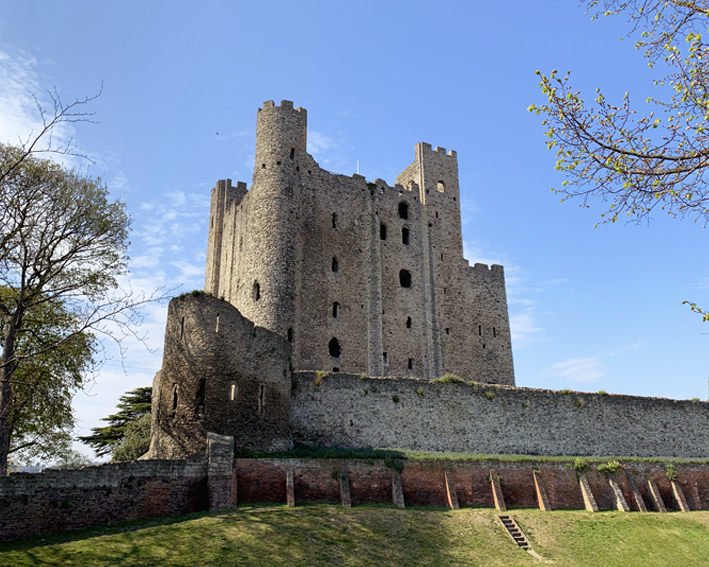 Rochester Castle
Pace the Cathedral, Rochester Castle is the city’s most familiar icon. It was a crucial structure from the very beginning of the Norman occupation on account of its strategic position, the point where Watling Street crossed the River Medway. The first castle was built shortly after the Conquest. It was owned by Bishop Odo, and did not survive the 1088 siege that ended his uprising against William II. The new King immediately got the Archbishop of Canterbury to build the famous stone keep, which still survives in remarkably pristine form today. For 90 years the Castle remained in the hands of the Archbishop before reverting to the monarch. It underwent two further sieges in 1215 and 1264, during the First and Second Barons’ Wars respectively, in both of which it suffered serious damage. The Castle was made a public utility as long ago as 1870, and can now by visited under the auspices of English Heritage.
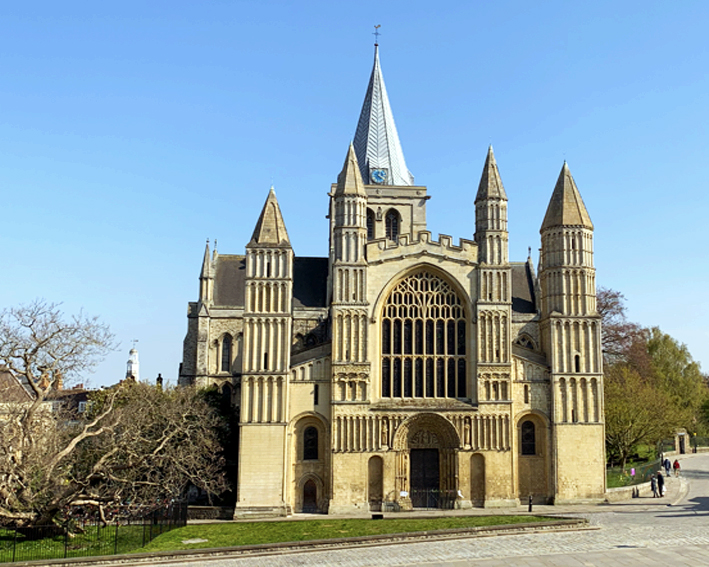 Rochester Cathedral
Uniquely in England, Kent was given two cathedrals to reflect its East and West tribal affiliations. The original priory at Rochester was built just seven years after its more illustrious counterpart at Canterbury. It remains much the smaller and plainer, even after being substantially rebuilt after 1080. Yet it does not lack charm. Whereas Canterbury rather sprawls, Rochester is compactly elegant, from the several pointed towers that lend it the same flavour as minarets, to the newly restored crypt. What it lacks most is the mystique lent by a famous martyr. Consequently, while Canterbury lives well off its colourful heritage, Rochester is apparently reinventing itself as a place of entertainment. Some worshippers were upset by a huge model of the Moon suspended in the nave, but nothing like as much as when the nave was converted to a minigolf course. According to the current Bishop Jonathan Gibbs, however, any perceived irreverence was justified by a subsequent surge in footfall.
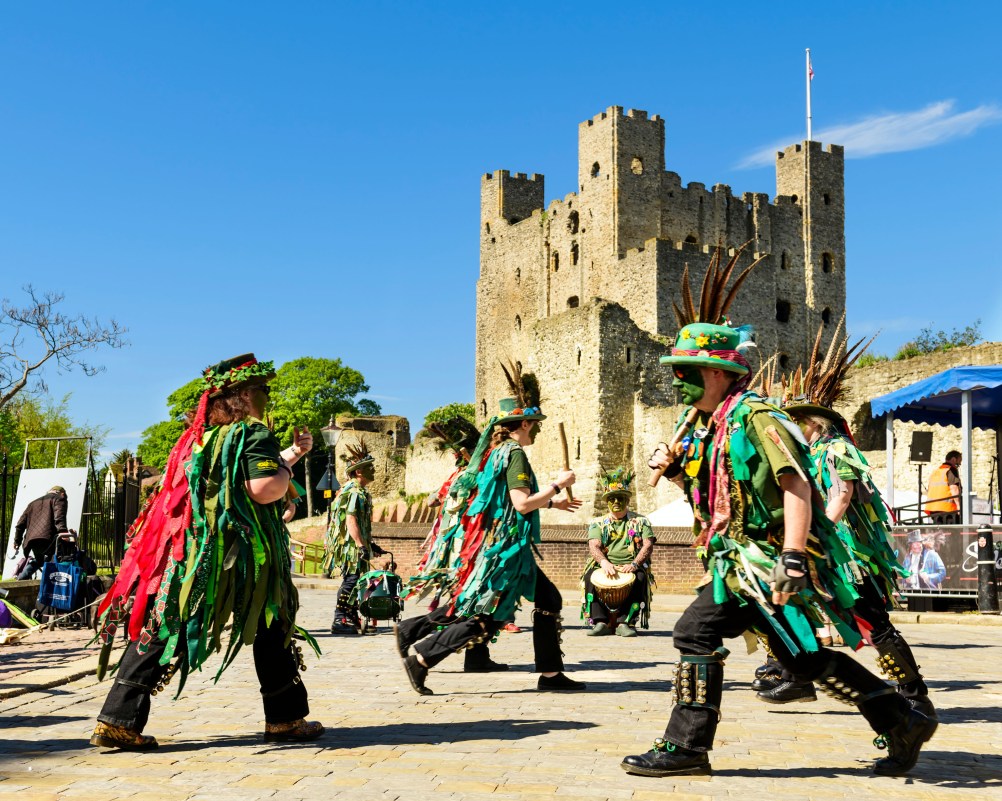 Rochester Sweeps Festival
The now annual Sweeps Festival in Rochester may sound like a tourist-board invention, but it does have roots. There was an old tradition of celebrating May Day with a procession headed by Jack in the Green, a character covered from head to foot in foliage. When chimney sweeps were given May Day off in the C19, they celebrated with their own Jack in the Green procession, albeit with a suitably grimy patina. Three of the five southern English towns best known for the custom – Bristol, Deptford, Hastings, Rochester, and Whitstable – were in Kent. Charles Dickens gave an admittedly rather mournful account of Rochester’s 1836 sweeps parade in ‘The First of May’, part of his ‘Sketches by Boz’ series. The custom died out early in the C20, but Dickens’ adopted hometown chose to revive it in 1980. It has been going strong ever since, even if real chimney sweeps are now rather hard to come by.
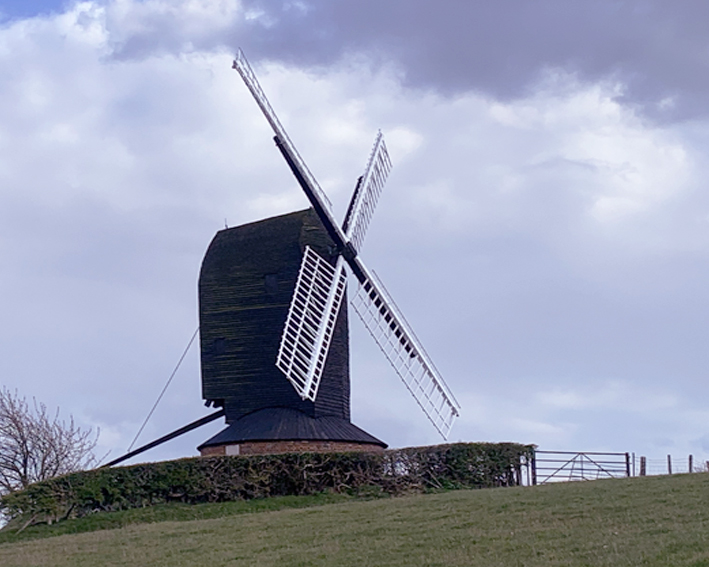 Rolvenden Windmill
The windmill close to Hole Park at Rolvenden is interesting for a number of reasons. First, it is easy to observe, being both beside Benenden Road and visible across the fields. Second, it is an example of a post mill, the oldest kind of windmill, in which the whole building rotates around a post to allow the sails to move into the wind; later windmills such as the smock mills at Sarre and Willesborough have a static base. Third, it is only by a stroke of misfortune that it is still there to see. The original C16 mill was replaced around 1700, and stopped working in 1883. Thereafter, it was left to deteriorate badly and might have been demolished, but for the fact that the owners’ son John Barham was killed in a road accident in 1955, and his parents restored it in his memory. In 1988, the mill featured in the opening credits of the ‘Mr Majeika’ TV series.
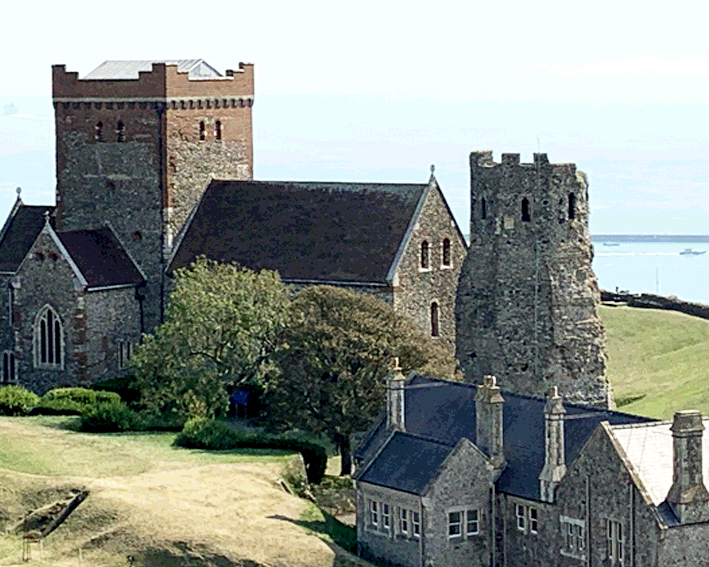 The Roman lighthouse at Dover
Early in the C2, the occupying Romans decided to make Dover the homeport of the classis Britannica, the ‘British fleet’ with which they would patrol these Northern waters. With usual Roman efficiency, they built a system of lighthouses to guide shipping into Dover harbour. One was at the top of Castle Hill, and a second on the Western Heights, now reduced to the vestigial ‘Bredenstone’. With their lighted braziers, they were visible both to each other and to a third lighthouse at Cap Gris Nez. The first of these has survived remarkably well, because it was later adapted as a belfry for the adjacent Saxon church St Mary in Castro. Of its 52-feet height, all but the top 8 feet is the original Roman construction. It is the tallest surviving Roman building in Britain, the most complete, and the oldest building in Britain. It is also one of only two Roman lighthouses still essentially intact.
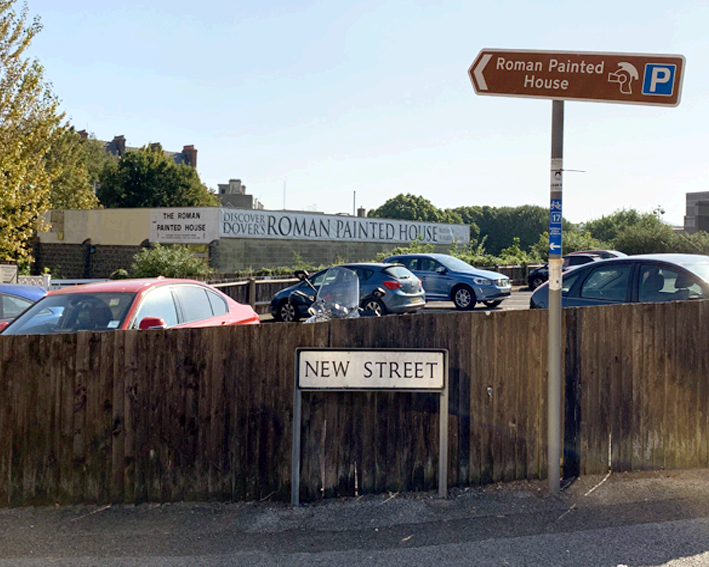 Roman Painted House
In 1970, just up the road from where the Dover Bronze Age boat would later be discovered, archaeologists making an emergency intervention in construction work came across the remains of a Roman building. It turned out to be a C3 ‘mansio’, in other words a substantial lodging for travellers to and from the continent. Five rooms were conserved, plus the house’s hypocaust, or underfloor heating. Its crowning glory was the wall decorations, of which over 400 square feet survive. These earned the house a slightly overweening soubriquet, ‘The British Pompeii’. Considering the paucity of substantial Roman ruins in Britain, however – never mind ones with murals – they are worth seeing. Certainly they testify to the status of Dubris as the Romans’ favoured entry point to Britannia later in the occupation. It’s just a shame that these ruins have not been given the setting they merit. The building off York Street has all the splendour of an amusement arcade.
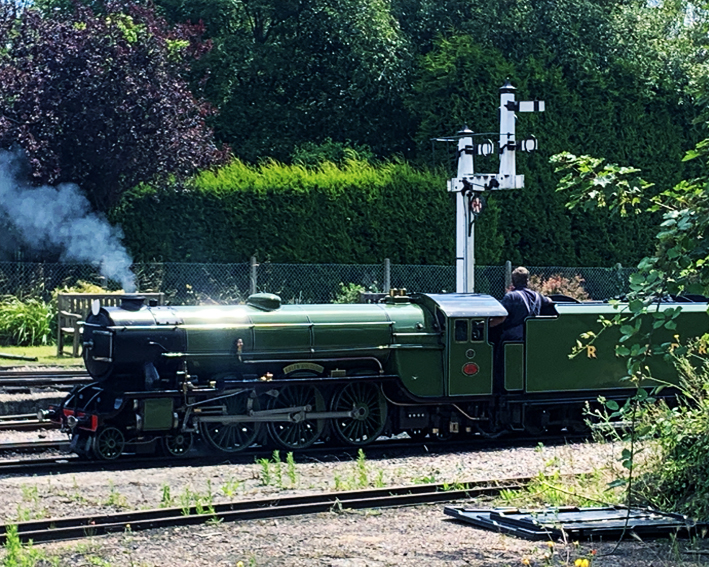 The Romney, Hythe & Dymchurch Railway
It’s hard to believe, but the miniature railway that chugs agreeably across Romney Marsh was the brainchild of a speed freak. Racing-car driver Louis Zborowski used the fortune he inherited to build his own miniature railway at his home, Higham Park. In the 1920s, he collaborated with fellow motor-racer Jack Howey on a project to build something similar on a larger scale. They decided on a 15-inch track from Hythe to New Romney, which opened in 1927. It was soon extended to Dungeness, completing a length of nearly 14 miles. The journey from end to end takes 65 minutes, reaching 25 mph. For 52 years, it remained the world’s smallest line. It has seen many accidents, some fatal, usually involving collisions with road traffic; but the several services every day carry over 150,000 passengers annually. It’s just a riddle why it isn’t called the Hythe, Romney & Dungeness Railway, which would save tourists a lot of confusion.
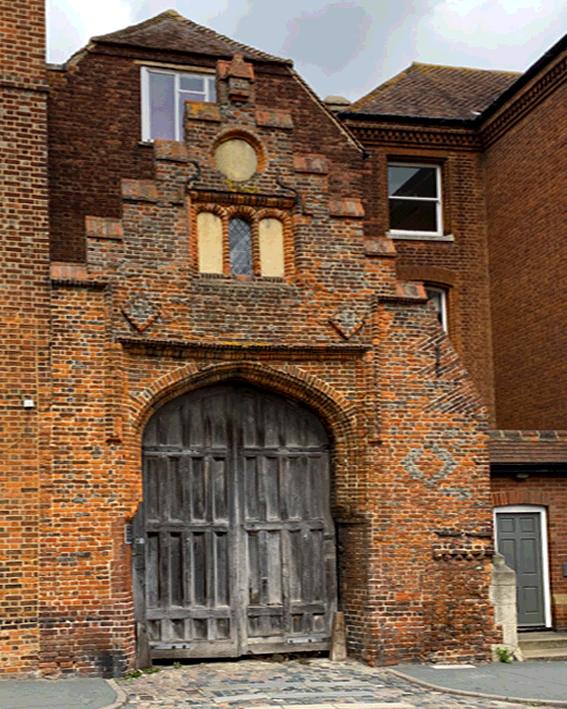 The Roper Gate
The Roper Gate stands on the north side of Canterbury’s St Dunstans Street, a short walk from Westgate. As with Conquest House opposite the Cathedral, a visit won’t take long or involve much, but it’s worth a detour for the experience. This was after all the home of William Roper, the son-in-law of Henry VIII’s Lord High Chancellor Sir Thomas More, whose tragic story was told so dramatically in the film ‘A Man For All Seasons’. After More lost his head over the Reformation, it was brought home by his daughter Margaret to be buried in St Dunstan’s Church. More had stuck by his principles to the bitter end, at a dire cost to both himself and his family. It is instructive to stand across the street and imagine Margaret Roper’s utter misery as she passed through the Gate in 1535, no doubt wondering why her father couldn’t have been slightly more pragmatic.
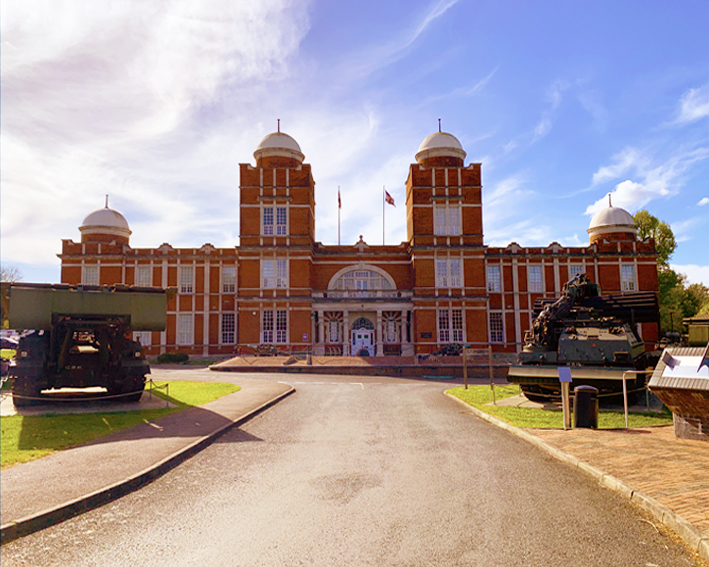 Royal Engineers Museum
The Ravelin Building started life in 1905 as an engineering school, funded to the tune of £40,000 by Major ECS Moore. In 1987, it was converted to a home for the Royal Engineers Museum, also accommodating much other military engineering history. Situated in Gillingham’s Prince Arthur Road, it displays the most extraordinary array of showpiece exhibits outside of the Imperial War Museum. Among them are a torpedo, a number of tanks, a Harrier Jump Jet, and even a German V2 rocket. Around these impressive items is a selection of the half million or so smaller objects held by the Museum, which bring home the point that winning wars is about more than just fighting. One particularly poignant object is the map used by Wellington at Waterloo: ten scraps, hurriedly pasted together, that served their purpose well enough to win the day and spare Europe another decade of conflict.
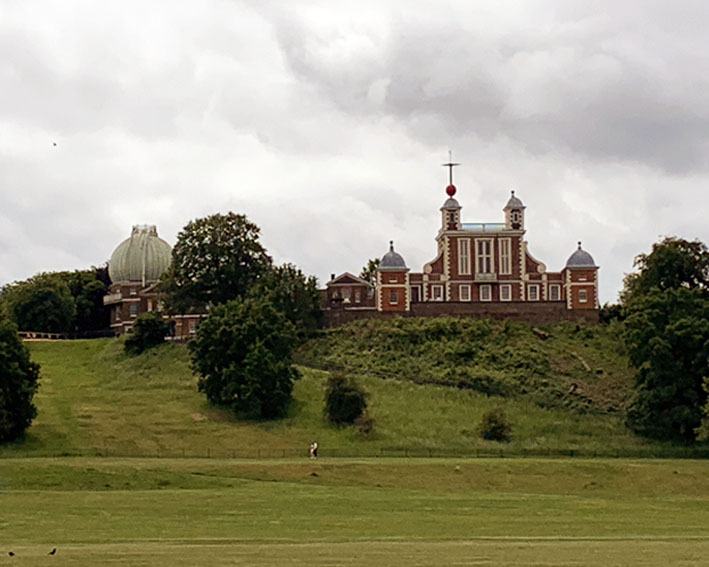 The Royal Observatory
The original reason for building the Royal Observatory at Greenwich had little to do with astronomical investigation in the modern sense. King Charles II ordered it in 1675 because of the pressing need for accurate star-charts to help ships to establish their longitude. The site was chosen by Sir Christopher Wren at a suitably dark place away from London. The star-map project was to be supervised by an official known as the Astronomer Royal, the first appointee being John Flamsteed; the basis of the modern building was his house. In the C19, the Greenwich Observatory took on world importance as the home of the Greenwich Meridian. It became more associated with time than space, particularly after its astronomical functions were taken over by a new observatory at Herstmonceaux in 1957. Nowadays it is primarily a tourist attraction, annually drawing around two million visitors a year to the museum, planetarium, and date line.
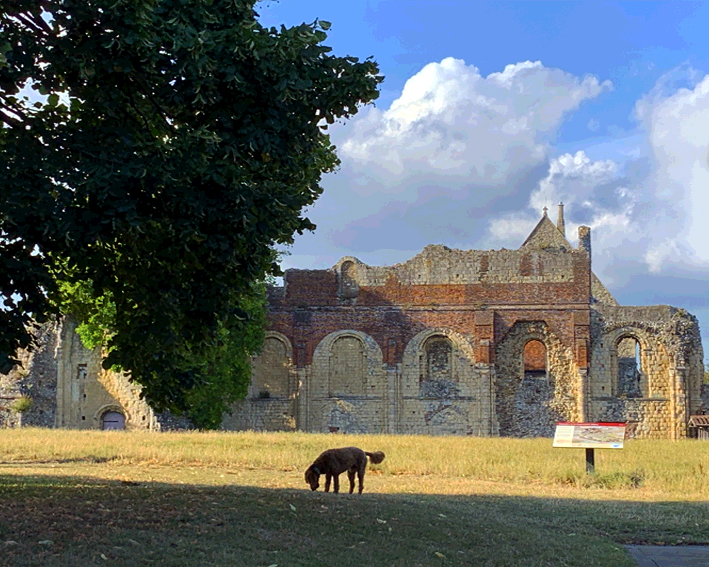 St Augustine’s Abbey
King Henry VIII was a revolutionary who thoroughly subscribed to the redistribution of wealth, specifically into his own coffers. Of all the vandalism he perpetrated in dissolving the monasteries for the ostensible benefit of the Reformation, arguably the most egregious was his destruction of St Augustine’s Abbey. Obviously he was most preoccupied with stealing the Church’s wealth, at the same time as lessening the likelihood of a counter-Reformation; and, to be fair, the Abbey contained a lot of stone that local builders could put to good use. Nevertheless, he perhaps lacked a decorous sense of history. The Abbey was after all the creation of the saint who had converted the English to Christianity. It was also erected by courtesy of Aethelberht I, king of Henry’s own natal county, Kent. If one pauses today amid its huge expanse to survey the remnants of that once iconic institution, it feels rather like standing on a bomb site.
 St Augustine’s Conduit House
To be honest, a visit to the St Augustine’s Conduit House in Canterbury is only for the hardened tourist. All that is visible behind the iron railings is some ancient stonework that once formed part of the Abbey’s crucial water supply, with an explanatory panel. It lies in the most incongruous place, tucked away in a modern cul-de-sac just off St Martin’s Road. This demands a long walk out to the city’s easternmost limits. Perhaps the best reason for making a point of going there, preferably on the back of a trip to the Abbey and St Martin’s Church, is the bragging rights it conveys. Anyone who boasts that they have seen all the sights of Canterbury can be asked, “Ah! But did you see St Augustine’s Conduit House? We did.” Just make sure not to be squelched by the response, “So did we! But how did you get there – on foot, or did you cheat by driving?”
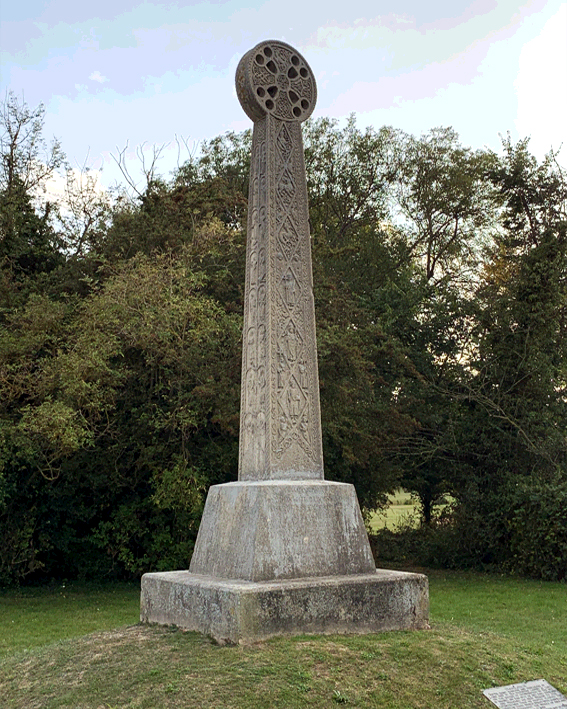 St Augustine’s Cross
One spot worth visiting after a trip to Pegwell Bay is St Augustine’s Cross, just west of Cliffsend. It was previously the site of Augustine’s Oak, which legendarily was the spot where, in 597, King Aethelberht greeted St Augustine and his entourage of 40 monks, plus one or two Frankish interpreters. By that time, the area was a popular resort for foreign visitors, both the Roman and Germanic invasions having begun there. The Foreign Secretary Lord Granville, who also happened to be Lord Warden of the Cinque Ports, ordered the erection of the Cross in 1884. It is surprisingly tall, at 23 feet. Its column is decorated by carvings that include the symbols of the four evangelists – man, lion, bull, and eagle – and is incongruously topped by a Celtic cross. Standing alone beside cornfields, yards from a lay-by on Cottington Road, it feels strangely forlorn, though modern housing built within eyeshot ensures that nobody gets carried away.
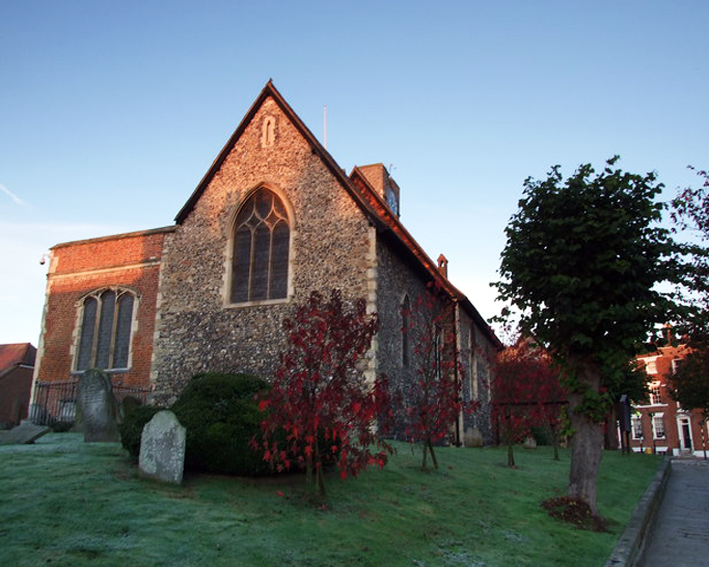 St Dunstan’s Church
A C11 church on the Whitstable road a quarter-mile from Westgate in Canterbury, St Dunstan’s is one of the more history-packed of English churches. It was named after the C10 archbishop St Dunstan, whose life is commemorated in one of its large stained-glass windows. In 1174, after the murder of Thomas Becket, Henry II rode there on his pilgrimage of repentance, changed at the church into something more humble, and proceeded on foot to the cathedral. Then, after Sir Thomas More was executed at the Tower and his head brought back to Canterbury by his daughter Margaret, it and she were buried in her husband’s family vault in the church; a floor plaque records it. The church also commemorates Pope John Paul II’s unprecedented visit in 1982, something that would never have been tolerated by the Puritans who destroyed St Dunstan’s tomb in the cathedral during the Reformation. The church even boasts a bell dating back to 1325.
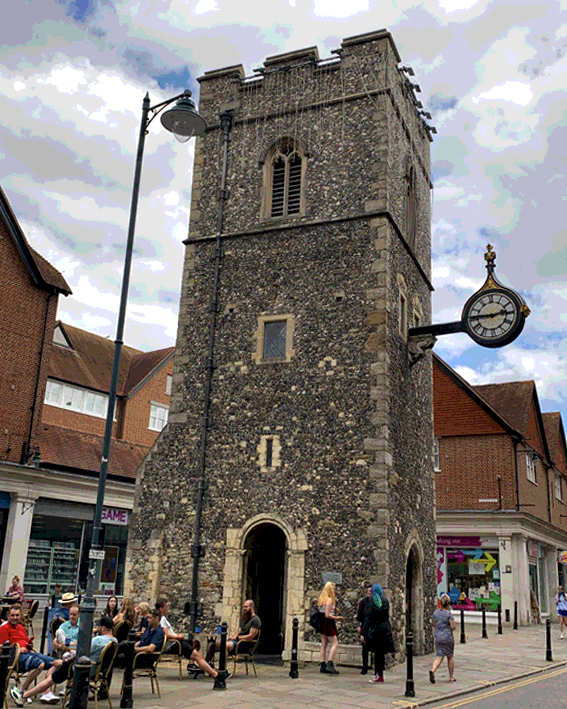 St George’s Tower, Canterbury
The Tower is all that remains of the old church of St George’s, in the heart of the city near the corner of St George’s Street and Canterbury Lane. It is instantly identifiable from the prominent clock added in 1836, which sticks out like a key in a door. The church it was added to around 1400 was a Norman development of a much earlier construction; it became famous as the place where Christopher Marlowe, whose family lived opposite, was baptised. After swallowing up the neighbouring St Mary Magdalene parish, it flourished until WW2. Then, on June 1st, 1942, with the war beginning to go badly for Germany, the Luftwaffe obliterated this historic quarter, leaving only fragments of the church that were demolished a decade later. Only St George’s Tower remained. Certainly it stands out, surrounded by paving in the middle of a busy shopping precinct, but it has the awkward look of a great-grandfather at a wedding reception.
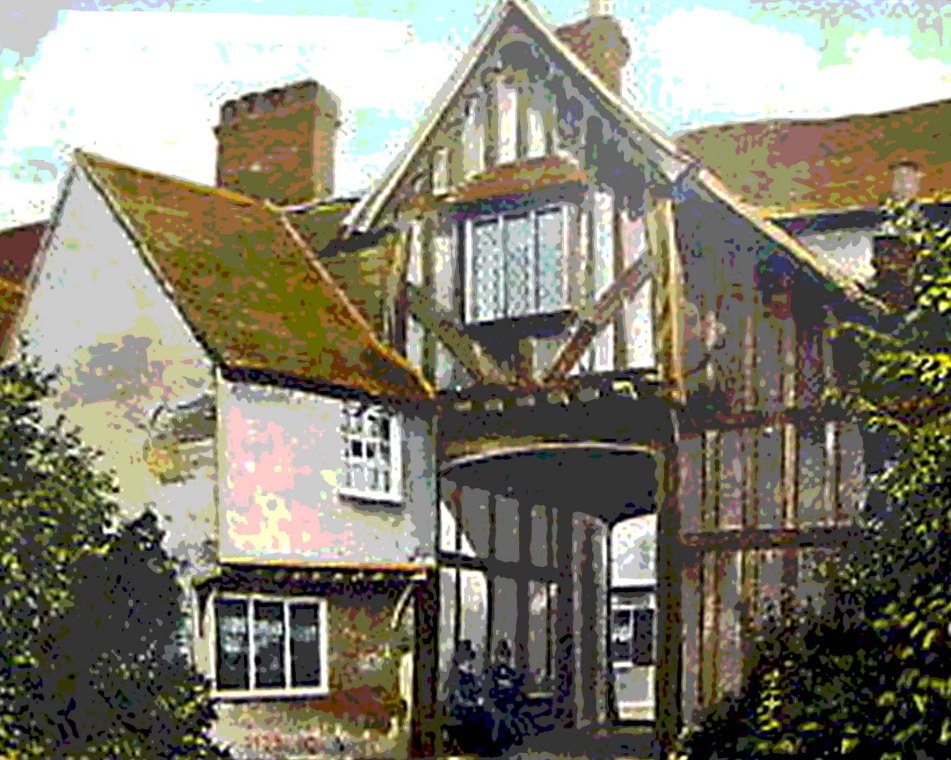 St John the Baptist Hospital, Canterbury
For a building so easily overlooked as you walk past on the way into Canterbury, the hospital of St John the Baptist on Northgate is extraordinarily interesting. Like the Eastbridge Hospital in the High Street, it was in fact an alms house designed to cater for the needy. It is however even older, having been founded around 1085 by Archbishop Lanfranc. It is therefore reckoned to be the oldest such ‘hospital’ in England. It originally catered for around 60 inmates, both female and male, and somehow managed to survive the Dissolution of the Monasteries. What lies beyond the imposing door is surprisingly impressive, much of the original T-shaped structure having survived. It even includes what is reckoned to be England’s oldest toilet, which was probably used into the C19. It can only be visited by special arrangement because – and here’s the thing – it still continues, after 900 years, to provide sheltered accommodation for a couple of dozen people.
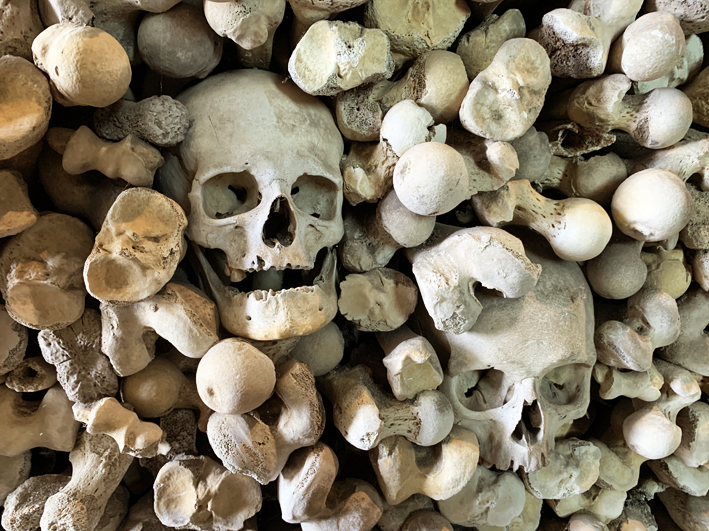 St Leonard’s Church Ossuary
It may not be as macabre as Portugal’s Capela dos Ossos – a temple lined from ceiling to floor with painstakingly arranged human bones – but Hythe’s St Leonard’s church gives a nice taster. The crypt contains four arched bays, each occupied by 17 shelves. All are filled with rows of skulls, evoking the living-room of a fanatical collector of Toby jugs. There is also a stack of bones and skulls six feet high, six feet wide and eight yards long. The number of bones runs into thousands, making this the biggest such collection in Britain. Some are apparently of Italian origin, and may date back to the Roman era. What they are doing there is anyone’s guess. They were possibly exhumed when the church was expanded in the C13, and stored in the basement until somewhere better could be found. Apart from eliciting “Alas, poor Yorick!” sentiments, the place makes you wonder about mankind’s undying fascination with redundant body parts.
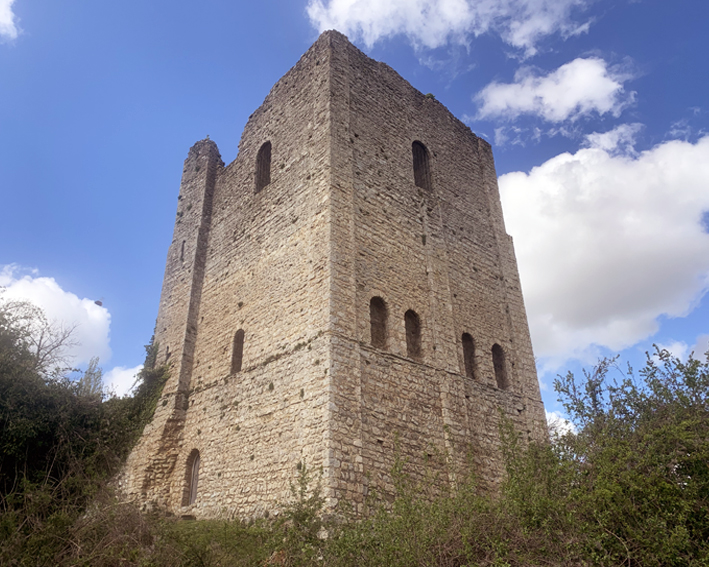 St Leonard’s Tower
Off the road south out of West Malling stands a quintessential Norman ruin, St Leonard’s Tower. It is not what it was. During the Civil War, its Royalist owner used it as a lookout; so, after the Battle of Maidstone, Parliamentarians tried to blow it up. Having failed, they knocked the top off. It is still a large affair, however, which poses a question: what was it? Having been built in the late C11 by Gundulf, Archbishop of Rochester, it was thought to be a church tower; but, if so, it is atypically large. The consensus nowadays is that it must have been a keep, which is certainly what it looks like, though this would make Gundulf a warrior bishop. It did later find other uses, serving as a prison and then a hop store, but was eventually taken into public ownership because of the risk of collapse. The exterior can still be inspected by courtesy of English Heritage.
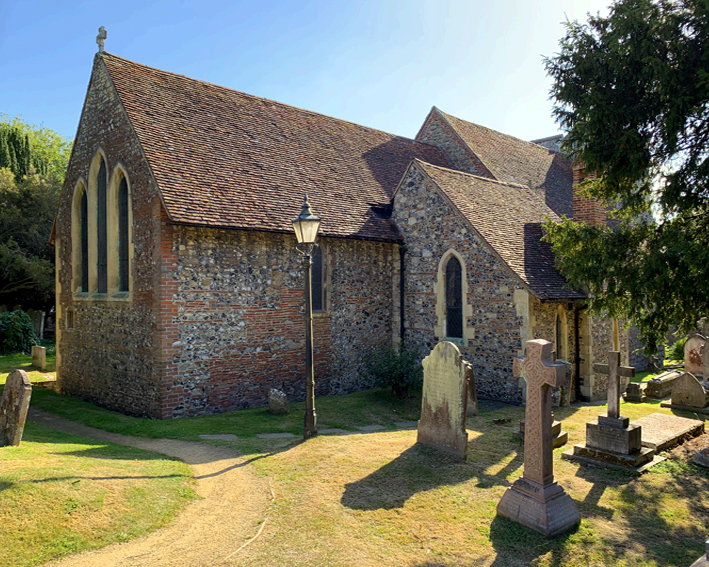 St Martin’s Church
Although St Martin’s Church off St Martin’s Hill in Canterbury looks quite modest, it is in fact a building of world importance. When the Frankish princess Bertha came from France to marry King Aethelberht, he had the church built for her to use as a private chapel. It was not actually the first church in Britain, because Roman and Celtic Christians had had their own for a century. In fact, the Venerable Bede wrote that St Martin’s was converted around 580 from an earlier such establishment. However, it was the first church ever consecrated in an English-speaking country. When Augustine arrived in 597, he used it as his headquarters, and the King was actually baptised there. Augustine immediately got the Cathedral built, however, which rather side-lined the church. Nevertheless, weekly services are still conducted in it today. In the 1840s, incidentally, a horde of Saxon gold coins was found in the graveyard that included the Liudhard medalet.
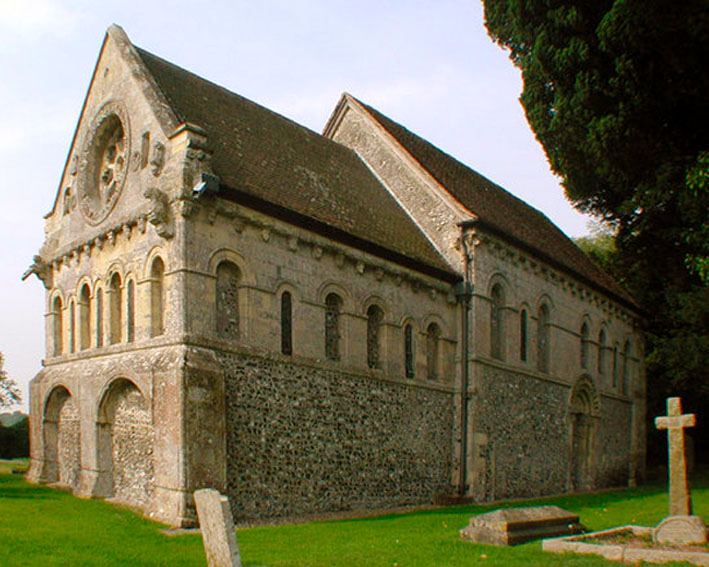 St Nicholas’s Church, Barfrestone
Unlike any other church in Kent, St Nicholas at Barfrestone, traditionally pronounced Barson, is a showcase for intricate carving, made possible by the Caen stone imported from Normandy that rests on its flint lower courses. Paid for in the C11 by Hugo de Port of Dover Castle, who took over the land from Bishop Odo, it was substantially reworked by his grandson. The ornate entrance alone is worth seeing, but both exterior and interior are blessed with a plethora of fascinating carvings, and somewhat reminiscent of a medieval French church. Squatting atop a rise, it creates quite an impression as one approaches, although its purpose might easily be misunderstood if not for the graveyard, since it has no tower or steeple. Since it required a bell notwithstanding, one has been hung from an adjacent yew tree, adding further to its eccentricity. The Yew Tree pub handily sited next door has now closed and been converted to a residence.
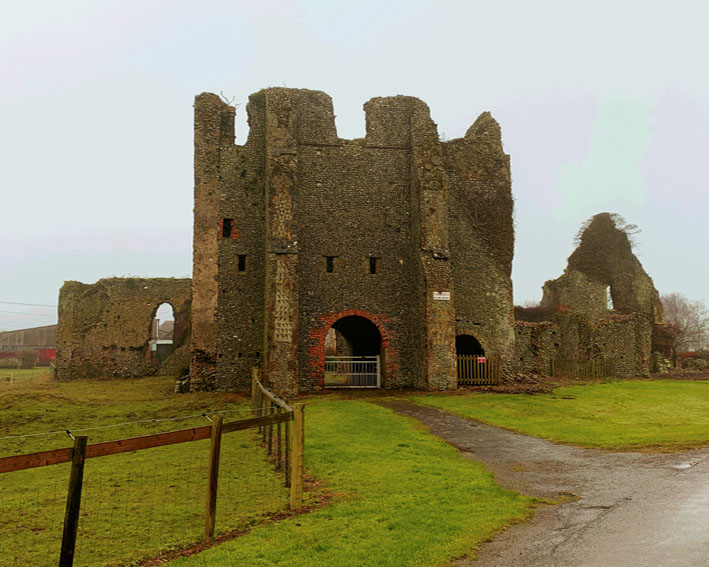 St Radegund’s Abbey
Like Bayham Old Abbey near Lamberhurst, St Radegund’s at River was a Premonstratensian abbey that for centuries has lain in ruins. Founded around 1192, it was dedicated to the canonised Thuringian princess recalled in the name of St Radigund’s Street in Canterbury. In consequence of Henry VIII’s Dissolution of the Monasteries, the site passed into the hands of the Archbishop of Canterbury in 1538, after which it fell into disrepair. The ruins are less extensive than Bayham’s, but no less evocative, largely because of their location on an exposed ridge between the Coombe and Alkham valleys. Though they loom impressively in the mist, it is not possible to explore them closer up unless one is staying in one of the converted barns offered by the farm of which they now form a part. The site is reckoned to be the imaginary location of Greyfriars, the school created by Thanet resident Frank Richards for his Billy Bunter books.
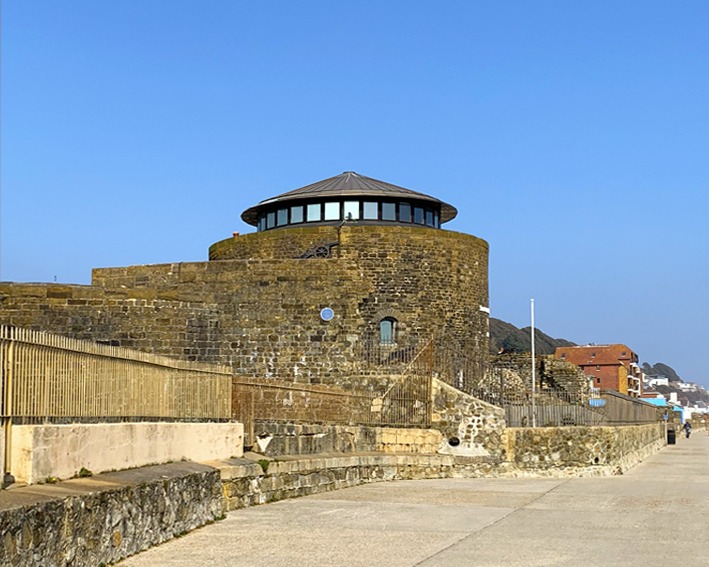 Sandgate Castle
The story of the seaside castle at Sandgate is a repeated case of build in haste, neglect at leisure. It was constructed in 1540 after King Henry VIII upset the Holy Roman Emperor and a French invasion looked likely. He ordered a fort to defend Sandgate’s beach, which would otherwise have looked inviting to invaders. It consisted of a gatehouse defending the entrance to an inner keep, which was surrounded by three well-armed towers. It was never used, and decayed very quickly. It changed hands during the Civil War without seeing any actual fighting. Having again fallen into disrepair, it was thoroughly rebuilt around 1805 in the face of an expected Napoleonic invasion, but again pointlessly. The biggest threat to it was in fact the sea, which kept chipping away until it eventually demolished the southern third. The Castle was privately restored in the 1970s and topped with a sun room. It is now used as commercial premises.
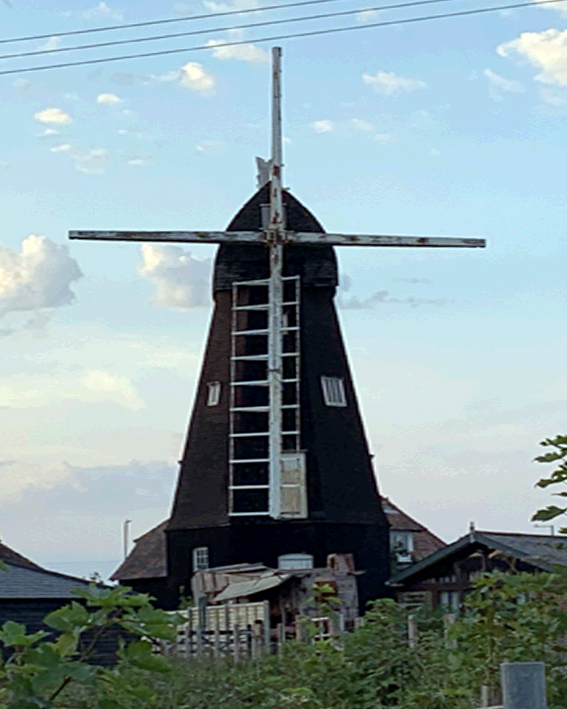 Sarre Windmill
A smock mill is so named because of its supposed resemblance to an old-time farmer wearing a smock. Six- or eight-sided, it splays outwards towards the bottom, and has a revolving roof that allows the sails to rotate into the wind. The smock mill at Sarre, south-west of Birchington, was built in 1820. Its height was raised in 1856 by the addition of a new ground floor, and in 1861 it became the first windmill in Kent to be provided with a steam engine to provide auxiliary power. Consequently, its sails were eventually considered redundant, and were removed in 1920 to the Union Mill in Cranbrook. The Sarre mill carried on working until 1940, now powered by gas, but fell into disuse when frost damaged the engine. It was restored in the late 1980s, and now looks a handsome black-and-white construction. It was available until recently as a holiday let.
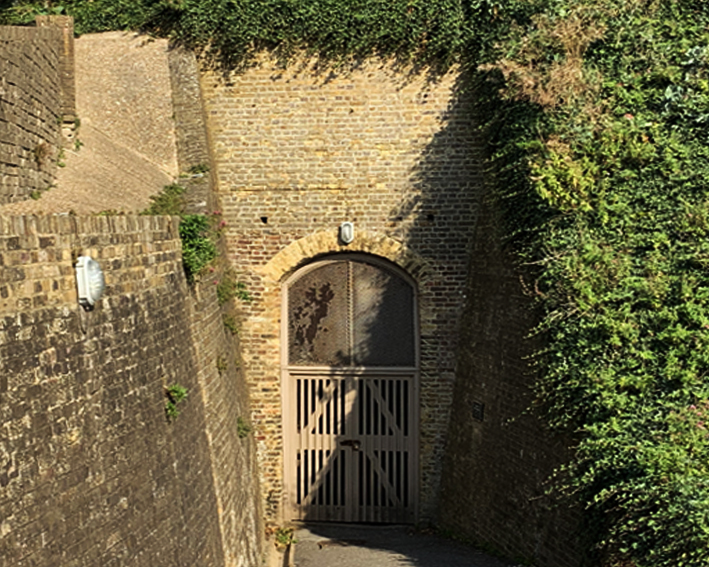 The Secret Wartime Tunnels
Annexe, Bastion, Casemate, Dumpy, and Esplanade will mean nothing unless you have visited Dover Castle’s ‘Secret Wartime Tunnels’. They are the codenames given during WW2 to the five levels of tunnels cut into the Dover chalk. By then, Casemate was already more than a century old, its seven tunnels having been the British Army’s answer to the problem of where to house 2,000 officers and men sent to resist Napoleon’s expected invasion from just over the Channel. Those tunnels took on a new lease of life in 1940, when a headquarters safe from Luftwaffe attack was needed for organising the Dunkirk evacuation. Dumpy and Esplanade were bomb shelters, and Bastion caved in; but English Heritage now conducts 50-minute tours of Annexe and Casement, where reconstructions of wartime scenes are installed. Apart from being instructive, it gives a lasting impression of what it must have felt like working down there, faced first by despair and then untold relief.
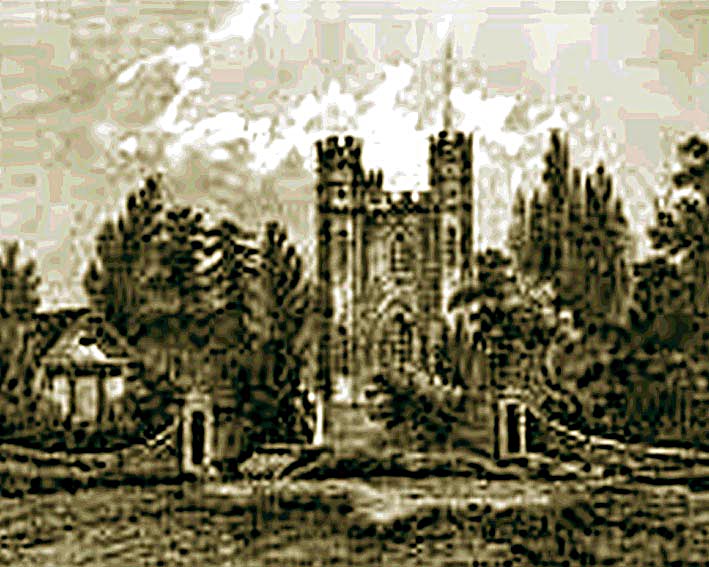 Severndroog Castle
Suvarnadurg was a fort off India’s west coast captured in 1660 by the Maratha Empire from the Sultan of Bijapur. Having degenerated chronically into a dangerous pirate base, it was finally neutralised with Marathi help by Commodore Sir William James of Eltham in 1755. His wife commemorated the feat after his death in 1783 with the construction of a tower on Shooters Hill. She named it Severndroog Castle, even though it was actually a folly, and Severndroog was hardly an elegant anglicisation of the Marathi for ‘Golden Fort’. The tower immediately won a minor place in science history when it became one of the trigonometric landmarks used in the Anglo-French Survey. In 1986, it passed into the hands of Greenwich Council which, evidently feeling no responsibility for it, boarded it up. Local preservationists established a trust in 2002, and after restoration the castle was reopened in 2014 with a viewing platform and tearoom.
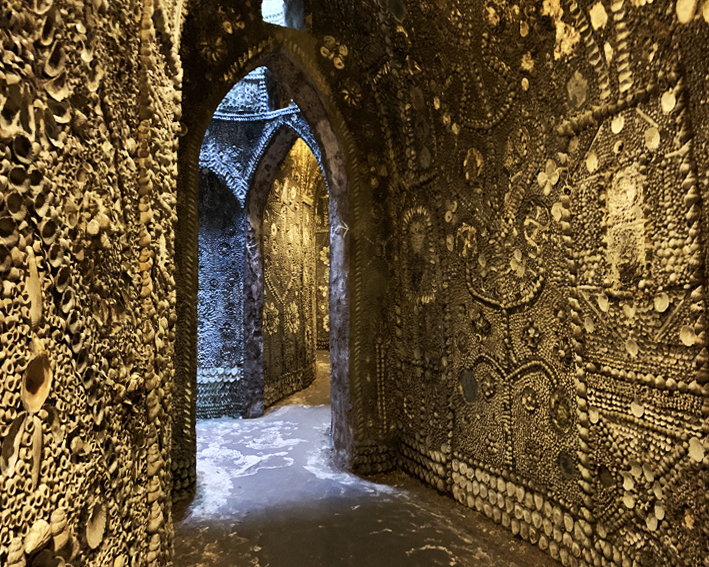 The Shell Grotto
In 1835, schoolmaster James Newlove of Margate announced a great discovery. By lowering his son Joshua into a hole beneath a capstone, he had discovered a tunnel decorated from top to bottom with seashells. The shells were of every type and colour, and arranged decoratively. There were around 4.6 million of them. The main tunnel led to a circular area – the ‘Rotunda’ – containing a hole in the ceiling to admit light, and then snaked to a chamber called the ‘Altar’. Naturally, it was a sensation, and became a must-see paying attraction on any visit to Thanet. The Grotto has suffered degradation because of water ingress and fading of the shells’ colours, but did recently undergo a five-year restoration. There has been endless speculation as to its age, creator, and purpose, but strangely no science has been done. New Agers still picture it as a pagan temple from ca 1000 BC, whereas Old Cynics look to James Newlove’s finances.
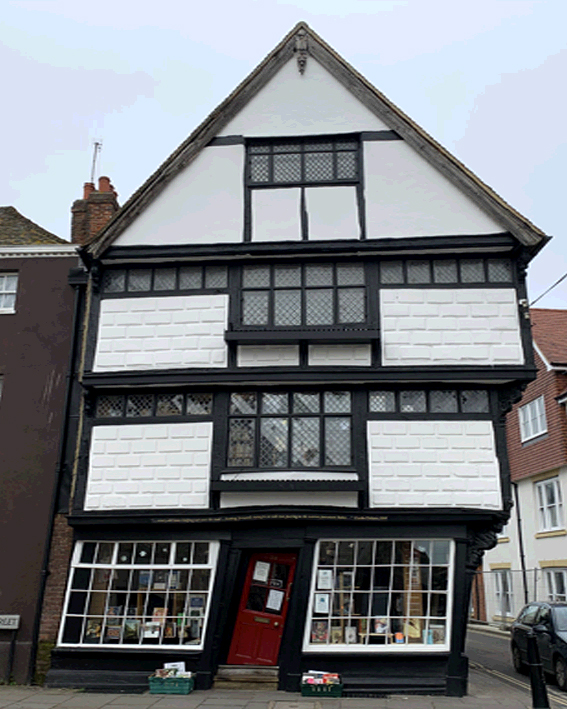 Sir John Boys House
Perhaps the most photographed building in Canterbury after the Cathedral is the crazy house in Palace Street. Most visitors assume that it was deliberately built that way as a curiosity, especially given its very prominent position; but they are wrong. Elizabethan houses often have a ‘jetty’, an overhang on the first floor designed to provide more space than the ground plan. The designers of this house simply overreached themselves. They added a further floor with another jetty, which made the house unstable. When in 1988 an internal chimney collapsed, the house teetered. What we see today is the preservationists’ best effort to save it from collapse. The house was never actually owned by Sir John Boys, who was dead by the time of the construction date it bears, 1617. More probably it was like the Old Weavers’ House in the High Street, a workshop for Flemish refugees. It now houses a bookshop.
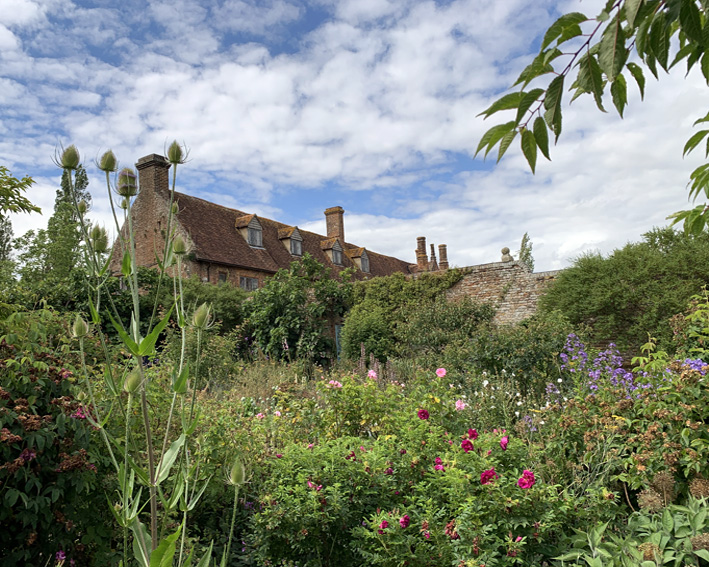 Sissinghurst Castle Gardens
Of the many fine gardens in Kent, those at Sissinghurst Castle are among the crème de la crème. One reason is the exceptionally photogenic backdrop lent by the main house and its subsidiary buildings, complemented by a picturesque moat and, slightly further away, a quintessentially English lake. What pleases most, however, is the ingenuity that was put into laying out the gardens. While Harold Nicolson took charge of the architectural side, his wife Vita applied her poetic imagination to arranging the planting. Described as ‘rooms’, the several sections do indeed have a sense of being painstakingly planned for internal coherence and overall complementarity, like the chambers of any great house. Leaving one room behind leads one onto another, altogether different in flavour yet equally striking. Unlike any house, however, the furnishings change entirely with the seasons, so that regular visits are amply rewarded. Sissinghurst is truly a feast for the eyes, as well as for the nose.
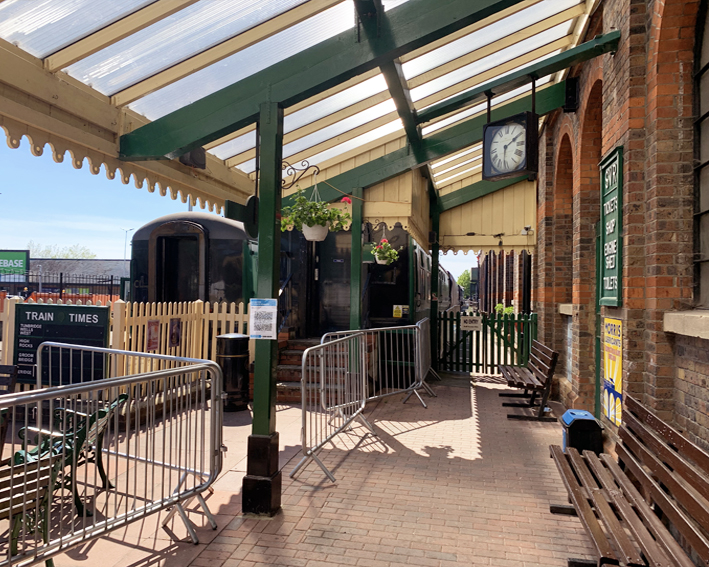 Spa Valley Railway
A railway line from Tunbridge Wells to East Grinstead was conceived in 1835. It was the product of railway companies seeking new business opportunities by joining up unconnected dots on the map. This particular line offered the people of East Sussex a fast connection to London via Tunbridge Wells. It survived until mass ownership of cars destroyed its viability. After it closed in 1985, a group called TWERPS fought to preserve the 5-mile stretch between Tunbridge Wells and Eridge. Plans for a Spa Valley Railway were nearly fatally damaged by the construction of a Sainsbury’s store on the goods yard, but the grocers were compelled to pay for a new station platform. The SVR received a further boost in the shape of rolling-stock from Dartford’s North Downs steam railway, which was closed in 1996 because of vandalism. The SVR now runs services connecting up local tourist sites, including the Pantiles and Groombridge Place, and includes two steam engines among its locomotives.
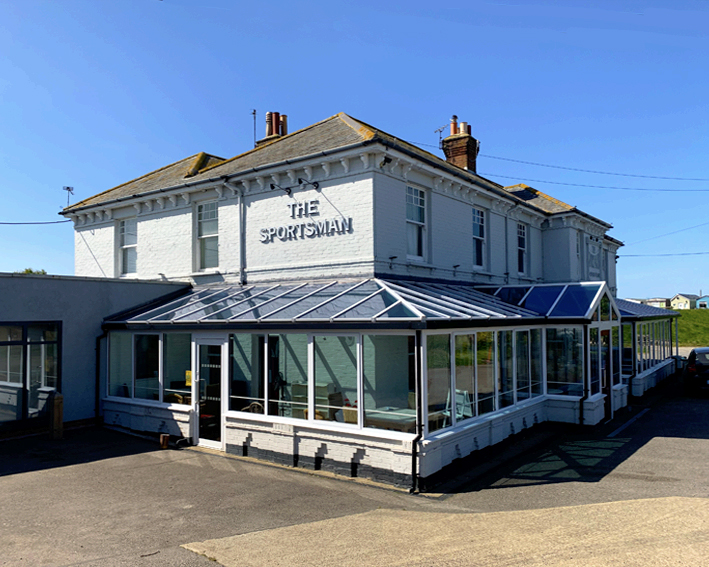 The Sportsman
Since Kent produces first-class foodstuffs and beverages, it is only appropriate that it should be home to some top-class restaurants. The Sportsman at Seasalter used to be what its owner, Stephen Harris from Whitstable, describes as a “grotty rundown pub”. Tired of the City, he took it over in 1999, having taught himself to cook. He proved a natural chef. Part of the secret of his success was a commendable belief in trusting entirely to local produce. He even goes so far as making his own salt from the local seawater. Apart from creating dishes that give the finest London restaurants a run for their money, he charges sensible prices, so there is nothing not to like. The Michelin-starred Sportsman has repeatedly won national ‘restaurant of the year’ competitions, and even sees top chefs coming along to see how it’s done. There’s only one problem: it’s a devil of a job to get a table.
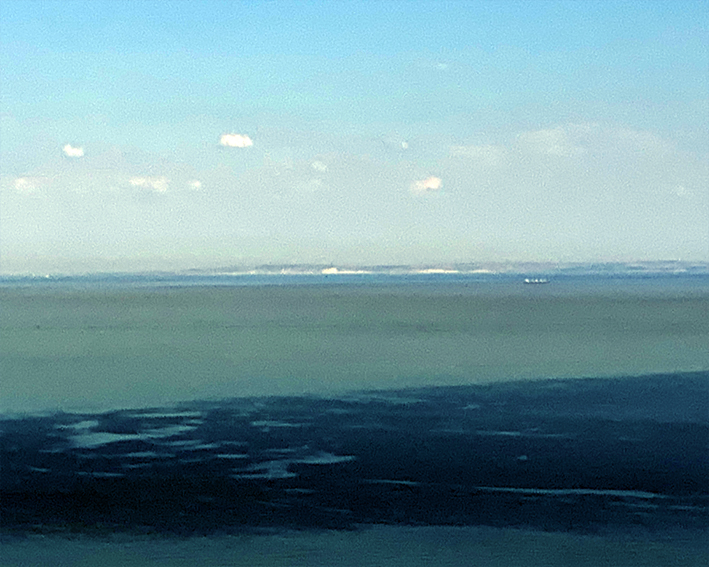 The Strait of Dover
The Pas de Calais, or Strait of Dover as we prefer it, is effectively an 18-mile-wide canal. After all, it spares most North Sea and Baltic shipping the long, uncomfortable journey around Scotland to reach the Atlantic, thanks to an international convention that permits universal passage through these Anglo-French waters. Generally reckoned the busiest shipping-lane in the world, it sees around 20 vessels pass through every hour, which makes for a heady navigational brew when you throw in ferries crossing at right angles. With the additional risk of running aground on the Varne Bank, negotiating the strait was a seriously risky business before lanes were introduced in the 1960s, even with the benefit of multiple lighthouses. The strait nevertheless is a serene sight from the White Cliffs on a fine day, when France looks almost within hailing distance – a reminder that Shakespeare’s “moat defensive” used to prove considerably less porous than the Belgian border.
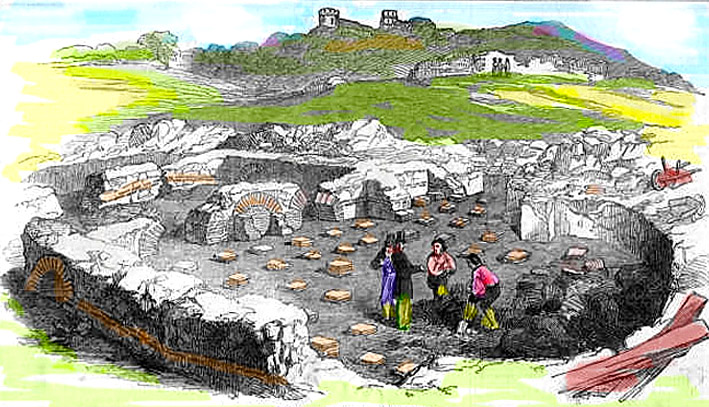 Stutfall Castle
Lympne gets its name from Portus Lemanis, the Roman naval base established by the early C2 that also gave rise to the river name Limen, now the Rother. Connected by road with Canterbury and, less directly, Maidstone, it was strategically significant and so had a substantial fortification built to protect it. Constructed in the late C3, this formed part of the Saxon Shore defences, and was no meagre affair: it may have had a rampart over 20 feet high and 12 feet deep, boasted all of 14 defensive towers, and covered as much as eight acres. We cannot be sure, because the incline on which it lies is generally clay, and subject to subsidence. Consequently, only fragments of the ruins remain, albeit still visible from an adjacent footpath. Despite that, the views justify the steep walk down from Lympne Castle on the promontory above and along the Royal Military Canal to the sea, which has long since receded. ‘Stutfall’ probably comes from the Anglo-Saxon for cow-meadow.
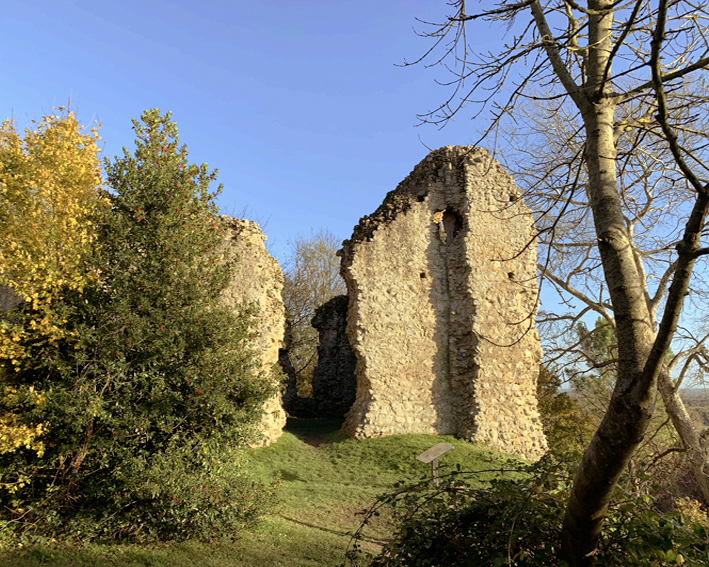 Sutton Valence Castle
The reason why there are so many Westons, Eastons, Nortons, and Suttons in England is that these were the standard Saxon names for settlements west, east, north, or south of a town. The Sutton south of Maidstone was one such. Being at the top of the hill on the main road to Rye, it was an obvious place for a Norman castle. One was built there in the late C12. It assumed some historical significance for a while during the Second Barons’ War, after Simon de Montfort married Eleanor, who had inherited it from her first husband, the Earl of Pembroke. When de Montfort was killed, King Henry III confiscated it. In 1265 he gifted it to William de Valence, from whom the local village got its name. The Castle was abandoned as early as the C14, and became a ruin. There is little left to see, but it is worth a visit for the view alone.
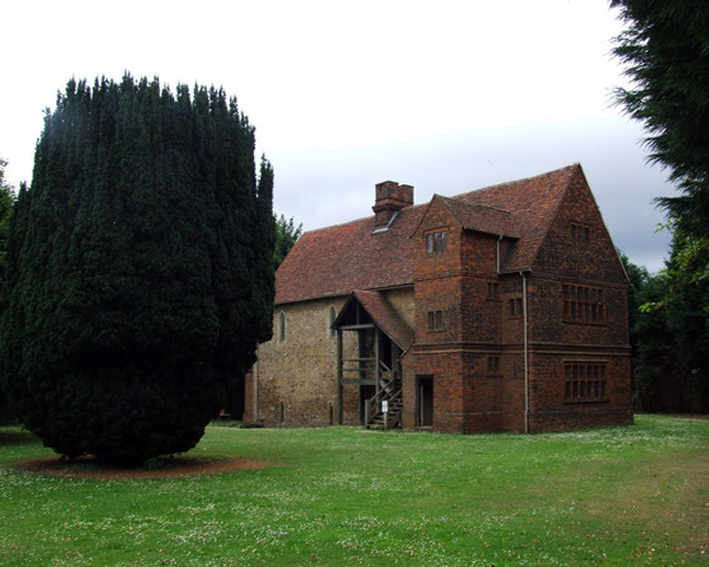 Temple Manor
The history of Temple Manor at Strood is a saga of ups and downs suggesting an architectural version of ‘Black Beauty’. There was a habitation on the site in Roman days, and later a medieval manor. With Henry II owing money to the Knights Templar, he gifted the manor to them in 1159. Only a handful of knights would have lived there, supported by several dozen brethren. The present construction, which did not emerge until around 1240, probably served as a lodging for travelling worthies. It was taken over by the Knights Hospitaller in 1312, but abolished as a religious institution upon the Dissolution of the Monasteries. It then became the property of the influential Cobhams, until it was confiscated under the Stuarts. Following numerous other changes of ownership, it was sold to the City of Rochester in the 1930s. It then underwent considerable decay; but, threatened with demolition in 1950, it was listed Grade 1, and survives intact.
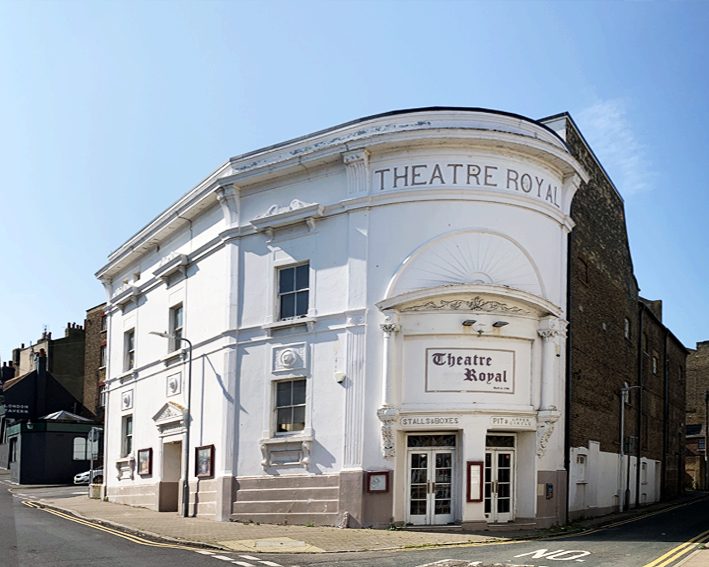 Theatre Royal, Margate
What the Theatre Royal in Margate’s Addington Street lacks in grandeur, it makes up for in history. Having been founded in 1787, it is said to be the second oldest theatre in the country, and to have the oldest stage. It was originally built to compete with two other theatres in the town, both now defunct. In 1874, it underwent a transformation, being converted from a Georgian playhouse to a classic Victorian theatre with a gallery. It is by no means large, but that is one of its virtues. With only 13 rows of seats in the stalls, it feels cosy, and everyone gets to see the actors’ expressions. Between 1861 and 1899 it was mostly managed by actress Sarah Thorne, who set another record by establishing the nation’s first drama school there in 1885. Since her death, the Theatre has suffered a catalogue of difficulties, including multiple closures. It is now managed by Your Leisure Kent.
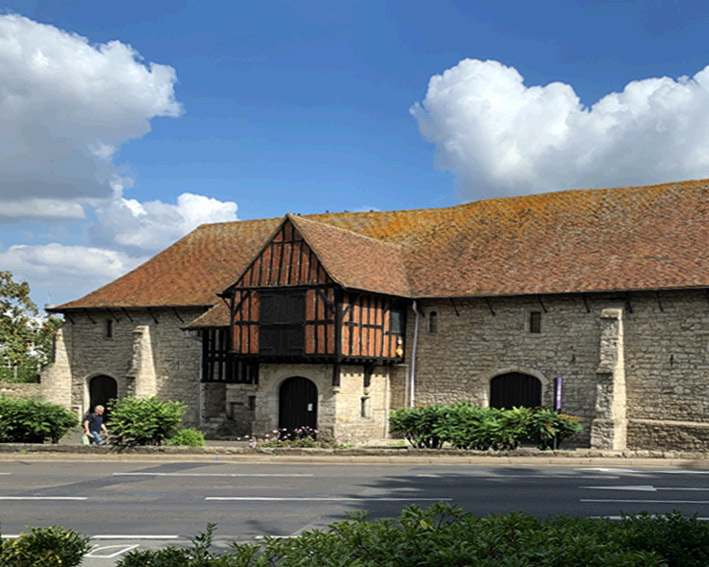 The Tithe Barn, Maidstone
The C14 tithe barn at the lower end of Mill Street in Maidstone is as incongruous a town-centre edifice as can be imagined, and a permanent reminder of what a thoroughly rural place Maidstone used to be. A tithe barn was a means whereby the Church legally expropriated public wealth in the Middle Ages. Farmers were obliged to hand over one tenth of whatever they produced, which in the case of mid-Kent farmers was stored in Maidstone’s capacious Tithe Barn for the benefit of the neighbouring Archbishop’s Palace. When the practice fell out of favour, the Tithe Barn was converted to stables for the Archbishop’s horses. It came to have a more public-spirited use in 1946, thanks to Sir Garrard Tyrwhitt-Drake, the 12-times Mayor of Maidstone who also opened a zoo at Cobtree Manor. He converted the Tithe Barn to house a fine collection of carriages he had saved from destruction, which can still be inspected there.
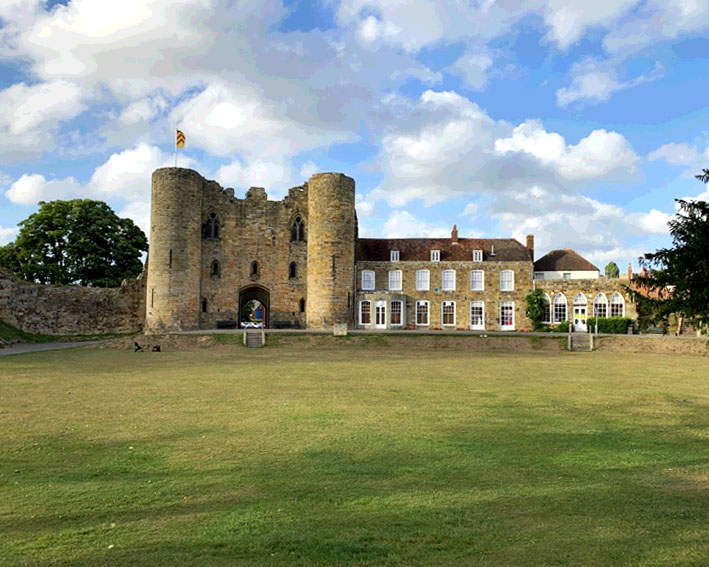 Tonbridge Castle
If Hall Place in Bexley looks an uncomfortable marriage of styles, Tonbridge Castle has to be seen to be believed. It started life shortly after the Norman Conquest in 1066, when Robert Fitzgilbert built a classic motte-and-bailey castle to defend the Medway. His descendants, the de Clares, ended up at war with King William II in 1088, and lost. As retribution, both castle and town were burnt down. The de Clares – who would remain one of the most powerful families in England until 1314 – nonchalantly rebuilt the castle in stone. It was substantially rebuilt in 1259, and King Edward I was entertained there with Queen Eleanor. After the Castle was abandoned, its stone was pilfered for centuries, though the old Gatehouse survived. In 1793, a mansion was built next to it, creating the unfortunate clash of styles seen today. The site is now used for borough council offices, and the grounds are a public park.
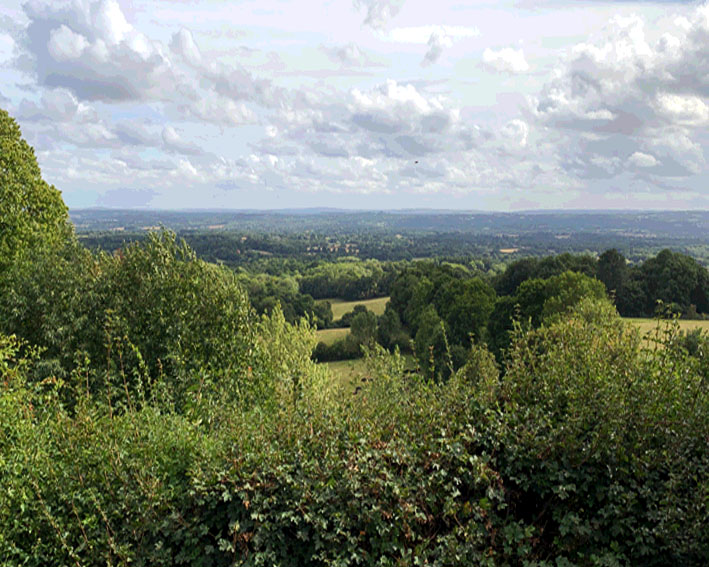 Toys Hill
At 771 feet, Toys Hill, south-west of Sevenoaks, is one of Kent’s highest points. It forms part of the Greensand Ridge in the area where it separates the Vale of Holmesdale from the Weald. Being so steep, it is mercifully unsuitable for development, and remains densely forested. It probably got its name from one Robert Toys, who received permission from the Manor of Otford to keep pigs there in 1295. The Victorian social reformer Octavia Hill, who lived nearby, paid for a viewing platform to be erected in the delightfully named Puddledock Road in the hamlet of Toys Hill. It was in fact one of the first properties acquired by the National Trust, which has now expanded it to about 200 acres. The area, a Site of Special Scientific Interest, is home to a number of interesting flora and fauna. It makes a good place for hikes and, increasingly rarely in Kent, is a decent place for stargazing.
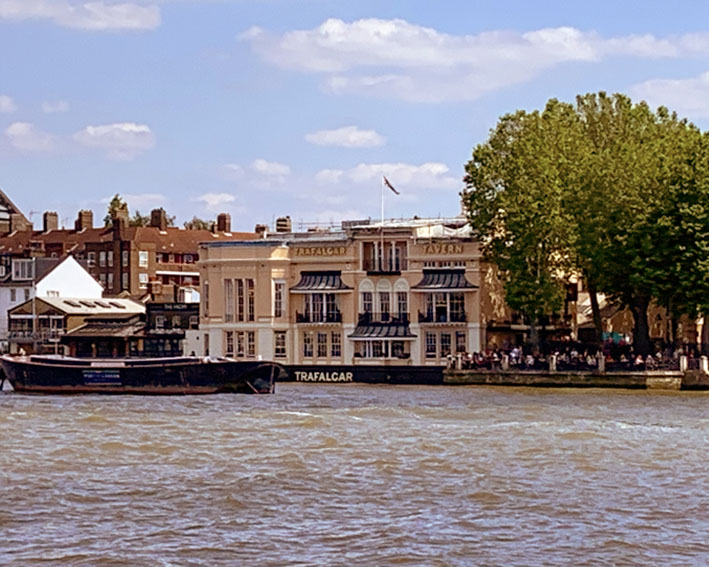 Trafalgar Tavern
One of the country’s most characterful pubs, the Trafalgar Tavern at Greenwich, came about owing to an architect’s unscrupulousness. Joseph Kay was charged in 1830 with redesigning the Old George Tavern beside the Thames. Seeing its tourist potential next to the Royal Hospital for Seamen, where Nelson had lain in state, he sabotaged the plans and acquired the property himself. The renamed Tavern built in 1837 was architecturally ornate and drew famous visitors including Charles Dickens, who based a scene in ‘Our Mutual Friend’ there, and James Tissot, who sketched a scene from one of its balconies. It was also the traditional venue of whitebait dinners for Liberal parliamentarians from along the river. Although it closed in 1915 and became a working men’s club, the pub was restored in 1965 as a fascinating homage to the Royal Navy. It now hosts various cultural events, although opinions differ on whether the food and service justify the gastropub prices.
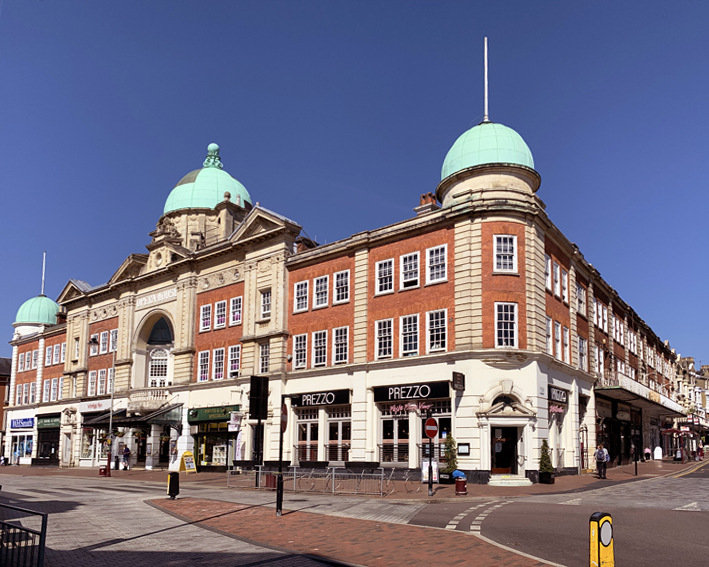 Tunbridge Wells Opera House
It would be hard to imagine any more opulent pub than the Wetherspoon’s situated inside the former Opera House in Mount Pleasant Road, Tunbridge Wells. The building was constructed in 1902, and first distinguished itself with a series of concerts in 1913 to raise money for a new pavilion at the Nevill cricket ground, the original having been burned down by suffragette arsonists. Despite Tunbridge Wells’ history as a fashionable resort for the gentry, it did not survive long as an opera house, and was converted to a more in-demand cinema in the 1930s. It had a close shave during WW2, when a bomb came through the roof but caught on the proscenium arch; luckily, the ensuing fire caused only reparable damage. It was reinvented as a bingo hall in the 1960s. In 1996, JD Wetherspoon bought it and converted the auditorium into a rather magnificent boozer. The company’s enlightened management occasionally permits operas to be performed there.
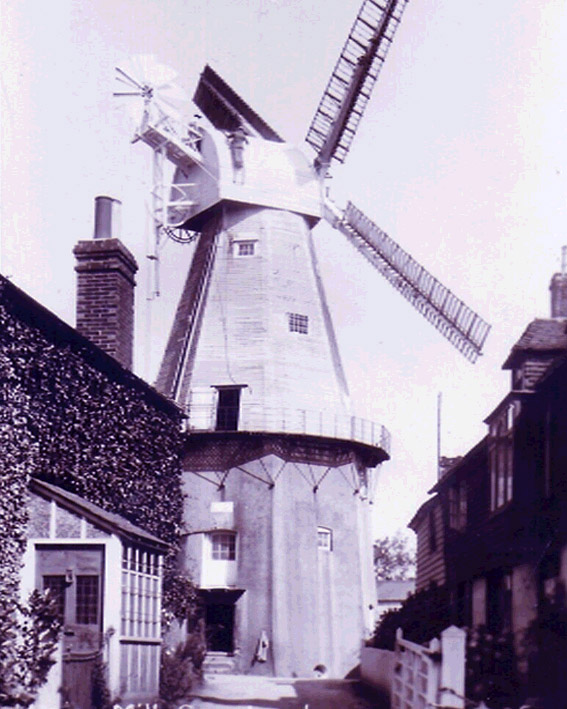 Union Mill, Cranbrook
With three storeys in its base and four more in the smock, the 72-feet-high windmill on The Hill at Cranbrook has the distinction of being the tallest in Britain. It was built in 1804 by local millwright James Humphrey for Mary Dobell, the widow of a tallow chandler, who paid £3,500 for it to get her young son Henry started in business. Unfortunately, she was declared bankrupt five years later. It was acquired at auction by John Russell, and remained in the Russells’ possession for five generations. Over the following decades, they steadily replaced its wooden working parts with steel ones, and repeatedly upgraded the steam engine they installed in 1863. They were awarded the Society for the Protection of Ancient Buildings’ first ever medal for preservation in 1935. There was talk in the 1950s of the Mill being demolished, but it was renovated, and can still be seen in its full glory in Russell’s Yard.
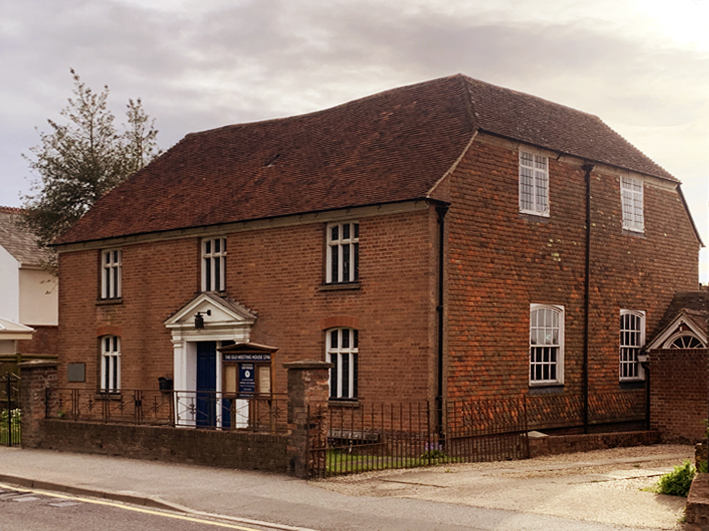 Unitarian Old Meeting House
In Ashford Road, Tenterden, there is a house that looks so inconspicuous, you would not give it a second glance. It is however a historic venue in which religion brought together two famous men better known for science. The story has its roots in the Civil War. Priests who were ordained after the abolition of bishops were invited to re-present themselves for ordination upon the Restoration. Some declined to do so because it cast doubt of the validity of their prior ministry. One of these was George Hawe, Tenterden’s Puritan vicar, who felt obliged to form an unorthodox church of his own that met in secret on this site. The current house was constructed in 1746. Its red-letter day arrived in 1774, when the famous chemist Joseph Priestley preached from the pulpit with the famous physicist Benjamin Franklin in the front pew. The house still functions as a chapel of the Unitarian Church.
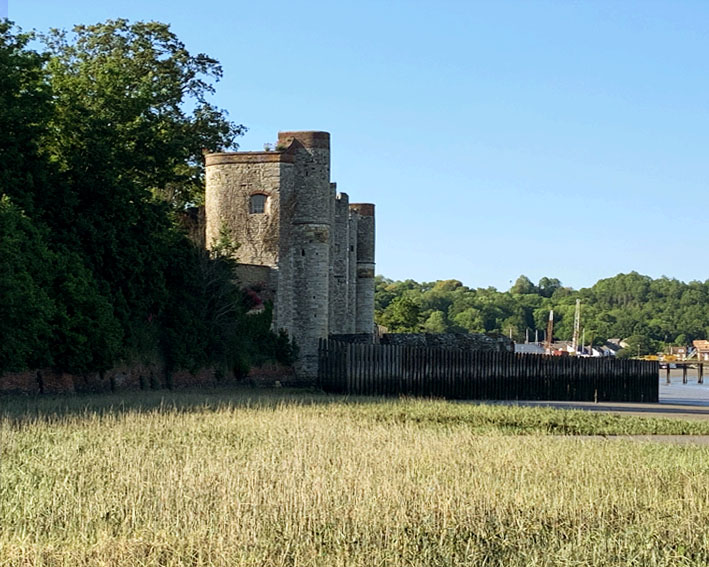 Upnor Castle
Upnor Castle was built for purely practical reasons, but now gracefully decorates the banks of the Medway. Facing St Mary’s Island, it was designed to defend the approach to the Royal Docks further upstream when war with Spain was a threat. After taking eight years to build in the 1560s, it saw no action until the Second Anglo-Dutch War, when it was called upon to help repel the Dutch Raid on the Medway in 1667. Its guns did make some difference, obliging the Dutch to withdraw without first setting Chatham ablaze. Nevertheless, this military humiliation led to new, more substantial forts being constructed that rendered Upnor redundant. It became used as an artillery and ammunition store, and was only decommissioned in 1945. It still stands by the Medway, unmistakable with its wide frontage, slender towers, and triangular Water Bastion jutting into the river. It can be visited under the auspices of English Heritage.
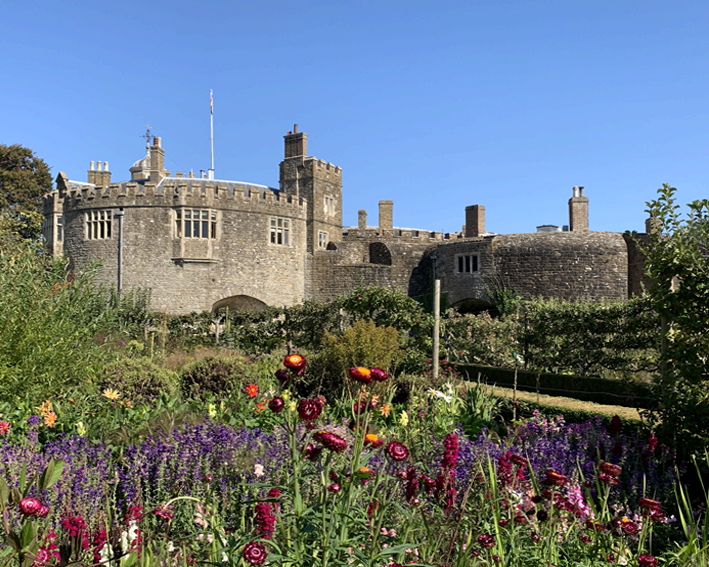 Walmer Castle
Along with those at Deal and Sandown, Walmer Castle was one of three Henrician or ‘Device’ forts built in 1539-40 as connected defences against a possible French and Holy Roman invasion. Walmer’s construction was the same as Sandown’s, with a central keep surrounded by four bastions providing 39 firing positions; by contrast, Deal had 12 bastions in two concentric circles and 66 firing positions. Its story was similar to Deal’s. It saw no action in Tudor times, but provided a footnote to the Civil War, being captured by Roundheads. What is different about Walmer is that it became the official residence of the Lord Warden of the Cinque Ports, and consequently has been home to some interesting historical figures. These include William Pitt the Younger and the Duke of Wellington, who deliberately sought the post so that he could reside there in retirement. Now run as a tourist attraction by English Heritage, the site includes delightful gardens.
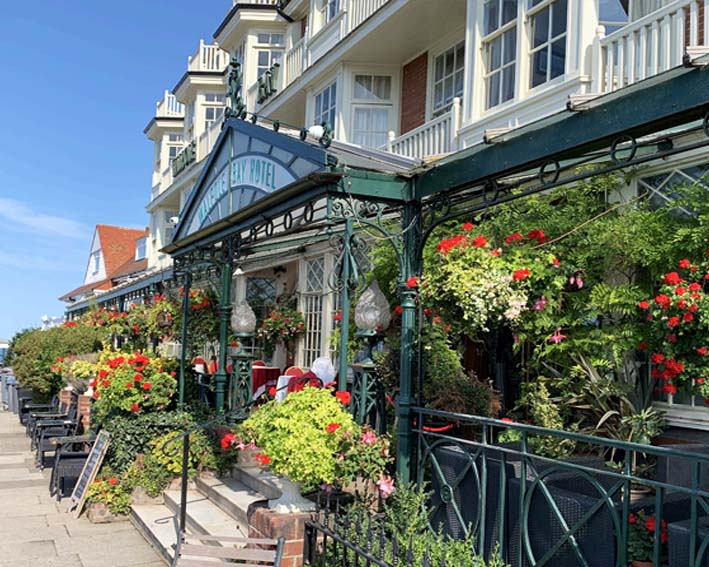 Walpole Bay Hotel
The bay just east of Margate legendarily got its name not directly from Britain’s first prime minister, Sir Robert Walpole, but a beached ship plundered there by smugglers in 1808. With its Lido, tidal pool, and extensive beach, Walpole Bay became the place to go in the 1930s. It is now more memorable for its dog excrement and stinking seaweed, and Cliftonville has a reputation as the scuzziest part of town. It does however retain one oasis: the Walpole Bay Hotel, close to the seafront. Built in 1914 and expanded in 1927, it is the epitome of quaintness, particularly with its old-fashioned Otis lift. The current owners, the Bishops, have worked gamely to enhance the interior. Especially noteworthy is its ‘Living Museum’, a potpourri of Victoriana and the like that includes a collection of napkins embellished by guests, some famous. A visit feels like a trip in a time machine, not least during an afternoon cream tea on the colourfully floral veranda.
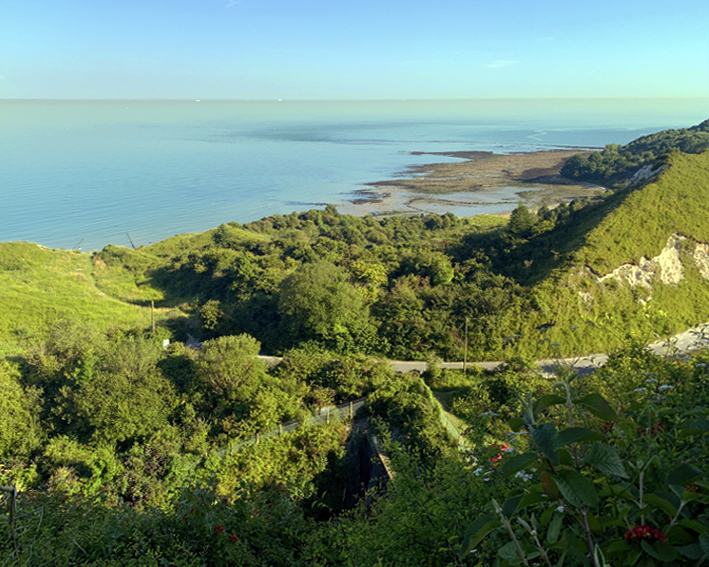 The Warren
It seems hard to believe, but the Warren, immediately north-east of Folkestone, was often referred to in the Edwardian era as ‘Little Switzerland’ and marketed as one of the loveliest and best-equipped tourist destinations in the county. Its relative obscurity today owes much to the fact that development nearby has made parking a major difficulty, and it is only accessible on foot after a long walk. Nevertheless, it is well worth the effort. It consists of an area of broken terrain between sea and cliffs, much of it wooded, that offers interesting walking and delightful aspects, albeit cut through by the railway line and scarred by two caravan parks. Stretching eastwards from the prominent Martello Tower are isolated beaches with views along the white cliffs that extend past Capel-le-Ferne to Samphire Hoe. Since the Lower Greensand that forms the rocky beach is overlain by Gault clay, the coast there is a good site for Early Cretaceous fossils.
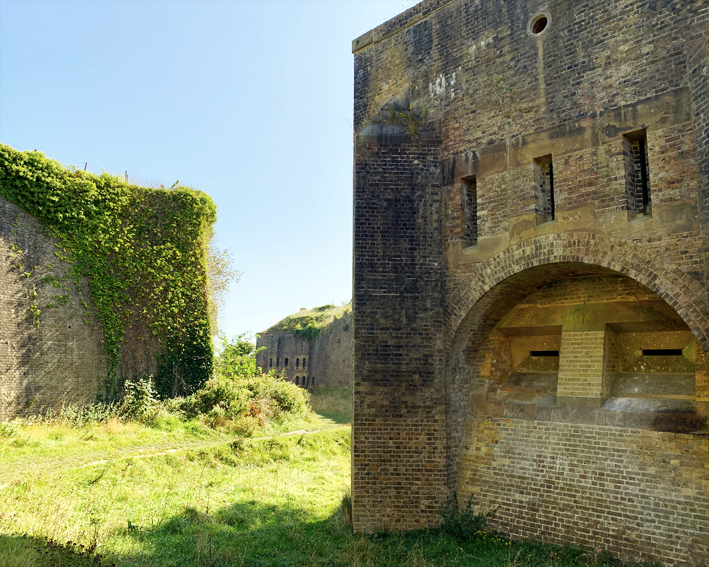 Western Heights
No one needs to be a keen fan of military history to appreciate a visit to the Western Heights of Dover. This complex system of defences to the north-west of the harbour was a necessary counterpart to the Castle as a foil to French aggression. They were initiated in 1778 during the American Revolutionary War, added to during the Napoleonic Wars, and reworked even as late as the reign of Napoleon III. The British Army did not finally abandon them until 1961. There is nothing elegant about these installations, which had no need to impress. They are however breath-taking in their scale, covering 33 acres from the Citadel at one end to the Drop Redoubt at the other, and perched high above the sea. Needless to say, the views of the town and even France are special. A visit neatly complements one to the Castle, tours being run occasionally by the Western Heights Preservation Society. Entrance is free.
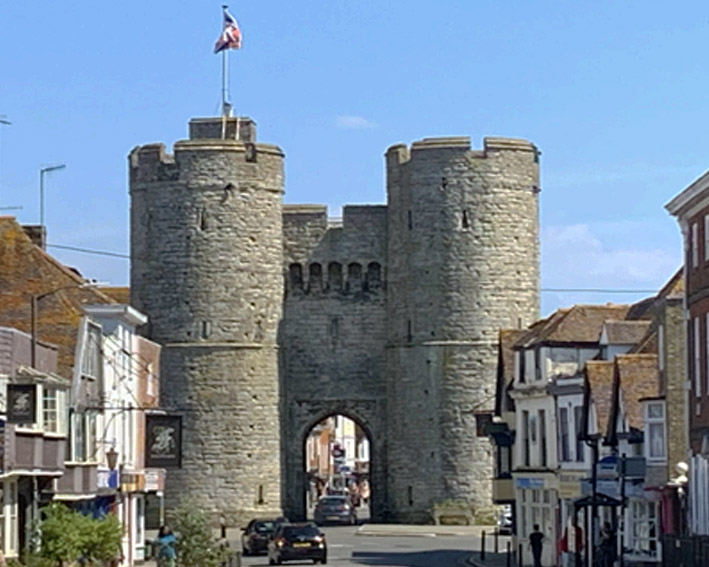 Westgate Towers
In any ordinary town without a world-famous cathedral, Canterbury’s Westgate Towers would surely be the municipal icon. Of the city’s seven gates, Westgate was always the most important, standing at the end of the road from London. The original gate was built in Roman days, and in Anglo-Saxon times had a church above. Both were demolished in 1379 to make way for the current grand construction, which stood as a visual demonstration of Canterbury’s defensive strength. At the time it possessed a drawbridge over the Stour, and impressive walls either side. It later took on a highly practical function as the city gaol, complementing the county jail at Canterbury Castle. The chamber above the arch served as the condemned cell, doing good business during Bloody Mary’s purge of Protestants. A city museum and an eatery are now housed there, and a fine view of the city can be had from the top of the 60-foot tall Towers.
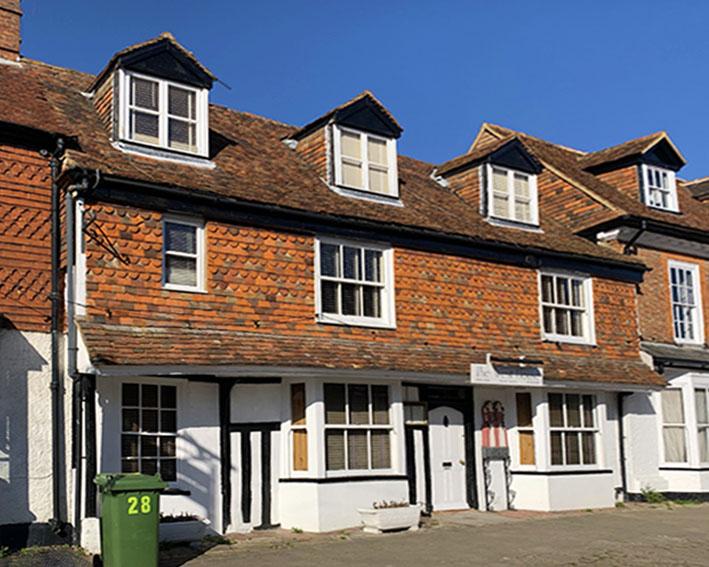 The West House
The story of the West House restaurant on Biddenden High Street is the story of Graham Garrett. He gave up rock drumming at 31 to learn cookery. After studying at Westminster Cookery School, he gained practical experience with the likes of Nico Ladenis and Gordon Ramsay. He fancied running his own business, and learned of a C16 weavers’ cottage deep in the Kent countryside. For 18 months, it was backbreaking work, with only his girlfriend to help. Then, dramatically, he was awarded a Michelin star, and before long was being patronised by TV and movie stars. Impressively, he retained the star until 2019, and appeared on TV’s ‘Great British Menu’. Though more expensive than other restaurants in the region, the West House provides a relaxed atmosphere in its beamed wattle-and-daub interior, crowned by superlative food and friendly service. The six-course tasting menu, which can be paired with wines, is a must for a special occasion.
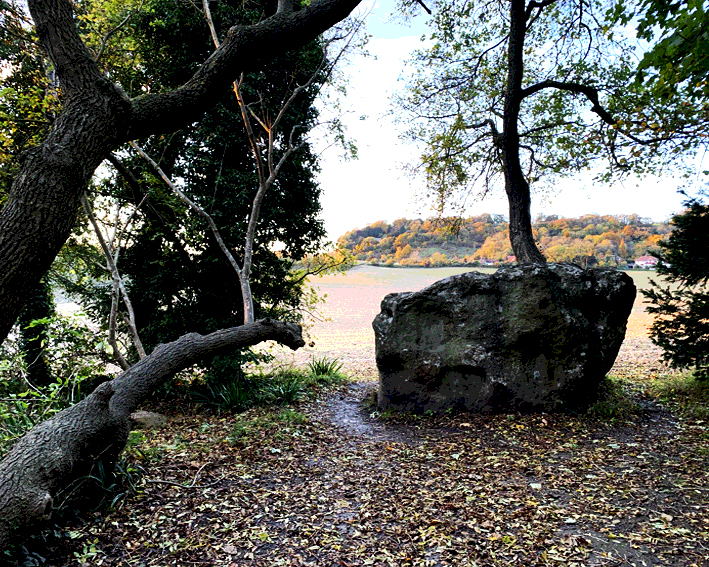 The White Horse Stone
Just east of the A229 on Bluebell Hill, a few steps up from the Pilgrims Way, lies a large slab of rock with a mysterious history. It is called the Upper White Horse Stone, which itself takes some explaining. A Lower White Horse Stone used to stand 300 yards to the west, but was already destroyed by 1834. The Upper Stone took its name from the Lower. There has been much speculation about the source of the name, the most obvious explanation being that it was simply a homage to the county emblem. The original purpose of both stones was probably funerary. Like the rocks from which Stonehenge was built, the Upper Stone is a sarsen, formed when silica fused together grains of sand. Several similar stones exist locally, evidencing a complex culture in mid-Kent as early as 6,000 years ago. The Odinic Rite cult believes it to have mystic significance, and has deemed it the birthplace of England.
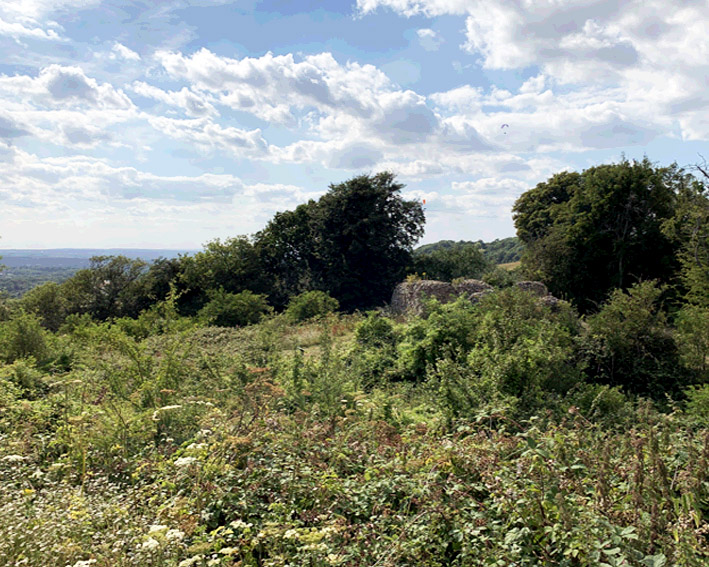 White Horse Wood Country Park
Among Kent’s many fine walks, White Horse Wood off the southbound carriageway of the Sittingbourne road out of Maidstone supplies one of the shortest but most interesting. It is relatively new, having been created as part of a Millennium Project to plant 20,000 trees on the North Downs. Consequently, it is unusually well furnished with car-parking and signage. Its most obvious virtue is its location on the edge of the North Downs overlooking the Weald, which provides an expansive view. For those who like to walk with an objective in mind, there are three. There is a monolithic modern sculpture called Ash to Ash on the escarpment’s edge; there is a large clearing, the size of a football pitch, that was once the site of an Iron Age village; and, best of all, there is Thurnham Castle, or what remains of it, just across a lane. A stimulating walk can be had there in less than an hour.
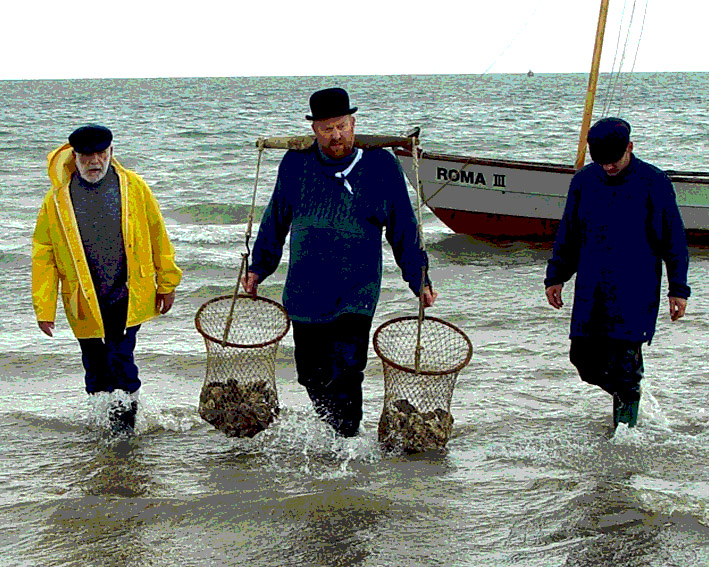 Whitstable Oyster Festival
It is Kent’s good fortune that one part of its northern coastline is a fertile source of that delicious mollusc, the oyster. The traditional native oyster Ostrea edulis thrives in the mixed fresh and saline water found close to the Thames estuary. The Romans, who relished its melt-in-the-mouth quality, even exported it to Rome. This native variety is only edible in the winter months, but non-native ‘rock’ oysters are now grown on an industrial scale to satisfy the market year round. As for the Whitstable Oyster Festival, it is said to have its origins in 1793, when oystermen of a new co-operative celebrated their harvest bonuses, attracting hangers-on anxious to share the fruits of their drunken extravagance. The tradition was revived as a formal festival around 1985, and is now a major tourist event in July, when the first harvest of the season is blessed, then marked with events. Whitstable’s celebrated seafood restaurants are worth visiting at any time.
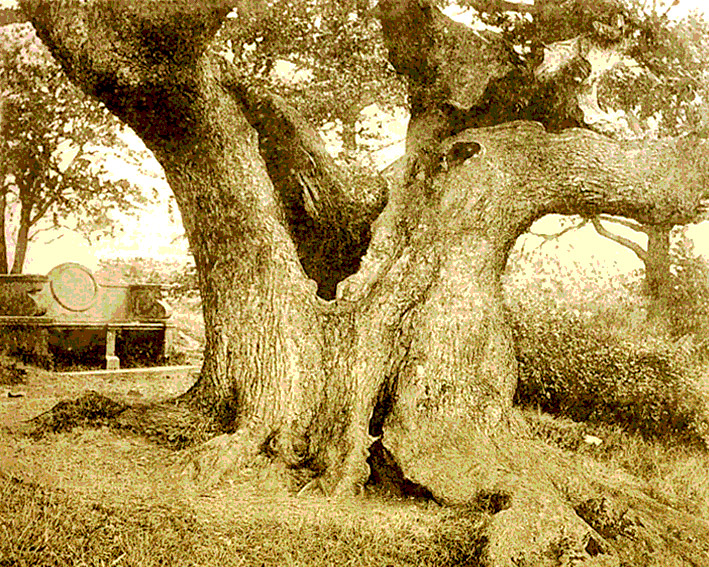 The Wilberforce Oak
At this time when statues are being torn down because of their association with slavery, it pays to remember that it was in Kent that, for the first time in the world, the abolition of slavery was plotted. In 1787, Tory MP William Wilberforce came to meet prime minister William Pitt the Younger at Holwood House in Hayes near Bromley, and declared his intention of destroying the institution by political means. With the help of a Kentish pressure group, the Testonites, his dream became a reality, even if only within the British Empire. Wilberforce described in his diary how that momentous meeting took place beside an old oak tree. Its location was marked in 1862 by a stone bench that has Wilberforce’s diary entry inscribed upon it. The original oak became a hollow tree inside which a new sapling grew. It was uprooted in the 1987 Great Storm, but a third oak was grown from one of its acorns.
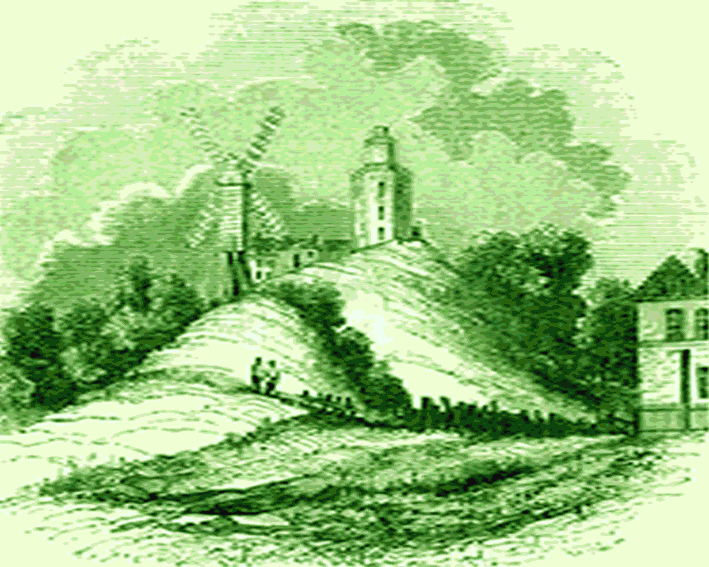 Windmill Hill
A classic English hillock just south of Gravesend was an obvious site in 1377 for one of Richard II’s defensive beacons. After being known temporarily as Rouge Hill, it got its current name from a C16 windmill that was replaced by another in 1764 after burning down. James I and guests went there in 1606 to watch a naval salute after dining at Upnor; and when Victoria, the Princess Royal, was married to the Crown Prince of Prussia in 1858, the local community built a vast bonfire 40 feet by 20 feet and around 45 feet high on top of the hill, which blazed brightly as the couple sailed away to start their new life in Hessen. By then, the hill was developing as a place of leisure, boasting a camera obscura and other amenities. Much of it is now covered by housing, but it still offers commanding views from its summit, 169 feet above sea level.
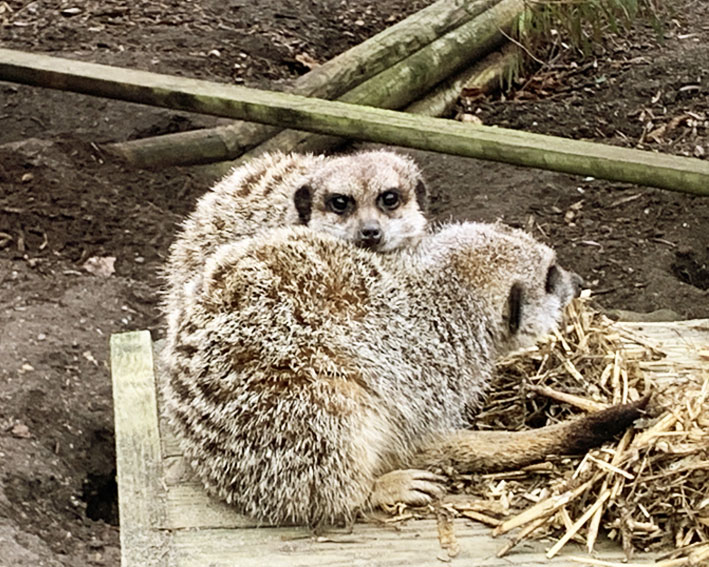 Wingham Wildlife Park
It might beggar belief that two wildlife parks exist within five minutes’ drive of each other in East Kent; but there is a reason. A bird park was established in 1986 at Wingham (where else?) that over time fortuitously acquired some animals. The collection continued growing until it was renamed Wingham Wildlife Park in 1996, even if locals persist in calling it the Bird Park. Though less well-known than its expansive neighbour, Howletts, it offers an appealing complement, being much closer in scope to a traditional zoo. The walk-through Tropical House impresses with its colourful collection of rainbow lorikeets, while all around it thrives a surprisingly diverse collection of exotic animals from red panda to white wolves, plus the usual big cats and great apes. The collection has latterly been extended to include the obligatory exhibition on conservation and an animatronic dinosaur park; but the core zoo remains agreeably compact, and the animals refreshingly easy to observe close up.
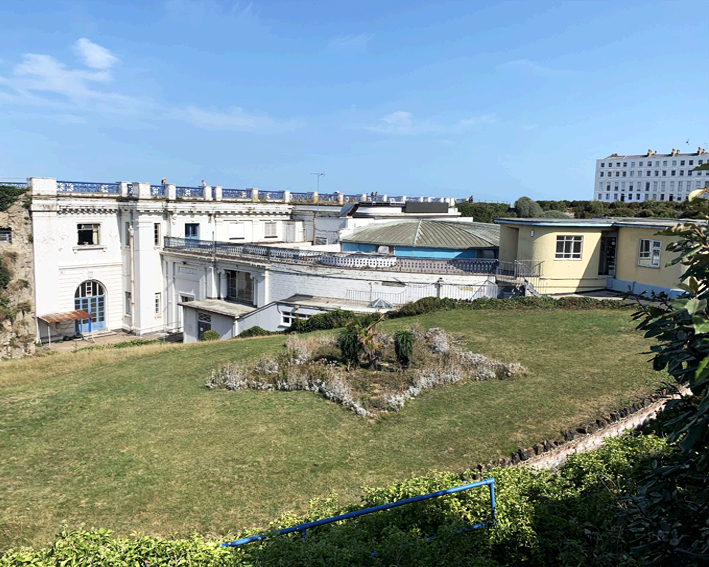 Winter Gardens, Margate
A winter garden was a feature of stately homes across Europe from the C17 onwards, being a large conservatory in which tropical plants were displayed. By extension, the term came to mean a large, usually glazed construction erected for the benefit of public concerts and gatherings. The Margate Winter Gardens were built in 1911 to replace the town’s Assembly Rooms, which had burnt down in 1882. They consisted of a hall and an amphitheatre stretching down from Fort Crescent to the seafront, surrounded by gardens. As they were built in a hollow on the site of an old fort, the stage could be viewed from inside and out. However, the amphitheatre was roofed over in 1963 to form a second auditorium, the Queen’s Hall. The Winter Gardens’ apogee was in July that year, when the Beatles amazingly played two shows a night for six nights. Today the site has listed status because of the original architectural features that still survive.
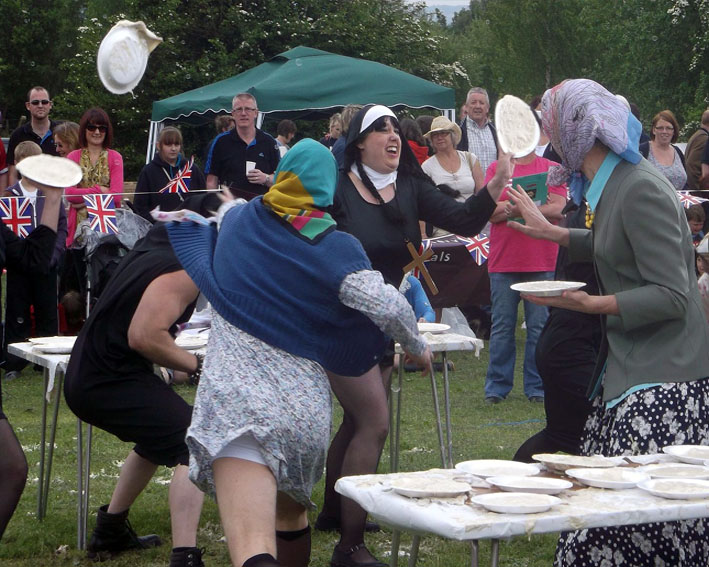 World Custard Pie Championship
The idea of a world custard-pie throwing championship was originally dreamt up in 1967 to raise money for the village hall at Coxheath, just south of Maidstone. It has now grown into an annual summer’s day of fun for several dozen competitors, some of whom are indeed international: one team came all the way from that hotbed of ritualised humiliation, Japan. The rules are straight forward. Teams of four, usually in colourful uniform, face each other from eight feet apart and pelt each other with ‘custard pies’, actually a concoction of something like flour and water. Only the left hand may be used, and points are scored according to whether an opponent is hit in the face (six), on the shoulder upwards (three), or anywhere else (one). Persistent inaccuracy is penalised with loss of points. If there were a world championship for the daffiest world championship, Coxheath’s would surely run away with it.
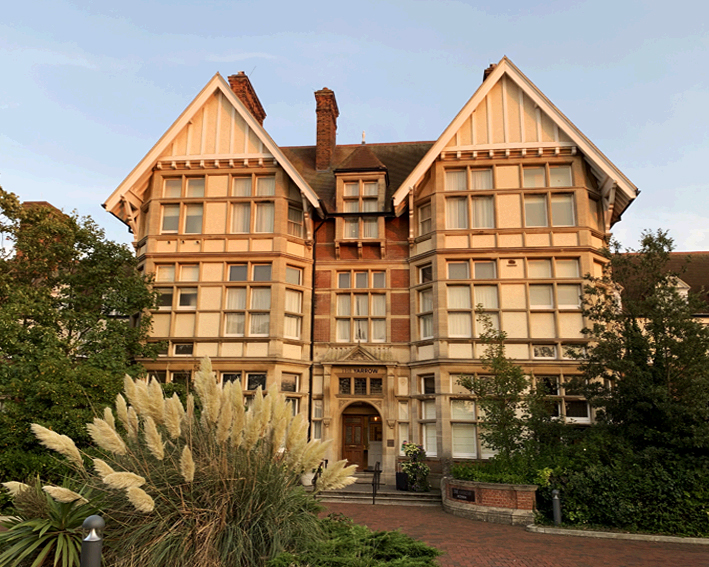 Yarrow Hotel
As well as its intriguing appearance, the Yarrow Hotel boasts an unusual history. It was originally built in 1894 by Sir Alfred Yarrow, a wealthy shipbuilder and philanthropist. He decided to open a school on the model set by his friend Dr Barnardo, specifically designed for London children with health problems who would benefit from Broadstairs’ seaside air. Wishing to put the 100 boys and girls on a level footing, he had the three-storey house made symmetrical and divided down the middle. Its original youthful orientation is still evident in the wide corridors and low-tread stairs. It remained a school for seven decades, until it was converted in the 1960s to Thanet College (now East Kent College). In 2005, the College moved out, but a major restoration was undertaken in 2013, and the Yarrow reopened as a hotel in 2016. It offers not only a characterful stay on the Thanet coast, but also a decent restaurant.
CREDITS ON THIS PAGE
All text: © Old Bunyard 2020-4. Unauthorised reproduction prohibited.
Images:
Battle of Britain Memorial: © Old Bunyard 2021.
Bayham Old Abbey: © Old Bunyard 2020.
Beaney House of Art and Knowledge: © Old Bunyard 2020.
Bedgebury Pinetum: © Old Bunyard 2020.
Biddenden Vineyards: © Old Bunyard 2020.
Big Cat Sanctuary: © Old Bunyard 2020.
Blackfriars: © Old Bunyard 2020.
Bluewater: © Old Bunyard 2021.
Botany Bay: © Old Bunyard 2020.
Brogdale Farm: © Old Bunyard 2020.
Canterbury Castle: © Old Bunyard 2021.
Canterbury Cathedral: © Old Bunyard 2021.
Canterbury City Walls: © Old Bunyard 2021.
Canterbury’s Roman Museum: ‘Roman Museum 246‘ by Linda Spashett (Storye book), licensed under CC BY 3.0. (Cropped, warped).
Castle Toll: ‘Castle Toll (geograph 2583790)‘ by Julian P Guffogg, licensed under CC BY-SA 2.0. (Cropped).
Chagall windows: © Old Bunyard 2021.
Chatham Historic Dockyard: © Old Bunyard 2021.
Chiding Stone: © Old Bunyard 2024.
Christchurch Gateway: © Old Bunyard 2023.
Cobham Mausoleum: © Old Bunyard 2021.
Coldrum Long Barrow: © Old Bunyard 2021.
Conquest House: © Old Bunyard 2020.
Crossness Pumping Station: ‘Crossness Pumping Station, Belvedere, Kent – geograph-2280114-by-Christine-Matthews‘, licensed under CC BY-SA 2.0.
Custom House: © Old Bunyard 2020.
Cutty Sark: © Old Bunyard 2021.
Dane John Mound: © Old Bunyard 2024.
Deal Castle: © Old Bunyard 2020.
Deal Pier: © Old Bunyard 2024.
Dode Church: © Old Bunyard 2020.
Dungeness Old Lighthouse: © Old Bunyard 2021.
Dymchurch Martello Tower: © Old Bunyard 2021.
Eastbridge Hospital: © Old Bunyard 2020.
Elmley National Nature Reserve: © Old Bunyard 2021.
Emirates Air Line: © Old Bunyard 2021.
Eynsford Castle: ‘Eynsford Castle (20) (18373797302) (2)‘ by Richard Nevell from London, United Kingdom, licensed under CC BY-SA 2.0.
Faversham Abbey: © Old Bunyard 2020.
Faversham Stone Chapel: © Old Bunyard 2020.
Folkestone Harbour Arm: © Old Bunyard 2024.
Fordwich Arms: © Old Bunyard 2020.
Fort Amherst: © Old Bunyard 2021.
Friars: © Old Bunyard 2021.
Fyndon Gate: © Old Bunyard 2020.
Grain Tower: ‘Grain Tower Battery at low tide‘ by Mervyn Rands, licensed under CC BY-SA 4.0. (Cropped).
Grand Hotel: © Old Bunyard 2021.
Gravesend Town Pier: © Old Bunyard 2024.
Great Comp Garden: © Old Bunyard 2020.
Greenwich Park: © Old Bunyard 2021.
Greyfriars Chapel: © Old Bunyard 2020.
Guildhall Museum: © Old Bunyard 2021.
Holly Hill walk: © Old Bunyard 2020.
Hop Farm: © Old Bunyard 2020.
Horne’s Place Chapel: © Old Bunyard 2021.
Horniman Collection : ‘The Horniman Totem Pole‘ by Chris Gunns, licensed under CC BY-SA 2.0.
Howletts Wildlife Park: © Old Bunyard 2021.
Kent & East Sussex Railway: © Old Bunyard 2021.
Kent Life: © Old Bunyard 2021.
Kit’s Coty House: © Old Bunyard 2020.
Leas Cliff Hall: © Old Bunyard 2021.
Leas Lift: © Old Bunyard 2021.
Lenham Cross: © Old Bunyard 2020.
Lesnes Abbey: ‘The north-west view of the Abbey‘ by Ethan Doyle White, licensed under CC BY-SA 3.0. (Cropped).
Lullingstone Roman Villa: © Old Bunyard 2021.
Maison Dieu, Ospringe: © Old Bunyard 2020.
Maison Dieu, Dover: © Old Bunyard 2020.
Majesty Oak: ‘Majesty Oak, Fredville Park‘ by Sally, licensed under CC BY-SA 3.0. (Cropped).
Maritime Museum: © Old Bunyard 2020.
Marlowe Theatre: © Old Bunyard 2020.
Martyrs’ Memorial: ‘Martyr’s Monument, St Edmund’s Pleasance, Dartford 02‘ by Paul the Archivist, licensed under CC BY-SA 4.0 International.
Milton Chantry: © Old Bunyard 2021.
Minster Abbey: © Old Bunyard 2021.
Minster-in-Thanet Priory: © Old Bunyard 2021.
Monk Lakes: © Old Bunyard 2021.
Montreal Park Monument: ‘Monument in the former Montreal Park Sevenoaks – geograph.org.uk – 217055‘ by Jean Barrow, licensed under CC BY-SA 2.0.
Mount Ephraim Gardens: © Old Bunyard 2021.
National Maritime Museum: © Old Bunyard 2021.
O2: © Old Bunyard 2021.
Oldbury Camp: ‘Ramparts on the Southwest of Oldbury Hillford in Kent‘ by Ethan Doyle White, licensed under CC BY-SA 4.0 International. (Cropped).
Old Weavers House: © Old Bunyard 2020.
Pegwell Bay: © Old Bunyard 2020.
Perry Wood: © Old Bunyard 2023.
Port Lympne Safari Park: © Old Bunyard 2022.
Prospect Cottage: © Old Bunyard 2021.
Queen Elizabeth Oak: © Old Bunyard 2021.
Ramsgate Tunnels: © Old Bunyard 2020.
Rare Breeds Centre: ‘Pig Racing at Rare Breeds Centre‘ by Oast House Archive, licensed under CC BY-SA 2.0.
Reculver Towers: © Old Bunyard 2022.
Richborough: © Old Bunyard 2020.
Riverhill Himalayan Gardens: © Old Bunyard 2020.
Rochester Castle: © Old Bunyard 2024.
Rochester Castle: © Old Bunyard 2021.
Rochester Cathedral: © Old Bunyard 2021.
Rolvenden Windmill: © Old Bunyard 2021.
Roman lighthouse at Dover: © Old Bunyard 2020.
Roman Painted House: © Old Bunyard 2020.
Romney, Hythe & Dymchurch Railway: © Old Bunyard 2021.
Roper Gate: © Old Bunyard 2020.
Royal Engineers Museum: © Old Bunyard 2021.
Royal Observatory: © Old Bunyard 2021.
St Augustine’s Abbey: © Old Bunyard 2020.
St Augustine’s Conduit House: © Old Bunyard 2020.
St Augustine’s Cross: © Old Bunyard 2020.
St Dunstan’s Church: ‘St Dunstans Church, Canterbury‘ by Ian Dalgliesh, licensed under CC BY-SA 2.0.
St George’s Tower: © Old Bunyard 2020.
St Leonard’s Church Ossuary: © Old Bunyard 2021.
St Leonard’s Tower: © Old Bunyard 2021.
St Martin’s Church: © Old Bunyard 2020.
St Nicholas’s Church: ‘St Nicholas’ Church, Barfrestone‘ by John Salmon, licensed under CC BY-SA 2.0. (Cropped).
St Radegund’s Abbey: © Old Bunyard 2021.
Sandgate Castle: © Old Bunyard, 2021.
Sarre Windmill: © Old Bunyard 2020.
Secret Wartime Tunnels: © Old Bunyard 2020.
Shell Grotto: © Old Bunyard 2020.
Spa Valley Railway: © Old Bunyard 2021.
Sportsman: © Old Bunyard 2021.
Strait of Dover: © Old Bunyard 2024.
Sutton Valence Castle: © Old Bunyard 2020.
Temple Manor: ‘Temple Manor, Strood – geograph.org.uk – 1397511‘ by Chris Whippet, licensed under CC BY-SA 2.0. (Cropped).
Theatre Royal: © Old Bunyard 2020.
Tithe Barn, Maidstone: © Old Bunyard 2020.
Tonbridge Castle: © Old Bunyard 2020.
Toys Hill: © Old Bunyard 2020.
Trafalgar Tavern: © Old Bunyard 2021.
Tunbridge Wells Opera House: © Old Bunyard 2021.
Unitarian Old Meeting House: © Old Bunyard 2021.
Upnor Castle: © Old Bunyard 2021.
Walmer Castle: © Old Bunyard 2020.
Walpole Bay Hotel: © Old Bunyard 2020.
The Warren: © Old Bunyard 2024.
Western Heights: © Old Bunyard 2020.
Westgate Towers: © Old Bunyard 2020.
West House: © Old Bunyard 2021.
White Horse Stone: © Old Bunyard 2020.
White Horse Wood: © Old Bunyard 2020.
Wingham Wildlife Park: © Old Bunyard 2021.
World Custard Pie Championship: ‘Custard Pie Flinging‘ by DavidAnstiss, licensed under CC BY-SA 3.0. (Cropped).
Yarrow Hotel: © Old Bunyard 2020.
All other images on this page are believed to be public domain, fair use/dealing, or royalty-free. Please do not reproduce any image without first establishing that you are free to do so.
 Old Bunyard’s Kent