Maidstone Athletic Ground, ca 1900
 Aethelberht I, King of Kent (ca 550-616)
Aethelberht I was the greatest of the kings who ruled Kent for nearly 400 years before Wessex imposed national rule from Winchester. Unusually for the age, he was not a warrior king, but is famed for his role in replacing Germanic paganism with Christianity. Probably at the behest of his Frankish wife Bertha, he agreed to St Augustine’s visit from Rome that led directly to the establishment of the Catholic Church in England. The great influence this lent him led to his being recognised as Bretwalda – overlord of the various Anglo-Saxon kings who had settled in Britain. Under his peaceful 27-year rule from Canterbury, the first English law code and coinage were introduced. He also ordered the construction of the first St Paul’s Cathedral. For his piety, he was honoured as a saint, and is commemorated by a statue in Rochester Cathedral.
 Eadgifu of Kent, Queen of England (d post-966)
Although she was Queen of England, only some bare facts are known of Eadgifu’s Dark Age life. She was the daughter of Sigehelm, a Kentish ealdorman who died at the Battle of the Holme when she was small. Around 919, she became the third wife of Alfred the Great’s elder son, King Edward the Elder, one of the doughtiest military leaders of the era. After his death in 924, she had trouble with property dealings, most notably concerning Cooling, which she inherited from her father. A certain Goda had loaned him money, accepting the estate as security, and later denied having been reimbursed, which provoked a protracted dispute. She was on the wrong end of her stepson King Athelstan’s ruling concerning Goda’s charters, suggesting that they didn’t get on. However, she did prove influential in the reigns of her sons Edmund and Eadred, both of whom were crowned kings of the English.
 Strongbow (1130-76)
Richard FitzGilbert was one of William of Normandy’s closest allies in the conquest of Anglo-Saxon England. His loyalty was rewarded with estates at Tonbridge and at Clare in Suffolk; his powerful clan became known as the de Clares. His Tonbridge-born great-grandson Richard de Clare, 2nd Earl of Pembroke – who inherited his father’s nickname, ‘Strongbow’ – entered history in 1167 when Diarmait MacMurchada, King of Leinster, appealed for Norman help after being deposed. Strongbow agreed to join an invasion plan in return for the hand of MacMurchada’s daughter Aoife. The reconquest of Leinster was carried out successfully, albeit against the instructions of King Henry II of England. Henry used his interdiction as a reason to relieve de Clare of most of his estates in Ireland and elsewhere, and imposed his overlordship on Leinster – a crucial springboard for further Norman imperialism. Strongbow, who died of an infection and was buried at Dublin, is commemorated in the name of Bulmer’s famous cider.
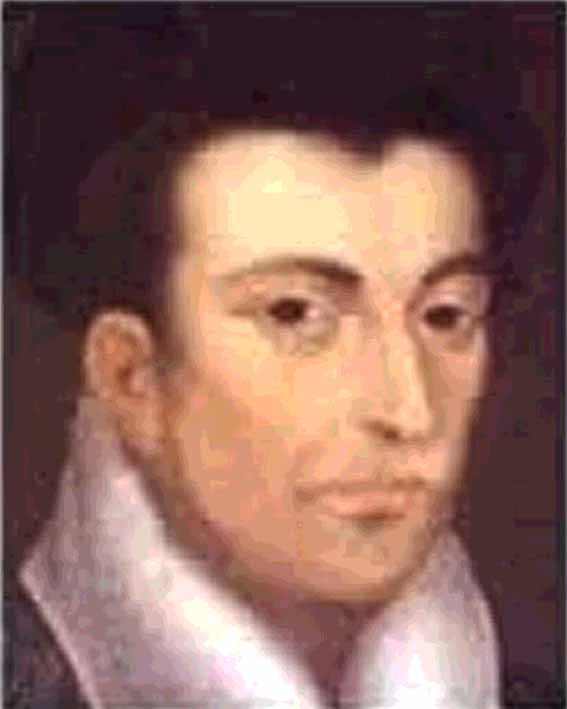 Sir Bartholomew de Badlesmere (1275-1322)
Badlesmere’s life was a tale of courtly intrigue gone wrong. Born at Chilham Castle, he fought for King Edward I as a young man in France and Scotland. Initially he got on with the King’s successor Edward II, being appointed custodian of Leeds Castle in 1317 after already inheriting land at Badlesmere. From this position of strength, he formed an alliance with other nobles to seek influence, and helped make peace between the King and the hostile Earl of Lancaster in 1318. As late as 1320 he entertained Edward lavishly at Chilham. However, the King’s dubious affiliation with the Despensers led to a rift. In 1321, Badlesmere joined Lancaster’s faction, causing the king to bar him from Kent and provoke the Siege of Leeds Castle in his absence. The rebels fled north, but were defeated at Boroughbridge in 1322. Badlesmere was shown no mercy, being horse-drawn from Canterbury to Blean, hanged, beheaded, and ignominiously displayed for years.
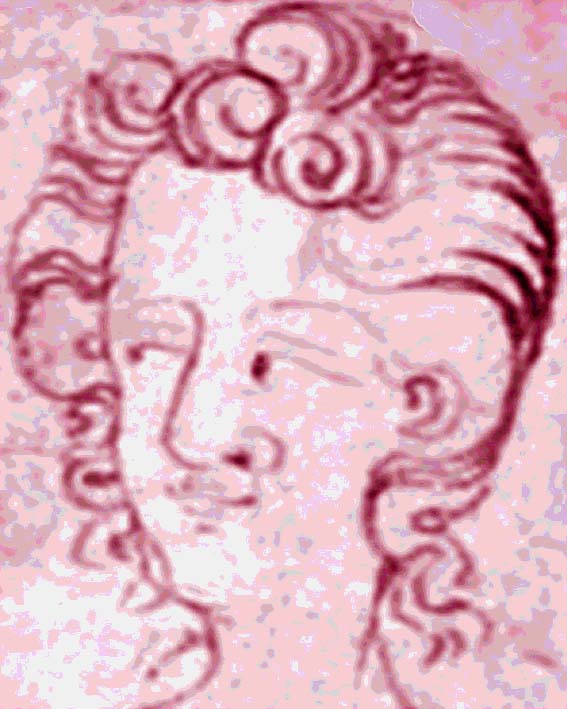 John of Eltham, Earl of Cornwall (1316-36)
For three years, John – who rather obviously was born at Eltham Palace – was heir to the English throne, until the birth of his brother Edward III’s son, the Black Prince. Although he was the child of Edward II and Isabella of France, neither of whom had much to recommend them, John rather took after his grandfather Edward I in his martial spirit. Certainly his brother valued his ability, and made efforts to secure him a good marriage. The two accompanied each other on the 1333 invasion of Scotland, leading immediately to a battle against a Scots army that was attempting to relieve John de Balliol’s siege of Berwick. Their victory was total. John was subsequently accused of a massacre of Scottish sanctuary-seekers, although the truth of the story is disputed. The Scots enjoyed some schadenfreude three years later, when John fell sick at Perth and died. He was buried in a carved tomb at Westminster Abbey.
 John Gower (~1330-1408)
It is not known for sure that Gower was born in Kent, but he owned estates in Kent and East Anglia, and linguistic analysis has suggested a Kentish provenance. Few outside of literary circles know of him today; yet he was not only a friend of Geoffrey Chaucer, but also thought his equal in their lifetimes. In addition to his poetic talent, he was noteworthy for being equally able to write in Middle French, Latin, and Middle English, which he did respectively in ‘Mirour de l’Omme’, ‘Vox Clamantis’, and ‘Confessio Amantis’. The first contains one of his most dramatic passages, describing the Devil’s wedding to the seven sins’ daughters; while the last and best, a collection of love stories, inspired part of Shakespeare’s ‘Pericles, Prince of Tyre’ (ca 1608), in which Gower also appears repeatedly as the Chorus. Unfortunately, the didacticism of his writing later earned him a reputation as a bore that persisted unchallenged until the C20.
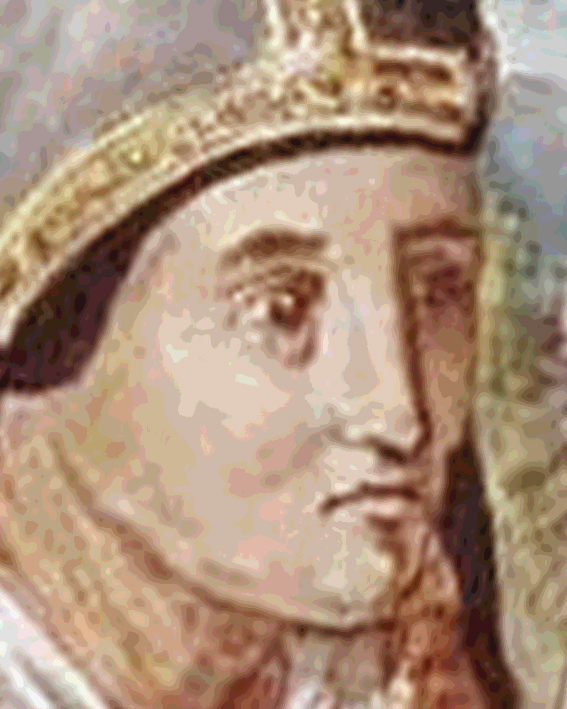 John Kemp, Archbishop of Canterbury (~1380-1454)
Oxford-educated John Kemp from Olantigh, Wye, did so well as a church lawyer that he counted Bishop of Rochester, Archbishop of York, Archbishop of Canterbury, and Cardinal-Bishop of Santa Rufina among his ecclesiastical titles, yet also managed to be Keeper of the Privy Seal and Lord Chancellor. The key to his success was supporting the right side during the Wars of the Roses, which meant unwavering support for Henry IV’s half-brother Henry Beaufort, the powerful prelate behind the Lancastrian throne. Even during Henry V’s reign, Kemp officiated at the trial of the troublesome Sir John Oldcastle, and he assisted Henry VI both with his marriage to Margaret d’Anjou in 1445 and during Jack Cade’s Rebellion in 1450. When Henry VI had a mental breakdown in 1453, however, Richard of York stepped in. Kemp, branded “the curséd cardinal”, soon died, and was buried in the Cathedral choir. His most lasting legacy was Wye College, which survived until 2009.
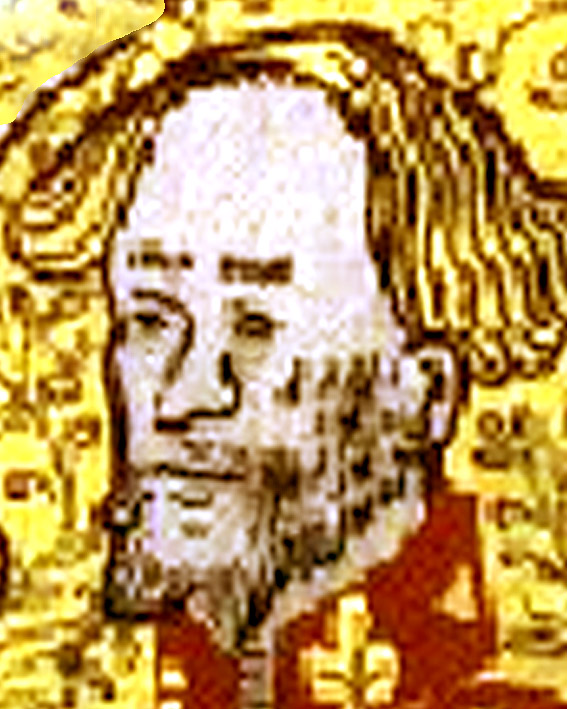 Richard Woodville, 1st Earl Rivers (1405-69)
For a man born of relatively humble origins in Maidstone, Richard Woodville’s extraordinary story surely merits telling in a Hollywood movie. Like his father before him, he became chamberlain to the Duke of Bedford. His big break came when the duke died suddenly, and Woodville married his wealthy 21-year-old widow Jacquetta of Luxembourg before anyone could intervene. More luck came his way when Margaret of Anjou, a relative of Jacquetta by marriage, became queen, and Sir Richard became Baron Rivers. Further honours followed when he took up a military career. He switched sides in the Wars of the Roses, following which the Yorkist Edward IV married Woodville’s daughter Elizabeth. The aristocracy was horrified by the power enjoyed by these upstarts, and the powerful Earl of Warwick made it his business to do for them. After the Battle of Edgecote Moor, Woodville and his son John were taken prisoner and summarily beheaded.
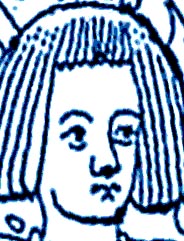 Sir John Fogge (~1417-90)
Fogge, from the Canterbury area, inherited his adventurer father’s estates in 1438. In service with the Lancastrian Henry VI in 1450 when Jack Cade’s Rebellion was crushed, he was rewarded for his loyalty by being made Sheriff of Kent, Comptroller of the Household, and a knight. His second wife was related to the Yorkist Woodvilles, however, and became a lady-in-waiting of Queen Elizabeth. Knowing the undependable King, Fogge switched sides when Edward IV invaded in 1460, and again profited richly as MP for Kent and for Canterbury. Even the Lancastrian success at the 2nd Battle of St Albans in 1461 benefitted him: he inherited Westenhanger Castle when his late first wife’s father, Sir Thomas Kyriell, was executed there. Although Fogge backed Buckingham’s failed revolt against Richard III, Henry VII’s usurpation brought him salvation. Having built Ashford church’s tower and founded its college, Fogge was buried there in a capacious tomb, and is recalled by a local street name.

William Caxton (~1420-1491)
Though Caxton’s date and place of birth are not precisely known, he reported that he’d been born and bred in the Weald of Kent. A successful merchant, he settled in Bruges while still in his twenties. There he learned of Gutenberg’s revolutionary new printing press, and set up his own. The first printed work in English, in 1473, was his own translation of a French work called ‘Recuyell of the Historyes of Troye’. After returning to England, the first book he published was an altogether more famous one: an edition of Chaucer’s ‘The Canterbury Tales’. Most of his output was in English, which helped put this relatively parochial language on the literary map. Since Caxton often had to decide between alternative dialect words, such as ‘egges’ (from Danish) or ‘eyren’ (from German), he also contributed to the standardisation of the language. A stained-glass window commemorates him in Westminster Abbey.
 Thomas Linacre (~1460-1524)
Five centuries after Anselm of Canterbury fathered Scholasticism – the dogma that dominated Europe throughout the Middle Ages – a man born in Canterbury would accelerate its demise and the birth of Western thought. Thomas Linacre was a pupil of first The King’s School and then William Tilly of Selling, the Prior of Christ Church, Canterbury. In 1485, they were sent by King Henry VII on a prolonged embassy to the Vatican. In Italy, Linacre studied at Padua, where he became imbued with the spirit of the Renaissance. He collected and translated Ancient Greek manuscripts that would significantly catalyse the new Humanist school in England. His legendary integrity earned him an international reputation, his pupils including the immensely influential Dutch philosopher Erasmus. Specialising in medicine, he founded the Royal College of Physicians, paving the way for William Harvey’s ground-breaking medical work via Francis Bacon’s scientific method. Linacre is commemorated in the names of a King’s School house and an Oxford College.
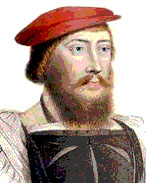
Thomas Boleyn, 1st Earl of Wiltshire (1477-1539)
Best known as Anne Boleyn’s father, the 1st Earl of Wiltshire has been depicted in more than one dramatisation as an unscrupulous schemer. It’s debatable however whether the wealth of honours he acquired brought him much joy. He was born at Hever Castle, which his grandfather, a rich mercer, had purchased. It was inevitable that Henry VIII, another Kentishman, would get to know Boleyn’s two free and easy daughters, and that he would have relations with both. Even Boleyn’s wife Elizabeth was said to be the King’s lover, though he denied it. The obliging Boleyn’s power grew until he became Lord Privy Seal; but all turned sour when Henry had Anne and her brother George executed. Boleyn spent his last years in disgrace after the King took away his castle; both his wife and remaining child Mary died soon after him. No wonder his ghost is said to haunt his one-time home, Blickling Hall in Norfolk.
 Catherine of York (1479-1527)
When Eltham Palace was still a premier royal residence, Catherine of York was born there, the ninth child of Edward IV and Queen Elizabeth. Like all her siblings, she was declared illegitimate by Richard III in 1483, and took refuge with her mother in Westminster Abbey. Richard’s successor Henry VII, her brother-in-law, hoped she might make a good marriage with some foreign king or prince, but instead she wed William Courtenay, heir to the Earl of Devon, at sixteen. This was a perfectly satisfactory arrangement until, having been implicated in 1504 in a plot to depose Henry, he was gaoled and deprived of his property and right to inherit. Although these were restored by Henry VIII in 1509, Courtenay died at 36. Uninterested in further political matches, the young widow vowed never to marry again, and retired from public life to Devon. She did however make a public appearance in 1516 as a godmother at Mary Tudor’s baptism.
 Bridget of York (1480-1507)
Considering that she was a royal princess, surprisingly little is known of the life of Bridget, the youngest daughter of Edward IV and Elizabeth Woodville. It began at Eltham Palace, his favourite country palace. He died when she was not yet three, and Elizabeth removed her daughters to Westminster Abbey as sanctuary from the clutches of Richard III; Bridget and all her siblings were declared illegitimate and lost their titles. Her name, highly unusual for an English royal, was probably suggested by the name of Sweden’s St Bridget, founder of the Order of Bridgettines. It was appropriate, since the princess eschewed royal celebrity in favour of spiritual celibacy. Around the age of nine, she was sent to Dartford Priory, and spent the rest of her short life there. It is not known why she died so young, but she was at least spared the dismal fate of her two older brothers, the Princes in the Tower.
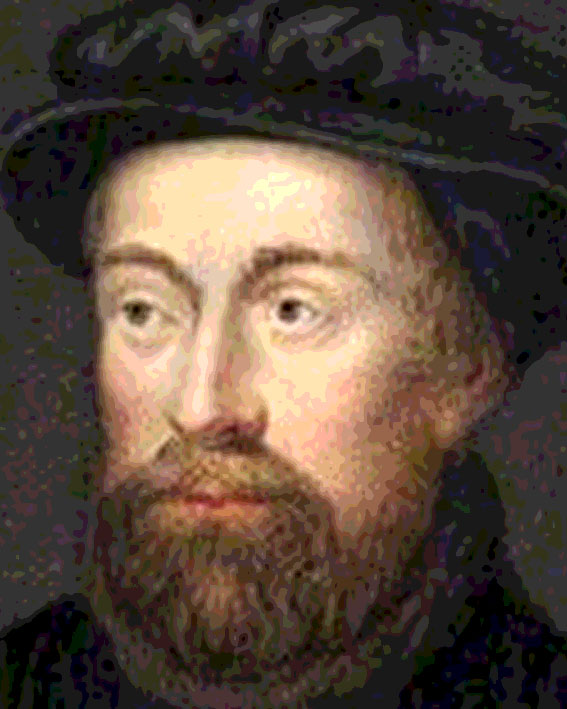 Sir John Baker (1488-1558)
Baker was born in Cranbrook, studied law, became Recorder of London in 1526, and a decade later was appointed Attorney General under Henry VIII, a post he retained for five years. In the meantime he was MP for London among other constituencies, and late in life represented Kent three times while serving for 13 years as Chancellor of the Exchequer. He earned his nickname ‘Bloody Baker’ for his vicious prosecution of Protestants during the reign of Mary I. He was supposedly on his way to mete out retribution when he heard that Mary had died, and turned back in the street leading east out of Cranbrook known today as Bakers Cross; he died the following month. He left a less unsavoury legacy: his estate was Sissinghurst Castle, which his grandfather had bought. Because his daughter Cicely married Thomas Sackville, the 1st Earl of Dorset, the Castle eventually fell into the hands of Vita Sackville-West, co-creator of its magnificent gardens.
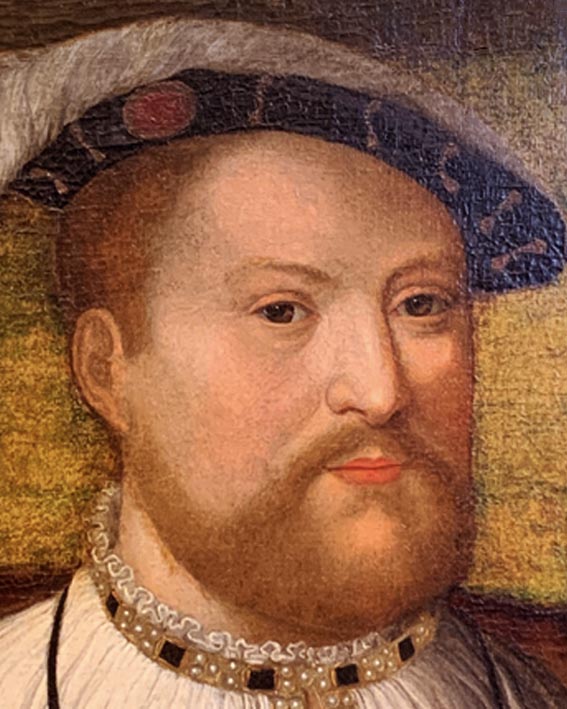 Henry VIII, King of England (1491-1547)
Henry Tudor, born in Greenwich, boded well at first. Strapping, charming, and intelligent, he’d but one great vice: an appetite for lovers that continued even after his marriage to Catherine of Aragon. Had she borne him a viable son, they might still have lived a quiet life; but their divorce in 1533 ushered in ten years of horror. Two of his next five wives were executed, another was divorced, one died after giving birth, and the last was lucky. Henry took his place in history by casting off the Catholic Church for the sake of his first divorce, ushering in the English Reformation and the Dissolution of the Monasteries. Asserting the Divine Right of Kings, he became increasingly tyrannical after a serious jousting accident in 1536. It’s curious that, had his elder brother Arthur not suddenly died at 15, we’d have been denied England’s most colourful monarch, and world history might have taken another course.
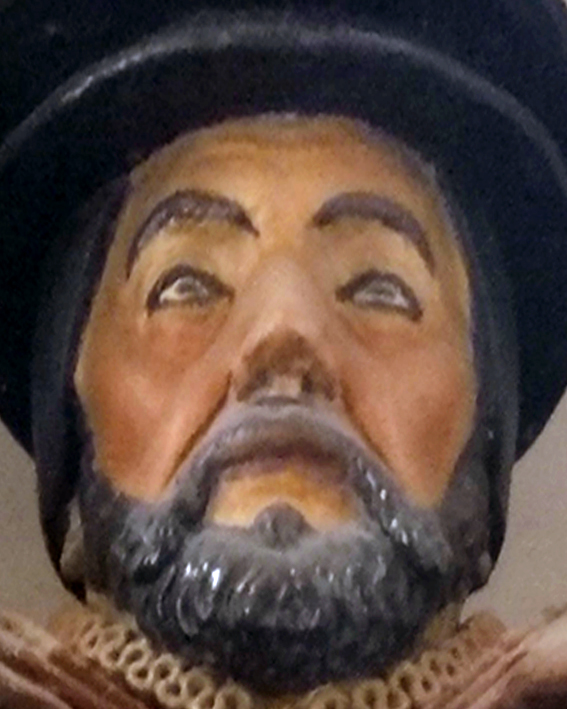 William Lambe (1495-1580)
From a modest background in Sutton Valence, Lambe earned a fortune as a cloth manufacturer. An excellent proponent of the Protestant work ethic, he was as much a worshipper as he was a businessman, and became renowned for the amount of time he spent at prayer. His piety also extended to good works. He purchased a disused chapel in London Wall in 1542 and bequeathed it to the Worshipful Company of Clothmakers, of which he had been master. In 1577, he paid at great expense for a new conduit at Holborn to channel water to the London Charterhouse, and provided buckets so that poor women could sell water for a living. Known as Lamb’s Conduit, it was demolished in 1746, but its name survives in those of two thoroughfares. He also endowed Sutton Valence School in 1578. He is commemorated by a bust at St James’ church, Islington, whose maintenance is partly funded by the William Lambe Trust.
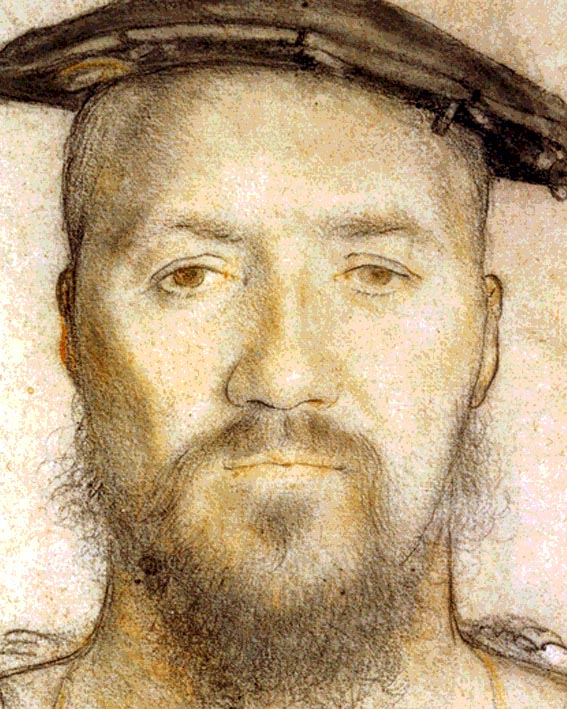 George Brooke, 9th Baron Cobham (~1497-1558)
As the lord of Cobham Manor during the Tudor era, Brooke inevitably lived in interesting times, being so close to the epicentre of the Tudor family’s turbulence. He was father to Elisabeth Brooke, who at length married Catherine Parr’s brother Lord Northampton, and like them supported the succession of Lady Jane Grey, the ‘Nine-Day Queen’. Consequently, he was lucky to survive the vengeful reign of Mary I. When Thomas Wyatt the Younger of Allington Castle revolted in 1554, the rebel army made a mysterious detour to Cooling Castle, where Lord Cobham was in residence. Barred admission, Wyatt wasted crucial hours laying waste to the castle before Brooke surrendered. Brooke was nevertheless suspected of collusion, and briefly jailed in the Tower. He did redeem himself by welcoming the papal legate Cardinal Pole to Cooling in 1555, and survived to die in his bed a month before his wife Anne. Their effigies can still be seen in Cobham church.
 The Very Reverend Nicholas Wotton (~1497-1567)
One of the Wottons of Bocton (Boughton) Place in Boughton Malherbe, Nicholas studied law at Oxford and was ordained, being handed the livings of Ivychurch, Sutton Valence, and his local parish. Like his namesake the C15 Lord Mayor of London, however, he plainly had more worldly ambitions. After serving the Bishop of London, he was sent on a mission in 1539 to cement Henry VIII’s marriage to Anne of Cleves, and escorted her to Kent; unlike Thomas Cromwell, however, he survived the fiasco that followed. Indeed, he became dean of both Canterbury and York, and was sent to negotiate with the Holy Roman Emperor Charles V in 1543, performing so well that Henry appointed him his own executor. He went on to provide dependable ambassadorial service to three further monarchs, was briefly Minister of State, and in 1560 signed the Treaty of Edinburgh on Elizabeth I’s behalf. He was buried at Canterbury Cathedral in an elaborate tomb.
 Sir Anthony Browne (~1500-48)
Henry VII’s standard-bearer Sir Anthony Browne (1443-1506) was governor of Queenborough Castle, where his eldest son, also Anthony, was born. The lad won his first royal appointments in his late teens, and already by 1522 had become a diplomat, latterly in France. Having proved his worth by putting down a Catholic rising, he became Master of the Horse, and survived as a trusted confidant of Henry VIII until the latter’s death. Henry’s trust in him was demonstrated by a famous incident at Rochester in 1540, when Browne was sent to check out the newly arrived Anne of Cleves. Mortified to find that she was not the beauty they had been promised, he bravely broke the news, and the two debated the matter while travelling to Greenwich. Far from being indicted like Thomas Cromwell, Browne was knighted and awarded Battle Abbey. His second wife, Elizabeth Fitzgerald, was a direct descendant of Elizabeth Woodville.
 Sir Thomas Wyatt the Elder (1503-42)
Though best known for sharing his name with a prominent pub in Maidstone, Thomas Wyatt was well known in his day as a poet, a politician, and the father of an ill-starred revolutionary. He was born in Allington Castle, the son of one of Henry VII’s privy councillors. He became a diplomat and got embroiled in Henry VIII’s efforts to persuade the Pope to annul his marriage to Catherine of Aragon. Things turned sour when, like several others, he was accused of adultery with Anne Boleyn and thrown into the Tower; it took Thomas Cromwell’s intervention to get him off the hook. He also had literary ambitions, seeking to popularise the sonnet as a poetic form in the hope of raising the literary status of English to that of Italian. His poems, though technically precise, innovatively subjective and mercifully short, are little read today. He died young, though not as young as his eldest son Thomas Wyatt the Younger.
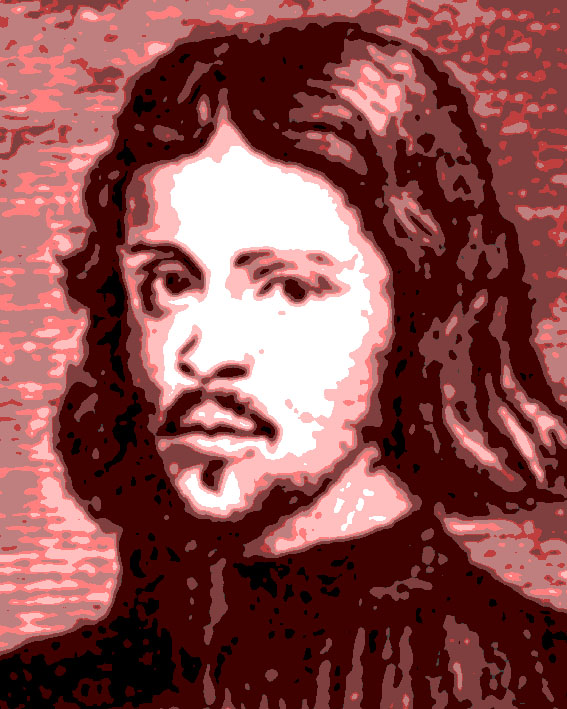 Thomas Tallis (~1505-85)
No one knows for sure where composer Thomas Tallis was born, but he is reasonably assumed to be Kentish because his first job was at Dover Priory, he progressed to a prestigious post at Canterbury Cathedral, and he was living in Greenwich when he died. The remarkable thing about him is the admirable way he kept his head through a singularly dangerous period in history. A staunch Catholic, he performed his compositions not only for Mary I but also the Protestant monarchs Henry VIII, Edward VI and Elizabeth I, adapting to their personal preferences. His body of work is therefore relatively versatile for that epoch. He is little known today to the general public, but is reckoned by music buffs to be one of the best-ever English composers, and still regularly features in choral concerts. One of Vaughan Williams’ most famous works is his ‘Fantasia on a theme by Thomas Tallis’.
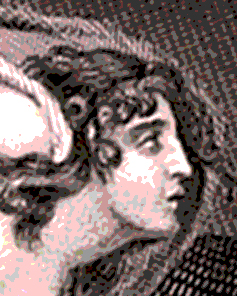 Elizabeth Barton (1506-34)
Whether Barton merited the title ‘Holy Maid’ or ‘Mad Maid’ of Kent depends on one’s religious perspective. Of humble origins in Aldington, she became maidservant to a local farmer. After an illness, she turned into a visionary, making prophecies and generally extolling the Roman Catholic calling. Her miraculous work made her a celebrity, and she won a comfortable place as a nun at a Canterbury priory. When Cardinal Wolsey checked her out and gave his blessing, she had it made. Like so much in that era, however, all hinged on the monarch, Henry VIII. She’d vocally supported his resistance to Lutheranism, but his rebellion against Rome left her in a quandary. She decided to oppose his Reformation, claiming she had seen the place in hell reserved for Henry if he should remarry. It was a foolish choice. In no time at all, her head was being displayed on a spike on London Bridge. Given Henry’s reputation, ‘Mad Maid’ sounds right.
 Jane Dudley, Duchess of Northumberland (~1508-55)
Kentish maid Jane Guildford grew up with John Dudley, her father’s ward after Henry VIII executed his father. The two married in 1525 and had 13 children, including Guildford Dudley, who later married Lady Jane Grey. A lady-in-waiting under Henry, she became Catherine Parr’s good friend, while John, an able administrator, became the Duke of Northumberland in 1551 and chief counsellor to the boy king Edward VI. In 1553, it fell primarily to Northumberland to enforce his daughter-in-law’s succession in accordance with Edward’s will. Princess Mary usurped the throne in a Catholic putsch, however, and Northumberland was executed, even after desperately recanting his Protestantism. Although Lady Northumberland’s son and royal daughter-in-law were likewise decapitated months later, she connived with the retinue of Philip II of Spain, Mary’s husband, to save her other sons, who included Robert, the future Earl of Leicester, Elizabeth I’s favourite. Before dying, Jane even became Philip Sidney’s godmother; the godfather was Philip II.
 Sir Nicholas Bacon (1510-79)
Nicholas Bacon was born in Chislehurst and studied law on his way to becoming a career politician. He ingratiated himself with Henry VIII so well that, after the English Reformation, the King gifted him four manors. His fortunes went sharply into reverse when the Catholic Mary I took the throne, but recovered under Elizabeth I to the extent that he was made Lord Keeper of the Great Seal – not a job at a zoo, but an honorific title indicating that he took charge of the wax seal used by the monarch to signal her consent to documents. He remained staunchly anti-Catholic, opposing the restoration of Mary, Queen of Scots as well as Elizabeth’s mooted marriage to a French duke. His greatest legacy was his youngest son Sir Francis Bacon, who in 1620 would publish the book that expounded a formal basis for empirical investigation, ushering in the age of science.
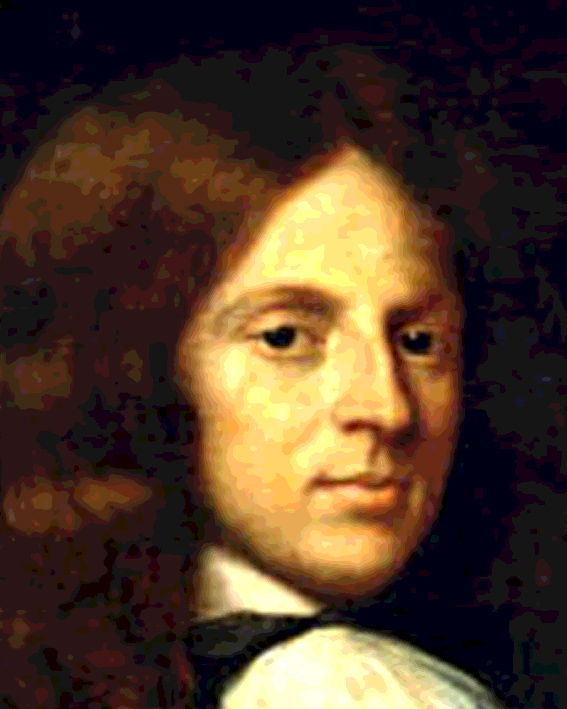 Thomas Culpeper (~1514-41)
Thomas Culpeper from Bedgebury enjoyed courtly connections that secured him work for the royal family, procuring luxury goods such as hawks for hunting. Culpeper did well for himself, buying Higham Court at Bridge when just 20. Responsible at length even for dressing and undressing the portly Henry, he ingratiated himself to the extent that he was rewarded with various gifts of property; and, when either he or his brother was responsible for a rape and a murder in 1539, the guilty party was pardoned. It all went wrong when the ageing King married Catherine Howard. The 17-year-old Queen took a shine to the handsome Culpeper, inviting him regularly to her bedchamber. His designs may have been purely political; but, with Archbishop Cranmer already investigating rumours of the Queen’s premarital indiscretions, an incriminating letter found in Culpeper’s chamber was decisive. After pointlessly protesting his innocence, Culpeper was executed, along with the Queen and her lady-in-waiting.
 Mary I, Queen of England (1516-58)
Like her father Henry VIII, Mary Tudor was born at the Palace of Placentia in Greenwich. Unlike him, she had a Spanish Catholic mother, and took great exception when her father renounced the Catholic Church, divorced her mother, and had Mary declared illegitimate. Her brother, who succeeded in 1547 as Edward VI, feared what would happen if ever Mary wore the crown, and changed the law in favour of his first cousin once removed, Lady Jane Grey. On his early death in 1553, Mary usurped the throne and had the young Grey put to death. She then heaped savage retribution on Protestants, having around 300 burned at the stake. Worse, she married King Philip II of Spain, soon to be England’s mortal enemy. The nation was ruined economically, suffered famine, and significantly lost Calais, its last possession in France. Though Catholic historians have attempted to repair her reputation, any impartial observer might feel she’d earned her epithet, ‘Bloody Mary’.
 John Hales (~1516-72)
Largely self-educated, John Hales from Hales Place in High Halden worked for Thomas Cromwell and then Sir Ralph Sadler, the Clerk of the Hanaper, who was responsible for sealing legal documents. Hales was jailed in 1649-50 for supporting the economic policies of the disgraced Duke of Somerset, and fled abroad when Mary I took the throne. After returning during Elizabeth I’s reign, he made himself deeply unpopular with his ‘A Declaration of the Succession of the Crown Imperial of England’, a tract in which he argued that the line of descent should pass through Henry VIII’s younger sister Mary Tudor, queen of France. This presumptuousness outraged Elizabeth so much that Hales spent years in jail and under house arrest. He died unmarried in London. He may have salvaged his reputation posthumously as the probable author of ‘The Discourse of the Common Weal of this Realm of England’ (published 1581), arguably the first text on economics.
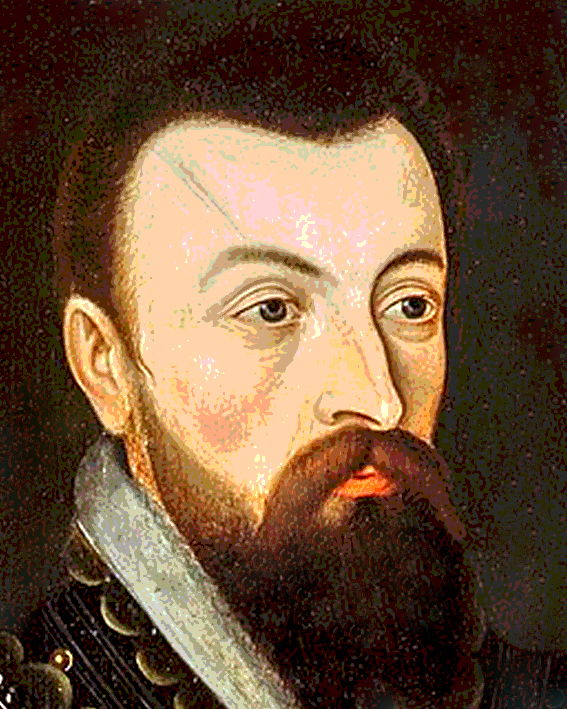 Sir James Wilsford (~1516-50)
The Rough Wooing was a war between England and Scotland occasioned by Henry VIII’s efforts to enforce the Treaty of Greenwich of 1543, whereby Prince Edward and Mary Stuart were contracted to marry. One prominent figure in it was James Wilsford from Cranbrook, a provost marshall in the Duke of Somerset’s army. Efficient and highly popular with the troops, he participated in the Battle of Pinkie Cleugh (1547), when the Scots unaccountably panicked and were butchered by the English cavalry. Having been knighted and assisted in manning a fort at Lauder, he was placed in charge of Haddington Castle near Edinburgh, which happened to be stricken by plague. He was captured early in 1549 while at the coast and imprisoned in Stirling Castle; he was described by the Scottish Queen consort as “a good catch“. A sick man, he was allowed home after nearly a year in captivity, and took up posts at Gravesend and Otford.
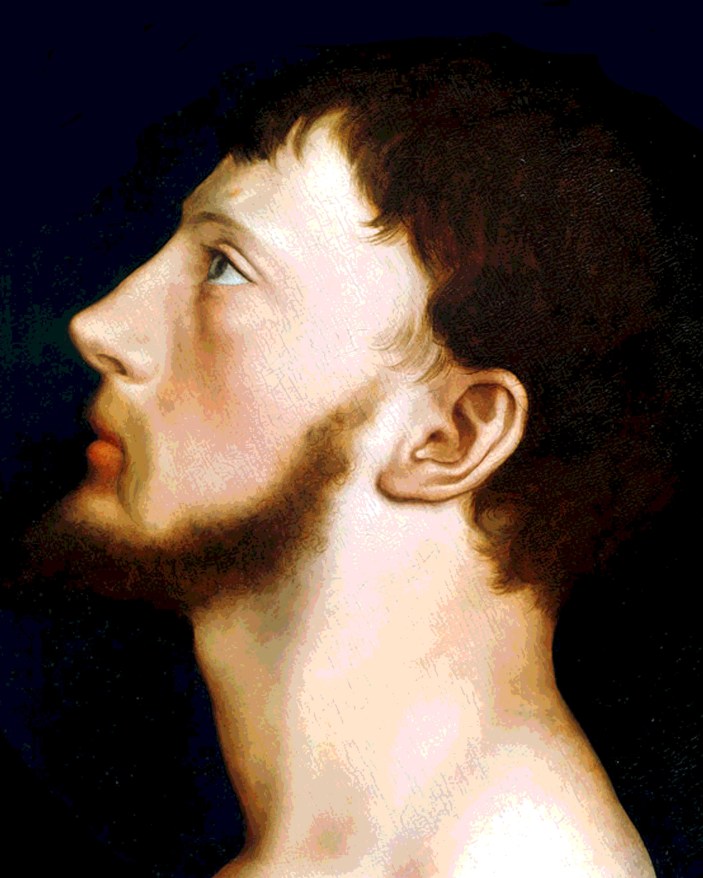 Sir Thomas Wyatt the Younger (1521-54)
The son of Sir Thomas, the poet-politician, Wyatt the Younger was born at Chatham, and inherited Allington Castle and Boxley Abbey in 1542. Although born a Catholic, his experience of the Inquisition while accompanying his father on a diplomatic mission made him hostile to Catholic Spain. Ever the rebellious sort, he joined forces with three Protestant lords violently opposed to Queen Mary’s plan to marry Philip II of Spain, who would thereby become king consort of England. Their plot to overthrow her was uncovered, and the others gave up. Wyatt alone persisted. In January 1554 at Allington, he drew up plans for the Revolt that bears his name. After marching on London, his army was finally repulsed at Ludgate. He was tortured extensively in the vain hope that he would incriminate Princess Elizabeth, Mary’s Protestant sister. Although cleared of attempted regicide, he was inevitably executed. Some wag added insult to injury by stealing his head as a trophy.
 Sir Roger Manwood (1525-92)
Best known from the name of the grammar school he co-funded, Manwood was a draper’s son who was born and attended school in his native Sandwich. Having trained to be a barrister, he became Recorder for Sandwich and an MP before ending up a legal bigwig. Possessed of an acute legal brain, he was a hardliner who took little pity on transgressors. Although appointed Lord Chief Baron of the Exchequer in 1578, he had a great facility for corruption and other misdemeanours, and was repeatedly reprimanded. Having granted him a manor at Hackington in 1563, Elizabeth I herself eventually chastised him; ironically, he was a governor of the Queen Elizabeth Grammar School (now Colfe’s) in Lewisham. His wealth did enable him to save his soul by lavishly sponsoring philanthropic causes, including almshouses, church bells, and a gaol in Canterbury, where he was buried. Christopher Marlowe wrote a cryptic verse eulogy to him in Latin.
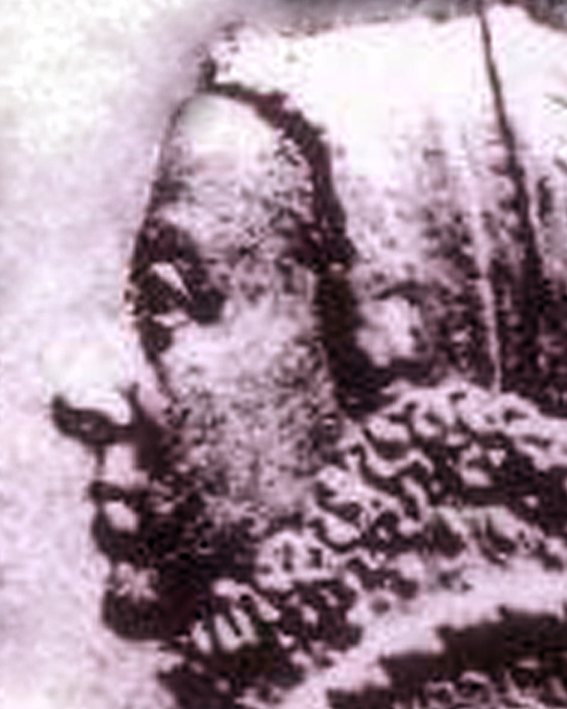 Elisabeth Brooke, Marchioness of Northampton (1526-65)
The eldest daughter of George Brooke, 9th Baron Cobham of Kent, Elisabeth became a maid of honour to Catherine Howard, Henry VIII’s queen consort, at 14. She attracted the interest of Catherine Parr’s married brother William, the future Marquess of Northampton, who was prohibited by law from remarrying after divorce. After Queen Catherine’s execution, Elisabeth was sent to live at Chelsea, Middlesex with three future queens: Catherine Parr, Elizabeth Tudor, and Jane Grey. Under Edward VI, she witnessed at close quarters the forcible removal and execution of his Lord Protector, the Duke of Somerset, whose replacement by Northampton’s good friend, Lord Northumberland, enabled the couple finally to marry in 1551. They were inevitably jailed when Mary I succeeded Edward, but Elizabeth I freed them and restored their fortunes. Nevertheless, their happiness was cut short. Stricken by breast cancer, Elisabeth fruitlessly sought help in the Netherlands, only to suffer the unwanted attentions of a servant, who consequently was jailed.
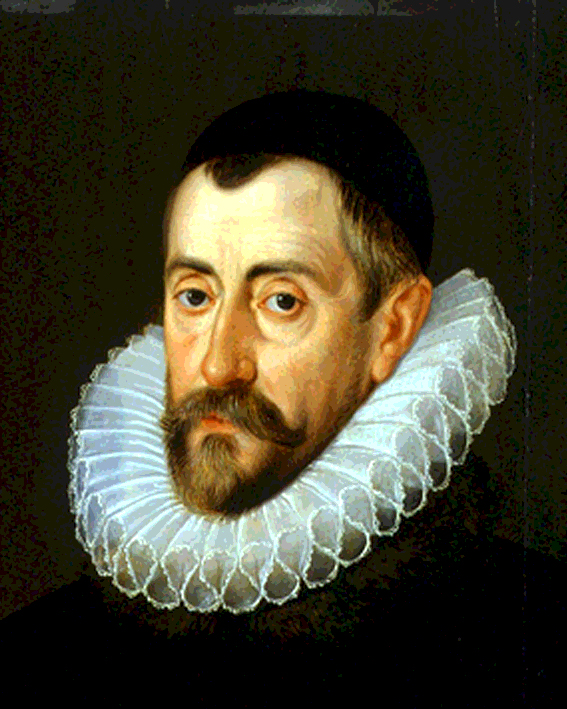 Sir Francis Walsingham (~1532-90)
Probably born at Foots Cray Place, Francis Walsingham was the devil incarnate to Roman Catholics, but to modern eyes rather resembles a C16 incarnation of James Bond’s ‘M’. After Cambridge, he became a lawyer, but exiled himself when Mary I commenced her persecution of Protestants. On returning after her death, he became a trusted adviser to Elizabeth I. In 1572, he was deeply affected by his experience as ambassador in France, when he witnessed the massacre of up to 30,000 Protestants ordered by Queen Catherine. Thereafter he showed extreme prejudice towards Catholics, opposing all rapprochements with France and Spain and ruthlessly crushing repeated plots against Elizabeth’s life. Chief among these was the Babington Plot, intended to put Mary Queen of Scots on the English throne. It was Walsingham’s spy ring that unearthed the fateful evidence, and he who pressed successfully for Mary’s execution. After serving unfailingly as the Queen’s personal secretary for 17 years, he died of cancer back at Foots Cray.

Elizabeth I, Queen of England (1533-1603)
Good Queen Bess’s 44-year reign now seems brief compared with her modern namesake’s; but its length was a blessed relief after the turmoil of the last quarter century. Considering the adversity she faced, it’s only a wonder it lasted so long. She was born at Placentia Palace in Greenwich, three years before her mother was executed by her father. Her half-brother who succeeded him died at 15, following which their half-sister Queen Mary I imprisoned her in the Tower. At 25, however, Elizabeth was herself crowned. In addition to an attack of smallpox, she survived numerous plots and rebellions. Perhaps her most glorious achievement was presiding over the destruction of Philip II of Spain’s invasion fleet, the Armada, in 1588. The great disappointment of her reign, however, was the Virgin Queen’s failure to provide a direct heir. Instead, she left the English throne to the Stuarts, the Scottish dynasty who would provoke two revolutions.
 Sir Henry Lee of Ditchley (1533-1611)
It’s not known exactly where Henry Lee was born in Kent, although a clue is provided by the fact that his mother Margaret was one of the Wyatts of Allington Castle, and his uncle the poet Sir Thomas. A strapping individual, he became a noted jouster, and in 1570 attained the rank of Queen’s Champion. During his 20-year tenure, he was responsible for organising Elizabeth I’s spectacular Accession Day tilts every year at Westminster, and featured in splendid decorative armour in the ‘Jacob Album’ collection of suits produced by the Royal Almain Armoury, of which he was appointed Master for life in 1580. His retirement as Queen’s Champion was fulsomely celebrated in verse and song. Despite being knighted in 1597, he boldly declined to host Her Majesty at his home at Ditchley, Oxfordshire for a second time because of the cost. He represented Buckinghamshire at four parliaments, and founded Aylesbury Grammar School.
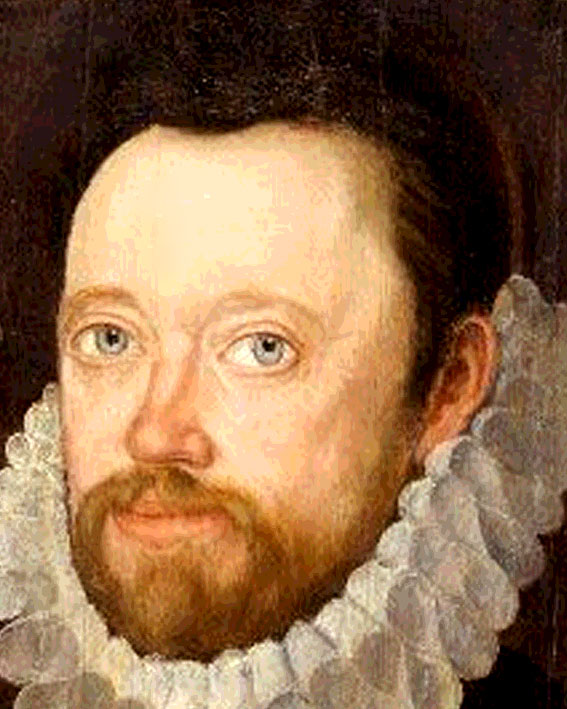 Reginald Scott (~1538-99)
On the face of it, the Oxonian MP for New Romney, Reynolde Scot, was a country gentlemen who prospered by inheriting properties in Smeeth (his home village), Brabourne, and Aldington. More importantly, he wrote two books of lasting social value. One was an illustrated manual on hop cultivation, ’A Perfite Platforme of a Hoppe Garden’ (1574), the first in English. The other was ‘The discoverie of witchcraft’ (1584) which, contrary to what one might expect, condemned belief in witchcraft as a tool of oppression. He even demonstrated diagrammatically how ‘miracles’ were performed, making the book arguably the first manual of magic. His motives were largely religious, since he blamed Roman Catholicism for sustaining the belief that witches actually existed. This won support in the Tudor era, when Henry VIII and Elizabeth I liberalised witchcraft laws; but not under the Stuarts, after the zealous witch-hunter James I damned the late Scott and ordered his books burnt by the hangman.
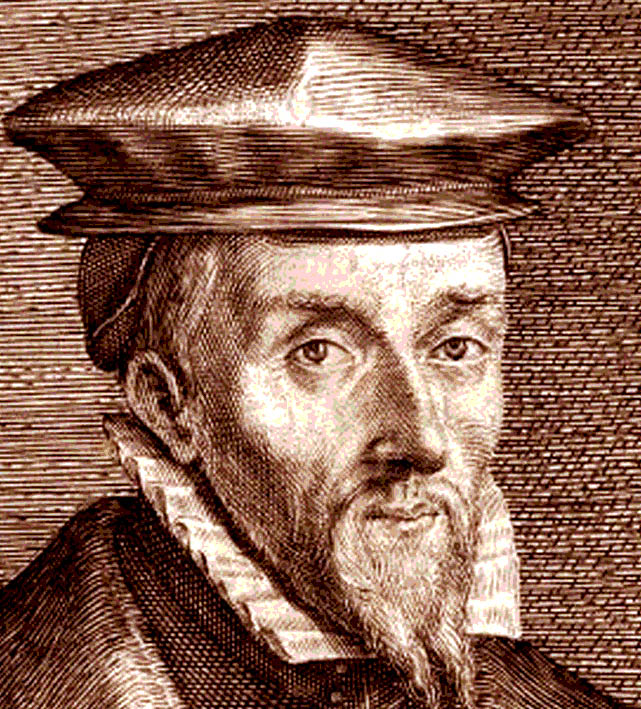 Edward Dering (~1540-76)
The third son of John Dering of Surrenden Dering, Pluckley, Edward provided a splendid example of the human capacity for frittering away one’s existence in pursuit of zealous causes. After studying at Cambridge, he kept his nose clean until in 1568 Archbishop Matthew Parker made him rector of Pluckley. Two years later, however, he excoriated the English clergy in front of Elizabeth I, holding her personally responsible for the current state of affairs – and this despite having dutifully presented her with a book of Greek verse six years earlier. It earned him a suspension. That same year, theologian Thomas Cartwright was expelled from Cambridge for championing Presbyterianism, a fundamentally Scottish doctrine embracing Church rule by assemblies of elders. Dering defended him vehemently, accusing English ministers of egregious ignorance. Though he talked his way out of a suspension of his lectureship at St Paul’s Cathedral, his erstwhile friend Parker blocked his further advancement, and he died young of tuberculosis.
 Dr Robert Hovenden (1544-1614)
Although he was born in Canterbury and became both chaplain to Archbishop Matthew Parker and a prebend at Canterbury Cathedral, it was in Oxford that Hovenden made his name. After being elected a fellow of All Souls College in 1565, he graduated the following year, and became warden in 1571 – a post he retained for 43 years until his death. He evidently managed it adeptly, mapping its estates, expanding its buildings, and putting its archives in order. He took a business-like stance, seeking always to maximise yields, and even standing up to Elizabeth I when asked to lease land unprofitably. He was briefly vice-chancellor of the University in 1582-3. Having left behind a short biography of the vindictive Archbishop of Canterbury Henry Chichele, he was buried in the College chapel, and commemorated with a monument that included a bust. His brother George, another prebend of Canterbury Cathedral, was rector of Harrietsham, whose living was under All Souls’ jurisdiction.
 Thomas Digges (~1546-95)
Digges was born in Wootton, near Dover, the mathematician son of a mathematician. Having studied the supernova observed by Tycho Brahe in 1572, he concluded that it was so far away as to contradict Aristotle’s cosmic model. He was among the first in Britain to pick up on Copernicus’s theory that the universe revolved not around the Earth but the Sun, and to publicise it. More than that, however, he challenged the Prusso-Pole’s belief that the stars were mounted on spheres that restricted their range. Instead, he proposed that stars extended to an extreme distance and in unlimited numbers, accurately anticipating modern cosmology. He even went so far as to query why, if there is an unlimited number of stars, the night sky is not uniformly filled with starlight. He thus first stated the ‘Dark Night Sky Paradox’ that would not be resolved until the C20. Copernicus is now celebrated, whereas Digges is forgotten.
 Edward Wotton, 1st Baron Wotton (1548-1626)
Wotton was the grandson of a Lord Mayor of London, and half-brother to poet Henry Wotton. Although not known to have studied in England, he spent years abroad acquiring considerable learning and several languages, making him an asset to Francis Walsingham in the dark arts of diplomacy; he was sent on numerous delicate missions overseas and in Scotland. In 1602, he became Comptroller of the Household, and having inherited Boughton Place from his father in 1587 was endorsed by the new king James I with the title Baron Wotton of Marley, Co. Kent. He became successively Sheriff and Lord Lieutenant of Kent, though he was denied ennoblement by his Catholicism. His cosmopolitan outlook brought him interesting literary connections: he befriended Sir Philip Sidney, who in ‘The Defence of Poesy’ mentioned learning to ride with him in Vienna, and escorted Isaac Casaubon to England in 1610. His widow Margaret boldly affirmed his Catholicism on their tomb in Boughton Malherbe church.
 The Very Reverend Thomas Nevile (d 1615)
After Richard Neville, a wealthy gentleman from Nottinghamshire, settled at Canterbury, he had two sons, one of whom was the politician and writer Alexander Neville, and the other Thomas Nevile (sic), who went into the Church. As well as becoming dean of Canterbury in 1597 until his death, having already been dean of Peterborough, he so commended himself to Elizabeth I during his time as master of Merton College, Cambridge and vice-chancellor of Cambridge University that she made him the new master of Trinity College, Cambridge. There he made a lasting difference to the fabric of the college, creating the enormous Great Court spotlighted in ‘Chariots of Fire’. Then, at his own expense, he had another court built, still known as Nevile’s Court. He was buried at Canterbury Cathedral in the former Brenchley Chantry Chapel, which he had appropriated in 1598, and is commemorated by an effigy of himself and his brother kneeling at prayer.
 John Lyly (~1553-1606)
Writer John Lyly was most likely born in Kent: his younger brothers were recorded as contemporaries of Christopher Marlowe at the Kings School, Canterbury, and his father – who was registrar at the Cathedral – had previously worked as a notary in Rochester. This prompts the intriguing thought that, of the four dramatists cited by Ben Jonson as the greatest of that golden era – Shakespeare, Kyd, Marlowe, and Lyly – two hailed from Canterbury. Yet, though now best remembered for his plays, Lyly was celebrated in his lifetime for two romances, ‘Euphues: The Anatomy of Wit’ and ‘Euphues and His England’ (1578/80). Their delicate, elegant style inserted a new word into English dictionary, ‘euphuism’ – a style that was much admired, and widely imitated. Lyly is also generally credited with coining the maxim ‘All is fair in love and war’. Though he lived for most of his life (and died) in London, Lyly additionally served as MP for three far-flung constituencies.
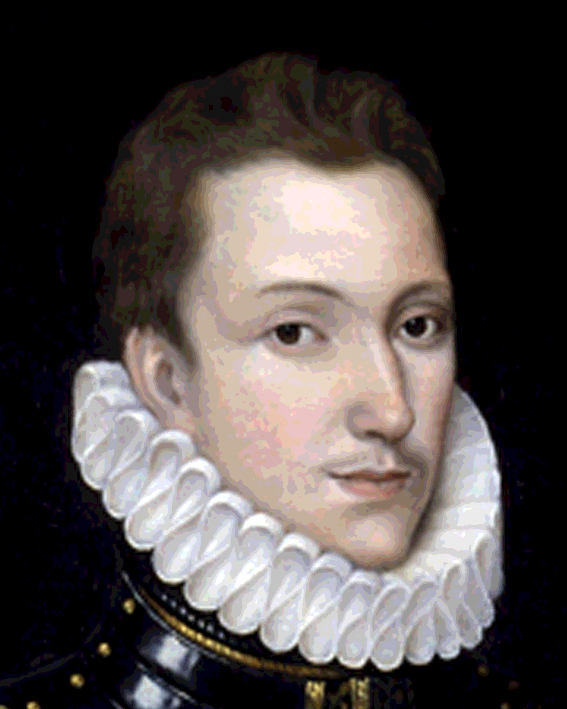 Sir Philip Sidney (1554-86)
Few have packed so much into a short life as Philip Sidney. Born into a prominent family at Penshurst Place, he was already an MP at 18. After three years travelling through Europe, he met Penelope Devereux, the Earl of Essex’s sister, who later inspired him to write 108 love sonnets; she however wed unhappily elsewhere. Instead he married Sir Francis Walsingham’s daughter Frances in 1583. He was also knighted that year, and became MP for Kent a year later. A militant Protestant, he befriended Italian radical Giordano Bruno. Posted to the Netherlands, he actively supported Dutch resistance to the Spanish army of occupation. At the Battle of Zutphen, Sidney was shot in the leg, and died weeks later of gangrene; his insistence on giving his water to another wounded man would prompt a classic thought experiment in evolutionary biology. His writings – which included literary criticism and a romance – were only published posthumously, but assured his lasting fame.
 Sir Thomas Smythe (~1558-1625)
Thomas Smythe’s grandfather was Sir Andrew Judde, a merchant and Mayor of London, and his father Thomas ‘Customer’ Smythe, the Port of London customs official who owned Westenhanger Castle. After attending Merchant Taylor’s School, Smythe became prominent in both commerce and politics. As Sheriff of London, he was accused in 1600 of supporting Essex’s rebellion against Elizabeth I and imprisoned in the Tower, but was freed when she died, and even knighted by James I. Having served as the first governor of the East India Company for four months in 1600, he resumed the role for 18 years. In 1604, he travelled from Gravesend to Archangel, Russia to do business with Tsar Boris Godunov. He became treasurer to the tobacco-producing Virginia colony (1609-20), to which Sir Walter Raleigh had granted him settlement rights. He even sponsored efforts to find the Northwest Passage; William Baffin named Smith Sound off Greenland after him. A huge monument celebrates him in Sutton-at-Hone church.
 William Adams (1564-1620)
William Adams of Gillingham has the distinction of becoming the first western samurai. In 1600, he was hired as chief pilot of a five-vessel Dutch trading fleet heading for South America’s west coast. After the fleet was scattered by storms, one ship turned back, another was captured, and two remaining captains were killed by natives. Desperate, the remaining crews opted to cross the Pacific. One made for Indonesia, where all were slaughtered, and the other two for Japan. After desertions and a shipwreck, only nine men survived the voyage to Usuki, where the ship with its cannons and cargo was seized by the authorities. Luckily, the future Shogun took to Adams, whose talents he employed to enhance the Japanese navy and develop trading links. Adams was eventually declared reborn as a samurai. Named Miura Anjin, he began a new life as an influential official, remarrying but continuing to provide for his wife back home. He never came back.
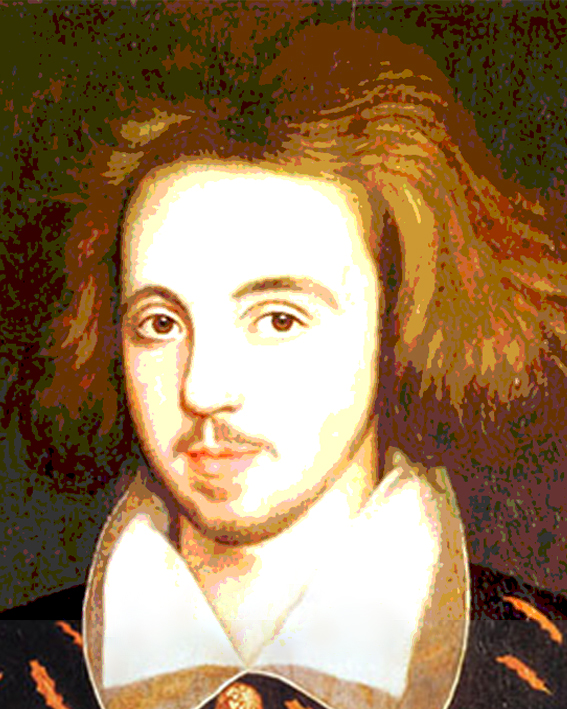 Christopher Marlowe (1564-93)
Kit Marlowe, son of a Canterbury shoemaker, was such a precocious literary talent that it is no wonder he has been credited with secretly writing the early works of his exact contemporary, Shakespeare. After attending The King’s School and Cambridge, he began working for the government in some secret capacity, possibly spying for Sir Francis Walsingham. Meanwhile, he also turned his hand to drama, writing the innovative and hugely popular tragedies ‘Tamburlaine the Great’, ‘The Jew of Malta’, and ‘Doctor Faustus’. Both careers came to a sudden halt in Deptford on May 30th, 1593. After a day’s drinking with three dubious Walsingham agents, he got into a fight with one, Ingram Frizer, who mortally stabbed him in the head. Frizer was acquitted, but the coroner’s report still seems fishy, especially as Marlowe faced politically inspired criminal charges at the time. While his dramatic torch passed to Shakespeare thereafter, Marlowe’s murky death still provides rich material for conspiracy theorists.
 Richard Boyle, 1st Earl of Cork (1566-1643)
Richard Boyle was born at Canterbury into landed gentry from Hertfordshire who had settled near Faversham. A contemporary of Christopher Marlowe, he attended The King’s School and Cambridge before studying law and working for Sir Roger Manwood. At 21, however, he decided to seek his fortune elsewhere, and departed for Ireland with a stash of money and jewellery. A good marriage brought him a handsome income, and he applied his negotiating skills to buying property, most notably Sir Walter Raleigh‘s estates that included Lismore Castle in County Waterford. He was never without enemies in high places, however, whether because he was corrupt, or they just resented this upstart. Irish Catholic rebels were also an ongoing problem, and drove him off his land in both 1598 and 1641. His youngest son Robert, born when Lord Cork was past 60, would immortalise the family name with Boyle’s Law and become Ireland’s most famous scientist.
 Frances Burke, Countess of Clanricarde (1567-1633)
Frances Walsingham was the daughter of the famous spymaster, with whom she witnessed at first hand the St Bartholomew’s Day Massacre in 1572 and had to be smuggled out of France. She became an only child when her sister died at seven, her two half-brothers having already been killed in an accidental explosion. At 16, she married the poet Sir Philip Sidney, to the annoyance of the Queen, who feared a power nexus between these two powerful Kentish families; he was nursed by Frances after being fatally wounded in battle. She embarked next on an even riskier marriage to the 2nd Earl of Essex, the Queen’s favourite later executed for plotting a rebellion; their son the 3rd Earl would become the Roundheads’ Chief Commander. Frances’s final marriage was altogether more sedate. With Richard Burke, 4th Earl of Clanricarde, she built Portumna Castle in Ireland and Somerhill House near Tudeley, where she died. She is buried at Tonbridge church.
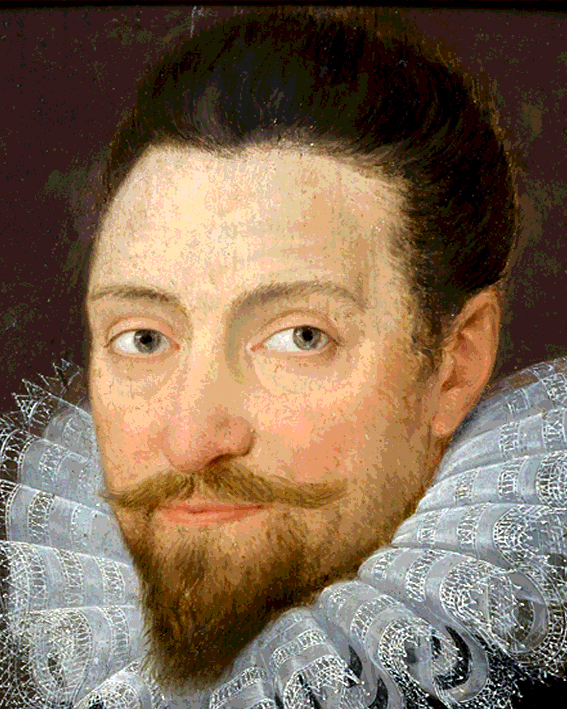 Sir Henry Wotton (1568-1639)
The Lord Lieutenant of Kent’s half-brother, Henry Wotton was born at Boughton Place in Boughton Malherbe. At Oxford, he befriended John Donne, some of whose poetic ability he shared; but it was as a diplomatist that he played a small but fateful role in English history. Charged by the Earl of Essex with gathering information on various European states, he nearly came a cropper when his boss led a failed coup against Elizabeth I and was executed; Wotton fled abroad. While in Florence, he learned of a plot to kill the Catholic heir to the English throne, James VI of Scotland, and travelled incognito to warn him, taking antidotes to poisons. After succeeding Elizabeth, the grateful monarch rewarded him with a knighthood. Wotton blotted his copybook by famously defining a diplomat as “an honest man sent to lie abroad for the state’s benefit”, but survived to become MP for Sandwich and spend time fishing with Izaac Walton, no less.
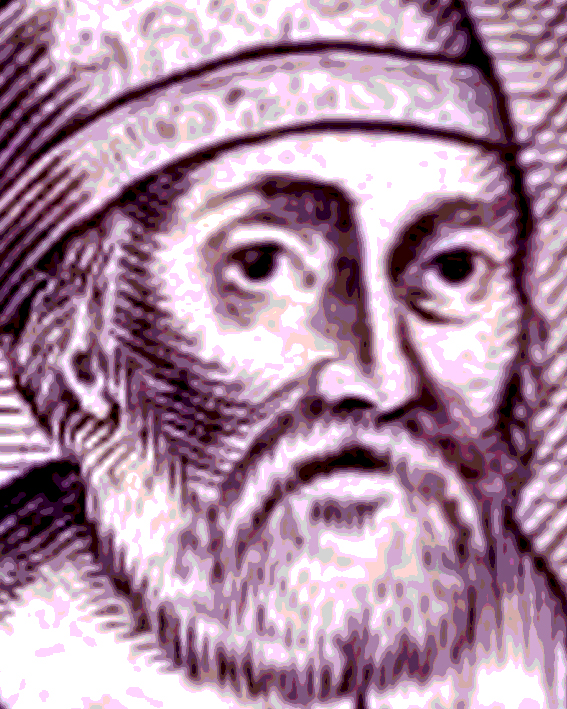 Sir Richard Baker (ca 1568-1645)
Descended from at least four substantial old Kent families, Baker was born at Sissinghurst, the grandson of the original Chancellor of the Exchequer, Sir John Baker. He failed to complete his degree at Oxford, and studied in London before going on his travels and being elected an MP. His unremarkable life changed in 1635 when, having underwritten his in-laws’ debts, he found himself bankrupt, and spent his last nine years in Fleet gaol. He filled his time by writing eruditely. To begin with, his thoughts were on the everlasting, and he penned several tracts on religious themes, interspersed with some secular works. His signature piece however was his ‘Chronicle of the Kings of England from the Time of the Romans’ Government unto the Death of King James’ (1643) which, despite its great popularity, was sadly no more accurate than one might expect from a man without access to a good library.
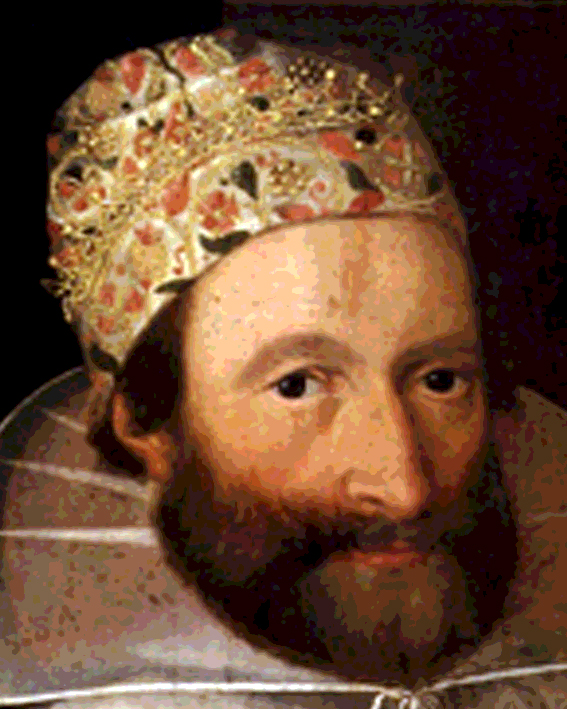 Captain Phineas Pett (1570-1647)
The so-called Pett Dynasty of North-West Kent – whose timber plantation lent its name to the town of Petts Wood – was of unique importance in English shipbuilding for two centuries. One of its foremost scions, Phineas, was born in Deptford and attended schools in Rochester and Greenwich before going to Cambridge. He was left penniless when his father, shipwright Peter Pett, died in 1589, but quickly established himself as a shipbuilder at Chatham. By making a well-received miniature ship for the ill-fated Prince Henry in 1604, he won King James I’s favour, and an income to boot. His achievements included organising Princess Elizabeth’s nautically themed wedding celebration in 1613, being elected Master of the Corporation of Shipwrights in 1616, and building HMS Vanguard at Woolwich before becoming the first Resident Commissioner of Chatham Dockyard (both 1631). He designed the mighty Sovereign of the Seas built by his son Peter. His memoir of his career was published in 1918.
 The Very Reverend John Boys (1571-1625)
Having been born at Eythorne, John Boys most likely attended The King’s School, Canterbury, since he went to Corpus Christi, Cambridge, which at Archbishop Matthew Parker’s behest offered scholarships to alumni of that school. Ever in need of a steady income, he ingratiated himself sufficiently with Church elders that he was given a succession of livings, including Betteshanger, Tilmanstone, and Hollingbourne, and made master of Eastbridge Hospital in Canterbury. For the last six years of his life, he was dean of Canterbury Cathedral, in which capacity he delivered a sermon, which still exists, on the occasion of the future queen Henrietta Maria’s arrival in England in 1625. Most notably, he became a respected author of ecclesiastical works, starting with ‘The Minister’s Invitatorie’ (1609), an invaluable account of the main scriptures of the Anglican liturgy; comparable lists of epistles and gospels followed by 1614, and psalms in 1616. His scholarship was commemorated with an evocative monument in the Cathedral.
 Sir John Finet (1571-1641)
When Cardinal Campeggio came to Kent in 1519, he brought with him John Finet of Siena, who decided to remain and marry an Englishwoman. Finet’s great-grandson, John Finet from Solton Manor near Dover, was a courtier who travelled to France, Spain, and Italy, where he was painted by Tintoretto. He had a particular gift for entertaining eminent personages. He wrote pieces for the court of James I that were said to be highly amusing, in spite or perhaps because of being very crude. He blotted his copybook in 1618, however, when he performed a piece alongside several other courtiers that proved rather too risqué, and the King, who was suffering from gout, was not amused. Nevertheless Finet, who had already been knighted in 1616, was promoted to Master of Ceremonies in 1626. In addition to ‘Finetti Philoxenis’, a guide to dealing with foreign ambassadors, he left behind a number of recipes.
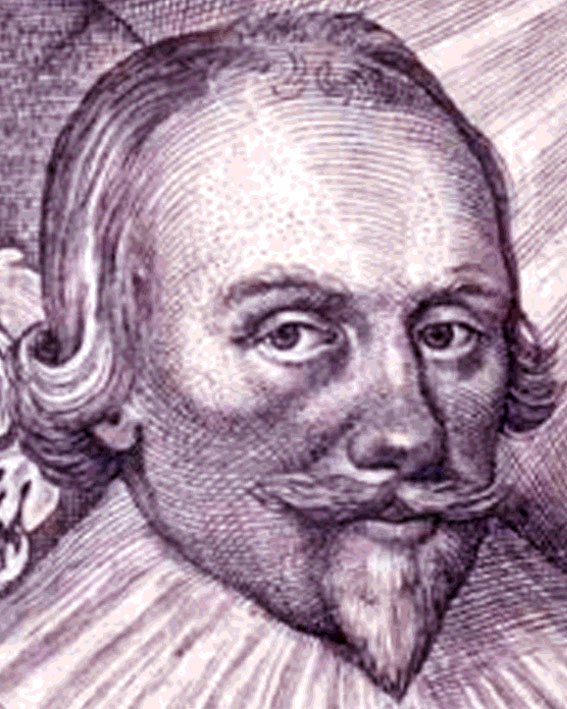 Dr Robert Fludd (1574-1637)
At the very time when Galileo Galilei from Pisa was showing the world how science ought to work, Robert Fludd from Bearsted was doing the opposite. He was born at Milgate House, which was probably built by his father Sir Thomas, Queen Elizabeth I’s war treasurer. After studying Medicine at Oxford, he championed the theories of the Swiss physician Paracelsus, rooted in an occult belief in the harmony of microcosm and macrocosm; he also became known as an apologist for the esoteric Rosicrucian movement that swept Christendom in the early C17. Though his explanations for phenomena from blood to cosmology rested on mystical speculation rather than evidence, he was taken sufficiently seriously that his arguments had to be rebutted by such scientific giants as Kepler and Gassendi. His arcane beliefs seemed to have been buried with him at Bearsted church; but the antiscientific consensus now sweeping the West may feel he is due a comeback.
 Sir Robert Heath (1575-1649)
Born in Edenbridge, Robert Heath attended Tonbridge School and Cambridge, and went into law. He was known as a quick-witted rather than insightful lawyer and, possibly because of the unpopular politics and personages he had to defend, earned an ambivalent reputation. Yet there was no doubting his success. As well as serving as MP for London, he became Attorney General in 1625, Chief Justice of the Common Pleas in 1631, and, in 1642, Lord Chief Justice. He was loyal to Charles I up until the crucial Civil War year of 1646, after which he went into exile in France, and died there. He is perhaps best remembered as the man who effectively created the Carolinas in America. He secured a patent (i.e. land grant) in 1629 on a vast tract of land named in Charles’s honour; but, when his plan to settle it with French Huguenots was blocked, he assigned it, much to his heirs’ later frustration.
 Sir William Harvey (1578-1657)
William Harvey was born into a wealthy family in Folkestone, where his father later became mayor. After leaving The King’s School, Canterbury, he went to Cambridge, where he gained his doctorate in medicine after a spell at the University of Padua. He took a career-long post at St Bartholomew’s, living in Ludgate. As well as lecturing, he won a plum job as personal physician to King James I in 1618. Another client was Sir Francis Bacon, deviser of the scientific method. Though Harvey disliked Bacon’s style, he published in 1628 a work that accorded well with Bacon’s eminently practical method: ‘De Motu Cordis’, his comprehensive account of the circulation of blood. In overturning Galen’s ancient theory, it naturally ruffled feathers, and was not accepted for decades. Nevertheless, it proved a turning-point in medical science, and Harvey is now honoured as a forerunner of the scientific revolution. He died in his seventieth year of, ironically, a cerebral haemorrhage.
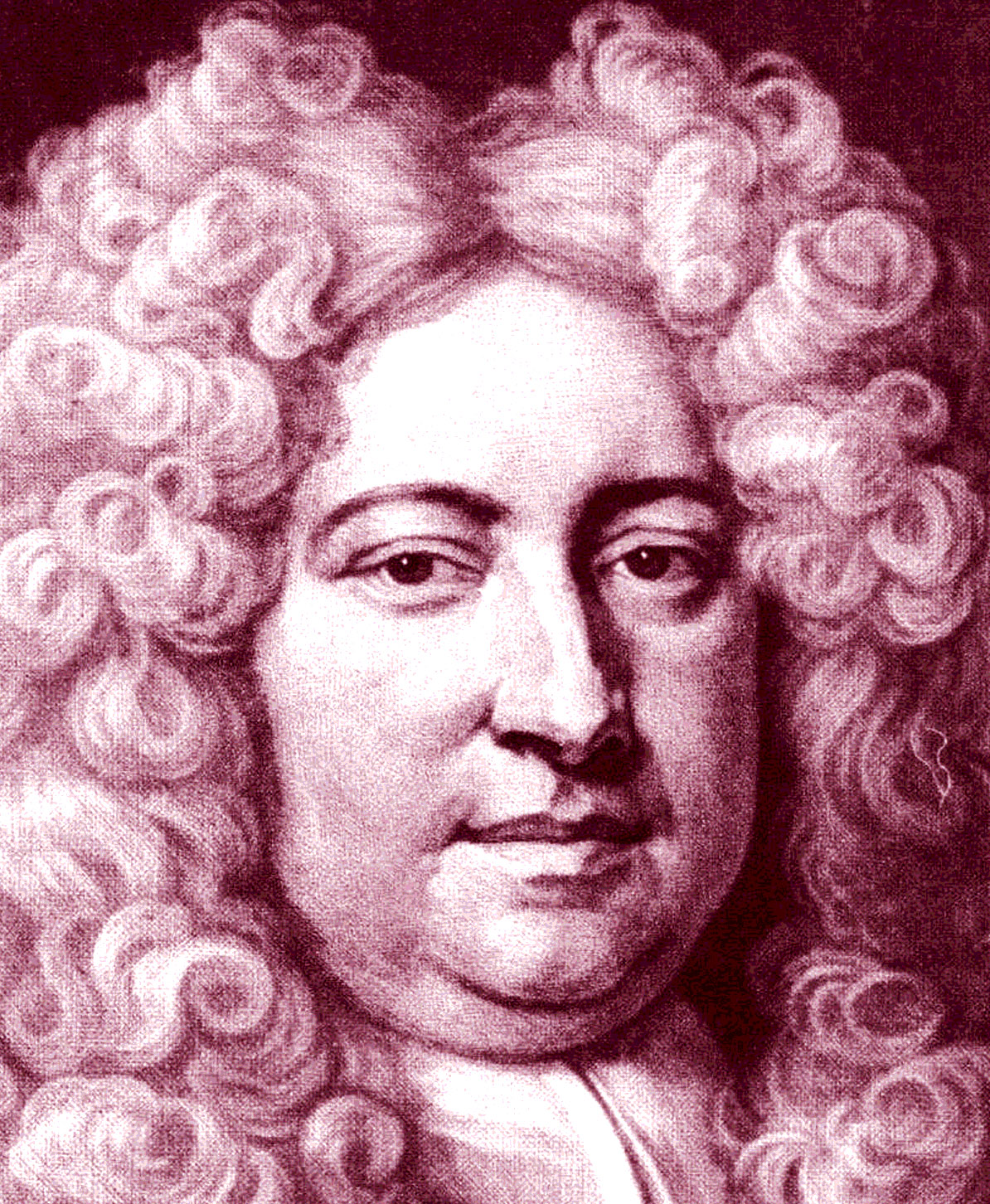 Sir Heneage Finch (1580-1631)
One of the Finches of Eastwell Manor, Heneage Finch was born at The Moat in Canterbury. The son of Sir Moyle Finch, an MP and twice Sheriff of Kent, he owed his unusual first name to his mother Elizabeth, née Heneage, who was Viscountess Maidstone before being created Countess of Winchilsea. He went into law after studying at Cambridge, and became MP for Rye in 1610. After serving one term, he went into service with Prince Charles, whereupon the Duchy found him a seat in Cornwall. His legal career flourished in his forties. He was made Recorder of London in 1621, elected MP for the City of London in 1624, and selected as Speaker of the House in 1626. His eldest son, also called Heneage, became Lord Chancellor and was a key figure during the Popish Plot. A monument to Finch by Nicholas Stone, incorporating a bust, can be viewed in the Victoria & Albert Museum.
 Sir Dudley Digges (1583-1639)
To modern ears, Dudley Digges sounds a good egg at a time of many rotten ones. He was probably born at Digges Court, Barham, the son of mathematician Thomas Digges. Noted for supporting voyages of discovery, he helped fund Henry Hudson in 1610, who named the Digges Islands and Digges Cape at the entrance to Hudson Bay after him, and William Baffin in 1615-6. His interest in overseas development led to his son, Edward, settling in Virginia and becoming governor. As MP for Kent, he led efforts to impeach James I’s corrupt toy-boy the Duke of Buckingham after a farcical raid on Cadiz in 1626. He wrote ‘The Compleat Diplomat’ (published 1655), a valuable account of efforts to find a spouse for Queen Elizabeth I, and built Chilham Castle as we now know it around 1616. With an eye to public health, he even left money to fund 200 years of annual races for Chilham villagers.
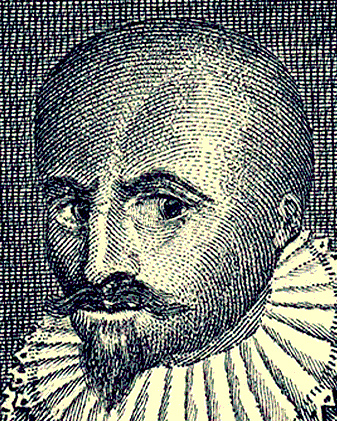 Sir Anthony Weldon (1583-1648)
Weldon is attributed with the famous description of James I as “the wisest fool in Christendom” that appears in ‘The Court and Character of King James I’ (1650). It tallies with the unflattering sentiments expressed in another work attributed to him, ‘Perfect Description of the People and Country of Scotland’, although doubt has been cast on whether he actually wrote either work. He did indeed serve in James’s court, where both his father and uncle had held positions; and, despite being knighted in 1617, he may well have left under a cloud, because he became a committed Parliamentarian as civil war approached. Nevertheless, as chairman of the Kent County Committee, he stridently defended Kent’s interests against grasping London officials. When the Kentish revolt of 1648 threatened a Royalist backlash, Weldon confined himself to his manor, fearing the worst, but survived just long enough to be handsomely rewarded by Parliament for his loyalty. He was buried at his hometown, Swanscombe.
 John Finch, 1st Baron Finch of Fordwich (1584-1660)
Like his father, Sir Henry Finch of Eastwell Manor, John Finch was repeatedly elected MP for Canterbury. At a turbulent time in English politics, he earned a reputation as a Royalist hardliner, especially when he was knighted in 1625 two days after welcoming Charles I to Canterbury for his first meeting with Henrietta Maria. He was Speaker of the Commons in 1628-9, and as Chief Justice of the Court of Common Pleas won few friends in Parliament with his tough line on political dissent. Though Charles made him Baron Finch of Fordwich and Lord Keeper of the Great Seal in 1640, the Long Parliament that first sat that year immediately impeached him and confiscated his estates. After exile in Holland, he returned at some point to England, probably at the time of the Restoration. In 1660, he participated in the trials of the regicides, revolutionaries who no doubt relished his swift demise. He was buried at St Martin’s, Canterbury.
 Lady Mary Wroth (1587-~1652)
Mary Sidney has enjoyed a recent resurgence of interest in feminist circles as the author of what is thought to be the first English romance by a woman. The niece of the great poet Sir Philip Sidney, she lived, and was probably born, at Penshurst Place. She was unhappily married to the dissolute and jealous Sir Robert Wroth of Loughton Hall, Essex, after whose death she had two illegitimate children by her cousin William Herbert, the 3rd Earl of Pembroke. Practically penniless, in 1621 she released a manuscript of ‘The Countess of Montgomery’s Urania’, the extremely long and elaborate tale of Pamphilia and Amphilanthus, thinly veiled idealisations of herself and Herbert. Indeed, this roman à clef seems to have been an appeal for acceptance by her aunt, the Countess of Pembroke, in the guise of the Queen of Naples. The book scandalised some depicted libellously in it, and was speedily withdrawn. Thereafter, Lady Wroth largely disappeared from public view.
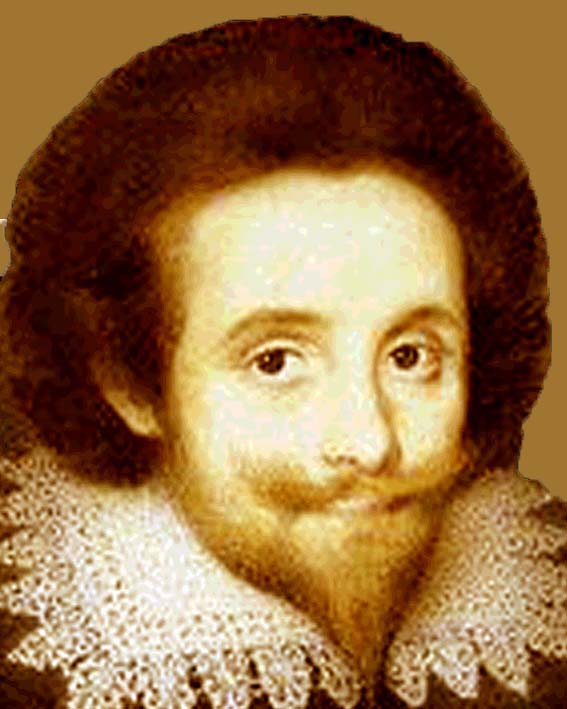 Sir Francis Nethersole (1587-1659)
Francis Nethersole from Wingham had been working happily as a tutor at Cambridge for several years when he was asked in 1619 to accompany Viscount Doncaster on a diplomatic mission to the Palatinate, where James I‘s Protestant son-in-law was Elector. Their mission, to help secure peace with the Elector’s hostile Catholic neighbours, ultimately failed, but it initiated a long association between Nethersole and the Electress Elizabeth, James’s daughter. After returning to England and being knighted, he played a significant role in relations with the Elector, who subsequently won and lost the crown of Bohemia. Nethersole became an MP, in which capacity he opposed Charles I’s ambition to hold citizens under arrest without due cause; yet he remained loyal, even after being held in the Tower and barred from working further for Elizabeth. He became a vicar and, though he took no part in the Civil War, continued publishing pamphlets sympathetic to the Royalist cause. He died shortly before the Restoration.
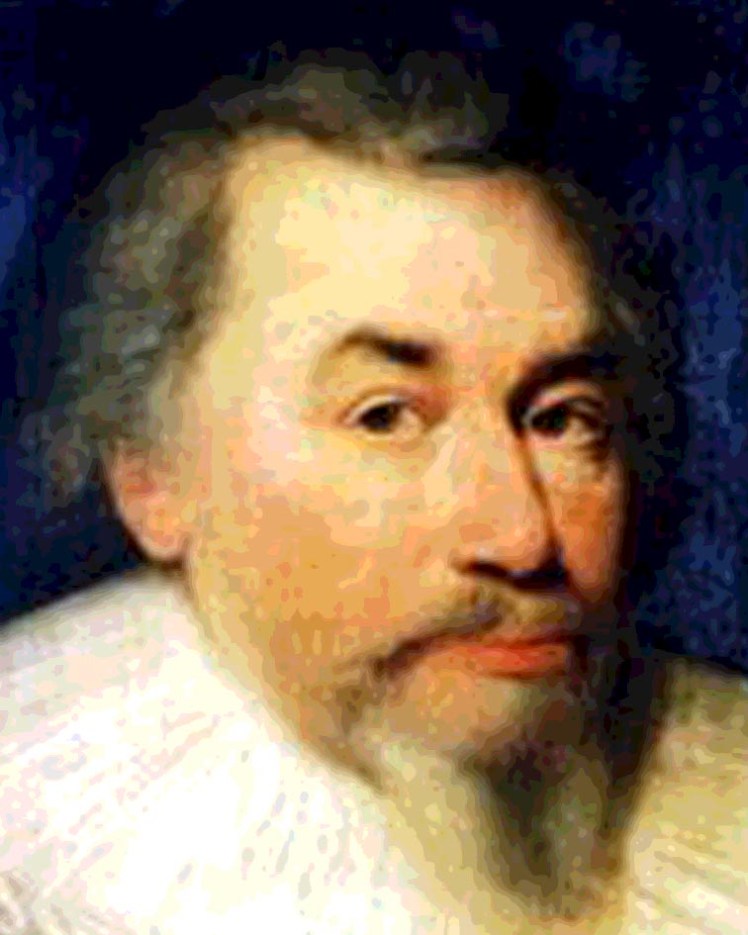 Sir Robert Filmer (1588-1653)
Many generations of the Kentish Filmers lie buried in East Sutton church; Robert was the one who lived through the accession of the Stuart monarchy and England’s descent into Civil War. Filmer studied law, and was knighted by King James I in 1619. As from the 1620s, he worked on his one book of note, ‘Patriarcha’. This was an intellectual justification of the Divine Right of Kings, the basis of his argument being the God-given right of a man to rule his family, as testified by the Old Testament. This ‘right’ was vigorously asserted by the headstrong new king in 1625, Charles I. The Long Parliament’s uncompromising response to Kentish efforts to conciliate between King and Commons was to spark civil war in 1642. The Roundheads soon looted Filmer’s manor house, taxed him heavily, imprisoned him in Leeds Castle, and took his estates. He survived, however, because luckily for him ‘Patriarcha’ wasn’t published till 1680.
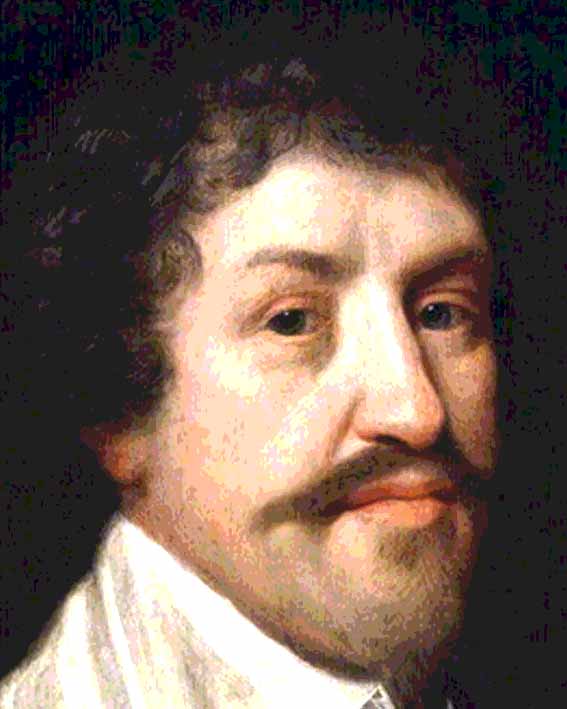 Sir Henry Vane the Elder (1589-1655)
Henry Vane was an Oxford-educated courtier from Hadlow who featured prominently in events leading to the Civil War. Despite serving Charles I loyally, he had a rebellious spirit, being a great-grandson of Thomas Wyatt the Younger. He made an enemy of the Earl of Strafford, a prominent Royalist, who in 1640 adopted the title Baron Raby: a studied insult, since Vane owned Castle Raby in County Durham. When Parliamentarians attempted to impeach Strafford soon afterwards, Vane, as Privy Council secretary, testified that Strafford had proposed deploying Irish troops against “this kingdom”, without saying whether this meant Scotland or England. His son Henry poured oil on the flames by producing a copy of his father’s notes, occasioning a public rift between father and son that was possibly feigned. Though acquitted, Strafford was executed soon afterwards. When Civil War broke out, Vane sided openly with Parliament, and luckily died before the Restoration. He was buried at his home village, Shipbourne.
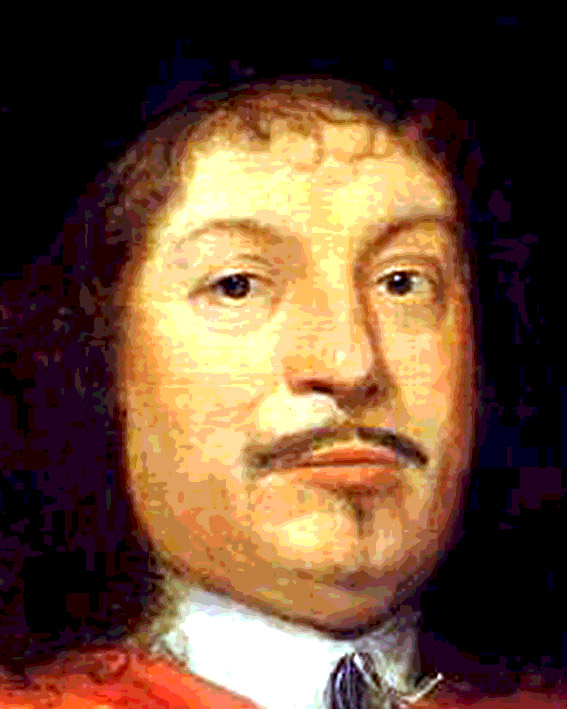 Dr John Wilson (1595-1674)
Born in Faversham, musician and composer John Wilson moved to London in 1614 and three years later replaced Robert Johnson as the principal composer of the King’s Men, England’s leading troupe of players, from which Shakespeare had recently retired. Though less nuanced than Johnson, he could write a solid tune and was suitably accessible. Alongside Ben Jonson, he became one of a gaggle of entertainers who gathered around Charles I after his accession in 1625, and joined the King’s Musick as a lutenist in 1635. Such was Wilson’s loyalty that, during the Commonwealth that followed the King’s execution, he composed the ‘Psalterium Carolinum’, setting to music Thomas Stanley’s poetic version of Charles’s supposed autobiography ‘Eikon Basilike’ (‘Royal Portrait’). By then, he had become a Doctor of Music at Oxford in 1644, and twelve years later won a professorship there; he composed sacred music, and set classical writings. After the Restoration, he became a Gentleman of the Chapel Royal.
 Thomas Carew (1595-1640)
A grandson of the Lord Mayor of the City of London, Thomas Carew from West Wickham was handed the opportunity to build a career in diplomacy, but after stays in Venice and The Hague he was fired for slander, and instead became a courtier. Possibly apocryphally, he won Queen Henrietta Maria’s favour when, while accompanying the King, he deliberately stumbled to make his candle gutter just as she was about to be spotted canoodling with Lord St Albans. A friend of both John Donne and Ben Jonson, Carew (pronounced Carey) was considered the first of the ‘Cavalier Poets’, who wrote to impress the King with poetic celebrations of the good things in life. In Carew’s case, this extended as far as a sensuousness that reached its zenith in the controversially erotic ‘A Rapture’. Although a loyal support to the King during his long struggle with Parliament, he died too young to participate in the Civil War.
 Sir Roger Twysden, 2nd Baronet (1597-1672)
The great-grandson of the Allington rebel Thomas Wyatt the Younger, Twysden was born at the family home, Roydon Hall in East Peckham. After attending Cambridge and taking up law, he was elected to the Commons in his late twenties, and in 1640 represented Kent as an MP. Although dismayed by Charles I’s imperiousness, he was repelled by Parliament’s antipathy to the Church and the radicalism exemplified by the fate of Lord Strafford. On the grounds of his age, he took no active part in the Civil War, but agitated repeatedly for the King, and was repeatedly jailed and had his estates seized by Parliament. He finally bought his way out of the Tower of London in 1650, and returned to his antiquarian studies. Having already written ‘The Commoners’ Liberty’ in 1648, he published works on English history and the English church in the 1650s. He was buried at East Peckham.
 Sir William Waller (~1597-1668)
The Civil War initially saw a succession of royalist victories due to the heroics of King Charles‘ nephew Prince Rupert. The prominent exceptions were provided in the West Country by Parliamentarian colonel Sir William Waller, a professional soldier and staunch Presbyterian born at Knole into Kentish gentry. Promoted to major-general, he complained bitterly after suffering a reverse in Oxfordshire in 1644 that his troops, mostly volunteers, wanted only to go home. The following spring, Parliament raised its New Model Army, and the Self-Denying Ordinance obliged both Waller and his ineffectual superior the Earl of Essex to resign their commands, opening the door to Thomas Fairfax and Oliver Cromwell. An inveterate critic of the radical Army, Waller was repeatedly jailed under Cromwell’s dictatorship, which spared him the usual reprisals after the Restoration. He bought Osterley Park, where he died; his self-exculpatory memoir was finally published 125 years after his death.
 William Somner (1598-1669)
Somner’s father was a court official at Canterbury, where the boy was born, went to school, and eventually died. His father having employed him as a clerk, he enjoyed advancement under the auspices of Archbishop Laud. He remained a Royalist even during the Commonwealth, being jailed in Deal Castle in 1659 for petitioning for a free Parliament. After the Restoration, he was appointed master of St John’s Hospital and auditor of Canterbury Cathedral. In the meantime, he acquired a reputation as a well-connected antiquarian, publishing ‘The Antiquities of Canterbury’ (1640), as well as works on Henry I’s laws (1644) and gavelkind (1647) among others. In 1657, at Archbishop Ussher’s behest, he was awarded a stipend at Cambridge that allowed him, having been urged by Meric Casaubon to study Old English, to complete his magnum opus: the first ever Anglo-Saxon dictionary, entitled ‘Dictionarium Saxonico-Latino-Anglicum’ (1659). He relaxed by indulging his passions for trout fishing and the longbow.
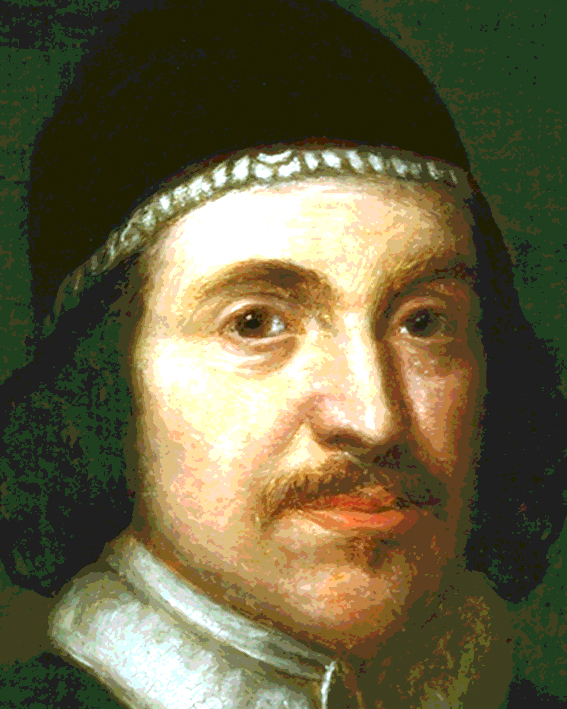 Thomas Case (1598-1682)
The son of the vicar of Boxley, Thomas Case was educated first at Canterbury and finally Christ Church, Oxford. After preaching in Kent, he moved to Norfolk and then the North-West. A Presbyterian, he sided with the Parliamentarians in the 1640s, having been prosecuted for nonconformism while preaching in Norwich and Chester. In London, he became noted as a vigorous preacher with no qualms about assailing High Church practices in his sermons. Nevertheless, after Charles I’s execution, he refused to pledge loyalty to the new regime, and in 1651 was charged with high treason for his association with Christopher Love’s plot to restore the monarchy. He secured a pardon, and at the Restoration was one of the Presbyterians who greeted Charles II on his return from exile. Ever the rebel, however, he refused in 1662 to sign up to the Act of Uniformity, and so died as much out of favour as he had lived.
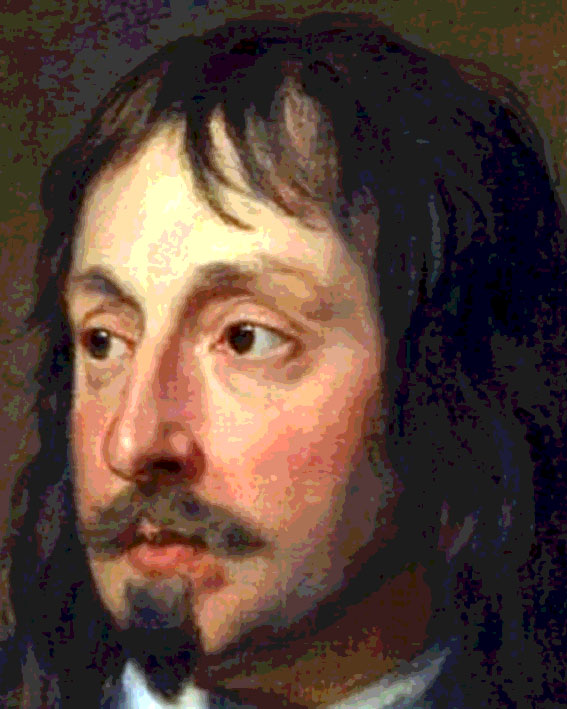 Vice-Admiral Sir John Mennes (1599-1671)
John Mennes, born in Sandwich, attended the local grammar school and went to Oxford before going to sea. His career was loyal though uninspiring until he transported Henrietta Maria to safety in the Low Countries in 1641 and was knighted by Charles I as a reward. When the Navy was lost to Parliament during the Civil War, he converted to an artillery general, but went into exile in 1650. After the Restoration, he became Comptroller of the Navy, which he remained for the rest of his life, despite distinguishing himself only by his incompetence. Moves to oust him were resisted by Charles II, who feared that his removal might precipitate an avalanche. Mennes was colourfully lampooned by Samuel Pepys, who nevertheless recognised in him a fine boon companion. Mennes’ conviviality was expressed in anthologies of satirical verse called ‘Musarum Deliciae: Or, The Muses Recreation’ (1656) and ‘Wit Restored’ (1658). Though he married, he left no offspring.
 William Claiborne (1600-~1677)
Among the gaggle of Kent gentry who endeavoured under James I to get Virginia up and running as the Garden of America, William Claiborne was arguably the most significant. He came from Crayford, and settled in Virginia at 21. After surviving the Indian Massacre of 1622, he used his skill and influence as a trader and negotiator to garner considerable wealth. He aimed to set up a trading post on Kent Island in Chesapeake Bay, which he named after his home county, but Charles I granted it to Anglo-Irish Catholic Sir George Calvert as part of the land patent for Maryland in 1632. Like other Virginians, Claiborne resented Calvert’s refusal to pledge an oath of allegiance to the Church of England, and came into armed conflict with Calvert’s sons. In the republican spirit of the colony, he sided with Parliament during the Civil War, playing a role in suppressing Royalists. Following the Restoration, he retired from public life.
 Herbert Palmer (1601-47)
There could hardly have been a starker contrast between Palmer’s pitiable physical and his towering status as a theologian. The grandson of Sir Thomas Palmer the Travailer – so called because of his advocacy of foreign travel – Herbert was born at Wingham, and studied at Cambridge. In 1626, he was talent-spotted while preaching at Canterbury Cathedral and asked to speak at St George the Martyr. Despite his gentle nature, his Puritan principles hindered his progress in the Church. His forte, however, was catechesis, the indoctrination that ensured all sang from the same hymn sheet. In 1643, he led the Westminster Assembly’s efforts to create a catechism for the restructured Church of England. Although his outline for a ‘Larger Catechism’ for adults was rejected, he showed a particular talent for designing the child-directed ‘Shorter Catechism’. He was also known for vehemently opposing John Milton’s appeals for divorce to be permissible on the grounds of incompatibility. He died single.
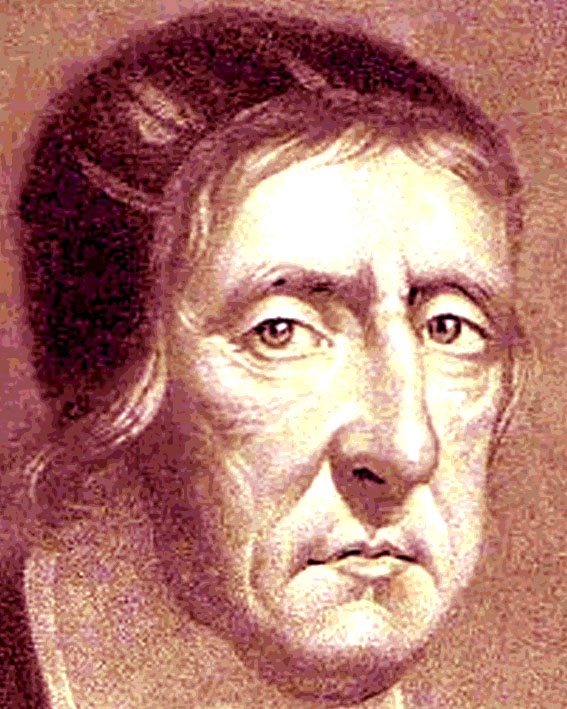 Sir Thomas Twisden, 1st Baronet (1602-83)
Born at East Peckham, the son of Sir William Twysden (sic), 1st Baronet of Roydon, Thomas studied at Cambridge and took up law as a career. He bought Malling Place, Town Malling in 1642, and served as Recorder of Maidstone. He was elected the county town’s MP in 1645, but was one of the MPs deemed hostile to the New Model Army and ejected by Pride’s Purge in 1648. He was able to purchase Bradbourne House, East Malling in 1656, however, and was restored as Maidstone MP after the Restoration. He avenged himself by officiating at the trials not only of the regicides but also of the Quaker John Bunyan, who progressed to Bedford County Gaol in 1661, and Sir Henry Vane the Younger, who was executed for treason in 1662. Despite his appetite for counter-revolutionary justice, Twisden was nevertheless considered relatively restrained by the standards of the day. He was created Baronet Twisden of Bradbourne, Kent in 1666.
 Mildmay Fane, 2nd Earl of Westmorland (1602-66)
A son of Sir Francis Fane, MP for Maidstone and for Kent, Mildmay Fane from Mereworth got his first name from his mother Mary’s maiden name. He too went to Cambridge before entering politics and becoming MP for Kent; but, a Royalist, he fell foul of the Civil War. After being jailed in the Tower, he went to stay at the family’s other estate in Northamptonshire. There he was able to indulge his true love, literature. He published a collection of 137 poems called ‘Otia Sacra’ in 1648, but around 500 written throughout his adult life were collected and published in 2001, out of nearly a thousand in English and Latin attributed to him. On top of that, he wrote eight plays and masques, staging most at his estate and even designing sets and writing music. Ever keen on a ‘message’, he made one the personification of a revolt by the five senses against the mind.
 Sir George Ent (1604-89)
George Ent got his unusual surname from his Protestant father Josias Ente, who was Flemish by birth but fled to Sandwich to escape religious persecution. Young Ent attended schools in Flanders before going to Cambridge and then Padua, where he qualified as a doctor. At 34, he was elected a fellow of Thomas Linacre’s Royal College of Physicians, whose president he became in 1670. He earned his reputation as an anatomist, particularly in his support of his friend and fellow Man of Kent Sir William Harvey, whose world-changing ‘De Motu Cordis’ (1628) he defended in the same way that Thomas Huxley later served as Darwin’s ‘bulldog’. His ‘Apologia pro Circulatione Sanguinis’ (1641) was his most renowned work, although he also published others, usually debunking pseudoscience. Ent became an original fellow of the Royal Society in 1663; and, after King Charles II attended a lecture he gave at the RCP two years later, he was knighted.
 Sir John Boys (1607-64)
A Civil War lieutenant colonel, John Boys was appointed governor of Donnington Castle in Berkshire, the Royalist stronghold commanding the London-Bristol road and the southern approach to the King’s headquarters, Oxford. The Parliamentarians first tried to take it without cannon in July 1644, and lost 300 men. Two more Roundhead commanders tried pounding the walls over the next month or two, but they too were repulsed, and Boys was knighted. Within a month, the normally dependable Parliamentarian general Sir William Waller tried his hand in vain, as did his commander the Earl of Essex immediately afterwards. The following year, Oliver Cromwell himself came to lay siege for four months, but even he could only force a truce under which the defenders were granted safe passage. Boys became Lord Warden of the Cinque Ports and, after being imprisoned in Dover Castle for pestering Parliament, was appointed Dover’s Receiver of Customs after the Restoration. He is buried at his birthplace, Goodnestone.
 John Tradescant the Younger (1608-62)
John Tradescant the Elder was a naturalist who travelled extensively overseas gathering botanical samples and ethnographic objects. These he stored at his 3-acre estate in South Lambeth Road in a collection called ‘The Ark’, which developed into England’s first museum. He married Elizabeth Day at Meopham, where their son John was born. After attending The King’s School, Canterbury, where a house is now named after him, John the Younger expanded his father’s collection with his own samples gathered in North America. In doing so, he introduced some now standard species to England, including the magnolia and the tulip tree. He returned to become head gardener at the Queen’s House in Greenwich, executing Inigo Jones’s designs for Charles I’s Queen Henrietta Maria. Unfortunately, his neighbour in Lambeth was the unscrupulous Isaac Ashmole, who swindled the Tradescant collection out of him and gifted it to Oxford University, so providing the basis for the world-famous Ashmolean Museum.
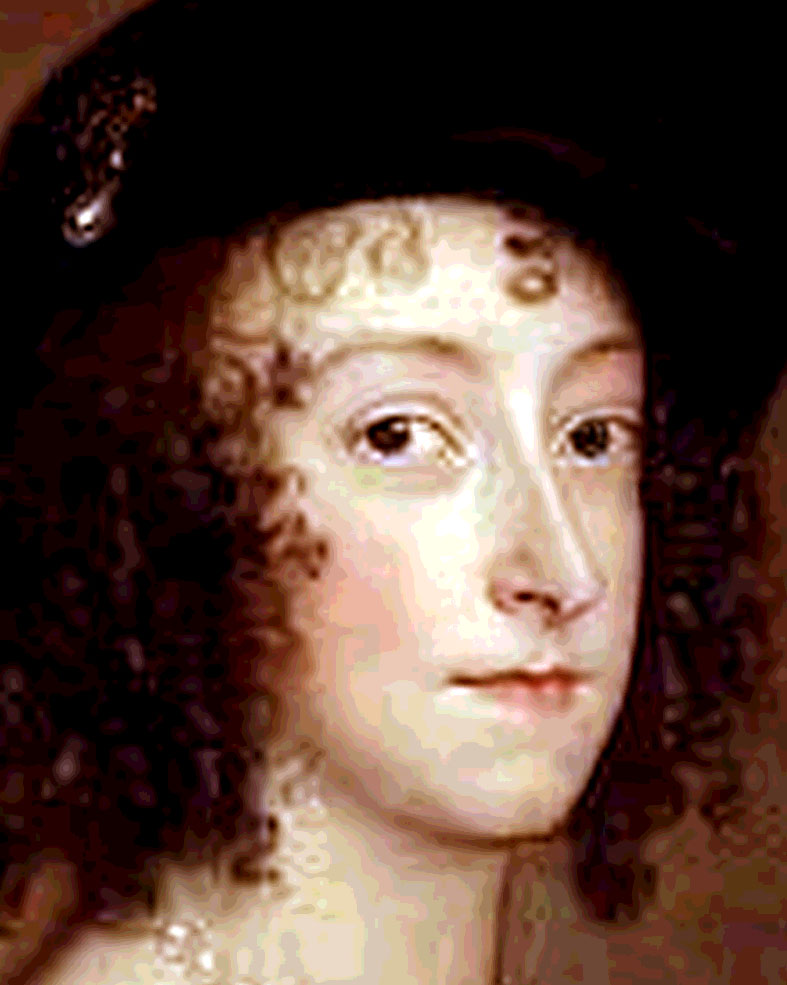 Katherine Wotton, Countess of Chesterfield (1609-67)
Back in the days when Boughton Place in Boughton Malherbe was so grand that it was sometimes called Bocton Palace, Katherine Wotton was born there, the daughter of Thomas, the 2nd Baron Wotton. She was courted by Van Dyck, who painted her, but turned him down because he charged too much. Instead, she married Henry, Lord Stanhope, who died in 1634, and then the Dutch diplomat Johannes Polander, Lord van Kerckhoven, who lasted until 1660. She was much in demand as a lady in waiting, being the confidante respectively of Mary the Princess Royal, Anne Hyde the wife of the future James II, and Queen Catherine. Loyal to the Stuarts throughout the Civil War, she was rewarded after the Restoration with the title of Countess. Her third and final husband was Daniel O’Neill, whose roles included Postmaster General. When he died in 1664, she inherited the title from him – the first woman to hold it.
 Peter Pett (1610-~1670)
Another of the famous Kentish shipbuilding family, Deptford-born Peter Pett, fifth son of Phineas, was at first a seamless sequel to his father. After Phineas designed the mighty Sovereign of the Seas in 1635, Peter built her at Woolwich under his father’s supervision. In 1648 he succeeded Phineas as Second Resident Commissioner of Chatham Dockyard, where he proved a fervent nepotist. He shrewdly sided with the Parliamentarians during the Civil Wars, so retaining his posts, and even became MP for Rochester in 1659; but he adroitly prepared the fleet for Charles II’s return to England in 1660, thus regaining royal favour. In 1667, however, he became the focus of a national controversy when he was made a scapegoat for the catastrophic damage sustained during the Dutch Raid on the Medway, and even imprisoned briefly in the Tower. It prompted Andrew Marvell to write a poetic satire of the establishment’s hypocrisy in blaming its own failings on Pett.
 Sir Henry Vane the Younger (1613-62)
Henry Vane was born in Hadlow and educated at Westminster School and Oxford. He started out as a diplomat but, seeking freedom of worship, left for the Massachusetts Bay Colony in 1635. He was soon elected governor, and secured the foundation of Harvard University. Nevertheless, his brief tenure was perturbed by Amerindian insurgency and religious bigotry, and he returned to England in 1637. Though knighted in 1640, he could not stomach Charles I’s authoritarianism, and in the Long Parliament became effectively the civilian governmental head during the Civil War. Nevertheless, he refused to condone the King’s execution, and split with Cromwell in 1653. He might have expected clemency at the time of the Restoration, but was deliberately excluded from the Indemnity & Oblivion Act. Though Charles II formally reprieved him, a Royalist court pursued him literally to the death. He was beheaded on Tower Hill and buried at Fairlawne in Shipbourne, which his father had settled on him.
 Sir Thomas Peyton, 2nd Baronet (1613-84)
Only nine when he inherited his father Sir Samuel Peyton‘s estate, including his title and the traditional family seat Knowlton Court, Goodnestone, Peyton looked set for a comfortable life when, having married well, he became MP for Sandwich in 1640. These were dangerous times, however, and as a Royalist he was ejected from Parliament in 1644. He joined a group of radicals intent on overthrowing the revolutionary regime, and so was imprisoned in the Tower. Cromwell showed he had a compassionate side, however, when in 1655 he ordered that Peyton be allowed to spend 36 days at the Tunbridge Wells spa, presumably to recover his health. After the Restoration, Peyton was elected MP for Kent in the so-called Cavalier Parliament; but, despite being handed remunerative positions, he died deeply in debt. Consequently, his daughters were obliged to sell the estate to Admiral Sir John Narborough. He was buried in Westminster Abbey.
 John Lilburne (~1614-57)
The Civil War was the last time England was divided fiercely down arbitrary lines, republican sentiment was rife, radical beliefs became mainstream, and moral principle justified mass expropriation. One protagonist was John Lilburne, born (probably) in Greenwich of minor gentry from County Durham. He became prominent as a pamphleteer publicising the most extreme beliefs of the Levellers movement, whose aim was to press the same status on everyman. He invented the concept of ‘freeborn rights’ – privileges enjoyed by all by dint of being alive. The idea was unacceptable even to fellow anti-monarchists, but proved useful to American revolutionaries, and has now been recycled around the world. Though he fought in the Parliamentary army and remained highly popular with Londoners, Lilburne’s militancy won him few friends in authority. He was flogged, exiled, and repeatedly jailed, finally in Dover Castle. There he was converted to Quakerism. ‘Freeborn John’ spread the word around Kent, but died while visiting his wife at Eltham.
 John Wallis (1616-1703)
A reverend’s son who himself became a reverend, John Wallis was born in Ashford, but after a plague outbreak attended grammar school in Tenterden. He studied at Cambridge, but from 1649 became a geometry professor at Oxford until his death. A mathematical genius, he made contributions in several other fields, including infinitesimal calculus and trigonometry. His most significant work, ‘Arithmetica Infinitorum’ (1656), introduced the Wallis Product, a new expression of π. He introduced the infinity symbol ∞ and multiplication sign x. Although he served Parliament as a cryptographer for 46 years, he supported the Restoration, and was a founder of the Royal Society in 1660. While responding to a Royal Society challenge in 1668, he identified conservation of momentum, and coined the term ‘momentum’. An insomniac, Wallis did mental calculations in bed, and once reeled off the 27-digit root of a 53-digit number over breakfast. An asteroid and an academy are named after him, as was an Ashford pub.
 Dorothy Spencer, Countess of Sunderland (1617-84)
The daughter of the Earl of Leicester, Dorothy Sidney from Penshurst became famous less for what she wrote, which amounted to her eloquent correspondence, than what was written about her. Known for her aristocratic beauty, she ignited a flame in the poet Edmund Waller, a relative of the Kentish Parliamentarian commanders William and Hardress Waller. Such was his passion that he wrote 16 genteel love-poems for her; he named her ‘Sacharissa’, which might translate today as something like ‘Sugarplum’. She virtuously shunned the lovelorn Waller’s advances, although in truth she had fatter fish to fry. At 21, she married the Earl of Sunderland at Penshurst, so becoming Lady Dorothy Spencer and living at Althorp House in Northamptonshire. Her husband was killed at the First Battle of Newbury in 1643, however, so she returned at length to Penshurst Place. In 1926, Julia Cartwright Ady wrote a biography of her, aptly named ‘Sacharissa’.
 Francis Lovelace (~1621-75)
Lovelace’s father Sir William owned properties at both Bethersden and Woolwich. Like his four brothers, including the ‘Cavalier poet’ Richard, Francis fought for the King in the Civil War, commanding Carmarthen Castle as a colonel until its capture by Parliament in 1645, when another brother, William, was killed. Following exile in France, he joined his sister Anne in Virginia, but was sent home and jailed in the Tower after Parliamentarians arrived. He returned to America after the Restoration, when the Duke of York appointed him the second governor of New York. He took his responsibilities seriously: he improved defences, formed a militia, paid the native Lenape for Staten Island, and introduced religious freedoms, all while running the ‘Lovelace’ Tavern in Manhattan. When he was away working to establish a postal service, however, the Dutch seized the colony, albeit temporarily. The vindictive Duke held Lovelace responsible, sequestered his assets, and returned him to the Tower. Stricken by dropsy, he died penniless.
 Sir John Banks, 1st Baronet (1627-99)
Banks, the son of a Maidstone gentleman trader, went to Cambridge before becoming a merchant supplying hops and grain. By the age of 30, well on his way to becoming one of the wealthiest men in England, he had married the Lord Mayor of London’s daughter and bought The Friars at Aylesford; he later added a smart townhouse in Lincoln’s Inn Fields. Having briefly served as governor of the East India Company during the costly Third Dutch War, he co-funded efforts to discover a North-East passage with his close friend at the Admiralty, Samuel Pepys, who as godfather to Banks’s son Caleb arranged for John Locke, no less, to accompany the boy on a Grand Tour. Banks was made a baronet in 1661, and became a Fellow of the Royal Society in 1668. An MP in 11 parliaments spanning 45 years, he represented Winchelsea, Rochester, and Queenborough, remarkably book-ended by Maidstone in both his twenties and seventies.
 Sir Paul Rycaut (1629-1700)
After reaching the walls of Vienna in 1529, the Ottoman Empire remained a major threat to Europe well into the C17. In 1660, Charles II sent Heneage Finch, the 3rd Earl of Winchelsea of Eastwell Manor, to serve as ambassador in Turkey. His secretary was Paul Rycaut from The Friary, Aylesford, a Cambridge graduate of Huguenot descent, who was later appointed the Levant Company’s consul in Smyrna, and also turned out a fine scholar. In 1665, he published ‘The Present State of the Ottoman Empire’, to which he added an account of the Orthodox Churches of Armenia and Greece (1679). He followed up in 1687 with his monumental ‘The Turkish History’ in two volumes. By that time, the Islamic tide had turned, the Ottomans having been decisively defeated at the Battle of Vienna in 1683, although Ottoman slave-traders continued to plague Europe until the C20. A fellow of the Royal Society, Rycaut retired to Hamburg, but was buried at Aylesford.
 John Spencer (1630-93)
Having been born in Boughton-under-Blean, Spencer went to The King’s School, Canterbury and benefited from an Archbishop Parker scholarship at Corpus Christi, Cambridge. In 1667, he became master of the College, which he remained for 26 years until his death. Meanwhile, he proceeded up the ecclesiastical ladder to the post of dean of Ely in 1677, at which cathedral he was eventually buried. In 1663, he had published a book on marvels that Samuel Pepys described as “most ingeniously writ”. He earned notoriety, however, for a controversy over his magnum opus ‘De Legibus Hebraeorum’ (1685), a scholarly work arguing that Mosaic Law was not original but derived from Egyptian tradition. Since this directly contradicted the Bible, he was attacked from all directions, even from abroad. Despite being described as “dangerous” in a C19 index of English literature, the book set an example for further such works of comparative religion. Spencer’s complete works were published in 1717.
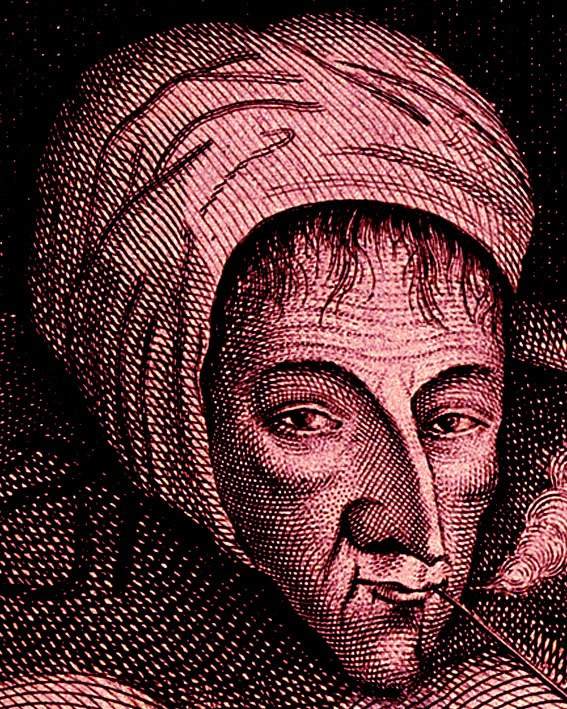 Margaret Finch (1632?-1740)
A two-hour ride from London, ‘Beggar’s Hill’ at Norwood, Surrey was for 200 years such a popular rural draw to Roma gypsies that it was renamed Gipsy Hill; Samuel Pepys paid a visit, and John Keats wrote a poem about it. In 1668, the gypsies there elected Margaret Finch from Sutton, Kent their new queen. She exercised matriarchal control over her kinsfolk, while making a living by whatever means presented themselves, which primarily meant fortune-telling. Although exploiting people’s superstitious beliefs may sound reprehensible to the modern ear, it might better be thought of as entertainment. She obviously perfected an impressive act, because she supposedly ended up wealthy. She is said to have died at 108, although this is unverifiable. Described in old age as “grotesque”, she spent so long hunched up with her pipe and her lap-dog in her hut made of branches that muscle contracture locked her bones in place. She was buried at Beckenham in a square coffin.
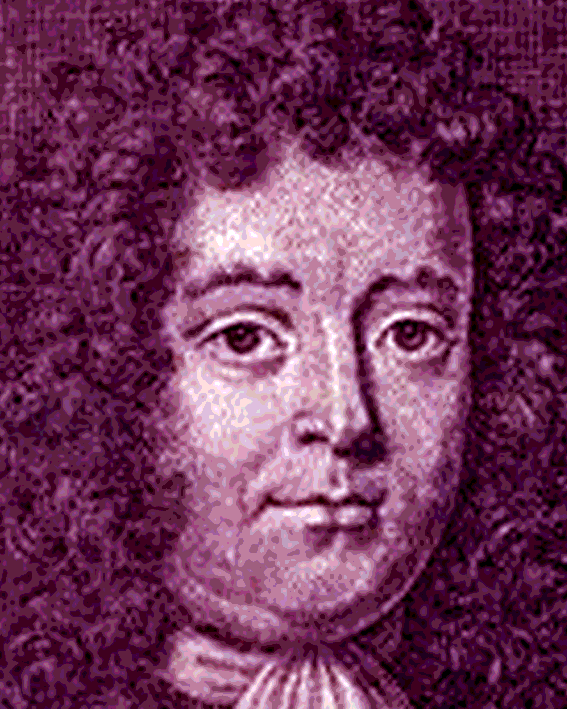 Sir Charles Sedley, 5th Baronet (1639-1701)
The son of Sir John Sedley of The Friars, Aylesford, Charles came to the public’s attention for all the wrong reasons. Having left Oxford without a degree, he joined the licentious Merry Gang in London, and was fined for standing naked on a balcony before a large crowd, pouring a glass of wine, stirring it inappropriately, and drinking the King’s health. Samuel Pepys declared him a “famous fop” and lover of actress Peg Hughes. Two decades later, better known as a playwright, poet, and MP for New Romney, Sedley quipped that, as the King’s successor James II had controversially made his daughter Catherine Sedley a countess after impregnating her, he might reciprocate by making James’s daughter Mary a queen. His wish was fulfilled when the King was deposed in the Glorious Revolution, Mary succeeded him, and Sedley was knighted. Denied a divorce after his wife went mad, Sedley also had two illegitimate sons by his long-term mistress, Ann Ayscough.
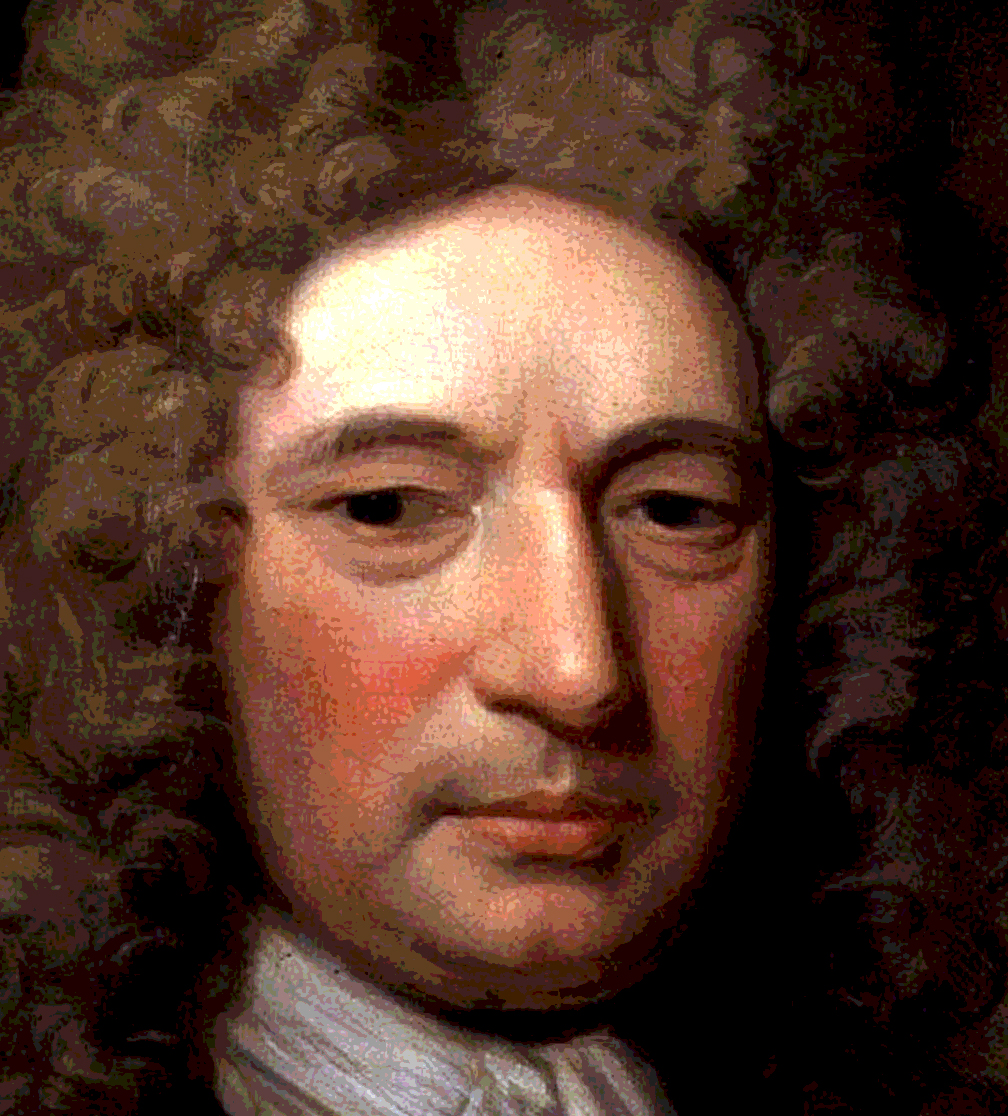 Sir Streynsham Master (1640-1724)
Born at Langdon, Dover, Master joined the East India Company early, first running EIC operations in Gujarat before moving on to Andhra Pradesh and Bengal. In 1678, he took over from Sir William Langhorne as the agent of Madras. Like Langhorne, he faced local panjandrums’ demands for tribute which, being liable to progress from diplomatic threat to military shove, underscored the need for the EIC to defend itself. Master nevertheless brought to his work a Christian ethic that would become a hallmark of the Raj. During his time there, St Mary’s church was built, the first in Madras. He was the first to tackle one of several Indian customs that outraged Britons, when he intervened in 1680 to save a local woman from suttee, i.e. being burned alive on her husband’s funeral pyre. He also appointed ‘scavengers’, customs collectors who were responsible for cleaning up the streets. After leaving in 1681, he bought a castle in Derbyshire.
 Dr Robert Plot (1640-96)
Robert Plot ought to be world famous as the man who published the very first illustration of a dinosaur bone, two centuries before the discovery of Maidstone’s famous ‘iguanadon’. Unfortunately for Plot, the only authority on creation in his day was the Bible; so he misinterpreted the fossil of a megalosaurus’s femur in his ‘Natural History of Oxfordshire’ (1677) as, if not a natural geological formation, then a giant’s thighbone. Not that he was a fool. Born in Borden, he had gone to school in Wye before attending Oxford, where in 1683 he became the first curator and Professor of Chemistry at the Ashmolean Museum, whilst simultaneously serving as Secretary of the Royal Society. He completed a ‘Natural History of Staffordshire’ (1686) before turning to a volume on Middlesex & Kent that was unfinished when he died back in Borden. He is commemorated with a plaque at the local church.
 Aphra Behn (1640-89)
The enigmatic Aphra Behn from Canterbury (or maybe Wye) could be famous for her cool name alone. She wasn’t actually that exotic: Aphra was a biblical name, like Keturah or Keziah, and her maiden name was probably Johnson, unless it was Cooper. She acquired the Behn from a Dutchman, who may actually have been German. She supposedly spied for King Charles II but reported only untruths. We do know that, being Catholic, she injudiciously supported the doomed King James II. She responded to her impoverished condition by expressing herself prodigiously in print. She was forgotten until Virginia Woolf praised her for being a female writer, after which Behn was lionised by numerous feminist commentators. Some blamed prudish Victorians for her oblivion, although others think she just wasn’t much cop. Another feminist, Germaine Greer, had the last word, describing her as a palimpsest: a blank sheet onto which later generations project their own prejudices. Either that, or she wasn’t.
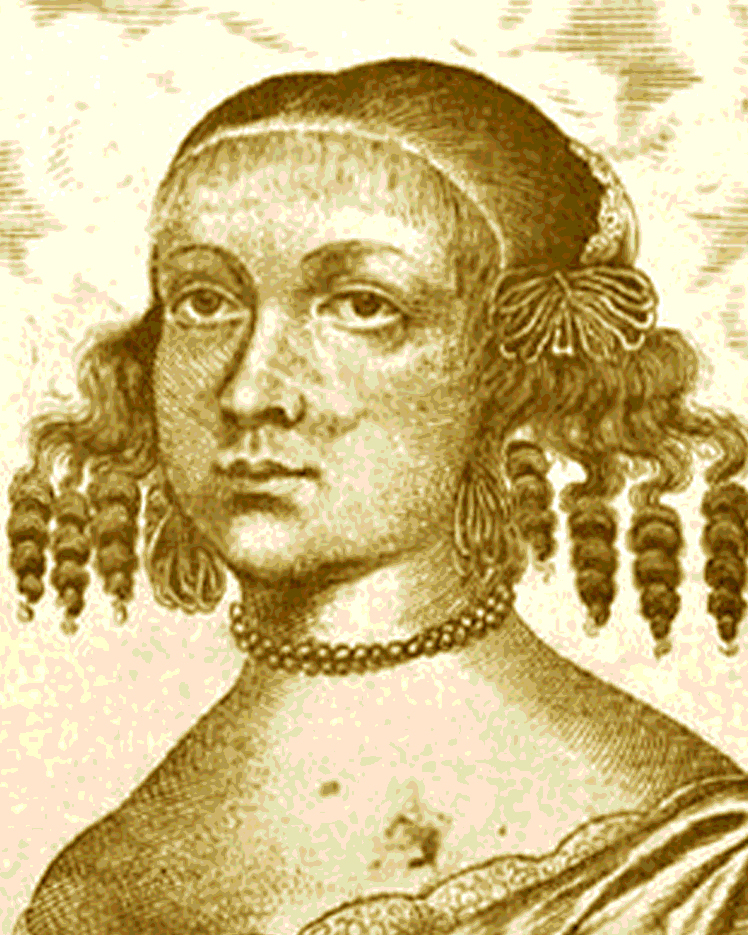 Mary Carleton (1642-73)
For centuries after the Norman Conquest, a woman’s best chance of making a fortune, short of inheriting one, was to marry a rich man, survive multiple childbirths, and outlive him, whether he died in battle or of excess. Mary Moders from Canterbury considered it too much trouble, and decided instead on a life of crime. She was first convicted of bigamy at Maidstone after marrying a Dover surgeon while wed to a Canterbury shoemaker. She headed for Cologne, where she beguiled an aristocrat with the promise of marriage, milked him of gifts, and scarpered. Back in London, she was acquitted of posing as a German princess to entrap surgeon John Carleton, which inspired a book and a play about her. A series of frauds followed, usually involving the pretence of being an heiress. Convicted of theft, she was transported to Jamaica, where she became a prostitute. After returning illegally to London, she was arrested, tried, and hanged at Tyburn.
 The Very Reverend Thomas Comber (1645-99)
For the first four years of his life, Comber from Westerham never knew his father, who had fled to the Low Countries as a refugee from the Civil War. The boy proved an outstanding scholar, who already knew Greek by the age of ten and went on to receive a wide education. He went into the Church, eventually marrying and settling in Yorkshire. In 1672, he published ‘A Companion to the Temple and Closet’, with which he hoped to assuage Protestant nonconformists. It was one of many learned works he wrote with the aim of enlightening the pious and not so pious in that fraught age. Matters became even fraughter in 1688, however, when the Catholic king James II proposed a Catholic archbishop of York over Comber’s head. Luckily for him, the Glorious Revolution came to his rescue. Having published two pamphlets in support of it, he was installed as the dean of Durham in 1691.
 Admiral of the Fleet Sir George Rooke (1650-1709)
George Rooke was born at Lawrence House, Canterbury, the seat of his father Colonel Sir William Rooke. In 1672, when the 3rd Dutch War broke out, he volunteered for the Royal Navy. It was a baptism of fire, as he repeatedly faced the formidable Dutch admiral de Ruyter. He survived, and in 1677, now a captain, brought Prince William of Orange to England. Early in the Nine Years War (1688-97), he became a rear admiral, distinguishing himself by burning 12 French warships at the Battle of La Hogue (1692), for which he was knighted. During the War of the Spanish Succession (1701-14), he captured or destroyed all the Spanish treasure ships and the escorting French fleet at Vigo Bay, and two years later took Gibraltar, where he is now commemorated with a statue. He subsequently became Admiral of the Fleet and MP for Portsmouth before being forced to retire by gout. He died and was buried at Canterbury.
 Sir George Wheler (1651-1724)
Although his mother was from Egerton and his father from Charing, Wheler was born in the Netherlands, where they were living in exile during the Cromwellian Commonwealth. They returned after the Restoration, and Wheler went to school at Wye. After studying at Oxford, he was taken travelling around France, Switzerland, and Italy by his tutor George Hickes. In Venice, he received tuition in antiquities that he put to good use when he went on a tour of classical sites of Greece and the Near East in 1675-6. He brought back artefacts that he donated to Oxford University, as well as botanical specimens, and published an account of his travels called ‘A Journey into Greece’ several years later. In 1677, he was made a Fellow of the Royal Society, but this was rescinded in 1685, by which time he had become a clergyman. He was made a canon at Durham Cathedral, and died at Durham.
 Isaac Beckett (1653-1719)
Until mezzotint was invented in Germany in 1642, toned areas in illustrations generally had to be rendered with dots or hatching. This new technique involved roughening the engraved surface so that solid areas could be reproduced more faithfully, greatly enhancing the quality. The technique, which came to rival aquatint, became known in France as la manière anglaise, for which Beckett could take much of the credit. Having started as a calico printer in London, he took up mezzotint with Edward Luttrell, who did most of the drawing while Beckett did the finishing. After marrying a rich woman, he set up his own works, and was particularly prolific in the 1680s. He trained John Smith, who became mezzotint’s leading English exponent. Among the Kent-born Beckett’s most distinguished portraiture subjects were Charles II, the future James II, and the Duke of Buckingham. He also adapted self-portraits by Sir Godfrey Kneller and Sir Peter Lely, both of whom championed mezzotint.
 White Kennett (1660-1728)
White Kennett’s unusual name was simply a merge of his parents’ surnames, his father being Basil Kennett, the rector of Dymchurch and vicar of Postling, and his maternal grandfather Thomas White, a wealthy shipbuilder from Dover, where Kennett was himself born. He went to school at Elham and Wye, but failed to complete his education at Westminster School after catching smallpox, and continued privately at Bekesbourne. While studying at Oxford, he took holy orders, eventually reaching the position of Bishop of Peterborough. A strident anti-Papist, he intervened zealously in more than one arcane theological controversy of the day. His greater worth was as an antiquarian. Already as a student he had translated several Latin works into English, among them Erasmus’s ‘In Praise of Folly’, a satire on superstition. Whilst still a vicar in Oxfordshire, he learned Old English and published valuable works on philology, topography, and biography. A street in Aldgate now bears his name.
 Admiral of the Fleet George Byng, 1st Viscount Torrington (1663-1733)
Ten years after joining the Royal Navy at 15, George Byng from Wrotham was still an undistinguished lieutenant. In 1688, however, it fell to him to convey to Prince William of Orange the news that certain Navy captains were prepared to transfer their allegiance, leading directly to the Glorious Revolution. Byng was immediately promoted to captain, and under Sir George Rooke participated in the battles of Vigo Bay (1702) and Malaga (1704), as well as the capture of Gibraltar (1704). In 1705, he became MP for Plymouth, and after surviving the Scilly naval disaster of 1707 was made a full admiral. His role in suppressing the Jacobite rebellion of 1715 was rewarded with a baronetcy. Three years later, he stunningly destroyed the Spanish fleet at Cape Passaro and became Admiral of the Fleet. His less fortunate fourth son, Admiral John Byng of Wrotham Park, Middlesex, was infamously executed in order, as Voltaire wrily observed, “to encourage the others”.
 Josiah Burchett (~1665-1746)
A native of Sandwich who was naturally drawn to the sea, Josiah Burchett became clerk to Samuel Pepys, the famous diarist and Secretary to the Admiralty, when about 15. He was dismissed in his early twenties, but was taken on by Lord Russell, the Admiral of the Fleet, in whose flagship he witnessed the Battle of Barfleur in 1692, when the French invasion fleet was destroyed. Two years later, he himself became Secretary to the Admiralty, a post he retained for nearly five decades. His access to naval records enabled him in 1720 to publish ‘A Complete History of the Most Remarkable Transactions at Sea’, the first ever naval history in English. Concurrently, he was MP for Sandwich for spells of eight and 19 years. He invested his wealth in paintings, leaving behind a collection of over 300, including works by da Vinci, Rembrandt, and Rubens. He married his third wife at 75, and died at Hampstead.
 William Cowper, 1st Earl Cowper (ca 1665-1723)
The son of Sir William Cowper of Ratling Court, Aylesham and Hertford Castle, Cowper was educated at St Albans, became a barrister in 1688, and was elected MP for Hertford in 1695. His childless first marriage coincided with a mistress who bore him two children, inspiring Jonathan Swift to brand him ‘Will Bigamy’. In 1699, his brother Spencer was tried for the murder of a girlfriend; though he was acquitted, the political fallout briefly cost Cowper his seat in 1701. Nevertheless, his sparkling wits made him a favourite of Queen Anne, who overlooked his Whiggish leanings to make him Lord Keeper of the Great Seal at forty. The first Lord High Chancellor of Great Britain in 1707 and again in 1714, he was created Baron Cowper of Wingham, Kent in 1706, and Viscount Fordwich and Earl Cowper in 1718. He wrote ‘An Impartial History of Parties’, anticipating the modern political party system. He died and was buried in Hertfordshire.
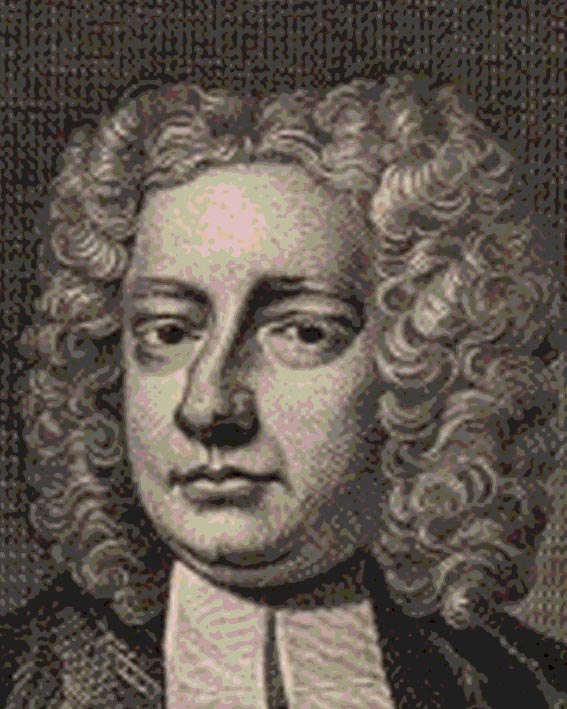 Stephen Gray (1666-1736)
The appropriately named Gray, from Canterbury, ironically started life as an apprentice in his father’s dyeing business. His passion however was science, and he assisted the great astronomer John Flamsteed with observations. This association was to hobble Gray’s scientific career, because it incurred the enmity of the domineering Isaac Newton. Sick and poor, Gray ended up in 1720 in a position at Charterhouse. There he made an epoch-making discovery: that a static charge could be conducted along a wire. On a visit to Reverend Granville Wheeler at Otterden Place, the two performed a series of experiments in and outside of the house. They demonstrated both the conduction of electricity across 800 feet and the principle of insulation. Gray’s celebrated ‘Flying Boy’ experiment later also demonstrated electrical induction. His work was enthusiastically taken up by better communicators like Benjamin Franklin, who stole the credit. Despite winning the Royal Society’s first Copley Medal, the colourless Gray died destitute.
 William Fuller (1672-~1730)
Not many people can give the reply “imposter” when asked for their job description, but William Fuller from Milton-next-Gravesend could. He started out as a pageboy, but came into the money when he was ordered to bring correspondence to Mary of Modena, the queen consort of King James II. Though a Roman Catholic, he took it to William of Orange, the King’s Protestant rival and ultimate successor, and lived off the proceeds of his treachery. After joining Titus Oates in spreading rumours of Jacobite plots, however, he was denounced by the Commons in 1692 as a fraudster, fined, and literally pilloried. After being released from jail in 1695, he revived allegations that Queen Mary II’s brother James, the Old Pretender, was illegitimate. Again pilloried and jailed, he was still in Newgate Prison in 1730, despite writing books explaining himself and pleading for forgiveness. In the public imagination, he remained the ‘Cheat Master General’.
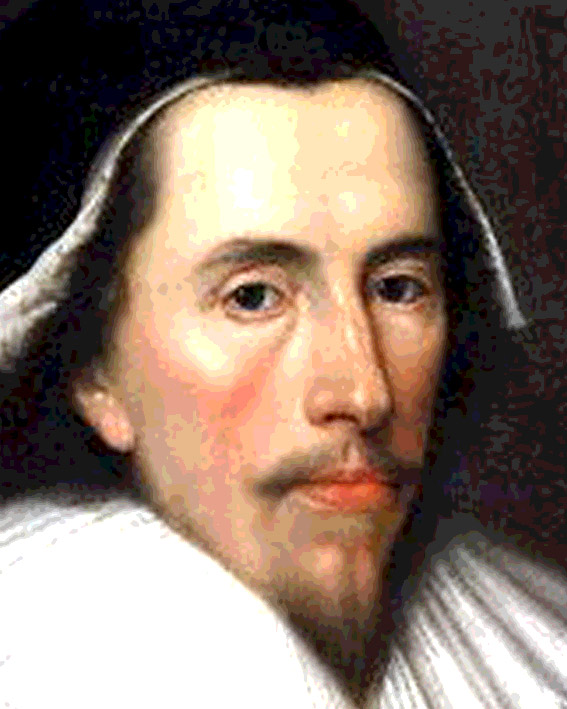 Sir Jeffrey Gilbert (1674-1726)
Gilbert, a Goudhurst farmer’s son, proved an excellent scholar, and qualified as a barrister in 1698. A protégé of the Lord Chancellor, Lord Cowper, he was sent at forty to be a judge in Ireland, and soon took the onerous job of Chief Baron of the Irish Exchequer. He so excelled that he became known as the ‘darling of the nation’. Then, in 1719, the losing plaintiff in a case concerning a will persuaded the Irish House of Lords to reverse the decision, only to be overruled by the British Lords. Ordered by the Irish Lords to account for himself, Gilbert refused, and was briefly incarcerated. Suddenly so unpopular that he was even refused lodgings, he went home, and Parliament passed an Irish dependency act to reassert its supremacy. Gilbert, who became Lord Chief Baron of the Exchequer in 1725, a knight, and a Fellow of the Royal Society, wrote numerous legal treatises before dying, and was buried at Bath.
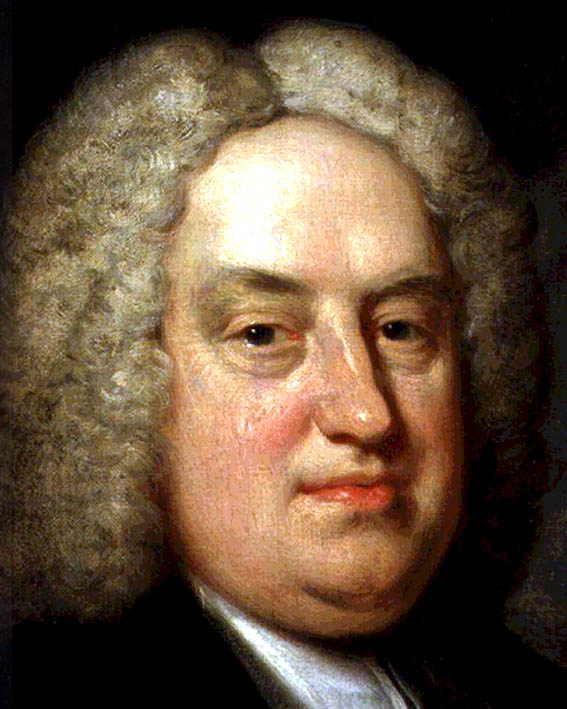 Benjamin Hoadly, Bishop of Winchester (1676-1761)
The Bangorian Controversy was a big deal in its day, and an intriguing lesson in power politics. The Bishop of Bangor, Benjamin Hoadly from Westerham, had courted controversy early in his career by recommending that the English and Scottish churches unify their practices. In 1717, he made a sermon, ‘The Nature of the Kingdom of Christ’, arguing against the principle of society being run by an oligarchy of bishops whose power rested on the divine right of kings. Now that the authoritarian Stuarts had been expelled by the Whiggish Hanoverians, Hoadly argued for traditional English freedom, embodied in the will of the people. This ran counter to the interests of so many professedly pious oligarchs that it provoked the publication of literally hundreds of pieces for and against, penned by more than 50 authors. The bishops’ Convocation attempted to cancel Hoadly, so George I dismissed it. Hoadly became Bishop of Winchester, and his latitudinarian outlook prevailed for two centuries.
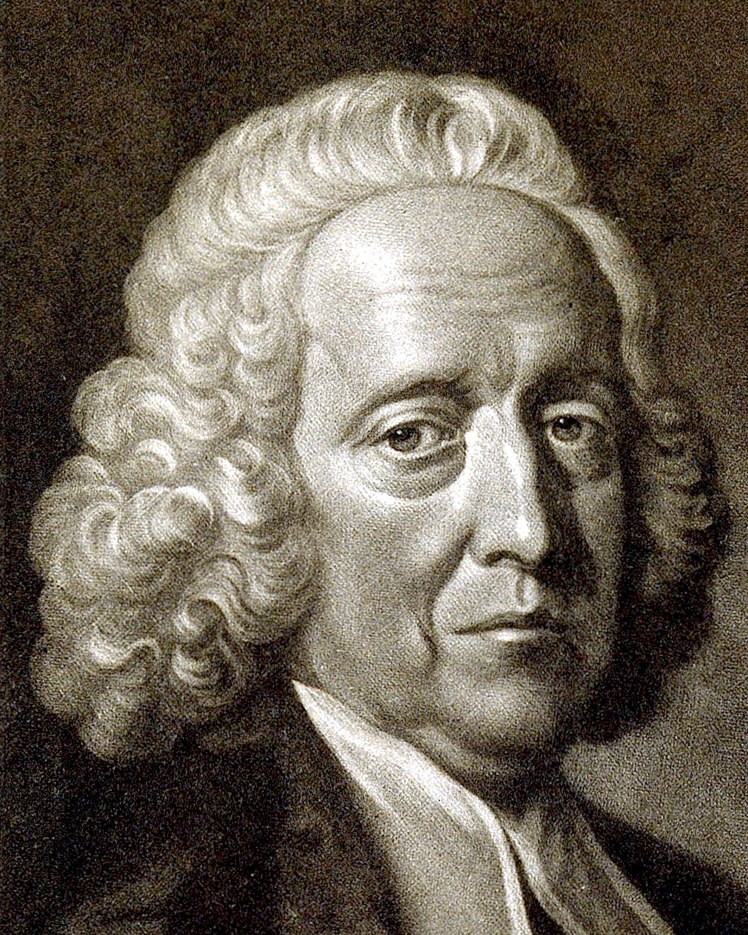 Stephen Hales (1677-1761)
If he’d been responsible for just one invention instead of several, Stephen Hales would surely be better known today. The son of a baronet in Bekesbourne, he went to school in Orpington before studying divinity at Cambridge. There he acquired an interest in science that stayed with him even after he became a curate in Teddington. He was in fact criticised for being a man of God who practised vivisection. His animal investigations did however lead to his best known and most valuable discovery, the means to measure blood pressure. He also added significantly to contemporary understanding of the heart and circulation. In a similar vein, he gave descriptions of the absorption of air and water in plants that pre-dated better-known experimenters by a century. To prove his versatility, Hales even invented a ventilator to improve air quality in ships, mines, and prisons. And, as if that wasn’t enough, he did useful work in other areas, from water distillation to mortality rates.
 John Thorpe, Senior (1682-1750)
Having been born at Penshurst, where his father had a large estate, Thorpe went to Westerham Grammar School and then Oxford, finally qualifying as an MD in 1710. By then, he had already been a fellow of the Royal Society for five years. He lived at first in London near his friend, Richard Mead, the author of an influential work on contagion, and like him set up as a physician. From 1715, however, he settled at Rochester, where he had a medical practice for three decades. While there, he built up a large collection of materials concerning the history and culture of Kent, which his only son John Thorpe, a fellow antiquary, eventually published under the title ‘Registrum Roffense’ in 1769. He also worked with Sir Hans Sloane on the Royal Society’s ‘Philosophical Transactions’, and published details of land and statutes connected with Rochester Bridge. Thorpe died at Rochester and was buried at Stockbury church.
 Nathaniel Lardner (1684-1768)
A minister’s son from Hawkhurst, Lardner attempted to establish himself preaching Presbyterianism, but having failed to earn a living joined a wealthy London household as tutor and chaplain. Although he later got the chance to preach to Presbyterian congregations in London, he became much better known as a theologian. His particular forte was the Scriptures, whose history he studied sufficiently thoroughly that he was capable of writing numerous authoritative analyses, starting with ‘The Credibility of the Gospel History’ (1727). Armed with his thorough knowledge, he was unafraid to argue polemically at a time of fervent dispute in religious circles. He particularly took issue with the belief in the Holy Trinity that had been orthodox in the Christian Church since 381, arguing that Christ had not existed before his conception. It was a mark of the relative tolerance of the C18 that he was able to rile the religious orthodoxy without being burnt alive.
 Lewis Theobald (1688-1744)
The son of an attorney, Lewis Theobald was born in Sittingbourne, and became an attorney himself after his father died while he was still young. Luckily, a well-to-do family had taken him under their wing, and he was taught Latin and Greek alongside the other boys. After moving to London, he made money translating literary works. He also wrote his own dramas, which were successfully staged, although he was not averse to pinching others’ ideas. He remains famous for his dispute with the great Alexander Pope, who published a supposedly authoritative edition of Shakespeare. Although a lesser poet, Theobald was a punctilious academic and, recognising the many flaws in Pope’s cavalier version, published a corrective. Pope took most of Theobald’s emendations on board, but was exceedingly offended, and lampooned Theobald in his ‘Dunciad’. For all time, this able Man of Kent will be recalled as the champion of the goddess Dulness in her mission to spread stupidity.
 Philip Yorke, 1st Earl of Hardwicke (1690-1764)
Born in Dover, attorney’s son Philip Yorke went into law and quickly impressed with his talent. A Whig MP from the age of 28, his support for prime ministers Robert Walpole and Lord Newcastle doubtless assisted his meteoric rise as an attorney. Already appointed Solicitor-General and knighted by 1720, he became Attorney-General in 1724. In 1729, Yorke joined fellow law-officer Charles Talbot in expressing an opinion, without reference to legal precedent, that slaves were not manumitted (liberated) by coming to England, the land of the free – a surprising view from a Whig that was challenged, but only legally repudiated eighty years later. He nevertheless became Lord Chief Justice of the King’s Bench in 1733 under the new title Lord Hardwicke, and Lord Chancellor in 1737. He dealt harshly with the rebel Jacobite lords after Culloden in 1745, and abolished feudal powers in the Highlands. He also largely established the principles of equity, and outlawed dubious ‘Fleet’ marriages.
 Thomas Fairfax, 6th Lord Fairfax of Cameron (1693-1781)
In 1660, Thomas Colepeper from Hollingbourne, the owner of Leeds Castle, inherited 5,000,000 acres in Virginia that his father Sir John Colepeper had been gifted by Charles II in 1649 as a reward for his loyalty in exile. It all fell back into Scottish hands on his death in 1710, his heiress Catherine having married the 5th Lord Fairfax of Cameron. Fairfax made money from farming the American estates, partly by using slaves. In 1732, his son and heir Thomas Fairfax, who had been born at the castle, discovered that their American agent had been salting away a fortune, and moved for good to America to instil some order. There he employed the young George Washington, with whom he remained on good terms, despite his loyalism. After his estates were lost in the American Revolution, he was handsomely recompensed by the government. He is recalled by the Fairfax Stone, a boundary marker at one source of the Potomac River.
 William Gostling (1696-1777)
As Canterbury lovers go, William Gostling ranks among the most fervent. A rector’s son, he was born there and baptised in the Cathedral, attended The King’s School, and returned to his home city for good after graduating at Cambridge. He had livings successively at Brook, Littlebourne, and Stone-in-Oxney, and a canonry at the Cathedral. He also worked as a guide in Canterbury, at least until he was no longer able to leave his chamber, and wrote an illustrated account called ‘Walk in and about the City of Canterbury’ (1774) that ran to six editions, plus a paper entitled ‘Account of a Fireball & Explosion at Canterbury’. His interests sometimes ranged further afield: he set an account of Hogarth’s bibulous 1732 North Kent tour to verse, and possessed a large number of manuscripts of Purcell compositions. He died at home in the Mint Yard, and was appropriately buried in the Cathedral cloisters.
 Caleb d’Anvers (1697-1742)
Nicholas Amhurst from Marden became a famous satirist, albeit under an assumed name. He was sent down from Oxford after writing ‘Strepkon’s Revenge; a Satire on the Oxford Toasts’, although he himself attributed his expulsion to his Whiggish beliefs, and certainly his early writings pointed that way politically. Ironically, he would make a living pulling in the opposite direction. In 1726, Viscount Bolingboke and the future Earl of Bath founded ‘The Craftsman’, a satirical periodical aimed at bringing down Sir Robert Walpole’s Whig government, and appointed Amhurst to produce it; his pseudonym Caleb d’Anvers appeared prominently on the front page. He got into deep water in 1737, when a spoof letter by Poet Laureate Colley Cibber was deemed potentially libellous, and a warrant issued for Amhurst’s arrest. He actually went to gaol over it, and though the affair added to the magazine’s kudos, he was left to spend his last years in penury.
 Mark Hildesley, Bishop of Sodor & Man (1698-1772)
The son of the rector of Murston, Hildesley went to Charterhouse and Cambridge. His career in the Church was unremarkable until, in 1755, the Duke of Atholl, as the Lord of Mann, proposed him for the See of Sodor & Man, which being so remote was probably not the easiest post to fill. When Hildesley arrived there, he was faced with a Manx-speaking population and had to take lessons. He also took it upon himself to get the New Testament and Book of Common Prayer translated into Manx, which cannot have been easy, although his predecessor had made a start. Unfortunately, Manxmen were uncommonly keen on replacing their marginal language with English, and it became extinct in 1974. However, though the island is now known for cosmopolitan TT Races and offshore banking, Celtic nationalists are attempting to revive Manx, and might find a new use for Hildesley’s Bible. Margate-born Weeden Butler wrote a biography of him in 1799.
 James Whatman the Elder (1702-59)
James Whatman is one of those unfortunates who enjoy global fame but are almost forgotten in their own backyard. A Loose-born man, he married widow Ann Harris, and so acquired Turkey Mill in Maidstone. There, in the 1750s, he invented the superior-quality ‘wove’ paper – the kind that now accounts for over 99% of global production – and upgraded paper-making from a cottage industry to full-scale manufacturing. His revolutionary wares were used by George Washington’s equally revolutionary government, by Emperor Napoleon and Queen Victoria, by artists like Gainsborough, Turner, and Blake, and by the publishers of several great works. Whatman’s name lives on in other languages as the word for high-quality paper. His son James the Younger (1741-98) continued his innovative work, and took on young William Balston (1759-1849) as his apprentice. Balston eventually founded the Springfield Mill that was used for producing J Whatman papers after his master’s death. It was finally demolished for housing in 2018.
 Gilbert West (1703-56)
A nephew of Lord Cobham, West was born in Kent, went to Winchester, Eton, and Oxford, and started abortive careers in the British Army and politics. He married and lived at West Wickham, earning a modest living as Chelsea Hospital’s treasurer. His favourite pursuit, however, was theology. He collaborated with the future Baron Lyttleton, his cousin, on a project to disprove Saul’s conversion and the Resurrection, concluding that both were in fact true; his essay ‘Observations on the history and evidence of the resurrection of Jesus Christ’ (1747) won him an award from Oxford University. His next work two years later was a translation of Pindar’s ‘Odes’ that remained the definitive version until Ernest Myers’ in 1874. Despite his modest poetic output, Samuel Johnson counted him one of England’s “most eminent” poets. Late in life, West finally secured a decent income as clerk of the Privy Council, but died just four years later.
 Edward Jacob (1713-88)
Jacob’s father, also called Edward Jacob, was a surgeon from Canterbury who became the city mayor and made the boy his apprentice. After earning the freedom of the city, the young man became a surgeon in Faversham, meanwhile developing various literary, scientific, and antiquarian interests. He collected everything from books to fossils, and became a fellow of the Society of Antiquaries of London in 1755. In 1770, he published a new edition of ‘Arden of Faversham’, in which he was the first to suggest that it may have been partly written by Shakespeare. As a botanist, he became Faversham’s counterpart to Eltham’s James Sherard, and in 1774 published his ‘Plantae Favershemensis’. Three years later, he followed up with ‘A History of the Town and Port of Faversham’. Four times mayor of Faversham, the wealthy Jacob purchased three Kentish estates, at Leysdown, Ospringe, and Nackington, and inherited a lodge with 14 acres at Egerton.
 William Shipley (1715-1803)
Shipley was born in Maidstone but raised in London. At 21, he inherited £500 that paid for training in painting and drawing at Northampton. Although his own work was unremarkable, he started a highly successful drawing school in the Strand. In 1753, it prompted his idea of a society aimed at making Britain a centre of creative excellence. It was launched the following year as the ‘Society for the Encouragement of Arts, Manufactures and Commerce’ – now the RSA – one of its founder members being fellow Man of Kent Stephen Hales. As its focus became more industrial, he rather lost interest, and resigned his official post in 1760. He married and retired to Maidstone, where he set up the ‘Kentish Society for the Promotion of Useful Knowledge’, whose major achievement was improved sanitation at the local prison. An inventor in his own right, he is celebrated for pioneering the creation of private organisations for the benefit of society.
 John Thorpe, Junior (1715-92)
Having originally decided to become a doctor, John Thorpe instead followed his like-named father in pursuing antiquarianism, and at the age of 40 became a fellow of the Society of Antiquaries in London. He had been born in Rochester and tutored at Luddesdown before going to Oxford, and lived with his first wife Catharina at High Street House, Bexley. In 1769, he published his father’s collection of Kentish antiquities under the name ‘Registrum Roffens’, and followed up with his own work in 1788 called ‘Custumale Roffense’, based on the famous manuscript in Rochester Cathedral. His description of a mosaic pavement at Lullingstone led two centuries later to archaeologists unearthing it and then discovering the whole of Lullingstone Villa, Kent’s finest Roman habitation. After his wife’s death in 1789, he moved to Surrey and then Wiltshire, where he died and was buried after two years of marriage to his housekeeper, Mrs Holland.
 George Germain, 1st Viscount Sackville (1716-85)
In the county that provided a succession of fine military commanders, George Sackville was the exception that proved the rule. The son of the 1st Duke of Dorset of Knole House, he stood out in the Battle of Minden in 1759; the Allies’ success against the French owed nothing to Sackville, however, who repeatedly disobeyed orders to unleash a cavalry charge. So egregious was his conduct that he was damned without a trial and publicly declared unfit to serve in any capacity. Over the following two decades, he restored his reputation via politics, and fortuitously inherited the estate of Lady Germain, whose name he assumed. When the American Revolution broke out, he was Secretary of State for the Colonies. His complacent analysis got the War off to a bad start, and eventually catalysed the loss of the American colonies. His reputation in tatters, Germain even encountered unprecedented resistance to entering the House of Lords.
 Dr John Monro, 9th of Fyrish (1716-91)
In 1713, Highlander James Monro, 8th of Fyrish, set up a medical practice in Greenwich, where his eldest son John was born. James was elected chief physician of London’s Hospital of St Mary of Bethlem, or ‘Bedlam’, in 1728. John likewise studied at Oxford, became an MD and a fellow of the RCP, and when his father died in 1752 took over at Bethlem. While Bethlem had enjoyed a monopoly on madness since 1246, Monro immediately faced a challenge from St Luke’s Hospital for Lunatics, which had just opened nearby. Its physician William Battie decried Bethlem’s methods, which sought to purge bad humours by means of vomiting, cold baths, bleeding, and other quack remedies. What’s worse, Bethlem traditionally sold admission to members of the public wanting to enter and gawk at or heckle inmates, which St Luke’s banned from the start. Monro handled the criticism sufficiently adroitly that both his son and grandson also became Bethlem’s chief physician.
 Jeffery Amherst, 1st Baron Amherst (1717-97)
Considering that he became the supreme leader of the British forces, and had an admiral and a general for brothers, it is a surprise that Jeffrey Amherst’s father was merely a Sevenoaks lawyer. He made his name during the Seven Years War, when he led the British forces in North America. After Wolfe captured Québec, Amherst went on to take Montréal and so terminate French rule of the future Canada. For this, he was promoted and knighted. He was later recalled to Britain to account for the subsequent Indian revolt, but nevertheless promoted again. At the start of the American Revolution, he was made Baron Amherst of Holmesdale in the County of Kent, and Commander-in-Chief of the Forces, but took no part in action. Fort Amherst at Chatham was named after him, and in 1778 he was even visited at his home, Montreal Park in Sevenoaks, by the King and Queen. He died and was buried at Sevenoaks.
 Elizabeth Carter (1717-1806)
In an age when further education was largely confined to males, the unisex Blue Stockings Society emerged to encourage women to educate themselves so as to be equipped to converse on equal terms. One of its number was clergyman’s daughter Elizabeth Carter from Deal, who became such a shining example that artist Richard Samuel included her in 1779 in his ‘The Nine Living Muses of Great Britain’. Her particular forte was with words. Her father taught her Greek, Latin, and Hebrew, and she acquired several modern languages, and later some Arabic. Though her most noted work was her translation of Epictetus (1758), she also had poetry published, and perfected various practical skills, both musical and domestic. Her circle included Edmund Burke, Joshua Reynolds, and Horace Walpole; Dr Johnson, for whom she occasionally edited ‘The Rambler’, called her his “old friend”. Late in life, she was summoned to meet Queen Charlotte. She remained devout, and was a member of the Anti-Slavery Society.
 The Reverend Bryan Faussett (1720-76)
Though a Fellow of the Society of Antiquaries of London, Bryan Faussett was best described as a pious grave-robber. He was born at Heppington near Canterbury, and attended a local grammar school. At Oxford, he actively supported Bonnie Prince Charlie, and became a Fellow of All Souls on the nepotistic basis of being related to Archbishop Chichele. Ordained at 25, he had livings in Monks Horton and Nackington; but his greater passion was archaeology. After first excavating at Crundale in 1757, he opened hundreds of Anglo-Saxon graves across East Kent and systematically removed their grave goods, his saving grace being that he catalogued them. He collected thousands of Roman and English coins whose scarcity he enhanced by melting 150 lbs weight of duplicates and forging a bell with his initials on it. His plunder, which included the magnificent Kingston Brooch, was exhibited at Canterbury in 1844 by the British Archaeological Association, and then sold privately by his great grandson.
 Christopher Smart (1722-71)
Smart was born at Fairlawne, Shipbourne, where his father worked, and baptised at Wrotham. In 1726, they acquired the Hall Place estate at rural Barming, which later inspired Smart junior’s ‘The Hop Garden’. While he was attending Maidstone Grammar School, his father died. He completed his education at Durham School and Cambridge with financial help from his benefactors, the Vanes. In London, he befriended the likes of Samuel Johnson, and became the waspish editor of two magazines, ‘The Midwife’ and ‘The Student’. While writing copious poetry, he got into scrapes with rivals, one of which led to his satirical ‘The Hilliad’. Following a mental breakdown in 1756, he developed such acute religious mania that he was confined to a madhouse; yet, shortly after leaving, he published his best poem, ‘A Song to David’ (1763). Hopeless at managing his finances, he was gaoled for debt in 1771. Nevertheless, when Smart died, Fanny Burney recorded a touching tribute in her diary.
 Edward Nairne (1726-1806)
Nairne came from Sandwich, but made a career for himself as an optician in London. His passion was for inventing. He came up with two seriously useful devices. One was a marine barometer – in other words, one with the stability to operate dependably even on the ocean wave. It was so good that James Cook took one with him on his second expedition to the South Pacific. The second was the good old rubber eraser. Until Nairne’s discovery, writers had depended on breadcrumbs to rectify errors. He certainly knew how to exploit its commercial potential: he put it on sale at £13 in today’s prices for a half-inch cube. Not all his inventions were so smart, however. He created an electrostatic generator that he sold on a health platform, claiming that electricity would cure anything from nervous disorders to sciatica. Had it worked, it would surely have put Tunbridge Wells’ miraculous Chalybeate Spring out of business.
 Major-General James Wolfe (1727-59)
Wolfe was a military genius who, had he lived longer, might have rivalled Nelson in heroic stature. He was born in Westerham, the son of a future general. He joined the Army at 14, showing his precocious talent in several battles in Flanders and Scotland. He was already a major at 18, and lieutenant-colonel at 23. The Seven Years’ War in 1756 saw him promoted to major-general. Posted to Canada, he displayed all his leadership qualities, carrying the same kit as his men, and both giving and demanding all. Hearing him described as mad, the King wished Wolfe would bite his other generals. His zenith was the Battle of the Plains of Abraham, when through sheer audacity he took Quebec City against the odds, undermining French control of the region. He could not savour his triumph because, like Nelson, a musket ball cut him down, aged 32. He lies in the family vault in Greenwich.
 George Horne, Bishop of Norwich (1730-92)
The eldest son of the rector of Otham, Horne went to Maidstone Grammar School before studying at Oxford University, of which he later became vice-chancellor. Ordained at 22, he was from the start an aggressive traditionalist in theological matters, asserting his belief that only Anglicans should have access to Oxford. His life thereafter was a long battle to put out the fires of nonconformism started by such forgotten sects as Socinians and Swedenborgians, sermonising forcefully and supporting Sunday schools and Bible societies. He served as George III’s chaplain, but relinquished the position in 1781, when he was appointed dean of Canterbury. Despite being terminally ill, he became Bishop of Norwich in 1790, just when the French Revolution was challenging all he believed in. Four decades later, however, his intellectual heirs in the Oxford Movement would make a lasting impact on Anglicanism. Horne died in Somerset, but was buried in his wife’s family vault at Eltham.
 Edward Rowe Mores (1731-78)
Mores’ father was the wealthy rector of Tunstall, who left him Gore Court as part of his rich inheritance when the boy was just eight. He was more interested in cerebral matters, however, and distinguished himself at Oxford as an outstanding scholar. A born antiquarian, he published a serious work on heraldry at 19. Mores considered Latin a superior tongue, and spoke it whenever possible, even with his small children. He worked on a history of Berkshire, and published an account of Croydon Palace; the latter caused a falling-out with the Archbishop of Canterbury, who had stolen the credit. He took over from mathematician James Dodson as head of what became the Society for Equitable Assurances on Lives and Survivorship, now known as Equitable Life; it was he who proposed that the chief officer in an insurance company be known as an actuary. Still in his prime, he was struck down in Essex by gangrene of the leg.
 Catharine Macauley (1731-91)
The daughter of a fellow of the Royal Society, Catharine Sawbridge was born at Olantigh near Wye. Although she confessed to having been something of an airhead in her youth, she started studying in earnest at 20 and, like Elizabeth Carter from nearby Deal, came to epitomise the Blue Stockings Society’s ideal of the female autodidact. After marrying Scottish doctor George Macauley at 29 and moving to St James’s, London, she began work in earnest. Few people alive today know that they can read not one Macauley’s ‘History of England’, but two. By the time Thomas Babington Macaulay published the first two volumes of his seminal work in 1848, it was already 65 years since Mrs Macauley had completed her own celebrated (though polarising) 20-year, 8-volume work. Despite their books’ snappy abbreviated titles, Mrs Macauley’s only covered the Stuart period, while Baron Macauley’s was essentially a sequel running to 1702; the two authors and their histories were otherwise connected only by Whiggish sentiment.
 John Sawbridge (1732-95)
The brother of Catharine Macauley, Sawbridge was also born at Olantigh, Wye. He was elected MP for Hythe in 1768 alongside the radical journalist John Wilkes, who was shortly arrested because of his outspoken criticism of George III, leading directly to the ‘St George’s Field Massacre’ of seven of his supporters. Parliament expelled Wilkes in 1769, and three times in three months overturned bye-elections in which he was re-elected. Sawbridge co-founded the ‘Society of Gentleman Supporters of the Bill of Rights’ to represent Wilkes’s views in Parliament during his absence, earning the opprobrium of fellow MPs but popular support. A member of the Worshipful Company of Framework Knitters, Sawbridge became Sheriff of London in 1770, succeeded Wilkes as Lord Mayor of London in 1775, and sat as an MP for the City of London from 1774 to 1795. He also commanded the East Kent Militia until he died, despite being paralysed in his sixties.
 William Woollett (1735-85)
Before the invention of colour printing, line-engraving was a valued means of capturing paintings in such a way that the images could be reproduced on paper. One outstanding talent operating in the C18 was William Woollett from Maidstone. Descended from a Dutch family, he went to the St Martin’s Lane academy, and worked in Fleet Street. In his twenties, he made his reputation with an engraving of Richard Wilson’s ‘The Destruction of the Children of Niobe’, but it was not until 1776 that he created his chef d’oeuvre ‘The Death of General Wolfe’ after the dramatic painting by Benjamin West. He followed up with ‘The Battle of La Hogue’ in 1781, after another West work. An innovative blender of techniques, he was appointed engraver in ordinary to George III, and became secretary of the Incorporated Society of Artists. Among others, he taught Thomas Hearne and Benjamin Pouncey. He died and was buried in London.
 William Boys (1735-1803)
Although he was the eldest son of Commodore William Boys, the Lieutenant-Governor of Greenwich Hospital, Boys junior had other interests. By the age of 20, he had begun working as a surgeon, but he took much more interest in antiquarianism, undertaking detailed investigations of Richborough Castle and collecting artefacts linked with Sandwich. His enthusiasm for archaeology was matched by interest in various branches of science: it was Boys who sent ornithologist John Latham the original specimen of a Sandwich tern described in Latham’s ‘Index Ornithologicus’ (1790), where it was provisionally given the Latin name Sterna boysii. Very different was his 1787 account of his father’s experience with the Luxborough Galley, the ship that sixty years earlier had caught fire in mid-Atlantic and driven the survivors to cannibalism. He retired briefly to Walmer in 1796, but returned to Sandwich, of which he had twice been mayor. He died and was buried there.
 William Parsons (1736-95)
It is not certain where Parsons was born: his father was a London carpenter, but his mother was a Maidstonian with an estate at Bearsted that she bequeathed to him. He had two quite distinct talents that he nurtured in parallel. For nearly four decades, he appeared on the London stage, with engagements as far afield as Scotland. He played Kent in ‘King Lear’ at just 20, one of the highlights of his career that was surpassed only by his Polonius in ‘Hamlet’ (1767). By then, he had started working with David Garrick, initially in ‘The Beggar’s Opera’ (1763). He became noted for his versatility, performing with panache in at least a couple of hundred supporting or minor roles, especially comic ones. In addition, he was a talented artist, painting buildings and landscapes, and became friends with Maidstone-born engraver William Woollett. Twice married, he was buried at Lee, Kent in a tomb bearing a flattering epitaph in verse.
 Dr John Latham (1740-1837)
Latham was born in Eltham and became a doctor in Darenth, which he remained for 33 years before retiring to Romsey, Hampshire. Meanwhile, he indulged his passion for ornithology. He described and named several dozen species, and equally importantly painted accurate pictures of them. He gave the Sandwich tern its name, that being where his specimens came from. He received many others from Australia, and so was first to name the emu and the black swan, among others. He realised too late that the Linnaean system of nomenclature was becoming standard, and by the time he renamed his species accordingly, a German had beaten him to it. Nevertheless, he is still credited with 80 species descriptions. Having written the 11-volume ‘A General Synopsis of Birds’ (1781-1801), he added ‘General History of Birds’ in his 80s, by which time he was getting a little slapdash: he gave one bird four different names.
 Captain John Harvey (1740-94)
A scion of local gentry in Eastry, John Harvey joined the Royal Navy at 13. After he’d served with distinction in the Seven Years’ and American Revolutionary Wars, fame and death arrived simultaneously during the French Revolutionary Wars. He was commanding HMS Brunswick in Admiral Lord Howe’s fleet that intercepted the French in the Atlantic, prompting a battle known as the Glorious First of June. Presaging Nelson, Howe surprised the enemy by sending his ships through their line, instead of past it. Some of his captains failed to follow orders, but not Harvey, who attacked the powerful Vengeur du Peuple. The two warships accidentally became locked together, and the slaughter at close quarters was horrific; yet the mortally wounded Harvey declined to disengage. Harvey’s brother Henry on board HMS Ramillies intervened, causing Vengeur du Peuple to sink. Harvey was buried in Eastry and commemorated in Westminster Abbey. His sons John and Edward both became admirals and were knighted.
 James Simmons (1741-1807)
The son of a Canterbury wigmaker, Simmons attended The King’s School, and set up as a stationer after serving an apprenticeship. In 1768, he founded the ‘Kentish Gazette’ in competition with the existing ‘Kentish Post’, soon obliging its owner, who had refused him a partnership, to join forces with him. With his income secure, Simmons threw himself into local politics, with an emphasis on actively benefitting the public. Serving as Alderman, Sheriff, and Mayor of Canterbury, he made strenuous efforts to improve the city’s streets, removed narrow city gates, erected a new Buttermarket building, and laid out Dane John Gardens at his own expense. He established Canterbury Bank, and built a new mill on the Great Stour, the city’s largest edifice after the Cathedral. He died the year after becoming an MP for Canterbury. He was buried there, his generosity having been recorded on the Simmons Memorial erected in 1803 on the Dane John Mound.
 William Huntington (1745-1813)
Reportedly the illegitimate son of his nominal father’s employer, William Hunt from Cranbrook got a girl pregnant and did a runner, changing his name to Huntington. In between doing jobs from gardening to coal-heaving, he was a tramp, although “Divine Providence” did supply food, money, and transport to keep him going. Then, out of the blue, Christ came to pronounce him one of God’s elect. Deciding to make a dishonest living from religion, Huntington alighted on Antinomianism: the credo that, if faith alone guarantees a place in heaven, there is no place for the Ten Commandments. Naturally, preaching that it is unholy to obey moral or civil laws made him lucratively popular with certain types. A self-proclaimed prophet, he sermonised and scribed prolifically, and made a fortune from it. After his first wife died, he even got to marry the Lord Mayor’s widow. He died at Tunbridge Wells and was buried in Sussex; his soul’s whereabouts are unknown.
 General George Harris, 1st Baron Harris (1746-1829)
George Harris was born in Brasted, where his father was curate, but after Westminster School studied at the Royal Military Academy in Woolwich and joined the Royal Artillery. He moved to the Northumberland Fusiliers before going to fight in the American Revolution, participating in the earliest major battles and getting badly wounded. He then served as a marine in Admiral Rodney’s navy. After a spell in Ireland, he moved on to India, where the Army was embroiled in conflict with the Tiger of Mysore. In 1797, he took over as Commander-in-Chief of the Madras Army, and won a comprehensive victory two years later. Since victorious commanders were handsomely rewarded in those days, he landed prize money of £100,000, some of which he put towards buying Belmont House at Throwley. Created Baron of Seringapatam & Mysore and of Belmont in the County of Kent in 1815, he initiated a dynasty that included the eminent cricketer, the 4th Lord Harris.
 Anne Damer (1748-1828)
Anne Conway was born at Sevenoaks, her father Field Marshal Henry Seymour Conway being a nephew of prime minister Robert Walpole. Her godfather, Walpole’s son Horace, often invited her to Strawberry Hill House, where she was introduced to Whiggish circles. At 18, she married Anglo-Irish Whig MP John Damer. Childless, they separated after seven years, and he committed suicide after bankrupting himself. Anne was painted in 1775 alongside two of the age’s most scandalous celebrities, Georgiana Spencer and Elizabeth Lamb, as ‘The Three Witches from Macbeth’, all three being vocal supporters of the dissolute Whig leader Charles James Fox. She travelled extensively around Europe and got to meet various luminaries. She became friends with Joséphine Bonaparte, and accepted a snuff-box from Napoleon. Having taken up sculpting, she used many in her social circle as subjects, including George III, Joseph Banks, and Nelson; her work was exhibited many times at the Royal Academy. She was buried at Sundridge.
 Lieutenant Gabriel Bray (1750-1823)
As the son of a rear-admiral from the port town of Deal, Bray not unnaturally joined the Royal Navy after attending The King’s School, Canterbury. His voyages took him as far afield as Newfoundland, the West Indies, and West Africa. He is remembered today as a keen watercolourist, who left behind a collection of 73 paintings from 1774-5 that were acquired in 1991 by the National Maritime Museum and have now been separately mounted. They show a remarkable range of subject matter, from scenes of his hometown to splendid depictions of naval vessels both sailing and in action, exotic landscapes, African slave-traders, and C18 sailors going about their day-to-day business. Among the last, one of the most appealing features young Bray himself having a shave. He was in the news in 1784 for tackling the armed smuggler Thomas Brown at close quarters and killing him with his cutlass, an encounter in which four men were killed and three wounded.
 Dr Samuel Foart Simmons (1750-1813)
Born in Sandwich, Simmons was educated in France and studied medicine in Scotland and Holland. He then spent more time travelling abroad, including in Germany. He was admitted to the Royal College of Surgeons in 1778, elected President of the London Medical Society in 1780, and a year later appointed physician to the St Luke’s Hospital for Lunatics, where he made a good name for himself. He won fellowships of the Royal Society in 1779 and the Society of Antiquaries of London in 1791, in addition to being the long-term editor of the ‘London Medical Journal’ and compiling the ‘Medical Register’. All this commended him when George III’s mental illness returned in 1804, and Simmons was selected as one of the team charged with caring for him. After dying in London, he was buried back in Sandwich. His only son Richard followed in his footsteps as a physician and Fellow of the Royal College of Surgeons and Royal Society.
 Elizabeth Armistead (1750-1842)
From humble origins in Greenwich, Elizabeth Cane changed her name to Armistead and, blessed with good looks and a charming manner, became such a success as a courtesan that she could count two dukes, a marquess, four earls, and a viscount among her clients. Lord Bolingbroke removed her from the brothel and made a Covent Garden actress of her; she even appeared in Shakespeare, albeit not obviously cast for her acting ability. Among the many aristocrats who subsequently competed lavishly for her affections were the notorious rakes the Duke of Dorset and the Prince of Wales. Having hosted meetings of a Whig faction at her Mayfair home, however, she eventually settled down with their leader, Charles James Fox, the Prince’s dissolute friend; they married in secret after living together blissfully for a decade near Chertsey, Surrey. Mrs Fox became a well-regarded member of the community, even enjoying a royal pension after her husband’s death in 1806.
 Charles Whitworth, 1st Earl Whitworth (1752-1825)
An MP’s son, Whitworth was born at Leybourne Grange in West Malling and attended Tonbridge School before attaining the rank of lieutenant colonel in the British Army. A handsome ladies’ man, he was taken to Paris to curry favour with Marie Antoinette, initiating a new career in diplomacy. After dealing with the troubled King of Poland in Warsaw, he was dispatched to Moscow, just when Britain was close to war with Catherine the Great’s expansionist Russia. He made such a positive difference that her successor, Tsar Paul I, persuaded the British government to ennoble him. He then returned to Paris in time to deal with Napoleon, who in 1803 infamously excoriated him in front of an audience of 200, while Whitworth somehow kept his composure. The post of Lord-Lieutenant of Ireland he took in 1813 was a comparative sinecure. At 48, Whitworth married the wealthy dowager Duchess of Dorset, who had inherited Knole; which was where he died, heirless.
 Charles Stanhope, 3rd Earl Stanhope (1753-1816)
Something of a scientific prodigy, Stanhope was elected a Fellow of the Royal Society at just 19, and a member of Benjamin Franklin’s American Philosophical Society two years later. While studying Maths in Switzerland, he acquired a love of liberty that he expressed publicly as chairman of the Revolution Society, created to celebrate the deposition of King James II the previous century. As MP for High Wycombe from 1780, he initially supported Pitt the Younger, whose sister Hester he had married, but they came to blows over the latter’s hostile response to the French Revolution. His own sympathetic opinion proved unpopular in the House of Lords, and one vote earned him the nickname “Minority of One”, prompting him to retire temporarily from politics. At his home, Chevening, he invented and experimented lavishly, his interests including electricity, printing, lenses, steamships, and calculators. Among his children by two wives were Hester and Philip Stanhope.
 General John Pitt, 2nd Earl of Chatham (1756-1835)
As William Pitt the Elder’s eldest son, John Pitt from Hayes Place near Bromley might have expected to follow in his father‘s illustrious footsteps. Instead, he was upstaged by his kid brother, William Pitt the Younger. He began his career as a soldier in the American Revolution. In 1788 his brother, already prime minister, appointed him First Lord of the Admiralty, but demoted him in 1794 because of his poor administration and fecklessness. The two drifted apart, Chatham declining to be considered for the prime-ministership. Instead, he returned to the Army, and was wounded in the Netherlands. As Master-General of the Ordnance, he took charge of defences against Napoleonic invasion, but refused the command of the Peninsular Army in 1808, which instead went to Arthur Wellesley. He did command the catastrophic Walcheren Campaign (1809), however, for which he was disgraced. More creditably, he then served uneventfully as Governor of Gibraltar for 15 years at a time of Spanish volatility.
 Admiral Edward Pellew, 1st Viscount Exmouth (1757-1833)
Edward Pellew was born in Dover, but moved to Cornwall following his father’s early death. After running off to sea at 13, he fought in the American Revolutionary, French Revolutionary, and Napoleonic Wars. Utterly fearless, he would take on any challenge whatever the odds, with outstanding results. In 1793, for example, he was knighted for overwhelming the well-matched Cléopâtre and capturing the French fleet’s signals code. Three years later, he earned a baronetcy for saving several hundred East Indiaman passengers by swimming in heavy seas to their stricken vessel to attach a lifeline. His courage also brought him prizes, the most dramatic being the >£40,000 he was given in 1808 for seizing Tranquebar, India, from Denmark. In 1816, he was created Viscount Exmouth for freeing 3,000 Christian slaves in North Africa. He ended his career as Vice-Admiral of the UK, also possessing numerous foreign titles, and is remembered in the name of a group of islands in Australia.
 William Pitt the Younger (1759-1806)
The younger Pitt, from Hayes Place near Bromley, may be thought of as the Churchill of his day. As Prime Minister, his father the Earl of Chatham had unsuccessfully supported the American colonists in the 1760s; it fell to his son to deal with the loss of those colonies in 1783. Pitt was only 24, the youngest British premier ever, and apart from one three-year interval would remain in the role until his death. His aloof superiority limited his popularity, but he showed intellectual and administrative rigour now rare in politics. Though formally a Tory, Pitt had Whiggish views on slavery (Wilberforce was a good friend) and Catholic emancipation; his achievement lay in modernising the nation without upheaval. His true hour came when Britain stood alone against Napoleon’s might, and his patriotic devotion to duty proved inspirational. Sadly, he suffered from chronic ill health exacerbated by drink, and died at 46 with the nation’s fate still in the balance.
 Robert Pocock (1760-1830)
A grocer’s son from Gravesend, Pocock opened the town’s first printing press and first public library in 1786. He created children’s books, including ‘Pocock‘s First Child’s Book, or Reading Made Easy’. He progressed to histories of Gravesend and Dartford, and created several catalogues, including popular songs and all the place names on the Thames Estuary and North Kent coast. His most colourful work, however, was botanical. He created about 240 dried samples mounted on sheets of paper called exsiccatae, known as a herbarium. He also collected fossils and butterflies. Sadly, his meticulousness was not matched by business nous. He raised two families in some poverty, despite selling off parts of his collection. His herbarium ended up at the Natural History Museum, where it got dispersed; a campaign was launched in 2013 to retrieve and restore it. The eponymous Wetherspoon pub in Gravesend’s Windmill Street contains a collection of displays on local history.
 Charles Abbott, 1st Baron Tenterden (1762-1832)
Despite being born the son of a humble barber in Canterbury, Charles Abbott managed to reach the very top of the legal profession. He attended The King’s School, Canterbury and then Oxford, where he proved a prize-winning scholar. He then displayed outstanding calibre as a lawyer. His acclaimed ‘Law Relating to Merchants’ Ships and Seamen’, published in 1802, brought him much commercial work, and he grew very wealthy, his income higher than any other barrister’s. Meanwhile, he progressed through the legal ranks, culminating in Lord Chief Justice in 1818. As such, he temporarily held the post of Chancellor of the Exchequer in 1827, when he was also made a lord and, rather than causing confusion by naming himself Lord Abbott, settled for Lord Tenterden, of Hendon in the County of Middlesex. Though known for his vile temper, he wrote love poetry for his wife. He died suddenly of a mystery illness.
 Captain Edward Riou (1762-1801)
The son of a Grenadier Guards captain, Riou was born at Mount Ephraim, Faversham. He joined the Royal Navy at 12, progressed through the ranks, and by 1789 was commander of HMS Guardian, taking supplies to Australia. The ship was virtually wrecked by an iceberg, and all but 62 of the 300-odd crew and passengers took to lifeboats. Riou ingeniously managed to keep her afloat and sail her 1,200 miles back to the Cape of Good Hope. This outstanding feat of seamanship earned him hero status and fellowship of the Royal Society. It also won him the captaincy of HMS Amazon at the Battle of Copenhagen during the French Revolutionary Wars. After valiantly engaging the land batteries for hours, he was ordered to withdraw. This manoeuvre exposed the ship’s vulnerable stern, and he was cut in two by a cannonball. Nelson called Riou’s death “an irreparable loss”, and he was commemorated with a memorial in St Paul’s Cathedral.
 Sir Samuel Egerton Brydges (1762-1837)
An alumnus of Maidstone Grammar School and The King’s School, Canterbury, Samuel Egerton Brydges might have been well equipped to be a writer, and he did try his hand at both prose and poetry, but all he earned was Jane Austen’s private scorn. He did however make a valuable contribution to antiquarianism as the publisher or editor of works on old English books, English poets, English laws, and the English peerage. Unfortunately, he is now most remembered as a social climber, having spent years asserting his claim to the title of Baron Chandos. His case was dismissed after 13 years, but he used the title anyway. His consolation prize was a baronetcy awarded after he became MP for Maidstone, having moved from Denton Court to Lee Priory, Littlebourne in 1810. In his sixties, he launched ‘The Literary Magnet’ magazine with his son Egerton Anthony Brydges, but appears to have handed over control after just eight issues, and died in Switzerland.
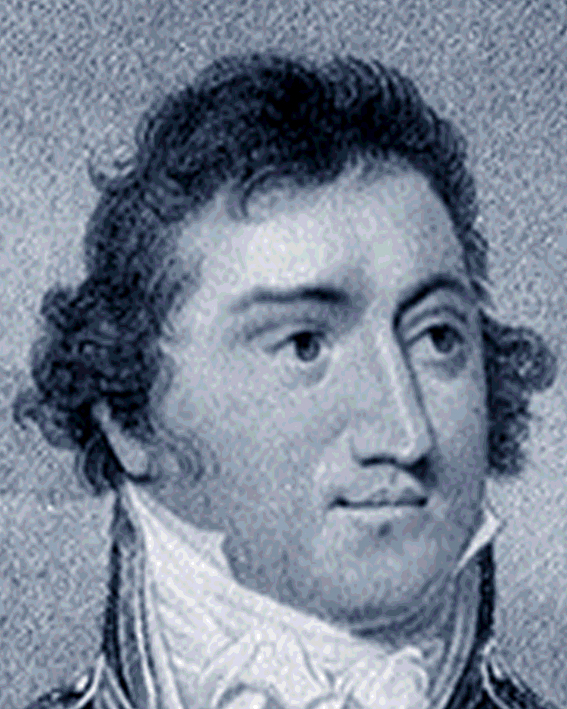 Sir Thomas Thompson, 1st Baronet (1766-1828)
Barham-born Thomas Thompson was the nephew of a Royal Navy commodore who, after recruiting him aged 12 as commander of his own sloop, gave him a thorough maritime education. Thompson saw action in the American Revolutionary War before being laid off for six years, but returned to the service during the French Revolutionary Wars. He acquitted himself at the failed assault on Santa Cruz de Tenerife in 1797, and became one of Nelson’s ‘Band of Brothers’ at the momentous Battle of the Nile a year later. Court-martialled at Sheerness after surrendering his ship to the superior Généreux, Thompson was honourably acquitted, commended for gallantry, cheered by crewmen, and later knighted. He followed Nelson to the Battle of Copenhagen (1801), where he again excelled but lost a leg. He became Comptroller of the Navy, Treasurer of the Royal Hospital for Seamen, Director of the Chatham Chest, and MP for Rochester. He was buried at Greenwich, where his monument survives.
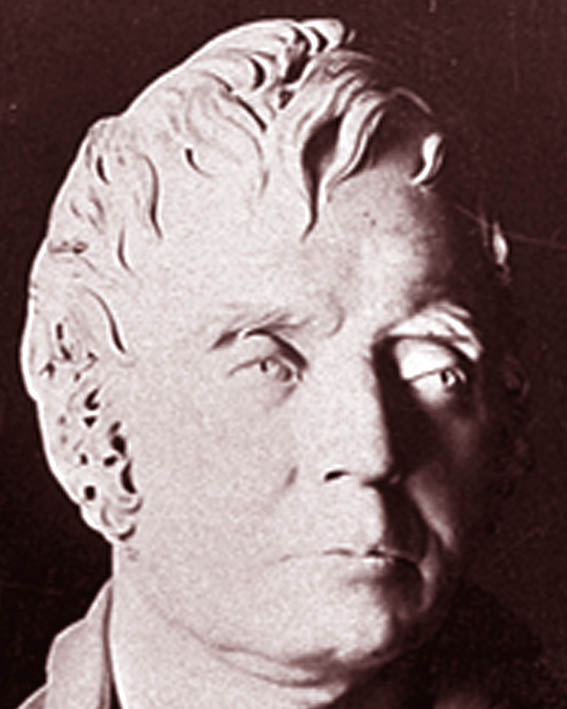 Professor Edward Coleman (1766-1839)
The son of Edward Coleman senior, the treasurer of Romney Marsh corporation, Coleman from Burmarsh became an apprentice to clinician Dr Charles Kite in Gravesend, and not unnaturally took an interest in Kite’s speciality, resuscitation. At medical school, he studied asphyxia, and in 1791 wrote a paper on resuscitation that won him a Humane Society award. He then began to practise as a surgeon, visiting Woolwich Hospital weekly. Despite knowing next to nothing of veterinary science, in 1793 he was appointed professor at the Veterinary College that had opened just two years earlier in London. Then, in 1796, he was made chief vet to the Cavalry and to the Board of Ordnance, which made him the first head of the Army Veterinary Service. He remained the latter until 1816 and the former for life, growing sufficiently expert to write two scholarly texts on horses’ feet. He became a fellow of the Royal Society in 1831.
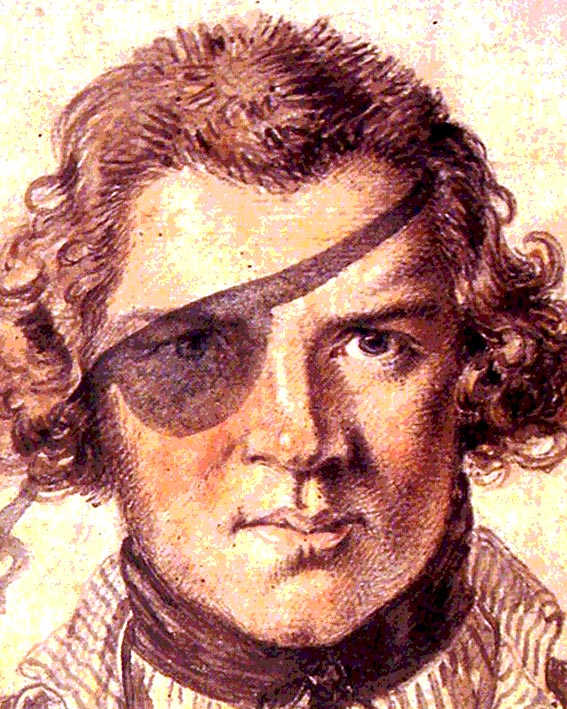 William Alexander (1767-1816)
Coachmaker’s son William Alexander was born at Maidstone and attended Maidstone Grammar School before emulating William Shipley by moving to London. There he studied under William Pars, himself an alumnus of Shipley’s drawing-school, and Julius Ibbetson. Noted for his agreeable temperament, he earned William Stubbs’ approval, and was employed on Lord Macartney’s 1792 embassy to China as an official artist. With his expert attention to detail, he colourfully captured many scenes that over time made their way into several collections, and qualified him as an expert on distant lands; for example, he got to paint scenes for ‘Vancouver’s Voyage to the North Pacific Ocean’ (1798) from original sketches. He also epically captured the 1799 Royal Review at The Mote, Maidstone. After spending six years as the Royal Military College’s drawing professor, he worked at the British Museum, usefully sketching many of the objects in its collection. Like Shipley, he died back in Maidstone, and was buried at Boxley.
 Vice-Admiral Sir Edward Foote (1767-1833)
The son of a Bishopsbourne priest, and nephew of cricket-loving politician Sir Horatio Mann, Foote chose to become a career sailor. He rose through the ranks while serving in the American Revolution and concurrent 4th Dutch War, and by the time of the Battle of Cape St Vincent in 1797 was a captain. He became nationally famous in 1799, after the French had overthrown Ferdinand IV of Naples and established the ‘Parthenopaean Republic’ there. When the rebels were defeated with Russian and Turkish help, Foote signed a multi-national amnesty for the rebels on Britain’s behalf. Nevertheless, Foote’s commanding officer Nelson, under pressure from Ferdinand, countermanded the pact, and 99 of the 8,000 rebels were executed. The Whig leader Charles James Fox condemned Nelson’s “atrocities”, but Foote loyally held his peace until after Nelson’s death. Criticising Nelson did him no favours: though he captained the Royal yacht and was promoted to vice-admiral, he never served again at sea.
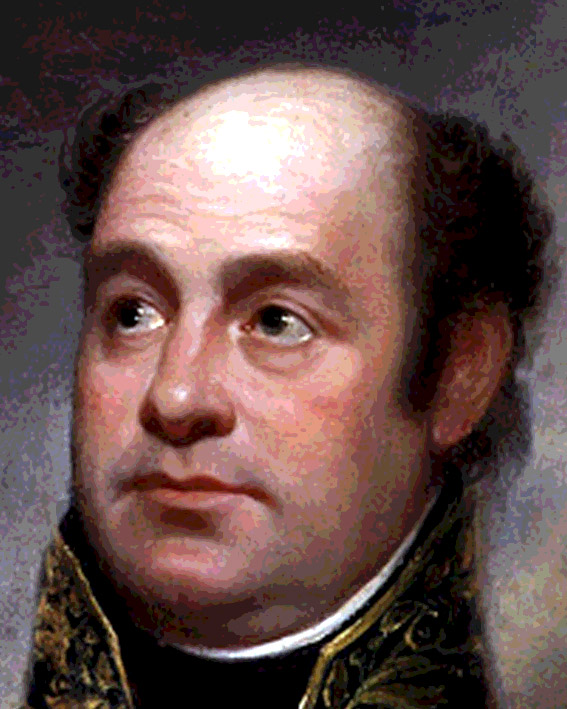 General William Beresford, 1st Viscount Beresford (1768-1854)
William Beresford started life in the British Army as a humble ensign from Bedgebury Cross. After 20 years of unblemished service, apart from an incident with a musket that cost him an eye, he came a cropper when occupying Buenos Aires as a captain, and was held captive for six months before escaping. It was perhaps symptomatic of his martial talents. Yet there was no doubting his organisational ability, and the future Duke of Wellington recommended him in 1807 for the post of Commander in Chief of the Portuguese forces in the Peninsular War. Stationed in Madeira, he knocked the Portuguese troops into an effective fighting unit. Alongside Wellington’s army, his Anglo-Iberian force helped drive the French out of the peninsula. Even after suffering multiple breakdowns in his health, he took part in the final invasion of France. In retirement, he developed the Bedgebury pinetum and founded the village of Kilndown, where he died.
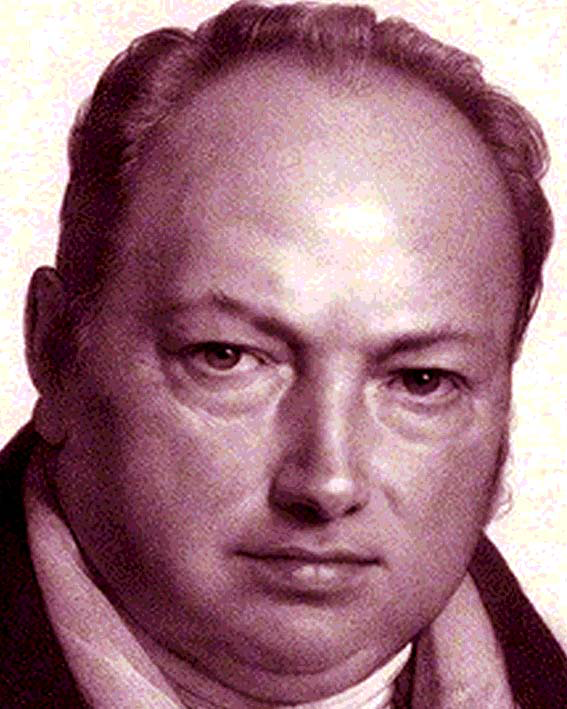 Henry Maudslay (1771-1831)
Maudslay came from Woolwich, his father being a Royal Arsenal craftsman. He started work there at 12, putting the gunpowder in cartridges, then was apprenticed to Jan Verbruggen, the master founder. His precocious talent earned him employment at 18 with the Bramah Locks company in London, where he first displayed his inventiveness by constructing a lock that defied being picked for 47 years. Denied a raise, he set up his own business nearby in 1798. He became that rarity, a southern giant of the Industrial Revolution, inventing among other things the screw-cutting lathe that produced universal screw threads, so revolutionising mass production. He diversified into marine engines, including one for the Royal Navy’s first steamship, Lightning, in 1823. His son Joseph later supplied the engine for IK Brunel’s revolutionary SS Great Western, and became a force in screw propulsion engines in competition with the Penn business. Henry Maudslay died of a chill, and was buried at Woolwich.
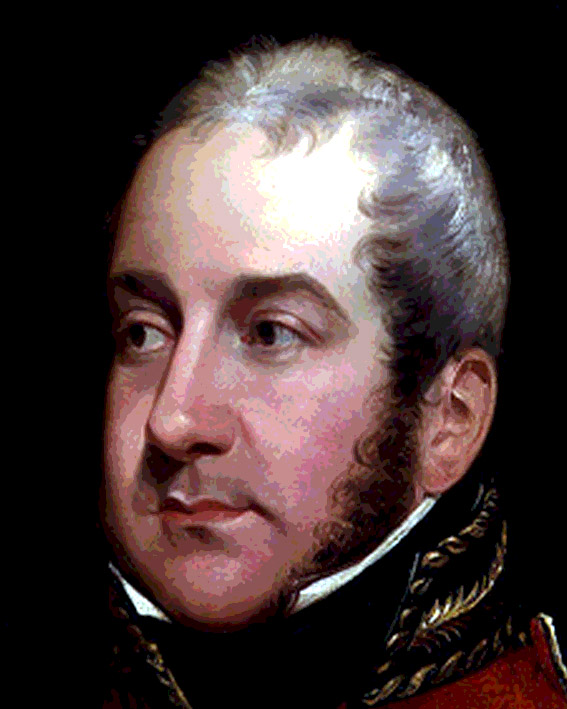 Sir William Congreve (1772-1828)
Though sharing his name with the coruscating dramatist, this Congreve was responsible for a different type of fireworks. His father was Comptroller of the Royal Laboratories at the Royal Arsenal, a position the boy himself would later hold. After attending school near Gravesend, he studied at Cambridge. A businessman and inventor, he registered 18 patents; but the creation that bore his name was a military rocket. The idea had been suggested by weaponry used against the British East India Company. Congreve developed his own version that was successfully deployed in the Napoleonic Wars. Congreve rockets were also used against Fort McHenry in the War of 1812, prompting the reference to “the rockets’ red glare” in the US national anthem. In happier times, Congreve organised the celebratory fireworks after France’s defeat. The MP for Plymouth, he was no honest man: he sired two children out of wedlock before leaving his mistress, and fled the country when facing a fraud charge.
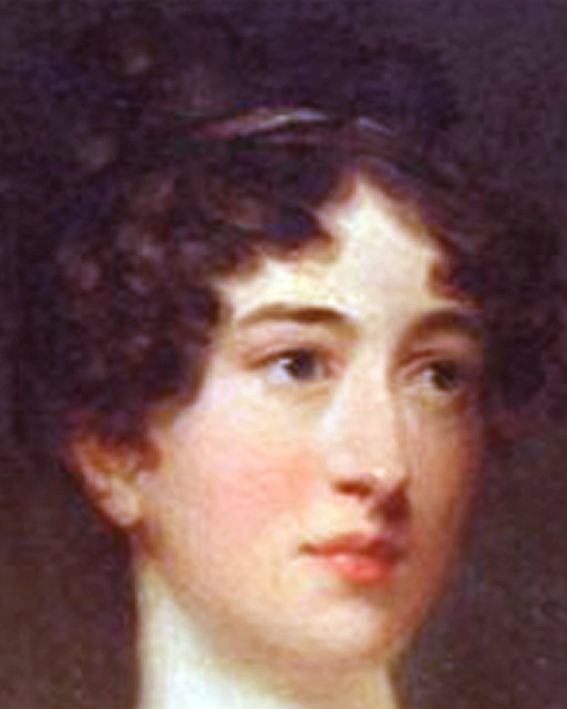 Lady Hester Stanhope (1776-1839)
Eldest daughter of the 3rd Earl Stanhope of Chevening, Hester Stanhope was the woman to whom Sir John Moore asked to be remembered on his deathbed. They had been eager correspondents, and might have married. She had previously kept house for her uncle, Prime Minister William Pitt the Younger, assisting at social engagements and helping him overhaul the gardens at Walmer Castle; but the death of Moore and her half-brother Charles at Corunna in 1809 sparked a dramatic change. She embarked on a bohemian lifestyle, becoming acquainted with Lord Byron in Greece and travelling extensively in the Middle East. In 1815, she obtained Ottoman permission to seek buried treasure at Ashkelon, but the two-week dig proved fruitless; sadly, she left no formal archaeological records, and notoriously pulverised an ancient statue. She remained in the Middle East for life, becoming increasingly reclusive, eccentric, and impoverished. She is remembered nowadays for her exotic memoirs.
 Henry Hallam (1777-1859)
Hailing from Greenwich, Hallam was the son of a high-ranking clergyman. He went to Eton and Oxford before becoming a lawyer in Oxfordshire. Having inherited his father’s minor estate in Lincolnshire in 1812, however, he devoted himself to history. He was responsible for three major works between 1818 and 1837: a study of medieval Europe and a history of the English constitution, both in two volumes, plus a four-volume introduction to European literature from the C15 to the C17. He never went into politics, but did align himself closely with the Whigs, eagerly espousing such causes as the emancipation of slaves. He was made a fellow of the Royal Society, won George IV’s history gold medal, and was commemorated in the crypt of St Paul’s cathedral; but he also suffered a personal tragedy. While touring Europe with his 21-year-old son Arthur, he found the lad dead of a brain haemorrhage, an event that inspired Tennyson’s ‘In Memoriam A.H.H’.
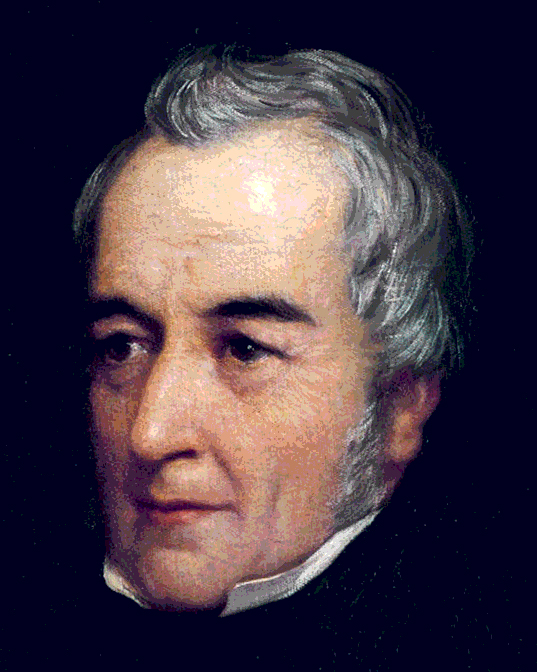 Edward Hawke Locker (1777-1849)
Locker was the son of Captain William Locker, the heroic sailor and lieutenant-governor of Greenwich Hospital. He was born in East Malling and named after Admiral Hawke, his father’s former mentor. He started working for the Royal Navy in an administrative capacity at 17, eventually becoming assistant to Admiral Pellew. During the brief peace in the Napoleonic Wars in 1802, he accompanied André-Jacques Garnerin on his second London balloon trip, taking off from Lord’s. After working in Spain during the Peninsular War, he visited Napoleon in exile on Elba. In 1819, having been appointed to his first official position at Greenwich Hospital, he picked up his father’s baton: the idea of a dedicated gallery in the Painted Hall to celebrate naval art. The project came to fruition thanks to George IV’s gift of 31 paintings, the basis of the later National Maritime Museum. Forced to retire by mental illness, he died in Buckinghamshire.
 William Hazlitt (1778-1830)
William Hazlitt happened to be born in Maidstone, but was a man of the world. After two years in Kent, his Irish Unitarian father resumed the family’s restless perambulations. Hazlitt eventually settled in Soho. He never married, preferring the liberal and open use of common prostitutes. He grew immensely well connected with the Romantic literary scene, and despite his obvious talent as an artist was persuaded by Coleridge to take up writing. He became a master of a now rather lost art, essay writing, and has been called the world’s greatest essayist. As a journalist, he excelled in invective and irony, targeting the powerful. His uncompromisingly radical stance perhaps was the undoing of any mass popularity he might have enjoyed: his works are no longer published and seldom studied. He is still relished nevertheless by non-conformists, and his name is ironically still celebrated by his very provincial hometown’s municipal theatre.
 Gregory Blaxland (1778-1853)
The late-C18 penal settlement in New South Wales appeared the way a base on Mars would today. Even the journey was risky, so the authorities struggled to get people with the right organisational skills to start a new life down under. Sir Joseph Banks took the initiative, putting together a sufficiently large incentive package to persuade two alumni of The King’s School, Canterbury: the Blaxland brothers from Fordwich. The elder brother John concentrated on farming, but young Gregory was more ambitious. In addition to raising livestock, he initiated the Australian wine-growing industry, winning awards from the Royal Society of Arts for samples he took back to England. He was also an explorer, and in 1813, with two companions, became the first Westerner to cross the Blue Mountains encircling Sydney. One New Year’s Day, having lost his wife and two sons, he committed suicide. He is commemorated by the name of a town close to the Blue Mountains National park.
 George Thomas Landmann (1779-1854)
Landmann was born at Woolwich, where his father was professor of artillery and fortification at the Royal Military Academy. He studied there himself before joining the Royal Engineers and undertaking improvements to fortifications at key ports on the south coast. He then spent time in Canada working on engineering projects on the Great Lakes that would prove useful during the War of 1812. During the Peninsular War, he was posted to Gibraltar and then Portugal, participating at the Battle of Vimeiro, when the French invasion of Portugal was halted. A fluent Spanish speaker, he was attached to the Spanish army, and helped to quell a revolt and to plan new fortifications at Cadiz. Having already fallen sick, however, he was invalided out, and took up a career in railway engineering instead. He was responsible for the pioneering London & Greenwich Railway, and other projects in Lancashire. In 1852, he published his reminiscences of Portugal, ‘Adventures and Recollections’.
 John Dickinson (1782-1869)
The Dickinson family of Plumstead was a microcosm of Kent industry. The father, Thomas, was the superintendent of Ordnance Transports at the Royal Arsenal, Woolwich; the mother, Frances, was a weaver’s daughter; and their eldest son, John, became an expert papermaker. After serving an apprenticeship in London, the young man patented a safer type of paper for cannon cartridges that was to prove highly effective in the Napoleonic wars. He then patented the first ever machine manufacturing paper in a continuous process, and in 1809 set up in business with the backing of Maidstone MP George Longman, whose father had founded Longman publishers. He devised a means of incorporating silk bands into the first Penny Post stamps in order to deter counterfeiting, and invented self-seal envelopes. After his death, ‘John Dickinson Stationery’, now a global business, introduced the Lion brand name (1910) and acquired Basildon Bond (1918). The Dickinson name was not phased out until 2008.
 William Colgate (1783-1857)
Robert Colgate, a Hollingbourne farmer, was not only a nonconformist Arminian Baptist but also a politician with revolutionary views. Six years after the birth of his son William, he moved the family away to Shoreham near Sevenoaks, and again in 1798 to New York, where he aimed to make his fortune as a soap manufacturer. He failed; but William, also a religious sectarian, followed in his footsteps. He created a profitable starch, soap and candle business bearing the Colgate name. As was the norm with Protestant minorities, he determinedly made money so as to fill the coffers of his particular sect, the First Baptist Church. His son Samuel took over when he died, and in 1873 launched the first Colgate Toothpaste, for which the company became world-famous. In 1928, however, the business was purchased by the world’s No. 1 soap manufacturer, Palmolive-Peet. Colgate subsequently made its indelible mark on western culture with its ‘Ring of Confidence’.
 George Eden, 1st Earl of Auckland (1784-1849)
Although born second in line to his father‘s baronetcy, George Eden succeeded after his elder brother William was found drowned in the Thames. He came from Eden Farm, Beckenham, and after Oxford entered politics as a Whig, holding senior positions that included three stints as First Lord of the Admiralty; a voyage he commissioned to the East Indies caused the city of Auckland in New Zealand to be named in his honour. His most noteworthy appointment was as governor-general of India, starting in 1836, when he took along as companions his sisters Emily and Fanny, who like him never married. After just two years, amid fears of a Russian-backed Islamic invasion, he was talked into intervening militarily on behalf of the deposed Pashtun shah Shujah Durrani. This initially successful 1st Afghan War won Eden an earldom, but culminated in 1842 in the annihilation of the occupying army on its retreat from Kabul, for which he was effectively sacked.
 Field Marshall Henry Hardinge, 1st Viscount Hardinge (1785-1856)
A clergyman’s son, Hardinge was born in Wrotham and educated at Sevenoaks School. At 14 he joined the British Army as a humble ensign, commencing a 57-year career. He served throughout the Peninsula War against Napoleon (1808-14), distinguishing himself with his decisive action at the bloody battle of Albuera under General Beresford. Having repeatedly been wounded and lost a hand, he became Secretary at War under both the Duke of Wellington and Sir Robert Peel, and was appointed Governor-General of India in 1844, shortly before the First Anglo-Sikh War erupted. He returned to Britain in 1848; but his work was not over, for he succeeded Wellington as Commander-in-Chief during the Crimean War (1851-5). While accounting for himself to Queen Victoria afterwards, he suffered a stroke, and apologetically finished his account lying half-paralysed on a sofa. He died at his home, South Park in Penshurst, to which his splendid equestrian statue was returned from Kolkata after independence.
 Charles Mills (1788-1826)
A surgeon’s son, Charles Mills from Greenwich studied to be a solicitor. In 1814, however, he fell sick with respiratory problems and, having inherited some wealth, decided to begin a career as a historian, focusing on a region then coming increasingly under scrutiny, the Middle East. His first work, published in 1817, was ‘A History of Mohammedanism’, whose treatment reflected his regard for Gibbon. His follow-up in 1820 was a two-volume work called ‘History of the Crusades for the Recovery and Possession of the Holy Land’, recounting twelve crusades over a period of nearly two centuries starting in 1096; its overtly Christian stance earned Mills the Order of Saint John. Sir Walter Scott, who had provided notes, subsequently used the work as source material for his novel ‘The Talisman’ (1825). Mills additionally wrote the two-volume ‘The History of Chivalry’ in 1825, shortly before a recurrence of his illness bore him off.
 Richard Barham (1788-1845)
At seven, Barham from Canterbury lost his father, who left him the manor of Tappington at Denton. A studious type, he attended St Paul’s School, but at 13 endured a serious coach accident that left his arm nearly paralysed. At Oxford, he preferred to study theology instead of law, and entered the Church, where he progressed to the post of minor canon at St Paul’s Cathedral. His occupation allowed him plenty of time for his vocation: writing. He started penning pieces for ‘Blackwood’s Magazine’; but, after a failed attempt to become a novelist in 1834, he turned to writing witty, erudite stories in verse under the name Thomas Ingoldsby for ‘Bentley’s Miscellany’. Highly popular, these predominantly Kent-connected tales were collected into three volumes of ‘Ingoldsby Legends’ in the 1840s, of which the last, in 1847, was posthumous. There is a memorial to him in St Pauls’ Cathedral, and a Canterbury pub is called the Thomas Ingoldsby.
 George Warde Norman (1793-1882)
It was Eton-educated George Warde Norman who persuaded his friend, fellow Bromleian George Grote, to make Greece, rather than Rome, the subject of his famous History. Having joined his father‘s timber business, Norman went to familiarise himself with Norway in his twenties. His interests were broader, however, and in 1821 he was one of the founder members of the Political Economy Club alongside James Mill, Thomas Malthus, and David Ricardo. That same year he became a director of the Bank of England, and in 1830 left the family business to focus on that role, which he would retain for 51 years. He wrote formally on such topics as taxation and import duties, and was consulted more than once by government. He sought relaxation in cricket. He played three times for Kent as an amateur, and co-founded the Prince’s Plain Cricket Club on Bromley Common; he remained president for half a century, and wrote a club history.
 James Marsh (1794-1846)
Kent-born James Marsh should be remembered as the man who saved thousands of unfortunates from an early grave. He invented the first oscillating electric wire in 1824, and as an ordnance chemist at the Royal Arsenal in Woolwich invented a screw time-fuse and a quill percussion-tube. In 1829, he got a job for life teaching at the Royal Military Academy in Woolwich as assistant to Michael Faraday, earning just 30 shillings a week. He is best known however for the Marsh Test for arsenic. This readily available poison was the weapon of choice of domestic murderers, causing symptoms similar to common illnesses and leaving no trace. When his evidence based on the existing test failed to convince a jury at a murder trial, he decided to create his own test, which could detect quantities as small as 0.02mg. A generation after his death, it did for prolific murderess Mary Ann Cotton.
 George Grote (1794-1871)
Descended from a German merchant, George Grote from Clay Hill (Shortlands) near Bromley went to Sevenoaks Grammar School and then Charterhouse. To begin with, he combined banking with political radicalism: he associated with David Ricardo and John Stuart Mill, became president of the steering committee of University College, London, and agitated for such reforms as the secret ballot. All the time, however, he was cultivating an interest in Greek history, and his turning point came with a visit to Italy in 1842, after which he quit banking for writing. The great fruit of his labours was his magisterial 12-volume ‘A History of Greece, from the Earliest Period to the Close of the Generation Contemporary with Alexander the Great’. Published over a period of a decade from 1846, it still bears comparison with Gibbon’s ‘Decline and Fall of the Roman Empire’. He also wrote an authoritative three-volume work on Plato, but died in London before finishing another on Aristotle.
 John Stevens Henslow (1796-1861)
In 1831, a young man from Rochester was invited to accompany the captain of HMS Beagle, Robert Fitzroy, as a naturalist on a voyage to the Galapagos. He had all the right credentials. A solicitor’s son, he had graduated in maths at Cambridge, gone on to study geology, and become a professor: first of mineralogy, then of botany. Unfortunately, John Henslow’s wife was not keen on the idea. In his place, he recommended a promising young student of his, called Charles Darwin. Henslow instead became a vicar in Berkshire, and conspicuously devoted himself to good deeds, such that his work at Cambridge suffered. He remained liked, respected, and well connected, however, and Darwin’s best friend Joseph Dalton Hooker became his son-in-law. John James Audubon named Henslow’s sparrow after him; and a cape of Isla Socorro off Mexico in the Pacific, first studied in 1865 by Audubon’s ornithological successor Andrew Grayson, bears his name.
 Emily Eden (1797-1869)
One of the eight daughters of Baron Auckland of Eden Farm in Beckenham, Eden distinguished herself as a writer. A Jane Austen fan, she shared both a similar social background and the same gently waspish style. Though she wrote two novels and poetry, she is best remembered for her vivid accounts of her years in India, which began when she and younger sister Fanny accompanied their older brother George on his appointment as governor-general in 1836. Much of her account concerns the colourful goings-on about her, from everyday trivia to expeditions ‘Up the Country’. Above all, however, she gives a rich sense of the mournful existence of an expatriate living under the Raj, beset by fearsome heat, danger, disease, boredom, and the unedifying behaviour of colonials and natives alike. Though reckoned a good match for her friend the widowed prime minister Lord Melbourne, she never married, and whiled away much of her dotage in Broadstairs.
 Captain William Siborne (1797-1849)
Despite having been a professional soldier, Siborne from Greenwich is remembered purely by chance as a military historian. Educated at Sandhurst, he was based at Canterbury, Chatham, and Sheerness, but after the Battle of Waterloo joined the Duke of Wellington’s army occupying France. By 1830, Wellington had become prime minister, and his successor as Commander-in-Chief, Lord Hill, commissioned Siborne to build a model of the battlefield. He went about the task extremely diligently, accurately surveying the terrain and obtaining detailed information on troop deployments. He was perversely denied funds to complete the task, however, and had to use his own money to finish the job. In 1844, he published his ‘History of the War in France and Belgium in 1815’, which antagonised Wellington by contradicting his egocentric account. Thanks to Siborne, history now shares the credit for finally silencing Napoleon between Wellington and Blücher. For his last six years, he taught at the Royal Military Asylum.
 Thomas Waghorn (1800-50)
Waghorn was born in Chatham, the son of a butcher and his Snodland-born wife. At 12, he joined the Royal Navy, but left in his teens for Calcutta. After marrying there, he served in the 1st Burmese War (1824), but then fell sick. At that time, the postal service between India and Britain took three months via Cape Town. Waghorn repeatedly visited Egypt to explore a possible overland route from Alexandria to the Gulf of Suez, which would reduce the delivery time by a half to two-thirds. He won the support of the Egyptian Pasha, and eventually the local Bedouin. His postal service functioned until 1844 when, outcompeted by P&O, he went out of business. By then, his wife having died, he had married his mother’s former neighbour from Snodland, and moved to Rochester. A statue in Chatham commemorates him; another erected in Egypt by Ferdinand de Lesseps, builder of the Suez Canal, was toppled during the Suez Crisis.
 Douglas Jerrold (1803-57)
Samuel Jerrold, Douglas’s father, ran a small theatre near Cranbrook. The family having moved to Sheerness when the boy was four, he was drawn to the Royal Navy, serving as a midshipman under Charles Austen, Jane’s brother. After the end of the Napoleonic Wars, he took up journalism in London, and while still in his teens wrote plays that actually got produced. At 26, he wrote a melodrama called ‘Black-Eyed Susan’ whose title was borrowed from a John Gay song. Doubtless inspired by his naval experiences, this tale of a seaman threatened with execution had a happy ending, and was a big success. His reputation secure, Jerrold became a mainstay of the theatre until 1854, even acting before Queen Victoria in a production that starred Charles Dickens. Meanwhile, he had been writing since 1841 for ‘Punch’, in which his Whiggish humour became a fixture. He also edited ‘Lloyds Weekly Newspaper’ with great success for five years until his death.
 Sir Henry Young (1803-70)
After serving as a British Army colonel during the French Revolutionary and Napoleonic Wars, Young’s father became an administrator, which may have prompted his son’s career choice. Born at Brabourne and educated at Bromley, young Henry studied law in London. In 1827, he was posted to the Caribbean, where he was occupied in emancipating slaves. He transferred in 1847 to South Africa, was knighted, and soon moved to Australia. As governor, he oversaw South Australia’s first parliament; he also incentivised exploration and railway development. From there he was sent to Van Diemen’s Land in 1855, which was now self-governing and about to be rebranded Tasmania. Although he encountered controversy over modernisation of the island, hitherto a notoriously harsh penal colony, he did a sufficiently professional job to have Youngtown named after him. In 1862, he returned to London for good with his wife, ironically the granddaughter of a former slave-owner. She survived Young by 43 years.
 Thomas Sidney Cooper (1803-1902)
Although he had a passion for art from his earliest days, Thomas Cooper lacked the wherewithal to study it, and earned a living by painting coaches and scenery before finally being accepted by the Royal Academy. In 1827, he moved to Brussels for four years, and after returning specialised in painting pastoral subjects, in particular animals. In 1847 he formed a partnership with Frederick Lee that was to endure over 20 years; Lee would paint the scenery before Cooper added the livestock, for which reason he incurred the nickname ‘Cow’ Cooper. Having earned both a reputation and his fortune, he became a noted philanthropist. He established the Sidney Cooper School of Art – now merged into the University for the Creative Arts – one of his pupils being Mary Tourtel. Some of his works are displayed at the Tate and the V&A, but the biggest collection is at Canterbury’s Beaney House, just along from his birthplace in St Peters Street.
 Philip Stanhope, 5th Earl Stanhope (1805-75)
If you look above the entrance of the National Portrait Gallery off Trafalgar Square, you will see three busts, of which the two outsiders are Carlisle and Macauley. The less recognisable personage in the middle is Philip Stanhope, the 5th Earl Stanhope. He was born at Walmer, his father being the 4th Earl, from Chevening, noted for his connection with the enigmatic Kaspar Hauser. The younger Stanhope went into politics, and twice held ministerial posts under Sir Robert Peel; but he is best known for his contribution to the arts. He first masterminded the 1842 Literary Copyright Act, giving writers more lasting control over their work. The National Portrait Gallery came to fruition in 1856 primarily in consequence of his efforts. He was instrumental in establishing the Historical Manuscripts Commission, and even supported archaeological work at Troy. He was long remembered by the Stanhope Essay Prize at Oxford University, whose winners included the novelists John Buchan and Aldous Huxley.
 John Penn Jr (1805-78)
The Kentish Pett dynasty that dominated English shipbuilding for two centuries was rather satisfyingly succeeded by another called Penn. John Penn Sr (1770-1843) founded an agricultural engineering business south of Deptford that John Jr inherited. Having shifted its focus to marine engineering, the latter designed oscillating engines that doubled the performance of HMS Black Eagle without penalty, convincing the Admiralty to award him preferred supplier status. He championed the Navy’s adoption of screw propellers, and impressed with a string of dependably manufactured innovations. He also took a strikingly benevolent approach to his 1,800 employees. He was twice president of the Institution of Mechanical Engineers, and a Fellow of the Royal Society. One son became MP for Lewisham, three others played cricket for Kent, and two daughters married Kent-based rugby internationals. Living at Lee, Kent, he eventually became blind and crippled, and was succeeded in the business by his two eldest sons. He is commemorated by Greenwich’s John Penn Street.
 Robert Warington (1807-67)
The son of a supplier of victuals to ships, Warington was born in the port town of Sheerness, but grew up in various others in England and France. He was apprenticed to Greenwich chemist John Cooper at 15, and in 1828 won an appointment at the new London University. Three years later, he became the first chemist employed by an English brewery. Although he is noted for his discovery, reported in 1851, that fish could be kept alive in an aquarium by the addition of living plants, he was most effective in his furtherance of the study of chemistry. He was instrumental in establishing the Chemical Society of London, which became the Royal College of Chemistry, and co-founded the Cavendish Society, named after the discoverer of hydrogen, to promote chemistry by publishing valuable scientific works. In 1864, he was elected a fellow of the Royal Society, for which he single-handedly wrote nearly four dozen papers.
 Sir Francis Pettit Smith (1808-74)
Only two centuries ago, steamships everywhere were still driven by paddlewheels. The man who changed that was the son of a postmaster, born in Aldington, who as a schoolboy in Ashford was fascinated by model boats. He became a farmer on Romney Marsh before moving to Middlesex for nearly four decades. He remained interested in boats, however, and sought to adapt the Archimedes Screw water hoist as a means of propulsion. His prototype vessel worked so well that he was able in 1836 to apply successfully for a patent. After convincingly trialling it at sea from Blackwall to Hythe, he formed a company to build the world’s first screw-propelled ship, SS Archimedes. IK Brunel was so impressed that he converted SS Great Britain, the world’s largest vessel, to screw propulsion; Smith himself sailed in her to New York in 1852. He spent his last ten years at a smart new house on Sydenham Hill, and was buried at Hythe.
 Sir Edward Shepherd Creasy (1812-78)
A land agent’s son from Bexley, Creasy went to Eton and studied law at Cambridge. Although he became a lawyer, he also took up teaching history at the University of London, alongside contributing to ‘Bentley’s Miscellany’. In the early 1850s, he wrote a volume of biographies of eminent Etonians, and histories of invasions of England, the Ottoman Turks, and the English constitution. His most famous book, however, was ‘The Fifteen Decisive Battles of the World’ (1851), describing military encounters from Marathon to Waterloo that changed the course of history. Knighted in 1860, he was sent to Ceylon to serve as chief justice until 1874, and while there wrote a five-volume history of England, an account of the British Empire’s institutions, and a novel, ‘Old Love and the New’. In 1864, he founded the Colombo Rowing Club, which survives until the present day. Having grown sick, he died back in London.
 Henry Russell (~1813-1900)
The Isle of Sheppey may not seem the most obvious place to have a maestro of C19 popular music, but there is one. Henry Russell was born into an eminent Jewish family at Sheerness, his grandfather’s brother being the Chief Rabbi, Solomon Hirschel. He not only proved to be a good pianist, but also had a fine baritone voice. These lent him the wherewithal to start a career as a performer that took him at 22 to America, where he earned a fortune that he quickly lost on a bad investment. Nevertheless, he developed his talent as a songwriter, specialising in songs with a social message and registering numerous successes, including ‘Woodman, Spare That Tree’. He enjoys the rare distinction of having composed the music for a Victorian popular song that is still familiar today, namely ‘A Life on the Ocean Wave’. One of his sons became a conductor, and the other a musical impresario.
 Sydney Wigan (1814-78)
Between being born in Greenwich and dying at his home in Folkestone, Alfred ‘Sydney’ Wigan spent his life on the London stage. Both he and his brother Horace were devotees of the theatre, their father having been an official of the Dramatic Authors’ Society. By the age of 20, young Wigan was acting in the West End, and in 1839 married Leonora Pincott, a rather older novelty performer with ropes and stilts. Although a jobbing actor, he was talented enough to be cast in the very first Royal Command Performance in 1848, when he appeared in ‘The Merchant of Venice’ at Windsor Castle in front of Queen Victoria. He first went into theatre management in 1853 as actor-manager at the Olympic, with further spells elsewhere punctuated by illness. In 1867, he took over the Queen’s Theatre, where the new company under his management impressively included Henry Irving and Ellen Terry. He was buried in London.
 Sir William Jenner, 1st Baronet (1815-98)
Not to be confused with Edward Jenner, the inventor of vaccines, William was born at Chatham and studied at University College, London, where he became a professor for 21 years. The turning-point of his career came at 35. While researching at the London Fever Hospital, he identified the fundamental difference between two lethal diseases, which he published as ‘On the Identity or Non-Identity of Typhoid and Typhus Fever’. His reputation established, he became president of the Royal College of Physicians and of the Epidemiological and Pathological Societies, and a fellow of the Royal Society. In 1861, he was summoned to Windsor Castle to tend to Prince Albert, whom he diagnosed as having typhoid. Five days later, the Prince died; his chronic gut pain suggests he was actually a victim of cancer or some other abdominal disease. Jenner nevertheless became the Queen’s Physician in Ordinary a year later. Famous and wealthy, he died in Hampshire.
 Frederic Mouat (1816-97)
The sons of a British Army surgeon, James and Frederic Mouat were born in Chatham and Maidstone respectively and followed the same calling, studying medicine at University College, London. Whereas James won a Victoria Cross in the Crimean War, however, Frederic joined the Indian Medical Service at 24. After impressing the Earl of Auckland with a thesis on lichens, he was appointed to senior positions at the Bengal Medical College. He spent four decades in India, dedicating himself to humanitarian causes. He arranged for four Indians to study in Britain; campaigned to build a university at Calcutta; published the first ever anatomical encyclopedia in Urdu; investigated chaulmogra, a traditional Chinese remedy for leprosy, which he introduced into Britain; and founded the Bethune Society to encourage Anglo-Indian relations. A proponent of prison reform, he investigated the Andaman Islands as the site for a penal colony, and encouraged Andaman cultural exchange with India; a village there is named after him.
 Thomas Crampton (1816-88)
The privately educated son of a plumber-cum-architect, Crampton from Broadstairs went at 23 to work for Brunel’s Great Western Railway on Firefly locomotives. Though engaged to develop more stable broad-gauge engines, he privately patented a new standard-gauge engine that, among other innovations, incorporated a larger driving-wheel behind the firebox, thus yielding greater stability at speed even on standard-gauge rails. In 1845, he had the first such Crampton engines built, one of which achieved 79 mph in tests. Although competition in Britain was fierce, they became highly successful in Europe, such that ‘prendre la Crampton’ became the standard French expression for taking a fast train. In 1851, his ‘Folkstone’ appeared at the Great Exhibition. Crampton constructed several railway lines in Kent and Eastern Europe, laid the world’s first submarine telegraph cable between Dover and Calais, and invented a pioneering tunnel-boring machine. He even found time to build Broadstairs a gasworks, two water towers, and an iron bridge.
 Julius Brenchley (1816-73)
Lifelong bachelor Julius Lucius Brenchley was born in Maidstone and died in Folkestone, but squeezed much in between. He attended Maidstone Grammar School and went to Cambridge, and might have become a clergyman if his father, a brewer, had not taken him on a tour of Europe that gave him a taste for travel. From 1845, he spent 22 years globe-trotting as far afield as the South Pacific and visiting every continent except Antarctica. He was not just a holiday-maker, however. He had a passion for collecting artistic, ethnographic, and natural objects, which he sent back to Maidstone Museum so that his townsfolk could be edified by them; one was an arrow fired into his neck by Amerindians. He befriended royalty in Hawaii and Tonga, and in Ecuador he survived falling into a volcanic crater. He was buried in the Brenchley vault at All Saints Church; the gardens next to Maidstone Museum are named after him.
 Sir John Gilbert (1817-97)
Originally an estate agent’s apprentice, John Gilbert from Blackheath first taught himself art by copying prints. Unable to attend the Royal Academy Schools, he got some tuition from an oil painter. Then, encouraged to learn other media, he acquired a talent for wood-carving, and embarked on making a living as a commercial artist. He illustrated extensively for ‘Punch’, the ‘Illustrated London News’, and the ‘London Journal’, his compositions running into thousands. He also became a prolific book illustrator: inter alia, he created hundreds of impressive plates for Shakespeare editions, including the 1866 edition of Lamb’s ‘Tales from Shakspeare’ (sic). Meanwhile, he had become such a fine painter that almost sixty of his oils are now held by national collections. Nicknamed ‘The Scott of Painting’, he became president of the Royal Watercolour Society’ in 1871, and was then knighted and admitted to the Royal Academy. Having died at Blackheath, he was buried at Brockley & Ladywell cemetery.
 Richard Dadd (1817-86)
A Chatham chemist’s son, Dadd attended the King’s School, Rochester. Soon after studying at the Royal Academy Art Schools, he won an award for illustration, and contributed the frontispiece of HG Adams’ ‘The Kentish Coronal’ (1841). He founded a group of artists called The Clique, motivated by a shared dislike of the Pre-Raphaelites. In 1842, however, on a tour of the Eastern Mediterranean, he started behaving abnormally, professing to be possessed by Osiris; he was diagnosed insane, at least two siblings being schizophrenic. Taken by his family to recuperate at Cobham, he mistook his father for Satan, and stabbed him to death. Arrested after attacking a stranger while fleeing to France, he was sent to Bedlam, then Broadmoor. He continued to paint, producing detailed landscapes and portraits from memory, and intricate depictions of fairies and the supernatural. His masterpiece ‘The Fairy Feller’s Master-Stroke’ (1855-64) featured in a Freddie Mercury song and a Terry Pratchett novel.
 John Bartholomew Gough (1817-86)
When his soldier father died, John Gough from Sandgate was sent, aged only 12, to live with relatives in New York. His mother later joined him, but soon died, and he gave up his job as a bookbinder to become a drunk. He descended to the depths of depravity, losing practically everything, and only sustained himself with his skill as a story-teller and balladeer. Entirely by chance, he attended a temperance meeting in Massachusetts in 1842 and saw the light. He put his speaking skills to good use as a temperance speaker, earning a reputation for his remarkable eloquence. Such an attraction did he become that he toured the USA, and then his native England. He later extended his public speaking profitably to more general topics; but it was for his vivid condemnation of drunkenness, informed by personal experience, that he remained internationally famous. He died following an apoplectic fit suffered while orating.
 Henry Coxwell (1819-1900)
Henry Coxwell was born in Wouldham, attended school in Chatham, and would have become a dentist but for his passion for ballooning. He proved himself an outstandingly talented pilot who undertook pioneering tasks throughout his 40-year career and, with a combination of skill and luck, managed to survive some perilous predicaments. In 1862, he was hired by the British Association for the Advancement of Science to fly scientist James Glaisher to a world-record height over Wolverhampton in order to measure barometric pressure. He is reckoned to have attained at least 35,000 feet – today’s standard altitude for an airliner. Glaisher lost consciousness, and Coxwell’s hands froze solid; but he saved them both by operating a valve with his teeth. A 2018 movie called ‘The Aeronauts’, made to celebrate the feat, airbrushed Coxwell from history, substituting the imaginary “Amelia Wren”. It was on a par with replacing Neil Armstrong with Lara Croft. Aptly, the movie went down like a lead balloon.
 Wilhelmina Powlett, Duchess of Cleveland (1819-1901)
Catherine Lucy Wilhelmina Stanhope, of Chevening, shared her mother’s first two names, but fortunately had a third. The sister of Philip Stanhope, 5th Earl Stanhope, she was at first noted for her looks, being a maid of honour at the coronation of her exact contemporary Queen Victoria, and a bridesmaid at her wedding. During her first marriage, to Lord Dalmeny, she gave birth to Archibald Primrose, the future prime minister Lord Rosebery; her second, to the Duke of Cleveland, was childless. Late in life, she became a writer, known best for her ‘Battle Abbey Roll, with some Account of the Norman Lineages’ (1889), a painstaking but spurious list of the companions of William the Conqueror at the Battle of Hastings, together with pen portraits of their surviving families. More interestingly for modern readers, she wrote an account of her father’s dealings with Kaspar Hauser (1893), and a lengthy biography of her bohemian Aunt Hester (published 1914).
 Frederick Robson (1821-64)
Thomas Brownbill was the original little man with big talent. He came from Margate, and started work as an engraver; but his heart was set on the stage. To begin with, he earned just five bob a week doing shows in Whitstable. Once he became known in London as actor Frederick Robson, however, fame beckoned. He evolved into a now familiar type, the extrovert all-round entertainer who could sing, act, and make people laugh; the charismatic movie star Al Jolson might almost have modelled himself on him. An excellent mimic, Robson had an uncanny knack of getting the audience roaring with laughter one moment, and bursting into tears the next. Once he started appearing at the Olympic Theatre in 1853, he became a sensation. The great and the good came to watch and pay tribute to him. At his peak, however, his drinking got the better of him, and he succumbed dramatically to heart and kidney disease.
 John Sims Reeves (1821-1900)
Often described as the greatest tenor of his day, John (later Sims) Reeves was groomed for musical excellence from the start. His father was the bass soloist of the Royal Artillery band, based at Woolwich, for which reason Reeves was born at Shooter’s Hill. For years he had an intensive tuition not only in singing, but also in several instruments. His voice, initially baritone, turned out to have a timbre of Italian standards. Already by the age of 25 he was appearing at La Scala in Donizetti’s ‘Lucia di Lammermoor’ opposite the great Anglo-Irish soprano Catherine Hayes. A year later, he sang with the Swedish Nightingale, Jenny Lind. Greatly in demand, he grew very rich, and even performed privately for Queen Victoria and Prince Albert. He gained a reputation for being unreliable, however, often cancelling at the last moment on the grounds of ill-health; yet the likes of Henry Irving and GB Shaw still sang his praises.
 Sydney Thompson Dobell (1824-74)
When he was twelve, Sydney Dobell moved from his native Cranbrook to Gloucestershire. He received no formal education other than at home. Unlike his brother Horace, who became an eminent surgeon, Dobell worked for his father, a wine merchant, but then, having come under the influence of political radicals, opted to opt out. He escaped to the Scottish Highlands and then the Continent, after which, as ‘Sydney Yendys’, he expressed solidarity with Italian liberation in his lengthy poem ‘The Roman’ (1850). The contemporary poetic fashion was especially flowery, not to say florid, and Dobell became particularly associated with it after expressing its principles in essays. It hit a brick wall in 1854 when the Scottish poet William Aytoun labelled Dobell and his ilk the ‘Spasmodic Poets’, and adroitly lampooned Dobell’s ‘Balder’ (1853). Dobell, never in the best of health, was practically invalided by a fall from a horse in 1869.
 John Warburton Hamilton (1825-83)
Vicar’s son William John Warburton Hamilton was born in Little Chart, the elder brother of Admiral Sir Richard Vesey Hamilton. After enjoying a cosmopolitan education, he decided at 18 to emigrate to Sydney, Australia, but en route met Robert FitzRoy, already famous as the skipper of HMS Beagle on Darwin’s celebrated voyage. FitzRoy persuaded Hamilton to join him as his personal secretary in New Zealand, where he was about to become governor. Hamilton worked first for him, and then his successor George Grey. After a trip back to England, he emulated Fordwich-born Gregory Blaxland in undertaking an amount of antipodean exploration. Most notably, he was the first to try climbing Mount Odin (now Tapuaenuku), which was to be Sir Edmund Hillary’s first major climb. Having settled in the Canterbury region of New Zealand, he became a council official with a reputation as a deadhanded bureaucrat. He is commemorated in the name of Mount Hamilton.
 Edward Knatchbull-Hugessen, 1st Baron Brabourne (1829-93)
The son of the Paymaster General Sir Edward Knatchbull from Mersham-le-Hatch, Edward was educated at Eton and Oxford and went into politics after incorporating his grandmother’s surname by law into his own. As MP for Sandwich, he served in the Liberal governments of Lord Russell and William Gladstone, and was a co-founder of the Liberty & Property Defence League. He was better known however as a writer of fairy tales, with at least a dozen volumes to his credit. Nor was his ability scant: he was placed by ‘The Times’ in the same company as Hans-Christian Andersen and the Brothers Grimm, while JRR Tolkien reported having been a fan in his youth. After swapping sides to the Tories in reaction against Radical interventionism, his combined interests made him the butt of ribald humour concerning the extent to which fairies played a role in his politics. He also edited his great-aunt Jane Austen’s letters. He was buried at Smeeth.
 Admiral Sir Richard Vesey Hamilton (1829-1912)
Coming from the ancient port of Sandwich and sharing his surname with Nelson‘s mistress, the 14-year-old Hamilton not unnaturally felt impelled to join the Royal Navy. After attending the Royal Naval School in Camberwell, he volunteered for two of the several missions in search of Sir John Franklin’s doomed expedition to find the Northwest Passage, spending some years in the Arctic. In the following decades he was posted all around the world, including China, where he took part in the Battle of Fatshan Creek in 1857. Having made his way to the rank of admiral by 1887, he landed the role of First Naval Lord, his chief responsibility being to implement recommendations for meeting the ‘Two Power Standard’ designed to ensure Britain’s continuing rule of the waves. He ended his career as President of the Royal Naval College at Greenwich. He was buried at Eltham, and is recalled in the name of Vesey Hamilton Island in northern Canada.
 Sir Edwin Arnold (1832-1904)
Arnold was born at Gravesend and, despite growing up in Essex, attended The King’s School, Rochester before going to London and Oxford Universities and becoming a schoolmaster. In 1856, he left to run Poona College in India, but returned after five years to join the ‘Daily Telegraph’, which he eventually edited. Despite the Indian Mutiny occurring during his sojourn, he had acquired a great love of India, and in 1879 published ‘The Light of Asia’, an eight-volume verse account of the life of Buddha. Highly popular in Britain and America, it was translated into Hindi. He judiciously complemented it with ‘The Light of the World’ (1891), concerning Christ, albeit with less success. In between, he wrote ‘The Song Celestial: A Poetic Version of the Bhagavad Gita’ (1885), which Gandhi liked so much that he made Arnold vice-president of the Vegetarian Society. After marrying a young Japanese woman, Arnold added ‘Adzuma, or the Japanese Wife’ (1893) to his cosmopolitan oeuvre.
 Private William Pennington (1833-1923)
Pennington from Greenwich declined to take over his father’s school in Middlesex, instead joining the merchant navy at 18, and then the 11th Hussars in 1854. Within months he found himself in the Light Brigade at Balaclava, charging the Russian guns. He was shot in the leg, and his horse was killed, but he somehow escaped through the dense ranks of Russians on a loose horse; his dramatic account was published in ‘The Times’. Having spent a month at Florence Nightingale’s hospital, he quit in 1856. He started a career as a thespian, playing both King Lear and Hamlet so meritoriously that he was known as Gladstone‘s favourite. In 1870, he also became manager of Sadler’s Wells. The central figure in Lady Butler’s painting ‘Balaclava’ (1876), in later life he occasionally recited Tennyson’s ‘The Charge of the Light Brigade’ on stage while wearing his original uniform, complete with musket-ball hole. He attended the final ‘Balaclava Dinner’ in 1913.
 Major-General Charles Gordon (1833-85)
A general’s son, Gordon was born in Woolwich, studied at the Royal Military Academy, and joined the Royal Engineers. After the Crimean War, he led Qing troops to victory against the colossal Taiping Rebellion, performing miracles with his ‘Ever Victorious Army’. After six years doing good works in Gravesend, ‘Chinese Gordon’ became Governor-General of the Sudan, and broke his back to combat the powerful Arab slave trade. In 1884, he returned to relieve British garrisons threatened by the Mahdist revolution. After evacuating about 2,500 civilians, he remained in Khartoum against orders, resisting Muhammad Ahmad’s siege for a year. Wildly popular for his defiance, he was nevertheless left stranded by Gladstone’s Liberal government. After rejecting Ahmad’s invitation to convert to Islam and join forces, he was infamously butchered on the palace steps and his head stuck in a tree. Though celebrated as Gordon of Khartoum, he had died pointlessly: the Mahdists immediately re-introduced slavery and a genocidal tyranny.
 Mrs Howard Paul (1833-79)
Isabella Hill, a leather-merchant’s daughter, was born in Dartford and schooled in France and Italy. She took to the stage as Isabella Featherstone and, being able both to act and to sing exquisitely, was an instant hit. With her contralto voice, she initially played some male roles, like Macheath in Gay’s ‘The Beggars Opera’. At 21, she married American writer-actor Henry Howard Paul, with whom she toured in Britain and overseas for two decades. Her musical party-piece was imitating both Henry Russell and John Sims Reeves, and she played Lady Macbeth at Drury Lane in 1869 while doubling as Hecate. Mr Howard Paul later had an affair with a dancer that produced two illegitimate children, so Isabella left him. She was handed a plum role as Lady Sangazure in the original production of Gilbert & Sullivan’s third opera ‘The Sorcerer’ in 1877, but it was soon plain that her talent was waning fast, and she died soon afterwards.
 Captain Henry Hawley Smart (1833-93)
When Smart turned to writing professionally after losing heavily at gambling, his life experiences served him perfectly. The son of a major, born in Dover, he was also the nephew of Sir Joseph Hawley of Leybourne Castle, a top racehorse breeder and owner. He joined the British Army in 1849, and fought throughout the Crimean War (1853-6) and in the Indian mutiny (1857). Set in the horseracing world that he knew so well, his books were a forerunner of Dick Francis’s thrillers, but he also wrote some in wartime settings. Though not especially noted for its literary pretensions, his work, not unlike Patrick O’Brian’s, was appreciated for its extreme realism. Indeed, GB Shaw contrasted him favourably with George Eliot on the grounds that his characters, though less high-blown, could be better identified with. Although highly popular in his day, his 38 novels are now largely forgotten. He married at 50, and died at his wife’s house in Devon.
 Sir John Furley (1836-1919)
When Ashford was a quiet country town, John Furley was born in North Street. He went to Harrow, and like his father became a solicitor. Growing up when Lord Shaftesbury was in his element, Furley acquired a passion for humanitarianism. He first co-founded and ran a small hospital in Ashford. In 1868, he participated in efforts to establish a National Aid Society to help war victims, and subsequently attended nearly all International Red Cross conferences; he also aided victims of the Franco-Prussian War in 1871. The St John Ambulance Association emerged in 1877 from efforts to equip the Order of St John to assist casualties of industrial accidents; Furley was especially active in designing tailor-made vehicles. He also invented the ‘Furley stretcher’ and the ‘Ashford litter’, the latter incorporating a canopy and two wheels. During the 2nd Boer War, he took charge of designing and running a hospital train. He was still designing hospital huts and transport during WW1.
 Ellen Ternan (1839-1914)
The Staplehurst rail crash in 1865 got tongues wagging when it transpired that Charles Dickens, a married celebrity, had been on board with Rochester-born former actress Ellen ‘Nelly’ Ternan and her mother Frances (1802-73), another ex-actress. As Dickens had been supporting the former since her retirement in 1860, it was generally assumed that she must be his much younger mistress. There is no proof, however, and according to two recent books she was more likely her mother’s love-child by the young Dickens, a lifelong philanderer. It is telling that Dickens created his most sentimental heroine, ‘Little Nell’ Trent in ‘The Old Curiosity Shop’, precisely when Nell Ternan was a baby. If indeed she was not his mistress, it begs the question whether his financial support demonstrated a closet father’s sense of duty, or was the price of her silence. As for Ternan, she married six years after Dickens died, and ran a school with her husband in Margate.
 George Bunyard (1841-1919)
George Bunyard (no relation) is another Maidstonian better remembered overseas than at home. He was the grandson of James Bunyard who founded a horticultural business in the county town in 1796. Much of Maidstone west of the bridge belonged to his Royal Nurseries, and Broadway was dominated by his elegant shop fascia declaiming “NURSERYMEN SEEDSMEN POMOLOGISTS FLORISTS”. His family also owned the South Eastern Nursery (later Rose Nursery) in Ashford. Bunyard’s knack for innovation became world renowned. Among many other strains, he popularised the ‘Allington Pippin’ apple, the ‘Superlative’ raspberry, and the ‘Bunyard’s Exhibition’ broad bean. He was honoured by the Royal Horticultural Society, where he was chairman of the Fruit Committee, and made a Freeman of the City of London. His eldest surviving son Edward became a noted writer on gastronomy before WW2. The business was eventually acquired by Akzo Nobel in 1960. Paradoxically, Bunyard now has a Wikipedia entry in German, but not English.
 Philip Norman (1842-1931)
The son of the eminent banker George Warde Norman from Bromley, Philip distinguished himself in a completely different direction, namely fine art. Like his father and elder brother Frederick, another banker, he went to Eton, where he excelled at both cricket and hurdling. He then studied painting at the Slade School in London. Considering that his career coincided with Impressionism, Post-Impressionism, Expressionism, and even Dada, his inventiveness was nothing to write home about; but his use of colour was often pleasing, his compositions were good, and he rendered detail accurately. His work has special antiquarian value, because he painted scores of buildings exactly as they were at the time, thus providing a snapshot of English buildings before they changed, or even ceased to exist. This is particularly true of London. He also painted evocative scenes of Kent, including Ightham Mote, but is recalled above all as an important recorder of the fast-changing metropolis.
 Robert Bridges (1844-1930)
Robert Bridges might be considered the Edward Elgar of poetry. His work was always gentle, measured, and dignified, refusing to make concessions to modernism. Unlike Elgar, he was never wildly popular. In truth, his verse was best used as lyrics, especially hymns. His work was set to music by his friend Gustav Holst, and his best known verses are the words of ‘Jesu, joy of man’s desiring’. This isn’t so surprising when you consider that his mother came from a line of noble clerics; and, after Bridges’ father died when he was eight, she took the family away from their home in Walmer to marry a vicar. Bridges was a hospital doctor by profession, but quit his job when just 37 on the grounds of ill health. It was only in retirement that he threw himself into poetry. He was nearly 70 when he became poet laureate for life. His most popular book, ‘Testament of Love’, wasn’t published until 1929.
 Sir George Darwin (1845-1912)
The fifth child of Charles and Emma Darwin, George was born at Down House, went to grammar school in Surrey, and studied maths at Cambridge. He then eschewed a career in law for science. His father had always taken as great an interest in geology as biology, and the former turned out to be George’s forte. He was particularly interested in the dynamics of astronomical objects, and having become an astronomy professor at Cambridge wrote several works on the theory of tides and its ramifications at the cosmic level. He propounded the theory, known as Fission Theory, that the Moon was formed when centrifugal force caused the Earth to tear itself apart, although the current belief is that the former more likely resulted from the latter colliding with another planet. Having married an American socialite, he was honoured in astronomical circles on both sides of the Atlantic, and has a lunar crater named after him.
 Colonel James Templer (1846-1924)
Educated at Harrow and Cambridge, Greenwich-born James Templer took up ballooning in the King’s Royal Rifle Corps. He was invited in 1878 to lead development of a military balloon at Woolwich, and became the Royal Engineers’ ballooning instructor at Chatham, using his own balloon. He proved the archetypical trailblazer, impressing with inventiveness, energy, and determination, but occasionally ruffling feathers. He facilitated the use of hydrogen as a lifting gas, championed ‘Steam Sapper’ traction engines for haulage, and initiated work on Britain’s first military dirigible. He never flew again after surviving an accident in 1881 in which the MP for Malmesbury died, but served with distinction in Sudan (1885) and the 2nd Boer War (1899-1902). He was eventually hounded out by resentful British Army commander Sir John French. Nevertheless, by the time he retired in 1908, the Balloon Factory, now based at Farnborough, Hampshire, had constructed Britain’s first airship. Not for nothing was Templer hailed the father of British military aviation.
 William Hillman (1847-1921)
Shoemaker’s son Hillman was born in Lewisham, and worked early on at the John Penn engineering works in Greenwich. James Starley, also from Lewisham, recruited him to his Coventry Sewing Machine Company, where they embarked on manufacturing primitive bicycles. In 1875, Hillman founded his own company, which eventually embraced four Midlands factories and another in Germany, and in 1884 introduced the Kangaroo, a safer alternative to the penny-farthing. In 1907, he went into partnership with Louis Coatalen to manufacture motor-cars. When Coatalen left for Sunbeam after two years, the company name changed to Hillman. It became a giant of the British automotive world, and helped make Coventry a car-manufacturing hub. Having grown immensely wealthy, Hillman died at Coventry. The Hillman business was acquired in 1928 by the Rootes brothers of Maidstone, and after WW2 marketed such household names as the Hillman Minx and Hillman Imp. The brand-name was retired in 1976.
 Dr Henry Armstrong (1848-1937)
An importer’s son, Armstrong was schooled only until the age of 16, when he went to live in Gibraltar for health reasons. On returning, he joined the Royal College of Chemistry, and then was put to work analysing sewage; his later work on water purification helped control typhoid. He went to study at Leipzig University under the great chemist Hermann Kolbe, winning a doctorate at 21. Back in London, he worked at the St Bartholomew’s Hospital medical school, and at 36 started teaching at the Central Institution, a forerunner of Imperial College. He distinguished himself there by innovating a course in Chemical Engineering, his intention being to persuade industrialists to regard chemistry more scientifically. His particular interest was naphthalene, which he researched assiduously over decades; his work ultimately bore fruit in the development of synthetic dyes. He died while still living in his birth town, Lewisham. Chemists still remember him whenever they pick up C10H6(SO3H)2 – Armstrong’s acid.
 Sir Francis Darwin (1848-1925)
The nearest son Darwin had to a chip off the old block was Francis. Having attended grammar school in Surrey and gone to Cambridge to study maths, he switched to natural sciences, and nearly became a physician. Instead he collaborated with his father at their home, Down House, his particular interest being motion in plants. Performing experiments intended to identify how seedlings work their way towards a light source, they discovered that, by both covering and cropping the end off the coleoptile – the protective sheath around the shoot – they could disable heliotropism. A book they published in 1880, ‘The Power of Movement in Plants’, publicised their findings, pointing the way to investigations into the mechanism involved, and the discovery in 1928 of the vitally important hormone auxin. Francis, who also edited his father’s vast correspondence, became a fellow of the Royal Society. He outlived three wives, but had only two children, including Bernard Darwin. He was buried at Cambridge.
 Leonard Darwin (1850-1943)
The least academically inclined of Darwin’s sons, Leonard was born at Down House and at 21 joined the Royal Engineers. Within six years, he was working in military intelligence. In that capacity, he undertook a number of expeditions of a scientific nature, including two visits to the remote sub-Antarctic to view transits of Venus, and later was president of the Royal Geographical Society for three years. Although he attained the rank of major, he left the Army in his early forties to go into politics as a Liberal Unionist, in which capacity he embraced probably the most fervent leftist cause of the day, eugenics; he chaired the British Eugenics Society from 1911 to 1928. Probably his most valuable contribution to science was his vital support for the outstanding geneticist Ronald Fisher. He was awarded an honorary science degree by Cambridge, but never the fellowship of the Royal Society enjoyed by three of his brothers. Married twice, he died in Sussex.
 Lawrence Hargrave (1850-1915)
One of Australia’s most fêted scientists, Hargrave was actually born in Greenwich. An eminent Kentish lawyer’s son, he emigrated in 1865 with his family. He immediately circumnavigated Australia as an assistant on the schooner Ellesmere, and after training as an engineer went on several explorations of New Guinea. His great passion, however, was manned flight. He spent years experimenting with gliders, but their low stability led him in 1893 to invent the box kite. A year later, he connected together four of them to lift himself 16 feet off the ground under control. The Wright brothers consequently borrowed his designs for their Flyer. He was also arguably first to invent the curved aerofoil and the rotary engine. Intriguingly, however, he did not apply for patents, believing that scientific advances should be shared around liberally. He died of peritonitis. His face featured for 28 years on the Australian $20 note, and two operas were written about him.
 Sir William Hall-Jones (1851-1936)
Unlikely as it may seem, New Zealand once had a Man of Kent as its prime minister. Born in Folkestone, William Hall Jones emigrated to Dunedin at 22 and set up as a carpenter and then builder. His wife died three years after their arrival, but he soon remarried. An easy-going sort, he got into politics in 1890 practically by accident, when locals insisted that he stand for a by-election. He won respect with his independence of mind and moderate opinions, and by 1896 had been put in charge of public works in the Liberal government. When prime minister Dick Seddon died ten years later, the capable Hall-Jones agreed to stand in until Sir Joseph Ward returned from London, which he did after a couple of months. During that time, Hall-Jones held down several senior governmental roles. From 1908, he spent four years in London as High Commissioner for New Zealand. He died at his home in Wellington.
 Sir Horace Darwin (1851-1928)
Unlike his other high-achieving brothers, Darwin’s fifth son Horace brought the business nous of his mother Emma’s (née Wedgwood) side of the family to bear on his scientific expertise. He was born at Down House, went to Cambridge, and returned to Kent as an engineering apprentice. However, he teamed up with Albert Dew-Smith back in Cambridge in 1881 to take over the Cambridge Scientific Instrument Company founded five years earlier. Ten years later, he became its sole proprietor. The business was concerned with designing and producing high-precision scientific instruments. Among these, perhaps the most familiar was Darwin’s Rocker – a so-called microtome that cut objects into extremely fine slices to prepare them for microscopic analysis. The business continued to thrive up until Darwin’s death. It was run later by his grandson Erasmus Darwin Barlow, and remained a going concern until it was sold in 1968. Married with three children, he was buried in Cambridge.
 Harry Blyth (1852-98)
Greenwich-born Henry Blyth started out as a food writer, involved himself in numerous publishing projects, some of which he edited, and finally specialised in fiction. His life’s turning-point came in 1893. A 13-part series called ‘Third Class Crimes’ that he’d penned for ‘The Sunday People’ caught the attention of Alfred Harmsworth, who offered Blyth work on his new boys’ weekly ‘The Halfpenny Marvel’. Blyth’s third story, published under his mother’s maiden name Meredith, was to prove a classic: ‘The Missing Millionaire’, featuring detective Sexton Blake. Harmsworth, who bought the character rights for nine guineas, demanded another yarn, which proved equally popular. The unfortunate Blyth got to write only five more Blake stories before dying of typhoid; while Sexton Blake, revamped to be more Sherlock Holmes-like, has subsequently appeared in thousands of stories by hundreds of authors and been the subject of dozens of movies and broadcasts, including an eponymous ITV series in the 1970s. Meanwhile, Blyth has been quietly forgotten.
 Field Marshall John French, 1st Earl of Ypres (1852-1925)
Descended from aristocratic Norman-Irish stock, John French of Ripple near Walmer was a cad. He cuckolded a fellow officer, got heavily into debt, married and divorced secretly, and rented a house for clandestine womanising after remarrying. Nevertheless, he was a national hero, first for his cavalry exploits in Sudan, and then as a 2nd Boer War commander. At the outbreak of WW1, his popularity with the troops got him appointed commander-in-chief of the British Expeditionary Force. He proved as reactionary as he was arrogant. Having already undermined aviation pioneer James Templer, he still insisted on old-fashioned cavalry charges, and misunderstood modern gunnery. In December 1915, having attempted to discredit Lord Kitchener, he was sacked, opening the door to the controversial General Haig. After retiring as Lord-Lieutenant of Ireland, French lived and died at Deal Castle. History’s verdict has been harsh: he was ridiculed in ‘Oh! What a Lovely War’ (1969), and dismissed by historian Max Hastings as a coward.
 Sir Flinders Petrie (1853-1942)
William Matthew Flinders Petrie, born at Charlton, was educated entirely at home. Having learned surveying from his scientifically minded father, he performed a thorough survey of Stonehenge at 19. From 1881, he devoted his life to Egyptian archaeology. Starting with the Giza Pyramids, he indefatigably advanced understanding of Ancient Egyptian civilisation, setting a precedent by treating archaeology not as a treasure hunt but a scientific exploration. He pioneered seriation (sequence dating of objects) as explained in his seminal ‘Methods and Aims in Archaeology’ (1904), and passed on his skills directly to Howard Carter at Amarna. His many achievements included recognising Proto-Sinaitic script, the forerunner of modern alphabets. The discovery that he, a Christian, prized most highly was the Merneptah stele, containing probably the first known Egyptian reference to Israel. His extraordinary collection of artefacts can still be inspected at the Petrie Museum of Egyptian Archaeology at University College, London, where a professorship was set up for him in 1892.
 Sir Edward Sharp (1854-1931)
The son of a paper-factory manager, Edward Sharp was born in Maidstone. After attending the Grammar School, he set up a grocery store in the town centre. By his mid-20s, he was making his own sweets, which he also sold by travelling around on his bike. Within 20 years, he disposed of the grocers’ to concentrate on confectionery manufacturing on the site of a former skating-rink. The company developed a high-quality toffee branded ‘Kreemy’, produced at Sharp’s new factory, the ‘Kreemy Works’. Alongside Foster Clark, it temporarily made the county town a serious player in packaged food manufacturing. The widowed Sharp married his secretary at 74, and died three years later. Thanks to heavyweight advertising, Sharp’s had become “The Word for Toffee”, and the biggest toffee producer in the world. The business was acquired by Trebor in 1961, which was swallowed up in 1989 by Cadbury. The factory closed in 2000 with the loss of 300 jobs.
 Fred Leslie (1855-92)
A native of Woolwich, where his well-off father was a military outfitter, Frederick Hobson went to school locally, in Lewisham, and in France. He decided on a career on the stage and, after appearing in amateur and provincial productions, made his West End debut as Fred Leslie in 1878. Possessing a good baritone voice, an energetic persona, and a talent for comedy, he became increasingly popular in light opera. In 1882, he toured America for the first time, and in 1885 formed a longstanding partnership at the Gaiety Theatre with the noted principal boy Nellie Farren, with whom he toured America and Australia. He was also a talented writer. Using the pseudonym A C Torr, he co-wrote the libretto for the burlesque ‘Miss Esmeralda’ with Horace Mills in 1887. At the height of his powers, he died of typhoid, and was buried at Charlton. The eldest of his three children, William, also went onto the stage under the name Fred Leslie.
 Fred Mummery (1855-95)
The son of a wealthy mayor of Dover, Albert F Mummery co-wrote an authoritative work on economics while pursuing his passion for mountaineering. He became famous for a succession of audacious first ascents in the Alps, including The Grepon – where a crevice is named after him – and for taking the Duke of the Abruzzi up the Matterhorn. A fan of guideless climbing, he also invented the ingeniously lightweight Mummery tent. Although travel distances and high altitudes had hitherto made the idea of a Himalayan expedition impracticable, Mummery and two friends decided to be the first men to tackle an eight-thousander, specifically Nanga Parbat in Kashmir. They couldn’t know that Himalayan snow conditions are very different from Alpine, and their ignorance cost Mummery dearly when he and two Sherpas were killed in an avalanche; their bodies were never recovered. Hermann Buhl, who finally conquered Nanga Parbat six decades later, declared Mummery one of the mountaineering greats.
 Sir Martin Conway (1856-1937)
Conway was a man of many talents. Born the son of a rector in Rochester, he studied Maths at Cambridge. His first love however was mountaineering. In 1892, he made the first ascent of Baltoro Kangri in modern-day Pakistan, which he believed to be the highest climb ever, although its height was later revised from 23,000 feet to 22,322. He actually climbed higher in nearly reaching the summit of Aconcagua in Argentina, the tallest mountain outside of the Himalayas. He was also an excellent cartographer, and was knighted for mapping the Karakoram range. He had a passion for art, one of his many books being a study of Albrecht Dürer. As well as becoming inaugural president of the Alpine Ski Club, the first director-general of the Imperial War Museum, and Slade Professor of Fine Art at Cambridge, he served as the Combined English Universities MP. He restored Allington Castle, and became Baron Conway of Allington.
 William Beardmore, 1st Baron Invernairn (1856-1936)
Although the Beardmore name is closely linked with Scottish shipbuilding, William was born in Deptford, where his father was a mechanical engineer. The family moved to Glasgow in 1861 during the Clyde shipbuilding boom, when Beardmore senior co-founded a steel mill. After taking over the business in 1886, young Beardmore expanded it dramatically by acquiring such significant shipbuilding interests as Robert Napier & Sons. During WW1, he built HMS Argus, the world’s first flush-deck aircraft carrier, and diversified into aircraft, airships, shells, tanks, and even motorcycles. Although the business went into terminal decline during the Depression, he had earned enduring fame by sponsoring the pioneering 1907 Antarctic expedition, when Shackleton got closer to the South Pole than anyone previously and named the mighty glacier connecting the Ross Ice Shelf with the Polar Plateau in his patron’s honour. Four years later, it was to be a critical part of the route of Captain Scott’s fateful journey.
 Dame Ethel Smyth (1858-1944)
Although a Victorian, Ethel Smith from Sidcup repudiated the contemporary ideal of ladylike behaviour. The daughter of a Royal Artillery general, she was sporty when young, taking up riding, tennis, and golf. She embarked on a career in music, and having studied at the Leipzig Conservatory for a year composed a large and diverse volume of work. The overture of her opera ‘The Wreckers’ (1906) was performed almost annually at the Proms, and ‘March of the Women’ (1911) became an anthem for suffragettes. She was no passive supporter, either: a keen exponent of stone-throwing, she taught the skill to others, and spent two months in Holloway. The epitome of the tweed suit-wearing lesbian of her era, her many loves included Emmeline Pankhurst and Virginia Woolf, who colourfully likened her to a giant crab. Although she won a damehood in 1922, Smyth’s music was quietly forgotten, but has recently been resurrected and acknowledged with a statue and a posthumous Grammy.
 Sir Francis Benson (1858-1939)
Although his family were from Hampshire, Frank Benson was born at Tunbridge Wells. The Bensons were a talented bunch, one brother being an Arts & Crafts designer, another a Liberal peer. Since Benson’s cousin was Basil Rathbone, it is no surprise that he took an interest in the theatre. After Westminster School, he went to Oxford, where he notably produced the ‘Agamemnon’, casting several performers who would become eminent Edwardians. His particular forte was Shakespeare, of whom his career became almost a one-man revival. He made his first professional appearance in Henry Irving’s ‘Romeo & Juliet’ at the Lyceum, demonstrating both his intellect and athleticism. In 1883 he formed his own company, largely dedicated to Shakespeare, before marrying his leading lady. He staged all but three of the bard’s plays, and in 1911 appeared in four short Shakespearean films. In 1924, he returned to his Kentish roots in the title role of the movie ‘Becket’.
 Henry Seymour (1860-1938)
Coming from Hayes near Bromley, already married at 20, and a resident of Tunbridge Wells, Henry Seymour might have proved thoroughly bourgeois, had he not been convicted of blasphemy whilst secretary of the local Secular Society. He switched his attention to anarchism, and in 1885 moved to a more appropriate locale, Islington, to launch ‘The Anarchist’ magazine. He invited Pyotr Kropotkin to join him from France, but they soon fell out. In a field characterised by as many theories as there were theorists, Seymour became a prolific publisher of radical literature; but his own ‘individualist anarchism’ came to grief in 1918 when his ‘The Fallacy of Marx’s Theory of Surplus-Value’ (1897) was effectively rebutted by the Red Army. More practically, he wrote an authoritative work on sound reproduction at 57, and became an innovator in gramophone technology. But he was not done with alternative beliefs: he edited ‘Baconiana’, hailing Sir Francis Bacon as the true author of Shakespeare’s works.
 Florence Farr (1860-1917)
Although modern-day commentators rate her most highly as a proto-feminist, in her day Florence Farr was best known as an actress and director, and as an occultist. Her father, a Bickley doctor, named her after his friend Florence Nightingale, and imbued her with his egalitarian values. She went into the theatre under an assumed name (to spare him embarrassment), and after his death married fellow actor Edward Emery, who left her after four years. The archetypical bohemian, she attracted the attentions of the relatively unknown GB Shaw and WB Yeats, who were respectively delighted by her looks and her voice. In 1893, she talked heiress Annie Horniman into bankrolling her at the Avenue (later Playhouse) Theatre, and played Louka in ‘Arms and the Man’ there, Shaw’s West End debut. Yeats initiated her into the Hermetic Order of the Golden Dawn, of which she even became Chief Adept until an impending scandal prompted her resignation. She died of cancer in Ceylon.
 Annie Horniman (1860-1937)
Frederick Horniman, son of the famous tea company’s founder, opened its eponymous museum at Forest Hill, where his daughter Annie was born. Studiedly arty, she used the substantial legacy she inherited from her grandfather to patronise the theatre munificently, for which reason she became known as Hornibags. Her friend Florence Farr invited her in 1890 to join an occult society, the Hermetic Order of the Golden Dawn, which she remained with for 13 years. Four years later, Farr got her to back a season of plays by two fellow members, aspirant playwrights WB Yeats and GB Shaw, at the Avenue Theatre in London. Then, in 1904, Yeats talked her into footing the bill for Dublin’s new Abbey Theatre. She had been supporting it for six years when its Irish nationalist agenda dawned on her, whereupon she switched her high-minded attention to the Gaiety Theatre in Manchester. For this, she was made a Companion of Honour in 1933.
 Alfred North Whitehead (1861-1947)
The life of Alfred North Whitehead was a game of two halves. He was born in Ramsgate and attended Chatham House Academy, of which his father was the headmaster. Gifted in mathematics, he went to Cambridge. Having secured a 26-year career as senior lecturer, he co-authored ‘Principia Mathematica’ (1910-13) with former pupil Bertrand Russell. Whitehead then underwent a transformation, fancying himself as a philosopher and then a metaphysician. His ‘Reality and Process’ (1929) speculated that reality rests not in matter but in change. This Germanic way of thinking owed much to Hegel, whose ideas were already shaping forces that would turn the C20 into an ideological bloodbath. British empiricists might fume that Whitehead’s ideas were not provable, and the stuff of under-occupied arts professors; but Whitehead has had the last laugh. The speculations of French post-modernists, encouraged by the endorsement of an actual mathematician, swept like wildfire through American academia – where Whitehead ended up – and thence the western world.
 Laura Bayley (1862-1938)
At the age of 26, Laura Bayley married George ‘Bertie’ Smith in her hometown, Ramsgate. She had met him at Brighton, Sussex, where she and her three sisters performed regularly in burlesque. The two would become central to the pioneering Brighton school of filmmaking in the 1890s. Smith was a natural showman who’d progressed from hypnotism to magic lantern shows. After opening his own film ‘studio’ in 1897, he invented film editing, double exposures, dissolves, close-ups, and finally Kinemakolor, the first colour film stock. Bayley herself starred in numerous short films on which they collaborated, including the landmark ‘Kiss in the Tunnel’ (1899) and ‘Mary Jane’s Mishap’ (1903). She lent their output its distinctively comic tone, acquired from her background in revue, and supervised some productions herself. Between 1906 and 1908, she starred in the world’s first-ever colour movies. It’s intriguing to think that movie production did not even start in the burgeoning Californian town of Hollywood until 1911.
 Sir Herbert Baker (1862-1946)
Despite both being born and dying at Owletts in Cobham, where his father was a farmer and insurance company director, Baker left a British architectural legacy to nations across the world. After attending Tonbridge School, he studied architecture under his uncle. He then worked for five years in London, but set up his own business at Gravesend in 1890, and became an associate of RIBA in 1891. He spent twenty years in South Africa, collaborating there with Edwin Lutyens, and again in India in 1912. Among his many prestigious creations are the Union Buildings in Pretoria, Parliament House and the Viceroy’s House in New Delhi, and Government House and Nairobi School in Kenya, alongside scores of other public buildings. Closer to home, he designed South Africa House and India House in London, and Port Lympne Mansion. He was buried at Westminster Abbey.
 MR James (1862-1936)
Though still considered a very modern horror and ghost-story writer, James was thoroughly rooted in the past. He was born Montague Rhodes James in the rectory at Goodnestone, his father being an Evangelical Anglican. He moved to Suffolk at three on his way to becoming a lifelong academic. His speciality was antiquarianism, and he earned some renown for cataloguing the manuscripts held by all the Cambridge colleges and some other universities; he eventually became Provost of King’s College, Cambridge. This immersion in the medieval world equipped him well for his literary career. He created a genre of horror story known as Jamesian that normally consisted of an orthodox character like himself in a highly traditional setting who is exposed to an artefact that invokes a supernatural entity. One of his most famous stories was ‘Casting the Runes’, which became the basis for the outstanding 1957 movie ‘Night of the Demon’.
 Charles Huleatt (1863-1908)
Any Victorian vicar born in Folkestone might have been expecting a quiet pastoral existence, but Charles Bousfield Huleatt didn’t get one. While on missionary work at Luxor in Egypt, he came across some scraps of ancient papyrus containing text that he recognised as fragments of the New Testament. Dated to the C2 or C3, they are now known as the Jesus Papyrus. From there, he was sent to Sicily. In 1900, he co-founded a football club, Messina FC, for which he played under the pseudonym Caulifield. After he took over as manager, they twice beat Palermo to win the Whitaker Challenge Cup. In 1908, however, the worst-ever earthquake in Europe occurred in the Strait of Messina. A 7.0 on the Richter scale, it and a tsunami levelled the city, and Huleatt, his family, and two English teammates were crushed beneath the ruins. It took British sailors four days to find his body.
 George Foster Clark (1864-1932)
Born in Ramsgate, George Foster Clark moved to Maidstone as a boy and, after becoming a grocer’s assistant, began at the age of 25 to experiment in new methods of food production. Two years later, he started his own factory, producing packaged foods under his own name and fruit drinks under the brand name Eiffel Tower. After becoming Mayor in 1916, he twice stood unsuccessfully for Parliament as a Liberal. Now a rich man, he made major gifts of land for the Foster Clark council estate and a new Grammar School building, and helped fund the West Kent Hospital. Perhaps on account of his generous provision for employees, his business was little affected by the General Strike of 1926. The canning factory he’d recently opened kept the business going strong for two more decades, but fast and frozen foods eventually brought its demise. The Foster Clark name now survives only in distant outposts of the former British Empire.
 Sir George Cheatle (1865-1951)
The Cheatle brothers were the sons of a solicitor, but both became surgeons. One, Arthur, specialised in the mastoid bone in the ear, whereas the other, George, made major discoveries in breast cancer. The latter was born at Belvedere, and studied at King’s College, London’s medical department. Although he was taught by Joseph Lister, the father of antisepsis, and even assisted him in his last operation, it was Cheatle who introduced asepsis – the elimination of infection – into King’s. He twice saw war service, first in the 2nd Boer War, and then at Gallipoli. Having already innovated a new surgical procedure for repairing hernias, now known as the Nyhus Procedure, he wrote a paper in 1922 explaining some of the basic principles of modern breast-cancer surgery, including the fact that multiple tumours normally require a full mastectomy. Cheatle won multiple honours, including the Order of the Bath and the Légion d’Honneur.
 Elsie Fogerty (1865-1945)
Anne ‘Elsie’ Fogerty was born in Sydenham, her father being an Irish engineer. She studied music and dance at the Paris Conservatoire before teaching elocution at the Crystal Palace School of Art. She turned to giving speech tuition at the Royal Albert Hall, where she treated elocution not as purely vocal but also the product of posture and motion – her so-called ‘Body and Voice’ technique. It plainly had something going for it, since she counted Sir Laurence Olivier, Sir John Gielgud, and Dame Peggy Ashcroft among her clients, and was consulted by such titans as GB Shaw and TS Eliot. In 1906, she founded the Central School of Speech-Training & Dramatic Arts (now the Royal Central School of Speech & Drama), and in 1912 set up a speech therapy unit at St Thomas’ Hospital. She was made a CBE in 1934. Her life ended unhappily, her London flat being bombed out in 1944 and all her possessions lost.
 Major Percy Powell-Cotton (1866-1940)
Powell-Cotton started life in Garlinge, Margate. He attended the Hythe School of Musketry, which equipped him to become the archetypical C19 game hunter. He spent 52 years in Africa and Asia collecting specimens that he returned to Britain for taxidermy. His collection became particularly sizeable after Emperor Menelik II of Ethiopia gave him permission in 1900 to hunt across his realm. Although his shoot-and-stuff approach would be unacceptable today, there was a purpose to it: he was keen to exploit his collection’s educational potential for raising public awareness of the diversity and richness of animal life. To this end, he also made numerous zoological and ethnographic films, and kept valuable records. His work was developed by his two daughters, Antoinette and Diana, whose concerns about the impact of colonisation led them also to preserve anthropological and archaeological specimens. These they collated with their father’s collection at their home, Quex House at Birchington-on-Sea.
 HG Wells (1866-1946)
Herbert George Wells, born in Bromley High Street, was three when Dickens died 25 miles further east in Rochester. He grew up to be the great man’s literary and political successor. A member of the Fabian Society – a club for gentleman socialists – he concerned himself with the welfare of the less fortunate without subscribing to any doctrinaire ideology. Hence the popularity of his social novels ‘Kipps’ (1905), ‘Tono-Bungay’ (1909), and ‘The History of Mr Polly’ (1910), in which Wells explored social mobility in a light-hearted Dickensian tone. The last was set in “Fishbourne, Kent”, probably based on Sandgate, where Wells also lived. Yet it is other work that Wells is best remembered for. Though Jules Verne was the father of science fiction, Wells perfected most of its clades: time travel, invisibility, interplanetary war, space exploration, futurology. Though nominated four times for the Nobel Prize for Literature, however, he never won it.
 Patrick Alexander (1867-1943)
After joining the Merchant Navy at 18, Patrick Young Alexander from Belvedere fell from a mast and was left lame for life. At 23, however, he inherited a fortune from his Scottish father Andrew, an aviation enthusiast, enabling him to indulge his passions for ballooning, meteorology, and astronomy. He met numerous pioneers of aviation, including Louis Blériot, Charles Rolls, and Ferdinand von Zeppelin. Also among them were the Wright brothers, who invited him to Kitty Hawk in 1903; but their telegraph escaped his attention, and he missed their historic first flight. Though credited with the idea of using wireless for aerial navigation, his greatest value was as a mover and shaker: he crossed the Atlantic over fifty times in efforts to catalyse progress. The huge ‘Alexander Prize’ he awarded in 1910 for designing a new lightweight engine was typical of his generosity, and he ended up practically bankrupt. His epitaph in Windsor reads “Something Attempted, Something Done”.
 Little Tich (1867-1928)
Richard Relph was a wealthy Fawkham publican who, after his first wife’s decease, started a second large family at the Blacksmith’s Arms in Cudham. There Harry Relph was born, with six fingers on each hand. After reaching 4’ 6” at 10, he stopped growing. By then, his family had moved to Gravesend and, having learned to mimic the variety artistes he’d watched, he took up performing in Sevenoaks pubs before progressing to music hall at Rosherville Gardens and Chatham, often in blackface. He first appeared in America in 1887, where he perfected his ‘Big Boot Dance’ in 28-inch shoes, impressively standing on tiptoe and leaning at extreme angles. It propelled him to the top of his profession, on a par with Marie Lloyd. Meanwhile he managed a tangled love life involving three expensive marriages. His stage name, which derived from his supposed resemblance to the villain of the notorious Tichborne inheritance case, gave rise to the word ‘titchy’.
 Ernest Dowson (1867-1900)
Dowson was born into a comfortable family in Lee that made its money from a ship-repair business on the Thames. His life was far from happy, however. He went to Oxford, but caroused away his time there, and failed to graduate. Then a marriage proposal he made was rejected, his father died of a medicinal overdose, and his mother committed suicide. He consoled himself by writing poetry, specifically as one of the international Decadent school of which Oscar Wilde was a leading exponent. Although his poetry won praise from his peers, it is little remembered now, apart from a couple of quotable quotes. After serving as the title of JP Miller’s best play (1958), concerning alcoholism, his ‘Days of Wine and Roses’ became a standard phrase. Altogether more famous, however, was ‘Gone with the Wind’, which Margaret Mitchell made the title of her blockbuster novel (1936) and the eponymous epic movie (1939). Dowson died impoverished in a Catford cottage.
 Alice Keppel (1868-1947)
Normally described as a socialite, Alice ‘Freddie’ Edmonstone was an exclusive courtesan. She was born at Woolwich Dockyard while her father was Superintendent there, but grew up in the family’s Scottish castle. At 23, she married George Keppel, a soldier whose humble income was no reward for her looks, figure, and charms. She multiplied her wealth by embarking on affairs with wealthy aristocrats, one of whom probably fathered her elder daughter, Vita Sackville-West‘s future lover Violet. Having become an expert society hostess, she made her biggest catch in 1898: the Prince of Wales. Though old enough to be her father, he added her to his long list of mistresses; her husband, also an adulterer, would leave the house whenever her patron turned up. As King Edward VII, he rewarded her, his foremost paramour, with shares in rubber worth millions. She lost her self-possession when he died; and, ostracised by King George V, the couple left the country.
 EV Lucas (1868-1938)
Edward Verrall Lucas, a native of Eltham, wrote so prolifically that Max Beerbohm believed he penned more words than he spoke. After trying his hand as a bookseller and a journalist, Lucas, a Quaker, was asked to write a biography of poet Bernard Barton, followed by another of Charles Lamb alongside a seven-volume edition of Lamb’s works. It was not until 1904 that he landed the job at ‘Punch’ magazine with which he became synonymous for three decades. He wrote on a vast variety of topics, the one downside of his entertaining style being that it made his content feel less than heavyweight. One favourite topic was cricket; an anthology of his pieces was praised very highly by John Arlott. In parallel with his work for ‘Punch’, he supplied his services for 16 years as a reader for the publishers Methuen, of which he then became chairman. Never married, he spent his final years in isolation in London.
 Algernon Blackwood (1869-1951)
Having been born in Shooter’s Hill and raised at Crayford Manor before attending Wellington College, Algernon Blackwood bore a certain similarity to his near-contemporary MR James: a Kent-born public schoolboy who grew up in an atmospheric old house and subsequently wrote scary tales of encounters with the otherworld. Unlike James, however, he did not retreat into academia, but headed for North America. There he took on a variety of different jobs while indulging his appetite for outdoor pursuits. His central characters were similarly adventurous, contrasting with James’s reclusive types. Possibly his best story is the highly atmospheric 1907 novella ‘The Willows’, set on the Danube. Alongside Kentish maids Florence Farr and Annie Horniman, Blackwood joined the Hermetic Order of the Golden Dawn, where he partook in the voguish exploration of the occult that occupied some surprisingly eminent members of the literary establishment. A lifelong loner, he died at length at Beckenham.
 Walter de Havilland (1872-1968)
Without being famous himself, Lewisham-born Walter de Havilland found fame all about him. His two daughters were Olivia de Havilland and Joan Fontaine, who are now immortalised as the only two siblings both to win best-actor Oscars; that just one of them bore the family name professionally was down to his wife’s resentment of their younger daughter, whom she forbade to use it. His nephews were the eminent aviators Geoffrey and Hereward de Havilland, the former of whom created the eponymous aviation giant that spawned the Tiger Moth trainer, the Mosquito warplane, and the world’s first commercial airliner, the Comet. De Havilland did have one distinction of his own, however. As a professor in Tokyo, where both daughters were born, he became the first Westerner to master the ancient Chinese game of Go. He wrote ‘The ABC of Go: the National War-Game of Japan’ in 1910, and played so avidly that he neglected his illustrious family.
 Emily Davison (1872-1913)
Emily Davison was born a wealthy merchant’s daughter in Greenwich, but moved away at an early age. A bright woman, she should have won a First at Oxford University, but was denied by the rules of the day. Understandably vexed, she joined the radical Women’s Social & Political Union. So passionate was her belief in women’s suffrage that she took to criminal behaviour, including throwing stones and setting light to post-boxes. She repeatedly underwent imprisonment, hunger strikes, and force-feeding, leading Sylvia Pankhurst to complain that she was out of control. That much became obvious at the Derby on June 4th, 1913, when she ran onto the track in front of the King’s horse Anmer. When she died days later, she was hailed as a martyr by ‘Suffragette’ magazine, but widely condemned by media and public. The effect of her militancy was to alienate public opinion; but the upcoming World War would soon change things.
 Dame Lilian Braithwaite (1873-1948)
If Florence Lilian Braithwaite had not defied her parents’ wishes by going into acting, probably the greatest loser would have been Noel Coward. She was born in Ramsgate, but went to school in Croydon after her father was appointed vicar there. She joined the Haviland & Lawrence Shakespearean company in 1897, becoming the wife of Gerald Lawrence and having a daughter before he left her for another woman. She next joined Frank Benson’s company in 1901. When described as London’s second greatest beauty, she wittily cherished the comment from “our second-best theatre critic”. She progressed in 1915 to film, later appearing in the early Hitchcock silent movie ‘Downhill’. Her greatest success came in 1924, when she starred opposite Coward in his controversial stage play ‘The Vortex’. During WW2, she headed the hospital division of ENSA, and was made a DBE in 1943. Meanwhile, her actress daughter Joyce Carey (1898-1993) became one of Coward’s most enduring collaborators and confidantes.
 Walter de la Mare (1873-1956)
The most exotic thing about Walter ‘Jack’ de la Mare was his surname, which he acquired from a Huguenot ancestor. In all other respects, his life was a pastiche of suburban ordinariness. Having been born in Charlton, he worked for 19 years in Standard Oil’s statistics department. He met an actress at the local amateur dramatics society whom he courted, married, and settled down with at Beckenham, and then Anerley, both in the Kentish outskirts of London. They had four children, around whom family life revolved. What changed his life in his thirties was a pension that allowed him to concentrate on his writing. He specialised in poetry for children. His most famous work was ‘The Listeners’, concerning a traveller who knocks at a door but is heard only by the spirits within. It gave a clue to his other talent, which was writing ghost stories. His copious output also included short stories and novels.
 Major Francis Harvey (1873-1916)
Born in Upper Sydenham, Francis Harvey hailed from a long line of Royal Navy officers, starting with the heroic Captain John Harvey. After attending the Royal Naval College at Greenwich, he specialised in gunnery, and became an instructor at Chatham in 1910. He joined HMS Lion before WW1 to supervise the artillery as a Royal Marines major. When the Battle of Jutland commenced on May 31st, 1916, the British fleet was silhouetted on the skyline, and the waiting Germans quickly found their range. Lion was hit by nine shells, of which one struck Harvey’s turret. Though horrifically burnt, he issued orders for the magazine to be flooded before fire ignited it, which would have caused a devastating explosion. His quick and selfless thinking saved the lives of a thousand men; but there was no hope for him. He was awarded a posthumous VC, and Churchill later observed that no name or deed in Royal Marine history surpassed this one.
 Lady Ottoline Morrell (1873-1938)
Descended from the Duke of Wellington, and the daughter of a lieutenant-general and a baroness, Ottoline Cavendish-Bentinck from Tunbridge Wells might have turned out the stereotypical haughty Victorian aristocrat. In fact she came to personify the decadent Bloomsbury spirit. After she and MP Philip Morrell married in 1902, the pair lived a life of liberal hedonism epitomised by breath-taking sexual promiscuity. He fathered several bastards, while she boasted a list of friends and lovers – notably including Bertrand Russell – that approximated to a Who’s Who of the literary and artistic elite. Having acquired a courtesy title on the death of a cousin in 1879, Lady Morrell inspired characters in several well-known works, possibly including (after an affair with a gardener) DH Lawrence’s Lady Chatterley. Her generosity was not limited to sexual favours, since she also sponsored the arts liberally; too liberally, in truth. The immoral Morrells ended up broke.
 Mary Tourtel (1874-1948)
Mary Caldwell was the creator of one of Britain’s most popular and enduring cartoon characters: Rupert Bear. Her husband Herbert Tourtel, as News Editor of the ‘Daily Express’, needed a property to compete with the signature cartoons of the ‘Daily Mail’ and ‘Daily Mirror’. He asked his wife, an illustrator, to propose something. The character she designed began appearing in 1920 in a single frame under the sub-head ‘Little Lost Bear’. He was originally rather more ursine than today, and brown: he later was turned white to save on ink. Otherwise he was recognisably the same. The property really took off after Herbert died and Mary retired with failing eyesight. Enid Blyton‘s artist Alfred Bestel took over in 1935, and expanded the cartoon into the multi-frame design with text narrative that has filled annuals from 1936 to the present day. Tourtel was born, died and was buried in Canterbury, and is commemorated at the Beaney museum.
 Lieutenant Francis Parsons (1875-1900)
Before attending Dover College, Francis Parsons was a chorister at King’s College School in Cambridge, and afterwards graduated from the Royal Military College at Sandhurst. By 1898, the Dovorian had been promoted to lieutenant in the Essex Regiment, and after the outbreak of the Second Boer War in 1899 was posted to the Orange Free State in modern-day South Africa. While fighting on the Modder River at Paardeberg on February 15th, 1900, one of his men, Private Ferguson, was shot, and then shot again as he scrambled for cover. Parsons went to his aid, tending to his wounds under heavy fire and twice running to the river to fetch water; he then carried him back to safety. For his conspicuous bravery, Parsons was awarded the Victoria Cross. Just 23 days later, however, he was killed at the Battle of Dreifontein, where he lies buried. He was still only 24.
 Edgar Wallace (1875-1932)
One of the C20’s most prolific writers was fortuitously born in Greenwich, his mother, a theatre worker, having gone there to have her illegitimate baby out of sight. On being adopted, the boy was given the name Edgar Freeman, and enjoyed a happy upbringing but little education. He took several casual jobs before enlisting as Edgar Wallace with the Royal West Kent Regiment in the 2nd Boer War. He got himself transferred to the Press Corps, and later wrote for Reuters and the ‘Daily Mail’. Needing money, he began writing fiction. His output was humungous. He penned 170 novels, including twelve in one year, and nearly a thousand short stories. Since his ripping yarns were excellent movie material, over 160 made the silver screen. In 1930, he drafted the first script for what became ‘King Kong’, but died in Beverly Hills without getting any farther. The entire 47-movie ‘Edgar Wallace Mysteries’ series (1960-5) was screened on ITV in 1968.
 Marie, Queen of Roumania (1875-1938)
Princess Marie of Edinburgh, or ‘Missy’, was the first future queen from Kent for three centuries. She was born at Eastwell Manor, daughter of Prince Alfred the Duke of Edinburgh and the Grand Duchess Maria Alexandrovna, making her a granddaughter of both Queen Victoria and Tsar Alexander II. She spent her childhood in Kent and remained fond of Eastwell. She nearly became Queen of the UK, when the future George V proposed to her. Unfortunately, her mother objected to her remaining in England, and her aunt objected to her mother’s pro-German sympathies. Instead she was chosen to be wife of the Roumanian Prince Ferdinand, and spent the rest of her life in the Balkans. Having persuaded her husband as King to declare war on Germany in WW1, they were forced to flee the country; she worked as a nurse in Moldavia. The two were however restored as popular rulers of a united Greater Roumania until his death in 1927.
 Alexander Duckham (1877-1945)
Duckham is a rare case of a self-made Kentishman who left behind a nationally famous brand. He was born at Blackheath, the son of a patent-owning engineer. He learned about lubrication at Fleming’s oil company before setting up his own business at Millwall in 1899. Just as the production of internal-combustion engines was taking off, he helped establish production of high-quality oil in Trinidad. Duckham took an interest in early motorsport, not to mention the development of air travel. Louis Blériot was a friend, and Duckham paid for the monument at Dover to his historic cross-Channel flight in 1909. After living for 13 years at Vanbrugh Castle, Duckham donated it to the RAF. His company, having become the acknowledged expert in lubrication technology by WW1, went public in 1920. His son Jack took control of the business at his death. Though it was overtaken in size by Castrol, and bought by BP in 1969, the brand continues to thrive today.
 Edward Bunyard (1878-1939)
There is a familiar pattern in family businesses: one generation gets it going, the next makes it big, and the third ruins it. So it was with the Bunyard horticulturalists of Maidstone. With his industry and ingenuity, George Bunyard established the business’s international reputation as a driving force in fruit production and innovation. His eldest son Edward, however, born into late-Victorian affluence, was more aesthete than businessman. A confirmed bachelor, he impressed on committees, and even advised Vita Sackville-West on designing the gardens of Sissinghurst Castle; but his passion was writing. Whereas his father had penned such practical works as ‘Fruit Farming for Profit’ (1881), however, Edward produced ‘The Anatomy of Dessert’ (1929) and ‘The Epicure’s Companion’ (1937). A delight to read, these brought him some lasting literary renown; but the company’s finances were shot, and he killed himself in London a month after the outbreak of WW2. Bunyard’s Royal Nurseries disappeared in the early 1960s.
 Air Chief Marshal Geoffrey Salmond (1878-1933)
A general’s son born in Hougham, Salmond studied at the Royal Military Academy in Woolwich and joined the British Army, seeing action in the 2nd Boer War and the Boxer Rebellion. In 1913, he transferred to the Royal Flying Corps, then still an Army unit, taking command of No. 1 Squadron. During WW1, he participated in the Battle of Neuve Chapelle in 1915, then was appointed wing commander and sent to the Middle East, where he remained for the rest of the War. In addition to a number of international honours, he won the Distinguished Service Order for his “magnificent personal example”, and incidentally mapped out an airway from Egypt to South Africa. After the War, in the newly formed RAF, he was Air Officer Commanding in India, and back in Britain commanded Air Defence of Great Britain. He eventually succeeded his brother John as Chief of the Air Staff, but was already sick, and died weeks later.
 Edward Rigby (1879-1951)
Born the son of a doctor in High Street, Ashford, Edward Coke went to Haileybury School in Hertfordshire before attending Wye Agricultural College. He took up stage acting at 21, toured extensively overseas, and was already in his thirties when he made his silent-movie debut under his mother’s maiden name, Rigby, not long before WW1. In 1917, while serving as a liaison officer with the Royal Field Artillery, he crossed a river under heavy fire in an attempt to restore communications with headquarters. For his outstanding gallantry and fearlessness, he was awarded the Military Cross. He survived to become a familiar character actor, appearing in over 150 movies during the course of nearly three decades. He stood out as Old Will in Hitchcock‘s ‘Young and Innocent’ (1937); but one of his best remembered performances today was one of the last, as Rainbow in the prototype of the St Trinian’s series, ‘The Happiest Days of Your Life’ (1950).
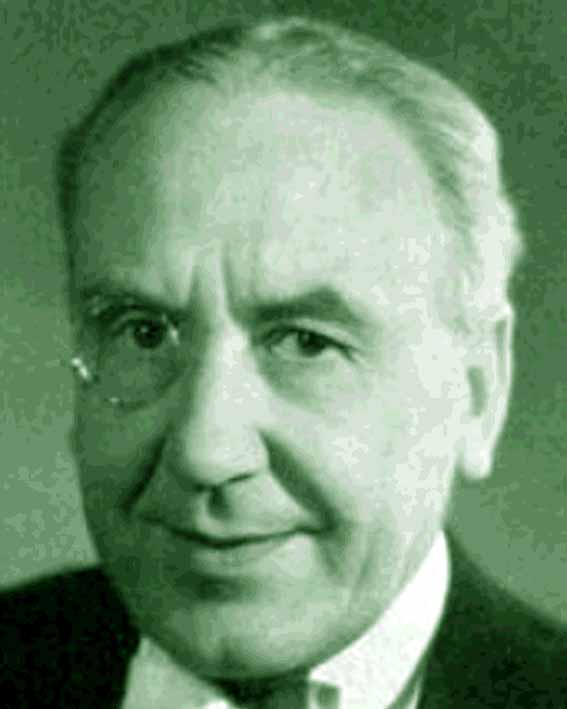 Jimmy Godden (1879-1955)
A Maidstonian, James Godden went to public school in Sussex and joined the civil service. Meanwhile, he developed his musical skills sufficiently well to become a concert pianist. He decided to become a jobbing actor, however, making his debut in pantomime at the Theatre Royal, Plymouth before progressing to the West End, where he specialised in comedies and reviews. He got into talkies as soon as they started, and in his fifties and early sixties appeared in 41 movies, all British; most were musicals, or comedies, or musical comedies, with titles like ‘The Wife’s Family’ (1931), ‘His Wife’s Mother’ (1932), ‘Meet My Sister’ (1933), and ‘Lend Me Your Wife’ (1935). Never the star, but always a dependable character actor, he enjoyed his peak in 1934, when he appeared in no fewer than nine. He was also in ‘Feather Your Nest’ (1937), in which George Formby sang his signature ‘Leaning on a Lamp-post’. Godden died in the Ardennes.
 Sydney Greenstreet (1879-1954)
This Sandwich-born thespian’s Hollywood debut must have been the longest-awaited in history. After starting his career at Ramsgate’s Marina Theatre, Sydney Greenstreet proved to be highly versatile in anything from vaudeville to Shakespeare. He was also very striking, with his 25-stone physique and cut-glass accent. His many appearances on either side of the Atlantic brought him film offers that he invariably declined. It wasn’t until the age of 61, fifteen years after becoming a naturalised American, that he made his movie debut; and what a debut it was. He played one of a trio of fictional characters whose like had not been seen before, or since: his own Kasper Gutman alongside Peter Lorre’s Joel Cairo and Humphrey Bogart’s Sam Spade. That unforgettable performance in ‘The Maltese Falcon’ brought him instant fame and a part in ‘Casablanca’. He remained in demand throughout the 1940s, but ill health intervened, and he died 13 years after his dramatic breakout.
 Sir Robert Gower (1880-1953)
A lifelong resident of Tunbridge Wells, Robert Gower was privately educated and became a solicitor. Having already served as mayor, he was knighted at 38 for his work in keeping local businesses going while their owners were away during WW1. Five years later, he entered Parliament as a Conservative, and in 1929 became MP for Gillingham, which he remained until 1945. He was practically synonymous with animal rights, chairing the Parliamentary Animal Welfare Committee. During the 1930s, he introduced a succession of acts protecting animals, starting with the Protection of Animals (Cruelty to Dogs) Act of 1933. He was chairman and then president of the RSPCA for a quarter of a century, and also headed the National Canine Defence League and the Pit Ponies Protection Society. His daughter Pauline, who established and ran the female Air Transport Auxiliary during WW2, predeceased him in 1947, and they were buried together in a family vault at Tunbridge Wells.
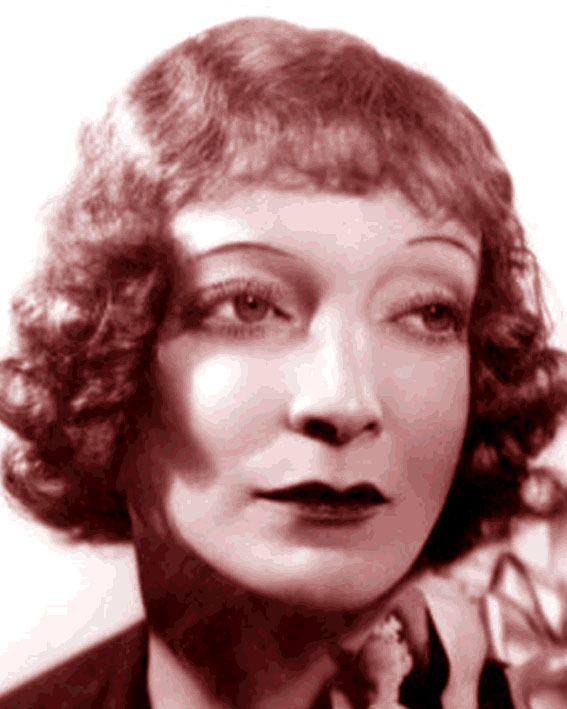 Estelle Winwood (1883-1984)
Estelle Goodwin was born at Lee Green, and died at Woodland Hills, CA over a century later. She joined the Liverpool Repertory Company before leaving for New York during WW1, initially dividing her time between the West End and Broadway. Along with her friend Tallulah Bankhead, she became an associate member of the Algonquin Round Table; indeed, they and two other actresses became known as the ‘Four Riders of the Algonquin’. She resisted appearing in the movies until the 1930s, but still had time for a particularly long career in film and TV. She was married four times, divorcing her last husband when she was 94. She continued acting into her second century, becoming the oldest living member of the Screen Actors Guild, despite her heavy smoking. Truman Capote, who died two months after her, wrote her into his last, unfinished novel in a drunken dinner scene that also included Bankhead, Montgomery Clift, and Dorothy Parker.
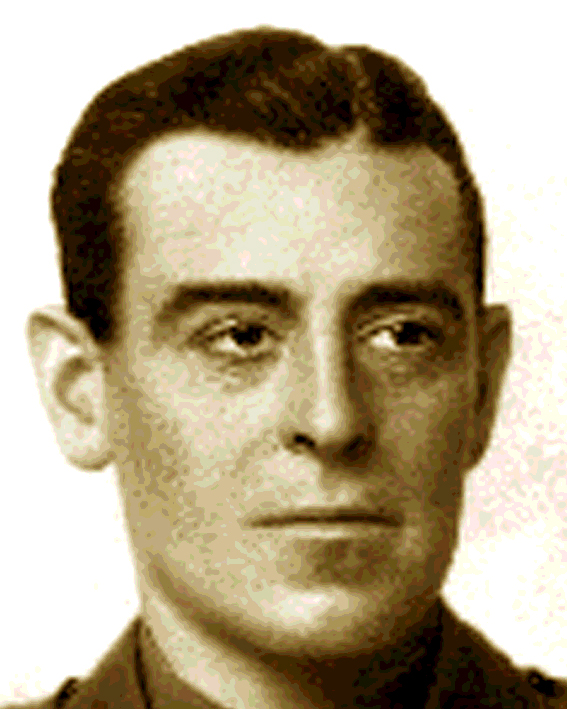 Lieutenant-Colonel Arthur Borton (1883-1933)
The grandson of a Governor of Malta, son of a retired army officer, and brother of a future RAF air vice marshall, Arthur ‘Bosky’ Borton predictably went to Sandhurst after being born at the family home in Hunton and attending Eton. He fought in the 2nd Boer War, but was invalided out of the Army in 1908 and emigrated to farm in the USA. Never short on courage, he returned to Europe to serve king and country in WW1. He persevered even after crashing and breaking his neck while serving as an observer with the Royal Flying Corps in 1915. He joined the Royal Naval Volunteer Reserve to fight in armoured cars at Gallipoli, where he won the DSO. On November 7th, 1917, now a lieutenant colonel in the London Regiment in Palestine, he captured first a fiercely defended enemy position, and then a field gun battery. For these heroic feats of derring-do, he was awarded the Victoria Cross.
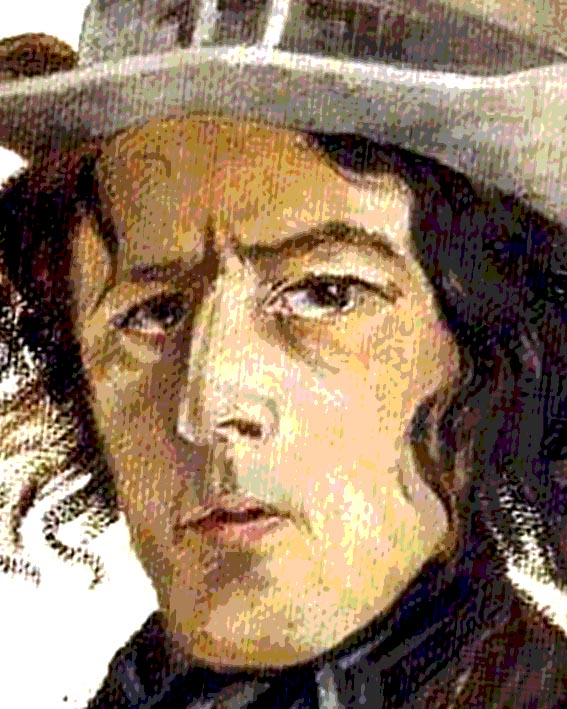 Charles Paget Wade (1883-1956)
Born at Shortlands, Bromley, Wade was sent at six to be educated in Norfolk, but was bored by school, taking a much keener interest in creating and collecting artefacts. Though he trained to be an architect, he was really an artist, with an artist’s eye. At 28, he inherited the family sugar plantations in St Kitts, which secured his finances. He served in WW1 as a Royal Engineers sapper, and in 1919 bought the dilapidated Snowshill Manor in Gloucestershire. He spent three years renovating it as a showcase for his already large collection of artefacts, while he resided in an adjacent cottage. Under the motto ‘Let Nothing Perish’, he collected according to taste, rather than cost, and organised artefacts into themed rooms; they even included seven Samurai suits. He married late in life, though perhaps not wisely. Having continued to visit St Kitts annually, he retired there for good, and left Snowshill to the National Trust.
 AC Bouquet (1884-1976)
Of Huguenot descent, Alan Coates Bouquet was born in Forest Hill. His father being an official in the art world, he grew up among artists and artisans, but made religion his profession. After attending London University, he took a bachelor’s degree at Cambridge, and while earning a living as a curate, deacon, and priest in London, started studying for three more degrees, concluding with a doctorate in divinity when he was 38. After moving with his wife to Cambridge in 1922 for life, he devoted himself to theology. He wrote on all manner of contemporary theological matters, his books bearing such titles as ‘Is Christianity the Final Religion?’ (1922), ‘Comparative Religion’ (1941), and ‘Sacred Books of the World’ (1952). He also served in both world wars, providing for servicemen’s spiritual needs; in WW2, he was the armed forces’ honorary chaplain. Also interested in activities from anthropology to judo, he survived his wife by 24 years.
 Sir Malcolm Campbell (1885-1948)
Born in Chislehurst to a Hatton Garden diamond trader, Campbell tried but failed to make a living in banking. His only true love was speed. He raced motorcycles and, having seen a play called ‘The Blue Bird’, gave that name to the cars he raced. After WW1, when he was a motorcycle dispatch rider and ferry pilot, he won the Bordeaux Grand Prix twice; but his ambition was to be the fastest man on Earth. He set a new land-speed world record of 145 mph in a Sunbeam in 1924. As automotive technology improved, he was able to raise this dramatically, and at Bonneville Flats in 1935 became the first man to exceed 300 miles an hour. Four years later he was able to break the water-speed record on Coniston Water at practically the same velocity as his original 1924 land record. He even managed to die in his bed, unlike his ill-fated son Donald.
 Russell Thorndike (1885-1972)
Although as an actor he lived in the shadow of his famous sister Dame Sybil, Russell Thorndike would add a second string to his bow. He was born in Rochester, where his father was Canon at the Cathedral, and attended the Kings School. He embarked on an acting career, actually performing opposite his sister; but then WW1 started. His brother Frank was killed, while Thorndike himself was badly wounded at Gallipoli and invalided out of the Army. After the War, he appeared in a few movies, initially silent ones; but his main preoccupation became writing. In 1915, he had invented the Doctor Syn character, a fictional Vicar of Dymchurch who doubled as both the piratical Captain Clegg and the Scarecrow, a smuggling ringmaster. In the 1930s he developed it as a series of swashbuckling thrillers, all set around Romney Marsh. The books were given a new lease of life by a 1964 movie starring Patrick McGoohan.
 John Littlewood (1885-1977)
When Rochester-born John Littlewood was seven, his father landed a job as a headmaster in South Africa. At 15, the boy returned to attend St Paul’s School, and then Cambridge, where he graduated in Maths as Senior Wrangler, said to be Britain’s highest intellectual achievement. After teaching for three years at Manchester, he returned to Cambridge from 1910 to 1950. He collaborated so extensively and so productively with GH Hardy in that time that a Danish mathematician reckoned Britain’s three foremost mathematical researchers to be “Hardy, Littlewood, and Hardy-Littlewood”. In 1953, Littlewood wrote a collection of reminiscences called ‘A Mathematician’s Miscellany’, republished in 1986 as ‘Littlewood’s Miscellany’. He and Hardy were played respectively by Toby Jones and Jeremy Irons in the 2015 movie ‘The Man Who Knew Infinity’, the true story of their advocacy of Indian mathematician Srinivasa Ramanujan. Littlewood is now best remembered popularly for Littlewood’s Law, stating that ‘miraculous’ events are actually mathematically commonplace.
 Dornford Yates (1885-1960)
Cecil ‘Bill’ Mercer came from Walmer, where his father had a solicitor’s practice. He attended St Clare prep school before going via Harrow to study law at Oxford. A fine actor, he became president of the Oxford University Dramatics Society, and later performed with Canterbury’s Old Stagers. After commencing a career in law, he worked in 1910 on the Dr Crippen case. He also began writing short stories under the pen-name Dornford Yates, which he concocted by combining his two grandmothers’ surnames. In WW1, he served as an Army officer in Salonica, but was invalided out and returned to London to make a living as a writer. His series of both humorous works and thrillers captured the interwar zeitgeist well, became bestsellers, and earned him tremendous popularity. In the post-WW2 era, however, both his gung-ho subject matter and sympathetic take on the gentry looked increasingly outdated, and were satirised by the likes of Alan Bennett and Tom Sharpe.
 Sir Henry Tizard (1885-1959)
The geopolitically crucial Tizard Bank in the South China Sea was named after the Royal Navy oceanographer who first surveyed it in the 1860s. His son Henry, born in Gillingham, turned out a quintessential British boffin. Based at Oxford, he first distinguished himself by studying means of optimising petrol compounds, resulting in his invention of the octane system of rating fuels. After becoming a government scientist and winning a knighthood, he moved onto radar, his committee providing the impetus for research into the cavity magnetron that proved vital to Britain’s air defences in WW2, and, more prosaically, to the microwave oven. In 1940, he led the so-called Tizard Mission to the USA, passing on British scientific secrets concerning radar, the jet engine, and atomic weapons so that the Americans could develop them – a key factor in forging the wartime alliance. Tizard later became known for his insistence that UFOs be studied formally, prompting the Flying Saucer Working Party.
 Siegfried Sassoon (1886-1967)
Sassoon was the greatest enigma of the British war poets. He was born in Matfield to a Jewish father and Catholic mother; his forename solely reflected her passion for Wagner. Educated in Sevenoaks, he proceeded to Marlborough and Cambridge before living an idle life on his father’s modest bequest. Being a decent cricketer for Matfield, he hoped to play for Kent. Out of patriotism, he signed up at the start of WW1. Despite his brother Hamo’s death at Gallipoli, ‘Mad Jack’ proved himself a recklessly courageous officer, and eventually won the MC. His attitude changed entirely after the death of a friend. His formerly Romantic poetry turned into a vitriolic counterblast against jingoistic propaganda. Accused of treachery, he was sent to be treated for shell-shock. He did return to the War, but was accidentally shot in the head by a comrade. Afterwards he joined the socialist ‘Daily Herald’, and later converted to Catholicism, living handsomely off his aunt’s rich legacy.
 Gladys Cooper (1888-1971)
Although she was born in Hither Green, Gladys Cooper mostly grew up in Chiswick. Her beauty opened up a career straight from school in musicals, plays, and modelling. She started appearing in silent movies in 1913, admittedly being cast more for her looks than her talent. While managing the Playhouse Theatre in her thirties, however, she upped her game as an actress; even Somerset Maugham commented on the improvement. After WW2 broke out, she left for Hollywood, her new career immediately bringing results in the form of two Oscar nominations for Best Supporting Actress within two years; she got a third in 1964 for playing Professor Higgins’ mother in ‘My Fair Lady’. The last performance of her marathon career came in ITV’s ‘The Persuaders’ in 1972. She married three times, and her sons-in-law included Robert Morley and Robert Hardy. When she died, she was paid a glowing public tribute by former co-performer Bette Davis.
 Verena Holmes (1889-1964)
Where Verena Holmes from Ashford got her talent for engineering is unclear, since her father was a schools inspector and her siblings a civil servant and a writer. She started work as a photographer before joining a propeller factory, meanwhile studying engineering at night school, and then joined an industrial engine manufacturer. She finally obtained an Engineering degree in 1922, which she put to good use: after setting up a consultancy, she patented designs for new equipment in automotion, locomotion, and even medicine. In 1924, she became the first woman elected into the Institution of Mechanical Engineers, and in 1931 was president of the Women’s Engineering Society, devoted to opening up careers and improving pay for women. In 1946 she founded Holmes & Leather in Gillingham, employing women only, which produced a safety guillotine for cutting paper. Having never married, she died childless. She was commemorated at Canterbury Christ Church University in 2021 with the Verena Holmes Building.
 Dame Doris Beale (1889-1971)
Beale, from Forest Hill, went into nursing after attending school in Lewisham. During WW1, she joined Queen Alexandra’s Royal Naval Nursing Service after four years’ training, so commencing a career that lasted a lifetime. It took her to Royal Naval Hospitals in Plymouth, Portsmouth, Gibraltar, Chatham, and Malta; and, in the 1930s, she became superintending sister back at Chatham. Following further promotions, she was appointed matron-in-chief of QARNNS in 1941, and shortly afterwards won the Royal Red Cross. She was also awarded an OBE in 1944, the first to a member of that service, and later the Florence Nightingale Medal. In 1949, she travelled to Jordan to report on the voluntary work being done there by British nurses, concluding that its high calibre must be earning the nation lasting respect – a hope borne out by subsequent Anglo-Jordanian relations. Shortly before her death, she became the first president of the QARNNS Association.
 Enid Bagnold (1889-1981)
The daughter of an army colonel, Enid Bagnold was born at Rochester, but mostly grew up in Jamaica; her younger brother was the engineer Ralph Bagnold. After attending art college, she became sub-editor of a magazine, but was seduced by the priapic old Irish-American editor Frank Harris. She worked as a nurse and then a driver in WW1, and married Reuters chairman Sir Roderick Jones at 30, living lavishly thereafter in Kensington and Rottingdean, Sussex while pursuing a career as a writer. The standout work among her many plays and novels was the atypically conventional ‘National Velvet’ (1935), which in 1944 became the Hollywood tear-jerker that launched 12-year-old Elizabeth Taylor to stardom. Bagnold’s long life, scarred by morphine addiction, vexatious professional relationships, and Nazi leanings, was summed up by Cecil Beaton as “original and warped”, while Virginia Woolf pronounced her a “scallywag who married a very rich man”. More recently, however, Margaret Drabble has reimagined her as an iconic feminist.
 Vita Sackville-West (1892-1962)
Victoria Sackville-West had the misfortune to be born into a family of landed gentry that, while occupying Knole near Sevenoaks for 300 years, had earned itself a reputation for both unpleasantness and madness. She herself came along just in time to be part of the inter-War jeunesse dorée that produced the bohemian Bloomsbury Set, of which her muse Virginia Woolf was a member. When she wasn’t having affairs with either men or women – starting with Violet Keppel at school – Sackville-West spent her time writing books about her affairs with men or women, and the disapproving society surrounding them, to which she now owes her literary reputation. She also wrote some less successful poetry. Despite her and her husband’s androgynous promiscuity, she had an enduring marriage with Harold Nicolson. Having been unable to inherit Knole as a female, she ended up living at Sissinghurst Castle, whose garden the pair transformed to the people-pleasing delight it is today.
 Leslie Howard (1893-1943)
Born in Forest Hill, Howard attended Alleyn’s School, Dulwich, started acting in the theatre and silent movies, and endured shell-shock during WW1. Generally playing the quintessential amiable Englishman, he became a Broadway star in the 1920s, and in the 1930s developed into a Hollywood idol, winning worldwide fame as Ashley Wilkes in ‘Gone with the Wind’ (1939). With Jewish ancestry on both sides, he had good reason to fear the rise of National Socialism, albeit that his mother was Christian and he had changed his surname from Steiner in 1920. In WW2, his acting and directorial skills made him an invaluable asset as a morale-raising propagandist à la Noel Coward. He was killed when returning from Portugal in a neutral KLM plane that was shot down over the Bay of Biscay. Some believed Goebbels had ordered it, others that German spies had mistaken Howard’s rotund agent for Churchill; but it was probably just a trigger-happy Luftwaffe pilot.
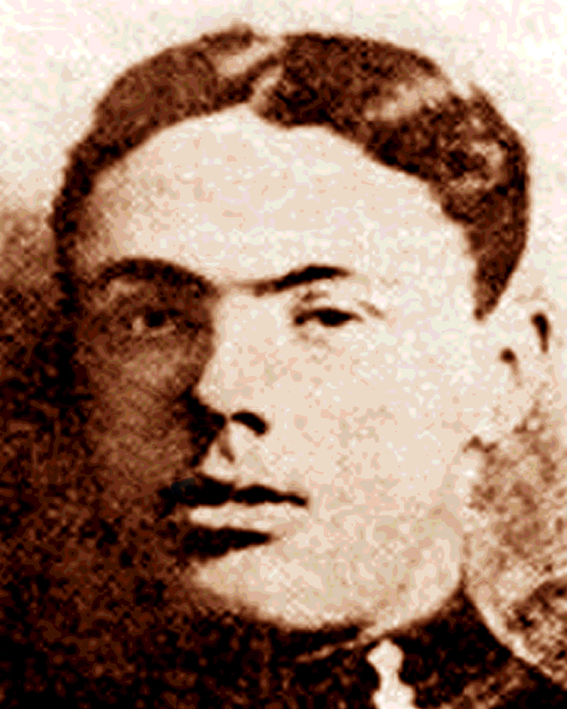 Private Herbert Columbine (1893-1918)
Born in Penge, Herbert Columbine was an only child, his father having been fatefully posted to the Boer War when the boy was six. At 12, he went with his mother to live on the coast at Walton-on-the-Naze, Essex. He followed his father into the Army, and trained with the 19th Hussars at Aldershot. Serving in the Machine Gun Corps during WW1, he survived both Mons and Ypres. On March 22nd, 1918, however, he was stationed on the top of an isolated ridge near Saint-Quentin, repelling German assaults with a Vickers gun for four hours. When a German plane joined the attack, the position became untenable. He told his two surviving comrades to withdraw, but continued firing alone. He was eventually killed by a bomb. His valour earned him the Victoria Cross, a statue at Walton, and – on the centenary of his death – a plaque at the Penge War Memorial.
 Lieutenant General Sir Frederick Morgan (1894-1967)
Frederick E Morgan, the son of a timber importer, grew up in a large house in Paddock Wood, attended a private school in Tunbridge Wells, and progressed to the Royal Military Academy in Woolwich via Clifton College in Bristol. He joined the British Army in 1913, just in time to face the first of two world wars. During WW1, in the Royal Artillery, he was promoted to brigade major; and, after escaping from Dunkirk in WW2, to lieutenant general. As Chief of Staff to Eisenhower, he was responsible for drawing up the D-Day invasion plan, and helped smooth its path diplomatically through a sea of egos. After the War, he took command of the RA whilst also assisting the United Nations in resettling displaced peoples; he was effectively sacked for publicly repeating intelligence concerning Zionist expansionism. ‘Freddie’ was instead appointed the UK’s Controller of Atomic Energy, and later Nuclear Weapons. He retired in 1958 after 45 years’ loyal service.
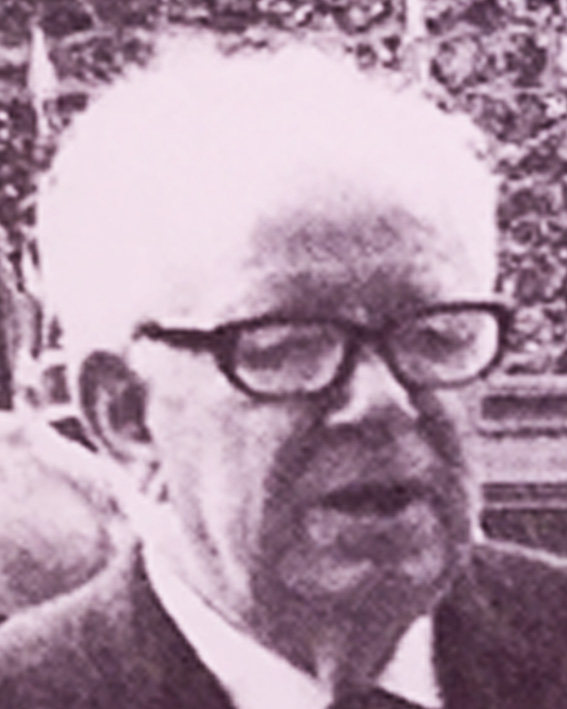 Sir Charles Gordon Larking (1894-1978)
On the surface of it, Gordon Larking should have been doomed to obscurity. His insane grandfather had hanged himself in Maidstone prison, leaving his wife and eleven children destitute. Gordon’s father nevertheless made a success of his life in accountancy; and young Larking, as well as following in his father’s footsteps, reached the rank of lieutenant-colonel in the Army. He went on to be national chairman of the British Legion from his base at British Legion Village near Aylesford. Among his duties, he undertook a tour of southern Africa in 1949 during which he even discoursed with the hardline new South African Premier Dr Malan, whose National Party had just taken power. More locally, he was three times Mayor of Maidstone, became a justice of the peace, and even served as president of the local football club more than once. A book called ‘The Remarkable Larkings: the Story of a Maidstone Family’ recounts this story of unusual guts and determination.
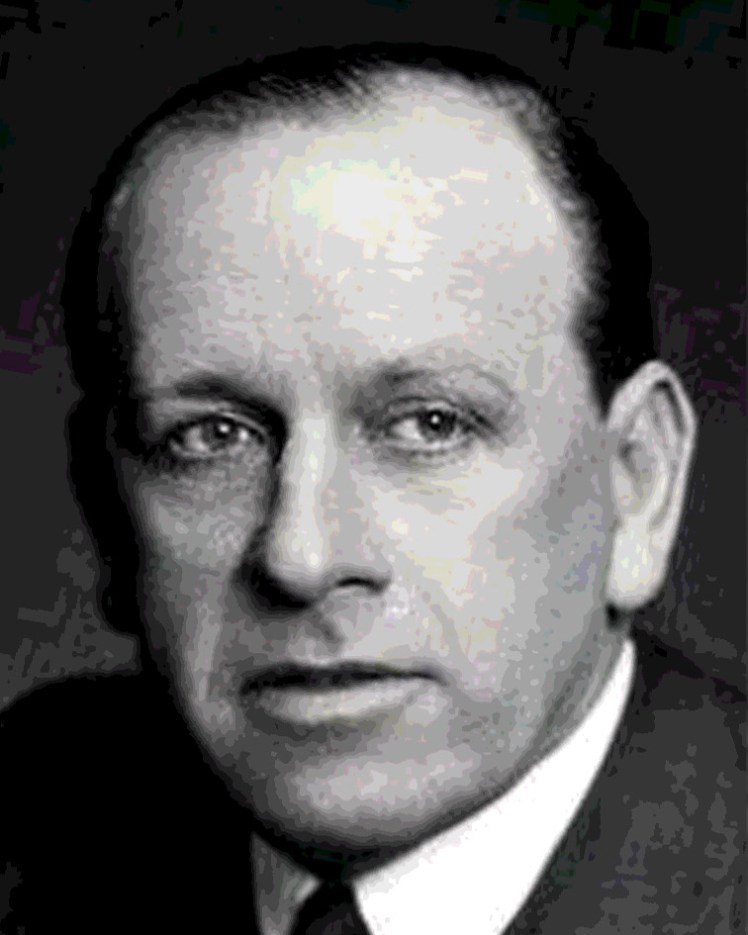 William Rootes, 1st Baron Rootes (1894-1964)
Billy Rootes was a business wizard. He was born in Goudhurst, where his father had a small engineering business that subsequently moved to Hawkhurst. After attending Cranbrook School, young Rootes became an apprentice engineer. He set up his own car business at 18, making his younger brother Reggie a partner. Before long, the pair started a car dealership in Maidstone. After growing it into the nation’s biggest in sales and service, they spread their wings into manufacturing. This they did by buying up numerous classic British brands, including Commer, Hillman, Humber, Singer, and Sunbeam. In 1938, they set up a new town-centre headquarters at a splendid Art Deco building. During WW2, having established himself as an industrial tycoon, Rootes was put in charge of Britain’s military vehicle and aircraft production. The Rootes business peaked around 1960; but it was undone by union action and losses on the Hillman Imp. After Billy’s death, Chrysler bought his brother out.
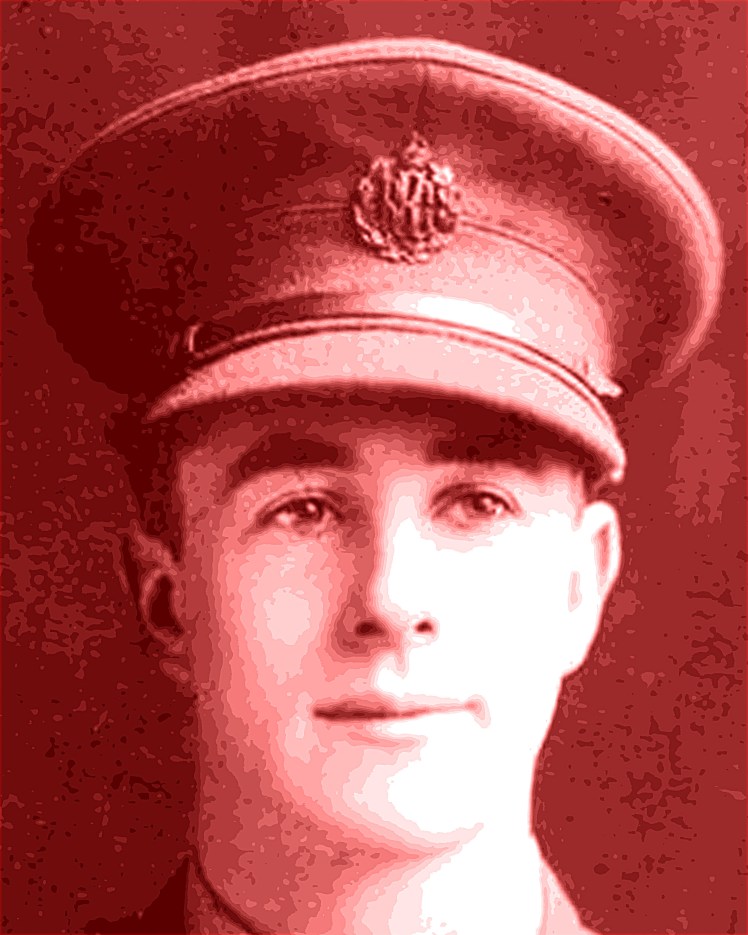 Major James McCudden (1895-1918)
Fighter ace James McCudden sprang from a military family in Gillingham, his father being a Sergeant-Major. Though he joined the Royal Engineers in 1910, he was fatefully drawn to aeroplanes at the airbase near the family’s new home in Sheerness. By the outbreak of WW1, he became an RFC mechanic, and then a reconnaissance observer. In 1916, he qualified as a fighter pilot, making his first kill in September; his fifth five months later won him the Military Cross. He was posted to Maidstone to train other pilots, and performed defensive duties around Kent before returning to France. Having grown exceptionally skilled at attacking from below, within twelve months he completed his total of 57 kills: a highly respectable tally alongside the Red Baron’s 80. Following a ‘Daily Mail’ campaign, he received a VC to cap his six other decorations. Just four months before the end of the War, McCudden was killed in an unexplained flying accident.
 Sir Malcolm Sargent (1895-1967)
Harold Malcolm Watts Sargent was born in Ashford, the son of coal merchant Henry and school matron Agnes. Growing up in Lincolnshire, he was fortunate to be near Peterborough Cathedral, where he nurtured whatever talent he had inherited from his father, an amateur musician. He was spotted there by Sir Henry Wood and invited, at 26, to conduct one of his own pieces at the Proms. It was the beginning of a career that would lead to him becoming synonymous with the Proms for two decades. He became a huge favourite with the crowds on account of the nattiness and panache that earned him the nickname ‘Flash Harry’. He squeezed the best out of soloists and particularly choirs, and was instrumental in getting the London Philharmonic going. He was not everyone’s cup of tea, however: orchestras generally disliked him because of his dismissive attitude, and he earned a reputation as a predatory philanderer, particularly among titled women.
 David Jones (1895-1974)
Jones’s Welsh father and English mother were living at Brockley when their second son was born. The boy dropped his first name ‘Walter’ in favour of his second, the more typically Welsh ‘David’. From an early age he showed an aptitude for art, and studied at Camberwell Art School. In WW1, while spending three years in the trenches with the Royal Welch Fusiliers, he suffered from shell shock; he described his experiences graphically in a long poem, ‘In Parenthesis’ (1937). His conversion to Catholicism in 1920 strongly influenced his other major work ‘The Anathemata’ (1952), which likewise drew the highest praise from several titans of poetry. Extraordinarily, he also mastered engraving and painting, and was rated “a remarkable genius” by Kenneth Clark. A manic-depressive, he was put on medication in 1960 that terminally stifled his creativity, and died in a nursing home. Commemorated as a war poet at Poet’s Corner, he was buried in Brockley & Ladywell Cemetery.
 Walter James, 4th Baron Northbourne (1896-1982)
The great-grandson of the 1st Baron, a Tory MP who had bought Betteshanger Park (now Northbourne Park school), James went to Eton and Oxford, which he represented twice in the Boat Race; he was also in Great Britain’s silver-medal winning eight at the 1920 Olympics. Having studied agricultural science, he lectured in agriculture, and later chaired Wye College’s governors. He bought into the ‘biodynamic’ way of thinking in agriculture, as expounded by the German occultist Rudolf Steiner. Based on an ideological – and, some might say, pseudoscientific – belief in the oneness of nature, biodynamism repudiated agricultural chemicals, and so amounted to an early iteration of organic farming. In 1939, he hosted an international biodynamic farming conference at Northbourne Court, Britain’s first. His commitment to the cause was reinforced by his conversion to ‘perennialism’, a mystical belief in the universality of divine revelation. More practically, he and his American wife constructed splendid terraced gardens, which did not outlive them.
 Lieutenant Arthur Rhys-Davids (1897-1917)
Unsurprisingly, Rhys-Davids excelled at school in his native Forest Hill, being the son of a professor and an authoress. More surprisingly, after progressing to Eton, he also did well at sport, despite having asthma. During WW1, he joined the Royal Flying Corps at 18. Though he undertook intensive training as a fighter pilot, his flying career started badly, with a crash landing in training and two in combat. He made his first kill in May 1917, nevertheless, and within two days had completed the five that made him an ace. During the 3rd Battle of Ypres, he shot down another 22, and added the DSO to his Military Cross and bar. His successes famously included finishing off the German ace Lieutenant Werner Voss, who had gallantly fought off eight British planes for ten minutes in his Fokker triplane. In November, however, the headstrong Rhys-Davids went off in pursuit of a flight of German fighters, and was never seen again.
 Sir Dudley Stamp (1898-1966)
The son of a Catford shopkeeper, Laurence Dudley Stamp went to school in Rochester before taking two first-class degrees at Kings College, London, the second being in geography. After serving in WW1, he was a geologist in Burma, then taught at the new university in Rangoon for three years. He returned to Britain in 1926 to teach economic geography at LSE. In the 1930s and 1940s, he created the national Land Utilisation Survey, the first such project since the Domesday Book. An army of volunteers surveyed the land to produce an atlas, 6 inches to the mile, recording all current land use – whether agricultural, industrial, urban, etc – by colour. It became an invaluable tool for the purposes of government planning, and until his retirement in 1958 Stamp was consulted extensively. He shared a plan for a global equivalent with the International Geographical Union, of which he became president. He died while at a conference in Mexico.
 Compton Bennett (1900-74)
Herbert Compton Bennett from Tunbridge Wells was the nearly man of British cinema. After trying his hand as a bandleader, he became a commercial artist, which in 1932 led him into editing for London Films. During WW2, he got the chance to direct propaganda and military training films. His big break arrived in 1945, when he directed ‘The Seventh Veil’. This psychological thriller won his fellow Kentishman Sydney Box and wife Muriel an Oscar for Best Screenplay, and remains tenth in the table of highest-ever UK cinema audiences. Universal Pictures, thinking they’d spotted another Hitchcock, signed Bennett up. He made three movies for Hollywood, the last and most successful being ‘King Solomon‘s Mines’ (1950). Unfortunately, after five months’ shooting in Africa, he either fell ill or fell out with the cast, and was replaced by another director. He returned to Britain, where he continued to direct for TV and cinema, without ever emulating that earlier success.
 FS Smythe (1900-49)
Although born in Maidstone, Frank Smythe went to school in Switzerland, which doubtless catalysed his love of mountaineering. After briefly joining the RAF and then Kodak, he took up writing and lecturing on his passion, complementing inspirational accounts with excellent photography. Of his 27 books, the most popular was ‘The Kangchenjunga Adventure’ (1930), recounting his climb up the world’s third-highest peak. With Graham Brown, he also established two new routes on the Brenva face of Mont Blanc in 1927-8, and discovered the Valley of Flowers while leading the first successful ascent of Kamet (1931), then the highest mountain ever climbed. He joined three British expeditions to Everest, during the first of which, in 1933, he climbed alone and without oxygen to within 1,000 feet of the summit. During WW2, he taught mountaineering to soldiers in the Canadian Rockies, for which reason Mount Smythe was named after him. He died in London of malaria.
 Winifred Spooner (1900-33)
Major’s daughter Winifred Spooner was born in Woolwich, went to school in Dorset, and settled with her brothers on a horse farm in Berkshire. At 27, she won her UK flying licence, plus an American one signed by Orville Wright. She earned a living running an air taxi and giving flying lessons, but also took up competitive flying. She performed so well that, in 1929, she won the worldwide Holman Trophy for best aviatrix, an award won in subsequent years by Amy Johnson and Amelia Earhart. In 1930, she set off with a male companion to prove they could fly to South Africa within five days, but at night came down in the sea off Calabria; she had to swim two miles to the shore. ‘Bad Luck Wimpey’ suffered worse at a Leicestershire aerodrome, when she caught a chill that turned to pneumonia. Severe weather meant that help arrived too late to prevent her untimely death.
 Prince Littler (1901-73)
Cigar importer Jules Richeux entered theatre management by acquiring the Victoria Pavilion in Ramsgate, where his first son Prince was born. His wife Agnes took over the Artillery Theatre in Woolwich and, after her husband’s early death, married theatre manager Frank Littler, who passed his surname to their five children. Like two other siblings, Prince Littler took up the family trade. He produced several top West End shows and over 200 pantomimes across the land, earning the sobriquet ‘Prince of Pantomime’. Having acquired two theatres in Leicester at 30, he embarked on a remarkable trail of acquisition that brought him a near monopoly of English theatre groups. By the age of 50, he was running 19 different companies as chairman or MD. When Val Parnell tried in 1966 to sell the London Palladium, Victoria Palace, and Drury Lane for redevelopment, it was the unassuming Littler who intervened to save them. He was made a CBE, and died in Sussex.
 Maxine Miles (1901-84)
Maxine ‘Blossom’ Forbes-Robertson was born in Blackheath into an eminent thespian family. Her father was Sir Johnston Forbes-Robertson, described as the greatest Hamlet of his age; her mother and aunt were both American theatre actresses; whilst her sister Jean, brother-in-law André, and niece Joanna Van Gyseghem were Kent-based TV and stage actors. She herself eschewed the calling after losing an eye in childhood. A debutante alongside Barbara Cartland, she married at 23. Her husband, Captain Inigo Freeman-Thomas – who was to become a viscount in 1931 and a squadron leader in WW2 – divorced her in 1932 on account of her affair with Fred Miles, a flying instructor. She and Miles married and started up Miles Aircraft, an aeroplane design business for which she worked as a draughtsman. When jet engines came to the fore, she devoted herself to helping induct people of both sexes into aviation; her protégés were known as ‘Blossom’s Babies’. The company folded in 1947.
 Elsa Lanchester (1902-86)
Elsa Sullivan Lanchester was born in a terraced house in Catford, where her father Seamus Sullivan and mother Biddy Lanchester lived in sin in a resolutely working-class household. As a child, she learned to dance under Isadora Duncan, and after WW1 embarked on a career in cabaret; her performances got her a role in a minor British film. In 1927, she had the good fortune to be spotted by Charles Laughton, whom she married for life. He got her into Hollywood, where she enjoyed a 50-year career. She is still remembered for a single coup de théâtre: her brilliant evocation of experiencing the world through the eyes of the ‘Bride of Frankenstein’ in 1935. Her performance incorporated spine-chilling screams that she must have rehearsed for weeks. Ironically, her screen partner as the Frankenstein monster, Boris Karloff, was born minutes away in Camberwell. It may be something they put in the water.
 Bob Hope (1903-2003)
Leslie Hope was the epitome of the C20 wisecracking, womanising, golf-club wielding American alpha male. Surprisingly, he was actually born the son of a stonemason in a terraced house in Eltham. Although the Hopes emigrated in 1908, he never forgot his roots, and in 1982 rescued the Eltham Little Theatre. He got into show business after trying boxing. He starred in 54 movies over a period of 34 years, the zenith being the seven ‘Road’ movies he made with Bing Crosby and Dorothy Lamour. Blessed with a silver tongue, he was also a legendary compere, and ran the Oscars ceremony a record 19 times. He suffered one of his most awkward experiences while presenting the Miss World contest in London in 1970, the occasion of the unprecedented Women’s Lib demonstration. Notorious for his insatiable appetite for beauty queens and the like, he must have found the intrusion as disconcerting as an alien invasion.
 Anthony Bushell (1904-97)
Born in Westerham, Tony Bushell went to Oxford, where he rowed for Hertford College, and then RADA. He was already on the professional stage at the age of 20, and by 1928 had gone to America and married an actress called Zelma; they were divorced seven years later. His movie career suffered an early setback when, after filming for ‘Jealousy’ was completed, the star Jeanne Eagels insisted that his scenes be edited out and replaced with Fredric March; to add insult to injury, she then committed suicide. He nevertheless went on to make over 50 movies during a 32-year career. After WW2, in which he commanded a tank squadron, he assisted his good friend Laurence Olivier on three projects. This opened up a handful of directorial opportunities for him, even though a friendly colleague said he couldn’t direct traffic in Cheltenham. Having remarried during WW2, this time to a more dependable Army daughter called Anne, he died in Oxford.
 Josephine Wilson, Lady Miles (1904-90)
A solid rather than striking actress, Josephine Wilson from Bromley normally played minor roles in movies, her most significant appearance being as the villainous Madame Kummer in Alfred Hitchcock‘s ‘The Lady Vanishes’ (1938). She was better known for her association with prolific actor Bernard Miles, as whose wife she became Lady Miles; one of their children was the Formula 1 driver John Miles. In 1959, Baron Miles famously founded the Mermaid Theatre in Blackfriars, London, which later became the site of a remarkable project suggested by his wife. According to his account, she read an entertaining ‘New Scientist’ article about the magnetic pole while in a dentist’s waiting-room. It prompted the idea of the Molecule Club, a forum for teaching science to children in a fun way. The Club got off to a modest start in 1968, but over the decades racked up audiences running into millions. Sadly, both Mermaid Theatre and Molecule Club are now defunct.
 Ballard Berkeley (1904-88)
It’s funny to think that Ballard Blascheck from Tunbridge Wells was in his seventies when he landed the role for which he would always be remembered. He went into the movies in the 1930s, specialising in ‘quota quickies’, British movies made on the cheap that cinemas had to screen by law. At that time he had the looks of a matinee idol. By 1969, however, he looked and sounded every bit the old English gentleman, which he first played in an episode of ITV’s ‘The Main Chance’. In 1975 he was cast for a similar role in the new John Cleese/Connie Booth sitcom on BBC TV, ‘Fawlty Towers’. Although Berkeley’s bumbling old Major Gowen was mostly a foil for Cleese’s Basil Fawlty, he did come up with one moment of great comic poignancy, when he explained what had happened to the one love of his life. “I took her to see India”, he said wistfully, “… at the Oval”.
 Hayne Constant (1904-68)
A Folkestone dentist’s son whose mother’s maiden name provided his forename, Constant was born in Gravesend and attended schools in Cambridge, Canterbury, Folkestone, and Sandwich before studying at Cambridge University. His first job was at the Royal Aircraft Establishment in Farnborough, after six years of which he returned to academia. In 1936, however, facing the threat from Nazi Germany, he was coaxed back by fellow Kent man Sir Henry Tizard, who was engaged in building Britain’s air defences. He teamed up with the visionary AA Griffiths to work on a cutting-edge jet-turbine engine. After Griffiths left to join Rolls-Royce in 1939, Constant masterminded the RAE’s efforts to design an engine capable of taking on Germany’s combat-ready jet-propelled Me-262. In 1944, he joined Sir Frank Whittle‘s company Power Jets, and after WW2 ran the government-owned National Gas Turbine Establishment for fourteen years. His pioneering work won him a CBE and the Royal Aeronautical Society’s Gold Medal.
 Joan Morgan (1905-2004)
Sidney Morgan was one of the stalwarts of early British movies, of which he made 45 in the quarter century following 1914. His daughter Joan, born in Forest Hill, had a pretty and expressive face, so he not unnaturally cast her in several of his films, starting when she was ten. In 1919, she played Ellen Terry’s granddaughter in ‘Her Greatest Performance’, and went on to appear in 33 British silent movies up until 1931. She might have gone to Hollywood, if her father had not messed up the negotiations. Suddenly, after appearing in a single talkie, she decided the new format wasn’t for her. She did not finish with cinematography, however, but took to screenwriting. Of the ten movies she was responsible for up until 1948, the last was ‘This Was a Woman’, an insightful dramatisation of narcissistic personality disorder that she adapted from her own stage play. She also wrote TV screenplays and novels.
 Rex Whistler (1905-44)
Reginald ‘Rex’ Whistler was born in Eltham, the son of an architect-cum-estate agent. Even as a boy, he was prolifically creative, and after attending The Slade won cachet as a stylish and practically uncategorisable designer. His first commission, ‘The Expedition in Pursuit of Rare Meats’ (1927), was a Tate Gallery mural decorating what became famous as the Rex Whistler Restaurant, immediately labelled “the most amusing room in the world”. He befriended the Bright Young Things set, especially Cecil Beaton, and was as much in demand for portraiture as for interior design. He was notoriously unlucky in love, and more so in war: six weeks after D-Day, while serving as a Welsh Guards tank commander at Caen, Normandy, he was killed by a mortar shell. Although his Tate mural was painstakingly restored in 2013, the easy-going Whistler’s memory is now compromised by the racial stereotypes it portrays; the Tate announced the closure of his eponymous restaurant in 2022.
 Michael Powell (1905-90)
Powell was revered for shooting great movies until he shot himself in the foot. The son of a hop farmer, he was born in Bekesbourne, attended the Kings School, Canterbury and Dulwich College, and briefly went into banking. He got into film production at 20, and by 1929 was a lifelong friend of Alfred Hitchcock. He was soon directing his own ‘quota quickies’, but it was not until 1939 that his career was transformed by Emeric Pressburger, a Hungarian refugee whose talents perfectly complemented his own. They made a string of distinctive and popular movies together under the name ‘The Archers’. Powell was set for movie greatness until 1960, when ‘Peeping Tom’ destroyed his reputation. Critics excoriated it as filth, and denounced Powell as a pervert. Today it looks a virtuoso British counterpart to Hitchcock’s ‘Psycho’, and the pioneering slasher movie. Powell never made another movie in the UK, and had 30 years to regret his own ingenuity.
 Diana Wynyard (1906-64)
Dorothy Cox from Lewisham was catapulted to fame by a movie performance that won her a Best Actress Oscar nomination. After appearing as Diana Wynyard in the West End and Liverpool repertory, she first stood out in a Broadway production in 1932, immediately prompting MGM to cast her in ‘Rasputin and the Empress’. She then starred in Fox’s enormously successful movie version of Noel Coward’s epic musical ‘Cavalcade’ (1933), winning transatlantic acclaim as the epitome of the upper-class English beauty. After starring in ‘Gaslight’ in 1940, she appeared in the first of several movies directed by Carol Reed, whom she married in 1943; they divorced after four years. After WW2, she made only four more movies, but became an evergreen on the Shakespearean scene, both in Stratford and London. In 1948, while playing the sleepwalking Lady Macbeth, she fell 15 feet off the stage, yet carried on. Having married and divorced again, she died in London of kidney failure.
 George Posford (1906-76)
Benjamin Ashwell was born in Folkestone. Although he studied law at Cambridge, he was musically gifted, and went afterwards to the Royal College of Music. In 1930, he turned professional as a composer under the name George Posford. Having enjoyed early success with a song that was inserted into ‘Lavender’, a popular touring show, he embarked on a career in light musical productions for the theatre, radio, and film, collaborating especially with lyricist Eric Maschwitz. Among his successes were ‘Balalaika’ (1936), which became a movie, and ‘Zip Goes a Million’ (1951), starring George Formby. In between he served in WW2 as a signaller and a fireman, coinciding with a long run for his ‘Full Swing’ (1940). He was married in 1936 to the magnificently pretentious actress Rène Ray, who left him in 1963 for the Earl of Midleton; but he could at least count Noel Coward in his social circle.
 Richard Murdoch (1907-90)
Although he is barely remembered today, Richard Murdoch was famous in the middle of the C20 as half of not one but two successful comedy partnerships. The son of a tea merchant in Keston, he attended Charterhouse School and then Cambridge, where he cut his thespian teeth in Footlights. He went into musical comedy, and figured in the early days of both radio and TV broadcasting. In 1938, he teamed up with an unlikely comedy partner, “Big-hearted” Arthur Askey, for ‘Band Waggon’, in which he played the straitlaced but wry “Stinker” Murdoch both on radio and in a 1940 movie. He emerged from WW2 as an RAF squadron leader, having formed another highly successful act with wing commander Kenneth Horne in ‘Much-Binding-in-the-Marsh’ (1944-54), based on their wartime experiences. He enjoyed further success in ‘The Men from the Ministry (1962-77), and continued performing for the rest of his life. He died while playing golf in Surrey.
 James Robertson Justice (1907-75)
With his bulky physique, bushy beard, and booming voice, Justice appeared the model of gentlemanly dependability. He was in fact anything but. James Justice was born in Lee Green, the son of a Scottish geologist. He failed to complete his education, and for years drifted from job to job, even taking up motor racing. He fought for the Republicans in the Spanish Civil War, which is when he acquired his trademark beard. After he was invalided out of WW2, however, his life finally acquired its direction. He was cast in ‘For Those in Peril’, the first of 83 movie appearances that included ‘The Guns of Navarone’ and ‘Chitty Chitty Bang Bang’. He specialised in the superior establishment type with an impeccable English accent. Paradoxically, he had reinvented himself as a dyed-in-the-wool Scot, appropriating the Robertson name and kilt, standing unsuccessfully as a Labour candidate in Scotland, and having himself billed in some movies as Seumas Mòr na Feusag.
 Grahame Clark (1907-95)
Sir John Grahame Douglas (J.G.D.) Clark was one of the heavy hitters of C20 British archaeology. He specialised in the Mesolithic era, and particularly pioneered understanding of how prehistoric societies functioned economically. The fact that he is less well remembered than his longstanding friend Stuart Piggott has much to do with his personality. He was regarded as a poor listener, overly concerned with his own ideas, reputation, and career, and slapdash in his approach to his professorial obligations. A deeply conservative Christian, he was also not averse to sharing his opinions. Nevertheless, his ‘Archaeology and Society’ (1939) emphasised archaeology’s ability to promote peace by underscoring human unity. He also expressed the view that education should not promote competitiveness but wellbeing, and decried state involvement in archaeology because of the risk of politically motivated abuse. Born in Bromley, Clark devoted most of his career to Cambridge, and was a fellow of the Royal Academy.
 Benita Hume (1907-67)
Born in Beckenham as Benita Humm, here was a Hollywood actress with a difference: as pretty as a picture, but also as nice as pie. After training at RADA, she made her stage debut at 17. Two years later, she broke into British silent movies and successfully made the transition to the talkies, without ever becoming a star. She was already something of a veteran when she made her Hollywood debut in 1933. By that time, she had married and divorced a well-connected playwright. In 1938, she wed Ronald Colman, a hot property who had just made ‘The Prisoner of Zenda’. She quit acting to become a socialite, though they appeared together in a TV sitcom in the 1950s. After his death in 1958, she moved back to England and married another top British actor, George Sanders, with whom she lived in Egerton. She contracted bone cancer, and died after six weeks. She was cremated at Charing.
 Sir Alec Rose (1908-1991)
The second person to sail around the world single-handed after Sir Francis Chichester was a Man of Kent. Alec Rose was born in Canterbury and attended Simon Langton School. A keen sailor, he went to live at Southsea near Portsmouth, where he ran a fruit-and-veg shop with his wife. He took part in the second Single-handed Trans-Atlantic Race in 1964, finishing fourth. When he heard in 1966 that second-placed Chichester was planning a single-handed circumnavigation, he made plans to race him unofficially in his yawl Lively Lady. Technical issues and a collision foiled him early on, so he cut his losses and set off on his own journey seven weeks after Chichester’s historic return. Stopping once in Melbourne and again in New Zealand to repair a mast, he completed the journey in 354 days, compared with Chichester‘s 226. He was greeted on his return to Portsmouth by hundreds of thousands, and was knighted within a week.
 Jocelyn Brooke (1908-66)
Folkestone was Bernard Jocelyn Brooke’s birthplace and the inspiration for much of his output as a novelist. Raised in a Christian Scientist family, he twice ran away from The King’s School, Canterbury, went to Oxford, and joined the family wine business. In WW2, in the Royal Army Medical Corps, he was responsible for treating VD. He enjoyed army life to the extent that he stayed on a while before buying himself out to become a writer. The third part of his ‘Orchid Trilogy’ (1948-50), ‘The Goose Cathedral’, revolved around the Seabrook Lifeboat Station, while ‘The Dog at Clambercrown’ (1955), based on a pub in Upper Hardres, involved an exploration of the Folkestone hinterland. As well as a children’s story and some volumes of poetry, he also wrote three books on botany and several biographies, including one on Kent-based artist and writer Denton Welch. His typically English humour and wistfulness were popular at the time, but have not worn well.
 Eric Ambler (1909-98)
After being born in Charlton and attending Colfe’s Grammar School, Ambler resisted the urge to follow his parents into either music hall or puppeteering, and studied engineering. It was, however, writing that provided his vocation. He initially worked in advertising, but quit and married an American fashion-writer in Paris. During the 1930s, he wrote five thrillers, culminating in ‘The Mask of Dimitrios’ (1939) which became a 1944 film noir starring Sydney Greenstreet; his warts-and-all depiction of the spy world anticipated Frederick Forsyth and John le Carre. In WW2, he advanced from Private in the Royal Artillery to Lieutenant-Colonel in a film production unit. Afterwards, he became a screenwriter in America, his output including such maritime classics as ‘The Cruel Sea’ (1953) and ‘A Night to Remember’ (1958). His later novels included ‘Judgment on Deltchev’ (1953), in which he expressed his disillusionment with communism. After divorcing, he married an English film producer, lived in Switzerland, and died in London.
 Maurice Denham (1909-2002)
After attending Tonbridge School, Maurice Denham trained to be a lift engineer, and played rugby for his hometown club Beckenham RFC. At 24, however, he took up acting. It was a good career choice, because it kept him busy for the next sixty years. Initially he did a lot of work in radio, for which the rich timbre and the versatility of his voice commended him: he contributed over sixty different voices to BBC comedy, and all the voices to the 1954 movie version of ‘Animal Farm’. A second asset was his distinctive bald pate, which lent him a particularly appealing persona. Ever the dependable professional, he won roles in a remarkable number of top movies, including ‘Night of the Demon’ (1957), ‘Day of the Jackal’ (1973), and ‘84 Charing Cross Road’ (1987). His considerable body of TV work brought his tally of appearances to over a hundred, his career ending with ‘Casualty’ when he was 87.
 Pauline Gower (1910-47)
A native of Tunbridge Wells, Pauline Gower was the daughter of Sir Robert Gower, a Tory MP who was successively co-founder, chairman, and president of the RSPCA. After a year as a debutante, she took up flying. Having acquired her licence at 20, she teamed up with Dorothy Spicer, who was a qualified ground engineer. They set up a business doing leisure and taxi flights but, having made little money, joined an air circus. In 1939, Gower took the initiative in setting up the civilian Air Transport Auxiliary, whose job was to ferry aircraft from the factory or service area to the operational zone and back, so relieving pressure on the RAF; she personally recruited the ‘First Eight’ women pilots. After WW2, she married Irish pilot Bill Fahey and, having already been seriously ill in her teens, died after giving birth to twins. She was buried at the Kent & Sussex Cemetery at Tunbridge Wells.
 Bernard Hailstone (1910-87)
Hadlow was home to Bernard Hailstone for practically all his life. He attended Tonbridge School and then Goldsmiths, where he studied art, before progressing to the Royal Academy Schools. During WW2, he was worth two men, working as a fireman in the Auxiliary Fire Service during the Blitz, and providing his services to Sir Kenneth Clark’s War Artists’ Advisory Committee, which used art to raise public morale. To that end, he painted wartime scenes around Britain, the Mediterranean, and finally Burma. After the War, he concentrated on portraiture, devising a colourful modern look that managed not to be fashionably unrecognisable. So appealing was his style, not to mention his personal manner, that he got to paint many celebrities, including several royals and Winston Churchill; he also won commissions in the USA. He earned enough money that he was able to preserve Hadlow Tower and other parts of Hadlow Castle, where he lived from 1951.
 Margot Grahame (1911-82)
Margaret Clark was only three when she moved from her birthplace Canterbury to South Africa. She returned to England in her teens and, after a spell on the London stage, became a film actress at 19. Being smart, sassy, and pretty, she got a huge amount of work, and soon was the top-paid actress in Britain. Having caught the attention of Hollywood, she landed a contract with RKO. In California, she showed her star potential in two 1935 movies: as the prostitute Katie Madden in ‘The Informer’, a melodrama concerning the seedy side of the IRA, and as the ravishing Milady de Winter in ‘The Three Musketeers’. She never topped those achievements, however. She became the epitome of the hard-working Hollywood actress with an unhappy love life: she had two failed marriages, and her one true love wouldn’t marry her. In her later years back in London, she became as unsightly as she was bitter.
 Harry Andrews (1911-89)
Andrews was a doctor’s son born and raised in Tonbridge. Either side of WW2, he acted on the stage, including in Shakespeare. In 1939, he was called up, and ended up serving throughout the war, finishing with the rank of major. After starting in the Royal West Kent regiment, he ended up in the Royal Artillery, and was with the Allied forces that forced their way into Germany after D-Day. His military experience, coupled with his commanding voice, physique, and manner, fitted him perfectly for officer roles in such war movies as ‘The Red Beret’ (1953, his debut), ‘Ice Cold in Alex’ (1958) with John Mills, and ‘The Hill’ (1965) with Sean Connery. He ended up with nearly 80 movie appearances to his credit, mostly as authority figures, as well as some TV. For his last three decades, he lived on the Sussex coast with his partner, fellow actor Basil Hoskins, and was awarded a CBE in 1966.
 Alfred Deller (1912-79)
As a boy, Alfred Deller sang in his local church in Margate, and after his voice broke continued to sing in a high register. He went to work at Canterbury Cathedral as a clerk, and while singing there was spotted by Michael Tippett, who rated him as a countertenor – the high-pitched voice commonly associated with medieval and lute music. From 1947 to 1962 he sang with the St Paul’s Cathedral choir, and in 1948 founded the Deller Consort, whose aim was to reinstate medieval music authentically and at a high standard of performance; his son Mark would join in 1964. The part of Oberon was specially written for Deller in Benjamin Britten’s ‘A Midsummer Night’s Dream’ (1960), cementing the renaissance of this lost art. Two years later, he founded the Stour Music Festival; it continues today at All Saints Church in Boughton Aluph, where Deller and his wife are buried.
 Anna Lee (1913-2004)
Born in Ightham, Joan Winnifrith was a headmaster’s daughter and Arthur Conan Doyle‘s goddaughter. She attended the Central School of Speech & Drama, and began acting professionally at 19 in a Michael Powell quota quickie. Two years later, she was signed by Gainsborough Pictures, landing several starring roles, including the 1937 version of ‘King Solomon’s Mines’. During WW2, she left for Hollywood with the first of her three husbands, director Robert Stevenson. There she appeared in several John Ford movies, and starred opposite John Wayne in ‘Flying Tigers’ (1943). By the time she played Sister Margaretta in ‘The Sound of Music’ (1965), she was increasingly doing TV work, and in 1978 landed the role she would hold down for 25 years: the agreeable matriarch Lila Quartermaine in America’s longest running soap, ‘General Hospital’. Since her elder daughter Venetia shared her good looks, Lee boasted Russ Tamblyn and Don Everly as successive sons-in-law.
 William Deedes, Baron Deedes (1913-2007)
Bill Deedes was one of those characters for whom the term ‘good egg’ might have been invented. He was born at the family home, Saltwood Castle, where he lived until it was sold in 1925. Following in the 300-year tradition of Deedes MPs, he stood successfully for Ashford in 1950. He retained the seat for the next 24 years, also serving as Minister without Portfolio under two Tory prime ministers. He was much better known, however, as a newspaperman. He edited ‘The Daily Telegraph’ for 11 years, and with his high intellect but genial manner became a treasured TV pundit on political matters. Being good friends with the Prime Minister’s husband Denis Thatcher, he was immortalised by ‘Private Eye’ in its regular ‘Dear Bill’ feature. The same magazine also poked fun at his slight speech impediment by annotating all its more outrageous assertions with the spoof editorial comment, “Shurely shome mishtake – Ed.”
 Trevor Howard (1913-88)
Trevor Howard-Smith was born in Cliftonville, Kent, although he spent much of his childhood travelling the world with his father, an insurance underwriter. After RADA, he went onto the stage. His star status was assured when, in 1945, he was cast by David Lean in ‘Brief Encounter’, and four years later by Carol Reed in ‘The Third Man’, both of which became classics. In 1956 he made it to Hollywood, and spent another 32 years making movies. Although his performances were of a consistently high calibre, he never made a great movie again, his best role perhaps being Captain Bligh in the 1962 remake of ‘Mutiny on the Bounty’. Howard was that rarity, a Hollywood actor who had an enduring marriage. He was no saint, however. His alcoholism interfered with his work; and, despite his reputation as a war hero, it emerged after his death that he had actually been expelled from the Army as a psychopath.
 Lance-Corporal John Harman (1914-44)
Born in Beckenham, John Harman came from a highly irregular background. His father, an apparently wealthy businessman, bought the island of Lundy and declared himself king, even issuing illegal coinage with his own head on it; he eventually proved to be a bankrupt fraudster. Harman himself went to war in Burma, and by 1944 was a humble Lance-Corporal. At the Battle of Kohima, his platoon was endangered by a Japanese machine-gun post only 50 yards away. He single-handedly took it out with a hand-grenade before returning with the machine gun. The next morning, when more Japanese infantry arrived and dug in, he again took them on alone, killing five with his rifle and bayonet. As he headed back to his comrades, however, he was hit by a burst of machine-gun fire. For his singular bravery, he was awarded a posthumous Victoria Cross, which can be seen displayed in the Royal West Kent regimental museum in Maidstone.
 Alan Watts (1915-73)
The proletarian-sounding Alan Watts was actually born in leafy Chislehurst, his father being a Michelin tyre salesman, and attended The King’s School, Canterbury. He decided ahead of his time to drop out, initially by opting to become a Buddhist. This was the start of a career devoted to studying alternative faiths, particularly of the East, and bringing them to a Western audience. With WW2 looming, he moved to New York to learn Zen, but then took a degree in theology in Illinois and temporarily became an Episcopal priest. He ended up in California making a living from books and broadcasts on all manner of unprovable beliefs that made him something of a guru among the emerging hippie movement; he called himself a ‘philosophical entertainer’. His mystic wisdom did not stretch to practicalities, however: he smoked heavily, was twice divorced, and drank himself to death. Nevertheless, in this new age of anti-science, he is enjoying a resurgence of popularity.
 Wing Commander Laddie Lucas (1915-98)
It was almost inevitable that Percy ‘Laddie’ Lucas would become a fine golfer. He was born in the clubhouse of Prince’s Golf Club at Sandwich, where his father was club secretary, and already by the age of nine was juvenile champion of the North Foreland Golf Club. At 19, rated the best left-hander in the world, he finished as top domestic amateur in the British Open. He attended St Ronan‘s in Hawkhurst before going to Stowe and Cambridge, after which he was personally recruited by Lord Beaverbrook as a Sunday Express sports writer. In WW2, he became a Spitfire pilot, and once had to crash-land on Prince’s Himalayas course after a dogfight over France. He was decorated three times for his audacious exploits, which embraced the murderous Battle of Malta. He later was made Captain of Britain’s Walker Cup team in addition to being elected an MP, becoming MD of the Greyhound Racing Association, and winning an OBE.
 Betty E Box (1915-99)
Like her older brother, film producer Sydney Box, Betty Box was born in Beckenham. As the founder of Verity Films, he invited her to join him in an administrative role in 1942. The shortage of men during WW2 gave her the opportunity to learn the movie business fast; and, after Sydney and his wife Muriel won a Best Screenplay Oscar for ‘The Seventh Veil’ (1945), he took charge of Gainsborough Pictures and appointed Betty his Head of Production. She made her mark with a number of crime thrillers that earned her the epithet “Bloodthirsty”, before moving in 1949 to Pinewood Studios, where she racked up dozens more productions. Her two best-remembered properties are the three ‘Huggetts’ movies starring Jack Warner (1948-9), and the seven movies in the ‘Doctor’ series (1954-70). Her second marriage was to Rochester-born Peter Rogers, producer of all 31 ‘Carry On’ movies. She was awarded an OBE in 1958.
 Sir Edward Heath (1916-2005)
Like the contemporaneous band-leader of the same name, Ted Heath was an expert conductor, not to mention a first-class yachtsman. His metier, however, was politics. The son of a carpenter and a maid in Broadstairs, he attended Chatham House Grammar School before going to Oxford. His origins revealed themselves in his accent, a mangled version of received pronunciation that sounded as unnatural as his French. He remained an MP for 51 years, for Bexley & Sidcup, and became Tory Party leader in 1965. For a decade, he and Harold Wilson looked a pastiche of the Disraeli-Gladstone double act. As Prime Minister in 1970-4, ‘Grocer Heath’ shepherded Britain through decimalisation and entry to the Common Market; but his premiership was blighted by inflation, strikes, and the Troubles. In 1975, he was ousted by Margaret Thatcher; she thought him a homosexual, though it seems likely that he was asexual. He devoted his remaining years to undermining her.
 Wing Commander Roland Stanford Tuck (1916-87)
Robert Roland Stanford Tuck, from Catford, was a merchant seaman before joining the RAF in 1935. As a pilot officer, he was thrown into the thick of the Battle of France. He proved a lethal fighter-pilot, racking up 29 confirmed kills, probably including the future Luftwaffe ace Marseille. There were also spills: he once bailed out over Tunbridge Wells, and another time had to glide his stricken plane back to the coast. He shot down a Heinkel 111 that jettisoned its bombs near an army camp; incredibly, the one man killed was his own brother-in-law. Though he won a string of medals, his war was over by January 1942 when flak brought him down near Boulogne. His life was spared because he had amused his captors with his accuracy in sending a shell straight down one of their gun barrels. After WW2, he ran a mushroom farm in Eastry. He retired to Sandwich, where he was buried with his wife.
 Talbot Rothwell (1916-81)
‘Tolly’ Rothwell from Bromley was the scriptwriter who put the words “Infamy! Infamy! They’ve got it in for me!” in the mouth of Kenneth Williams in ‘Carry on Cleo’ (1964), once voted the funniest movie line ever; he was actually permitted to use it by its original writers, Frank Muir and Dennis Norden. Rothwell was a policeman before becoming an RAF pilot in WW2. After being shot down in Norway and taken prisoner, he ended up at Stalag Luft 3 in Silesia, now in Poland, the scene of the real-life ‘Great Escape’. There he befriended actor Peter Butterworth, with whom he organised entertainments that provided sound cover for the tunnelling. After the War, he wrote comedy scripts for Arthur Askey and Ted Ray, but in 1963 was invited by Rochester-born Peter Rogers to write ‘Carry On’ movies, of which he penned twenty. In 1969, he wrote the first series of ‘Up Pompeii’, and in 1977 won an OBE.
 Tom Keating (1917-84)
Keating came from a deprived family in Forest Hill. After attending Eltham College, he took on menial jobs, finally emulating his father as a decorator. In WW2, he joined the Navy, and was at Dunkirk before serving in the Far East and the Atlantic, where his ship was sunk. Having acquired an interest in art at school, he studied at Goldsmiths and learned intricate skills as a restorer. He became an art fraudster, and by his own admission expertly faked a couple of thousand pieces of remarkable diversity, though specialising in Samuel Palmer. When brought to trial with his girlfriend in 1979, he pleaded that his “socialist” aim was to subvert the art market, whose commercial ethic he deplored. Prone to mental disorders and serious addictions, he got off on health grounds. He then made an award-winning TV series revealing his techniques. His fakes are reckoned to have made over $10 million in today’s money.
 John Eldridge (1917-60)
Now all but forgotten, John Eldridge from Folkestone never showed what he was capable of as a feature-film director. The reason is simple: chronic illness did for him. He started off as an assistant editor, but by the time WW2 broke out was progressing into direction. This enabled him to make documentaries for the Ministry of Information. Unlike standard wartime propaganda, his work was subtle, and intelligent. He continued in the same vein after the War. His ‘Waverley Steps’ in 1948 was a classic, with superbly crafted cinematography that used real lives to illuminate the human drama in a manner decades ahead of its time. Eldridge moved into feature films, his first being the gentle comedy ‘Brandy for the Parson’ in 1952. His strongest movie was ‘Conflict of Wings’ (1954), a people-power drama concerning nature conservation. It proved to be his last. When he eventually succumbed to failing health, he was just 42.
 Wing Commander Hugh Kennard (1918-95)
Kennard was born in Coxheath, attended Cranbrook School, and at 19 joined the RAF as a fighter pilot. During WW2, he flew both at Dunkirk and in the Battle of Britain before helping found 121 ‘Eagle’ Squadron, comprising American volunteers eager to fight Germany even before Pearl Harbor. He won the Distinguished Flying Cross after taking on eight enemy planes at once and downing at least two, but in 1942 was wounded over the Channel and had to crash-land his Spitfire at Lympne. He transferred to administrative roles, but returned at the end of the War to command 74 Squadron and then RAF Hawkinge. After retiring in 1952, he became a civil-aviation entrepreneur, founding or directing several Kent-based companies that included Air Kruise at Ramsgate, Silver City at Lydd, and Invicta Airways at Manston. After selling the last in 1980, he devoted himself to restoring classic cars in Canterbury. Along the way he was married three times.
 Sergeant Thomas Durrant (1918-42)
At the height of WW2, the Captain of the German destroyer ‘Jaguar’ visited a PoW camp in Rennes to see Lieutenant-Colonel Augustus Newman, who had been captured while leading a successful commando raid on the Nazi-occupied docks in Saint-Nazaire. Incredibly, the German officer suggested that Tom Durrant from Green Street Green be honoured for his part in the raid. Durrant had manned the Lewis gun on a motor launch that ran into heavy fire from the shore. He carried on firing furiously after being shot in the arm. With Jaguar closing in, he single-handedly took her on at 50 yards’ range. Wounded in most parts of his body, and barely able to stand, he replied to an order to surrender with further volleys directed at the enemy bridge. He was finally overwhelmed when Germans boarded the launch. They congratulated him on his courage, but he died soon afterwards of his wounds. His posthumous Victoria Cross is now displayed in the Royal Engineers Museum at Gillingham.
 Jim Wilkinson (1919-86)
The last Senior Wrangler at Cambridge before WW2, James Hardy Wilkinson was born in Strood, attended Rochester Maths, and during the War worked on ballistics. In 1946, he moved to the National Physical Laboratory at Teddington, Middlesex, where he collaborated with Alan Turing of Bletchley Park fame on the Automatic Computing Engine (ACE), one of the very first computers. When Turing, disappointed at his lack of progress, returned to Cambridge, Wilkinson took charge and got the Pilot ACE built. He went on to specialise in numerical analysis, best thought of as mathematical rules of thumb as opposed to pure abstract logic – a vital input to computer development. In 1970, he won the Turing Award for his theoretical contributions. He also won a posthumous prize for a paper that doubtless excited mathematicians, but might have baffled any ordinary human: ‘The Perfidious Polynomial’. He is recalled in ‘Wilkinson’s polynomial’ and the ‘Wilkinson matrix’.
 Frank Muir (1920-98)
Muir was born in his grandparents’ pub in Ramsgate, where his mother ran a sweet-shop. He went to Chatham House Grammar School, but also spent time in Leyton; he left school when his father died. During WW2, he helped improve parachute design using film evidence, and in peacetime struck up an enduring partnership with Dennis Norden, with whom he wrote scripts for Jimmy Edwards. With his tidy moustache, big bow-tie, and gangly 6′ 6″ physique, he looked a natural performer himself. His posh accent didn’t hurt, either, even though he happily admitted to acquiring it not at Eton but E10. His acme was as a genial team captain in BBC2’s long-running ‘Call my Bluff’; and he is fondly recalled for his impeccable voice-overs on Cadbury’s Fruit and Nut commercials. Late in life he wrote an autobiography called ‘A Kentish Lad’, which surely should have been ‘A Lad of Kent’. He and his wife Polly were married for 49 years.
 Peggy Spencer (1920-2016)
Margaret Hull was the doyenne of ballroom dancing, long before ‘Strictly’. She was born and educated in Bromley, married Jack Spencer, had two children, and was divorced after seven years. She paired up with (and later married) his brother Frank, a professional dancer and musician. The two ran the Royston ballroom in Penge, where the Kent Championships were held. There they established the Frank & Peggy Spencer Formation Team, which would excel in BBC’s popular ‘Come Dancing’ series for four decades; ‘Peggy’ herself was a guest commentator. She also appeared on BBC’s ‘Blue Peter’, imparting dance skills to the presenters. When Paul McCartney decided in 1967 to make ‘Your Mother Should Know’ the grand finale of the Beatles’ ‘Magical Mystery Tour’, she designed the spectacular dance routine, filmed in a West Malling aircraft hangar; and, ten years later, she taught Rudolf Nureyev how to tango, in ‘Valentino’. She retired in 1997, a decade after Frank’s death.
 Geoffrey T Bull (1921-99)
Having originally hoped to take up a career in banking, Eltham-born Geoffrey Bull followed his parents’ evangelical leanings and opted to do missionary work in Asia. In 1947, he travelled to China, where he and his companion studied Mandarin and Tibetan. When the Korean War broke out in 1950, they fled to Tibet, but were soon arrested as spies by the invading Red Army, and incarcerated for over three years. This being the time when the Chinese Communist Party believed brainwashing to be effective, he was subjected to a programme of what would now be classified as torture; he claimed afterwards to have been sustained by his Christian faith. On being released after the effective end of the War, he returned to Britain and spent ten years writing an account of his experiences in three volumes: ‘When Iron Gates Yield’, ‘God Holds the Key’, and ‘The Sky is Red’. Later he authored books of illustrated Bible stories in verse.
 David Lodge (1921-2003)
Most Britons over 50 will know David Lodge’s face, even if his name rings no bells. He was born in Strood, his father being a Royal Navy sailor who was regularly away for long spells. After moving to London, he worked as a paperboy and a butcher’s lad before joining the RAF at the start of WW2. There he became an entertainer in the ‘Gang Show’ alongside Dick Emery and Peter Sellers, who became a lifelong friend. After the War he tried his hand as a circus clown, a ringmaster, and a holiday-camp entertainer before being cast as a corporal in ‘The Cockleshell Heroes’ (1955). He came to specialise in uniformed roles, to which his burly physique and craggy face suited him. Although never a star, he appeared in nearly 200 TV and movie productions, including five ‘Carry On’ films and Spike Milligan’s TV series ‘Q’. He served as best man when Sellers married Britt Ekland in 1964.
 Bob Todd (1921-92)
Brian ‘Bob’ Todd was born in Faversham. He trained as a dentist before WW2, during which he served in the RAF, flying 14 sorties as a navigator. Afterwards he tried to establish himself as a cattle farmer, but the business failed, and at 42 he was out of work. By chance he met Ray Galton and Alan Simpson in a pub, and persuaded them to give him a chance. Adept at slapstick, he earned the nickname Silly Todd while working with the likes of Dick Emery, Marty Feldman, and Spike Milligan. It was however with Benny Hill that he formed his best partnership, his hangdog expression providing a long-running foil to Hill’s wacky humour. Unfortunately he was a heavy drinker and marijuana addict, which at one point got him temporarily sacked; but he also managed numerous bit-part appearances in movies. He lived for much of his life at Tunbridge Wells, and died in Sussex.
 Hattie Jacques (1922-80)
Born in Sandgate High Street, Josephine Jaques (sic) was a complex character who became a national treasure. Her father died in a plane crash when she was a baby, so her mother raised her in London. She took to the stage at 22, and by 1951 had chalked up minor roles in three Dickens movies. She married John Le Mesurier in 1949. Two babies followed, amid much radio and pantomime work. Her big break came in 1958, when she was cast in the first of her 14 ‘Carry On’ movies. She eventually cornered the market in tough-yet-likeable matrons. She also enjoyed a long, successful TV partnership with Eric Sykes, which ended strangely acrimoniously. She proved a tough cookie off-screen, too: she invited her Cockney lover John Schofield into her home, forcing Le Mesurier into the spare bedroom. When Schofield walked out, she was inconsolable, and fatally ballooned to 20 stones. To his dismay, Sykes was barred from her funeral.
 Sir Freddie Laker (1922-2006)
Laker was born in Canterbury, the son of a seaman who ran off. After attending Simon Langton Grammar School, he worked at Shorts in Rochester before briefly joining BEA. He set up as a dealer in war-surplus aeroplanes, which handily coincided with the 1948 Berlin Airlift. He was MD of British United Airways before establishing his own airline, Laker Airways, in 1966. Successfully taking on the big boys, it became the original people’s airline, his ‘Skytrain’ offering flights to America for well under £100. Dogged by corporate dirty tricks, however, Laker eventually overreached himself financially, and went bust in 1982. Fortunately, his chief pilot and a partner set up a successor airline called British Atlantic Airways, which was acquired by Richard Branson, and rebranded as Virgin Atlantic. Laker retired to Florida and the Bahamas with his fourth wife, a stewardess. He forever regretted the 17th birthday present he gave his son Kevin: a sports car that quickly killed him.
 Tim Turner (1924-87)
John ‘Tim’ Turner from Bexley began his career as a theatre actor. He landed minor roles in British movies throughout the 1950s, including ‘The Dambusters’ (1955) and ‘A Night To Remember’ (1958). It was, however, his voice that made him. In 1958-9, he provided the voice of ‘The Invisible Man’ in ITV’s popular series, also appearing once as a minor character. This landed him the plum job of voicing-over most of Rank’s 500-odd ‘Look At Life’ general-interest filmlets, screened at cinemas in lieu of the old news bulletins rendered redundant by television news. His name was prominently featured and, by the early 1960s, his lively voice became unmistakable. Nevertheless, he went uncredited for his most famous cinematographic achievement: providing the dubbed voice for Missourian actor Todd Armstrong’s Greek hero in ‘Jason and the Nargovauts’ (1963). Turner remarried in Gibraltar after his first wife, actress Patricia Plunkett, died young, and himself died in Spain.
 Jennifer Vyvyan (1925-74)
Descended from a long line of Cornish baronets that also spawned Rupert Everett, Vyvyan was born at Broadstairs. Her father died while playing cricket when she was three, and she moved with her mother to London. At 16, she entered the Royal Academy of Music, initially to study piano; but she was persuaded to take up singing, first as a mezzo-soprano and later a soprano. After singing in the Glyndebourne chorus at 22, she became a favourite of Benjamin Britten, commencing her professional career as Jenny Diver in his 1948 rendition of ‘The Beggars Opera’, and subsequently performing regularly with his English Opera Group. Possessing a crystal-clear voice well suited to coloratura, she was a ubiquitous soloist in both opera and oratorio for a quarter-century, appearing with world-class conductors at major venues around the globe. She married in 1962; her only son was just nine when she died prematurely of asthma.
 Alec McCowen (1925-2017)
This son of a Tunbridge Wells shopkeeper and a dancer, known at Skinners’ as Squeaker, was too young to fight in WW2 but, having already begun a career in repertory, took part in an ENSA tour in India and Burma in 1944-5. He returned to repertory in England, but after a season in Canada made his Broadway debut at 26. In London, he took on increasingly challenging roles, especially after joining the Old Vic in 1959 and RSC in 1962. By that time, he had embarked on a 39-year movie career, starting with ‘The Cruel Sea’ in 1953. He appeared in two BBC TV Shakespeare plays, and his solo reading of St Mark’s Gospel was televised by Thames TV at Easter 1979. He outlived his partner Geoffrey Burridge, a fellow actor and Aids victim, by 30 years. A CBE, McCowen died and was buried in London nearly forty years after publishing a two-part autobiography.
 Tony Hart (1925-2009)
A Maidstonian by birth, Norman ‘Tony‘ Hart left Maidstone Grammar School at 18 and followed his father into the British Indian Army. He quit following Indian independence, but served again during the Korean War. After returning to Britain, he studied at Maidstone College of Art, worked in a London store, and became a freelance artist. In 1952, he was recruited for BBC’s ‘Saturday Special’, followed by numerous appearances on ‘Blue Peter’, for which he designed the iconic logo. Starring roles followed, including ‘Vision On’ (1964-76), ‘Take Hart’ (1977-83), and ‘Hartbeat’ (1984-93). He became particularly associated with the vibraphone music ‘Left Bank Two’, and the stop-motion plasticine character Morph. After his retirement in 2001, two strokes deprived him of the use of his hands, and he died in Surrey, where he had lived for four decades. He had won two Baftas, and is celebrated by a plaque at Maidstone’s Hazlitt Theatre and a mural at the bus station.
 Dame Gillian Lynne (1926-2018)
It was apparent early on that Gill Pyrke had a talent for dancing. After losing her mother in a car crash at 13, she left school to take up ballet. Spotted by Ninette de Valois, she won the opportunity to progress at the Sadler’s Wells Ballet under her stage name, Gillian Lynne. At 25, she revealed her commercial streak by leaving for the West End and starring in such shows as ‘Can-Can’ (1954). This in turn won her movie roles, one being alongside Errol Flynn – an experience she luckily survived. It was all good preparation for her career in choreography, in which she became both prolific and outstanding. Of the numerous film and stage productions she took on, the twin peaks were the first megamusical ‘Cats’ (1981), and the longest-running Broadway show ‘The Phantom of the Opera’ (1986). She died two years after fellow Bromley-born nonagenarian dancing queen Peggy Spencer, and is commemorated in the name of a West End theatre.
 Lionel Jeffries (1926-2010)
With his bald pate, effervescent smile, and quirky manner, Lionel Jefferies was one of the most personable of the post-War generation of British movie actors. He was born in Forest Hill, the son of two Salvation Army workers, and in WW2 served as an army officer in Burma. Back home, he trained at RADA. He racked up numerous supporting roles in such movies as ‘Camelot’ (1967) and ‘Chitty Chitty Bang Bang’ (1968), although he also starred in ‘First Men in the Moon’ (1964) and was commemorated in the credits of the 2010 remake. He was riskily handed the direction of ‘The Railway Children’ in 1974, having written the screenplay, but after winning critical acclaim directed five more productions. Having had little time for television, he accepted a Dennis Potter part in 1980 that changed his mind, and appeared several more times before 1998. He died in Dorset after suffering for the rest of his life from dementia.
 Jane Hylton (1926-79)
Audrey Gwendolene Clark wasn’t the most glamorous of names for an aspirant actress from Deptford, so it’s just as well that she changed it to the more elegant Jane Hylton. Her career began when she was talent-spotted by the Rank Charm School. Like Honor Blackman, Petula Clark, and Diana Dors, she graduated as a ‘Rank starlet’, the basic qualifications for which were a pretty face and nice figure. Hylton however had two other assets that guaranteed her a lasting career: a credible acting manner, and obvious likeability. Although lacking in star quality, she turned in dependably solid performances, and so appeared in over 30 movies, the most famous being ‘Passport to Pimlico’ (1949). In the 1950s, she became a staple of the British B-movie industry before segueing into TV, where she is probably best remembered as Frank Spencer’s mother-in-law in ‘Some Mothers Do ’Ave ’Em’. She died in Glasgow of a congenital heart defect.
 John Bennett (1928-2005)
If proof were ever needed that looks can deceive, seek no further than actor John Bennett. He was born in Beckenham, and attended the Central School of Speech & Drama before going into repertory. He appeared across the country from Bromley to the Edinburgh Festival before becoming a seasoned West End stage actor in all types of theatre. At 26, he landed the first of dozens of film roles, his last being ‘Minority Report’ as late as 2002. Meanwhile he appeared over 300 times on television, usually in supporting roles, in series that included ‘The Saint’, ‘The Avengers’, ‘Doctor Who’, and ‘The Forsyte Saga’. On account of his sinister face, he was usually typecast as a villain; yet, in real life, he was thoroughly charming, and in the 1970s his sonorous voice was regularly to be heard as the advertising mouthpiece of the oh-so respectable ‘Sunday Telegraph’. In his spare time, Bennett was an accomplished glider pilot.
 Bob Monkhouse (1928-2003)
To be honest, Bob Monkhouse was not everybody’s cup of tea. He was born in Beckenham and attended Dulwich College, where he climbed the clock-tower and was expelled. His talent was beyond doubt: already at school he supplied both words and art to some famous comics, and he later started a business producing illustrated stories. On leaving the RAF in 1948, he set up as a gag writer for Bob Hope, among several others. His good looks got him a part in the first ‘Carry On’ movie in 1958, though he blundered by committing to the rival ‘Dentist’ films. He went on nevertheless to have a long and successful career on TV as a gameshow host. His smarmy manner eventually told against him, especially when he took to running a chat show. He excelled as a stand-up comedian, however, and was a master of ad-libbing. An obsessive collector, he assembled vast numbers of notes, videos, and sexual conquests.
 Peter Barkworth (1929-2006)
After making his acting debut at five in Margate, his hometown, Barkworth grew up in Greater Manchester, where his father’s job as a car salesman had taken the family. At 17, he landed a scholarship at RADA, and in 1948 made his debut in repertory at Folkestone. His clean-cut looks, immaculate diction, and quiet integrity suited him to uniformed officer roles such as he played in ‘Where Eagles Dare’ (1968) and ‘Patton’ (1970). He is better remembered however for his TV work. After winning two Best Actor BAFTAs in the ‘seventies, he enjoyed further success with ‘Telford’s Change’ (1979), starring opposite Hannah Gordon as a Dover bank manager. Barkworth had suggested the idea for that series, not the only time he demonstrated his creativity. Furthermore, he was a talented drama teacher, counting Anthony Hopkins and Diana Rigg among his RADA pupils, and wrote three authoritative guides to acting. He left his private art collection to the National Trust.
 Dame Barbara Mary Quant (1930-2023)
Who invented the miniskirt? The question has no simple answer. Hemlines were already rising during the 1950s, and André Courrèges in Paris was reputedly designing unmistakable miniskirts in the early 1960s. There is however no doubt that the designer most closely associated with the miniskirt in Britain was Mary Quant; it was she who named it after her favourite motor-car. She was born in Beckenham, the daughter of two Welsh teachers, and went to study at Goldsmiths in New Cross. She got her first job in fashion design in Mayfair, and began specialising in clothes for young people at the right time to lead the wave of post-austerity exuberance that became the Swinging Sixties. She opined that the miniskirt was so popular because it gave women the freedom to run, although both women and men could agree on a more obvious reason. She capped her success by creating even briefer shorts, giving rise to hotpants.
 Jill Adams (1930-2008)
Movie actress Jill Adams, née Jillian Siggins, occupied a niche akin to a middle-class version of Barbara Windsor. Born in Bromley, she moved at six to Wales. During WW2, she left for London in the hope of becoming a commercial artist, and got a job in a department store. Both pretty and shapely, she stood in with ease one day when a model failed to turn up, and decided to take up modelling. Her first movie appearance was as an extra in ‘Forbidden Cargo’ (1954), a British crime drama. Quickly saddled with the tag ‘Britain’s Marilyn Monroe’, she was cast in 23 movies, mostly comedies in which she was not averse to shedding a few clothes. Most notably she appeared in ‘Doctor at Sea’ (1955) alongside Dirk Bogarde and Brigitte Bardot, and starred with George Cole and Alistair Sim in ‘The Green Man’ (1956). After two failed marriages, she ran a restaurant with a boyfriend before emigrating to Portugal.
 Sir Peter Blake (born 1932)
It might be said that Peter Blake owes his fame and his knighthood primarily to the good fortune of having his work displayed across the cover of perhaps the world’s greatest ever album, the Beatles’ ‘Sergeant Pepper’s Lonely Hearts Club Band’. He might reasonably reply that his ingenuity in making it work so strikingly contributed considerably to the album’s global success. After attending art colleges in his native Dartford and then London, Blake became a master of pop art, and especially collage. His unerring eye for visually and intellectually stimulating combinations was perfectly suited to the Swinging Sixties scene. He only earned £200 for ‘Sergeant Pepper’; but, with his reputation made, he was hugely in demand, designing album covers for such top acts as The Who, Eric Clapton, and Oasis, as well as the artwork for Band Aid and Live Aid. He has lived since 1967 in Chiswick, where he has his own huge studio.
 Sir Quentin Blake (born 1932)
Either side of being evacuated to the West Country during WW2, Blake attended primary school in his hometown, Sidcup, and then Chislehurst & Sidcup Grammar. He went on to study English Literature at Cambridge University before earning a teaching diploma and attending two art schools. He then taught English at the Lycée Français de Londres, and art at the Royal College of Art. In 1961, he illustrated his first published work, Evan Hunter’s ‘The Wonderful Button’. It was to prove just the first of over 300 children’s books to which he contributed, most notably collaborations with Roald Dahl but also the likes of Sylvia Plath, William Steig, and Dr Seuss. In the 1970’s he cemented his reputation by illustrating stories in live time on BBC TV’s ‘Jackanory’. He became the first British Children’s Laureate in 1999, was knighted in 2013 for services to illustration, and the following year was made a Chevalier of the Légion d’Honneur.
 Dinsdale Landen (1932-2003)
Having been born in Margate and attended The King’s School, Rochester, it was appropriate that Dinsdale Landen began his TV acting career as Pip in ‘Great Expectations’, which famously begins on the North Kent marshes frequented by Dickens as a boy. The following year, 1960, saw Landen make his walk-on movie debut as a cockney boxer in Bryan Forbes’ ‘The League of Gentlemen’. By that time he was well established as a character actor in repertory, for which his rakish good looks and middle-class background – his father was a businessman, and his twin brother a solicitor – thoroughly suited him. His keynote was versatility: he proved a consummate professional in anything from Shakespeare to sitcom, and was equally at home in film, stage, TV, and radio. Possibly his most enjoyable role involved being fought over by Liza Goddard and Joanna Van Gyseghem in ITV’s ‘Pig in the Middle’ (1980). His long and varied career was effectively ended by oral cancer.
 Sylvia Syms (1934-2023)
To describe Sylvia Syms as a veteran actress is to understate her case. She was born in Woolwich and raised in the Well Hall area of Eltham, attending convent schools and then RADA. She started working in repertory at 19, and in 1956 entered the movies after being spotted by Anna Neagle. Her early starring roles included ‘Woman in a Dressing Gown’ (1957) with Yvonne Mitchell and ‘Ice Cold in Alex’ (1958) with John Mills. Of her 47 movies, the pinnacle was probably ‘The Queen’ (2006), in which she played the Queen Mother alongside Helen Mirren, who won a Best Actress Oscar in the eponymous role. Her first big TV role was the Iron Lady in ‘Thatcher: The Final Years’ (1991) – a part she acted with commendable restraint, considering that her father was a trade unionist. Syms never won a major award, but did pick up an OBE in 2007. She was still performing as recently as 2019.
 Rod Hull (1935-99)
Rodney Hull from Sheerness was something of a one-trick pony. After starting his career as a technician at Channel 9 in Sydney, he started performing as ‘Constable Clot’ on children’s television. Having morphed to ‘Caretaker Clot’ on a breakfast show, he used a puppet emu as a prop. Back in Britain in 1971, it evolved into a character, uninspiringly called ‘Emu’, whose shtick was to get riled by whoever else was onstage, and then physically attack them. This led to riotous scenes, with self-regarding stars hilariously being grappled to the ground. It was generally taken in good part until the trick was tried in 1976 on chat-show host Michael Parkinson. He lost his rag, though more to his detriment than Emu’s. Having grown rich, Hull gamely bought Restoration House in Rochester as the family home, but the cost of renovations ruined him. He died in Winchelsea when he fell off a roof while adjusting his TV aerial.
 Bill Wyman (born 1936)
The Rolling Stones’ bassist was always the odd man out. Born Bill Perks in Lewisham, he went to Beckenham & Penge Grammar School until his father made him leave to become a bookie. Luckily, he knew music from piano lessons, and launched his musical career by converting a guitar to a bass. In 1962, he auditioned to join the Stones. Much older than the others, he managed to sidestep their drink-and-drugs culture, but compensated with smoking and sex. Though the quiet one, Wyman had other strings to his bow. He was producer to a Sydenham band called The Preachers that by 1965 featured 15-year-old Pete Frampton on guitar. He became a decent photographer, and an authority on metal detectors. Before leaving the Stones in 1993, he had a relationship with teenager Mandy Smith that turned into a long-running media scandal; their eventual marriage lasted just two years. With Bill Wyman’s Rhythm Kings, he was still recording in his eighties.
 John Wells (1936-98)
Wells was the son of a clergyman. Born in Ashford, he studied at Oxford, where he made his debut in cabaret. It was however as a writer that he began his career, specialising in writing humour with a satirical bent. He became a founding writer of ‘Private Eye’, and in 1962 contributed to the ground-breaking TV series ‘That Was The Week That Was’. Numerous TV appearances followed. From 1979, he became particularly known for ‘Dear Bill’ – a long series of spoof letters supposedly written by the Prime Minister’s husband Denis Thatcher – which he co-wrote with Richard Ingrams. In 1981, he devised the theatre production ‘Anyone for Denis?’ in which he himself starred as Mr Thatcher. When he reprised the role in a Bond movie, ‘For Your Eyes Only’, his Denis Thatcher became more familiar than the real one. That was in fact one of a dozen movies he appeared in before, like Thatcher, he died of cancer.
 Vanessa Redgrave (born 1937)
Redgrave was born in Blackheath into the ultimate British acting family. Her father was Sir Michael Redgrave, her mother Rachel Kempson, and her siblings Corin and Lynn Redgrave. Despite her father’s dramatic polish, Redgrave was more conspicuously successful in her acting career, winning an Oscar, an Emmy, and a Tony. Her other Tony was Richardson, the bisexual director; she had two actress daughters by him, Natasha and Joely, during their brief marriage. Since her twenties, she has been an unflagging leftist, evincing an intensity that might shame the many actresses who now flaunt the epithet ‘activist’. She vocally supported the PLO, and in 1977 did her career no favours by publicly criticising the Jews who protested against her. She stood often as a Workers Revolutionary Party candidate, though without mustering much support. She has witnessed much personal misfortune: her father’s extravagant eroticism, her husband’s infidelity, the loss of both siblings within a month, and Natasha’s death in a skiing accident.
 Frederick Forsyth (1938-2025)
Forsyth was born in Ashford and attended Tonbridge School before going to Granada University. He did his national service flying jet fighters for the RAF. Afterwards he became a journalist covering the Biafran War. Outraged that the BBC preferred to suppress it, he turned freelance and in 1969 wrote a book telling the full story. For 20 years thereafter he worked as a part-time spy for MI6. It occurred to him to use his investigative techniques to research novels, and in 1971 he published ‘The Day of the Jackal’, which became a highly successful movie. He followed up with another blockbuster, ‘The Odessa File’. Forsyth’s political leanings were most evident in ‘The Fourth Protocol’ in 1984, depicting a Russian plot to install a pro-Soviet Labour government. His later novels perhaps lacked the brilliance of his early successes. An ardent Brexiteer, he still appears occasionally in the media, mostly to protest that fascism was actually a creation of the left.
 Dame Antoinette Sibley (born 1939)
Another Bromleian eminence in the dance world, Sibley was well set for a career in ballet after attending the Arts Educational Schools and the Royal Ballet School. At 17, she joined the Royal Ballet, and three years later was handed her first big opportunity, when Ninette de Valois chose her to play Swanhilda in ‘Coppelia’. Following tuition from Tamara Karsavina, she was propelled to fame overnight in 1959 when standing in to dance the leading role in ‘Swan Lake’; her partner was Michael Somes, who for nine years would become her husband. Tours of the USA and USSR consolidated her reputation, and in 1964 she was paired with Anthony Dowell in Frederick Ashton’s ‘The Dream’, commencing a partnership so outstanding that they became known as the ‘Golden Pair’. Two years after finally retiring in 1989, she became president of the Royal Academy of Dance, and in 2012 won the Queen Elizabeth II Coronation Award.
 Crispian St. Peters (1939-2010)
After doing his national service, Robin Smith from Swanley put some years into establishing himself as a singer. Under the stage name Crispian St Peters, he finally got a contract with Decca at 26, and soon gained celebrity with ‘You Were on My Mind’, which reached No. 2 in the charts. Disaster followed when the new star told the ‘New Musical Express’ that he expected to become bigger, sexier, and more exciting than Elvis Presley, Dave Berry, and Tom Jones respectively, and a better songwriter than the Beatles. His follow-up, ‘The Pied Piper’, was a catchy earworm that might have made a classic Eurovision Song Contest winner, but peaked at No. 5. Thereafter his career dwindled, and Decca sacked him in 1970 when he fell into depression. Although he continued performing for decades, his relative obscurity showed there is actually a limit to how much braggadocio the public will take.
 Sir David Frost (1939-2013)
It is possible that Tenterden-born David Frost got established in show business because of a misconception. While appearing in the Cambridge Footlights, he distinguished himself with his quirky spoof reporter’s voice. Actor Jonathan Cecil congratulated him on it, only to discover that it was his natural way of speaking. Frost progressed to TV satire, presenting BBC’s ‘That Was The Week That Was’ in 1962, the first of many series he starred in. He was too ambitious to be entirely popular with colleagues; Peter Cook, who once rescued him from drowning, said it was the only thing he regretted. Over time, Frost morphed into a serious broadcast journalist. In 1977, he interviewed President Richard Nixon, using his unique technique to wheedle unaccustomed candour out of Tricky Dicky. It brought him world renown, especially after the interviews were turned into a celebrated movie, ‘Frost/Nixon’. Frost interviewed seven American presidents and eight British prime ministers, along with many celebrities.
 Marty Wilde (born 1939)
Marty Wilde was the stage name created by impresario Larry Parnes for Reginald Smith from Blackheath, whom he discovered in 1957 performing in London under the name of Reggie Patterson. One of Parnes’ stable of English rock ‘n’ roll hopefuls that also included Tommy Steele (Tommy Hicks), Billy Fury (Ronnie Wycherley), and Georgie Fame (Clive Powell), the unusually tall Wilde had half a dozen Top 10 successes with covers of American hits, becoming a familiar face on the pioneering TV shows ‘Oh Boy!’ and ‘Six-Five Special’. His teen idol status ended almost overnight when he married singer Joyce Baker of the Vernons Girls in 1959. He took to writing songs, two of his best known being co-written with Ronnie Scott: the Casuals’ ‘Jesamine’, and Status Quo’s ‘Ice in the Sun’. His most copious output, however, was the numerous songs co-written with his son Ricky for his daughter Kim, starting with her debut hit ‘Kids in America’ in 1981.
 Ginger Baker (1939-2019)
Bricklayer’s son Pete ‘Ginger’ Baker was born in Lewisham, attended Shooter’s Hill Grammar, and joined the ATC at Woolwich. Having started drumming at 11, he replaced Charlie Watts in Blues Incorporated in 1962 before co-founding the Graham Bond Organisation alongside bassist Jack Bruce. In 1966, the pair joined Eric Clapton for the world’s first ‘supergroup’, Cream. The extrovert Baker pioneered the rock drum solo, but was already afflicted by heroin addiction and a vicious temper. He had fist-fights with Bruce, and once attacked him onstage with a knife; the band unsurprisingly broke up after two years. Baker ended up working his way through a succession of short-lived musical ventures, living in Nigeria, Italy, the US, and South Africa. As Bruce feared, it wasn’t far enough: late in life, the irascible Baker broke a documentary-maker’s nose. Penniless and stricken by heart disease, he brought his fourth wife Kudzai to live in Whitstable, and died at the Kent & Canterbury Hospital.
 Dame Zandra Rhodes (born 1940)
With her startling theatrical make-up, and fluorescent hair that over the decades has worked its way through the rainbow, Zandra Rhodes looks every bit the former owner of a ‘sixties Chelsea boutique; yet her appearance belies a level head. Born in Chatham to a handsome lorry driver who’d married above his station, she studied textile design at Medway College of Art, where her mother taught, and then the Royal College of Art. She began designing clothes when her outrageous textiles would not sell, coming to excel with dresses that drew on ethnic influences to provide a creative but elegant look that even extended in 1977 into punk fashion. She became a favourite of numerous A-list celebrities including Princess Diana, Freddie Mercury, and Marc Bolan. She set up the Fashion & Textile Museum in Bermondsey in 2003, and lived both in London and San Diego with her long-term partner, Egyptian businessman Salah Hassanein. Her DBE was awarded in 2014.
 Suzan Farmer (1942-2017)
A familiar figure in British movies of the 1960s, Farmer was born in Maidstone, but at five moved with her family to Bray, Berkshire. Having made her movie debut at 15, she was well placed to work with Hammer Film Productions, which happened to be based at Bray Studios. Her first Hammer appearance was a 1963 swashbuckler, but she soon moved on to horror, and in 1966 helped despatch Christopher Lee’s ‘Dracula: Prince of Darkness’. She’d married actor Ian McShane at 23, though they soon divorced. In her thirties she worked mainly in TV, appearing in such popular programmes as ‘Danger Man’, ‘The Saint’, and ‘Coronation Street’. Opportunities dried up around 1980, and she never worked again. Both her parents having been alcoholics, she became a depressive alcoholic recluse for the rest of her life. Her Tonbridge-born brother Michael spoke of their suffering as children during his maiden speech to the House of Lords in 2014.
 Sir Mick Jagger (born 1943)
In 1960, Mick Jagger spotted Keith Richards carrying some Chuck Berry and Muddy Waters records on a train, and pop music changed course. They had known each other at primary school in Dartford, but gone their separate ways because Jagger, a middle-class type who’d sung in the choir, qualified for Dartford Grammar School and then the LSE. Reunited in London, the two were joined by Brian Jones, and the Rolling Stones were born. Paradoxically, they were lucky to coincide with the lovable Beatles, with whom the media constantly contrasted them. Jagger was picked on by the establishment, even serving a night in prison; but it only enhanced the rebellious image. His unique strutting style became world-famous. His career still continues after six decades and eight UK No 1 singles, plus a number of movies. To these can be added eight children by five women, and innumerable lovers; yet he still finds time to enjoy England cricket.
 Keith Richards (born 1943)
Mick Jagger’s song-writing partner Keith Richards was born in the same town and year, and may appear to have been joined to him at the hip; but, in truth, they are the classic example of opposites attracting. Richards had none of Jagger’s middle-class aspiration. He was expelled from Dartford Tech for truancy, going instead to Sidcup Art College. As a young man, he rather resembled a juvenile delinquent, and later in life looked as though he would be happy earning a living as a pirate on the Spanish Main. He consumed mind-bending substances on an industrial scale, and his relationship with Jagger was often fraught. For all that, he possessed an extraordinary talent for composing guitar riffs, which blended with Jagger’s edgy creativity to produce a raw counterblast to Lennon and McCartney’s melodiousness. He also sang raucous backing vocals, and played the electric guitar like no one else. ‘Keef’ has had five children, and will surely live forever.
 Roger Dean (born 1944)
As the son of a Royal Engineer, William Roger Dean lived around the world before attending Ashford Grammar School in his hometown. He went to study at Canterbury College of Art, where his mother has studied fashion, and then the Royal College of Art. He looked set for a career in architectural design until, in consequence of doing a job at Ronnie Scott’s in 1968, he earned about £5,000 for designing an album cover and decided it would be more lucrative. Two years later, he designed the logo for T. Rex label Fly Records. His breakthrough came with Yes’s fourth album, ‘Fragile’ (1971), which showcased his trademark surrealistic fantasy style. He subsequently designed literally dozens of covers for Yes, as well as the associated prog rock band Asia, whose eponymous debut album cover in 1982 was once voted the second best after ‘Sergeant Pepper’. His designs have appeared on albums selling over 150 million copies.
 Ralph McTell (born 1944)
Two years after Ralph May was born in Farnborough, his soldier father walked out. He went to grammar school, but was not an academic success. He joined the Army, but quit within six months. He won an art A-Level at technical college while working as a labourer. Being interested in skiffle, May was drawn to beatnik culture, and busked his way around Europe. Back in London, he tried teacher-training, but dropped out to focus on music. A friend persuaded him to change his stage name in honour of blues player Blind Willie McTell, ‘May’ obviously being a terrible name for a pop musician. He landed a recording contract in 1967 and recorded his one big hit, ‘Streets of London’, produced by Tony Visconti. A poignant exposé of homelessness, it reached No. 2 in the charts in 1974. It became a social-justice standard, which he re-recorded with Annie Lennox in 2017. McTell’s long and varied career continues today.
 John Paul Jones (born 1946)
Few rock fans are aware that Led Zeppelin’s legendary bassist from Sidcup, John Paul Jones, was actually born John Baldwin, and took his future stage name from a 1959 biopic of the American Revolutionary hero. He learned music at Christ’s College, Blackheath; and, because both his parents worked in the music industry, the family toured in a vaudeville comedy act. This solid grounding stood him in good stead as an all-round professional musician, capable of composing, arranging, and playing bass and keyboards; the strings on the Rolling Stones’ ‘She’s A Rainbow’ were his creation. Known for eclectic musical tastes from jazz to Motown, Jones worked intensively as a session musician before being invited by Yardbirds guitarist Jimmy Page to co-found Led Zeppelin in 1968. The band’s stratospheric success ended in 1980, when drummer John Bonham literally drank himself to death. The relatively untarnished JPJ has subsequently worked indefatigably with a veritable galaxy of rock stars.
 Brenda Blethyn (born 1946)
Brenda Blethyn sounds as though she might be from Manchester and on the cast of ‘Coronation Street’. In fact, she was born Brenda Bottle in Ramsgate, the ninth child of an only recently married Catholic couple; her father was a car mechanic, her mother a former maid. She acquired her stage name from the graphic designer she married while working for British Rail. She got into acting through am-dram and then acting school. Hers was a solid though largely unremarkable career on stage and screen, specialising in working-class characters. That all changed in 1996, when she landed a plum role in Mike Leigh’s highly successful movie ‘Secrets and Lies’. It won her numerous awards, including a BAFTA and a Golden Globe, plus an Oscar nomination. Since then, she has been consistently in demand for film roles. For 30 years following her divorce, she has lived with art director Michael Mayhew, whom she married in 2010.
 John Gribbin (born 1946)
A Maidstonian, Gribbin attended the local grammar school and then Sussex University, where he studied physics and then astronomy before earning a doctorate at Cambridge in astrophysics. He did his reputation no good by co-writing ‘The Jupiter Effect’ in 1974, predicting that gravitational effects would trigger serious earthquakes in California in 1982; he compounded the damage by recanting the theory, re-asserting its essential truth, and finally abandoning it after 25 years. In the meantime, however, he made his name as a prolific popular-science writer, starting in 1975 with ‘Our Changing Climate’, the first of numerous books on that topic. He went on to write dozens of works on general science, genetics, astronomy, and cosmology, and even undertook to explain the barely explicable to the general public with ‘In Search of Schrödinger’s Cat: Quantum Physics and Reality’ (1984). His vast oeuvre includes biographies of Darwin, Einstein, Hawking, and Feynman, and several novels.
 Dee Murray (1946-92)
David Oates from Gillingham started playing bass guitar entirely by chance at school, but by the age of 23 had joined the Spencer Davis Group under a name concocted from his first initial and middle name. In 1970, he and his friend and partner on drums Nigel Olsson were invited to play on Elton John‘s ‘Tumbleweed Connection’. Although the great man himself loved their work, his record company DJM barred them at first from playing on more than one track per album. Eventually, John twisted arms and used them on the whole of ‘Honky Château’ (1972), after which they performed on his best album ‘Goodbye Yellow Brick Road’ and became regular touring partners; Murray’s biggest gig was their 1980 appearance in Central Park before a 400,000-strong audience. He also played as a session musician for Rick Springfield and Alice Cooper, among several others. Having contracted skin cancer, Murray died of a stroke in Nashville, Tennessee.
 Bruce Robinson (born 1946)
While growing up in Broadstairs, Bruce Robinson never knew his father, a Jewish American who had a hit-and-run sexual relationship with his mother Mabel Robinson during WW2; but he did get to know his stepfather, a violent brute, all too well. After attending Charles Dickens Secondary Modern, he went to the Central School of Speech and Drama, and then into acting. In 1968 and 1970 respectively, he was cast successively by Franco Zeffirelli, who allegedly molested him, and Ken Russell, who didn’t. After playing Isabelle Adjani’s love interest in Truffaut’s ‘L’Histoire d’Adèle H.’ (1975), opportunities dried up until he was invited to write the screenplay for the multiple Oscar-winning ‘The Killing Fields’ (1984), which brought him a BAFTA. His chef d’oeuvre, however, was ‘Withnail and I’ (1987), a semi-autobiographical take on his time as a struggling actor in London, which he wrote and directed. His 1998 book ‘The Peculiar Memories of Thomas Penman’ concerned growing up in Broadstairs.
 Katharine Hamnett (born 1947)
Gravesend’s foremost fashion designer became famous overnight in 1983, not for designing clothes that were attractive or functional, but for placing political slogans on T-shirts. Though the sentiments expressed were the sort then deemed politically correct at the Saint Martin’s School of Art, they were not always well thought through. The ‘CHOOSE LIFE’ T-shirt worn by George Michael for Wham’s ‘Wake Me Up Before You Go-Go’ video (1984) was supposed to be anti-war, but predictably got hijacked by the American anti-abortion lobby. Around the same time, Hamnett sported a ‘58% DON’T WANT PERSHING’ slogan at an encounter with prime minister Margaret Thatcher, which worked about as well as wearing a mink coat to a Peta convention. She must nevertheless be credited as the matriarch of C21 political discourse, which has evolved from the fusty logic of an Edmund Burke to simple black-and-white 2- or 3-line injunctions, in bold capitals, brooking no discussion or contradiction.
 Gordon Giltrap (born 1948)
For most people who know him, Gordon Giltrap is synonymous with his 1977 single ‘Heartsong’. It only made No. 21 in the charts but, because it was adopted by BBC TV as the theme music for its highly popular ‘Holiday’ , it became unmistakable, and even prompted ITV to sponsor Giltrap to write ‘The Carnival’ for its own ‘Wish You Were Here?’ series. Giltrap was born in Brenchley and grew up in Deptford and Greenwich. He started his career on the folk scene, where he got to know Mike Oldfield, whose music is somewhat out of the same drawer. Although he has had remarkably little chart success considering his huge output, he is highly rated by a number of top rock guitarists, and is often labelled the guitarists’ guitarist. Indeed, in 1993, Giltrap staged a stunning re-make of ‘Heartsong’ with his illustrious chums Brian May, Steve Howe, Rick Wakeman, Midge Ure, and Neil Murray.
 Bill Bruford (born 1949)
Nobody knows Bill Bruford, except for progressive rock fans, for whom he is a legend. He was born in Sevenoaks, the son of a vet, and boarded at Tonbridge School. His sister bought him some brushes that he learnt to drum with on album covers. He meant to go to Leeds University but, in 1968, met Jon Anderson and Chris Squire through an advert. They co-founded Yes, one of the prog rock greats. He left in 1972 to join King Crimson for the first of three spells. Never the classic pyrotechnic rock drummer, he was instead a superb technician and innovator. This was never more evident than on ‘Larks’ Tongues in Aspic’ (1973), when he somehow managed Robert Fripp’s complex rhythms and arrangements whilst melding with Jamie Muir’s extraordinary percussive effects. He also toured with Genesis, and in 1986 formed his own band, Bill Bruford’s Earthworks. In his sixties he took a PhD in music.
 Sir Francis Rossi (born 1949)
The ‘Grand Old Man of Rock’ Frances Rossi came from a quintessentially Catholic background, his father being an Italian ice-cream dealer, his mother the product of a large Northern-Irish family. Born in Forest Hill, Rossi went to schools in Sydenham and Lewisham, where he learned to play the trumpet and befriended his future bassist Alan Lancaster. Their band, originally called The Scorpions, was joined in 1967 by guitarist Rick Parfitt, who remained Rossi’s sidekick for 49 years. Status Quo became known internationally in 1968 with Rossi‘s ‘Matchstick Men’, which reached No. 7. A classic late-’sixties affair, it was nothing like the classic 12-bar rock ‘n’ roll they later made their trademark. Rossi’s dependably upbeat songs, decent tunes, slightly plaintive voice, and genial manner made him such a senior figure in the pop establishment that ‘Quo’ opened Live Aid in 1985. An avowedly lapsed Catholic, Rossi has nevertheless had eight children by two wives, all of them musical.
 Pete Frampton (born 1950)
Frampton, from Beckenham, could not have had a better musical start. At 12, he befriended an older boy called Davy Jones, who jammed with him at Bromley Technical School and urged him to start a pop group. He did, and then joined a better band, The Preachers, with a producer. That producer’s name was Bill Wyman, and young Jones would soon become David Bowie. Frampton’s subsequent career in music qualifies him as a rock legend, even if few can name more than three of his singles. His first hit came at 17, as singer-guitarist on The Herd’s ‘I Don’t Want Our Loving To Die’. His second was ‘Natural Born Bugie’ with so-called ‘supergroup’ Humble Pie, which was really just him and Steve Marriott. His third was his solo breakout ‘Show Me The Way’, featuring his trademark talk-box effect. The double album ‘Frampton Comes Alive!’ (1976) sealed his reputation. Frampton and Bowie remained friends and associates for life.
 Sir Richard Branson (born 1950)
Richard Branson is made from different stuff than the rest of us. He was born into a family of high-flying lawyers in Blackheath. No great shakes at school, he was told that he would either make a million or go to jail. He did neither, actually making billions. Even at 16 he displayed uncanny business acumen, setting up a magazine called ‘Student’ that disappointed him by making only £50,000. He set up Virgin Records in 1970, which got him into trouble with the taxman but established him as the people’s entrepreneur. After enjoying huge success with Mike Oldfield’s ‘Tubular Bells’, he signed up several top rock-music acts, then used the Virgin brand to expand successively into retail, airlines, telecoms, railways, and even space travel. Though he has had failures, he only seems to learn from them. He has even made numerous high-profile attempts at setting world speed records by boat, balloon, and amphibious vehicle. Branson was knighted in 2000.
 Steve Harley (1951-2024)
If Stephen Nice had been born ten years later, he would surely have become a New Romantic and not had to invent a stage name. Having been born in Deptford, he suffered as a boy from polio, which debilitated him for some years. He went to primary school and then Haberdashers’ Aske’s School in New Cross, and became a reporter before he took up playing music in clubs and bars. After a year or two, he founded Cockney Rebel. For the music-listening public, it is known for one big hit, ‘Make Me Smile’, which reached No. 1 in 1975. With glam rock finally expiring, Harley cleverly opted to forego an electric lead-guitar, and it came as a refreshing innovation to hear a pop record solo played semi-acoustically. Cockney Rebel came and went, and Harley never matched that success; but he did later reboot the band, and has continued recording and performing all his life.
 John Lloyd (born 1951)
In his mid-twenties, John Lloyd emerged as the man with the Midas touch in the world of broadcast comedy. As the son of a Royal Navy captain, he had travelled around a fair bit as a child. He happened to be born in Dover, and came back to study at The King’s School, Canterbury. After Cambridge, where he performed in the Footlights, he went into BBC Radio and devised among other successes ‘The News Quiz’, ‘Quote… Unquote’, and, with his friend Douglas Adams, ‘The Hitchhiker’s Guide to the Galaxy’. He moved on to both BBC TV and ITV, producing such classics as ‘Not The 9 O’Clock News’, ‘Spitting Image’, and all the ‘Blackadder’ series. He even starred in a pilot show called ‘John Lloyd’s Newsround’ that, after he pulled out, turned into ‘Have I Got News For You’. He has directed a number of TV commercials, and more recently devised the long-running ‘QI’.
 Jim Davidson (born 1953)
It says much about the changed cultural landscape of Great Britain that, as recently as the Thatcher era, Jim Davidson had five series of his own eponymous TV show, won an award as the Funniest Man on Television, and later earned an OBE. Half Scottish and half Irish, he was born in Kidbrooke and attended schools in Blackheath and Charlton. He began his comedy career at a Woolwich pub, his big break coming at 22 when he won ITV’s ‘New Faces’. His discriminatory humour was essentially the same as Alf Garnett’s in ‘Till Death Us Do Part’, but without the satirical intent. The advent of Labour’s first hate-crime law in 1998 effectively drove him out of TV stand-up and into hosting. Though now largely confined to stage appearances, he has remained newsworthy over the years on account of his five marriages, bankruptcy, and investigation by Operation Yew Tree officers, not to mention his unwavering political incorrectness.
 Hanif Kureishi (born 1954)
The timing of Kureishi’s screenplay ‘My Beautiful Laundrette’ was bold, to say the least, coming when Prime Minister Margaret Thatcher was in full flow. Its theme, which already feels slightly quaint, was the prejudice faced by a man who, both Pakistani and gay, finally finds true love with an English punk. Stephen Frears’ 1985 comedy-drama was a box-office success, and Kureishi followed up in 1990 with his award-winning first novel, the supposedly autobiographical ‘The Buddha of Suburbia’. Kureishi was born in Bromley, half English and half Pakistani. He successively attended the local Technical School and College of Technology, and married and settled there after dropping out of university. He wrote porn as ‘Antonia French’ before turning to drama. In 1998, he was publicly pilloried by his sister over his fictive depiction of their family’s benighted origins. His grandfather in Madras had actually been a powerful colonel; and, after Gandhi’s Partition, his well-connected uncle managed the Pakistani cricket team.
 Louis de Bernières (born 1954)
De Bernières was born near Woolwich, went to primary school in Orpington, and attended Grenham House in Birchington. The latter institution made a serious impression on him, its two most senior members of staff being a sadist and a paedophile. He moved to a Berkshire school at 13 and later decided to become a teacher so that he could inspire rather than harm young people. It did not work out, because other teachers proved so obstructive. Instead, he turned to gardening, and writing. He produced numerous novels set in exotic locations from Columbia to Turkey, although his ‘Notwithstanding’ short stories were set in Surrey. He became a literary one-hit wonder with ‘Captain Correlli‘s Mandolin’ in 1994; although he hated the 2001 movie adaptation, it brought him world fame. He plays the mandolin himself, as well as the guitar, flute, and clarinet. Despite his cosmopolitanism and his French name, inherited from a Huguenot ancestor, De Bernières supported Brexit.
 Jack Hues (born 1954)
Jeremy Ryder from Gillingham studied music at Goldsmiths before joining the Royal College of Music. He left after a year to enter the music business under the stage name Jack Hues, a pun on ‘J’accuse’, and in 1979 co-founded a band with the equally florid name Huang (later Wang) Chung, in which he sang lead vocals. The band’s new wave output, featuring such hits as ‘Dance Hall Days’, was a bigger success in the American dance charts than over here, but the band was also noted for the soundtracks of ‘To Live and Die in LA’ (1985) and ‘The Guardian’ (1990). Following a short-lived collaboration with Genesis keyboards-player Tony Banks, Hues taught song-writing at Canterbury Christ Church University College and got involved with the Canterbury Scene. In 2020, he released a solo album, ‘Primitif’, on which he signalled his North Kent roots with the songs ‘Whitstable Beach’ and ‘Margate Train’. His son is Woolwich-born ‘EastEnders’ actor Jack Ryder.
 Sid Vicious (1957-79)
John Ritchie was the Lewisham-born son of a single-parent drug addict. After a spell in Ibiza, the two returned to live in Tunbridge Wells, and then Hackney. Ritchie’s prospects were limited by drug-taking, his mother being his supplier. He luckily befriended the Sex Pistols’ Johnny Rotten, whose hamster Syd bit him, prompting the nickname Sid Vicious. Malcolm McLaren liked his bad-boy image, and substituted him for the far more talented Glen Matlock. He couldn’t play – guitarist Steve Jones initially had to perform the bass parts for recordings – but he did learn, sang some vocals, and invented pogoing. Thanks to his heroin habit, however, he turned into a liability. He part-blinded a girl at a gig, hit a fan in the head with his bass, assaulted two top rock journalists, and attacked Patti Smith’s brother. Finally he was arrested for allegedly murdering his girlfriend Nancy Spungen. The full story never emerged because, like his mother, he died of an overdose.
 Poly Styrene (1957-2011)
Although she was born in Bromley, Marianne Elliott-Said was the quintessential urban punk. Her mother was Scottish-Irish and her father a Somali docker whom she used to describe as a hard-up aristocrat. She was raised in Brixton, where she developed a taste for ska. However, it was seeing the Sex Pistols perform on Hastings Pier in 1976 that changed her life. She decided to start her own punk band, calling herself Poly Styrene and the band something appropriately plastic, namely X-Ray Spex. Her appearance was suitably wayward, the polar opposite of the contemporaneous glamourpuss Debbie Harry: all teeth braces, dishevelled hair, and the garb of a 1950s housewife. She could belt out a song like no one’s business, and her best song ‘Identity’ became something of a punk anthem. Her career faded as New Wave took over and she suffered from bipolar disorder, though she remained a figurehead of punk leftism. She died of breast cancer.
 Shane MacGowan (1957-2023)
The Pogues’ singer came to public attention in 1982 as much for his persona as for his music. With his unfortunate face and rotten teeth, he resembled a survivor of the meanest streets of Toxteth, sang with a voice bathed in hard liquor, and made Bob Geldof sound as English as the Queen. His songs concerned Irish culture, the Irish experience, and Irish nationalism. So it’s surprising to discover that he was born on Christmas Day at Pembury and raised in Tunbridge Wells, won a scholarship at Holmewood House prep school in Langton Green, and attended the prestigious Westminster School. His middle-class Irish parentage aside, the Celtic shtick was pure Plastic Paddy. MacGowan’s punk credentials were real enough, however: a drink and drugs addict, he was expelled from Westminster, and indeed the Pogues. Nevertheless, having co-written the Christmas classic ‘Fairytale of New York’ (1987), he could answer critics with his band’s full name, “Pogue Mahone” – Gaelic for “Kiss my ****”.
 Anne Swithinbank (born 1957)
Now one of the most familiar voices in the world of gardening, Anne Swithinbank already had a long track record in horticulture when she first started appearing on BBC Radio 4’s ‘Gardeners’ Question Time’ in 1994. Having been born in Belvedere, she originally trained with the Royal Botanical Society at Kew Gardens, and worked at the Royal Horticultural Society at Wisley, Surrey. She left in 1986 to set up on her own as a gardening consultant, before joining BBC Two’s long-running ‘Gardeners’ World’ for five years. Since then she has become best known in journalism and on radio. Having once been glasshouses supervisor at Wisley, she is unsurprisingly radio’s go-to expert on indoor plants, and was the solo author of both ‘Gardener’s World Book of Container Gardening’ (1992) and ‘Gardener’s World Book of House Plants’ (1996). She also co-wrote ‘Gardener’s Question Time: All Your Gardening Problems Solved’ in 2005.
 Jools Holland (born 1958)
Julian ‘Jules’ Holland is a paradox: the epitome of music-business cool, yet strangely nerdy. He was born in Blackheath and attended Shooter’s Hill Grammar School, but damaged a teacher’s car and was expelled. He started his career as a session musician before becoming keyboards player for Squeeze, who early on performed around Deptford and by 1980 were a nationally successful New Wave band. Holland’s big breakthrough was Channel 4’s Friday evening ‘The Tube’, much the hippest pop-music show on TV, in which he starred with Paula Yates. Its enduring success led to him getting his own show, ‘Later… with Jules Holland’, a platform for a broad spectrum of contemporary music whose ‘Hootenanny’ edition is now a traditional BBC TV event on New Year’s Eve. Holland still has a home in Blackheath, but also at Cooling Castle. His hobby is model railways, and he has been building a vast one, 100 feet wide, for a decade.
 Kate Bush (born 1958)
Catherine Bush was born in Bexleyheath and raised in a Catholic family at East Wickham. She went to grammar school in Abbey Wood, but didn’t complete her A-Levels. Both her parents – a doctor and a nurse – were musical, and encouraged her song-writing by making a demo tape of her material. Pink Floyd’s Dave Gilmour was impressed, and introduced her to EMI. A natural performer, she took dance lessons to perfect her act. It was however a compositional tour de force that made her: ‘Wuthering Heights’. Released in 1978, it was the first No. 1 self-composed by a female artiste. Despite being slated by Dave Lee Travis on its Radio 1 debut, it remained top of the charts for four weeks. Bush went on to make numerous innovative and successful singles and albums. Strangely, this woman whom many of a certain age still picture as a youthful beauty is now a grande dame of British pop music.
 Gary Oldman (born 1958)
Gary Oldman was born in straitened circumstances in New Cross. His father was an alcoholic welder who walked out when Oldman was seven. He grew up a fan of Millwall Football Club, for which his father had supposedly played. During his teens, while doing odd jobs, he studied drama in Greenwich before taking a degree in acting in Sidcup, the latter after being told by RADA to find a better occupation. He went into theatre, briefly joining the Royal Shakespeare Company, and proved himself both versatile and intense. It was not until 1986 that he got into the movies. He was loath to play Sid Vicious – who was born only two miles from him – but took the money. ‘Sid and Nancy’ started a stellar film career, often playing bad guys, that finally brought him a Best Actor Oscar for ‘The Darkest Hour’ in 2017. He moved to LA in the 1990s, and has had five wives, including Uma Thurman.
 Victoria Hislop (born 1959)
As literary lives go, Victoria Hamson’s has been remarkably plain sailing. She was born in Bromley, and attended Tonbridge Grammar School for Girls. She progressed to Oxford University, where she read English Literature, and went into publishing and journalism. In 1988, she married ‘Private Eye’ editor and future BBC personality Ian Hislop, moved to Sissinghurst, where they have lived comfortably for decades, and had two children called Emily and William. She took up fiction-writing in her forties, and her career took off when the ‘Richard and Judy Book Club’ opted to promote her first published novel, ‘The Island’, in 2006. Set in the Aegean, it sold so well that she was eventually granted Greek citizenship, and now has a second home in Crete. She subsequently wrote half a dozen other well-written historical novels that sold by the ton – so proving that, if you know what you’re doing, success comes as easily as falling off a log.
 Billy Childish (born 1959)
Steven John Hamper had a tough upbringing in Chatham, involving a drug-smuggling father and a sexual abusive family friend, so it’s unsurprising that he created an alter ego: Billy Childish. After attending Medway College of Design but failing to complete his education, he began expressing his creativity in multiple directions, notably painting, poetry, and rock music. He is certainly prolific: he has painted extensively, often with himself in the picture; published over 40 collections of poems and co-founded the Medway Poets; and made over 100 albums, with numerous bands. Some might say that his paintings are overly influenced by van Gogh, that his poetry is thoughtful but unpolished, or that his music is best described as raw. Yet there is something eminently likeable about the Stuckist who bust up with one-time girlfriend Tracey Emin because, although representational art might not sell as well a pile of bedclothes, at least it is honest.
 Sir Mark Rylance (born 1960)
Sir David Mark Rylance Waters was born in Ashford, the son of two teachers. He was only two when they emigrated to America. He returned at 18 to join RADA, and went straight into the theatre. Because the name ‘Mark Waters’ was already taken, he adopted his third forename as his stage name. He stood out in Shakespeare, and at 35 was appointed the first artistic director of the new Globe Theatre in Southwark, a post he retained for a decade. Eccentrically, however, he issued a formal challenge to Shakespeare’s authorship of his work, for which he was lampooned by Ben Elton. He was already a veteran luvvie when, in 2015, he won his Oscar for Best Actor in a Supporting Role in Steven Spielberg’s ‘Bridge of Spies’; his portrayal of Rudolf Abel, the Newcastle-born son of Russian immigrants who worked as a Soviet spy, also won him a BAFTA. Waters, an outspoken Corbynite, was knighted in 2017.
 Pete Tong (born 1960)
Peter Tong was born in Dartford and attended the King’s School, Rochester. He started DJ-ing at 15, and left school to run his own disco from a transit van. He got his own venue on Baker Street, for which he booked the little-known Culture Club. More work followed at two clubs in West Kingsdown. He appeared on Radio Invicta, Radio Medway and Invicta Radio, making his debut on BBC Radio 1 at 21. His career really took off in the mid-1980s with the arrival of house music, which he was exposed to as an A&R manager. It was the start of his pre-eminence in electronic music. In 1991 he got his own Radio 1 show, ‘The Essential Selection’, that is still broadcast every Friday evening. He now lives in Los Angeles, where he records the show, but occasionally makes DJ appearances in Kent. He will possibly be immortalised by the rhyming slang “It’s all gone Pete Tong”.
 Andrea Arnold (born 1961)
When she was born in Dartford, Andrea Arnold’s parents were 16 and 17 years old. Along with three siblings, she was raised by her mother on the Fleet Estate, and left school at 16 to earn a living by dancing and acting. Her face became familiar as a co-presenter on the children’s TV series ‘No. 73’, filmed at Maidstone Studios. In her twenties, she went to Los Angeles to attend the American Film Institute, graduating in 1991. Her directorial career took off dramatically in 2004, when her 26-minute film ‘Wasp’, concerning a mother bringing up four children in Dartford, won an Oscar for Best Live Action Short Film. She went on to win the Jury Prize three times at Cannes for feature-length movies: ‘Red Road’ (2006), ‘Fish Tank’ (2009), and the epic road movie ‘American Honey’ (2016); the last two also won her BAFTAs. She was awarded the OBE in 2011 while living in Greenwich.
 Boy George (born 1961)
It is hard to know what to make of George O’Dowd. The great-nephew of an executed Irish revolutionary, he was born at Barnehurst Hospital and brought up in Eltham in a large Irish Catholic family with an abusive father. He acquired instant worldwide celebrity with ‘Do You Really Want To Hurt Me?’, the debut hit of Culture Club in 1982. Though his voice was no more than soulful, he made an unforgettable front man, with his androgynous appearance and gentle persona. He coyly claimed to be bisexual or sexless, and only 20 years later declared himself militantly gay. By that time, he had become synonymous with lurid headlines, mostly on account of drugs: three friends died of overdoses, and his own heroin addiction landed him in trouble with the law in America. Worse followed in 2006, when he was found guilty of imprisoning a male escort and wielding a metal chain, for which he spent four months in jail.
 Jack Dee (born 1961)
James ‘Jack’ Dee was born in Bromley and lived in Petts Wood before moving away to Winchester. After a mediocre career at school, he failed to get into drama school and instead became a waiter, which was how he met his wife. After trying his hand at stand-up at the ‘Comedy Store’, he honed his talent for observational humour. In fact, he cornered the market in deadpan sarcasm, contrasting sharply with the fashion for easy laughs at the expense of the Thatcher government. He got into television via Channel 4’s ‘The Jack Dee Show’ in 1992, the precursor to a prolific career on the small screen that has included many appearances as a game-show host. Dee suffers from depression, which cannot have been helped by his alcohol addiction; ironically, he was the advertising spokesman for John Smith’s bitter in the 1990’s. In 2001, he won ‘Celebrity Big Brother’ despite his best efforts every week to get voted off.
 Karen Millen (born 1961)
After growing up on a Maidstone council estate, Karen Millen studied fashion at the Medway College of Art, and on holiday in Morocco met future husband Kevin Stanford. They formed a partnership, exploiting her creative talents and his business acumen. They initially made smart white shirts, and in 1981 opened their first fashion shop, Cue, in Pudding Lane, Maidstone. A clutch of five stores bearing her name, including ones in Maidstone and Tunbridge Wells, followed in 1983. With its sexy yet broad appeal, the brand grew to over 60 outlets globally. The high-living couple divorced in 2001, however, and sold the business to a dubious Icelandic consortium led by Kaupthing Bank. Though the deal earned her £35m, Millen lost out heavily in the 2008 crash. Despite winning an OBE in 2012, she was barred from starting a new business under her own name; and, after being declared bankrupt in 2017, she was forced to put her Georgian mansion in Wateringbury on the market.
 Jerome Flynn (born 1963)
Eric Flynn was a TV actor born in Hainan, China, who attended Chatham House School in Ramsgate. His son Jerome, born in Bromley, followed him into show business. His jobbing career changed course when he and Robson Green were obliged by the script of ITV’s ‘Soldier Soldier’ to sing ‘Unchained Melody’ together. Simon Cowell was so impressed that he badgered them mercilessly into recording it, which they eventually did in 1995, with ‘White Cliffs of Dover’ on the B-side. A smash hit, it remained at No. 1 for seven weeks. This was followed by two further successes with covers produced by Stock & Aitken, making ‘Robson & Jerome’ the first act to come straight in at No. 1 with their first three releases; they also topped the charts with their two studio albums. After a decade out of acting, Flynn was cast in 2011 as Bronn in ‘Game of Thrones’, a role he performed for eight years.
 Fatboy Slim (born 1963)
Quentin Cook was born in Bromley but grew up in Reigate and studied at Brighton Polytechnic. When the Housemartins lost their bassist just before their first national tour, Cook stood in and helped them register a No. 1 hit in 1985 with ‘Caravan of Love’. His departure marked a dramatic change in musical direction. He helped pioneer the ‘big beat’ genre and set up Beats International, whose ‘Dub Be Good To Me’ made No. 1 in 1990 but cost Cook a fortune in damages for copyright infringement. Nothing daunted, he progressed to a career as a highly innovative performer and producer. His copious oeuvre under the oxymoronic name Fatboy Slim alone incorporates 22 albums, 33 EPs and singles, and 31 videos. His output extends across numerous other names, including plain Norman Cook. He is a major shareholder in Brighton and Hove Albion Football Club, and was married for 17 years to television presenter Zoe Ball.
 Nigel Farage (born 1964)
With the possible exception of Jeremy Corbyn, Nigel Farage is the most polarising British politician since Tony Blair. To Brexiteers, he was the voice of reason, to Remainers the devil incarnate. He was born in Farnborough, the son of a stockbroker, and attended Dulwich College, where he earned a reputation as a troublemaker among left-leaning teachers. He went into the City and joined the Conservative Party, but quit in 1993 when the Maastricht Treaty kick-started European political integration. He dedicated himself to frustrating the EU, initially as leader of UKIP and later of the Brexit Party. Both had a significant influence on election results by acting as a lightning-rod for anti-EU sentiment. He was a vexatious MEP for South East England for 21 years. Farage’s two former wives were Irish and German, arguably supporting his claim to be anti-EU but not anti-European. He lives in Single Street near Downe, and relaxes by fishing on the Kent coast.
 Howard Sounes (born 1965)
After leaving school, Sounes, from Welling, joined the ‘Sunday Mirror’ as a staff reporter. He covered the unfolding drama of the Fred & Rose West serial murders, and reeled off a book about it called ‘Fred & Rose’ (1995). He went on to write a biography of the hip Prussian-American poet Charles Bukowski, quitting his job to do so; it was published in 1998. His first music biography, which appeared in 2001, was entitled ‘Down the Highway: The Life of Bob Dylan’, and sold over 200,000 copies. It exemplified his approach, which might be described as forensically exhaustive. He applied the same technique to the world’s biggest cash robbery at Tonbridge in 2006 to create the 490-page account ‘Heist’. Since then, he has penned biographies of more pop stars, including Paul McCartney (2010), Amy Winehouse (2013), and Lou Reed (2019), plus a critique of the golf industry and his own take on the 1970s.
 Annabel Croft (born 1966)
Although she was a talented enough tennis player to win the 1985 Virginia Slims San Diego tournament and reach the women’s top 25, Annabel Croft from Farningham perhaps lacked two attributes essential for a true champion: zeal, and grit. She quit the game at just 21; but, with her articulacy and good looks, she was a natural for a career in TV. In addition to working as a tennis pundit, she soon established herself as the replacement for Anneka Rice in Channel 4’s ‘Treasure Hunt’, and cemented her popularity presenting her own show on ITV, ‘Interceptor’ (1989). She has subsequently appeared in numerous lifestyle shows on TV, including ‘Celebrity Wrestling’ (2005) in which she impressively won. Married to international yachtsman and investment banker Mel Coleman, and now living near Wimbledon, she has published her own fitness video, and launched with Carol Smillie a business called ‘Diary Doll’ that sells women’s waterproof pants.
 Anton du Beke (born 1966)
Although he grew up as Tony Beke in his hometown, Sevenoaks, the ballroom dancer much better known as Anton Du Beke had an appropriately exotic parentage, being half Hungarian and half Spanish. He was always intent on becoming a dancer, joining the Holton School of Dancing at 14 and specialising in ballroom dancing at 17; he worked as a bed salesman in Petts Wood while dancing in his spare time. In 1997, he paired up with New Zealander Erin Boag, with whom he celebrated 20-years of professional partnership in 2022. He has been a regular on BBC TV’s ‘Strictly Come Dancing’ since its inception in 2004, counting Ann Widdecombe, Emma Bunton, and Lesley Garrett among his partners; somehow he has finished bottom twice, but never top. In 2008-9, the witty du Beke presented BBC’s ‘Hole in the Wall’, and has released two books on dancing, several novels, and an album, ‘From the Top’, that reached No. 21 in the charts.
 Matthew Wilson (born 1966)
Matthew Wilson’s parents owned a 12-acre cut-flower nursery in Kent, his mother having been a WW2 land girl at East Malling Research Station. Having attended Wilderness School, Sevenoaks and studied at Hadlow College, he tried out acting and rock music before turning professionally to horticulture in his mid-twenties. He was curator at two Royal Horticultural Society sites in Essex before following the career path of combining garden design consultancy with media work. Since 2009, he has made numerous appearances on BBC’s ‘Gardeners Question Time’, and in 2010 presented a six-part series on Channel 4, ‘The Landscape Man’. In 2015, he mounted the sustainable ‘Royal Bank of Canada Garden’ display at the Chelsea Flower Show, followed by the ‘Welcome to Yorkshire’ garden the following year; both won awards. Since then he has been running the Matthew Wilson Gardens consultancy from his home in Rutland, and in 2022 won the Shenzhen Flower Show’s gold award.
 Naomi Watts (born 1968)
Watts was born in the quiet village of Shoreham, north of Sevenoaks, but suffered an unsettled childhood. Her parents divorced when she was young, and her father, Pink Floyd road manager Pete Watts, died of a heroin overdose. She left to live in Wales and then Australia, where she went into acting. With her talent and looks, she might have been guaranteed early success, but her twenties were a long catalogue of near misses. She fortunately had befriended Nicole Kidman, who remained a great support. It was not until she was 32 that Watts got her major break, when David Lynch cast her not as one character but two in his psychological thriller ‘Mulholland Drive’. She pulled it off to perfection, and thereafter was much in demand. Unfortunately, she has seldom been offered such meaty challenges again, and has only two nominations for an Oscar and one for a BAFTA to her credit.
 Alexander McQueen (1969-2010)
The son of a Scottish taxi-driver and an English social-science teacher, Lee Alexander McQueen was born at Lewisham but very soon moved to Stratford. From an early age he was openly gay. He enthusiastically designed dresses for his sisters, and after leaving school with an O-Level in Art perfected his tailoring skills on Savile Row before taking a degree in Fashion Design. His graduation collection, inspired by Jack the Ripper, prompted influential fashion editor Isabella Blow to champion him vigorously thereafter. Notorious for his highly theatrical and sometimes controversial shows, he is perhaps best remembered for his ‘bumster’ design that revived hip-hugging jeans, and for the popularity of his international chain of boutiques among slebs. He was also appointed head designer of Givenchy, and later partnered with Gucci. Amid rumours of a bust-up, Isabella Blow committed suicide by imbibing Paraquet in 2007. McQueen, by then HIV-positive, followed her three years later by hanging himself.
 Phil Spencer (born 1969)
Born in Littlebourne, Phil Spencer was head boy at a private school in Rutland before studying surveying. He set up in property search in 1996, and in 2002 incorporated Garrington Home Finders, though it failed in the wake of the 2008 crash. Fortunately, in 2000, he and fellow home-finder Kirstie Allsopp had teamed up in Channel 4’s evergreen ‘Location, Location, Location’, which was followed by ‘Relocation, Relocation’ (2004-11). The pair, both personable and knowledgeable, developed a popular routine akin to the relationship between Fanny and Johnnie Cradock. In 2010, they set up their own TV production company, Raise the Roof. New formats for home improvement programmes followed: ‘Phil Spencer, Secret Agent’ (2012), and ‘Love It or List It’ (2015). He has also written three books on his pet subject. Married and living in Hampshire, he lost his octogenarian parents in 2023, drowned in three feet of water after a road accident near their Littlebourne farm.
 Duncan Jones (born 1971)
Lumbered from birth with the forename Zowie, David Bowie’s Bromley-born son understandably changed his name to Joey Bowie, and then Duncan Jones – his father’s real surname. By then he had cut off relations with his drug-addicted mother Angie, who had left the family home when he was nine. He decided to make a name for himself as a film director, and staged a stunning debut in 2009 with ‘Moon’, a sci-fi movie that managed to be equally exciting and poignant. It won him a BAFTA for Outstanding Debut, and set him up to become an able successor to Ridley Scott. His follow-up ‘Source Code’ (2011) again showcased his distinctive talent; but there was a five-year interval before his third movie, ‘Warcraft’. It proved a turkey on account not of his direction, but the quality of material; yet his fourth effort ‘Mute’ (2018), which he also co-wrote, was no better. Sci-fi fans continue to hope for a long-overdue return to form.
 Mackenzie Crook (born 1971)
No one would claim that Paul ‘Mackenzie’ Crook has matinee idol looks, but it is fair to say that his face is a large part of his fortune. He was born in Maidstone and grew up in Dartford. Since 1998, he has done a great deal of both TV and movie comedy, but is best known for two particular roles. The first came on television with the influential ‘The Office’ (2001-3), in which he adroitly portrayed Gareth Keenan, a nerdy pen pusher with a passion for militarism, who made a perfect foil to Ricky Gervais’ excruciatingly pompous David Brent. He went straight on to win worldwide movie exposure in 2003 when he appeared in ‘Pirates of the Caribbean’ as Ragetti – a corsair with an outrageous false eye – which role he reprised in two sequels. In 2014, he revealed his talent as a scriptwriter and director with ‘Detectorists’, an award-winning comedy that ran to three series.
 Jude Law (born 1972)
Like Mark Rylance, Jude Law was a son of two teachers. He was born in Lewisham and went to school in Blackheath, Kidbrooke, and Dulwich. He progressed to cinema after working from 1987 in theatre, initially in the crime thriller ‘Shopping’ in 1994. He landed a plum role in ‘The Talented Mr Ripley’ in 1999, for which role he was required to master the saxophone. It earned him a BAFTA award for Best Actor in a Supporting Role, and brought him a number of other high-profile roles, often portraying the good-looking rogue. In 2007, he played Milo Tindle in a remake of ‘Sleuth’ – a role played in the 1972 original by Michael Caine – having already played Caine’s role as the eponymous philanderer in the 2004 remake of ‘Alfie’. On the life-imitating-art principle, Law himself has had a chequered love life, including divorce from Sadie Frost, a broken engagement with Sienna Miller, and five children by three different women.
 Mark Sargeant (born 1973)
Born in Larkfield, Sargeant attended Oakwood Park Grammar School in Maidstone, and at 15 worked at the Larkfield Priory Hotel’s restaurant. After studying at West Kent College, he became a professional chef, gaining experience at Read’s in Faversham. Over the years he has been associated with over two dozen restaurants, including Chez Nico. He acquired a Michelin star at Gordon Ramsay at Claridge’s in 2002, and in 2011 opened his first restaurants, Rocksalt and The Smokehouse, both in Folkestone; he has also worked at Borough Green, Brabourne, Ickham, Warehorne, West Malling, and the Wife of Bath in Wye. He quit Rocksalt in 2021, and opened the reassuringly expensive Restaurant MS half a mile away the following year. He has won both Junior Chef (1996) and Chef of the Year (2002) titles, published his first book ‘My Kind of Cooking’ in 2011, and is a familiar face on TV, having appeared in ‘Hell’s Kitchen’ and ‘Saturday Cookbook’ among others.
 Orlando Bloom (b 1977)
Any 22-year-old actor fresh out of drama school might have thought twice when offered a role as a pointy-eared elf with streaming blond hair. Bloom made the right decision, and played his part in realising one of the most ambitious trilogies in movie history. Born in Canterbury, he discovered at 13 that his father was not the late novelist Harry Bloom but family friend Colin Stone. He attended Junior King’s and St Edmund’s School before studying drama at the Guildhall. He had played two minor movie roles when Peter Jackson cast him in ‘The Lord of the Rings’ as Legolas, a Tolkien character who in the public imagination will now forever resemble Orlando Bloom. He consolidated his success as Will Turner in the first ‘Pirates of the Caribbean’ movie, which he has reprised three times. He was briefly married to Australian model Miranda Kerr, with whom he had a child; he later had another with fiancée Katy Perry.
 Dominic Cooper (born 1978)
Actor Dominic Cooper is the son of an auctioneer and a teacher. He was born and raised in Greenwich, attending the Thomas Tallis School at Kidbrooke before going to LAMDA to study professional acting. His career began with a minor role in ‘Charley’s Aunt’ in Stoke-on-Trent in 1999. His most high-profile stage part was Stuart Dakin in a revival of Alan Bennett’s ‘The History Boys’ at the National Theatre (2004), which heralded a tour to three continents and an appearance in the movie version (2006). He performed in ‘Mamma Mia’ (2008) and its sequel ‘Mamma Mia! Here We Go Again’ ten years later. In 2011, he took on a very different challenge in ‘The Devil’s Double’, convincingly playing both Saddam Hussein‘s psychotic son Uday and his very different body-double. He has become particularly well known since then for playing in superhero and fantasy movies, including ‘Captain America: The First Avenger’ (2011), and the lead role in AMC’s ‘Preacher’ (2016).
 Kelly Brook (b 1979)
Charles Dickens’ Mr Jingle proclaimed in ‘The Pickwick Papers’ that everyone knows Kent for its “apples, cherries, hops and women”. Proof of the last was arguably wanting until Kelly Brook arrived; she has after all been said by University of Texas researchers to possess the perfect female body. She was born Kelly Parsons, the daughter of a scaffolder and a cook, in the appropriately Dickensian town of Rochester. Although she almost inevitably did the rounds of the Page 3s and lads mags, winning many accolades along the way, she was groomed for show business, having attended the Italia Conti Academy after leaving school in Rochester. She is now almost ubiquitous in early-evening TV from ‘Strictly’ to ‘Britain’s Got Talent’, having briefly hosted ‘The Big Breakfast’ and appeared in numerous adverts, stage productions, TV series, and movies. Although her former boyfriends include Billy Zane and Jason Statham, she has never married or had children.
 Keeley Hazell (born 1986)
Hazell was born in Lewisham and grew up in Grove Park, the daughter of a window fitter and a dinner lady; her parents broke up when she was 13. After attending Ravensbourne School in Bromley, she briefly became a hairdresser before studying fashion at Lewisham College. At 17, she won The Daily Star’s ‘Search for a Beach Babe’ competition, and at 18 The Sun’s ‘Page 3 Idol’ contest, the latter landing her a large cash prize and a glamour modelling contract. This in turn attracted a great deal of work with lads’ mags, which consistently ranked her either very high or top of the gamut of glamour models. She got out of glamour modelling just as political pressure was forcing the end of the decades-old institution of Page 3 girls, since when she has had a number of roles in movies and on TV. Needless to say, her love life attracts considerable speculation in the media.
 Joss Stone (born 1987)
Joscelyn Stoker was born at the Buckland Hospital in Dover, where her father ran a fruit-and-nut export business. She lived in Deal before moving to Devon. An R&B and soul fan, she won a recording contract at 14 and recorded her first album ‘The Soul Sessions’ in 2003. Her second, ‘Mind Body & Soul’, reached No. 1, while the single ‘You Had Me’ made the Top Ten. The key to her success was a startling merger of girl-next-door looks and a Southern States voice that made Aretha Franklin sound timid. Her seven albums to date have garnered around 15 million sales, plus one Grammy and two Brit Awards. She has performed in 175 countries, including North Korea. It is not all good: she is criticised for singing African-American music, and upset fans at the 2007 Brits by addressing them in a faux American accent. Worse, in 2013, two Mancunians were convicted of planning to rob and behead her.
 Pixie Lott (born 1991)
Victoria ‘Pixie’ Lott might reasonably have been expected to make her living in the cinema or on the stage. She was born in the Borough of Bromley into the family of a stockbroker, and grew up in Petts Wood and Bickley. She got her nickname from the fact that, having been born months prematurely, she was tiny as well as pretty. At five, she attended the Italia Conti school in Chislehurst. Soon after the Lotts moved to Brentwood in 2004, she was landing roles like Louisa von Trapp in a BBC TV celebration of ‘The Sound of Music’. At 18, however, she brought out her debut single, ‘Mama Do’. It was a classic of the Britney Spears idiom, complete with assertive warbling voice and raunchy video. It got to No. 1, as did the follow-up ‘Boys and Girls’. Over the last few years, she has done a lot more film and TV work, including ‘Strictly Come Dancing’.
 Rose Ayling-Ellis (b 1994)
Born deaf and in humble circumstances in Hythe, British Sign Language user Rose Ayling-Ellis attended Christ Church C of E School in Ashford before joining the Deafinitely Youth Theatre in 2013. After appearing in several stage and TV productions and some short films, she landed a role playing Frankie Lewis in EastEnders for two years. She came most prominently to the public‘s attention in 2021, when she took part in ‘Strictly Come Dancing’. With her partner, professional dancer Giovanni Pernice, she demonstrated her remarkable ability by scoring a perfect 40 in the tango. Their ‘Couple’s Choice’ performance contained a remarkable coup de théâtre, when they carried on dancing after the music was turned off; Anton Du Beke was moved to describe it as his favourite thing ever in the show, and it won two awards for the most memorable TV moment of 2021. The following month, they got their reward by winning the competition outright.
CREDITS ON THIS PAGE
All text: © Old Bunyard 2020-4. Unauthorised reproduction prohibited.
Images:
King Aethelberht: © Old Bunyard, 2020.
William Lambe: ‘Effigy of William Lambe, St James’s Church, Islington‘ by Alternativecarpark, licensed under CC BY-SA 3.0. (Cropped).
Elisabeth Brooke: ‘Elizabeth brooke Parr‘ by lisby1, licensed under CC BY 2.0. (Cropped, retouched).
Phineas Pett: {{PD-US-expired}} National Portrait Gallery.
John Pitt: ‘Earl of Chatham (Colourised)‘ by Robin S. Taylor, licensed under CC BY-SA 4.0 International. (Cropped).
Edward Coleman: ‘Portrait of Edward Coleman‘ by Wellcome Images, licensed under CC BY 4.0 International. (Cropped).
Sir Francis Benson: ‘Mr. F.R. Benson in The taming of the shrew (graphic) / Lizzie Caswall-Smith‘ from Folger Shakespeare Library, licensed under CC BY-SA 4.0. (Cropped).
Jocelyn Brooke: ‘Jocelyn Brooke’ by permission of GFDL, licensed under CC BY-SA 3.0. (Cropped).
Harry Andrews: ‘Harry Andrews Allan Warren’ by Allan warren, licensed under CC BY-SA 3.0. (Cropped).
Grahame Clark: ‘1990 Clark laudatio (crop)‘ by Praemium Erasmianum Foundation, licensed under CC BY-SA 4.0. (Cropped).
Tom Keating: ‘Tom Keating, at Jane Kelly’s home in Kew, London, 1967‘ by Michael O’Kelly, licensed under CC BY-SA 4.0 International. (Cropped).
Sir Quentin Blake: ‘Quentin Blake‘ by Eaag14!, licensed under CC BY-SA 4.0. (Cropped).
John Wells: ‘John Wells‘ by Open Media Ltd, licensed under CC BY-SA 3.0. (Cropped).
Bill Wyman: ‘Bill Wyman – Rolling Stones – 1975 cropped‘ by Jim Summaria, http://www.jimsummariaphoto.com/, licensed under CC BY-SA 3.0. (Cropped).
Vanessa Redgrave: ‘Vanessa Redgrave Cannes 2016‘ by Georges Biard, licensed under CC BY-SA 3.0. (Cropped).
Frederick Forsyth: ‘Frederick Forsyth – 01‘ by Das blaue Sofa, licensed under CC BY 2.0. (Cropped).
Ginger Baker: ‘Ginger Baker‘ by Ginger Baker, licensed under CC BY-SA 4.0. (Cropped).
Keith Richards: ‘Rolling Stones at Amsterdam Airport Schiphol (1964) 2‘ by Hugo van Gelderen (ANEFO), licensed under CC BY-SA 3.0 NL. (Cropped).
Roger Dean: ‘Roger Dean, DragonCon 2008‘ by Jason Azze, licensed under CC BY-SA 2.0. (Cropped).
Ralph McTell: ‘RalphMcTellAndTomPaxtonInPalaceOfWestminster‘ by Andy F, licensed under CC BY 3.0. (Cropped).
John Paul Jones: ‘JohnPaulJones1980-2‘ by Affendaddy (Klaus Hiltscher), licensed under CC BY-SA 2.0. (Cropped).
Brenda Blethyn: ‘Blethyn at 43rd Karlovy Vary International Film Festival‘ by Petr Novák, Wikipedia, licensed under CC BY-SA 2.5. (Cropped).
John Gribbin: ‘John Gribbin in 2014‘ by AIJ1964, licensed under CC BY-SA 2.0. (Cropped).
Bruce Robinson: ‘Hayfestival-2016-Bruce Robinson-portrait‘ by Andrew Lih, licensed under CC BY-SA 3.0. (Cropped).
Katharine Hamnett: ‘Katharine Hamnett appearing on “After Dark” 11 March 1988‘ by Open Media Ltd, licensed under CC BY-SA 3.0. (Cropped).
Gordon Giltrap: ‘Giltrap in 2019‘ by Baillon, licensed under CC BY-SA 4.0 International. (Cropped).
Bill Bruford: ‘Bill Bruford Utrecht 2008‘ by Steven Rieder, licensed under CC BY-SA 3.0. (Cropped).
Francis Rossi: ‘Francis Rossi from Status Quo at the See-Rock Festival 2014‘ by Alfred Nitsch, licensed under CC BY-SA 3.0 Austria. (Cropped).
Pete Frampton: ‘PeterFrampton06’ by Carl Lender at https://www.flickr.com/photos/clender, licensed under CC BY-SA 3.0. (Cropped).
Sir Richard Branson: ‘Richard Branson March 2015 (cropped)‘ by Chatham House, licensed under CC BY 2.0. (Cropped).
Steve Harley: ‘Steve Harley & Cockney Rebel‘ by Simon Watson, licensed under CC BY-SA 2.0. (Cropped).
John Lloyd: ‘John lloyd secret comedy podcast‘ by Amnesty International UK, licensed under CC BY 2.0. (Cropped).
Jim Davidson: ‘British comedian and television host Jim Davidson‘ by Transangst, licensed under CC BY-SA 3.0. (Cropped).
Hanif Kureishi: ‘Hanif Kureishi‘ by Nrbelex, licensed under CC BY-SA 2.5. (Cropped).
Louis de Bernieres: ‘Louis de Bernieres‘ by Taken by Flickr user Walnut Whippet, licensed under CC BY 2.0. (Cropped).
Sid Vicious: ‘Sid Vicious‘ by Chicago Art Department c/o: L. Schorr, licensed under CC BY 2.0. (Cropped).
Poly Styrene: ‘Poly Styrene cropped‘ by Memphisto from original by Uroica, licensed under CC BY 2.0. (Cropped).
Shane MacGowan: ‘Shane Macgowan 2008‘ by Marcus Lynam from Dublin, licensed under CC BY 2.0. (Cropped).
Anne Swithinbank: ‘Anne Swithinbank at BBC GQT Summer Garden Party 2016‘ by Scyrene, licensed under CC BY-SA 4.0. (Cropped).
Jools Holland: ‘Jools Holland at the BAFTA’s‘ by Damien Everett, licensed under CC BY 2.0. (Cropped).
Kate Bush: ‘Kate Bush at 1986 Comix Relief (cropped)‘ by Philip Chappell aka Squidney, licensed under CC BY-SA 3.0. (Cropped).
Gary Oldman: ‘Gary Oldman in 2017 (36334517524)‘ by John Bauld from Toronto, Canada, licensed under CC BY 2.0. (Cropped).
Victoria Hislop: ‘Victoria Hislop in autograph session‘ by Vgasparis at English Wikipedia, licensed under CC BY-SA 2.5. (Cropped, rotated).
Billy Childish: ‘Billy Childish‘ by Charles Thomson, stuckism.com, licensed under CC BY-SA 3.0. (Cropped).
Sir Mark Rylance: ‘Mark Rylance Cannes 2016‘ by Georges Biard, licensed under CC BY-SA 3.0. (Cropped).
Pete Tong: ‘Pete tong head crop‘ by Aflickion, licensed under CC BY 2.0. (Cropped).
Andrea Arnold: ‘Andrea Arnold (Cannes Film Festival 2012)‘ by Georges Biard, licensed under CC BY-SA 3.0. (Cropped).
Boy George: ‘Boy George by Dean Stockings‘ by Dean Stockings, licensed under CC BY-SA 4.0. (Cropped).
Jack Dee: ‘Jack Dee 2014‘ by Ed g2s, licensed under CC BY-SA 4.0. (Cropped).
Karen Millen: ‘Karen Millen at The 4th Asian Awards-2.png‘ by TheAsianAwards, licensed under CC BY 3.0. (Cropped).
Jerome Flynn: ‘Jerome Flynn 2013‘ by dalekhelen, licensed under CC BY 2.0. (Cropped).
Howard Sounes: ‘Howard Sounes‘ by Howard Sounes, licensed under CC BY-SA 3.0. (Cropped, rotated).
Annabel Croft: ‘Annabel Croft head‘ by AIB London, licensed under CC BY 2.0. (Cropped).
Anton du Beke: ‘Anton du Beke in 2019‘ by Marcus Liversedge, licensed under CC BY 3.0. (Cropped).
Matthew Wilson: © Penny Greeves, East Malling Trust, 2024.
Phil Spencer: ‘Phil Spencer‘ by Gary Kirk, licensed under CC BY-SA 3.0. (Cropped).
Duncan Jones: ‘Duncan Jones by Gage Skidmore‘ by Gage Skidmore, licensed under CC BY-SA 3.0. (Cropped).
Matthew Sadler: ‘MatthewSadler12a‘ by Stefan64, licensed under CC BY-SA 3.0. (Cropped).
Orlando Bloom: ‘Orlando Bloom at Venice Festival‘ by Hengist Decius, licensed under CC BY 2.0. (Cropped).
Dominic Cooper: ‘Dominic Cooper by Gage Skidmore‘ by Gage Skidmore, licensed under CC BY-SA 3.0. (Cropped).
Joss Stone: ‘MuchMusic Video Awards 2007 530‘ by Professional photographer Robin Wong, licensed under CC BY 2.5. (Cropped).
Pixie Lott: ‘Pixie Lott 2014 (cropped)‘ by Walterlan Papetti, licensed under CC BY-SA 4.0. (Cropped).
Rose Ayling-Ellis: ‘Rose Ayling-Ellis 2022 (cropped)‘ by Meena, licensed under CC BY-SA 4.0. (Cropped).
 Old Bunyard’s Kent